Enhancing Circularity, Sustainability, and Innovation
VITIS-LOOP
VITIS-LOOP: Bio-based Industrial Packaging for the Wine Sector
What if the very vines that produce our wine could also protect it during its journey? Vitis-Loop is a bio-based packaging solution created from viticultural waste in Catalonia.
Every year, tons of vine prunings are burned, releasing CO2 and wasting a valuable natural resource. Vitis-Loop transforms this agricultural byproduct into a modular protection system for the wine industry that is 100% compostable and an alternative to plastic foams and petroleum-based insulators.
Every year, tons of vine prunings are burned, releasing CO2 and wasting a valuable natural resource. Vitis-Loop transforms this agricultural byproduct into a modular protection system for the wine industry that is 100% compostable and an alternative to plastic foams and petroleum-based insulators.
Spain
Regional
Terres de l'Ebre , Tarragona, Spain.
It addresses urban-rural linkages
It refers to other types of transformations (soft investment)
Prototype level
No
No
No
Individual
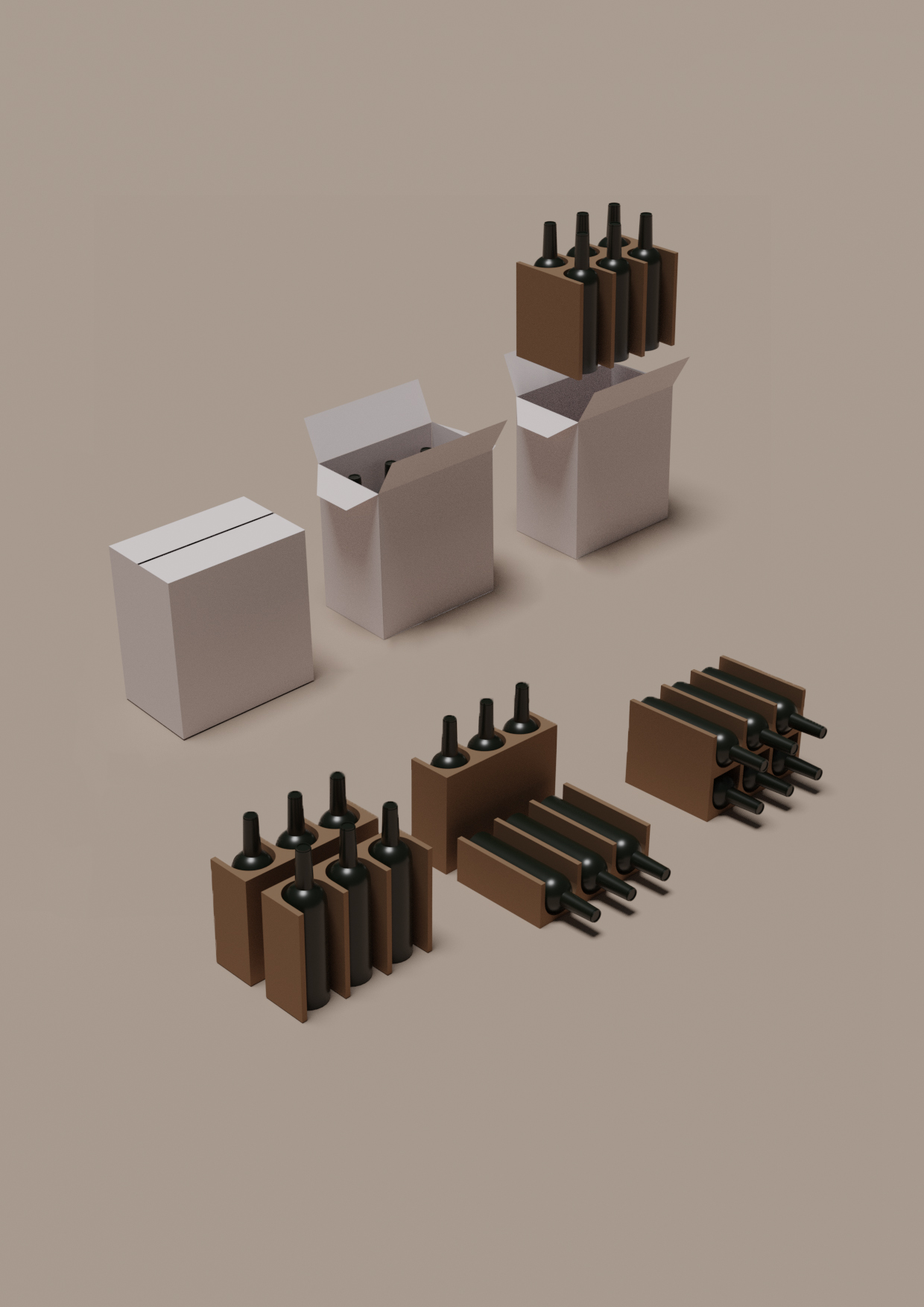
Ecoleaf is a circular economy project that transforms viticultural waste into high-performance, bio-based packaging. The concept addresses two critical environmental issues: the carbon emissions from burning agricultural biomass and the massive use of expanded polystyrene (EPS) in the wine logistics sector. I have developed a material and a modular system that turns the viticultura waste product into a modular 3+3 bottle separator that maximizes shock absorption while minimizing material density.
The project goes beyond traditional single-use packaging by incorporating a "Design for Reuse" strategy. Once the logistical journey is complete, the modular pieces are designed to be repurposed as a functional bottle stand for the end consumer. Finally, being 100% home-compostable, the product closes the biological loop by returning to the soil as a nutrient, sequestering carbon and eliminating plastic waste from the entire value chain.
The project goes beyond traditional single-use packaging by incorporating a "Design for Reuse" strategy. Once the logistical journey is complete, the modular pieces are designed to be repurposed as a functional bottle stand for the end consumer. Finally, being 100% home-compostable, the product closes the biological loop by returning to the soil as a nutrient, sequestering carbon and eliminating plastic waste from the entire value chain.
The story of Ecoleaf begins in Rasquera, a village in the Ebre region of Catalonia, where my family has cultivated vineyards for generations. Growing up in this environment, I witnessed every winter after the harvest how vine branches (biomass) are cut and left without any purpose. As a designer, I realized that this traditional practice treats a potentially valuable material as mere waste, and I felt a responsibility to change that.
Therefore, the final strategy wasn't just about creating an object, but a territorial circular value chain. By using my family’s vineyards as a case study, I demonstrated that a local waste product can be transformed into a solution for plastic pollution in the packaging sector.
Ecoleaf is my way of giving back to the land that raised me, using the tools of design to ensure its future.
Circular Economy
Bio-based Materials
Regional Value Chains
Nature-based Solutions
Industrial Symbiosis
The design and concept of Ecoleaf proposes an holistic approach that connects agricultural waste with sustainable design.
The project proposes a paradigm shift in the management of vineyard by-products. Traditionally, vine leaves are treated as agricultural waste, often burned or discarded. Ecoleaf revalues this biomass from organic farming, transforming it into a primary resource. By integrating the lifecycle of the vineyard with the packaging of its own product, the project promotes a local circular economy that respects the natural cycles of the land and reduces the environmental footprint associated with raw material extraction.
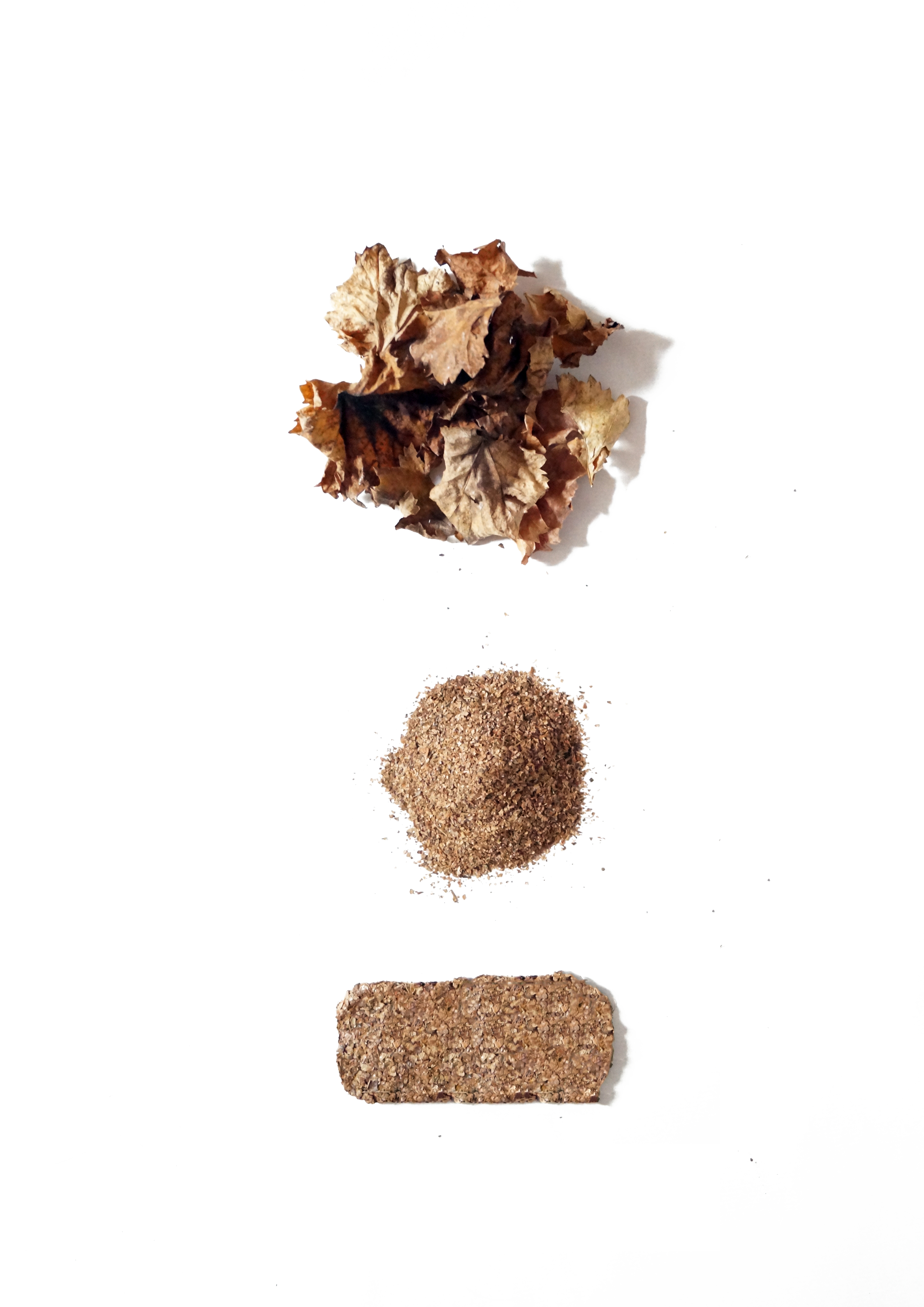
The core of the project is the development of a new bio-composite. By researching the structural properties of vine leaves combined with natural binders like starch, a material was created that is 100% biodegradable and compostable. This bio-material serves as a sustainable alternative to plastic, utilizing low-energy production processes and avoiding chemical inks through techniques such as pyrography.
The concept redefine the traditional lifecycle of packaging by prioritizing longevity and circularity. The bottle separators feature a functional modular design that encourages secondary uses, such as being repurposed as a functional bottle stand once the initial transport phase is complete. This versatility extends the product's lifespan and promotes responsible consumption by giving the object a continued value in the user's home. Only when its utility is finally exhausted, the material's composition ensures a sustainable end-of-life. Its decomposition in appropriate environments allows it to return to the soil as nutrients, effectively closing the biological loop without generating any waste.
Ecoleaf bridges the gap between the rural landscape and the urban consumer, reminding us that our objects are not detached from the land but are a continuation of it.
The aesthetic value of the project lies in its "honesty of materials," where the aeshtetic of the object reflects its origin and the landscape where the wine comes from. By preserving the natural textures, the project brings a piece of the Mediterranean ecosystem into the daily lives of people. This sensory connection transforms a functional packaging element into a poetic object that celebrates the cycles of nature, making the everyday experience of unboxing or displaying a bottle more meaningful.
It rejects the sterile and artificial perfection of industrial plastics in favor of an "imperfect" and evolving beauty. Furthermore, its modular design and the possibility of a second life as a bottle stand demonstrate that aesthetic elegance and environmental responsibility can coexist, transforming a logistial object into a piece than can be used as home decor. This creates a lasting sense of care and belonging; the consumer isn't just buying wine, they are preserving a piece of the landscape that produced it, fostering an emotional bond with the territory and its traditions.
Ecoleaf addresses challenges related to accessibility and equity by proposing an economic model that directly empowers the agricultural sector, one of the most marginalized groups in the current industrial system. By implementing this concept at scale, farmers transition from being mere suppliers of raw materials to becoming key providers of high-value ecological resources. This creates a vital opportunity for extra income through the repurposing of waste that currently lacks market value, providing crucial economic support for family-owned farms and helping to combat rural depopulation.
The project is exemplary in its territorial inclusion. By using my own family’s vineyard in Rasquera as a pilot, I have designed a system that empowers rural communities to manage their own resources through a circular lens. Following "design for all" principles, the final product is lightweight, modular, and intuitive to assemble, removing technical barriers for both producers and consumers.
This approach suggests a new societal model where rural areas are no longer just sources of extraction, but active hubs of industrial innovation and circular governance, ensuring that the transition to a green economy is socially fair and inclusive.
By working directly with my own family’s vineyard and other local farmers, I was able to gain invaluable insights into the seasonal availability of raw materials and the logistical challenges of agricultural waste management. Their firsthand knowledge was essential in determining the feasibility of leaf collection and ensuring that the project provides a real economic and operational solution for those at the beginning of the supply chain.
The implementation of Ecoleaf is conceived as a collaborative effort across multiple scales of governance, bridging the gap between local agricultural production and international sustainability goals.
To date, the project has focused on a local level with direct engagement with farmers and small-holders in Rasquera. Their involvement is fundamental to ensuring that the collection of vine leaves is operationally viable and provides a fair economic return.
In the future, and in order to to transform the current concept into a market-ready product, I plan to engage with regional wine associations (Denominacions d’Origen) and agricultural cooperatives. Their participation will be key to scaling the production and integrating Ecoleaf into the professional supply chain. Furthermore, collaborating with regional environmental and waste management agencies will be essential to certify the compostability of the material at a territory-wide scale.
As a finalized product, Ecoleaf aligns with the European Green Deal. I expect to seek support from national innovation agencies and European research programs to standardize this bio-based packaging. The added value of this engagement is the creation of a "bioregional" innovation model that can be replicated in other Mediterranean countries, transforming rural areas into active hubs of industrial innovation and contributing to a European-wide shift away from single-use plastics.
The development of Ecoleaf is a result of a transdisciplinary synergy that merges academic research, technical experimentation, and agricultural knowledge. The concept is a combination of my background in Design and Sustainability, my family’s heritage in the winemaking sector, and the application of Environmental Sciences.
Design and Material Innovation: From a design perspective, the project focuses on ecodesign and circularity. My background allowed me to translate a complex environmental problem into a functional solution. This involved an iterative process of prototyping and material engineering to achieve the desired structural integrity, testing thicknesses and resistance to ensure the bio-composite could replace traditional packaging.
Agricultural Knowledge and Tradition: Coming from a family with a long-standing tradition in the wine industry and owning a vineyard, I had access to "tacit knowledge" regarding the lifecycle of the vine. This heritage provided a deep understanding of the raw material (vine leaves) and the socio-economic challenges of the primary sector, which was crucial to ensure the project’s feasibility at the source.
Environmental Sciences: The implementation of the Cradle to Cradle philosophy required a scientific approach to biodegradability and waste management. Researching natural binders allowed me to create a product that is not only functional but ecologically regenerative, ensuring that it returns to the soil as a nutrient without toxic residues.
By bridging the gap between industrial design, biology, and the rural economy, the project transforms a simple agricultural byproduct into a high-value technological solution, demonstrating that the future of sustainability lies in the dialogue between modern design and traditional land stewardship.
The business model for Ecoleaf is built upon a circular economy framework that transforms agricultural waste into a high-value industrial asset. The financial sustainability of the project is envisioned through a diversified revenue strategy focused on the wine-producing sector:
Primary Revenue Stream (B2B Product Sales): The core income will be generated by selling Ecoleaf separators directly to wineries and wine distribution companies. As global regulations tighten around single-use plastics and non-recyclable packaging, Ecoleaf offers a high-performance, compliant alternative. By providing a separator that is not only functional but also tells a story of territorial identity and soil regeneration, the product serves as a premium branding tool that justifies a competitive price point within the sustainable packaging market.
Strategic Partnerships and Public Funding: In the initial stages, financial sustainability will be bolstered by public grants from European and regional funds (such as the EAFRD or NextGenerationEU) dedicated to bio-economy innovation and rural development. These funds will support the transition from the laboratory pilot (based on the Rasquera vineyard) to a scalable industrial production line.
The "Waste-as-a-Resource" Incentive Model: To ensure long-term viability and low operational costs, Ecoleaf envisions a partnership model with wine cooperatives. In this system, wineries provide the raw material (vine leaves) from their own harvests. This creates a symbiotic economic loop: the cost of raw materials remains minimal, while the wineries receive a sustainable, story-driven packaging solution that enhances their product's market value.
Although the project is currently optimized for vine leaves, the fundamental methodology and the bio-composite formula can be adapted to other types of agricultural foliage and organic residues. This opens the door to scaling the concept beyond the wine sector to other major Mediterranean markets, such as the olive oil industry. For instance, the same process could be applied to waste from olive groves or fruit trees, allowing the production of sustainable packaging solutions for oil bottles or gourmet food products. This versatility transforms Ecoleaf from a niche solution into a multi-sector platform for agricultural waste revaluation.
During the year following the application, the focus would be on three pillars: technical optimization, industrial partnerships, and regulatory certification.
Phase 1: Technical Refinement and Standardization (Months 1–4):
The primary objective will be to refine the bio-composite formula to ensure consistent structural performance under varying environmental conditions. This involves collaborating with material laboratories to conduct standardized stress tests (compression, humidity resistance, and impact) to certify that the Ecoleaf separator meets all industrial requirements for wine logistics.
Phase 2: Pilot Production in Rasquera (Months 5–8):
Moving beyond the academic prototype, the goal is to set up a small-scale pilot production in collaboration with local farmers and the family vineyard in Rasquera. This phase will focus on designing a semi-automated pressing and drying system to optimize energy consumption and reduce production times, establishing a "proof of concept" for the decentralized "bio-hub" model.
Phase 3: Strategic Partnerships and Branding (Months 8–12):
To promote the concept, I intend to engage with Designated Origin (DO) wine associations and boutique wineries to launch a limited edition "Sustainable Series." This real-world implementation will serve as a marketing showcase to demonstrate the added value of the packaging to the final consumer and to attract private or public investment for large-scale manufacturing.
Phase 4: Certification and IP Protection:
Simultaneously, I will work on obtaining official Cradle to Cradle or compostability certifications and filing the necessary intellectual property protections for the formula. This is essential to guarantee the concept’s scalability and to prepare for the licensing model in other sectors like the olive oil industry.