Arts, Culture, and Heritage as Drivers of Change
Portapeso
Portapeso. Carrying weight of tradition.
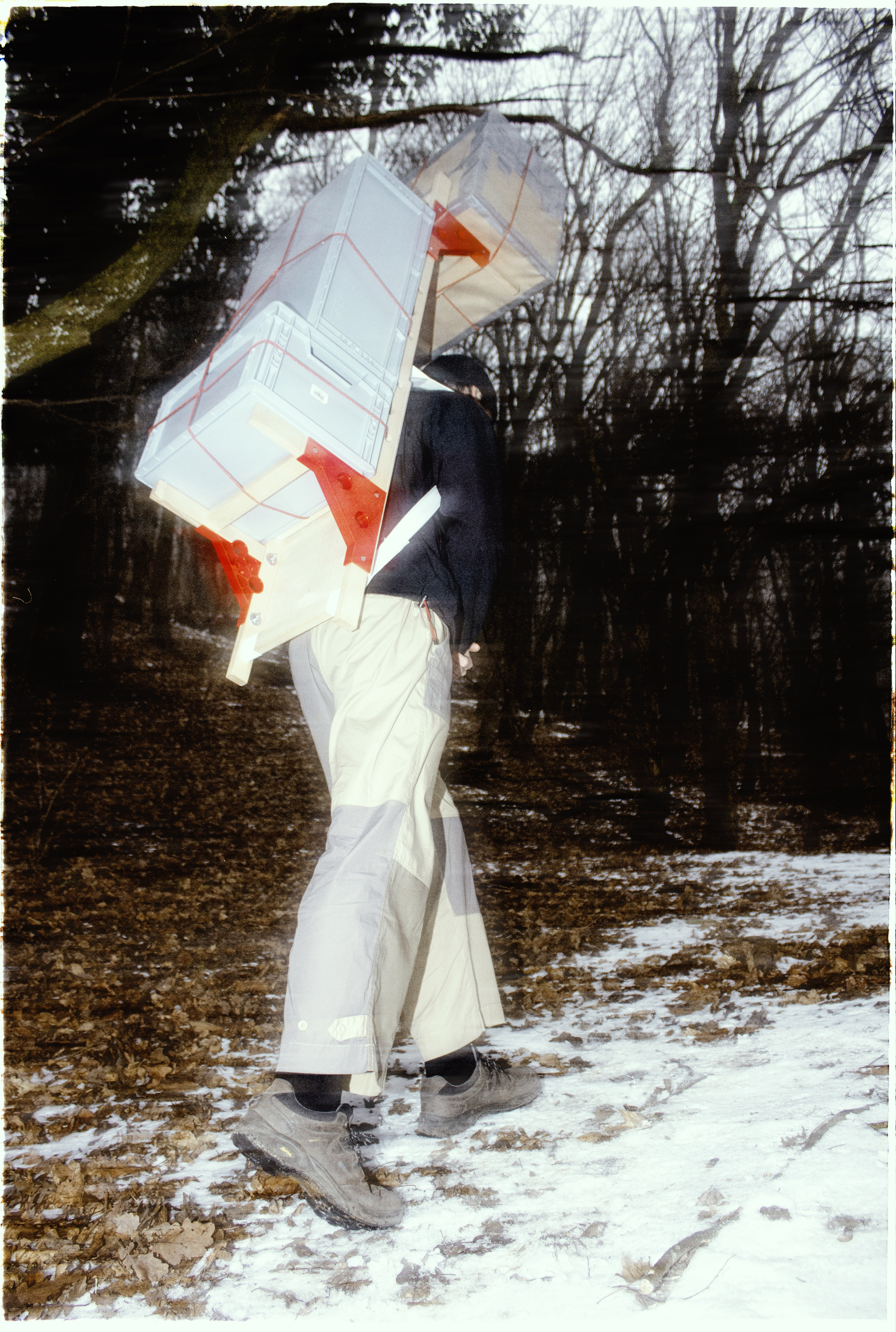
In the High Tatras of Slovakia, a profession now practiced nowhere else in Europe is kept alive through a unique bond with nature. Mountain porters supply chalets with loads often heavier than their own body weight, carried on a simple wooden frame. Portapeso is a system designed to accommodate the variables at the interface between body and load and to become an open-source system, available for local production across Europe. Tradition sustained through translation, not preservation alone.
Slovakia
Regional
Portapeso is to be tested in the High Tatras (SK041 — Prešovský kraj) and Bratislava (SK01 — Bratislavský kraj) and implemented as an open-source system available across Europe.
It addresses urban-rural linkages
It refers to other types of transformations (soft investment)
Prototype level
No
No
No
Individual
Portapeso is a system designed to accommodate the variables at the interface between body and load in mountain portering, a profession now practiced nowhere else in Europe but Slovakia. What makes Slovak porters particularly unique in the context of traditional transport is their motivation to preserve the profession. They are not driven by income, but by a deep connection to nature, the sense of freedom, and the opportunity for mental catharsis that this work provides in an otherwise fast-paced world.
Porters in the Tatra mountains carry loads of various shapes and sizes, tightly secured to a traditional wooden frame (krošňa), supplying chalets located at altitudes of up to 2,250 meters. These loads often surpass the porter’s body weight, making the proper positioning of the center of gravity essential for a safe ascent.
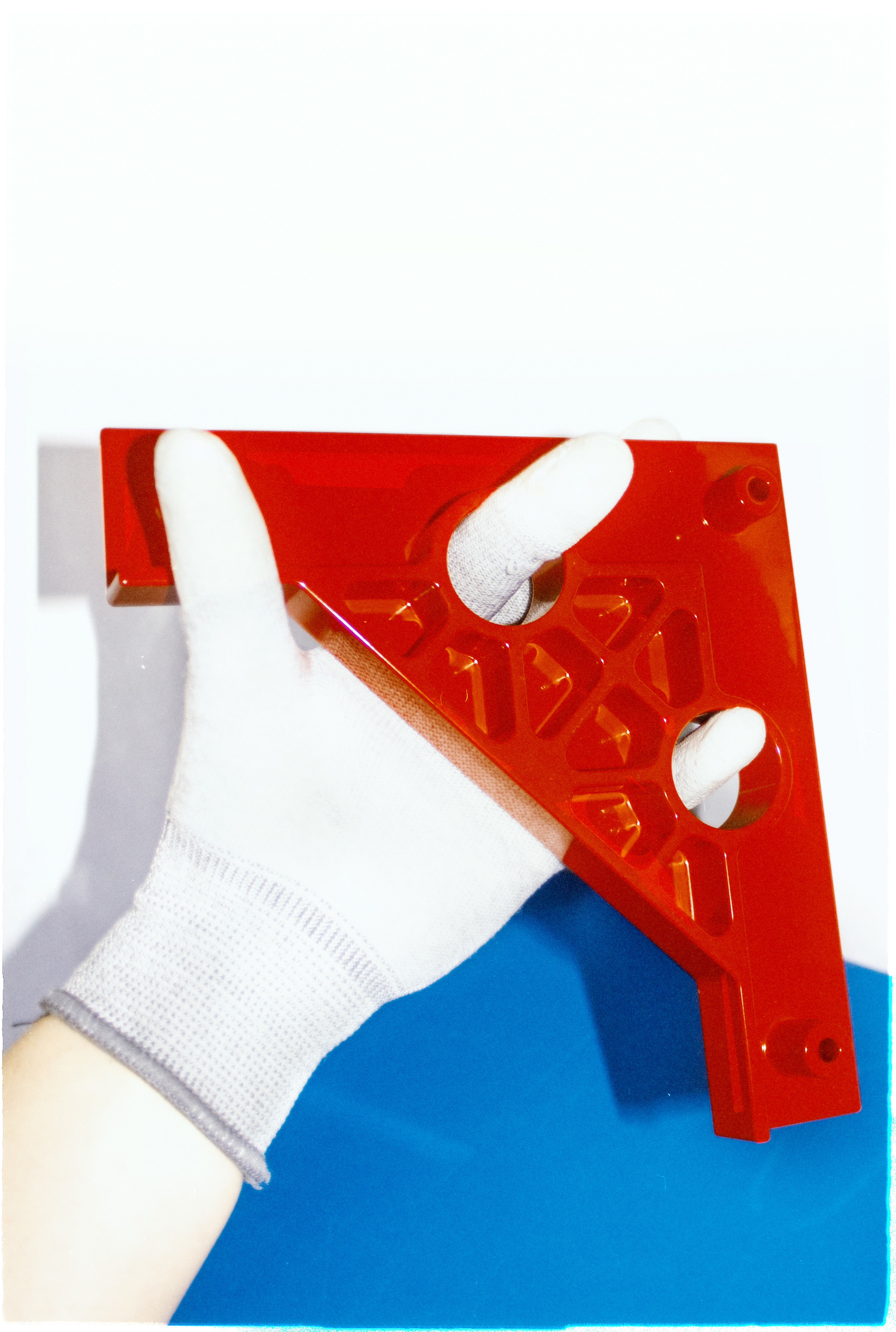
Portapeso formalizes the logic of an observed, necessity-driven practice in which plastic crates are used to elevate the load’s center of gravity on the wooden frame. Portapeso proposes detachable aluminum brackets, mounted into made-to-measure ash frames at predetermined positions informed by cutout notches and holes, allowing the center of gravity to be raised according to the load being transported — granting safe movement under load.
By proposing a modular, durable, and adaptable system — designed to become widely available as an open-source resource — Portapeso supports the continuity of a unique profession, demonstrating that tradition can be sustained through translation rather than preservation alone.
A functional prototype has been developed and validated through the Tatra Bank Foundation grant in 2025. Field testing with the porter community is planned for the upcoming summer. The expected result is a tested, refined system released as an open-source resource, freely available for local production and adaptation across Europe.
Portapeso began as a research question, not a design brief. As part of my master’s thesis on the Grid in 2022, I was looking for a context in Slovakia that could benefit from values the research had surfaced: adaptability, variability, longevity, and systemic thinking.
The answer emerged through observation and the use of the Grid methodology developed for my thesis. Documenting everyday life in public spaces, food delivery couriers hidden behind large cube-like bags started to appear everywhere. So I delved into research on carrying practices and discovered adaptive carrying traditions in the High Tatras that sharply contrasted with modern solutions.
Visiting the Tatra mountains, I observed porters improvising — using empty plastic crates to elevate heavy loads on their wooden frames, raising the center of gravity for a safer ascent. This necessity-driven solution became the conceptual foundation of Portapeso. To understand the problem fully, I ascended with a 25kg load myself. The embodied experience directly informed every design decision — vertical bracket positioning, anthropometric frame dimensions, and material choices.
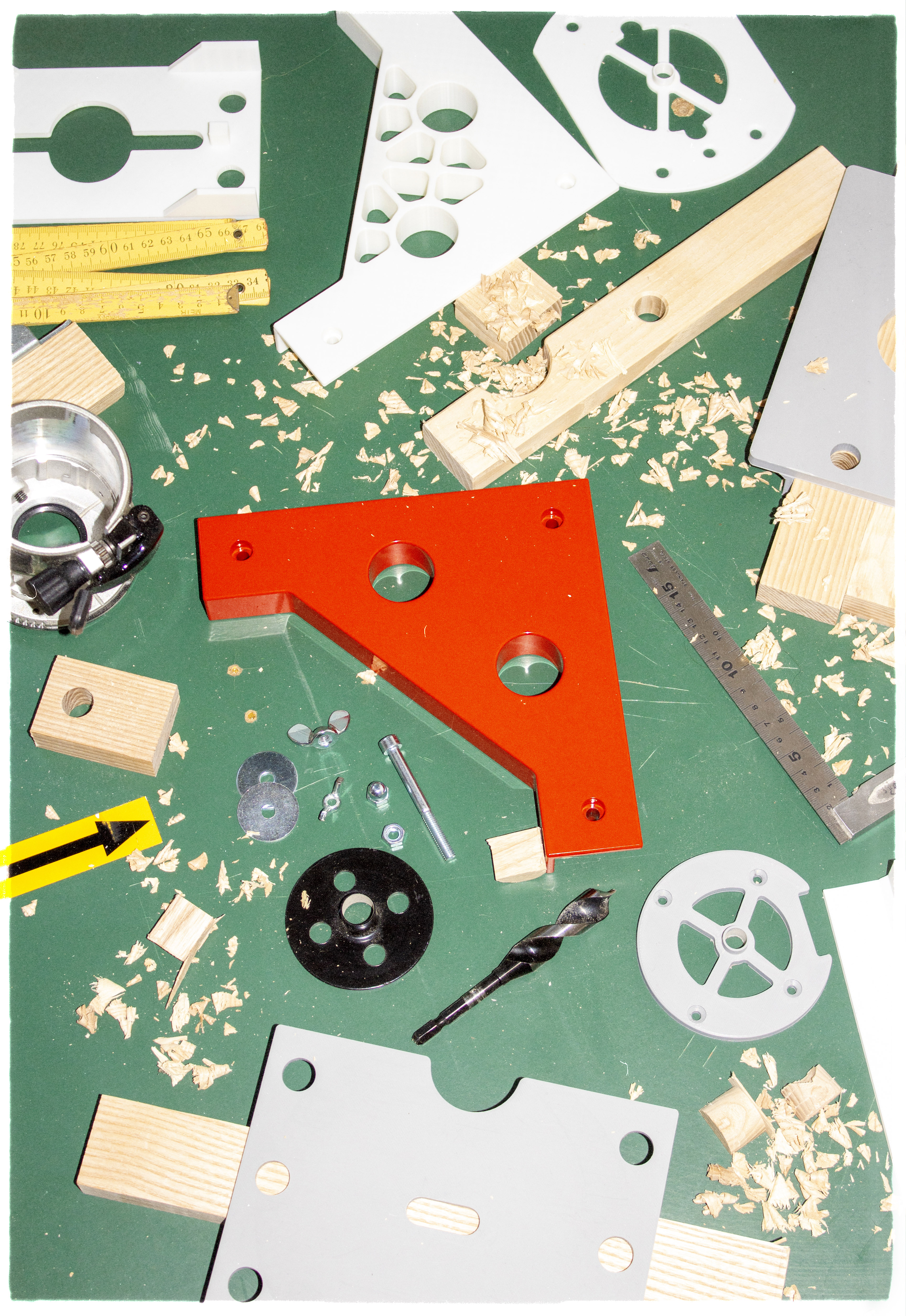
The concept emerged from a single principle — universal brackets, made-to-measure frames. Topology optimization established the structural boundaries that guided subsequent sketching and 3D modeling. The bracket form was refined through computational analysis before moving into material and ergonomic development. Dimensions, joints, and manufacturing requirements were resolved in parallel, with 3D printed prototypes testing fit and function at each stage. The final prototype brought together ash wood, powder-coated aluminum, Dyneema shoulder straps and galvanized fasteners into a system resolved at every level.
Cultural heritage preservation
Open-source system
Anthropometric design
Mountain portering
Circular economy
Portapeso is designed for longevity over replacement. Universal aluminum brackets are built to outlast multiple frames and are fully recyclable at end of life. Finished with environmentally friendly powder coating (no solvents used) they are protected from scratches and corrosion, ensuring exceptional durability. Ash wood is locally sourced, biodegradable, and chosen for its workability, exceptional strength, flexibility, and shock resistance. Galvanized fasteners can be individually replaced, eliminating the need to discard the entire system when components wear and keeping costs minimal.
As part of its development plan, Portapeso will be released as an open-source system, allowing individuals across Europe to produce and assemble components locally with minimal cost and accessible manufacturing processes. A profession sustained through design. A system sustained through sharing.
As part of its development plan, Portapeso will be released as an open-source system, allowing individuals across Europe to produce and assemble components locally with minimal cost and accessible manufacturing processes. A profession sustained through design. A system sustained through sharing.
While wooden carrying frames remain in use across different parts of the world, the motivation behind Slovak mountain portering is unique — driven not by economic necessity but by a conscious choice to preserve a way of being. For me as a designer, this deserved an aesthetic response.
The aesthetics of Portapeso emerge from typological research, structural necessity, manufacturing requirements, and deep respect for context. Ash frames are designed to be crafted using minimal tooling, keeping production accessible. Circular holes and semicircular cutout notches, inspired by traditional solutions, visually inform the positioning of the brackets and create anchor points for ropes securing the load.
The vibrant red powder-coated brackets make the invisible visible. By contrasting with the mountain landscape, they alert hikers on shared trails to maintain distance and give way to porters who, under heavy loads, walk heads down — seeing only a meter ahead. The structural grid pattern on the brackets echoes the improvised necessity-driven solution that informed the system — porters placing empty plastic crates at the base of the wooden frame to lift the center of gravity of the load.
For the porter community, the system creates a sense of belonging through the object itself. Each frame is unique, built to one physique, yet the universal red brackets create visual coherence across all frames. Each porter ascending carries something individual and collective simultaneously. The system makes the community instantly recognizable.
Portapeso contributes to a sense of care for place by sustaining the human presence that gives the Tatra mountains their cultural character. The chalets exist because porters supply them. The trails are alive because porters walk them. Portapeso supports that continuity quietly and materially.
The system is anthropometrically tailored — each frame built to the physique of its user. This is inclusion at its most fundamental: a tool that fits the body it serves rather than expecting the body to adapt to a standardized object. The vertical bracket positioning accommodates different load types and sizes, ensuring the system works across the full range of conditions users encounter.
Accessibility is built into the production logic. Ash wood is widely accessible across Europe. The frames require minimal tooling and can be produced locally without specialized industrial equipment. Universal brackets are designed to be reused across multiple frames for decades, reducing long-term costs for a community without institutional backing. Galvanized fasteners can be individually replaced, eliminating the need to discard the entire system when components wear.
As part of its development plan, Portapeso will be released as an open-source system, allowing individuals across Europe to produce and assemble components locally — making the system accessible and replicable beyond its original context.
Portapeso argues that design should serve human values beyond productivity and consumption — that a profession sustained by love for a place deserves the same considered attention as any commercially viable industry.
The development of Portapeso was rooted in sustained observation. Rather than asking porters what they needed, the research documented what they already did — capturing the natural rhythms of their practice, their improvised solutions, and their relationship with the load, the frame, and the mountain.
The most significant participatory moment was ascending with a 25kg load, which provided direct physical understanding of the problem that no interview or survey could replicate. This experience shaped every design decision that followed.
Porter preferences informed material choices directly. Their long-standing trust in ash wood, rooted in generations of practical experience, determined the primary material. Their improvised use of plastic crates to elevate the center of gravity provided the conceptual foundation of the system. The upcoming summer testing phase will deepen this participatory process — bringing the prototype into direct contact with the community it serves and gathering feedback that will inform the next stage of development.
At the European level, the open-source release of Portapeso’s manufacturing files and assembly instructions will invite engagement from small local manufacturers, designers, and communities across Europe. The model of distributed production will create a network of stakeholders without requiring centralized governance. Anyone will be invited to participate, adapt, and contribute back to the system. The added value of this multilevel engagement will result in a documentation of carrying practices and their evolution unique to specific regions of Europe.
Portapeso is the result of a genuinely transdisciplinary process. Developed through the Grid — a methodology that analyzes the interconnectedness of contextual elements — many different fields of knowledge naturally converged in the resulting system. No single discipline could have produced the outcome alone.
Design provided the integrating framework, translating research across disciplines into a coherent, functional, and aesthetically considered system.
Anthropology and ethnology informed the research into traditional forms of transport across cultures and the specific sociology of Slovak mountain portering — why porters carry, what motivates them, and what makes their practice unique in the European context.
Biomechanics and ergonomics addressed the relationship between body, load, and center of gravity — the core physical problem Portapeso solves.
Computational engineering established the structural boundaries of the designed elements.
Material science guided the selection of ash wood for its workability, strength, flexibility, and wide distribution across Europe, and informed the choice of recyclable aluminum for the brackets and environmentally friendly powder coating finish.
Cultural heritage studies framed the broader argument — that a living professional practice is worth sustaining through design rather than documenting as a historical artifact.
Environmental science shaped the lifecycle thinking behind the system — local material sourcing, individual component replaceability, recyclability at end of life, and the open-source distributed manufacturing model that eliminates centralized production.
Portapeso operates at the intersection of cultural preservation, craft production, and open-source design. The business model prioritizes accessibility over profit. Manufacturing plans and assembly instructions will be available for purchase through a dedicated website, generating income while keeping production local and accessible. The sustainability of the business model lies on a decentralized, material-efficient model, which eliminates logistics, the need for inventory, and reduces initial investments.
A crowdfunding campaign built around an endangered profession, a considered design response, and an open-source future may speak to hikers, mountaineers, and anyone curious about exploring nature — generating both funding and visibility for the project.
A crowdfunding campaign built around an endangered profession, a considered design response, and an open-source future may speak to hikers, mountaineers, and anyone curious about exploring nature — generating both funding and visibility for the project.
The open-source Portapeso system has potential to reach communities across Europe that search for a simple solution to transport items to places that conventional means of transport cannot reach. These represent vendors and builders in rural areas, residents carrying large and heavy items to flats without elevators, or individuals and whole communities facing sudden evacuation, where the reality is rarely a single backpack but everything one cannot leave behind. The logic of Portapeso, which adapts to items varying in dimensions and weight, is designed precisely for this kind of contextual flexibility. What began as a response to a unique context can spread through society and resonate with others’ needs.
The open-source release of manufacturing files and assembly instructions will allow local small manufacturers across Europe to produce components independently, adapting frame dimensions to local physiques.
The Grid — the non-linear associative methodology which allowed Portapeso to emerge — is transferable to any design context. It provides a structured approach to understanding complex, interconnected problems before proposing accountable solutions. It has been documented and can be shared with design institutions, educators, and practitioners.
Identifying necessity-driven improvised solutions already present in a community and formalizing them through considered design is replicable wherever traditional practices face the pressure of modernization. The methodology, the process, and the outcome together form a transferable model for culturally grounded, community-led design.
Portapeso is already beyond the concept stage. The prototype will be tested within the porter community in the upcoming summer. In the year following the application, the priority is design and manufacturing optimization — refining bracket production for small-scale series manufacturing, field testing in different contexts, and developing documentation, manufacturing files, and assembly instructions in parallel. The result of a year’s effort will be a website presenting Portapeso as an open-source system, with files available for local production and adaptation across Europe. The project will be presented at relevant design and cultural events, contributing to broader conversations about the role of design in sustaining living cultural practices. Partnerships with design institutions, cultural foundations, and heritage organizations across Europe will be pursued to expand the project’s visibility and impact.