Arts, Culture, and Heritage as Drivers of Change
BOSCO COLTO
BOSCO COLTO project
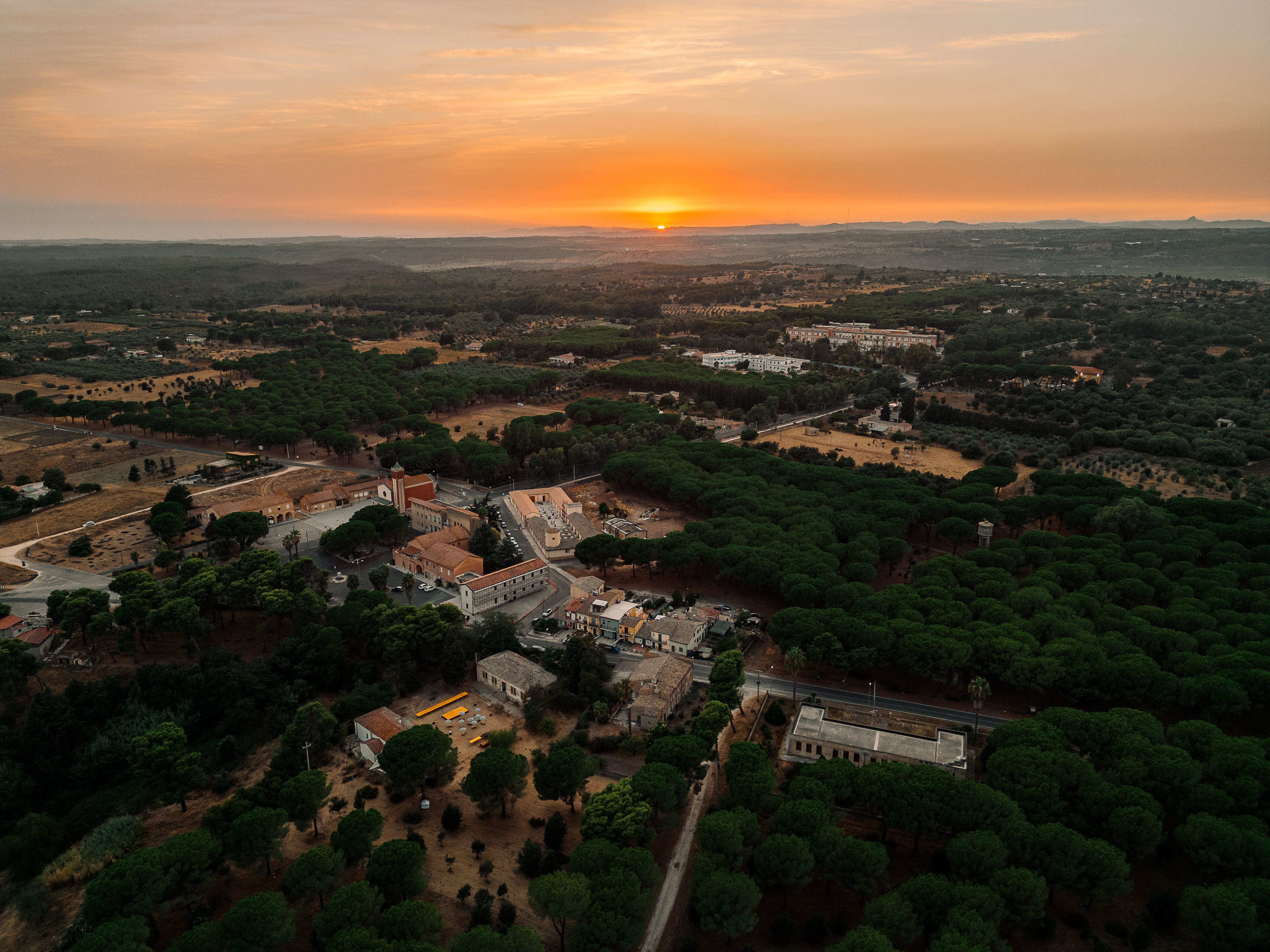
The Bosco di Santo Pietro case study in Caltagirone, Sicily, reflects on the meaning of “Bosco” and “Colto”: a concept expressing the forest’s complexity as a link between culture and cultivation, and an emblem of multispecies coexistence. Here, crops and cultures intertwine, generating unexpected encounters and a distributed intelligence. Bosco Colto becomes an ecosystem of relations, suggesting new ways of inhabiting territories and cities.
Italy
Regional
Sicily
It addresses urban-rural linkages
It involves other types of transformations (soft investment)
Yes
2025-08-10
No
No
No
Organisation
Bosco Colto is a territorial self-regeneration project based in the Bosco di Santo Pietro and its rural village in Sicily. It integrates research, education and collective practices aimed at enhancing the value of the landscape. Established in 2022, the project operates as an open-air laboratory where local communities, institutions, universities and professionals collaborate to develop new relationships between environment, culture and production.
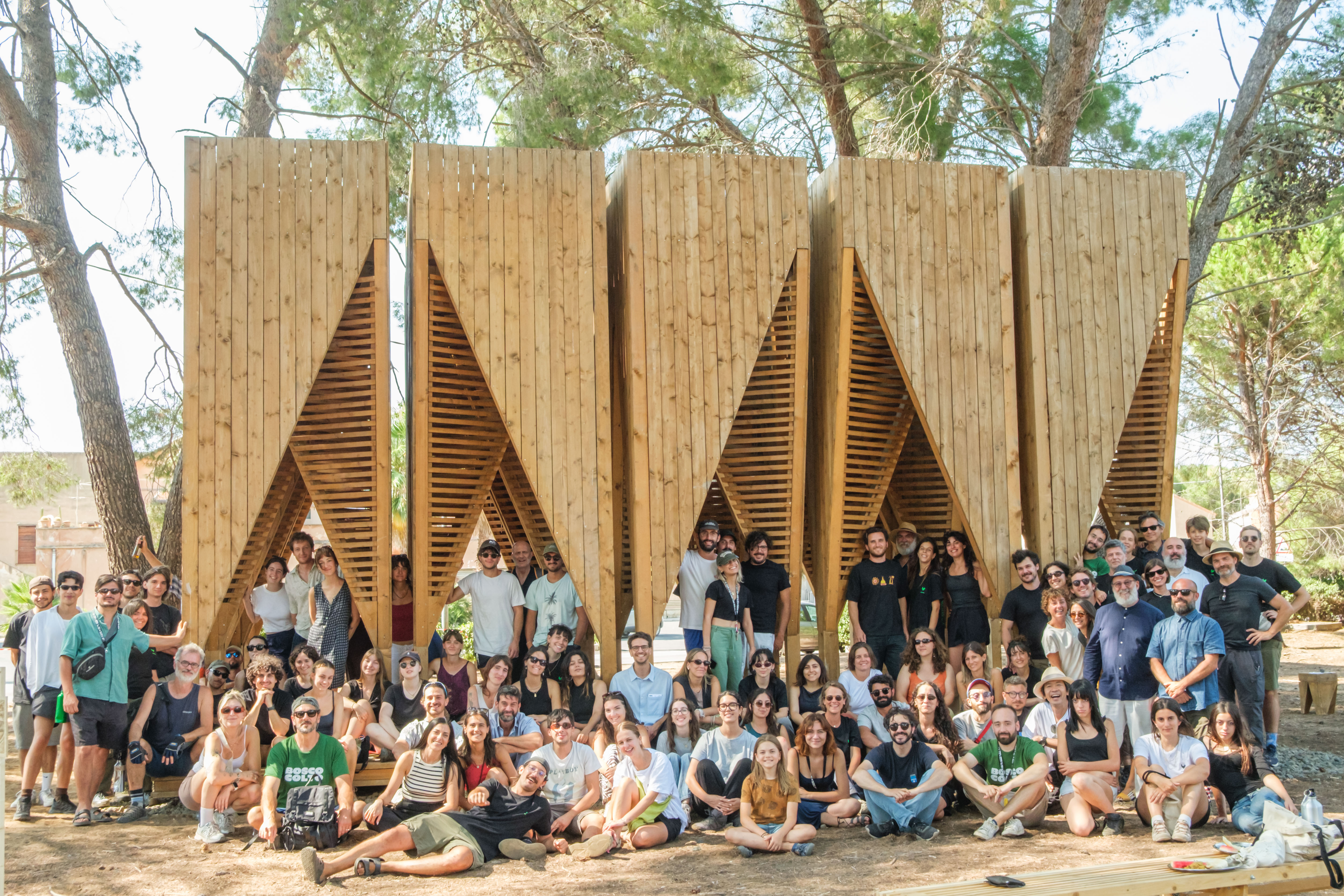
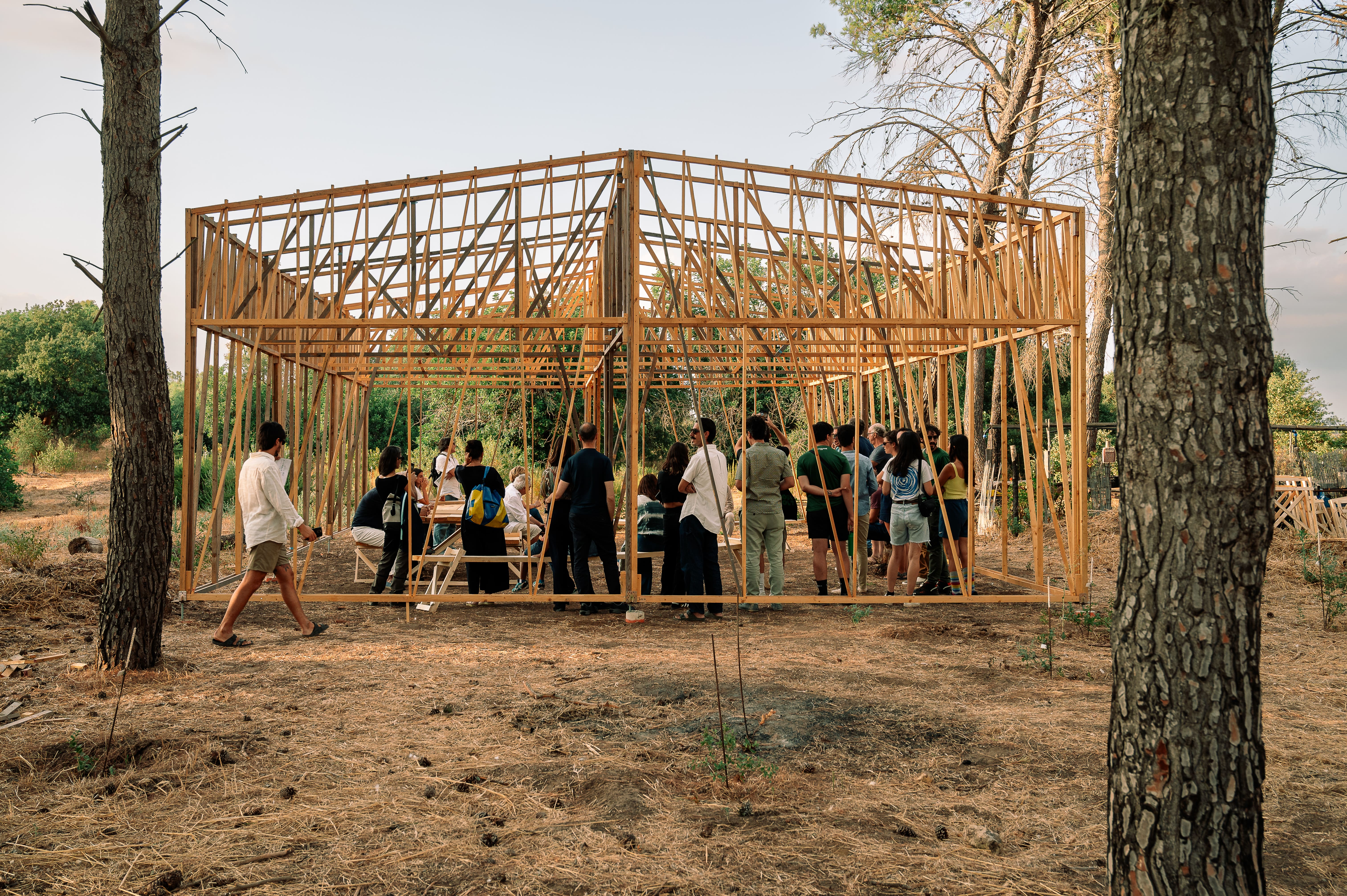
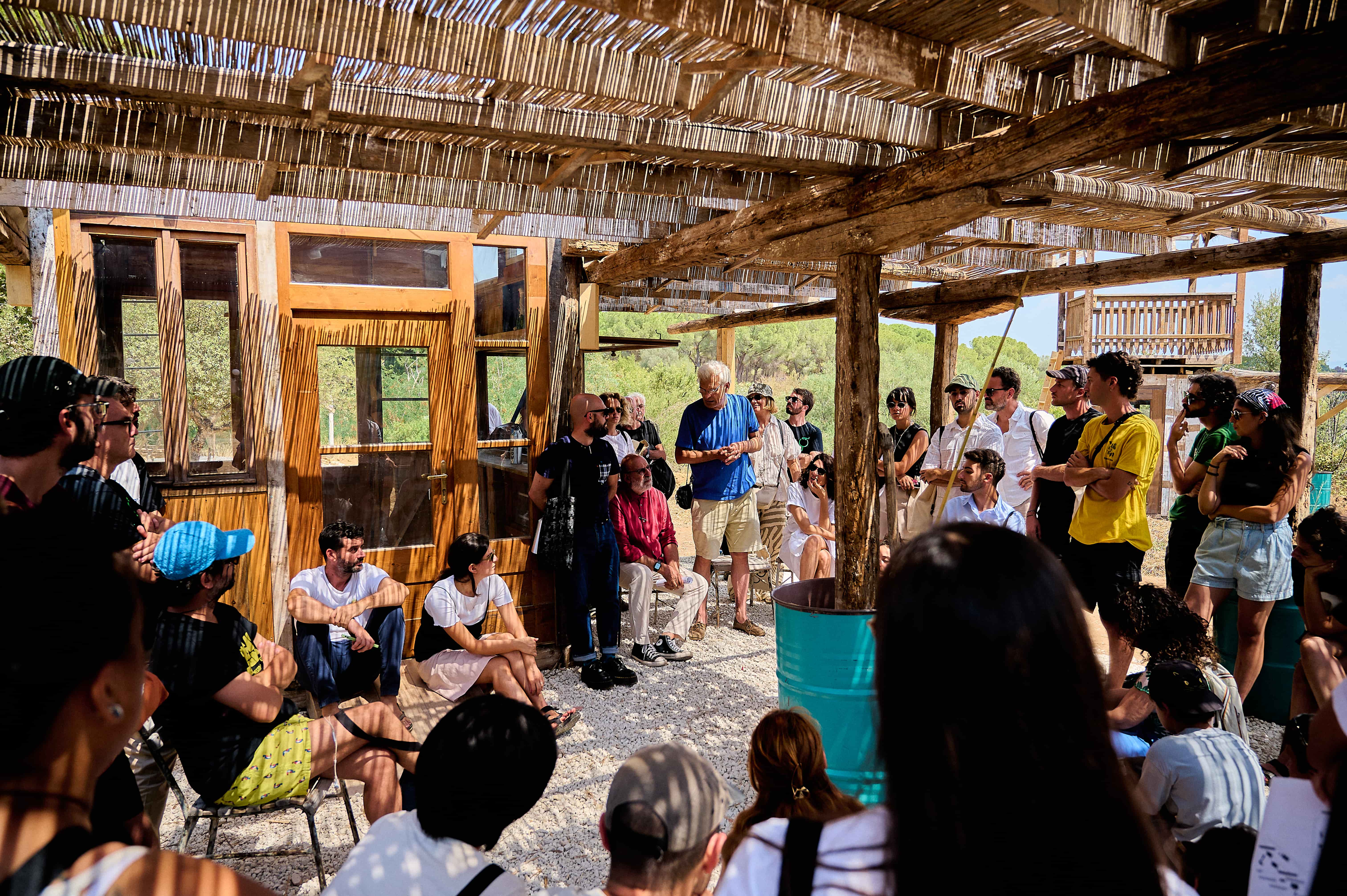
The Bosco Colto Campus represents the core of the initiative: a collective construction site that over four years has involved 210 participants and 65 tutors and international visiting experts. Through workshops, laboratories, walking explorations and public events, the project has produced site-specific installations, micro-infrastructures and spaces for social interaction, contributing to the reactivation of the village and to a renewed perception of the forest as a common good.
Among its most relevant outcomes are the creation of a physical and digital Observatory based on the DataHighway platform, the re-assembly of the GiadA garden—now maintained by a local committee—and collaborations with artists and local actors, including a project awarded by the Italian Council of the Ministry of Culture. Bosco Colto has also received a mention at the Italian Landscape Award 2026 from the Ministry of Culture, recognising the project’s quality and relevance at the national level.
The project has further strengthened public participation, engaging approximately 2,000 people through cultural events, educational activities and open initiatives, helping to counter processes of abandonment and to reactivate relationships between community and territory.
In the long term, Bosco Colto can be understood as an ecological and cultural infrastructure capable of generating continuity, strengthening local networks and offering a replicable model for the sustainable regeneration of inland areas.
Bosco Colto was established in 2022 within a research framework developed between the University of Catania and the cultural association Makramè, with the aim of exploring new relationships between landscape, communities and design practices. The Bosco di Santo Pietro, affected by processes of fragmentation, abandonment and the loss of ecological and cultural continuity, was identified as a case study to experiment with an integrated approach to territorial regeneration.
From the outset, the project developed through fieldwork, meetings with local inhabitants, collaborations with agricultural actors and exploratory activities across the territory, gradually building a shared base of knowledge. Out of this process emerged the Bosco Colto Campus, conceived as an operational device capable of activating collective processes of design and construction.
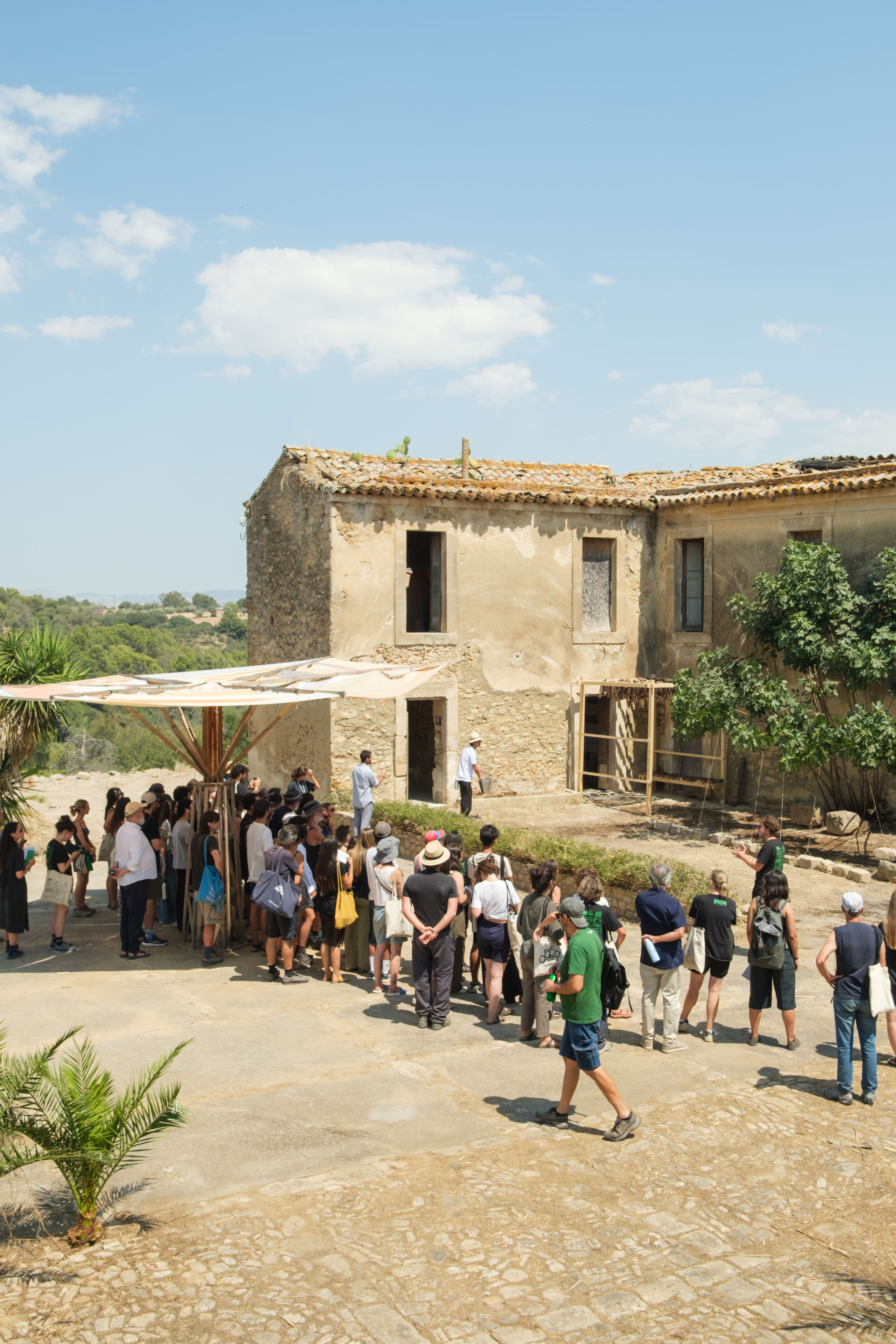
Over time, the project has taken the form of a distributed construction site, where each intervention arises from specific local conditions and from direct interaction between participants, tutors and the local community. Through workshops, laboratories and site-specific actions, spaces for social interaction, observation devices and micro-infrastructures have been created, integrating into the landscape without imposing rigid transformations.
Bosco Colto has thus evolved as an open and progressive process, capable of adapting to available resources and territorial dynamics. Its realisation does not coincide with a finished project, but with a set of practices that continue to evolve over time, strengthening the relationship between community and landscape and generating new ways of inhabiting and interpreting the forest.
Ecological infrastructure
Territorial self-regeneration
Collective participation
Rural landscape
Multispecies cohabitation
Bosco Colto addresses environmental, social, cultural and economic challenges through an integrated and site-specific approach to territorial regeneration. The project operates in a fragile rural and forest context affected by abandonment, landscape fragmentation and loss of ecological continuity, transforming these conditions into opportunities for sustainable development.
From an environmental perspective, Bosco Colto promotes low-impact interventions based on the use of local and reclaimed materials, the reuse of existing structures and the care of ecological systems. Practices developed within the Campus—such as the construction of micro-infrastructures, the reactivation of paths and the planting of native species—encourage a direct and responsible relationship with the landscape. The collaboration with local agricultural actors further supports circular processes, where by-products and natural resources are reinterpreted as materials for design.
At the social and cultural level, the project strengthens local communities by fostering collective practices of learning, making and decision-making. It creates inclusive spaces for interaction, education and shared responsibility, reconnecting inhabitants with their territory and cultural heritage. Through workshops, public events and educational activities, Bosco Colto contributes to building awareness and long-term engagement.
Economically, the project supports local value chains by integrating agriculture, culture and education, generating opportunities linked to sustainable tourism, knowledge exchange and creative production.
Bosco Colto can be considered exemplary in terms of sustainability because it does not rely on predefined solutions, but develops adaptive, context-based strategies that evolve over time. It demonstrates how sustainability can emerge from the interaction between communities, ecosystems and material practices, offering a replicable model for the regeneration of rural and inland areas
Bosco Colto contributes to making life more beautiful through a sensitive and everyday transformation of the landscape, based on light, situated and accessible interventions. The project’s aesthetic is not expressed through monumental forms, but through devices, micro-architectures and relational spaces that improve the quality of experience, making places once again habitable, walkable and shared.
Within the village and the forest, site-specific installations, gardens, mobile classrooms and pathways have transformed marginal spaces into recognizable and lived environments, capable of generating perception, encounters and everyday practices. The use of local and reclaimed materials—such as cork, wood and earth—helps to build an aesthetic rooted in the territory, where sensory and ecological dimensions are intertwined.
The project fosters a sense of belonging through direct participation: inhabitants are not spectators but co-authors of the transformations. The ongoing care of spaces, as in the case of the GiadA garden managed by a local committee, strengthens a lasting relationship between community and landscape, turning aesthetics into a shared and continuous practice.
Bosco Colto can be considered exemplary in terms of aesthetics because it proposes a vision in which beauty, use and relationships coincide. Aesthetics emerges from the process, from collective work and from attention to detail, rather than from a predefined design. In this sense, the project demonstrates how aesthetic quality can arise from care, listening and the ability to activate new ways of perceiving and inhabiting the landscape.
Bosco Colto addresses inclusion through an open, accessible and progressive approach that aims to involve a wide range of stakeholders in the development of the project. The initiative takes place in a rural context often affected by marginalisation, contributing to reducing territorial inequalities and making the landscape accessible not only physically, but also culturally and socially.
The project promotes economic accessibility through low-cost or free activities, supported by a hybrid model that integrates research, education and public participation. The Bosco Colto Campus brings together participants from diverse backgrounds, fostering encounters between students, local inhabitants, professionals and local actors, and ensuring a broad distribution of learning opportunities.
In terms of governance, Bosco Colto develops inclusive models based on co-design and shared responsibility. Decisions emerge from open processes in which different actors—local communities, institutions, associations and participants—actively contribute to shaping the project. In this context, the project promotes a form of operational democracy that values dialogue and embraces conflict as a constructive element.
Inclusion is also reflected in the ability to engage different generations and audiences: children, students, researchers, residents and visitors participate in workshops, educational activities and public events, creating an intergenerational space for learning and social interaction.
Bosco Colto can be considered exemplary in terms of inclusion because it proposes an open, adaptable and replicable model in which the landscape becomes a shared platform capable of accommodating differences, reducing distances and fostering new forms of coexistence between people, communities and territory.
Bosco Colto actively involves citizens, local communities, agricultural actors and civil society organisations through an open and ongoing process in which participation is a core operational component of the project. Engagement takes place through field activities, workshops, public meetings and co-design practices that allow different actors to directly contribute to shaping the project’s actions.
Local agricultural actors and associations play a central role: they are not merely partners, but active nodes within the process. They host activities, share knowledge, materials and practices, and contribute to guiding project decisions in relation to the specificities of the territory. This collaboration enables the integration of traditional knowledge and contemporary approaches, fostering an ongoing dialogue between production, landscape and community.
The Bosco Colto Campus represents the main activation device: a space where students, researchers, professionals and local actors work together, sharing responsibilities and decisions. The level of involvement is direct and operational, based on active participation in both design and construction processes.
The project also promotes listening tools, such as interviews and moments of dialogue, which help to gather local needs and perspectives and integrate them into design choices. This approach has strengthened trust and a shared sense of responsibility in the care of spaces.
The impact of participation is reflected in the reactivation of places and relationships, the emergence of new local organisational forms—such as the committee responsible for the GiadA garden—and the continuity of practices beyond the duration of events. Bosco Colto demonstrates how participation can generate long-term value, strengthening the capacity of communities to act on their territory in an autonomous and conscious way.
Bosco Colto develops through a multi-level governance approach that engages stakeholders at local, regional, national and European levels within an integrated process of design and implementation. The project originates from a collaboration between academia, the third sector and local institutions, progressively building a structured network that supports its activities over time.
At the local level, direct involvement of residents, associations and agricultural actors forms the operational foundation of the project. These stakeholders actively contribute to defining actions, managing spaces and ensuring continuity, bringing situated knowledge and long-term care practices.
At the regional and national level, the project aligns with public institutions and funding frameworks supporting rural regeneration and cultural heritage enhancement. The collaboration with the Municipality of Caltagirone and the recognition by the Italian Ministry of Culture—through a mention at the Italian Landscape Award 2026—strengthen the institutional dimension and legitimacy of the initiative.
Academia also plays a pivotal role: the University of Catania, the MADE Program Academy of Fine Arts in Syracuse, and the Politecnico di Milano have enriched the project through workshops and co-design processes involving professors, PhD candidates and international researchers. On a broader scale, the support of the IKEA Foundation Switzerland has enabled interdisciplinary exchanges, providing scholarships to Swiss students and engaging international architects as mentors.
At the European level, Bosco Colto fosters a network of universities, researchers and professionals, creating a platform for knowledge exchange that situates the project within a wider cultural and research framework.
Bosco Colto is grounded in a transdisciplinary approach that considers the forest as a complex system from which to learn new perspectives and operational methods. Moving beyond a sectoral vision, the project builds a temporary and diverse community in which designers, artists, photographers, farmers, local residents and researchers share knowledge and experiences through a process of mutual learning.
Architecture and design intersect with self-building practices, as seen in workshops dedicated to the construction of micro-infrastructures and spatial devices. In 2024, for example, the production of raw earth bricks reinterpreted traditional techniques within a contemporary framework. Visual arts and photography play a fundamental role in documenting landscape transformations and fostering environmental awareness, supporting more site-sensitive design approaches.
Artistic practices extend into material experimentation, as demonstrated by the construction of an underground archaic kiln for ceramic firing, combining craftsmanship, artistic research and a deeper connection with the land. Environmental sciences and agroecology are expressed through permaculture practices, soil management and reforestation actions, contributing to increased biodiversity and climate resilience.
The project also includes editorial and communication design practices, resulting in guides, maps and playful tools for exploring the territory, as well as convivial practices such as the Nutrimenti Laboratory, which transforms food into a cultural and relational device.
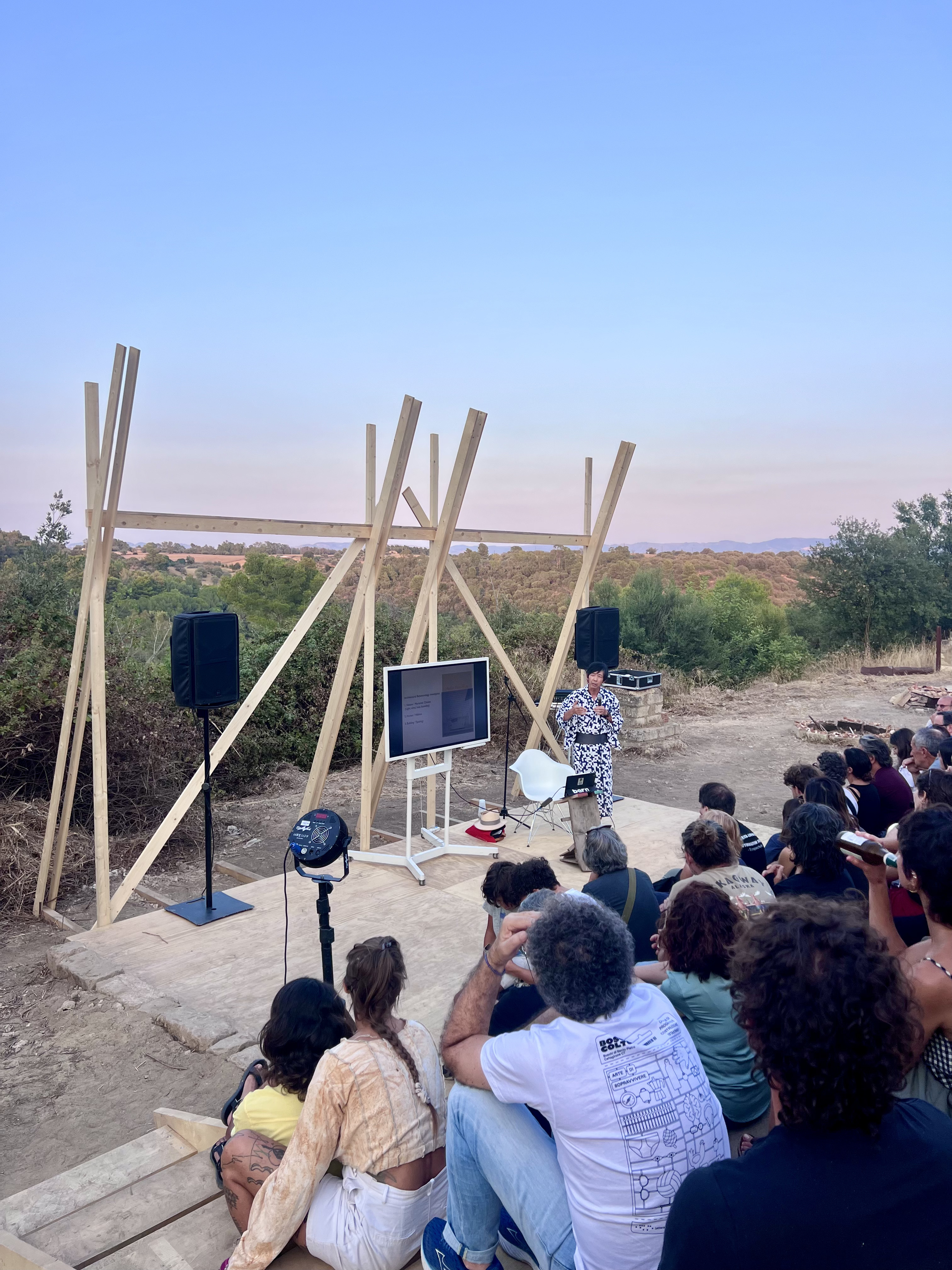
In 2025, the Sicilian Satoyama workshop, with the participation of Yoshiharu Tsukamoto (Atelier Bow-Wow), extended this approach to the territorial scale, connecting forest and agriculture through the dialogue between local knowledge and international practices.
Bosco Colto demonstrates how the integration of disciplines, practices and communities can generate shared transformation processes, in which knowledge, design and terr
Bosco Colto is based on a hybrid and progressive economic model that combines public and private resources, educational activities and territorial contributions, ensuring long-term sustainability and adaptability to local conditions.
A central component is represented by educational and training activities, particularly the Bosco Colto Campus, which generates revenue through participation fees and collaborations with Italian and European universities. These are complemented by workshops, residencies, laboratories and educational programs that contribute to supporting annual activities.
The project also relies on public funding and grants at regional, national and European levels, related to territorial regeneration, landscape enhancement and cultural innovation. These include initiatives supported by the Sicilian Region and programs of the Ministry of Culture, such as the Italian Council.
Another key element is the collaboration with local actors, especially agricultural enterprises and local organisations, which contribute through logistical support, materials and services, reducing costs while strengthening the local economy. This system activates forms of exchange that are not exclusively monetary, based on reciprocity and resource sharing.
The project also integrates cultural and digital production tools, such as the Observatory based on the DataHighway platform, opening future opportunities linked to services, content development and heritage valorisation.
The financial sustainability of Bosco Colto lies in its ability to combine these different sources within a flexible system capable of evolving over time. The model does not rely on a single revenue stream, but on a network of relationships, activities and opportunities that ensure continuity, resilience and strong territorial grounding.
Bosco Colto presents transferable elements that can be applied in other contexts; however, its scalability does not rely on a standardized model, but on an approach grounded in situated knowledge of places. The project offers a set of adaptive practices and tools that must be reinterpreted according to the ecological, cultural and social specificities of each territory.
One of the key elements is the territorial campus model, conceived as a temporary activation device capable of engaging local communities, universities and professionals in collective processes of research, design and construction. While the structure of this format is replicable, each experience develops from the specific conditions of the site, avoiding the reproduction of predefined solutions.
Self-building and reuse practices, based on the use of local and reclaimed materials, represent another transferable component. These practices are not replicated uniformly, but are shaped by available resources, traditional techniques and local environmental conditions, generating context-specific solutions.
The project is also scalable through its participatory processes, which involve residents, associations and local actors in the definition and management of activities. In this case as well, the model adapts to local social dynamics and forms of organization.
Bosco Colto demonstrates that scalability should not be understood as the replication of a fixed format, but as the capacity to activate adaptive and context-based processes, grounded in listening, interpretation and a strong relationship with place. In this sense, the project is replicable in its practices, while remaining deeply rooted in the specific conditions of each territory.