Enablers for New European Bauhaus Transformation
Alnarp's Agroecology Farm
Alnarp's Agroecology Farm - Pushing the Boundaries of Agroecology in Practice
Alnarp's Agroecology Farm is a youth-led living laboratory in southern Sweden where food, community and ecological regeneration grow together. Founded by students in 2021, the farm produces 10 tons of organic vegetables annually, restores degraded soils and welcomes thousands of volunteers, students and local residents. It proves that sustainable, beautiful and inclusive food systems are not a distant ideal but that they are already growing.
Sweden
Local
Alnarp, Lomma, Malmö, Lund
It addresses urban-rural linkages
It involves other types of transformations (soft investment)
Yes
2026-01-01
Yes
Horizon Europe research funding; NEB Connect 2025
No
No
Organisation
Alnarp's Agroecology Farm (AAF) is a youth-led, community-based agroecological model farm in southern Sweden demonstrating how sustainable, inclusive, participatory food systems can be realised in practice. Founded in 2021 by students at the Swedish University of Agricultural Sciences (SLU), AAF addresses a key challenge of Europe's food transition: translating sustainability research into tangible, community-rooted solutions.
AAF functions as a living lab where food production, education, research and community engagement are integrated. It primarily benefits local residents, (international) students, young farmers, researchers and volunteers. Through advocacy and education it contributes to generational renewal across EU agriculture. Specific objectives include soil restoration, ensuring accessible entry points to farming, supporting youth leadership, and bridging academia, practice and policy.
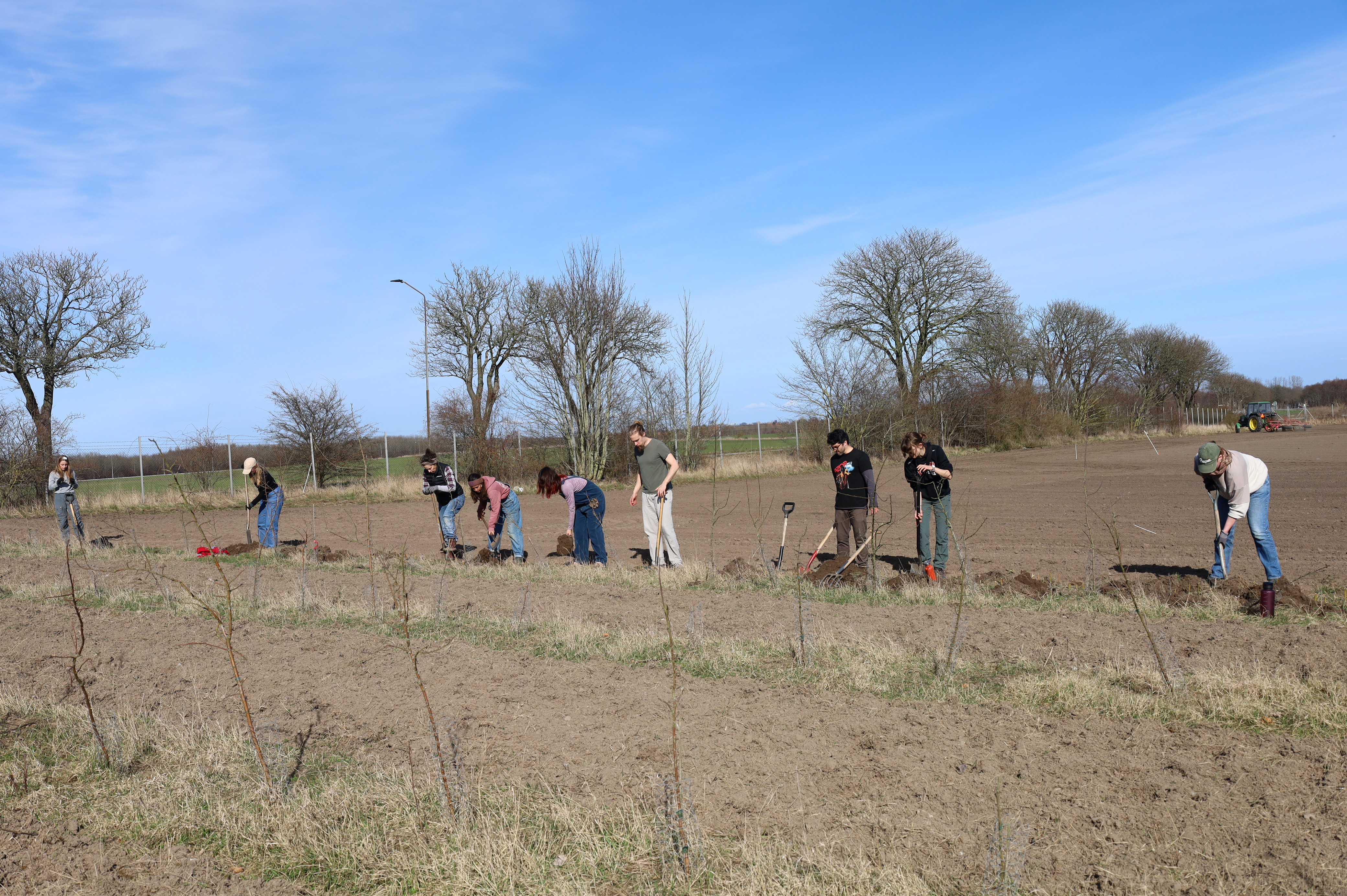
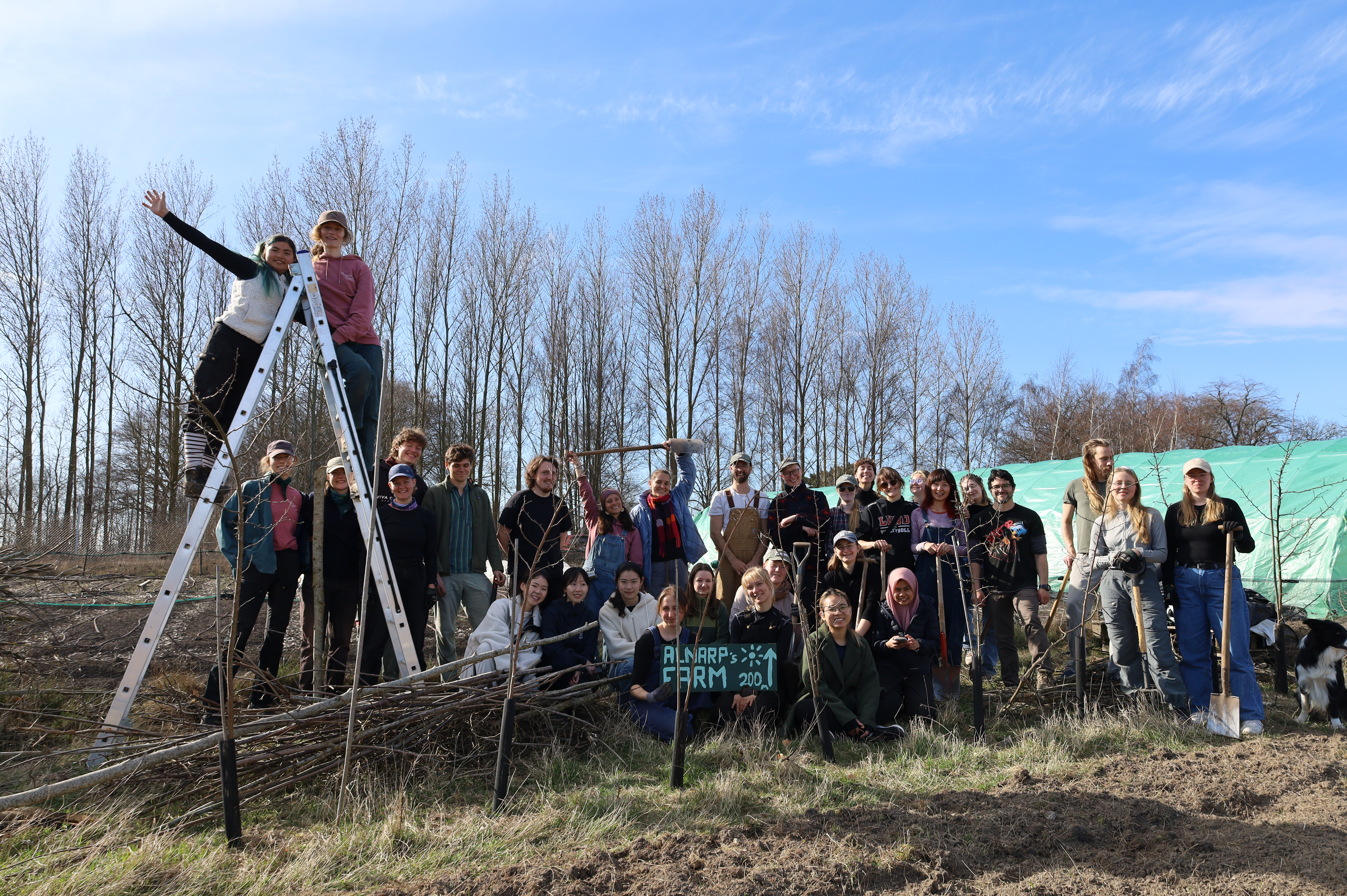
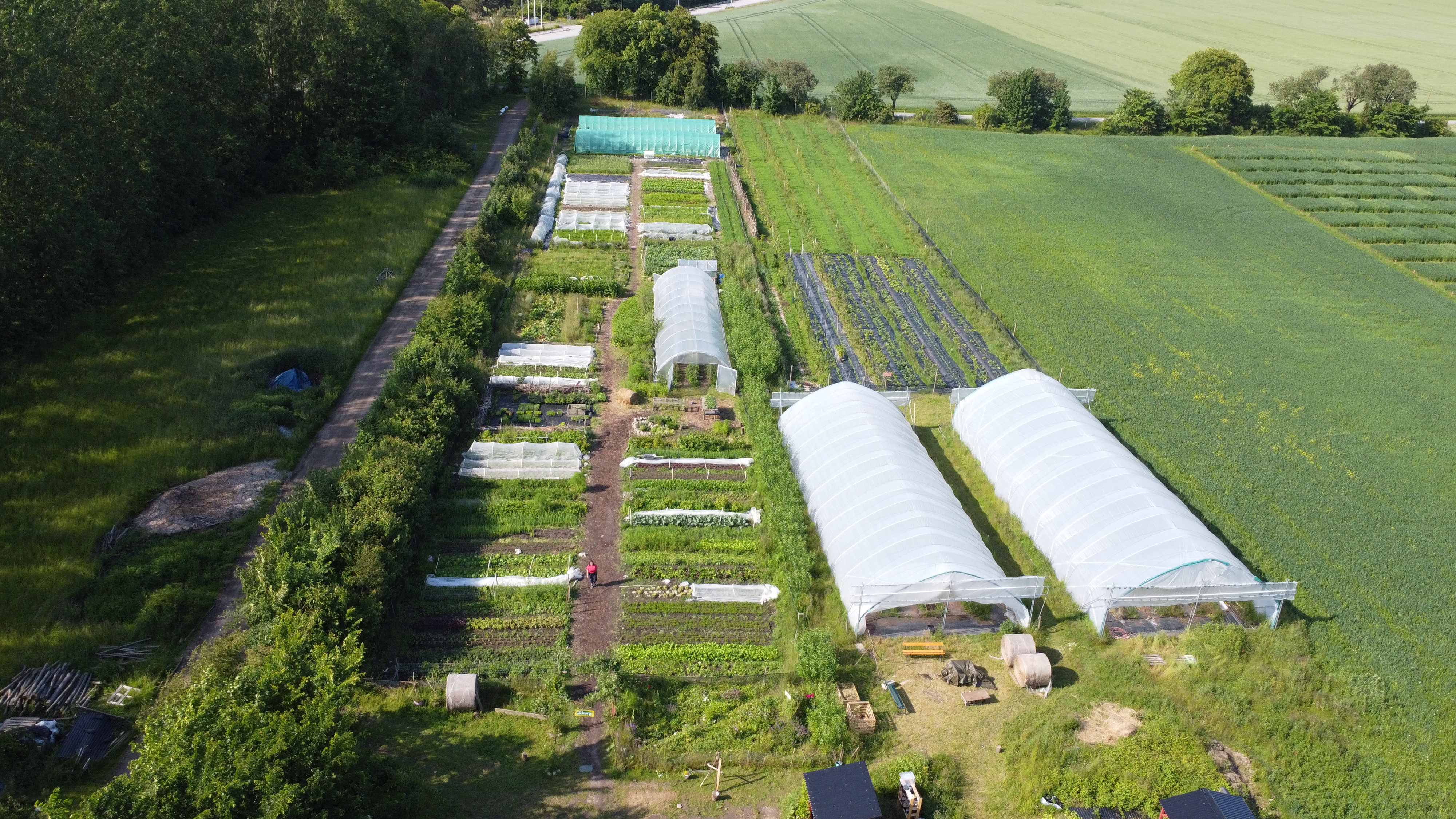
Although AAF continues to work on food systems transformation, the project’s original objective was reached in 2025: to create a fully-functioning agroecological model farm. In just four years, AAF has established itself on the land, developed a Community Supported Agriculture (CSA) scheme supplying over 400 seasonal customers with 10 tons of vegetables grown on less than 0.5 hectares. We planted over 1,000 trees alongside pollinator habitats and biodiversity corridors, thereby improving soil health and transforming degraded land into a regenerative agroecosystem. Over 3,000 students and community members have participated in our workshops and events, supported by over 350 volunteers. AAF collaborates with universities and European advocacy networks, serving as a test-bed for alternative food systems and participatory governance.
AAF's transformative potential lies in proving that ecological regeneration, community participation and youth empowerment can coexist in a viable, replicable model. One that's environmentally necessary, socially just, and genuinely beautiful.
Alnarp's Agroecology Farm grew from a question posed by students at SLU in 2021: what would a truly agroecological and community-rooted food system look like in practice? Recognising a gap between academic knowledge and farming systems shaped by industrial logic, our founders decided to close it by doing.
The initiative began as a student-led project transforming conventionally managed land owned by the university into a productive agroecological farm. From the outset it was a collective endeavour: students, researchers, local residents and volunteers all shaped the farm's vision, governance and activities, driven by the conviction that prefigurative change is both possible and necessary.
The implementation unfolded in phases. The first focused on research and co-design, drawing on agroecological science, no-dig market gardening and agroforestry. This was followed by hands-on implementation: soil restoration, vegetable beds, tree planting and biodiversity corridors. In 2022, our team formalised a non-profit with a management board whilst continuing as volunteers. By 2024, four members began receiving partial compensation, a meaningful step towards fair livelihoods. A significant milestone was also launching the CSA scheme, embedding the farm in the local community through a participatory producer–consumer relationship. Until the end of 2025, our team has developed educational programmes, open farming sessions, workshops and university collaborations alongside production, leading to the project’s success.
Agroecological food systems and soil health
Community-supported agriculture and co-design
Youth empowerment and generational renewal
Regenerative land stewardship and resilience
Participatory governance and social justice
Between 2021 and 2025, AAF has addressed environmental, social and economic dimensions of the current food system by demonstrating how agroecology can regenerate ecosystems and boost community resilience. Operating in one of Sweden's most intensively farmed regions, where monocultures and degraded soils have become the norm, our sustainability ambition is regenerative: not merely to preserve but to actively restore living systems and reconnect people with land. Our goals are clearly aligned with the EU Soil Mission 2030.
Our CSA scheme is characterised by short supply chains, reducing transports and packaging. Our production is based on no-dig market gardening, diversified cropping and agroforestry. Plenty of fruit trees and willows have been planted alongside pollinator habitats like deadwood hedges and flower patches. AAF operates without chemical pesticides and fertilizers, uses drip irrigation and its own composts to produce on-site soil amendments. This circular approach has significantly reduced (but not fully eliminated) material and energy inputs compared to conventional and many organic farms in the region.
Our strategies have produced measurable results. The farm has harvested over 10 tons of organic vegetables annually from less than 0.5 hectares, supplying over 80 households a season. Research conducted with SLU (Biundo, 2024) showed that soil organic matter on-site has more than doubled within two seasons, with improvements in microbial activity, biodiversity and water retention, significantly outperforming conventional baselines. Our contribution to soil health in Sweden has also been acknowledged in a book chapter co-published with renowned soil scientist Rattan Lal in 2026.
What makes the project exemplary is the integration of ecological regeneration with social sustainability. Prioritising the needs of all life forms, AAF has demonstrated a durable and replicable business model that provides its stewards with a sense of belonging and hope.
AAF has enhanced everyday life by transforming agricultural land into a place where ecological production, beauty and community come together. Our aesthetic ambition went beyond the functional: we activated the qualities of a working landscape, promoted belonging through collective experience, and integrated new cultural values around the land that feeds us.
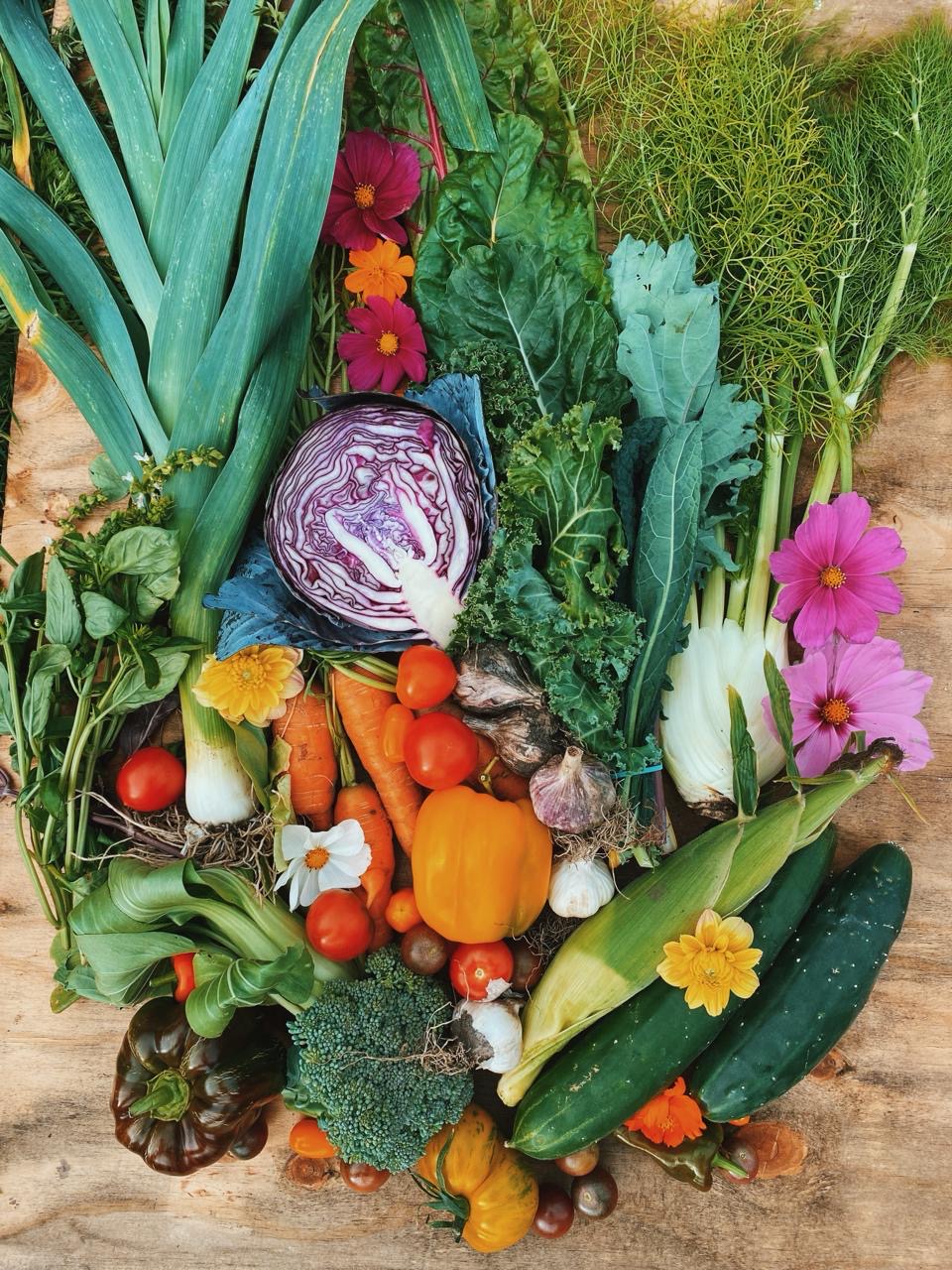
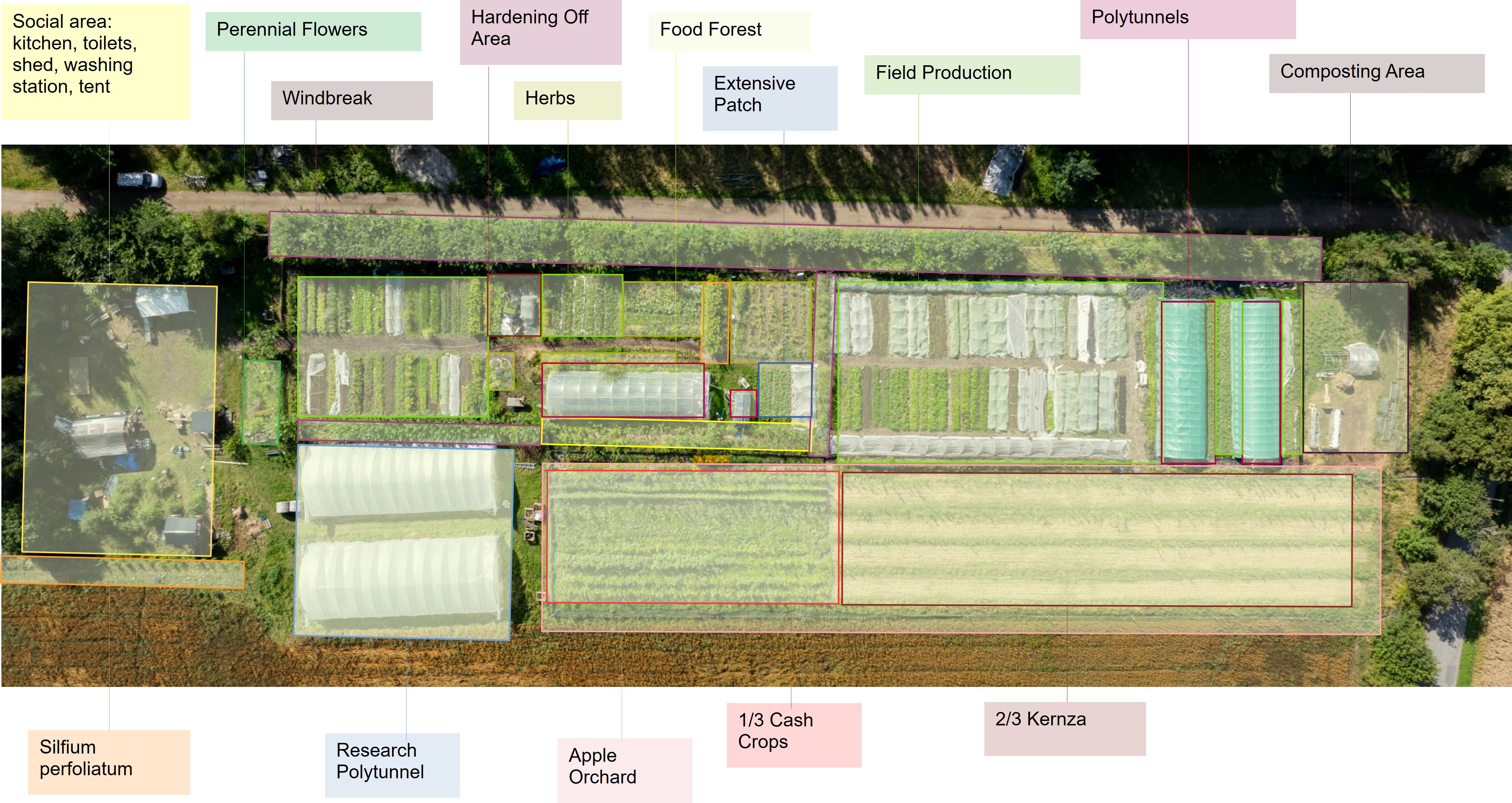
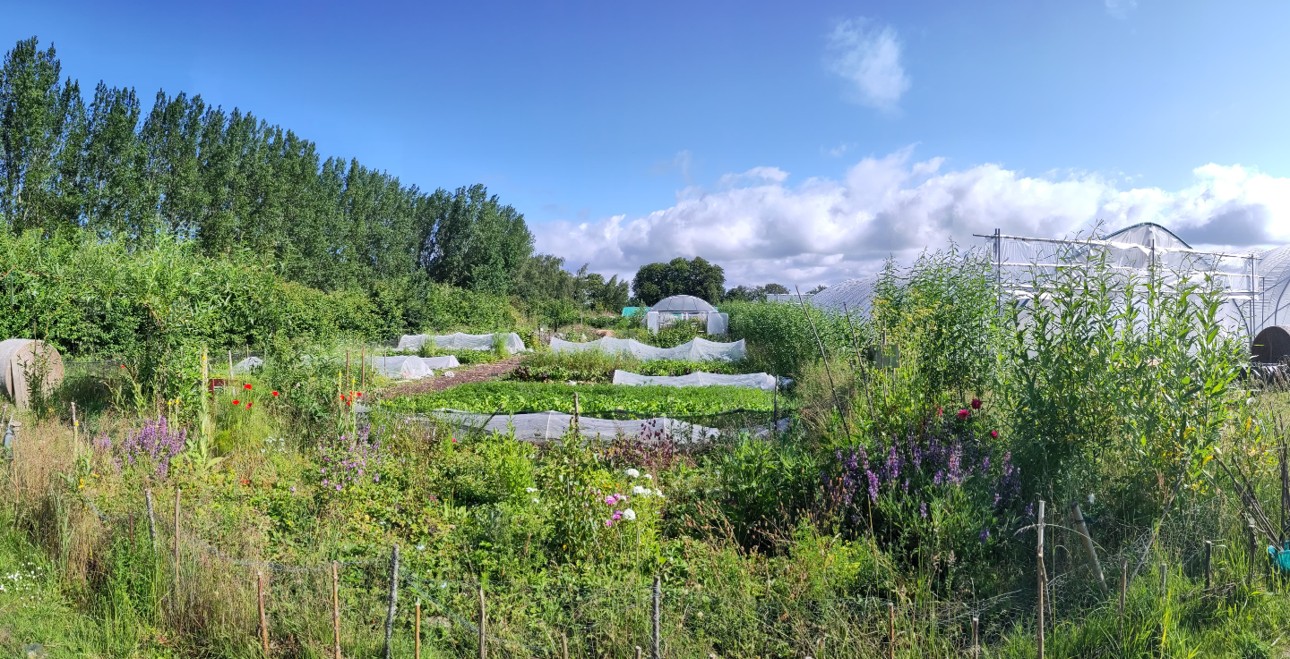
Our biodiverse landscape stands in stark contrast with the surrounding monoculture fields. More than 120 vegetable beds, flower strips, deadwood hedges, apple trees, a herb spiral and willow arches compose a visually rich, dynamic environment. Growing 35+ different crops per season creates a landscape that constantly changes. Beauty goes beyond the ornamental: flower strips attract pollinators and willow arches are wind-protective and habitat-forming, showing how the aesthetic and functional are inseparable.
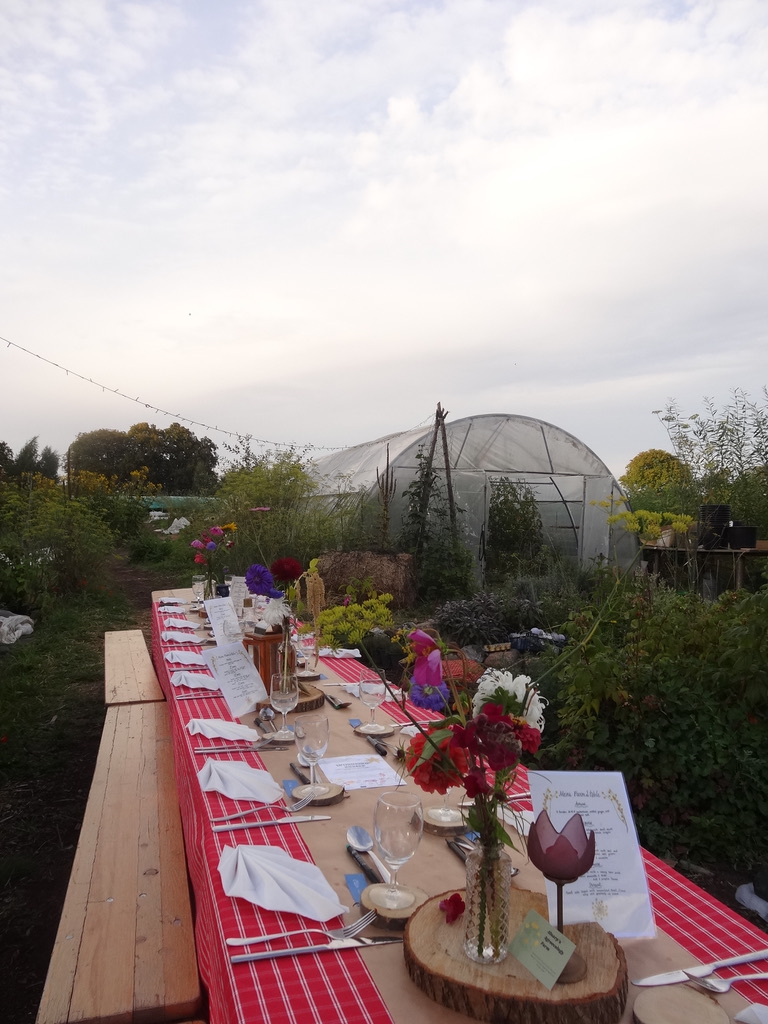
AAF is a sensory space. Visitors encounter colourful crops, hear birds and pollinators, dig their hands into healthy soil, and smell and taste freshly harvested vegetables. These multi-sensory experiences reconnect people with natural cycles often absent from everyday life. Prioritising beauty over efficiency creates a compound effect: it draws people in, and people bring care, connection and community.
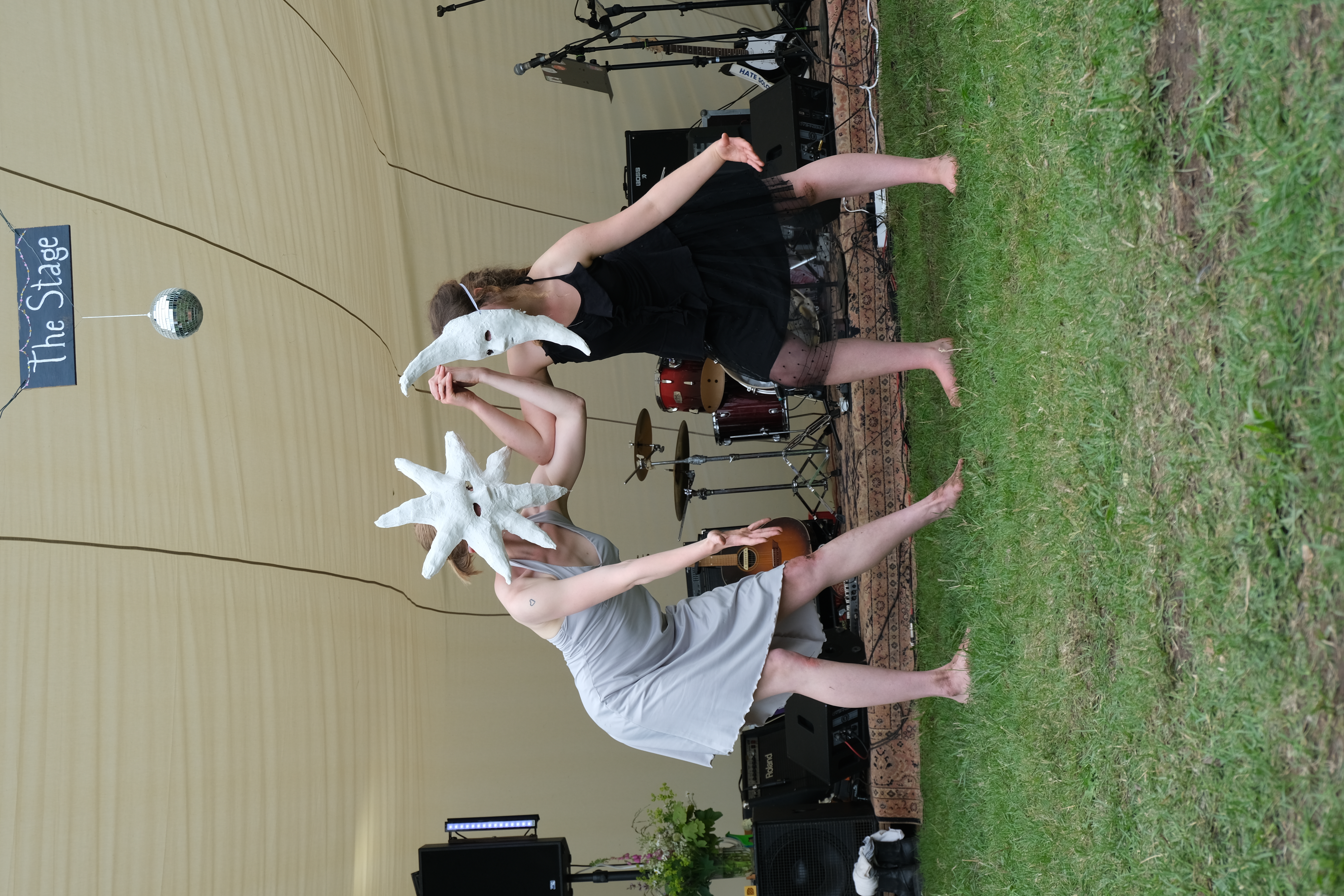
Through open farm days, festivals and shared meals, the farm created meaningful experiences building belonging and care for place. Eight festivals in four years gathered up to 1,000 participants around our clay ovens, inviting them to dance to live music and connect to their local foodscape.
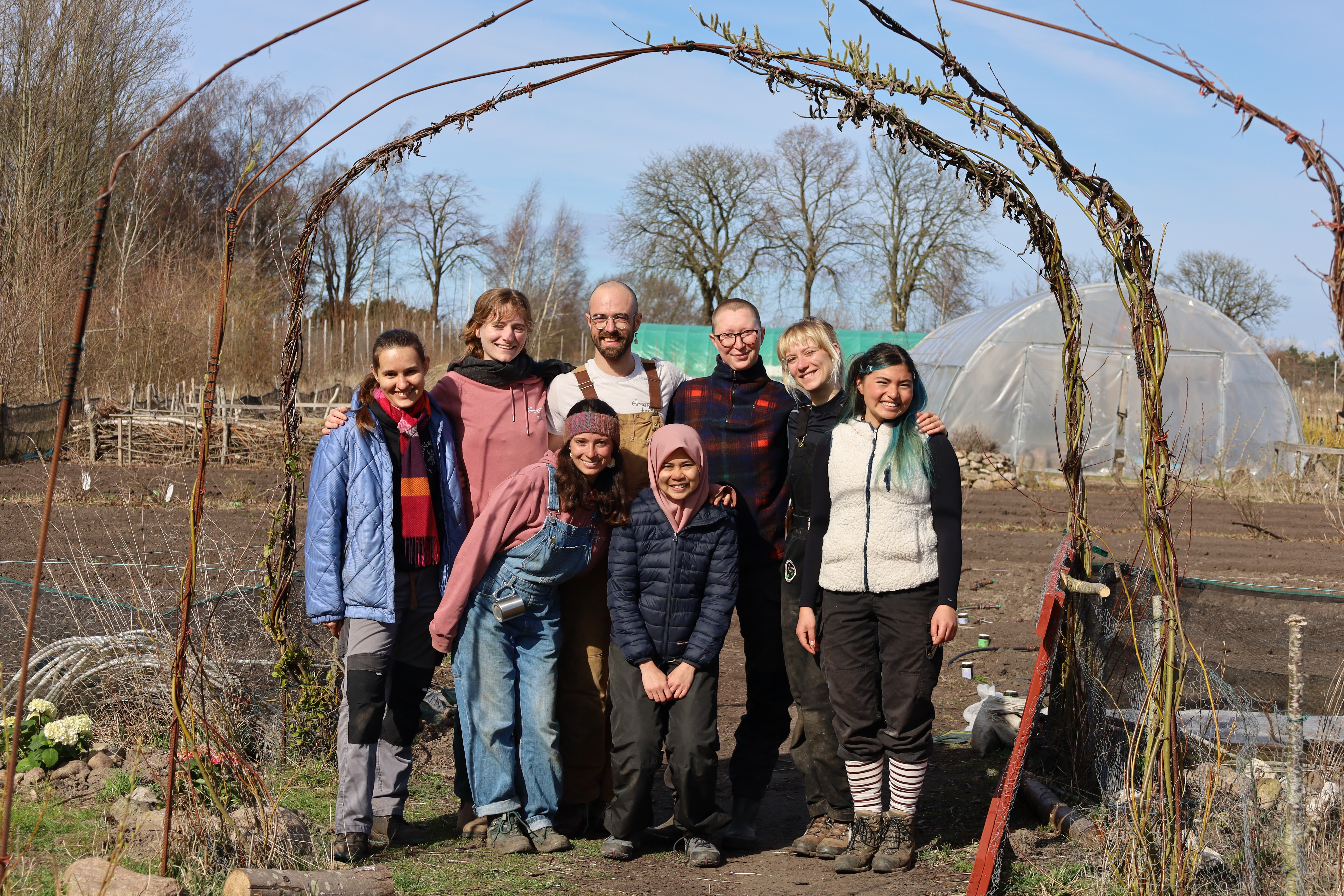
Participants experiencing farming for the first time became co-creators rather than passive observers. The community's diversity, with people from many countries sharing their food cultures and relationships to the land, further enriched this cultural dimension.
AAF reframes agriculture as beautiful, culturally meaningful practice that nourishes bodies, communities and the long-term bond between people and place.
AAF promotes social, cultural and governance-related inclusion by creating an open, community-based space where people from different backgrounds can meet, learn and actively shape a more just food system. Our inclusion ambition isn’t merely to grant access, but to build shared ownership and new models of participation that challenge typical barriers within agriculture.
Inclusion has been ingrained in the farm's activities and governance. In 2025, the farm delivered to three different pick-up points and offered ten solidarity shares in the CSA to allow students, recent migrants or low-income families to access same produce at reduced cost, reinforcing inclusion without stigma. Open farming sessions, workshops and events were usually free of charge, conducted in both Swedish and English and designed to be kids-friendly. However, we struggled so far to make our space accessible to people with physical disabilities, which we hope to address in the future.
The farm has actively promoted gender equality and diversity in its organisation. The board in 2025 consisted of over 50% women and gender-queer individuals; workshops were frequently facilitated by women and non-binary people. AAF seeks to be a welcoming environment for LGBTQ+ participants and integrates discussions of diversity into its educational programme.
The farm has connected students from dozens of different countries with residents and families from Lomma, Malmö and Lund. In a context where newcomers often experience social distance, it has provided a space where people collaborate and share experiences through hands-on work with the land. Sociocratic governance ensures volunteers can contribute to decision-making based on their own capacities, creating genuine pathways from participation to shared leadership.
We aim to be role models for agroecological farming with inclusive governance, intercultural exchange and gender equity, demonstrating that food spaces will be platforms for social transformation.
AAF has been built on participatory principles at the highest level of ambition: enabling communities to self-govern, initiate and sustain collective action over time. Citizens, students, and researchers were not seen as merely beneficiaries, but as co-creators of the farm's direction, daily functioning and long-term identity.
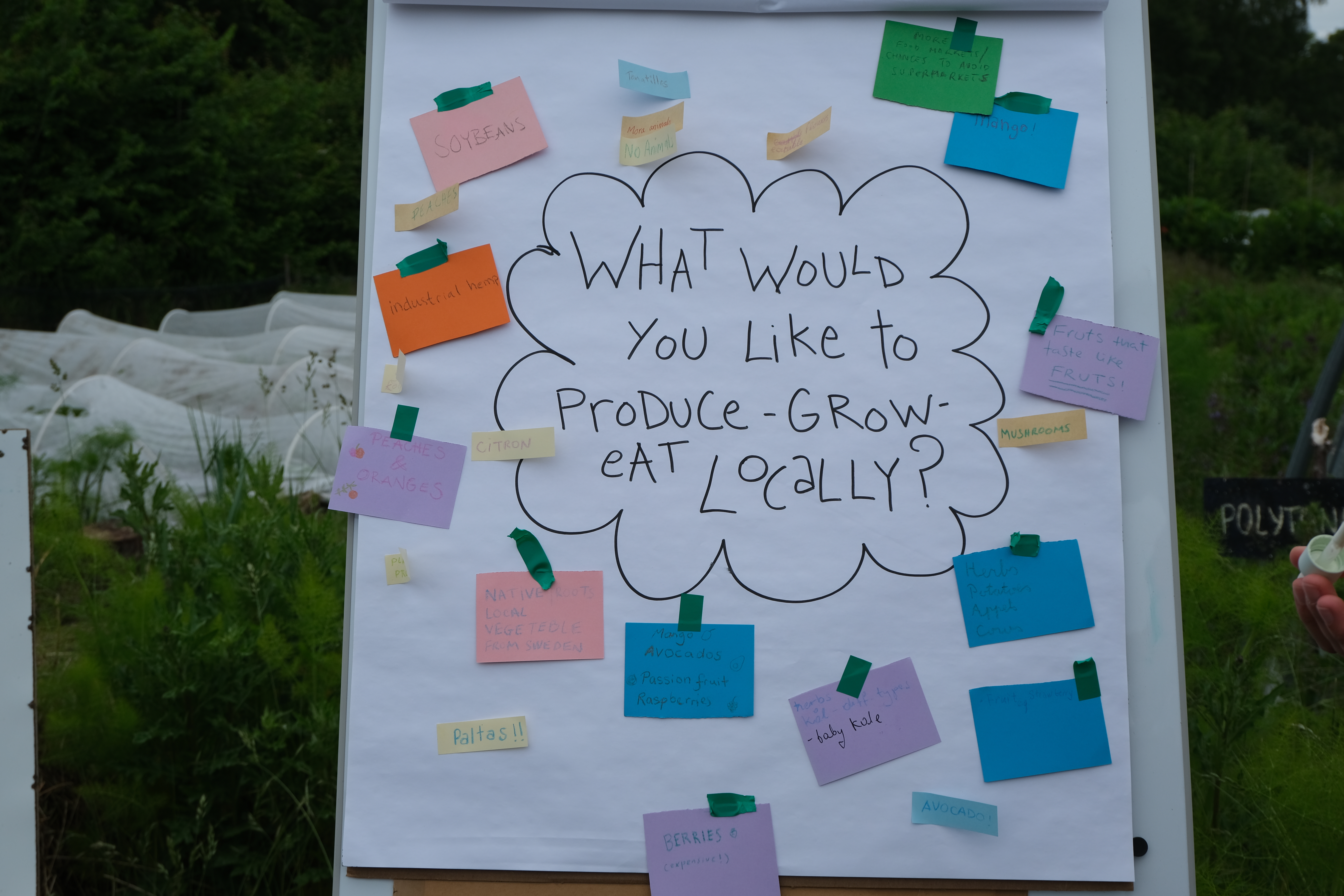
From the outset, the project was shaped collectively by SLU students and local communities, who co-designed the farm drawing on permaculture and agroforestry, making decisions on cultivation methods, organisational structure and community engagement. As the project evolved, participation expanded to local families, civil society organisations and CSA members who give feedback on crops grown.
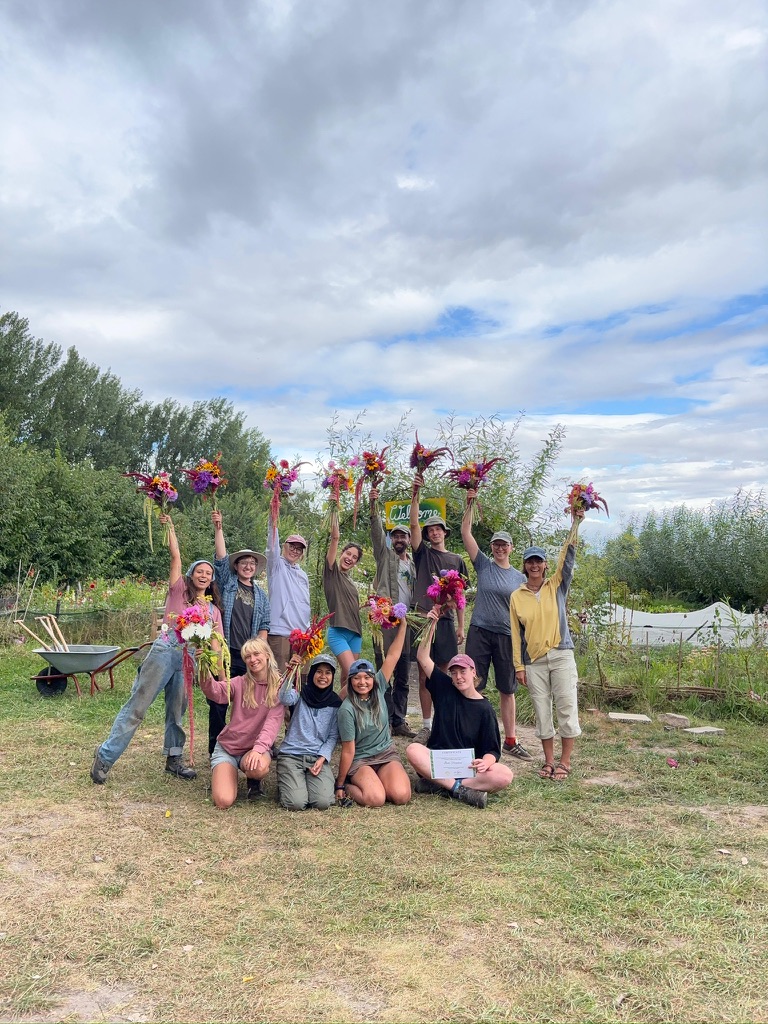
By 2025, participation operates across levels. Community members engage through open farming sessions and seasonal activities: planting, harvesting and composting together. Governance is organised through sociocracy, enabling transparent and horizontal decision-making. Volunteers contribute without formal commitment; as engagement deepens, they take on coordination roles, board membership or staff positions. All board members began as volunteers or interns, showing a lived pathway from participation to shared governance.
CSA members and local residents shape the farm through ongoing dialogue, influencing crop planning, distribution and programming. The farm values openness to failure, collective learning and accessibility.
The result is a community of over 350 volunteers, over 80 CSA households and thousands of participants who are not merely engaged but genuinely invested. Their involvement brings new knowledge, cultural perspectives and skills, improving resilience and creativity. Participatory processes, when genuinely embedded in governance and daily practice, strengthen community ownership and sustainability, transforming agriculture into a shared social practice rather than an isolated production activity.
AAF has operated through collaboration across governance levels, connecting our local community with academic institutions, municipal actors and EU advocacy networks. We combine local rootedness with systemic thinking.
At the local level, our farm has engaged residents and families from Lomma, Malmö and Lund through our CSA, farming sessions and educational activities. As a member of Malmö Food Council, AAF has contributed to the city's Food Vision 2035 and to policy recommendations ensuring small-scale farmers' perspectives in food strategies. Policy and research recommendations were also presented to Lomma and SLU, resulting from a NEB Connect 2025 project using participatory methods to make citizens' voices heard in building a more resilient food system.
AAF regularly collaborates with SLU and Lund University, supporting research, student learning and knowledge exchange, including shaping the master's curriculum in Agroecology. The farm co-leads courses, hosts student research, and contributes to teaching across Europe.
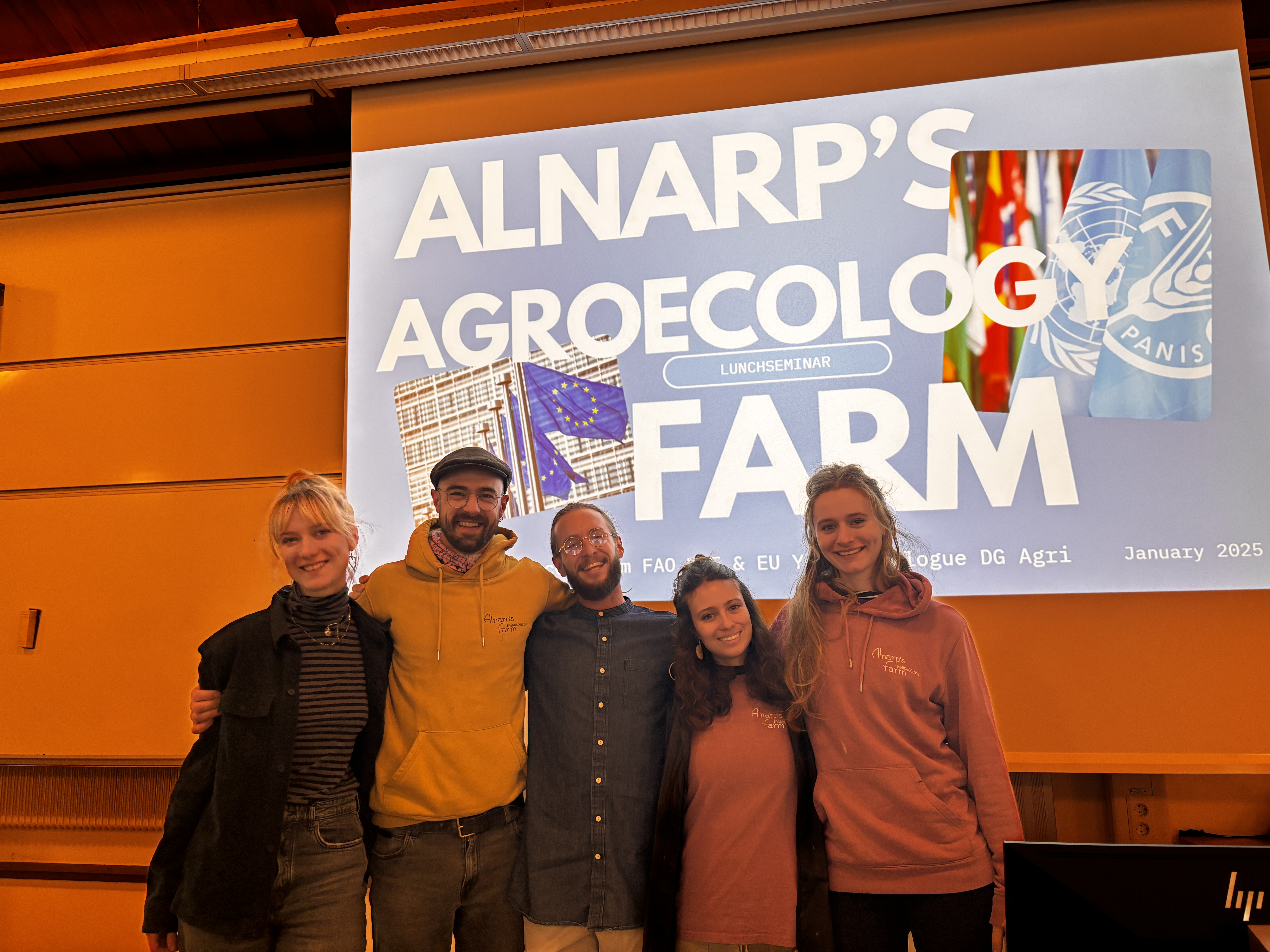
AAF engages with NordBruk, Agroecology Europe, the European Coordination Via Campesina, Slow Food Europe and SIANI to ensure practicing farmers are represented in advocacy. This led to invitations to the FAO World Food Forum 2024, EIT's Next Bite 2025, and the European Youth Policy Dialogue 2025, enabling direct engagement with the EU’s DG Agriculture. A scientific book chapter on soil health practices at the farm will be published in 2026 alongside renowned soil scientist Rattan Lal.
This multi-level engagement brought concrete added value: local experimentation informed policy; academic research stayed grounded in community realities; and grassroots voices reached European institutions. Communities provided participation, universities offered expertise, and EU networks enabled advocacy. For us as a youth-led farm, this embeddedness across scales has provided legitimacy, resources and the vital sense of being part of a larger movement.
AAF has embodied a beyond-disciplinary approach in which scientific expertise is grounded in society and community knowledge is valued alongside formal research. This is intrinsic to agroecology itself: simultaneously a science, a practice and a social movement.
The farm has integrated knowledge from multiple fields. Agroecology, soil science and environmental science informed cultivation practices including no-dig market gardening, biodiversity corridors and agroforestry. Social sciences and community development shaped participatory governance. Law, economics and organisational theory informed the CSA model, sociocratic governance and approaches to fair compensation.
These disciplines interact through shared working environments rather than separated silos. Students, researchers, farmers and volunteers worked together in the fields, contributed to on-site research and co-created workshops. Theoretical knowledge and practical experimentation continuously informed one another.
Crucially, non-academic knowledge, the experience of long-term volunteers, feedback from CSA members, and the intuitions of young farmers learning through their hands, was actively sought and integrated into decision-making. Open strategic meetings, co-created workshops and community-driven project ideas all reflected this. A collaborative workshop with SIANI at the Degrowth Conference 2025 brought together researchers, practitioners and activists in a shared inquiry.
The benefits are concrete: more innovative responses to complex challenges, stronger community ownership, greater resilience, and the cultivation of agency and hope. By treating food system challenges as problems to be addressed collectively and across disciplines, backgrounds and knowledge systems, AAF has demonstrated that transdisciplinary collaboration is not simply a method, but a way of being and working together.
AAF operates through a community-based, diversified economic model integrating food production, education and public engagement. Built through a student initiative and grown via CSA revenues, vegetable sales, events, project grants and volunteer work.
Our core financial pillar is our CSA scheme: over 80 local households receive vegetables and flowers over 20 weeks per season. Consumers subscribe for a full season, building a long-term customer base that shares risks and benefits of production when yields vary. The CSA provides both financial resilience and social embeddedness. It also embeds social justice through solidarity shares for lower-income households, ensuring access to healthy, locally grown food. Multiple pick-up points reduce accessibility barriers and connect urban communities with the land that feeds them.
Additional revenue comes from restaurant and market sales, workshops, festivals, agricultural consulting and research collaborations. Compensating four employees was reached in 2024, a meaningful achievement within our non-profit model where revenues are reinvested into education and organisational continuity. External funding supports free community events and student research projects. Ongoing costs like personnel, rent, seeds, compost and tools are carried through these diversified income streams.
AAF demonstrates how small-scale agroecological farming can be embedded in a community-supported, knowledge-driven economy: an alternative to industrial agricultural logic, especially since the farm is too small to access EU CAP funding. The model is standardised yet locally adaptable. A handbook is our main focus in 2026, and universities such as the University of Hohenheim are already seeking advice, proving scalability while emerging as a new revenue stream. NEB Prize support would allow us to consolidate and document a model that others can replicate.
AAF offers a model that can be replicated and adapted across regions and communities, and has already attracted significant international interest.
Several core elements are highly transferable. The CSA model can be implemented in many contexts to build direct producer–consumer relationships whilst providing farmers with predictable income. Agroecological cultivation practices such as no-dig market gardening, diversified cropping, compost-based fertility and agroforestry require little specialist machinery and can be adapted to different soils, climates and cultural contexts. The participatory governance model, organised through sociocracy with accessible entry points and clear pathways to leadership, is equally transferable.
AAF approaches scaling in four complementary ways: scaling out through replication and knowledge sharing; scaling deep by intensifying local relationships between soil health, education, governance and culture; scaling up through policy engagement and institutional collaboration; and scaling beyond by reshaping conditions in the agri-food system, challenging definitions of success that prioritise yield over soil health, biodiversity and community well-being.
For us, replication requires certain enabling conditions: access to land, local partnerships and agroecological knowledge. We share knowledge about setting up similar projects across the world with our volunteers and interns, in research projects, by consulting other universities and by contributing to European farmers’ networks.
Importantly, scaling at AAF is relational and knowledge-based rather than dependent on land accumulation. Our impact has multiplied through places and people who carry agroecological values and practical skills from our farm into new contexts. Agroecological transitions don't require much initial capital or ideal conditions; they require willingness to collaborate, learn and reimagine relationships with soil and food. AAF exists to show that this is possible.