Enablers for New European Bauhaus Transformation
AIA – Accessible Intelligence Assessment
AIA: The World’s First Universally Accessible Intelligence Assessment Platform
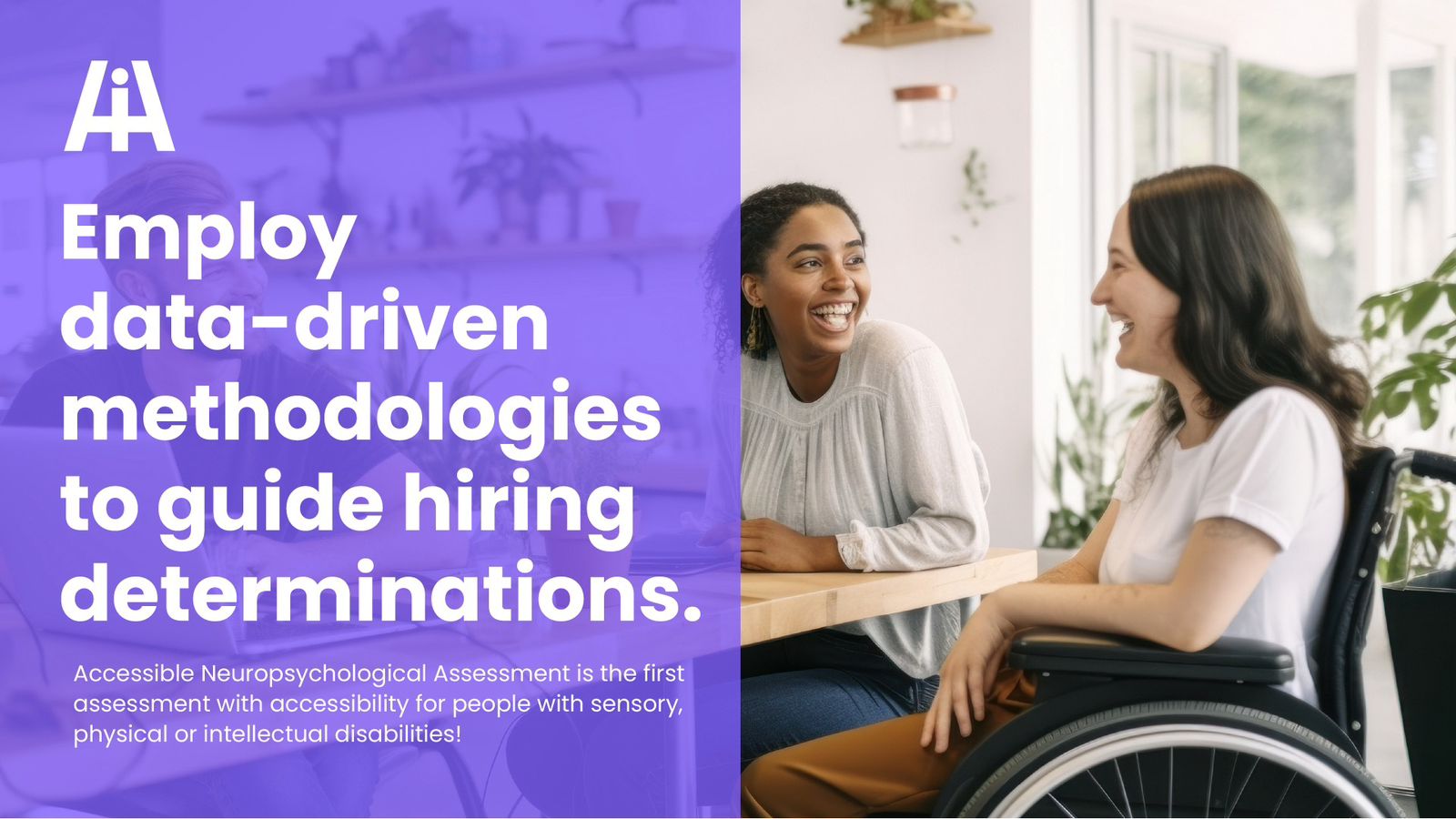
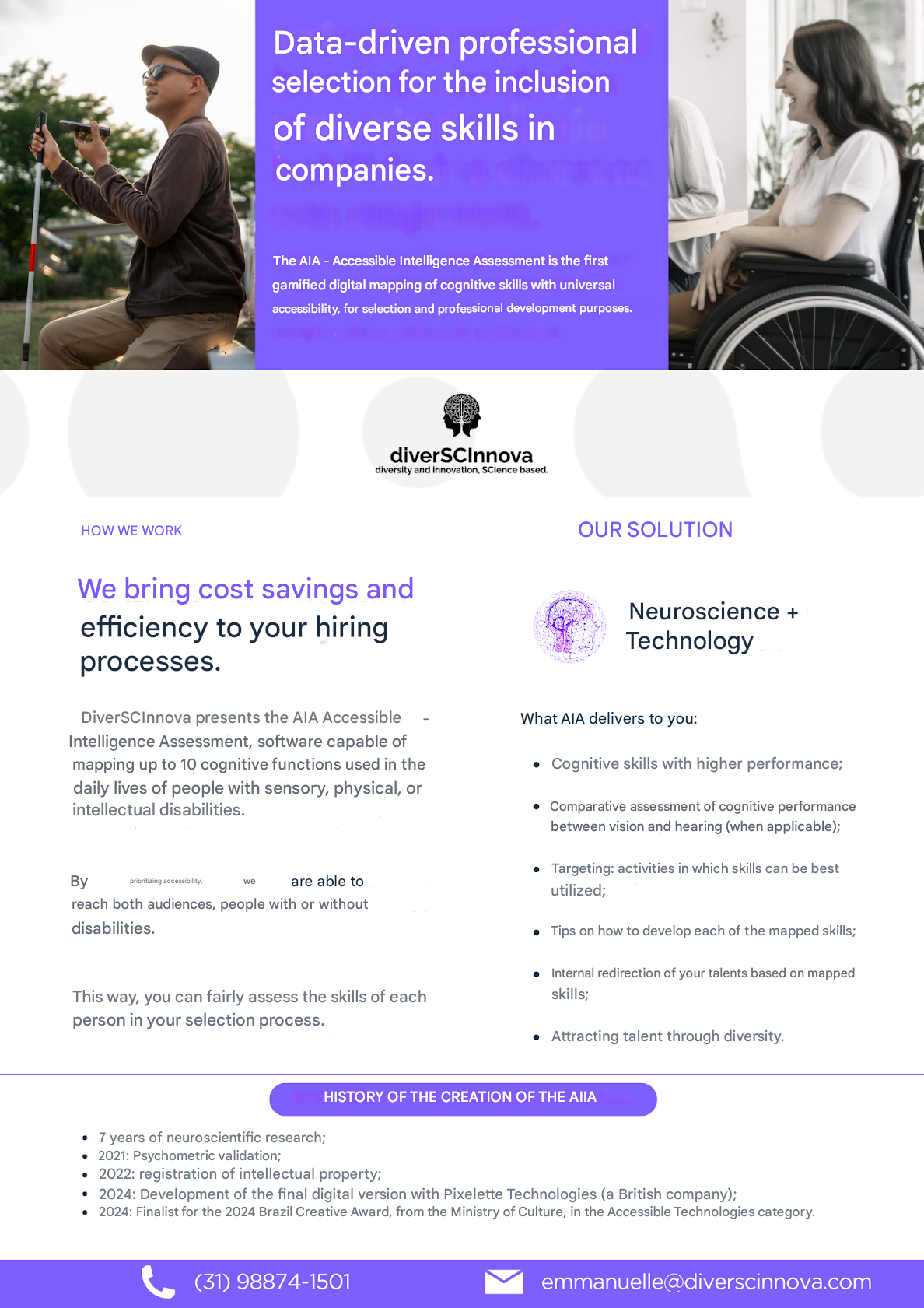
AIA (Accessible Intelligence Assessment) is the world’s first cognitive assessment platform designed with universal accessibility from the ground up. Through gamified and inclusive design, it enables people with and without disabilities to demonstrate their cognitive strengths on equal terms. By transforming how intelligence is assessed, AIA opens new pathways to education and employment while generating data that helps organizations build truly inclusive systems.
Brazil
National
Mainly urban
It involves other types of transformations (soft investment)
Yes
2026-01-30
No
No
No
Organisation
AIA (Accessible Intelligence Assessment) is the world’s first cognitive assessment platform designed with universal accessibility at its core. Developed by diverSCInnova, the project addresses a structural barrier that has historically excluded millions of people: the lack of accessible psychological and cognitive assessment tools for individuals with disabilities.
During its pilot phase, more than 300 participants with diverse disabilities—including blind, deaf, and autistic individuals—were able, for the first time, to have their cognitive abilities mapped under equitable conditions. Traditional assessment systems often exclude these populations due to inaccessible formats or rigid testing environments. AIA transforms this paradigm through a gamified, accessible digital platform that enables people with and without disabilities to demonstrate their cognitive strengths on equal terms.
The platform is also being implemented within Mais Acesso Conecta, a public initiative aimed at expanding opportunities for people with disabilities through accessible technologies and inclusive employment pathways. Through this implementation, AIA contributes to building new bridges between talent identification, education, and the labour market.
Early results demonstrate that accessible assessment not only removes barriers but also reveals forms of intelligence that traditional systems fail to capture. By generating structured data on cognitive strengths across diverse populations, AIA creates the foundation for a new inclusive intelligence dataset.
In the long term, this data has the potential to support scientific research and inform public policies related to education, employment, and disability inclusion. By transforming how human potential is identified and recognised, AIA contributes to more inclusive labour markets, evidence-based policymaking, and fairer systems of opportunity worldwide.
AIA emerged from more than a decade of work at the intersection of psychology, neuroscience, and disability inclusion. Its creator, psychologist and researcher Emmanuelle Fernandes, worked closely with individuals whose abilities were often underestimated because traditional evaluation systems were not designed for them.
Over time, a clear pattern became visible: the problem was rarely a lack of ability, but the design of the systems used to measure it. Most cognitive assessments assume uniform sensory, communication, and interaction abilities, unintentionally excluding millions of people with disabilities or diverse neurocognitive profiles.
This insight led to the creation of AIA. From the beginning, the project was guided by the principles of Universal Design, an approach that aims to create products and systems usable by the widest possible range of people without the need for adaptation. Instead of retrofitting accessibility later, universal design integrates accessibility as a fundamental design principle.
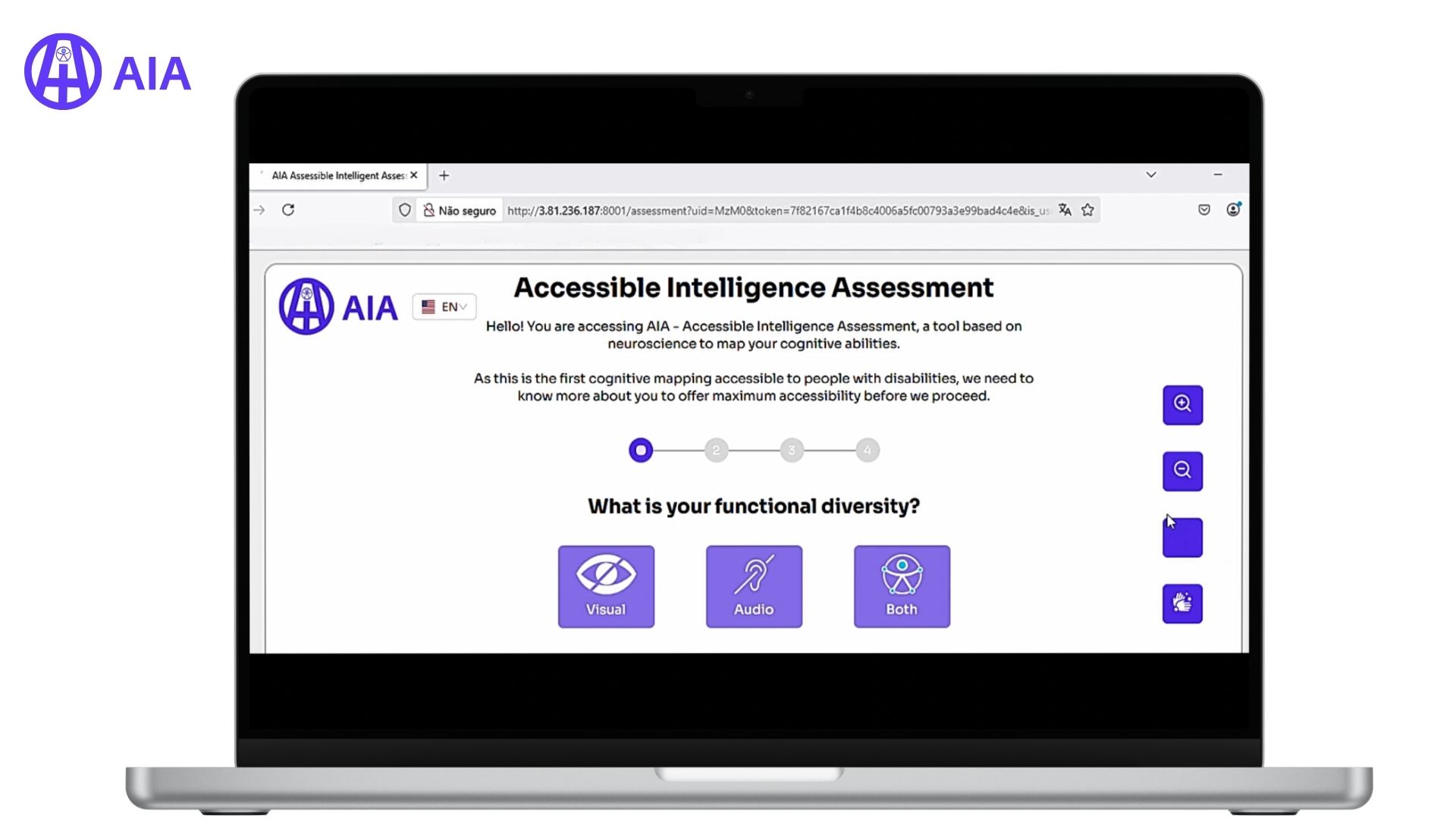
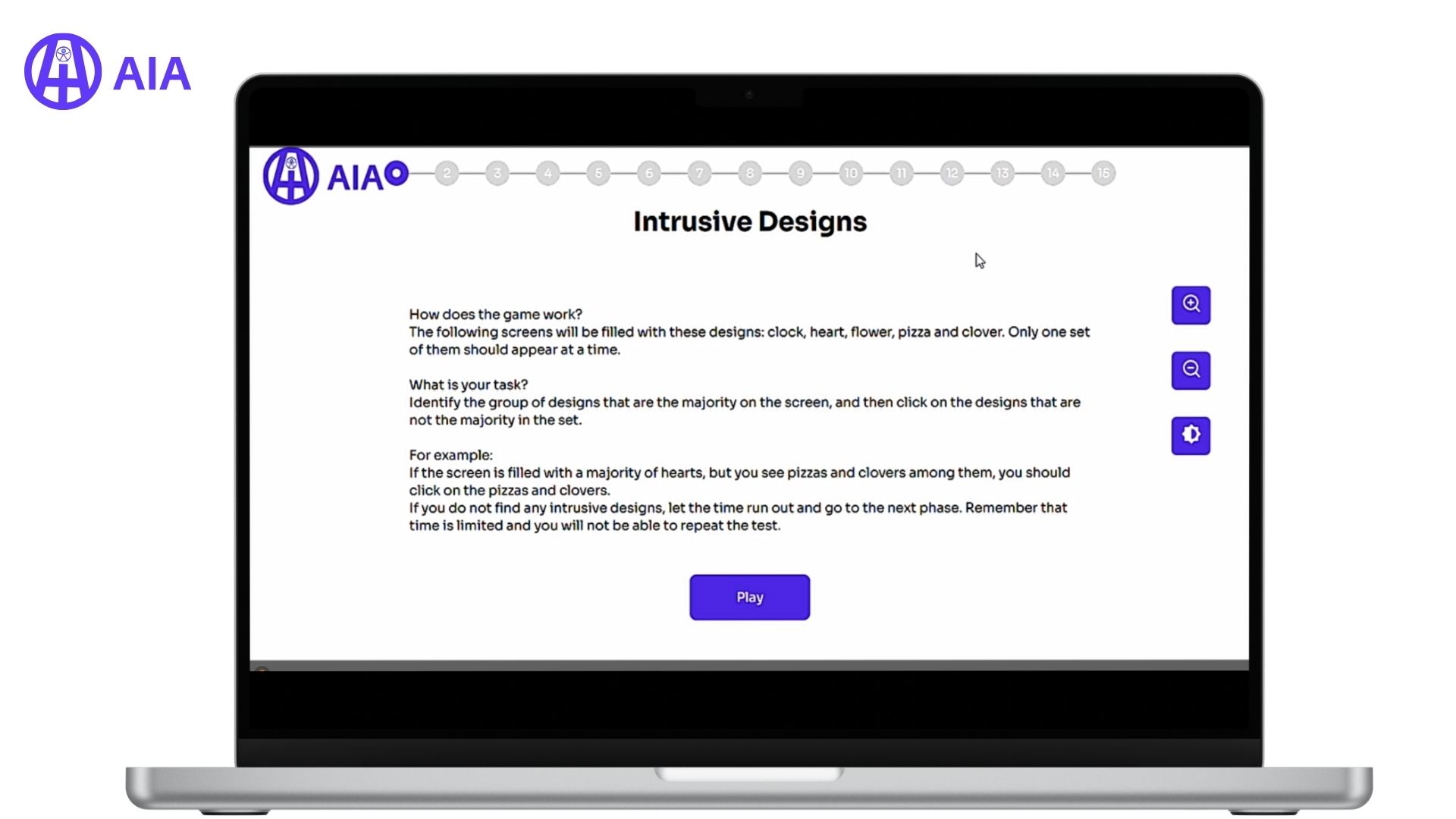
Applying this concept to cognitive assessment required rethinking the entire testing experience. AIA replaces rigid and exclusionary formats with interactive, gamified tasks that allow users to demonstrate reasoning, creativity, and problem-solving in ways that respect different sensory and cognitive profiles.
Accessibility was embedded into the platform’s structure, from communication and navigation to interaction design, so that people with diverse abilities could engage with the system independently and confidently.
The result is not only a new type of assessment tool but a redesign of how human intelligence can be discovered. By combining science, inclusive design, and digital technology, AIA transforms evaluation into an accessible and empowering experience, opening new pathways for recognising human potential.
Universal accessibility design
Inclusive employment
Cognitive diversity
Data-driven inclusion
Human-centered technology
AIA addresses a critical social and economic sustainability challenge: the systemic exclusion of millions of people from education and employment due to inaccessible evaluation systems.
Globally, many recruitment and educational processes depend on cognitive assessments that were not designed for people with disabilities or diverse neurocognitive profiles. As a result, talent remains invisible and opportunities are unevenly distributed.
AIA contributes to sustainable societies by transforming how human potential is recognised. By making cognitive assessment accessible, the project enables organisations to identify talents that would otherwise remain overlooked. This leads to more inclusive labour markets, stronger social participation, and better use of human capital.
The platform is built as a scalable digital infrastructure, which allows it to reach large numbers of users with minimal environmental impact compared to traditional in-person testing processes. Its digital format reduces the need for physical infrastructure and printed materials while enabling remote participation.
From an economic perspective, AIA supports organisations in developing more inclusive and efficient talent identification processes. By revealing cognitive strengths in a wider population, it contributes to innovation, productivity, and long-term economic resilience.
In this way, AIA demonstrates that sustainability is not only environmental but also social and systemic. By enabling fairer access to opportunities and better recognition of human potential, the project contributes to building more resilient and equitable societies.
In the context of AIA, aesthetics is understood as the quality of human experience. The project seeks to transform an often stressful and exclusionary process—cognitive assessment—into an engaging, respectful, and empowering experience.
Traditional testing environments can create anxiety and reinforce feelings of inadequacy, especially for people who face sensory, cognitive, or communication barriers. AIA redesigns this experience through a human-centred and gamified interface that prioritises clarity, accessibility, and positive interaction.
The platform’s design focuses on simplicity, intuitive navigation, and accessible communication so that users with different abilities can interact with the system comfortably and confidently. Visual and interaction elements are carefully structured to minimise cognitive overload while maintaining engagement.
By turning assessment into an interactive exploration of cognitive strengths, AIA helps users experience evaluation not as judgment but as discovery. This shift contributes to a sense of dignity and belonging, particularly for individuals who have historically felt excluded by traditional systems.
Beyond the individual experience, AIA contributes to a broader cultural transformation. It challenges the idea that intelligence must be measured through rigid and inaccessible formats, proposing instead a more inclusive and humane approach to recognising human potential.
In this sense, the project demonstrates that beauty in design can emerge from inclusion, empathy, and respect for the diversity of human minds.
Inclusion is the central principle guiding the development of AIA. The project was created to address a fundamental barrier: the lack of accessible cognitive assessment systems that allow people with disabilities and diverse neurocognitive profiles to demonstrate their abilities fairly.
Most traditional assessment tools rely on rigid formats that assume uniform sensory, cognitive, and communication abilities. These assumptions exclude many individuals, not because they lack ability, but because the systems used to evaluate them were not designed for diversity.
AIA applies principles of universal design to ensure that the evaluation experience can be accessed and understood by a wide range of users. The platform integrates accessible communication, flexible interaction, and gamified tasks that allow users to demonstrate cognitive skills in multiple ways.
By removing barriers in the assessment process, AIA opens pathways to education, employment, and professional development. Organisations using the platform gain access to a broader and more diverse talent pool, while individuals gain the opportunity to have their abilities recognised.
The project also promotes a new societal model in which intelligence is understood as diverse and context-dependent. Instead of forcing individuals to adapt to inaccessible systems, AIA redesigns the system itself to accommodate human diversity.
Through this approach, AIA serves as an example of how inclusive design can reshape institutions and create fairer systems of opportunity.
AIA was developed through continuous interaction with individuals and organisations directly involved in disability inclusion and accessible education.
Throughout the design process, feedback from users with different sensory and cognitive profiles played a crucial role in shaping the platform. Their experiences helped identify barriers present in traditional assessment systems and informed the creation of more accessible interaction models.
Professionals working in recruitment, education, psychology, and disability advocacy also contributed insights regarding practical challenges in identifying and developing talent within inclusive environments. These contributions helped ensure that the platform would respond to real-world needs rather than purely theoretical assumptions.
Pilot users and partner organisations have participated in testing and refining the system, providing feedback on usability, accessibility, and practical applications. This iterative process allowed the project to evolve through real-world interaction and learning.
As a result, AIA reflects a participatory approach where people affected by inaccessible systems actively contribute to designing better alternatives. Their involvement helped transform the project from a conceptual research idea into a practical tool capable of supporting more inclusive institutions.
The development and implementation of AIA involves collaboration with stakeholders operating at multiple levels of society.
At the organisational level, companies and institutions interested in inclusive recruitment and talent development participate in testing and implementing the platform. Their engagement helps demonstrate how accessible cognitive assessment can be integrated into real professional contexts.
At the professional level, psychologists, researchers, educators, and diversity and inclusion specialists contribute knowledge that supports the scientific and ethical foundations of the platform.
At the societal level, the project addresses challenges related to disability inclusion, equitable access to opportunities, and the recognition of cognitive diversity. By generating data-driven insights, AIA also has the potential to inform future policies and practices related to inclusive education and employment.
Although currently developed in Brazil, the challenges addressed by AIA are global. The platform therefore positions itself as an infrastructure capable of supporting institutions across different countries in implementing more inclusive and accessible systems.
Through this multi-level engagement, the project connects research, organisational practice, and broader social transformation.
AIA is inherently transdisciplinary, integrating knowledge from multiple fields to address the complex challenge of inclusive cognitive assessment.
The scientific foundation of the project draws from psychology and neuroscience, particularly research on cognitive abilities, human intelligence, and learning processes. These fields provide the theoretical framework for identifying and mapping cognitive strengths.
Design and accessibility studies contribute principles of universal design and inclusive communication, ensuring that the platform can be used by individuals with different sensory, cognitive, and interaction needs.
Digital technology and data science enable the creation of an interactive and scalable platform capable of generating structured insights about cognitive performance. Gamification and interaction design transform traditional testing formats into engaging experiences that encourage participation and reduce anxiety.
Social sciences and inclusion studies also play a central role by addressing broader questions related to disability, diversity, and equitable access to opportunities.
By bringing together these different areas of knowledge, AIA demonstrates how complex societal challenges can be addressed through collaborative and interdisciplinary innovation.
AIA operates through a sustainable business model that combines technological innovation with social impact.
The platform is offered to organisations through two main access models. The first is a web-based platform where companies and institutions can purchase assessment access links with a defined validity period. The second model is an API integration that allows organisations to incorporate AIA into their own recruitment, education, or talent development systems.
This structure allows organisations of different sizes to adopt the technology while maintaining predictable operational costs. Revenue generated through these services supports the continuous development of the platform, research activities, and accessibility improvements.
Importantly, the project follows a social impact approach: while organisations pay for access to the assessment infrastructure, candidates and users can participate without financial barriers. This model ensures that individuals from diverse backgrounds can benefit from the platform.
The scalable digital nature of AIA also allows the solution to reach a large number of users without requiring significant additional physical infrastructure. As adoption grows, the cost per user decreases, increasing both financial sustainability and social reach.
Through this model, AIA demonstrates how inclusive innovation can be economically viable while maintaining strong social impact objectives.
AIA was designed from the beginning as a scalable and transferable solution.
Because the platform operates digitally, it can be implemented across different regions and countries with relatively low adaptation costs. The core methodology focus on the accessible and gamified cognitive assessment based on universal design principles, and can be applied in a wide range of contexts.
Several elements of the project are particularly transferable. The accessibility framework can inform the redesign of evaluation systems in education, recruitment, and professional development. The gamified interaction model can also be adapted for other forms of assessment or learning environments.
The data-driven approach used by AIA allows organisations to generate insights about cognitive strengths within diverse populations. These insights can support more inclusive decision-making processes across sectors.
The platform’s API structure further increases scalability by enabling integration with existing digital systems used by organisations around the world.
Because the challenge addressed by AIA, the lack of accessible evaluation tools, is global, the solution has strong potential to be replicated in multiple countries and sectors. By providing infrastructure for inclusive cognitive assessment, the project can support institutions worldwide in building fairer and more inclusive systems for recognising human potential.
- https://mg.agenciasebrae.com.br/cultura-empreendedora/empreendedora-mineira-cria-mapeamento-de-habilidades-para-promover-a-inclusao-nas-empresas/
- https://pixelettetech.com/case-studies/accessible-intelligence-assessment
- https://www.timbonet.com.br/e-do-brasil-startup-brasileira-criou-o-1o-teste-psicologico-com-acessibilidade-universal-do-mundo/