Arts, Culture, and Heritage as Drivers of Change
Naive is Free
"Naive is Free" Large-scale Exhibition Project
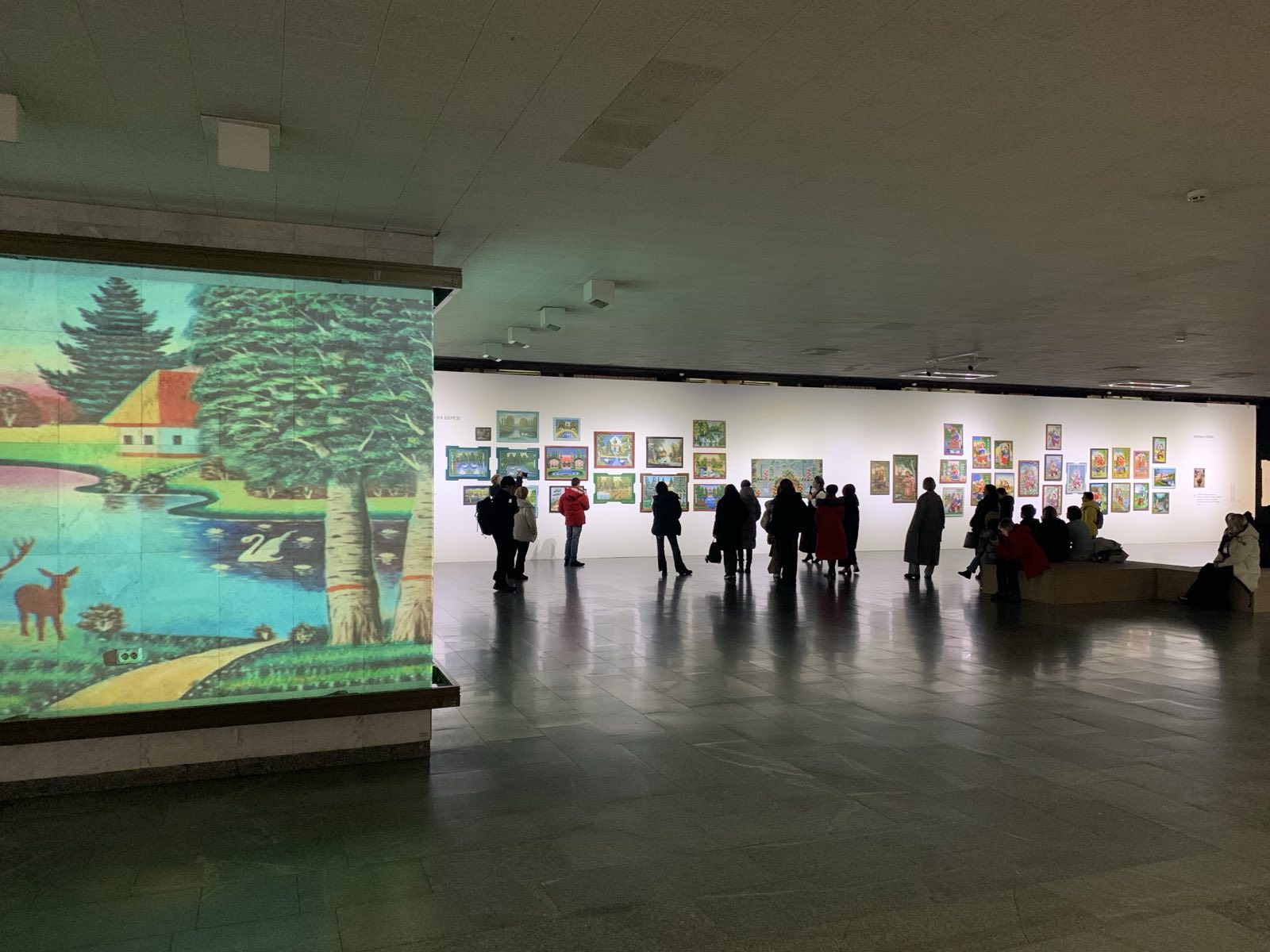
"Naive is Free" is a landmark project that redefines Ukrainian folk art. Showcasing the Mykola Babak collection at the Ukrainian House (2024–2025), it drew 22,000+ visitors despite constant drone attacks. By blending 18th–20th-century icons, naive paintings, embroideries, and rural photography with modern scenography, the project offers a fresh, decolonial perspective on tradition. It proves that heritage is not a relic, but a vital source of resilience and a living aesthetic for the future.
Ukraine
National
It addresses urban-rural linkages
It involves other types of transformations (soft investment)
Yes
2025-02-02
Yes
In 2022, the Mykola Babak Foundation received a specialized emergency grant from the Prince Claus Fund (Cultural Emergency Response). This funding was specifically allocated for the preservation of the foundation’s unique folk art collections during the full-scale invasion. The grant enabled the production of professional protective containers and the acquisition of specialized packaging materials. These resources were critical for the safe evacuation and subsequent transportation of the 300+ exhibits to Kyiv, directly enabling the realization of the 'Naive is Free' project at the National Cultural Center 'Ukrainian House'.
No
No
Organisation
"Naive is Free" is a transformative cultural project and landmark exhibition that redefines the perception of Ukrainian traditional and naive art. Held at the National Cultural and Art Center "Ukrainian House" in Kyiv (late 2024 – early 2025), the project presented the extensive private collection of the Mykola Babak Foundation. It bridged the gap between 18th-century heritage and 21st-century audience through a bold, modern lens.
The project achieved unprecedented success in the most challenging circumstances:
- Despite constant air raid alerts and drone attacks, the exhibition attracted over 22,000 visitors. This high attendance proved a profound social hunger for identity-affirming cultural experiences during the war.
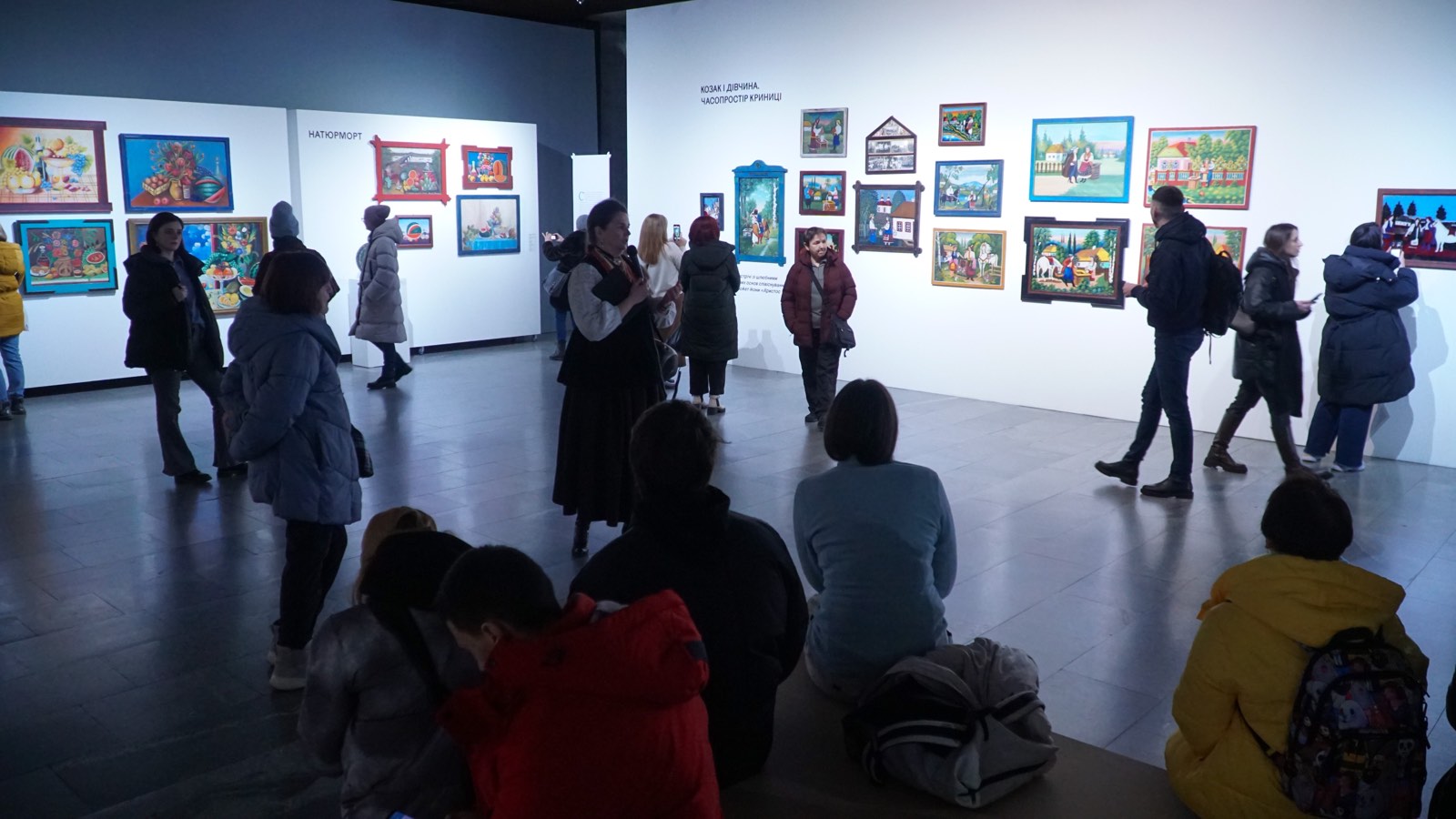
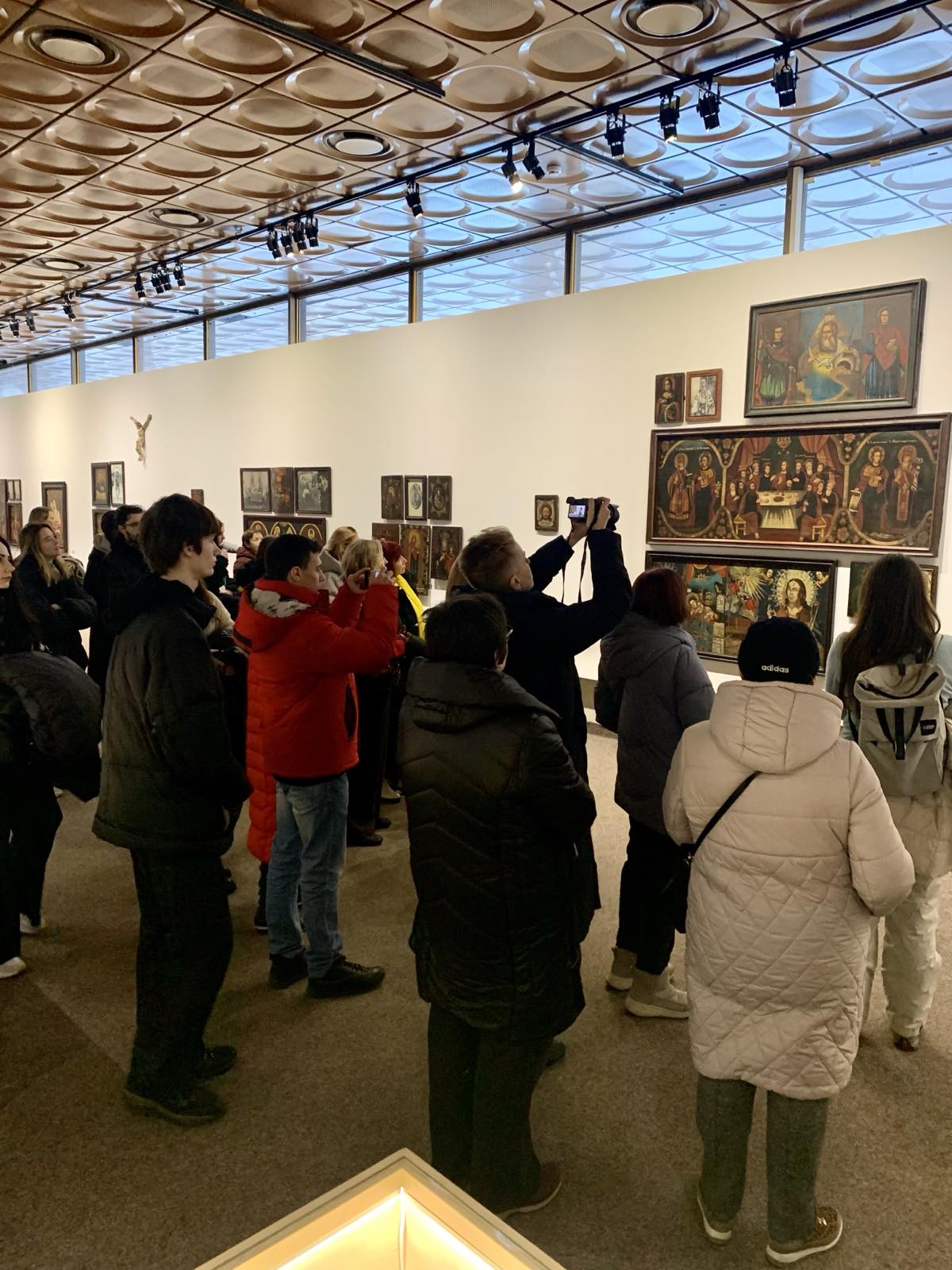
- The project moved beyond traditional ethnographic displays. By utilizing modern scenography, specialized lighting, and a non-linear narrative, it presented 18th–20th-century icons, naive paintings, embroideries, and rare rural photography as high art, not just historical artifacts.
- The exhibition successfully challenged the Soviet-era stereotype of folk art as "primitive" or "secondary." It positioned Ukrainian naive art as a sophisticated, independent aesthetic system—a crucial step in the ongoing decolonization of Ukrainian culture.
The impact of "Free Naive" extends far beyond the exhibition dates. By showcasing the authentic visual language of the Middle Dnieper region, the project reinforces the local "genius loci" and provides the community with a solid sense of cultural continuity.
"Naive is Free" serves as a successful prototype for how private foundations can collaborate with national institutions to create high-impact public projects. It sets a new standard for managing and exhibiting private archives in Ukraine.
The project’s aesthetic—characterized by "freedom" and "sincerity"—is a universal language. It positions Ukraine as a vibrant contributor to the European cultural landscape.
The story began over four decades ago with a quiet but radical act of preservation. Mykola Babak, a visionary artist and researcher, started collecting traditional Ukrainian folk icons, paintings, and photography at a time when such activities were politically dangerous.
For decades, this art was systematically ignored or suppressed by official Soviet cultural institutions. Because these "naive" works bore unmistakable markers of Ukrainian national identity—sincere, local, and defiant—they directly contradicted the sterilized, uniform "Soviet person" ideology. While the official state art focused on Socialist Realism, Mykola Babak was rescuing the "soul" of the Middle Dnieper region from abandoned village houses and attic trunks, building one of the most significant private archives in Eastern Europe.
In late 2024, amidst the existential threat of a full-scale war, this 40-year journey reached its climax. The project "Naive is Free" was conceived not just as an exhibition, but as a manifesto. We moved the collection from the shadows of a private foundation into the monumental light of the National Cultural and Art Center "Ukrainian House" in Kyiv.
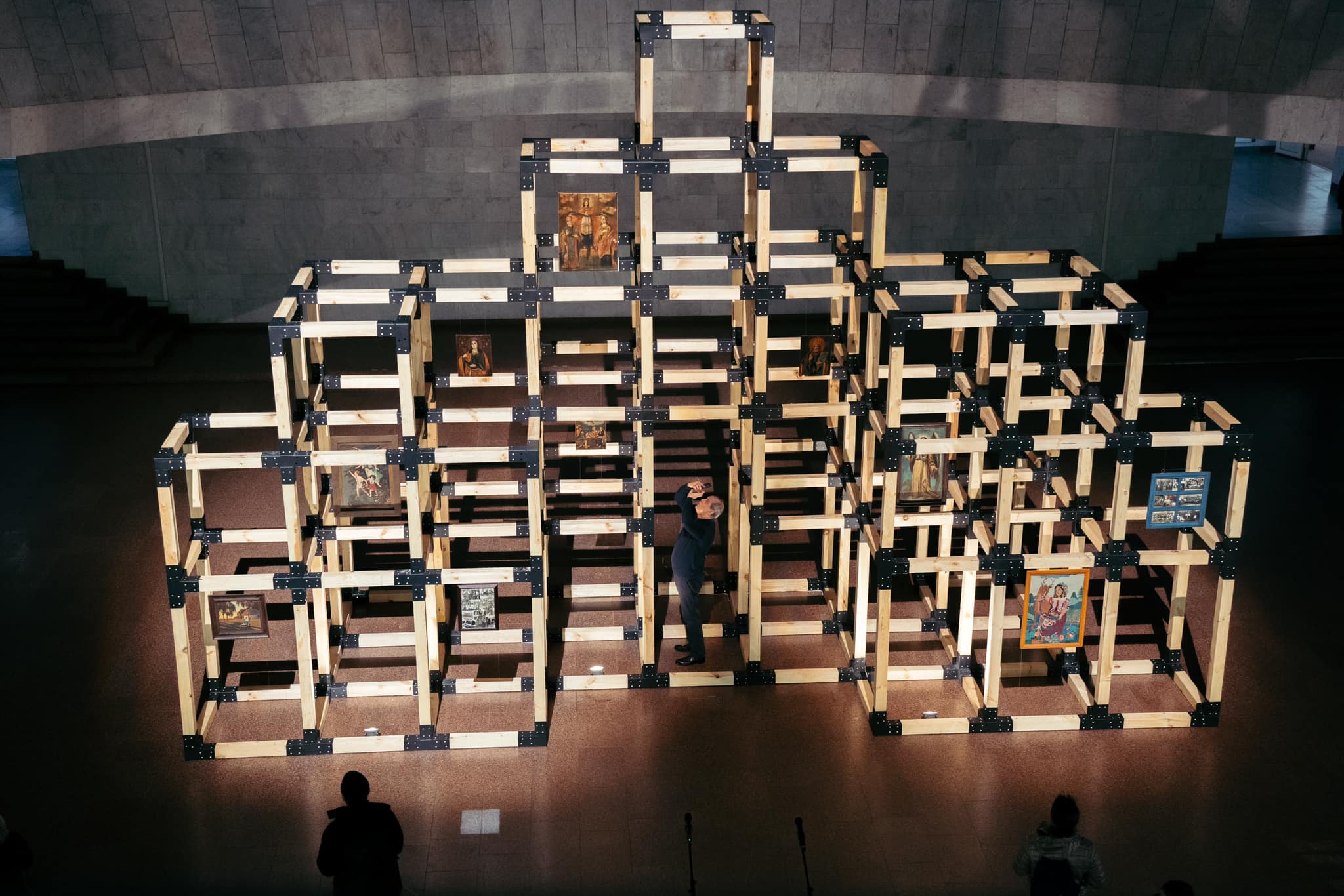
We designed a massive, symbolic "Home" installation—a minimalist timber-and-metal skeleton—in the building's central atrium. It transformed a cold, formal space into a warm, sacred sanctuary where "forbidden" artefacts could finally breathe.
We abandoned dusty ethnographic tropes. Instead, we used bold scenography, dramatic lighting, and modern design to show that this art is not "primitive"—it is modern, powerful, and European.
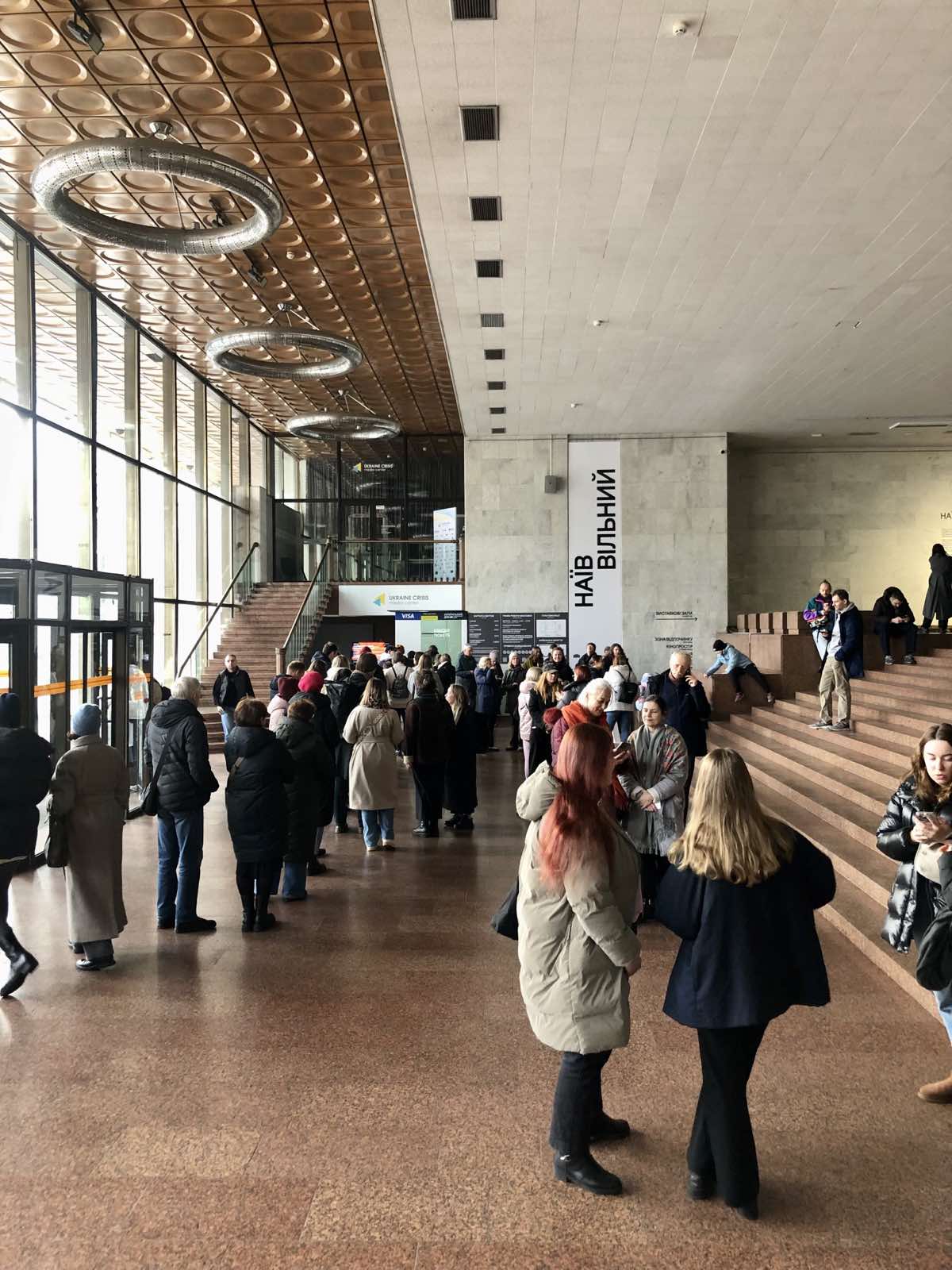
The project was implemented during one of the most difficult winters in Ukraine's history. Despite constant air raid sirens, drone attacks, and energy blackouts, the doors remained open. The project provided not just light for the art, but a literal and spiritual "charging station" for the people. +22,000 visitors came to see the art that was once deemed "unfit" for the public eye.
Cultural Resilience
Heritage Reimagined
Decolonial Aesthetics
Community Empowerment
Visual Storytelling
The "Naive is Free" project addresses sustainability by focusing on the durability of cultural identity and the social resilience of a community under existential threat. In the NEB framework, sustainability is not only about ecological footprints but about creating systems that can endure, adapt, and provide long-term value to society.
The project concretely addresses the challenge of cultural erasure. By archiving and exhibiting 18th–20th-century folk icons and rural photography, "Naive is Free" secures the "social DNA" of the Middle Dnieper region, which is the Center of Ukraine.
Attracting 22,000+ visitors during active warfare proves that culture is a vital "mental infrastructure." The project provided a safe space for collective reflection, which is essential for the long-term psychological sustainability of the population.
By reclaiming "naive art" from marginalization, the project ensures that national identity is built on authentic roots rather than imposed stereotypes. This creates a stable foundation for future generations to build upon.
"Naive is Free" transforms a static private archive into a dynamic resource for the creative economy. By providing open access to the collection, the project creates a "circular economy of ideas." Designers, architects, and artists can use these traditional patterns and aesthetics to create modern, sustainable products, bridging the gap between historical heritage and contemporary markets.
The success of the exhibition demonstrates a viable economic model for regional development through high-quality cultural offerings, paving the way for future permanent institutions that can sustain local creative industries.
The project is exemplary in its adaptive sustainability. It demonstrates how to activate cultural assets under extreme conditions (war, shelling, energy blackouts). It treats heritage not as a finite resource to be locked away, but as a renewable energy source for the community's spirit.
The "Naive is Free" project contributes to making life more beautiful by elevating "marginalized" folk art to the level of a high aesthetic experience. In the everyday context, the project offered 22,000+ people a visual sanctuary. In the longer term, it redefines the Ukrainian aesthetic DNA, moving it from "ethnographic curiosity" to a vibrant, modern inspiration for the creative industries.
The project concretely addresses the "visual poverty" and psychological stress of wartime. By transforming the Ukrainian House with modern scenography, the exhibition created an immersive environment where 18th–20th-century icons, paintings, embroideries, and rural photography were not just "objects," but part of a rhythmic, light-filled spatial composition.
It provided a profound sense of "inner beauty" and dignity, offering a sophisticated aesthetic alternative to the harsh reality of the outside world. By showcasing the bold colors and simplified forms of naive art, the project provides a toolkit for modern designers and architects, proving that "beautiful" can be both traditional and contemporary.
The aesthetics of "Naive is Free" are deeply rooted in the Middle Dnieper region. By displaying faces and sacred images that look like the visitors' own ancestors, the project fosters a visceral sense of belonging.
The rural photography collection acts as a "mirror," allowing the community to see the beauty in their own history and landscapes. This visual recognition creates a desire to care for the place: when people see their heritage as aesthetically valuable and "cool," they are more likely to protect their local environment and culture.
The project is exemplary because it successfully bridges the Bauhaus principle of "simplicity and truth" with Ukrainian folk traditions. The exhibition didn't just hang pictures; it used light, volume, and space to create a "total work of art" (Gesamtkunstwerk), making 300-year-old icons look like modern masterpieces.
The "Naive is Free" project addresses inclusion by breaking down the walls between "high museum art" and the lived experience of ordinary people. It scales the voice of folk art across 2,000 m² of central public space, transforming architecture into an inclusive platform for the self-identification of every Ukrainian.
The project was designed to be a "people's exhibition." By hosting it at the Ukrainian House, a central and well-known public space, we ensured maximum physical and psychological accessibility. We maintained an affordable (and often free for vulnerable groups) entry policy, ensuring that financial constraints did not prevent anyone from experiencing their own heritage. Naive art, by its nature, is a democratic visual language. It doesn't require a PhD in art history to be understood. This "sincerity" of the collection attracted a diverse audience—from elderly villagers recognizing their own family traditions to Gen Z digital nomads finding inspiration in bold, simplified forms.
The project promotes a new societal model where private archives become public treasures.
The exhibition's scenography was developed with a wide audience in mind, using intuitive navigation and clear, non-academic storytelling. It wasn't just a display; it was a sensory experience accessible to children, people with different levels of art literacy, and those seeking emotional refuge from the war. By showcasing rural photography alongside sacred icons, the project gave a voice to the "silent" history of the Ukrainian countryside. It validated the identity of millions of people whose family histories were previously ignored by formal art institutions.
The project is exemplary because it turned vulnerability into a unifying force. Under the threat of drone attacks, the exhibition became a "common shelter" for 22,000+ people. This shared experience of beauty in the face of danger created a powerful sense of social cohesion that transcends political or social divisions.
The "Naive is Free" project is built on the principle of active engagement, transforming the audience from passive observers into co-creators of a new national narrative. In the NEB context, participation is not just about consultation, but about deep involvement in the life cycle of the project.
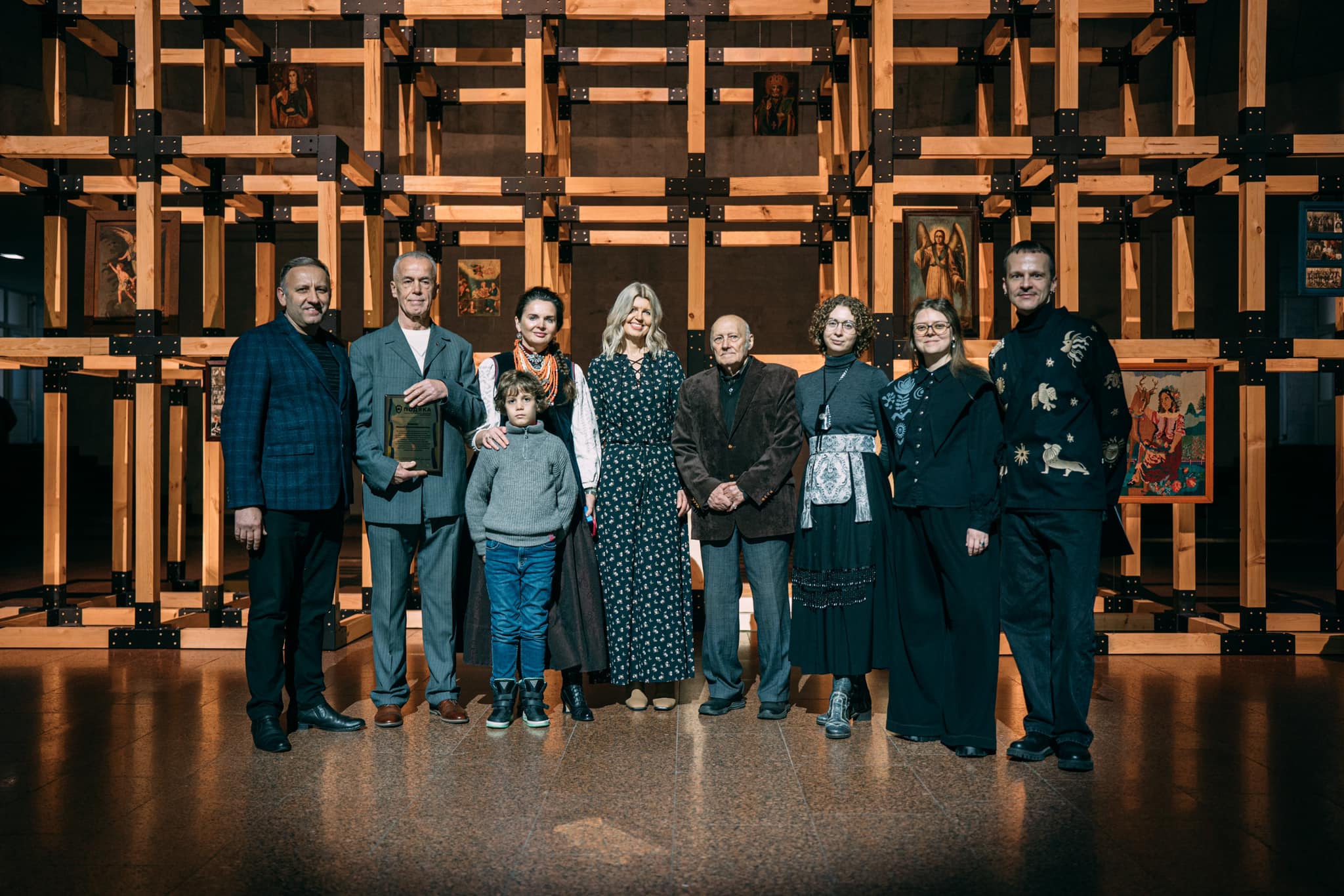
The project involved a diverse ecosystem of stakeholders who directly benefited from its success. The project is based on a collection that originated in rural communities. During the research phase, the Mykola Babak Foundation worked closely with local inhabitants of the Middle Dnieper region, collecting stories and identifying subjects in 19th–20th-century photography. This turned the project into a collaborative effort to rescue "lost" family memories.
Executed through a collaborative synergy between the private sector, state cultural institutions, and independent curators, the project successfully engaged youth, academia, and IDP communities. By leveraging these partnerships, we transformed the 2,000 m² space into a vibrant hub for social integration and artistic expression.
The involvement was multi-layered:
- Through feedback loops from previous displays, the curators adapted the "Naive is Free" scenography to be more intuitive and emotionally resonant for a wartime audience.
- During the exhibition, a series of public talks and workshops were held, where citizens could discuss the "decolonial" aspects of the art. This was not a top-down lecture, but a horizontal exchange of ideas.
The 22,000+ visitors did not just "visit"; they "occupied" the space as a safe haven. Their presence was a political and social statement of resilience. By involving non-experts in the discussion of "high art," the project broke the monopoly of academic circles over cultural heritage.
For the community in Kyiv and those who traveled from the regions, the exhibition became a site of "social healing."
The project "Naive is Free" wasn't an isolated event, but a coordinated effort across various layers:
1. Local & Regional Level.
Stakeholders: Local history experts, descendants of the families featured in the rural photography archive, and regional creative youth.
Role & Involvement: During the research phase, the Mykola Babak Foundation engaged with local communities to identify subjects in the 19th–20th-century photographs.
Added Value: This provided authenticity and emotional depth. By connecting specific artifacts to living descendants, the project moved from "abstract history" to "personal genealogy," creating a fierce sense of local pride and "care for the place."
2. National Level (Kyiv & All-Ukrainian Institutions).
Stakeholders: The National Cultural and Art Center "Ukrainian House", the Ministry of Culture, and national media outlets.
Role & Involvement: The "Ukrainian House" acted as a strategic partner, providing a high-visibility venue and co-designing the visitor experience. National experts and art historians provided the scientific scaffolding, ensuring the "decolonial" narrative was academically sound.
Added Value: This ensured massive scale and institutional credibility. Navigating the logistics of a 22,000-visitor exhibition during a full-scale war required national-level coordination for security, energy backup, and public safety.
3. European & International Level.
Stakeholders: International curators, European cultural foundations, and foreign journalists.
Role & Involvement: While the physical exhibition was in Kyiv, the project maintained a "digital bridge" with European partners. International critics were invited to review the collection through digital previews, and the exhibition’s aesthetic was aligned with European trends in minimalism and "new sincerity."
Added Value: This integrated the project into the European cultural dialogue.
The "Naive" project is a quintessentially interdisciplinary initiative. Its success was rooted in the seamless integration of traditional humanities with cutting-edge spatial and digital practices.
The following knowledge fields were core to the project’s design and implementation:
1. Arts & Museology.
The project utilized advanced art history research to re-categorize "naive" works from ethnographic artifacts to masterpieces of global modernism.
Extensive work was done to preserve 18th–19th-century icons and fragile rural photographs, ensuring their physical survival for the exhibition.
2. Architecture, Engineering & Scenography.
The centerpiece of the project was a monumental structural installation made of natural wood and industrial metal fittings, dominating the central atrium of the Ukrainian House. This site-specific architectural object served as both a physical and symbolic backbone for the exhibition.
The installation reinterpreted the traditional Ukrainian house (khata) through a modern, minimalist skeleton. It acted as a sacred space where folk icons, naive paintings, embroideries, and rural photography were housed, creating a "home within a museum."
The choice of materials—raw wood and visible metal connections—reflected the Bauhaus-inspired honesty of construction. It bridged the gap between organic folk traditions and industrial modernity.
Occupying the vast atrium, the structure provided a human scale within the monumental Soviet-era architecture of the building. It guided the 22,000+ visitors through a choreographed path, making the experience of "belonging" tangible and physical.
By using wood as the primary material, the project emphasized a return to natural, tactile elements, contrasting with the cold, digital reality of the ongoing war and providing a sense of warmth and "shelter."
3. Education & Pedagogy.
The project implemented non-formal education strategies, including "curatorial tours," workshops and lectures.
The Business Model: A Hybrid Ecosystem
1. Public-Private Partnership Model.
The project operated through a strategic alliance between the Mykola Babak Foundation (private non-profit cultural charitable institution) and the National Cultural and Art Center "Ukrainian House" (state infrastructure).
This drastically reduced overhead costs. The foundation provided the "content" and specialized curation, while the state institution provided the "platform," curation, security, and access to a mass audience. This synergy made high-budget exhibitions viable even in a crisis economy.
2. Revenue Generating Activities.
Ticketing & Admissions: With over 22,000 visitors, the exhibition generated significant direct revenue. Even with social discounts, the sheer volume of a "blockbuster" folk art show created a sustainable cash flow for operational costs.
Merchandising & Publishing: The project included the production of high-quality postcards, limited-edition prints, and other products based on the archive's visual DNA. This transformed historical artifacts into contemporary consumer goods.
3. Fundraising & Philanthropy.
The Foundation’s Endowment: The project was anchored by the long-term commitment of the Mykola Babak Foundation, which views the collection as a non-profit asset for national branding.
Corporate Sponsorship: Large-scale installations (like the wooden atrium house) provided high-visibility "impact investment" opportunities for Ukrainian and international companies looking to support cultural resilience and decolonization.
4. Digital Monetization & Grants.
Grants for Digitalization: By positioning the project as a "rescue mission" for Ukrainian heritage, we tap into international emergency grants (e.g., ALIPH, UNESCO, or EU-funded programs) specifically designed for the digital preservation of at-risk archives.
The "Naive is Free" project was designed not as a one-off event, but as a modular cultural framework that can be adapted and exported to various contexts—from regional Ukrainian towns to major European capitals. Its scalability lies in the "blueprint" of combining private archives with modern architectural solutions and corporate partnerships.
The following elements are highly replicable and transferable:
1. The "Modular Home" Architectural Template.
The central installation—the timber-and-metal "house" in the atrium—is a prime example of scalable design.
This structural concept can be replicated in any large public space (squares, hangars, or museums). It provides a "plug-and-play" gallery space that is easy to assemble, dismantle, and transport.
It can be used to showcase different types of heritage (e.g., local crafts or photography) in various cities, maintaining a consistent aesthetic brand while adapting to local content.
2. The "Private-to-Public" Methodology.
One of our key learnings is the legal and operational process of opening a private collection (the Mykola Babak Foundation) to the mass public via a state institution.
This model can be transferred to other private collectors and foundations globally. It provides a roadmap for how private "hidden" archives can be activated to serve national or regional identity without losing their integrity.
It scales the impact of private philanthropy by leveraging public infrastructure.
3. Curatorial "Decolonial" Framework.
The methodology of re-contextualizing folk art through modern scenography is a transferable intellectual product.
This approach can be applied to any marginalized or "naive" art form in Europe (e.g., Balkan naive art or Baltic folk traditions). By shifting the narrative from "ethnography" to "high modernism," we provide a tool for other cultures to reclaim their visual heritage.
The project’s research can be used as a benchmark for similar physical exhibitions.