Arts, Culture, and Heritage as Drivers of Change
I Satelliti - social theatre company
Performing arts empowering vulnerability through culture, rights and community action
Officine Satellitari uses performing arts as a driver of social change. Born from an integrated theatre company active for 16 years bringing together actors with disabilities, educators and citizens, the project has recently secured a permanent space open to the community. Over the years the group has cocreated its own sets and costumes through collaborative workshops using recycled materials, turning vulnerability into creativity, cultural participation and inclusive community life.
Italy
Regional
The project is implemented at regional level in Lombardy (Italy), where the theatre company is based and where most activities and community engagement take place. Over the past 16 years, the company has also performed in several other Italian regions, presenting its productions in theatres, festivals and cultural events. These tours are organised autonomously by the group and represent an important dimension of the project, strengthening independence, mobility and social participation for the actors involved.
Mainly urban
It involves other types of transformations (soft investment)
Yes
2025-12-31
No
No
No
Organisation
I Satelliti is a cultural initiative that uses performing arts as a driver of social change and inclusive community building. The project grows from an integrated social theatre company active for 16 years in Lombardy, bringing together actors with disabilities, educators and citizens in a shared artistic practice.
Over time, the company evolves from a theatre workshop into a stable artistic collective capable of producing original performances and touring across several Italian regions. The group presents its productions in theatres, festivals and cultural events, reaching diverse audiences and contributing to a broader cultural reflection on disability, participation and social inclusion. Through theatre, vulnerability becomes a visible and creative force, challenging stereotypes and fostering new forms of collective expression.
An important element of the project is the collaborative production process. Members of the company co-create performances from beginning to end, including the construction of stage sets and costumes through collective workshops using recycled materials. These practices reduce environmental impact while strengthening skills, cooperation and artistic ownership among participants.
Building on this long-term experience, the group establishes its own association, ARCI Satelliti, and secures a permanent space open to the wider community. This cultural hub hosts theatre laboratories, artistic workshops, performances and community events, creating a place where art becomes a tool for participation, dialogue and social transformation.
The project demonstrates how cultural spaces can become inclusive environments where people with and without disabilities collaborate as creators, not as passive recipients of services. By combining artistic production, community engagement and sustainable creative practices, i Satellitari strengthens the role of performing arts as a catalyst for social change and inclusive cultural ecosystems.
I Satelliti grows from a long-standing experience of social theatre developed in Pavia, in the Lombardy region of Italy. The project begins sixteen years ago as a low-budget community initiative made possible through local participation and a strong network of associations.
The laboratory is initiated by psychodramatist Lina Fortunato, who has decades of experience in social theatre and therapeutic practices. Her work and social impact have also been recognised with an honorary award from the City of Pavia. Starting with a small group of ten actors, the workshop brings together people with disabilities, educators and citizens to explore theatre as a space of expression, creativity and collective storytelling. Over time the group grows into a stable integrated theatre company, which today includes around thirty actors.
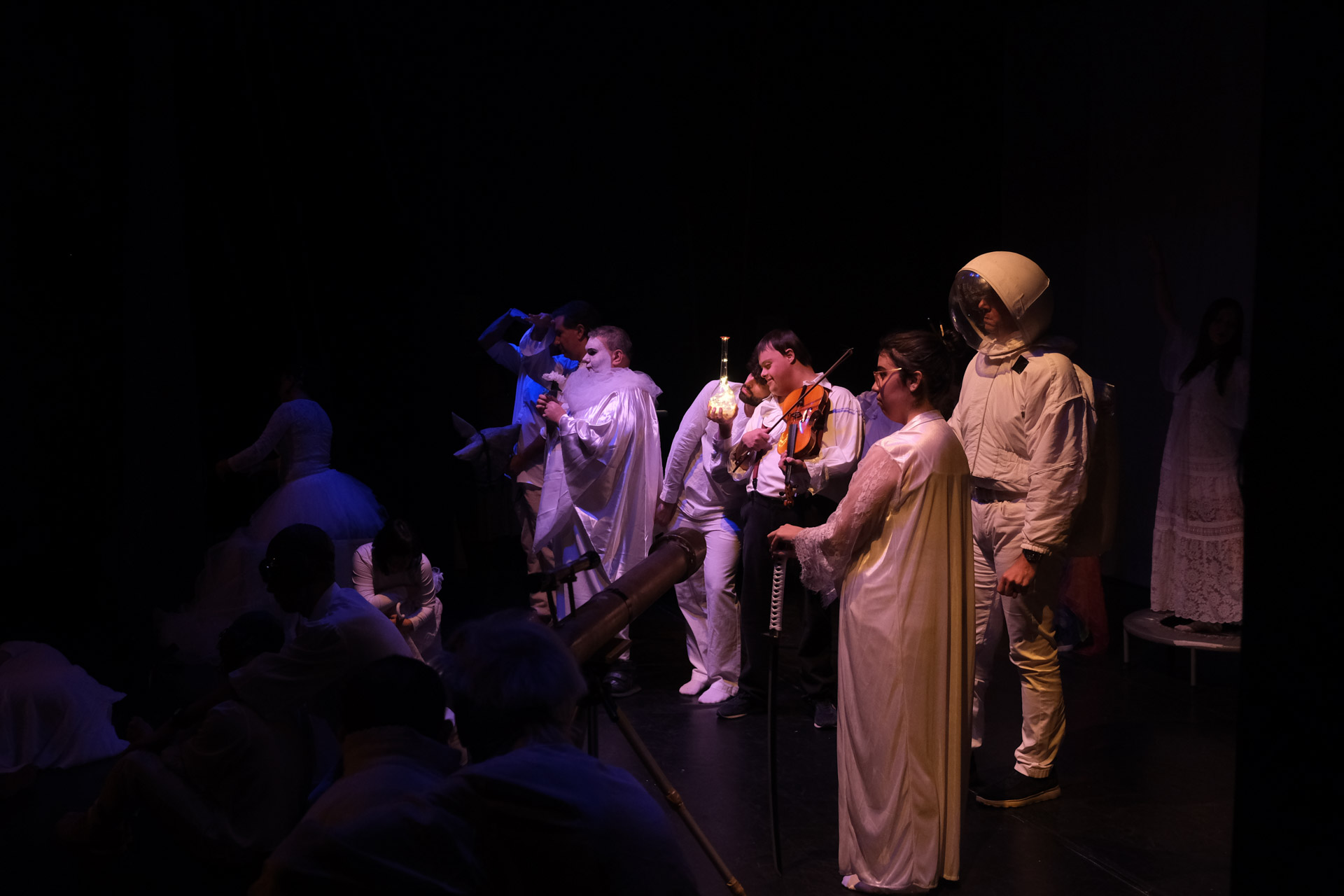
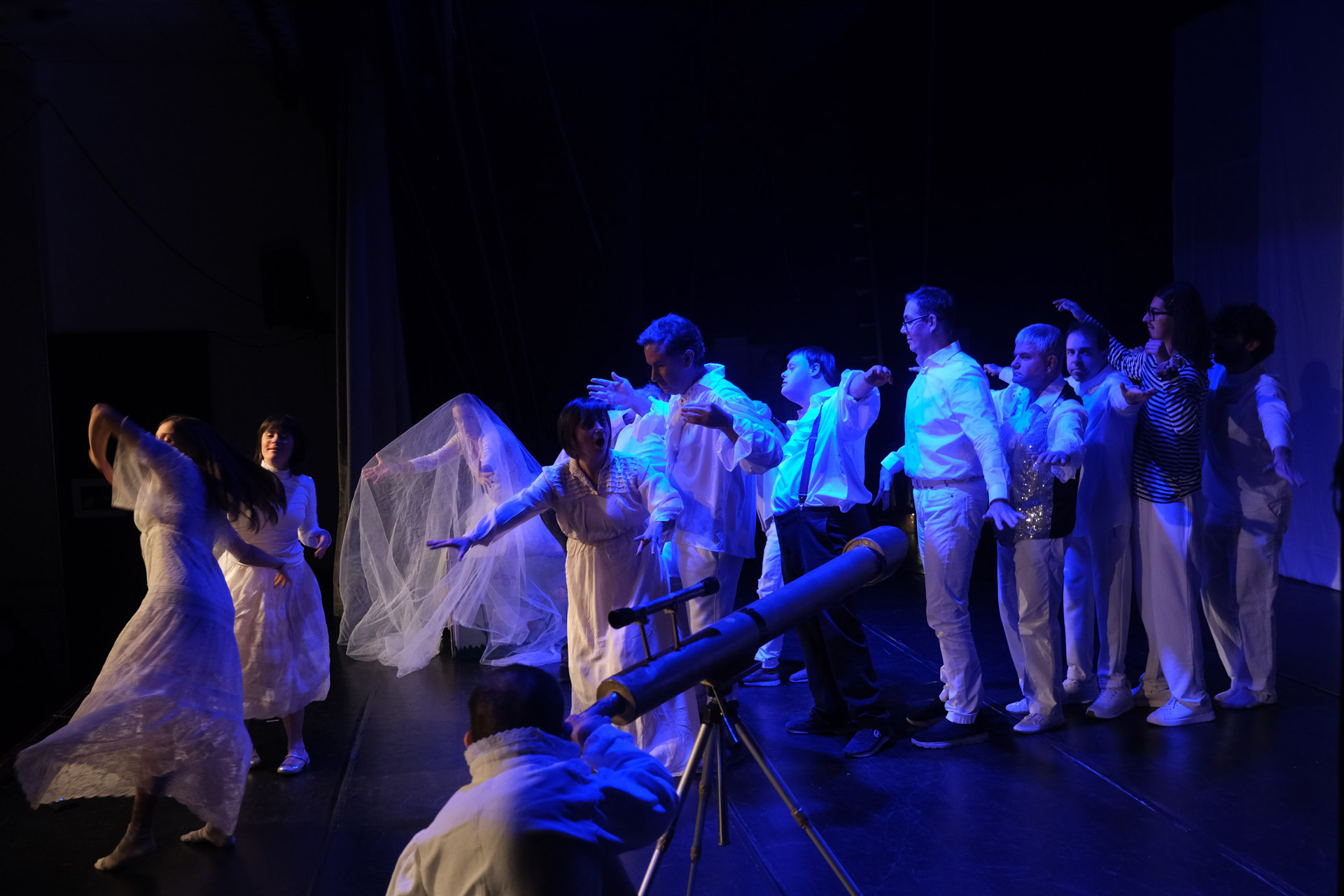
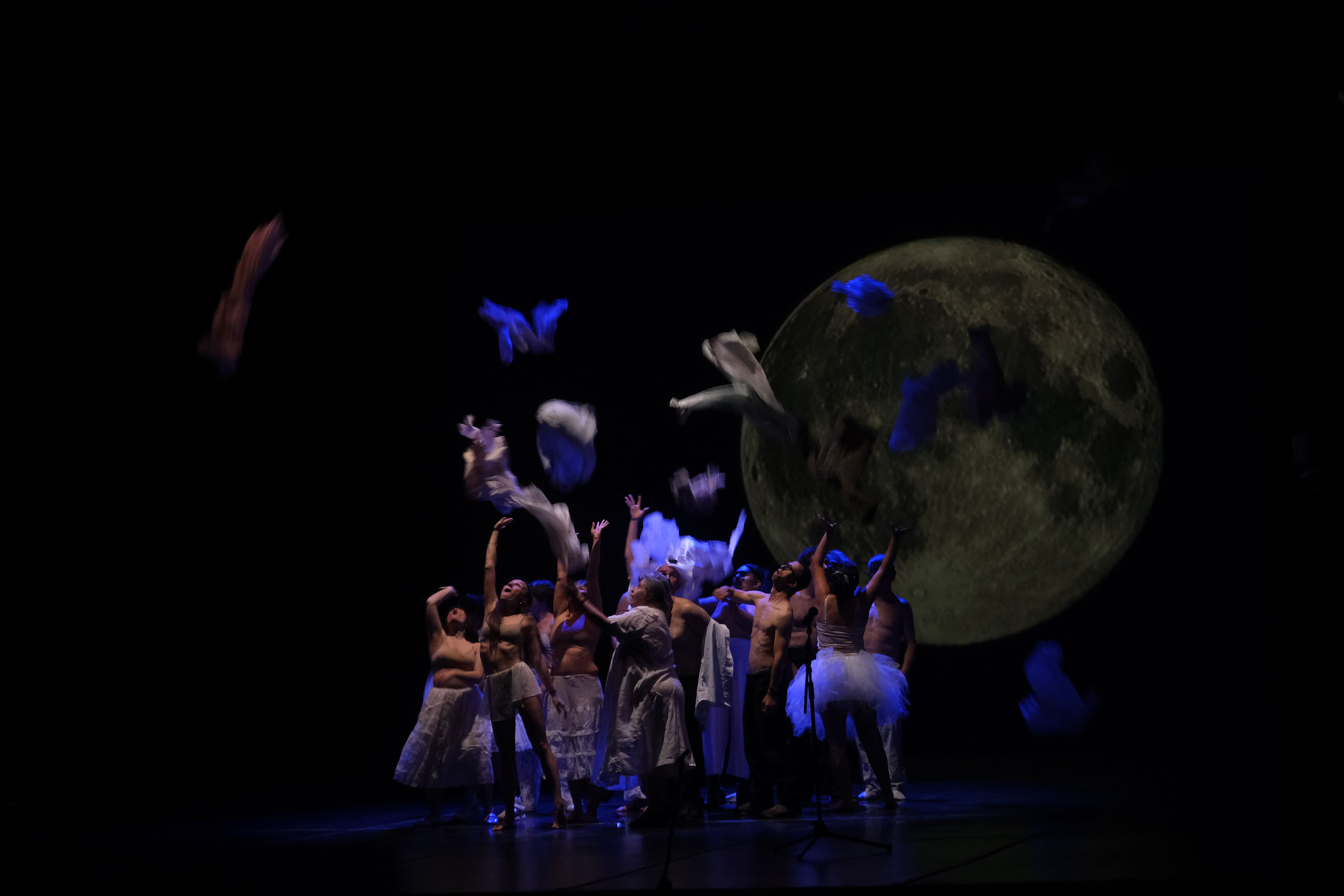
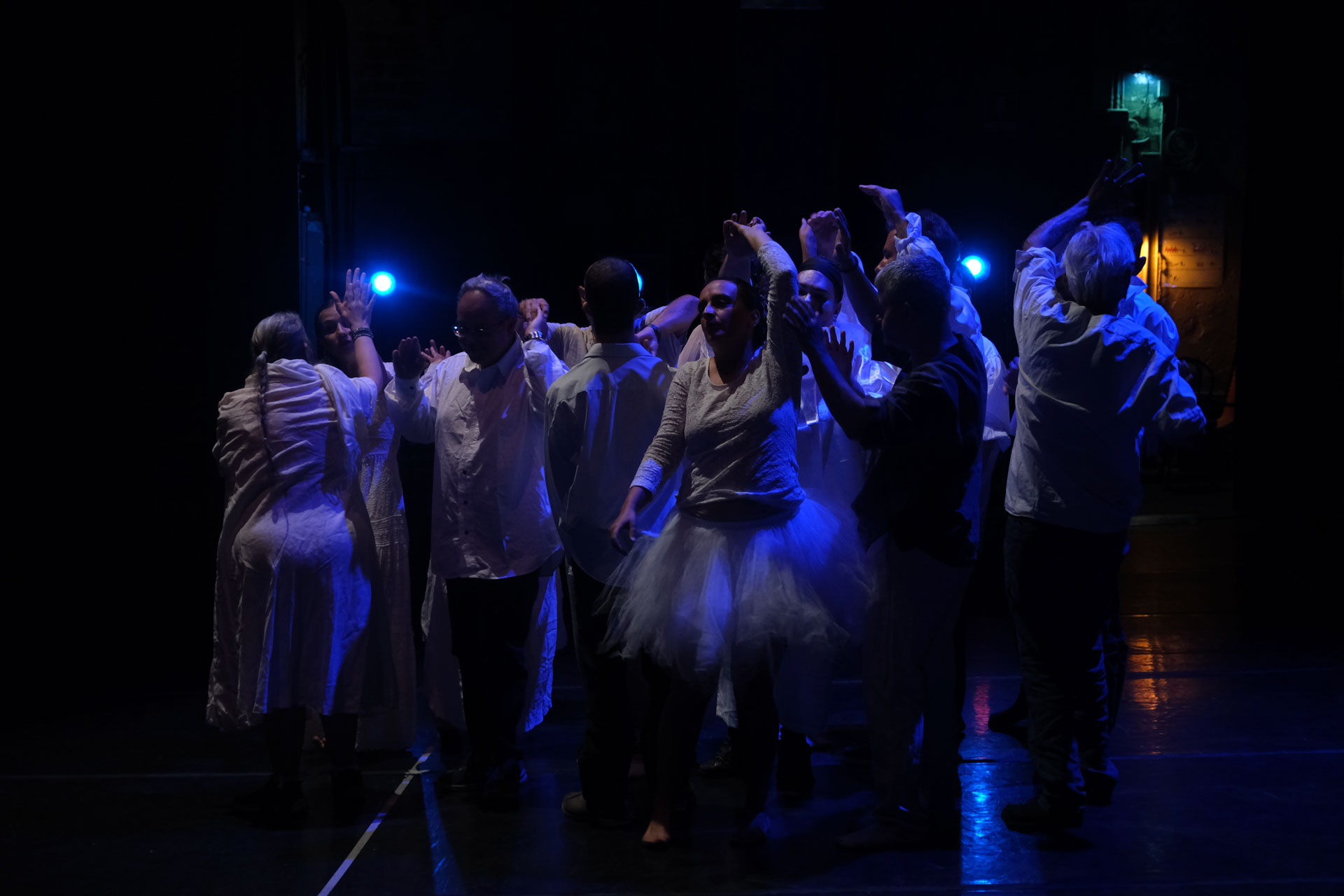
Through weekly workshops the participants collectively create performances that are presented in theatres, festivals and cultural events across several Italian regions. These experiences strengthen autonomy, mobility and social participation, while demonstrating how performing arts can challenge stereotypes and open new spaces for dialogue around disability and inclusion.
The company also develops collaborative production practices: stage sets and costumes are created through collective workshops, often using recycled materials. This process transforms artistic production into a participatory learning experience that combines creativity, sustainability and shared responsibility.
As the group becomes stronger and more autonomous, the members establish their own association, ARCI Satelliti, strengthening the organisational capacity of the company and its connection with the local cultural ecosystem.
Today the project operates through regular theatre laboratories, artistic workshops and public performances, involving educators, volunteers, cultural organisations and community members.
Disability-inclusive performing arts
Integrated social theatre practice
Performing arts for independent living
Community co-creation in theatre production
Circular stage design (recycled sets and costumes)
I Satelliti addresses sustainability primarily through the long-term development of an inclusive cultural practice rooted in performing arts. For sixteen years, the company has created a stable artistic environment where actors with disabilities, educators and citizens collaborate as equal contributors in theatrical creation. Through continuous workshops, rehearsals and public performances, the project sustains a living cultural ecosystem where artistic expression becomes a tool for participation, recognition and collective storytelling.
This sustained artistic practice contributes to cultural sustainability by subverting traditional hierarchies within the performing arts, where people with disabilities are often excluded from authorship and visibility. In I Satelliti, actors with disabilities are not recipients of social services but active cultural producers who shape narratives, aesthetics and stage presence. The project therefore subverts dominant representations of vulnerability, transforming the stage into a space where different bodies, voices and experiences redefine who produces culture and how cultural spaces function as inclusive civic environments.
Environmental sustainability is integrated into the artistic process itself. Sets and costumes are collectively designed and produced through workshops that use recycled and repurposed materials. These collaborative stagecraft practices reduce material consumption while fostering creativity, technical skills and shared responsibility within the company.
By combining long-term artistic practice, community participation and circular production methods, I Satelliti demonstrates how performing arts can sustain inclusive cultural infrastructures while generating lasting social and environmental value.
I Satelliti contributes to the aesthetic dimension of the New European Bauhaus by developing a theatre practice rooted in craftsmanship, reuse and collective artistic creation. The company produces its performances through collaborative workshops where stage sets, props and costumes are designed and built using recycled and repurposed materials. These workshops also involve citizens from the local community, who take part in the creative process and contribute to shaping the visual and material identity of each production.
This low-tech approach does not aim at technical spectacle but at a form of theatre where creativity, manual skills and imagination generate expressive stage environments. Materials that would normally be discarded are transformed into scenographic elements, giving new life to objects and textures while shaping a distinctive visual language for each performance.
At the same time, the project ensures a professional artistic outcome thanks to the experience of the facilitators, theatre practitioners and educators involved. Their long-standing expertise in social theatre and performing arts guarantees that the collaborative creation process translates into coherent dramaturgy, strong stage presence and carefully crafted scenography.
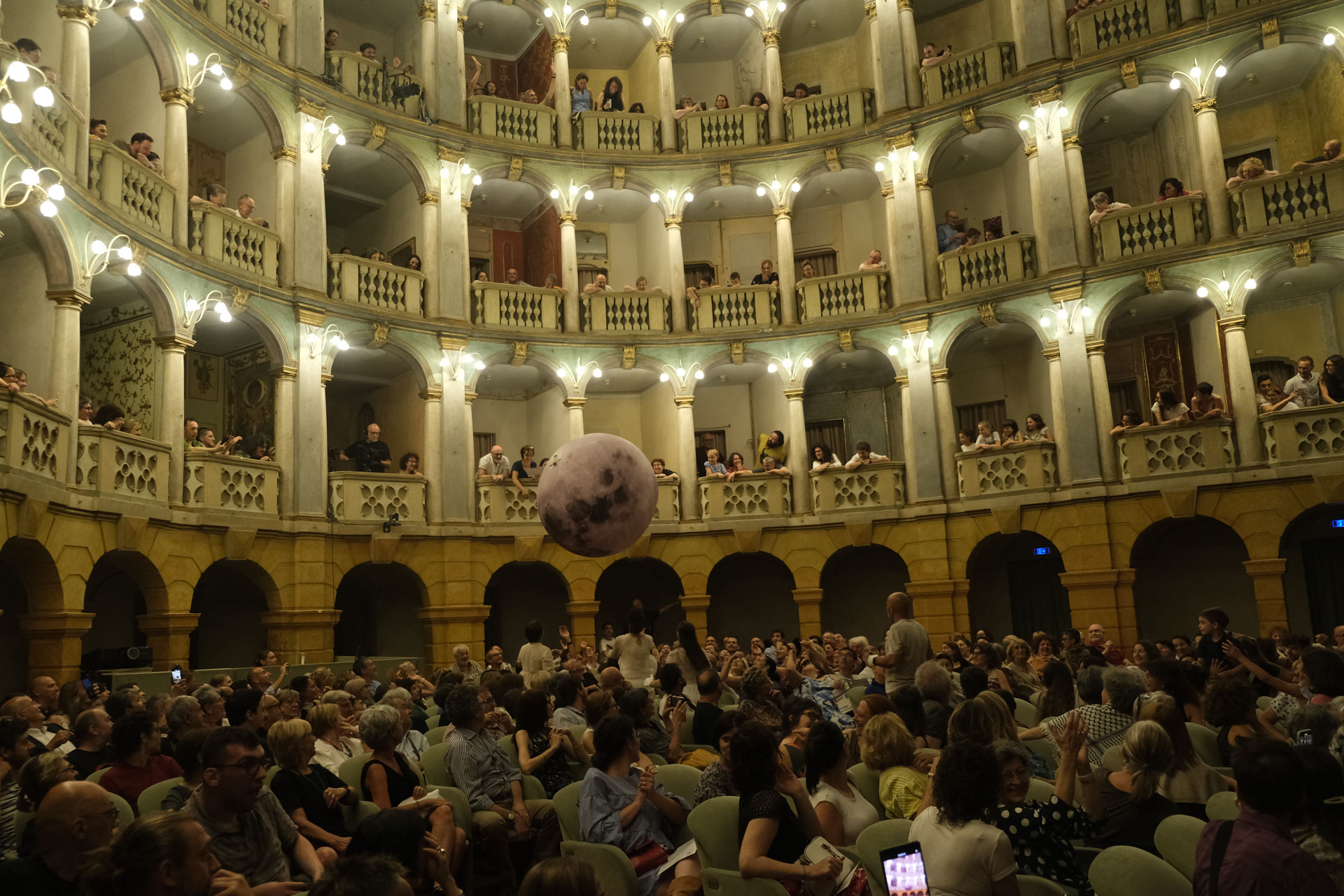
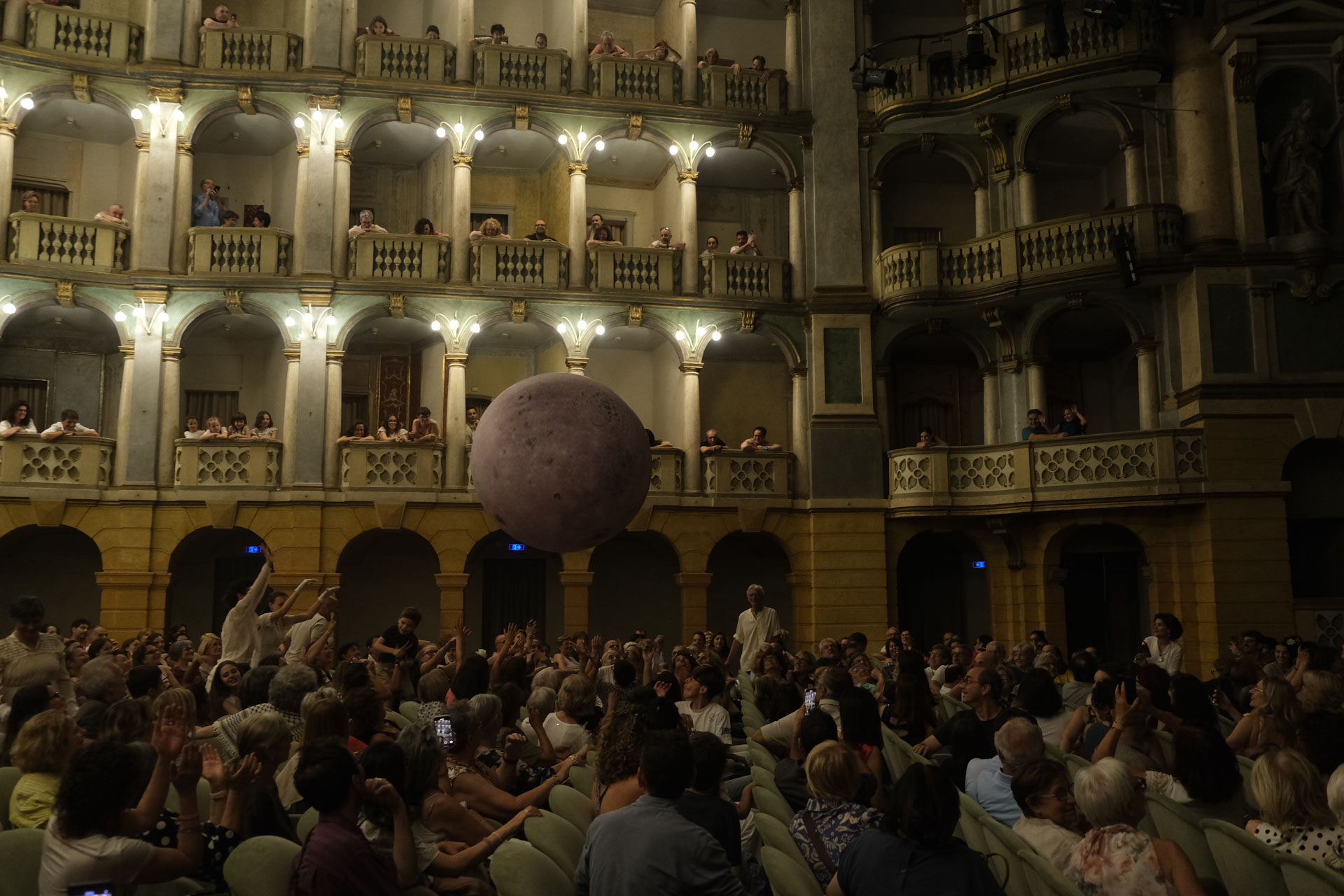
The quality of this work is recognised through public performances in important Italian theatres and cultural venues. The company performs in front of 800 spectators at Teatro Fraschini in Pavia, receiving excellent reviews, and stages productions at Teatro Govi in Genoa and Teatro Binario 7 in Monza, both significant venues in the Italian theatre scene. The group also participates in major national festivals of social theatre, performing in cities such as Catania and Trani.
Through these performances, I Satelliti brings a participatory and inclusive aesthetic experience into the wider community, demonstrating how performing arts can generate beauty through craftsmanship, collective creation and shared culture.
I Satelliti promotes inclusion by expanding access to cultural production within the performing arts. The project enables people with disabilities to participate not only as performers but as active contributors to the entire creative process: from dramaturgy and stage interpretation to scenography, costume design and technical preparation. In this way, participants take part in the making of culture rather than remaining audiences or beneficiaries of social services.
The theatre laboratory functions as a long-term space of artistic training and empowerment. Through regular rehearsals, collective creation and public performances, actors progressively develop skills, confidence and autonomy. Some members of the company have translated this experience into concrete pathways toward professional inclusion: thanks to the autonomy and social competences developed within I Satelliti, several participants have been involved in supported employment and work integration programmes.
Inclusion is also strengthened through the organisational development of the project. By establishing the association ARCI Satelliti and joining the national ARCI network in 2024, the initiative gains access to one of the largest cultural infrastructures in Italy, with local clubs and cultural centres across the country. This connection increases visibility and opens new opportunities for collaboration, mobility and participation in cultural life.
Through this model, I Satelliti demonstrates how performing arts can become a concrete platform for cultural citizenship, enabling people who are often excluded from artistic production to actively shape narratives, spaces and cultural experiences.
Participation is a core methodological principle of I Satelliti and is embedded in the project through structured processes of co-creation, stakeholder engagement and participatory cultural production.
From its inception, the initiative develops within a collaborative ecosystem involving local associations, volunteers and cultural actors who contribute spaces, materials and organisational support. This networked structure enables the project to emerge as a community-driven initiative and remain strongly rooted in the local territory.
The creative process follows a co-production model. Actors, facilitators, educators and citizens participate in open workshops dedicated to the development of scenography, costumes and stage elements. These workshops function as participatory design environments where artistic ideas, practical knowledge and manual skills are shared and negotiated among participants. Through this process, community members directly contribute to shaping the visual and material identity of the performances.
Civil society organisations also act as active stakeholders in the project’s development, supporting production phases and facilitating connections with theatres, festivals and cultural venues. This multi-actor collaboration strengthens the project’s capacity to operate as a locally embedded cultural initiative.
Participation extends to the organisational dimension as well. With the creation of the association ARCI Satelliti, members of the theatre company are involved in participatory governance processes, contributing to decisions related to artistic programming and the development of activities.
These participatory mechanisms generate tangible impacts. What begins as a small laboratory with ten actors evolves into a stable theatre company of around thirty members supported by a wider community network. I Satelliti demonstrates how performing arts can function as a platform for co-created culture and community-based cultural governance.
The governance structure of I Satelliti operates across multiple levels through its integration within the associative system of ARCI, one of the largest cultural networks in Italy. This multilevel framework connects local participation with regional and national cultural governance.
In 2024 the theatre company formally established the association ARCI Satelliti, adopting a recognised associative structure based on democratic governance. All members of the association form the general assembly, the main decision-making body. The assembly elects the board of directors, which coordinates activities, organisational development and artistic programming. The board regularly convenes members to deliberate on key decisions, ensuring collective participation in the management of the project.
At the territorial level, ARCI Satelliti is part of the network coordinated by ARCI Pavia, where delegates from local ARCI clubs meet to share experiences and coordinate cultural initiatives across the province. ARCI Pavia also collaborates closely with local public institutions, including the Departments of Culture, Social Services, Education and Equal Opportunities of the Municipality of Pavia, strengthening the connection between cultural initiatives and public policies.
The same governance model extends to higher levels. The provincial ARCI network is connected to ARCI Lombardia at the regional level and to ARCI Nazionale, linking local cultural initiatives to a nationwide infrastructure of associations and cultural centres.
The project also benefits from the support of private companies in the local area, which contribute through donations and other forms of support to sustain the activities of ARCI Satelliti.
Through this multilevel system, I Satelliti combines grassroots participation with institutional collaboration and territorial partnerships, strengthening both the local cultural ecosystem and the long-term impact of the project.
I Satelliti is developed through a transdisciplinary approach that combines performing arts, architecture, education and social research.
From a spatial and material perspective, the project integrates architecture and grassroots construction practices, particularly self-building techniques used in the creation of stage sets and scenographic environments. These processes are supported by the Department of Civil Engineering and Architecture of the University of Pavia, which provides scientific supervision and contributes methodological knowledge related to participatory construction and the transformation of materials.
The project also intersects with the fields of education sciences and social theatre studies. Researchers and students from the Department of Humanities of the University of Pavia contribute to the project through research activities and experimental master’s theses focused on inclusive theatre practices, community-based cultural production and participatory learning processes.
In addition, the director of the company, Lina Fortunato, leads an experimental teaching module within the Master’s programme in Social Theatre at the University of Pavia, connecting the practical experience of the theatre laboratory with academic training and research.
Through this collaboration, the theatre laboratory becomes not only an artistic space but also a research and learning environment, where academic knowledge, artistic practice and community participation interact. The combination of performing arts, architecture, educational research and social sciences allows the project to develop innovative methodologies for inclusive cultural production and community engagement.
The project operates within the organisational model of a non-profit cultural association, combining community-based cultural activities with diversified funding sources to ensure long-term financial sustainability.
Most activities, including theatre laboratories and artistic workshops for the community, are offered free of charge or at very accessible costs, in order to remove economic barriers and guarantee broad participation in cultural production.
The financial sustainability of the project is supported by a mixed funding model. The association regularly participates in competitive calls for proposals and has successfully secured funding from several institutions. Recent examples include the “Arte Urbana e Inclusione Sociale” grant awarded by Fondazione Comunitaria della Provincia di Pavia (2023), the 8x1000 programme of the Waldensian Church, and the “Extrabandi” programme of Fondazione Intesa Sanpaolo. These resources support the development of artistic activities, workshops and community engagement initiatives.
The organisation relies on a highly qualified project design and fundraising team, which develops proposals, manages partnerships and ensures the continuity of the initiative through participation in local, national and private funding programmes.
Additional resources come from membership fees, voluntary donations and philanthropic contributions, as well as collaborations with cultural institutions and theatres hosting performances.
This diversified financial structure allows I Satelliti to maintain accessible cultural activities while ensuring the long-term stability and development of the project.
Several elements of I Satelliti are highly transferable and can be replicated in other cultural and social contexts.
First, the project is grounded in methodological approaches from social theatre and participatory cultural practices that are adaptable to different cultural and social environments. These approaches allow people with disabilities, educators and citizens to collaborate as equal contributors in artistic creation, making the model applicable in diverse communities and institutional settings.
Second, the project develops a participatory production model for performing arts. Performances are created through collective processes that involve not only actors but also citizens in workshops dedicated to scenography, costumes and stage preparation using reused materials. This model can be easily adapted to different contexts, allowing communities to actively contribute to cultural production.
A third transferable element is the organisational model. By establishing the association ARCI Satelliti and integrating into the wider ARCI network, the project demonstrates how community-based cultural initiatives can connect local participation with broader associative infrastructures. This structure can be replicated in other territories through partnerships with cultural associations, social organisations and local institutions.
The project also generates knowledge and educational tools through its collaboration with the University of Pavia, including research activities and experimental theses on social theatre and inclusive cultural practices. These experiences contribute to documenting and disseminating the methodology.
Through its combination of artistic practice, participatory governance and community engagement, I Satelliti offers a replicable framework for developing inclusive performing arts initiatives in different social, cultural and territorial contexts.