Strengthening Local Democracy and Inclusion
Citadel Diest: Leaner, Faster, Together
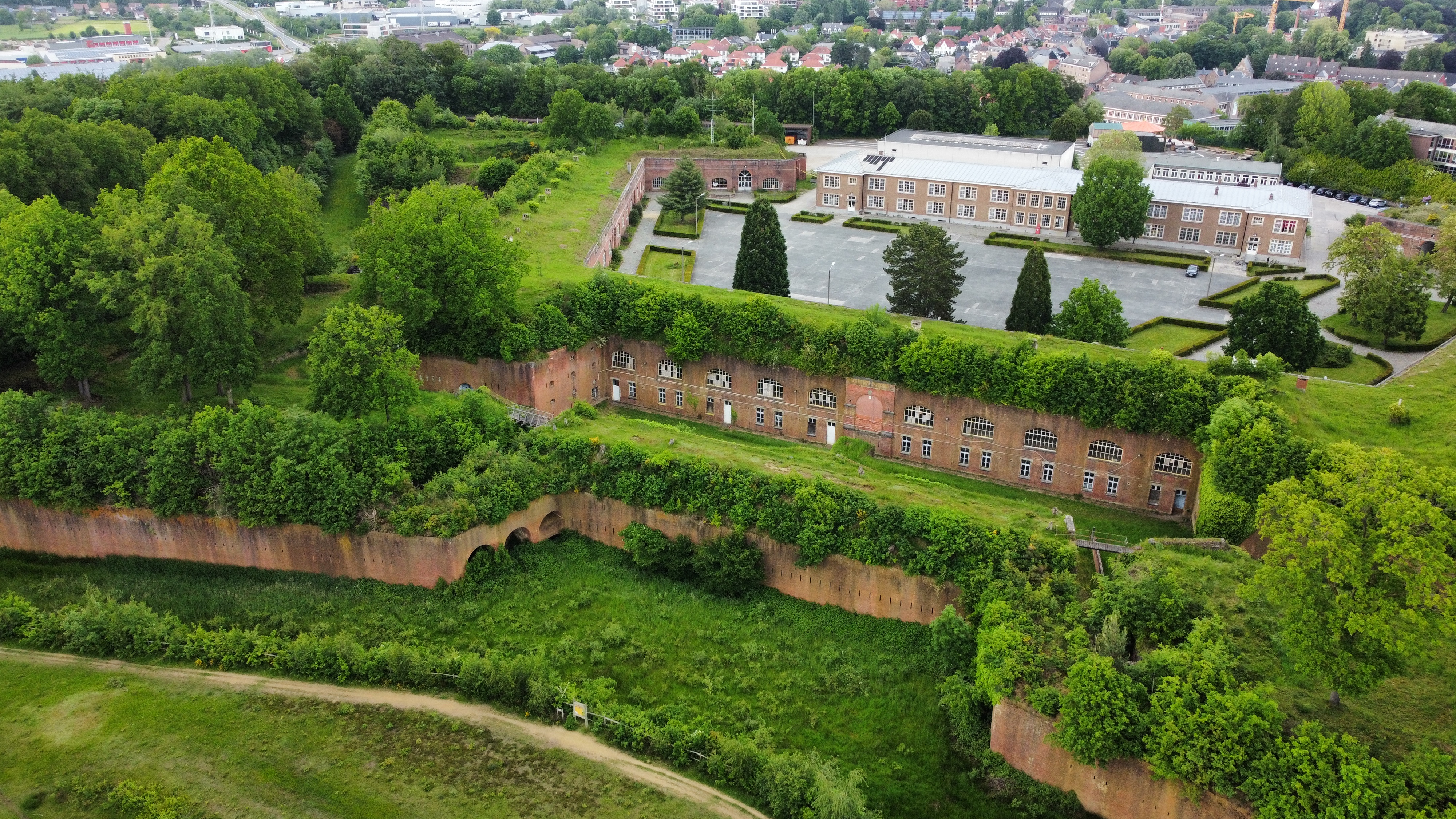
Citadel Diest: Leaner, Faster, Together. From abandoned military enclosure to lively common ground
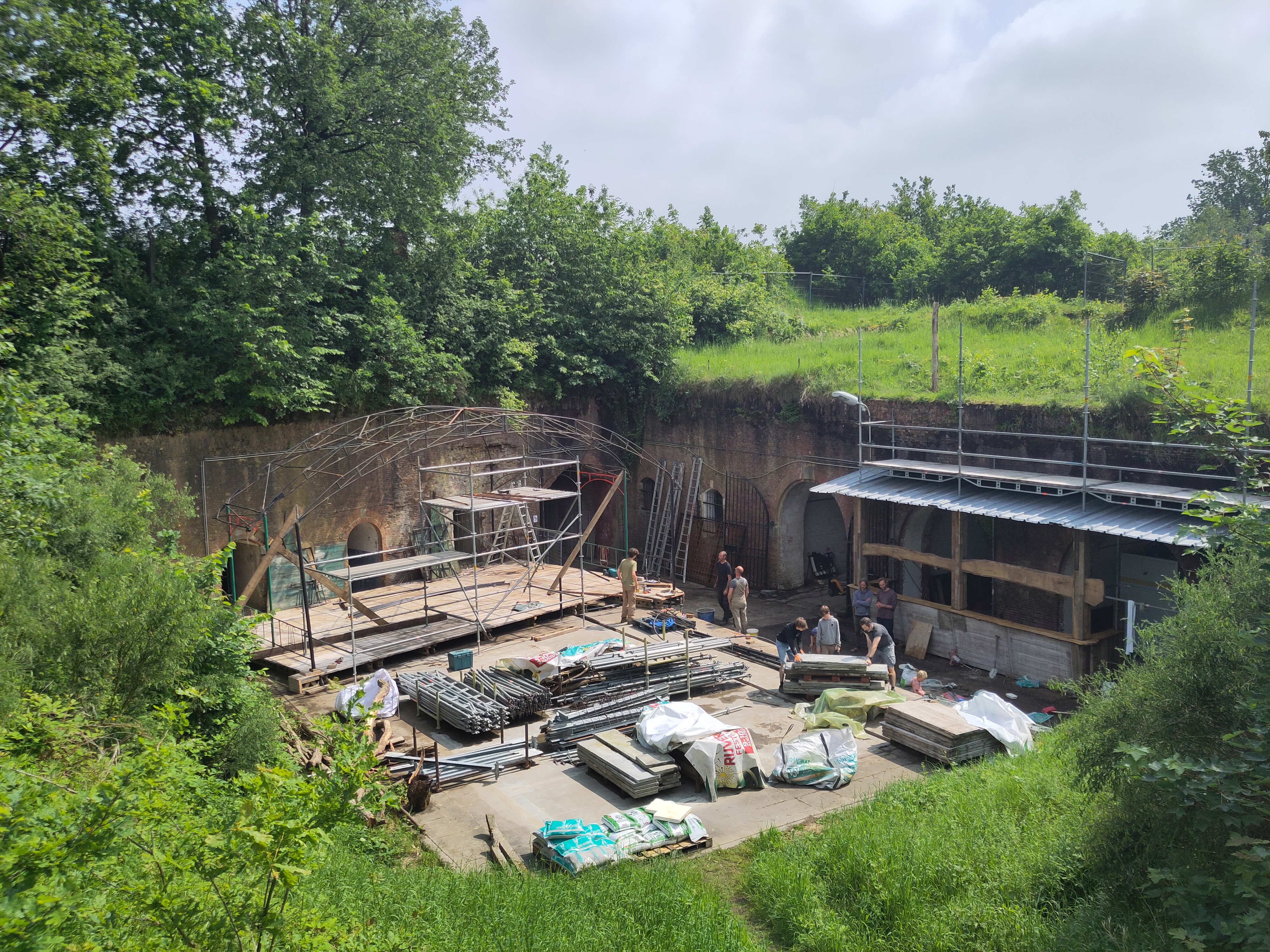
Citadel Diest transforms a military fort into a vibrant urban commons — home to entrepreneurs, associations, and citizens alike. Since 2024, this citizen-led cooperative has activated 8,000 m² of heritage space through circular, community-driven renovation, hosting 29 resident organisations, 144 events and 12,000+ visitors. Born from years of grassroots community building, it proves that participatory, cooperative urban reactivation is faster and more resilient than top-down development.
Belgium
Local
Diest
Mainly urban
It involves a physical transformation of the built environment (hard investment)
Yes
2025-12-31
Yes
InvestEU provides a guarantee on our loan at Triodos Bank
No
No
Organisation
In under two years, Citadel Diest has transformed 8,000 m² of a long-abandoned 19th-century military fort into a thriving urban commons, activated through a citizen-led cooperative, for less than €1 million.
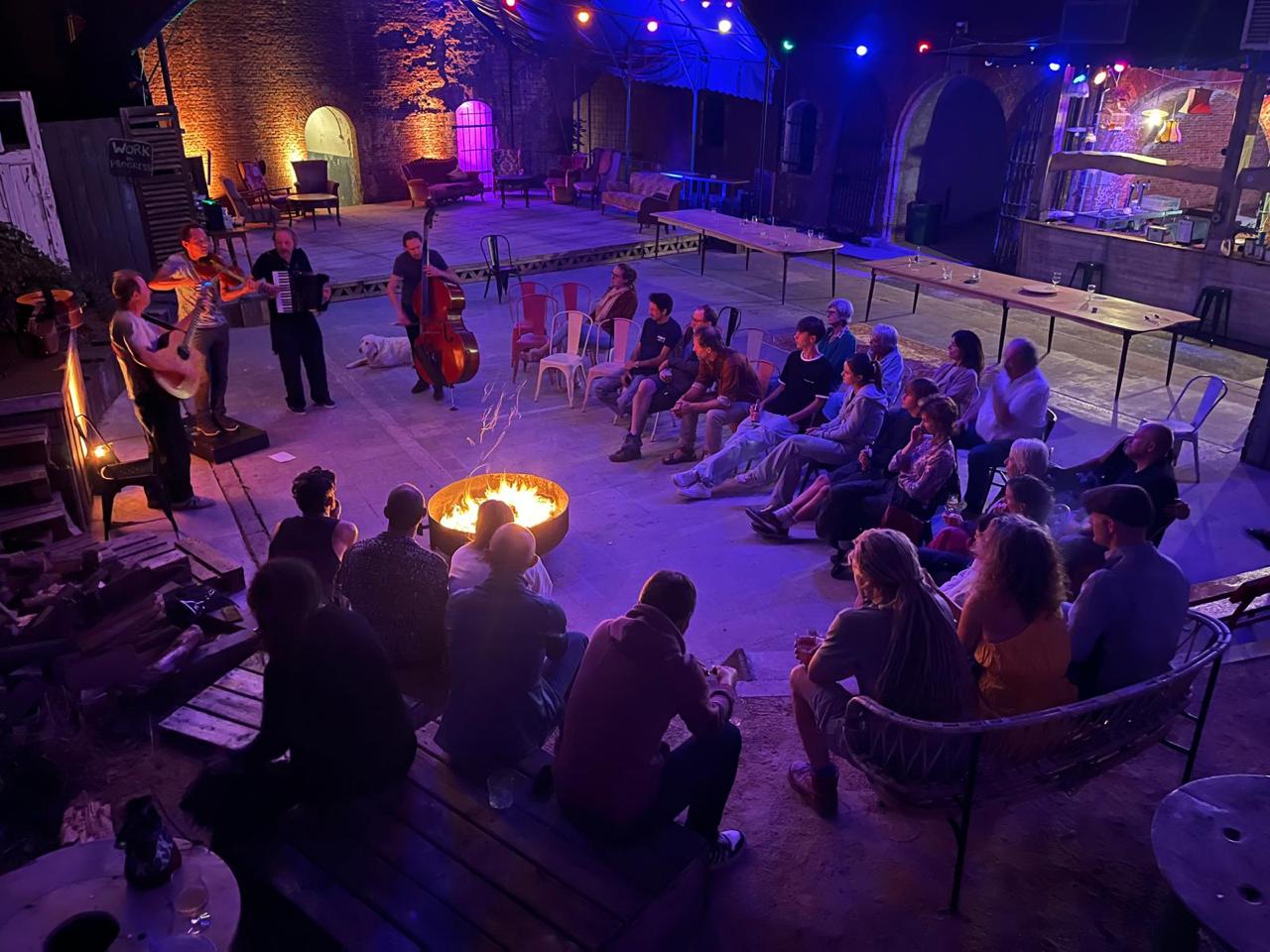
Today, 29 resident organisations are active across five thematic zones: creativity and wellbeing, work and co-creation, making and craftsmanship, local healthy food, and performing arts. In 2024-2025, the site hosted 144 events and welcomed over 12,000 visitors. Occupancy stands at 65% and growing. Partners of significant reach have followed: CERA, Flanders' largest cooperative; Fabriek Fantastique, installing a heritage experience expecting 20,000 children; and EFFORTS, the European network of fortified cities, which sent a mayoral delegation to explore the model.
The cooperative financing model — combining cooperative shares, Win-Win loans, crowdfunding, a local service club, municipal loans and an InvestEU-backed bank loan — demonstrates that community finance and institutional investment can reinforce each other.
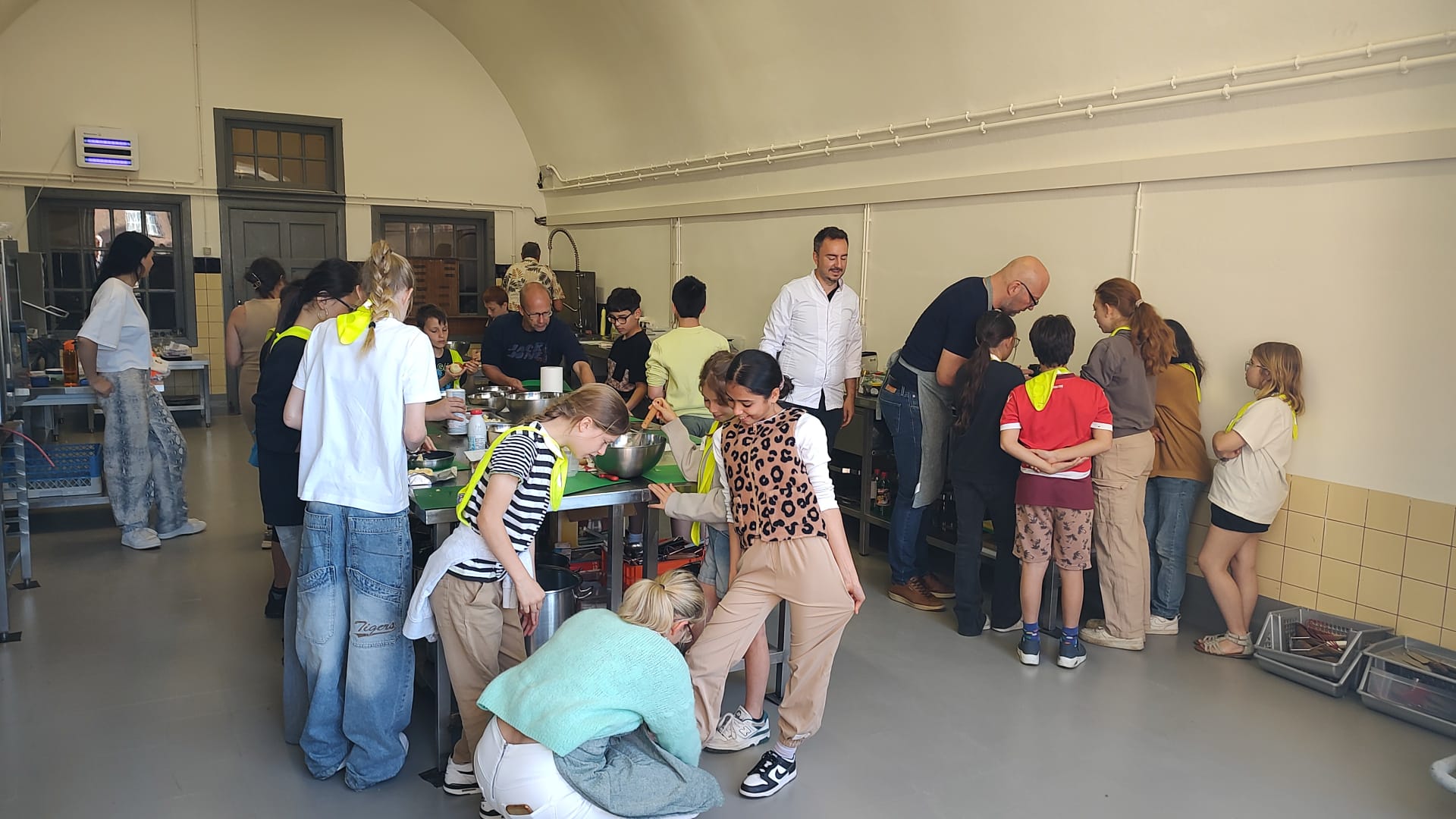
Inclusion is woven into every layer: from a circular building team of volunteers with barriers to employment, to Volkskeuken feeding 120 people per session at €2 for those who need it, to a circular textile atelier combining workshops with work sessions for people distanced from the labour market.
The project is a living laboratory for the city. Where official renovation costs rose from €6M to €17M for a comparable zone, the cooperative achieved twice the scale for under €1M, saving 60 tonnes of CO₂ annually. These lessons directly inform the citadel's long-term redevelopment.
The concession runs until 2030, with renewal already on the agenda. A new association 'Het Hoofdkwartier' launches in April 2026 to coordinate the growing sociocultural programme. The cooperative's ambition: to remain the participatory engine of a citadel that belongs to everyone.
When the Belgian paratroopers left Citadel Diest in 2011, they left behind a fortress of extraordinary scale and a city facing a complex challenge. For over a decade, the City kept searching for a viable path forward, commissioning studies and masterplans while the site awaited its future.
The breakthrough came from two directions. The City commissioned a circular strategy study (Atelier Romain & Metabolic), engaging stakeholders including grassroots coalition Kwartiermakerij - founded in 2019 by local associations and entrepreneurs who had proven the citadel's potential through pop-up events, summer bars and city festivals. Urban development experts advocated for a phased approach: structural renovation of one zone, combined with an open call for a community-rooted activator for another.
Kwartiermakerij's founders responded by founding a cooperative, a legal form that could anchor participatory values while raising significant capital. Stadsmakersfonds, with its 250 cooperative members, became a major shareholder. Miss Miyagi joined as project manager, bringing lessons from Hal5 in Leuven, Flanders' benchmark for participative heritage reactivation.
Implementation was as participatory as the governance. A circular building team renovated the spaces using materials salvaged from the site itself, working with volunteers including many distanced from the labour market. Thematic zones were developed through matchmaking sessions, attracting entrepreneurs, associations and community initiatives against a clear framework of circular ambition, community openness and social inclusion, driven by a core conviction: this exceptional heritage site must remain genuinely accessible and affordable for everyone.
Community-led cooperative development
Circular heritage reactivation
Social inclusion
Health in all policies
Creative entrepreneurship
UNESCO defines sustainable development as economic, social, cultural and environmental development. Citadel Diest treats sustainability as a design constraint that drives creativity. With a total budget under €1 million, every intervention had to be smart and circular.
The most impactful technical decision was replacing a massive fuel-oil heating system with an advanced Austrian biomass installation. The existing circuit was repaired, damaged radiators replaced with units salvaged from elsewhere on the site. The result: a minimum indoor temperature of 18°C across 8,000 m², saving 60 tonnes of CO₂ annually compared to the previous system while the material footprint of the intervention remained minimal. The building itself has visibly recovered from years of vacancy, as controlled heating combined with natural ventilation has significantly reduced moisture and mould. Interesting detail:
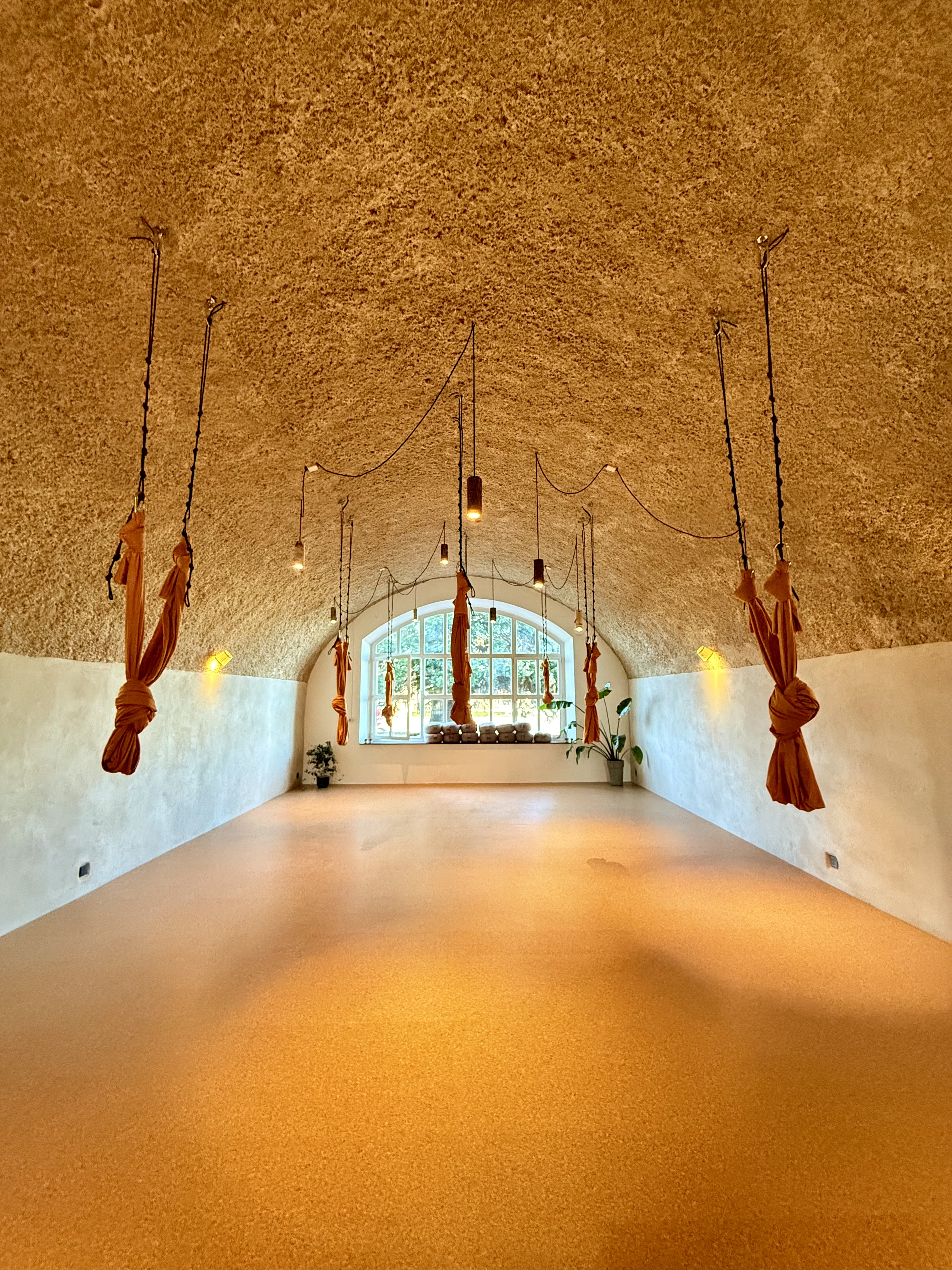
Floor insulation was added in a reversible, non-destructive layer using recycled cork granules, applied by a social economy enterprise — fully dismantlable and reusable.
The approach to lighting is telling: rather than replacing 180 fluorescent fittings, the building team designed a unique decorative treatment for each, using offcuts from timber floors and salvaged materials. The grand entrance chandelier and all event hall lighting were assembled from a mixed collection of reclaimed fixtures. Dozens of antique doors, staircases and pieces of furniture — two truckloads sourced from a like-minded entrepreneur — were integrated throughout. The paratroopers' original kitchen equipment was partially reused in the new event kitchen. A community kitchen in the shared space was salvaged from another Stadsmakersfonds building. Economically, the cooperative closes a financial loop: citizens invest in their own built environment and share in its returns. Culturally, a heritage site closed for a century is restored to foster community life.
The citadel occupies nearly 20% of the area within Diest's historic center. For decades it was inaccessible yet it never lost its hold on the community. Soldiers were stationed here, children played in the surrounding green space and teenagers found ways in to explore its tunnels. When the city began planning its redevelopment, social media and public consultations showed the same thing: everyone has an opinion about the citadel. That emotional connection is both the project's greatest asset and its core responsibility.
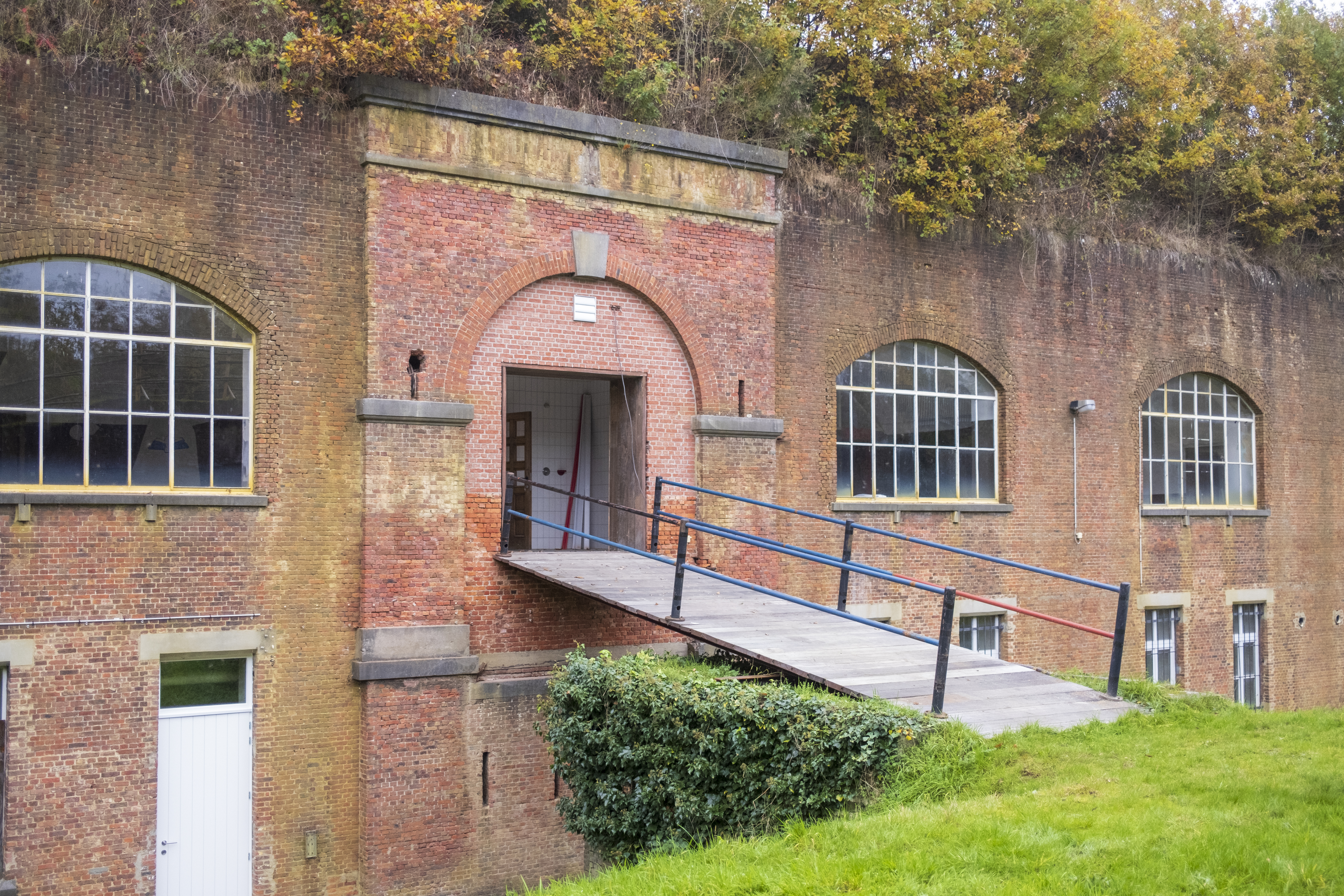
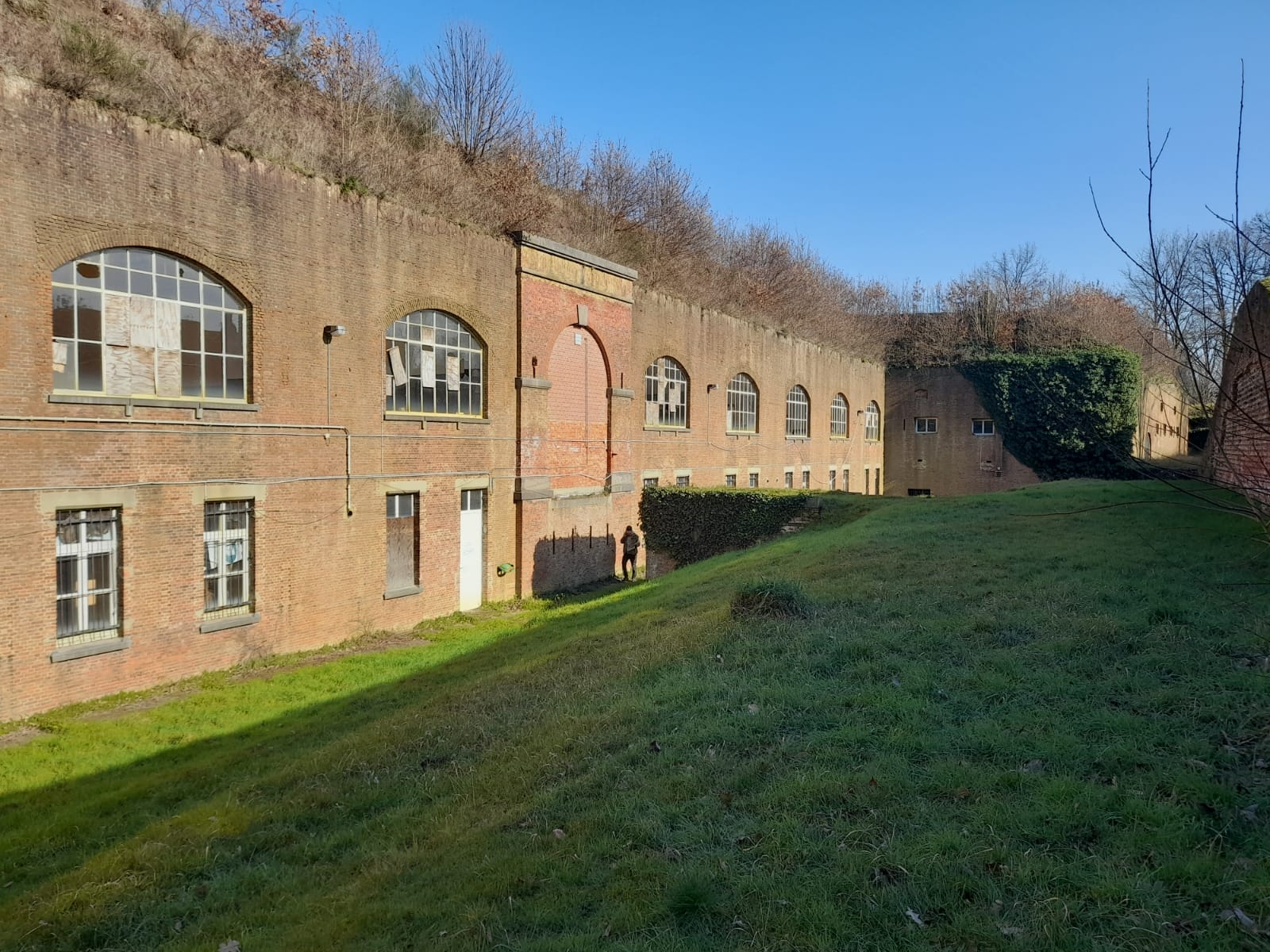
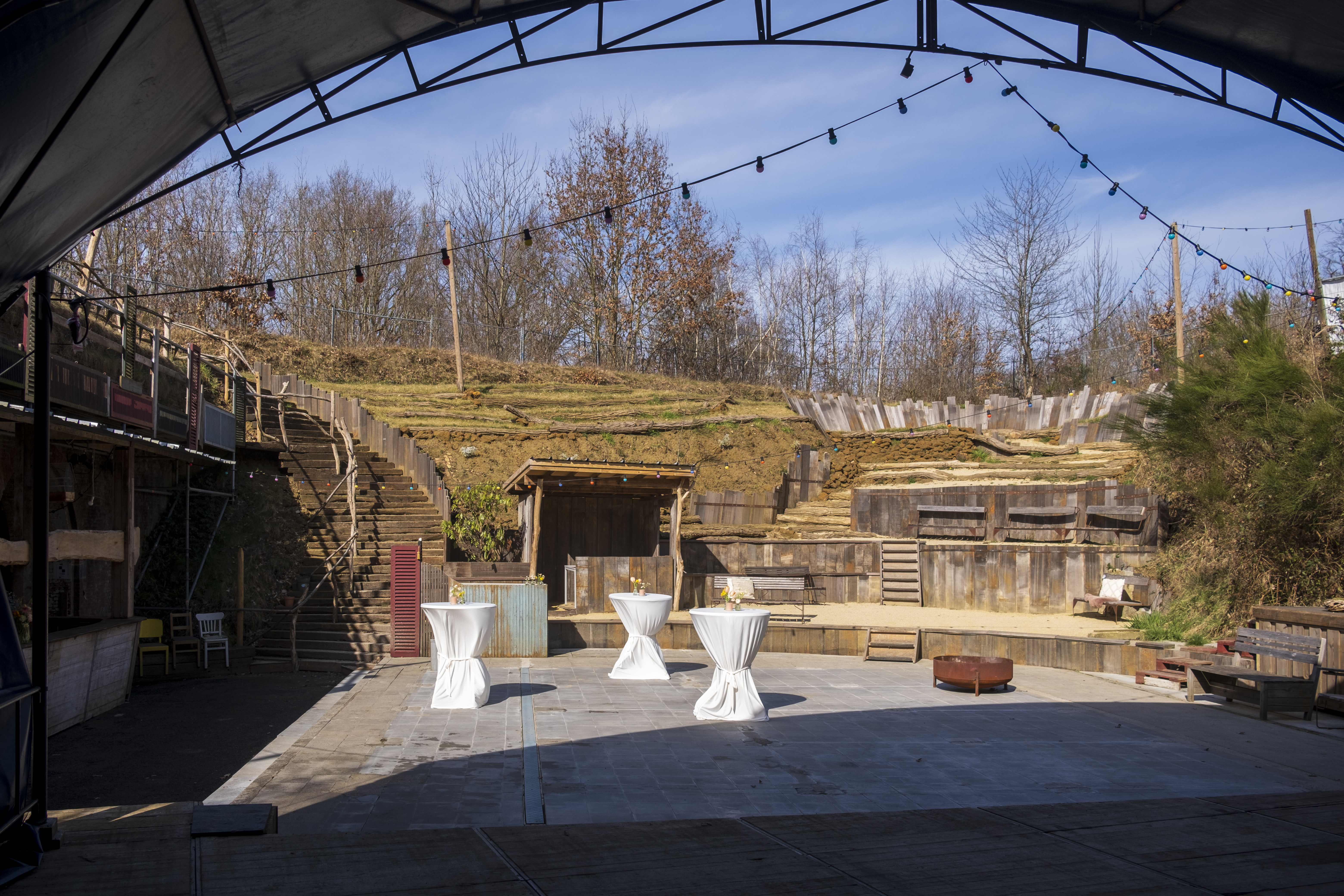
The cooperative's aesthetic approach is one of restraint and reverence. All interventions are reversible, preserving the military architecture — vaulted ceilings, massive walls, spaces with near-identical arched windows. A circular outdoor theatre was created in one bastion, with terraces carved into the earthen flanks and a summer bar built entirely from reclaimed materials. One studio received hemp insulation and clay plaster, chosen as much for their warm aesthetic as for their technical qualities. The cooperative reopened the passage from the Paradeplein through the building to the dry moats and bastions beyond restoring a connection between the historic square, the heritage interiors, and the exceptionally beautiful moats and green ramparts that surround the citadel. The material choices made for sustainability reasons also shape an inspiring, coherent and authentic visual identity.
The result is a place that attracts creative production: Streamz filmed twelve days here for a national television series; film students, video clip directors and musicians have all chosen the citadel as their backdrop. Animation studio Fabriek Fantastique expects 20,000 children for a Ridder Muis exhibition in 2026; Davidsfonds brings 25,000 visitors through a cultural city trail. Merodefestival returns for its second edition.
Volunteers, tenants and visitors consistently report that they love to be here.
The cooperative model is the first instrument of inclusion: every shareholder holds one vote regardless of shares owned. When profitable, 30% of profits will support new circular and social initiatives.
Affordability was approached with principled thinking. Rather than a complex system of reduced rents that risked favouring well-resourced non-profits over under-capitalised circular startups, the cooperative chose a single democratic rent level for all. Diest-based associations receive a 25% event space discount.
For people distanced from the labour market, the cooperative offers multiple pathways beyond existing institutional frameworks: volunteering with legal approvals, interim assignments, and a genuine route to paid employment. Within two years, two volunteers grew into stable paid positions, one of whom is now a cooperative shareholder. In 2026, the cooperative assembles its own cleaning team from community members who want responsibility. This decision followed a telling experience: the external social enterprise contracted for cleaning arrived, did its work, and left — their employees never becoming part of our community. That difference mattered.
Urbain, a digital platform rewarding volunteer contributions through local earnable credits, launches in collaboration with Muntuit and Sociale Innovatiefabriek to lower participation thresholds.
Volkskeuken feeds 120 people per session, €2 for those who need it, with 25-30 volunteers of whom 50% from marginalised groups. Soepersoep produces healthy school meals with a solidarity fund. Stik/Stof combines workshops with work sessions for people with employment barriers.
Monthly tenant meetings shape site decisions; major investments require tenant agreement. Physical accessibility is work in progress: ramps are installed, full sanitary adaptation is planned for 2026.
The cooperative structure itself is a participation instrument. Every shareholder holds one vote, in Citadel Diest as in Stadsmakersfonds, its majority shareholder. Tenants are consulted monthly, and major decisions, including investment choices that affect rent levels, are only taken after explicit tenant agreement.
Het Hoofdkwartier, launching in April 2026, will become the beating heart of participatory life on the site: a genuine third place and coordination hub for sociocultural initiatives that emerge from the community itself. Its founding members include both established associations and long-active individual community members.
The cooperative consistently encourages its residents and partners to collaborate with each other and with the city. City festival Hopville is partnering with Het Hoofdkwartier. Cirque Gitan (a circus festival taking place in citadel in september 26) is in conversation with all tenants to identify shared opportunities. The Ridder Muis expo for children will offer a combined formula during Cirque Gitan.
Participation extends beyond the concession zone. For the second open day, the cooperative reached out to all other users of the citadel site - organisations based in buildings outside the protected heritage zone: De Lift, a school for young people with autism, the Pegasus Museum of the paratroopers, the art academy, a photography club, and a radio amateur club. All opened their doors together. The result was remarkable: the Pegasus Museum counted 700 visitors in a single day for the first time in its history.
Both the cooperative and Het Hoofdkwartier pursue participation within and beyond existing institutional frameworks. The diversity of activities on site creates unique opportunities: e.g. our collaboration with Arktos, an organisation supporting young people in difficulty opens a pathway to involve those young people directly as volunteers, participants or future tenants. 'Start with a place' is our motto for participation.
Citadel Diest is the product of genuine multi-level engagement, considered a necessity for a project of this scale and complexity.
The City of Diest is concessor and strategic partner. A quarterly steering meeting brings together CV Citadel Diest, the City, and ERF, the provincial heritage foundation. The city's concession agreement and bullet loan reflect a deliberate choice to enable community-led activation rather than pursue conventional top-down development.
At regional level, the Flemish Agency for Built Heritage funded the consolidation of several walls as well outside as within the concession zone as a necessary precondition for safe activation. Stadsmakersfonds, the cooperative's majority shareholder, was recognised as one of Flanders' radical innovators in 2022 by the Flemish regional government. Part of the financing mix comes from Win-Win loans, a Flemish instrument encouraging private citizens to invest in local SMEs. The cooperative applied for a VLAIO energy subsidy for its biomass installation which met the latest strict European emissions standards though proved ultimately ineligible due to its subletting model.
At European level, a Triodos Bank loan was secured with an InvestEU guarantee. The cooperative also consulted with Jan-Maarten de Vet of the CCRI, whose advice pointed toward the Green Assist programme for greening expertise which in the end didn’t fit our needs and timeline. The cv further investigated a partnership with Flemish cooperative Ecopower and Walloon cooperative Coopeos for a mobile biomass installation running on locally sourced wood chips, within the framework of an EFRO-supported European project on collective biomass heating networks. This path was ultimately not taken for financial reasons - a leasing formula proved more expensive than purchasing a pellet installation outright - but the investigation illustrates the cooperative's active orientation toward European cooperation and innovation networks.
One of the key success factors of CV Citadel Diest lies in the complementary expertise of its founders. The cooperative brought together grassroots community organisers (Kwartiermakerij, Gitannekesfoor, D'Oranje Giraffen), a heritage renovation contractor, artist-craftsmen, a former general practitioner who made a career switch towards impact-driven projects with a strong focus on fair financing models. This brings the principle of "health in all policies" into the cooperative's programming informing extra support to initiatives such as Volkskeuken, Soepersoep, and local short-chain food systems. Stadsmakersfonds brings experienced cooperative development and financing expertise, and urban planners/architects from Miss Miyagi bring experience in alternative and community-led development including the landmark Hal5 project in Leuven. The University of Antwerp contributed an exceptional bachelor's thesis project in which architecture students developed conceptual frameworks for temporary activation in heritage contexts, not focused on conventional architectural design but on the social and programmatic logic of reactivation.
Social sciences and community work are present through active partnerships with Arktos, the City of Diest's diversity department, Home Martine Van Camp, a day care centre for people with disabilities who bring professional support to our inclusive ambitions. Digital innovation enters through a forthcoming partnership with Muntuit vzw for the rollout of Urbain, a digital platform designed to coordinate and reward volunteers, lower participation thresholds, and create a local circuit of earnable and spendable credits.
Four Urban Studies students from VUB are developing a transferable impact measurement tool using the project as a primary case, while the UCLL research group on Circular Entrepreneurship and Sustainable Transitions conducted an in-depth exchange visit, recognising Citadel Diest as a relevant real-world laboratory.
Citadel Diest is designed to be financially self-sustaining without structural dependence on subsidies. Revenue is generated through two main streams: fixed rental income from 29 resident organisations and event space rentals. Over the first 18-month operating period, both streams each generated approximately €100,000 (excl. VAT), bringing the project to near break-even. Projected revenue for 2026 is €350,000–€400,000, driven by additional tenants in the pipeline, growing event space demand, and a landmark contract worth €70,000 with Fabriek Fantastique for two Ridder Muis immersive children's exhibitions and a summer show series over nine months.
The investment base of €900,000 was assembled through a deliberately diversified financing mix: cooperative shares (€242,000), Win-Win loans from five private lenders (€100,000), a Socrowd crowdfunding campaign and subsequent interest-free loan (€125,000), an interest-free loan from a local service club (€15,000), two municipal loans from the City of Diest (€175,000 combined), and a Triodos Bank loan of €250,000 backed by an InvestEU guarantee. Repayment schedules are aligned with the concession term to 2030, with capital provisioning budgeted from 2027 for bullet loans.
Public subsidies and private grants play a supporting but non-structural role: a €20,000 start-up subsidy from the Flemish Department of Work and Social Economy, and a €50,000 grant from the ING Fund for Circular Economy supporting circular renovations by the social building team. When the cooperative becomes profitable, 30% of profits will be assigned to support the circular and sociocultural ambitions of the project.
Citadel Diest was designed building further on Miss Miyagi's lessons learned from Hal5 and others, and commits to spreading its own learnings as well.
Scaling is one of the founding purposes of Stadsmakersfonds, the cooperative's majority shareholder. The fund was established to replicate and scale this participatory development model. It acts as initiator and catalyst, not as a long-term holding company. Once a project is well established, estimated after around ten years, Stadsmakersfonds transfers major ownership to the local partnership, freeing its capital and expertise to seed the next project.
The core model is transferable to any city facing the same challenge: a heritage site too large and too costly for conventional redevelopment, a community with latent capacity, and a local government willing to try a different path. The key insight — that a well-governed temporary activation can achieve more, faster and cheaper than top-down masterplanning — is directly applicable across European contexts. Where official renovation costs escalated from €6M to €17M for a comparable zone, the cooperative activated twice the surface for under €1M. The financing mix provides a tested blueprint for community-led projects needing significant capital without relying on a single funder.
Regional networks like Socius and Cultuur Op/Til, UCLL's research team, City of Hasselt's neighbourhood development team, and EFFORTS — a European network of fortified cities — all chose Citadel Diest for strategic conferences and site visits. EFFORTS brought a mayoral delegation directly exploring the model in their own fortified heritage contexts.
Four VUB Urban Studies students are developing a compass and impact measurement tool using Citadel Diest as a primary case. The cooperative is also a member of SIncubatoren, a learning network of projects experimenting with place-based social innovation, coordinated by Sociale Innovatiefabriek.