Strengthening Local Democracy and Inclusion
LL Agora
Live Love Agora
Live Love Agora is a participatory democracy initiative that builds a living bridge between urban and rural communities. Through both digital platforms and in-person gatherings, it brings together citizens, local actors, and institutions to exchange ideas, share local realities, and co-create more inclusive, fair, and responsive public policies for their territories.
France
Regional
Région Sud
It addresses urban-rural linkages
It refers to other types of transformations (soft investment)
Prototype level
No
No
No
Organisation
Live Love Agora is a civic dialogue platform that creates inclusive spaces where young citizens, experts, and public institutions can meet to discuss key social, environmental, and cultural issues affecting their communities.The initiative responds to a growing democratic challenge: many young people feel disconnected from public decision-making and are increasingly exposed to misinformation. Live Love Agora aims to rebuild trust and participation by creating structured and accessible spaces for dialogue where reliable information, diverse perspectives, and respectful debate can take place.
The project primarily targets young people aged 18–30 living in the Région Sud (Provence-Alpes-Côte d’Azur). Special attention is given to ensuring participation from diverse territories, neighbourhoods, and social backgrounds, enabling dialogue between young people who may not usually interact.
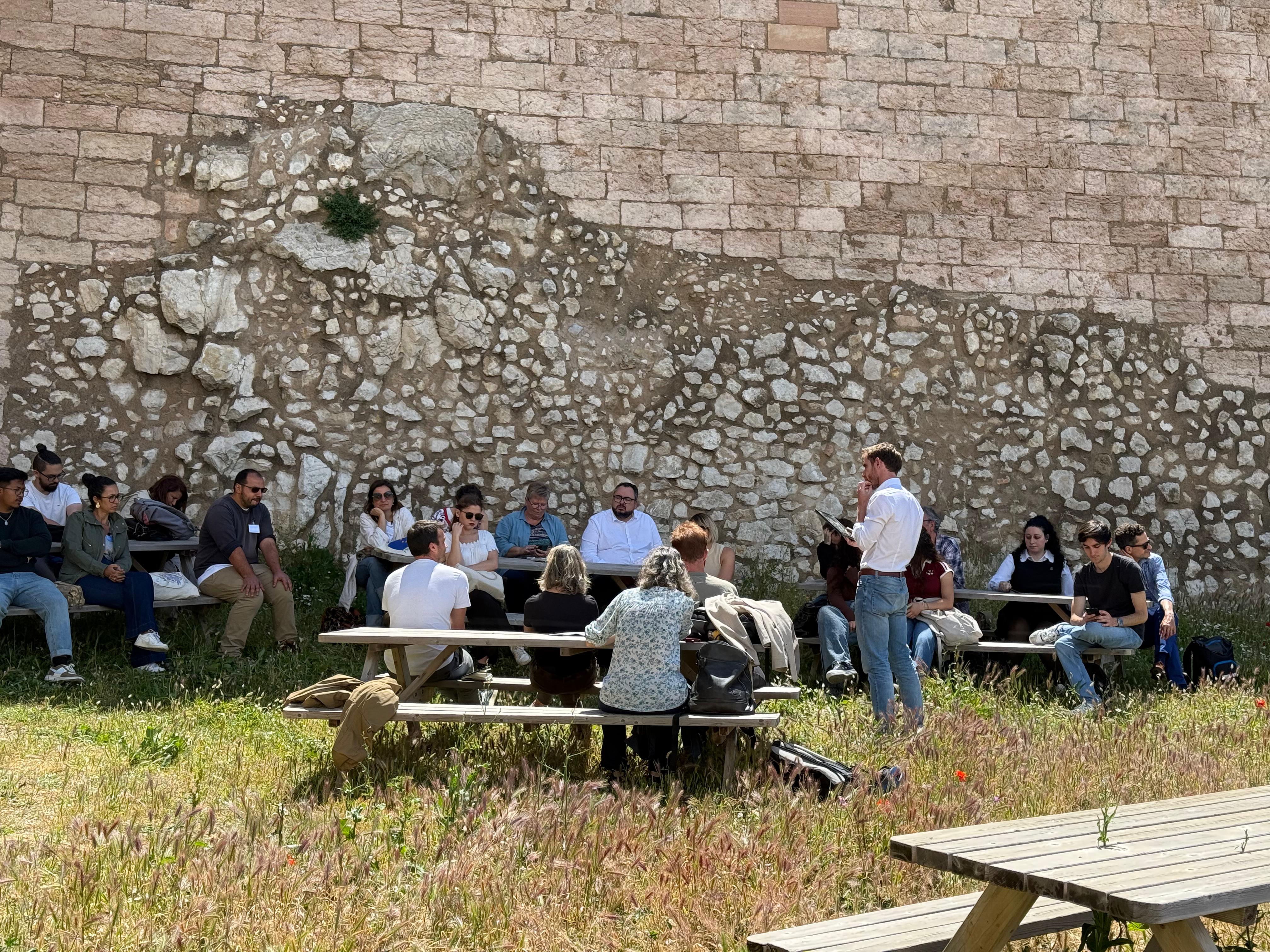
The concept is based on participatory roundtable discussions where young citizens exchange directly with experts and facilitators on contemporary issues. Through guided discussions, participants collectively explore solutions and formulate recommendations addressed to local institutions and decision-makers. This process places citizens at the centre of democratic life by promoting co-creation, collective intelligence, and civic empowerment. It encourages participants to strengthen their critical thinking, better understand public policies, and actively contribute to shaping their local environment.
Live Love Agora was born from the observation that many young people feel disconnected from democratic processes and lack accessible spaces to engage in informed discussions about the issues shaping their societies. At the same time, the spread of misinformation and growing political polarisation highlighted the need for spaces where dialogue, critical thinking, and reliable expertise could meet.
The concept was developed as a structured civic dialogue format designed to facilitate meaningful exchanges between young citizens, experts, and institutional actors. The objective was to create a safe and inclusive environment where participants could share perspectives, challenge ideas, and collectively explore solutions to contemporary challenges.
The development of the project relied on several key steps. First, partnerships were established with experts, academics, civil society organisations, and public institutions to ensure the quality and credibility of the discussions. At the same time, outreach strategies were designed to engage young people from diverse backgrounds across the Région Sud. Each event is organised around moderated roundtable discussions, allowing participants to interact directly with experts and facilitators. This participatory format encourages dialogue, collective reflection, and the co-creation of ideas. At the end of the discussions, participants work together to formulate recommendations addressed to public institutions and decision-makers.
The implementation of the initiative also relies on facilitation methodologies inspired by deliberative democracy and participatory processes, ensuring balanced discussions, inclusive participation, and respectful debate. Communication and outreach are supported by digital tools and networks that allow the project to reach a wider audience and engage new participants.
Local governance
Community empowerment
Collective intelligence
Social cohesion
Youth Civic Engagement
Live Love Agora contributes to sustainability by strengthening the social and democratic foundations that enable long-term, resilient communities. While environmental transitions require technical solutions, they also depend on informed citizens, inclusive dialogue, and collective decision-making. The initiative therefore focuses on the social and cultural dimensions of sustainability, ensuring that young people can actively participate in shaping the future of their territories.
The project addresses several contemporary challenges. First, it responds to the growing democratic disengagement among young people by creating accessible spaces where they can engage with complex societal issues, including environmental transitions. Second, it tackles the spread of misinformation, which often undermines public understanding of sustainability-related challenges. By facilitating direct exchanges with experts and diverse stakeholders, the initiative helps participants access reliable information and develop critical thinking.
Through participatory discussions, the project encourages young citizens to reflect collectively on topics such as climate action, social justice, urban development, and cultural diversity within their local contexts in the Région Sud. These conversations help participants understand the interconnected nature of environmental, social, and economic challenges and contribute to more informed civic engagement.
The initiative also promotes sustainable civic practices by fostering dialogue across communities and strengthening trust between citizens and institutions. By encouraging collaboration rather than polarisation, Live Love Agora helps build the social cohesion necessary to support long-term sustainable policies.
Live Love Agora contributes to making life beautiful by transforming public spaces and social interactions into meaningful, inclusive, and engaging experiences. Rather than focusing solely on physical design, the initiative emphasizes the aesthetic dimension of civic life how dialogue, participation, and shared experiences can create environments where people feel heard, respected, and connected.
Through participatory discussions and community gatherings, young citizens in the Région Sud are invited to reflect on issues affecting their neighbourhoods and everyday lives. This process fosters a sense of belonging, care, and pride in local communities, as residents see their ideas and perspectives valued and integrated into broader social and civic initiatives. By enabling individuals to actively shape their surroundings, the project transforms abstract democratic principles into tangible, lived experiences, making everyday life more meaningful and beautiful. The aesthetic impact of Live Love Agora also lies in its ability to nurture social harmony and positive interactions across diverse communities. The carefully designed format encourages respect, attentive listening, and collective creativity, turning dialogue itself into a form of social beauty. These inclusive gatherings create a visible and experiential expression of democracy, enhancing community cohesion, empathy, and mutual understanding.
In the longer term, the project contributes to resilient, attractive, and socially vibrant communities by embedding practices of co-creation and participatory engagement into everyday civic life. Its aesthetic value is therefore not only symbolic but practical: it shapes more inclusive, caring, and connected neighbourhoods, inspiring citizens to take pride in their environment and in each other.
Live Love Agora Marseille is designed to dismantle the invisible walls of urban segregation. In a city marked by deep socio-economic fractures between the Northern and Southern districts, our concept addresses inclusion through three concrete pillars: radical accessibility, inclusive governance, and a "design for all" methodology. Physical and financial barriers are the primary obstacles to civic participation. By design, the Agora is a free public good. Unlike traditional institutional forums held in closed administrative buildings, our mobile structure moves directly to the citizens’ doorsteps in social housing squares, coastal piers, and transit hubs. This proximity democracy eliminates transportation costs and the intimidation factor of official venues, making participation affordable in terms of both time and resources for the most vulnerable members of the community.
The project promotes a new societal model where hard-to-reach youth are no longer just subjects of policy, but its co-authors. Our governance system specifically targets minorities, migrants, and disadvantaged groups by using digital tools (Civic Tech) to lower the barrier to entry. Before any physical meeting, our Instagram and TikTok polling allows those who cannot attend in person to shape the agenda. This hybrid model ensures the representation of the silent majority, fostering a sense of belonging and agency that is often missing from mainstream political systems.
The concept is exemplary in its commitment to Universal Design. The physical Agora is a modular, barrier-free space designed to be welcoming to people with reduced mobility, the elderly, and families. However, our design for all is also cognitive: we translate complex urban and environmental data into accessible, visual storytelling.
The architecture of Live Love Agora is built on a bottom-up methodology where the citizen is not a mere spectator, but the primary driver of the initiative. We first mobilized our local digital community (via Live Love) to poll the priorities of the 18-30 age group. This digital consultation identified critical local themes: the North-South urban divide, the climate emergency on the coastline, and the reclamation of neglected public spaces.
In the co-design phase, we assembled a transdisciplinary ecosystem including architectural collectives to design the modular Agora structure, neighborhood associations from the Canebière and the Northern Districts, and students from Aix-Marseille University and Kedge Business School. This working group transformed a traditional debate format into a mobile tactical urbanism tool, capable of being deployed anywhere from the Old Port to isolated housing estates. Finally, we engaged decision-makers from the outset: the Région Sud and Euroméditérrannée were consulted to ensure that the recommendations emerging from the debates are directly transmitted to political bodies, creating a concrete bridge between the "voice of the street" and formal institutions.
The most significant impact of this participation has been the territorialization of the project. Initially conceived as a fixed event, feedback from Marseille’s citizens forced a mutation toward mobility and radical accessibility. The Agora was redesigned as a lightweight structure that can be set up in under an hour, breaking down the symbolic and geographic barriers of the city. On a democratic level, stakeholder involvement generated a strong sense of co-ownership. The massive engagement rate proves that Marseille’s youth are not apathetic, but rather waiting for formats that respect their culture.
The design and implementation of Live Love Agora rely on a vertical integration strategy, connecting grassroots civic engagement with regional, national, and European policy-making levels to ensure that local voices drive systemic change.
At the local and regional levels, we involve the City of Marseille and the Sud Provence-Alpes-Côte d'Azur Region. Their engagement is crucial for logistical support and for providing a direct link to urban planning departments. We also partner with local academic institutions, such as La Citadelle de Marseille, and cultural hubs like Cinéfabrique. The added value here is territorial relevance: these stakeholders ensure the Agora addresses specific challenges such as coastline preservation and neighborhood segregation while providing the physical spaces for deliberation. At the national level, we build on our established relationship with Institut Français and the Ministry of Rural communities. Their involvement provides a platform to scale the methodology. The added value is institutional legitimacy and replicability: they help transform local recommendations into a blueprint for civic innovation that can be exported to other French cities, as already demonstrated by our previous pilots.
At the European and International levels, we engage with the Council of Europe, having already presented the prototype at the World Forum for Democracy. This level is vital for strategic alignment: it allows us to frame Marseille’s local issues within the broader European Green Deal and the New European Bauhaus values. The primary added value of this multilevel engagement is the creation of a feedback loop: local youth proposals don't just stay in the "Agora"; they are elevated to regional and European stages, turning a local debate into a tool for trans-European democratic resilience.
The design and implementation of Live Love Agora are rooted in a cross-pollination of diverse knowledge fields, moving beyond traditional silos to create a holistic tool for urban and social transformation. Our approach integrates technical, social, and creative expertise to address the complexity of Marseille’s territory. The physical Agora is the result of architectural innovation. Designed as a modular and mobile structure, it combines aesthetic quality consistent with the NEB Beauty value with functional requirements for rapid deployment. This ensures the space is not only a landmark but a design for all environment that encourages spontaneous interaction and physical accessibility in varied urban settings.
At its core, the project functions as a laboratory for deliberative democracy. We draw on political science to structure debates that transition from individual opinions to collective public reasoning. This is amplified by digital technologies; using the Live Love network as a Civic Tech tool, we use real-time data and community polling to ensure the agenda is directly shaped by the citizens' most pressing concerns.
By partnering with local cultural hubs and environmental experts, the Agora becomes a space where storytelling meets scientific rigor. Especially for themes like coastal resilience, we bridge the gap between grassroots passion and environmental expertise. We view cultural mediation as a key discipline to deconstruct social barriers and foster a deep sense of belonging through shared creative experiences.
The business model for Live Love Agora Marseille is designed as a hybrid resilience model, moving away from a traditional grant-dependent structure toward a diversified ecosystem of public, private, and community-driven funding.
As a project aligned with the European Green Deal and the New European Bauhaus, we seek multi-annual funding from regional (Région SUD), national, and European (CERV) institutions. These funds cover the core infrastructure and the open-source nature of our democratic tools, ensuring the Agora remains a free public good for all citizens.
We envision generating revenue by providing tailored participatory workshops and consultancy for local municipalities, real estate developers, and urban planning agencies. Marseille is undergoing massive urban renewal; our expertise in mobilizing "hard-to-reach" youth and facilitating transdisciplinary dialogue is a high-value service. By acting as a mediator for private entities required to fulfill social impact (CSR) or public consultation mandates, we create a stable commercial income stream.
Leveraging the Live Love digital platform (with its massive reach around Europe - @livelove.spain, @livelove.italy, etc.), we can develop ethical brand partnerships and impact marketing campaigns. This includes co-branded events or sponsored thematic series (e.g., on water resilience or circular fashion) that align with our core values, turning our high digital engagement into a sustainable source of private sponsorship and monetary tokens, for operations.
The strength of Live Love Agora lies in its modularity. Rather than a rigid event, it is a flexible toolkit designed to be exported to any urban or social context facing democratic fatigue. Our core process combining high-reach digital crowdsourcing with intimate physical deliberation is highly transferable. The use of social media (Instagram/TikTok polls) to define local agendas can be applied to any city with a digital presence. By using the Live Love brand architecture, we can activate existing local communities instantly, bypassing the long trust-building phase usually required for civic projects.
The physical Agora is a product in itself. Designed as a lightweight, low-cost, and demountable kit, the structure can be manufactured locally using sustainable materials. This architecture-in-a-box can be shipped or built via open-source blueprints, allowing any municipality or NGO to create a high-quality, aesthetic safe space for dialogue in parks, parking lots, or coastal areas. We have codified our moderation processes into a replicable training manual. This includes non-violent communication protocols, expert-matching frameworks, and recommendation-drafting templates. This soft infrastructure allows the concept to be transferred to different sectors: it can be used by schools for youth governance, by companies for internal CSR alignment, or by environmental agencies for climate adaptation consultations.
Our experience in high-tension environments has provided us with a resilience blueprint. We have developed specific strategies to involve marginalized groups and "invisible" beneficiaries. These learnings are universally applicable to other European cities.
The first quarter will focus on building the Marseille Stakeholder Circle. We will launch a large-scale digital campaign via the Live Love network to recruit 100 "Youth Ambassadors" from diverse districts. In parallel, we will host co-design workshops with local architects and the Friche la Belle de Mai to finalize the technical blueprints of the mobile Agora, ensuring it meets local safety and accessibility standards.
By the second quarter, we will proceed with the local fabrication of the first modular Agora unit using sustainable, locally sourced materials. A high-visibility "Grand Opening" on the Old Port (Vieux-Port) to present the first series of debates on "Coastal Resilience." This phase includes the formalization of our partnership with the City of Marseille to secure "occupancy permits" for various public squares.
The Agora will begin its rotation across Marseille’s 16 districts, with a specific focus on the "Quartiers Nord" to address spatial segregation (bi-monthly physical Agoras coupled with weekly digital polls). For each session, we will produce a "Citizen White Paper" summarized by our transdisciplinary team (social scientists and urbanists), which will be presented to the municipal council.
The final quarter of the first year will be dedicated to measuring our social impact (engagement rates, diversity of participants, policy influence). We will host a "Regional Democracy Forum" in Marseille to present the results to the SUD Region and national stakeholders, aiming to secure multi-annual funding for a permanent 3-year program and the construction of a second mobile unit.