Roots & Wings
Roots & Wings: An Intergenerational Co-Creation Hub
Every community needs roots and wings. 'Roots & Wings' unites our oldest and youngest residents in an upgraded, accessible shared house. By adding a youth space to our intergenerational center, we create a hub for skill-sharing. Elders teach youth to repair and create, championing a circular economy and deep social bonds. It is a welcoming space where saving resources and making friends happen at the same time.
Slovenia
Dolenja vas 51, 3312 Prebold
Prototype level
Yes
Yes
Yes
Yes
European urban initiative - project is called Mag-net, and we are partners in the project - we will use some of the funds to make a mini-hub in Prebold (planned fo 2027)
No
174: Prebold (SI)
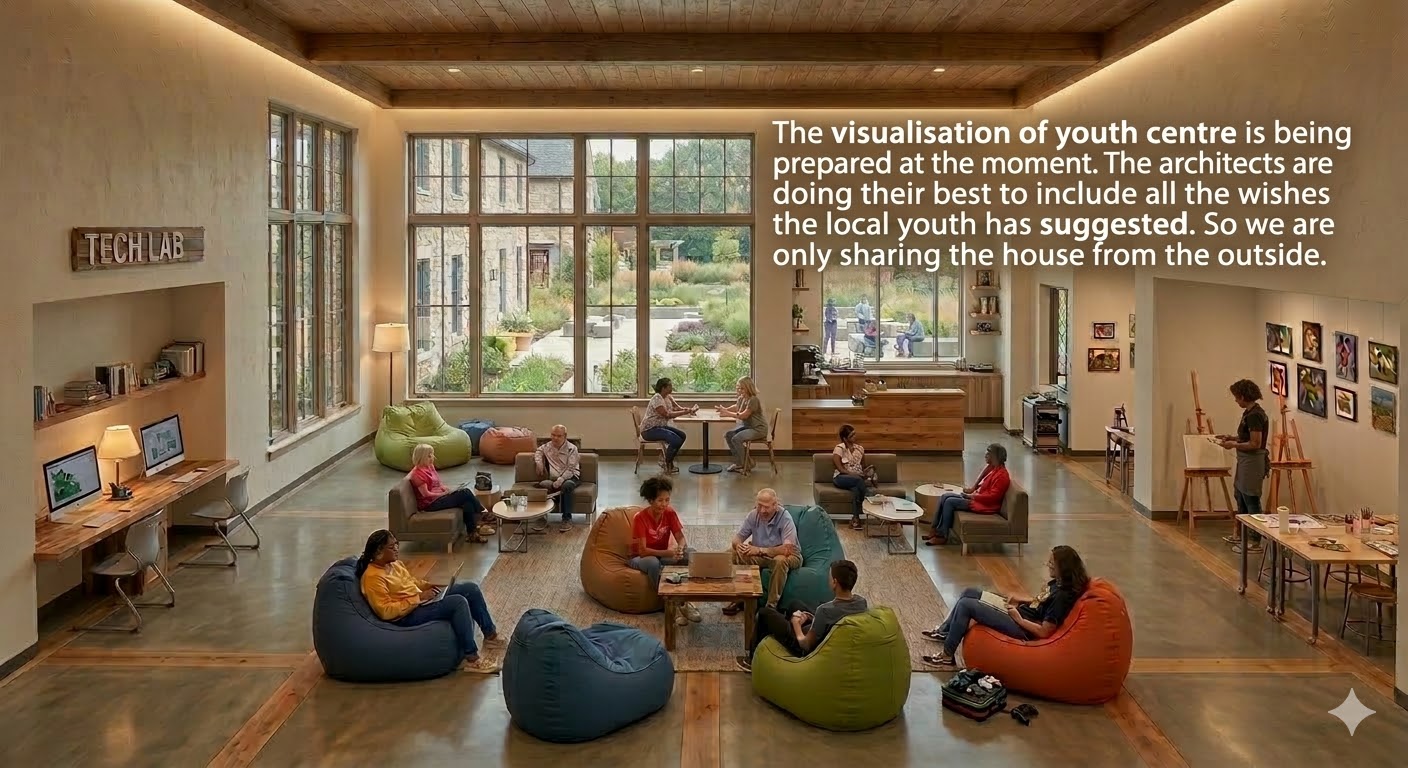
Our initiative aims to transform a historic house into a cohesive, zero-waste community hub. By establishing a welcoming, home-like youth center on the ground floor and active senior center on the first floor, we will seamlessly bridge the generational divide. This project embodies the core NEB values by pairing sustainable, circular interior design with profound intergenerational solidarity. Target Groups: Teenagers and young adults seeking a safe, comfortable space that truly "feels like home" where they can hang out, study, play games, and learn. Elderly Residents: Active first-floor users who possess valuable lifelong skills to share, and who are eager to engage with and learn from younger generations. The Broader Community: Local residents who will benefit from a preserved, universally accessible, and environmentally conscious cultural space. Specific Objectives are zero-Waste Spatial Adaptation: Establish the ground-floor youth center using future-oriented, recycled, and zero-waste interior design principles, creating an inspiring environment where youth feel entirely at home. Seamless Accessibility: Install a new lift connecting the ground and first floors, eliminating physical barriers to allow effortless, daily interaction between the youth and senior spaces. Two-Way Skills Exchange: Organize reciprocal learning workshops where seniors teach youth practical, traditional skills (e.g., upcycling, mechanics), and youth teach seniors modern skills (e.g., technology), fostering mutual empowerment.
Expected Outcomes: A Unified, Accessible Hub: The eradication of vertical and physical barriers, uniting all ages and abilities under one roof to share resources and experiences.A tangibly sustainable space decorated with upcycled materials, directly inspiring a community-wide zero-waste mindset and reducing local footprint. A warm, beautiful environment where reciprocal learning, studying, and playing replace age-based isolation with enduring cross-generational bonds
Expected Outcomes: A Unified, Accessible Hub: The eradication of vertical and physical barriers, uniting all ages and abilities under one roof to share resources and experiences.A tangibly sustainable space decorated with upcycled materials, directly inspiring a community-wide zero-waste mindset and reducing local footprint. A warm, beautiful environment where reciprocal learning, studying, and playing replace age-based isolation with enduring cross-generational bonds
Intergenerational
Co-creation
Circularity
Accesibility
Heritage
The "Roots & Wings" initiative embeds environmental sustainability into its physical infrastructure, interior design, and core programming, directly aligning with the NEB ambitions of repurposing and closing the loop.
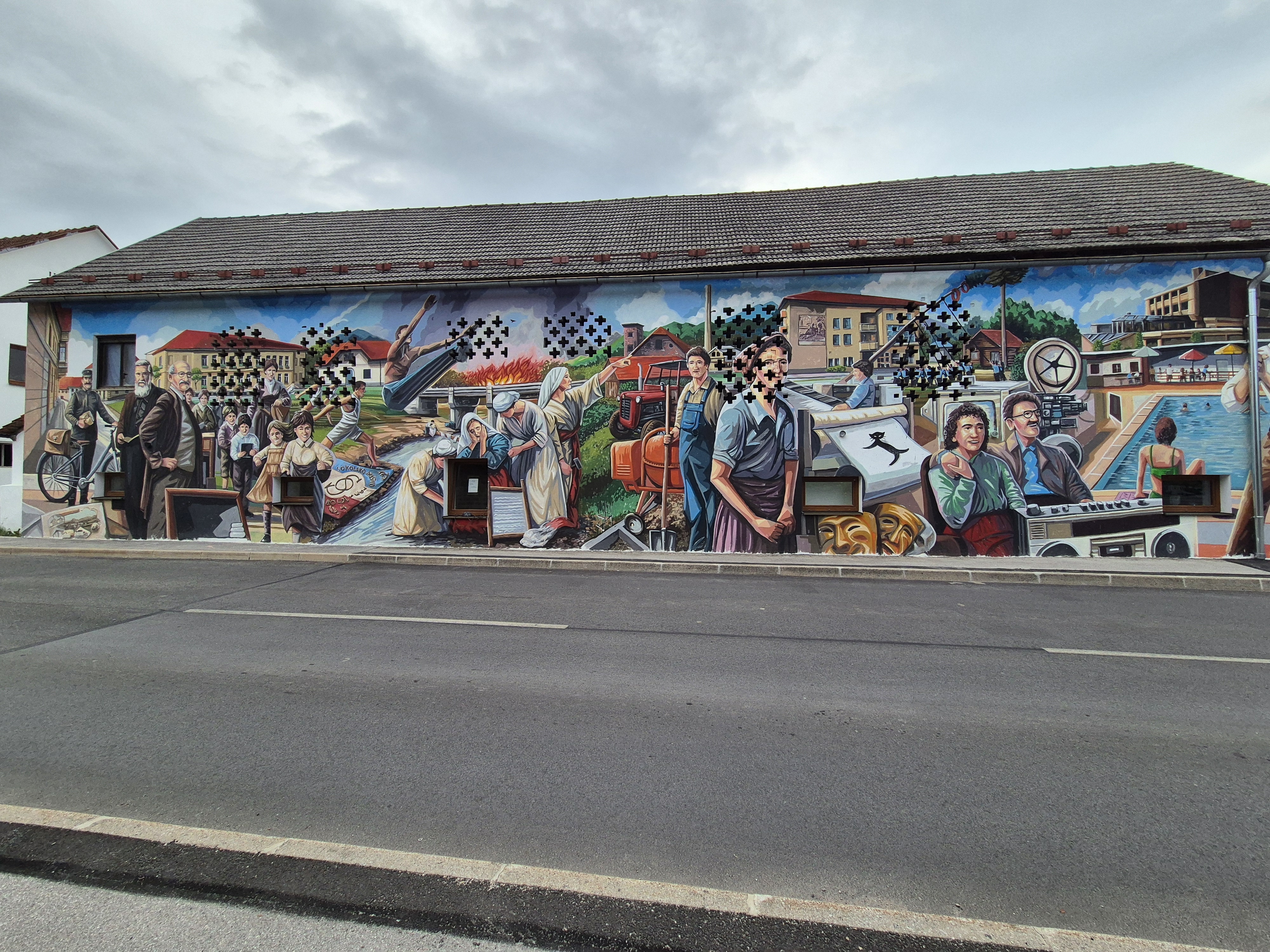
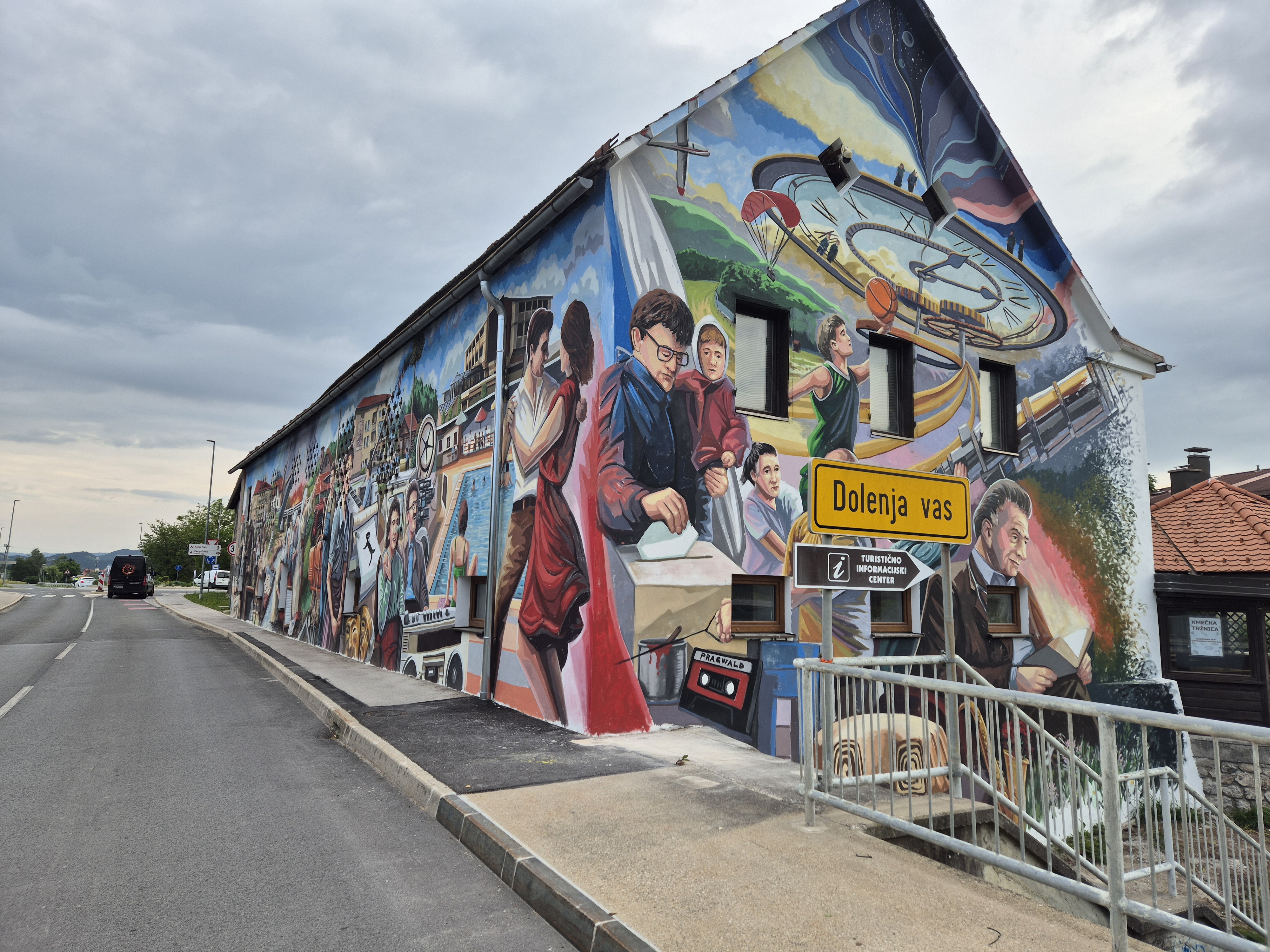
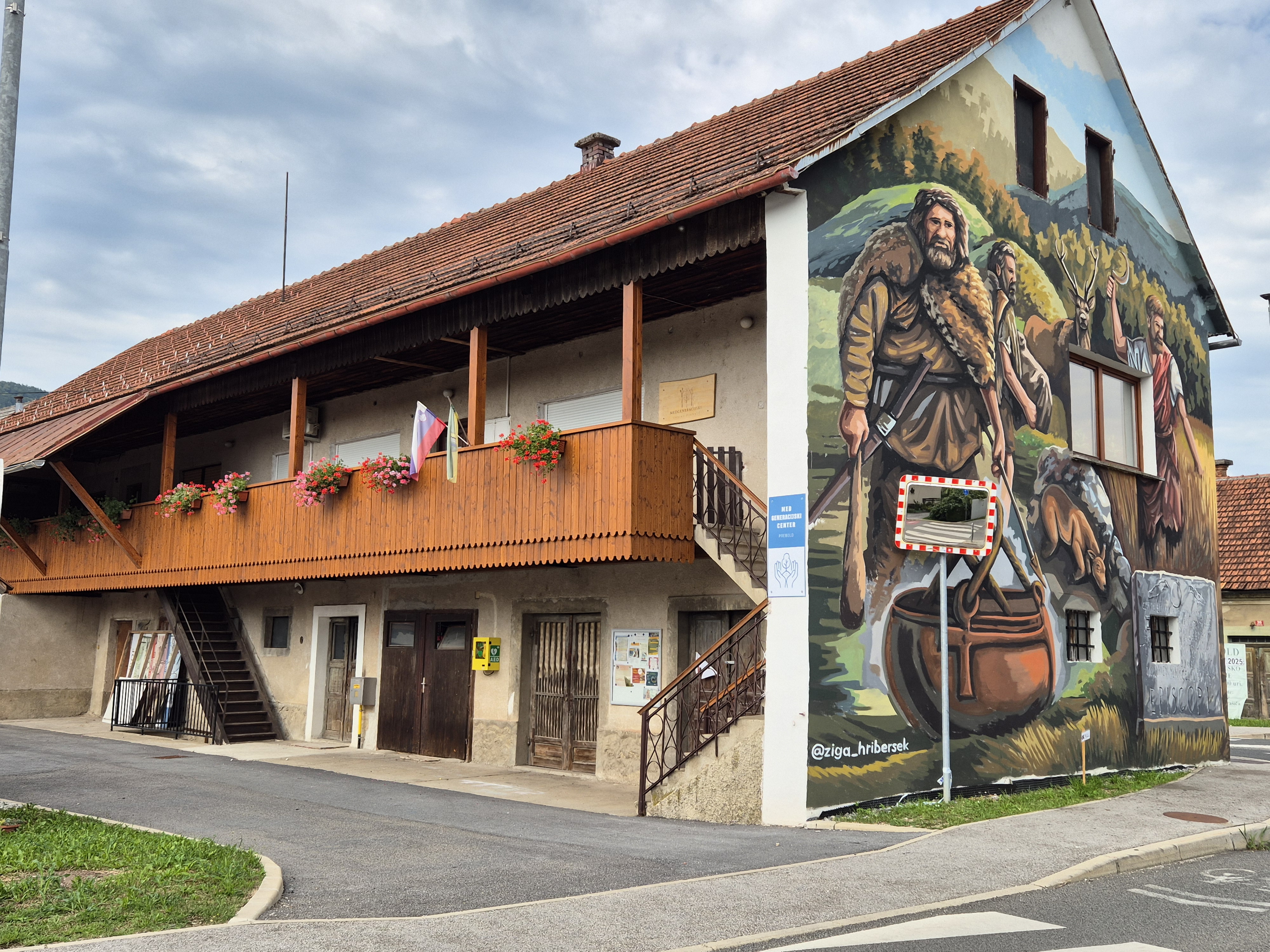
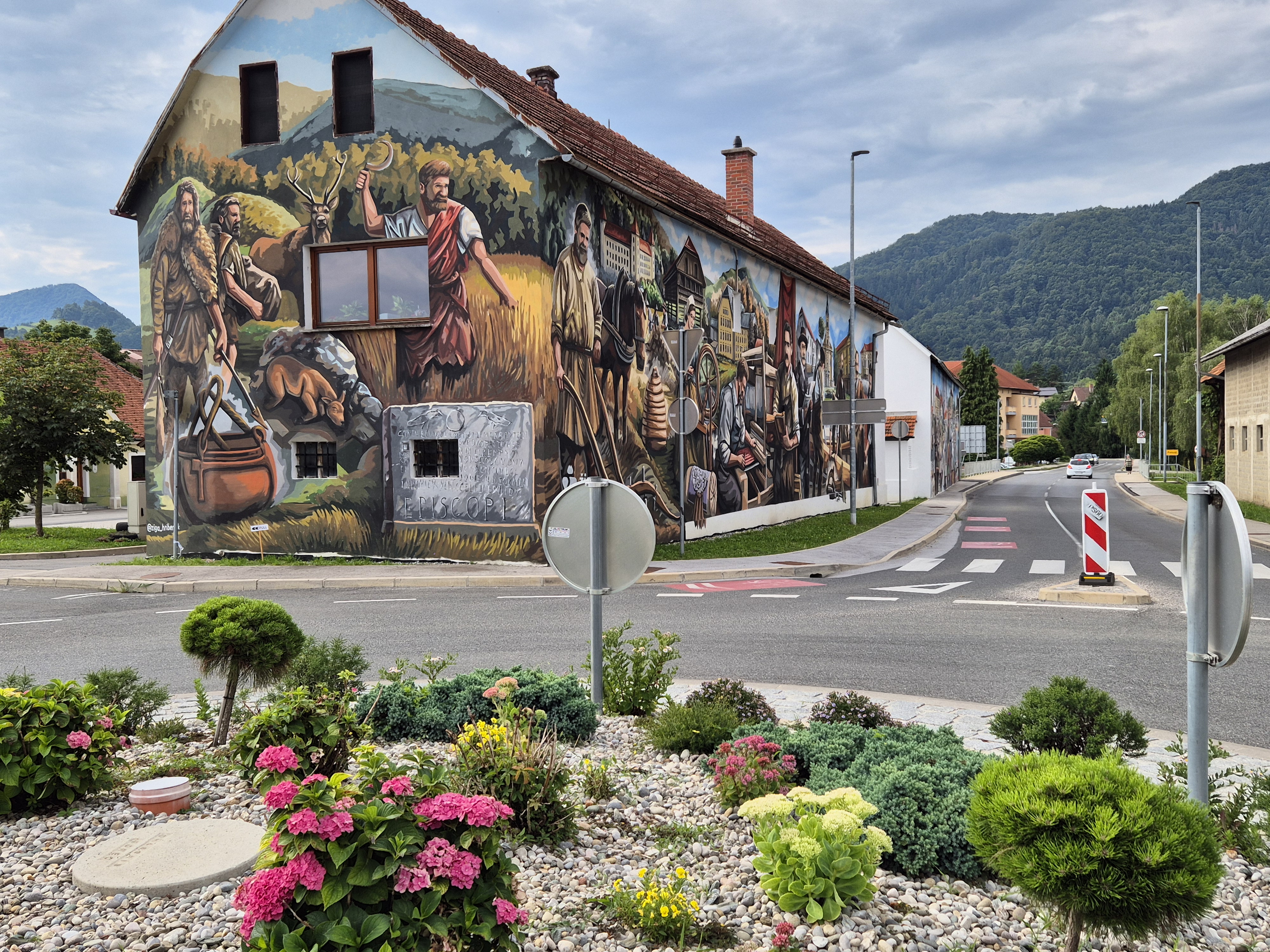
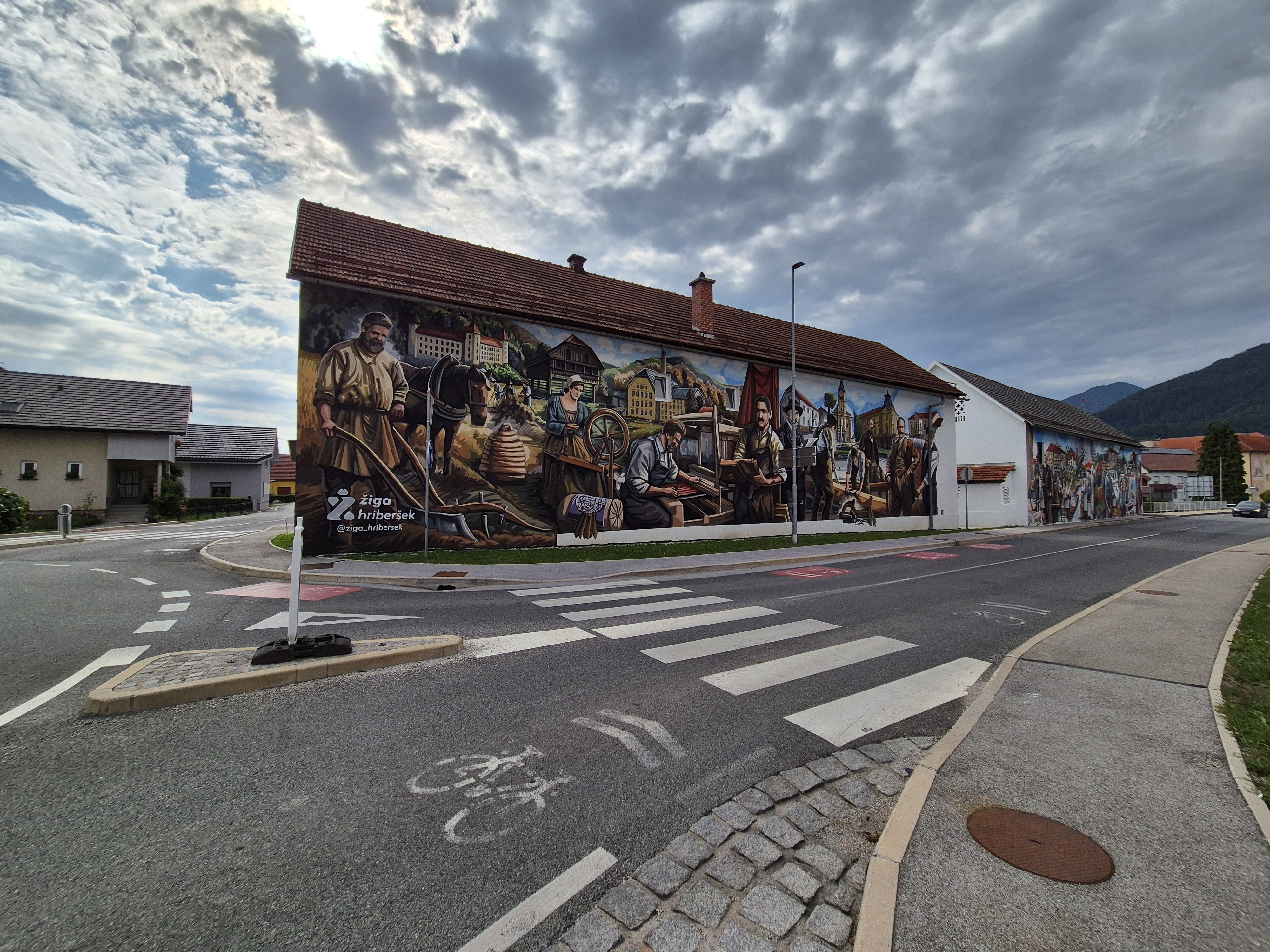
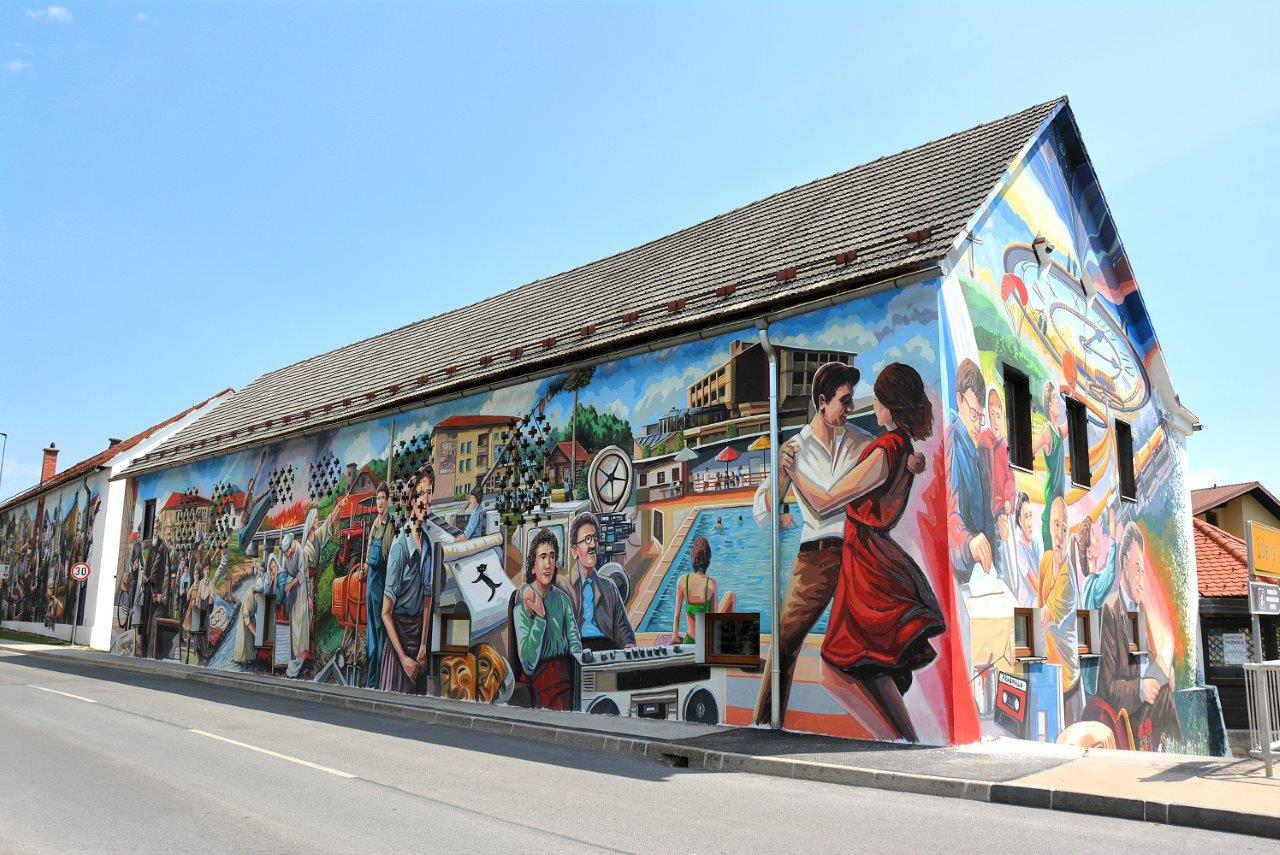
Adaptive Reuse & Zero-Waste Design: Our primary objective is the adaptive reuse of an existing historic house—already a cultural landmark featuring Slovenia’s largest mural. Rather than constructing a resource-intensive new facility, we are spatially upgrading the ground floor into a youth center and linking it to the active first-floor senior hub via a new lift. Crucially, the new youth center will be established using strict zero-waste and recycled interior design principles. By furnishing and decorating the space with upcycled materials, we drastically minimize embodied carbon, material waste, and land consumption while creating a tangible, inspiring example of climate-conscious design for the youth.
Mainstreaming the Circular Economy: Operationally, sustainability is the driving force of our programming. Through our skills-exchange workshops, elderly residents mentor youth in practical skills like motorbike mechanics, basic carpentry, and upcycling. By teaching the next generation how to repair, restore, and maintain goods rather than replace them, we actively combat "throwaway culture" and reduce local waste.
"Roots & Wings" is exemplary because it proves that the green transition is as much about behavioral change and heritage preservation as it is about high-tech interventions. By transforming a celebrated local building into a zero-waste hub for circular economy practices, we offer a highly replicable model. We demonstrate that practicing sustainability—whether by building a youth center from upcycled materials or repairing a broken motorbike—serves as the perfect, practical vehicle for fostering profound intergenerational solidarity.
The "Roots & Wings" initiative redefines municipal aesthetics by harmonizing local cultural heritage with future-oriented, zero-waste design, ensuring a profound "quality of experience" for all users.
Our primary aesthetic objective is to visually bridge the historic with the sustainable. The initiative is housed in a renovated historic building—already a vibrant cultural landmark proudly featuring a big mural with Prebold history. We are expanding this artistic legacy indoors. The new ground-floor youth center will be established using zero-waste interior design principles. By furnishing the space with creatively upcycled and repurposed materials, we create a visually inspiring, modern environment that physically embodies the climate-conscious mindset we are teaching.
Beauty in the NEB framework is defined by how a space makes people feel. Our objective is for the youth to feel entirely "at home." We achieve this through participatory design: the youth are not just handed a room; they co-design and "co-build" their furniture alongside senior craftsmen. This guarantees the space feels authentic, comfortable, and deeply personal. Furthermore, the new lift elevates the quality of experience for our elderly residents, turning the journey between the ground-floor youth space and the first-floor senior hub into an effortless, dignified, and unifying daily experience.
"Roots & Wings" sets an exemplary standard by proving that true municipal beauty is found where monumental public art meets grassroots, circular design. By nesting a zero-waste, co-created youth space within a culturally significant historic landmark, we offer a highly replicable model. We demonstrate how small municipalities can leverage their existing heritage to foster profound intergenerational connections and an enduring, beautiful sense of belonging.
The initiative approaches inclusion through structural barrier-removal, inclusive governance, and the creation of a new, reciprocal societal model. Our foundational objective is to secure barrier-free, equitable access. We are physically bridging the generational divide by installing a new lift that connects our new ground-floor youth center with the active first-floor senior hub. By applying "design for all" principles, we ensure that the entire historic building is safely and effortlessly accessible to everyone, especially elderly residents and individuals with mobility constraints. A major challenge in small municipalities is the isolation of both the elderly and the youth. We dismantle this age-based segregation by creating a shared vertical ecosystem. By offering a free, universally welcoming youth space directly beneath the senior center, we share vital spatial resources. This guarantees affordable, open access to cultural and educational opportunities for all generations under one roof. True inclusion extends to power-sharing. We are replacing traditional top-down management with an inclusive governing system: our "Hub Council" gives youth and seniors an equal, formalized voice in managing the center. Furthermore, our reciprocal skills-exchange program creates a new societal model. By having seniors teach traditional crafts (upcycling, mechanics) and youth teach modern skills (technology), we elevate all participants into respected community mentors, breaking the stereotype of the elderly as mere "care beneficiaries." The initiative proves that profound inclusion requires both spatial and social transformation. We demonstrate that true accessibility requires redesigning the social fabric. By transforming a historic local landmark into a co-governed, barrier-free space where different generations actively empower one another through two-way learning, we offer a highly replicable model for small municipalities to combat social isolation.
The initiative operates at the highest NEB participatory ambition: Co-development. We reject the notion of citizens as passive beneficiaries; instead, our ground-floor and first-floor users, along with civil society, are the primary architects and managers of the initiative.
Roles and Level of Involvement: 1. Local Youth – Role: Co-Designers. Instead of municipal planners dictating the new youth space, the youth are actively designing it. They are engaged in participatory workshops to define the layout, functionality, and zero-waste aesthetics of the ground floor, ensuring the space genuinely "feels like home." 2. Elderly Residents – Role: Mentors & Co-Builders. We are elevating seniors from passive care recipients to active community leaders. Through "co-building" sessions, older craftsmen physically help youth build upcycled furniture for the new center. In our reciprocal programming, they lead traditional skills workshops (mechanics, upcycling) while actively learning modern skills (technology) from the youth. 3. Civil Society – Role: Co-Governors. We have established a "Hub Council"—a formal, inclusive governing body consisting of youth representatives, senior citizens, and local social workers. This guarantees continuous, transdisciplinary power-sharing in the daily management of the hub.
Impact on the Initiative: This profound level of involvement is the bedrock of the project’s success. Spatially, having the youth co-design their zero-waste interior ensures the space directly answers their real needs, preventing the creation of a sterile, underutilized public room. Socially, the reciprocal learning and co-building processes forge immediate intergenerational bonds and a deep sense of ownership before the physical renovations (like the lift) are even completed. Ultimately, by empowering citizens through the Hub Council, we ensure the initiative remains resilient, self-sustaining, and continually relevant to the community's evolving needs.
The initiative thrives on a multi-level engagement strategy, ensuring that our grassroots co-creation is amplified by regional networking and European strategic vision. On local Level the Stakeholders are Local youth, elderly residents, municipal planners, and local craftsmen. They are primary architects and decision-makers via the formal "Hub Council." This guarantees project authenticity and adoption. By having local users directly co-design the zero-waste ground floor and manage the reciprocal programming, we ensure profound community ownership, preventing the initiative from becoming a disconnected, top-down municipal project. On regional Level the stakeholders are youth centers, established intergenerational hubs, and national social NGO networks as collaborative partners for best-practice exchange. Rather than working in isolation, we are actively connecting with other centers to share our unique "two-way" skills-exchange model and zero-waste design principles. This peer-to-peer network allows us to learn from their operational experiences while offering our initiative as a replicable pilot. It ensures our pedagogical and social frameworks are aligned with the highest regional standards. On European Level the NEB community framework and European circular economy guidelines, give Ideological compass and inspiration. European climate goals directly inspired our zero-waste interior design and circular "skills-exchange" workshops. By aligning with NEB principles, we elevate our local hub into a cross-border example of how small European municipalities can enact the European Green Deal through localized social innovation. The ultimate added value of this nested approach is profound resilience. The local community provides the "roots"—ensuring the hub is fiercely loved and utilized—while our regional networking and European alignment provide the "wings"—supplying the shared knowledge and visionary frameworks needed to make this initiative a highly replicable model.
We employ a transdisciplinary approach that integrates formal academic fields with the invaluable, practical knowledge of our community. Architecture & Universal Design: Focused on the structural integration of the lift connecting the ground and first floors, and the functional layout of the youth center. Social Work & Pedagogy: Focused on community building, safeguarding, and facilitating healthy, reciprocal intergenerational dynamics. Circular Economy & Vocational Crafts: The technical knowledge of zero-waste interior design, mechanics, carpentry, and upcycling required for our space and skills-exchange. Civic Lived Experience: The informal, everyday expertise of our elderly residents and local youth regarding their own needs, habits, and community culture. Representatives from these fields interact continuously through our participatory "Hub Council" and co-design workshops. During the design phase, spatial planners and architects work directly with youth workers and the youth themselves. The architects translate the psychological need for a "home-like" environment into tangible, zero-waste physical layouts. During the operational phase, local craftsmen collaborate with social workers to design the reciprocal skills-exchange workshops, ensuring that technical lessons (like mechanics or tech support) are delivered in a pedagogically sound, inclusive manner. The added value is the prevention of professional "blind spots." If architects worked alone, we might get a visually stunning youth center that fails to support the teens' actual social habits. If social workers worked alone, we might have great programming in a dysfunctional, physically inaccessible building. By merging these disciplines, our physical infrastructure perfectly supports our social infrastructure (the two-way learning and intergenerational connection). This synergy results in a holistic, resilient hub where spatial upgrades and social programming actively amplify each other’s success.
The innovative character of "Roots & Wings" lies in its rejection of siloed, top-down municipal planning in favor of a radically integrated, reciprocal community model. When compared to mainstream actions, our initiative pioneers innovation across three key areas: 1. Spatial Integration vs. Segregated Facilities. Municipalities typically build and operate separate, isolated facilities for different age groups (e.g., a youth club on one side of town, a senior care center on the other). We are pioneering a "vertical ecosystem." By establishing the new youth center on the ground floor and linking it directly to the active senior hub on the first floor via a new lift, we actively engineer daily, organic intergenerational interaction. We prove that sharing physical infrastructure is the most effective way to physically dismantle social segregation. 2. Reciprocal Empowerment vs. One-Way Care. Social programming often treats demographics as passive recipients of one-way services—youth are merely "supervised," and the elderly are simply "cared for." We replace the "care beneficiary" model with a "co-mentor" model. Our two-way skills-exchange recognizes both groups as vital community assets. Seniors are empowered to teach traditional crafts, while youth teach modern digital skills. This reciprocal learning restores agency, respect, and purpose to our oldest and youngest citizens equally. 3. Co-Governance & Circular Ethos vs. Top-Down Management. When opening a new space, municipalities usually execute standard, linear procurement to fit out the rooms and manage the facility via rigid, top-down rules. We treat both the spatial design process and the management of the hub as active community exercises. Guided by strict zero-waste principles, the youth and seniors collaborate to purposefully shape the interior environment over time, ensuring it feels authentic and "home-like." Furthermore, our "Hub Council" gives these users equal power to govern the space alongside social work
Our methodology deliberately moves away from linear municipal execution. Instead, we employ a cyclical, transdisciplinary approach that intertwines physical spatial upgrades with social pedagogy. Our methodology is structured across three distinct pillars:
1. Participatory Spatial Activation Instead of standard procurement for the ground-floor youth center, we utilize NEB Toolbox methods (e.g., Empathy Mapping) to facilitate participatory design workshops where the youth define the layout and aesthetic. Following this, youth and seniors collaborate to source and curate zero-waste, upcycled interior elements. Concurrently, we are executing structural accessibility upgrades to physically bridge the ground and first floors, guaranteeing a universally accessible, integrated environment.
2. Reciprocal Pedagogical Framework We reject traditional educational models where youth are merely supervised or elders are merely cared for. Our methodology relies on peer-to-peer mentoring. We map the existing practical skills of our senior residents (e.g., mechanics, heritage crafts) and pair them with the learning desires of the youth. Conversely, youth map their modern skills (e.g., technology, digital media) to teach the seniors. This methodology ensures both demographics interact on an equal, empowered footing.
3. Agile Co-Management To ensure the project's long-term resilience, we implement an agile feedback loop via our "Hub Council" (comprising youth, seniors, and social workers). Rather than locking in a rigid, multi-year program, the Council meets regularly to assess the success of the workshops, adapt the rules of the shared spaces, and propose new community initiatives based on the actual, evolving reality of the people using the hub.
The initiative is designed as a highly replicable blueprint. Because it relies on universal social dynamics and the adaptive reuse of existing infrastructure rather than massive municipal budgets, its core elements can be easily transferred to other contexts, places, and beneficiary groups.
Rather than building separate, single-demographic centers from scratch, we adapt a multi-story building, using a lift to seamlessly connect a ground-floor youth space with a 1st-floor senior hub. Any municipality with underutilized, multi-story public buildings can replicate this spatial methodology. By simply investing in universal accessibility and co-locating demographics, towns can cost-effectively dismantle physical and social segregation.
Secondly, our two-way skills exchange (seniors teaching traditional crafts; youth teaching digital skills), which replaces the mainstream, one-way "care" model. This exact pedagogical process can be transferred to entirely different beneficiary groups to build social cohesion. For example, the same framework could be used to integrate newly arrived immigrants (sharing cultural/language skills) with local residents. It is a universal methodology for restoring agency and mutual respect. Thirdly, our transdisciplinary, equal-power governing body consisting of youth, seniors, and social workers. This co-governance methodology is a "plug-and-play" system that can be transferred to any public institution. It provides a proven framework to prevent top-down alienation and ensure community spaces remain relevant to their actual users. And lastly, empowering the community to collaboratively source and curate a zero-waste, upcycled interior instead of relying on standard, mass-produced municipal procurement. This process can be adopted as a standard practice by other local governments. It proves that the very act of outfitting a public space can be used as an active, hands-on educational tool for the circular economy.
Initiative is fully primed to transition from a co-developed vision into a tangible reality. Our implementation strategy ensures that NEB values actively guide every practical step, moving from foundational planning to active community use. To date, our commitment has focused on laying a resilient, participatory groundwork: We have successfully established the "Hub Council" framework. By formalizing this governing body, local youth, seniors, and social workers are already actively collaborating as equal co-creators before any physical renovations begin. Our preliminary spatial assessments for integrating the ground and first floors have been developed in tandem with social workers. This ensures the physical layout is deliberately designed to support intergenerational flow and reciprocal learning, preventing professional blind spots. Our planned activities follow a clear, NEB-driven sequence to bring the initiative to life: Firstly, executing universal Accessibility by implementing structural and spatial adaptations to seamlessly connect the ground-floor with the first-floor. We will adhere to "design for all" principles, guaranteeing the building becomes fully barrier-free. Then we will activate our community-led interior design phase. Instead of standard procurement, youth and senior users will collaborate to source, select, and curate upcycled and repurposed interior elements. This hands-on process turns the outfitting of the space into a practical exercise in the circular economy, ensuring the environment feels authentically "at home." Then we will operationalize the two-way workshops where seniors teach practical, traditional crafts and youth teach digital skills, actively dismantling age-based segregation through shared learning. Lastly, the Council will continuously adapt the space based on community feedback while activating our regional network of youth and senior centers to share our methodologies, positioning "Roots & Wings" as a replicable pilot.