Enhancing Circularity, Sustainability, and Innovation
Minimo Fest: A Pause from Consumption
Minimo Fest: A Public Space Intervention to Rethink Consumption and Celebrate Circular Culture
Minimo Fest is a one-day urban intervention that transforms a city square during Black Friday into a space for meeting, reflection and circular culture. Using reused furniture, second-hand markets, upcycling workshops, storytelling, live music and street performance, the project invites citizens to pause and rethink everyday consumption. By reclaiming public space for community interaction, Minimo Fest promotes responsible consumption and new ways of inhabiting the city.
Spain
Local
Las Palmas de Gran Canaria
Mainly urban
It involves other types of transformations (soft investment)
Yes
2025-11-28
No
No
No
Individual
Minimo Fest is a one-day urban intervention that took place in Plaza de Stagno, in the commercial centre of Las Palmas de Gran Canaria, during Black Friday, as part of the TAC! Festival of Urban Architecture organised by the Spanish Ministry of Housing and Urban Agenda in collaboration with Fundación Arquia.
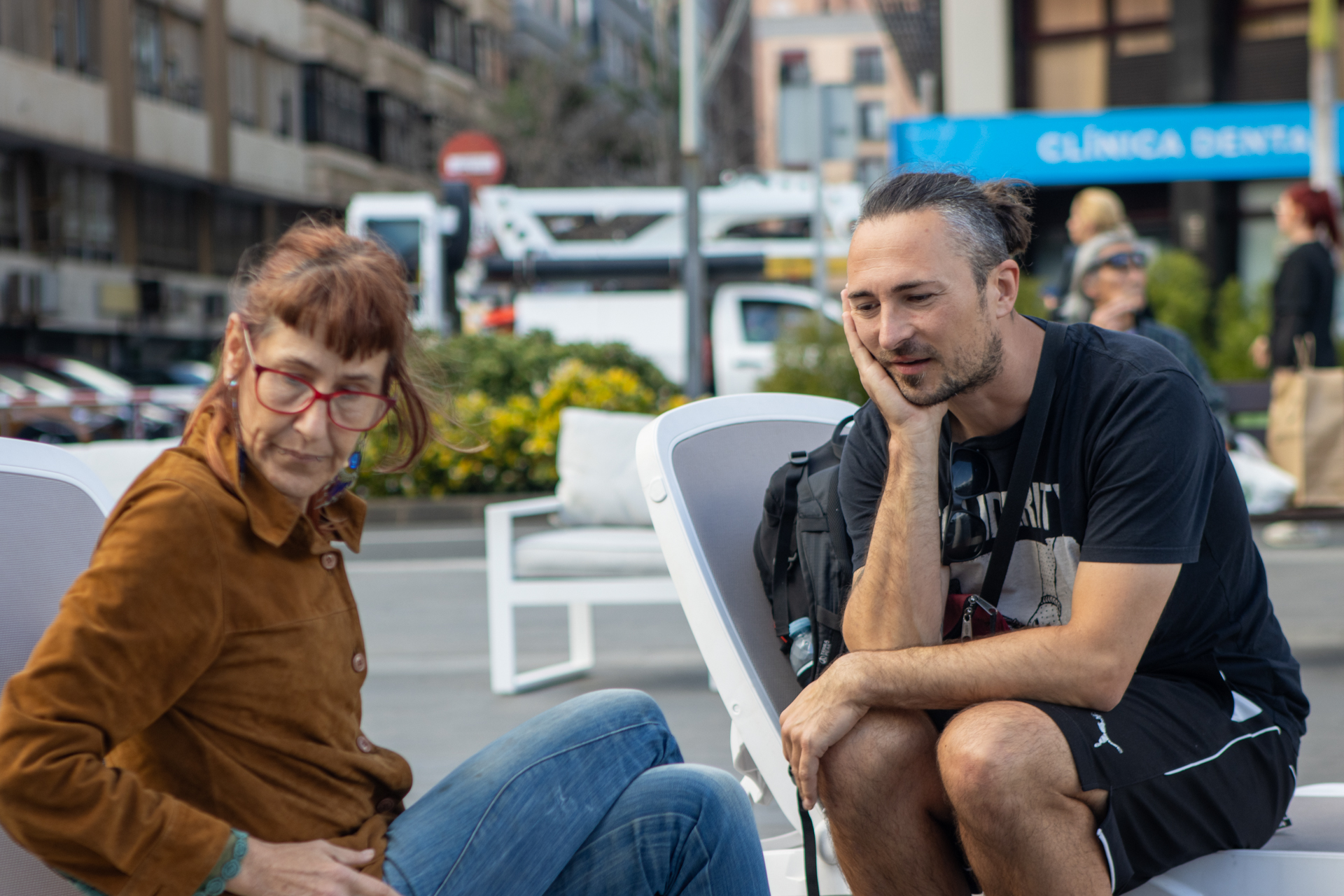
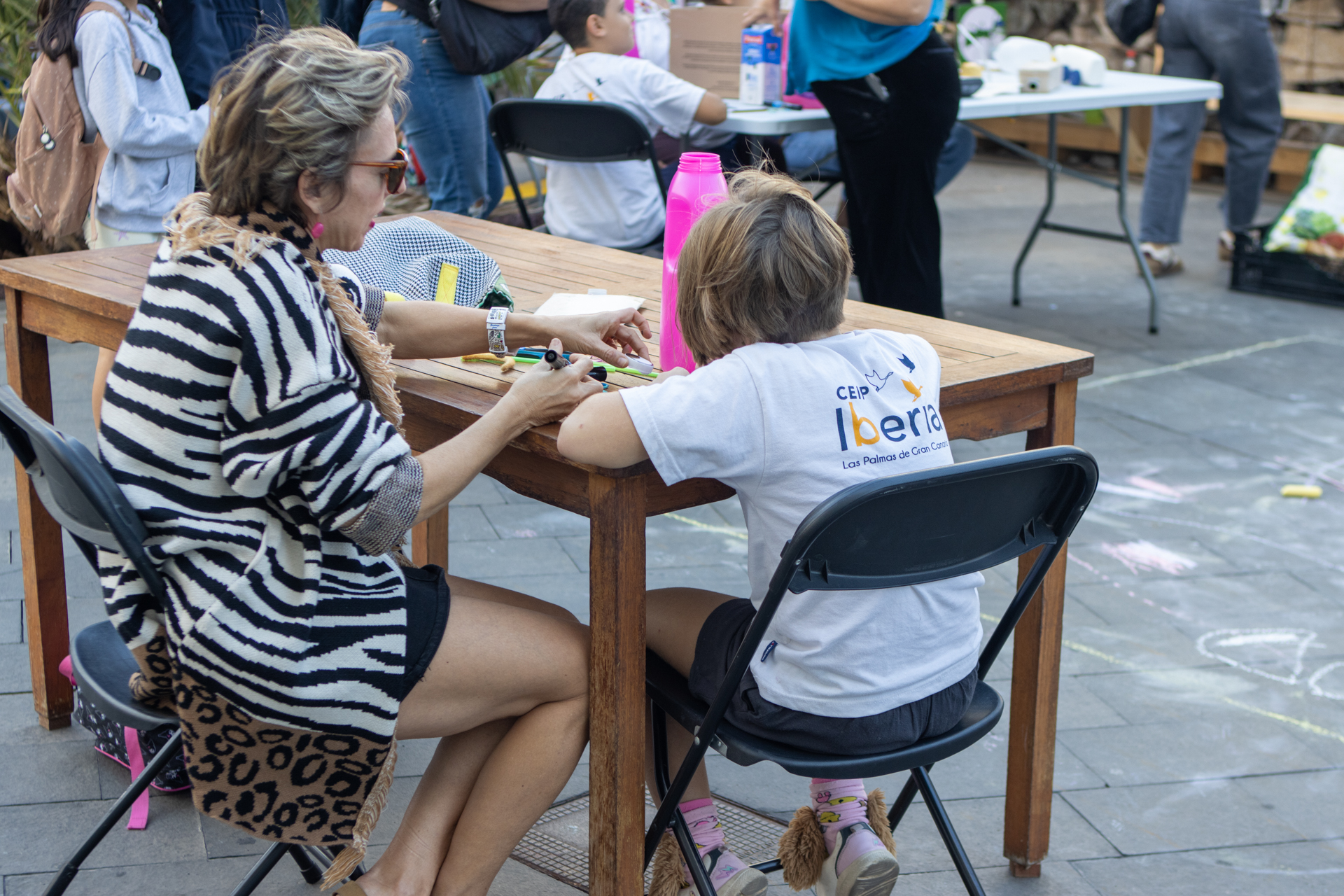
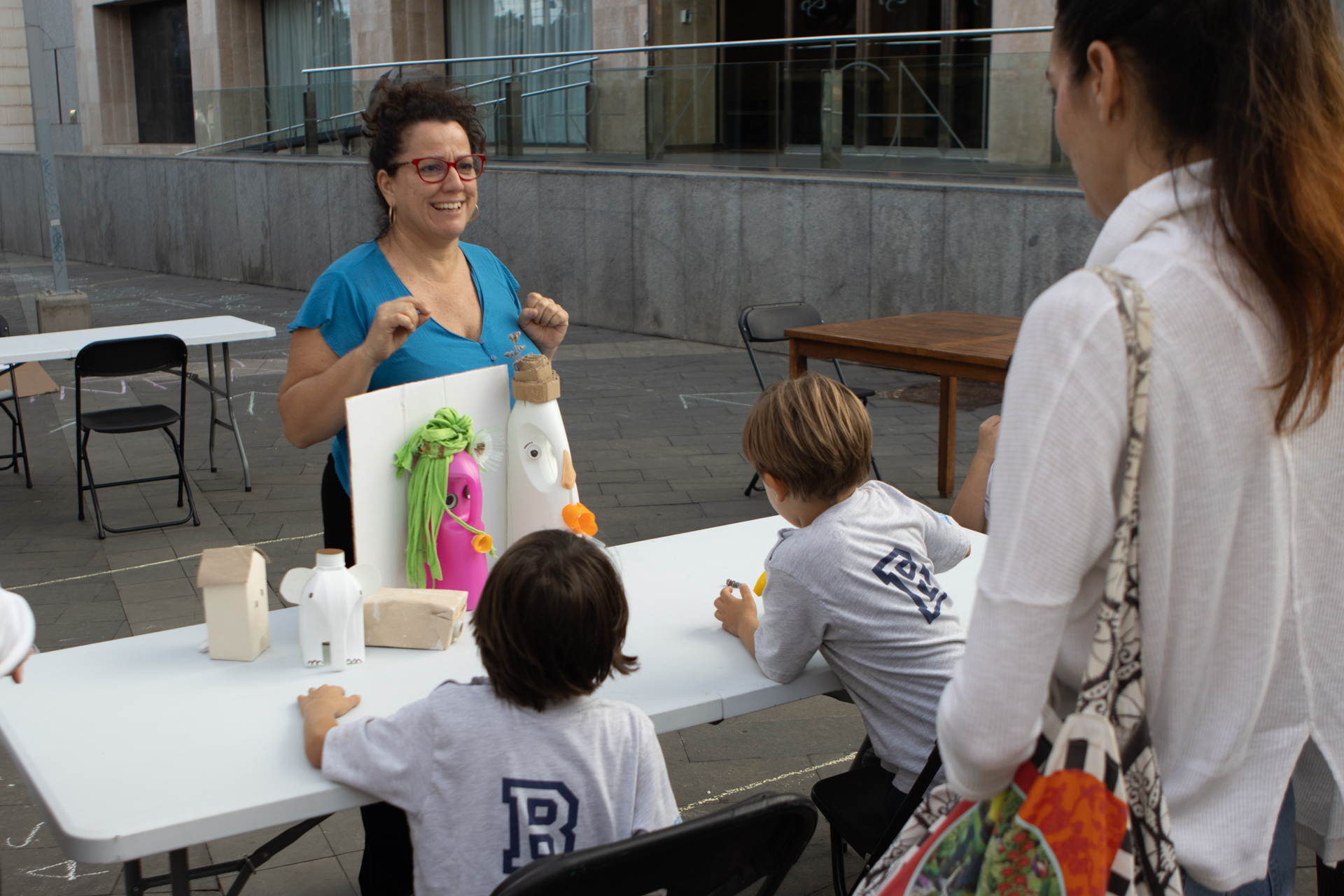
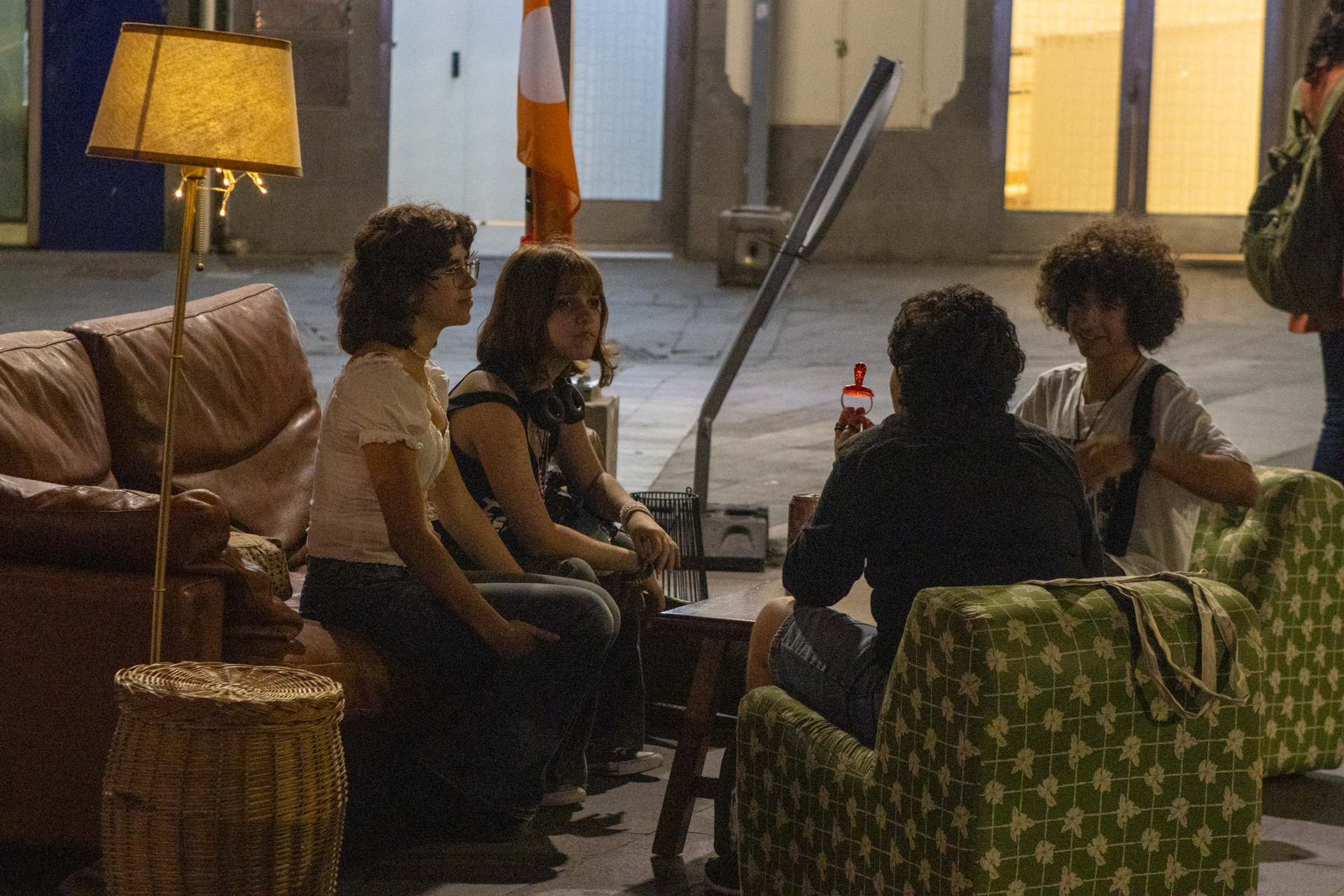
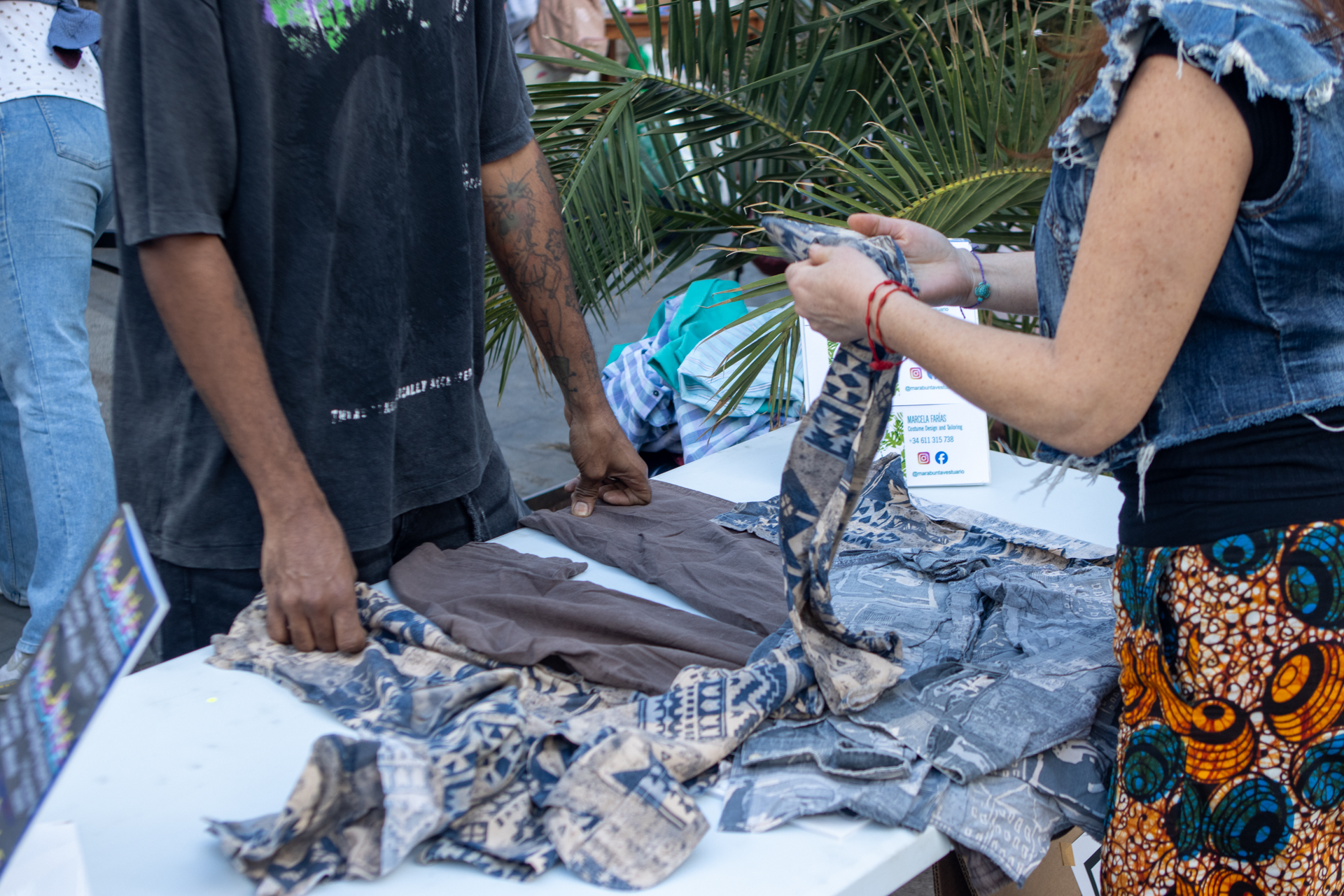
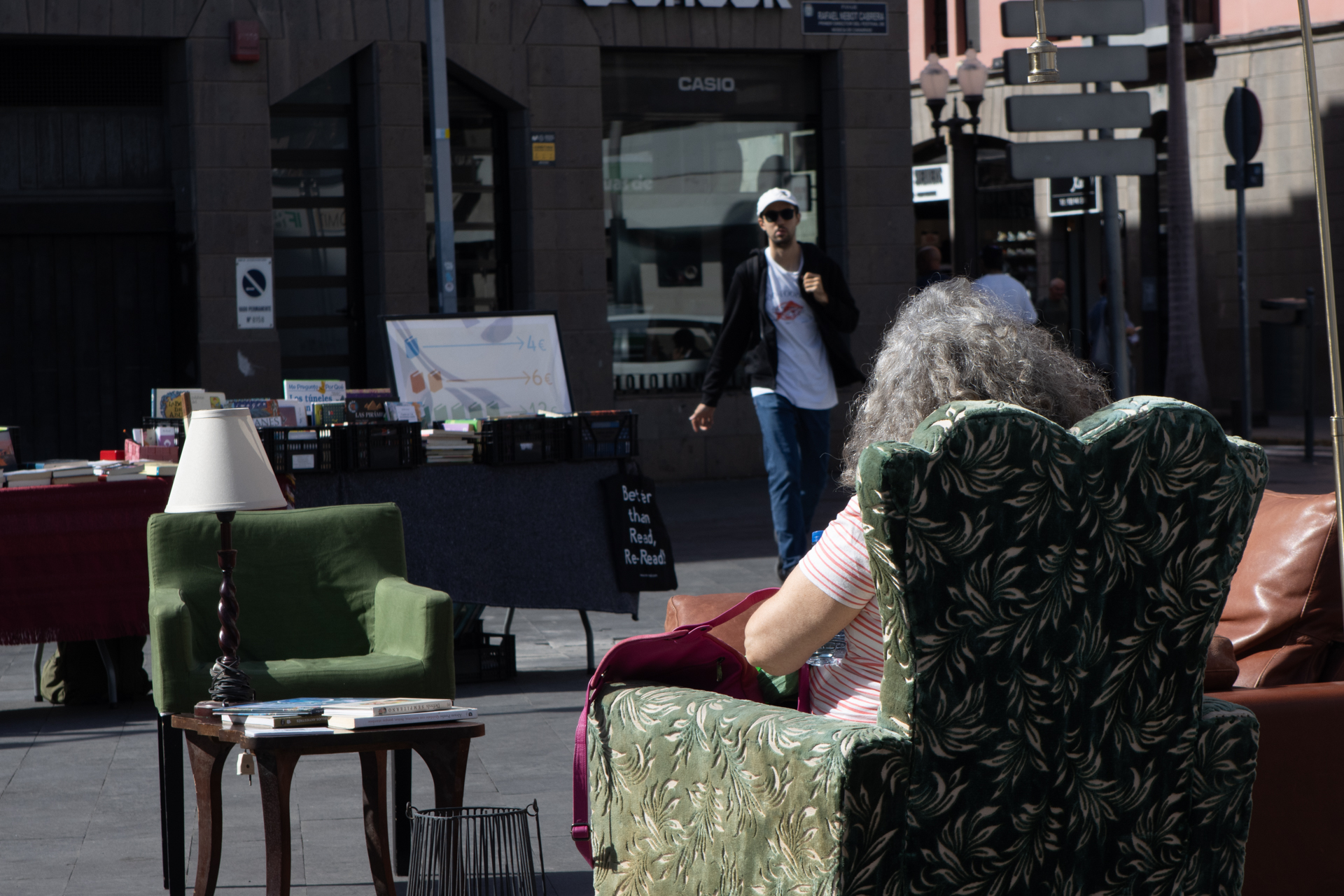
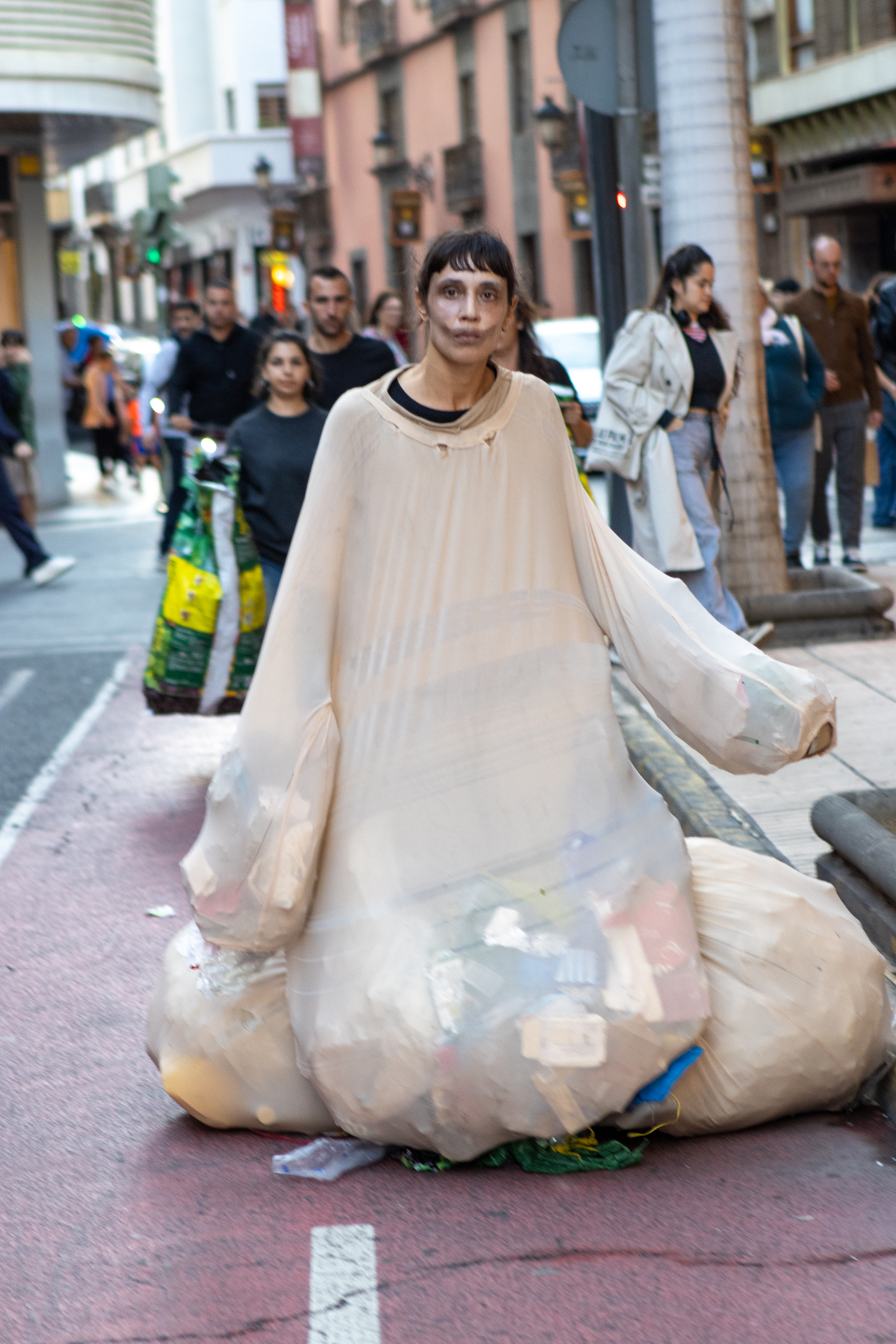
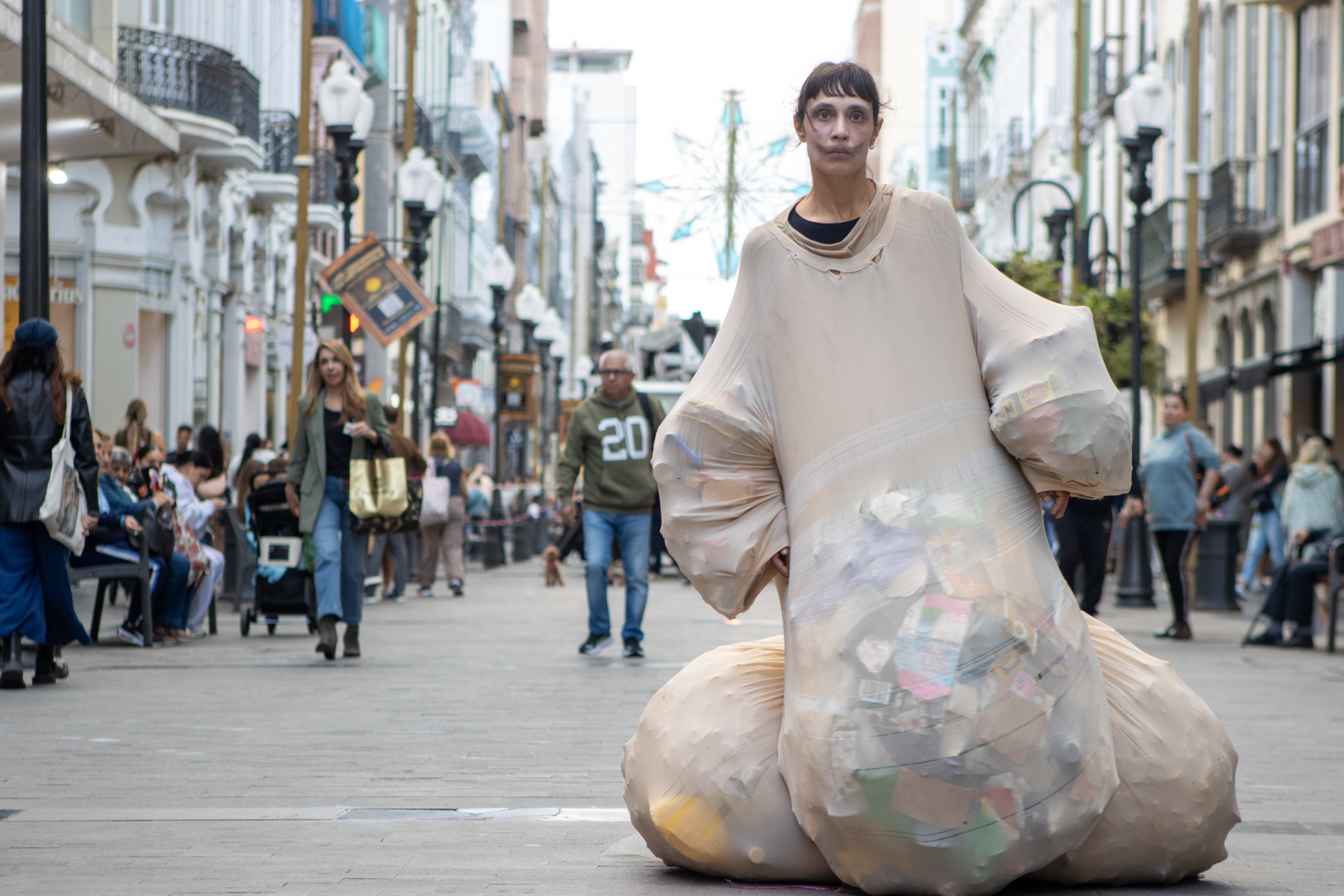
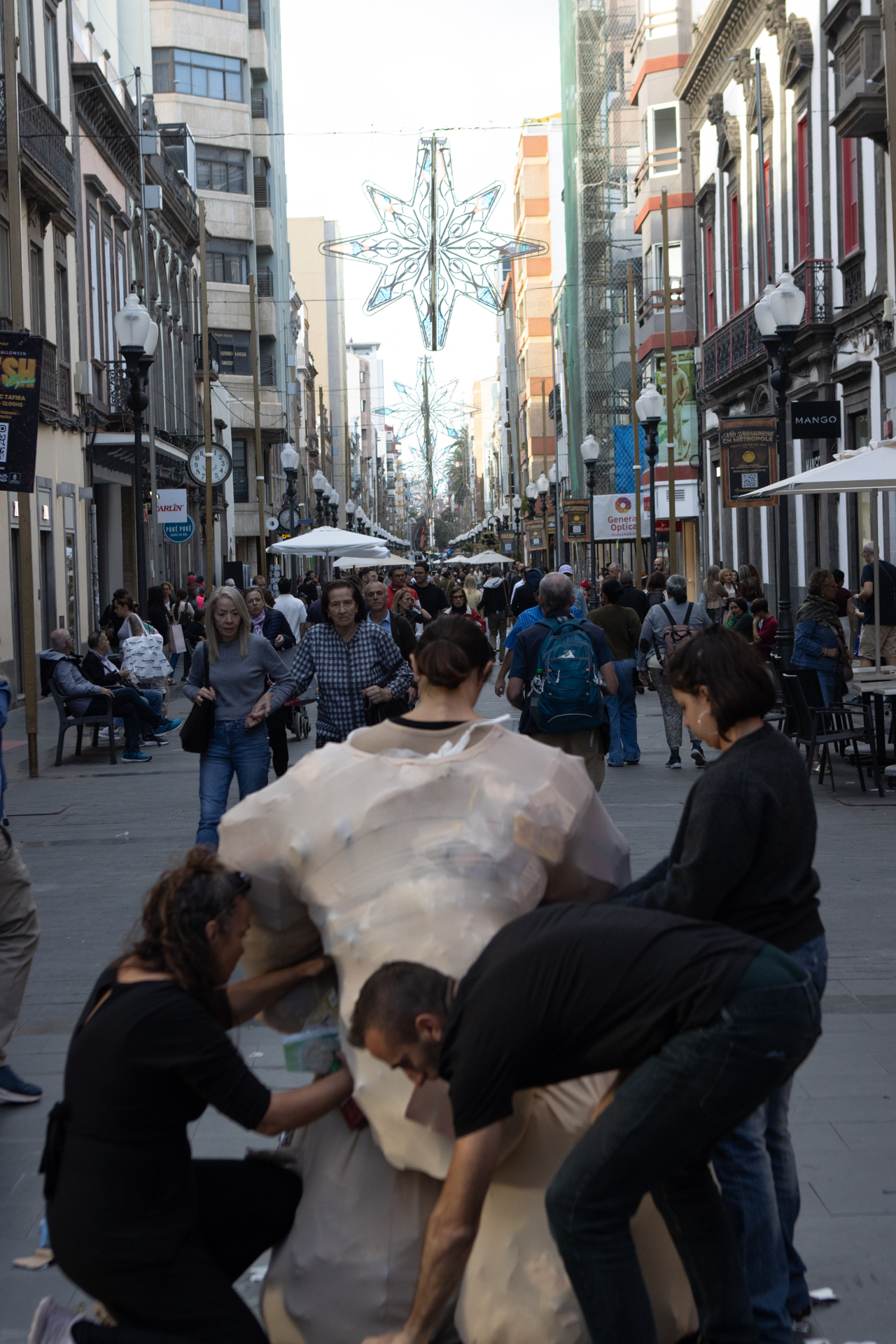
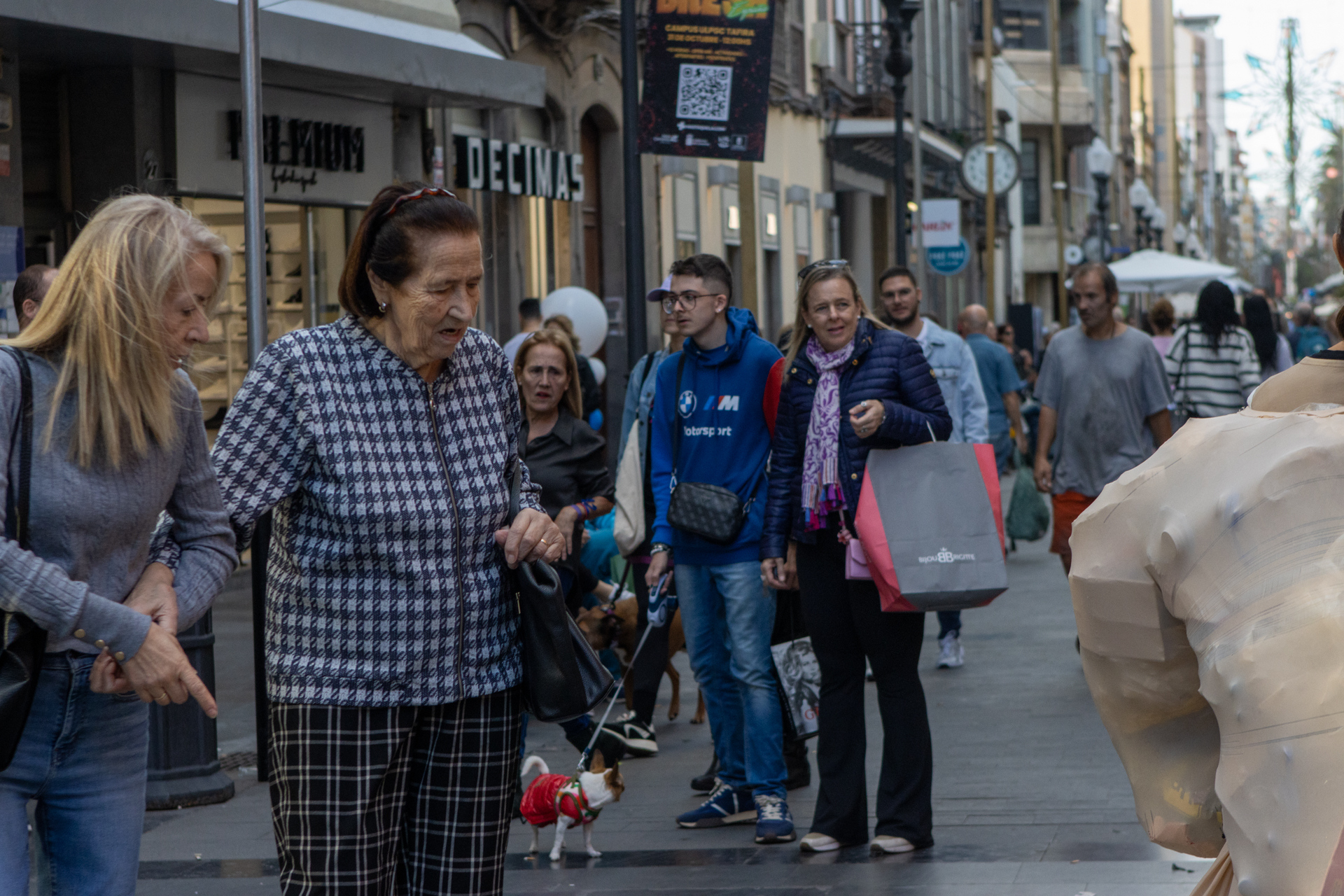
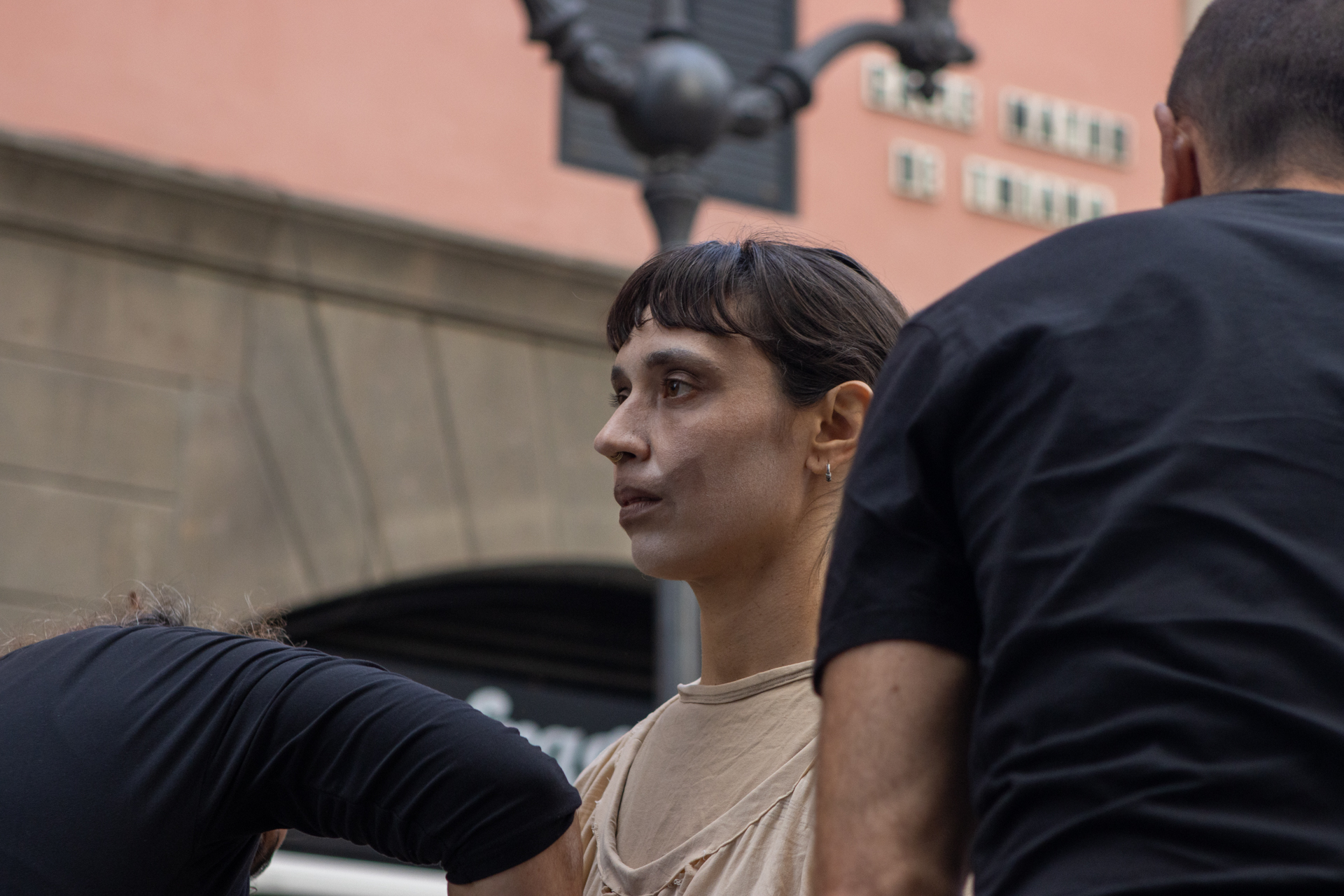
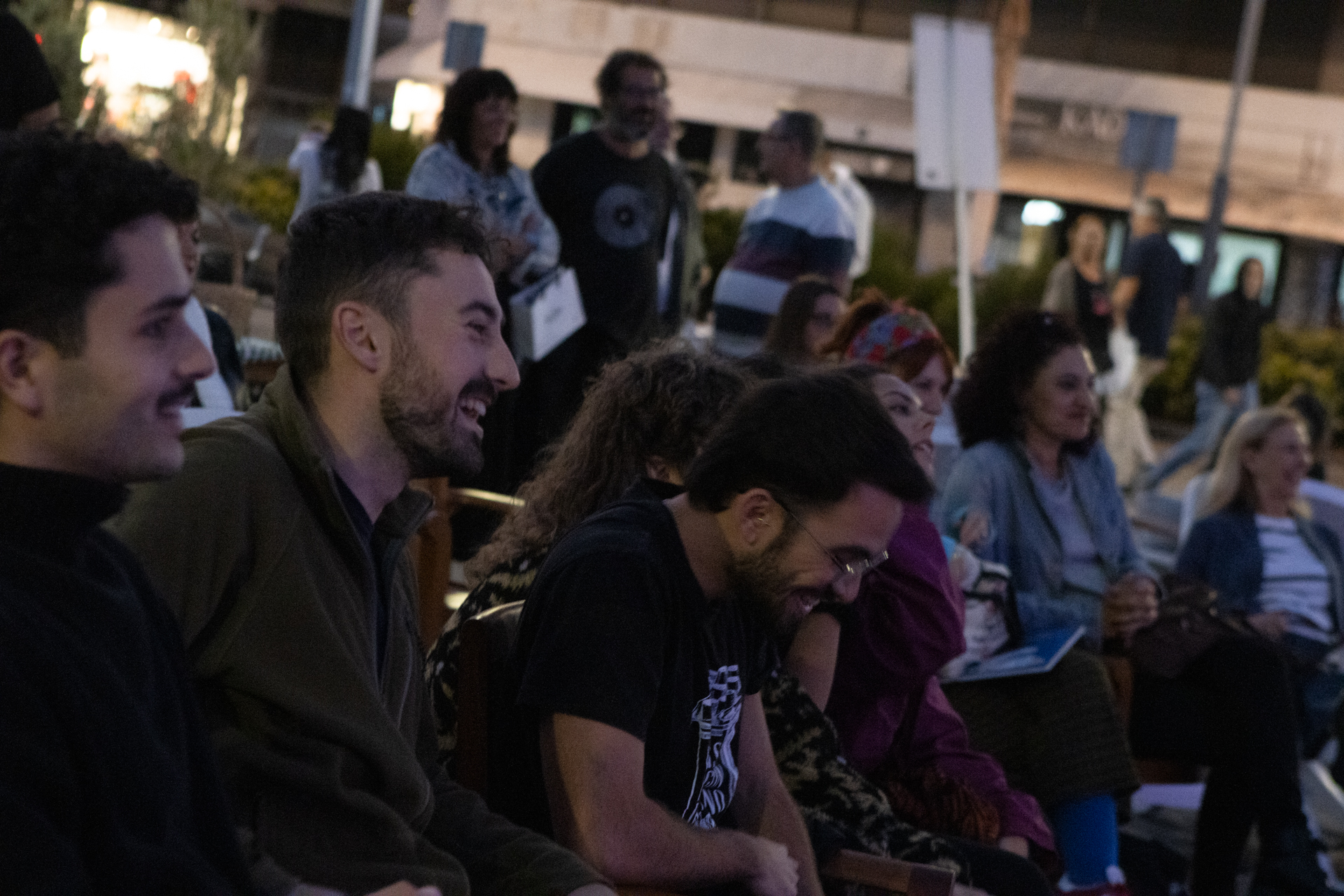
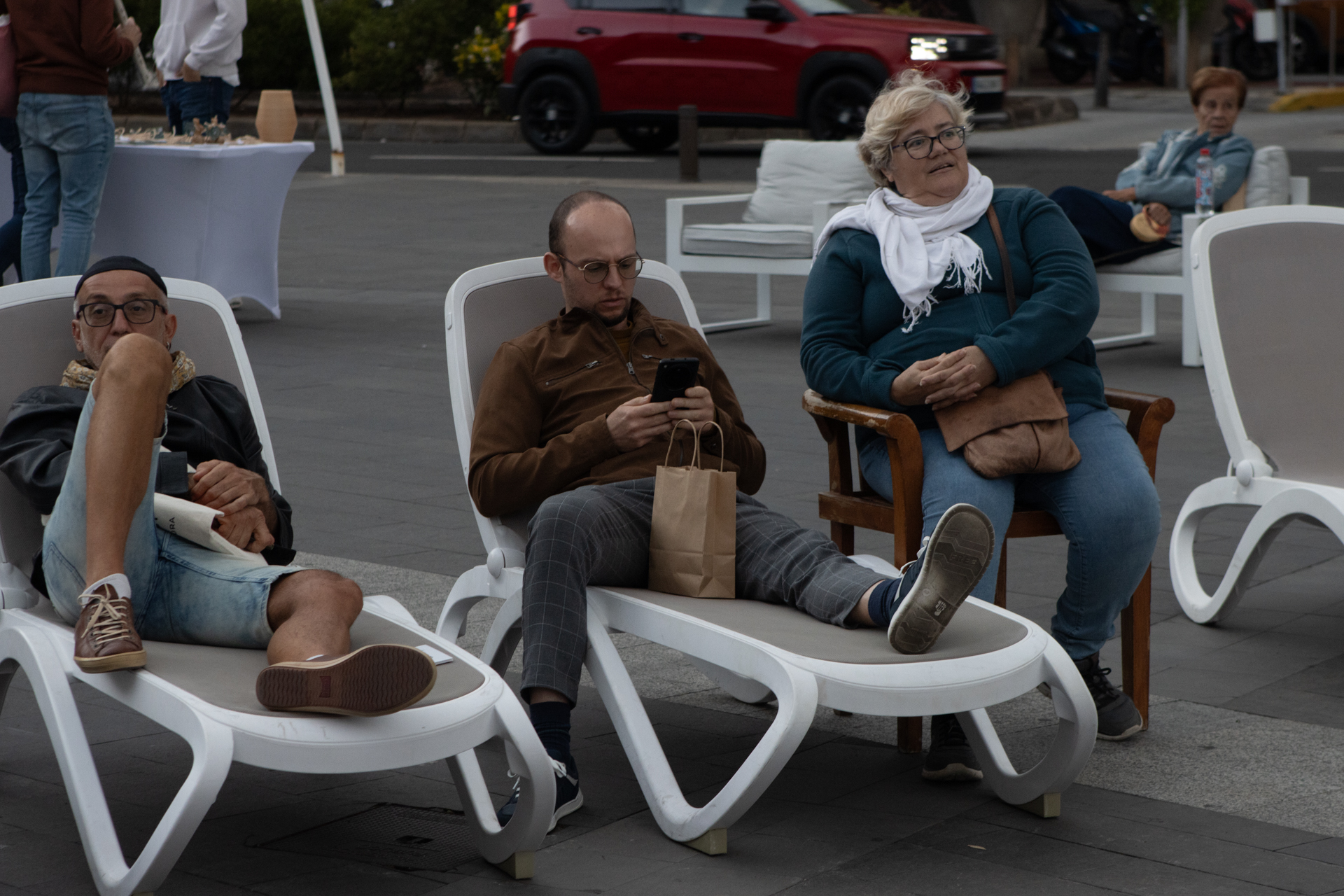
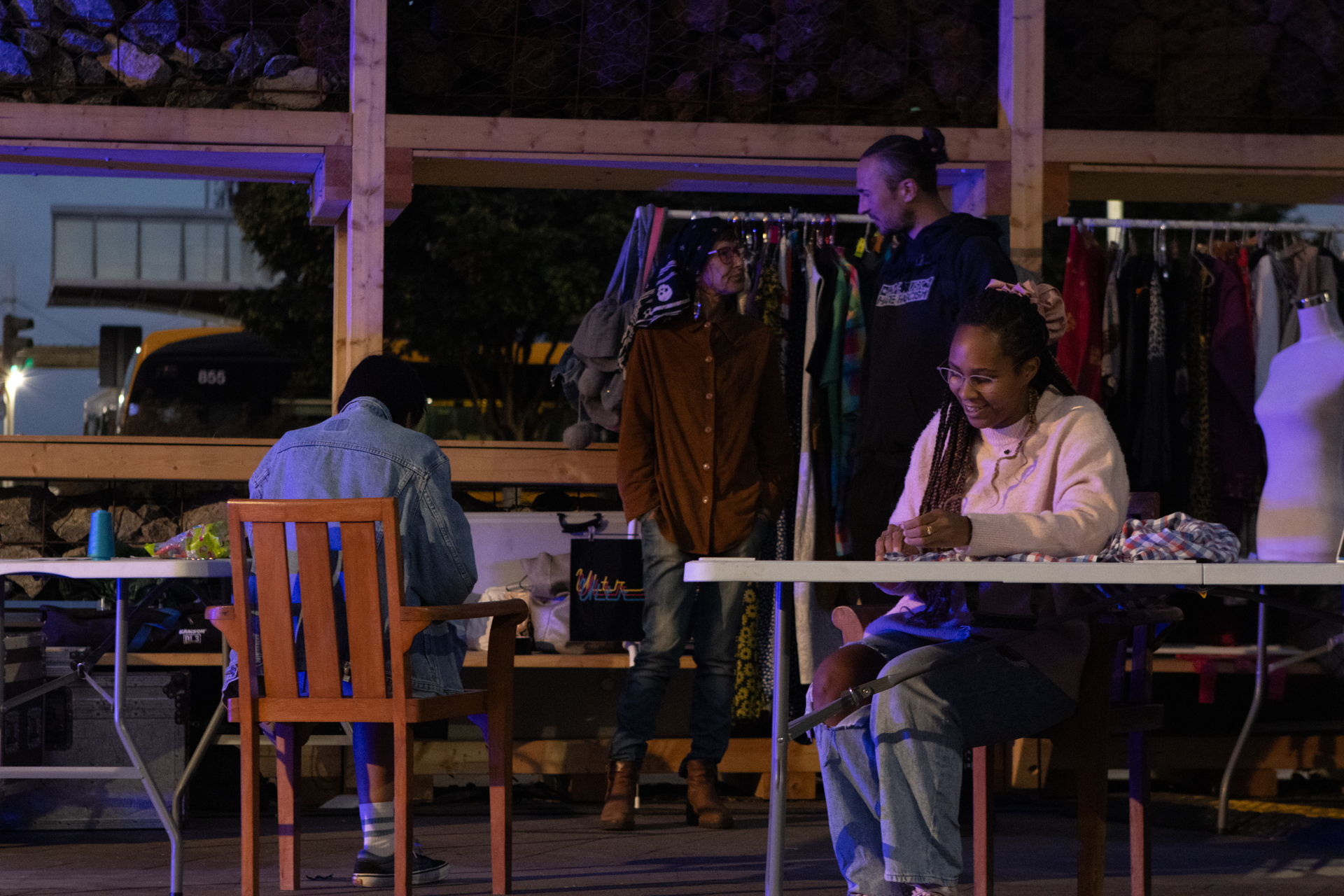
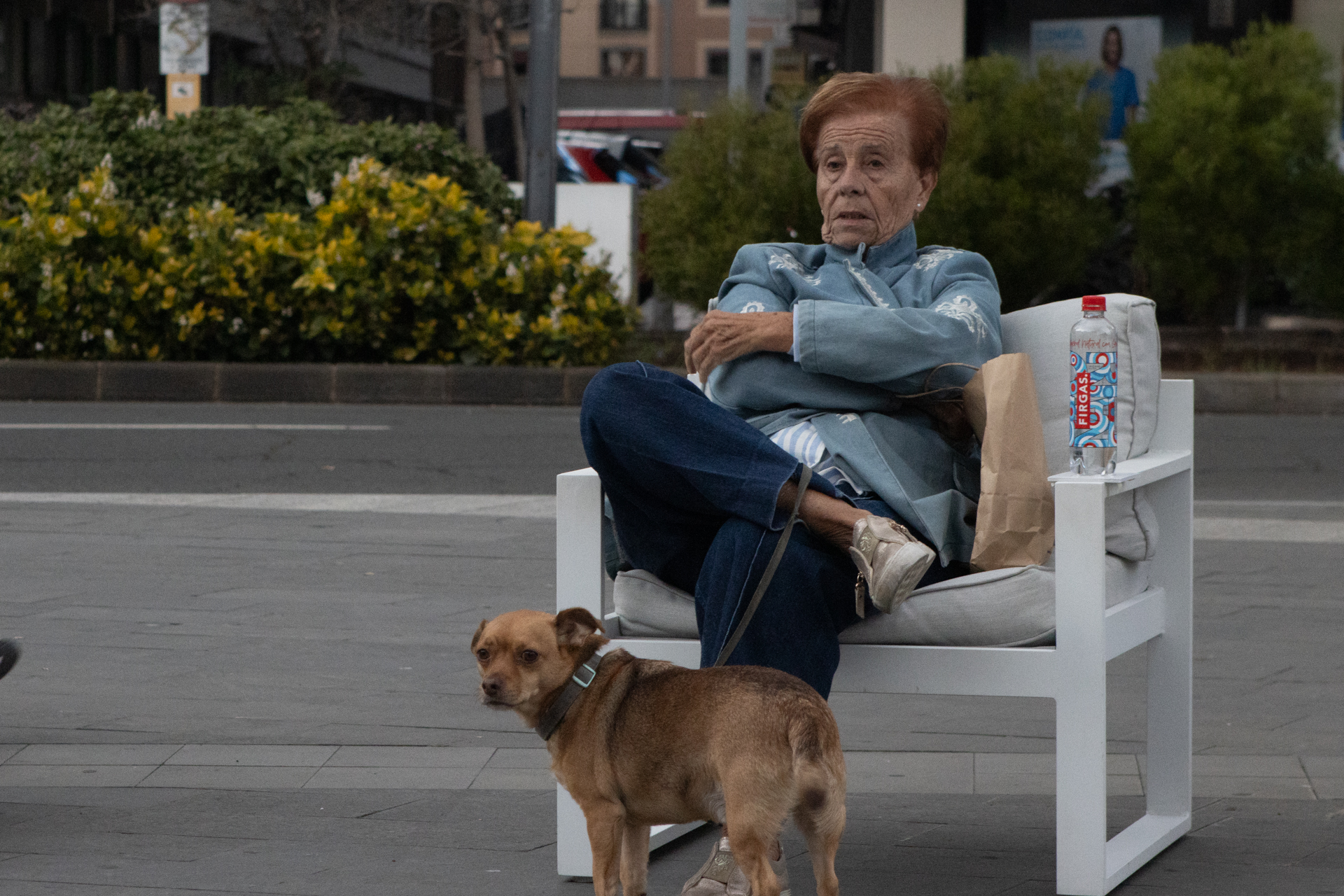
Rather than a conventional festival, Minimo Fest was conceived as a collective urban performance inviting citizens to pause in the middle of one of the most intense days of consumption. The square was transformed into a temporary landscape of rest and encounter. Reused furniture from film productions created spaces to sit, talk with strangers, read, share food and play board games made from recycled materials. The programme included second-hand stalls, upcycling workshops for adults and children, storytelling, live music and a street performance. Educational QR codes placed throughout the space shared information about responsible consumption, local agriculture, tourism, water use and recycling in the Canary Islands.
The results of the intervention were immediately visible. Many passers-by were surprised to encounter a space dedicated to rest and conversation in the middle of a busy shopping area. At first, some people hesitated to stop, but gradually they joined the collective experience: sitting down, talking with strangers, playing games or simply observing. The project demonstrated how a simple spatial and cultural intervention can change the atmosphere of a place and encourage new forms of interaction in the city.
In the long term, Minimo Fest proposes a replicable cultural format that uses performative and participatory practices to address complex issues such as consumer culture, sustainability and the use of public space. Rather than aiming to become a mainstream event, the project focuses on creating meaningful encounters that encourage reflection and dialogue. For those who experienced it, the intervention opened a small but powerful moment of pause
Minimo Fest emerged from several years of work on responsible consumption and sustainability education. As a cultural practitioner, I have been invited by public institutions to give talks and workshops in schools across the Canary Islands about issues such as overconsumption, fast fashion, tourism pressure, plastic waste and the loss of local agriculture.
During these sessions with teenagers, I often observed strong reactions when presenting data about the environmental and social consequences of current consumption patterns. Topics such as the heavy dependence of the Canary Islands on imported food, the decline of local agriculture, water scarcity or the impact of tourism on housing and public space often triggered defensive responses. These experiences made me reflect deeply on how difficult it can be to discuss these issues without generating resistance or feelings of guilt.
Minimo Fest was conceived as an alternative approach: instead of confronting people with information in a traditional educational setting, the project creates a shared cultural experience in public space. By transforming a city square into a temporary environment of rest, play and conversation, the intervention invites people to encounter these questions in a more open and reflective way.
On the ground, the project was implemented through the temporary transformation of Plaza de Stagno during Black Friday. Reused furniture, upcycling workshops, second-hand stalls, storytelling, live music and a street performance created a collective urban experience. Informational QR codes allowed visitors to explore topics such as responsible consumption, local agriculture and environmental challenges in the Canary Islands at their own pace.
In this way, Minimo Fest uses artistic and performative strategies to spark curiosity and reflection rather than confrontation, encouraging people to rethink everyday consumption through shared urban experience.
Responsible consumption
Circular economy
Public space activation
Community interaction
Artistic urban intervention
Minimo Fest addresses environmental, social and economic challenges related to overconsumption by intervening directly in the urban space where these dynamics are most visible. The project took place on Black Friday in a busy commercial square, temporarily transforming a place designed for continuous purchasing into a space dedicated to pause, reflection and shared experience.
Environmental sustainability was addressed through concrete circular practices: all the furniture used in the intervention was reused from film productions, second-hand stalls promoted the reuse of goods, and upcycling workshops for adults and children encouraged participants to repair and transform objects instead of discarding them.
The project also tackled social and cultural challenges by creating an alternative collective experience in public space. Through seating areas, shared tables, games and artistic activities, people were invited to stop, talk and interact in an environment usually dominated by commercial pressure.
Educational QR codes placed throughout the space provided accessible information about environmental and territorial challenges in the Canary Islands, including plastic waste, water scarcity, tourism pressure and the decline of local agriculture. Presented within a performative and welcoming environment, these topics could be explored with curiosity rather than confrontation.
In this way, Minimo Fest demonstrates how artistic and cultural interventions can make sustainability visible and tangible in everyday urban life, transforming public space into a place where responsible consumption, reflection and collective awareness can emerge.
Beauty is intrinsic to this project. It responds to the need to encounter kinder spaces in the city — something that often feels lost in contemporary urban life. Minimo Fest invites people to rediscover the value of rest and pause in public space.
Even though the intervention happens only for a limited time, it creates a moment where people can experience the city differently: sitting together, sharing space, and simply being present. In a commercial environment usually driven by urgency and consumption, the project opens a small but meaningful space for collective reflection.
By gently inviting people to slow down and pay attention to their surroundings and to each other, Minimo Fest encourages a sense of care for the place and for the resources that sustain our lives. Beauty emerges through a shared experience of pause, presence and collective awareness.
In terms of inclusion, the project was designed to create an open and accessible environment for the whole community, taking into account people with neurodivergences as well as people with disabilities. The experience avoided constant amplified sound, which is common in many festivals.
Instead of filling the space with music, Minimo Fest preserved the natural sound of the city and created a calm environment where people could rest, talk and participate comfortably. Only one short concert took place at the end of the festival, lasting 45 minutes and announced in advance so that people with auditory sensitivity could be aware of it and choose how to engage.
This approach reflects a different understanding of public space: one that respects diversity and recognises that accessibility also means creating environments that are not overwhelming. By valuing silence, attention and the everyday sounds of the city, the project aimed to make the space welcoming for a wider diversity of people.
Participation in Minimo Fest was developed through collaboration with local actors connected to the themes addressed by the project. To organise the event, all second-hand shops in the city were contacted and invited to take part by setting up a table in the square. Second-hand bookshops were also invited to participate. Although only a small number finally joined, the invitation was open to all of them.
The project also connected with organisations and collectives working on environmental issues and political advocacy related to sustainability in the Canary Islands. Informational QR codes placed throughout the space directed visitors to the websites and materials of these organisations, including videos and resources related to environmental challenges, housing issues and local agriculture.
In preparing the content for these QR codes, different collectives were contacted and invited to share information about their work. In this way, Minimo Fest functioned as a small platform that connected citizens with local initiatives and organisations working on environmental and social issues in the territory.
Minimo Fest is a small-scale cultural intervention, so it did not involve a formal multilevel governance structure or stakeholder meetings. However, the project took place within a broader institutional and civic context that connects different levels of engagement.
At the national level, the intervention was part of the TAC! Festival of Urban Architecture, organised by the Spanish Ministry of Housing and Urban Agenda in collaboration with Fundación Arquia. At the local level, the project engaged with small businesses, second-hand shops and local organisations working on environmental and social issues.
In addition, the project reflects my own ongoing work as a cultural practitioner and activist focused on responsible consumption, housing issues and urban sustainability. Through this practice, Minimo Fest contributes to public debate around these topics by creating cultural spaces where citizens can encounter information and reflect collectively.
The added value of this approach lies in connecting institutional cultural programming with grassroots concerns, bringing discussions about sustainability, consumption and urban life directly into public space.
Minimo Fest was developed through the intersection of several disciplines and knowledge fields. The project combined artistic practice, cultural mediation, sustainability education and urban space activation.
The spatial setup relied on reused furniture sourced from film production companies that work with recycled set materials, showing how resources from the audiovisual sector can be repurposed in public cultural interventions. The project was also connected to architectural thinking, as it took place within the TAC! Festival of Urban Architecture, where the surrounding installation explored themes of recycling and material reuse using stone, wood and plastics recovered from the sea.
Environmental and agricultural knowledge was also present. Local farmers were contacted to provide fruits and vegetables that were displayed in the square as a way to open conversations about the challenges facing agriculture in the Canary Islands.
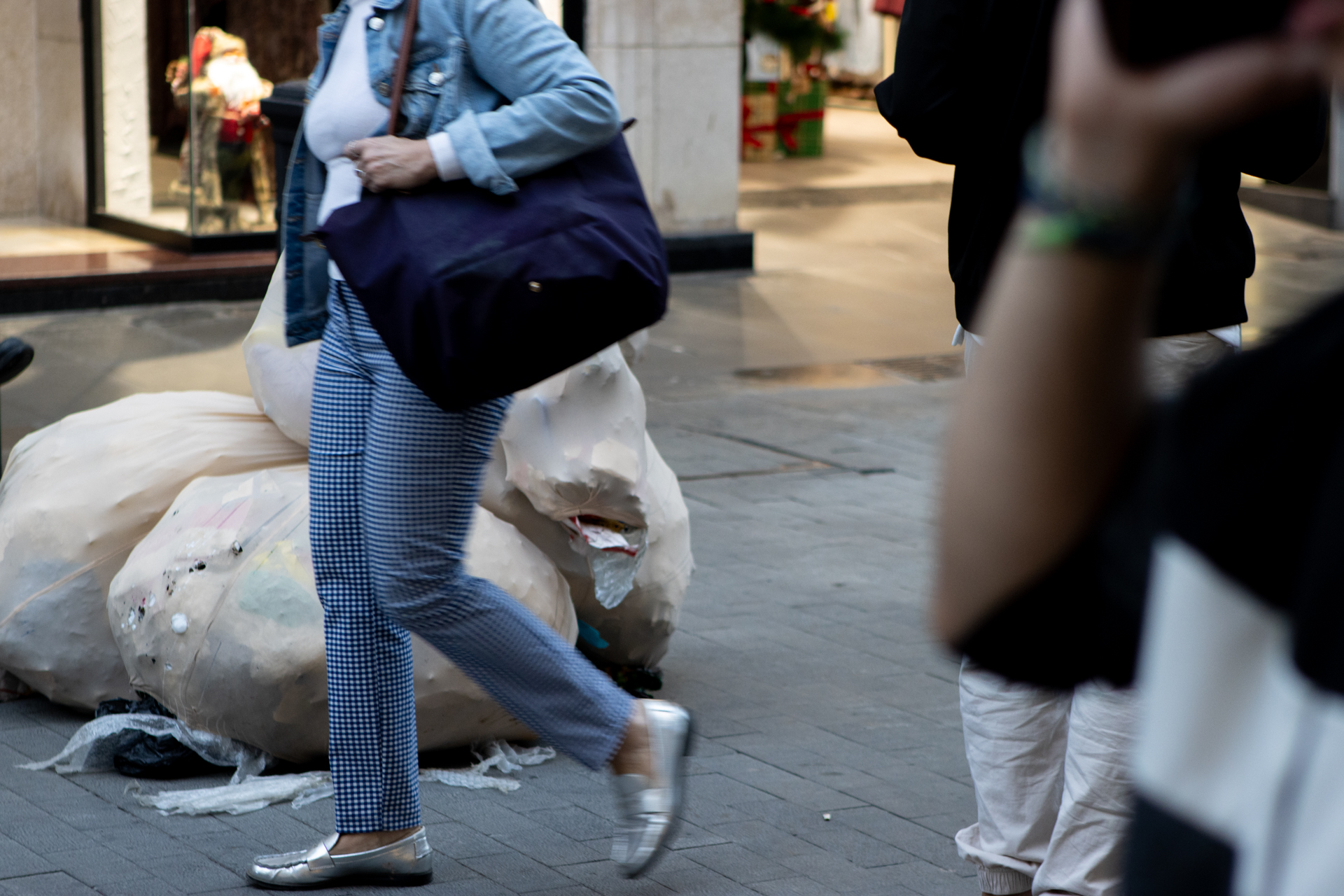
The visual and spatial elements of the project were developed collectively, using recycled cardboard gathered from the neighbourhood with the help of local residents. The programme combined multiple cultural disciplines, including street performance, a short live concert, storytelling, workshops, second-hand book and clothing stalls, reading spaces and rest areas.
Through this combination of artistic practices, environmental awareness, local knowledge and community participation, Minimo Fest brought together different disciplines to create a shared urban experience centred on sustainability and reflection.
Minimo Fest was developed through a public cultural programme rather than a commercial business model. The project was selected after responding to an open call organised by the TAC! Festival of Urban Architecture, which invited cultural practitioners to propose ideas aligned with the annual theme. The festival provided a production budget that allowed the intervention to be implemented.
The project builds on my previous experience organising second-hand book festivals and initiatives related to recycling and responsible consumption. This background made it possible to design the event with relatively low production costs.
The financial sustainability of the project lies in its lightweight and adaptable format. Many of the elements used in the intervention were reused or borrowed, including furniture from film production recycling systems and locally sourced materials such as cardboard.
Because the format relies on existing urban space, community collaboration and reused materials, it can be implemented with modest resources through cultural programmes, public funding or partnerships with institutions interested in sustainability and urban culture.
The concept behind Minimo Fest can be easily replicated in different places and contexts. The project requires local production and collaboration with organisations working on sustainability, circular economy and responsible consumption in order to understand the specific environmental and social challenges of each location.
The methodology is simple and adaptable: creating a temporary space for rest and collective experience in areas strongly associated with consumption. The intervention works best in locations close to commercial zones, shopping streets or shopping centres, where the contrast between the culture of consumption and the invitation to pause becomes most visible.
Minimo Fest could be organised every year in different cities, ideally during Black Friday, when consumer pressure is at its peak. By placing the intervention in or near commercial areas, the project invites people to reconsider their habits and experience an alternative way of inhabiting the city.
Because the format relies on local collaboration, reused materials and cultural activities, it can be adapted to different urban contexts while addressing the specific sustainability challenges of each place.