Enhancing Circularity, Sustainability, and Innovation
The 'Living' Room
MUSE - The "Living" Room grown with mycelium
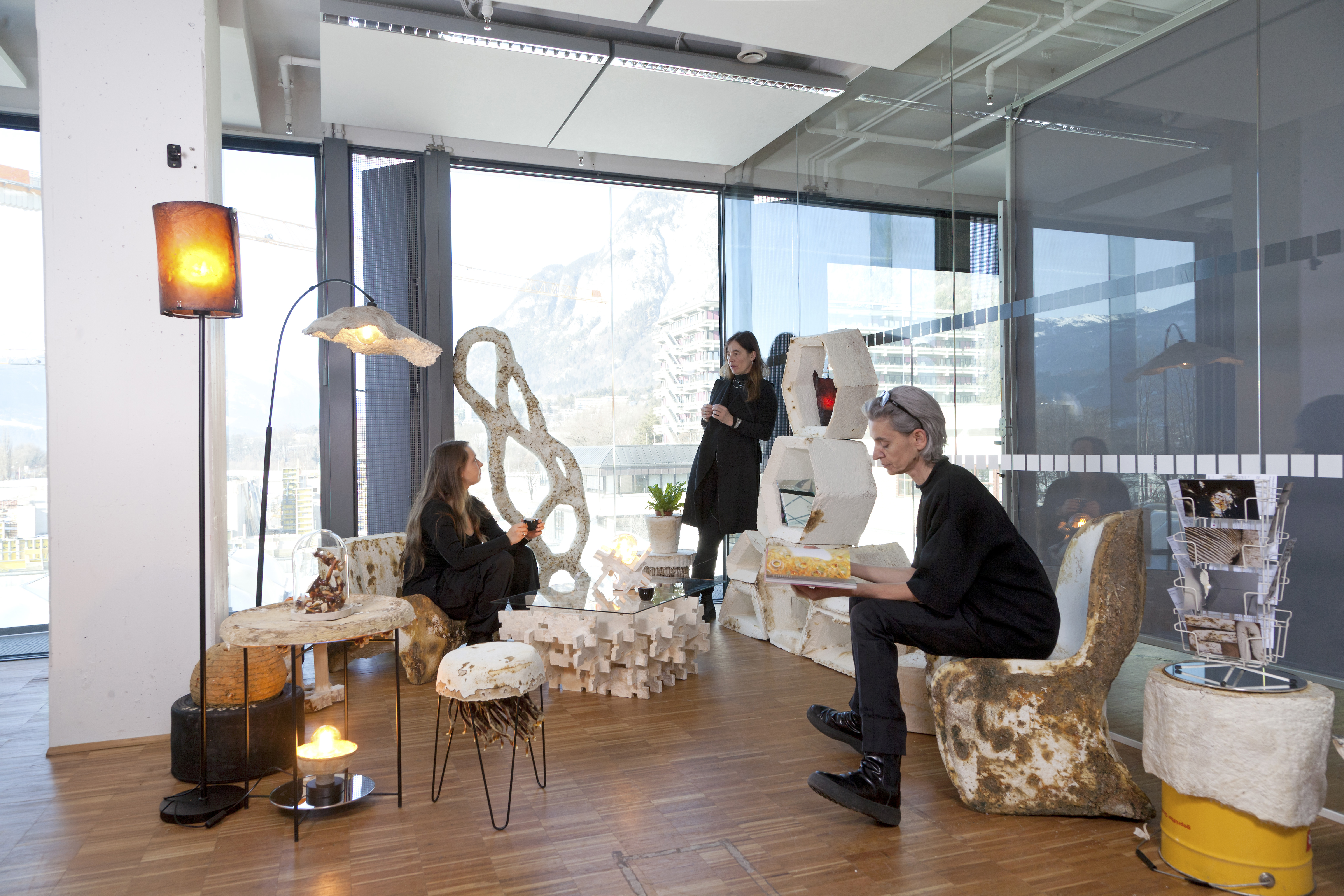
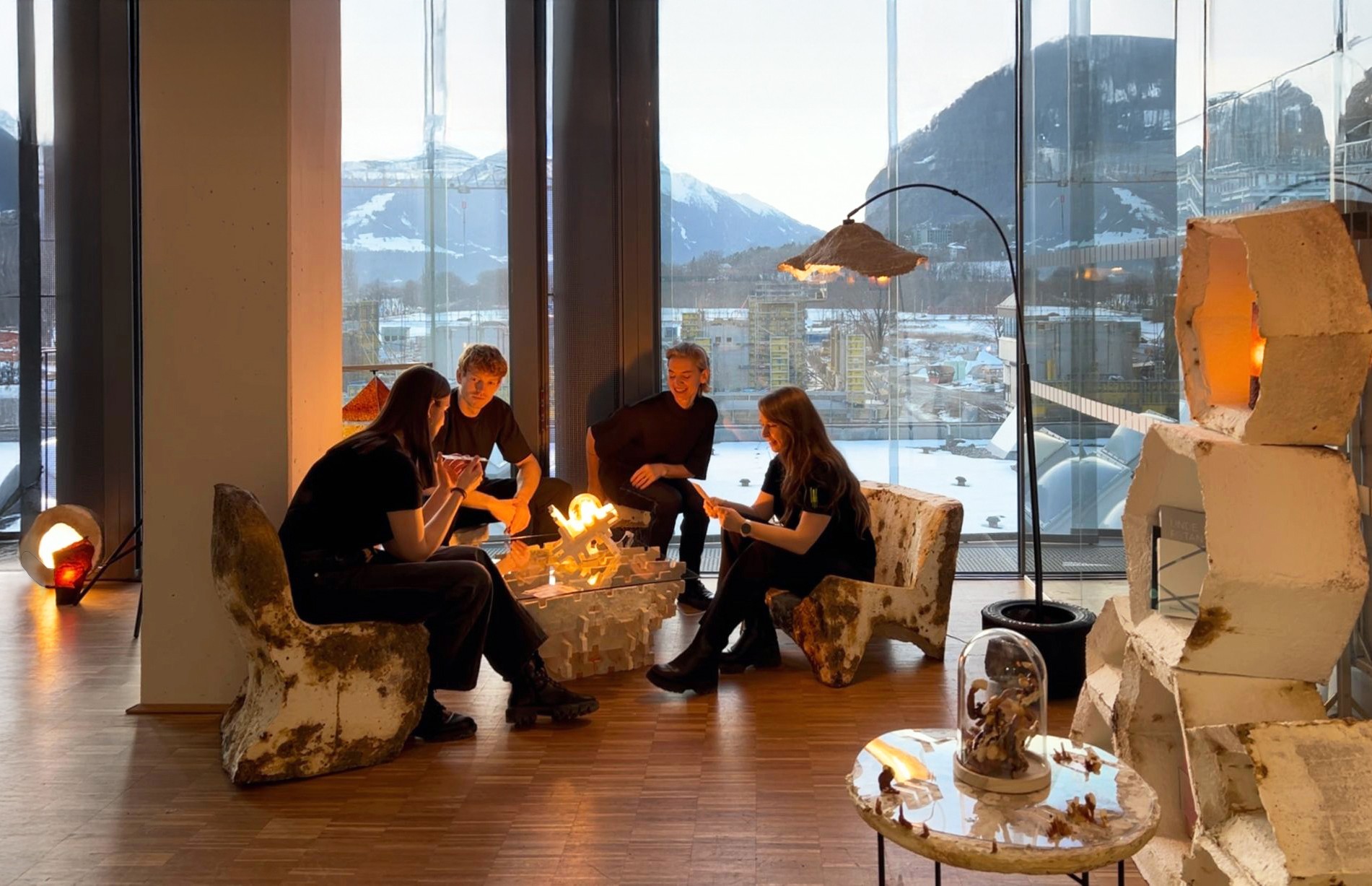
'The "Living" Room' is an experimental interior installation created for the FUNGA exhibition at Naturmuseum Südtirol in Bolzano. It presents a domestic space composed of furniture grown from mycelium-based materials. Chairs, stools and interior objects are biofabricated from agricultural waste and fungal networks, demonstrating how living materials can shape future interiors. The installation invites visitors to experience sustainable design where growth, decay and aesthetics coexist.
Austria
Regional
Tyrol (Austria) / South Tyrol (Italy)
It addresses urban-rural linkages
It involves a physical transformation of the built environment (hard investment)
Yes
2026-03-09
No
No
Yes
Organisation
What if your home furniture could be grown from waste, serve its purpose and return to the earth without leaving a trace?
‘The “Living” Room’ is an experimental interior installation presented at the FUNGA exhibition at the Naturmuseum Südtirol in Bolzano, Italy. It forms part of MUSE - MyceliUm SEat, a research project investigating the potential of mycelium-based composites for real-world applications ranging from racing car seats to furniture.
Instead of relying on synthetic foams or resource-intensive materials, the installation presents furniture grown with mycelium, the root-like hyphal fungal network that binds existing waste streams and agricultural byproducts into lightweight, water-repellent, fire-resistant, highly insulating and biodegradable composites. Unlike conventional manufacturing, this process requires no toxic inputs, low energy, and low water consumption - the material itself is the process.
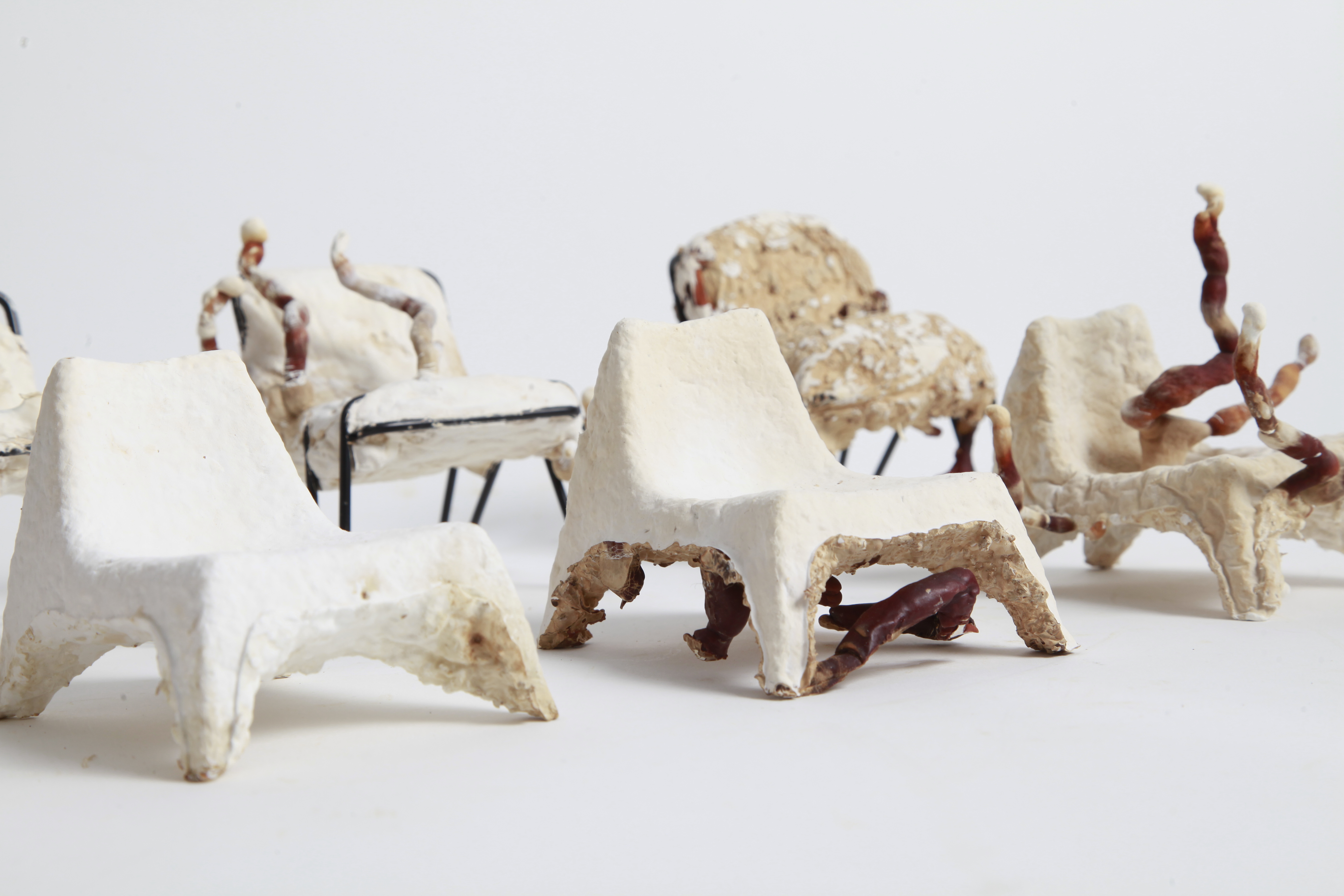
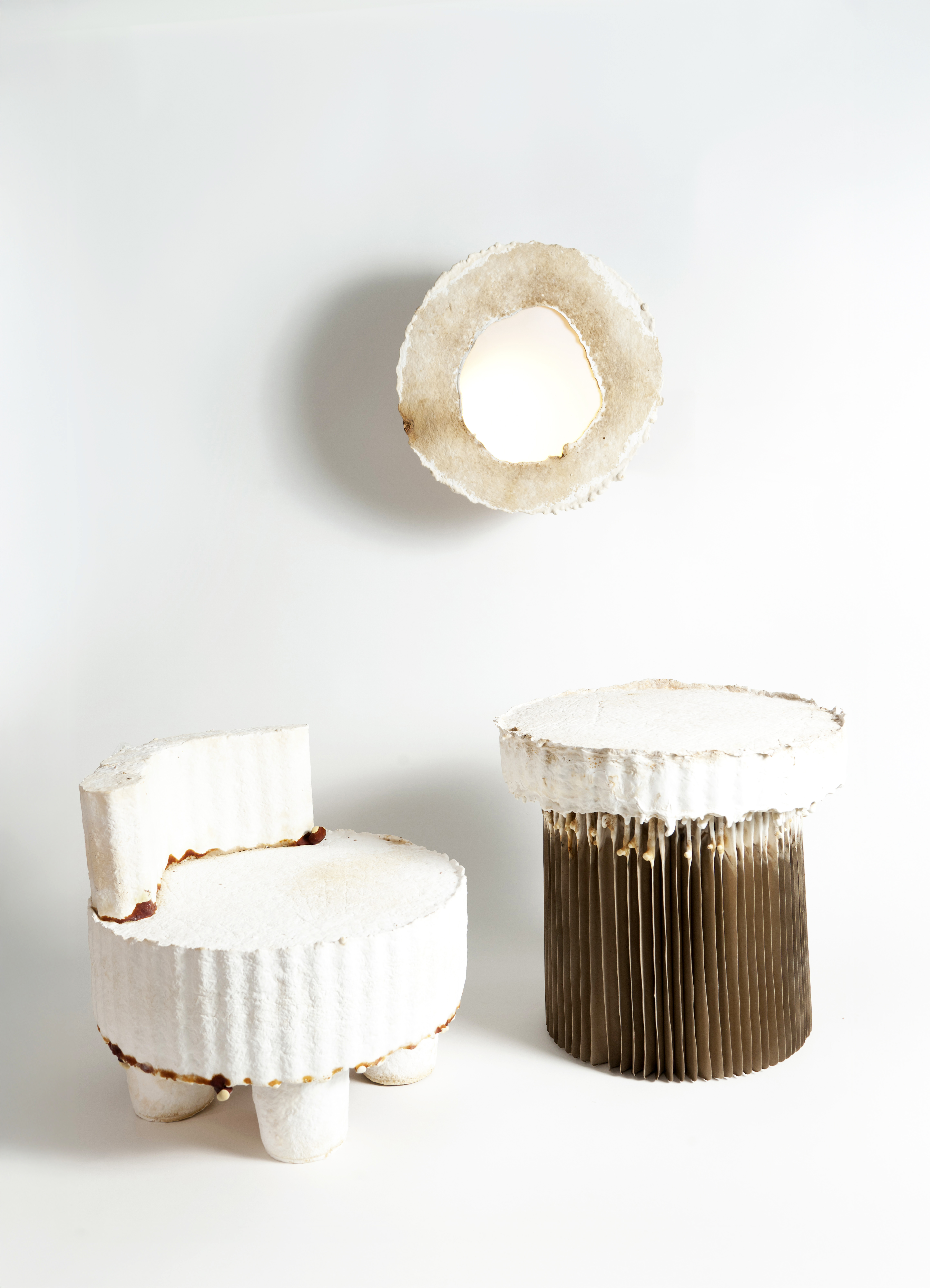
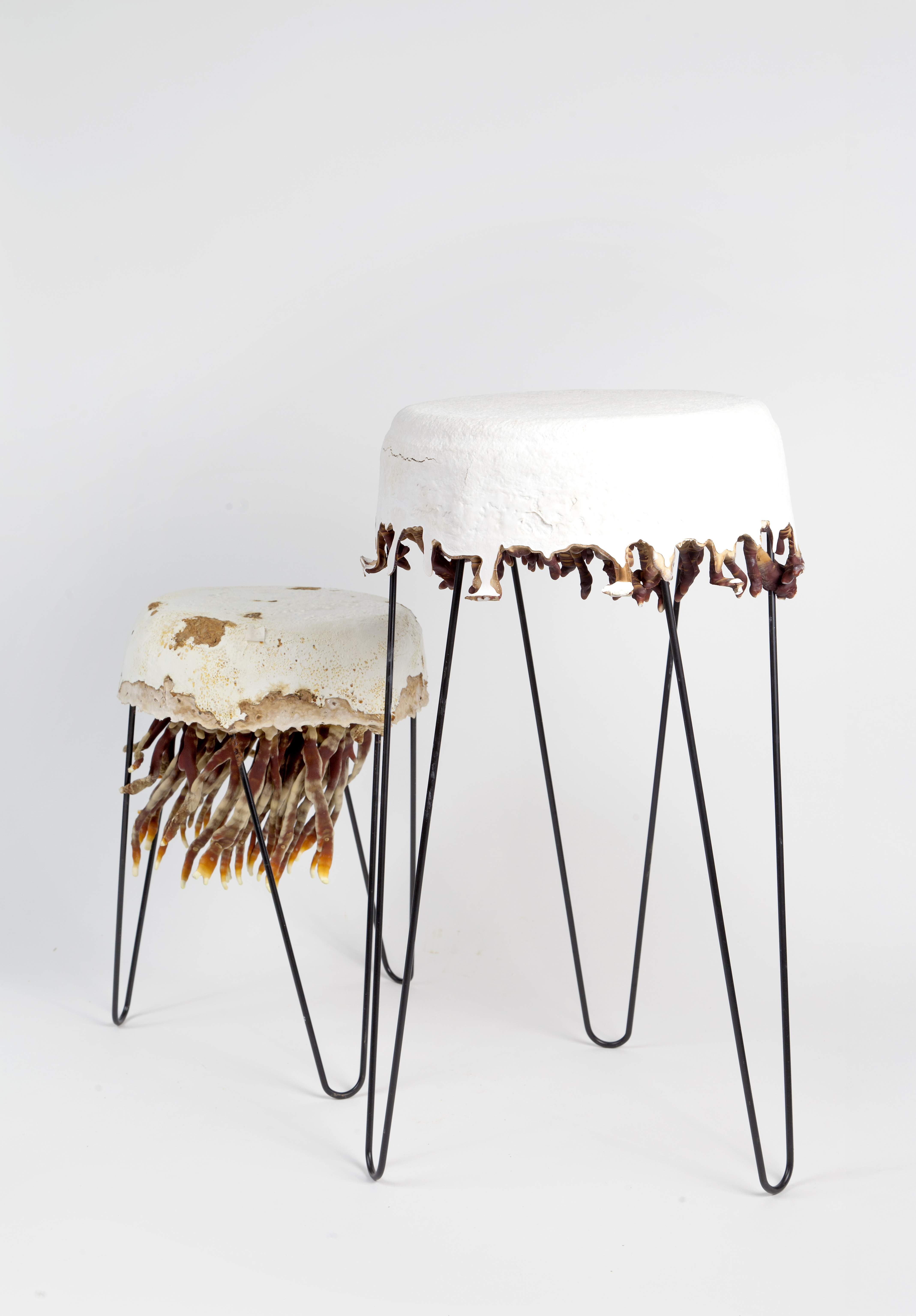
The installation recreates a familiar domestic setting, including stools, chairs and interior elements. Each object results from systematic research into how target fungal species interact with organic substrates, producing materials with distinct structural, mechanical and aesthetic properties. Texture, pattern, colour and surface finish emerge not from post-processing but from biology itself.
Developed across design, architecture, microbiology and material science, mycelium composites offer a genuinely circular material alternative: grown with regional fungi on local waste streams, fabricated with minimal energy, and designed to return to natural cycles at the end of life safely. No landfill. No residue.
'The "Living" Room' acts as both design prototype and cultural platform. By placing these objects in a domestic setting, the project invites visitors to imagine new relationships among people, materials, and living systems, encouraging them to rethink everyday interiors as part of regenerative ecological cycles rather than linear consumption models.
It began as a dreamy conversation - and became reality when the right people met at the right time in the right place.
Barbara Imhof, a newly appointed professor leading the Integrative Design / EXTREMES (ID/E) at the Department of Experimental Architecture, University of Innsbruck, created an ideal platform to revisit mycelium research she had previously explored. When she launched ID/E, the timing and the team were right, as evidenced by the successful funding of the MUSE - MyceliUm SEat project by Land Tirol.
Biodesigner, Natalia Piórecka came to the University of Innsbruck already deep in the world of mycelium. She had grown award-winning mycelium-based chairs and understood the fungal composite material from the inside out: its behaviour, its limits, its possibilities. She arrived convinced of its potential - not as a case study, but as a serious material for architectural applications.
Judith Ascher-Jenull, a microbiologist with experience in transdisciplinary Art&Science-projects, met Barbara Imhof within the ACADIA (2022) awarded Co-Corporeality project. When she joined the ID/E team, she introduced Günter Scheide (Transfer Office, University of Innsbruck) with CTM-Team to ID/E, to finally make the vision of an MBC-racing car seat come true.
Thus, an architect (BI), a biodesigner (NP), a microbiologist (JAJ), and a knowledge transfer manager (GS), all with excellent networks with topic-relevant research partners as the Mushroom Research Center Austria (MRCA) and material scientists (Sophie Gruber), met at the right moment, in the right place, each carrying a different fragment of the vision and same research question. Together, those fragments became MUSE: a research project that integrates all the parts, practices, vision, and provocation about what furniture could fundamentally be, from which 'The "Living" Room' emerged as a collection of tangible results. The project grew, following one of the principal dogmas in biology: together we are strong!
mycelium-based materials
grown materials
furniture
living interiors
nature-based solutions
Furniture waste is one of the most overlooked material crises in Europe. Approximately 10.78 million tonnes are discarded across the EU every year, representing around 4% of total municipal solid waste. Furniture is increasingly replaced not due to functional failure but to lifestyle changes, relocation, and fast-moving interior trends, often within 5-15 years of production, sometimes far sooner. Currently, an estimated 80–90% of furniture waste in the EU is landfilled or incinerated, while recycling and formal reuse remain limited. Moreover, the improper disposal of furniture releases harmful substances into both soil and water.
This is not just a waste problem. It reflects a deeper failure of material culture: furniture and interior elements are rarely designed for circularity, repair or biodegradability. Materials persist in the environment long after their functional or cultural life has ended. Solving this requires more than better recycling; it requires rethinking what furniture is made of from the very beginning.
'The "Living" Room' proposes exactly that. By growing furniture from mycelium-based composites, the project replaces petrochemical and synthetic materials with a renewable, biodegradable alternative (produced with minimal energy and water input). Fungal networks act as natural binders, transforming agricultural residues such as regional waste streams with no competing value into lightweight structural composites.
Unlike conventional furniture materials, mycelium-based composites generate no waste at the end of life - through natural decomposition, they reintegrate into biological cycles, returning to the soil without toxic residue. The material system is closed by its nature.
The project is exemplary not because it optimises an existing system, but because it proposes a different one entirely - from extractive material culture toward regenerative design, where materials grow from waste and return to ecological cycles by principle.
'The "Living" Room' explores a new aesthetic language, one that emerges from biological processes rather than industrial ones. Instead of concealing the origins of materials, the installation celebrates what biological growth makes visible: the textures, patterns and surface irregularities produced by mycelium as it binds, expands and solidifies. Beauty emerges not from polished uniformity but from the expressive qualities of living matter, making the everyday environment richer, more tactile and more meaningful.
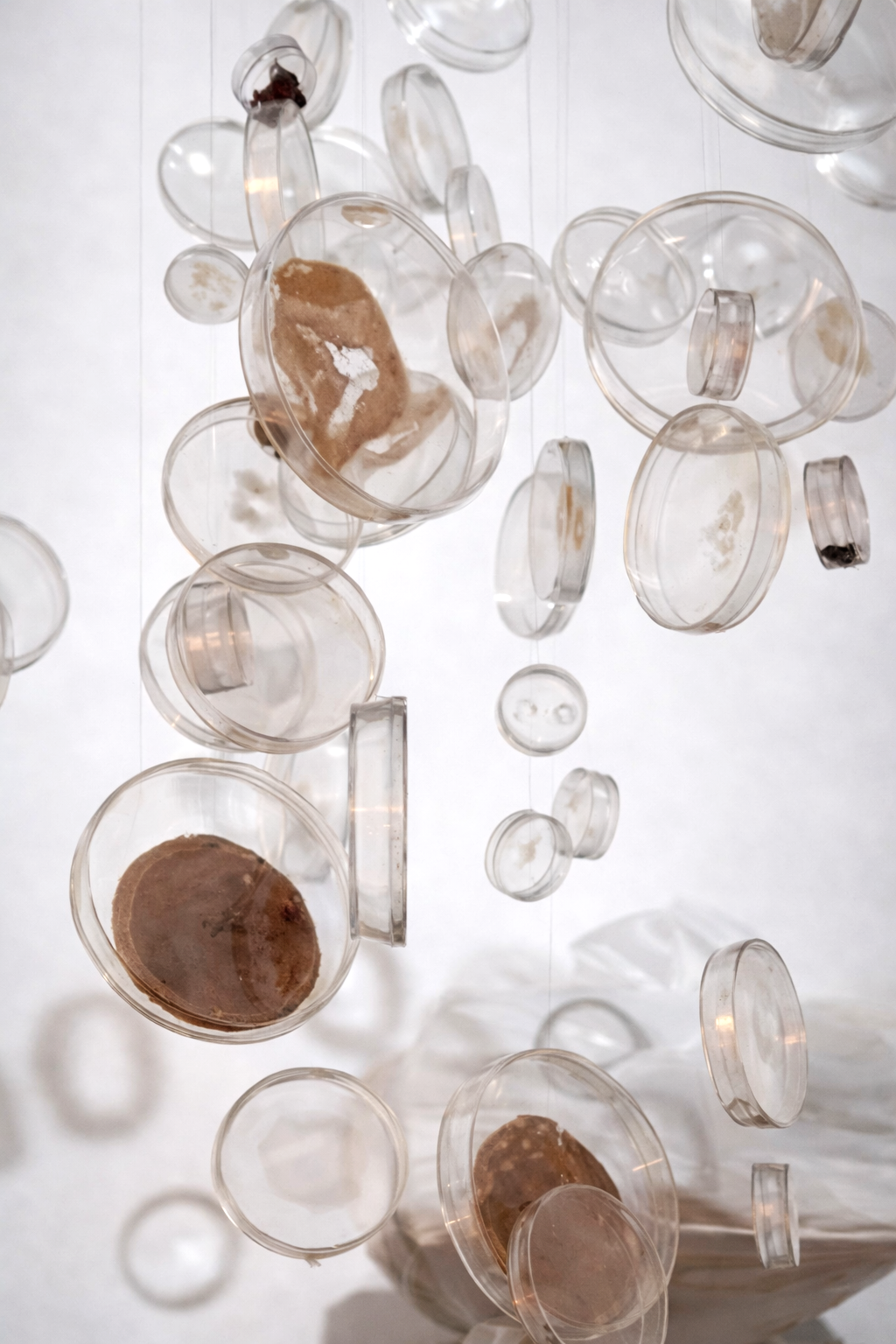
The project actively challenges the inherent whiteness commonly associated with mycelium materials. By investigating the diversity of fungal species, the research explores how different organisms leave distinct marks, produce varied surface finishes and generate a wide spectrum of natural colours - bringing this expanded aesthetic range into domestic and community spaces, transforming how people experience the objects of daily life.
Fungi are positioned here not as a material input but as a creative collaborator - from furniture and everyday objects to chandeliers, spore print paintings and compositions formed by fruiting bodies. The fungal kingdom offers an aesthetic library that is vast and largely unexplored; thus, we can just imagine the still hidden potential.
By recreating a familiar domestic interior within a public exhibition, the project makes these possibilities immediate and accessible. Visitors sit, touch and inhabit a space that feels recognisable yet fundamentally reimagined - fostering curiosity and care for the living systems surrounding everyday life. By working with regional species and local waste streams, the project creates a sense of belonging - to place, to ecology, and to a material culture rooted in the living world. In the longer term, interiors shaped by grown materials carry cultural meaning precisely because of their origins, creating spaces that belong to their ecological context as much as to their inhabitants.
Emerging biomaterial research too often remains confined to laboratories and specialist conferences, invisible to the people it could most benefit. This project challenges that boundary directly. By translating mycelium innovation into a familiar domestic setting, MUSE’s 'The "Living" Room' makes cutting-edge material science accessible to visitors of all ages and backgrounds, not as a demonstration, but as a lived, true living room experience.
The installation invites direct interaction - visitors observe, touch and sit on furniture grown from fungal networks and agricultural waste. This hands-on encounter lowers the barrier between scientific research and public engagement, transforming passive spectators into active participants in a conversation about the future of materials and design.
Crucially, mycelium-based materials propose a new societal model for production. Because they can be grown from regional agricultural residues using low-tech processes, they enable decentralised, small-scale fabrication - reducing dependency on globalised supply chains and making material innovation accessible to communities, cooperatives and local makers far beyond industrial manufacturing contexts. This positions biofabrication as a tool for economic inclusion, not only ecological responsibility.
The project itself was developed through a collaborative and non-hierarchical process spanning microbiology, engineering, architecture and design. Students and young researchers contributed actively to prototyping and experimentation, creating an inclusive learning environment where knowledge flows across disciplines and generations. This open, transdisciplinary governance model is replicable and transferable to other institutions and contexts.
By connecting research, education and public outreach, the project demonstrates that sustainable material innovation need not remain the territory of specialists - it can be shared, adapted and owned by society at large.
From material research to public exhibition, participation was a foundational principle for this project - connecting academic inquiry directly with students, communities and broader civil society.
The project emerged from within the Integrative Design / EXTREMES research group at the University of Innsbruck. Students and young researchers were core participants actively involved in material experimentation, prototyping and fabrication. Working directly with fungal species and agricultural substrates, they gained hands-on experience in biofabrication while shaping the outcomes of the research itself. The project was designed to allow open, collective investigation where learning and making were inseparable, and where student contribution directly supported the direction and outcome of the work.
Beyond the university, the project extended its participatory reach through the FUNGA exhibition at Naturmuseum Südtirol in Bolzano. Here, the general public became active participants. Visitors were invited to touch, sit on and inhabit the installation, experiencing mycelium-based materials directly in a domestic setting. This format was deliberately chosen to democratise access to material innovation, inviting people of all ages and backgrounds into a conversation that is too often reserved for specialists.
The impact of this participation has been tangible. Public engagement generated direct feedback on the sensory, functional and emotional qualities of the materials, informing ongoing research directions. Visitor responses demonstrated that unfamiliar biomaterials become meaningful and desirable when encountered in everyday contexts
The project demonstrates that participatory design is a research methodology that produces better outcomes because it remains open to the participants, the general public and all other stakeholders.
The project was developed through collaboration between actors operating at multiple levels, including academic research institutions, educational environments, cultural institutions and industry partners.
The project originated within the University of Innsbruck, where interdisciplinary research into biofabricated materials was conducted by the Integrative Design / EXTREMES research group in collaboration with microbiology expertise. The project also engaged students through teaching and research activities, integrating education and experimentation into the development process. This cross-sector partnership between design research and engineering added practical depth to the material system.
At the regional and transnational level, the FUNGA exhibition at Naturmuseum Südtirol in Bolzano (Italy), connected the project to a broader cultural and public audience across the Italian and Austrian contexts. The museum provided an institutional platform that legitimised the research beyond academia, embedding it within wider conversations on biodiversity, sustainable materials and ecological futures - reaching audiences that academic publication alone cannot access.
This multi-level collaboration, linking research, education, industry experimentation and cultural dissemination, enabled the project to translate experimental material research into a public experience with broader societal impact.
Mycelium does not recognise disciplinary boundaries - and neither does this project. 'The "Living" Room' embedded in the MUSE - MyceliUM SEat research framework is the result of a genuinely transdisciplinary collaboration, where knowledge from microbiology, design, architecture, materials science and education was not simply combined but made to speak to one another in ways that none could have achieved independently.
Microbiology provided the foundational understanding of fungal growth processes - how fungi interact with organic substrates, under what conditions they produce stable composites, and how their behaviour can be directed toward specific material outcomes. Without this scientific grounding, the design work would have remained speculative.
Architecture and design translated that biological knowledge into spatial and functional applications - investigating how mycelium composites behave as furniture, how they can be formed, finished and experienced, and what aesthetic possibilities emerge from working with living matter as a creative collaborator.
Material science contributed a rigorous testing dimension, where the structural performance of mycelium composites was pushed to their limits. This applied context generated material insights that directly informed the design of the furniture elements presented in the installation ´The “Living” Room´.
Education ran through every layer of the project. Students participated in experimentation, prototyping and fabrication - not as passive learners but as active contributors whose curiosity and involvement shaped part of the project outcomes.
Together, these disciplines produced something none could have reached alone: a tested material system, a publicly exhibited design prototype, and a replicable transdisciplinary methodology for integrating biological processes into contemporary design practice.
‘MUSE - MyceliUm SEat’ was conceived from the outset with industrial application in mind, investigating mycelium-based composites not as a speculative exercise but as a material system with real potential for furniture and interior applications. 'The "Living" Room' is both a product of that research and a framework for communicating it: a proof of concept that makes the industrial ambition visible and tangible.
The project was initiated and funded through Tiroler Wissenschaftsförderung, the regional research funding body of Land Tirol. This public investment enabled a foundational phase of material research, prototype development and public exhibition - a stage of experimentation that directly precedes and informs commercial activity.
The project has drawn significant attention since its public debut. Media coverage, publications and institutional interest have positioned MUSE and its outcomes of 'The "Living" Room' as a visible and credible voice in the emerging field of bio-integrated design - generating cultural capital supporting future funding applications, commercial partnerships and spin-off potential.
It has also proven generative well beyond its initial scope, yielding follow-up ideas and opening new research pathways across material science, spatial design and biological systems. Conversations with Tiroler Wissenschaftsförderung are ongoing regarding continuation funding, reflecting institutional recognition of the project's momentum.
As the research matures, the financial model evolves towards a diversified structure: design commissions and limited edition production; knowledge transfer through workshops and educational collaborations; and research partnerships with institutions and industry interested in bio-based material innovation.
The longer-term ambition is a spin-off, an independent bio-integrated design company bringing mycelium composites to market as a commercially viable and regionally grounded alternative to synthetic interior materials.
The material logic at the heart of 'The "Living" Room' is designed as a replicable model for local bio-material production and circular design practices.
Mycelium-based composites can be grown wherever organic waste exists. Agricultural residues, e.g. straw, hemp, wood chips, sawdust, and other by-products, are available in every geography, making local production economically rational. Critically, every element of the installation was grown using minimal equipment and low energy and water inputs, demonstrating that biofabrication does not require industrial infrastructure to produce structurally viable, aesthetically considered results. A region with agricultural waste (non-competing with food supply), biological knowledge and basic facilities has everything it needs to begin.
This makes the model particularly relevant for rural and peri-urban contexts across Europe and beyond, where circular material production can strengthen local economies while reducing waste.
The methodology is equally replicable. The combination of microbiology, design experimentation, engineering testing and public exhibition can be adopted by universities, design schools, cultural institutions and maker spaces. Workshops and open knowledge-sharing protocols allow students, designers and researchers elsewhere to learn, adapt and build on the system without starting from scratch.
The furniture prototypes serve as transferable demonstration objects, adaptable across interior design, architecture, temporary structures and public space.
Beyond furniture, the same material systems extend naturally into packaging, construction components, acoustic insulation and biodegradable exhibition design, as sectors with significant demand for circular alternatives.
'The "Living" Room' offers not a fixed product but a replicable model: local materials, minimal equipment, open methodology and public engagement - adaptable to any context willing to grow its own future.