Strengthening Local Democracy and Inclusion
Moj Sluh – Communication for Deaf people
Moj Sluh: The First App in Bosnia and Herzegovina for Deaf and Hard-of-Hearing Communication
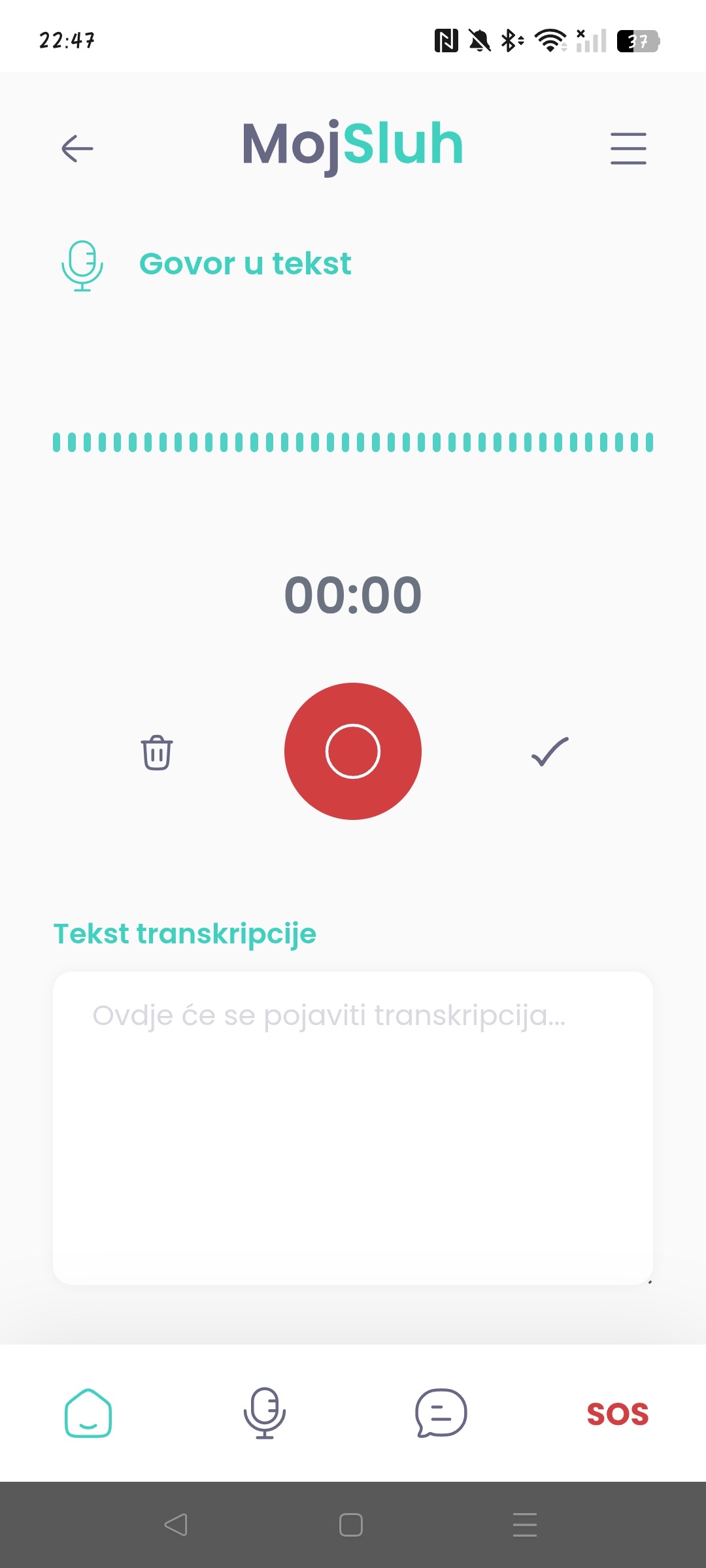
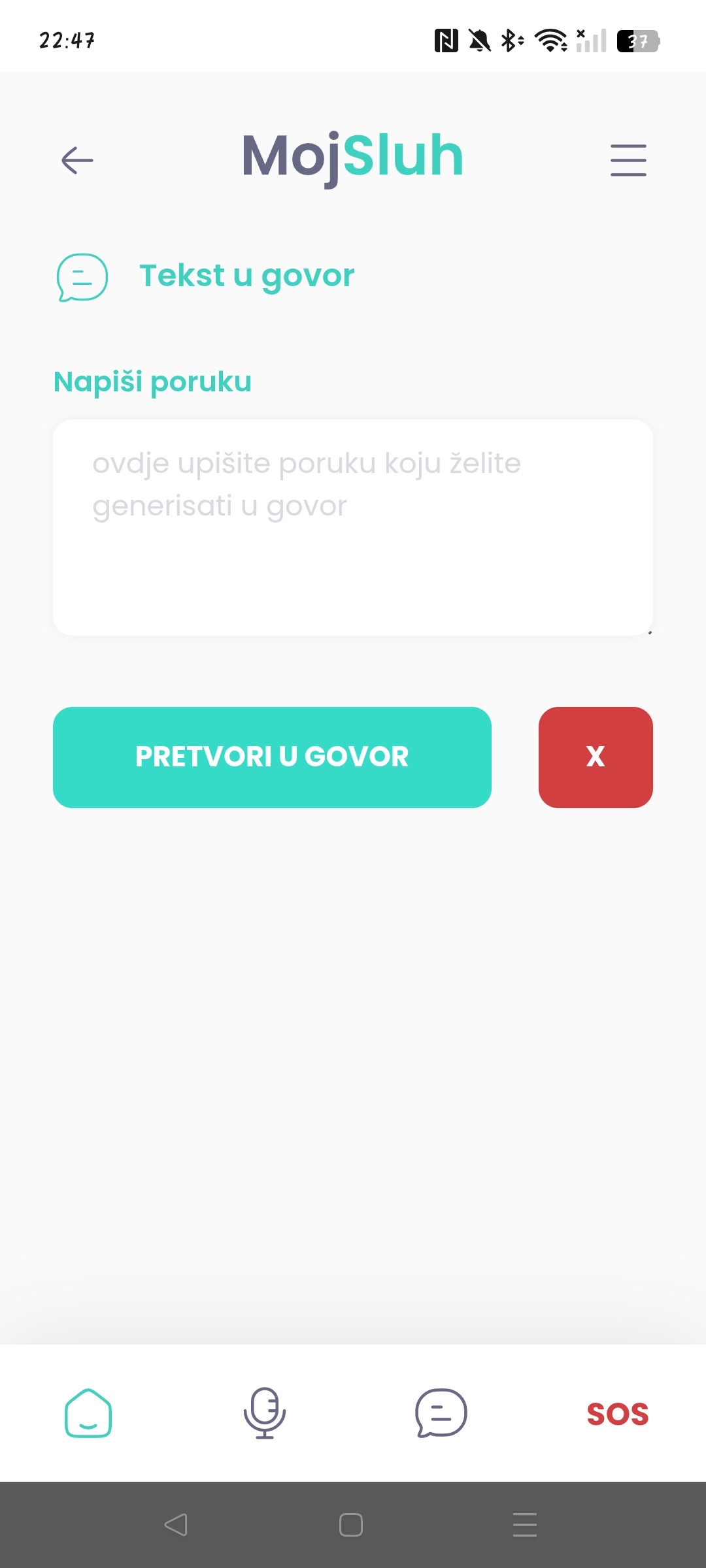
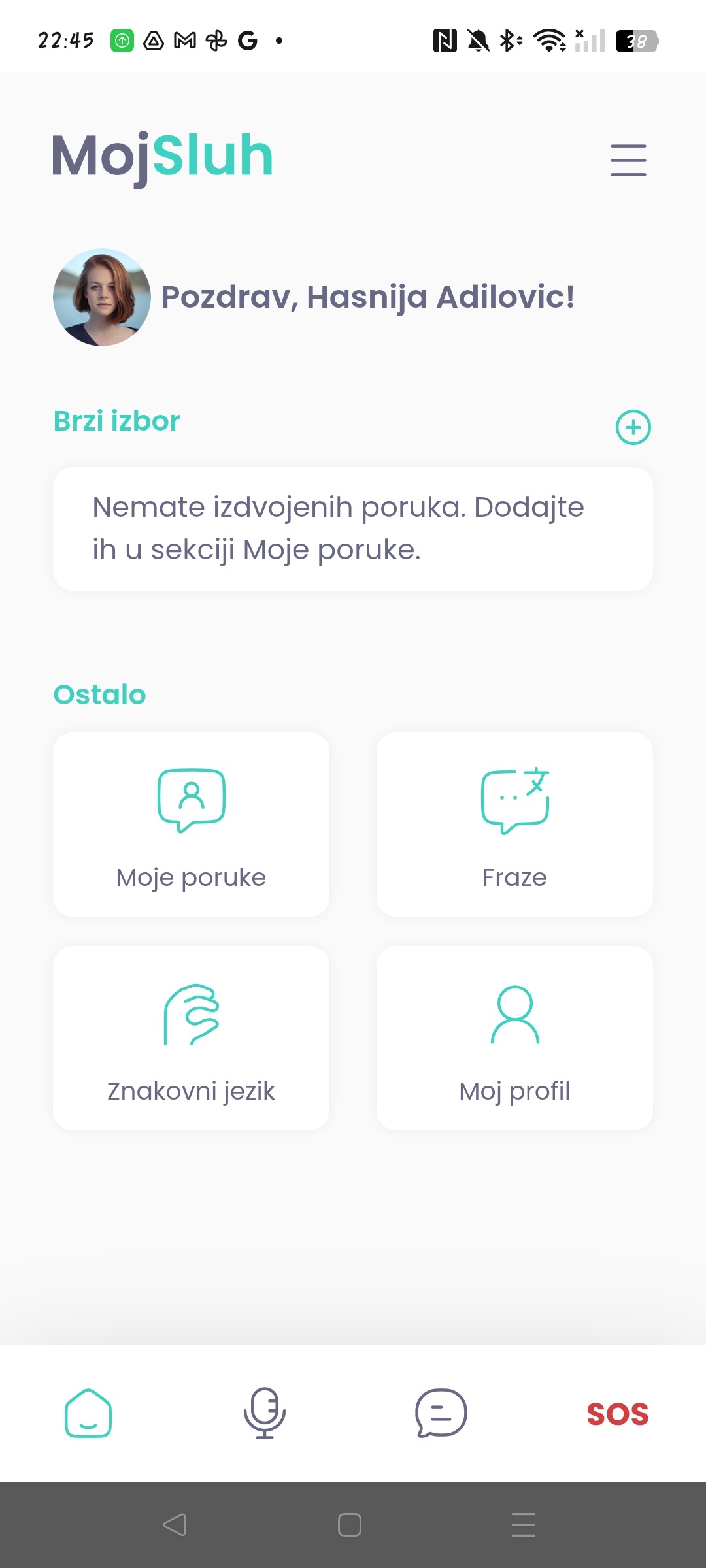
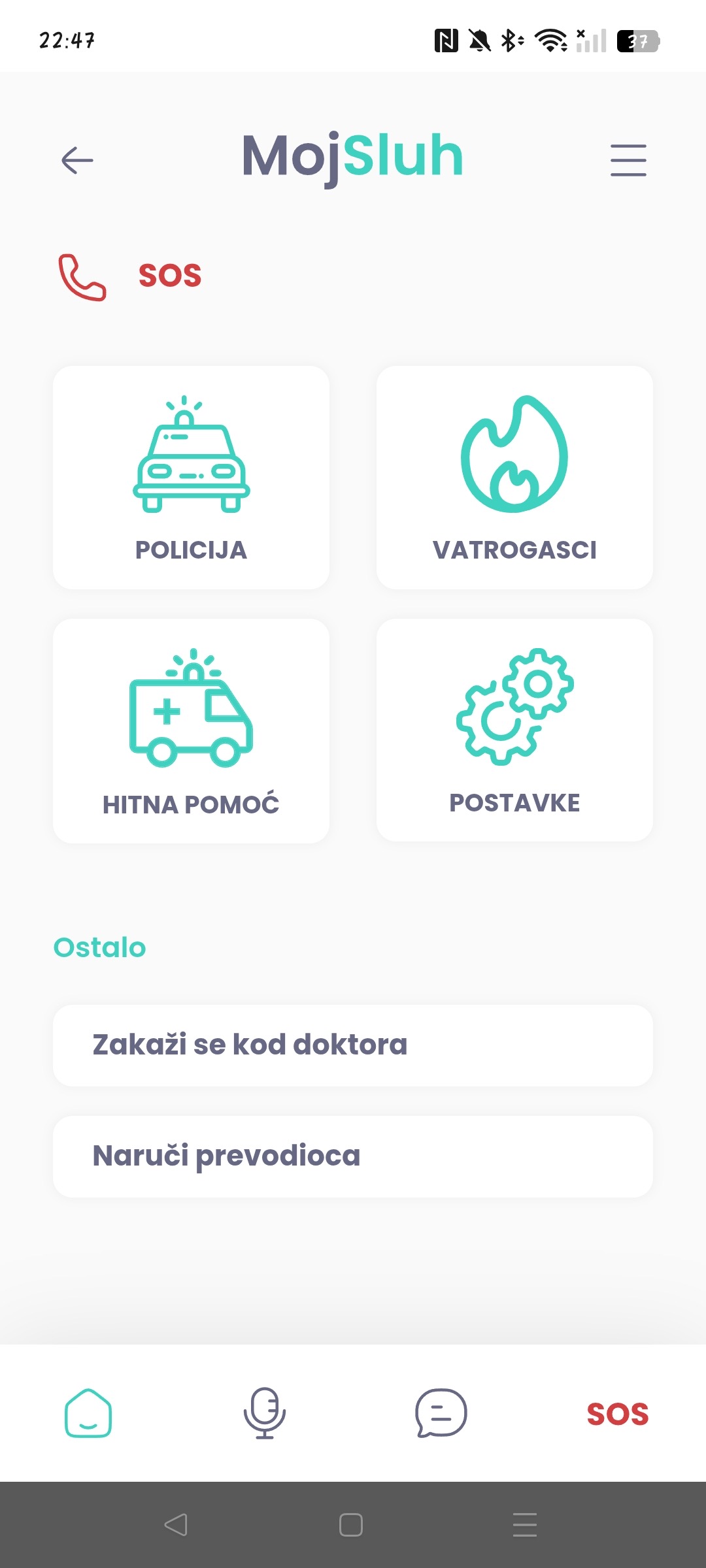
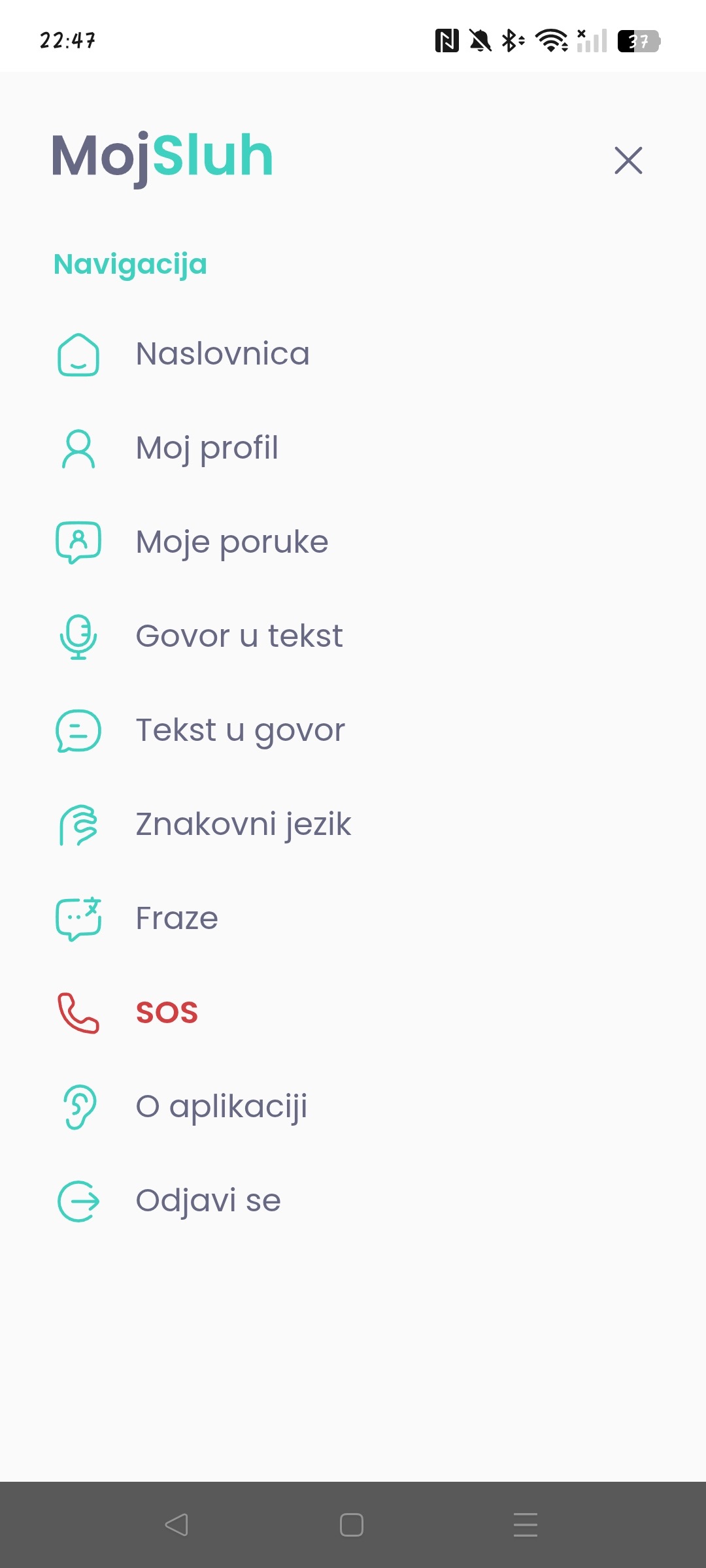
Moj Sluh is the first and only mobile application in Bosnia and Herzegovina created specifically for deaf and hard-of-hearing people. It enables seamless communication through speech-to-text and text-to-speech tools and provides quick SOS access in emergencies. By breaking everyday communication barriers, Moj Sluh empowers users to participate more independently in society and advances inclusion through accessible digital innovation.
Bosnia and Herzegovina
Local
Sarajevo
It addresses urban-rural linkages
It involves other types of transformations (soft investment)
Yes
2026-03-01
No
No
No
Organisation
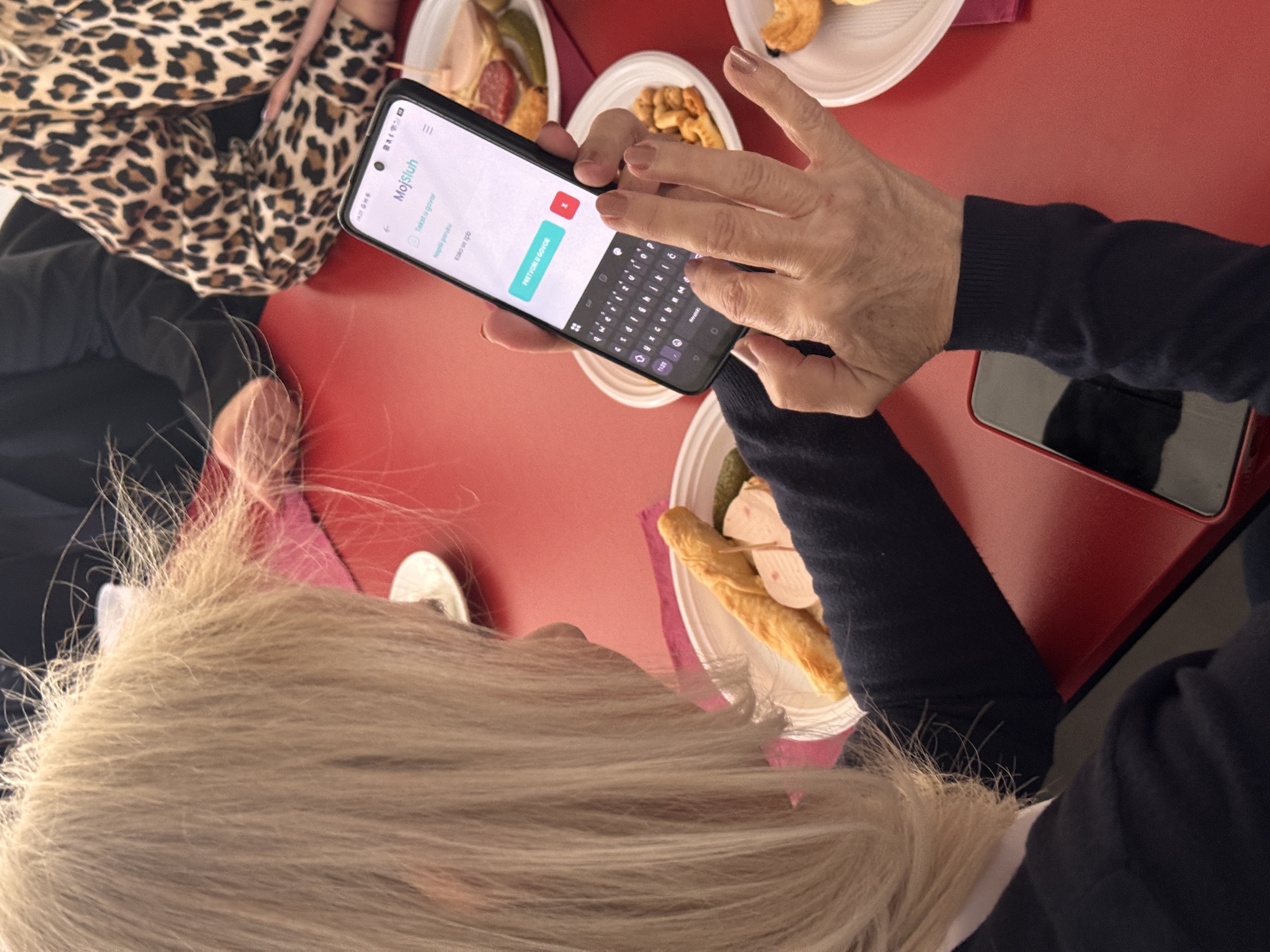
Moj Sluh is the first and only mobile application in Bosnia and Herzegovina specifically designed for deaf and hard-of-hearing people. Developed by ROI Scores, the app removes everyday communication barriers by enabling real-time speech-to-text and text-to-speech communication, and provides immediate SOS functionality for emergencies. The application was tested directly with deaf users, who confirmed the critical need for such a solution. SPES – Center for Physical Therapy and Rehabilitation and ASA Hospital, one of the largest private hospitals in Bosnia and Herzegovina, have expressed interest in participating in the pilot phase, demonstrating the project’s potential for collaboration with healthcare institutions.
Since initial testing, Moj Sluh has already shown strong user engagement and practical utility, empowering users to communicate independently in daily life and enhancing social inclusion and safety. Feedback highlights increased confidence, autonomy, and improved access to social, educational, and work environments.
The long-term impact of Moj Sluh lies in its scalability and replicability across other communities and regions. By combining digital innovation with social inclusion, the project aligns with New European Bauhaus values: sustainable, inclusive, and enhancing the quality of everyday experiences. Moj Sluh demonstrates how a soft investment—a digital solution—can create tangible societal transformation by addressing the needs of an underrepresented group, setting a model for inclusive innovation in the Western Balkans and beyond. The innovation and impact potential of the project has already been recognised at national level, as Moj Sluh received two awards for the best business idea, including recognition at Sarajevo Unlimited Innovation Forum and from the Association of Business Women of Bosnia and Herzegovina.
Moj Sluh was born from a deeply personal need. My mother is deaf and has faced life-threatening situations where she could not communicate effectively. Once, she suffered a heart attack at home. The only option for deaf people was sending an SMS, which was not enough in an emergency. She managed to reach the clinic on her own, but the doctors initially had to call me to bring her in. Only after seeing her ECG did they contact emergency services. Had she been alone at home, she might not have survived. In another situation, she was attacked on the street and her bag was stolen, but she could not call the police because no accessible option existed for deaf people.
These experiences made me realize that deaf and hard-of-hearing people urgently need tools to communicate both in daily life and emergencies. I developed Moj Sluh to fill this gap. The app enables real-time speech-to-text and text-to-speech communication and provides quick SOS access, empowering users to reach help independently. I tested the app with deaf users, who confirmed its usability and necessity. SPES – Center for Physical Therapy and Rehabilitation and ASA Hospital, one of the largest private hospitals in Bosnia and Herzegovina, have expressed interest in collaborating in the pilot phase, showing the project’s potential for real-world impact.
Moj Sluh allows deaf individuals to communicate independently, safely, and confidently, transforming their daily lives. This personal story is at the heart of the project, reflecting the New European Bauhaus values of inclusion, empowerment, and improving the quality of everyday life.
Social inclusion
Accessibility
Emergency support
Digital innovation
Empowerment
Moj Sluh addresses social and economic sustainability by providing a long-term solution to a pressing communication gap for deaf and hard-of-hearing people. By enabling independent communication and emergency access—including situations such as strokes, medical emergencies, or other cases of impaired communication—the app reduces reliance on others, increases user autonomy, and promotes social resilience. The project also has potential for scale and replication across other communities and regions, creating a sustainable model for inclusive digital solutions. Economically, it can reduce costs for healthcare and emergency services by improving preparedness and responsiveness. By combining social impact with digital innovation, Moj Sluh exemplifies a sustainable approach to human-centered challenges.
Moj Sluh contributes to aesthetics by creating a user-friendly, visually intuitive, and emotionally considerate interface. The design prioritizes clarity, simplicity, and accessibility, allowing users to engage with the app confidently and without frustration. Beyond the digital interface, the app enriches everyday life by fostering independence, confidence, and dignity, even in situations of impaired communication such as strokes or other medical emergencies. By reducing barriers, Moj Sluh creates a more harmonious social environment where users feel seen, connected, and included, contributing to the beauty of daily interactions and the well-being of the community.
Moj Sluh exemplifies inclusion by directly addressing communication challenges faced by deaf and hard-of-hearing people, including cases of impaired communication due to medical conditions such as strokes. The app implements “design for all” principles, enabling text-to-speech, speech-to-text, and SOS functionality accessible to all users, regardless of technological proficiency or age. By empowering users to communicate independently in daily life and emergencies, Moj Sluh promotes social participation, safety, and equal access to services. Collaboration with institutions such as SPES – Center for Physical Therapy and Rehabilitation and ASA Hospital ensures the solution meets real community needs. Through technology, Moj Sluh creates a more equitable society and a model for digital inclusion.
Moj Sluh was developed through a participatory approach, directly involving the end users—deaf and hard-of-hearing individuals—as well as their families and friends. During the development and testing phases, users provided feedback on usability, accessibility, and features, ensuring the app meets real needs. Healthcare institutions, including SPES – Center for Physical Therapy and Rehabilitation and ASA Hospital, contributed insights on emergency protocols and patient safety. While schools, courts, and other relevant institutions have not yet participated, there is strong potential for them—as well as companies and organisations working on inclusion—to collaborate in future pilot phases. This would ensure that Moj Sluh continues to evolve as a user-centered, highly functional solution that empowers the community and strengthens social inclusion.
Moj Sluh engages stakeholders at multiple levels to ensure relevance and impact. Currently, input has been gathered from users and families, as well as healthcare institutions such as SPES – Center for Physical Therapy and Rehabilitation and ASA Hospital, providing guidance on emergency protocols and accessibility standards. In the future, schools, courts, social services, and companies working on inclusion could actively participate, contributing insights on education, legal frameworks, and community integration. Engaging stakeholders at local, regional, and national levels in future phases will enhance the app’s practical applicability and create systemic change for deaf and hard-of-hearing communities.
Moj Sluh combines multiple disciplines and knowledge fields to provide a comprehensive solution. Digital technologies and software engineering underpin the app’s functionality, enabling real-time speech-to-text and text-to-speech communication. Social sciences and education inform user-centered design and accessibility, ensuring usability across age groups and abilities. Healthcare expertise from SPES and ASA Hospital guided the integration of SOS and emergency protocols. In the future, collaboration with schools, courts, other institutions, and companies focused on inclusion could bring additional perspectives from education, law, and social innovation. This transdisciplinary approach ensures that Moj Sluh remains robust, inclusive, and socially impactful, integrating diverse knowledge fields to serve the community effectively.
The business model of the Moj Sluh application combines a social impact mission with a sustainable and scalable digital revenue structure. The project follows a freemium model, ensuring that the most critical functionality – the SOS emergency contact feature – remains permanently free of charge for all users. This guarantees that deaf and hard-of-hearing individuals can access life-saving services regardless of their financial situation.
Financial sustainability is achieved through several complementary revenue streams:
First, the application offers a premium subscription model (approximately €4.99 per month) that provides advanced AI-powered communication tools, including speech-to-text and text-to-speech translation, expanded communication phrases, and personalized accessibility features that support daily communication in education, healthcare, and professional environments. Second, the project offers educational and institutional packages for schools, healthcare institutions, and clinics. These packages include specialized communication modules, learning materials for sign language, and tools that support inclusive communication with deaf students and patients. Institutions can subscribe to these packages through annual licensing agreements. Third, the project develops Corporate Social Responsibility (CSR) partnerships with companies that wish to support social inclusion and accessibility for persons with disabilities. Companies can finance access to the application, support awareness campaigns, or integrate the solution within their own accessibility and inclusion programs. As the user base grows, the combination of subscription revenue, institutional licensing, and CSR partnerships is expected to ensure long-term financial sustainability while keeping essential safety features accessible to the entire deaf and hard-of-hearing community.
The Moj Sluh project has strong potential for transferability and scalability due to its modular technological architecture, community-driven methodology, and adaptable communication tools.
The core technology of the application — including the SOS emergency communication system, speech-to-text and text-to-speech functionality, and digital communication tools for deaf and hard-of-hearing users — is designed as a scalable digital platform that can be easily adapted to different countries and institutional systems. By integrating location services, predefined emergency messages, and accessible visual interfaces, the platform can connect to emergency services and public institutions in different regions with minimal technical adjustments.
The platform is intentionally designed to be flexible and adaptable to different healthcare and emergency systems. For example, in countries where private healthcare or insurance providers operate emergency assistance services, users will be able to customise emergency contacts and connect the SOS function to alternative emergency numbers, including those provided by private insurance or assistance services. This flexibility allows the application to function across different regulatory and healthcare environments. The modular structure of the platform also allows continuous development of new accessibility tools. In future phases, the project plans to introduce AI-powered recognition of sign language, further improving communication between deaf users and institutions such as healthcare providers, emergency services, and public administration. The innovation and impact potential of the project has already been recognised at national level, as Moj Sluh received two awards for the best business idea, including recognition at Sarajevo Unlimited Innovation Forum and from the Association of Business Women of Bosnia and Herzegovina.