Enhancing Circularity, Sustainability, and Innovation
Urban ReTyre
ELT transformation: sustainable solution in urban infrastructure
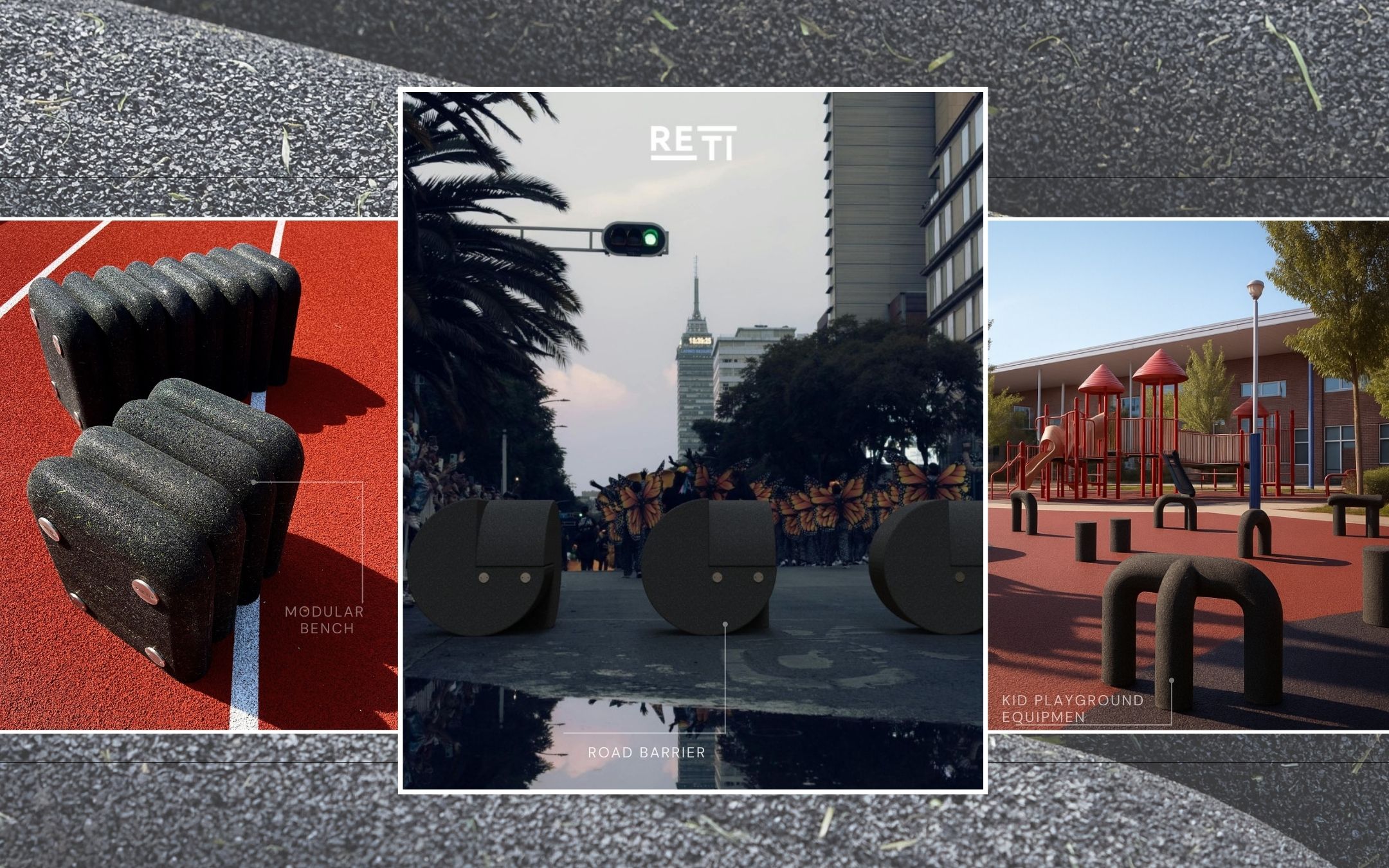
Re-ti gives new life to discarded tyres and old football turf through a zero-heat, zero-waste process. Playground equipment sparks children’s creativity and teaches sustainability, benches encourage reflection and dialogue about responsible city living, and security barriers blend into the urban landscape to enhance safety. By turning waste into opportunity, Re-ti shifts perspectives from disposal to transformation, shaping more conscious, sustainable cities.
Lithuania
Local
The concept is currently at the local pilot stage, focusing on specific urban testing grounds. However, due to its modular design and standardized production process, Re-ti is architecturally and socially scalable to the regional and national levels. My aim is to establish a circular infrastructure model that can be easily replicated in any municipality, transforming waste management into a national sustainable strategy.
Mainly urban
It involves a physical transformation of the built environment (hard investment)
Yes
2025-06-09
No
No
No
Individual
Re-ti is an innovative circular design project addressing a global environmental challenge: rubber waste. By transforming end-of-life tires (ELTs) and discarded artificial football turf into functional urban infrastructure, Re-ti shifts the perspective from viewing waste as a problem to recognizing it as an untapped resource.
The core innovation of Re-ti is its 'Zero-Heat, Zero-Waste' cold-pressing manufacturing process. Unlike conventional methods, this low-energy technique shapes rubber granules without thermal treatment. Relying on minimal mechanical assistance and recycled binders, it ensures that every object remains 100% recyclable, eliminating production waste and maintaining a continuous material cycle.
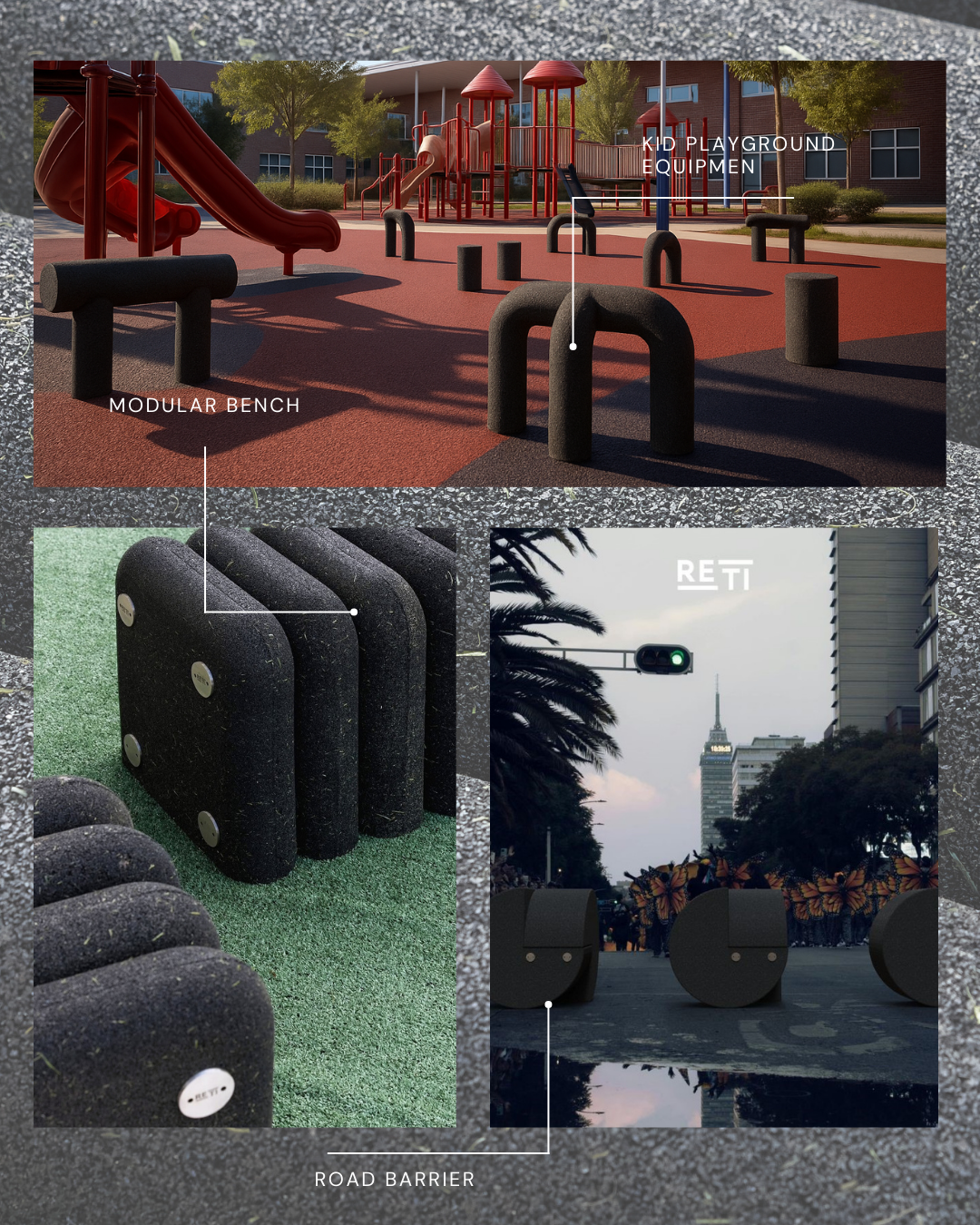
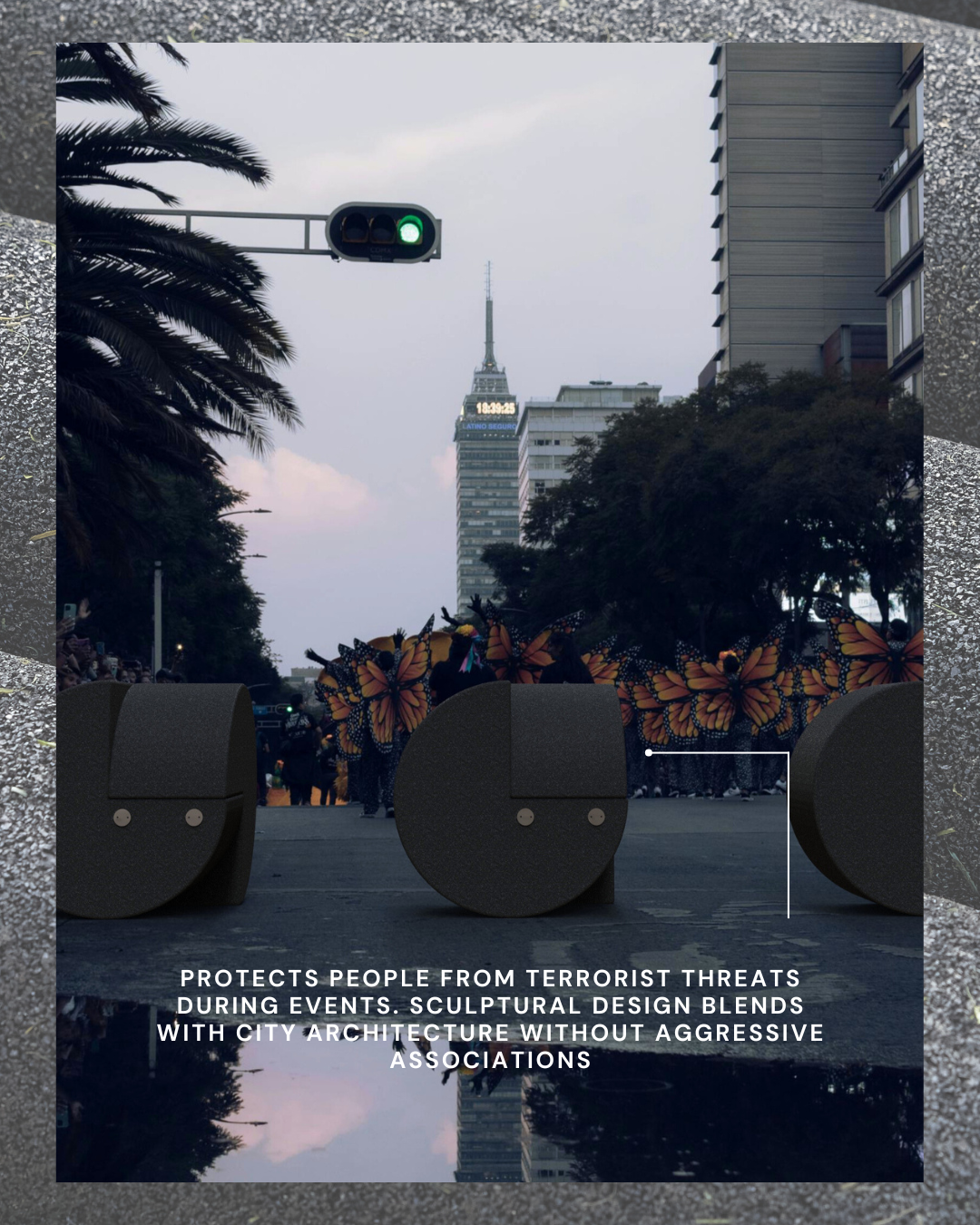
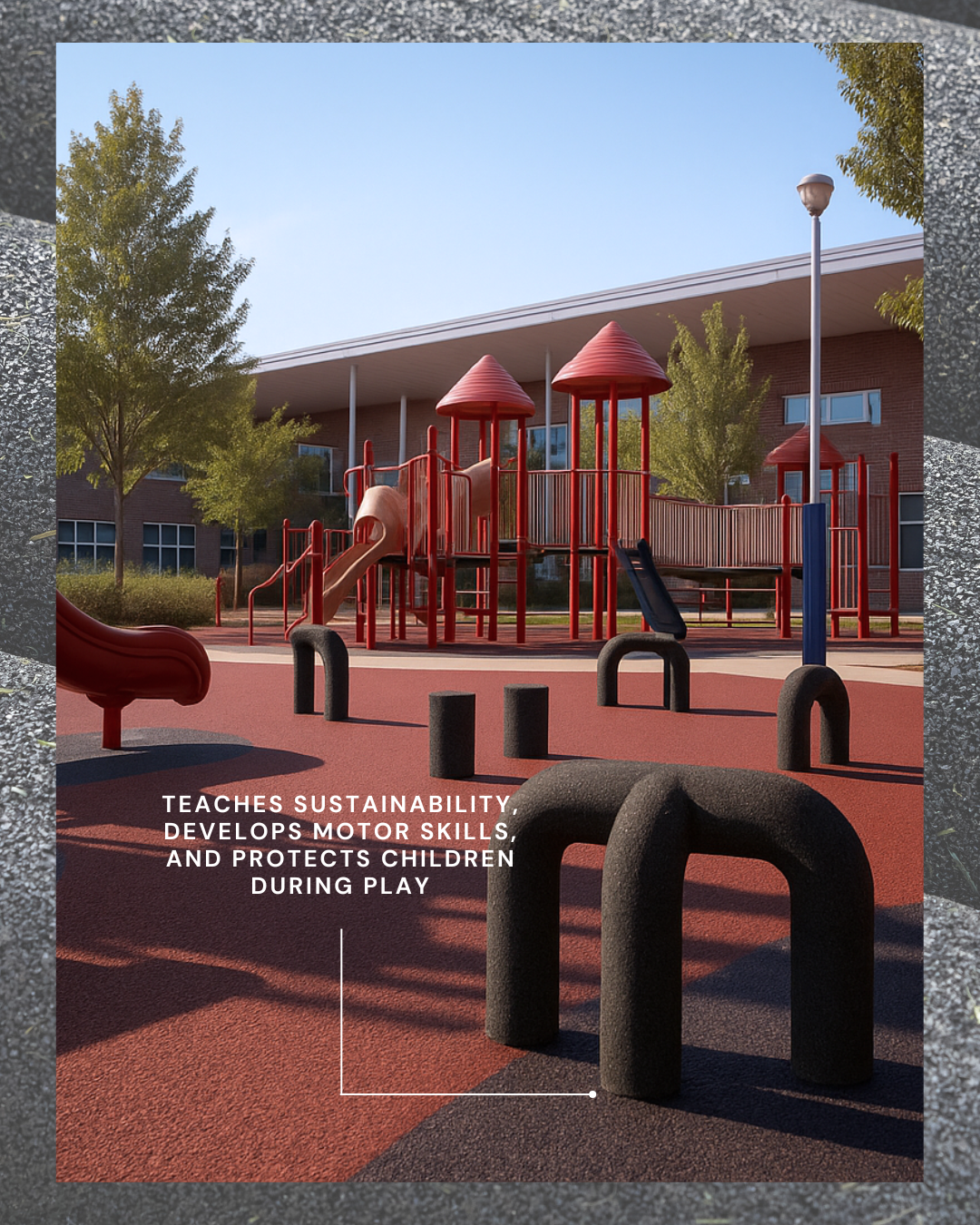
The collection—comprising playground equipment, public benches, and road barriers—is more than just urban infrastructure. Rubber is a durable, weather-resistant material with excellent shock-absorbing properties: in playgrounds, it fosters children's creativity while ensuring physical safety and impact absorption. In public spaces, the benches invite rest and reflection on responsible resource use, blending sculptural forms seamlessly into urban architecture, serving as a bridge between the built environment and a sustainable mindset. Meanwhile, the road barriers provide essential safety during public events while avoiding the aggressive appearance or war-related associations of traditional barricades.
The goal of Re‑ti is not only to provide practical functions but also to educate communities, promote circular design, tackle the global 'black waste' problem, and create a sustainable, resilient environment for future generations.
Re‑ti was born from my Master’s thesis at Vilnius Academy of Arts, where I explored the problem of rubber waste and its environmental impact. The idea emerged somewhat serendipitously, when I discovered a rubber mat among discarded materials at the university. This encounter, combined with observing the vast quantities of end-of-life tyres in forests, along roadsides, and at specialized landfills, inspired me to explore how these discarded materials could be transformed into meaningful urban infrastructure.
During my research, I noticed that most products made from recycled tyres were flat, two-dimensional objects. I set out to investigate the properties of different granule sizes and to develop casting techniques that would allow the material to take on three-dimensional forms. I experimented with various materials for molds and analyzed which objects best showcased the rubber’s qualities—durability, shock absorption, and manageable weight. The resulting designs feature rounded edges to minimize natural wear and maximize longevity.
Through this process, I also realized that the world faces not only the massive problem of tyre waste but also the challenge of end-of-life recycled surfaces, such as artificial football turf, which often lack further reuse options after initial recycling. My goal became to ensure that every Re‑ti object could be endlessly recycled, fully embracing zero-waste principles.
From these explorations, the Re‑ti collection emerged: a series of sustainable, modular urban infrastructure solutions—playground equipment, benches, and barriers—that transform discarded rubber into functional, durable, and socially engaging city objects. Each piece embodies the potential of circular design while addressing environmental challenges and enriching public spaces.
Circular economy
Sustainable urban infrastructure
Community & social impact
Material innovation
Recycled tyres
Re‑ti is exemplary in terms of sustainability because it transforms two of the largest sources of rubber waste—end-of-life tyres and discarded artificial football turf—into functional, durable, and modular urban infrastructure. By using a zero-heat, zero-waste cold-pressing process, the project avoids energy-intensive manufacturing, ensures full recyclability of materials, and maintains a continuous material cycle, embodying circular economy principles.
Socially, Re‑ti contributes to sustainable cities by creating playground equipment that fosters children’s motor development and environmental awareness, benches that encourage reflection on responsible resource use, and road barriers that provide safety while integrating harmoniously into urban landscapes. Economically, it generates added value from waste materials, offering scalable and replicable solutions for public spaces. By addressing environmental challenges through innovative design while enhancing social and cultural engagement, Re‑ti serves as a tangible example of sustainable urban transformation.
Socially, Re‑ti contributes to sustainable cities by creating playground equipment that fosters children’s motor development and environmental awareness, benches that encourage reflection on responsible resource use, and road barriers that provide safety while integrating harmoniously into urban landscapes. Economically, it generates added value from waste materials, offering scalable and replicable solutions for public spaces. By addressing environmental challenges through innovative design while enhancing social and cultural engagement, Re‑ti serves as a tangible example of sustainable urban transformation.
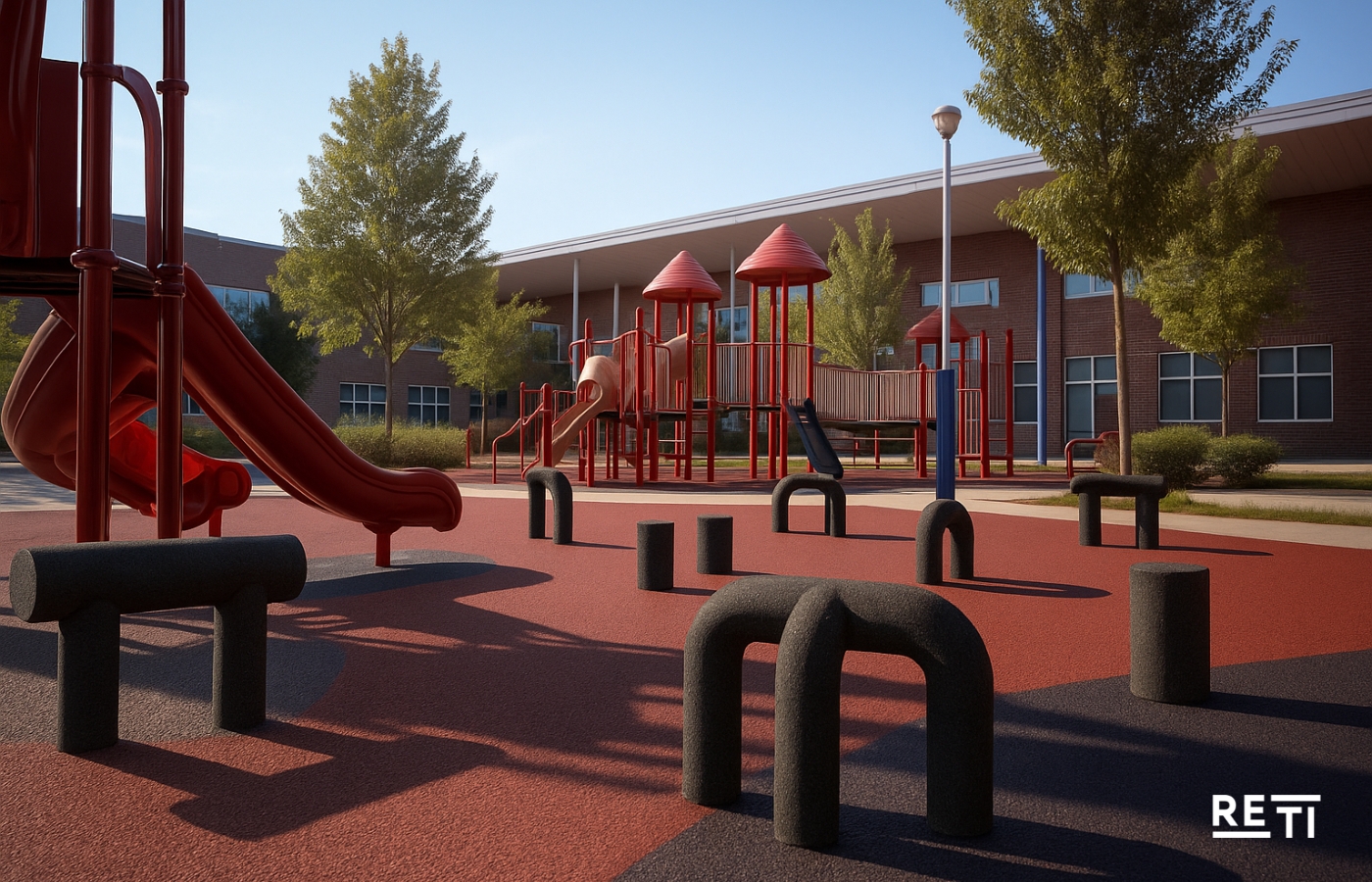
Re‑ti enhances urban aesthetics by transforming discarded rubber into modular, sculptural infrastructure that is both functional and visually engaging. The playground equipment is designed to stimulate children’s imagination and physical development: its 30 possible form variations feature motifs inspired by animals and plants, encouraging active play, movement exploration, and tactile learning. Linear elements guide movement, helping children discover the material while oval shapes provide safety and comfort.
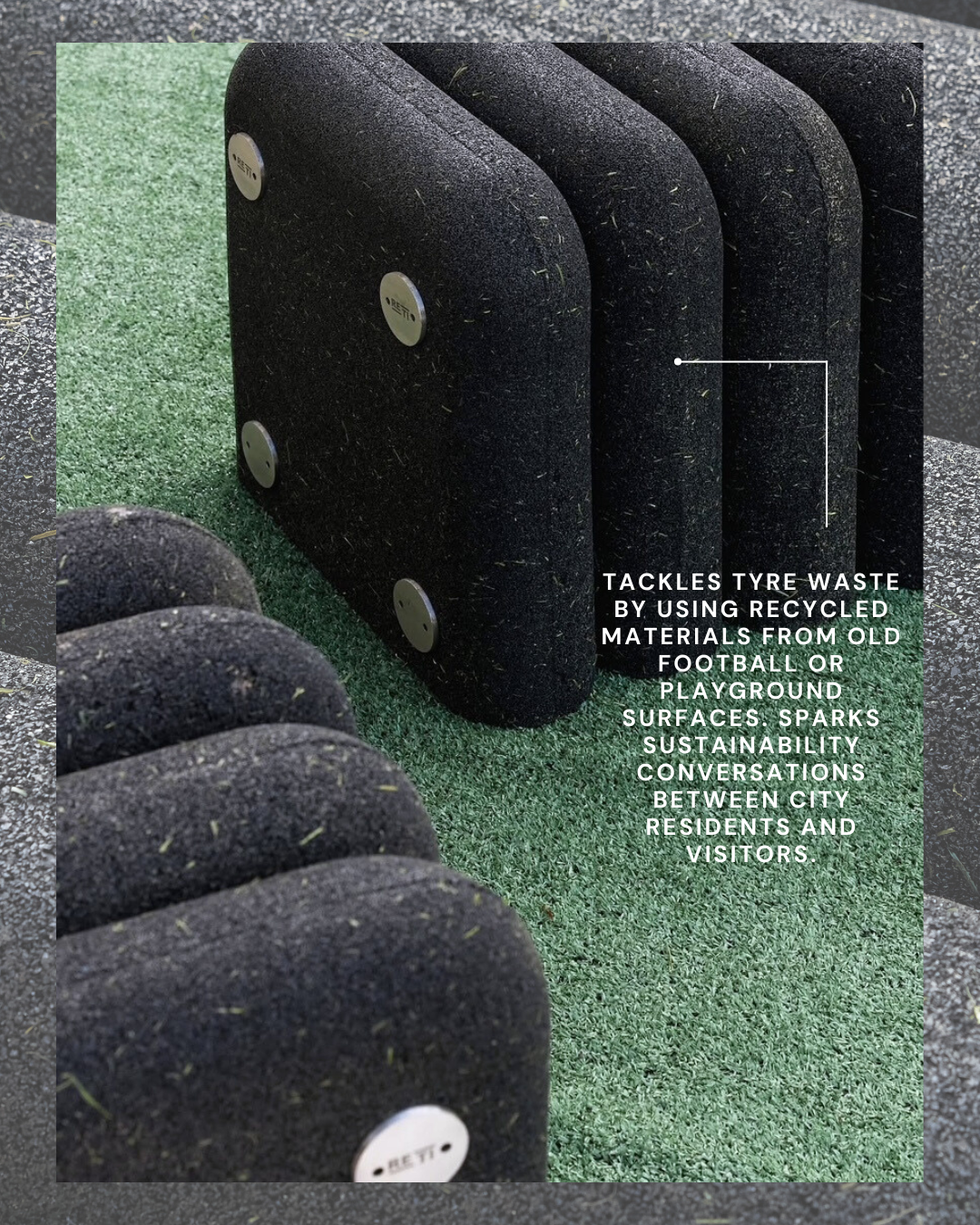
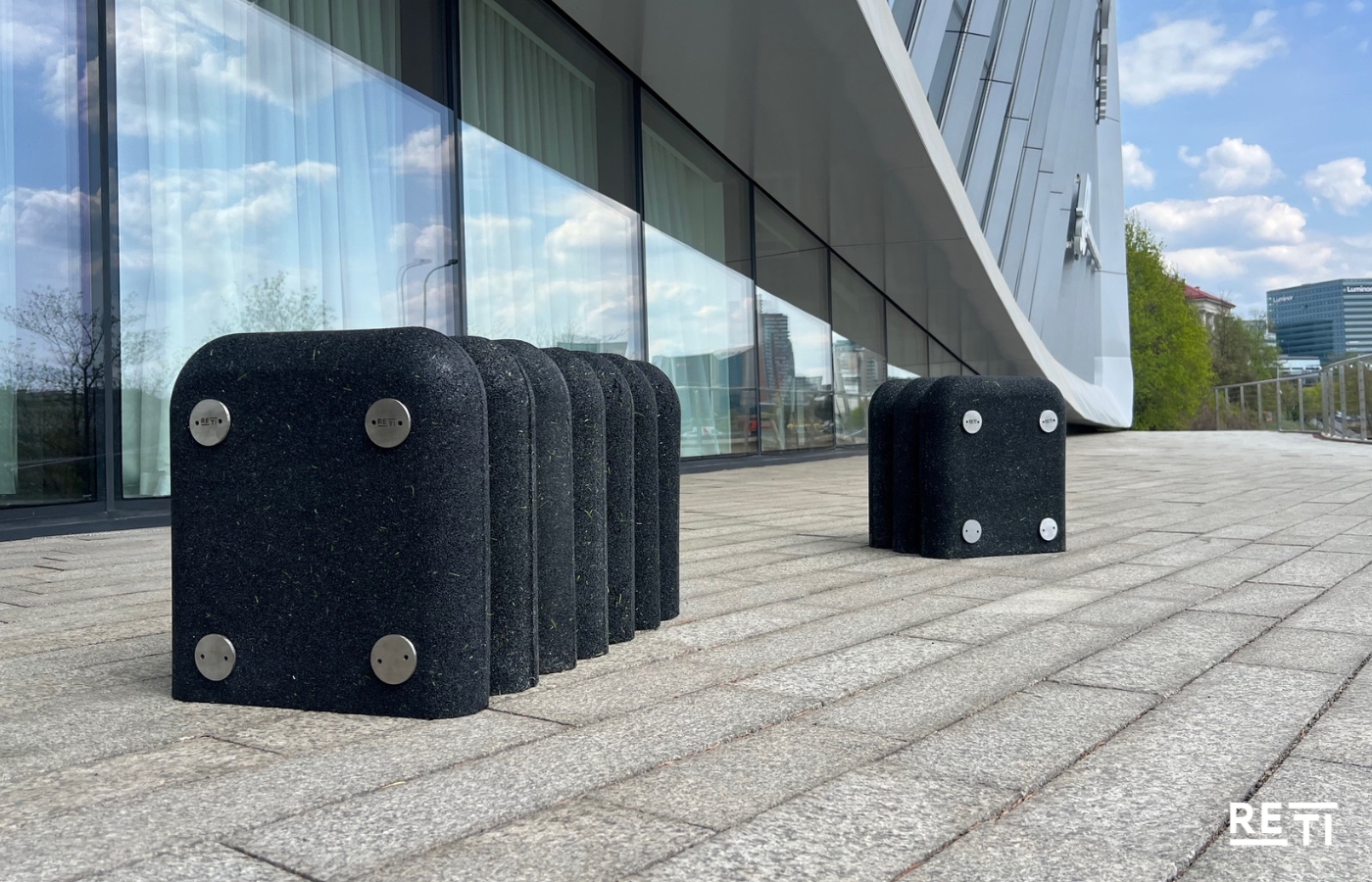
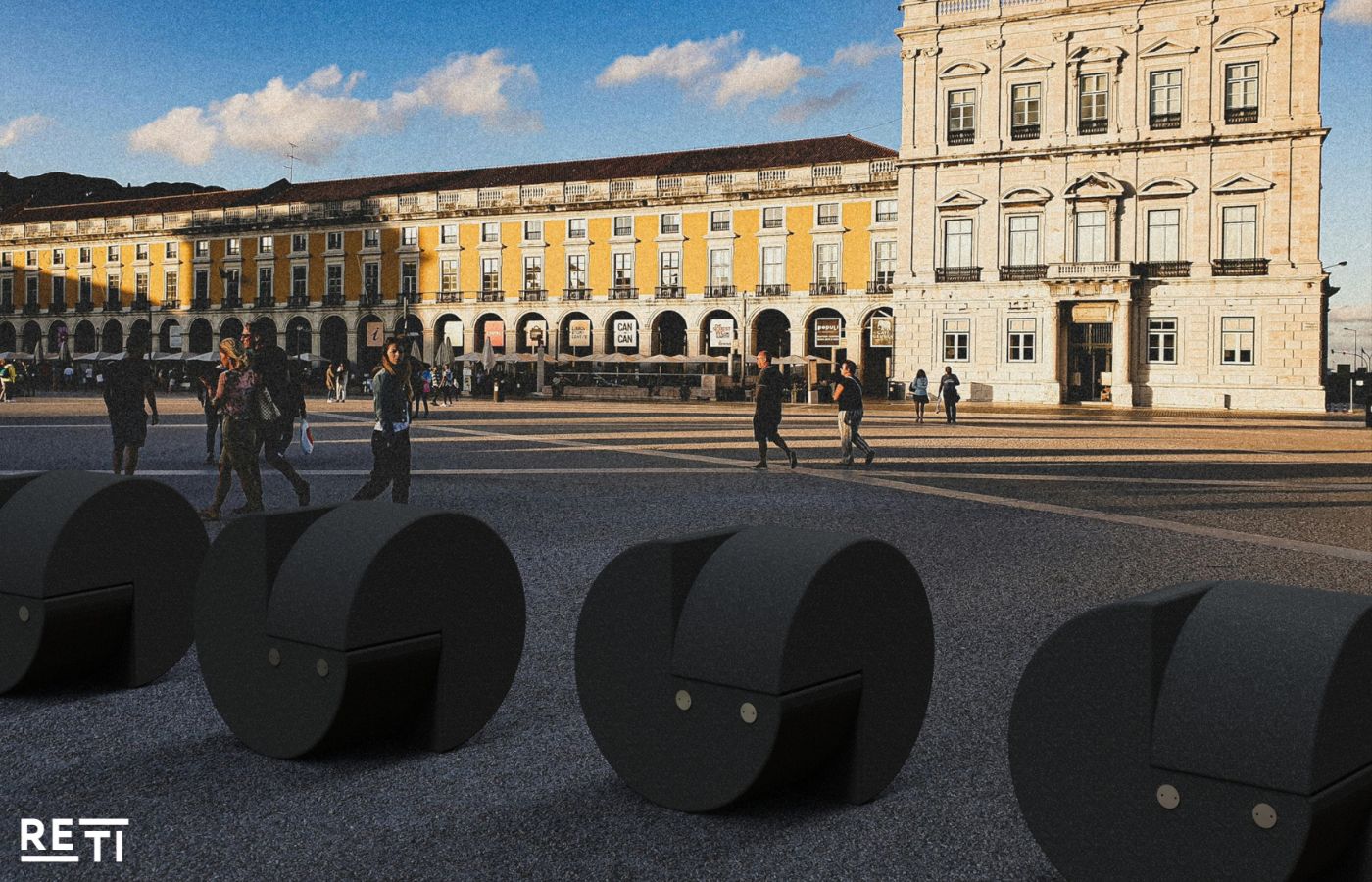
Benches feature segmental, rounded designs that allow rainwater to drain naturally, while encouraging rest and reflection. Road barriers are sculptural yet unobtrusive, blending seamlessly into the urban landscape and avoiding aggressive or war-associated appearances, which is particularly considerate for people with traumatic experiences. All objects are produced from a single material, reinforcing a coherent and harmonious aesthetic across the city while exemplifying systematic urban planning.
Through form, material, and modularity, Re‑ti transforms waste into visually appealing, socially sensitive, and environmentally responsible objects. The project fosters a sense of belonging and care for public spaces, demonstrating how circular design can create beauty, function, and community engagement simultaneously.
Re‑ti embodies inclusion by creating urban infrastructure that is accessible, safe, and engaging for diverse groups of people. Playground equipment is designed for children of different ages and abilities, fostering creativity, motor development, and social interaction. Rounded, tactile forms and modular components ensure safety and ease of use, reducing barriers to participation.
Benches range from single-seat 40 cm modules to multi-meter segments, allowing flexible arrangements that accommodate individuals, families, and larger groups, promoting equitable access and encouraging dialogue and interaction in public spaces. Road barriers integrate unobtrusively into the urban environment, avoiding intimidating forms while supporting safe access for all citizens during events or daily activities.
By combining universal design principles, modularity, and material innovation, Re‑ti ensures public infrastructure is inclusive, adaptable, and equitable. The project demonstrates how circular design can simultaneously address environmental challenges and create urban spaces that welcome and empower all community members, fostering a sense of belonging and shared care for the city.
Re‑ti implements the participatory principle by actively involving communities and the public in the creative process. During prototyping, tests were carried out with benches and prototype playground equipment, allowing people of different ages – children, adults, and seniors – to use the objects and observe their experience and reactions. Due to their size and weight (around 400 kg), road barriers were not physically tested, but their forms and functionality were evaluated through prototypes and visualizations.
The project was also presented at local and international exhibitions, not only to introduce the Re‑ti concept to the public but also to gather feedback from visitors. Observations showed that people responded positively to the project, appreciated the new objects, and expressed interest in sustainability topics. This feedback was used to refine the prototypes, optimizing their forms, modularity, and functionality.
Additionally, each object can feature a QR code to inform visitors about the issue of tire waste and the importance of recycling. In this way, the project not only physically transforms urban spaces but also engages people educationally and socially, fostering responsible attitudes toward materials and creating long-term community involvement.
Re‑ti engaged stakeholders at multiple levels during the design and prototyping process, reflecting a real multilevel governance approach. At the local level, children, adults, and seniors participated in hands-on testing of benches and prototype playground equipment, providing direct feedback on usability, safety, and interaction. This engagement informed iterative improvements to the designs.
At the regional and national level, collaborations involved academic peers, design mentors, and cultural institutions, contributing insights from research, material analysis, and exhibition participation. These interactions helped refine the project, ensuring that it addressed both practical and educational aspects of circular urban design.
At the European and international level, Re‑ti was showcased in exhibitions and design competitions, allowing feedback from diverse audiences. These engagements raised awareness about global tire waste challenges, promoted understanding of sustainable material reuse, and highlighted the importance of circular design practices.
Overall, stakeholder involvement at multiple levels enhanced the project’s relevance, provided critical feedback for prototype development, and strengthened its educational and awareness-raising impact on communities, demonstrating how design can connect local experimentation with broader environmental discourse.
Re‑ti is a transdisciplinary project that integrates multiple fields of knowledge. The design combines product and urban design principles to create modular, aesthetically engaging, and functional urban infrastructure. Materials science and engineering were applied to analyze tire and recycled turf granules and to develop the zero-heat, zero-waste cold-press manufacturing process. Environmental sciences informed the approach to circular design and sustainable resource use. Education and pedagogy were embedded through the design of playground equipment fostering children’s motor skills, creativity, and awareness of sustainability. Finally, social sciences guided community engagement and feedback collection, ensuring that prototypes meet diverse user needs and support broader societal awareness about tire waste and recycling.
Re‑ti’s business model is based on the scalable production of modular urban infrastructure elements from recycled tires and worn-out artificial turf. The model combines sustainable material sourcing with low-energy, zero-waste manufacturing, keeping production costs efficient. Revenue streams can include sales of playground equipment, public benches, and safety barriers to municipalities, educational institutions, and private developers. Additionally, the project can benefit from public grants, design competitions, and partnerships with cultural and environmental organizations, which support both funding and wider dissemination. By prioritizing modularity, durability, and recyclability, Re‑ti ensures that products can be reused, adapted, or fully recycled multiple times, reducing long-term material costs and supporting a circular economic model. This combination of innovative design, sustainability, and strategic partnerships makes the project financially and environmentally resilient over time.
Re‑ti is highly transferable and scalable due to its modular design, standardized production process, and universal environmental focus. Playground equipment, benches, and road barriers can be adapted in size, shape, and configuration to suit different urban contexts, from small towns to large cities. The zero-heat, zero-waste cold-press manufacturing method can be implemented globally, using locally available tire waste and recycled rubber materials in different countries.
Key learnings from prototyping, community testing, and exhibition feedback provide a methodology that can guide other designers and municipalities in implementing circular, durable, and socially engaging urban infrastructure. Educational components, such as QR codes explaining tire waste and recycling, can be integrated in any context to raise public awareness and promote sustainability practices. Overall, the project’s combination of modularity, low-impact production, global applicability, and social engagement makes it suitable for replication across geographies and beneficiary groups, contributing to broader adoption of circular urban design principles.
Key learnings from prototyping, community testing, and exhibition feedback provide a methodology that can guide other designers and municipalities in implementing circular, durable, and socially engaging urban infrastructure. Educational components, such as QR codes explaining tire waste and recycling, can be integrated in any context to raise public awareness and promote sustainability practices. Overall, the project’s combination of modularity, low-impact production, global applicability, and social engagement makes it suitable for replication across geographies and beneficiary groups, contributing to broader adoption of circular urban design principles.