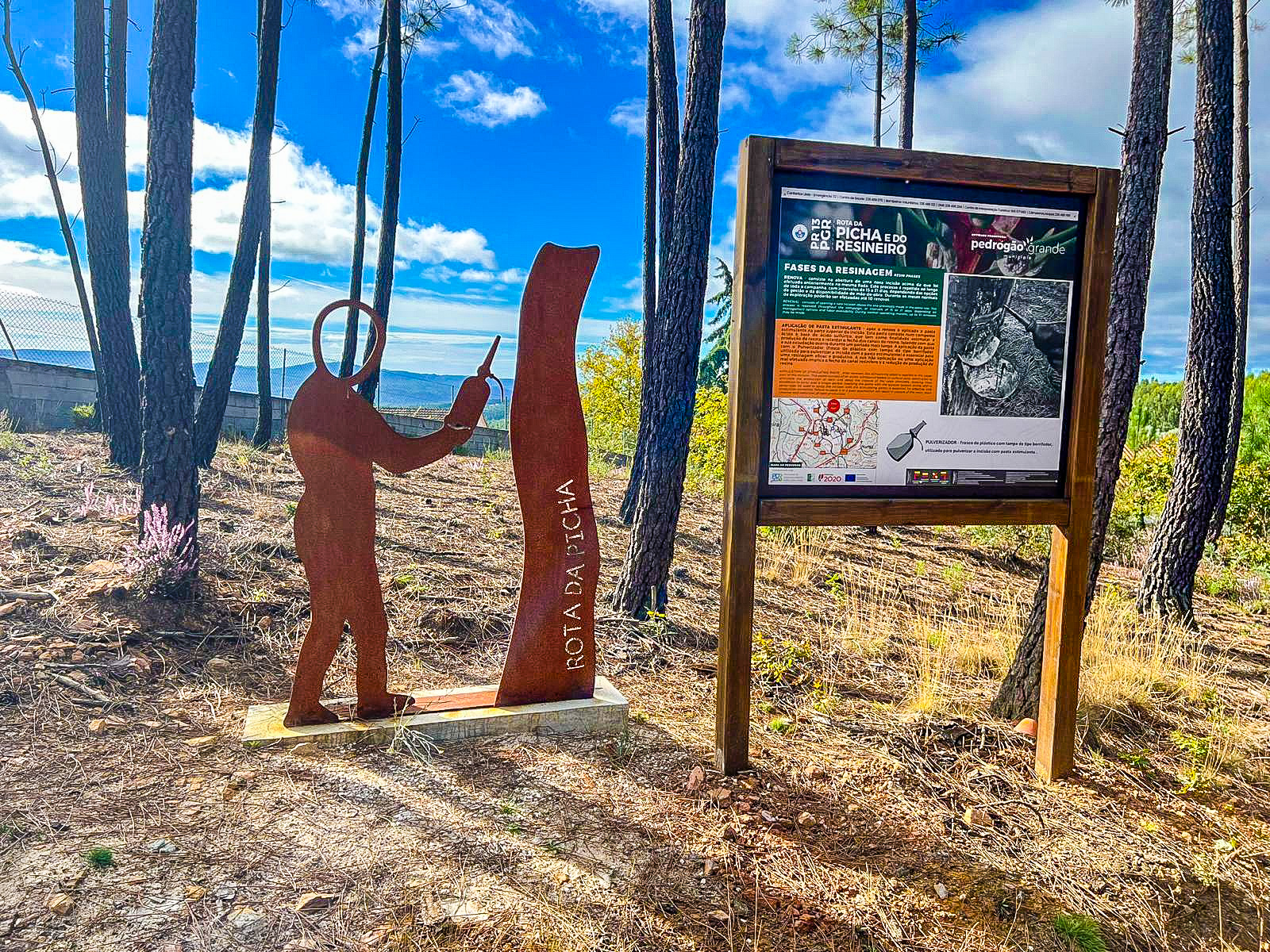
"Rota da Picha e do Resineiro"
The Picha and Resin Tapper Route: Connecting Nature, Culture and Community
The Picha and Resin Tapper Route is a 3 km circular trail where the local community preserves living resin-tapping heritage. Visitors reconnect with nature, experience the forest’s beauty, and explore an immersive ‘landscape museum’ of interactive cultural stations, engaging in inclusive, educational, and sustainable practices that promote local identity, rural development, and the UN Sustainable Development Goals.
Portugal
Aldeia da Picha, in the parish and municipality of Pedrógão Grande, Leiria district, located at km 310 along National Road 2 (39.975301, -8.150544)
Early initiative
Yes
Yes
Yes
Yes
PDR2020 – MEASURE 10 LEADER OPERATION 10.2.1.6 VILLAGE RENOVATION
No
101302: Pedrógão Grande (PT)
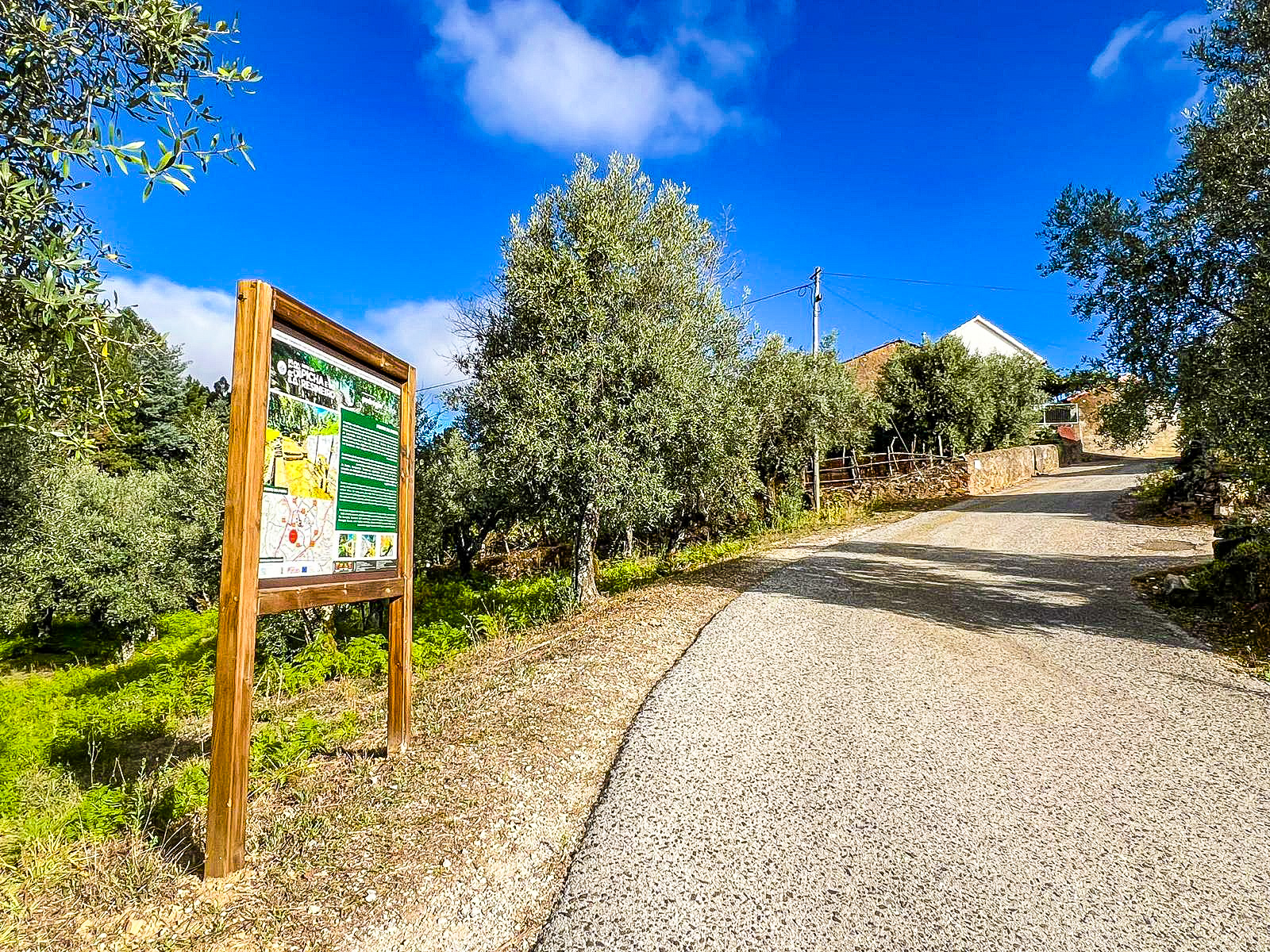
The Picha and Resin Tapper Route is a 3 km circular trail in the village of Picha, Pedrógão Grande, designed to honor the legacy of resin tappers and highlight the region’s natural, cultural, and historical heritage. With easy terrain and a two-hour duration, the trail provides an inclusive, immersive experience where visitors reconnect with nature, explore the forest’s beauty, and engage with living cultural practices.
The initiative actively involves the local community in all stages, ensuring residents participate in designing and managing activities. Through interactive interpretive stations, visitors learn about the resin-tapping process, forest biodiversity, and sustainable practices, creating an open-air “landscape museum” that combines aesthetic, educational, and sensory experiences.
The trail targets families, elderly visitors, local residents, and tourists interested in cultural heritage and sustainable rural experiences. Its objectives include preserving and revitalizing the living heritage of resin tapping, promoting environmental awareness, fostering inclusive community participation, enhancing local identity, encouraging small-scale sustainable tourism, and supporting local entrepreneurship through workshops using native forest plants to create hydrosols, soaps, and other sustainable products.
Expected outcomes include strengthened community engagement, increased public understanding of the historical and ecological importance of resin tapping, enhanced visitor experiences through aesthetic and interactive learning, promotion of sustainable tourism, and contribution to local economic regeneration. By combining nature, culture, and participatory practices, the route demonstrates sustainable management of cultural and natural resources while contributing to the UN Sustainable Development Goals, particularly sustainable communities, responsible consumption, and life on land.
Sustainability
Environmental education
Sensory experience
Living heritage
Social inclusion
The Picha and Resin Tapper Route exemplifies the three core values of the New European Bauhaus:
Sustainability: The trail promotes sustainable rural tourism, forest conservation, and the preservation of living resin-tapping heritage. Visitors learn responsible interactions with natural resources, while the local community benefits from small-scale, environmentally friendly initiatives and entrepreneurship workshops using native forest plants.
Aesthetics: The route offers an immersive “landscape museum” experience, combining the beauty of pine forests, traditional resin-tapping practices, and interactive interpretive stations. Visitors engage in sensory, educational, and cultural experiences, reconnecting with the forest and the region’s natural and historical heritage.
Inclusion: The initiative actively involves the local community in all stages, ensuring residents contribute to design, management, and interpretation. The trail is accessible to people of all ages and abilities, fostering social cohesion, knowledge transfer, and meaningful participation in cultural and environmental activities.
By combining sustainable practices, aesthetic experiences, and inclusive participation, the Picha and Resin Tapper Route demonstrates an exemplary approach aligned with the NEB vision, connecting people, culture, and nature while promoting local identity, rural development, and educational, environmental, and cultural impact.
The Picha and Resin Tapper Route aims to create an immersive and high-quality visitor experience that integrates nature, culture, and heritage. Its design emphasizes aesthetic and sensory engagement, transforming a 3 km circular trail into an open-air “landscape museum.” Visitors are invited to experience the beauty of pine forests, traditional resin-tapping practices, and local biodiversity through carefully designed interpretive stations.
Cultural benefits are embedded in every element of the trail. The interpretive panels and interactive stations allow visitors to learn about the history and techniques of resin tapping, connecting them directly with living heritage and the local community. This design ensures that the trail is not only visually and sensorially engaging but also educational, participatory, and memorable, offering a holistic understanding of the region’s cultural and natural assets.
The initiative prioritizes accessibility and inclusivity, allowing people of all ages and abilities to enjoy the aesthetic and educational experiences. By involving the local community in the design, interpretation, and management of the route, the trail fosters a shared sense of place, pride, and cultural ownership, enhancing the quality of the visitor experience.
The Picha and Resin Tapper Route is exemplary in this context because it demonstrates how thoughtful design can combine aesthetic appeal, cultural engagement, and interactive learning to create a transformative experience. It showcases how heritage, landscape, and community participation can be harmoniously integrated to inspire visitors and foster lasting connections between people, culture, and nature.
The Picha and Resin Tapper Route aims to foster social inclusion by ensuring that nature, culture, and heritage are accessible and meaningful for everyone. The initiative follows “design for all” principles, creating a 3 km circular trail with easy terrain and a manageable duration that allows people of different ages, physical abilities, and backgrounds to enjoy the experience. Interpretive stations are designed to be clear, engaging, and educational, enabling visitors with diverse levels of knowledge to connect with the living heritage of resin tapping and the surrounding forest landscape. Accessibility and affordability are central to the project. The trail is open and freely accessible, allowing residents, schools, families, and visitors to experience the cultural and environmental values of the area without economic barriers. Educational visits, community workshops, and guided activities further strengthen inclusion by encouraging participation from children, young people, and older generations. Inclusive governance is another key objective. The initiative actively involves the local community in its development, interpretation, and management. Former resin tappers, residents, and local associations contribute knowledge, stories, and cultural practices, ensuring that local voices shape the experience and that heritage is preserved through intergenerational knowledge transfer. The Picha and Resin Tapper Route is exemplary because it demonstrates how a small rural initiative can create an inclusive cultural landscape where accessibility, community participation, and living heritage come together. By empowering local people and welcoming diverse audiences, the project promotes social cohesion, shared identity, and sustainable rural development.
The Picha and Resin Tapperworking principles of the New European Bauhaus—participation, multi-level engagement, and transdisciplinary collaboration—by placing citizens and civil society at the center of the initiative. From its conception to its ongoing development, the project actively involves local residents, former resin tappers, community associations, and visitors in shaping the experience and interpreting the cultural landscape. Their knowledge, memories, and practices contribute to the preservation and transmission of the living heritage of resin tapping, ensuring that the route reflects the authentic identity of the territory. The Associação de Melhoramentos da Picha plays a key role in mobilizing the community, organizing activities connected to the route and promoting cultural, educational, and environmental initiatives that strengthen community engagement. These actions encourage collective ownership of the project and foster strong local participation in its management and evolution. Community workshops and creative ateliers are regularly organized to explore the potential of forest resources and resin-related traditions. Participants develop artisanal products such as soaps, perfumes, and other nature-inspired goods, promoting skills development, knowledge exchange, and local entrepreneurship. These activities stimulate the local economy while reinforcing the cultural connection between people and the forest. Through this participatory and community-driven approach, citizens are not only beneficiaries but active co-creators of the initiative. Their involvement strengthens social cohesion, revitalizes traditional knowledge, and supports sustainable rural development. By integrating heritage, creativity, and local economic opportunities, the Picha and Resin Tapper Route illustrates how citizen-led initiatives can generate lasting cultural, social, and economic impact while embodying the collaborative and transformative vision of the New European Bauhaus.
The Picha and Resin Tapper Route has been developed through a collaborative and multi-level governance approach, involving stakeholders at local, regional, and national levels in both the design and implementation of the initiative.
At the local level, the Associação de Melhoramentos da Picha and the Municipality of Pedrógão Grande play central roles in mobilizing the community, organizing activities linked to the route, and promoting cultural, educational, and environmental initiatives. These local actors act as a bridge between residents, visitors, and institutional partners, ensuring that the project reflects local identity and responds to community needs.
At the regional level, the Comissão de Coordenação e Desenvolvimento Regional do Centro (CCDR Centro) contributes by supporting regional development strategies aligned with sustainable tourism, cultural heritage valorization, and rural innovation. The GAL Pinhais do Zêzere has also been an important partner, facilitating local development through the LEADER approach and supporting initiatives that strengthen the rural economy, community participation, and place-based innovation.
At the national level, the Instituto de Financiamento da Agricultura e Pescas (IFAP, I.P.) plays a key role by managing and implementing financial instruments that support rural development and investment in initiatives that enhance the value of forest landscapes and traditional practices.
The engagement of these different stakeholders creates significant added value by combining local knowledge with institutional support and development policies. This multi-level collaboration strengthens the initiative’s capacity to preserve living heritage, promote sustainable rural tourism, stimulate local entrepreneurship linked to forest resources, and generate long-term social, cultural, and economic benefits for the territory.
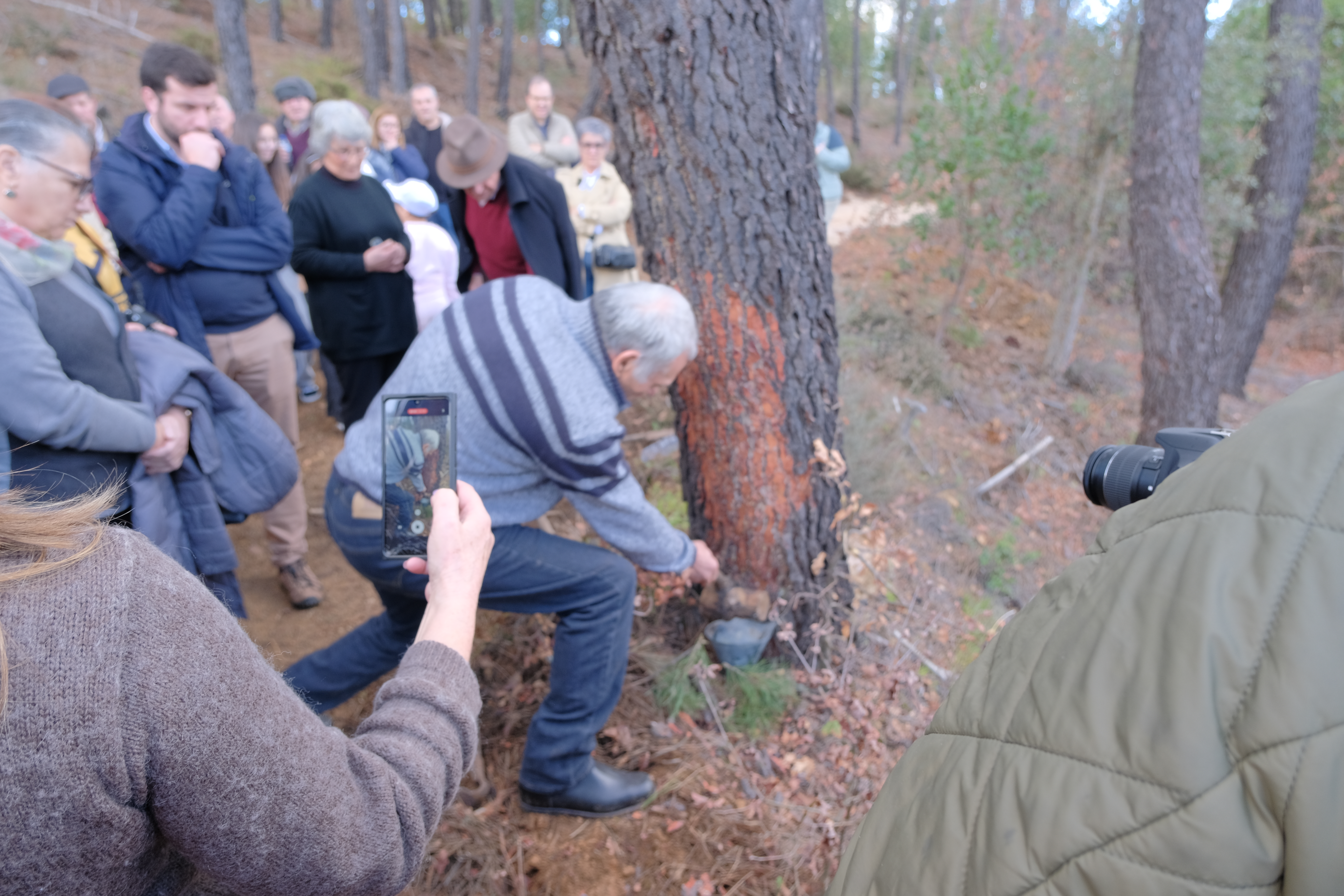
The design of the Picha and Resin Tapper Route reflects an interdisciplinary approach that combines local knowledge, environmental conservation, rural economy, and nature-based tourism. A central component of the initiative is the experiential knowledge and life stories of residents from the villages of Picha and Venda da Gaita, particularly former resin tappers whose testimonies preserve the traditional “know-how” of resin tapping and the cultural identity associated with forest work. Knowledge related to nature conservation and biodiversity also plays a key role in the initiative. The route highlights the ecological value of native forests and promotes environmental awareness, encouraging visitors to understand the importance of forest stewardship, sustainable resource use, and the role of traditional practices in maintaining resilient landscapes.
The project also integrates perspectives from local economic development and sustainable tourism. By promoting forest-based products, community activities, and local entrepreneurship, the initiative strengthens the rural economy while creating authentic nature tourism experiences connected to the territory.
Representatives from these different fields interact through community engagement activities, interpretive design of the trail, workshops, and local initiatives promoted by community organizations and the Municipality of Pedrógão Grande. Former resin tappers share their knowledge and stories, environmental perspectives inform the interpretation of the forest landscape, and local stakeholders contribute to initiatives that connect heritage with economic opportunities.The added value of this interdisciplinary collaboration lies in creating a holistic and authentic experience that integrates culture, nature, and community participation. It ensures that the route preserves living heritage while promoting environmental awareness, strengthening local identity, and supporting sustainable rural development
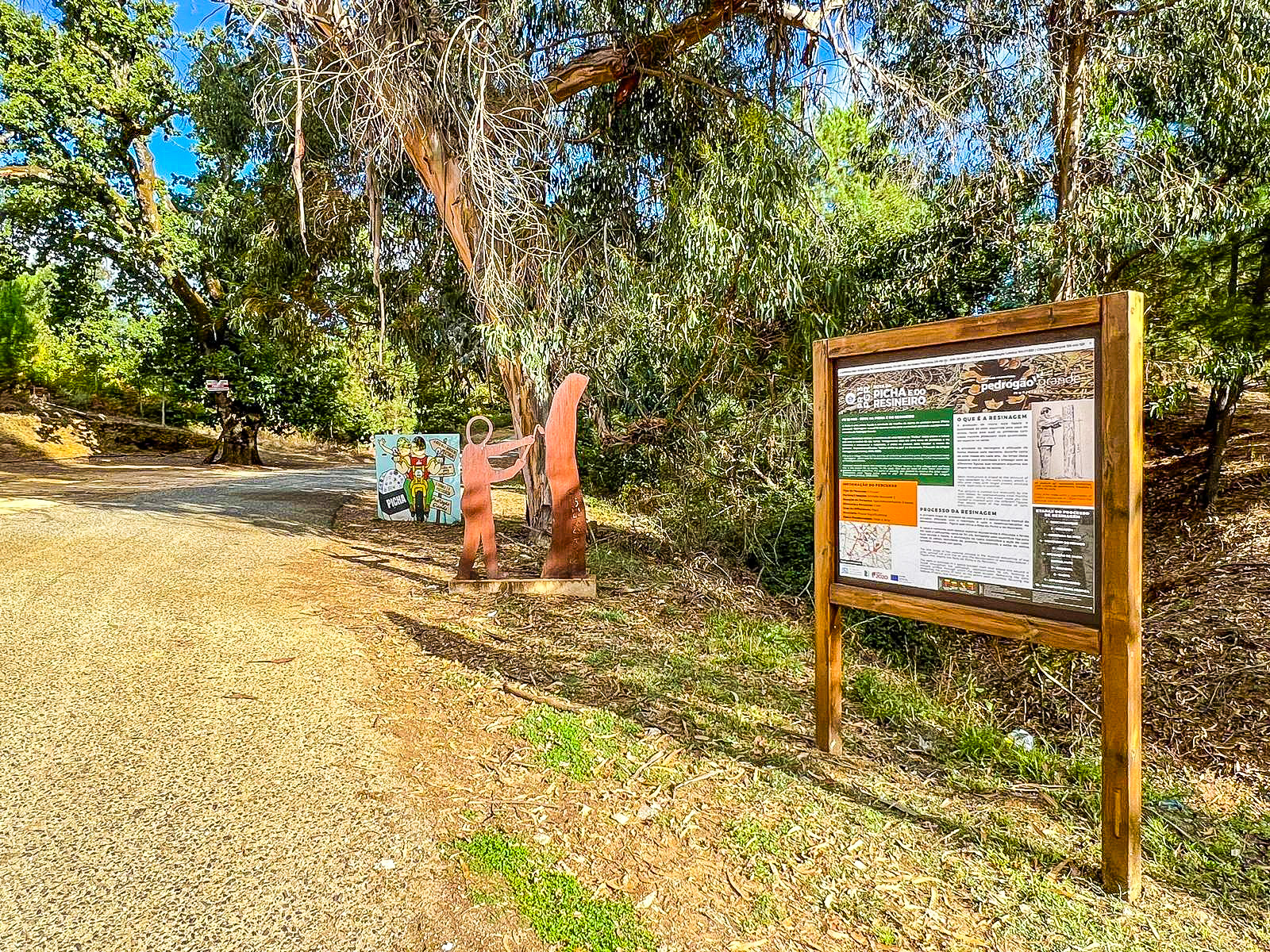
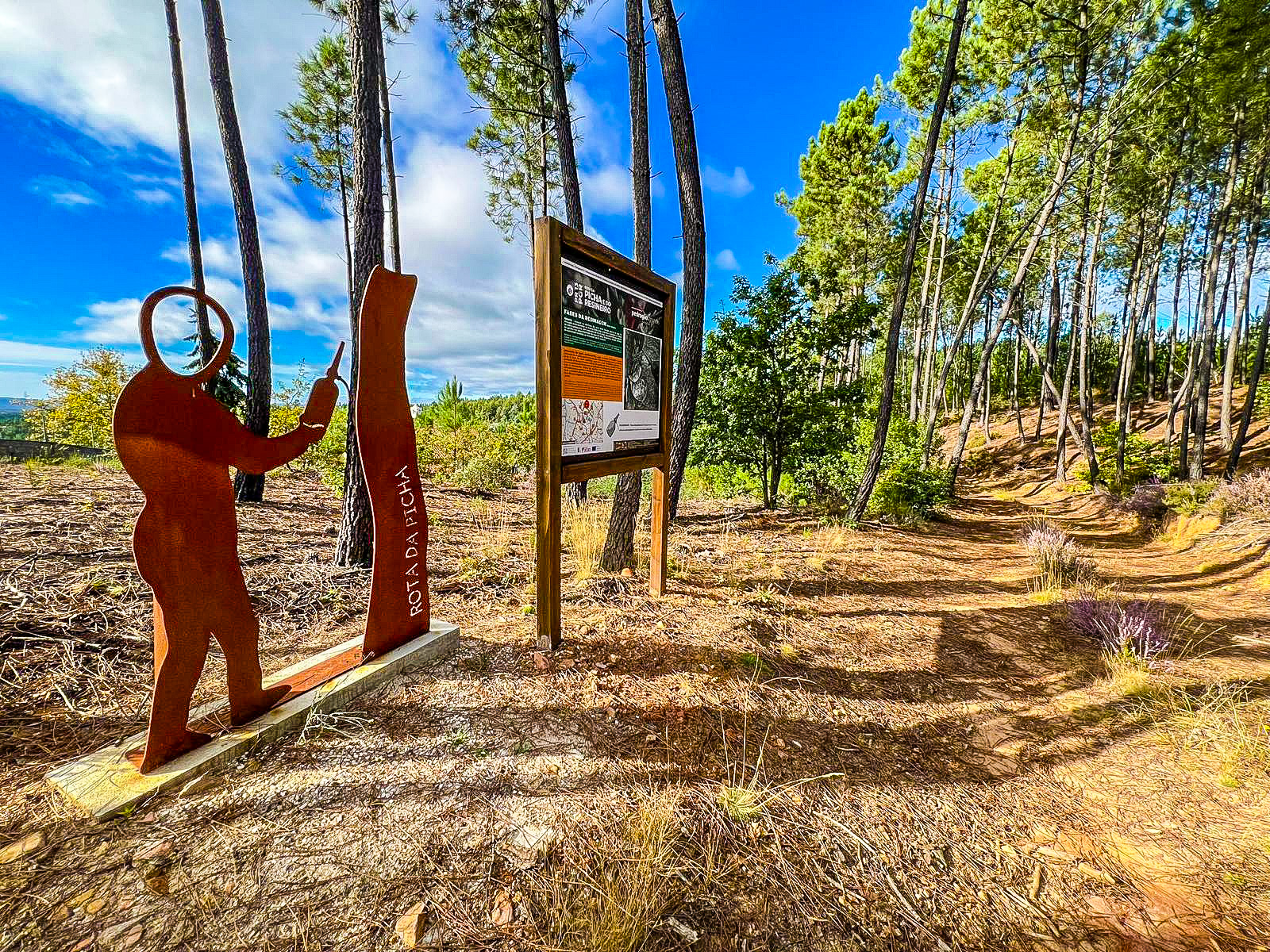
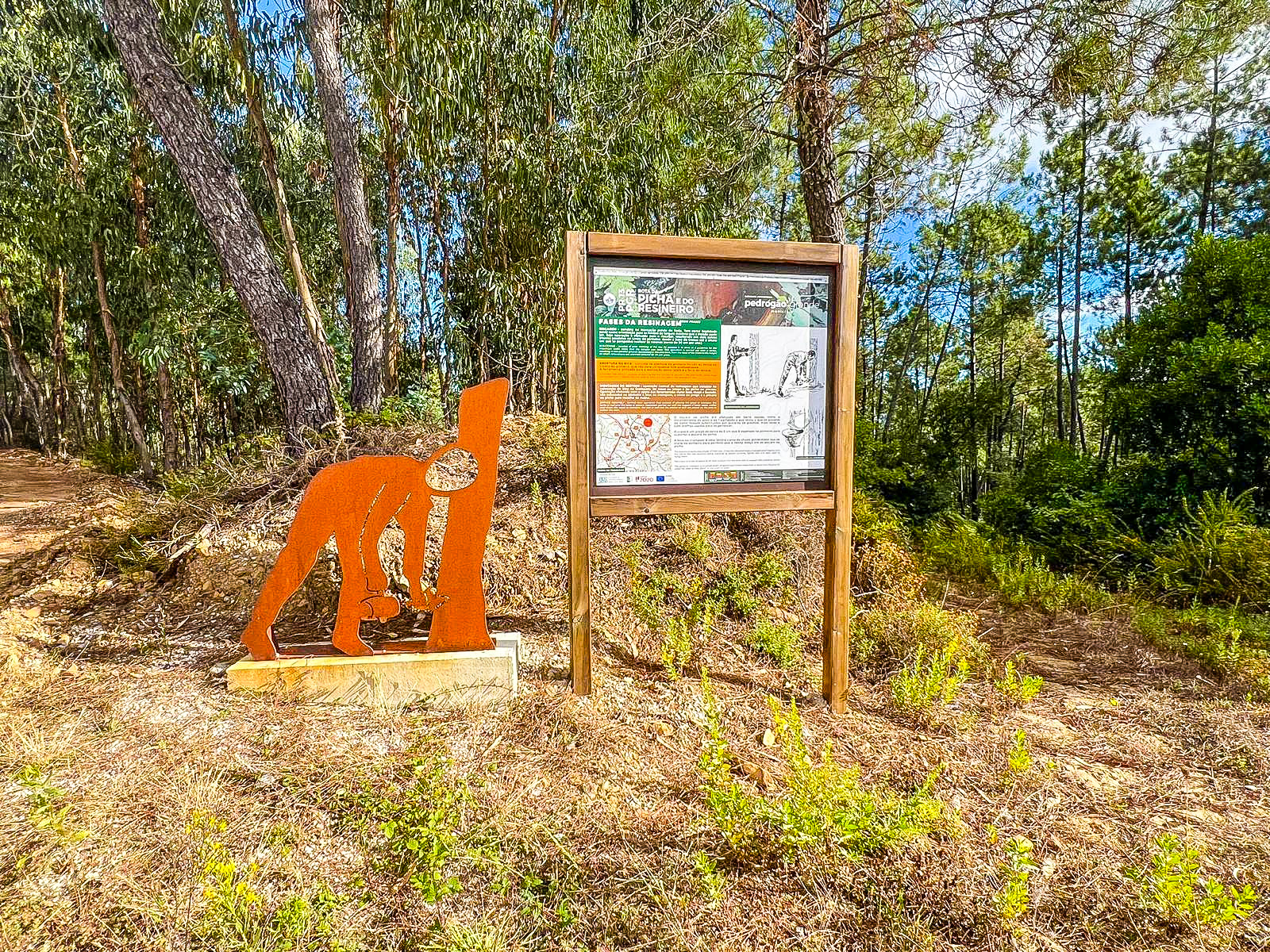
The Picha and Resin Tapper Route presents an innovative approach when compared to mainstream rural tourism or heritage interpretation initiatives. Rather than offering a traditional walking trail based mainly on observation and information panels, the route creates an immersive and participatory experience that allows visitors to symbolically become a “resin tapper for a day.” Through interpretive frames and figurines placed at different stations along the trail, visitors can follow and understand each stage of the resin tapping process, engaging creatively with the story of this traditional forest activity.
This approach transforms the forest landscape into an open-air “landscape museum,” where cultural heritage, natural environment, and community memory are interpreted directly in the place where the activity historically took place. The initiative also integrates testimonies and knowledge from former resin tappers and local residents, preserving and transmitting traditional know-how while strengthening local identity.
Another innovative aspect is the connection established between cultural heritage, forest stewardship, and sustainable rural development. By highlighting the historical role of resin tapping in maintaining and managing pine forests, the route raises awareness of the importance of active forest management, biodiversity, and wildfire prevention.
In addition, the initiative promotes local creativity and entrepreneurship through workshops and activities linked to forest resources, such as the production of soaps, perfumes, and other nature-based products. This combination of experiential interpretation, community participation, environmental awareness, and local economic opportunities makes the Picha and Resin Tapper Route a distinctive and replicable model for sustainable rural innovation.
The methodology of the Picha and Resin Tapper Route is based on a participatory, place-based and co-creation approach, ensuring that the initiative reflects the knowledge, identity, and aspirations of the local community.
From the early stages of the project, the Municipality of Pedrógão Grande presented the concept of the route to the residents of the village of Picha and to the local community association. This participatory process allowed residents to share their experiences, ideas, and knowledge, particularly the memories and traditional know-how of former resin tappers, contributing to the design and interpretation of the route.
As part of the implementation process, several pilot activities were developed with the support of the Municipality and European funding to mobilize the community and explore the potential of local natural resources. These included workshops on aromatic and medicinal plants and creative ateliers focused on the production of soaps and perfumes using resources from the native forest, such as laurel hydrolate, rosemary, and lavender.
In addition, the Mercadinho da Picha was created as a local initiative to promote and sell products based on forest resources and local creativity, encouraging entrepreneurship and strengthening the local economy.
This methodology combines community engagement, intergenerational knowledge transfer, experiential learning, and sustainable rural development. By connecting living heritage, environmental awareness, and local economic opportunities, the initiative promotes strong community ownership and creates a resilient and replicable model of nature-based rural innovation.
The Picha and Resin Tapper Route demonstrates high potential for transferability and replicability by offering a community-driven, place-based model that integrates culture, nature, and local economy. Its methodology can inspire other rural territories seeking to preserve living heritage while fostering sustainable development.
Key transferable elements include the interpretation of landscapes as open-air “living museums”, where natural heritage, cultural memory, and traditional knowledge are made tangible through interactive installations, storytelling, and symbolic representations of traditional practices. This approach can be adapted to other regions with unique local crafts, forestry, agricultural, or artisanal traditions, enabling communities to creatively reinterpret and valorize their own heritage.
The project’s participatory design and co-creation process is another replicable feature. Engaging local residents, former practitioners, and community organizations in the design, interpretation, and management of the route ensures authenticity, strengthens social cohesion, and fosters a sense of ownership—principles that are widely applicable across diverse contexts.
The initiative also provides a model for integrating heritage interpretation with local economic empowerment. Creative workshops, nature-based product development, and small community markets like the “Mercadinho da Picha” illustrate how heritage-led entrepreneurship can support sustainable rural economies.
Finally, the route exemplifies a holistic, multisensory approach to sustainable tourism, combining environmental education, biodiversity awareness, and cultural engagement. Its low-cost, adaptable, and community-centered structure makes it a scalable solution that can be transferred to other rural areas, offering both social, cultural, and environmental value while reflecting the transformative vision of the New European Bauhaus.
The Picha and Resin Tapper Route demonstrates a strong commitment to implementing the initiative in practice through a series of ongoing and planned activities that fully incorporate the New European Bauhaus (NEB) values and working principles.
To date, the project has engaged the local community, schools, and professional education institutions in the co-design of the route, ensuring participatory governance and social inclusion. Pilot activities, supported by the Municipality of Pedrógão Grande and European funding, include environmental education programs, workshops on aromatic and medicinal plants, production of forest-based soaps and perfumes, and the Mercadinho da Picha, which foster local entrepreneurship and creative engagement with forest resources. Interpretive stations and figurines along the trail bring the heritage of resin tapping to life, combining sensory, educational, and aesthetic experiences.
For the next phase, the key steps include:
Expanding community and school workshops, deepening environmental education, knowledge transfer, creative expression, and local entrepreneurship.
Strengthening conservation actions, linking heritage interpretation with biodiversity awareness, forest stewardship, and sustainable practices.
Promoting the route as a nature-based tourism experience, integrating local heritage, aesthetics, and sustainability to attract visitors while preserving local identity.
Through this methodology, the initiative exemplifies NEB principles: it combines sustainability, aesthetics, and inclusion, fosters co-creation with citizens and schools, and integrates cultural, social, and environmental objectives in a practical and replicable framework. The project demonstrates a clear pathway from design to implementation, ensuring long-term community ownership, cultural preservation, and sustainable rural development.