Arts, Culture, and Heritage as Drivers of Change
Museum of Change (MOC)
Museum of Change: AI-driven agora in public space
The Museum of Change transforms a UNESCO World Heritage site in Vienna into an AI-driven, open public space – an “agora of the future.” Combining heritage, art and artificial intelligence, it creates a living cultural system shaped in real time by people and environment. Free and accessible to all, the project has engaged over 100,000 visitors within its first 100 days.
Austria
Local
Vienna
Mainly urban
It involves other types of transformations (soft investment)
Yes
2025-10-01
No
No
No
Organisation
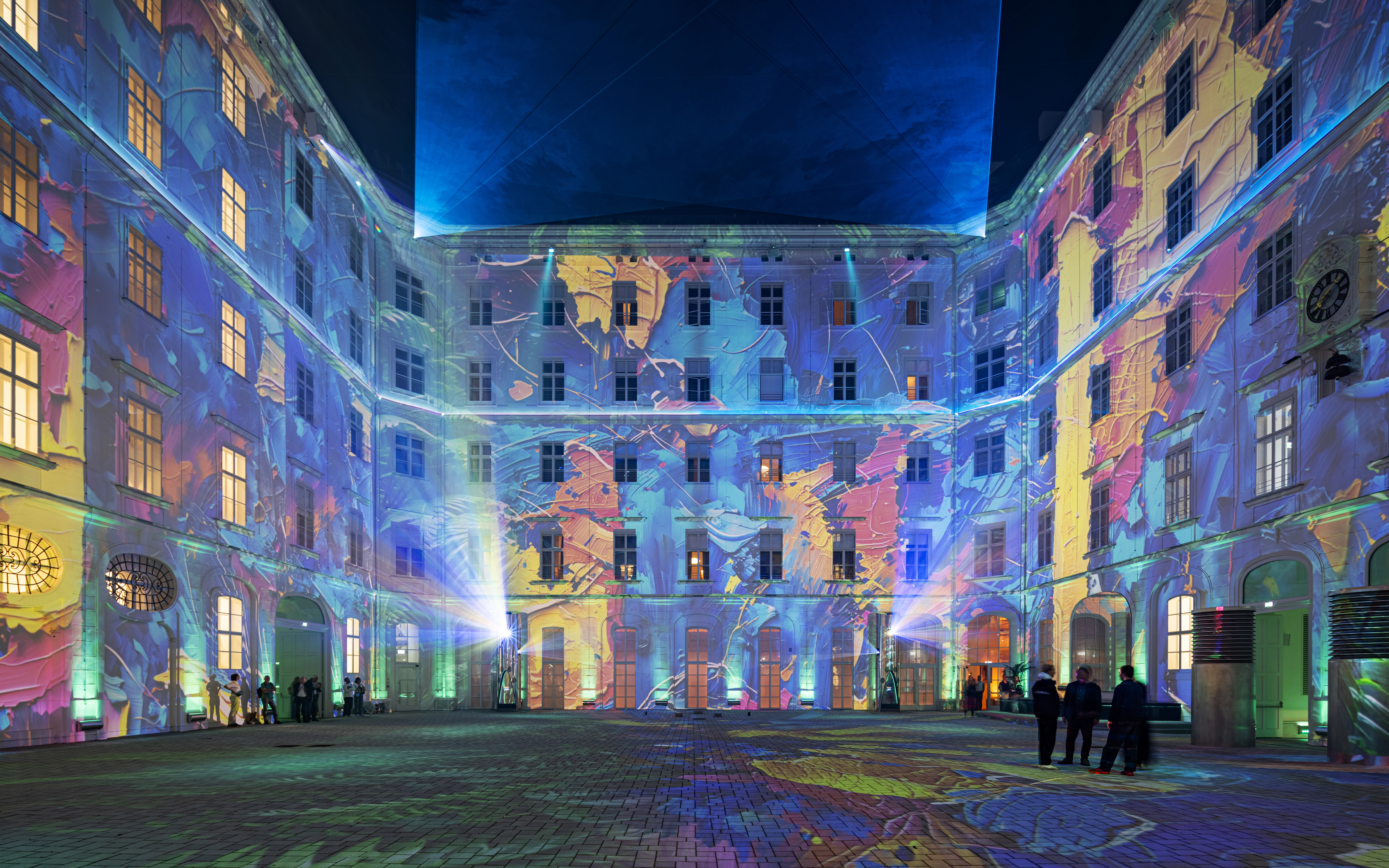
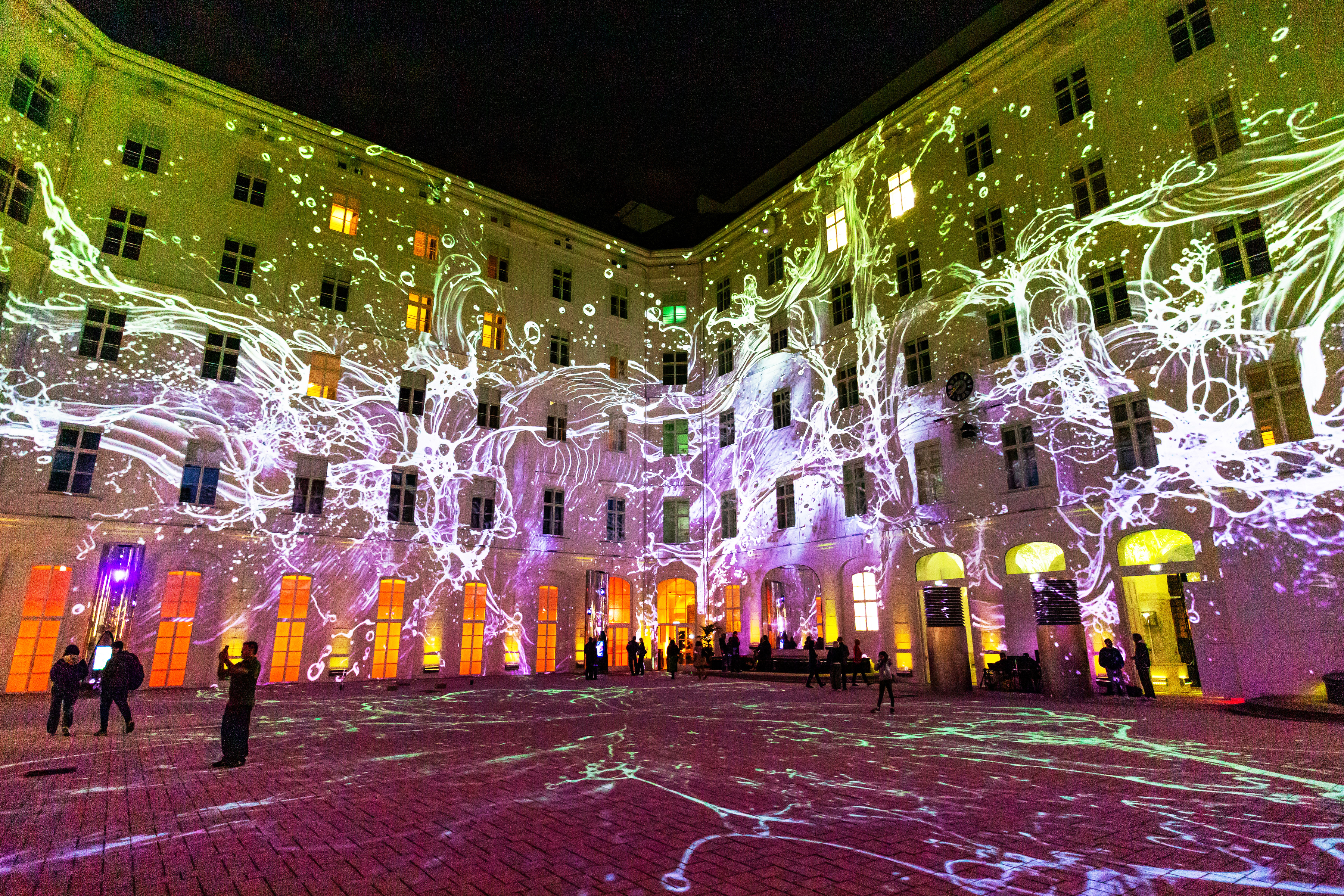
The Museum of Change (MOC) is a new type of cultural infrastructure that explores how societies transform over time. Located in the historic centre of Vienna, within a UNESCO World Heritage site, the project transforms a courtyard that had been closed to the public for nearly 200 years into an open and accessible cultural space.
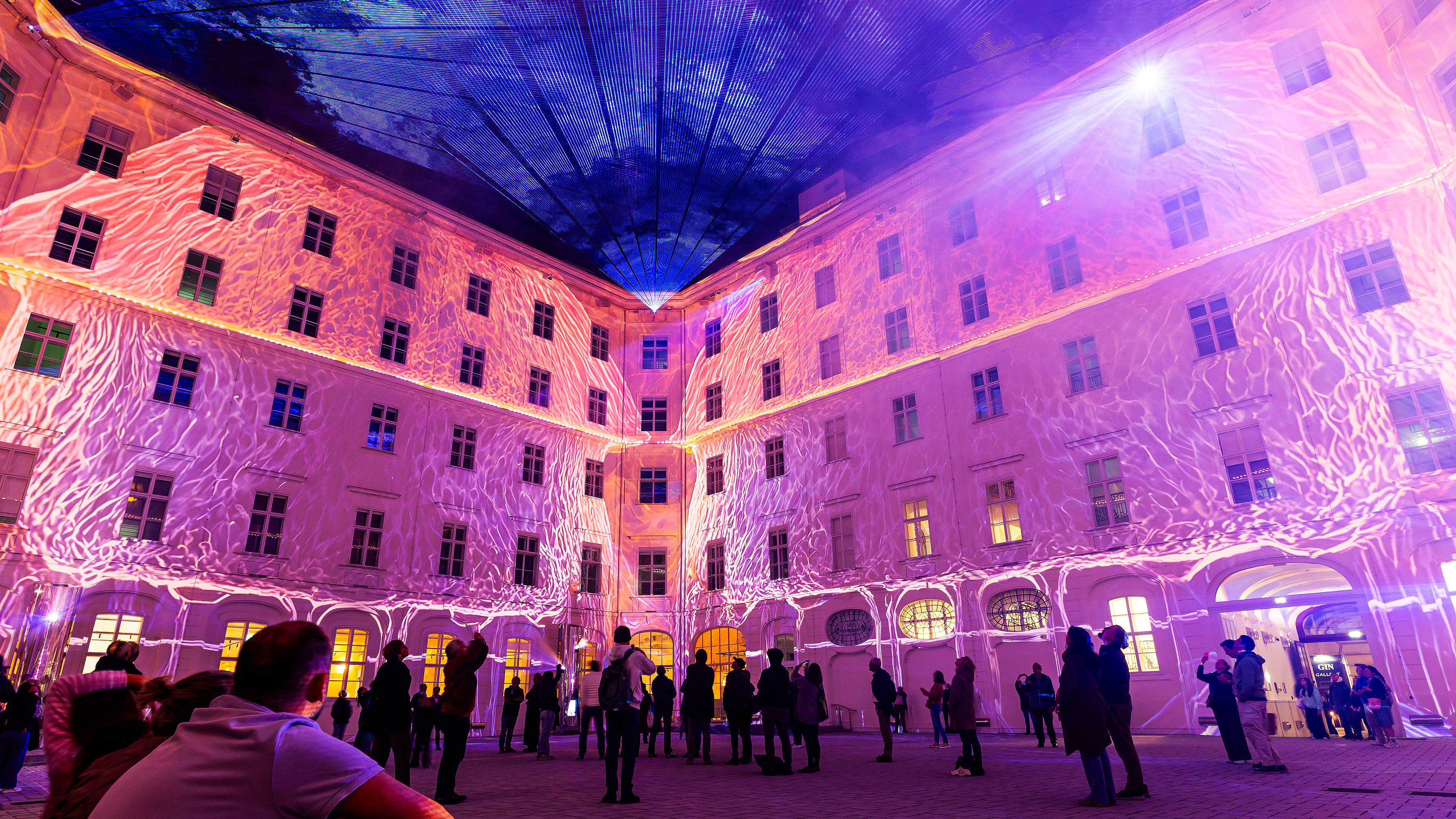
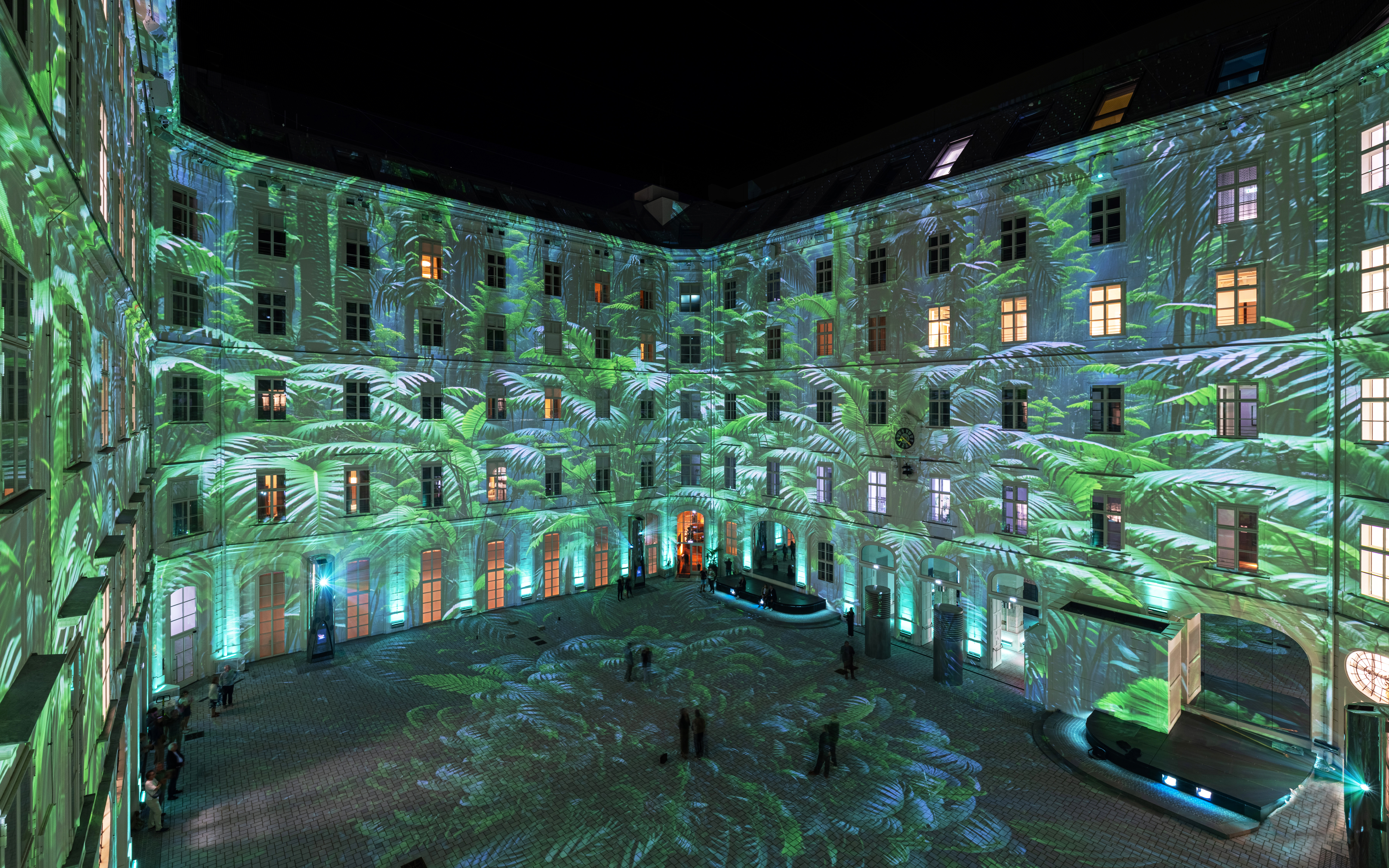
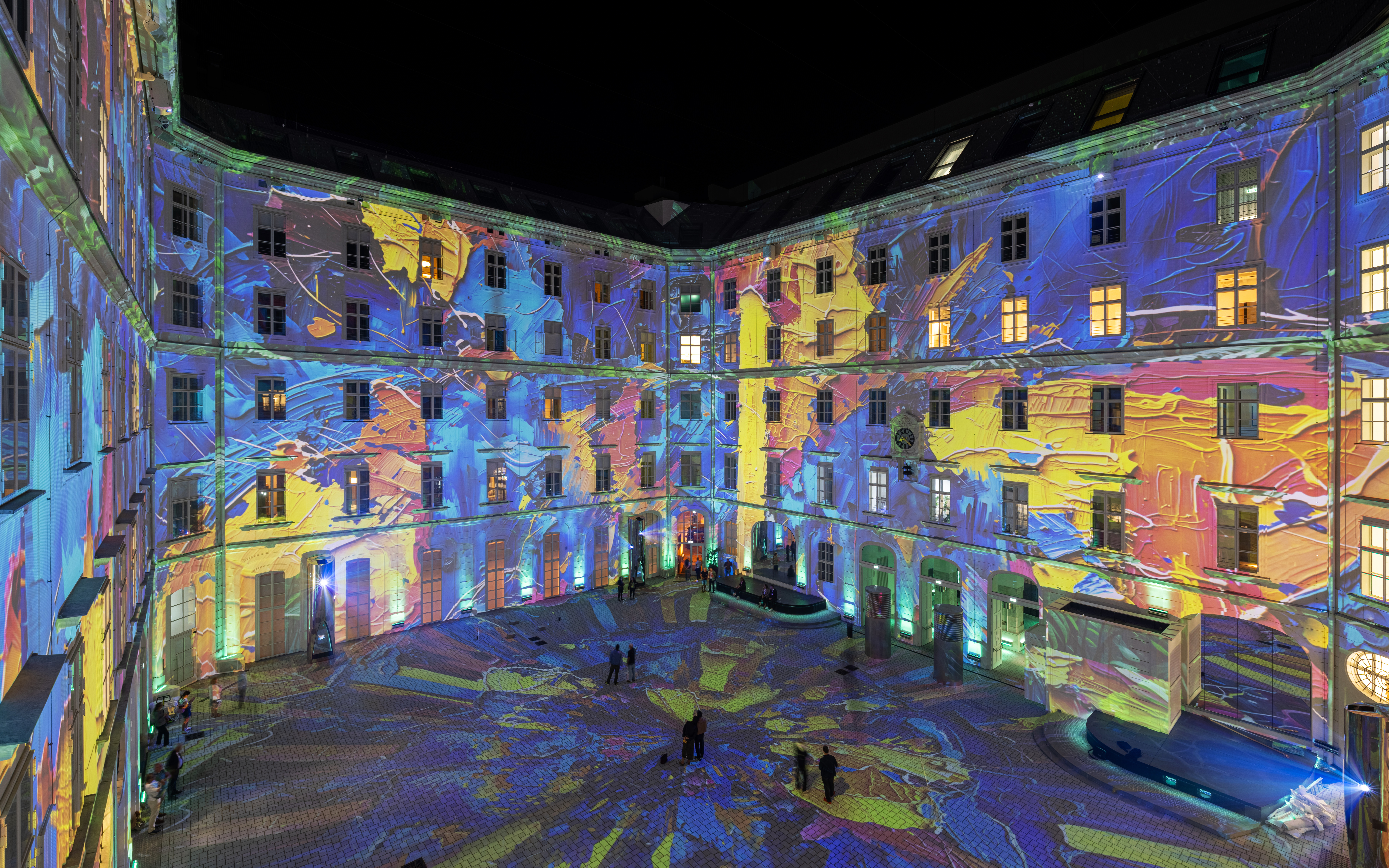
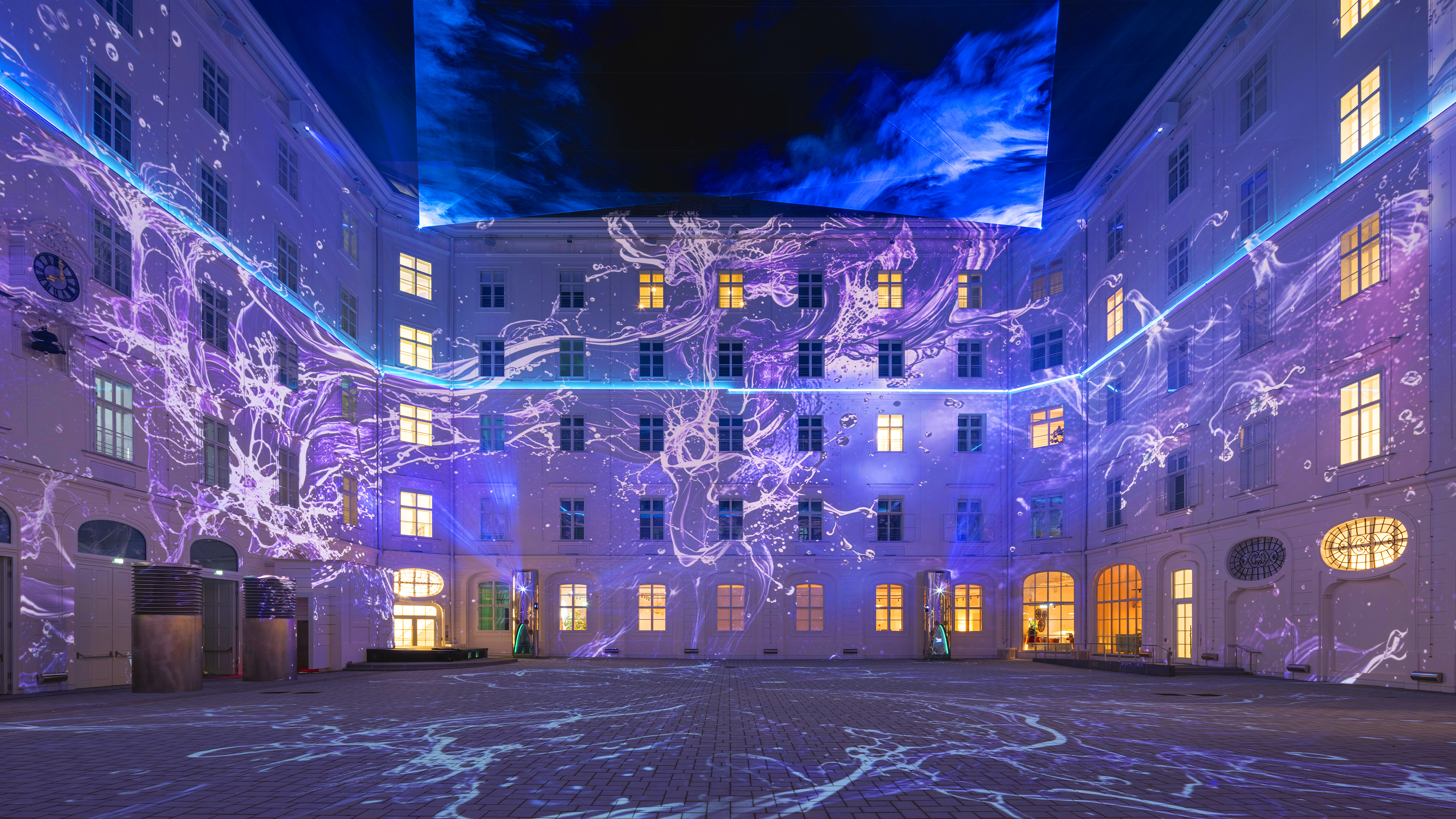
At its core is a large-scale immersive media art installation that turns over 5,000 m² of heritage architecture into a living artistic medium. Through projections, spatial sound and dynamic light, the space becomes a continuously evolving environment. A generative AI-based system – conceived as a curated digital organism – creates audiovisual compositions in real time, responding to visitors, environmental data and architecture.
This transformation has had a measurable urban impact: new pathways through the city have emerged, the historical site now attracts diverse audiences – especially younger generations – and the overall quality of stay in the historic centre has increased through new cultural and social dynamics.
Within its first 100 days, the project has engaged over 100,000 visitors, demonstrating strong public resonance and societal relevance.
The project is the result of a seven-year development process, including artistic interventions, public events and collaborations such as the Ars Electronica Festival and the Vienna Art Fair.
In the long term, the MOC proposes a scalable model for reactivating heritage sites as living cultural platforms – connecting past, present and future through shared experience and collective imagination.
The Museum of Change began with a central question: what role can public space still play for us as social and sensory beings in an age where more and more of human life shifts into digital environments?
Instead of building new infrastructure, the project builds upon an existing historic structure – the former Imperial Post Office in Vienna – which had remained closed for decades. The goal was to open this hidden space and transform it into a living cultural environment.
Through the concept of mediarchitecture, the historic façade becomes part of a responsive system. Light, sound, architecture and real-time data merge into an evolving artwork that reflects environmental conditions, cultural cycles and human presence.
The project was developed by artist and perception researcher SHA. over a period of seven years, combining artistic research with technological innovation. During this time, the site hosted experimental formats, public events and cultural collaborations, gradually evolving into a permanent cultural space.
Today, the MOC operates as an AI-assisted public square – an agora of the future – where heritage and technology, individual experience and collective presence converge in a continuously transforming environment.
Public Space Transformation
Cultural Heritage & Innovation
AI and Art
Social Inclusion
Urban Regeneration
The Museum of Change contributes to sustainability by rethinking how cultural spaces emerge from existing urban structures. Instead of constructing new buildings, the project activates a historic courtyard within a UNESCO World Heritage site, demonstrating a resource-efficient approach based on adaptive reuse.
The project introduces the concept of “archaeological recycling”: historical artifacts and cultural traces are digitised and reinterpreted within a living AI system. This creates a circular relationship between past and present, where heritage becomes an active resource for contemporary cultural production.
Environmental sustainability is further reflected in the immaterial nature of the installation. The artistic experience is generated primarily through light, sound and digital media rather than permanent physical structures, reducing material consumption.
Social sustainability is at the core of the project. By opening a space that had been inaccessible for over 200 years, the MOC creates a new public meeting place that strengthens urban life, encourages reflection and supports mental well-being in an increasingly accelerated society.
Culturally, the project strengthens the dialogue between heritage and contemporary creativity. By combining historical architecture with AI-generated media art, it demonstrates how cultural memory and technological innovation can coexist and enrich one another.
The Museum of Change can serve as an exemplary model for sustainable cultural development: instead of preserving heritage as static memory, it activates historic spaces as living cultural platforms that continuously evolve while remaining rooted in their historical context.
The Museum of Change enhances everyday urban life by transforming a historic courtyard into an immersive aesthetic environment. Through light, sound and AI-generated media art, the architecture becomes a dynamic canvas that evolves continuously.
The project reinterprets the oldest forms of human expression – cave painting – as “digital cave painting,” connecting cultural origins with contemporary technologies.
This approach allows people to experience heritage in a new way: not as something distant or preserved behind glass, but as a living part of the city’s cultural life. The project invites passers-by, residents and visitors to pause, reflect and share a moment of aesthetic experience in the middle of the city.
A sense of belonging is created by opening a hidden architectural space to the public and transforming it into a shared cultural meeting point. By activating the courtyard as a place for collective experience, the project encourages people to reconnect with the historical layers of the city while participating in a contemporary artistic environment.
The aesthetic quality of the Museum of Change lies in the dialogue between past and future. The project demonstrates how beauty can emerge from the interaction between heritage, technology and collective imagination.
By integrating art into public space, the MOC strengthens a sense of belonging and demonstrates how aesthetic quality can contribute to social cohesion and meaningful urban environments.
As a result, the Museum of Change serves as an exemplary model of aesthetic urban transformation: a place where historical spaces become living cultural environments that inspire curiosity, reflection and care for the place.
The Museum of Change promotes inclusion by transforming a previously closed courtyard into an open cultural space accessible to everyone. Located in public space, the project does not require a traditional museum visit, lowering social and cultural barriers.
By opening hidden urban heritage and transforming it into a shared cultural platform, the project encourages collective ownership of the space. Citizens become active participants in the cultural life of the place rather than passive spectators.
The multisensory design – combining visual, auditory and spatial elements – allows different modes of perception and engagement. The experience does not require specialised knowledge or language, making it accessible across generations, cultures and educational backgrounds.
In addition, the MOC actively engages new audiences through guided mediation formats. Specific programs include visits for highly sensitive individuals and people on the autism spectrum, demonstrating how the installation can create meaningful experiences for diverse perceptual needs.
By combining open access, multisensory design and targeted outreach, the Museum of Change demonstrates how cultural institutions can become more inclusive, accessible and socially embedded in the urban fabric.
The MOC establishes an inclusive cultural model: Art For All.
The Museum of Change introduces a new form of participation in public space through real-time interaction between visitors, environment and a responsive AI system.
Visitors influence the evolving audiovisual environment through their presence and movement, creating a continuous co-creation process. Public space becomes interactive and shaped collectively in real time.
Participation is also embedded in the project’s development. Over a seven-year period, workshops, public events and community formats involved local residents and stakeholders. A dedicated association –“Friends of MOC” – supports long-term integration into urban life and fosters community engagement.
In addition, the courtyard is designed as a flexible cultural platform that will host performances, screenings, discussions and artistic events organised in collaboration with cultural initiatives and civil society actors. This allows the space to be activated by different communities and encourages a diversity of voices and perspectives.
Through these participatory structures, the Museum of Change strengthens the relationship between citizens and their urban environment. Instead of being passive spectators, people become contributors to a living cultural space that evolves through collective presence, dialogue and imagination.
This hybrid model combines technological interaction with civic participation, redefining participation in contemporary urban space.
The Museum of Change is realised through collaboration across multiple institutional and governance levels. The project is developed through collaboration between stakeholders at different levels, combining artistic initiative with urban development, cultural networks and broader European dialogue.
The MOC was developed in the context of the revitalisation of the historic “Alte Post” complex in Vienna and in close coordination with the Austrian Federal Monuments Authority (Bundesdenkmalamt, BDA). This collaboration enabled the integration of advanced media technologies and generative AI systems within a protected heritage environment, creating a dialogue between historical architecture and contemporary digital culture.
The Wien Museum acts as a key cultural partner, contributing archaeological artifacts discovered on site and supporting their curatorial integration into the project, enriching its historical narrative.
The project was funded by the Hasso Plattner Foundation, a non-profit org. that supports cultural and educational initiatives internationally. This support enabled the development of an innovative cultural infrastructure model without reliance on public funding.
At the city level, the project contributes to Vienna’s long tradition of supporting arts, culture and innovation in public space. By activating heritage architecture through contemporary media art and artificial intelligence, it aligns with broader urban strategies that aim to strengthen cultural life and the attractiveness of historic city centres. The project was implemented in close coordination with municipal stakeholders, including the City of Vienna’s Department for Urban Development and Planning and the District Authority of the Inner City, with whom the collaboration was particularly close.
This multi-level collaboration demonstrates how heritage preservation, governance, private cultural funding and innovation can be aligned to create new cultural infrastructures.
The Museum of Change is inherently transdisciplinary, bringing together artistic vision, architectural thinking, artificial intelligence, software development, sound design and spatial engineering into a unified cultural system.
The project was realised through close collaboration between artists, interaction designers, AI developers, software engineers, audio specialists, architects and technical experts. This collective expertise enabled the creation of a responsive environment in which generative AI, real-time interaction, spatial sound and heritage architecture are seamlessly integrated.
The resulting system combines custom AI workflows, real-time audiovisual processes and large-scale media infrastructure, transforming a historic site into a continuously evolving cultural experience.
Beyond artistic and technological fields, the project extends into urban, social and philosophical domains. Integrating a complex high-tech system into the everyday use of a public space required collaboration with experts in urban planning and spatial development, particularly in shaping visitor flows and embedding the site within the dynamics of the city.
In addition, the project engaged with sociological and philosophical perspectives, including exchange with researchers from the University of Vienna, to explore how such hybrid cultural spaces can be positioned within society and what role they may play in the future of public life.
Through this integration of disciplines, the Museum of Change demonstrates how cultural projects can function as laboratories for new forms of urban experience, bridging heritage, technology and society.
The Museum of Change follows a hybrid business model that combines free public access with diversified and sustainable revenue streams.
The core experience in public space is permanently free of charge, ensuring broad accessibility and strong societal reach. This is complemented by value-added digital services, most notably the AI Guide “SHAKI,” a web-based interactive system that provides access to an additional virtual layer of the exhibition. This paid feature has already proven to be a viable and scalable source of income.
All revenues are reinvested into the maintenance, operation and continuous development of the system.
An indoor extension of the Museum of Change is currently in development as a complementary format to the outdoor installation. This immersive environment will offer deeper engagement through curated thematic experiences, extended narrative layers and enhanced interaction. As a ticket-based format, it will create an additional and stable revenue stream.
In parallel, the project is preparing a European funding initiative to establish an artist-in-residence programme. This programme will invite artists from across Europe to work with the project’s AI-based artistic system and will be supported through EU cultural funding and partnerships.
Additional long-term revenue potential lies in the adaptation of the MOC system to other contexts, including licensing of its generative media technologies, consulting and site-specific installations.
The initial development of the project was supported by the Hasso Plattner Foundation, a non-profit foundation dedicated to cultural and educational innovation. This support enabled the creation of the project without reliance on public funding and laid the foundation for its independent operational model.
Together, these elements establish a resilient and scalable financial framework for long-term operation and development.
The Museum of Change is conceived as a prototype for the transformation of public space in the digital age and as a scalable cultural model adaptable across different cities, cultural institutions and heritage sites.
A key transferable component is the generative AI media system developed by SHA.ART. This “digital organism” continuously creates evolving audiovisual compositions and can be adapted to different architectural environments. It enables the transformation of existing buildings – such as historic sites, museums or public spaces – into immersive cultural environments without requiring major structural interventions.
Another scalable element is the AI Guide “SHAKI,” an interactive, web-based mediation tool that allows visitors to explore content through multilingual, conversational interfaces. Accessible via QR codes, it can be easily implemented in other institutions as a new form of digital cultural guidance.
The project also introduces a methodological approach for activating heritage architecture through immaterial media art. By using projections, sound and generative systems instead of permanent physical structures, cultural spaces can be revitalised with minimal material intervention – an approach particularly relevant for protected or underused sites across Europe.
In addition, the curatorial concept – connecting heritage, artificial intelligence and contemporary media art to explore societal transformation – can be adapted to different cultural contexts and themes.
Together, these elements form a transferable framework for rethinking public space as an AI-assisted cultural infrastructure – an “agora of the future” – that can be scaled across Europe and beyond.