Enhancing Circularity, Sustainability, and Innovation
Parque Verde para Todos
Parque Verde para Todos – A Climate-Resilient Neighbourhood Park
Born from a student’s idea and voted by the community, Parque Verde para Todos transformed a vacant urban lot into a 9,400 m² climate-adaptive park in Cascais. With 80% permeable surfaces, porous paths and community gardens linked to Terras de Cascais, it restores biodiversity, reduces flood risk and reconnects residents with nature — proving that democratic participation can grow regenerative public space.
Portugal
Local
Cascais
Mainly urban
It involves a physical transformation of the built environment (hard investment)
Yes
2025-06-14
No
No
No
Organisation
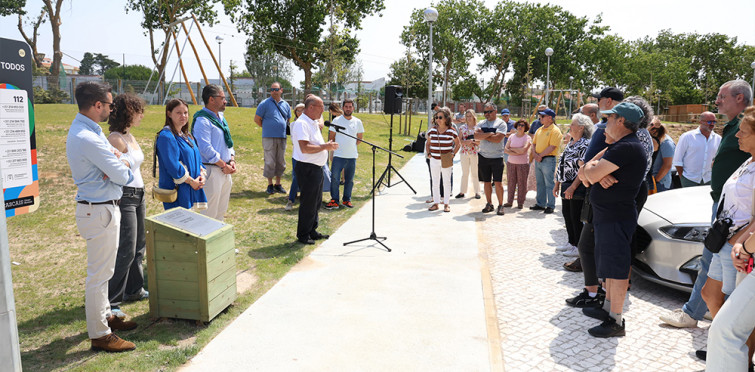
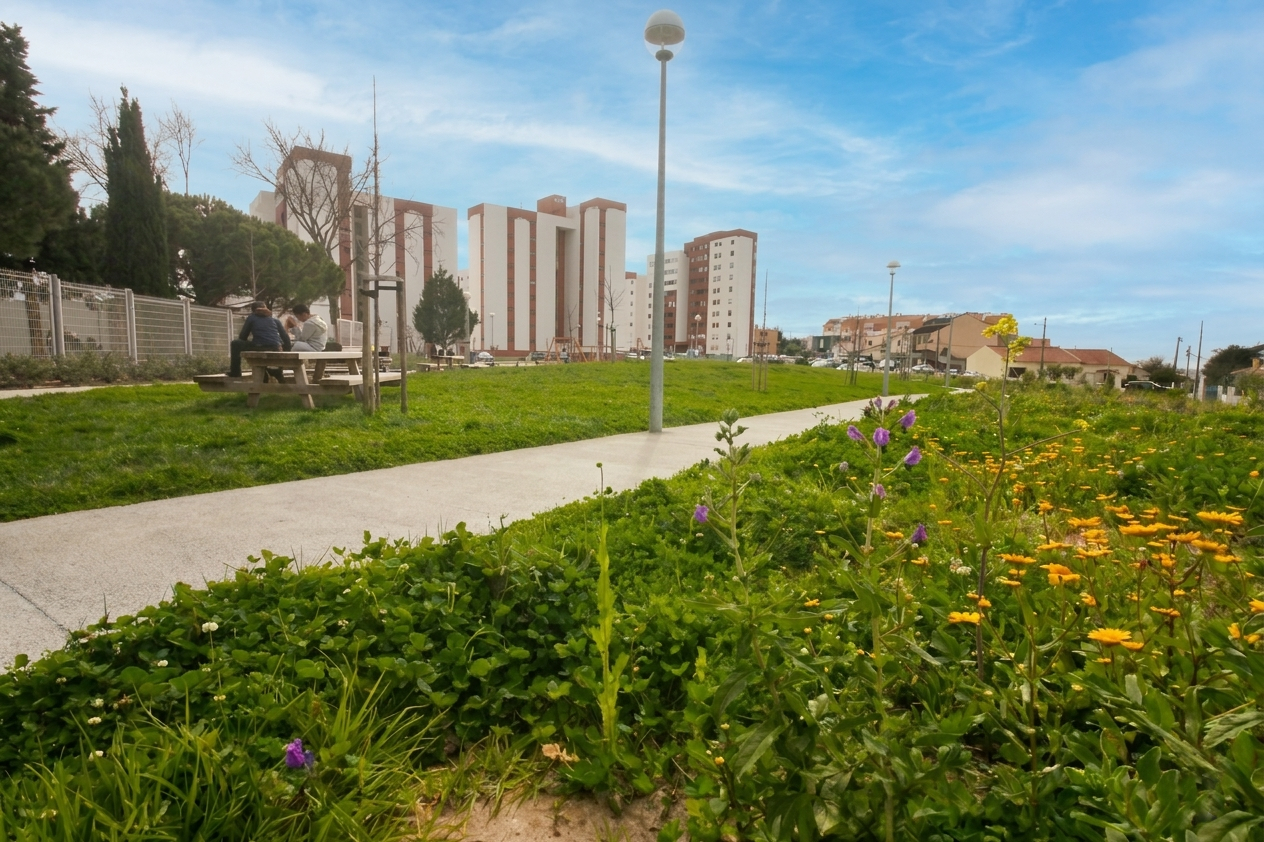
“Parque Verde para Todos” is a 9,400 m² climate-adaptive urban park created in Matarraque, São Domingos de Rana (Municipality of Cascais), transforming a long-abandoned vacant lot into multifunctional green infrastructure serving approximately 4,050 residents within a 400 m walking radius.
The project addresses three structural challenges: lack of proximity green space in dense neighbourhoods, increasing urban flood risk, and disconnection from natural systems. Its objective was not only to create a park, but to restore ecological functions — soil permeability, biodiversity, water infiltration and food production — within an urbanised territory.
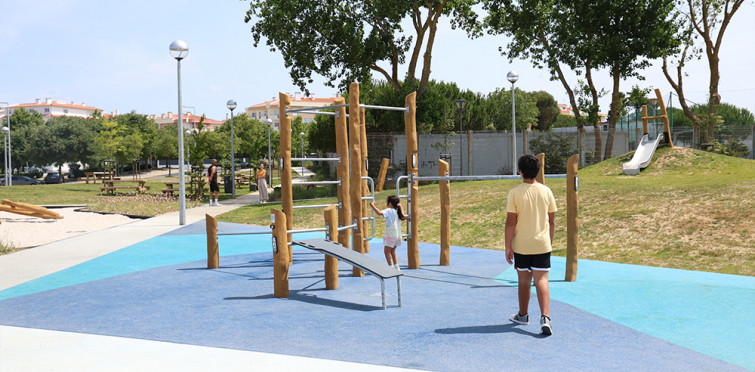
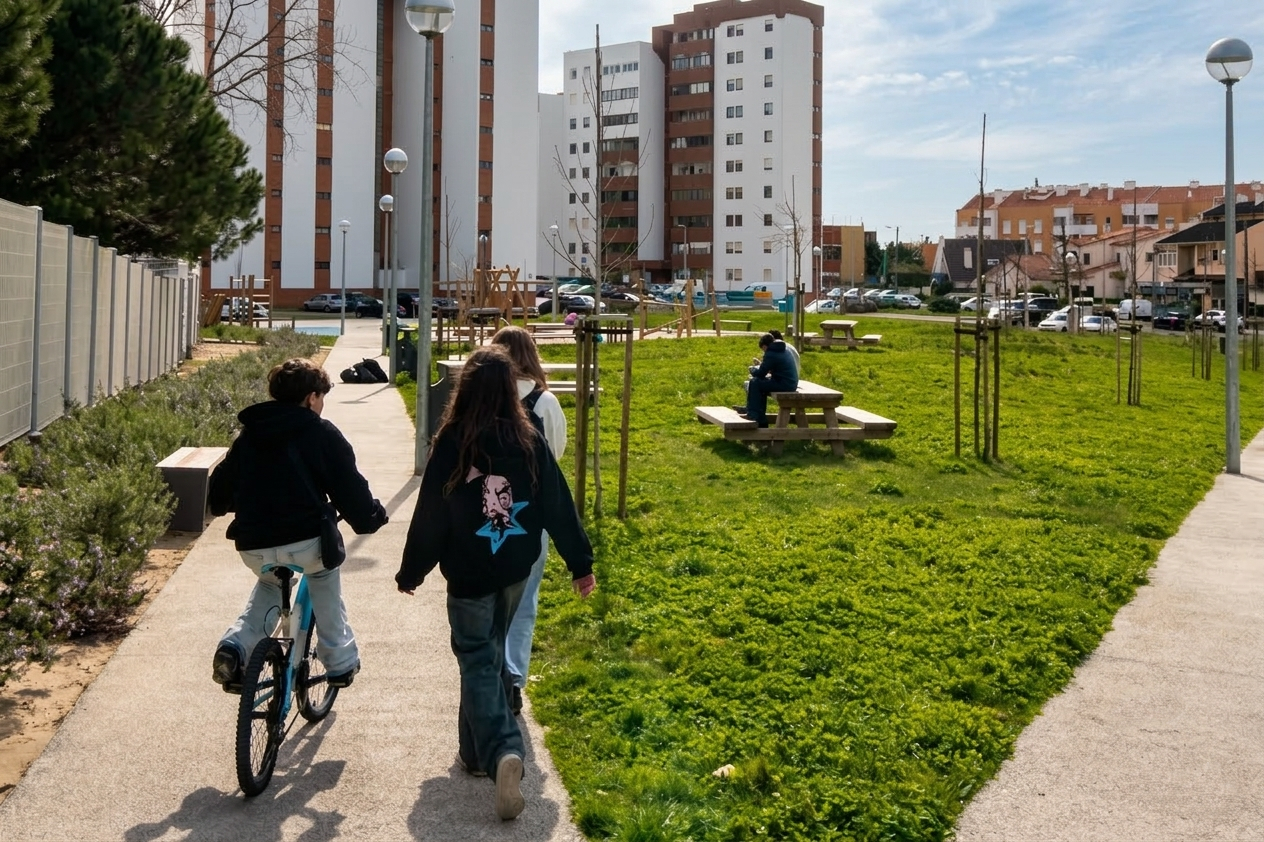
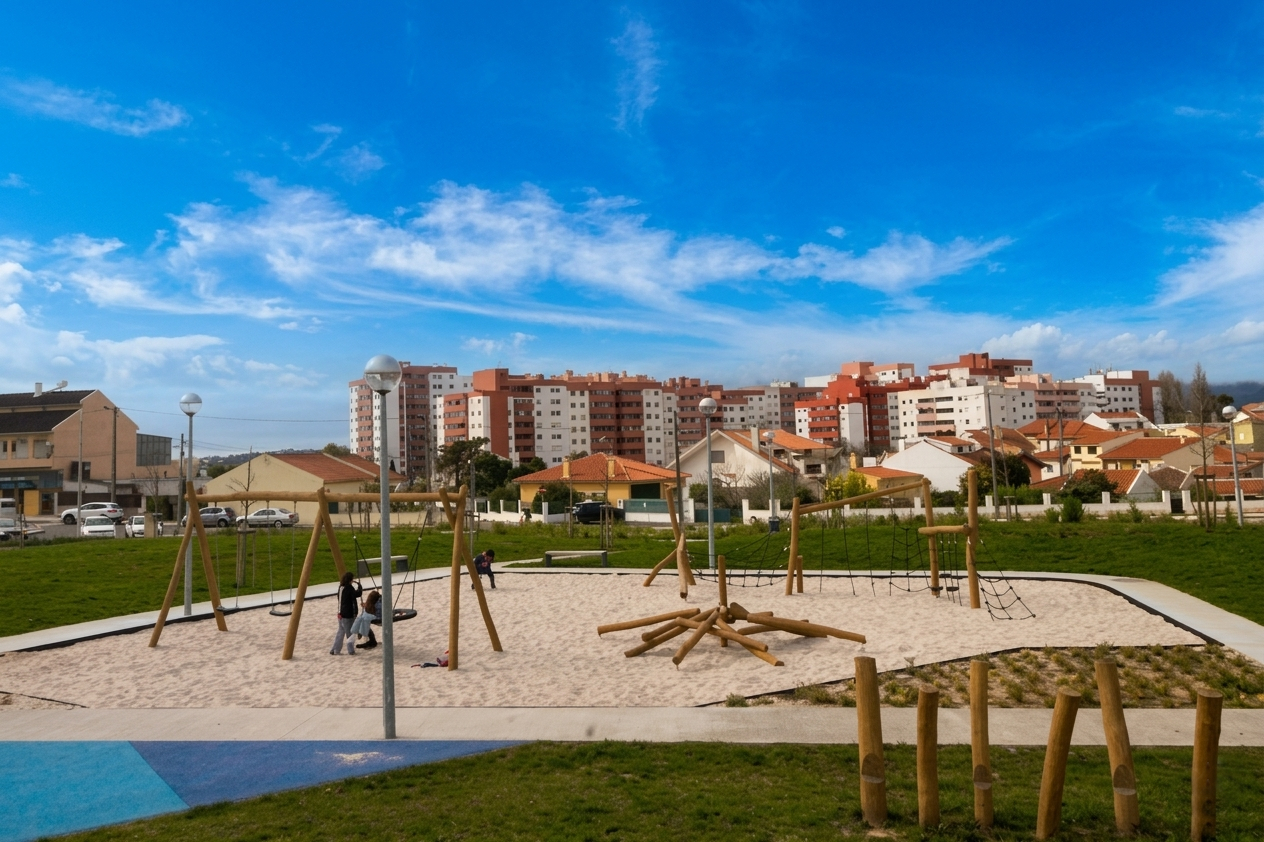
Out of the total area, 7,427 m² are permeable surfaces (meadows, lawns, sand areas and cultivation plots). Circulation paths use porous concrete, drastically reducing surface runoff. Except for playground safety zones, the park functions as a distributed retention landscape, mitigating flood risk and relieving pressure on drainage systems. Tree alignments and shaded areas contribute to urban cooling and climate adaptation.
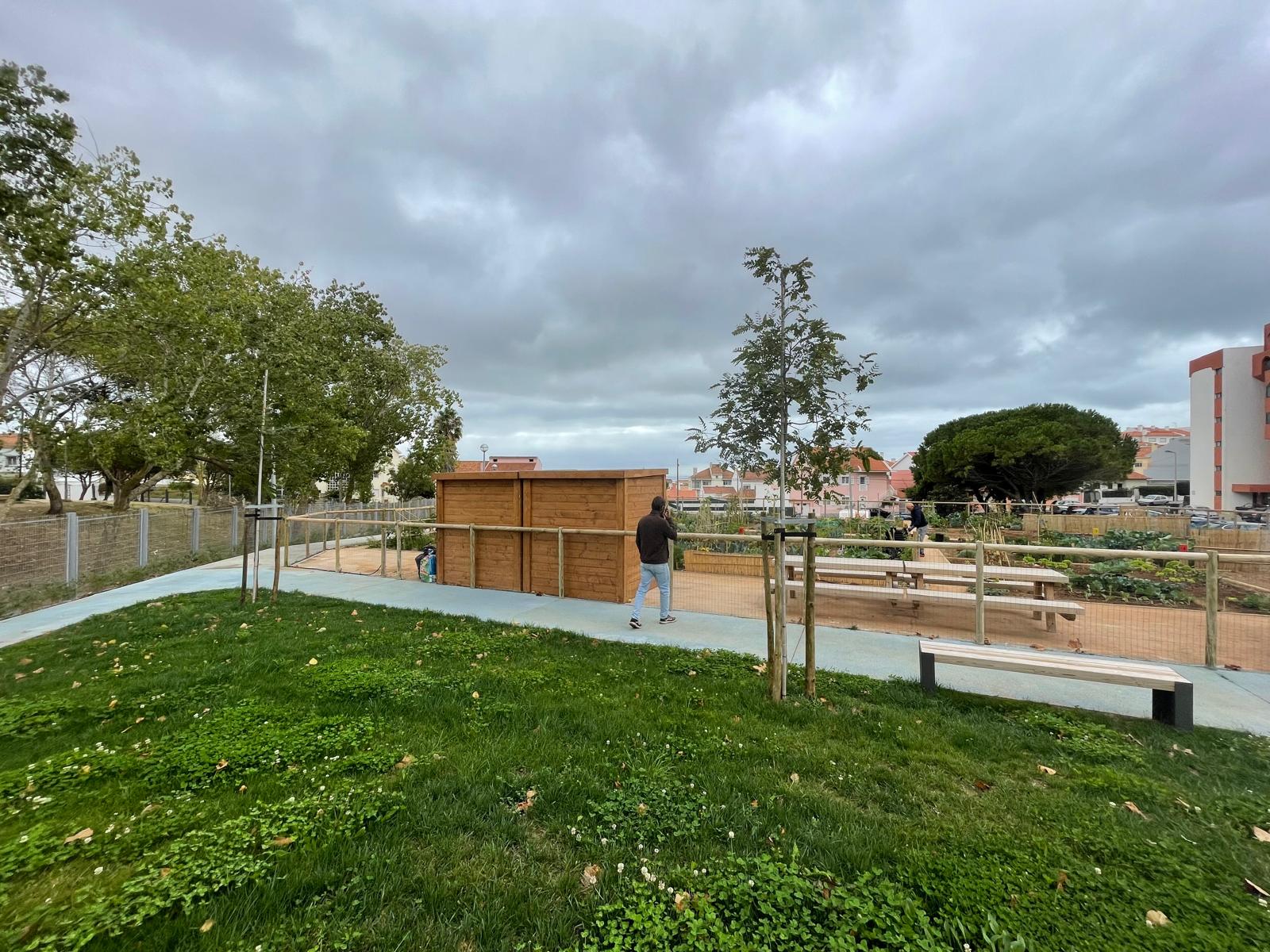
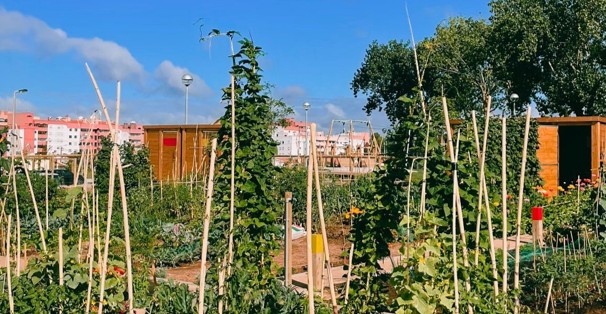
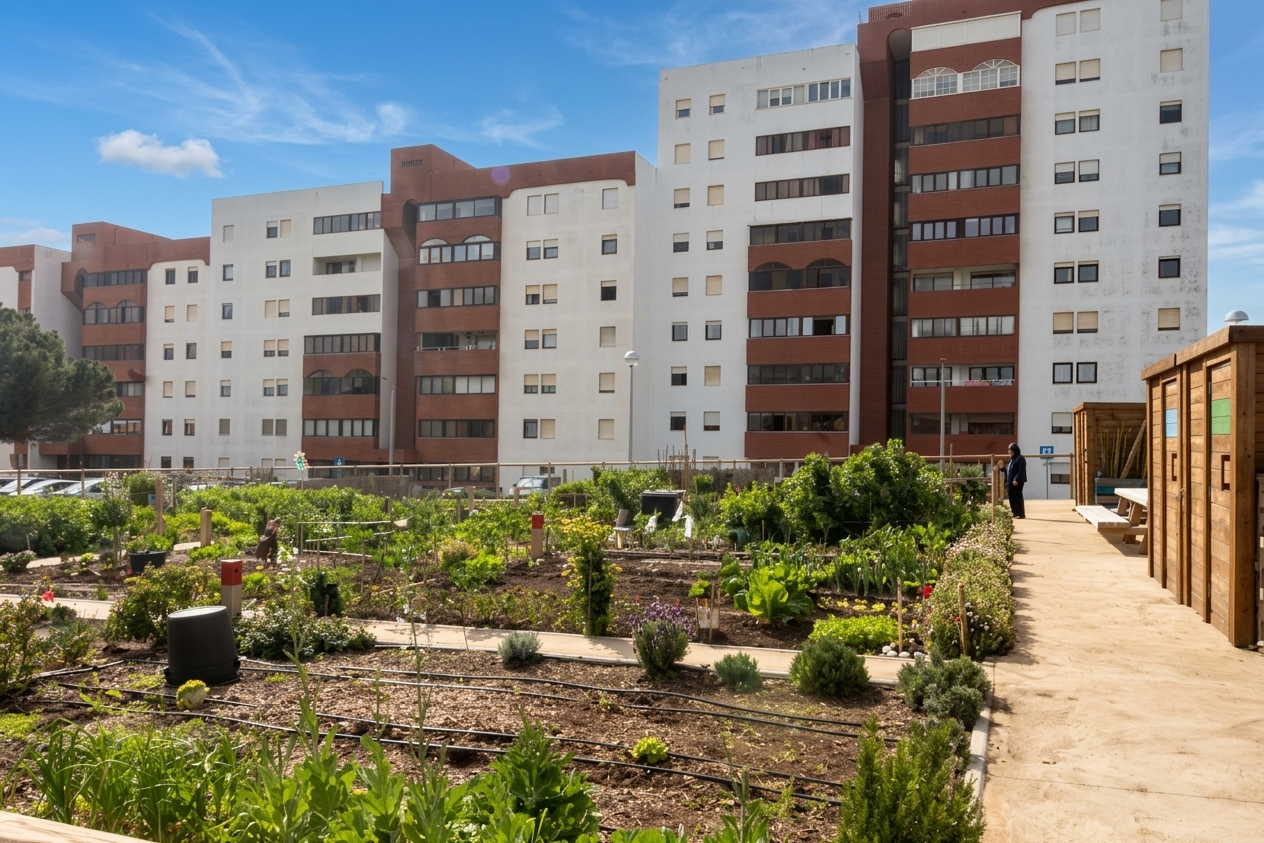
A 20-plot community garden integrates the park into Cascais’ territorial food resilience strategy “Terras de Cascais”, promoting organic, seasonal food production while strengthening ecological literacy and community cohesion.
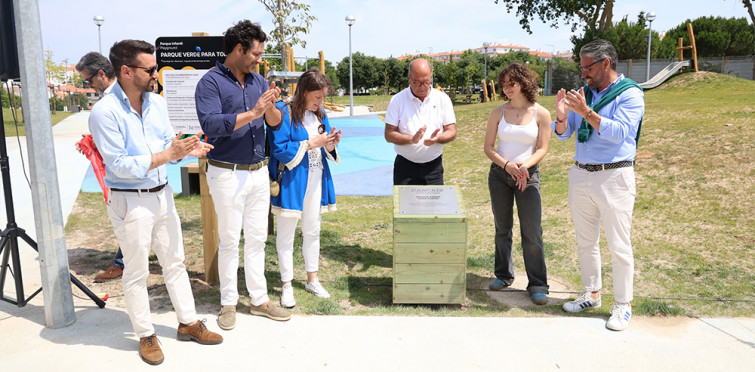
Already today, the park operates as an intergenerational meeting place, a biodiversity-supporting landscape and a visible example of nature-based solutions in practice.
The final investment reached €423,000, reflecting the municipality’s commitment to fully delivering the community’s vision beyond the initial Participatory Budget allocation.
The project began with a student from Escola Matilde Rosa Araújo, located next to the intervention site. In March 2019, through Cascais’ Youth Participatory Budget, the student proposed transforming the abandoned plot into a public green space. In April 2019, the proposal became the most voted community project within the school.
Recognising its relevance, the municipality integrated the idea into the Municipal Participatory Budget 2019. During technical assessment, the site’s constraints were identified — including an underground water supply conduit and protection areas. The project was considered viable with adjustments, ensuring no impermeable construction.
An initial budget of €350,000 was allocated through the Participatory Budget. To ensure full implementation of the proposed features, the municipality complemented this amount, reaching a total investment of €423,000.
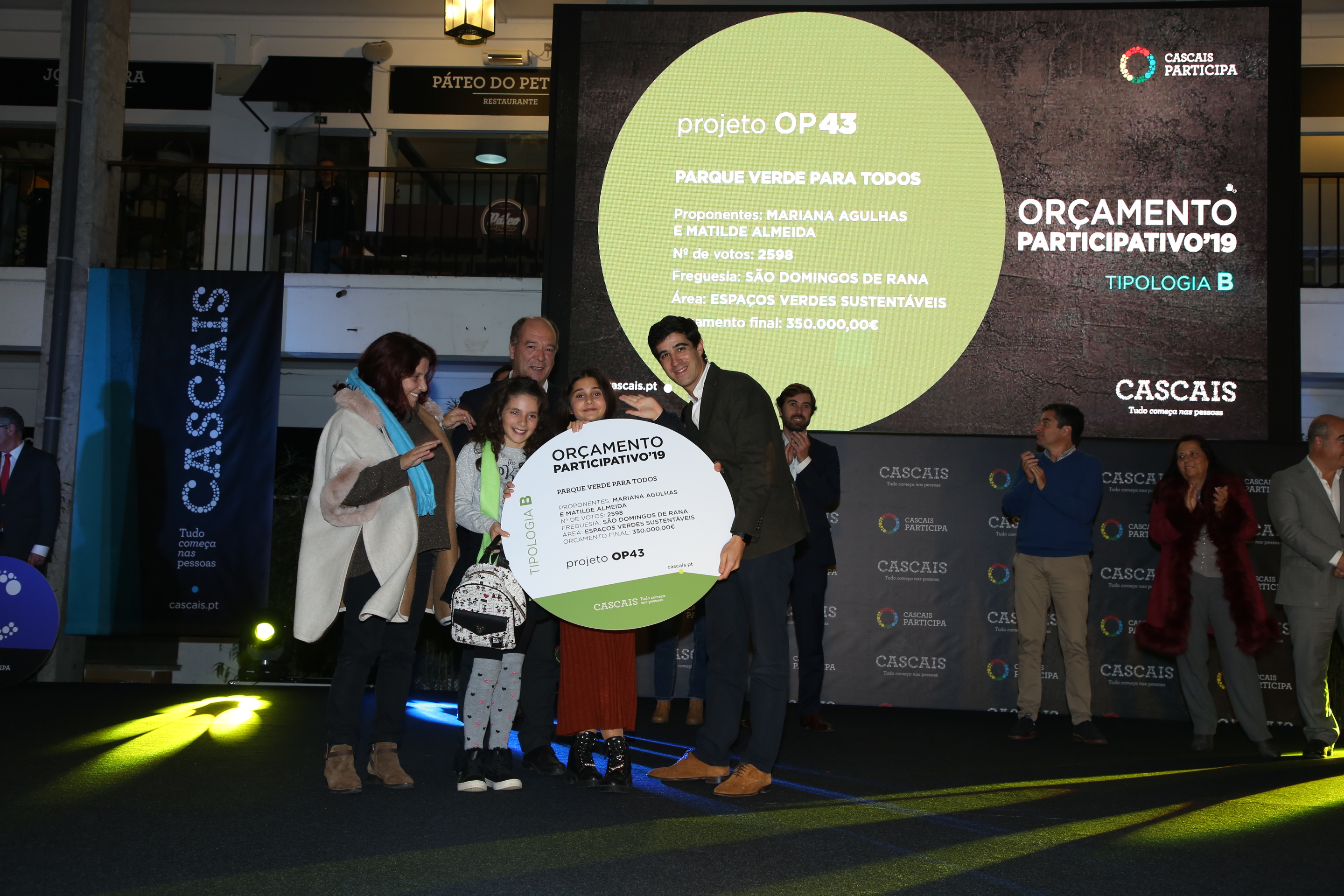
In November 2019, “OP43 – Parque Verde para Todos” won the Municipal Participatory Budget with 2,598 votes, confirming strong community support.
The design translated civic ambition into ecological strategy. Informal pedestrian shortcuts were preserved and formalised into porous circulation paths. Informal cultivation areas were reorganised into structured community gardens connected to Terras de Cascais.
From a youth-led idea to a democratically validated and fully implemented green infrastructure project, the park exemplifies how participatory governance can produce climate-adaptive, nature-based transformation on the ground.
Nature-based solutions
Climate adaptation
Youth-led participatory democracy
Urban food resilience
Permeable green infrastructure
Sustainability in this project is systemic rather than decorative. The intervention shifts the paradigm from ornamental urban parks to regenerative climate infrastructure embedded in democratic governance.
The project addresses soil sealing, flood risk and biodiversity loss in a dense urban context. Of the 9,400 m² site, 7,427 m² are permeable surfaces. Porous concrete paths minimise runoff, and with the exception of playground safety zones, the park operates as a distributed retention landscape, increasing infiltration and relieving drainage systems.
Tree alignments and shaded areas mitigate urban heat island effects, contributing to local climate adaptation. Native and drought-resilient species reduce irrigation needs, supported only where necessary by efficient sprinkler and drip systems.
The 20-plot community garden connects the park to Terras de Cascais, a territorial food resilience strategy integrating urban agriculture into planning. With 800 community gardens and thousands of participants, the programme strengthens biodiversity, soil regeneration and local organic food production. Cultivation areas enhance ecological performance while fostering environmental literacy.
Material choices prioritise durability and low embodied impact, with wood as the dominant element in public furniture and equipment.
The project is exemplary because it integrates flood mitigation, biodiversity, food production and democratic legitimacy into one coherent ecological system. It demonstrates that small-scale neighbourhood interventions can function as anticipatory climate infrastructure — restoring ecological cycles while strengthening social resilience and long-term urban sustainability.
The project demonstrates that beauty can emerge from ecological intelligence and collective authorship.
The transformation of a degraded, fenced plot into a structured and vibrant landscape enhances everyday life through spatial clarity and sensorial richness. Tree-lined axes create rhythm and orientation, guiding movement across open lawns, shaded areas and productive gardens. Contrasts between light and shadow generate diverse microclimates and atmospheres.
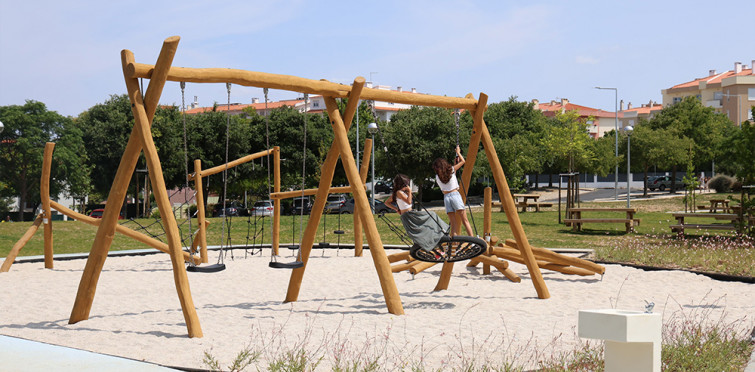
Natural materials dominate the composition. Wood in benches, pergolas and playground elements provides warmth and tactility. Grass, sand, cultivated soil and porous pavements offer varied textures underfoot, inviting interaction rather than passive observation.
Crucially, ecological performance is visible. Permeable soils, planted edges and retention areas are not hidden infrastructure but integral to the park’s identity. Seasonal changes in vegetation and food cultivation reconnect residents with natural cycles of growth and care.
The community garden adds productive beauty, colour and scent while reinforcing stewardship. Residents do not only use the park; they shape and maintain part of it. Aesthetic value therefore extends beyond form to include shared responsibility and belonging.
The project is exemplary because it dissolves the perceived divide between sustainability and beauty. Climate-adaptive infrastructure becomes emotionally engaging and culturally meaningful. The park is not simply recreational space — it is a civic landscape where ecological function, democratic origin and sensory experience converge.
Inclusion in this project operates at three interconnected levels: access to space, access to decision-making, and access to ecological participation.
Spatially, the park ensures proximity access to nature for approximately 4,050 residents within walking distance. Located in a dense neighbourhood previously lacking green areas, it removes economic and mobility barriers to environmental quality. The space is fully public and free of charge, providing playgrounds, fitness equipment, open lawns, shaded seating and community garden plots that enable intergenerational and intercultural use.
Design follows “design for all” principles: continuous porous paths ensure comfortable circulation for pedestrians, children, elderly users and people with reduced mobility. Open lawns allow flexible use, supporting informal sport, rest and social interaction.
Governance inclusion is central. The project originated from a student proposal within the Youth Participatory Budget, was voted by peers, technically validated and ultimately won the Municipal Participatory Budget with 2,598 votes. This process ensured that a young citizen’s idea became a publicly funded green infrastructure project, embedding democratic legitimacy into spatial transformation.
The integration of a community garden, connected to the Terras de Cascais programme, expands inclusion into food access and ecological literacy. Local organic and seasonal production strengthens self-sufficiency and builds communities around healthy eating, reducing social isolation and fostering mutual support.
The project is exemplary because it demonstrates that inclusion is not limited to physical accessibility. It combines democratic voice, shared stewardship and equal access to nature, creating a new societal model in which environmental infrastructure is co-created, collectively owned and socially empowering.
Participation is the foundation of the project, not a complementary element.
The park originated from a proposal submitted by a student from the adjacent Escola Matilde Rosa Araújo through Cascais’ Youth Participatory Budget. The proposal was presented to the school community and became the most voted project within the school. This initial phase empowered young citizens to identify a territorial need and propose a concrete solution.
The idea was then integrated into the Municipal Participatory Budget, where it underwent technical assessment and was subsequently submitted to public vote. In November 2019, the project won with 2,598 votes, confirming broad community support. Citizens therefore influenced both agenda-setting and final decision-making.
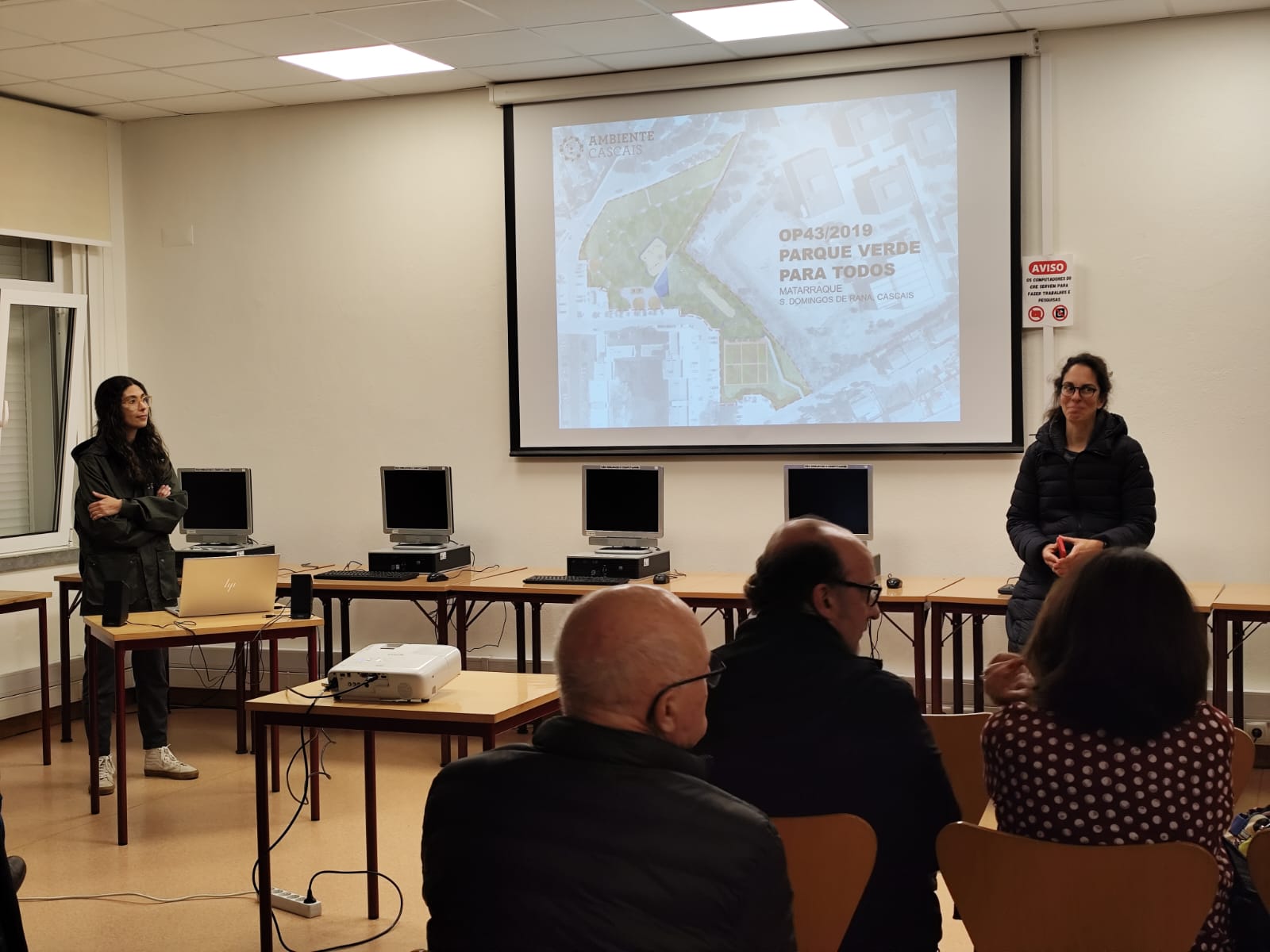
Residents also shaped the design logic. Informal pedestrian paths created by daily use were preserved and formalised into porous circulation axes. Existing informal cultivation practices were reorganised into structured community garden plots, ensuring continuity with community habits rather than imposing a top-down design.
Through the integration of the community garden into the Terras de Cascais programme, citizens continue to participate beyond the project’s completion, taking active roles in cultivation, maintenance and stewardship.
The impact of this participatory process is tangible: higher legitimacy, strong local ownership and sustained daily use. The park is not perceived as a municipal imposition but as a collectively generated space.
The project exemplifies how youth-led participation can move from idea to implementation, demonstrating that democratic engagement can directly produce climate-adaptive, nature-based urban transformation.
The project demonstrates effective coordination across multiple governance levels, aligning civic participation with institutional responsibility.
At the local level, citizens played a decisive role through the Youth Participatory Budget and the Municipal Participatory Budget, shaping both the project agenda and its final approval. The Municipality of Cascais led the technical development, ensuring integration into urban planning frameworks and climate adaptation strategies.
Cascais Ambiente, the municipally owned company responsible for urban green spaces, coordinated design development, implementation and long-term maintenance, guaranteeing technical quality and durability.
At the national level, coordination with EPAL (the local water utility) was essential due to the presence of a major underground water supply conduit crossing the site. Technical compliance ensured that no impermeable construction compromised protection zones. Environmental authorities also validated the intervention within regulatory frameworks.
Regionally and nationally, the project aligns with Portugal’s climate adaptation goals and sustainable urban development policies, reinforcing green infrastructure and flood mitigation strategies.
At the European level, the project embodies principles promoted by the New European Bauhaus: nature-based solutions, democratic participation and high-quality public space. Cascais’ designation as European Capital of Democracy 2026 reinforces the connection between participatory governance and spatial transformation.
The added value of multilevel engagement lies in legitimacy, safety and scalability. Institutional cooperation ensured technical robustness and regulatory compliance, while citizen involvement guaranteed relevance and ownership. Together, these layers transformed a youth proposal into resilient public infrastructure, demonstrating how democratic governance can operationalise climate-adaptive urban design.
The project is the result of structured collaboration across multiple disciplines, integrating environmental, technical and social knowledge into one coherent intervention.
Landscape architecture provided the spatial framework, translating community aspirations into a climate-adaptive design that maximised permeability, biodiversity and usability. Environmental sciences informed soil treatment, infiltration strategies, plant selection and urban cooling measures, ensuring ecological performance.
Civil and hydraulic engineering expertise was essential due to the presence of a major underground water supply conduit. Technical coordination guaranteed infrastructure protection while enabling permeable surfaces and distributed water retention systems.
Urban planning ensured alignment with the Municipal Master Plan and long-term green infrastructure strategies. The integration of a community garden connected the project to the Terras de Cascais territorial food system, incorporating knowledge from urban agriculture, agroecology and food resilience.
Social sciences and participatory governance expertise shaped the project’s democratic process, enabling a youth proposal to evolve into a publicly funded intervention. Education played a key role, as the initiative originated within a school context and continues to foster environmental literacy.
Collaboration was organised through interdisciplinary technical teams within the municipality and the municipally owned green spaces company, working alongside infrastructure authorities and community representatives.
This transdisciplinary approach generated added value: ecological robustness, technical safety, democratic legitimacy and long-term adaptability. By combining design, engineering, governance and food systems thinking, the project demonstrates that regenerative public space emerges from the integration of diverse knowledge fields rather than from isolated expertise.
The project is financed through the Municipal Participatory Budget, complemented by additional municipal funding, with a total investment of €423,000. This model embeds capital investment within a stable democratic funding instrument while ensuring full delivery of the project.
Although it generates no direct commercial revenue, the project is financially sustainable through long-term public value creation and cost avoidance.
High permeability and distributed water retention reduce flood risks and alleviate pressure on urban drainage systems, lowering future infrastructure costs. Tree cover and shaded areas contribute to urban cooling, reducing heat-related health impacts and improving environmental comfort.
Design decisions minimise lifecycle costs. Durable materials, certified equipment and drought-resilient planting reduce maintenance and replacement needs. Cascais Ambiente, the municipally owned green spaces company, ensures technical continuity and operational stability.
The integration of community gardens into the Terras de Cascais food resilience strategy strengthens local organic production, reduces food miles and enhances neighbourhood attractiveness, contributing indirectly to economic resilience.
The project demonstrates that climate-adaptive public space is not a financial burden but a strategic investment. By combining democratic governance, green infrastructure and food resilience, it enhances long-term urban competitiveness, liveability and institutional credibility.
The project offers a highly transferable model combining participatory governance, nature-based solutions and territorial food resilience.
Its most replicable element is the governance methodology. A youth-led proposal, validated through participatory budgeting and integrated into municipal planning, demonstrates how democratic processes can directly generate climate-adaptive infrastructure. This model can be adopted in cities with participatory mechanisms, empowering young citizens and strengthening local legitimacy.
The spatial and environmental strategy is equally transferable. High-permeability design — maximising soil infiltration, minimising sealing, using porous pavements and drought-resilient planting — does not rely on expensive technologies. It can be applied to vacant urban plots, school-adjacent land or underused municipal areas, adapting vegetation and hydrology to local contexts.
Importantly, this is not an isolated intervention. Similar principles have already been replicated within the Municipality of Cascais in projects such as Jardim e Parque Infantil de Cabra Figa, Parque de Merendas em Tires, Parque Urbano da Abóboda and the Requalification of a Green Area in Murches. These examples demonstrate institutional learning and scalability at municipal level.
The integration of community gardens into public parks, linked to the Terras de Cascais food resilience strategy, further strengthens transferability. Parks become recreational, ecological and productive landscapes simultaneously.
Key lessons include transforming technical constraints into ecological opportunities, embedding maintenance strategies at design stage, and ensuring democratic ownership from inception.
Replication requires interdisciplinary collaboration and political commitment, but not complex financial instruments. The model proves that small-scale, democratically generated interventions can scale territorially and inspire broader systemic transformation.