Arts, Culture, and Heritage as Drivers of Change
Pame Kaimakli
Pame Kaimakli - Neighborhood Festival
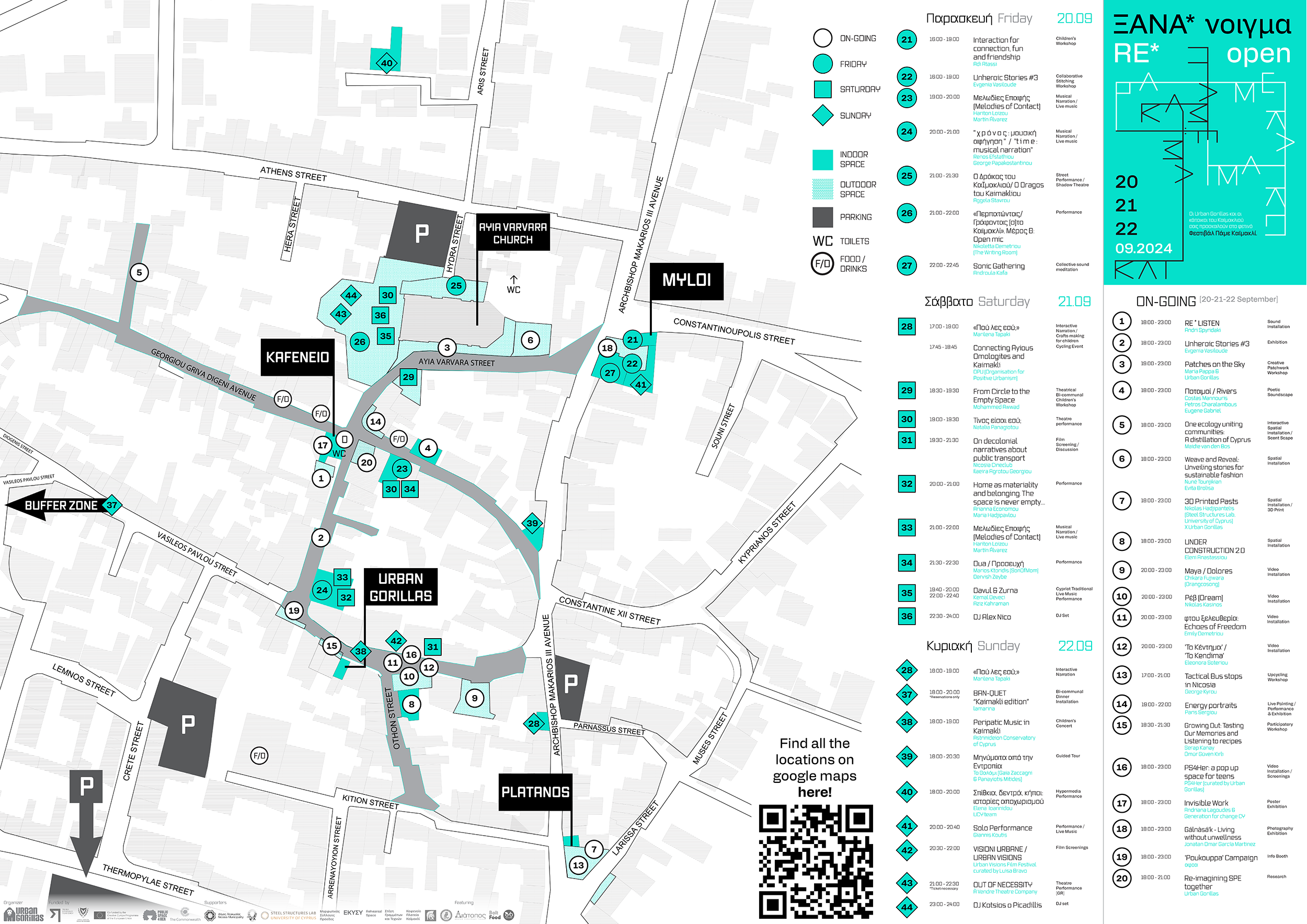
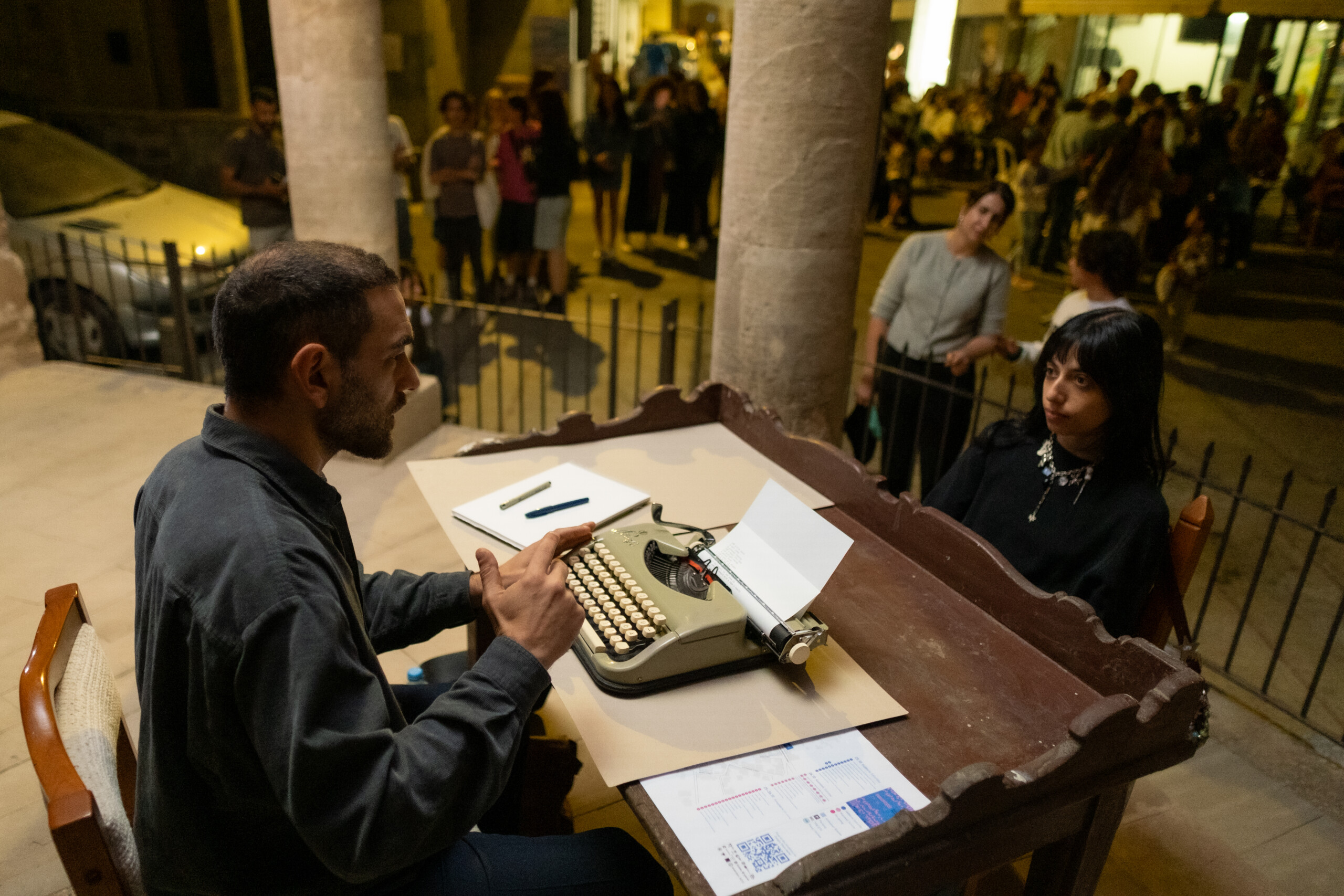
Pame Kaimakli is a community-led festival that transforms a historic neighbourhood along the UN Buffer Zone in Nicosia into a vibrant cultural landscape. Since 2013, residents, artists, and visitors collaborate to activate courtyards, rooftops, workshops, and streets through performances, spatial installations, shared meals and collective activities. Weaving art into everyday life reactivates local heritage, strengthens community ties, and reimagines the neighbourhood as a shared space.
Cyprus
Local
Nicosia
Mainly urban
It involves other types of transformations (soft investment)
Yes
2025-10-19
Yes
Creative Europe, Tandem Europe
No
No
Organisation
Pame Kaimakli (PK) is a community-led neighbourhood festival which takes place in Kaimakli, a historic district of Nicosia located along the UN buffer zone. Since 2013, the festival has been activating the neighbourhood, through community engagement, arts and culture. Using creative story telling and site activations, it reveals the neighbourhoods' old and new layers, bringing together local and new (mostly) migrant residents, artists, and visitors to rediscover and activate the neighbourhood’s spaces.
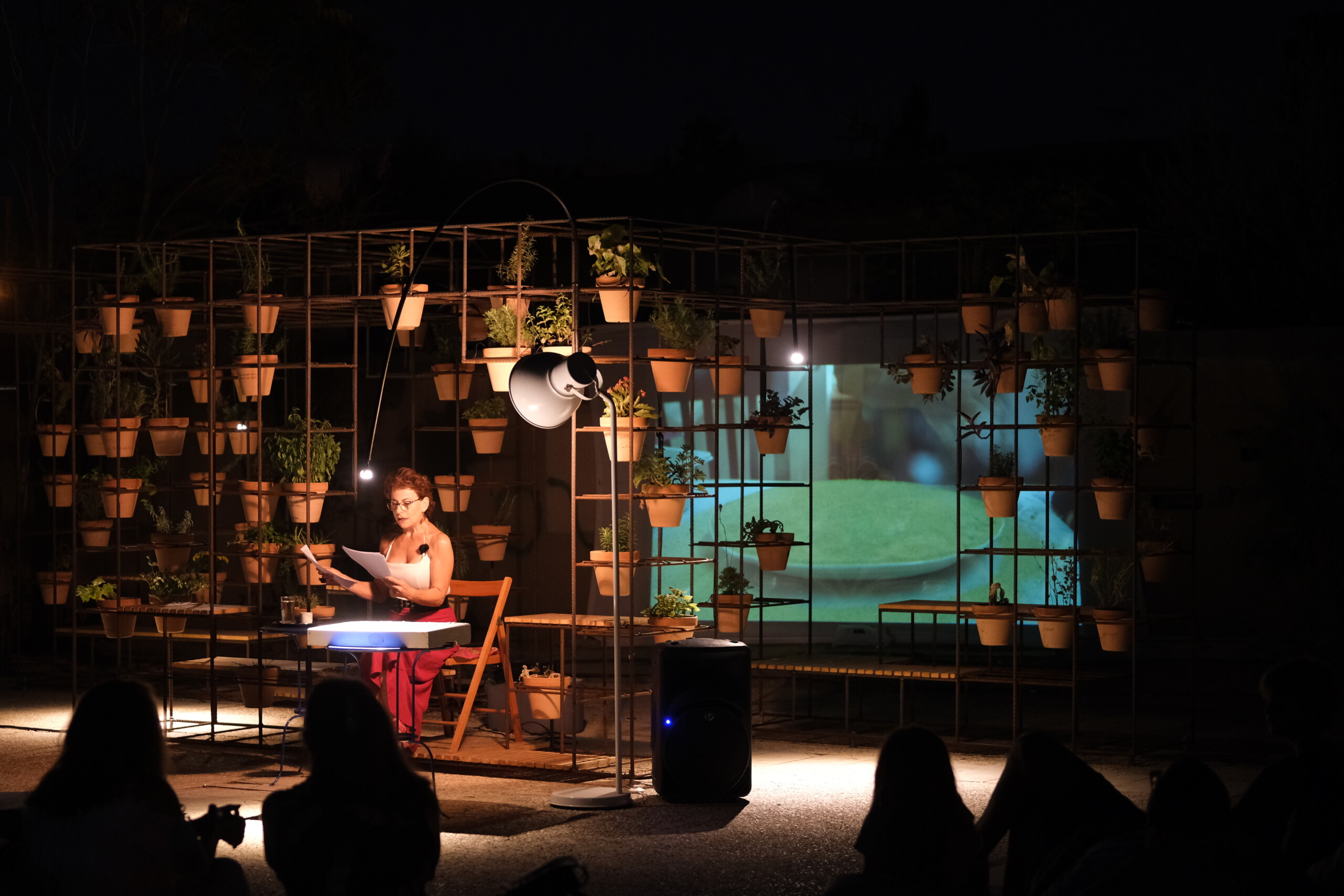
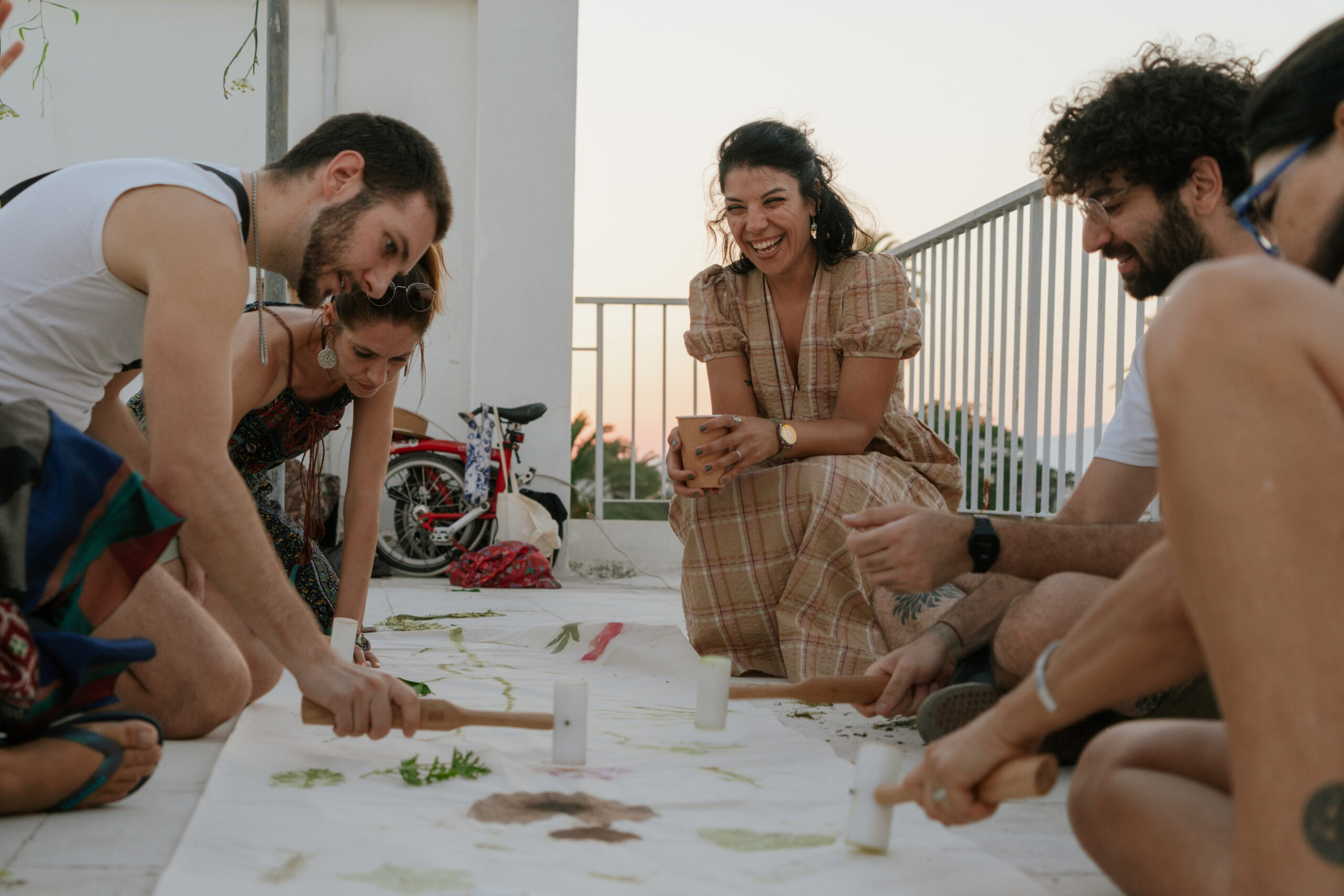
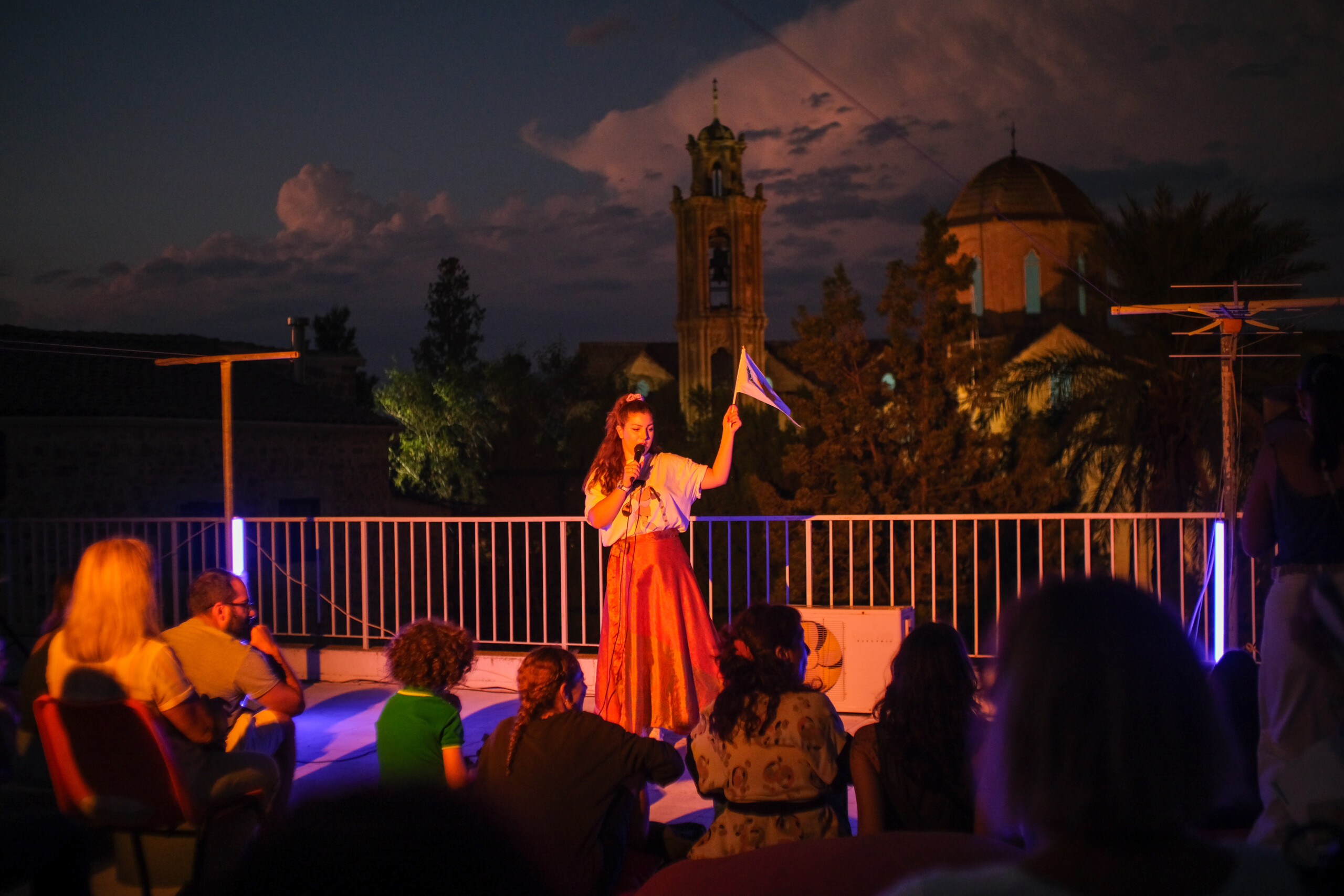
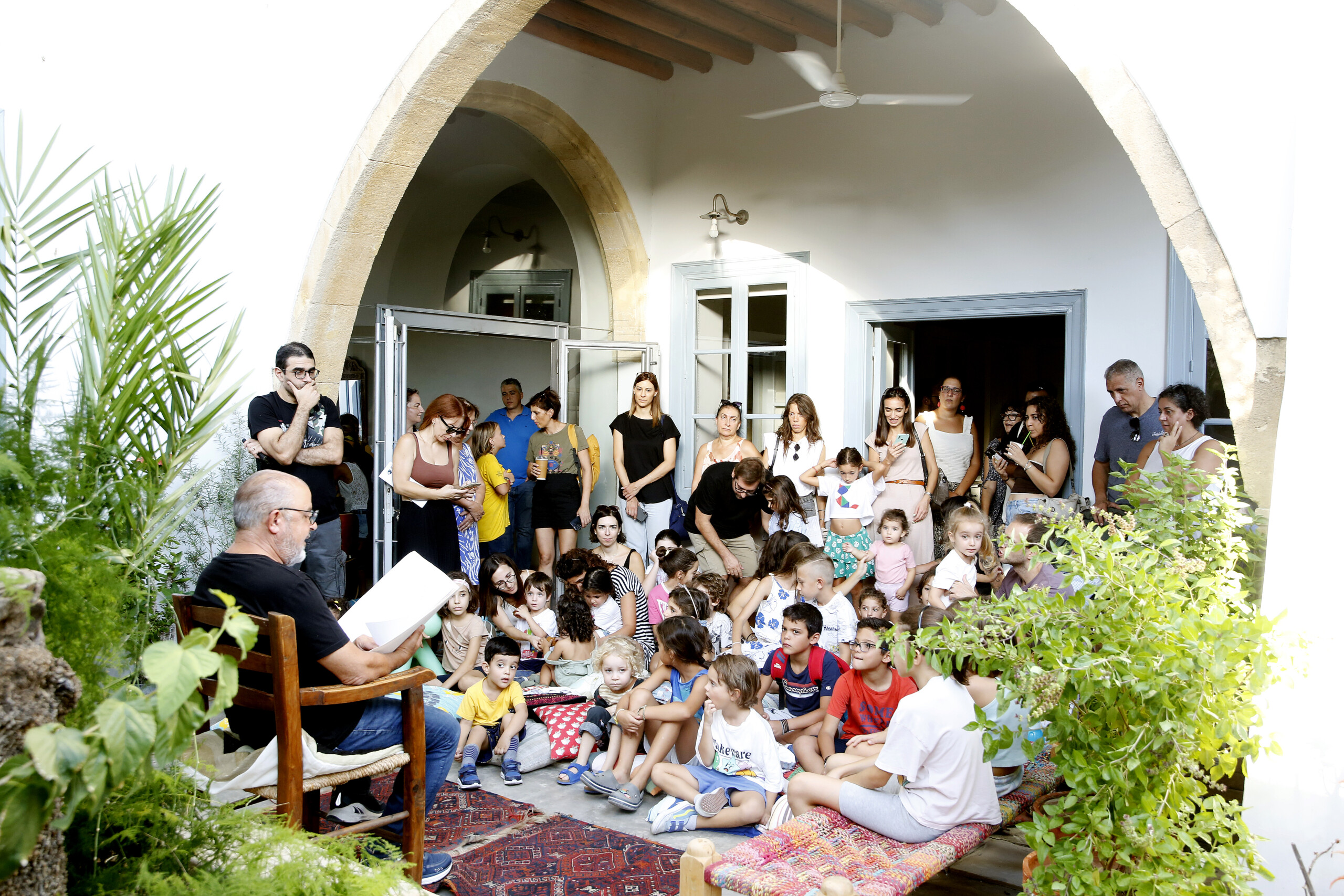
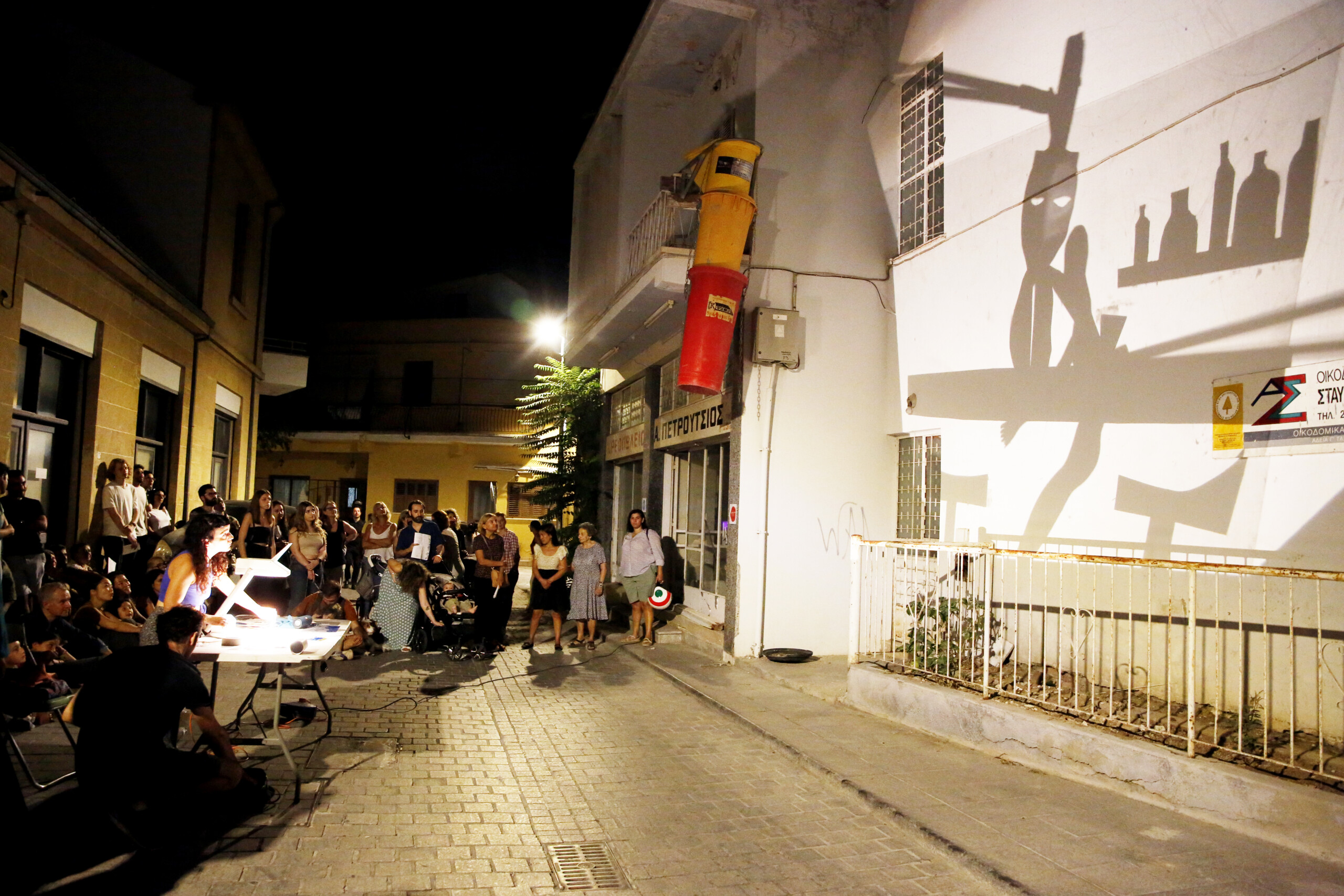
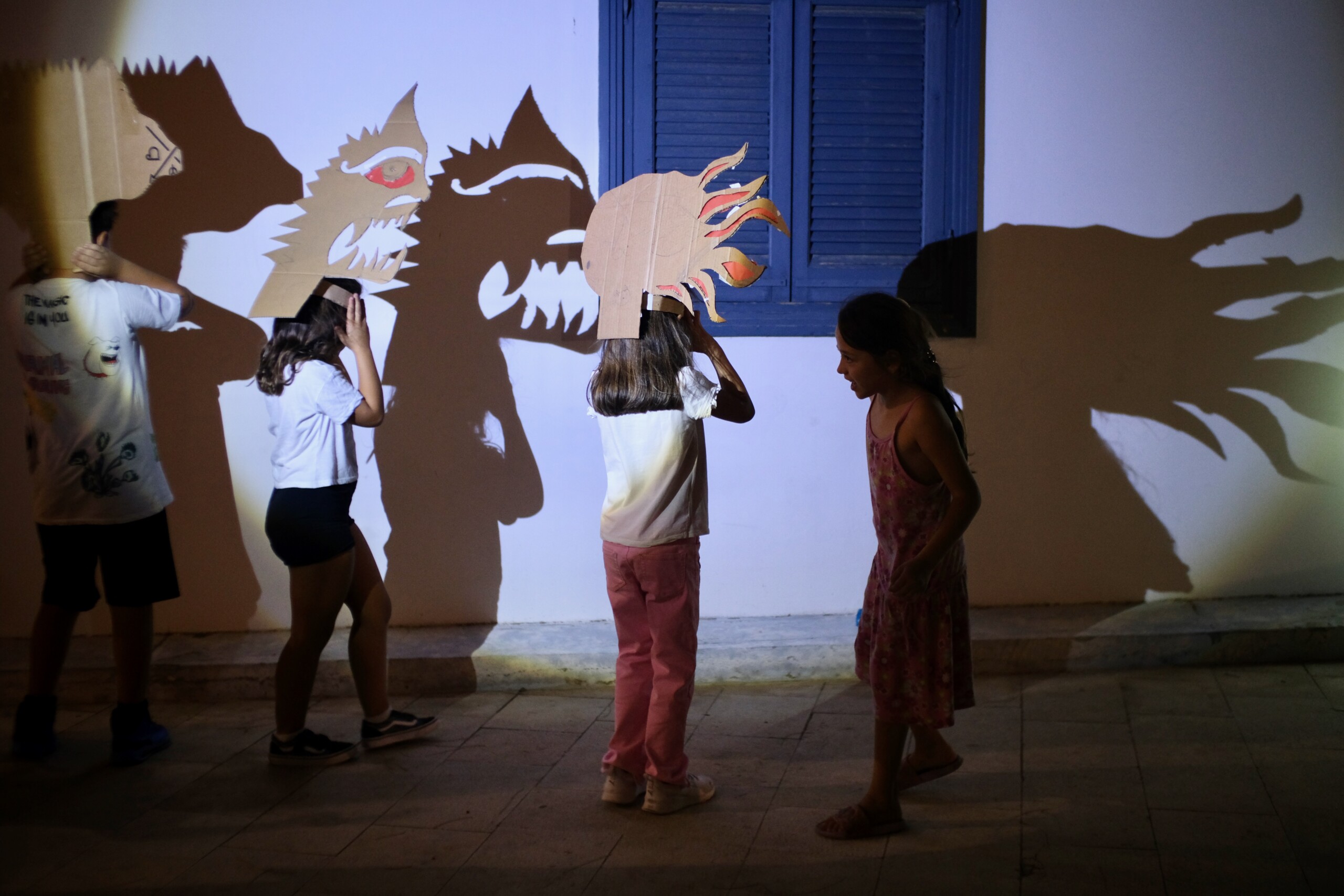
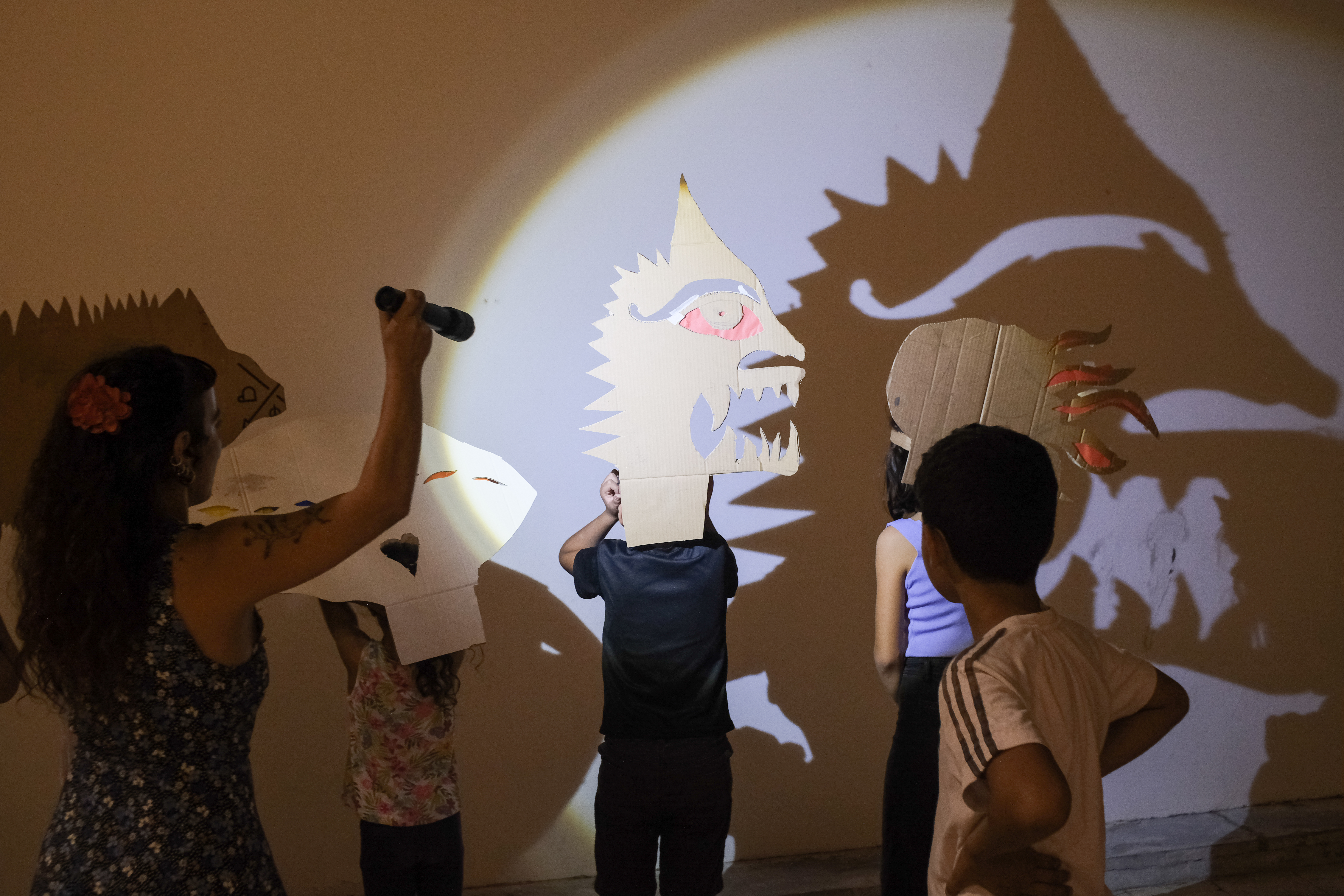
Since 2017, Urban Gorillas NGO (UG) in close collaboration with local residents expanded the festival rooted in creative processes of co-creation. Artists work with citizens to develop projects that respond to the everyday life of the neighbourhood, its heritage, and its diverse communities. Through these collaborations various unexpected spaces such as courtyards, rooftops, streets, workshops, churches, schools, abandoned buildings, and areas along the Buffer zone are transformed into cultural stages and places for performances, installations, workshops, and shared community spaces.
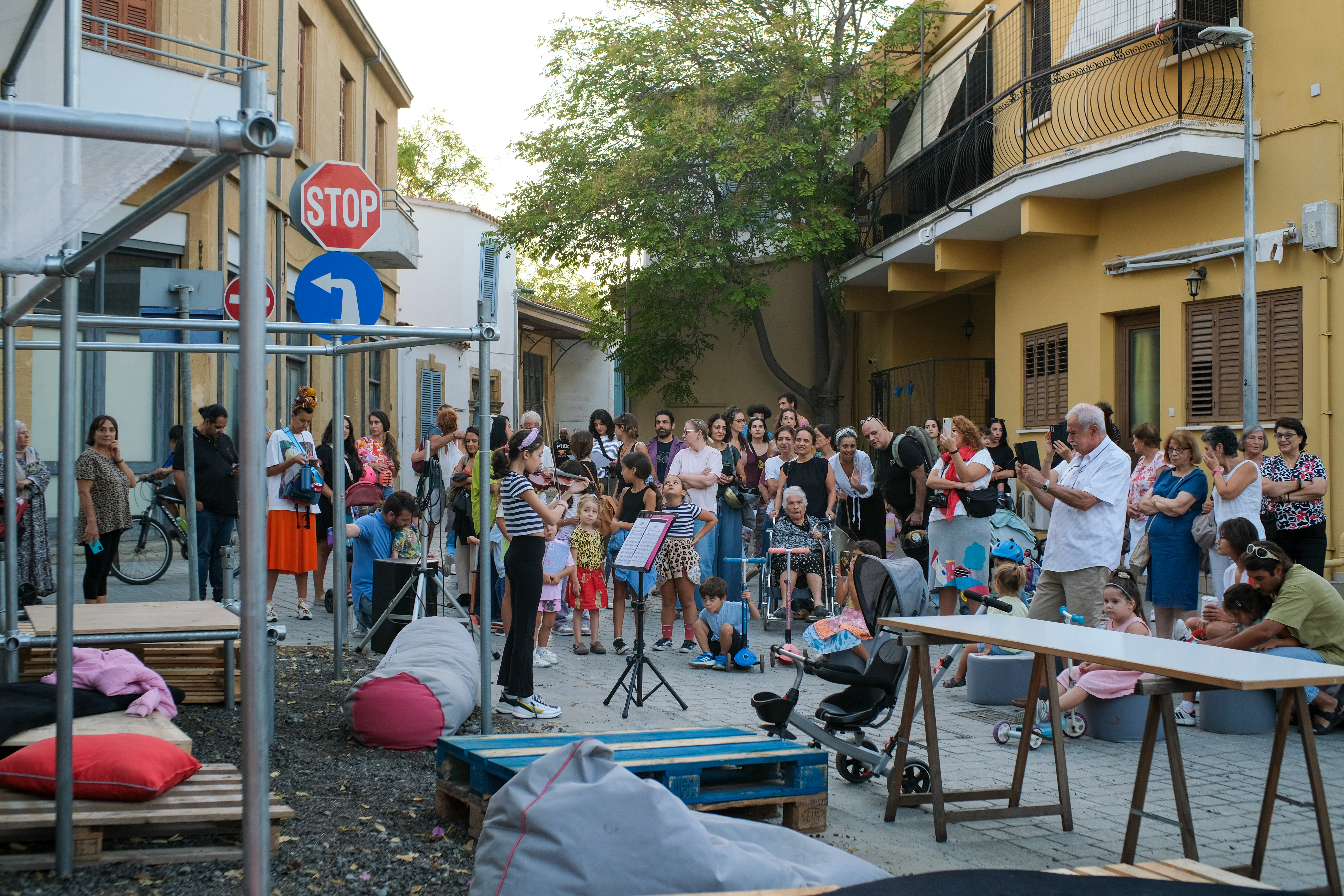
Over the years, the festival has created opportunities for people who would not normally meet—elderly residents, migrant families, young creatives, students, and international artists—to work together and share experiences. From small informal gatherings in its early years, the festival has grown into an annual event that attracts more than 2,500 visitors and hosts around 35 projects each year. Months leading up to each festival, a number of collaborative initiatives further strengthen relationships within the neighbourhood and build lasting networks between citizens, cultural practitioners, and local institutions.
The festival connects art, heritage, and everyday life and demonstrates how culture can create shared spaces and foster a stronger sense of belonging in a diverse urban community.
PK emerged from a simple question shared by a group of neighbours in Kaimakli: how can people from different backgrounds living in the same area get to know one another better and use neighbourhood spaces in collective and creative ways?
The first edition, in 2013, was organised by a group of creative neighbours who opened their homes for small cultural activities. Shaped around themes such as Open Doors, Open Windows, and Open Courtyards, these early informal gatherings revealed an unseen Kaimakli and created opportunities for encounters.
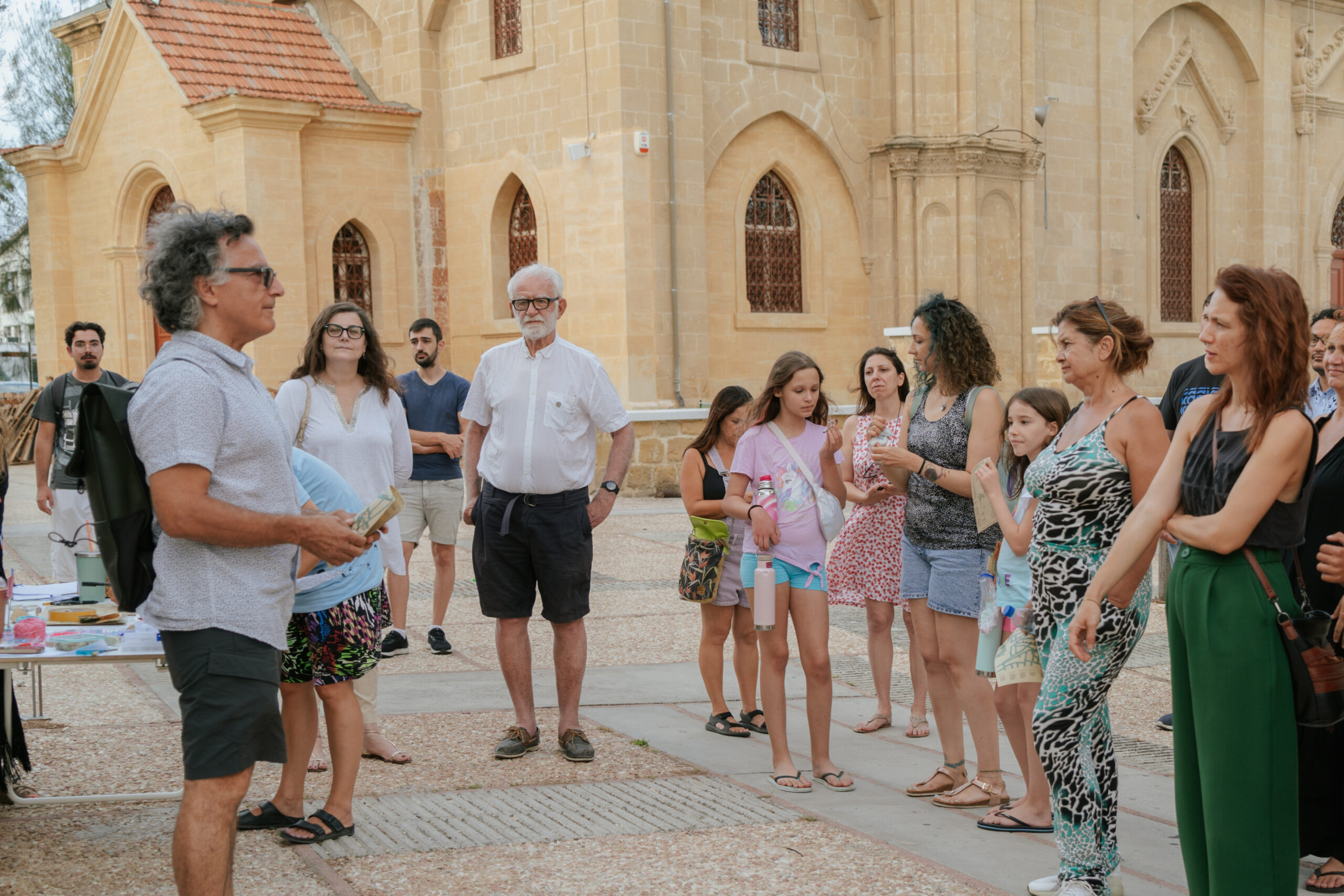
Since 2017, the initiative has developed into a larger and more structured festival coordinated by UG. Each edition begins months in advance through neighbourhood meetings, workshops, direct engagement of residents, and open calls for artists. Walks through the area with residents and artists help identify new sites for cultural activity. Projects are then developed collaboratively with the people who live or work in these spaces.
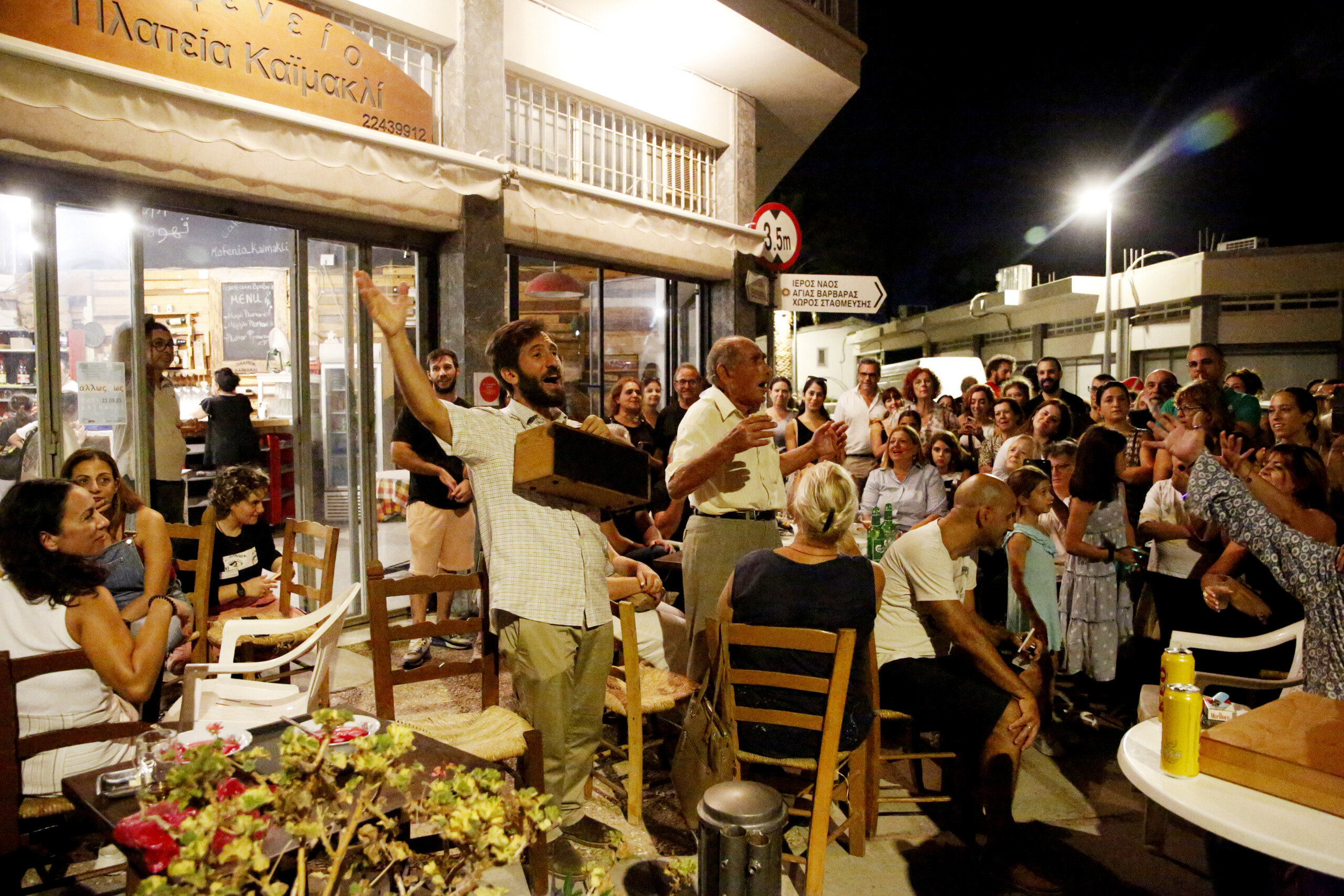
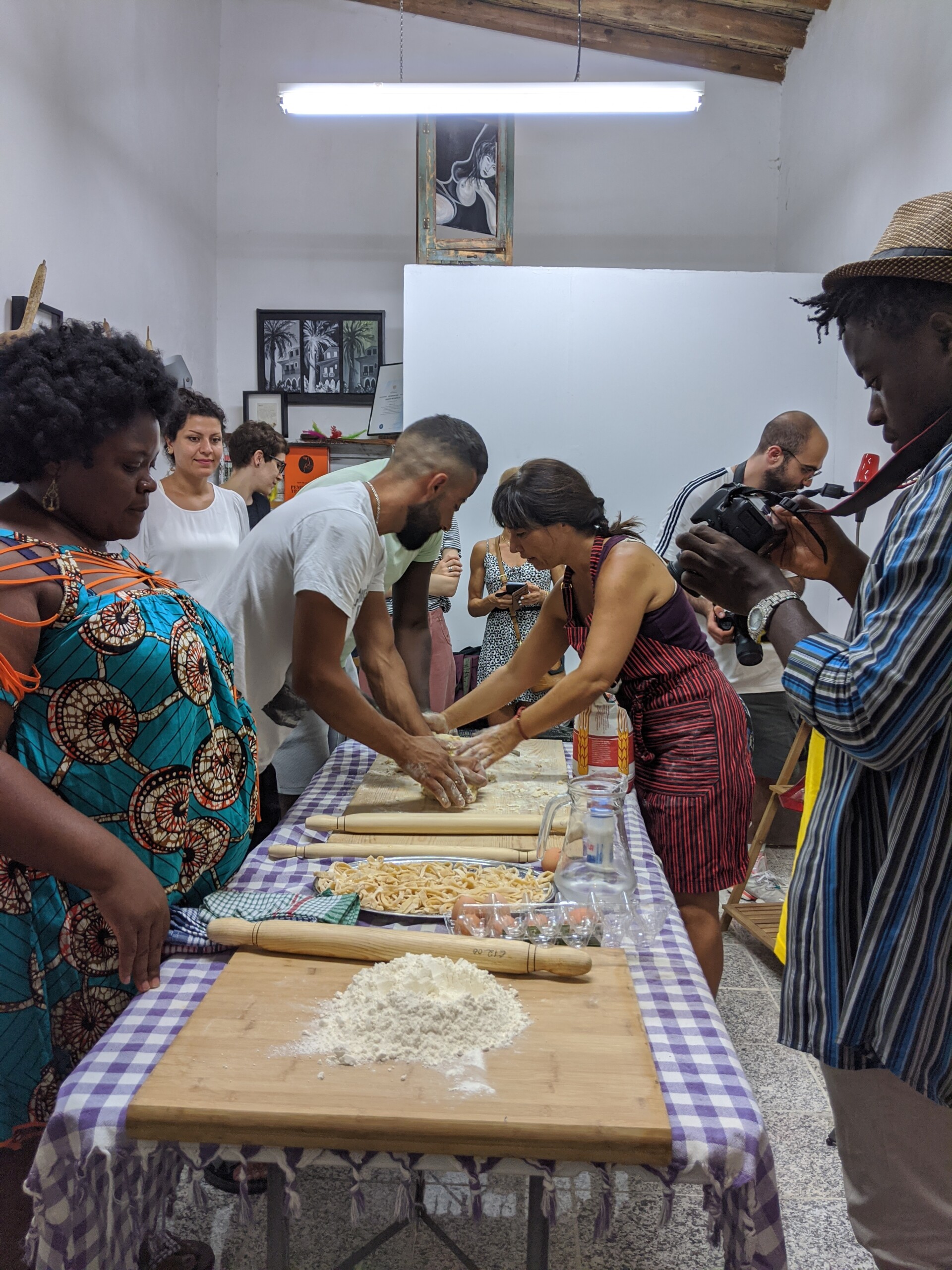
For example, the 2018 edition Adopt an Artist paired artists with residents to co-curate artworks and performances in their homes. Another edition, A Delicious Place, focused on the multicultural character of the neighbourhood through food, bringing together residents from different cultural backgrounds to prepare and share dishes in kitchens across the neighbourhood.
Festival editions have also included rooftop laundry days, installations in abandoned buildings, and performances in churches and streets. In Urban Playground, Kaimakli youth transformed a parking lot into an open-air cinema which hosted international films, and works highlighting the experiences of youth from Syria and Palestine.
In recent years, the festival has been supported by the Municipality of Nicosia, the Deputy Ministry of Culture of Cyprus, local embassies, local institutions, and several European cultural programmes. These collaborations have helped sustain the initiative while preserving its community-led character.
Socially-Engaged arts
Cultural Heritage Activation
Urban Commons
Social Inclusion
Neighbourhood & Community Regeneration
PK addresses social and spatial challenges in a historic neighbourhood of Nicosia located along the UN buffer zone, where limited public spaces and a rapidly changing population have limited opportunities for cultural and collective life. The festival responds by activating existing spaces and strengthening local networks through culture rather than new construction.
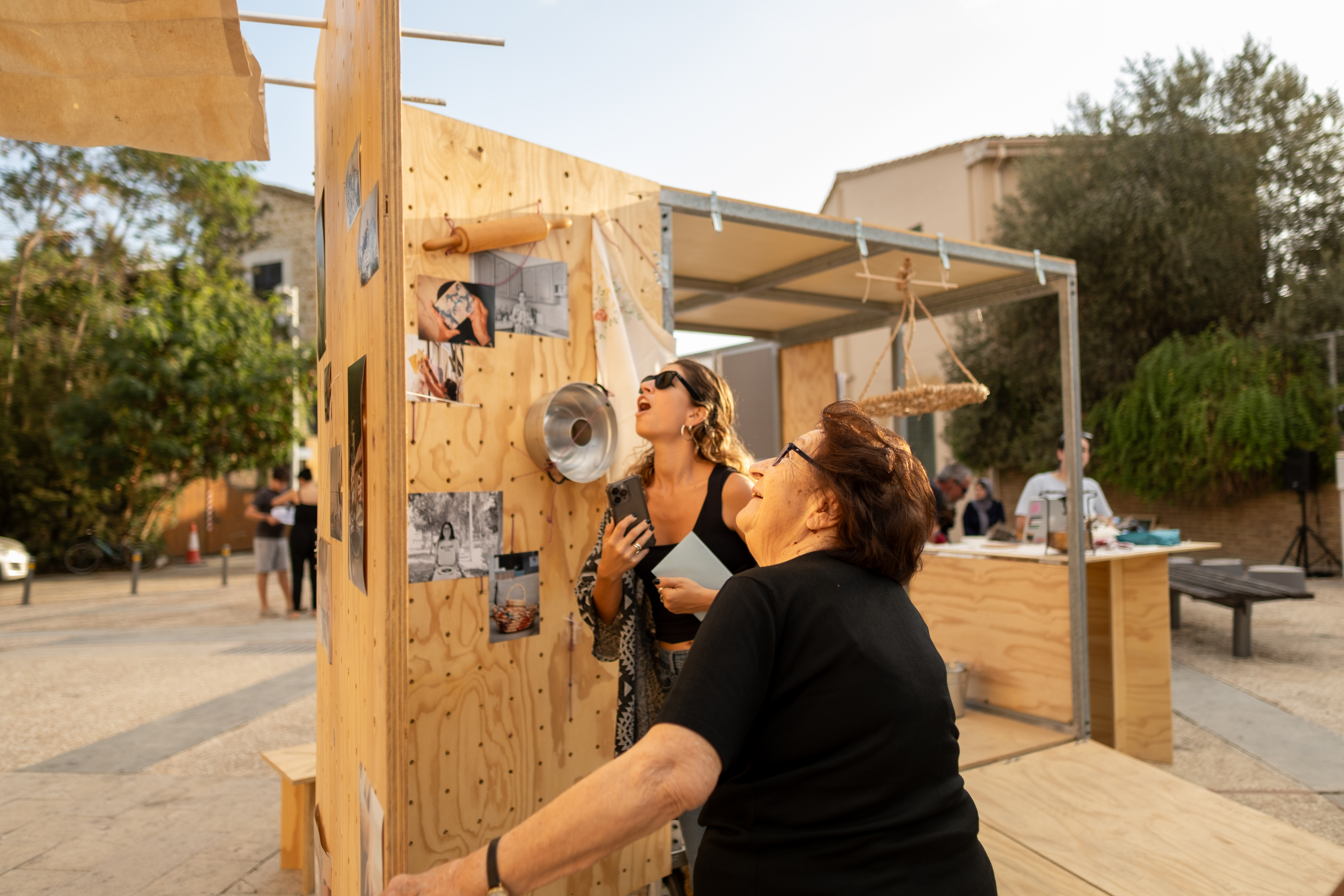
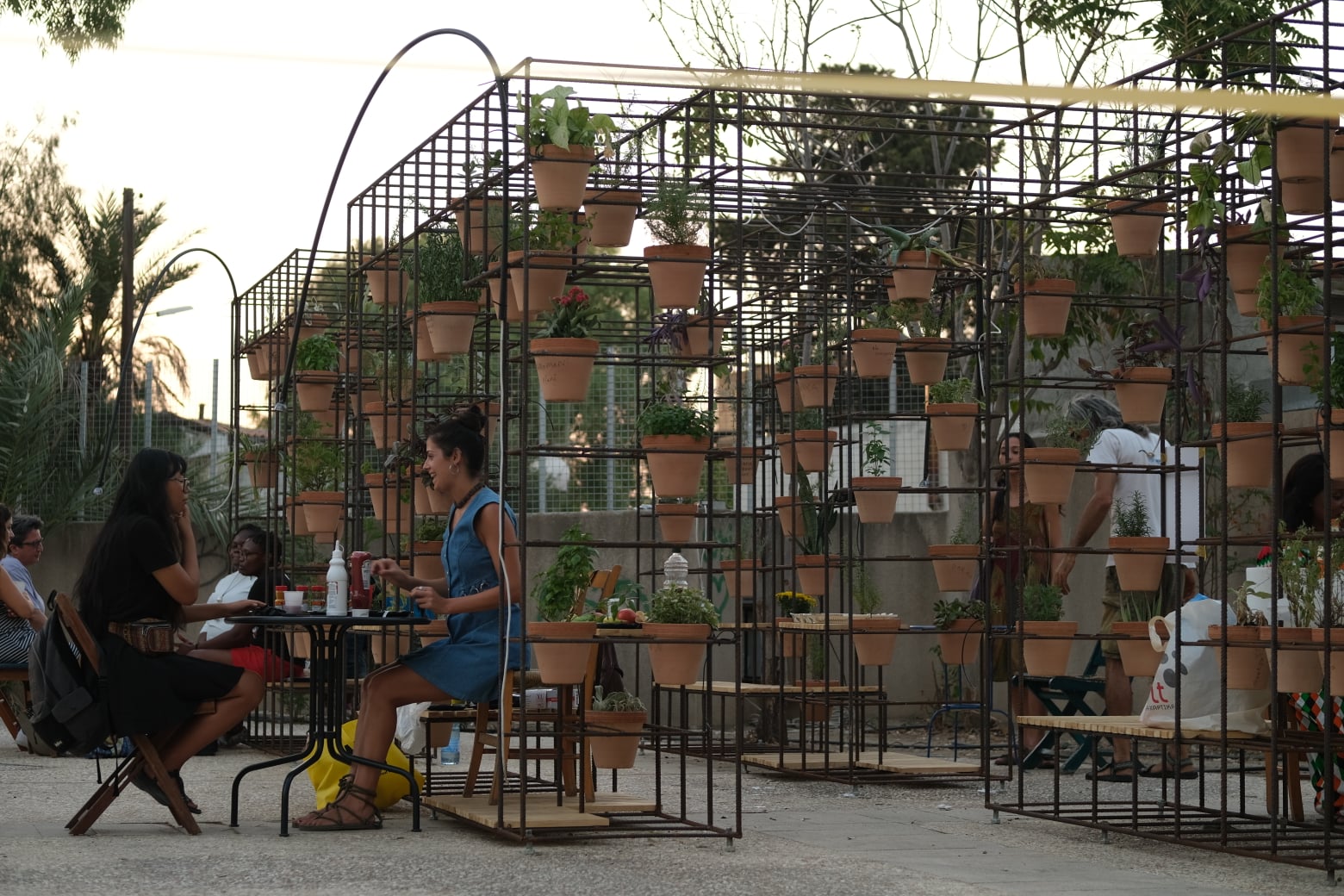
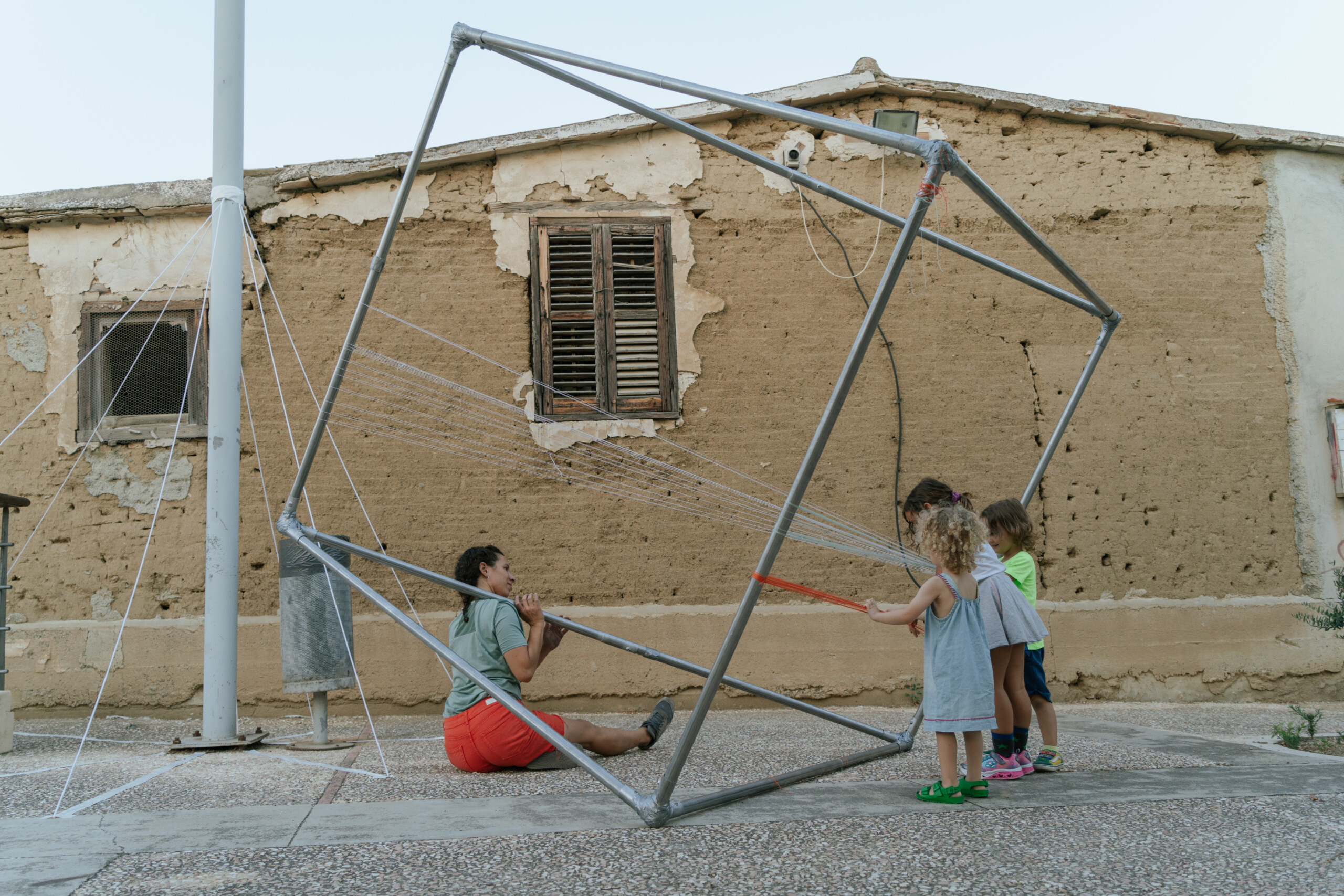
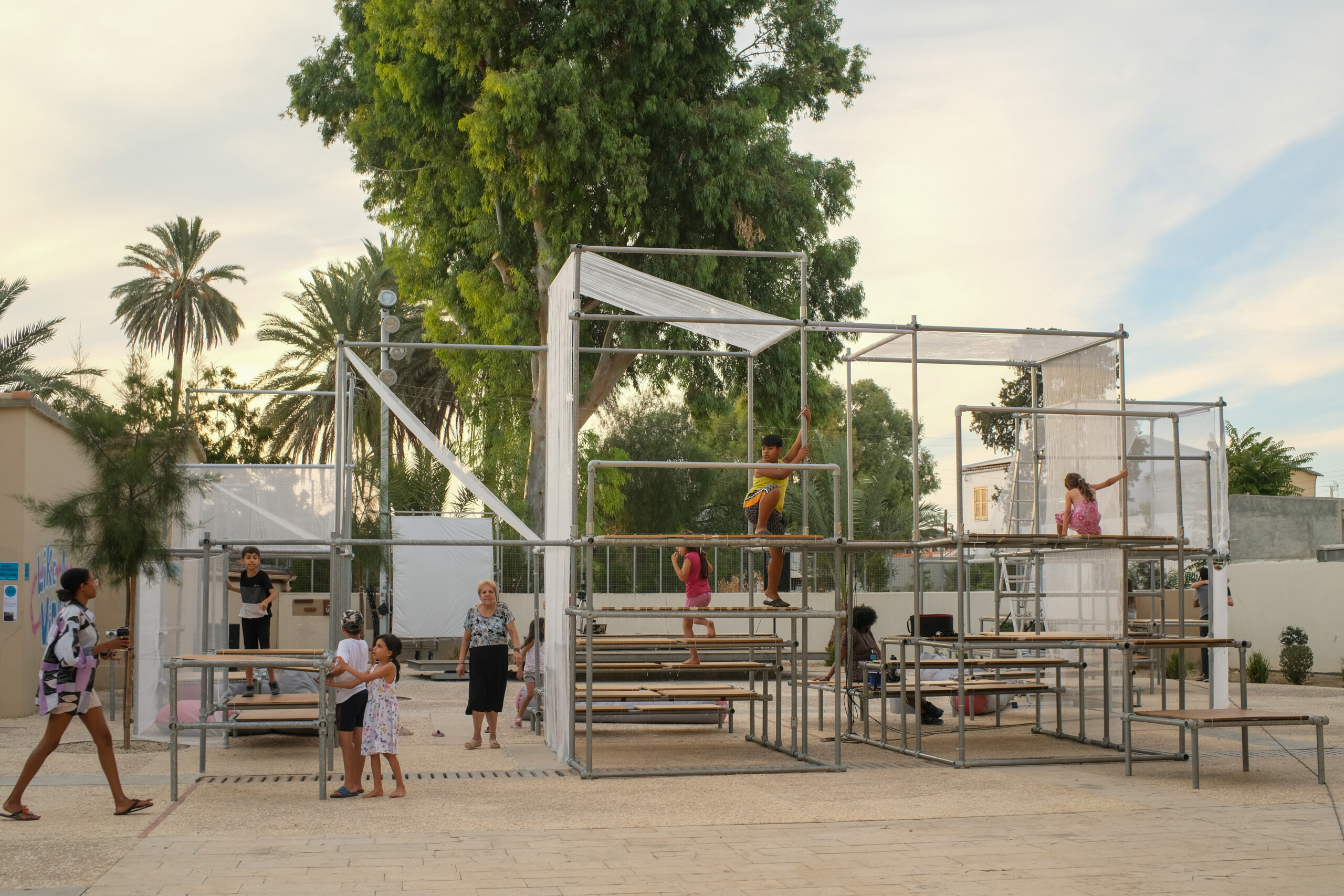
A key approach is the reuse and adaptive use of neighbourhood places. Public and private spaces, heritage and abandoned buildings are temporarily transformed into spaces for cultural activities. In several cases, the festival has also introduced lightweight public structures designed and built collaboratively with residents, artists, and students. Some of these installations have remained in the neighbourhood beyond the festival period, marking one of the first moments when shared structures appeared in public space and encouraged everyday care and use by residents.
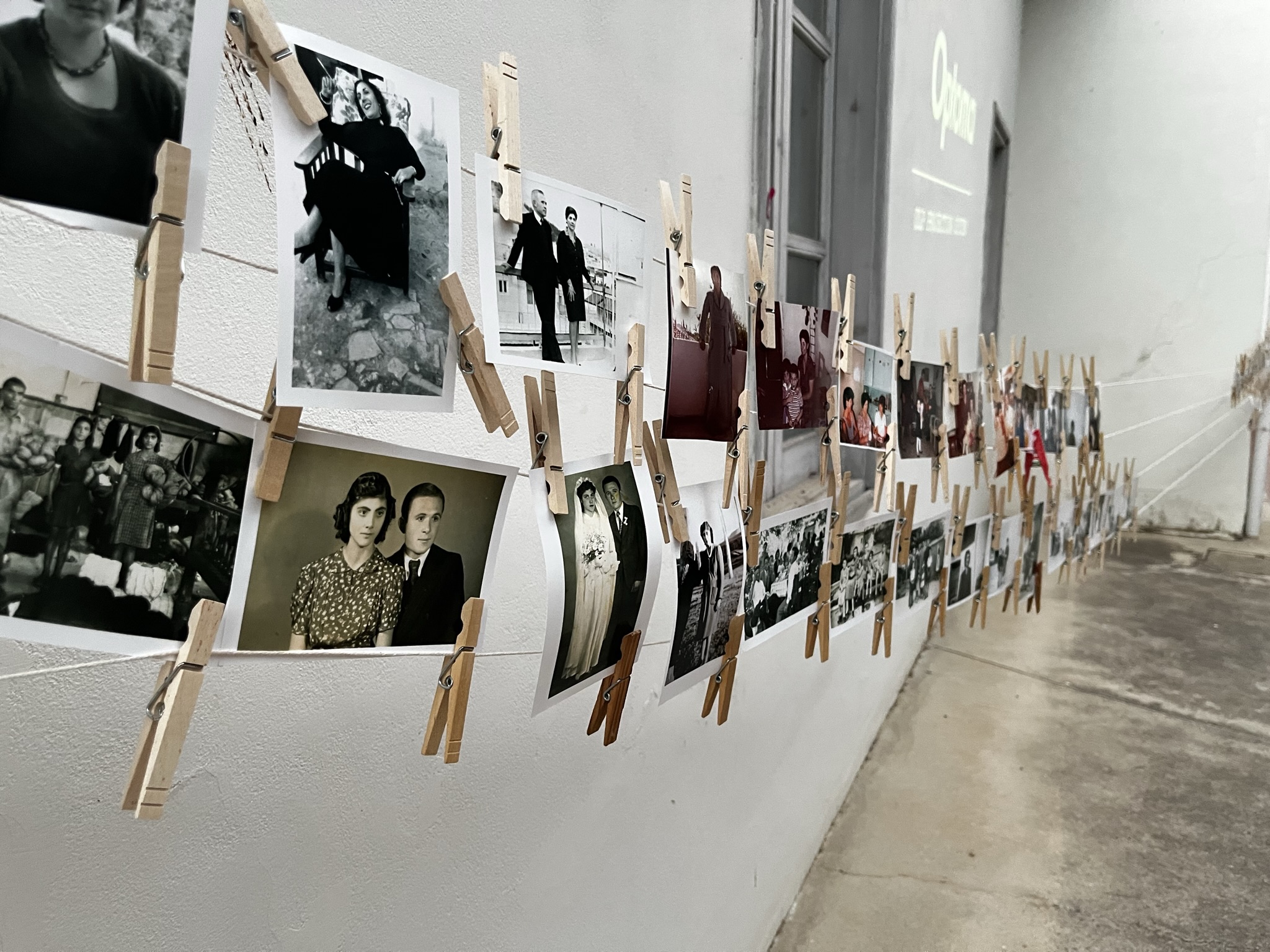
The festival also contributes to cultural sustainability by highlighting the neighbourhood’s heritage and collective memory. Artistic projects often draw on local stories and histories, which are interpreted through performances, installations, and exhibitions. These processes have also produced documentaries and other cultural materials that present the neighbourhood’s narratives to both local audiences and international cultural networks.
Sustainability is also reflected in the festival’s continuity. Since 2013, PK has taken place annually, allowing relationships, collaborations, and local knowledge to develop over time. Each edition builds on previous experiences, gradually strengthening community connections and reinforcing a shared sense of responsibility for neighbourhood spaces.
Through the reuse of existing places, the creation of lasting cultural references, and its recurring nature, the festival demonstrates how culture-led initiatives can support long-term social and cultural sustainability in urban neighbourhood.
PK contributes to making everyday life more meaningful by transforming familiar neighbourhood spaces into places of shared cultural experience. The festival is conceived as a walking festival that invites visitors to move through the neighbourhood and discover sites that are normally closed or overlooked. This gradual exploration creates a layered aesthetic experience rooted in the everyday life of Kaimakli.
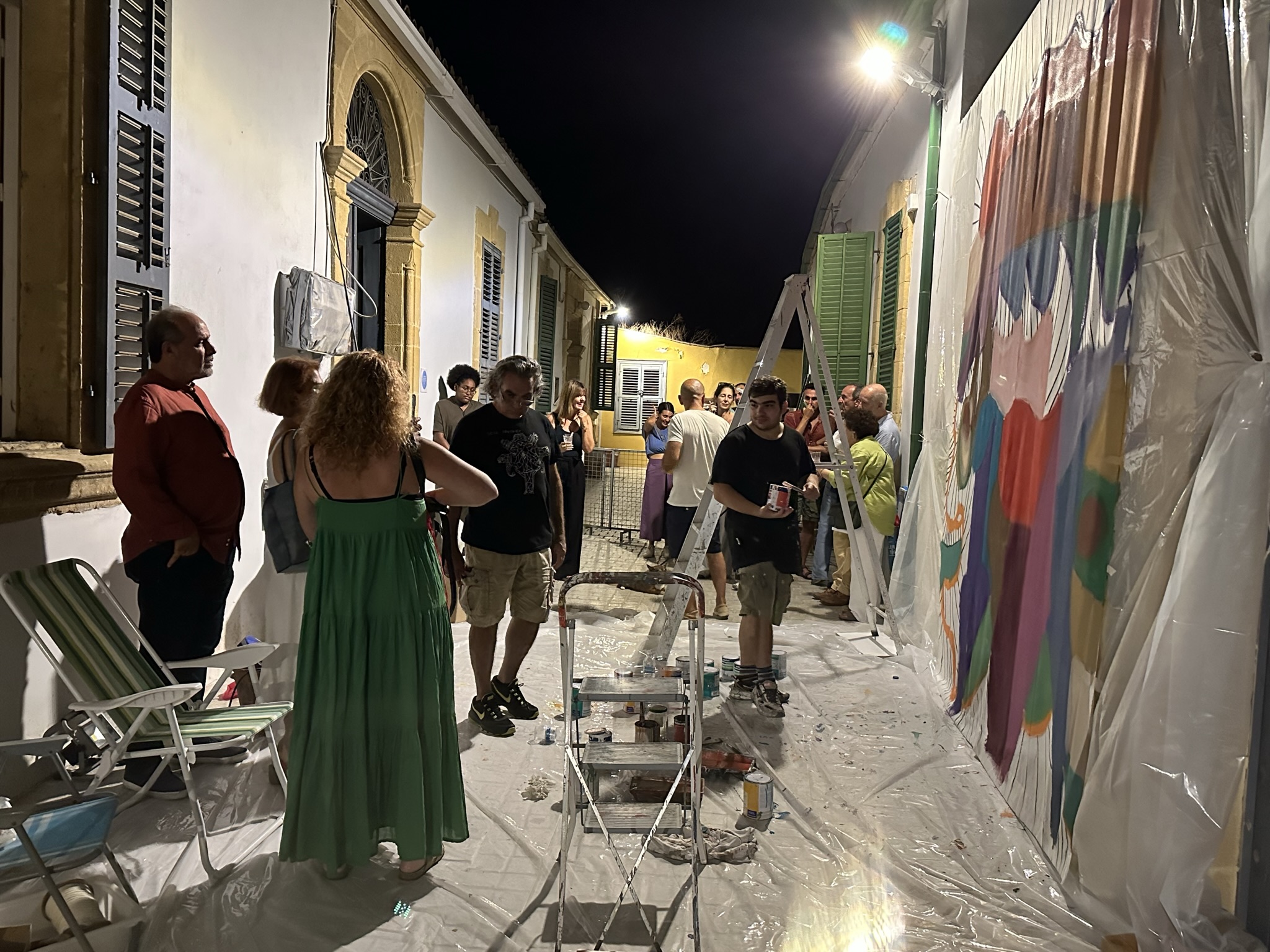
A key element of this approach is the collaboration between artists, architects, and residents to reshape spaces through temporary spatial interventions. Ephemeral structures designed and built with architects, architecture students, and volunteers create stages, seating areas, greening spaces and meeting points that temporarily change how public spaces are used. Visual artists and graffiti practitioners also contribute murals and installations that reinterpret local stories and identities through contemporary artistic languages.
Each edition of PK is guided by a theme that shapes the overall artistic approach. These themes influence how spaces are curated and how artistic projects interact with the architectural character of the neighbourhood. The traditional buildings become a setting where contemporary art overlaps with local heritage, creating a dialogue between past and present.
Many activities take place in spaces that blur the boundary between private and public life—that is, inside residents’ courtyards, rooftops, and homes—creating intimate cultural encounters and new ways of experiencing the neighbourhood. Artistic projects often draw on local history, peoples’ stories and memories, transforming them into performances, films, murals, and installations that celebrate the identity of the place. As the festival returns each year it shapes how residents experience their surroundings. Familiar places are rediscovered, new meanings emerge, and a stronger sense of belonging and care for the place develops over time.
PK addresses inclusion in a neighbourhood characterised by significant demographic diversity. Almost a fifth of the Kaimakli population is non-Cypriot. The proximity to the UN buffer zone, after the war of 1974, led to gradual abandonment and an increasingly ageing population. Empty houses and affordable rents have recently drawn migrants from Africa, and Syria, alongside young creatives and other international residents. Despite this diversity, opportunities for interaction remain limited due to the scarcity of shared public infrastructures, the central challenge that the Festival addresses.
Since its first edition in 2013, PK has sought to create accessible entry points for participation through culture, regardless of age, income, or cultural background. The Festival and all its activities are free of charge, reflecting a deliberate commitment to making culture accessible to everyone, while also introducing an alternative approach by bringing contemporary artistic practices directly to the neighbourhood.
The curators are also addressing inclusion through activities which encourage encounters between residents of different backgrounds. Projects pair artists with residents to develop storytelling performances honouring the multicultural character of the neighbourhood. Themes are carefully curated to engage with sensitive issues of inclusion such as gender, identity, and bi-communality engaging Turkish Cypriots from across the buffer zone .
Inclusive governance is also central to the organisation of the festival. Residents of various ages (including the retiree association EKYSI) are engaged before, during, and after the event, often becoming hosts, collaborators, or volunteers.
Through these practices, the festival nurtures neighborhood commons treating the neighbourhood itself as a shared cultural resource and grounds for collective imagination and alternative urban living. As such it creates a shared responsibility for urban space.
Participation has been a key notion to the way Pame Kaimakli has been conceived in its early stages and how it is organised and implemented until today. The festival is developed through continuous dialogue with residents, local groups, and cultural practitioners. Preparation begins months in advance with neighbourhood meetings, informal conversations, and collaborations with community members to identify spaces, ideas, and local stories that can shape the programme.
Residents play an active role in hosting and co-creating projects. In several editions, artists have been paired to collaborate with residents and use spaces as sites for artistic projects. This process transforms everyday spaces into temporary cultural venues while allowing residents to participate directly in the artistic program.
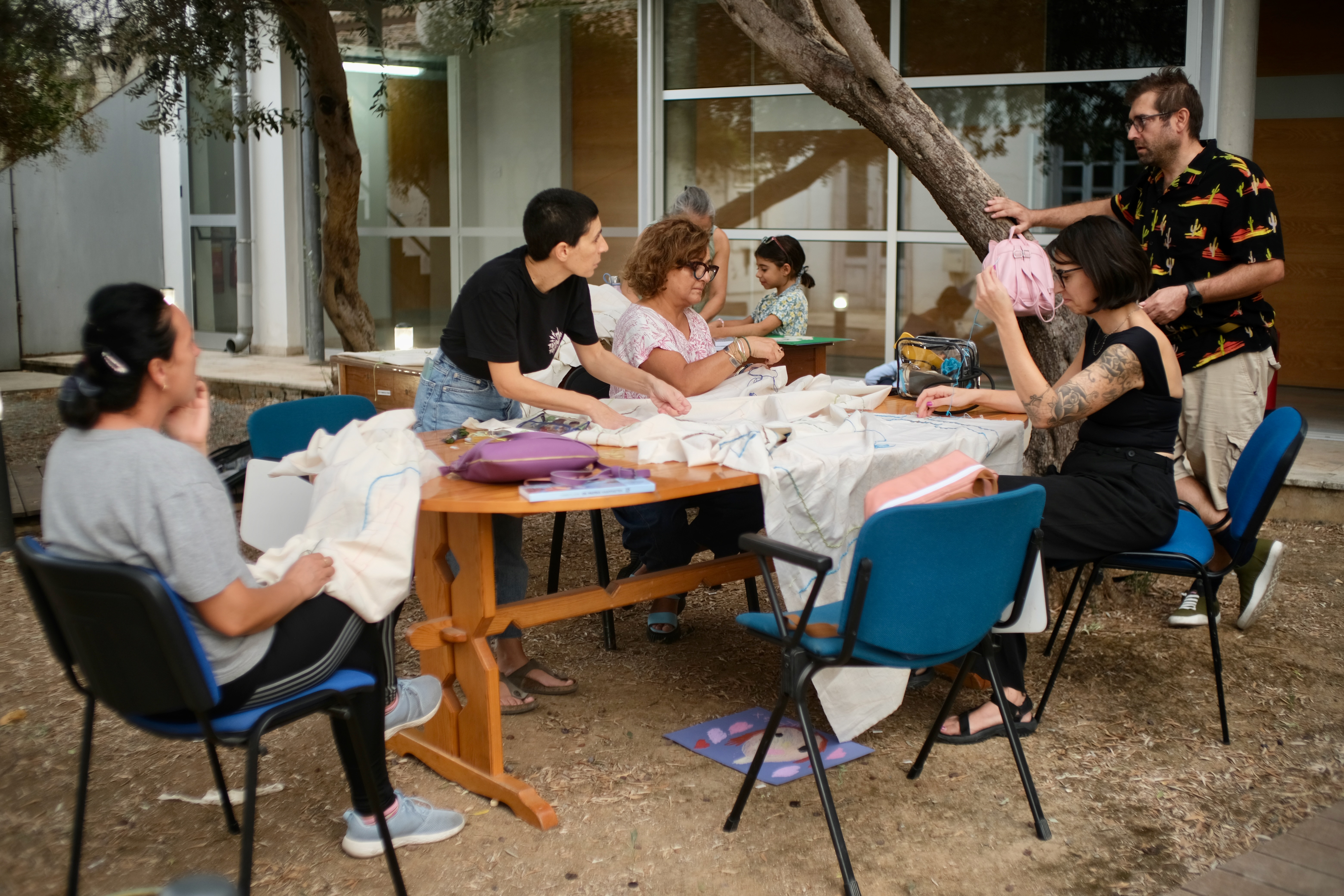
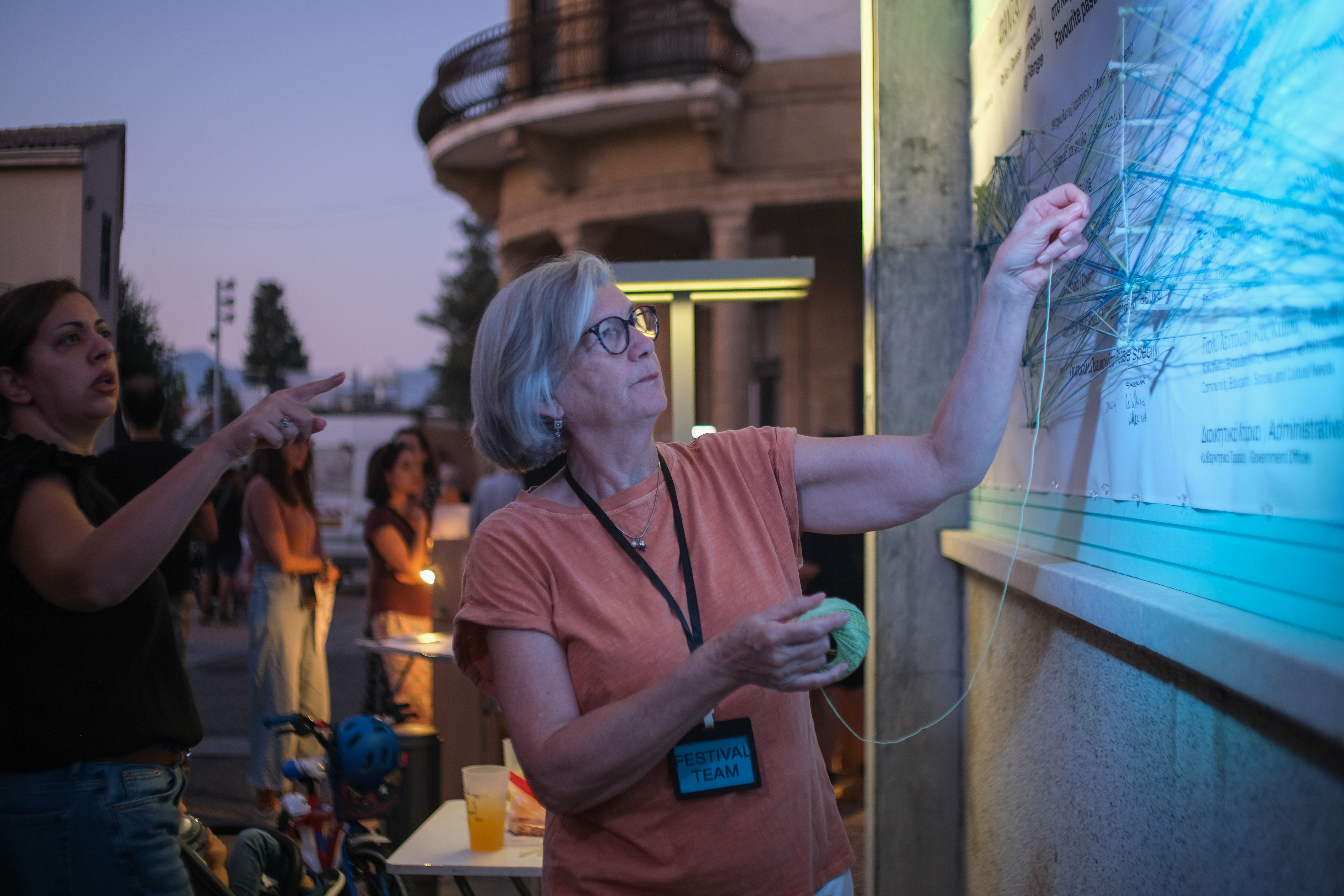
Participation also extends to the practical production of the festival. Volunteers, students, local residents, formal and informal community groups collaborate for the festival production: building temporary structures, preparing spaces, organising activities, and welcoming visitors. This collective effort turns the preparation of the festival itself into a social process that strengthens relationships within the neighbourhood.
In addition the curatorial team intentionally designs activities and welcomes projects where the interaction and dialogue between festival visitors is not only encouraged, but a core practice. Shared meals, storytelling projects, interactive workshops, and intimate performances create informal settings where people from different backgrounds can come together.
The participatory approach has gradually built trust and collaboration among residents, artists, and organisations. Each edition of the festival involves more than 160 collaborators, including residents, artists, volunteers, and local organisations, activating more than 25 locations every year and attracting over 2,500 visitors.
PK is the result of collaborations between actors at multiple levels, combining strong local engagement with national support and international cultural exchange.
At the local level, residents, neighbourhood groups, small businesses, and volunteers play a central role in shaping the festival. They provide their spaces as sites for events, contribute knowledge about the neighbourhood and also provide practical hands-on support. Their involvement ensures that the programme reflects local realities and strengthens relationships within the community.
Urban Gorillas coordinates the initiative, appoints a curating team and acts as a mediator between citizens, cultural practitioners, and institutions. The Municipality of Nicosia supports the implementation of the festival through permits, coordination for the temporary use of public spaces, and logistical assistance. The Ministry of Culture is contributing support for the artistic programme (since 2018) and help connect the initiative to the broader cultural landscape in Cyprus.
PK is connected to wider cultural networks that bring artists, volunteers, researchers from different countries across the world to work within the neighbourhood. The UN Peacekeeping force also collaborates in an attempt to bring the Turkish Cypriots to the Festival, uniting the divided neighborhood
The added value of this multilevel engagement is the creation of a festival that remains deeply rooted in the neighbourhood while also connecting local issues to wider cultural and social discussions. Questions explored through the festival—such as migration, coexistence, and the use of shared urban spaces—are strongly present in Kaimakli but also resonate across many EU cities and beyond.
Through this local–global approach, PK creates a culturally open environment where people from different social, cultural, and religious backgrounds participate together producing a dense and diverse cultural experience, grounded in everyday neighbourhood life.
The Festival is developed through collaboration between multiple disciplines that contribute different forms of knowledge and practice. Artistic, spatial, social, and technical expertise intersect to create projects that respond to the neighbourhood’s spaces, stories, and community life.
Artists working across a wide range of media—architecture, visual arts, performance, photography, film, sound, and installation—develop projects that explore local narratives, reinterpret heritage and document everyday experiences.
Architects and designers play an important role in shaping the spatial dimension of the festival. Working together with residents, volunteers, and architecture students, design and build temporary installations in public space.
Engineering and fabrication expertise has also contributed to several projects. For example, engineers collaborated with artists to experiment with steel laser-cut techniques for a sculptural installation marking the entrance of Kaimakli. Designers and DIY makers have also created small urban interventions, such as a waiting area for a bus stop constructed from upcycled materials.
Environmental consultants and designers have contributed to projects focused on planting and urban greenery for spatial installations that still remain in the area. A Dutch botanist invited as an artist-in-residence collected plants from gardens along the UN buffer zone in Kaimakli, developing the “common” aroma from both sides of the divided neighbourhood.
Social scientists are present every year through studies and documentation of the neighbourhood’s social dynamics and heritage. Their work helps inform artistic projects and contributes to preserving local knowledge.
With over 35 projects presented in each Festival edition, the event thrives due to its transdisciplinary collaboration, generating creative responses to local urban challenges and enriching the cultural life in the neighbourhood.
PK operates through a community-based, non-profit model prioritising social and cultural value over income generation. Activities are free of charge, making access central to the project’s mission while also shaping its distinctive business model. Rather than relying on ticket sales or commercial income, the festival is sustained through a combination of public funding, long-term partnerships, informal economies, and forms of local reciprocal support.
A key pillar of financial sustainability is public funding. In recent years, the organisers seek funding through EU, local artistic grants, and embassy support. PK acts as a cultural platform, hosting artists from across the world (including artists from Japan, Mexico and Argentina). Funding has strengthened its organisational capacity and enabled it to grow while remaining accessible to all. The festival develops through project-based collaborations and in-kind contributions, allowing it to operate with relatively modest financial resources while maintaining a high level of impact.
An important part of the model is an informal local economy of exchange that both supports and is supported by the festival. Residents contribute skills, labour, knowledge, and hospitality in ways that reduce costs and deepen ownership and engagement. For example, local construction companies offer materials and technical labour, local elderly associations contribute to creative activities but also in the preparation of food and hospitality. Local shops benefit from increased visibility creating mutual value within the neighbourhood.
PK is also sustained through its investment in social infrastructure. It creates connections between young and more established artists, supporting youth engagement, and strengthening community networks that continue beyond the event itself. Its sustainability lies not only in financial terms, but in the long-term relationships, and shared resources that the festival cultivates year after year.
Several elements of PK festival can be transferred to other contexts because they rely on simple processes, local collaboration, community stories and histories and the creative use of existing spaces.
A key transferable element is the engagement methodology, working directly with residents to conceive and organise the festival. This approach allows cultural projects to emerge within the everyday environment and can easily be adapted to different urban contexts. The organisational model is based on informal and relational engagement with residents. Trust-building practices, such as neighbourhood meetings, invitations to participate in forming the festival program are proven important. Equally artistic-based practices to overcome geographical divisions have been developed and can be applied to other conflict zones.
The process of co-creation between artists and residents. Invited artists develop projects in dialogue with people who live or work in the neighbourhood, often using local stories, skills, and spaces as starting points. This encourages residents to participate as hosts, collaborators, and contributors.
The festival demonstrates how small-scale spatial interventions transform the experience of public space. Temporary structures designed by architects, designers, and volunteers, such as stages, seating areas, and sets, can be built with simple materials and adapted to different locations.
Equally transferable is the organisational approach based on open calls, local meetings, and collaboration with neighbourhood groups. This process helps build trust and allows the programme to reflect local realities and needs.
Finally, the commitment to free and accessible cultural activities is a key principle that can be replicated. By removing financial barriers and bringing contemporary cultural practices directly into neighbourhood spaces, the model shows how culture can become an accessible platform for community interaction and local engagement.