Enhancing Circularity, Sustainability, and Innovation
Industrial residue - Paper coating
Industrial residue a new paper coating made out of residues from paper manufacturing processes
Scraps, offcuts and material residues are generated in many industrial production
processes. What properties do they still have? Can these properties be observed and analysed in order to reintroduce the residue by suggesting new materiality?
The purpose of this project is to analyse the waste generated during the paper production process with the aim of finding an application for design pieces.
Spain
Local
Barcelona
Mainly urban
It refers to other types of transformations (soft investment)
Prototype level
No
No
No
Individual
Scraps, offcuts and material residues are generated in many industrial production processes. What properties do they still have? Can these properties be observed and analysed in order to reintroduce the residue by suggesting new materiality?
The purpose of this research is to analyse the waste generated during the paper production process with the aim of finding an application for design objects. An investigation into the material production process with the focus on the residue that is generated. By combining the analysis of the context of a paper factory and the properties of the material, objects are created by applying an unique artistic technique.
The purpose of this research is to analyse the waste generated during the paper production process with the aim of finding an application for design objects. An investigation into the material production process with the focus on the residue that is generated. By combining the analysis of the context of a paper factory and the properties of the material, objects are created by applying an unique artistic technique.
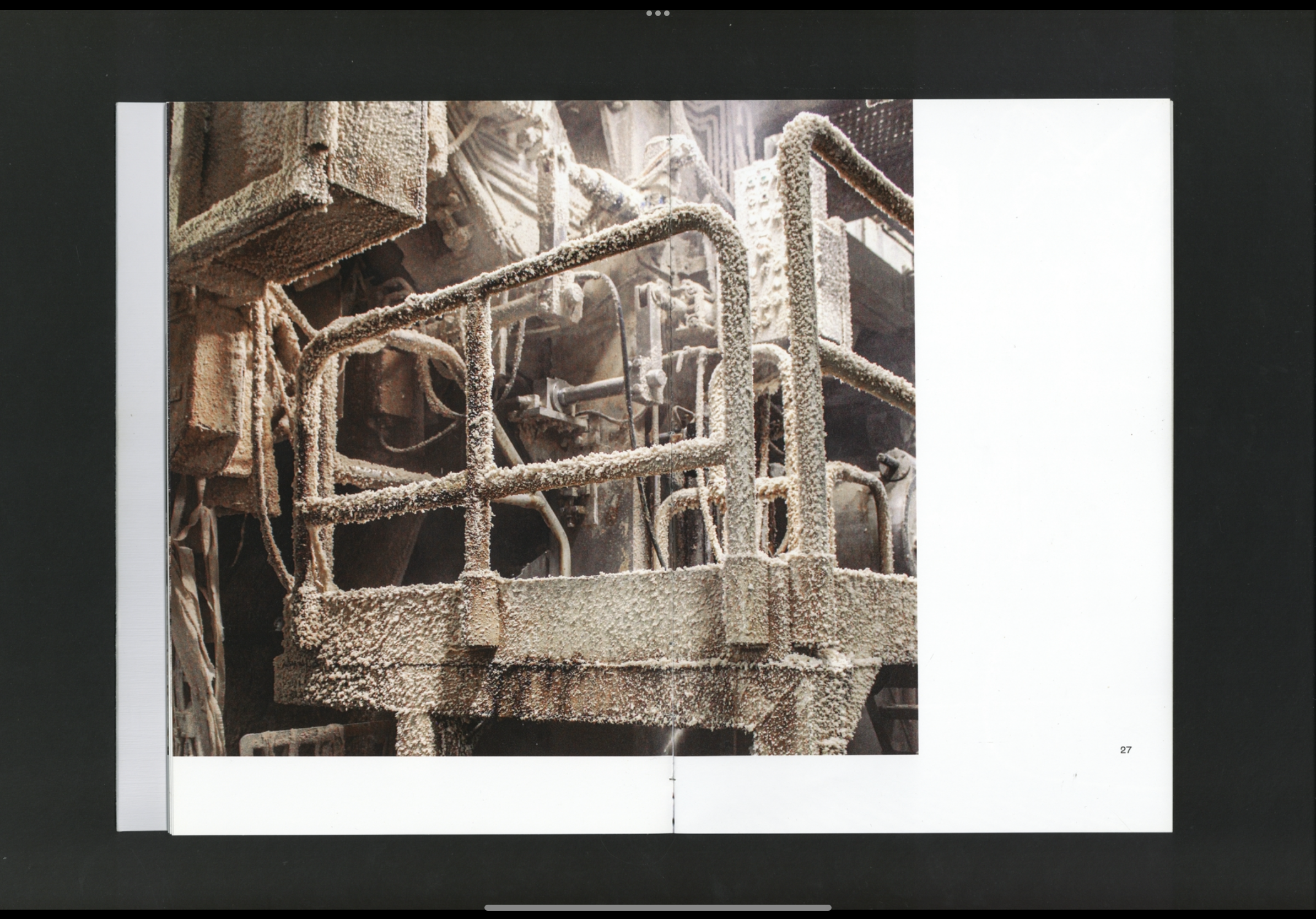
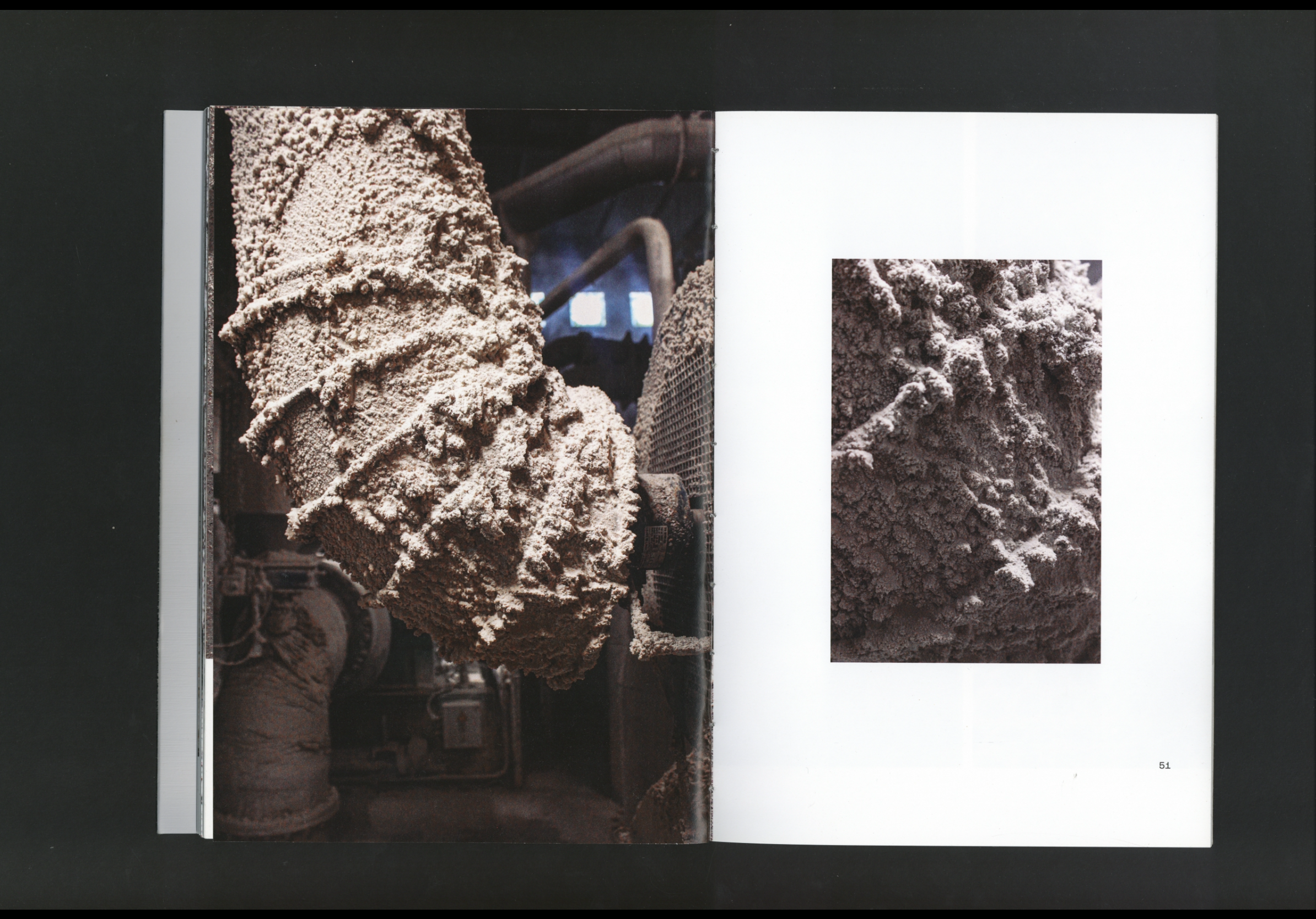
l've always been fascinated by designing starting from the material itself specifically from production waste. This new project is born from the world of paper factories. Observing the factory environment, I was struck by how the space was completely transformed by paper waste. As it floated through the air, sticking to surfaces and layering over time, it created a unique textured coating with a particulate finish.
This is a research project focused on one of the oldest production techniques in the world, aimed at discovering new materiality by repurposing industrial waste.
For this project, pure cellulose was used, extracted from paper recycling processes.
This is a research project focused on one of the oldest production techniques in the world, aimed at discovering new materiality by repurposing industrial waste.
For this project, pure cellulose was used, extracted from paper recycling processes.
Biobased material - Circular economy
Upcycling - the industrial residue is reintegrated
New materiality - new aesthetic value
Transdisciplinary - Art, design and science
Low impact life cycle
Paper production is still widely regarded as a process with a significant environmental impact, largely due to the use of aggressive chemical components. While an increasing number of companies are investing in more sustainable production methods, little attention is paid to the residues generated during large-scale paper manufacturing.
This project aims to reintroduce cellulose waste into a new value cycle through the creation of works that sit at the intersection of art and design. The production residue is collected and reused in its entirety and purity, without generating additional waste or requiring further processing steps that would consume extra energy and resources.
Special attention has been devoted to the analysis of cellulose’s technical properties, with the goal of enhancing its intrinsic characteristics and untapped potential without resorting to additional industrial treatments. As a result, the objects produced have a very low environmental impact throughout their life cycle: the paper-based coating is easily separable from the underlying surfaces and can be disposed of or recycled with minimal environmental cost.
Observing the factory environment, I was struck by how completely the space was transformed by paper waste. As it drifted through the air, adhering to surfaces and accumulating over time, it formed a distinctive textured coating with a raw, particulate finish—a powerful phenomenon that profoundly altered both the appearance and the perception of the space.
The factory’s large machines released clouds of steam and were gradually engulfed by a storm of cellulose filaments that slowly settled, layered, and solidified. The convergence of these elements transported my mind elsewhere: it felt as though I were standing in a high-altitude snowy landscape, where surfaces blanketed in snow take on soft, rounded, and flowing forms. I began to wonder—what would happen if an object were left in that space and retrieved several days later?
This question sparked a deeper curiosity about how cellulose filaments naturally generate structure and a raw, organic surface quality. The texture I developed, after studying and replicating the phenomenon observed in the factory, seeks to convey those same sensations—to transport the viewer to another place and to bridge two seemingly distant worlds: the industrial and the natural.
My project does not focus on inclusion; it is a project dedicated to the creation of works of art and design
The product concept emerged from direct observation of the paper manufacturing process; for this reason, the on-site visit to the factory was essential to the early stages of the project’s development.
The project was developed with the intention to collaborate with the manufacturing company, which provided the opportunity to explore and refine the product concept. In principle, paper producers with a shared interest in recycling production waste could form a consortium, directing this material toward artistic and design-oriented applications with a higher added value than conventional reintegration into the industrial production cycle.
This project spans the fields of art, nature and design, with a strong technical focus on sustainable materials design.
The product is a design object made using an environmentally responsible raw material. It is intended to be sold at market prices through design-focused retail channels, both physical and online. Target customers include the retail market as well as specialized resellers.
Using a small- to medium-sized lamp as a reference product, the production process involves the collection of industrial paper waste, with logistics costs limited to on-site pickup at the paper manufacturing facility. Approximately 0.5 kg of raw material is required per product. The process includes material shredding, the welding of a metal mesh structure (approximately 100 × 50 cm per lamp), application of the cellulose fibers using a spray diffuser, and final finishing with natural resin coatings.
Each individual piece requires approximately 18 hours of labor. Production is carried out in a workshop of roughly 100 square meters.
At the unit level, total production costs amount to approximately €250 per piece, including raw material collection, cellulose processing, spraying, finishing, labor costs, and workshop rental. The estimated retail price per unit is approximately €750, ensuring a solid margin while remaining aligned with the design market.
Investment in machinery is relatively low, estimated at around €2000. This equipment realistically supports an annual production capacity of approximately 100 units.
Financing can be achieved through cash flow generated by sales, contributions from cardboard manufacturers’ trade associations, and, if necessary, crowdfunding initiatives.
Production can be expanded with relatively modest investments. The product is highly replicable across different geographical contexts, as the raw material, production facilities, and manufacturing technologies are widely available. The simplicity of the production process enables efficient technology transfer and supports scalability through licensing models based on licensing fees.
Following the research phase, concept development, and prototyping, I have already designed, produced, and sold two commissioned pieces—a lamp and a chair. The chair was exhibited in Madrid and featured in two specialized design publications.
I have recently leased a dedicated workshop to begin producing initial pieces on a small scale and to test the product’s market potential, with the aim of validating demand and refining the business model before broader expansion.
I have recently leased a dedicated workshop to begin producing initial pieces on a small scale and to test the product’s market potential, with the aim of validating demand and refining the business model before broader expansion.