Save by cycling
{Empty}
The "Save by cycling" project, promoted by the municipalities of Curno, Mozzo and Treviolo (IT), encourages sustainable mobility and cycle tourism. Cycling residents and tourists earn vouchers to spend in local shops. Further, the project improves cycle paths, digitises maps and promotes cultural events. This joint initiative improves quality of life, reduces environmental impact and enhances the local area, creating a replicable model of sustainable mobility and tourism.
Italy
{Empty}
Prototype level
Yes
Yes
Yes
No
No
16143: Mozzo (IT)
“Save by Cycling” promotes sustainable mobility, local economic development and social inclusion in 3 small Italian municipalities (Curno, Mozzo and Treviolo). The project started in June 2025 and will last until May 2027. It increases everyday cycling and cycle tourism through digital innovation, incentive schemes and targeted infrastructure improvements, while enhancing the attractiveness and accessibility of local territories.
Target groups include:
- Residents encouraged to shift commuting trips to cycling
- Tourists engaged through gamified cycling experiences
- Local shops benefiting from voucher-based spending
- Vulnerable groups (elderly, children, people with disabilities) supported through improved accessibility and safety measures.
Specific objectives are to:
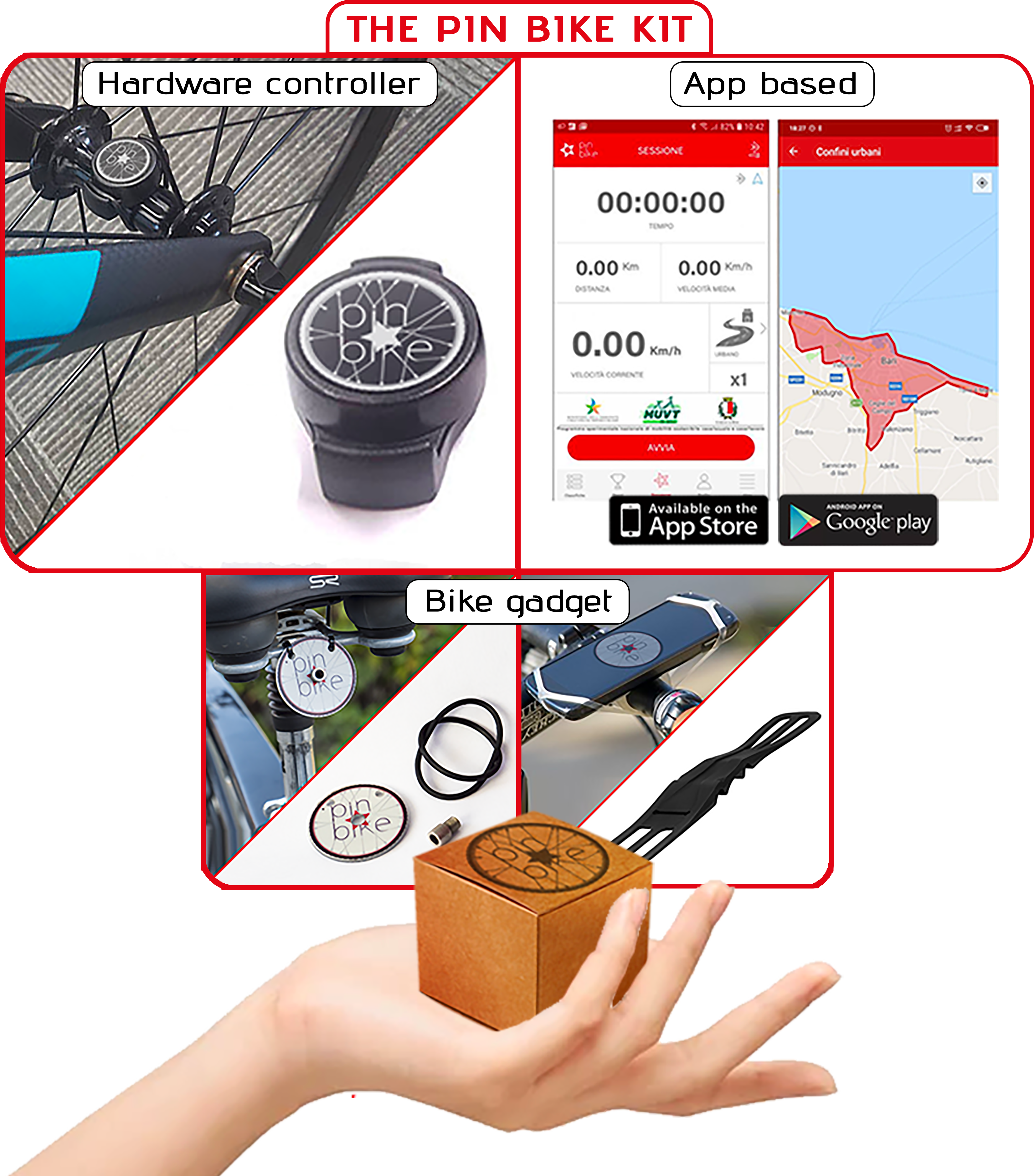
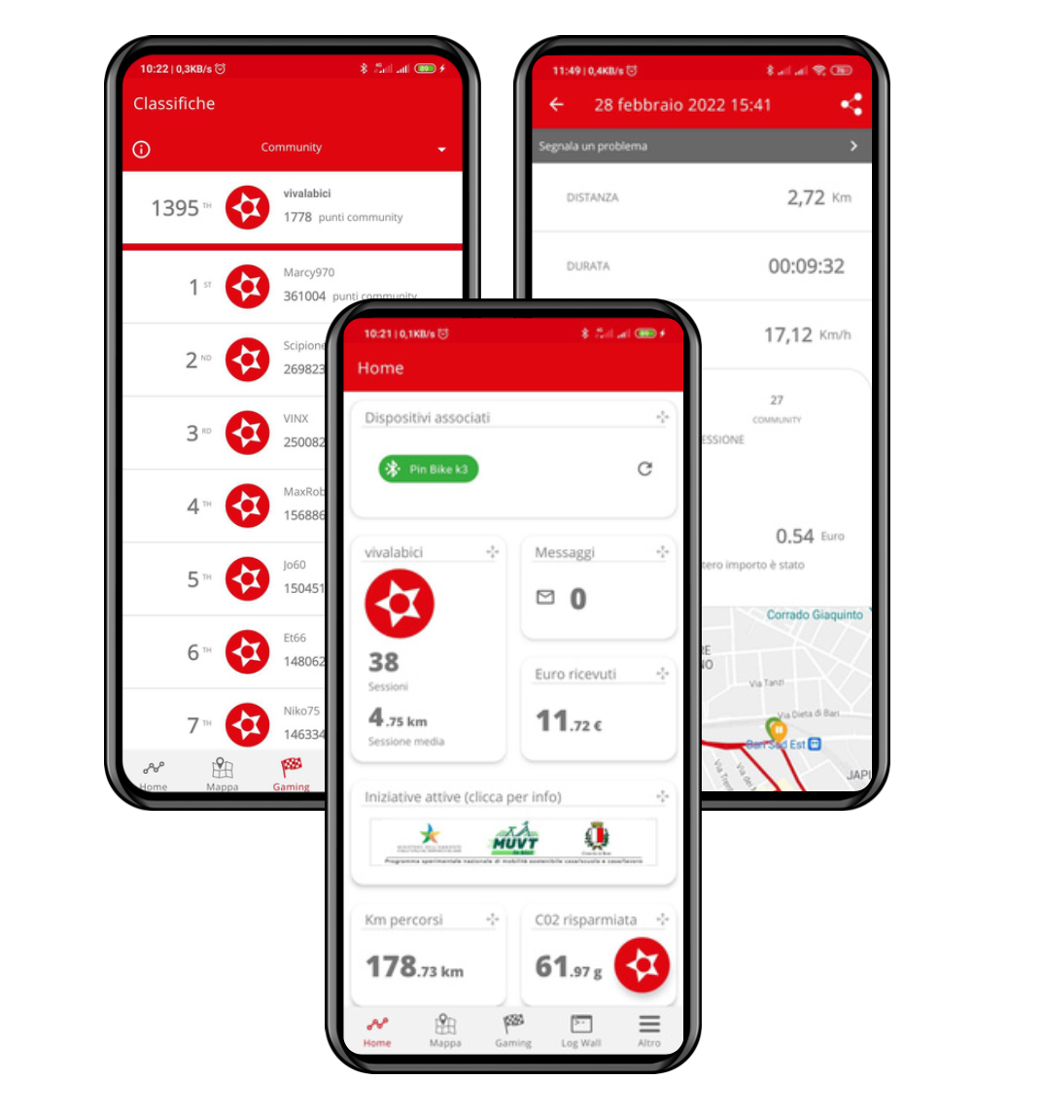
1. Increase the use of bicycles through the Pin Bike digital system that tracks trips and rewards users with economic incentives and gamification mechanisms
2. Promote cycle tourism by linking cycling routes to cultural, natural and gastronomic attractions
3. Strengthen local economies through vouchers redeemable in local shops.
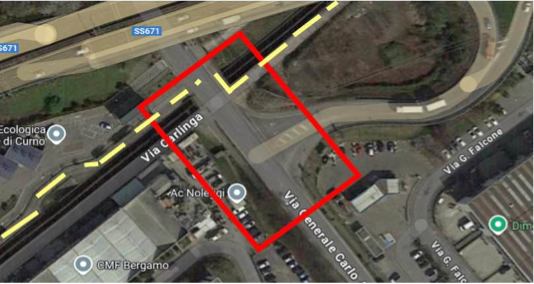
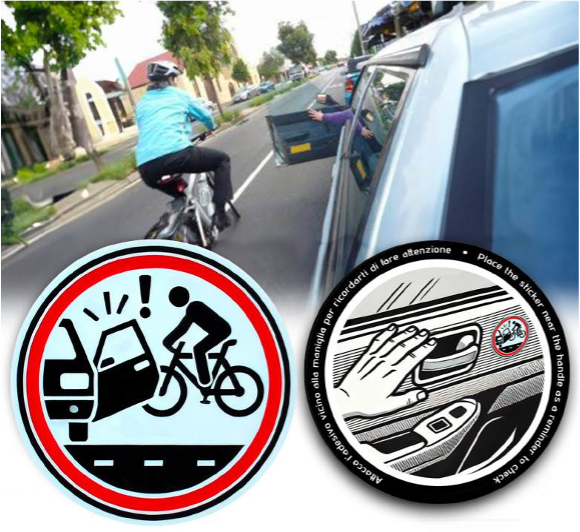
4. Improve cycling infrastructure safety through targeted interventions (signage, crossings, separation elements).
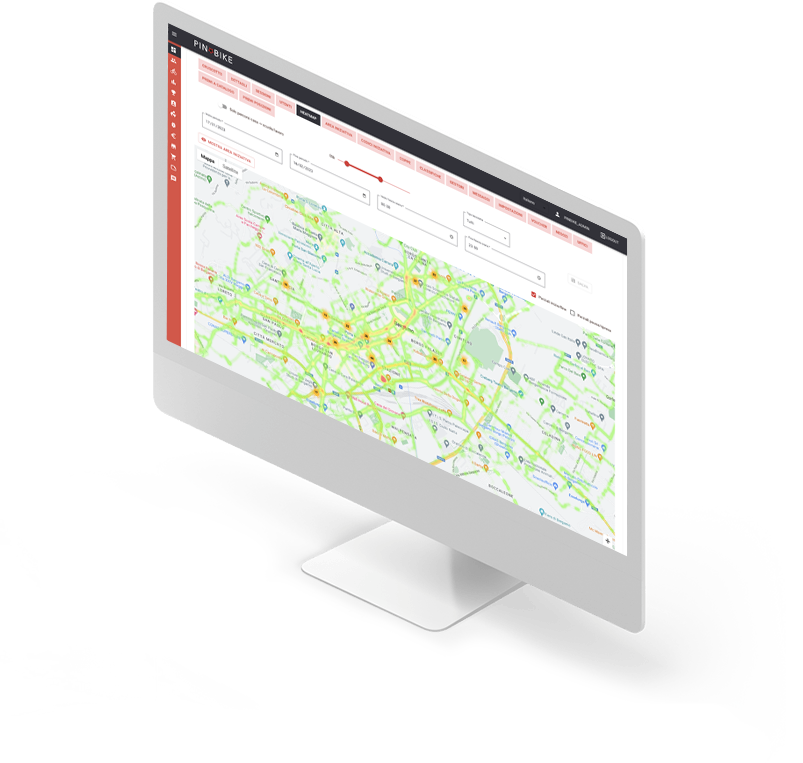
5. Provide municipalities with data-driven tools to monitor mobility patterns and support planning decisions.
Expected outcomes include:
- Increased cycling rates and modal shift from car to bike, with reduced congestion and emissions
- Higher engagement of citizens and tourists through participatory and gamified approaches
- Measurable economic benefits for local businesses via incentive circulation
- Enhanced safety and usability of cycling networks
- Improved governance capacity through real-time data, open data access and evidence-based planning.
Overall, the project combines environmental, social and economic dimensions, aligning with NEB principles by delivering a sustainable, inclusive and attractive mobility ecosystem.
sustainable mobility
inclusive accessibility
local economy
digital innovation and participation
Territorial identity and experience
“Save by Cycling” addresses sustainability as a multidimensional objective.
At its core, the initiative aims to reduce transport-related emissions and congestion by shifting daily mobility from private cars to bicycles. This is achieved through the Pin Bike data-driven incentive system that rewards citizens for cycling trips (e.g. Bike2Work Bike2Schooll), making sustainable choices economically attractive and measurable. By linking incentives to verified kilometres travelled, the project ensures real, quantifiable environmental benefits.
A second key objective is to embed sustainable habits over time. Through gamification mechanisms (rankings, challenges, rewards), the project encourages continuous participation and transforms occasional cycling into routine behaviour. This behavioural approach is crucial to achieving lasting impact beyond the project duration.
The initiative also promotes sustainable local economies by ensuring that rewards are spent within local shops. This creates a circular model where environmental benefits are directly connected to economic resilience and local value creation.
From an infrastructural perspective, the project contributes to sustainability by improving the safety and usability of cycling networks, through targeted interventions such as signage, safer crossings and route mapping. These actions enhance the overall quality of public space and encourage wider adoption of active mobility.
Importantly, “Save by Cycling” integrates the Pin Bike dashboard for municipalities and an open-data platform (https://web.pin.bike/open/63) for the wider public to monitor mobility patterns, emissions savings and user behaviour. This supports evidence-based planning and enables scalability and replication in other contexts.
The initiative is exemplary because it combines technology, incentives, infrastructure and community engagement into a coherent model. It delivers measurable, replicable and economically sustainable outcomes.
“Save by Cycling” addresses aesthetics and quality of experience by transforming cycling into a pleasant, engaging and culturally enriched way of experiencing the territory.
A key objective is to enhance the perceived quality of public space and cycling routes. This is achieved through the introduction of clear, well-designed vertical and horizontal signage, that improve usability but also contribute to a more coherent and attractive cycling network.
Further, separation kerbs will be installed along high-risk sections to separate cycle lanes from motor traffic. On dangerous sections, traffic lights will be installed to reduce the risk of accidents and improve visibility and safety for cyclists. In addition, maintenance stations will be placed along the routes to provide immediate assistance to cyclists, equipped with basic repair tools. As such, the project contributes to inclusive quality of experience, ensuring that routes and public spaces are accessible, safe and comfortable for diverse users, including families, elderly people and less experienced cyclists.
Another objective is to integrate cultural, natural and local identity into the cycling experience. The project connects routes with points of interest—such as historical sites and natural areas —enhanced through digital mapping and storytelling. This allows tourists to experience the territory as an interconnected narrative rather than isolated destinations, increasing both emotional engagement and sense of place.
“Save by Cycling” is exemplary because it demonstrates how design, digital tools and cultural valorisation can be combined to elevate everyday mobility into a high-quality spatial and social experience. Rather than focusing only on infrastructure, it creates a holistic cycling ecosystem where aesthetics, usability and local identity reinforce each other.
“Save by Cycling” places inclusion at the core of its design, ensuring that sustainable mobility is accessible, affordable and beneficial for all segments of the population, while fostering participatory governance and equitable access to opportunities.
A primary objective is to remove economic and practical barriers to cycling. Participation is free and supported by the Pin Bike digital platform that rewards cyclists with vouchers redeemable in local shops. This makes sustainable mobility financially attractive and accessible regardless of income, while simultaneously supporting local economies.
The project also promotes universal accessibility and safety. Targeted infrastructure improvements—such as safer crossings, clearer signage and improved route continuity—are designed to accommodate diverse users, including children, elderly people and less experienced cyclists. This approach ensures that cycling becomes a realistic option for a broader population.
Inclusion is further strengthened through active community engagement. Schools, associations, local businesses and informal groups are involved in the initiative, creating a shared ecosystem where different stakeholders both contribute to and benefit from the project. This fosters social cohesion and a sense of collective ownership.
From a governance perspective, the initiative introduces data-driven and transparent decision-making. Through the Pin Bike dashboard and open data platform, municipalities can monitor impacts and behaviours, enabling more responsive and inclusive policies. Citizens actively contribute through participation and feedback.
“Save by Cycling” is exemplary because it integrates economic incentives, inclusive design and participatory governance into a single model. It demonstrates how small municipalities can create inclusive mobility systems where sustainability becomes a shared, accessible and engaging opportunity for all.
Citizens are directly involved through the Pin Bike digital system, where they track their cycling trips, participate in challenges and receive incentives through their mobile app. They can also contribute to co-created in-app maps and send reports about local infrastructure and architectural barriers to city managers. This continuous interaction transforms users into active contributors: their quantitative and qualitative data feeds the system, enabling municipalities to better understand travel patterns and adapt policies accordingly. Their participation is therefore both behavioural and informative, supporting evidence-based decision-making.
Beyond individual use, the initiative promotes collective engagement. Schools, sports groups, local associations and informal communities are involved in awareness campaigns, group challenges and local events. These actors help disseminate the initiative, motivate participation and reinforce social norms around sustainable mobility.
Local businesses are also an integral part of civil society involvement. By accepting vouchers and participating in the reward system, they contribute to the economic ecosystem of the project while benefiting from increased local spending and visibility and ensuring future sustainability of the project. Their role strengthens the link between sustainable mobility and local economic resilience.
Municipalities ensure an inclusive governance approach by leveraging the Pin Bike dedicated dashboard and public open data (https://web.pin.bike/open/63) that make project results transparent and accessible. This enables a more participatory and transparent dialogue between public authorities, citizens and stakeholders, and allows for iterative improvements based on real feedback.
By embedding citizens and civil society at multiple levels—usage, promotion and feedback—the initiative moves beyond a top-down policy and becomes a shared local process.
“Save by Cycling” adopts a multi-level governance approach, engaging stakeholders across local, national and European levels in both design and implementation.
At the local level, municipalities (Curno, Mozzo, Treviolo) play a leading role in coordinating the initiative, adapting measures to local needs and managing relationships with citizens and businesses. Local stakeholders—including schools, associations and commercial networks—are actively involved in outreach, co-design of activities and on-the-ground implementation. Their proximity ensures relevance, trust and high participation.
At the national level, the initiative is strengthened by its selection and funding by the Italian Ministry of Sport through the “Bici in Comune” (“Bikes in common” or “Bikes in cities”) call. This provides institutional recognition, financial support and strategic alignment with national priorities on active mobility and wellbeing. In addition, the cycling tourism component is part of a broader nation-wide initiative involving around 25 municipalities, enabling exchange of practices, shared visibility and coordinated promotion across territories. This network dimension enhances scalability and reinforces the project’s strategic relevance.
At the European level, the project aligns with the principles of the New European Bauhaus and broader EU climate and mobility strategies. This positioning supports knowledge exchange, visibility and replication potential across other small municipalities in Europe.
Each level contributes distinct added value: local actors ensure contextual adaptation and engagement; national stakeholders provide legitimacy, resources and network effects; and European alignment enhances innovation, visibility and transferability.
“Save by Cycling” is built on a strongly interdisciplinary approach, integrating multiple knowledge fields to address mobility, environmental and social challenges in a holistic way.
Key disciplines include urban and transport planning, which inform the design of safer and more coherent cycling routes and public space improvements; environmental science, supporting the measurement of emissions reduction and sustainability impacts; and data science and digital innovation, which underpin the tracking platform, incentive system and open data tools used to monitor and optimise the initiative.
The project also draws on behavioural science, guiding the design of incentive mechanisms, gamification and user engagement strategies that encourage long-term changes in mobility habits. Economics and local development are central to structuring the voucher-based reward system, linking sustainable behaviour to local economic benefits. In addition, design and communication enhance usability, accessibility and the overall user experience, both in digital interfaces and in the physical environment (e.g. signage and wayfinding).
These disciplines interact through continuous collaboration between municipalities, technology providers, local stakeholders and community actors. The process is iterative: data collected from users informs planning decisions; feedback from citizens and businesses refines incentives and communication; and public authorities coordinate implementation while ensuring alignment with policy objectives. This creates a dynamic exchange between technical expertise and real-world use.
The added value of this interdisciplinary approach lies in its ability to generate integrated solutions rather than isolated interventions. By combining technical, social and economic perspectives, the initiative achieves greater effectiveness, user acceptance and long-term sustainability.
“Save by Cycling” integrates several innovative elements:
- behavioural incentives with verified data, thanks to the patented certifying technology by Pin Bike. Unlike traditional bike-to-work schemes or generic reward programmes, the initiative uses the Pin Bike patented digital system to track real cycling trips and link them directly to economic incentives. This ensures that public resources are tied to measurable outcomes, increasing both effectiveness and accountability.
- a local economy model. Incentives are not generic subsidies but vouchers spendable exclusively in local shops, creating a direct connection between sustainable mobility and local economic development, rarely embedded in conventional mobility policies.
- the combination of daily mobility and cycle tourism within a single system. While most initiatives target either commuters or tourists, “Save by Cycling” connects these dimensions through shared infrastructure, digital tools and gamification, maximising the use and visibility of the territory.
- a data-driven and scalable approach. Through the Pin Bike dashboard for municipalities and public open data platform (https://web.pin.bike/open/63), municipalities can monitor impacts in real time and adapt policies accordingly. This enables replication in other contexts, especially small municipalities that often lack advanced planning tools.
- a user-centred and participatory model, where citizens actively contribute through their behaviour, feedback and engagement in challenges, moving beyond top-down policy implementation.
“Save by Cycling” is exemplary because it integrates technology, incentives, local economy and community engagement into a single coherent system, demonstrating a shift from fragmented interventions to a performance-based, place-based and scalable model of sustainable mobility.
“Save by Cycling” adopts a data-driven, incentive-based and place-based methodology that combines digital tools, behavioural strategies and local engagement to promote sustainable mobility.
At the core of the approach is the patented Pin Bike digital system that tracks cycling trips and verifies distances travelled. This enables the allocation of incentives based on real behaviour, ensuring that actions are measurable and that rewards are directly linked to environmental impact. The use of data allows continuous monitoring, evaluation and adjustment of the initiative.
The methodology is strongly behavioural: through gamification elements such as challenges, rankings and rewards, the project encourages repeated participation and supports the transition from occasional to habitual cycling.
A key component is the local economy model. Incentives are distributed as vouchers redeemable in local shops, ensuring that economic benefits remain within the community and reinforcing the link between sustainable mobility and local development.
The initiative also follows a co-design and participatory approach, involving municipalities, citizens, schools, associations and businesses in both design and implementation. Feedback loops and continuous interaction allow the system to be refined over time and adapted to local needs.
From a spatial perspective, the methodology integrates targeted infrastructure improvements (e.g. signage, safer crossings, route mapping) to enhance safety and usability, complementing behavioural measures with physical interventions.
Finally, the approach is scalable and replicable, supported by the Pin Bike open data platform (https://web.pin.bike/open/63) and standardised processes that allow other municipalities to adopt and adapt the model.
Overall, “Save by Cycling” combines technology, incentives, infrastructure and community engagement into a coherent methodology that delivers measurable, adaptable and long-term sustainable mobility outcomes.
“Save by Cycling” is designed as a highly replicable and transferable model, combining technology, methodology and governance processes that can be adapted to different territorial contexts and user groups.
A first transferable element is the Pin Bike data-driven incentive methodology. The patented system of tracking verified cycling trips and linking them to rewards can be easily adapted to different policy goals (e.g. commuting, school mobility, tourism) and scaled according to available budgets. This performance-based approach ensures accountability and measurable outcomes in any context.
The local economy model, based on vouchers redeemable in local shops, is also highly transferable. It can be tailored to different economic ecosystems, strengthening local commerce while reinforcing sustainable behaviours.
The Pin Bike digital dashboard and open data platform represent another key replicable component. These tools enable municipalities to monitor participation, environmental impact and user behaviour in real time, supporting evidence-based planning.
From a process perspective, the co-design and stakeholder engagement model—involving municipalities, citizens, schools, associations and businesses—can be replicated to ensure local ownership and high participation in diverse contexts.
The scalability of this approach is already demonstrated. Over 70 municipalities across Europe (including Bari, Bergamo, Bologna, Braga, Brescia, Florence, Istanbul, Lisbon, Monza, Stockholm, Tallinn, Trento, Turku and Turin) have adopted the broader Pin Bike model. Specifically, within “Bici in Comune” national programme, around 25 Italian municipalities have implemented similar approaches.
This track record confirms that the initiative is not context-dependent but adaptable across different urban scales, governance settings and cultural environments, making it a robust and transferable solution for sustainable mobility.
“Save by Cycling”, running from June 2025 to May 2027, follows a phased development approach that integrates the New European Bauhaus (NEB) values of sustainability, inclusion and aesthetics into both implementation and future scaling.
The initial phase (2025) focused on set-up and activation: deployment of the digital platform, onboarding local stakeholders, and co-creation of incentive schemes.
The ongoing phase (2026) is centred on engagement and optimisation. Activities include user participation through gamification, involvement of schools, associations and shops, and data collection. The cycling tourism component is further developed, enhancing the cultural and experiential dimension of the initiative. At the same time, targeted infrastructure improvements are introduced to enhance safety, accessibility and quality of experience. Continuous monitoring through open data tools ensures transparency and supports adaptive governance. These actions reflect NEB principles by combining environmental impact with inclusive and well-designed public spaces.
The final phase (2027) will focus on consolidation and transferability. Key activities include impact evaluation (environmental, social and economic), dissemination of results, and preparation of replication strategies for other municipalities. This phase strengthens the NEB working principles of participation, co-creation and knowledge sharing.
Throughout the project, NEB values are embedded as follows:
- Sustainability: measurable reduction of emissions through behavioural change and modal shift
- Inclusion: free participation, accessible design and broad stakeholder engagement
- Aesthetics: improved quality of routes and integration of local cultural and natural assets.
Key steps for further implementation include scaling participation, deepening stakeholder co-design, enhancing route quality and experience, and expanding the model to new territories.