Strengthening Local Democracy and Inclusion
Co-Creating Better Neighbourhoods
Co-Creating better neighbourhoods through participatory projects designed by residents
Project empowered residents to shape their neighbourhoods by proposing ideas and voting for the ones they liked most, with an educational role helping them understand which improvements can be funded through the city budget. The City of Zagreb brought the selected ideas to life by integrating them into the budget and delivering them the following fiscal year. 14 projects were delivered across Zagreb, improving public transport areas, playgrounds, green spaces and other public facilities.
Croatia
Local
City of Zagreb
Mainly urban
It involves a physical transformation of the built environment (hard investment)
Yes
2025-12-31
No
No
No
Organisation
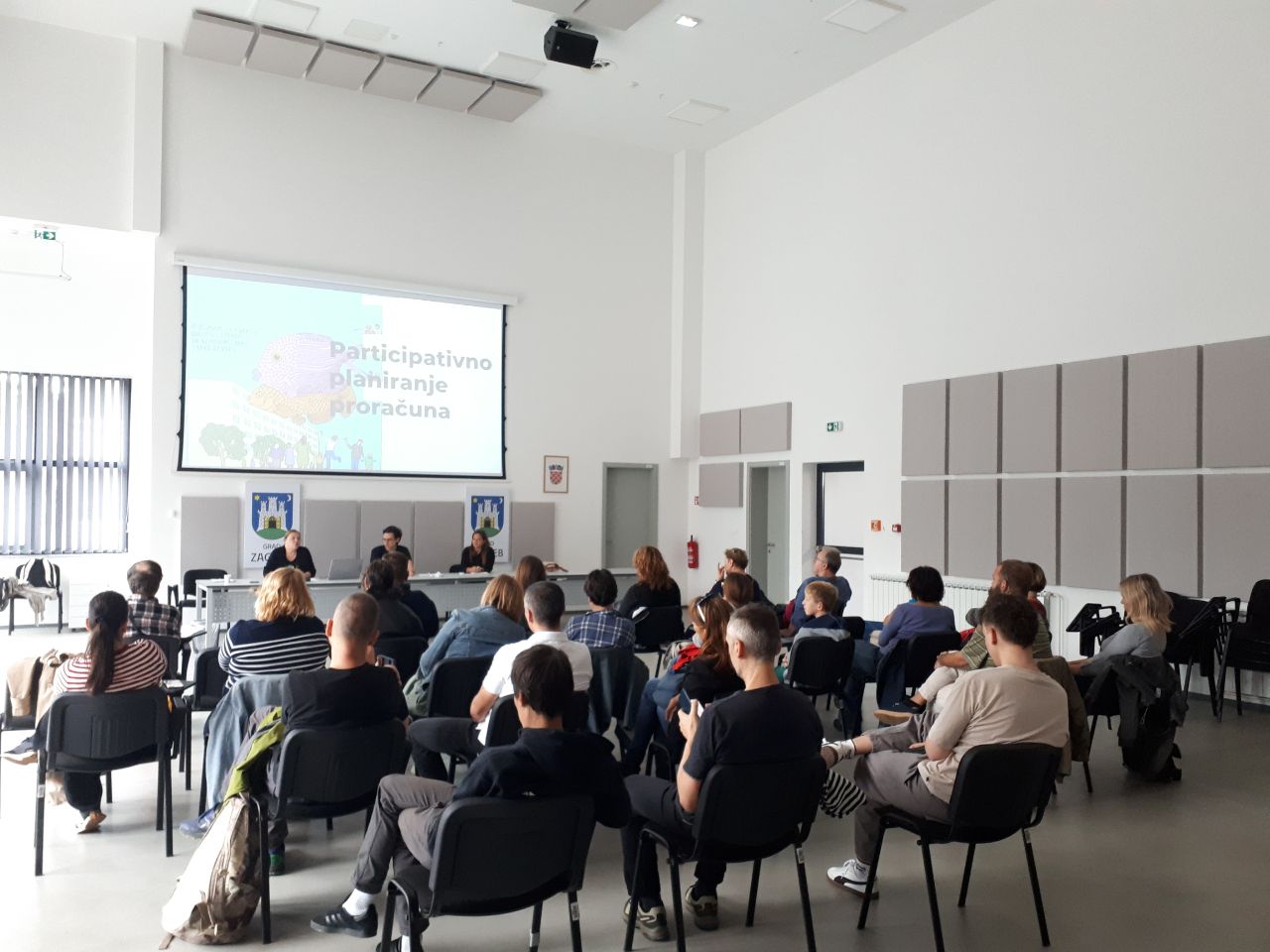
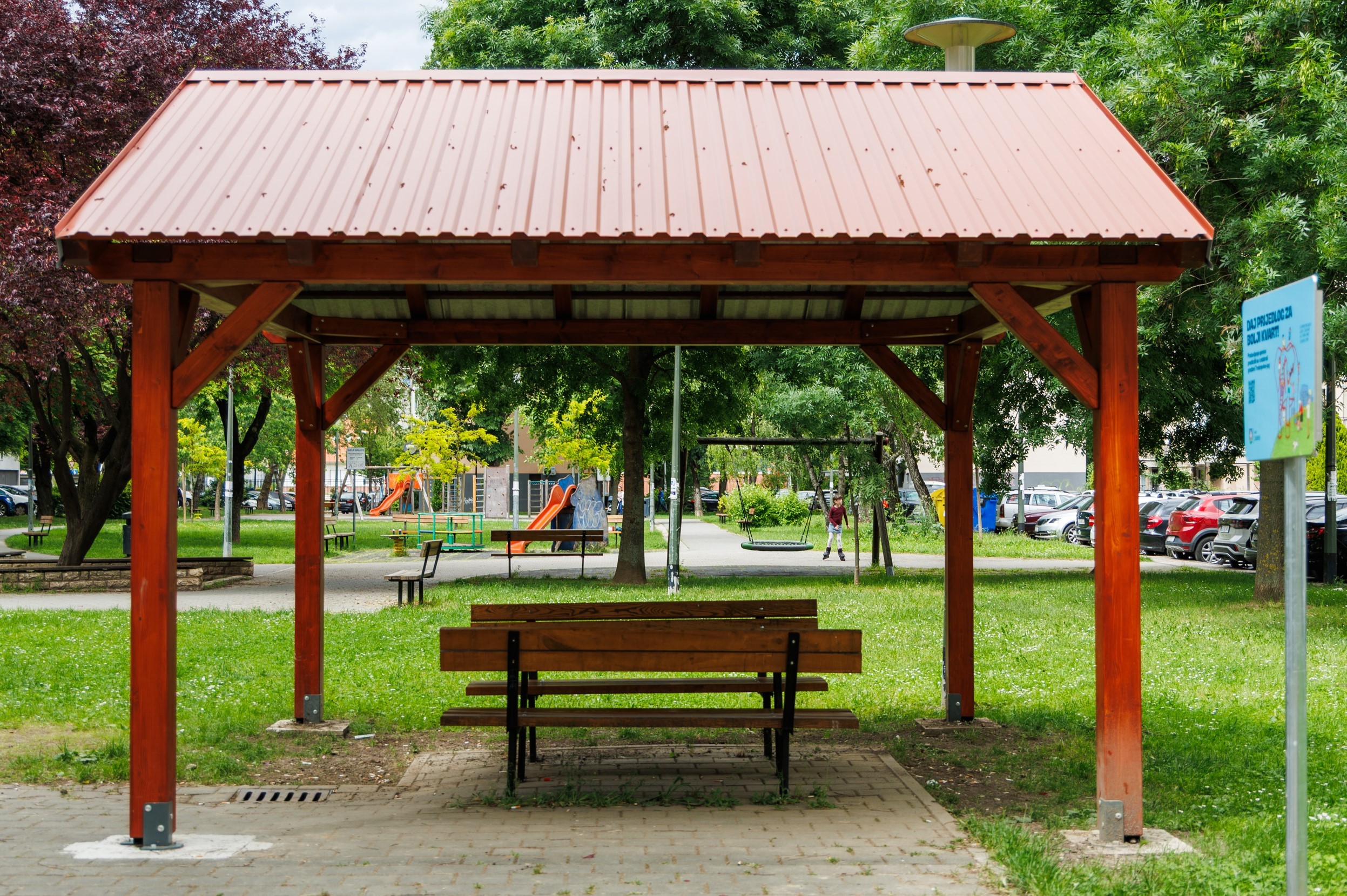
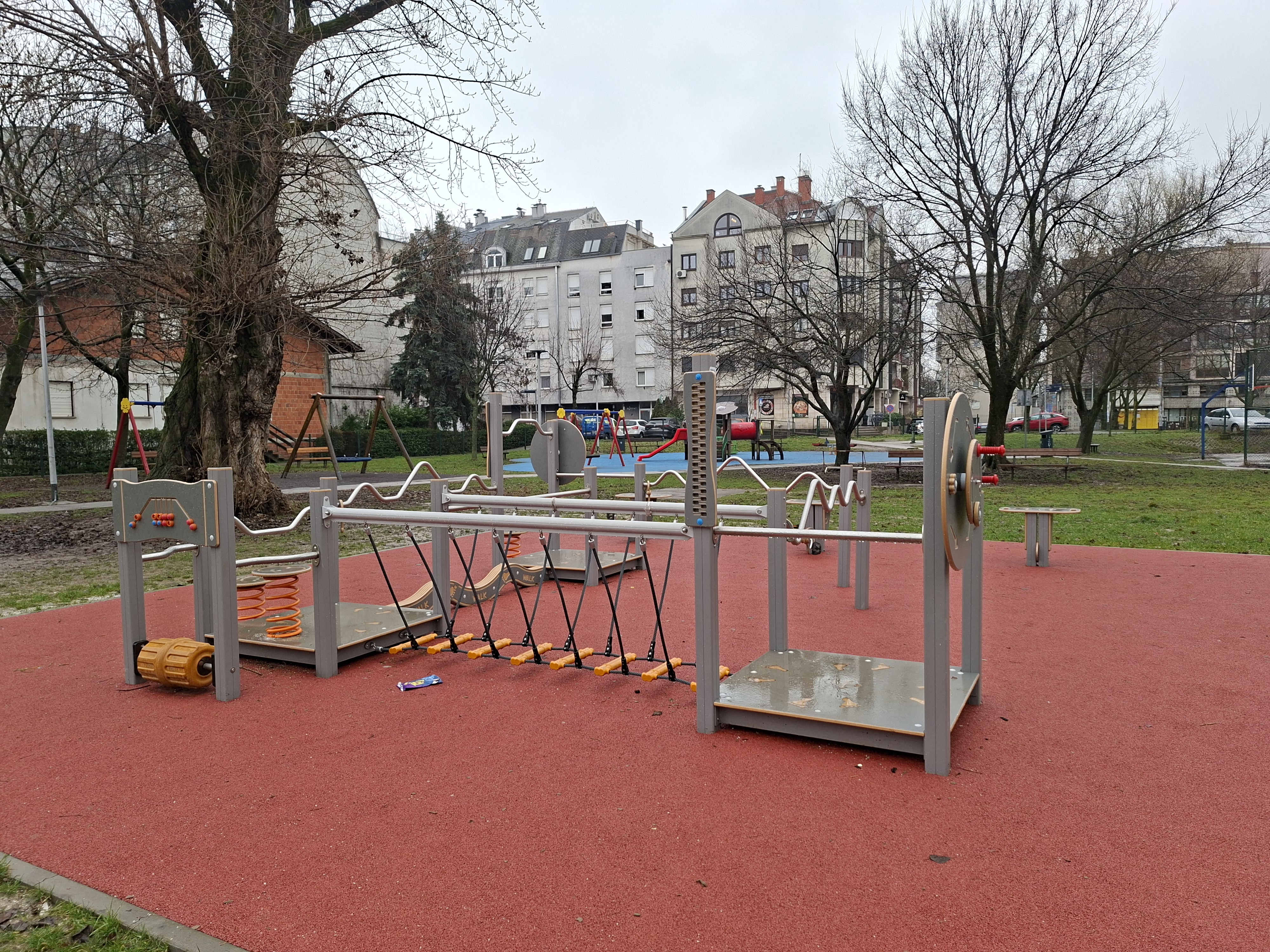
In 2024, the City of Zagreb launched the participatory budgeting project Co‑Creating Better Neighbourhoods in Zagreb to improve everyday life in local communities. Through an online platform, residents proposed communal projects they considered most important for enhancing their neighbourhoods and then voted for their favourite ideas. The City incorporated the chosen proposals into the official 2025 budget and implemented them in the following fiscal year. Projects proposed and selected by the citizens, implemented by the City are: Landscaping of the Little Prince Park; Renovation of benches at the Elementary School playground; Installation of 20 benches along the sidewalk to the Student Dormitory; Installation of a gazebo; Installation of children's equipment in the park; Installation of bollards around a pedestrian crossing; Installation of a fence around a children's playground; Expansion of playgrounds; Planting trees in the school yard; Arrangement of the entrance to the Elementary School; Preparation of project documentation for the: Constructing paths at an intersection; constructing a tartan path in the park; reconstructing a Kindergarten playground and arranging a pedestrian path with benches. In total, residents in 4 city districts proposed 252 ideas; 563 residents voted for the 73 best ideas; 16 projects were selected, €363,000 was allocated, and 14 projects have been delivered. Public forums were held in all participating districts to introduce citizens to the submission process and participatory budgeting, presenting proposals, the voting procedure and selected projects. By expanding participatory budgeting across the city, the initiative strengthens civic trust and fosters a long‑term culture of collaboration, aligning urban development with the values of sustainability, inclusion, and community well‑being. Citizens can also provide continuous feedback, improving future planning and ensuring infrastructure meets evolving community needs.
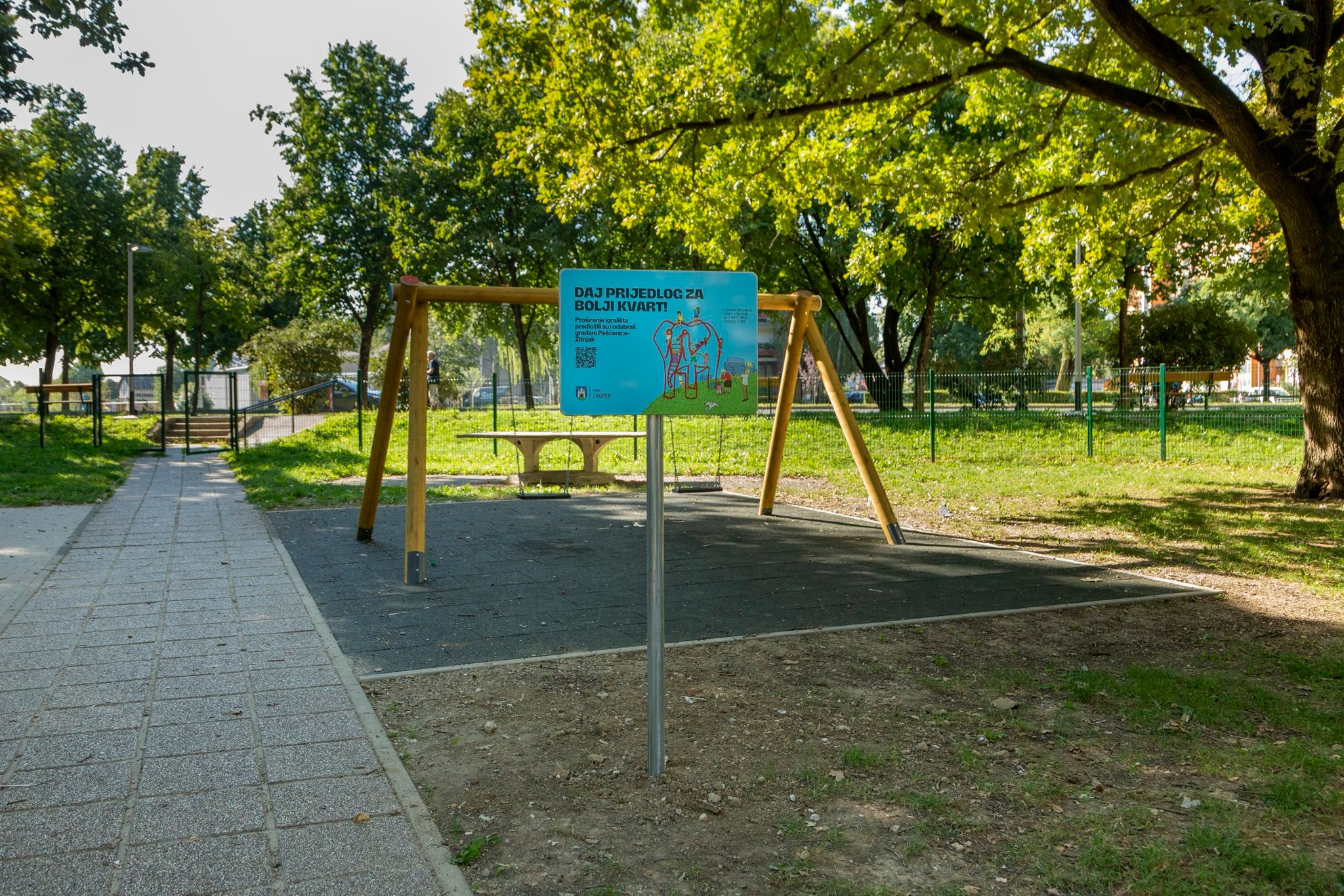
In 2024, the City of Zagreb launched the project Co-Creating Better Neighbourhoods, which was successfully implemented in 2025 in city districts: Peščenica‑Žitnjak, Trešnjevka‑jug, Podsused‑Vrapče and Trnje. Preparation began with detailed process mapping, followed by procurement and development of a digital platform for proposal submission, evaluation and voting. During October, citizens submitted project proposals, which were then reviewed by the city district councils and the relevant city office. Projects eligible for financing under the municipal activity plans, aligned with available budget resources and located on city-owned plots, were selected. Citizens from the participating districts voted on these shortlisted projects at the end of November. A total of 16 projects were selected and included in the City of Zagreb’s budget, to be financed in 2025 through the municipal activity plans. The allocated amounts were: EUR 103,000 for Trešnjevka‑jug, EUR 100,000 each for Podsused‑Vrapče and Peščenica‑Žitnjak, and EUR 60,000 for Trnje. During 2025, the City procured and prepared project documentation, and a total of 14 projects were delivered in the districts. Public forums were held throughout the project to ensure a high level of citizen involvement in every stage of the process. The project continued to evolve: in the first half of 2025, the digital platform was upgraded and redesigned, the project homepage improved, and integration with the Government Service Bus (GSB) was completed to enable automatic verification of residence for citizens submitting proposals or voting within their city district. A citizen satisfaction survey also confirmed exceptionally positive feedback, particularly regarding inclusiveness, as well as the simplicity and speed of the entire procedure. For all 14 delivered projects, on‑site information boards were installed to clearly show how each completed work originated, from citizen proposals and voting to the Citys successful delivery.
Participatory Budgeting
Civic Engagement
Digital Platform
Community Projects
Transparency
The project Co-Creating Better Neighbourhoods directly strengthens social, environmental, and economic sustainability by enabling residents to shape improvements in their neighbourhoods through a transparent and collaborative participatory budgeting process. By allowing citizens to propose and vote for local communal projects, the City ensures that investments respond to real community needs and support inclusive urban development. Many selected projects have direct environmental and spatial benefits such as planting trees, improving parks and playgrounds, installing benches, upgrading pedestrian paths, and enhancing traffic safety infrastructure. These interventions improve micro‑climate conditions, increase public green areas, and promote active mobility, creating healthier and more accessible neighbourhoods. Social sustainability is strengthened through broad community engagement: residents co‑create priorities, participate in public forums, and follow each step from idea to implementation, fostering trust in local government and empowering citizens to take part in public decision‑making. The project also supports economic sustainability by ensuring that public funds are directed to high‑impact, small‑scale communal improvements that bring immediate value to local communities. The model is exemplary in sustainability because it is transparent, replicable, and scalable. Each year, more proposals are submitted, more districts participate, and digital tools are upgraded to ensure long‑term efficiency. A citizen satisfaction survey confirmed very high approval, and all implemented projects include on‑site information boards, making the process visible and reinforcing accountability. Through continuous learning, digital innovation, and citizen involvement, the project establishes a long‑lasting and sustainable framework for community‑driven urban development.
Co-Creating Better Neighbourhoods makes everyday life visibly better by translating resident choices into small, high‑quality design moves in public space. Tree planting, refreshed parks and playgrounds, new benches and gazebos, safer crossings and clearer pedestrian paths upgrade the city’s “fine grain”: more shade, colour, texture and places to pause. These human‑scale interventions soften hard surfaces, frame views, and stitch together walking routes, so streets and courtyards feel quieter, greener and more welcoming. The project nurtures a sense of belonging and care by letting people see their ideas built. Public forums made the design logic transparent; the digital platform showed progress; on‑site information boards explain who proposed, who voted, and how the City delivered. This narrative signage turns each site into a shared achievement, encouraging stewardship and reducing vandalism. Because projects are chosen by neighbours for their own blocks, the outcomes reflect local character, school yards gain playful colour, park furniture aligns with how residents sit, meet and watch their children play. Aesthetically, the project is exemplary in three ways: 1. Co‑authored beauty instead of imposing a single style, it curates many small, context‑sensitive upgrades; 2. Design quality through simple principles such as comfort, legibility, safety, and durability guide every micro‑intervention, ensuring each looks good on day one and remains attractive over time; 3. Sustainable aesthetic governance, annual cycles of proposing, voting and delivering keep quality improving: documentation (before/after photos, boards, user feedback) shapes the next round, while expansion to new districts builts a recognizable, transparent visual identity of civic care. In short, the project turns citizen priorities into visible details you can sit on, walk through and grow with today and in the years to come.
The project emphasizes accessibility and inclusion by giving residents an equal opportunity to propose, shape and select improvements in their neighbourhoods. Participation is free, simple and fully digital, supported by a user‑friendly platform and public forums that ensure people without digital skills or access can still take part. Automatic residence verification via the Government Service Bus (GSB) eliminates administrative barriers and ensures fair voting across all districts. By focusing on small‑scale communal improvements the project delivers infrastructure that is accessible to everyone and free to use. These interventions improve mobility for children, seniors, and people with reduced mobility, while ensuring that quality public space is not a privilege but a shared resource. The governance model is inclusive by design: residents co‑create priorities, follow transparent evaluation, and monitor implementation, fostering trust and enabling a “design for all” approach. The combination of online participation, public forums and clearly posted on‑site information boards makes the process understandable, visible and accountable. It empowers residents who are traditionally less involved in decision‑making and strengthens a culture of civic belonging. The project is exemplary in inclusion because it shows how a city can democratize public investment, redistributing decision‑making power to communities, expanding the process to more districts each year, and incorporating feedback through a citizen satisfaction survey that confirmed exceptionally high levels of approval. By lowering procedural barriers, improving accessibility of public spaces, and embedding inclusive governance into the city’s digital transformation, the project sets a replicable standard for equitable urban development.
The participatory budgeting project Co-Creating Better Neighbourhoods is built entirely on citizen participation, placing residents, neighbourhood communities and city district councils at the centre of decision‑making. Their involvement begins at the earliest stage: residents propose project ideas through an accessible online platform or submit a paper proposal in person, ensuring that people with different digital skills and backgrounds can equally contribute. Civil society organisations, school communities, neighbourhood associations and informal groups also took part by submitting ideas, mobilising voters and helping communicate local needs. Citizens then played a decisive role in prioritising proposals. A total of 563 residents in 4 city districts voted for the ideas they considered most valuable for their neighbourhoods, directly influencing which projects entered the city budget. Public forums in all participating districts offered space for dialogue between residents, experts and city officials, strengthening trust, transparency and collective ownership of decisions. Their involvement had concrete impacts: the 16 selected projects reflect real, place‑specific needs identified by the community like safer crossings, benches, tree planting, renovated playgrounds and school improvements. 14 projects were fully delivered, visibly improving daily life and reinforcing the message that participation leads to tangible results. Information boards placed at each site show who proposed, who voted and how the City implemented the project. The project is exemplary in participatory practice because it redistributes a portion of public decision‑making power back to residents, integrates their input into the official budget, and expands yearly to more districts. A citizen satisfaction survey confirmed very high levels of trust and engagement, demonstrating that involving people meaningfully leads to stronger communities and more democratic urban governance.
Project was developed and implemented through cooperation across several levels of governance, ensuring alignment with national digital standards and strengthening local democratic processes. At the local level, residents, neighbourhood communities, schools and civil society organisations shaped the content of the project by proposing ideas, participating in public forums and voting for priorities. City district councils facilitated the process, allocated part of their budgets, ensured project feasibility and coordinated implementation on the ground. At the city level, the City of Zagreb led the overall design, managed the participatory budgeting process, integrated selected projects into the official budget and delivered all approved interventions. The City also coordinated technical development, maintenance and redesign of the digital platform and ensured transparent communication with residents throughout all phases. At the national level, the Ministry of Justice, Public Administration and Digital Transformation supported interoperability through the Government Service Bus, enabling automatic verification of residence and ensuring secure data exchange in line with national digital public administration policies. This strengthened procedural integrity and reduced administrative barriers for users. At the European level, the project contributes to wider EU objectives of digital transformation, civic participation and transparent governance, aligning with principles promoted by the Digital Decade framework and the Open Government Partnership (OGP). By adopting interoperable digital solutions and user‑centric design, the project reflects European standards of inclusive, data‑driven public service delivery. The added value of this multilevel engagement lies in combining local knowledge, city‑level coordination, national infrastructure and European governance principles.
Digital technologies and ICT engineering played a central role in developing, upgrading and integrating the online platform, including automatic residence verification through the Government Service Bus (GSB). Public administration and governance shaped the participatory model, ensured the project aligned with municipal policies, legal frameworks and budgetary processes and facilitated coordination between district councils, city authorities, and citizens to ensure smooth execution. The project’s engagement tools public forums, voting mechanisms, and narrative information boards were informed by communication studies, civic education and behavioural insights, helping strengthen trust and community ownership. Urban Planning and Infrastructure Development as many of the delivered projects required expertise in architecture, landscape design and urban planning. These interventions also relied on environmental sciences, promoting greener neighbourhoods, micro‑climate improvements and sustainable mobility at a human scale. Engineering disciplines, including traffic engineering and construction planning evaluated the feasibility of proposed projects to ensure they aligned with long-term city planning goals and provided technical expertise on roadwork, park development, and public space improvements. Civil society organisations, neighbourhood groups and school communities contributed local knowledge, enriching the technical disciplines with lived experience and place‑based insight. The project is exemplary in transdisciplinary because it integrates digital transformation, urban design, environmental stewardship and participatory governance into one cohesive system. By doing so, it demonstrates how diverse disciplines can create more functional, attractive and socially resilient neighbourhoods, while establishing a replicable model for future community‑driven urban development.
Project is financially sustainable because it is embedded in the City of Zagreb’s existing budgeting system. Instead of creating a parallel funding mechanism, the project reallocates a defined portion of the annual municipal activity plans of participating city districts. This ensures predictable, recurring funding without the need for new revenue streams, external donations or temporary project‑based financing. Each district earmarks a specific annual amount for participatory budgeting, enabling long‑term planning and continuous project delivery. The digital platform that supports proposal submission, evaluation and voting is maintained within the City’s digital transformation framework, which already includes funding for system upgrades, interoperability, cybersecurity and user support. Integrating the platform into the City’s wider digital infrastructure such as the Government Service Bus (GSB) reduces operational costs by automating verification processes and minimising administrative workload. Because the model relies on small‑scale local improvements, the financial demands are modest while the public value is high. This cost‑effective structure makes the model easily scalable: more districts can join simply by allocating a portion of their existing budgets, and the digital platform accommodates increasing participation at no significant additional cost. The project also generates indirect financial benefits: transparent decision‑making and resident ownership reduce the risk of misaligned investments, while better‑maintained and community‑supported public spaces lower long‑term maintenance costs. By institutionalising participatory budgeting within the City’s annual budget cycle, the project becomes a stable and recurring practice rather than a one‑off initiative. The project combines stable public funding, low operational costs, digital efficiency and community‑driven prioritisation by creating a financially resilient system that can grow year after year.
The project has a high potential for transferability because its core elements are simple, modular and adaptable to different urban, social and administrative contexts. The methodology citizens propose, evaluate and vote for projects, while the city implements them is universally applicable and can be replicated by any municipality or public institution seeking to democratise budget allocation. Its step‑by‑step process (public forums, digital submission, transparent evaluation, voting, implementation and feedback) forms a clear blueprint that can be adopted elsewhere with minimal adaptation. The digital platform is one of the project’s most transferable components. Its user‑friendly interface, interoperability standards, and integration with secure verification systems and a monitoring dashboard that tracks every stage of implementation streamline participation and reduce administrative effort.
The platform can be reused for school participation programmes, youth councils, cultural funding, neighbourhood improvements, or community decision‑making in housing, welfare, or environmental projects. The governance process is equally scalable: allocating a defined portion of existing budgets to citizen‑selected micro‑interventions is a financially light and politically feasible model that can be applied in various public sectors, including education, social services, mobility planning and green infrastructure. Because the project relies on small, place‑based investments and transparent communication, it is particularly suitable for communities with limited resources but high civic engagement potential. Multi‑stakeholder collaboration, bringing together urban planners, public administrators, digital technology experts and community groups can be replicated in other municipalities, demonstrating that close cooperation between citizens and government leads to more responsive urban planning and governance models applicable across diverse contexts.
The platform can be reused for school participation programmes, youth councils, cultural funding, neighbourhood improvements, or community decision‑making in housing, welfare, or environmental projects. The governance process is equally scalable: allocating a defined portion of existing budgets to citizen‑selected micro‑interventions is a financially light and politically feasible model that can be applied in various public sectors, including education, social services, mobility planning and green infrastructure. Because the project relies on small, place‑based investments and transparent communication, it is particularly suitable for communities with limited resources but high civic engagement potential. Multi‑stakeholder collaboration, bringing together urban planners, public administrators, digital technology experts and community groups can be replicated in other municipalities, demonstrating that close cooperation between citizens and government leads to more responsive urban planning and governance models applicable across diverse contexts.