Enhancing Circularity, Sustainability, and Innovation
Glass Skateboarding
Glass Skateboarding: Recycled Glass Infrastructure for Public Space
Glass Skateboarding is a series of public space interventions in Riga that transform recycled fused glass into skateable urban objects. By introducing an unconventional material into everyday infrastructure, the project challenges assumptions about fragility and durability in public design. Developed through dialogue with institutions and local communities, it contributes to a new understanding of how skateboarding and urban sports can be integrated into contemporary city planning.
Latvia
Local
Riga, Latvia
Mainly urban
It involves a physical transformation of the built environment (hard investment)
Yes
2021-09-06
No
No
No
Individual
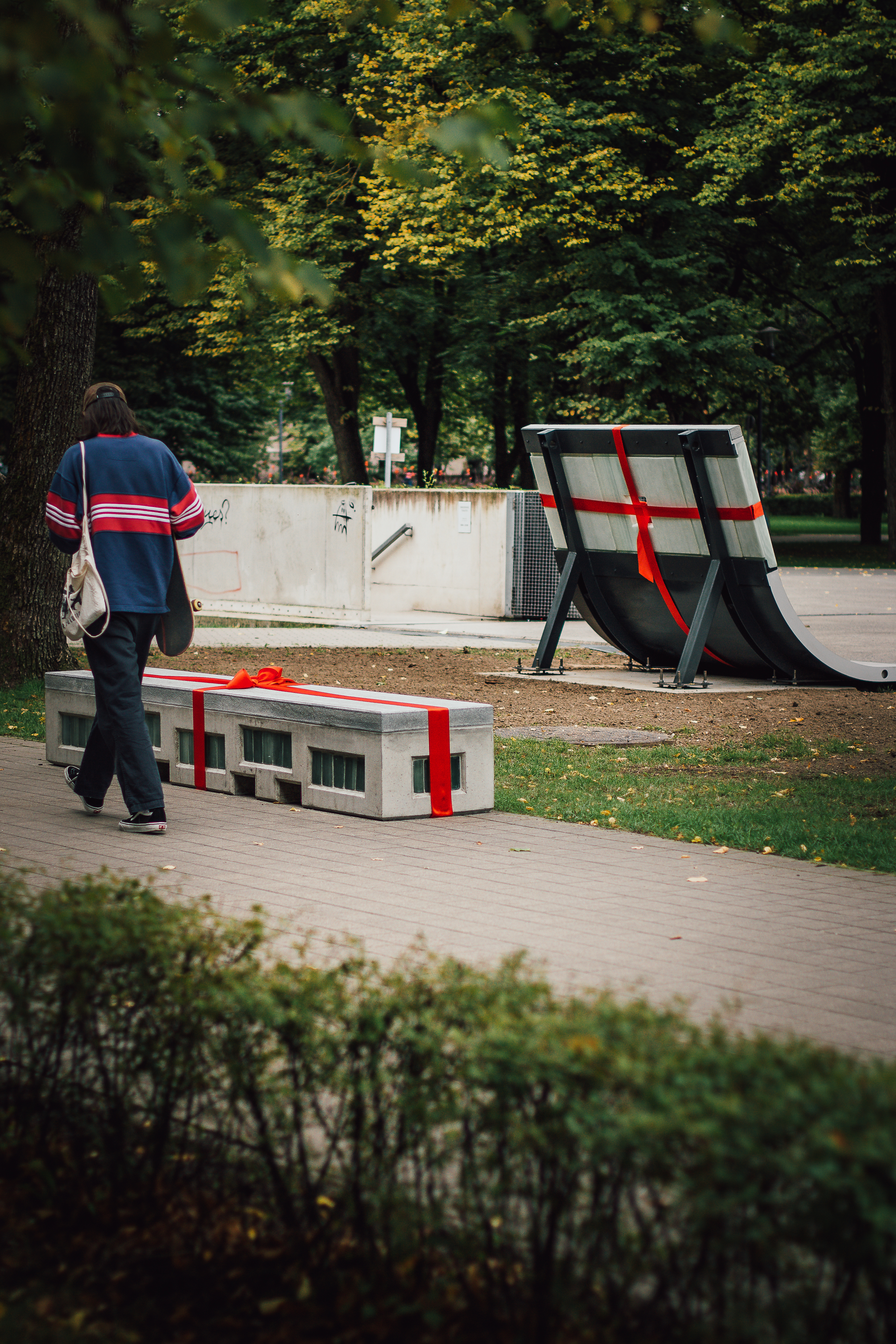
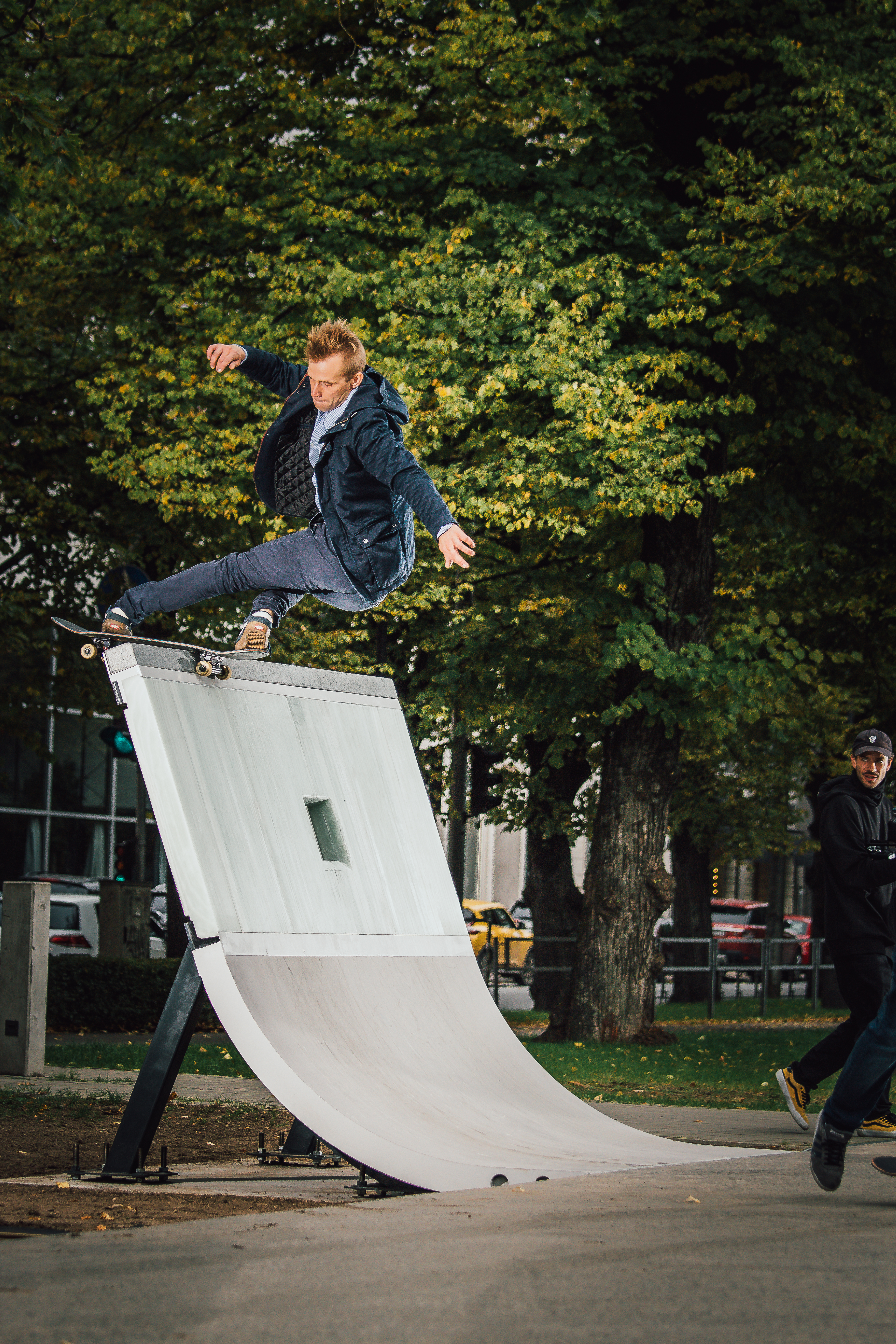
Glass Skateboarding is a public space project in Riga that introduces recycled, fused float glass as a new material for durable urban infrastructure. Installed at Janis Rozentals Square, adjacent to the Latvian National Museum of Art, the project consists of two skateable objects that function simultaneously as sculptural elements, seating and surfaces designed for skateboarding.
The work is based on an original technique developed by the artist, in which layers of recycled float glass are fused to create thick, impact-resistant structures. Initially explored as an artistic experiment—using recycled glass as a skateable material—the approach evolved through this project into a practical application within public space.
The project emerged from a conflict in the square after damage to the museum’s skylight structure led to restrictions on skateboarding. Instead of exclusion, the proposal offered a constructive alternative: purpose-built objects that allow skateboarding to take place safely while enriching the public environment.
Realising the project required a complex approval process involving multiple public institutions, as no clear framework existed for integrating skateable infrastructure within such a prominent cultural site. The three-year process ultimately resulted in the installation of permanent objects that today serve both skateboarders and the wider public.
Beyond its immediate function, Glass Skateboarding demonstrates how recycled materials, experimental craft and collaboration with institutions can transform urban conflict into new forms of shared infrastructure. The project expanded the artist’s practice from sculpture into public space design and opened new possibilities for developing inclusive and innovative urban environments.
The project developed from an ongoing material investigation into the possibilities of recycled float glass as a structural and skateable surface. Earlier studio experiments explored how multiple layers of glass could be fused into thick blocks capable of withstanding repeated impact. The opportunity to test this technique at an urban scale emerged in Janis Rozentals Square in Riga.
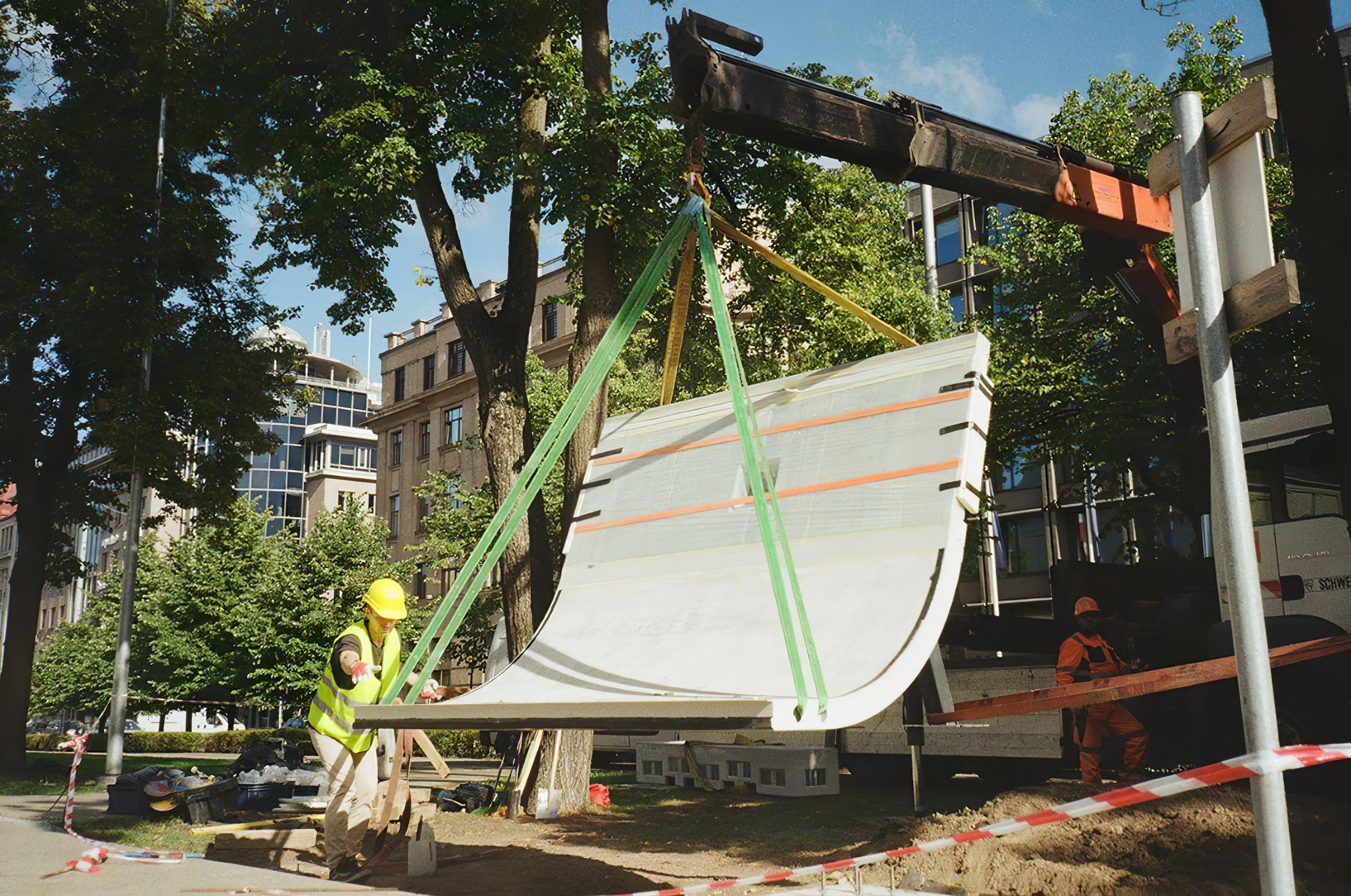
The main object is a curved street obstacle constructed from a metal frame and concrete radius supporting a 10 cm thick block of fused recycled glass. The glass element is produced by fusing multiple 6 mm float glass sheets together in a kiln. Creating approximately one square metre of this material requires about three weeks of carefully controlled heating and cooling, making the process technically demanding. The surface is finished with an 8 cm thick granite coping.
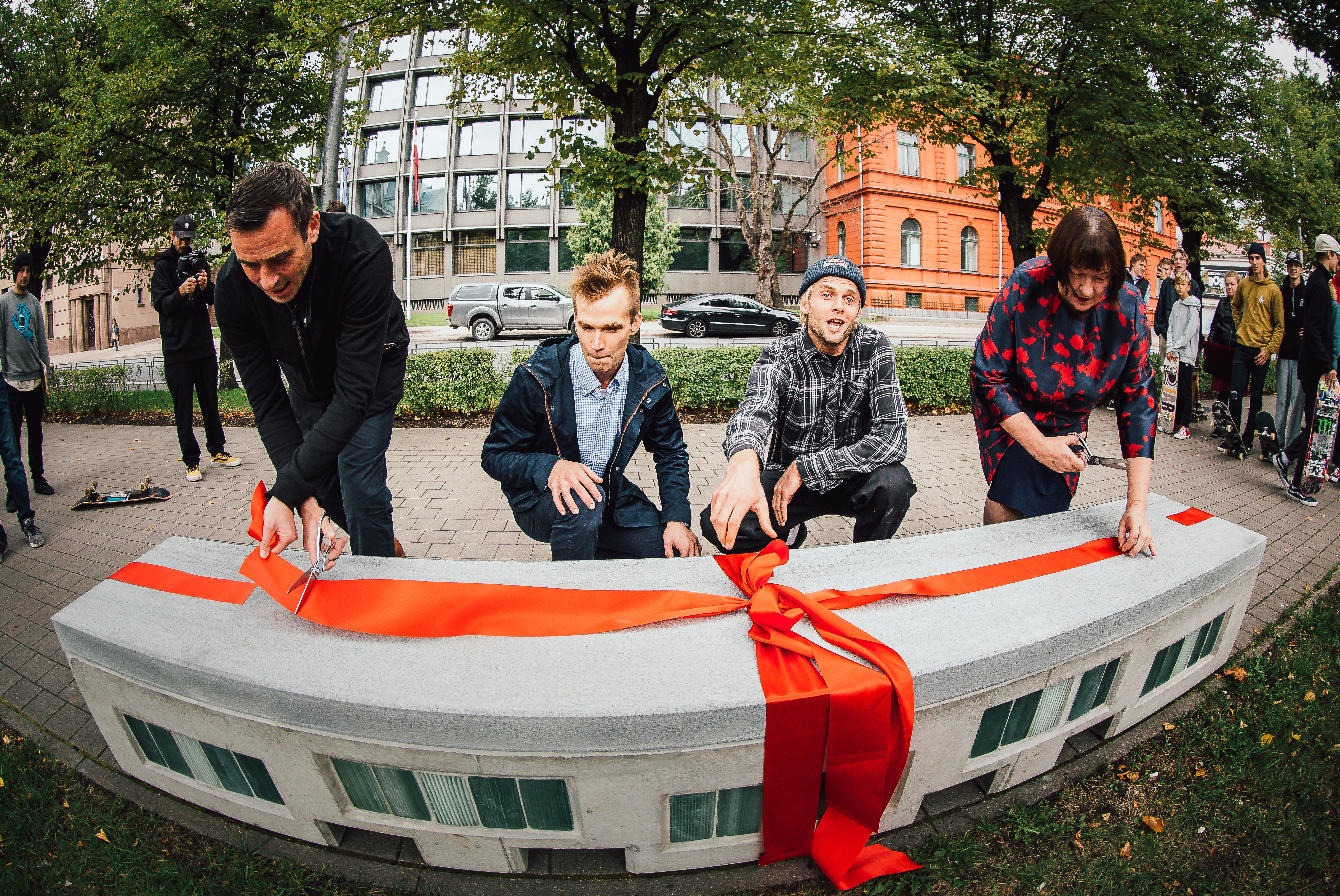
A second object was developed as a complementary bench-like structure consisting of a concrete base with glass elements and a granite top. Both works use Kuru Grey granite from Finland, selected for its durability and quality as a skateable surface.
The placement of the objects required careful consideration of the site. The large smooth concrete floor of the square is in fact the ceiling of the museum’s underground exhibition gallery, making it unsuitable for heavy structures. Instead, the main object was installed on a specially constructed concrete foundation set into the ground beside the square. A narrow bridge element connects the object to the floor, allowing smooth movement while respecting the existing drainage system.
The structure is anchored with metal rods and adjustable bolts that hold the object in place with millimetre precision and allow for future adjustments as the ground naturally settles over time. Through these solutions, the objects integrate into the square without occupying its central open space, maintaining the minimal and functional character of the surrounding architecture.
Circular materials
Public space design
Urban sports integration
Material innovation
Inclusive urban infrastructure
The project addresses sustainability primarily through material use, durability and the long-term integration of urban subcultures within public space. Recycled float glass, a widely available industrial by-product, is transformed through a specialised fusion process into thick structural elements capable of withstanding intensive physical use. By extending the lifecycle of an existing material and applying it in an unconventional context, the project demonstrates an alternative approach to circular material use in urban infrastructure.
Durability and longevity were central considerations in the design. The objects were constructed using high-quality materials such as layered recycled glass, reinforced concrete and granite, selected specifically for their resistance to wear in a public environment. By prioritising long-lasting materials and careful construction, the project aims to minimise future maintenance and replacement needs.
The project also addresses social sustainability by responding to an existing conflict between skateboarders and the surrounding cultural environment. Rather than excluding a widely practiced urban activity, the project introduces purpose-built infrastructure that enables skateboarding to take place safely while remaining accessible and visually integrated within a prominent public square.
In this way the project demonstrates how material innovation, craft knowledge and collaboration with institutions can contribute to more resilient and inclusive urban environments. By combining circular material use with social and cultural integration, Glass Skateboarding proposes a sustainable model for addressing urban conflicts through design.
Glass Skateboarding contributes to the aesthetic quality of public space by introducing an unexpected material and form into the everyday urban environment. The objects are designed as minimalist sculptural elements that respond to the architectural language of the surrounding square and the Latvian National Museum of Art. Their clear glass surfaces, combined with granite and concrete, create a subtle visual contrast that changes with light, weather and movement in the square.
Rather than appearing as conventional sports equipment, the objects function simultaneously as pieces of public sculpture, seating and skateable surfaces. This multifunctional character allows different groups of people to interact with them in different ways: skateboarders use them for practice, while visitors and passers-by encounter them as part of the visual and spatial composition of the square.
The use of fused recycled glass adds a distinctive material quality rarely found in public infrastructure. The transparency and depth of the layered glass create a tactile and visual experience that encourages closer observation and interaction. At the same time, the carefully selected granite surfaces provide both durability and a refined visual finish that complements the museum’s surroundings.
By combining artistic material exploration with functional urban design, the project demonstrates how infrastructure for everyday activities can also enrich the aesthetic experience of public space. It contributes to a sense of belonging by acknowledging the presence of local skateboarding culture while maintaining a respectful dialogue with the architectural and cultural context of the square.
In this way, the project proposes an approach where beauty emerges from the thoughtful integration of craft, material innovation and public use.
The project promotes a more inclusive understanding of how different urban cultures can share public space. As a skateboarder with 23 years of experience at a local professional level, the author approached the project with both technical knowledge and a strong personal motivation to improve the public perception of skateboarding.
The installed objects are freely accessible within a public square and function in multiple ways: as skateable elements, seating, and informal meeting points for visitors and residents. This multifunctional character allows different groups to use the space simultaneously rather than separating activities into strictly defined zones.
Material choices also support the project’s inclusive approach. Durable granite surfaces were selected to create a high-quality skating experience while maintaining visual compatibility with the surrounding architecture. In Latvia, natural granite is relatively rare and usually found only on historic monuments or limited architectural elements, making purpose-built granite skate surfaces especially appreciated within the skateboarding community.
A broader goal of the project is to contribute to a shift in local urban planning thinking. In many cities internationally, public spaces increasingly include architectural elements that are skateboarding-friendly rather than treating skateboarding as an activity that belongs only in dedicated skateparks. This reflects a widely shared belief among urban sports practitioners that activities such as skateboarding are part of everyday urban culture and can be integrated into the city through thoughtful design.
Through dialogue with public institutions and the creation of accessible infrastructure, the project demonstrates how design can support a more open and shared urban environment.
Participation in the project occurred mainly through engagement with the communities directly affected by the space: skateboarders, visitors of the square and the institutions responsible for its maintenance. Because the site was already used informally by skateboarders, their everyday presence and practical knowledge of how urban surfaces function for skating helped inform the understanding of how the objects should perform once installed.
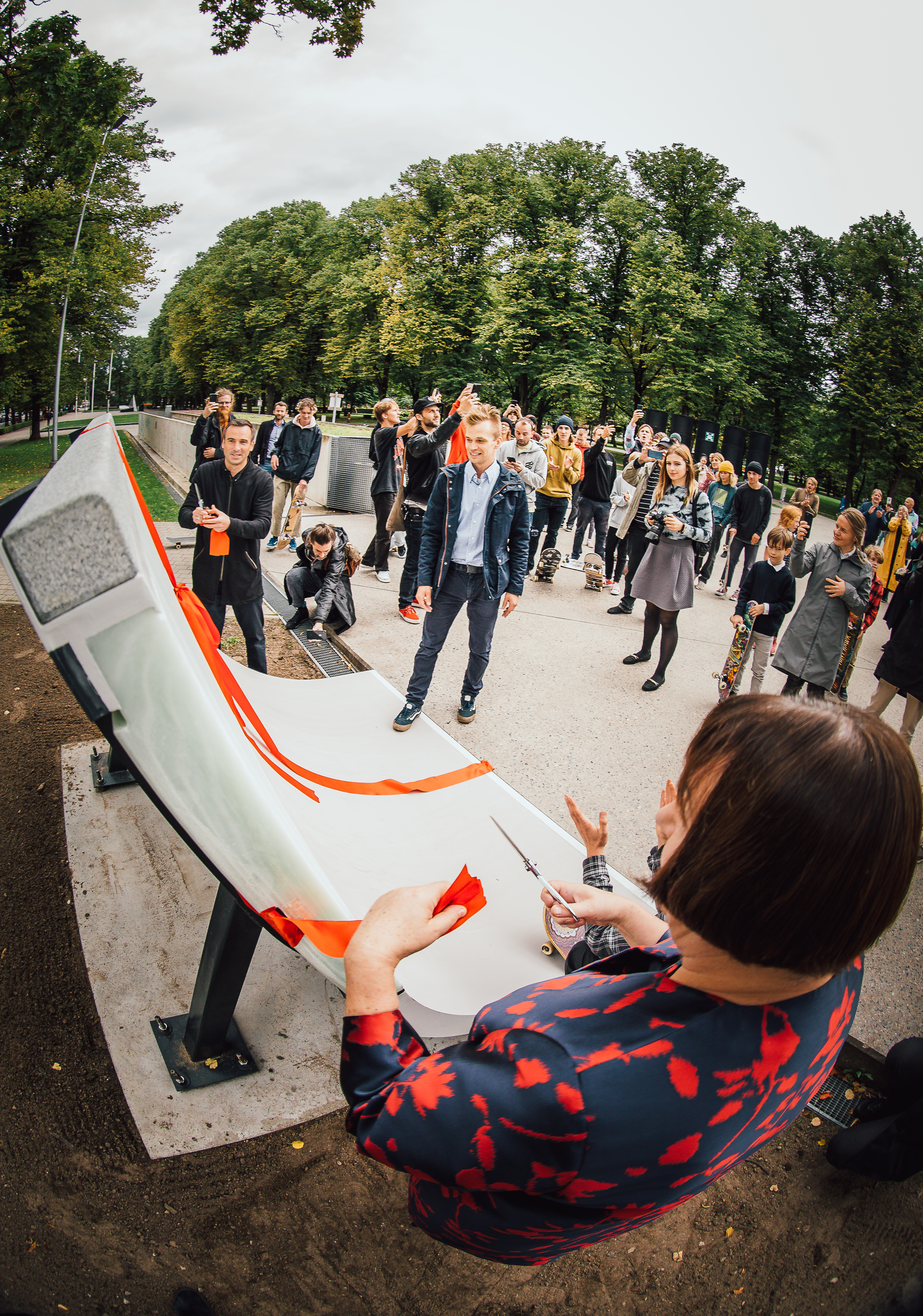
After installation, the project was activated through a public opening event that invited citizens, skateboarders and visitors to interact with the objects. A friendly skateboarding session and small competition took place on the structures, accompanied by freely available food. This moment allowed the broader public to experience the objects not only as sculptural elements but as functional pieces of urban infrastructure.
The level of participation therefore took the form of active use and public engagement rather than co-design. Skateboarders became the primary users of the objects, while passers-by, museum visitors and local residents encountered them as seating, meeting points and visual elements within the square.
The impact of this participation is visible in the continuous use of the objects and the shift in perception around skateboarding in the area. By providing infrastructure designed specifically for the activity, the project demonstrates that urban sports can be accommodated within shared public space rather than treated as a conflict.
More broadly, the project reinforces the inclusive nature of skateboarding culture itself. Skateboarding is practiced across genders, ages and cultural backgrounds, and accessible urban infrastructure helps support this openness. By creating a place where this activity can happen openly within a central cultural environment, the project contributes to a more participatory and socially connected public space.
The project required cooperation between several stakeholders responsible for the square and its surrounding cultural environment. Because the objects were installed in a prominent public location adjacent to the Latvian National Museum of Art, the implementation involved dialogue with the museum administration as well as municipal institutions responsible for public space, construction permissions and safety regulations.
At the time, no clear administrative framework existed for integrating skateable architectural elements within such a culturally significant site. As a result, the project required approvals and coordination between seven different public institutions. Each stakeholder contributed by reviewing the proposal from their respective perspective, including safety, technical feasibility, urban planning considerations and the preservation of the surrounding environment.
Although this process significantly extended the project timeline, it allowed the idea to be carefully evaluated and adapted so that the final objects could meet both technical requirements and the expectations of the cultural setting.
The engagement of these stakeholders created an important bridge between independent artistic practice and public governance structures. It demonstrated that unconventional forms of public infrastructure—such as skateable architectural elements—can be integrated into formal urban environments through cooperation and dialogue.
The added value of this process lies in establishing a practical example for future initiatives. It showed that collaboration between individual creators, cultural institutions and municipal authorities can support new approaches to public space that respond to evolving urban cultures.
The project combines knowledge from several disciplines, bringing together artistic practice, material research, urban design and practical understanding of skateboarding culture. At its core, the project emerged from glass art and experimental craft, where recycled float glass was studied as a structural and skateable material through kiln-fusing techniques.
Material experimentation played an important role in the development process. Knowledge from glassmaking, construction and engineering was required to transform layered recycled glass into durable elements capable of withstanding repeated physical impact in a public environment. This involved careful consideration of structural support, weight distribution, anchoring systems and long-term stability.
Urban design and architectural thinking also informed the placement and form of the objects. The shapes were developed to respond to the spatial character of the square and the surrounding architecture while remaining minimal and functional. The objects therefore operate simultaneously as sculptural elements, public seating and skateable surfaces integrated into the existing urban landscape.
Another important field of knowledge comes from skateboarding itself. More than twenty years of practical experience allowed the author to translate the specific spatial and material requirements of skateboarding into the design of the objects, ensuring that they function authentically as skateable infrastructure.
Finally, the implementation process required collaboration with public institutions and an understanding of governance structures related to public space, construction and cultural heritage. In this way the project connects artistic research, material science, urban design and lived cultural practice into a single integrated approach.
The project began as an independent initiative driven by personal motivation and a small private sponsorship of approximately €2,500. This initial support made it possible to purchase high-quality granite for the skateable surfaces and to cover part of the studio costs required for cutting and kiln-fusing recycled glass.
As the project extended into a three-year development process, it relied on a mixed support model combining limited financial contributions with significant in-kind support. Various collaborators and supporters contributed resources such as access to glass kilns, transportation equipment, workshop space for producing moulds, construction materials including concrete, and professional architectural assistance needed to prepare documentation and obtain permits.
At a later stage, the project received €10,000 in public funding from the Latvian State Culture Capital Foundation (VKKF). These funds were fully invested in the production and technical realisation of the objects, including the fabrication of the metal frame, precise glass cutting, and various additional material and service costs required to complete the structures.
The financial model of the project is therefore based on combining small-scale sponsorship, public cultural funding and in-kind professional support. The resulting objects were not created for commercial profit but were gifted by the author to the city as permanent public infrastructure.
Their long-term sustainability lies in their durability and continued public use. Installed in an open public square, the objects remain freely accessible and are used daily by skateboarders and other visitors, demonstrating how collaborative resource mobilisation can produce lasting value for the wider community.
Several elements of the project demonstrate strong potential for transferability to other cities and contexts. One of the most important is the material approach. The project introduces recycled layered float glass as a durable structural surface for public infrastructure. The developed technique shows how a widely available industrial material can be transformed through craft and experimentation into functional architectural elements. This approach can be adapted to different forms, scales and public environments.
Another transferable aspect is the design philosophy behind the objects. Instead of separating skateboarding into dedicated zones such as skateparks, the project demonstrates how urban space itself can include architectural elements that are skateboarding-friendly while remaining useful and visually appropriate for the wider public.
The project also provides a replicable process for collaboration between independent creators, local communities and public institutions. The experience of navigating approvals, working with existing urban infrastructure and introducing unconventional design solutions can inform similar initiatives elsewhere.
In the long term, the author aims to expand this practice locally and internationally by creating interactive public artworks and urban objects that enrich shared environments. The intention is to develop projects that function simultaneously as sculpture, infrastructure and social space.
While skateboarding is one entry point for this work, the broader ambition is to explore simple but thoughtful ways of making public space more engaging, welcoming and visually interesting. By combining artistic experimentation with durable materials and public accessibility, the project proposes a model that can inspire new forms of interactive urban design in different places and cultural contexts.
- https://karlisbogustovs.com/glass-skateboarding-j.rozentals-square-2021/
- https://karlisbogustovs.com/glass-skateboarding-2020/
- https://www.facebook.com/Riga.lv/posts/r%C4%ABga-k%C4%BC%C5%ABst-skeitbordam-draudz%C4%ABg%C4%81kapie-latvijas-nacion%C4%81lais-m%C4%81kslas-muzejs-atkl%C4%81t/1979913728830222/