Enhancing Circularity, Sustainability, and Innovation
Soham
SOHAM - What if a pause became a priority?
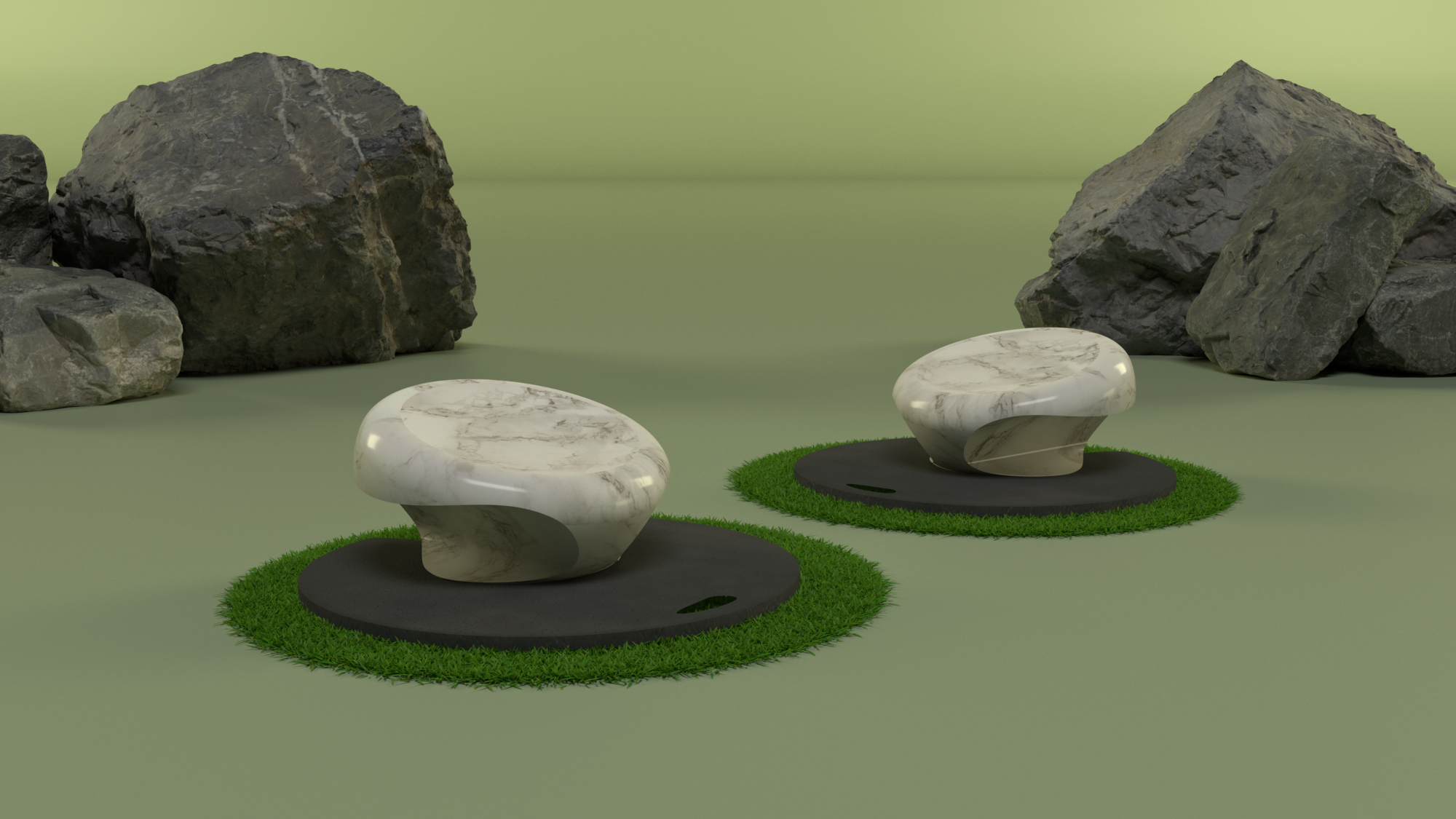
SOHAM is a meditation seat designed to reconnect people with nature, stillness, and body awareness. Developed in Tuscany, it transforms marble waste into a sustainable object that supports mindfulness. Its ergonomic form improves posture, breathing, and focus. Combining recycled materials and local craftsmanship, SOHAM promotes well-being and environmental awareness, while also creating shared spaces in nature for connection and collective pause.
Italy
Local
Minucciano, Tuscany
Mainly rural
It refers to other types of transformations (soft investment)
Prototype level
No
No
No
Individual
SOHAM is a meditation seat designed to reconnect people with nature, stillness, and their own physical awareness. The project emerged from a reflection on the relationship between human well-being, landscape, and tradition, developed within the context of Minucciano, a region in Tuscany historically shaped by marble extraction.
The concept is based on the principles of circular economy, transforming marble waste into a meaningful object that supports mindfulness and contemplative practices. By repurposing discarded marble fragments, SOHAM gives new value to an existing material resource while reducing environmental impact and celebrating local craftsmanship.
Ergonomically designed, the seat allows the body to maintain a stable and comfortable posture during extended meditation sessions. Its form naturally supports the pelvis, encouraging spinal alignment, relaxed shoulders, and improved breathing. This posture enhances oxygenation and concentration, helping users maintain a deeper and more sustainable meditative state.
The expected result is a scalable product that promotes accessible well-being while valorizing local materials and production knowledge.
By merging sustainability, beauty, and human-centered design, SOHAM proposes a new way of inhabiting spaces of reflection, transforming a simple object into a catalyst for personal balance and environmental awareness.
The inspiration for SOHAM emerged during a collective field trip to Minucciano, a small mountain village in Tuscany surrounded by forests and historic marble quarries. Beyond its landscape, what deeply moved us was the atmosphere of the place, a rare sense of calm, silence, and balance that contrasts sharply with the accelerated rhythm of contemporary life.
During our visit, a local expert shared an observation that profoundly shaped our thinking: Minucciano is one of the few places in Italy where visitors usually arrive only if they truly know the place. It remains largely outside mass tourism, preserving an authentic relationship between people, nature, and everyday life. Those who come here seek something different; the possibility to disconnect, to slow down, and to reconnect with the rhythms of the natural world.
What left the deepest impression on us, however, was the encounter with the local community. In the faces and eyes of the people who live there, we perceived a quiet but powerful wisdom, a sense of serenity that seemed rooted in their daily relationship with the land. It felt as if the place itself spoke through them, silently communicating that this is a place where one can truly rest, breathe, and return to oneself.
That experience became the emotional and conceptual foundation of SOHAM. The project seeks to translate that feeling into a tangible object: a space for pause within the objects we inhabit. Just as Minucciano offers a refuge from the speed of modern life, SOHAM invites users to slow down, reconnect with their body and breath, and rediscover the restorative sensation of returning home, a moment to recharge before stepping again into the intensity of the world.
Local Identity
Circular Economy
Rural development
Nature-Based Experience
Mindful Experience
SOHAM addresses environmental, social, and cultural challenges by transforming an existing local resource into a meaningful design solution that promotes well-being and sustainable living.
From an environmental perspective, the project is based on the reuse of marble fragments and discarded materials generated by the quarrying industry in the Minucciano region of Tuscany. Marble extraction produces significant amounts of residual material that often remains unused. By revalorizing these fragments and transforming them into functional objects, SOHAM proposes a circular design approach that reduces waste while extending the life cycle of a natural material already present in the territory.
At the social level, the project responds to an increasingly urgent challenge in contemporary society: the lack of spaces and tools that encourage moments of pause, mental balance, and reconnection with the body. SOHAM creates a physical support that facilitates meditation and mindfulness practices, helping users disconnect from the accelerated pace of daily life and cultivate personal well-being.
Culturally, the concept highlights the relationship between design, landscape, and local knowledge. By drawing inspiration from the territory of Minucciano and its marble heritage, the project celebrates regional identity while proposing a new interpretation of traditional materials through contemporary design.
Economically, SOHAM explores opportunities for local craftsmanship and small-scale production, encouraging value creation within the community while promoting responsible material use.
In this way, the project exemplifies sustainability not only through material reuse, but also by fostering a holistic approach that integrates environmental responsibility, human well-being, and cultural continuity. SOHAM demonstrates how design can transform local resources and intangible experiences into objects that support both personal and collective resilience.
SOHAM contributes to making life more beautiful by creating a space for pause, reflection, and reconnection with nature. Its aesthetic value lies not only in its form, but in the calm and meaningful experience it creates for individuals and communities.
Inspired by the landscapes of Minucciano, the project seeks to establish a quiet dialogue between design and the natural environment. The form of SOHAM is intentionally simple, smooth, and minimal, allowing the object to coexist harmoniously within natural settings. Its soft, organic shape contrasts gently with the raw textures, irregularity, and imperfection of nature, creating a subtle balance between human intervention and the natural world.
Rather than dominating the landscape, SOHAM integrates into it, becoming a small contemplative presence that invites people to slow down and reconnect with their surroundings.
Beyond its visual qualities, the project contributes to a sense of belonging and care for place by encouraging shared experiences. When placed in natural or communal spaces, SOHAM can create small gathering points where people meet, meditate, or simply spend time together in silence.
Through its simplicity and connection with the landscape, SOHAM demonstrates how aesthetic design can foster harmony between people, communities, and the environments they inhabit.
SOHAM promotes inclusion by creating an accessible and welcoming object that encourages moments of pause, reflection, and connection for a wide range of people. The design does not require prior knowledge of meditation or specific physical abilities, allowing anyone to engage with the experience in their own way. By remaining simple in form and intuitive in use, SOHAM lowers barriers to entry and makes practices of well-being more approachable and democratic.
Ergonomically, the seat is designed to support the body naturally, helping users maintain a comfortable and balanced posture during meditation. However, the object is intentionally flexible in its use: people can sit, rest, or simply pause without needing to follow a strict meditation practice. This makes SOHAM approachable for beginners, small community groups, or individuals who may be curious about mindfulness but feel intimidated by more formal practices. It encourages shared experiences, when several units are placed together they can create small gathering spaces where people meet, meditate, or simply spend quiet time together becoming not only an individual support for well-being but also a catalyst for social interaction and collective reflection.
From a broader perspective, the concept promotes a more inclusive model of well-being, one that is not limited to experts or specific communities but open to anyone seeking moments of calm, connection, and balance in everyday life. By combining local material resources with simple production processes, SOHAM also has the potential to remain affordable and adaptable to different contexts. In this way, it contributes to new societal models based on care, connection, and accessibility, demonstrating how design can foster both personal and collective well-being while creating spaces of belonging.
The concept of SOHAM emerged from a participatory process developed during a field visit to Minucciano. A collaborative workshop was organized with local residents to understand their needs, listen to their stories, and learn about their vision for the future of the community.
Through these conversations, it became clear that the inhabitants deeply value the tranquility, natural beauty, and cultural identity of the place. At the same time, they expressed interest in exploring forms of development that could support the local economy without attracting mass tourism.
Based on the insights gathered, several design proposals were developed. The concepts of SOHAM was ultimately selected by the community through a voting process, receiving the highest support among the presented ideas.
The project aims to contribute to the territory by encouraging sustainable and conscious tourism, creating opportunities for visitors to connect with nature while supporting small-scale local economic activity.
This participatory approach ensured that SOHAM was not only a design proposal, but a concept rooted in the values and aspirations of the community.
The development of SOHAM is rooted in a robust multilevel governance framework that ensures the project’s technical viability, cultural relevance, and scalability. At the local level, the project emerged from a direct dialogue with the community of Minucciano, who selected this concept for execution. By involving local artisans and citizens in the repurposing of quarry waste, we ensure the valorization of traditional craftsmanship and foster a deep sense of social ownership. This local engagement provides the essential added value of authenticity, transforming industrial by-products into a source of community pride.
At the regional and national levels, SOHAM seeks to align with Tuscan and Italian strategies for sustainable tourism, circular economy, and territorial enhancement. This connection supports the integration of the project within broader systems of innovation and policy, rainforcing its relevance beyond the local context. At the European level, the project has been presented within the framework of the New European Bauhaus Sprint in Thessaloniki, where it received recognition and feedback from an international network of experts. This engagement contributes to the refinement of the concept and highlights its potential as a transferable model for other European territories.
The added value of this multilevel collaboration is the creation of a co-created ecosystem that effectively balances "bottom-up" community needs with "top-down" European sustainability goals, ensuring that the final product is not only aesthetically beautiful but also socially and environmentally resilient.
The design of SOHAM is based on a transdisciplinary approach that combines product design, environmental sustainability, social sciences, and psychology. At its core, the project belongs to furniture design, with a strong focus on ergonomics and user experience. The seat supports the body during meditation, improving posture, breathing, and concentration.
At the same time, SOHAM engages with spatial design, as it is conceived not only as an object but as a micro-space for pause and contemplation, shaping how people experience their surroundings. Environmental principles are central to the project: by reusing marble waste from the Minucciano area, SOHAM applies circular design strategies while connecting sustainability to local material culture.
This link also extends to rural development and territorial innovation, where local craftsmanship becomes a cultural and economic resource, strengthening the relationship between community and place. From a social perspective, SOHAM can foster interaction and collective well-being when placed in shared environments, encouraging moments of connection and belonging.
Psychological insights, such as “nudging,” inform the design by subtly promoting relaxation and mindfulness through form and material. Additionally, elements of sensory design, including natural soundscapes, enhance the meditative experience.
By integrating these fields, SOHAM presents a holistic design solution that responds not only to functional needs, but also to emotional, social, and environmental dimensions.
The business model of SOHAM is based on a hybrid approach that combines product design, local resource valorization, and experience-based services. At its core, the project generates revenue through the production and sale of a meditation seat made from repurposed marble waste from the Minucciano area, transforming discarded material into a high-quality, sustainable design product. The seat can be positioned as a recognizable and potentially trademarked object, strengthening its identity in the market, while production involves local artisans to support craftsmanship and small-scale manufacturing.
Revenue streams include direct B2C sales to individuals interested in well-being, mindfulness, and design, as well as B2B partnerships with yoga studios, wellness centers, hospitality spaces, and cultural institutions, where SOHAM can function both as a product and as part of curated experiences.
Additional income can come from temporary installations, workshops, and meditation events developed in collaboration with public institutions and cultural organizations. These activities diversify revenue while reinforcing the project’s social and cultural value.
Looking ahead, SOHAM has the potential to scale through a replicable model adaptable to other territories by using local materials such as stone or wood, maintaining a strong link to place and sustainability. Financial sustainability is ensured through a mix of product sales, partnerships, experiential services, and potential public funding aligned with innovation and environmental goals.
Several elements of the SOHAM project can be replicated and adapted to other contexts. In particular, the design method based on the enhancement of local materials and the reuse of waste can be transferred to other territories with different natural resources. Similarly, the concept of design oriented toward well-being and meditation, along with the integration of sensory experiences like natural soundscapes, can be applied in various public, cultural, or personal care spaces. This approach demonstrates how design can create sustainable and meaningful solutions by starting from the specific characteristics of each location, in line with the principles promoted by the New European Bauhaus.
In the twelve months following the application, SOHAM will follow a series of targeted steps to further develop, promote, and implement the concept, transitioning from a design proposal to a concrete and scalable solution.
The first step will focus on establishing the project’s identity through the registration of a trademark and the potential creation of a small organizational structure or startup framework. This phase will define the strategic positioning of SOHAM and support its future development.
The second phase will be dedicated to refining the prototype, including further testing of ergonomics, material performance, and sound system integration, with the goal of optimizing user experience and ensuring product quality. At the same time, collaborations will be activated with local artisans and marble workshops in the Minucciano area to develop a small-scale production model based on the reuse of quarry waste.
In the following phase, the project will focus on promotion and dissemination through exhibitions, design events, and cultural platforms, creating visibility and opportunities for partnerships with institutions, wellness centers, yoga spaces, and hospitality environments.
Finally, SOHAM will be implemented through pilot installations and meditation experiences in natural and cultural contexts, allowing the testing of the relationship between object, space, and user interaction.
These steps aim to consolidate SOHAM as a feasible, recognizable, and scalable project that integrates design, well-being, and the valorization of local resources.