Strengthening Local Democracy and Inclusion
DivAirCity
DivAirCity H2020 "The power of DivAirCity & Inclusion for climate neutral cities"
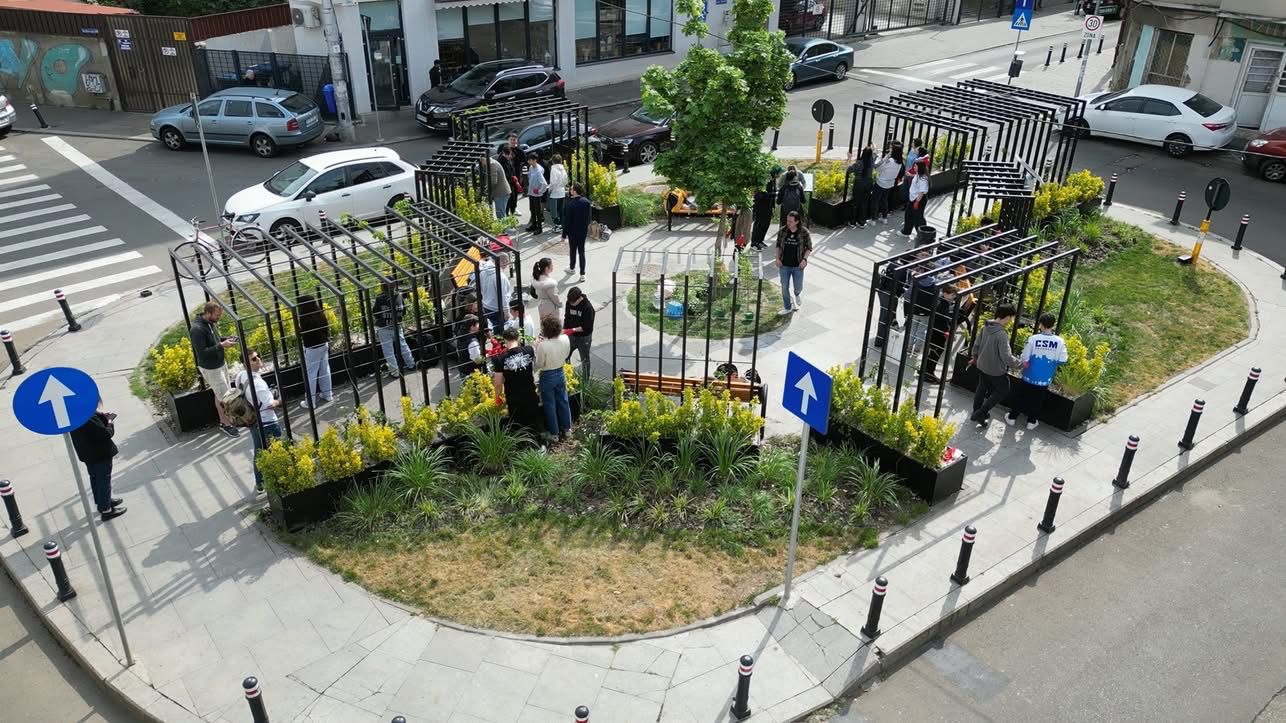
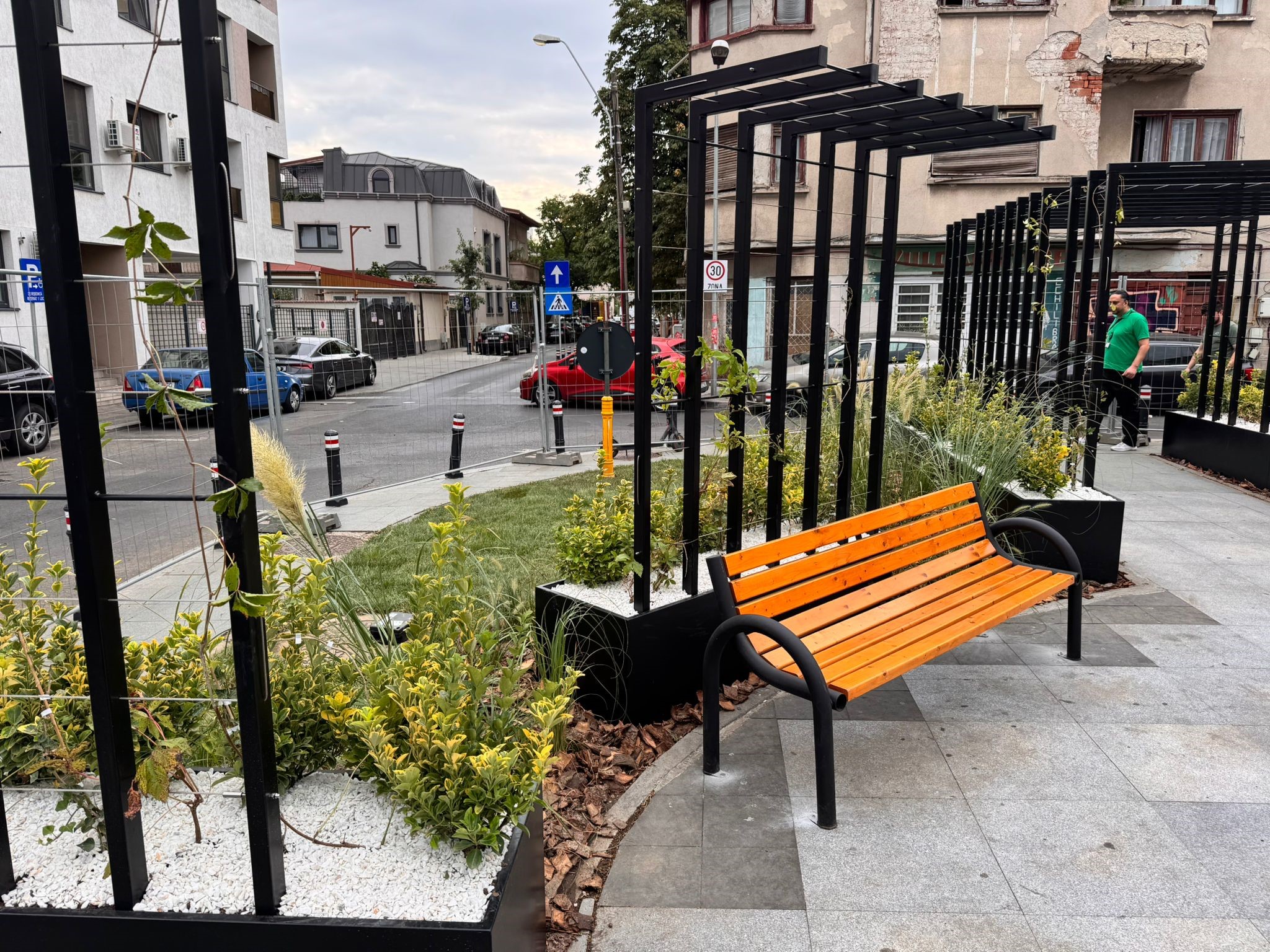
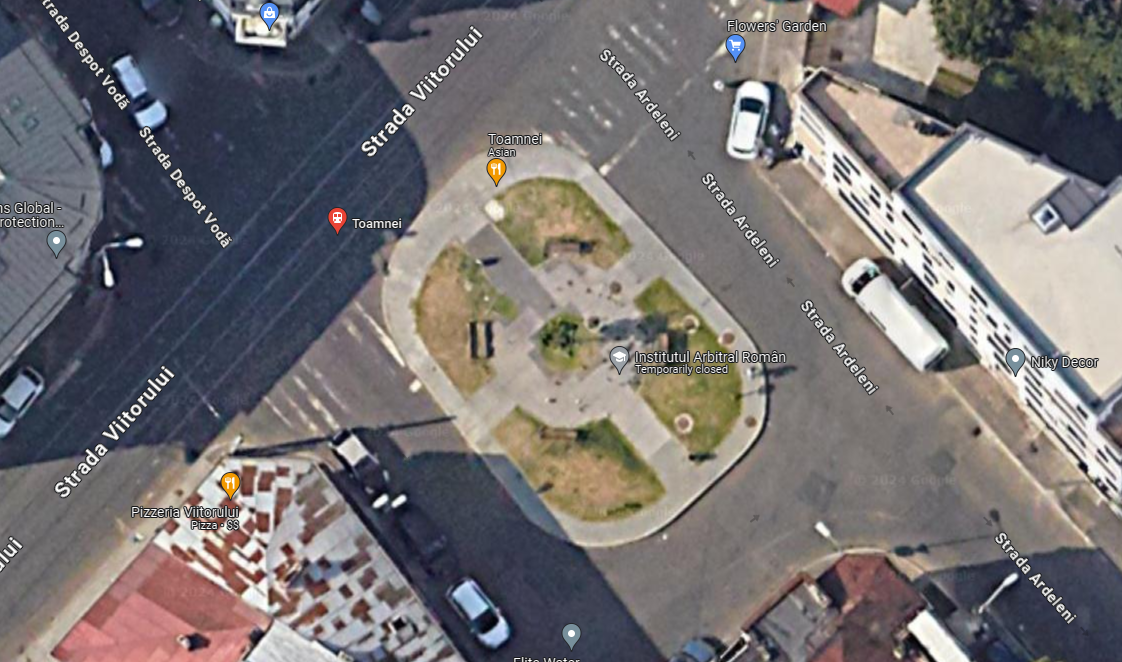
DivAirCity transformed the Taomnei-Viitorului square in District 2 from an underused and car-occupied urban leftover into an accesible, green and community-oriented public space. The project addressed combination of local challenges: lack of functional green space, illegal parking, poor environmental quality, overheating, weak social use of the area and limited opportunities for local residents to shape their neighbourhood.
Romania
Local
2nd District of Bucharest Municipality
Mainly urban
It involves a physical transformation of the built environment (hard investment)
Yes
2025-08-31
Yes
Horizon2020 / Horizon Europe
No
No
Organisation
The project was developed to address environmental degradation and social fragmentation in a dense inner-city area of Bucharest’s 2nd District. The Toamnei–Viitorului square was identified as a highly visible yet underused urban space affected by illegal parking, lack of vegetation, urban heat, noise and poor air quality, while also lacking functions able to support community interaction and social cohesion. Within the Horizon 2020 DivAirCity project, the 2nd District of Bucharest, together with civil society organisations, academic partners and local stakeholders, transformed this area into a pilot model for inclusive and climate-responsive urban regeneration through the use of nature-based solutions. The intervention followed a structured process including local diagnosis, participatory co-creation, technical design, physical implementation and awareness-raising actions. A key success factor was the active involvement of citizens, schools and local stakeholders through workshops, educational activities and community events, ensuring the intervention responded to real local needs while strengthening community ownership of the space.
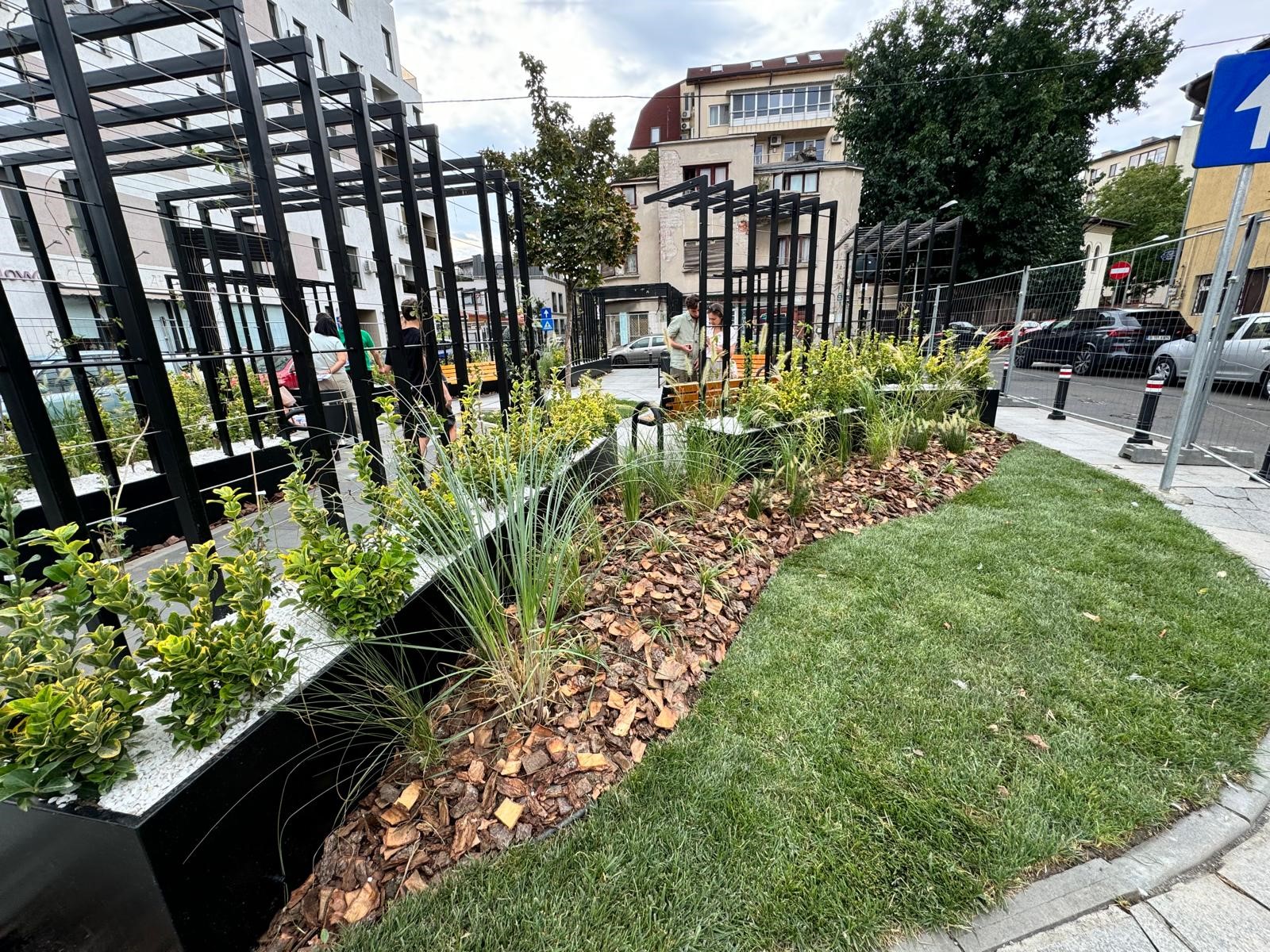
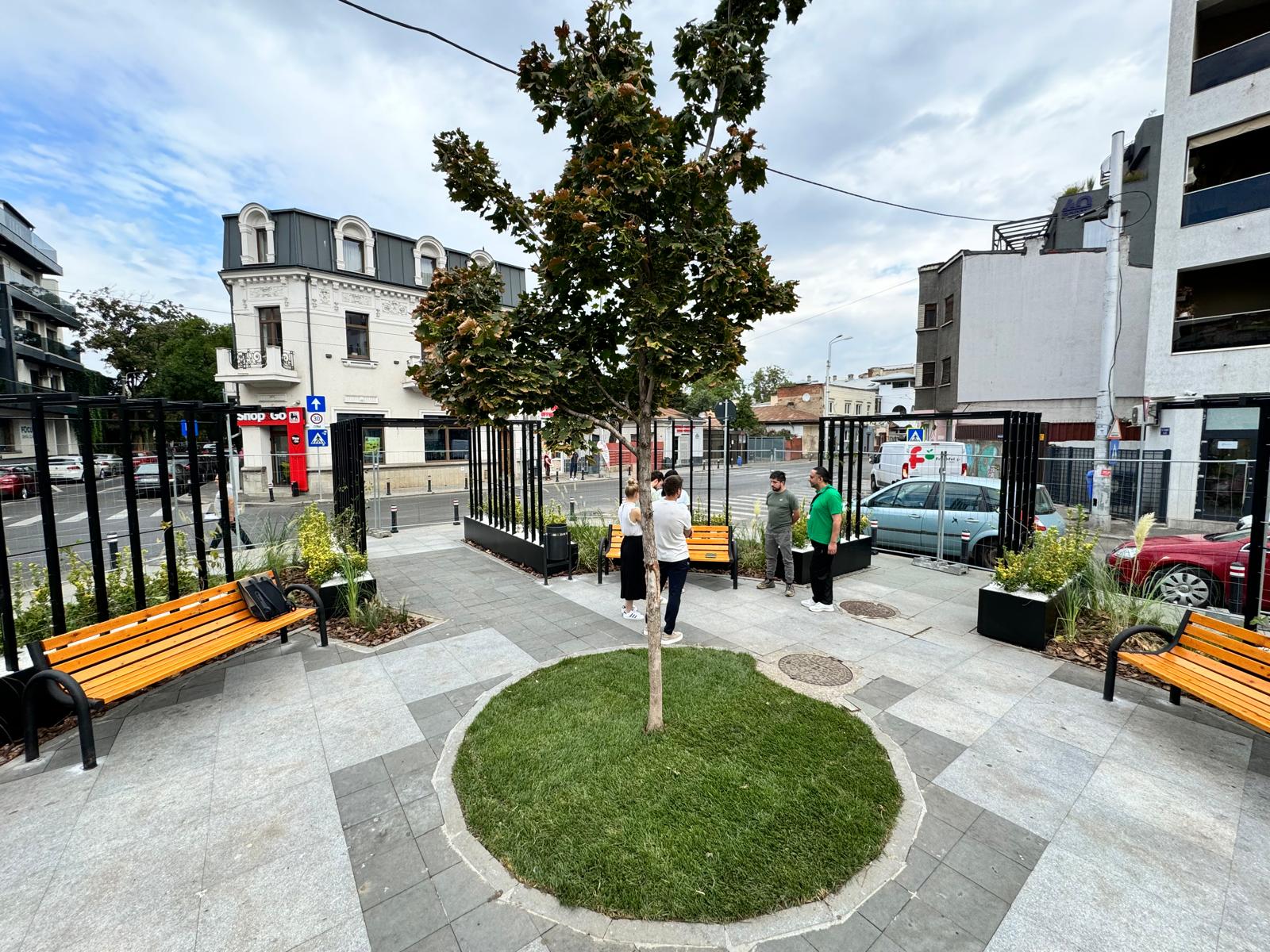
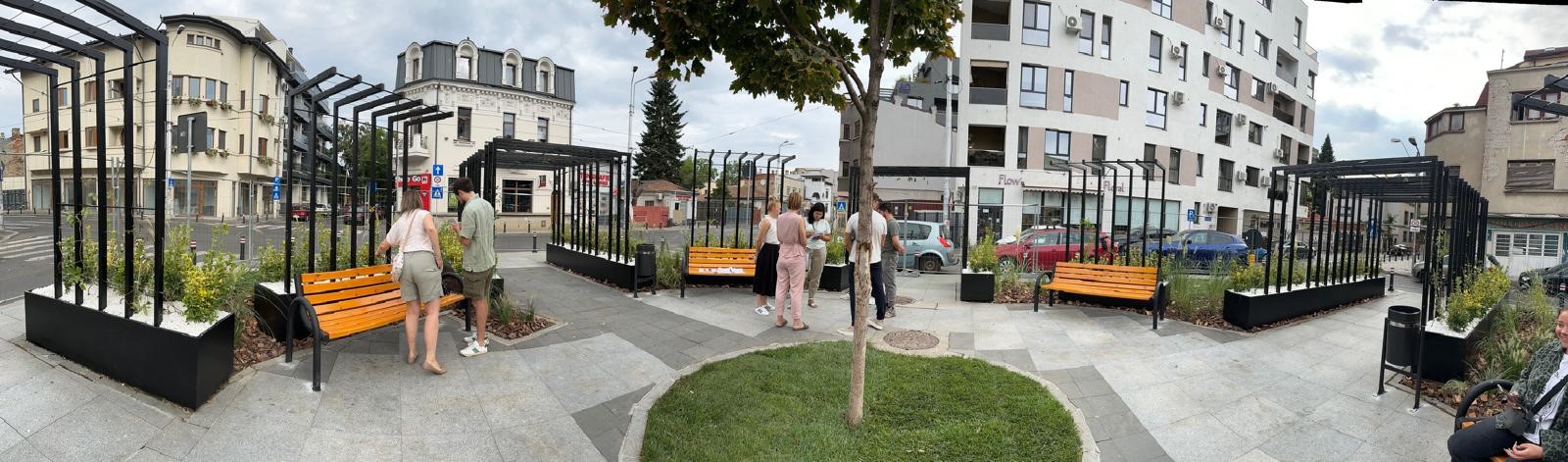
The project delivered tangible results through the transformation of the square into a greener, safer and more attractive public space, including the introduction of new vegetation and urban furniture, the reduction of informal parking and the creation of a multifunctional area designed for social interaction and everyday community use. A significant achievement was also the installation of air quality monitoring sensors providing real-time environmental data, contributing to a wider monitoring network and enabling more evidence-based local decision-making.
Beyond the physical intervention, the project created long-term impact by showing how small neglected spaces can become climate adaptation assets improving thermal comfort, biodiversity and sustainable behaviour.
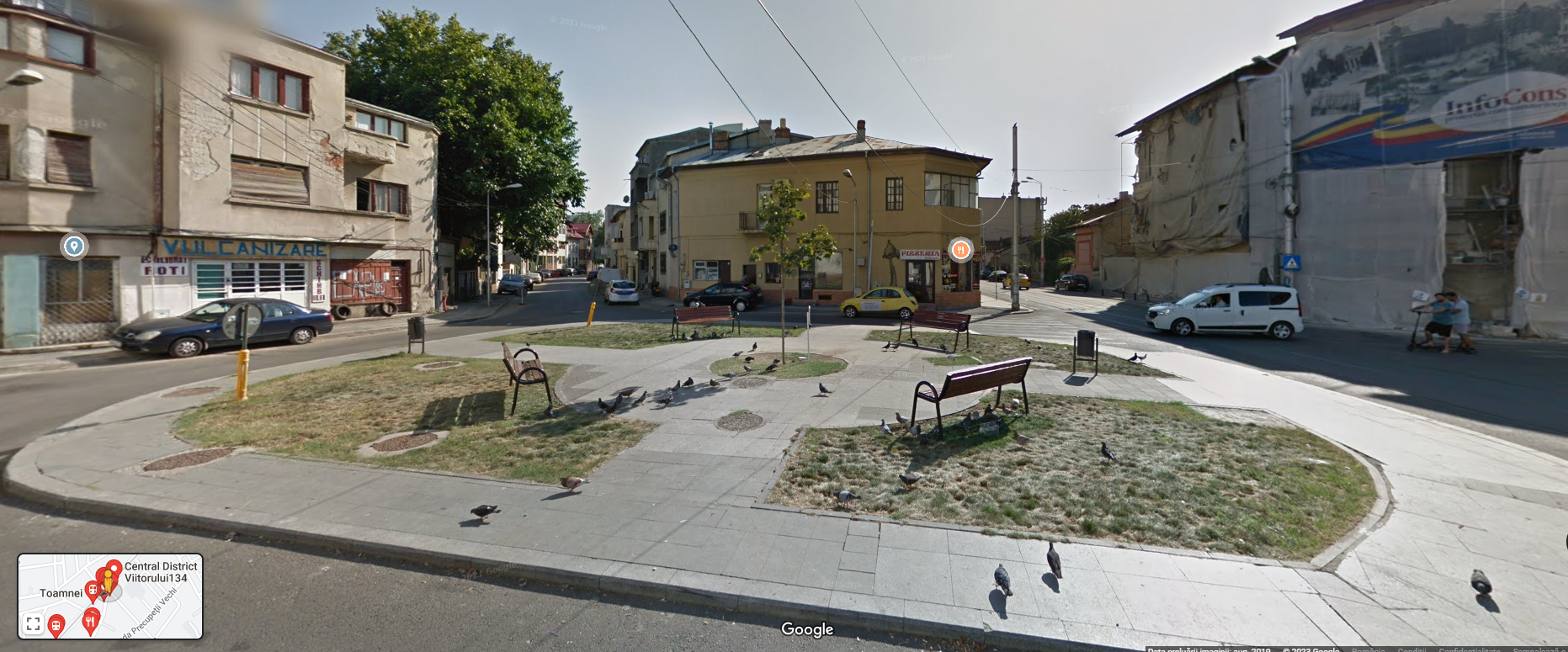
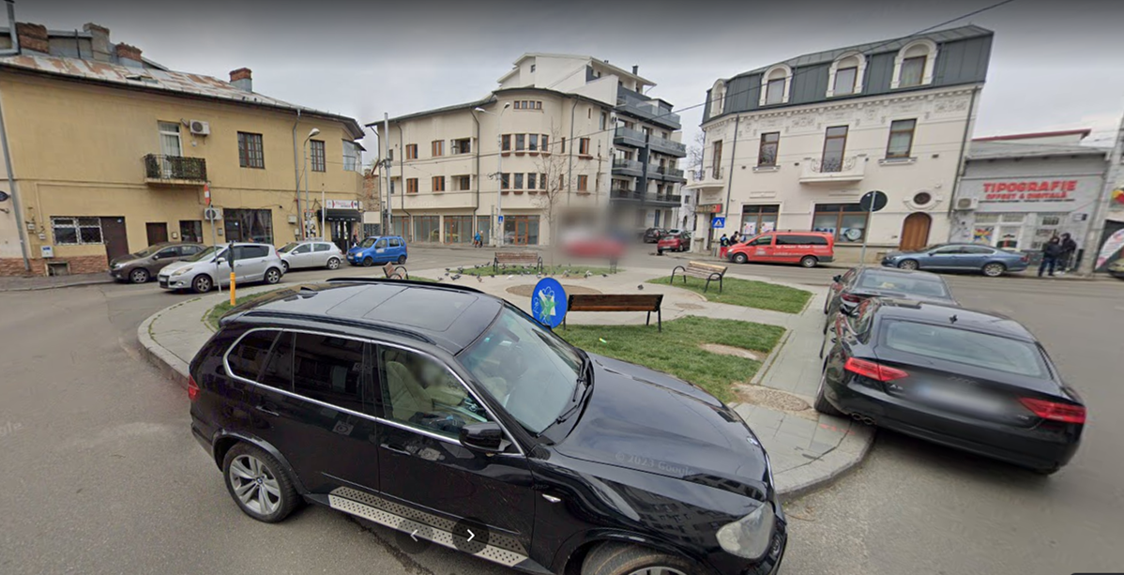
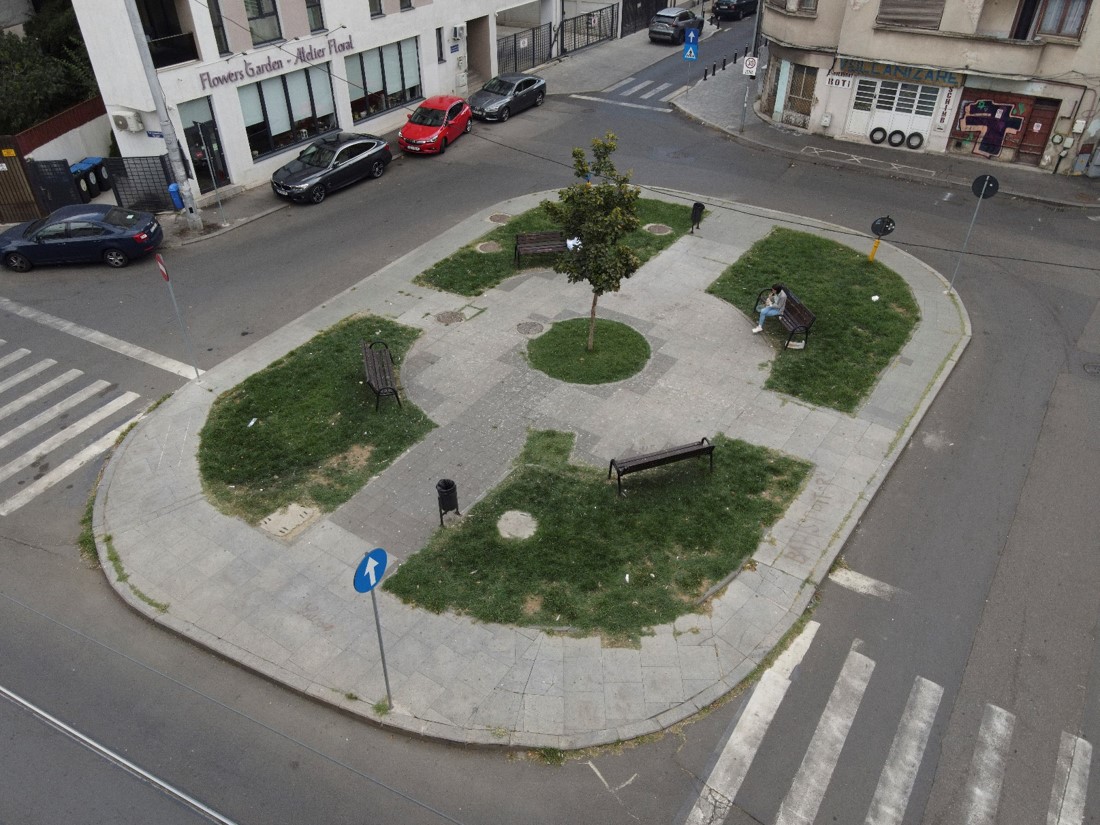
The DivAirCity intervention in Toamnei Viitorului Square emerged from the need to transform an underused and environmentally degraded urban space into a functional, people-oriented area. Before the project was conceived, Toamnei Viitorului Square was a small urban square heavily affected by illegal parking. Most of the space was occupied by cars parked irregularly, leaving almost no room for pedestrians, greenery, or social interaction. The area lacked vegetation and did not provide any recreational or community functions, which contributed to the poor environmental quality and an unattractive urban landscape.
In addition, the space was located in a disadvantaged urban area with limited access to quality green spaces. The constant presence of parked vehicles negatively affected pedestrian safety, reduced air quality, and diminished the overall usability of the square. Within the DivAirCity project, the site was selected as an opportunity to demonstrate how small urban interventions can significantly improve environmental conditions and public space quality. The implementation process focused on reclaiming the space from cars and redesigning it as a green, accessible, and community-friendly area. Illegal parking was removed, vegetation was introduced, and the space was reorganized to support social interaction, pedestrian use, and urban biodiversity.
Through this transformation, Toamnei Viitorului Square evolved from a neglected parking area into a revitalized public space that contributes to improving air quality, enhancing urban resilience, and creating a healthier environment for local residents.
Nature-based solutions
Urban regeneration
Community co-design
Air quality improvement
Green public spaces
The project addressed sustainability through the regeneration of an existing underused urban space and its conversion into a greener, people-oriented public place. Instead of consuming new land, the intervention improved the environmental performance and social value of a neglected site within the existing urban fabric.
Concrete measures included the expansion of green surfaces, the introduction of vegetation and shading elements, and the replacement of a car-dominated use pattern with a more climate-sensitive and community-friendly spatial arrangement. These actions contributed to reducing local overheating, improving microclimatic comfort, and supporting better air quality and urban liveability.
The project also promoted environmental sustainability through behavioural change and awareness. Educational activities helped residents and children better understand the links between pollution, health, climate and the maintenance of urban green spaces. In this sense, sustainability was addressed not only physically, but also socially and culturally, by building local responsibility for the space.
What makes the project exemplary is its ability to deliver environmental improvement through a modest but strategic intervention. It demonstrates that small-scale nature-based regeneration can generate durable local value, improve daily life, and contribute to broader climate-neutrality ambitions when embedded in a participatory process.
The project contributes to beauty by transforming a neglected, vehicle-dominated and visually degraded corner of the neighbourhood into a welcoming, human-scale and green public space. The intervention improved not only the appearance of the site, but also the everyday experience of the people who pass through it, use it and identify with it.
Aesthetic quality was pursued through the rebalancing of the space in favour of vegetation, openness, accessibility and comfort. The project reintroduced care, order and softness into an area previously marked by informal parking and poor maintenance. The result is a place that invites pause, interaction and everyday enjoyment rather than avoidance.
The project also supports a sense of belonging. By involving local actors and children and by rooting the intervention in a specific neighbourhood context, it created a stronger emotional connection between people and place. This matters in Bucharest, where many small public spaces remain overlooked despite their importance for neighbourhood identity and quality of life.
Its exemplary character lies in showing that aesthetics in the NEB sense is not decoration. Here, beauty comes from dignity, usability, greenery, care and shared ownership. The project makes life more pleasant and meaningful through an improved public environment that people can recognise as their own.
Inclusion is at the core of the project. The intervention reclaimed a space that had been informally appropriated by cars and made it accessible again for the wider community. In doing so, it shifted the balance of urban use from exclusionary and unsafe patterns toward shared, open and socially beneficial use.
The project promoted inclusion in several ways: by creating a public space that can be used by residents of different ages; by involving citizens in participatory processes; by engaging children and nearby schools; and by connecting environmental improvement with social interaction and neighbourhood cohesion. It therefore addressed spatial inclusion, social inclusion and civic inclusion at the same time.
The project is also relevant in terms of affordability and fairness because it improves everyday quality of life through public space, without requiring private consumption to access its benefits. The upgraded square is a common good: it offers green relief, rest, encounter and learning opportunities to all.
Its exemplary character comes from proving that inclusion can be built through concrete urban change. Rather than treating inclusion as an abstract policy goal, the project made it visible and tangible in a specific place, through accessible design, shared use, community participation and stronger local trust.
The project actively involved citizens and local stakeholders in the transformation process. Participation was embedded not as a symbolic consultation, but as a practical way to shape the intervention and increase its relevance, acceptance and long-term value.
Residents, children, schools and nearby stakeholders were engaged through co-creation and awareness-raising activities linked to the redesign and use of the space. Their involvement helped identify local needs, build support for the transformation and create a stronger sense of ownership over the final result. This was particularly important in a context where the site had long been neglected and informally occupied by parked cars.
Participation took place across several stages, including local engagement, implementation-related activities and community-oriented educational actions. The project thus combined physical change with social activation.
The impact of participation was clear: it improved the quality of the intervention, made the space more responsive to local needs, and increased the likelihood that the transformed square would be cared for and valued over time. The project shows that participatory urban regeneration can produce better environmental and social outcomes than a top-down intervention alone.
The project was implemented through cooperation between actors operating at multiple levels. At local level, District 2 Bucharest played a central role in delivery and in connecting the intervention to local public space management and community needs. Local civil society and academic partners contributed expertise, engagement capacity and technical knowledge.
At European level, the project was developed within DivAirCity, a Horizon 2020 initiative focused on improving air quality through social inclusion and nature-based solutions. This provided a wider framework for exchange, learning, visibility and policy alignment beyond the immediate intervention site.
The added value of this multilevel setting was substantial. It enabled the project to combine local relevance with European ambition, linking neighbourhood transformation to broader goals such as climate neutrality, healthier urban environments and more inclusive city-making. It also increased the project’s credibility and transfer potential by embedding it in a larger transnational learning ecosystem.
This governance model is exemplary because it shows how small local interventions can benefit from wider institutional cooperation without losing their place-based character. It helped align practical implementation, community engagement and strategic policy objectives in one coherent process.
The project brought together different forms of knowledge that are often separated in conventional urban interventions. Public administration, civil society, technical expertise, education and community knowledge all played a role in the design and implementation of the Bucharest pilot.
The intervention connected urban and environmental challenges with social and educational dimensions. It combined public space regeneration, nature-based solutions, awareness on air quality, community engagement and local learning processes. This required collaboration between municipal actors, local organisations, technical experts and residents, including children and schools.
The value of this transdisciplinary approach was that it produced a more complete response to the site’s challenges. The project did not treat the square only as a design problem or only as an environmental issue. Instead, it approached it as a shared urban condition involving climate, health, mobility, social cohesion, spatial quality and civic participation.
This makes the project exemplary. By integrating different disciplines and non-professional knowledge, it generated a more innovative, socially rooted and future-oriented solution than a standard sector-based intervention would likely have produced.
The project was financed through the Horizon 2020-funded DivAirCity framework, with implementation supported by the local partnership in Bucharest. As a completed public-interest intervention, its value does not primarily depend on commercial revenue generation, but on sustained public and social returns.
Its long-term financial sustainability relies on the fact that the transformed square is now part of the local public realm and can be maintained through regular public space management mechanisms and future local budget allocations. The project also created non-financial value that justifies continued support: improved environmental quality, a more attractive neighbourhood space, stronger community ownership and increased awareness on climate and air quality.
In addition, the project has generated intangible assets that can support future efficiency and scaling: tested participatory methods, local partnership capacity, visibility, and a demonstrable model for reclaiming small urban spaces. The DivAirCity app and behaviour-change dimension also point toward future pathways for citizen engagement and incentive-based environmental action.
The project’s financial logic is therefore based on public value creation, efficient use of a relatively small intervention area, and the possibility to replicate the approach in other neighbourhoods with manageable costs and strong co-benefits.
The project has strong transfer and replication potential because its core logic is simple, adaptable and relevant to many European neighbourhoods: identify a neglected small urban space, engage the local community, apply nature-based and inclusive design solutions, and turn the site into a shared public asset.
Several elements are directly transferable: the methodology for reclaiming underused or car-dominated micro-spaces; the participatory process involving residents, children and local institutions; the combination of environmental improvement with social cohesion goals; and the use of awareness-raising activities to strengthen long-term care and behavioural change.
Replication does not require identical physical conditions. The model can be adapted to different urban morphologies, target groups and governance settings. What is needed is a committed local authority, trusted local partners, basic technical capacity, and a willingness to treat small spaces as strategic opportunities for neighbourhood transformation.
The project can therefore inspire municipalities, districts, schools, neighbourhood organisations and EU-funded urban initiatives seeking cost-effective, visible and people-centred solutions. Its main lesson is that small-scale interventions, when co-created and well targeted, can have disproportionate social, spatial and environmental impact.