Enhancing Circularity, Sustainability, and Innovation
WILLOW WISDOM
WILLOW WISDOM – From Water-Retaining Landscapes to Living Material
Willow Wisdom transforms flood vulnerable landscapes into regenerative landscape infrastructure. Water retaining agroforestry systems restore water cycles, regenerate soils and biodiversity, while shaping a new aesthetic of the land through contour based planting and infiltration structures. The cultivated willow becomes a new material: continuous solid wood filaments woven into lightweight architectural structures, linking landscape regeneration with innovative bio based materials.
Germany
Regional
Hessen
It addresses urban-rural linkages
It involves a physical transformation of the built environment (hard investment)
Yes
2025-08-01
No
No
Yes
Individual
Willow Wisdom is a regenerative landscape project that emerged after a devastating flood in the village of Gottsbüren, Germany. In August 2024, intense rainfall sent water rushing down surrounding agricultural slopes, flooding the village and damaging more than 100 houses and infrastructure. The event revealed how vulnerable many landscapes have become when soils lose their capacity to absorb water.
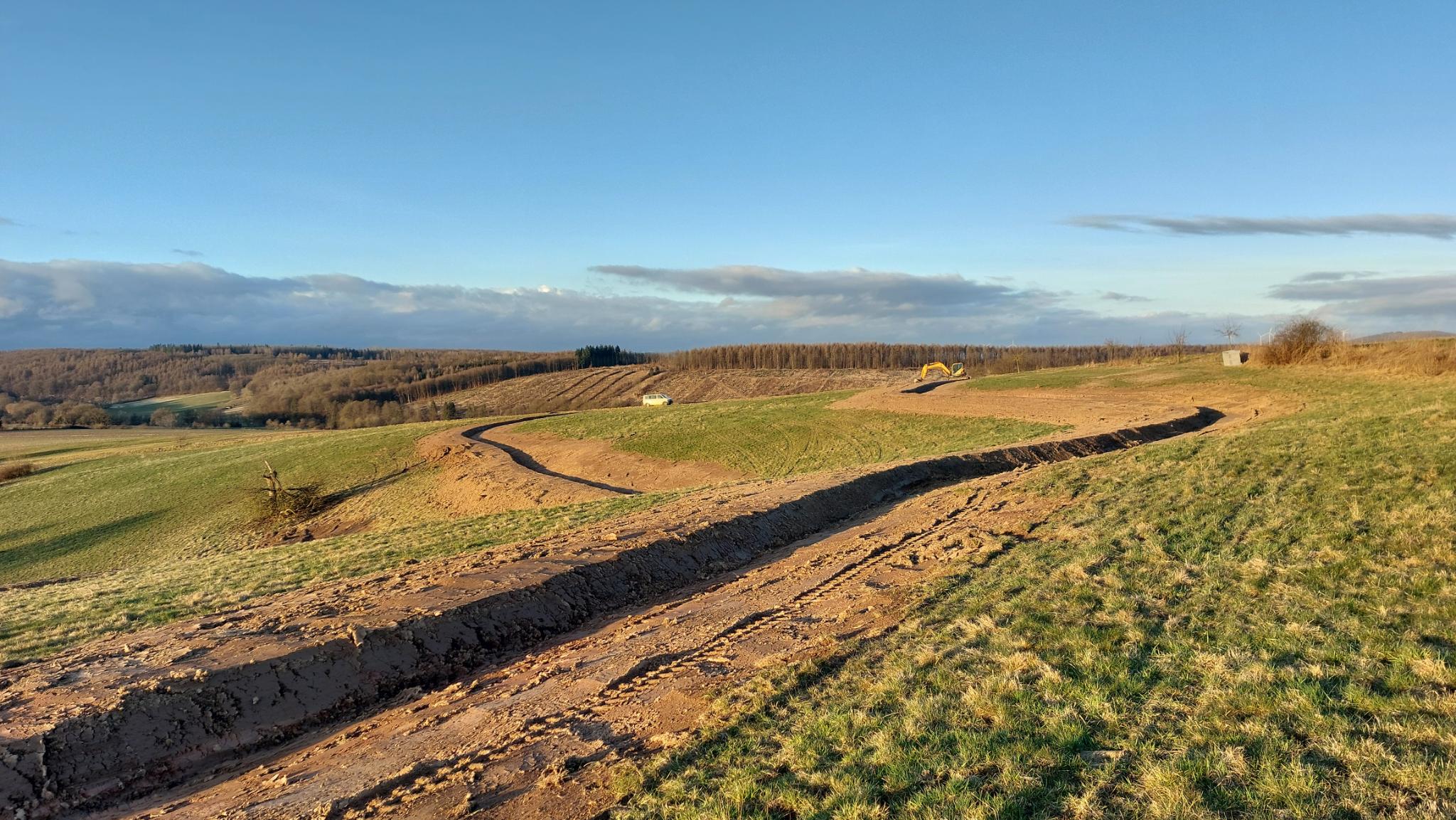
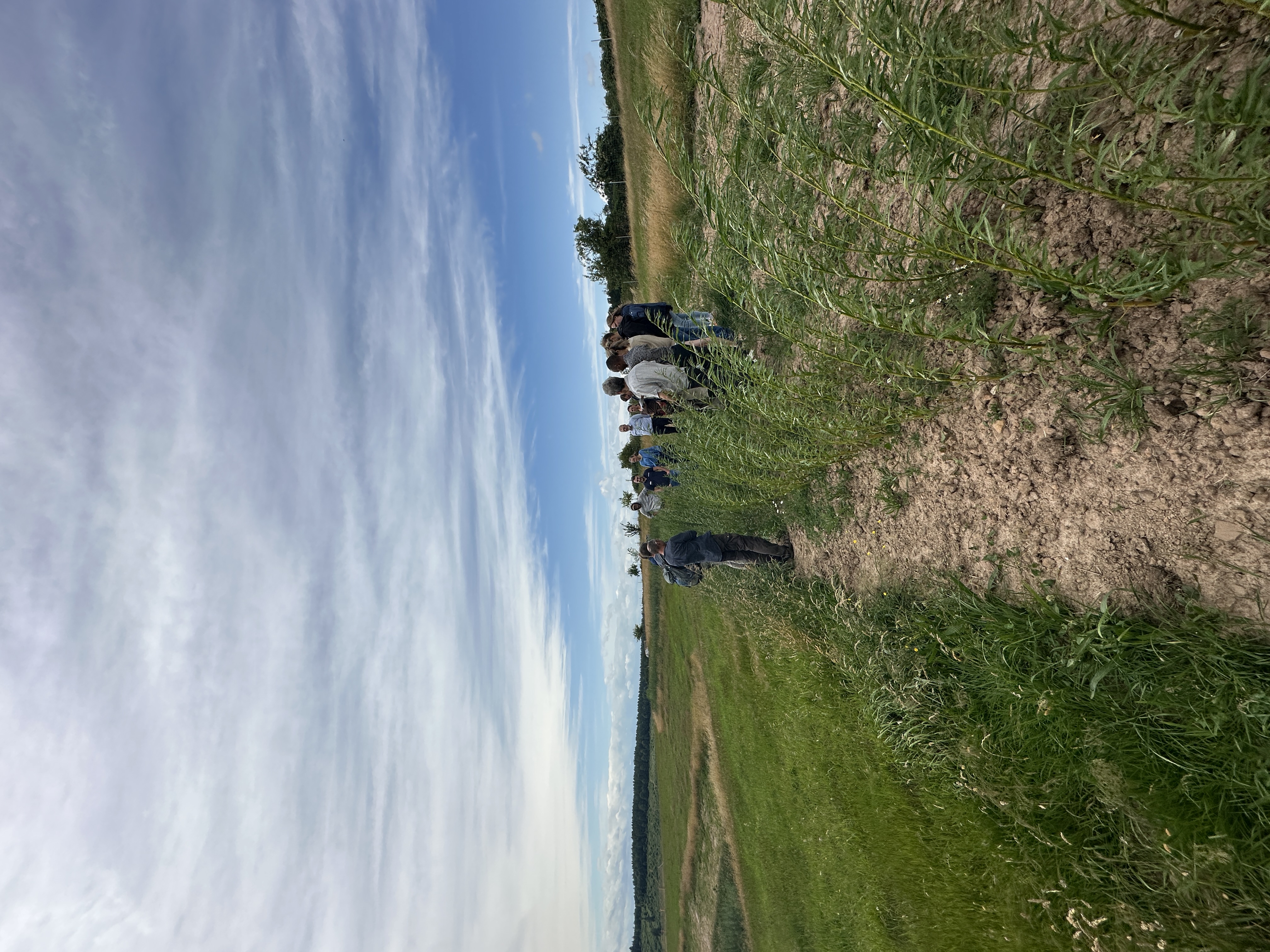
In response, Willow Wisdom transformed farmland into climate-adaptive landscape infrastructure. Local farmers, scientists, artists, designers, citizens and the municipality collaboratively established a water-retaining agroforestry system above the village using keyline design. Along contour lines, infiltration trenches and willow planting strips capture and store rainwater, allowing the land to act as a sponge while forming a visible and beautiful pattern of regenerative land use. Implemented as a Living Lab, the pilot landscape now demonstrates how water retention, soil regeneration and biodiversity recovery can be integrated into productive agricultural landscapes.
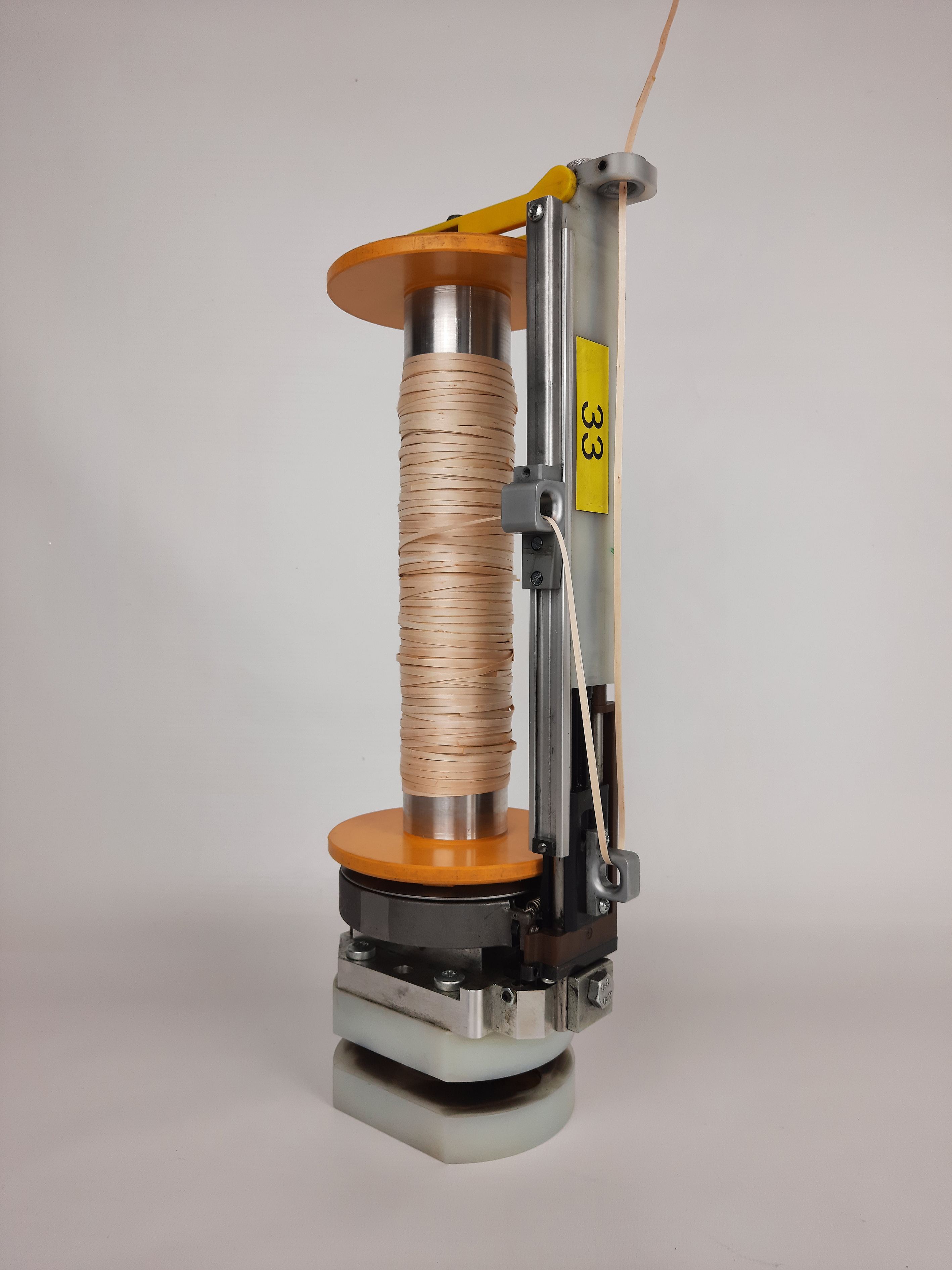
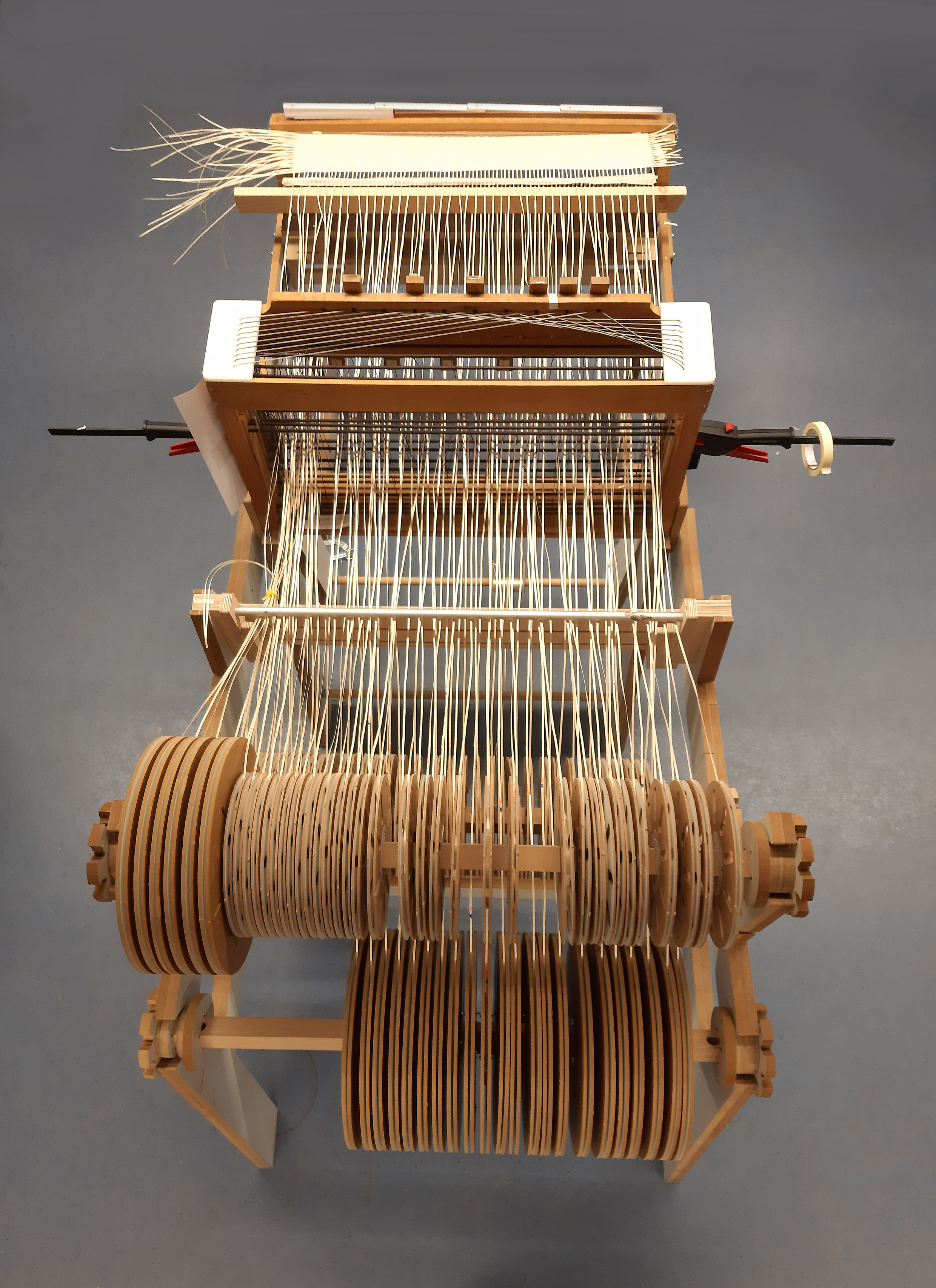
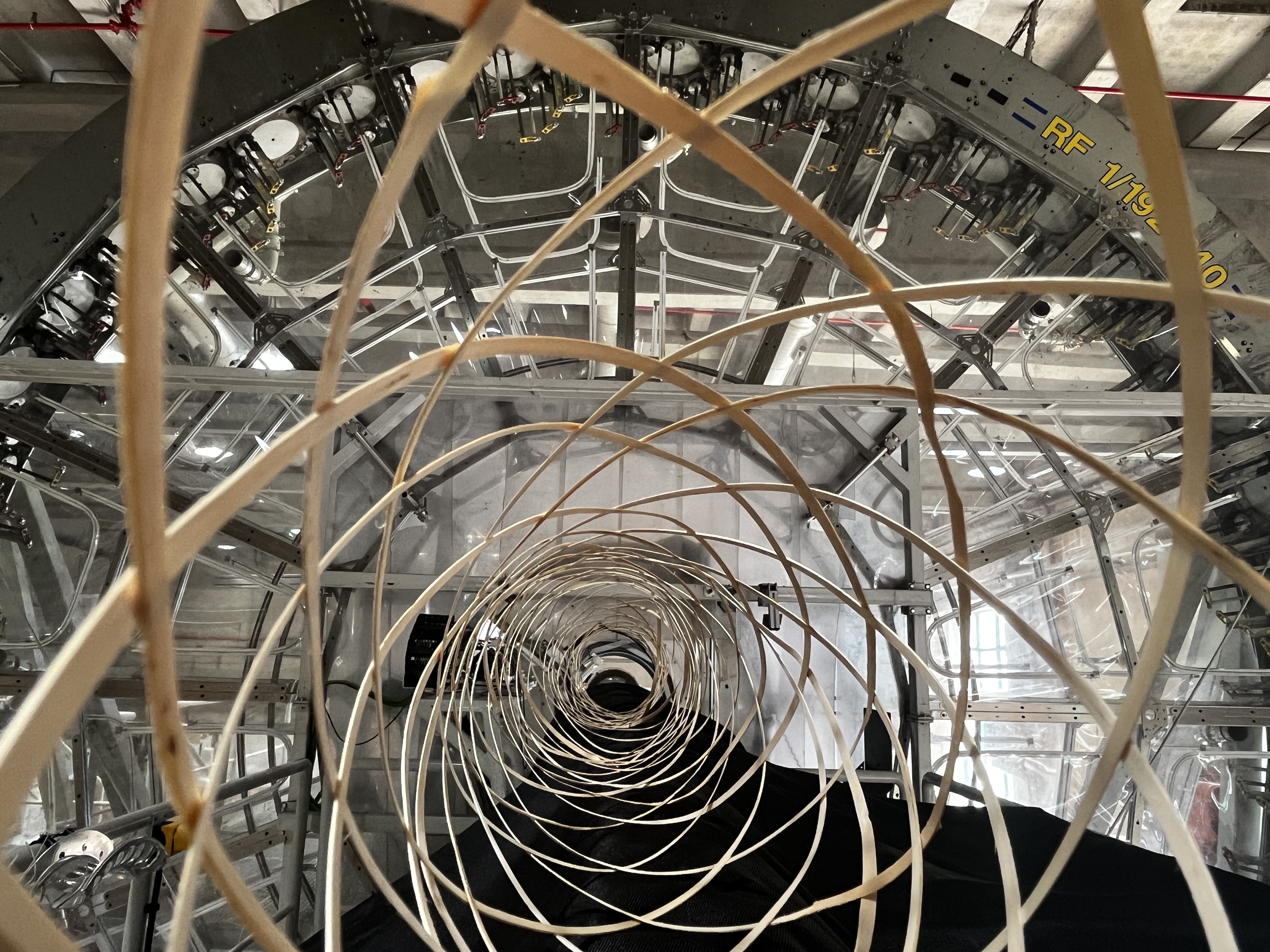
At the centre of the system is a remarkable plant: the willow. As a deep-rooted species it stabilises soils, protects against erosion and grows rapidly as a renewable resource. From its straight annual rods we developed continuous solid-wood filaments and a new production process that allows wood to be processed like yarn. By weaving, braiding or winding these filaments, lightweight structural components were realised, forming a new class of bio-based materials: wood textiles for architecture and design.
Willow Wisdom demonstrates how ecological restoration, material innovation and regional value creation can work together. Beyond the pilot landscape, the project offers a transferable model for climate-resilient land use, showing how regenerative landscapes can restore water cycles, support circular bio-economies and inspire new relationships between nature, culture and technology.
The valley location proved fatal for the village of Gottsbüren, home to around 700 residents. In August 2024, after intense rainfall, water rushed down the surrounding slopes, flooding the village and causing severe damage: more than 100 houses were affected and infrastructure destroyed. The disaster revealed how vulnerable our landscapes have become. Many such floods occur because drought-stressed or compacted soils have lost their capacity to absorb rainfall. Instead of infiltrating the ground, water flows rapidly across the surface until it reaches settlements.
In response, we launched the project Willow Wisdom. Together with local farmers we redesigned the landscape above the village as a water-retaining agroforestry system. Along contour lines, infiltration trenches and planting strips retain rainwater in the landscape and allow it to seep slowly into the soil. Water is retained where it falls.
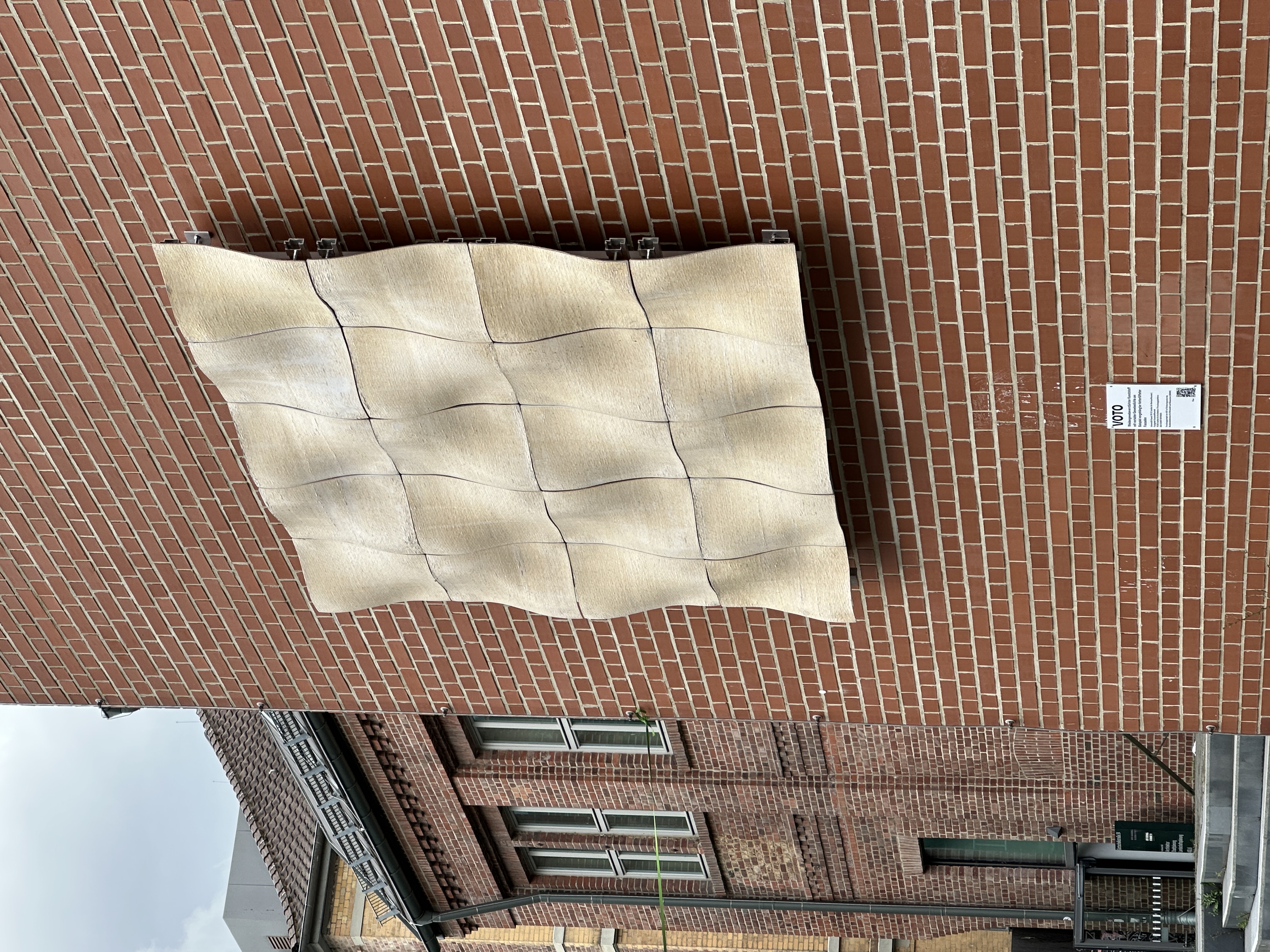
At the center of the system is a remarkable plant: the willow. As a deep-rooted species it stabilises soils and protects against erosion while growing rapidly as a renewable resource. Already during cultivation, we optimize its material quality. The annual rods, up to five meters long and remarkably straight, yield lightweight wood with a unique balance of flexibility, strength and weight. From these rods we developed a continuous solid-wood filament. By weaving, braiding or winding it, lightweight structural components are produced. The result is a new class of bio-based materials: wood textiles. Applications range from façade elements to furniture and experimental architectural structures – linking cultivation directly to construction.
Implemented as a living lab, the project brought together farmers, the municipality, companies, scientists and designers as equal partners. Willow Wisdom shows how a flood disaster can become the starting point for a regenerative landscape economy, linking water retention, material innovation and regional value creation.
Regenerative Landscapes
Water Resilience
Bio-based Design
Community Collaboration
Regional Value Chains
AI/ to repurpose
Our project addresses environmental challenges at their root: degraded soils, increasing flood risks and climate-vulnerable agricultural landscapes. Instead of treating these issues separately, the project reconnects water cycles, land use and material production into one regenerative landscape system. In Gottsbüren, where heavy rainfall caused severe flooding, we implemented an agroforestry landscape that retains water where it falls. Through landscape design strategies such as contour-based agroforestry systems, infiltration trenches and willow planting strips slow down surface runoff, increase infiltration and support soil regeneration and water retention. Agricultural land is transformed from a source of runoff into a living landscape infrastructure for climate resilience.
AII/ to close the loop
Systemic integration: The project integrates ecological restoration, agriculture and material innovation into a single regenerative system. Agroforestry structures improve water storage, soil health and biodiversity while simultaneously producing a renewable raw material. Through the development of a continuous solid-wood fibre, this biomass can be processed like yarn into textile structures, creating new possibilities for lightweight construction. In this way, landscape management, regenerative agriculture and bio-based material innovation become part of a circular landscape–material system.
AIII/ to regenerate
Transformative impact: Beyond circularity, the project actively regenerates landscapes and ecological systems. Agricultural land becomes multifunctional green infrastructure producing ecological services and sustainable materials. By combining landscape design, regenerative agriculture and material innovation, the project links landscape restoration with future construction systems. This approach creates a scalable pathway for climate-adaptive landscapes that store water, regenerate soils and support circular bio-based value chains.
AI/ to activate
The agroforestry landscape reshapes the visual and spatial character of the surrounding farmland. Rows of willows planted along contour lines create a new landscape structure that follows the movement of water and terrain. These living lines make ecological processes visible: rainfall, infiltration and soil regeneration become part of a readable landscape. The project thus transforms technical water management into a readable landscape form that strengthens people’s awareness and care of the place.
AII/ to connect
Systemic integration: The aesthetic dimension continues in the material culture emerging from the landscape. By developing continuous solid-wood fibres, wood can be processed like yarn into textile structures for architecture and design. These structures reveal a distinctive visual language based on threads, tension and weaving, drawing on the familiar aesthetic of parallel and crossing lines. This creates a new material language combining the structural qualities of wood with the logic of textiles. At the same time, the project reconnects cultural heritage with technological innovation. The millennia-old crafts of weaving and basketry are combined with digital fabrication and robotic production, allowing traditional knowledge to evolve into innovative structural systems.
AIII/ to integrate
Transformative impact: Beyond individual objects the project integrates landscape, material production and architecture into one aesthetic system. Together they form a new cultural language of textile-based tectonics. By connecting ecological processes, cultural traditions and advanced technologies, the project demonstrates how sustainability can generate new forms of beauty: rooted in place, meaningful for communities and capable of inspiring future ways of living with nature.
AI/ to include
Willow Wisdom actively works to overcome segregation between communities, knowledge systems and economic sectors. The project creates new connections between rural and urban contexts. It treats experiential and scientific knowledge as equally valuable sources of insight. It fosters exchange across generations, genders and cultures by bringing together farmers, students, designers, researchers and local communities.
AII/ to consolidate
Systemic integration: Beyond participation, Willow Wisdom consolidates long-term collaboration between different actors and knowledge systems. This dialogue between tradition and innovation allows knowledge from different cultural and professional backgrounds to interact and evolve into new agricultural, landscape, societal, material and immaterial systems. The project also connects actors across sectors and regions through a living lab with collaborative governance. Through networks such as Interreg C5, Willow Wisdom collaborates with partners across Europe.
AIII/ to transform
Transformative impact: Water and soil systems are increasingly under pressure from drought, heavy rainfall, pollution and soil degradation. These challenges are not only ecological but also affect food security and economic stability. Addressing such complex systems requires close cooperation across disciplines and sectors. The project addresses structural conflicts such as competition between food production and biomass use (food vs. fuel). By integrating willow cultivation into agroforestry systems, biomass production is combined with water retention, soil regeneration and agricultural productivity. By linking ecological restoration with material innovation and regional value creation, the project proposes a societal model, in which regenerative landscapes, circular materials and collaborative governance support sustainable regional development.
AI/ to consult
The project began with consultations with farmers, municipal actors and citizens to address flooding through landscape-based solutions.
AII/ to co-develop
Local Farmer and veterinarian Karoline Kronenberg played a central role by providing the land for the agroforestry system and investing in its implementation and management. Together with forester Philipp Gerhardt she co-developed the keyline-based water retention design, and with farmer and biologist Steffen Fehrenz established the willow planting strips. He also contributed willow varieties and monitored soil biodiversity, carbon storage and plant-available nitrogen. Material and design innovation were developed by the research platform BAU KUNST ERFINDEN at the University Kassel. Artist and professor Heike Klussmann, together with designers Steffi Silbermann and Lena Hellmann, developed the willow wood thread technology, adapted weaving processes and designed the first applications. Corinna Anzer, head of weaving and braiding at the Institute for Materials Science at Hof University developed industrial textile processing technologies for willow wood. The municipality actively supports the process. Mayor Manuel Zeich organised public meetings where citizens discussed the project. The site now functions as a Living Lab for farmers, citizens, researchers and designers. This process reflects the principles of Open Social Innovation, where actors from different sectors jointly address shared challenges.
AIII/ to self-govern
The impact is already visible: the agroforestry site has become a community-supported demonstration landscape that reduces flood risks, strengthens biodiversity and creates new economic opportunities for farmers and local companies. Willow Wisdom already serves as a blueprint for further sites, including Werragut, HannMünden and Frankenhausen, with additional locations under development, while knowledge and practical experience are continuously transferred between sites.
A I/ to work locally
At the local level, the project focused on practical implementation and community participation. Willow Wisdom was established as a Living Lab in which farmers, researchers, designers, companies and the municipality collaborated closely. Farmers cultivated willow and managed the agroforestry system, while researchers and designers developed bio-based material applications and construction concepts. Citizens were involved through workshops, public events and demonstrations.
A II/ to work across levels
At the regional and national level, the project connected research institutions, industry partners and innovation networks. The University of Kassel and the ifm Hof contributed expertise in material research and design. Industry partners such as Kuper, Iprotex and Moormann collaborated in the development and testing of products. The project is also linked to national networks including the Research Association for Materials from Sustainable Raw Materials (WNR), the Textile Research Council (FKT), Modema, DeFAF, Triebwerk and Resola, which support knowledge exchange and the improvement of framework conditions for agroforestry and bio-based materials in Germany. It operates within a broader research and innovation ecosystem that includes national programmes such as FNR, BBSR, AiF, ZIM and PtJ, as well as European initiatives such as Interreg.
A III/ to work globally
At the European level, Willow Wisdom is embedded in the Interreg C5 network, enabling collaboration between pilot regions in Germany (Rastatt/Kassel), Belgium (Liège), France (Rennes/Coulommiers), the Netherlands (Enschede) and Ireland (Connacht). The project explores how alternative cropping systems—hemp, willow and agroforestry—can be combined with biomass conversion to develop sustainable building materials. Agricultural biomass is processed into fibres and filaments for structural components, materials for insulation and biochar-based building and filtration substrates.
AI / to be multidisciplinary
Willow Wisdom brings together expertise from agriculture, forestry, biology, art, architecture, design, materials science and ecology.
AII / to be interdisciplinary
These disciplines interact closely within a shared research and development process. The common goals of Willow Wisdom are to regenerate landscapes, retain water, create circular bio-based value chains and transfer the model to other regions. The project restores the water retention capacity in agricultural landscapes through agroforestry and keyline-based land management while improving soil health and biodiversity. At the same time, it develops sustainable materials by cultivating willow as a renewable resource and transforming it into wood threads and wood textiles for applications in design, architecture and construction. By linking agricultural production with material innovation, the project creates new economic opportunities for farmers and rural regions.
A III / to be beyond-disciplinary
A structured collaborative process facilitates the merging of different knowledge fields. All partners meet at least four times per year, with meetings rotating between locations along the value chain—from agroforestry fields to laboratories, workshops and industrial facilities. Experiential and scientific knowledge are treated as equally valuable. Methods such as role exchange are used to explore questions collaboratively: participants temporarily adopt the perspectives of other actors, for example a farmer representing the textile industry or a designer taking the role of a farmer. This approach makes practical and disciplinary knowledge visible, strengthens mutual understanding and supports the joint development of viable solutions. The project serves as a demonstration landscape where knowledge and practical experience are exchanged and adapted by other regions, enabling the replication of regenerative land-use systems and circular material production.
Financial sustainability is achieved through a hybrid business model combining market-based revenues, agricultural incentives and research and innovation funding.
1. Market-based revenues
The project builds on the economic potential of agroforestry systems. These generate diversified outputs such as crops, fruits, nuts, livestock products, honey, fibres and other bio-based materials. In the case of willow systems, harvested biomass can also be processed into innovative fibres, textiles and bio-based construction materials, creating additional value chains beyond agriculture. This diversification stabilises farm income while reducing economic risks and strengthens productivity while improving soil fertility, water retention and biodiversity.
2. Agricultural incentives
Agroforestry systems are increasingly supported through agricultural policy instruments, including eco-schemes and agri-environmental programmes.
3. Research and innovation funding
Public research programmes, climate funds and innovation grants support demonstration sites, living labs and transferable models for regenerative landscapes.
4. Knowledge and advisory economy
Knowledge transfer, advisory services, landscape planning, training programmes and educational activities can provide additional revenue streams.
5. Emerging financial mechanisms
In the longer term, additional financial mechanisms may further strengthen the economic viability of agroforestry landscapes. These include payments for ecosystem services (PES), carbon and soil-based finance, biodiversity credits, landscape services such as water retention or flood protection, corporate climate partnerships and true-cost value chains that reward regenerative agricultural practices.
The combination of diversified production, ecosystem services and bio-based material innovation creates a replicable and scalable model for regenerative landscapes that can be transferred to other agricultural regions.
The project is designed as a transferable model for regenerative landscape systems that can be adapted to different regions, crops and value chains. Its scalability is based on a two-track scaling strategy combining vertical and horizontal expansion.
Vertical scaling focuses on further developing the Willow Wisdom system and adapting it to different regional and environmental conditions. This includes expanding production areas, increasing biomass yields and advancing processing technologies to enable high-speed manufacturing and market-ready bio-based materials. Through the optimisation of both agricultural and material value chains, the system is designed to evolve from a pilot initiative into a scalable and economically viable production model.
Horizontal scaling transfers the core principles of the project to other crops, materials, landscapes and user groups. The agroforestry and material model can be applied to additional perennial crops such as hemp, poplar or miscanthus, enabling new value chains ranging from fibres and textiles to insulation materials, construction products or bioenergy. In parallel, the material innovation chain can be expanded through new applications for biomass and fibres, including textiles, architectural materials, biocomposites or biochar.
The methodology can also be transferred to different landscape contexts, such as erosion-prone agricultural areas, flood-prone regions, drought-affected landscapes or peri-urban territories facing land-use pressures. At the same time, the system can engage a broader range of stakeholders, including farmers, municipalities, water authorities, the construction sector and the design and textile industries.
Together, these elements create a replicable and scalable model for regenerative landscapes that can be transferred to many European regions.