HUB Criativo Portas do Sol
Hub Criativo Portas do Sol – Living Heritage Hub for Circular and Inclusive Urban Regeneration
A living heritage hub in Covilhã’s historic centre, where textile culture—rooted in the city’s identity—drives creativity, design and community life, reactivating historic buildings through everyday use. Through workshops, exhibitions, music and circular practices, it engages elderly residents, students and international communities, promoting eco-design, resilience and inclusion, and transforming heritage into a vibrant, shared and sustainable civic ecosystem.
Portugal
Rua Portas do Sol, 122, Covilhã - 6200-027 COVILHÃ
Prototype level
Yes
Yes
Yes
Yes
ERDF : European Regional Development Fund
This initiative is part of the Resotx Project - Repensando el Sector Textil y la moda sostenible, implemeted as a partner, through a Interreg cofinancing thet runs from 12/12/2022 to 31/12/2026.
No
050335: União das freguesias de Covilhã e Canhoso (PT)
The Hub Criativo Portas do Sol is a living heritage hub in the historic heart of Covilhã (Portugal), transforming municipal buildings into a dynamic space for design, eco‑design, textile creativity, circular practices and cultural participation. Building on the António Lopes Gallery and expanding to Casa Muralha, it is growing into a networked cultural system that reactivates urban life and reinforces the historic centre as a place of everyday interaction.
Rooted in Covilhã’s textile heritage, the initiative connects tradition with contemporary practices through exhibitions, textile experimentation, and workshops in textiles, ceramics, painting, engraving and other arts. It also hosts school programmes, music initiatives such as O Piano ao Meio and Festival Síntese, and seasonal community activities. Rather than a single‑purpose venue, it operates as a multi‑layered platform where making, learning and community life converge.
The project engages elderly residents, children and young people, international students, foreign communities, artists, makers and visitors. By promoting intergenerational exchange, accessibility and inclusive participation, it keeps heritage active, socially embedded and relevant.
Its goals include regenerating the historic centre through adaptive reuse, promoting circular and eco‑design practices, strengthening community participation and enhancing urban resilience and sustainability. It is supported by partners such as New Hand Lab, Modatex, CISMA, J. Gomes, Atelier Formas e Cores de Terra, local artists and educational institutions.
Linked to the RESOTEX project (Interreg POCTEP), it contributes to European strategies for circular textile innovation. Expected outcomes include increased cultural activity, stronger social cohesion, renewed local identity, improved urban vitality and a scalable model for heritage‑based regeneration in small and medium‑sized cities.
Heritage
Sustainability
Circularity
Regeneration
Eco-Design
Sustainability is a core principle of the Hub Criativo Portas do Sol, embedded in its spatial strategy, cultural programming and daily practices. The initiative is grounded in the adaptive reuse of existing municipal heritage buildings—Galeria António Lopes and the forthcoming Casa Muralha—extending their lifecycle and avoiding the environmental impact of new construction while preserving cultural identity.
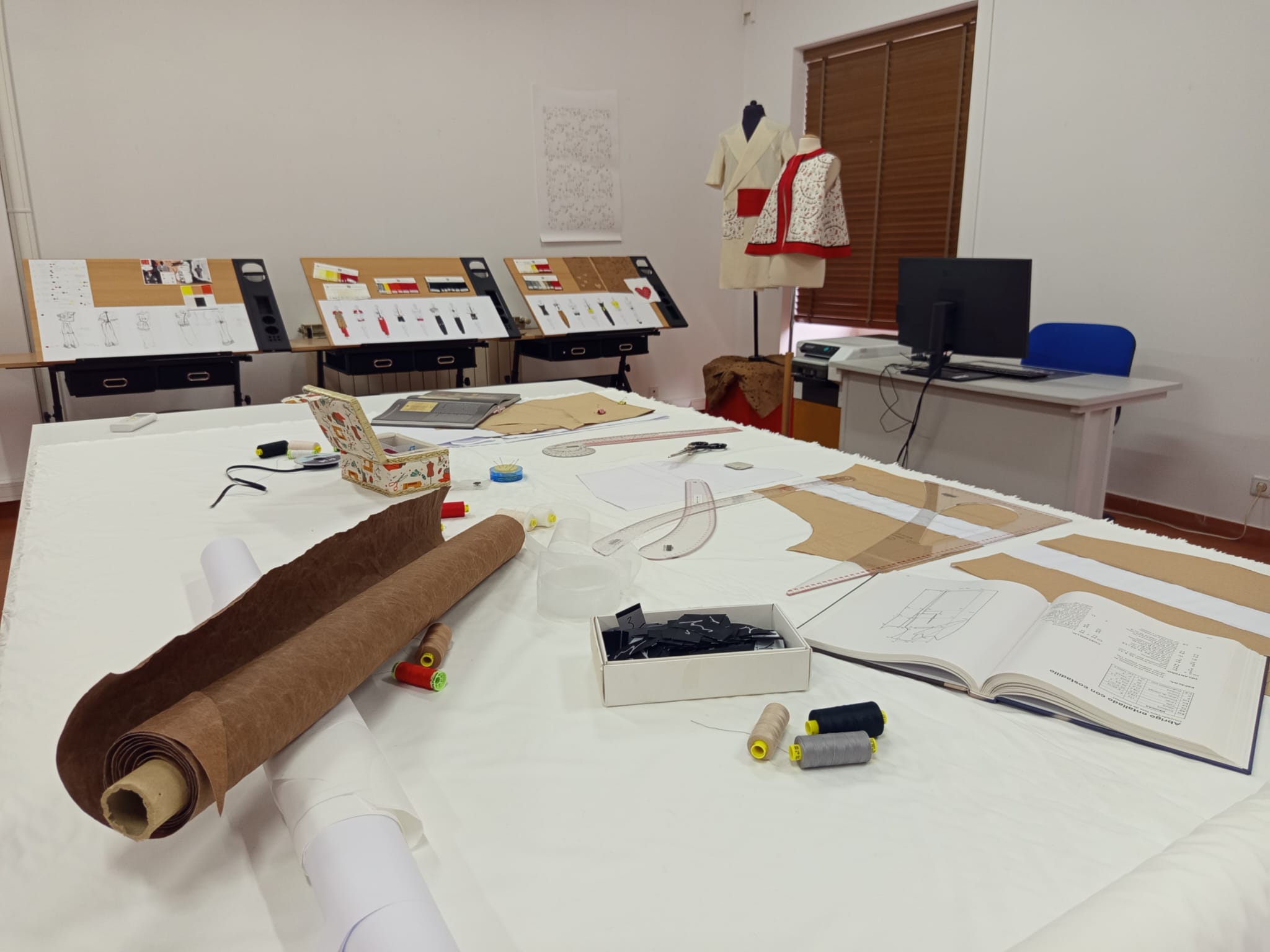
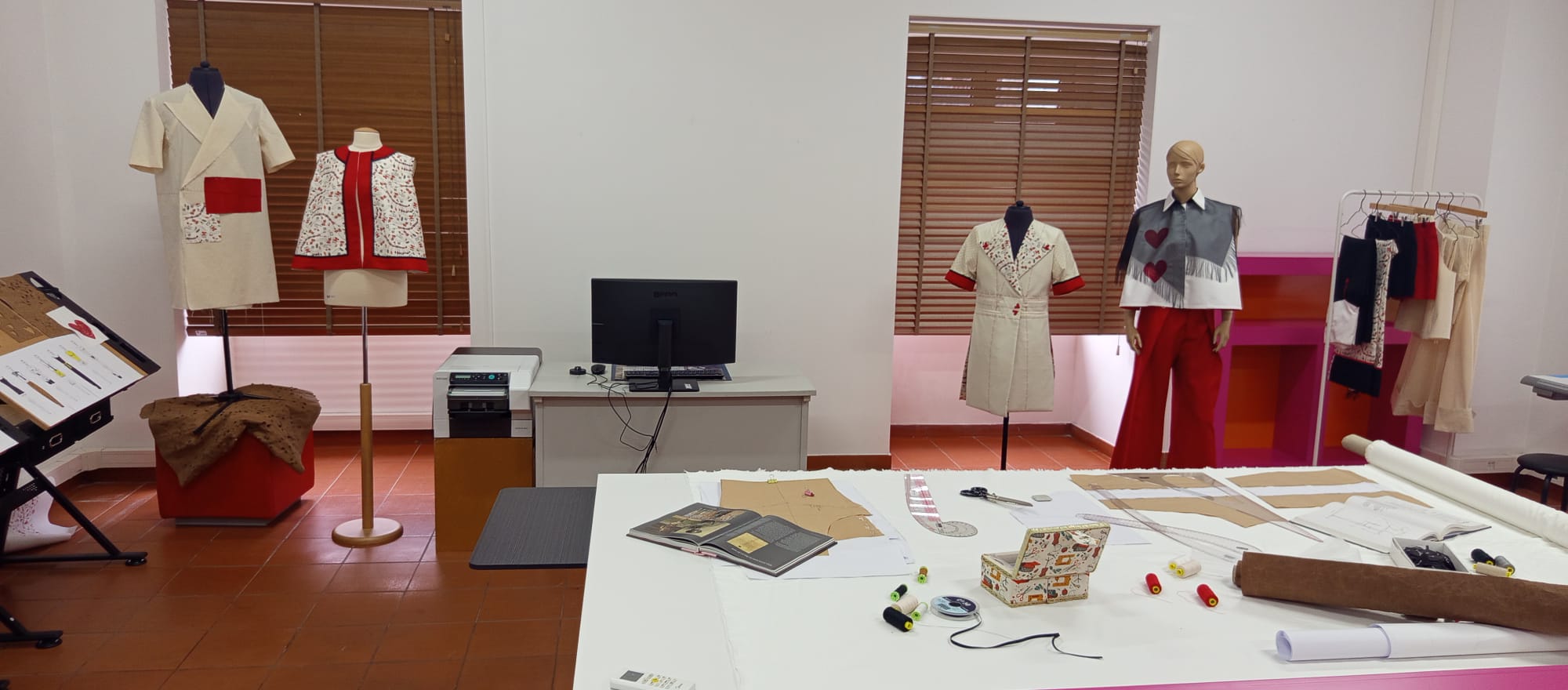
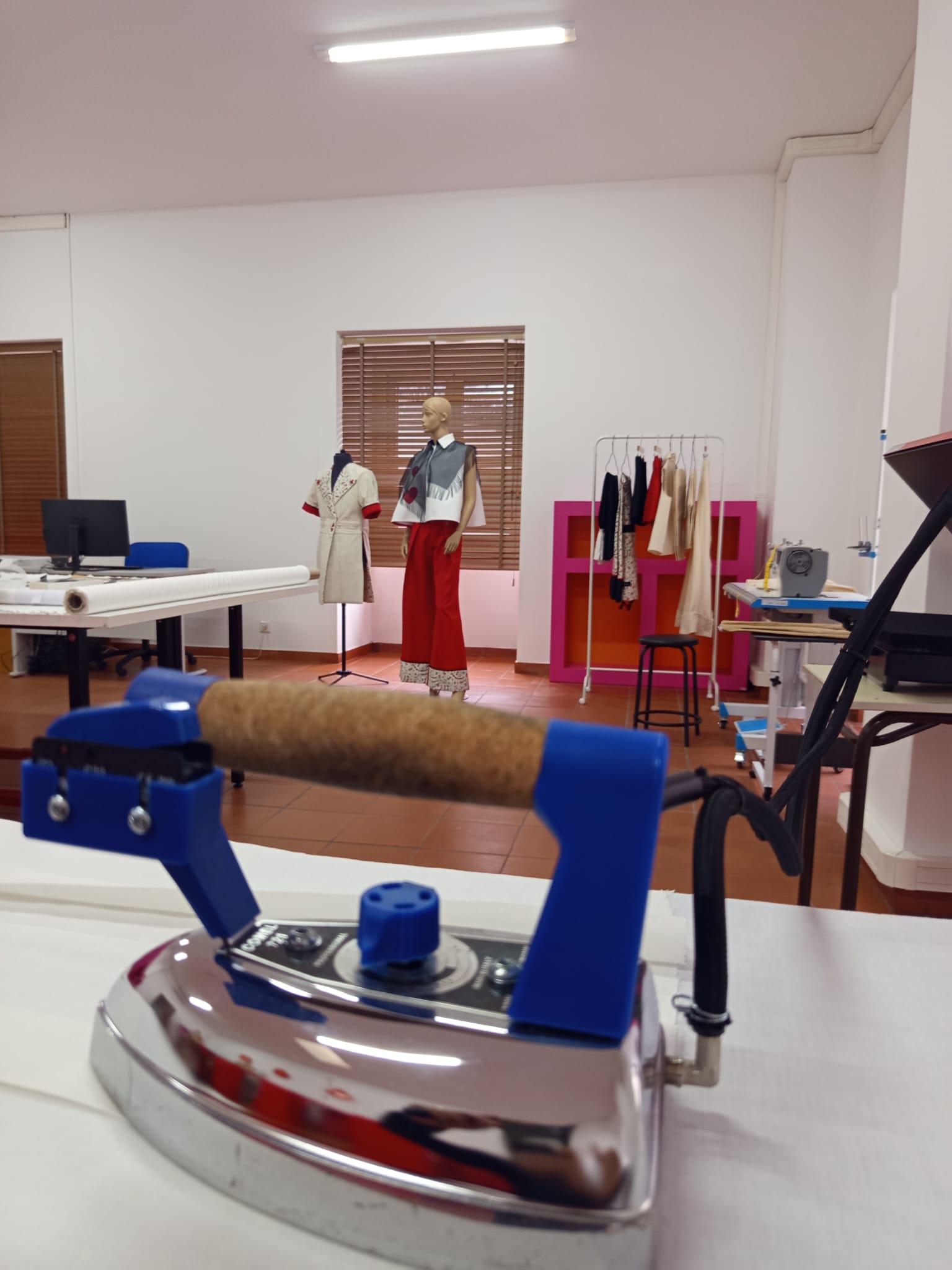
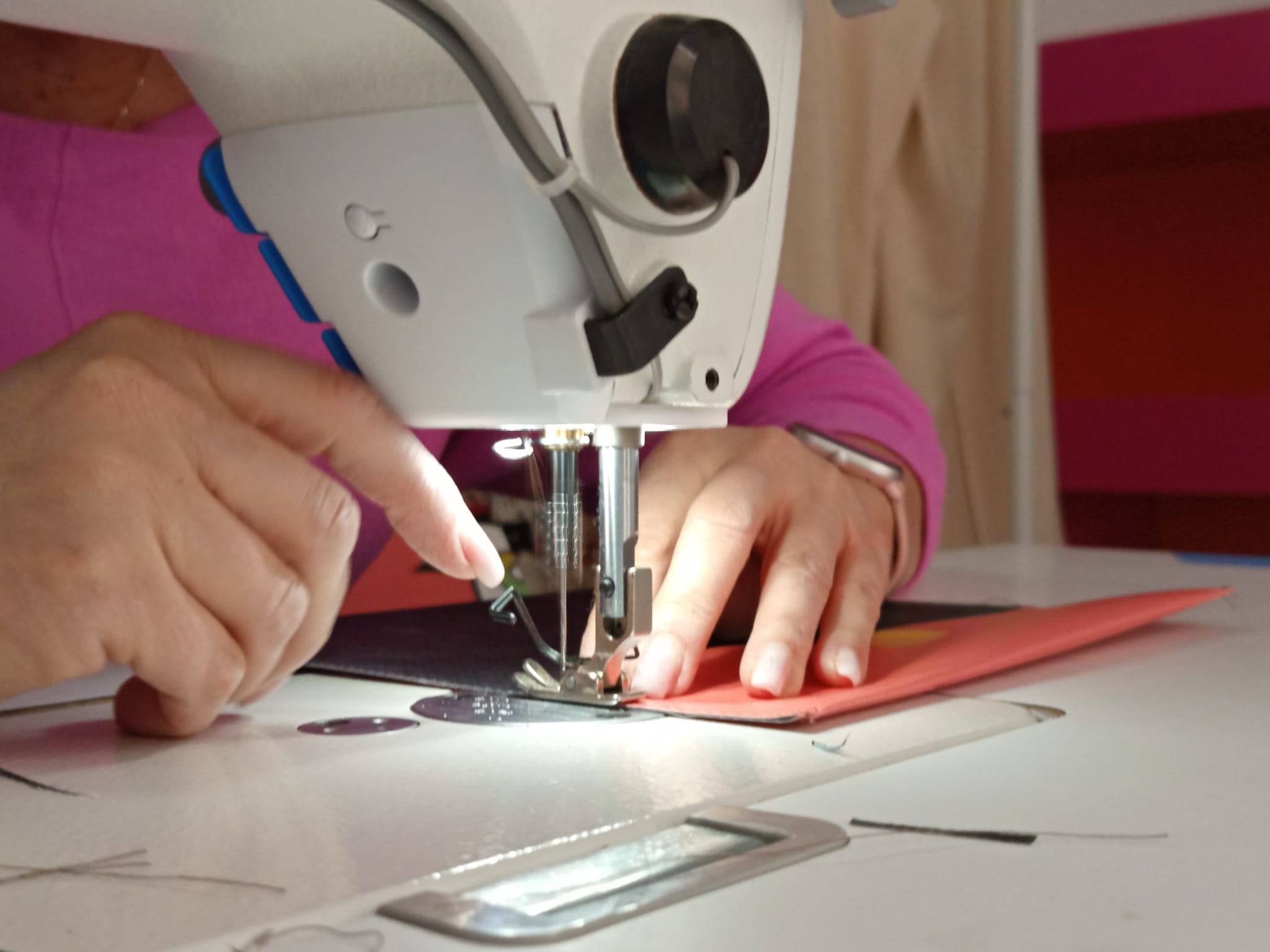
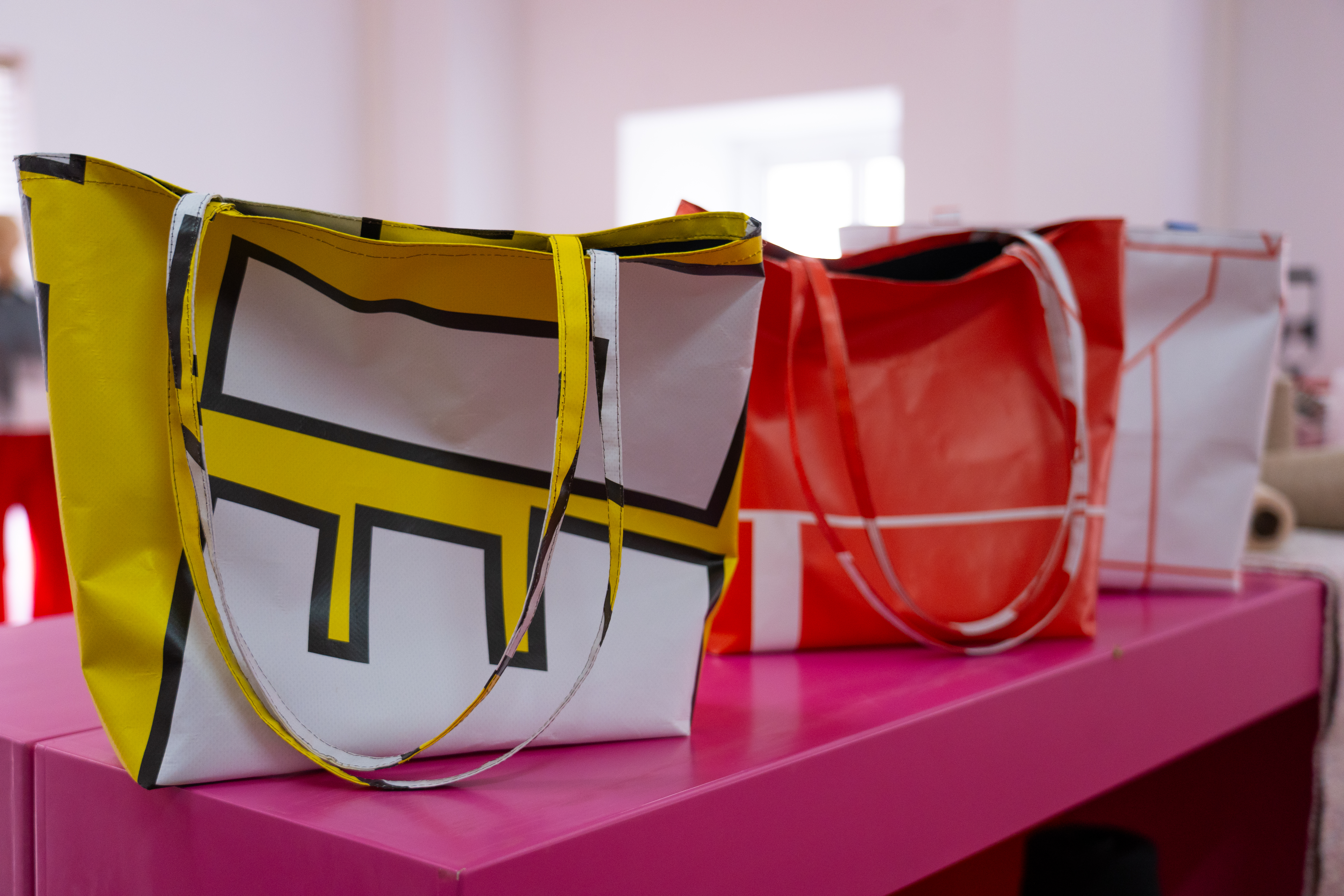
A central objective is to integrate circular and eco-design practices into cultural production. Through textile experimentation, workshops and creative activities, participants engage in repair, reuse and transformation of materials, including the upcycling of municipal communication waste into new products and merchandising. These practices promote resource efficiency, reduce waste and foster awareness of sustainable consumption.
The initiative is further strengthened through its connection to the RESOTEX project (Interreg POCTEP), which links local action to a broader European framework for circular textile innovation. This enables knowledge exchange, supports sustainable production models and positions the hub within a transnational network addressing environmental challenges in the textile sector.
Sustainability is also achieved through the hub’s operational model. By combining exhibitions, education, making and community use within a shared infrastructure, the project maximises resource efficiency and ensures continuous use, reducing underutilisation and energy waste. Its expansion into a network of nearby buildings reinforces this approach, creating a compact and resilient cultural system.
The initiative is exemplary in demonstrating how sustainability can be embedded in everyday cultural practice. It offers a replicable model for small and medium-sized cities, where heritage reuse, circular design and community engagement converge to generate environmental, social and cultural value with minimal resource impact.
The Hub Criativo Portas do Sol promotes aesthetics and quality of experience through the integration of heritage, design and everyday life. Located in a rehabilitated historic building in Covilhã, and expanding into a networked system, the initiative reflects the city’s designation as a UNESCO Creative City of Design, embedding design quality into cultural production, spatial use and community interaction.
A central objective is to make beauty accessible, lived and participatory. The António Esteves Lopes tapestry, narrating the history of Covilhã, anchors the space in local identity, while exhibitions, textile practices, workshops and music initiatives such as O Piano ao Meio and Festival Síntese create a layered and multi-sensory environment. Visual, material and auditory dimensions coexist, allowing users to experience space through making, learning and interaction.
The project redefines aesthetics as a collective experience. Users—including elderly residents, children and young people, international students, foreign communities and creative practitioners—actively engage with the space, transforming it into an inclusive and dynamic environment. Design is not limited to form, but expressed through use, participation and shared cultural production.
By prioritising accessibility and everyday use, the hub becomes a civic space where cultural experience is continuous and embedded in daily life. It democratizes access to design, ensuring that beauty is not exclusive but a shared resource that strengthens identity and belonging.
The initiative is exemplary in demonstrating how a UNESCO Creative City can translate design into practice. It offers a replicable model where heritage, creativity and participation converge to produce meaningful, high-quality experiences, showing that aesthetics can emerge from identity, use and community, while contributing to resilient and inclusive urban environments.
The Hub Criativo Portas do Sol places inclusion at the core of its objectives, ensuring that cultural participation is accessible, affordable and embedded in everyday life. Located in Covilhã and developed as a network of heritage buildings, the initiative reflects the city’s designation as a UNESCO Creative City of Design, applying “design for all” principles to create an open, participatory civic environment.
The hub engages a diverse range of users, including local residents, elderly communities, children and young people through school programmes, international students, foreign communities, artists, makers and visitors. Through workshops, exhibitions, school activities and music initiatives such as O Piano ao Meio, it offers flexible entry points for participation, regardless of age, background or experience.
Inclusion is ensured through accessibility and active involvement. Integration within municipal cultural and educational programming guarantees regular access and affordability, particularly for schools and community groups. Its multifunctional nature allows different uses to coexist, transforming the space into a shared civic platform.
Beyond access, the initiative promotes co-creation and shared ownership. Users actively engage in making, learning and cultural production, shaping the identity and use of the space. Intergenerational programmes and community activities foster dialogue, cultural exchange and social cohesion, lowering barriers to participation.
The initiative is exemplary in demonstrating how inclusive governance, design and programming can be implemented in practice. It proposes a societal model where heritage spaces function as inclusive ecosystems, offering a transferable approach aligned with the values of the New European Bauhaus.
The Hub Criativo Portas do Sol is developed through a continuous participatory and co‑creation approach, involving citizens and civil society in shaping, activating and evolving the initiative. Instead of top‑down programming, the hub operates as an open, adaptive platform where users contribute to space, content and experience.
Participation occurs at multiple levels. Schools and educational institutions engage through visits and structured programmes, integrating younger generations into learning and making. Workshops in textiles, ceramics and visual arts offer hands‑on involvement, while exhibitions—such as MIMI, created over six months within the hub—showcase collaborative production. Cultural activities in painting, photography and seasonal events like No Reino do Natal further extend participation to families and community groups.
Innovative formats reinforce this model. O Piano ao Meio reshapes the relationship between performer and audience by allowing free circulation and interaction, creating a shared cultural experience. These approaches dissolve boundaries between creator and spectator, turning users into co‑creators.
Citizens play an active role not only as participants but as contributors to programming, knowledge exchange and the identity of the hub. Their involvement shapes the evolution of activities, ensuring the initiative remains responsive and culturally relevant.
This approach fosters ownership, strengthens social cohesion and promotes intergenerational dialogue. The hub becomes a civic space where culture is collectively produced rather than passively consumed.
The initiative shows how participatory governance and co‑creation can be embedded in everyday cultural practice, offering a transferable model for small and medium‑sized cities where heritage spaces become inclusive, dynamic and co‑produced ecosystems aligned with the New European Bauhaus principles.
The Hub Criativo Portas do Sol is developed through a multi-level governance and collaboration model, engaging stakeholders at local, regional, national and European levels. This ensures the initiative is both locally grounded and aligned with wider innovation and sustainability frameworks.
At the local level, the Municipality of Covilhã leads the initiative, providing infrastructure, coordination and integration within cultural and educational programming. Schools, community groups, local companies, associations, creative practitioners and citizens actively participate through workshops, exhibitions and community programmes, contributing to the activation of the space and co-creation of content.
At the regional and national level, partners such as New Hand Lab, Modatex, CISMA, J. Gomes, Atelier Formas e Cores de Terra and educational institutions support training, production, experimentation and knowledge transfer. Artists and creative professionals contribute through workshops, exhibitions and collaborative formats, reinforcing the hub as a space of making, learning and innovation.
At the European level, the initiative is connected to the RESOTEX project (Interreg POCTEP), linking municipalities, industry, training centres and research institutions. This enables knowledge exchange, promotes circular economy practices and aligns the project with European strategies for sustainable textile innovation.
The added value lies in integrating diverse expertise into a coherent system. Stakeholders act as co-creators, strengthening quality, innovation and social impact. This collaborative model enhances resilience, scalability and transferability, demonstrating how small cities can mobilise partnerships to transform heritage into inclusive and sustainable civic ecosystems.
The Hub Criativo Portas do Sol is grounded in a transdisciplinary approach that integrates design, textile culture, heritage, visual arts, education, music and circular economy practices. Rooted in Covilhã’s identity as a UNESCO Creative City of Design, the initiative positions design as a mediating discipline that connects diverse fields into a coherent and interactive system.
Its programming reflects this diversity, combining exhibitions such as MIMI, textile experimentation, workshops (textile, ceramics, painting, engraving), creative activities, school programmes and music initiatives like O Piano ao Meio and Festival Síntese. These activities involve artists, designers, educators, students, communities, companies and creative practitioners, fostering continuous interaction between disciplines.
This interaction is integrative rather than parallel. Textile practices intersect with design and circular economy through reuse and eco‑design; heritage elements, including the António Esteves Lopes tapestry, inform artistic and educational content; and music introduces spatial, sensory and social dimensions. Partners such as New Hand Lab, Modatex, CISMA, J. Gomes, Atelier Formas e Cores de Terra, along with artists, photographers, performers, ceramists and educational institutions, contribute expertise and local knowledge, enabling cross‑fertilisation.
The added value lies in creating hybrid knowledge and shared learning environments where traditional skills meet contemporary practices and innovation emerges through collaboration. This strengthens creativity, enhances cultural relevance and fosters new forms of production and participation.
The initiative demonstrates how transdisciplinary collaboration can activate heritage spaces and generate inclusive, resilient and meaningful urban ecosystems. It offers a transferable model in which design connects disciplines, communities and practices to produce integrated solutions for small and medium‑sized cities.
The Hub introduces an innovative model for heritage‑based regeneration by transforming historic buildings into a living, continuously active and co‑created civic ecosystem. Unlike mainstream cultural approaches—often centred on static preservation or isolated exhibitions—the initiative operates as an adaptive, process‑driven system where culture, making, education and community life intersect.
Its innovation lies in activating heritage through continuous cycles of creation and participation. Educational processes, including master’s work in fashion and design, evolve into public exhibitions such as MIMI, linking learning, production and cultural dissemination. Initiatives like Fio do Barro, developed through artistic residencies, and seasonal programmes such as Natal com Arte embed making, tradition and community engagement into the hub.
Participatory formats further redefine cultural experience. In O Piano ao Meio, the separation between performer and audience disappears, creating an open, immersive environment. Workshops in textile, ceramics, painting and engraving invite direct involvement, turning users into contributors rather than spectators.
Another innovative dimension is the integration of circular and eco‑design practices. Through reuse, repair and transformation—including the upcycling of municipal resources—and its connection to the RESOTEX project, the initiative links local action to European strategies for circular textile innovation.
The project also innovates in governance and scale, evolving into a networked system (Galeria António Lopes and Casa Muralha) supported by collaboration between the municipality, educational institutions, creative practitioners and local partners.
The initiative exemplifies a shift from preservation to activation, from programming to co‑creation, and from isolated venues to integrated ecosystems. It offers a scalable, transferable model where heritage, design, participation and sustainability converge.
The Hub is developed through an adaptive, incremental and transdisciplinary methodology that combines heritage reuse, continuous programming and participatory co-creation. Rather than implementing a fixed model, the initiative evolves through use, responding to community needs while integrating design, cultural production and circular practices into a coherent system.
The approach begins by activating an existing heritage building—Galeria António Lopes through a continuous and diverse programme combining exhibitions, workshops, educational activities and participatory formats. This first phase established a tested operational base, demonstrating the capacity to generate sustained use, community engagement and cultural relevance.
The initiative is now entering a second phase through the integration of Casa Muralha, evolving into a networked system of interconnected spaces, which include a third phase building – the Casa Amarela. Functions are distributed across buildings, enabling simultaneous programming, increased capacity and more specialised uses, including textile experimentation, circular practices, exhibitions, education and community initiatives. This cluster-based approach reinforces spatial continuity and transforms the surrounding area into an active cultural landscape.
The methodology is process-driven and co-creative. Activities such as MIMI—developed from academic work into public exhibition—residency-based initiatives like Fio do Barro, and seasonal programmes such as Natal com Arte, demonstrate a cycle of learning, making and public activation. Participatory formats like O Piano ao Meio further embed user interaction and redefine cultural experience.
The integration of circular and eco-design principles, supported by the RESOTEX project, ensures that sustainability is embedded in content and practice. This methodology is exemplary in demonstrating how small-scale, incremental and networked interventions can generate systemic impact.
The Hub demonstrates high transferability by offering a replicable system rather than a singular project. Its based on the activation of heritage through adaptive reuse, continuous programming, participatory processes and circular practices—elements that can be applied across small and medium-sized cities with underused buildings.
The initiative proposes a transferable model grounded in use rather than large-scale physical transformation. Existing buildings are progressively activated through exhibitions, workshops, educational programmes and participatory formats as O Piano ao Meio, allowing cities to start with available resources and scale over time. The transition from Galeria António Lopes to a network demonstrates how incremental expansion can generate systemic urban impact.
The hub offers a replicable cycle of cultural production. Projects such as MIMI, developed over six months using the hub’s equipment, illustrate how learning, experimentation and making evolve into public outcomes. Residency-based initiatives as Fio do Barro and seasonal programmes like Natal com Arte demonstrate adaptable formats that connect tradition, creativity and community engagement.
Participation is another key element. Workshops, school programmes and open initiatives enable users to become co-creators, fostering ownership and inclusion across diverse groups, including elderly residents, students and international communities. These formats can be adapted to different cultural and social contexts.
The integration of design, heritage and circular practices—supported by the RESOTEX framework and Modatex —offers a model that can be reinterpreted according to local identities and material cultures. The added value lies in its flexibility, scalability and low-cost implementation. The initiative provides a transferable framework where heritage, design, participation and sustainability converge, offering a robust model for inclusive and resilient urban regeneration across Europe.
The Hub Criativo Portas do Sol demonstrates a clear and sustained commitment to implementation through an already operational and evolving programme integrating cultural production, education, participation and circular practices.
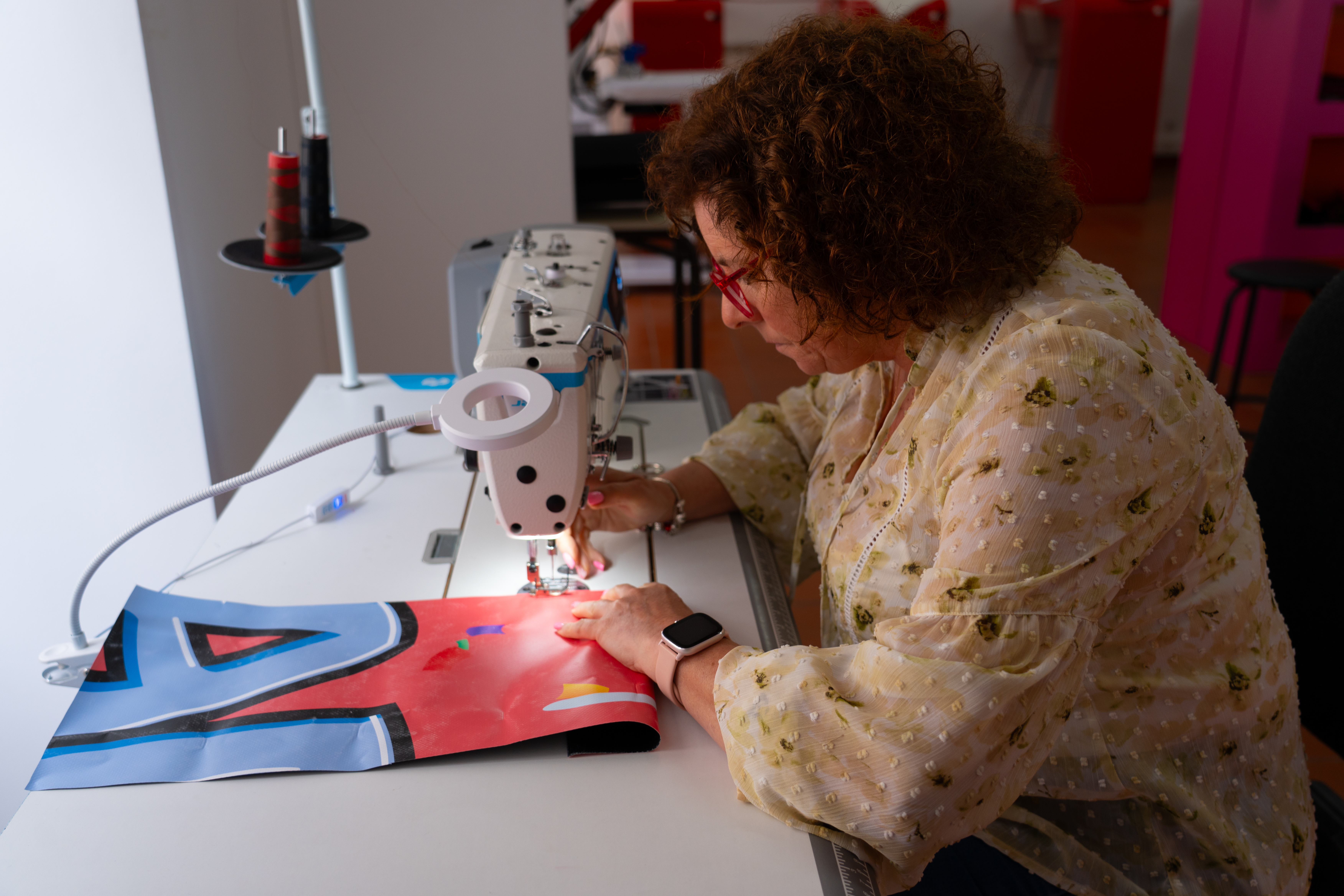
Current activities include exhibitions, artistic residencies, workshops in textile, ceramics, sewing, embroidery, printmaking and monotype, as well as school programmes, concerts and participatory formats. Initiatives such as Conversas Robustas engage elderly communities in sharing memory and intangible heritage, while programmes involving children like Férias com Lérias, students and international participants ensure broad and inclusive access. Projects such as MIMI illustrate a full cycle from learning and experimentation to production and public presentation.
The initiative is embedded in the Covilhã UNESCO Creative City Action Plan providing a structured framework for governance, partnerships, monitoring and international cooperation. This ensures consolidation, scalability and alignment with long-term objectives.
Future development includes expansion into additional historic buildings, forming a networked system; strengthening partnerships with educational institutions, training centres, creative practitioners and local companies; and consolidating circular and eco-design practices, including reuse of municipal materials and development of sustainable products.
Key steps include scaling participatory and educational programmes, expanding residencies, increasing community engagement and reinforcing documentation as transferable knowledge.
The initiative fully integrates NEB values: sustainability through adaptive reuse and circularity; inclusion through accessible, intergenerational participation; and aesthetics through meaningful cultural experiences. Its phased approach demonstrates readiness, continuity and long-term impact as a scalable model for heritage-based urban regeneration.