Enhancing Circularity, Sustainability, and Innovation
Leila Copenhagen -The Library of Things
Leila is a community-building place where you can borrow items, avoiding having to buy them.
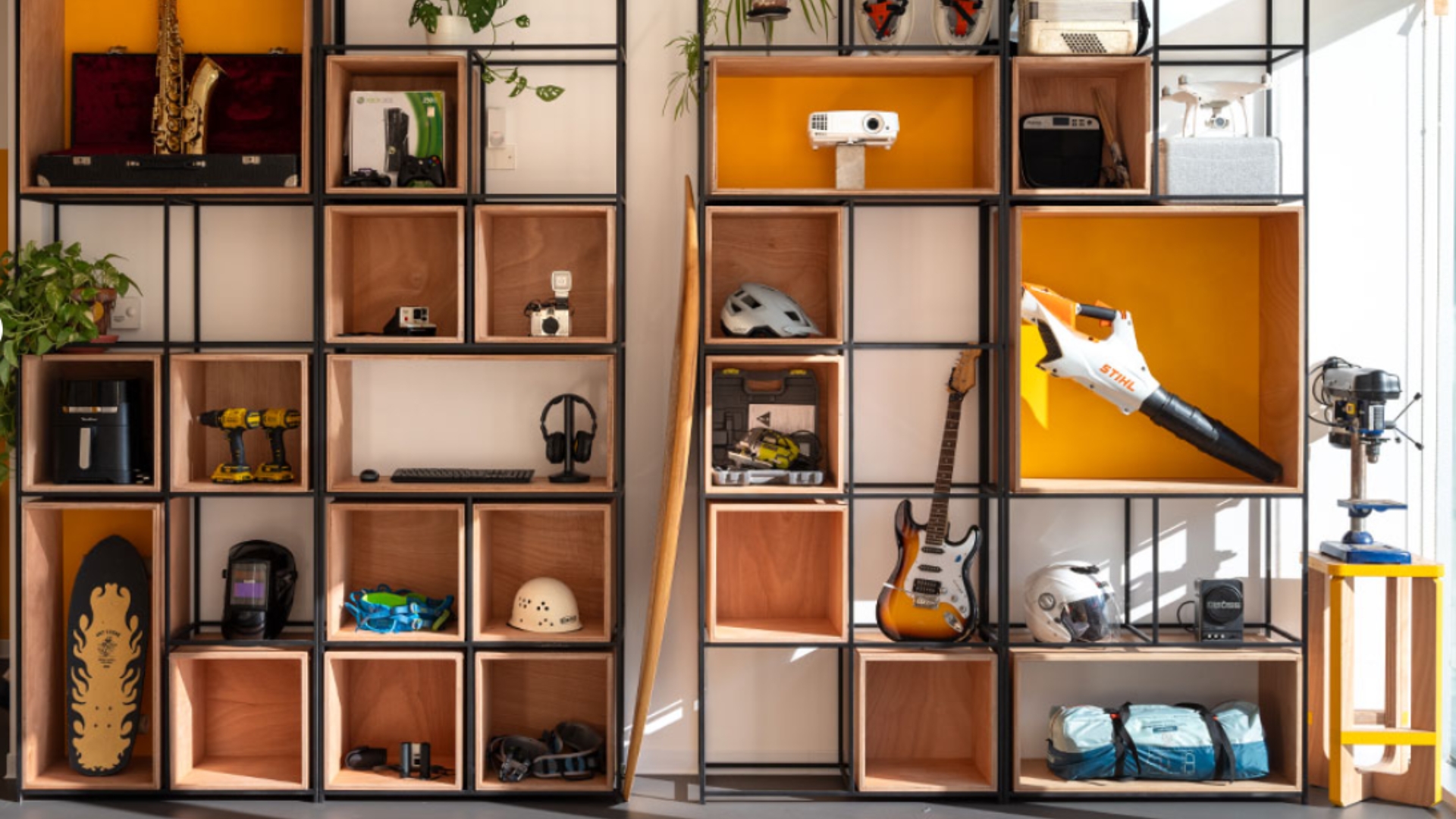
Leila Copenhagen, The Library of Things (LoT), is a community-based initiative based on the sharing economy, where you can borrow items, such as tools, sports and garden equipment, kitchen appliances etc. Inspired by Leila Bologna (2016), the only membership-based LoT in Europe, Leila’s aesthetics mimics a store - not your average thrift-shop! It thrives on beauty and quality. It is today a tool for solidarity economy, consumption reduction, and community building through the culture of sharing.
Denmark
Local
Valby, Copenhagen
Amagerbro, Copenhagen
Amagerbro, Copenhagen
Mainly urban
It involves a physical transformation of the built environment (hard investment)
Early concept
No
No
No
Individual
Leila Copenhagen addresses the need for reduced consumption, resource sharing, and community engagement by enabling residents to borrow high-quality objects instead of buying them. Inspired by Leila Bologna Library of Things, which has +1000 items and 300 members, the project combines beauty, functionality, accessibility, and social connection. It aims to create a member-centered, circular, and inclusive sharing community in Copenhagen. Two locations are being explored: Fællesvej, offering low-cost, flexible leases for creative initiatives, and Kvarterhuset Amagerbro, a hub with library, citizen services, and links to initiatives like Repair Café DK. Both provide visibility, community engagement, pilot events, and partnership opportunities.
Target beneficiaries include local residents, students, young professionals, families, and cultural or community groups seeking access to tools, kitchenware, and other objects while participating in knowledge-sharing. Volunteers and stakeholders benefit through co-creation, skill development, and collaboration.
Objectives include attracting 150 pre-registered members, hosting three engagement events in Spring 2026, establishing a volunteer-led operational model, and building collaborations with cultural centers, housing projects, and creative networks.
Preparatory outcomes include scouting locations, developing a membership and operational model, mapping borrowing services in Copenhagen and Denmark, engaging over 10 stakeholders, and gathering preliminary demand data. These steps demonstrate feasibility, relevance, and readiness to launch. Its transformative potential lies in integrating circular economy, digital cataloguing and booking systems, volunteer-led operations, playful social media engagement, and co-created community events. By centering members, promoting sustainable consumption, and fostering social cohesion, it offers a forward-looking, scalable, and innovative model for sharing communities in Denmark and beyond.
“Replicating post-growth alternatives at scale NOW is my primary source of HOPE against the acceleration towards ultimate Anthropogenic Doomsday”
Leila Copenhagen grew out of my experience as a degrowth and postgrowth activist, holding a master’s in Degrowth and Political Ecology, and my urgency to translate abstract sustainability principles into concrete local action. While research on postgrowth and energy sufficiency is increasingly recognized, practical initiatives that operationalize these ideas remain scarce. Discovering the success of Leila Bologna’s Library of Things, which combines sharing, care, and community engagement in a functional system, inspired me to replicate it in Copenhagen.
I am leading the project, supported by my activist network for advice and contacts. At this stage, I am focusing on defining direction, securing funding, and identifying a location before opening to broader community ownership.
Development has followed key phases: research and mapping of sharing initiatives in Copenhagen and Denmark; consultation with over 10 stakeholders, mainly in Amagerbro, including cultural centers, housing projects, and student dorms. Iterations have focused on membership models, item selection, and volunteer coordination. These steps have helped identify community needs and refine the model before a pilot and the full implementation. Three community events + pilot scheduled for Spring 2026 in Valby will gather volunteers, stakeholders, and partners to test engagement, collect feedback, and refine operations. Decisions on partnerships, and engagement strategies will be made collaboratively, balancing strategic planning with grassroots input.
Looking ahead, we aim to consolidate insights from a pilot, strengthen local partnerships, and refine procedures for scaling, ensuring the project remains community-led while adapting to local needs. This approach will provide a replicable template for future location openings.
Sharing economy
Community co-design
Social inclusion
Knowledge-sharing
Consumption reduction
“Actions shape our values, not the other way around; that’s why it’s easier to act your way into a new way of thinking than to think your way into a new way of acting” (Maller, 2023).
In Denmark, we are using 4 planets’ worth of resources. We are overshooting 7 out of 9 planetary boundaries, while the average Dane emits 13 tonnes CO₂e/year (6.5 times overshoot). At the same time, loneliness is at a historic peak, especially among youth. A drill is used on average 13 min in a household’s lifetime. Leila addresses these environmental and social challenges by centering a culture of care and sharing through community-led initiatives. The sustainability objectives are to reduce overconsumption and waste, extend the lifetime of objects, and strengthen social cohesion through shared practices.
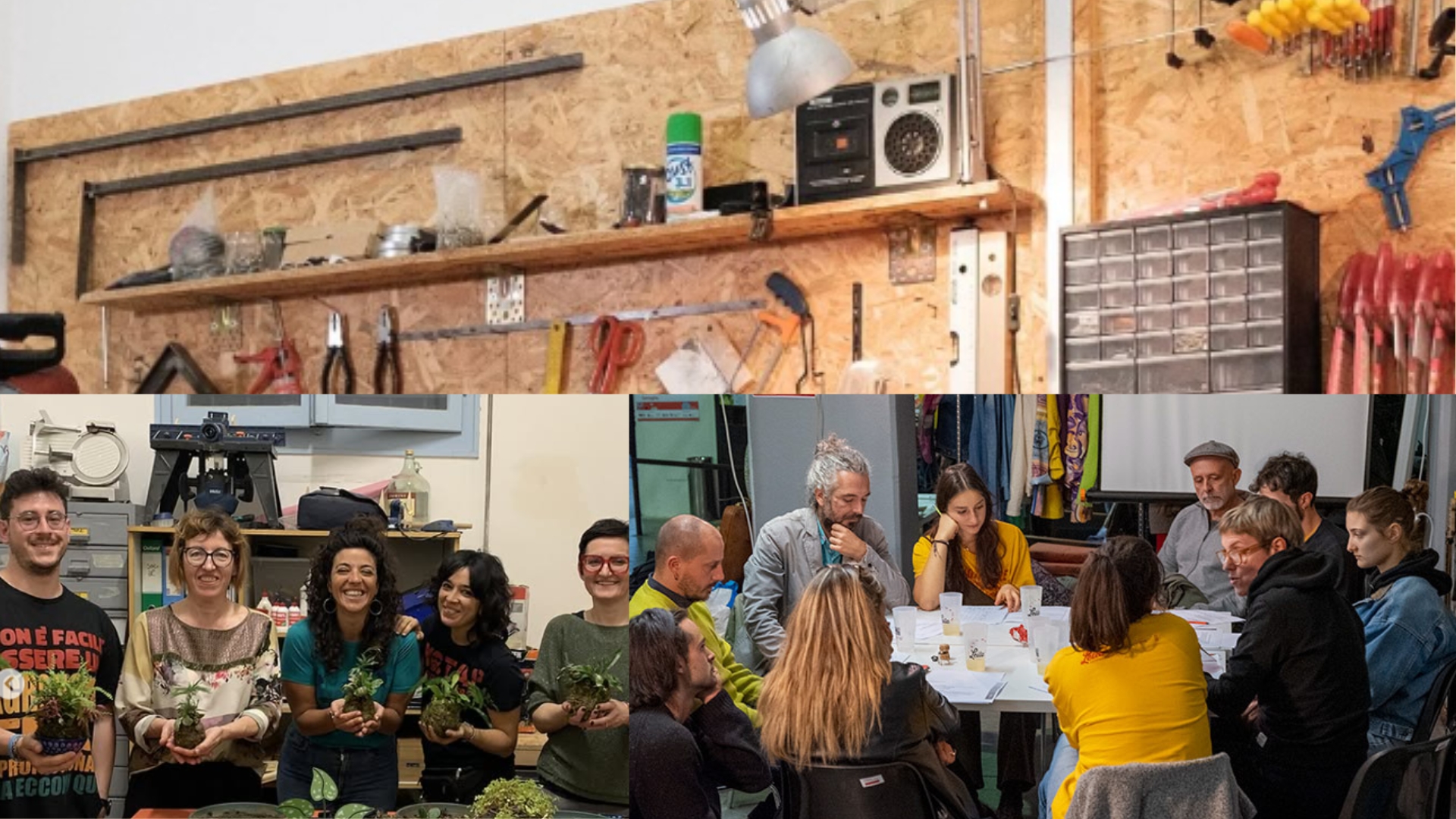
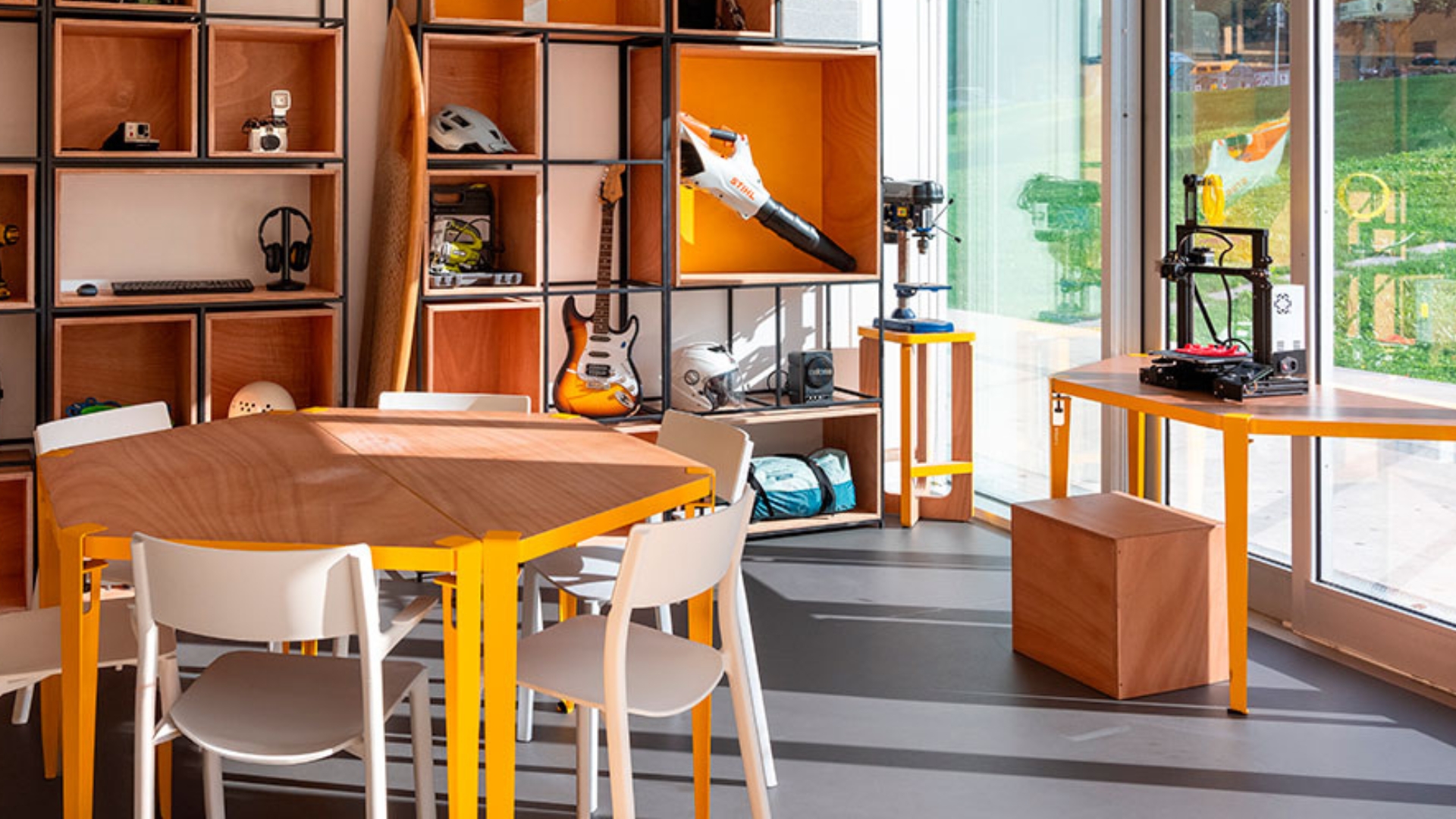
Implementation is based on a Library of Things model, where items are shared instead of owned. Objects are displayed on shelves made from recycled materials, co-built with a community-managed cultural centre (Folkets Hus, Nørrebro) using donated residual materials, while maintaining a curated, retail-like aesthetic. This is key to attracting broader audiences beyond already engaged sustainability communities. Care is embedded through simple rules: items are uninsured, encouraging repair over replacement through DIY fixing. Community is strengthened through a “lab” where members co-organize workshops and skill-sharing activities, from pottery to vegan cooking. In a second phase, partnerships will enable distributed pick-up points supported by cargo bike logistics.
Results include strong stakeholder interest and early community engagement, supported by evidence from similar models showing reduced consumption and increased shared use. Leila is exemplary in translating sustainability into everyday practice: it combines circular design, behavioural change, and social infrastructure in a model that is attractive and inclusive, enabling systemic impact beyond individual behaviour.
Beauty is for everyone. Care for aesthetics - without renouncing sustainability - is a core principle of Leila and one of the reasons behind the success of the original initiative in Bologna. Leila Copenhagen aims to enhance everyday life by creating a space that is both functional and visually appealing, where people feel inspired to participate in sharing practices.
Aesthetic objectives focus on making sustainable consumption desirable and accessible. The space is curated to feel closer to a concept store than a thrift shop, attracting audiences beyond already engaged sustainability communities. Beauty is also embedded in the efficiency of the service: a smooth digital catalogue and booking system contributes to a pleasant and intuitive user experience.
Implementation integrates design, culture, and craftsmanship. Furniture and shelves are built from recycled and donated materials, combining circular principles with attention to colour, composition, and visual coherence. The space evolves through collaborations with local creatives, artists, and makers, especially in locations such as Fællesvej, where multiple cultural actors will coexist and co-create.
The quality of experience is central: visitors encounter a clean, curated environment, tactile and well-organized objects, and a welcoming atmosphere that stimulates curiosity and comfort. Contributing valuable items becomes an act of trust and care, reinforcing a positive emotional connection to the space and its community.
Culturally, Leila fosters local identity and belonging by creating a shared space for workshops, events, and informal encounters - from skill-sharing sessions to street parties. In new residential areas like Valby, this contributes to activating neighbourhood life and strengthening social ties.
Leila Copenhagen promotes multiple forms of inclusion: economic (affordable access to goods), social (community-building), intergenerational (skill-sharing), and cultural (open spaces for grassroots initiatives). The aim is to make sustainable consumption accessible to a broader and more diverse population while fostering meaningful participation.
Affordability is addressed through a low membership fee of 30 EUR/year (225 DKK), with a reduced fee of 20 EUR (150 DKK) for students and unemployed people. Additional agreements with student dorms and associations are being explored to enable free memberships for the first year through collective contributions.
Inclusion is also embedded in the way the system operates. Items are uninsured, encouraging relational practices between people and objects: if something breaks, repair is prioritized over replacement. Borrowers are invited to repair items themselves or with support from Repair Café volunteers, often pensioners, creating opportunities for intergenerational learning and social interaction. If repair is not possible and replacement is unaffordable, a common fund can cover the cost, ensuring no one is excluded due to financial constraints.
The “lab” space functions as an open platform for grassroots initiatives, offering accessible space for workshops, meetings, and community-led activities. Governance is community-based: volunteers and contributing members take part in shaping decisions, ensuring shared ownership and responsibility.
Results so far include strong interest from diverse stakeholders and partnerships supporting inclusive participation.
Leila is exemplary in moving beyond conventional pay-for-use services by embedding inclusion within a learning system based on reciprocity and trust. Members gain value through what they contribute, while collective care and repair practices foster trust in others, making inclusion active, educational, and transformative.
Leila Copenhagen promotes multiple forms of inclusion: economic (affordable access to goods), social (community-building), intergenerational (skill-sharing), and cultural (open spaces for grassroots initiatives). The aim is to make sustainable consumption accessible to a broader and more diverse population while fostering participation.
Affordability is ensured through a 30 EUR/year membership, with a reduced 20 EUR fee for students and unemployed people. Additional agreements with student dorms and associations are being explored to enable free memberships for the first year through collective contributions.
Inclusion is embedded in the system. Items are uninsured, encouraging relational practices between people and objects: if something breaks, repair is prioritized over replacement. Borrowers are invited to repair items themselves or with Repair Café volunteers, often pensioners, creating intergenerational exchange. If repair is not possible and replacement is unaffordable, a common fund can cover the cost, ensuring no exclusion due to financial constraints.
The “lab” space functions as an open platform for grassroots initiatives, offering space for workshops, meetings, and community-led activities. Governance is community-based: volunteers and members contributing to the project take part in shaping decisions, ensuring shared ownership.
Leila goes beyond pay-for-use models by fostering inclusion through reciprocity and trust: members gain value through contribution, while shared care and repair make participation educational and transformative.
As we explore a location in Valby, we will replicate our co-creation approach with local stakeholders, engaging with the Valby Lokaludvalg to assess needs and anchor the project locally. Three workshops planned for Spring 2026 will act as pilots to build community, test participation, and activate contributions from volunteers and future members.
Local level: we have engaged stakeholders such as the Valby and Amagerbro Local Committees, grassroots initiatives like Degrowth Copenhagen, and civic and cultural organisations. These actors contribute to social cohesion, community activation, and shared spaces for collaboration. We have also exchanged with initiatives experimenting with sharing models in Denmark (e.g., Naboskab) to learn from their successes and failures. Local engagement provides context-specific knowledge, legitimacy, and community ownership.
Municipal level: the project aligns with Copenhagen’s climate ambition to cut to 50% consumption-based emission by 2035. By operationalising sharing, repair, and reuse, Leila supports local implementation of climate and circular economy strategies, creating value for policymakers and city planning initiatives.
Regional and national level: we have engaged with the Head of Municipal Book Libraries at the national level, to explore integration. While this proved structurally unfeasible, it clarified barriers and opportunities for independent, scalable models. If successful, the initiative could be replicated with public support across Denmark, contributing to national circular economy and resource efficiency policies, and aligning with broader EU strategies such as the European Green Deal and Circular Economy Action Plan.
European and international level: we are in contact with the original Leila Bologna initiative, which has expanded within Italy. A future European network of Leila libraries could enable cross-border access and shared methodologies (e.g. software for library management and app development). As part of the International Degrowth Network, Leila Copenhagen can serve as a pilot for post-growth practices, contributing to knowledge exchange and replication across Europe.
Multi-level engagement provides expertise, legitimacy, funding opportunities, and scalability, while aligning the project with policy frameworks.
Both the co-creation process and the functioning of Leila Copenhagen draw on multiple disciplines and knowledge fields. Design and digital technologies shape the brand identity and user experience across physical spaces, website, and app, ensuring accessibility and coherence with Leila’s values. Architecture, carpentry, and material design contribute to the development of the physical space through upcycled and recycled materials, combining sustainability with aesthetic quality.
Social sciences and community development inform stakeholder engagement, volunteer coordination, and membership structures, while environmental knowledge underpins the focus on circular practices, repair, and reuse. Education plays a key role through the “lab” space, which hosts workshops and knowledge-sharing activities ranging from crafts and photography to post-growth theory and language exchange. Communication and social media are used to reach diverse audiences and build an engaged community.
Collaboration is organised through stakeholder consultations, pilot events, and community workshops, where volunteers, partners, and future members contribute ideas and feedback. Decision-making is increasingly shared with those actively involved in the project, combining strategic direction with grassroots input.
This transdisciplinary approach creates value by integrating diverse perspectives into a coherent system that is both socially inclusive and practically effective. It strengthens the relevance, adaptability, and scalability of the concept while fostering collective ownership and knowledge exchange.
Leila Copenhagen is based on a hybrid business model combining earned revenues, public and private funding, and community support.
Core revenue streams include annual memberships (30/25 EUR), as well as potential flat-rate agreements with associations (e.g. student housing, organisations) to provide access to groups. In the initial phase, additional funding is sought through EU programmes, foundations (e.g. Roskilde Festival and KR Foundation), and local municipal support. Crowdfunding campaigns and partnerships with ethical financial institutions such as Merkur Cooperative Bank may also support early development.
The project is not yet generating revenue. Initial income is expected from memberships, which should progressively cover operational costs. In the longer term, revenues may also derive from workshops, partnerships, and the expansion to multiple locations.
Key costs include rent, a core staff position to ensure continuity, software licensing and consulting from the Leila Bologna model, initial inventory, a cargo-bike and communication activities. These costs are initially borne by the project and supported through a mix of funding and early revenues.
The model supports scalability by combining a standardized system (membership, digital platform, operations) with local adaptation. Expanding to multiple locations can reduce costs through shared infrastructure (e.g. a common app and inventory system) while increasing the membership base and service offer.
Leila has the potential to create disruptive innovation in urban development by shifting access to goods from ownership to shared use, embedding circular practices into everyday life. By combining economic viability with social and environmental value, it offers a replicable model for more resource-efficient and community-oriented cities.
Our vision is to establish a Leila in every district of Copenhagen, ensuring accessibility and strong local ownership. As a first step, once an initial location is secured, decentralized pick-up points can expand access across the city. Learnings from the first implementation will inform replication, while the app and website can scale to connect multiple locations, increasing circulation of items and exchange between communities.
The concept is scalable because it combines a clear operational system with strong ecosocial values. Key transferable elements include the membership-based model, digital platform, curated approach to objects, and the integration of a community “lab.” Its innovation lies in combining beauty, functionality, accessibility, and shared ownership. The possibility to lease Leila Bologna’s software further supports replication.
At the same time, scalability relies on flexibility. Each new location should be co-created with local stakeholders, allowing for bottom-up adaptation. There are no predefined limits on activities beyond borrowing and knowledge-sharing, enabling communities to shape the project according to their needs.
Implementation requires partnerships with local actors (e.g. cultural centres, municipalities, grassroots organisations) and skills in design, digital tools, and community coordination.
Adaptation is essential: the types of workshops, events, and items will vary by context, as will spatial and logistical solutions. The model can be implemented in schools, companies, or neighbourhood hubs, using flexible systems such as lockers, distributed storage, or partnerships with shops and cafés as pick-up points.
This balance between structure and adaptability makes Leila a replicable and resilient model across contexts.
From Apr-Aug26, we will focus on securing a location while continuing community activation in both Amagerbro and Valby. In Valby, where temporary access to space is available, we will organise three thematic events: one for a general audience to present the concept and membership waitinglist, one targeting local stakeholders (associations, grassroots initiatives, local committees) to build a volunteer base, and one aimed at potential funders and partners. We are also actively exploring partnerships with other potential tenants at Fællesvej, as we will submit a request for space there by 8th Apr26. In parallel, we will continue scouting for a permanent location in Amagerbro.
During this phase, we will launch a crowdfunding campaign to support initial operational costs from August onwards. We will also set up a basic infrastructure (shelves and tables) and run a pop-up version of the library open two days per week throughout June. This pilot will test operations, collect early memberships (target: 50-80), and identify potential workshops and activities. Volunteers will be recruited both within and beyond Degrowth Copenhagen. By Aug26, we aim to establish a core volunteer team of 8-12 people responsible for operations, outreach, and communication.
From Aug-Dec26, the library will open either in a dedicated space or within a shared venue. If securing a full space in Valby is not possible, we will implement a pilot partnership with an existing creative or cultural space, using part of their premises. A similar approach may be explored in Amagerbro. The focus will be on growing membership (target:150-200), stabilising operations, and expanding activities. Once a critical mass is reached, we will activate collaboration with Leila Bologna to implement their software, app and booking system.
From Dec26-Apr27, we aim to consolidate the model by securing funding, onboarding 1-2 paid staff, and expanding to one additional pick-up point in the city.