Strengthening Local Democracy and Inclusion
PAC – Play Accessible Communities
PAC – Play Accessible Communities: Co-Designing Micromobility with Data, Play, and Communities
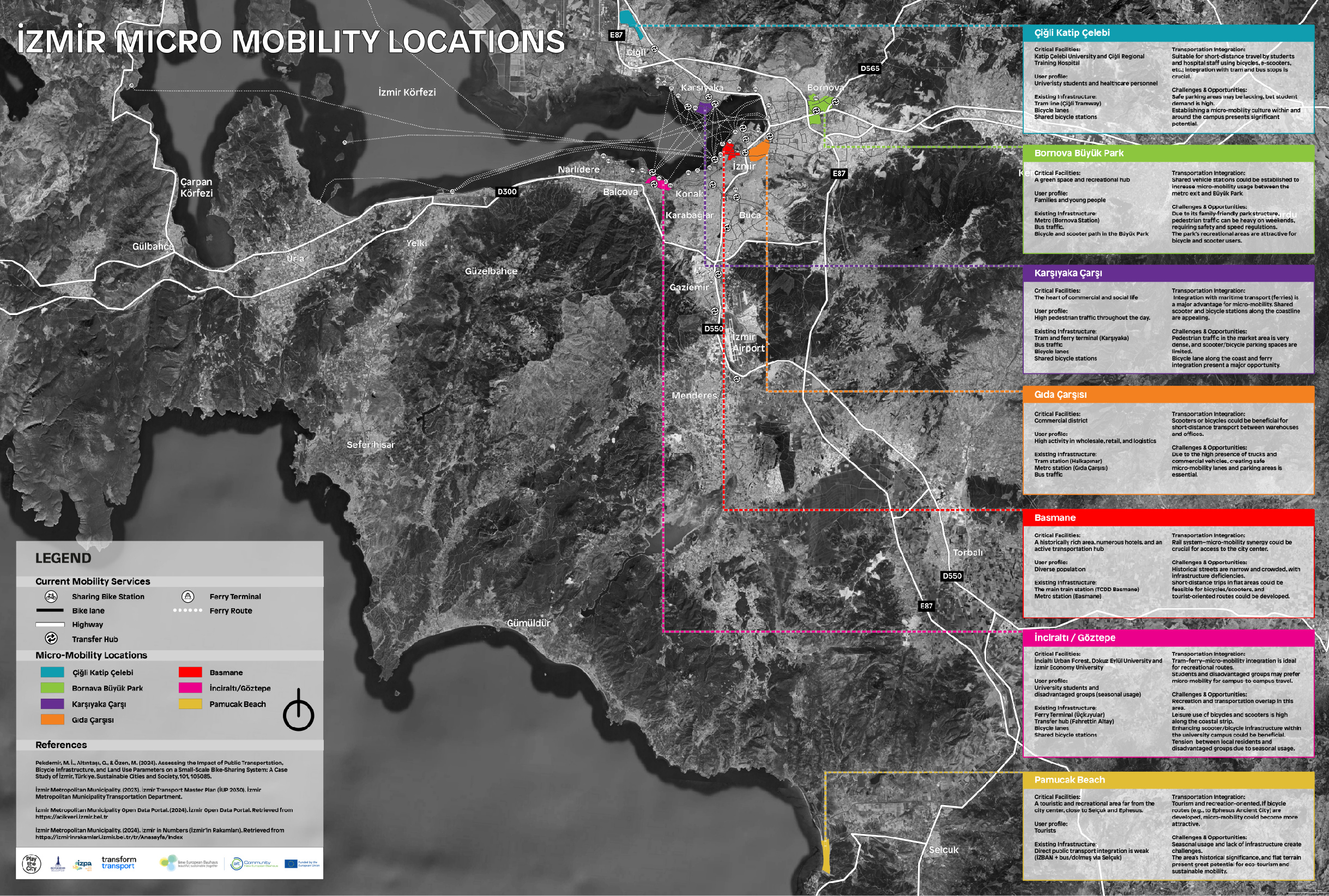
Play Accessible Communities (PAC) understands micromobility hubs not only as nodes where different modes meet, but as carefully designed inclusive public spaces that offer pleasant connections, spatial richness, and seamless linkages between transport options. PAC addresses questions of accessibility and inclusivity within urban mobility challenges through strong collaboration between Play the City (Amsterdam–İstanbul), İzmir Planning Agency (İZPA), and Transform Transport (Milan).
Netherlands
Local
İzmir, Üçkuyular
Mainly urban
It involves other types of transformations (soft investment)
Yes
2025-12-30
Yes
Horizon2020 / Horizon Europe
No
No
Organisation
Play Accessible Communities (PAC) is a research-driven and action-oriented project that rethinks micromobility hubs as inclusive public spaces rather than purely technical transport nodes. Developed through the collaboration of Play the City (Amsterdam), İzmir Planning Agency (İzmir), and Transform Transport (Milan), PAC combines mobility metrics, social data, climate analysis, and participatory co-design to improve accessibility, public life, and first-last mile connections in cities.
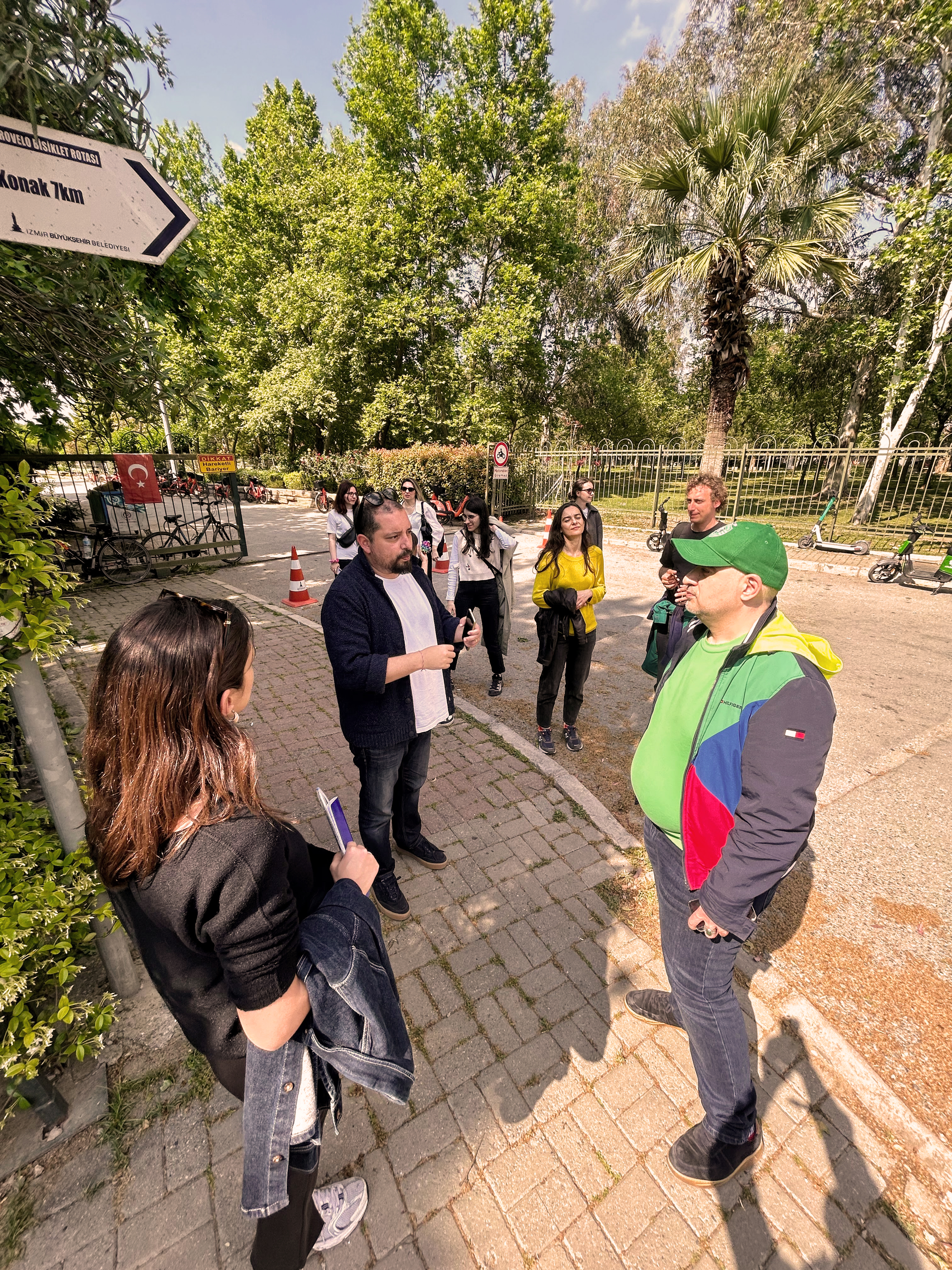
Project’s first implementation took place in İzmir, focusing on Üçkuyular, a major multimodal node where ferry, tram, bus, metro, and cycling routes intersect. PAC introduced a unique methodology by combining Transform Transport’s 15-Minute City Score with Play the City’s City Gaming method. This allowed analytical data to be translated into an inclusive decision-making process involving municipal departments, NGOs, private actors, youth, residents, migrants, and experts.
Project delivered several concrete outcomes. A PAC Playbook documents a scalable and transferable method for co-designing micromobility hubs. The project also produced layered evidence combining accessibility, demographic, socio-economic, climate, and land-use data to identify priority locations for intervention. In Üçkuyular, PAC organized four co-design game sessions with around 80 participants, including a dedicated youth jury, resulting in three spatial development proposals with short-, mid-, and long-term interventions.
These proposals include safer crossings, wayfinding, bicycle and scooter facilities, shaded rest areas, pedestrian continuity, and a long-term vision of transforming the intersection into a civic public square.
PAC’s long-term impact lies in its replicability and institutional value. It provides İzmir with a practical model for inclusive and evidence-based mobility planning, while offering other cities a transferable toolkit for designing sustainable, people-centered micromobility hubs.
PAC emerged from a shared concern: although many cities invest in sustainable mobility, micromobility hubs are still often treated only as transport infrastructure rather than public spaces shaped by everyday life, inclusion, and community needs. In İzmir, this is especially visible in places like Üçkuyular, where multiple transport systems intersect but pedestrian continuity, cycling access, comfort, and spatial quality remain fragmented.
Project was created to bridge this gap. PAC team joined forces to connect data-driven analysis with participatory design. The idea was not only to understand where accessibility problems exist, but also to reveal who is most affected and to co-create solutions with those communities. PAC was therefore designed as both a research and implementation process.
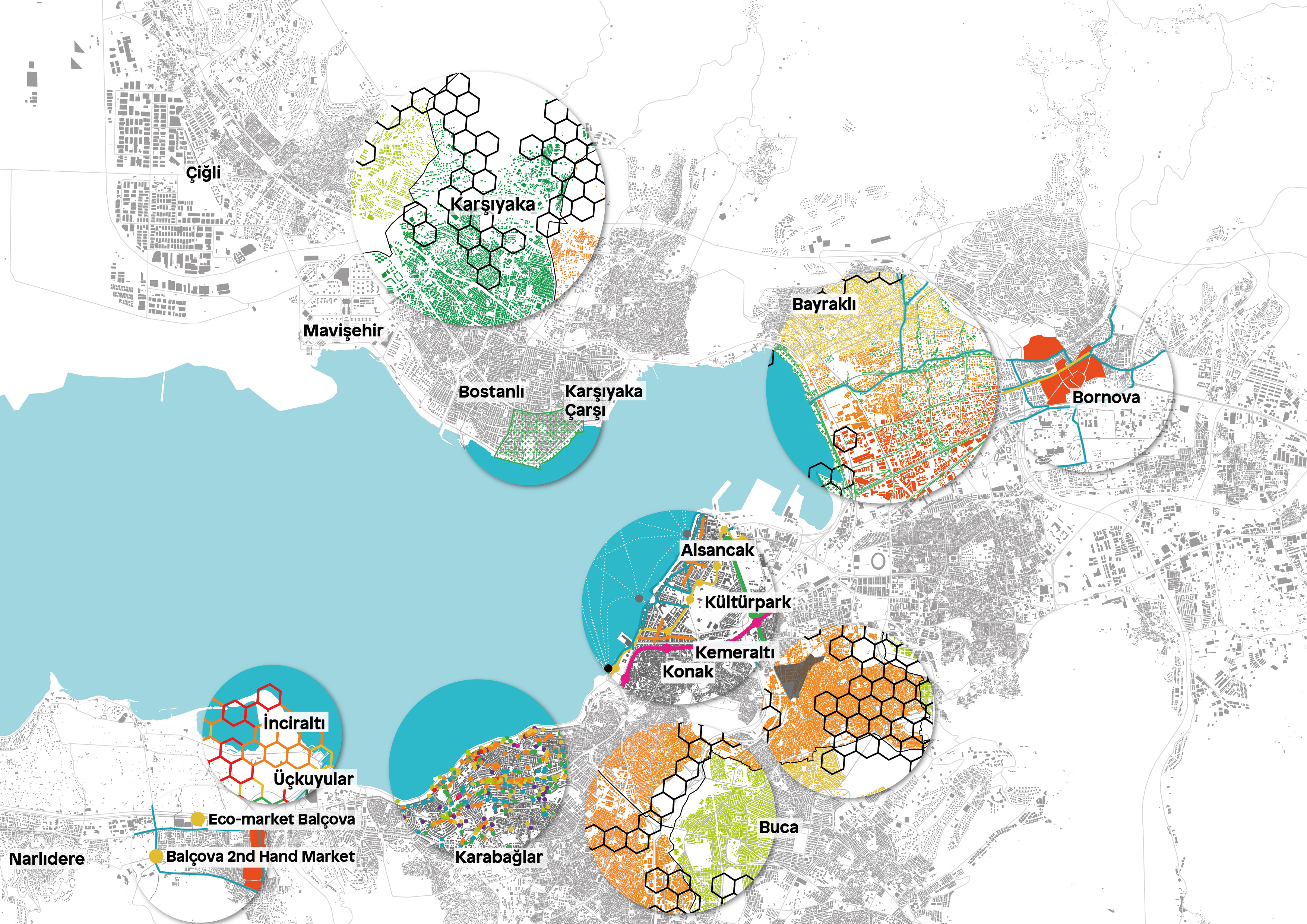
PAC unfolded in four steps. First, team reviewed İzmir’s policy frameworks, including the Transportation Master Plan, SUMP, and the World Bank’s micromobility islands study, to position PAC within existing city ambitions. Second, mobility metrics were combined with social and climate data, including the 15-Minute City Score, youth density, socio-economic vulnerability, migrant presence, heat island effects, and land use. This analytical phase identified Üçkuyular as the most strategic first case.
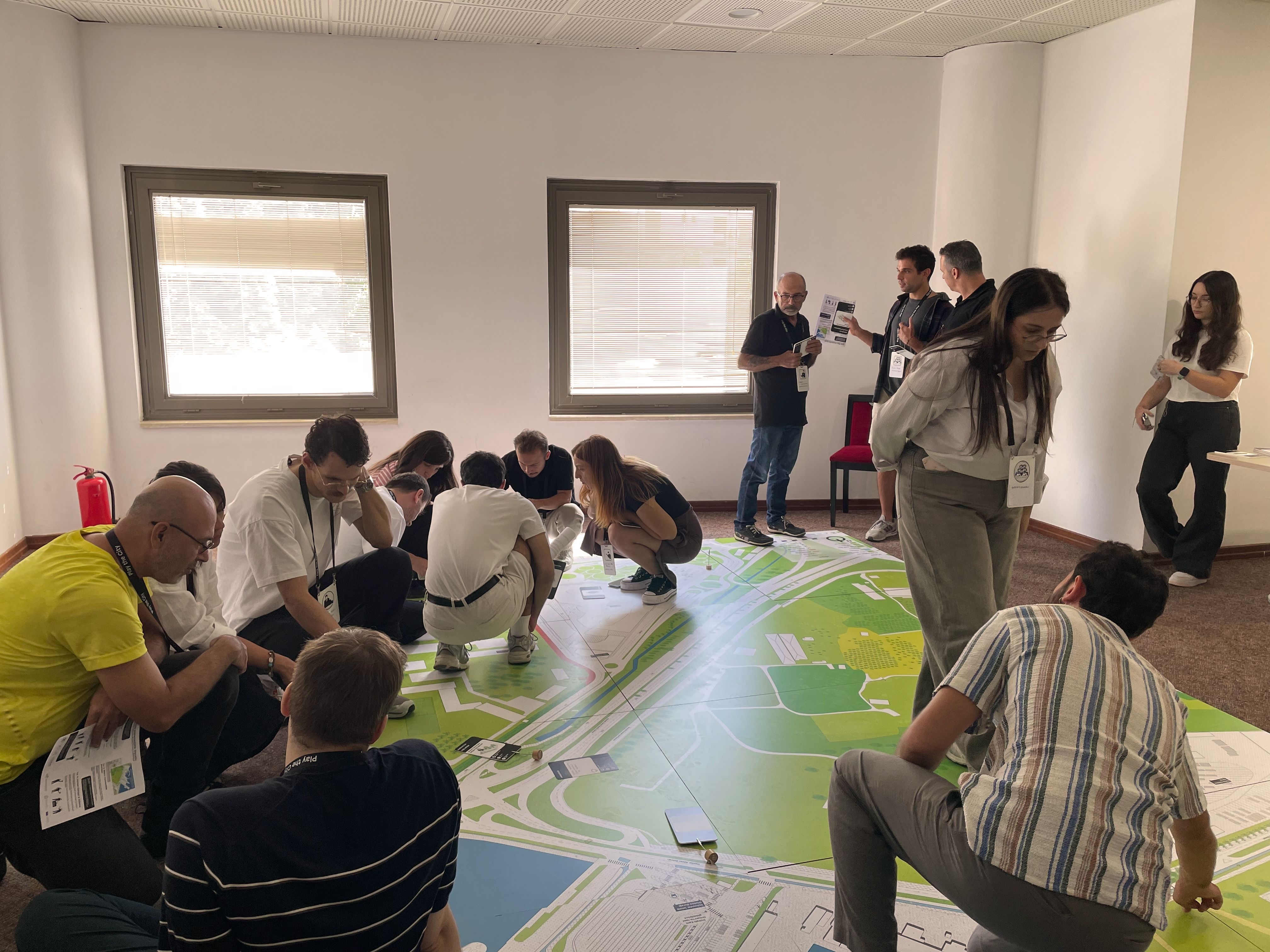
Third, project translated this data into City Gaming sessions. Around 80 participants joined four co-design games, including municipal units, experts, NGOs, residents, and a dedicated youth jury. Using scaled gameboards, action cards, props, and feasibility sheets, participants tested interventions, discussed trade-offs, and developed proposals together. The process made planning democratic, visual, and evidence-based.
Finally, PAC moved toward implementation through an Action Agreement framework and coordination with municipal departments. Project connected research, participatory design, and institutional collaboration, creating realistic pathways for future mobility improvements.
data-community-play
inclusive mobility
micromobility innovation
youth participation
climate-resilient public space
PAC addresses sustainability by linking mobility, public space, and social inclusion in an integrated framework. Rather than treating micromobility purely as infrastructure,PAC reframes mobility hubs as inclusive public spaces that support low-carbon mobility, healthy urban life, and equitable access to city services.
Environmentally,PAC promotes active and low-emission mobility such as walking, cycling, and shared micromobility, helping cities reduce car dependence and transport-related emissions.In İzmir, where transportation accounts for over 23% of total emissions, strengthening first–last mile links between public transport and micromobility supports the city’s climate neutrality goals.PAC integrates climate data layers such as heat island, green spaces, and water systems, enabling mobility interventions that improve climate resilience, urban cooling, and public space environmental quality.
Social sustainability is central to PAC.Project combines mobility metrics with demographic and socio-economic data to identify areas where accessibility gaps overlap with vulnerable populations, including youth, migrants, low-income residents, women, and elderly.Through participatory City Gaming sessions, these groups are involved in shaping solutions, ensuring mobility planning reflects everyday needs rather than purely technical models.Youth and community participation strengthens democratic decision-making and civic engagement.
Economically,PAC promotes efficient and scalable urban investments by prioritizing interventions where accessibility challenges,social vulnerability,and climate risks intersect.Method identifies cost-effective improvements such as safer crossings, improved wayfinding, and shaded rest areas that deliver immediate impact while aligning with long-term strategies.
By combining data-driven analysis,participatory design, and implementation-oriented planning,PAC offers replicable model for healthier, low-carbon, and socially inclusive mobility systems
PAC contributes to urban aesthetics by redefining mobility hubs as welcoming public spaces rather than purely technical transport infrastructure. Instead of focusing only on efficiency and movement, PAC explores how mobility spaces can support everyday urban life, social interaction, and spatial quality.
In the Üçkuyular case in İzmir, the project identified how fragmented pedestrian connections, unclear wayfinding, and underused public spaces reduce both accessibility and the overall experience of the place. Through participatory co-design sessions and the PAC Mobility Game, residents, youth, municipal departments, and experts collaboratively imagined how the area could become more legible, comfortable, and vibrant.
The proposals developed through this process include improved pedestrian continuity, clear wayfinding systems, shaded rest areas, bicycle facilities, temporary cafés and kiosks, and redesigned public spaces that encourage people to pause, meet, and spend time in the area. These interventions enhance the everyday aesthetic experience of the city by creating environments that are pleasant, human-scaled, and socially active.
In the longer term, PAC envisions transforming the Üçkuyular intersection into a green public plaza by relocating vehicle routes underground. This would create a multifunctional civic space that hosts social activities, leisure, and community events while maintaining efficient mobility connections.
Beyond physical design, PAC contributes to aesthetic quality through its participatory process. The City Gaming method allows citizens, experts, and policy-makers to collectively shape the spatial future of their neighbourhoods. This collaborative process strengthens people’s emotional connection to place and fosters a sense of ownership and care.
By integrating spatial design, community participation, and mobility planning, PAC demonstrates how everyday infrastructure can evolve into beautiful, inclusive, and meaningful public spaces.
Inclusion lies at the core of the PAC approach. The project recognizes that mobility systems often benefit some groups more than others and aims to design micromobility hubs that are accessible, affordable, and usable for everyone.
PAC begins by combining mobility metrics with social data to identify where accessibility gaps overlap with vulnerable populations. In İzmir, datasets on youth population, education levels, socio-economic status, migrant presence, and climate vulnerability were layered with the 15-Minute City Score to reveal neighbourhoods where mobility barriers affect everyday life the most.
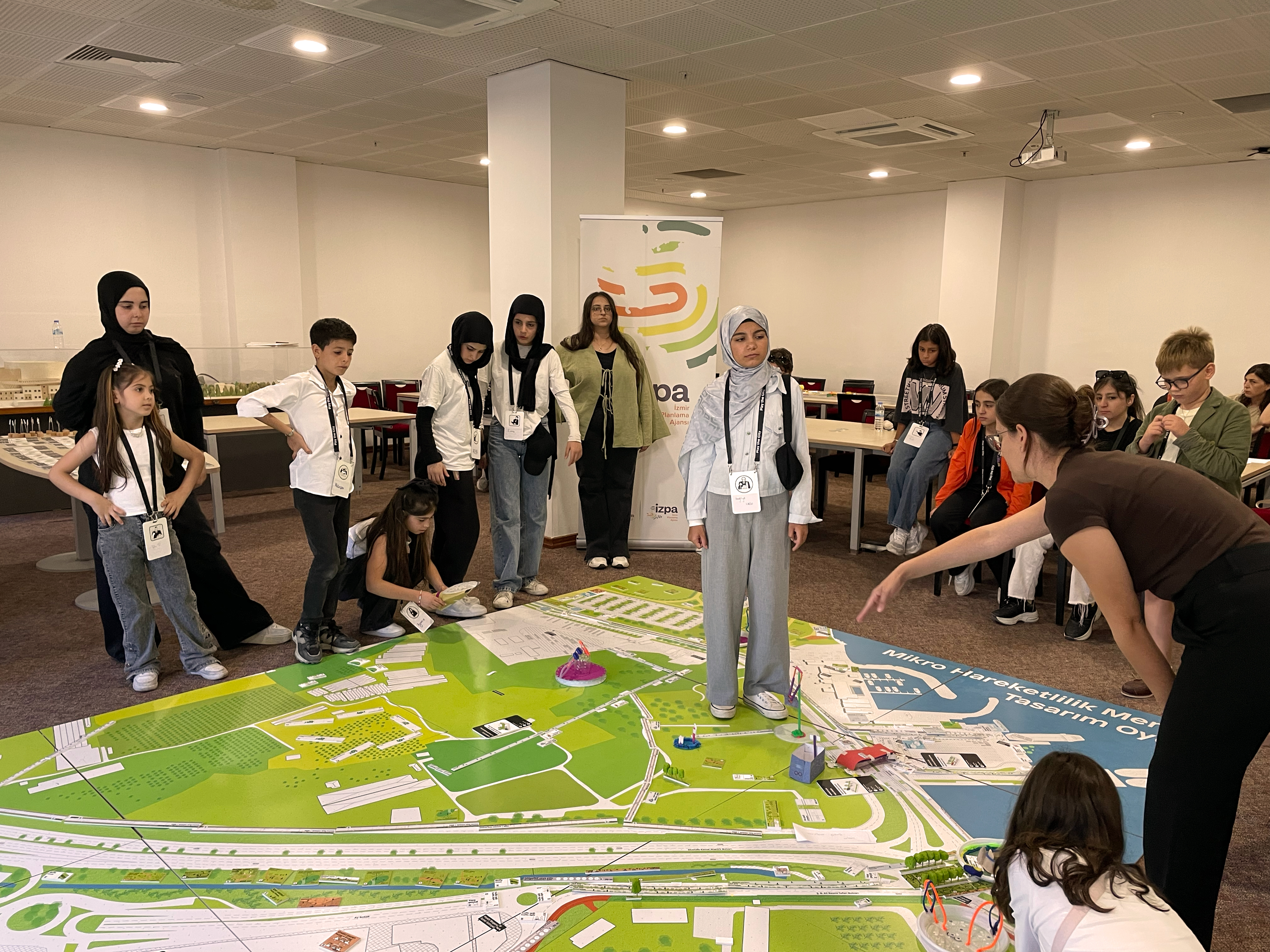
The project then translates these insights into participatory co-design processes. Through PAC Mobility Game sessions, approximately 80 participants—including municipal departments, NGOs, residents, youth, and mobility experts—worked together to design solutions. A dedicated youth jury ensured that the perspectives of younger generations were included in shaping the mobility hub, including children from migrant communities such as Syrian youth living in the surrounding neighbourhoods.
The interventions proposed through this process aim to improve accessibility for diverse groups. The co-designed solutions prioritize the needs of those who often face barriers in urban mobility; such as elderly residents, children, migrants, women, and low-income communities, by creating more legible, comfortable, and welcoming mobility environments that support safe and independent movement in everyday life.
PAC also promotes inclusive governance by creating a collaborative platform where municipal departments, community groups, private actors, and NGOs jointly develop mobility solutions.
Participation is at the core of the PAC methodology. Rather than treating citizens as passive consultees, PAC actively involves communities, civil society organisations, and local stakeholders in the design of micromobility hubs through a structured co-design process.
In the İzmir case, participation unfolded through several stages. An initial public dialogue and online poll helped gather early feedback on mobility challenges and priorities in the Üçkuyular area. These insights informed the design of the PAC Mobility Game sessions. In total, around 100 participants engaged in the process through four co-design game sessions (80 participants) and an additional beta-test session (20 participants), including municipal departments, NGOs, residents, youth, mobility experts, and private-sector actors.
Participants worked on scaled gameboards representing the Üçkuyular area, using mobility action cards and game props to design micromobility hubs and test possible interventions. The game translated complex urban mobility data, such as the 15-Minute City Score and social datasets, into a visual and interactive format, allowing non-experts to meaningfully engage with planning discussions and decision-making.Participation in PAC was a shared decision-making process rooted in collective intelligence and co-creation.A dedicated Youth Jury was also organized to ensure that children and young people were directly involved in shaping the project.This approach followed the principle that if a design works well for the most vulnerable users, it will function well for everyone.
The impact of this participatory process was significant.Participants collectively generated three co-design proposals for the Üçkuyular micromobility hub and prioritized short-, medium-, and long-term interventions.The process also strengthened trust between municipal actors and communities, created shared ownership of the project, and ensured that proposed mobility solutions respond to real everyday needs.
PAC demonstrates multilevel governance by bringing together actors from local, municipal, international, and European levels to jointly design and implement inclusive micromobility solutions.
At the local level, the project was implemented in close collaboration with the İzmir Planning Agency (İZPA) and several departments of the İzmir Metropolitan Municipality, including the Transport Department, Parks and Gardens Department, and Social Services Department. Through a series of meetings and collaborative activities, PAC strengthened cross-departmental dialogue within the municipality, helping align mobility, public space, and social policy perspectives around shared urban challenges.
At the metropolitan level, PAC was embedded within İzmir’s broader mobility framework, particularly the İzmir Transportation Master Plan (UPI 2030) and the Sustainable Urban Mobility Plan (SUMP). This ensured that the project supports the city’s long-term goals of reducing car dependency and strengthening sustainable transport networks.
At the international level, the project brought together expertise from Play the City (Amsterdam–İstanbul) and Transform Transport (Milan), combining participatory urban design methods with advanced mobility metrics such as the 15-Minute City Score.
At the European level, PAC was supported through the EIT Urban Mobility Co-Create NEB programme, connecting the project to the broader New European Bauhaus initiative.
The added value of this multilevel collaboration lies in its ability to bridge policy frameworks, technical expertise, and local knowledge. By linking municipal decision-makers, international experts, and community stakeholders, PAC ensures that innovative ideas can move from co-design to real implementation.
PAC integrates multiple knowledge fields to address complex urban mobility challenges, combining technical expertise, social knowledge, and local contextual understanding through the collaboration of three partner organisations.
Urban planning and spatial design played a central role in shaping the project’s approach to micromobility hubs as inclusive public spaces. The Play the City team, with backgrounds in architecture and urban planning, contributed expertise in participatory design and co-creation methods. City Gaming methodology translated complex urban challenges into collaborative design processes where spatial ideas could be tested and negotiated by diverse stakeholders.
Geospatial analysis was integrated through the work of Transform Transport. With expertise in geomatics engineering, data science, and social research, the team developed and applied the 15-Minute City Score and layered spatial datasets. These tools combined accessibility metrics with climate, land-use, and demographic data to identify priority areas for intervention.
Local planning expertise and contextual knowledge were provided by İZPA. The İZPA team, composed of urban planners, social scientists, and policy experts, contributed deep knowledge of İzmir’s spatial development, mobility policies, and social dynamics. They ensured that analytical findings and design proposals were aligned with municipal strategies and grounded in local realities.
In addition to spatial and statistical data, PAC also incorporated ethnographic insights gathered through community engagement and field interactions. This combination of technical datasets with lived experiences allowed the project to better understand how different social groups, such as youth, migrants, and elderly residents, experience mobility in everyday life.
PAC operates through a hybrid funding model that combines public funding, institutional collaboration, and in-kind contributions from partner organizations.The initial development of the project was supported by the EIT Urban Mobility Co-Create NEB programme, which covered approximately 69% of the total project budget. This funding enabled the research phase, participatory design process, and the production of the PAC Playbook documenting the methodology.The remaining 31% of project resources were provided through in-kind contributions from partners, including staff time, research capacity, and technical expertise from Play the City, İzmir Planning Agency,and Transform Transport. For implementation,PAC follows a multi-layered financing strategy. Municipal investments from the İzmir Metropolitan Municipality are expected to support future interventions, particularly pedestrian improvements, micromobility infrastructure, and public space upgrades aligned with the Sustainable Urban Mobility Plan (SUMP). The PAC process also triggered interdepartmental collaboration within the municipality, bringing together mobility, public space, and social policy departments and opening pathways for future budget allocations. Additional investment opportunities are linked to major city initiatives such as the Botanical Expo 2027 in İnciraltı, creating synergies between mobility improvements and broader public space projects. PAC also benefits from international partnerships. Collaboration has been initiated with the Global Designing Cities Initiative (GDCI), which may contribute in-kind support such as training and knowledge exchange. The project has also generated new collaboration opportunities, including discussions for a potential future implementation of the PAC methodology in Heusden-Zolder (Belgium).This blended funding structure supports the long-term financial sustainability of PAC while enabling both short-term tactical interventions and longer-term mobility transformations
From the beginning, the PAC methodology was designed to be transferable and adaptable to different urban contexts.
The PAC Playbook documents the entire process developed in İzmir, providing cities with a step-by-step framework for designing inclusive micromobility hubs. This framework consists of four key stages: policy alignment, mobility metrics combined with social data, participatory city gaming sessions, and action agreements linking co-design outcomes to implementation.
One of the most transferable elements of the project is the integration of the 15-Minute City Score with participatory design tools. This allows cities to combine quantitative accessibility analysis with community knowledge to identify priority locations for intervention.
The PAC Mobility Game is another highly replicable tool. Using scaled maps, mobility action cards, and spatial props, the game enables diverse stakeholders to collaboratively design micromobility solutions in a structured yet accessible format. The tools can easily be adapted to different neighbourhoods and planning challenges.
The project introduces a data-layer approach that integrates mobility, climate, and social indicators to guide decision-making. These datasets can be replicated using widely available open-source data such as OpenStreetMap and local demographic information.
Because the method relies on adaptable tools rather than fixed design solutions, PAC can be applied in other districts of İzmir as well as in cities across Europe seeking to create more accessible, inclusive, and sustainable mobility systems.