Enhancing Circularity, Sustainability, and Innovation
Coots as Partners in Circular Care
Meer koet, Minder Afval: Urban Wildlife as Partners in Circular City Care.
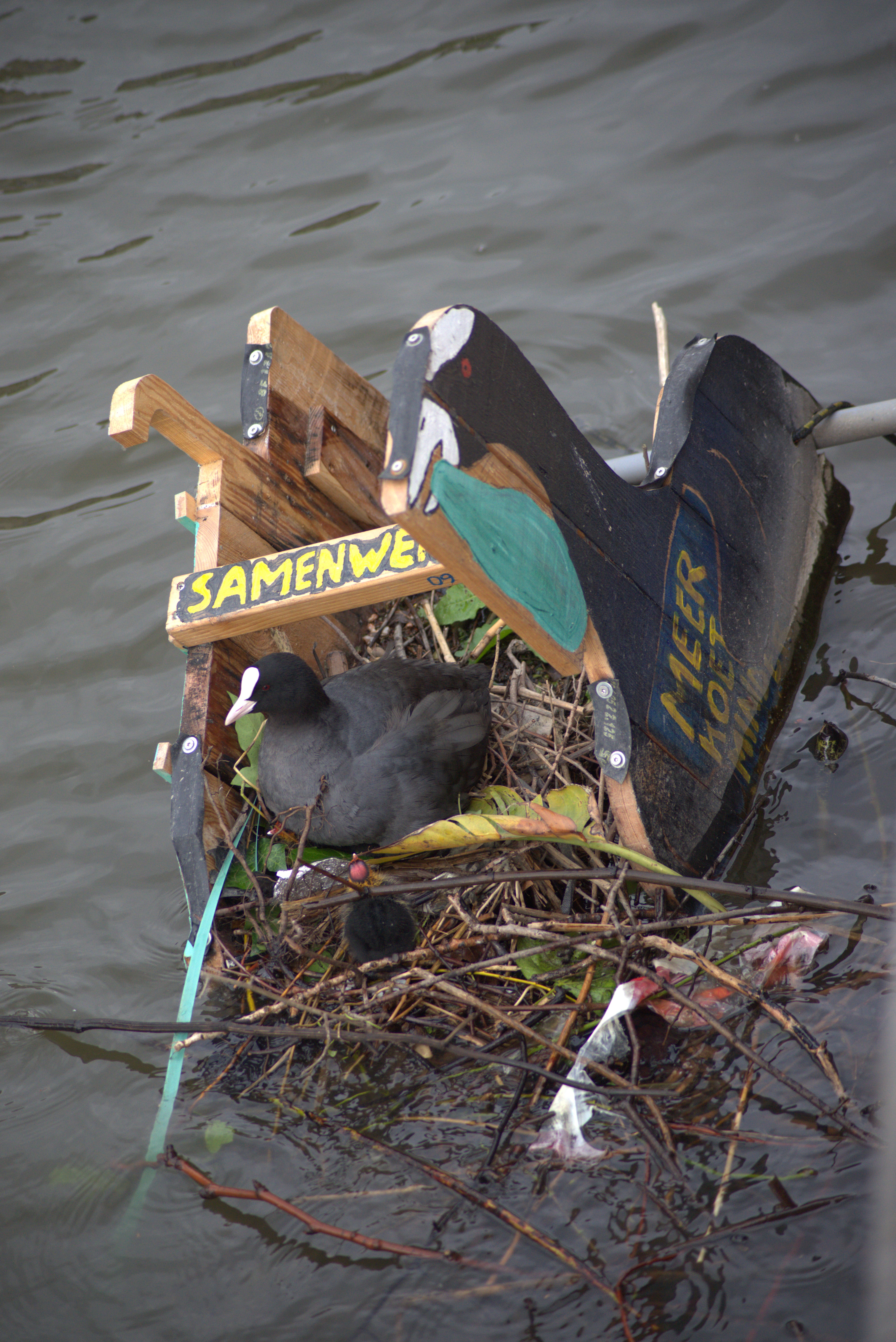
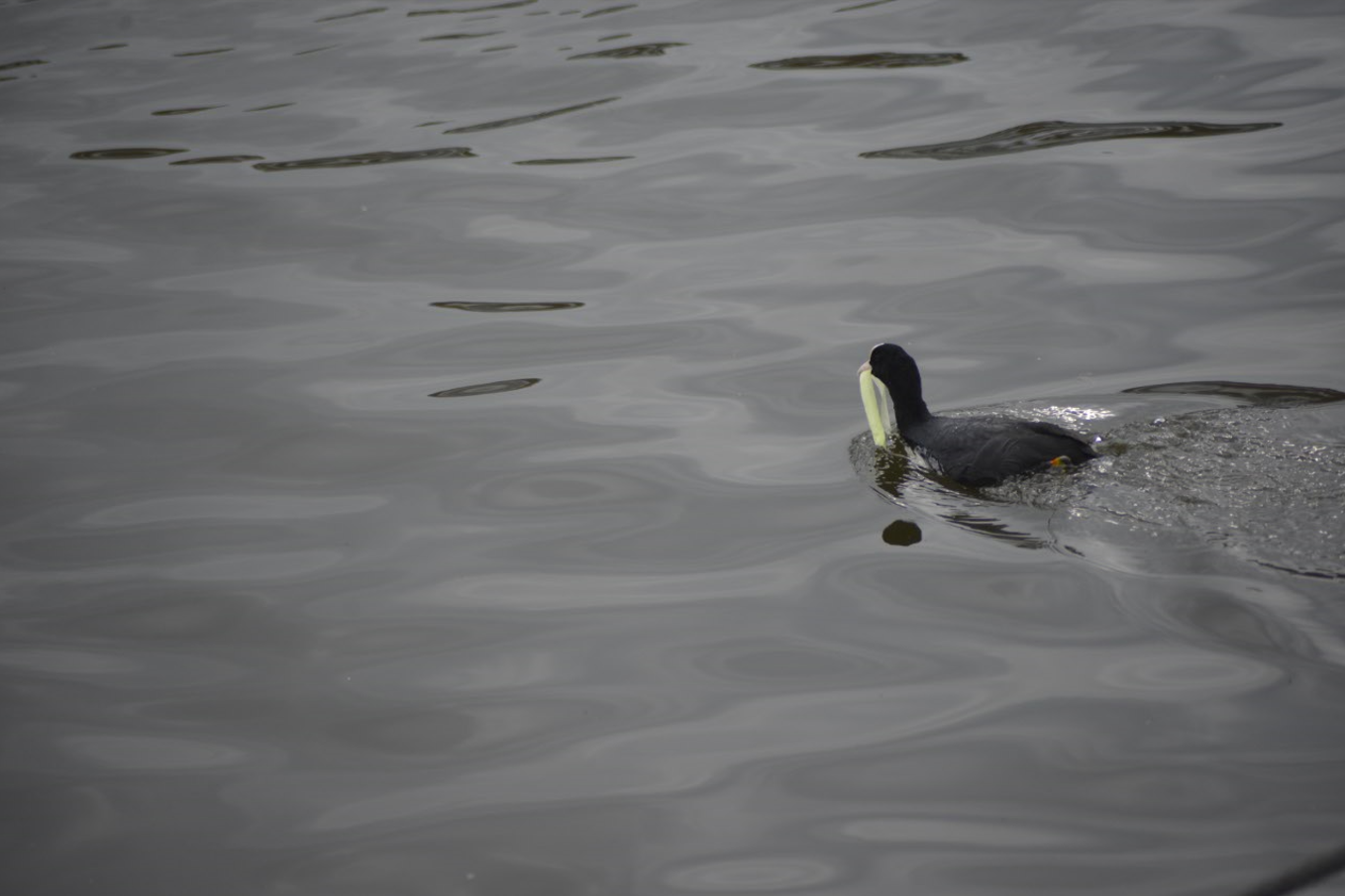
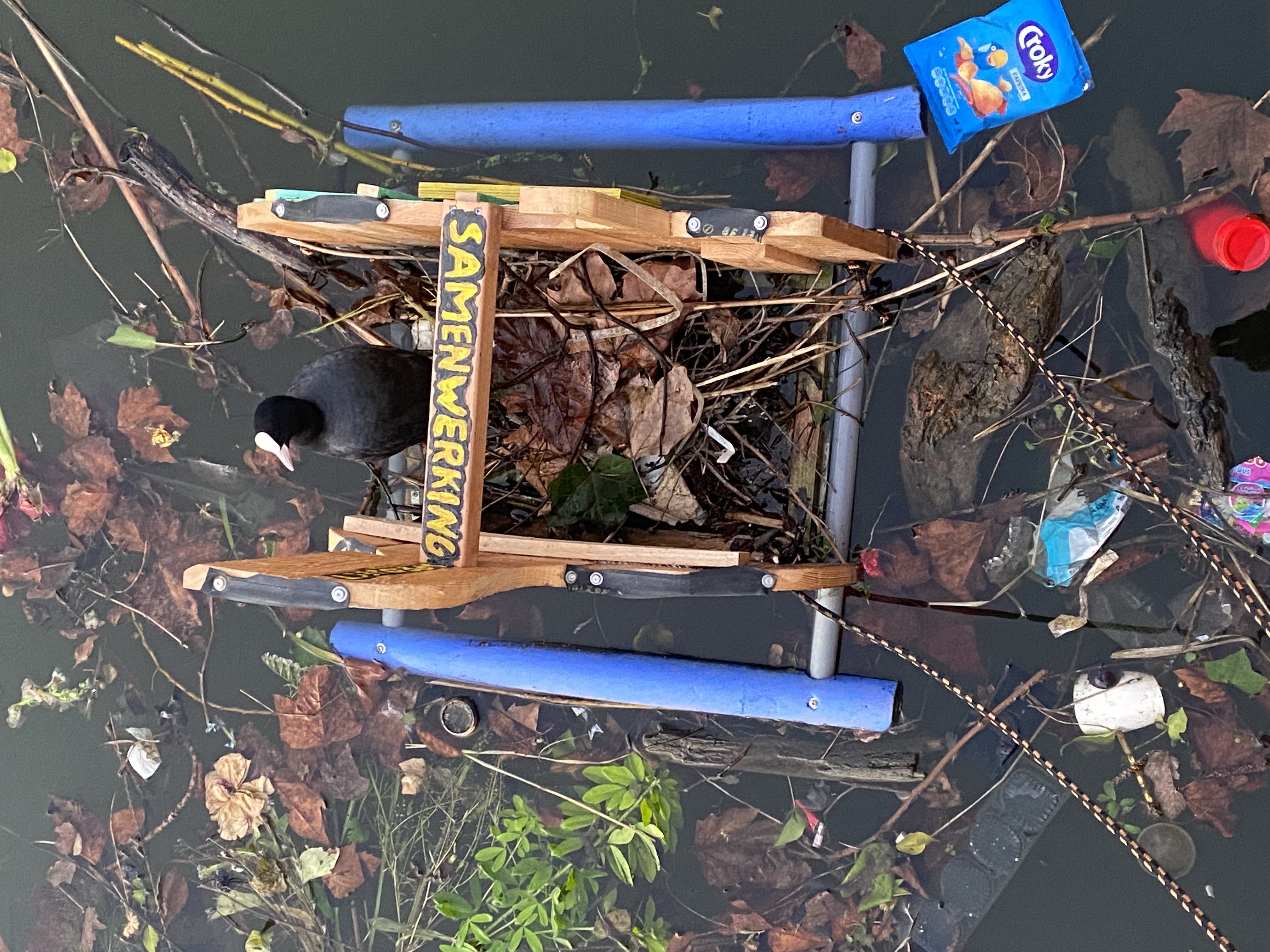
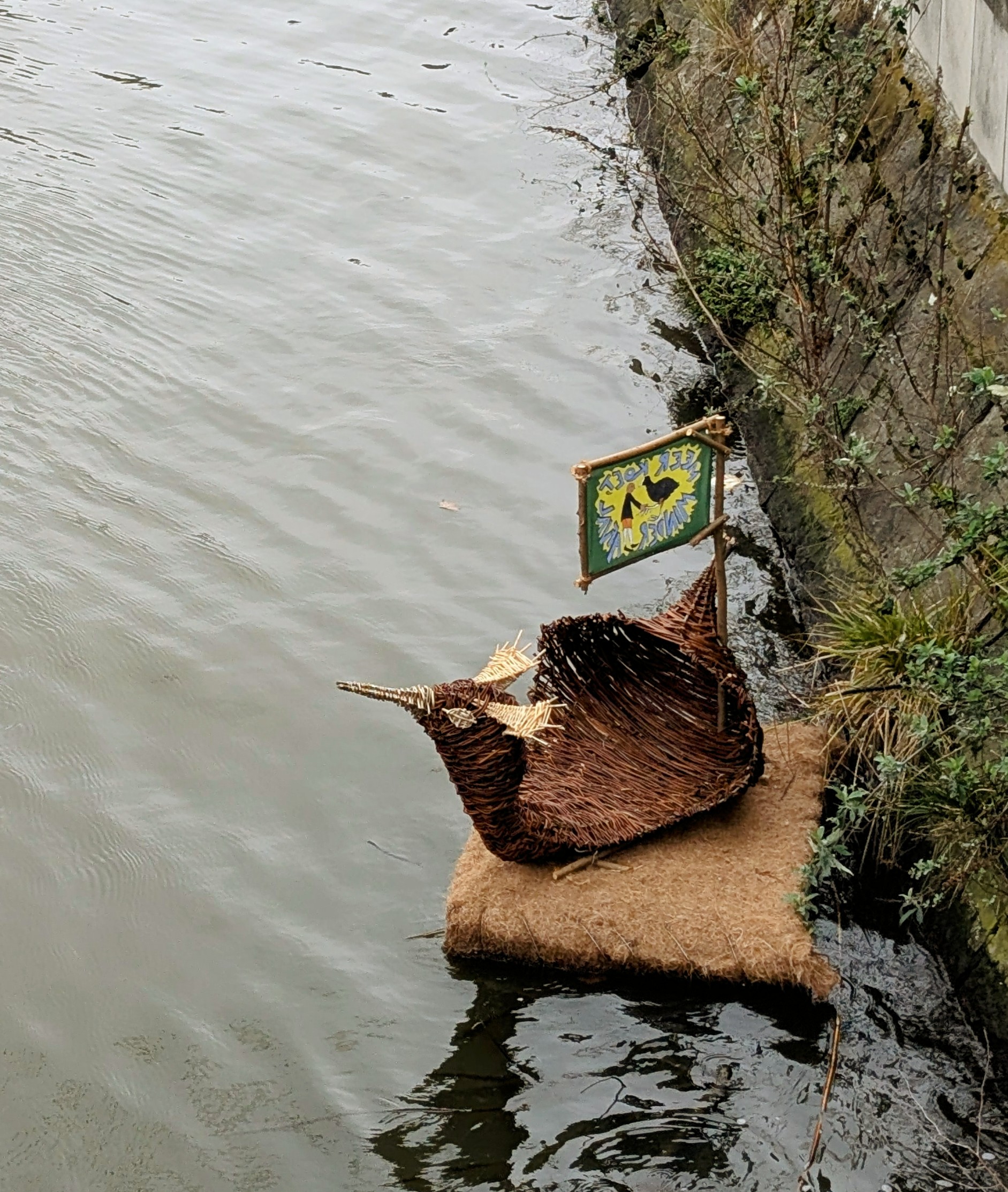
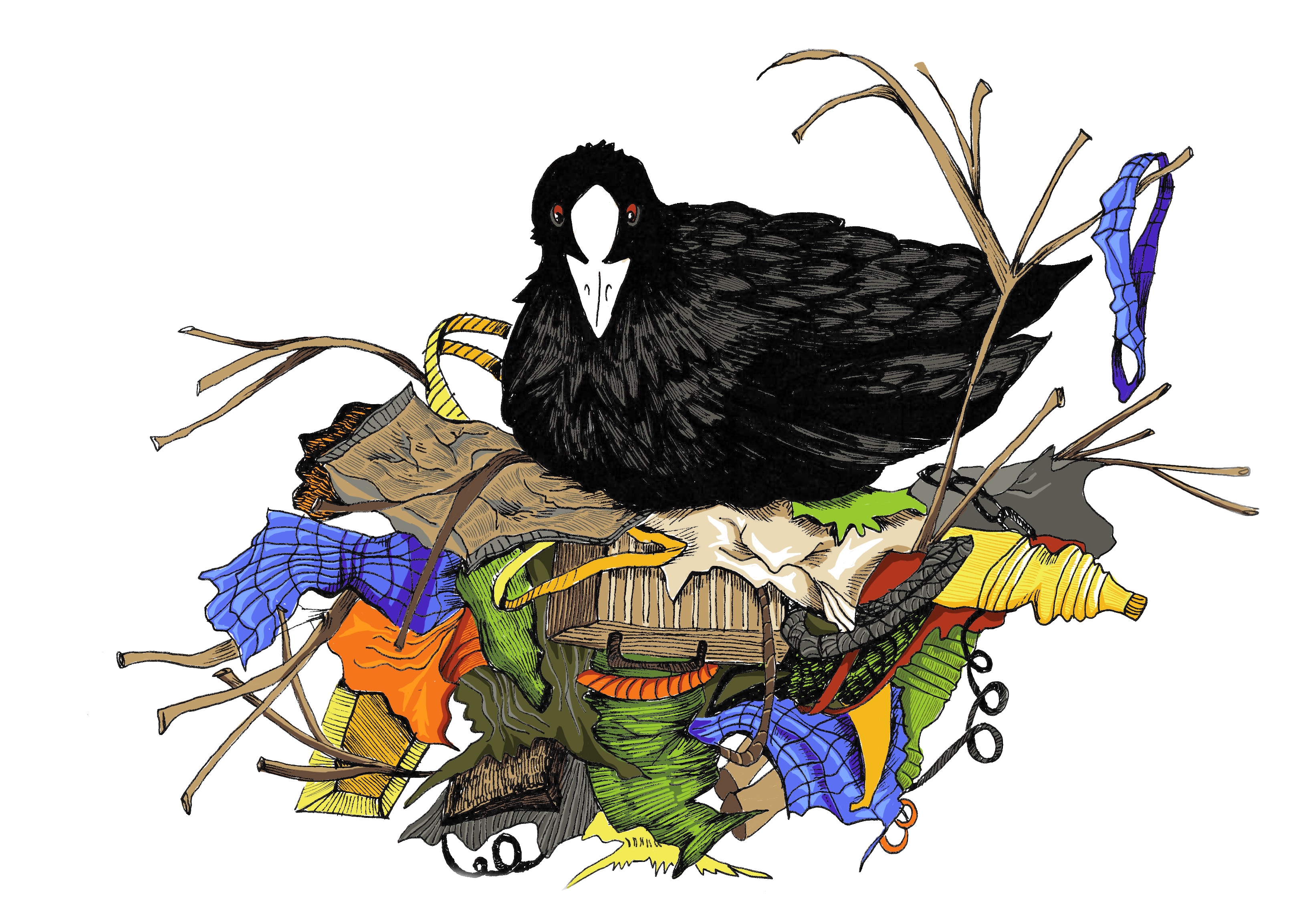
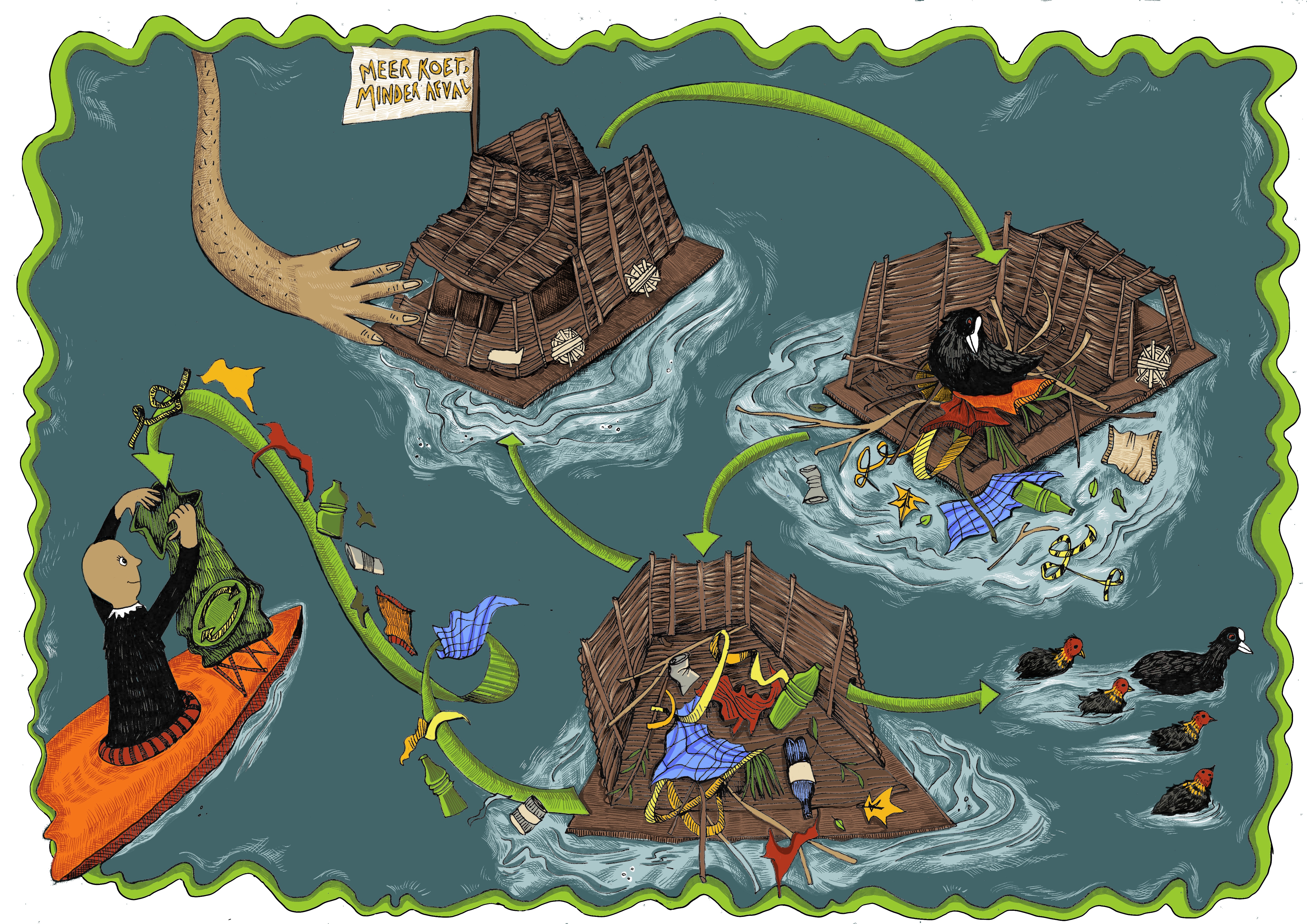
Certain waterbirds have adapted to the city life by weaving human waste into their nests. Meer Koet, Minder Afval transforms this behaviour into a collaboration. Custom-designed floating platforms invite all waterbirds to breed safely on urban canals. While building nests, birds such as coots gather human litter from the water. After the breeding season, the nests full of human waste are collected, sorted, and recycled, making coots active participants in urban waste management.
Belgium
Regional
The concept is currently being developed and implemented at city level, with Ghent as the primary site. Expansion to a second Belgian city (Bruges) is underway for summer 2026. The project's open-source model and its presentation at international platforms such as Designblok Prague positions it for adaption at European level.
Mainly urban
It refers to other types of transformations (soft investment)
Prototype level
No
No
No
Individual
Meer Koet, Minder Afval (More Coot, Less Waste) transforms the natural nesting behaviour of the common coot (Fulica atra) into a collaborative urban waste recovery system. Research by Hiemstra et al. (*Behaviour*, 2021) established that nearly 30% of nest material in urban coot populations consists of human litter. The project treats this as a starting point: turning adaptive animal behaviour into a collaboration between humans and birds to remove litter from urban waterways.
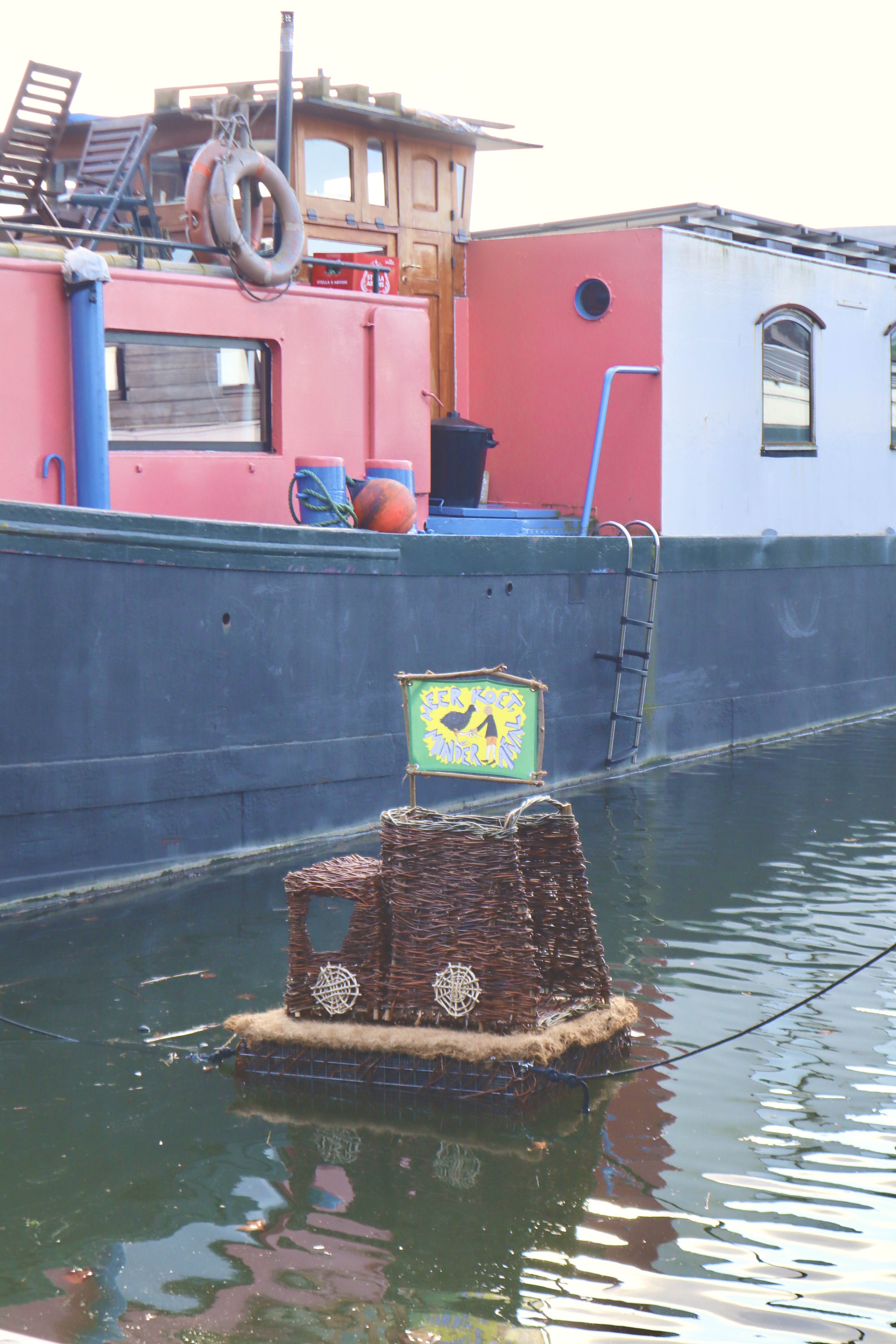
Each spring, custom-designed floating platforms are placed on urban canals, offering waterbirds a stable breeding site where suitable habitat has become scarce. As coots build their nest, they gather surrounding materials — including plastic waste that accumulates structurally in urban waterways, widely identified as primary pathways for pollution toward the oceans (https://tinyurl.com/3est8pzh). After the breeding season, abandoned nests are collected, sorted, and recycled according to national standards.
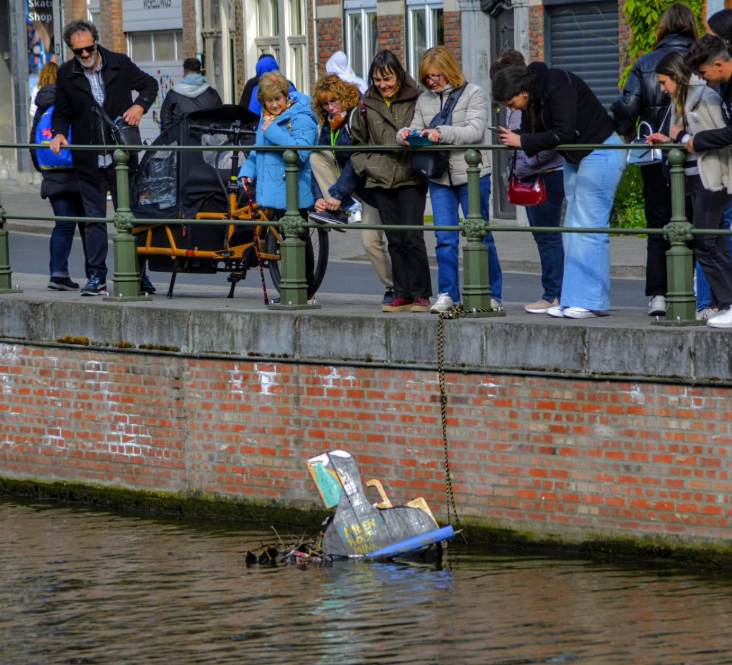
The platforms make visible what urban life tends to obscure: plastic in the water, disappearing nesting habitat, and the wildlife that persists regardless. Sited along ordinary canal routes, they invite a different way of looking — not at nature as backdrop, but at a shared city, negotiated with non-human neighbours.
1st prototypes: Results
7 platforms deployed in Ghent in 2025. 3 coot pairs nested, raising 10 chicks and recovering approximately 8 kilograms of waste per nest. One platform was acquired by STAM, Ghent's city museum. The project received widespread media attention, was awarded at Designblok Prague 2025, and built a growing partner network.
2nd prototypes: Ongoing
The second edition marks a significant material and conceptual evolution toward durability. Platforms are now built to last across multiple breeding seasons, each carrying a handwoven Belgian red willow nest structure. New platforms were deployed in February 2026, with the breeding season now underway.
Each spring, custom-designed floating platforms are placed on urban canals, offering waterbirds a stable breeding site where suitable habitat has become scarce. As coots build their nest, they gather surrounding materials — including plastic waste that accumulates structurally in urban waterways, widely identified as primary pathways for pollution toward the oceans (https://tinyurl.com/3est8pzh). After the breeding season, abandoned nests are collected, sorted, and recycled according to national standards.
The platforms make visible what urban life tends to obscure: plastic in the water, disappearing nesting habitat, and the wildlife that persists regardless. Sited along ordinary canal routes, they invite a different way of looking — not at nature as backdrop, but at a shared city, negotiated with non-human neighbours.
1st prototypes: Results
7 platforms deployed in Ghent in 2025. 3 coot pairs nested, raising 10 chicks and recovering approximately 8 kilograms of waste per nest. One platform was acquired by STAM, Ghent's city museum. The project received widespread media attention, was awarded at Designblok Prague 2025, and built a growing partner network.
2nd prototypes: Ongoing
The second edition marks a significant material and conceptual evolution toward durability. Platforms are now built to last across multiple breeding seasons, each carrying a handwoven Belgian red willow nest structure. New platforms were deployed in February 2026, with the breeding season now underway.
The idea came to life on the water. Moving onto a houseboat in Ghent, Jaron's attention was soon drawn to litter accumulating in the sheltered gaps between boat hulls and, looking further, at similar pockets of debris scattered across the city's canals. After conversations with neighbouring boat inhabitants, he soon found out that these sculptural accumulations of waste material were the works of a specific waterbird. These observations became the seed for a Master's research project in Autonomous Design at Ghent's Royal Academy of Fine Arts.
The academic context provided the space and rigour to develop the questions these observations raised. What does it mean for urban citizens when local water birds suddenly contribute efficiently to human waste management through their nesting behaviour? How can their adaptative behaviour inform approaches to human and urban wildlife collaborations? What are the ethics when we want to talk about collaboration with the more-than human?
These questions were developed through sustained multidisciplinary dialogue. Bert De Roo, architect and researcher at Studio Decentering Design, served as key mentor, bringing expertise in inclusive, animal-centred design. Maria Boto Ordóñez, PhD in Life Sciences and founder of Biolab, grounded the ecological dimensions in rigorous biological thinking. Ida Bomm, with a background in education, helped shape how the project communicates its story to urban audiences.
From these conversations, a methodology crystallised: design with it rather than for it. Build platforms that invite rather than impose. Treat the coot as a collaborator with its own knowledge, agency, and needs the design must genuinely serve.
The first prototype platforms were built from reclaimed materials and placed on the canals of Ghent. 3 couples nested. 10 chicks hatched. 8 kilograms of waste came out of the water per nest. The initial hunch had proven itself and the project has been growing, learning, and evolving ever since.
The academic context provided the space and rigour to develop the questions these observations raised. What does it mean for urban citizens when local water birds suddenly contribute efficiently to human waste management through their nesting behaviour? How can their adaptative behaviour inform approaches to human and urban wildlife collaborations? What are the ethics when we want to talk about collaboration with the more-than human?
These questions were developed through sustained multidisciplinary dialogue. Bert De Roo, architect and researcher at Studio Decentering Design, served as key mentor, bringing expertise in inclusive, animal-centred design. Maria Boto Ordóñez, PhD in Life Sciences and founder of Biolab, grounded the ecological dimensions in rigorous biological thinking. Ida Bomm, with a background in education, helped shape how the project communicates its story to urban audiences.
From these conversations, a methodology crystallised: design with it rather than for it. Build platforms that invite rather than impose. Treat the coot as a collaborator with its own knowledge, agency, and needs the design must genuinely serve.
The first prototype platforms were built from reclaimed materials and placed on the canals of Ghent. 3 couples nested. 10 chicks hatched. 8 kilograms of waste came out of the water per nest. The initial hunch had proven itself and the project has been growing, learning, and evolving ever since.
nature-based solutions
circular economy
climate action
human-wildlife collaboration
habitat creation
Urban canals are polluted. Waterfowl are losing safe places to breed. Meer Koet, Minder Afval addresses both by working with nature rather than against it — in a unique collaboration with waste-collecting waterbirds. Environmentally, the project recovers human litter directly from the water surface, material that would otherwise sink or break down into microplastics, eventually reaching the oceans. The second-edition platforms were designed to be durable and ecological. A hand-woven red willow structure (Salix fragilis) sits on a coconut coir base, floated on foam glass aggregate from 100% recycled glass by Ghent-based Eurabo, ballasted with natural stone, held in a durable wire mesh. Even the project flag, by Hemptex, is biodegradable. Nine nesting sites were established in collaboration with De Vlaamse Waterweg nv. Socially, the platforms make urban wildlife visible along everyday routes. The project has sparked school educational workshops, reached local and regional media, and built a partner network including UGent's Ecobird group, Decentering Design, Design Museum Gent, and the City of Ghent. Ten healthy chicks hatched in 2024–2025, a living result no infographic can match. Culturally, waterfowl become active participants in solving a human-made problem. A first-edition prototype platform has been acquired by STAM, Ghent's city museum; a nest built by a bird from recovered waste, now part of the permanent collection of the city's story. Economically, the model is low-cost, low-infrastructure, and replicable in any city with urban waterways and breeding waterfowl. What makes it exemplary is the convergence of outcomes within a single sustainable system: waste is recovered, nesting habitat is created, and public awareness is generated — all through a designed intervention. It treats sustainability as a relational practice, demonstrating that environmental, social, and aesthetic ambitions can be pursued simultaneously rather than traded off against one another.
There is something quietly disarming about watching a coot couple build their nest on a specially dedicated water platform in a city canal. The act of care from the side of the waterfowls for their own species as well as the care of humans for the species with whom they are co-habitating within the urban environment. It stops people. It makes them look at the water, at the bird, at the litter woven into the nest and creates the possibility for a different spatial and temporal perception of the everyday of the cityscape. It fosters a sense of belonging by reevaluating the position of human city-inhabitants in relation to other species.This is the set of aesthetic qualities of the project; a sensible methodology: Waste that disappears beneath the surface of urban waterways (out of sight, out of mind) is brought back up, carried by a bird, woven into something alive. The nest itself becomes an unexpected object of attention: an index of what we throw away, assembled by a species that has adapted to our excess. The second edition deepens this through material choices rooted in craft and care. The new nesting structures are handwoven from locally harvested Belgian red willow, built collectively in the studio with contributors learning traditional eendenkorf-weaving techniques passed on by craftsman Hans Engberts. Placed on the water, they function as quiet interventions in the urban landscape — signalling that this canal is cared for, that people thought about what lives here and chose to act. The platforms make people wonder, intrigue and fascinate them, and function as a physical manifestation of shared responsibility, that’s why it is so exemplary. Where the first prototypes were bold and graphic, announcing themselves loudly, the second edition is more settled, more at home in the water. The shift of aesthetics that guide the design process reflects our learnings of what it means to design for a place rather than in it and to design for waterfowls and humans alike.
The most fundamental act of inclusion in this project is the expansion of who counts as a stakeholder. Urban waterfowl are not usually considered participants in city governance or waste management. By designing with the coot's behaviour, Meer Koet, Minder Afval proposes a new societal model of urban cohabitation — one in which non-human city dwellers have a recognised role and receive something concrete in return: safe breeding habitat, increasingly scarce in dense urban environments.
For human communities, the project is radically accessible and affordable. Ghent's canals are public space. The platforms are visible to anyone passing by. No ticket, no threshold, no prior knowledge required.
Participation deepens through collective making. Nesting structures were woven with a diverse group of contributors — some drawn by craft, others by commitment to urban bird welfare. The local houseboat community, a key conversation partner from the outset, currently hosts two of the nine platforms.
Educational reach is actively growing. Following a pilot workshop at elementary school Melopee in 2025, conversations with further institutions are ongoing. The addition of Ida Bomm (Master of Education, Master of Fine Arts) to the core team reflects a deepening investigation into accessibility across communities, developing an educational portfolio that includes collective willow weaving and sensory methods such as print-making from bird-collected litter.
The long-term ambition is an open-source commoning model any community in any European city can adopt — without significant financial investment, specialist expertise, or institutional infrastructure.
The project is exemplary because it expands inclusion itself — beyond accessibility for different human communities toward a genuinely multispecies model of urban cohabitation. A more inclusive city is not only one where every person belongs, but one where every inhabitant does.
For human communities, the project is radically accessible and affordable. Ghent's canals are public space. The platforms are visible to anyone passing by. No ticket, no threshold, no prior knowledge required.
Participation deepens through collective making. Nesting structures were woven with a diverse group of contributors — some drawn by craft, others by commitment to urban bird welfare. The local houseboat community, a key conversation partner from the outset, currently hosts two of the nine platforms.
Educational reach is actively growing. Following a pilot workshop at elementary school Melopee in 2025, conversations with further institutions are ongoing. The addition of Ida Bomm (Master of Education, Master of Fine Arts) to the core team reflects a deepening investigation into accessibility across communities, developing an educational portfolio that includes collective willow weaving and sensory methods such as print-making from bird-collected litter.
The long-term ambition is an open-source commoning model any community in any European city can adopt — without significant financial investment, specialist expertise, or institutional infrastructure.
The project is exemplary because it expands inclusion itself — beyond accessibility for different human communities toward a genuinely multispecies model of urban cohabitation. A more inclusive city is not only one where every person belongs, but one where every inhabitant does.
Meer Koet, Minder Afval did not emerge from a design studio in isolation. It grew through conversations beside canals, on boats, in studios and at the water's edge; with ecologists, designers, craftspeople, institutions, and neighbours. Each encounter left a concrete trace in what the project became.
The first edition was built on deep observation: of coot behaviour, of the urban waterway as a living system, and of how city residents relate to the wildlife alongside them. Conversations with UGent's Ecobird research centre and Studio Decentering Design brought ecological knowledge and more-than-human design thinking into direct dialogue with making, shaping the platform logic from the outset.
From there, participation widened organically. The City of Ghent and De Vlaamse Waterweg nv enabled platform placement. Design Museum Gent and KASK offered institutional grounding and critical feedback. Boat-dwelling neighbours became some of the project's most attentive witnesses — watching the nests, reporting back, and caring about what happened next. Their observations directly informed platform placement and design decisions in the second prototype edition.
The second prototype edition reflects everything absorbed from those exchanges. Introduced to the Dutch eendenkorf tradition by artist Wapke Feenstra, Jaron travelled to the Netherlands to learn willow weaving from craftsman Hans Engberts. That knowledge returned to Ghent and was shared with Elisabeth, Walter, Christine, and Ida — an individual practice moving toward co-creation. The educational pilot at elementary school Melopee tested accessibility for young audiences, directly shaping the educational portfolio now in development.
Each layer of participation has left a mark: in the shape of the platforms, the choice of materials, the formats developed for public engagement. Meer Koet, Minder Afval is not the project it would have been if designed alone.
The first edition was built on deep observation: of coot behaviour, of the urban waterway as a living system, and of how city residents relate to the wildlife alongside them. Conversations with UGent's Ecobird research centre and Studio Decentering Design brought ecological knowledge and more-than-human design thinking into direct dialogue with making, shaping the platform logic from the outset.
From there, participation widened organically. The City of Ghent and De Vlaamse Waterweg nv enabled platform placement. Design Museum Gent and KASK offered institutional grounding and critical feedback. Boat-dwelling neighbours became some of the project's most attentive witnesses — watching the nests, reporting back, and caring about what happened next. Their observations directly informed platform placement and design decisions in the second prototype edition.
The second prototype edition reflects everything absorbed from those exchanges. Introduced to the Dutch eendenkorf tradition by artist Wapke Feenstra, Jaron travelled to the Netherlands to learn willow weaving from craftsman Hans Engberts. That knowledge returned to Ghent and was shared with Elisabeth, Walter, Christine, and Ida — an individual practice moving toward co-creation. The educational pilot at elementary school Melopee tested accessibility for young audiences, directly shaping the educational portfolio now in development.
Each layer of participation has left a mark: in the shape of the platforms, the choice of materials, the formats developed for public engagement. Meer Koet, Minder Afval is not the project it would have been if designed alone.
The project operates across multiple scales simultaneously, rooted in Ghent, while building connections that reach well beyond it.
At local level, the project has developed a dense partner network. The City of Ghent provided institutional visibility. Design Museum Gent and KASK offered research infrastructure and public exhibition platforms. UGent's Ecobird research centre contributed ecological expertise. Studio Decentering Design embeds animal-centred design thinking into the research process. Gents Milieufront brought community reach around urban waterway stewardship. Elementary school Melopee piloted an educational workshop in 2025. Boat-dwelling neighbours became informal monitors. One platform now belongs to the permanent collection of STAM, Ghent's city museum; evidence the project has become part of the city's civic fabric.
At regional level, De Vlaamse Waterweg nv granted repeated permissions for platform placement, without it the project could not exist. Eurabo supplies foam glass aggregate from 100% recycled glass, embedding the project in a local circular material economy. Hemptex contributes biodegradable textiles, strengthening regional circular value chains.
At national and craft heritage level, Dutch basket maker Hans Engberts transmitted the eendenkorf tradition directly to the project team — knowledge that shaped the entire material direction of the second edition.
At European level, the project was awarded first prize at Designblok Prague 2025 and returns in 2026, opening conversations around replication in other European cities with polluted waterways and ambitions for urban wildlife stewardship. The project returns to Designblok 2026, creating an opportunity to explore strategies for translating the concept to other European cities.
Local, regional and national partners provide trust and embeddedness and a ground for the material and ecological dimensions; European connections provide legitimacy and conditions for replication.
At local level, the project has developed a dense partner network. The City of Ghent provided institutional visibility. Design Museum Gent and KASK offered research infrastructure and public exhibition platforms. UGent's Ecobird research centre contributed ecological expertise. Studio Decentering Design embeds animal-centred design thinking into the research process. Gents Milieufront brought community reach around urban waterway stewardship. Elementary school Melopee piloted an educational workshop in 2025. Boat-dwelling neighbours became informal monitors. One platform now belongs to the permanent collection of STAM, Ghent's city museum; evidence the project has become part of the city's civic fabric.
At regional level, De Vlaamse Waterweg nv granted repeated permissions for platform placement, without it the project could not exist. Eurabo supplies foam glass aggregate from 100% recycled glass, embedding the project in a local circular material economy. Hemptex contributes biodegradable textiles, strengthening regional circular value chains.
At national and craft heritage level, Dutch basket maker Hans Engberts transmitted the eendenkorf tradition directly to the project team — knowledge that shaped the entire material direction of the second edition.
At European level, the project was awarded first prize at Designblok Prague 2025 and returns in 2026, opening conversations around replication in other European cities with polluted waterways and ambitions for urban wildlife stewardship. The project returns to Designblok 2026, creating an opportunity to explore strategies for translating the concept to other European cities.
Local, regional and national partners provide trust and embeddedness and a ground for the material and ecological dimensions; European connections provide legitimacy and conditions for replication.
Meer Koet, Minder Afval brings together multiple disciplines. The interaction between them is where the project's thinking and outcomes are generated.
The foundation is non-formal and anecdotal: sustained conversations with houseboat neighbours and ecologically aware city residents whose years of observing urban waterfowl created the first layer of understanding. Ecological science built on this. The research of biologist Auke-Florian Hiemstra et al. on urban coot behaviour became a central point of departure, deepened through dialogue with UGent's Ecobird research centre and its connections to citizen science practice.
Industrial and ecological design translate these learnings into functional, sensory objects. The platforms must float, anchor safely, invite coots, withstand weather, and allow easy post-season collection — all from low-impact, locally available materials. The second edition's shift to hand-woven willow structures required direct engagement with traditional craft knowledge, transmitted by basket maker Hans Engberts and adapted for a contemporary urban context.
More-than-human and inclusive design — developed in critical dialogue with Bert De Roo of Studio Decentering Design — pushes the practice further, asking how design can genuinely centre non-human needs.
Contemporary arts and cultural practice investigate how artistic intervention generates meaning beyond functionality. A first-edition prototype platform now belongs to STAM, Ghent's city museum, situating the work within cultural heritage.
Environmental education shapes the public dimension through school workshops and exhibition formats. Circular economy and materials science inform every platform component — from Eurabo's recycled foam glass to biodegradable coir and Hemptex textiles.
These disciplines do not sit in parallel. They are genuinely integrated, each shaping the others through making, with the coot at the centre of all of them.
The foundation is non-formal and anecdotal: sustained conversations with houseboat neighbours and ecologically aware city residents whose years of observing urban waterfowl created the first layer of understanding. Ecological science built on this. The research of biologist Auke-Florian Hiemstra et al. on urban coot behaviour became a central point of departure, deepened through dialogue with UGent's Ecobird research centre and its connections to citizen science practice.
Industrial and ecological design translate these learnings into functional, sensory objects. The platforms must float, anchor safely, invite coots, withstand weather, and allow easy post-season collection — all from low-impact, locally available materials. The second edition's shift to hand-woven willow structures required direct engagement with traditional craft knowledge, transmitted by basket maker Hans Engberts and adapted for a contemporary urban context.
More-than-human and inclusive design — developed in critical dialogue with Bert De Roo of Studio Decentering Design — pushes the practice further, asking how design can genuinely centre non-human needs.
Contemporary arts and cultural practice investigate how artistic intervention generates meaning beyond functionality. A first-edition prototype platform now belongs to STAM, Ghent's city museum, situating the work within cultural heritage.
Environmental education shapes the public dimension through school workshops and exhibition formats. Circular economy and materials science inform every platform component — from Eurabo's recycled foam glass to biodegradable coir and Hemptex textiles.
These disciplines do not sit in parallel. They are genuinely integrated, each shaping the others through making, with the coot at the centre of all of them.
Meer Koet, Minder Afval was initially developed through personal investment and small grant funding, growing steadily through institutional support from partners including Design Museum Gent and the City of Ghent. This mixed model has allowed the project to develop at its own pace, staying close to its ecological values without commercial pressure.
Looking ahead, financial sustainability is being built across four complementary streams.
The first is the direct sale of nest platforms to cities and municipalities. Low-cost to produce, requiring no ongoing energy or infrastructure, and delivering measurable environmental value (cleaner waterways, new breeding habitats). The platform represents a compelling proposition for city governments seeking nature-based solutions. Conversations with the City of Bruges around a local implementation are ongoing, with realisation expected in summer 2026.
The second is an educational portfolio making the project accessible to diverse audiences through workshops (e.g collective willow-weaving, print-making from bird-collected litter) and publication formats including a printed project publication, city water maps, and website documentation. These are distributed through partners locally and internationally, supporting both formal and informal knowledge production.
The third is continued pursuit of grants at local, regional, and European level, particularly through programmes aligned with circular economy, nature-based solutions, urban biodiversity, and design innovation. The NEB Awards process is part of this effort to build visibility within the European funding landscape.
The fourth stream, currently in development, is the production and sale of small objects made from coot-collected waste — keychains and similar items that function as tactile evidence of the human-coot collaboration. Small in scale, but significant in making the circularity of the project visible and accessible.
Looking ahead, financial sustainability is being built across four complementary streams.
The first is the direct sale of nest platforms to cities and municipalities. Low-cost to produce, requiring no ongoing energy or infrastructure, and delivering measurable environmental value (cleaner waterways, new breeding habitats). The platform represents a compelling proposition for city governments seeking nature-based solutions. Conversations with the City of Bruges around a local implementation are ongoing, with realisation expected in summer 2026.
The second is an educational portfolio making the project accessible to diverse audiences through workshops (e.g collective willow-weaving, print-making from bird-collected litter) and publication formats including a printed project publication, city water maps, and website documentation. These are distributed through partners locally and internationally, supporting both formal and informal knowledge production.
The third is continued pursuit of grants at local, regional, and European level, particularly through programmes aligned with circular economy, nature-based solutions, urban biodiversity, and design innovation. The NEB Awards process is part of this effort to build visibility within the European funding landscape.
The fourth stream, currently in development, is the production and sale of small objects made from coot-collected waste — keychains and similar items that function as tactile evidence of the human-coot collaboration. Small in scale, but significant in making the circularity of the project visible and accessible.
The core model is designed from the outset to be adapted and transferred to other contexts sharing similar challenges around urban water waste and scarce nesting habitat.
The most transferable element is the platform concept itself. Common coots breed across European cities wherever urban waterways exist — canals, rivers, ponds, and lakes (https://tinyurl.com/ybyusvjm) — and wherever they do, the same logic applies: a floating platform with a supportive nesting structure, built from locally available natural materials, placed in early spring, collected after the breeding season. Specific materials may vary by region, but the underlying design principle is stable and adaptable.
The material framework of the second edition offers a replicable blueprint: biodegradable structural elements above water, recycled aggregate for buoyancy, natural ballast, long-lasting hardware below. This can be adapted to local material availability and circular economy partners in any given city. The platform design is openly documented on the project website.
The methodology of working with animal behaviour rather than against it is perhaps the most broadly transferable insight. Careful observation of how urban wildlife has already adapted to human environments reveals design opportunities that top-down interventions miss. This approach reaches far beyond waterbirds and canals.
The educational portfolio in development (material workshops, environmental education formats) is replicable by any city, school, or neighbourhood initiative, supported by openly documented case studies.
The citizen science dimension, connecting platform monitoring to urban biodiversity data, offers a scalable model for community-led observation that could link local projects across European cities into a shared network.
Finally, the narrative itself travels: that urban animals can be partners and that design can make that partnership visible, resonating across cultures, languages, and urban contexts.
The most transferable element is the platform concept itself. Common coots breed across European cities wherever urban waterways exist — canals, rivers, ponds, and lakes (https://tinyurl.com/ybyusvjm) — and wherever they do, the same logic applies: a floating platform with a supportive nesting structure, built from locally available natural materials, placed in early spring, collected after the breeding season. Specific materials may vary by region, but the underlying design principle is stable and adaptable.
The material framework of the second edition offers a replicable blueprint: biodegradable structural elements above water, recycled aggregate for buoyancy, natural ballast, long-lasting hardware below. This can be adapted to local material availability and circular economy partners in any given city. The platform design is openly documented on the project website.
The methodology of working with animal behaviour rather than against it is perhaps the most broadly transferable insight. Careful observation of how urban wildlife has already adapted to human environments reveals design opportunities that top-down interventions miss. This approach reaches far beyond waterbirds and canals.
The educational portfolio in development (material workshops, environmental education formats) is replicable by any city, school, or neighbourhood initiative, supported by openly documented case studies.
The citizen science dimension, connecting platform monitoring to urban biodiversity data, offers a scalable model for community-led observation that could link local projects across European cities into a shared network.
Finally, the narrative itself travels: that urban animals can be partners and that design can make that partnership visible, resonating across cultures, languages, and urban contexts.
The 2025–2026 season marks a significant step forward — from a single-city research practice to a growing, multi-site project with expanding public reach.
Prototype development is already underway. Nine second-edition prototype platforms, with handwoven red willow nesting structures and a platform built from fully biodegradable and recycled materials, have recently been deployed in Ghent's canals. Their performance this breeding season will directly inform the next phase of development next season.
Geographic expansion is the most concrete next step. Platforms are being developed for Bruges, whose canal network makes it a natural fit. This expansion is built around a workshop format in collaboration with Waterland vzw, bringing together local residents and visitors for engagement with urban wildlife and the project's making process.
Public visibility is growing in parallel. The CO-LAB (Collectief laboratorium voor design en democratie) - exhibition at Design Museum Gent — the largest design museum in the Benelux — opens late summer 2026 and runs into 2027, situating the project within a wider conversation about design, ecology, and human-nonhuman collaboration before a broad local and regional audience.
Educational and community programming is expanding. A newly developed workshop trajectory in Bruges engages local citizens in collaboration with Waterland vzw. A test round of recycled waste material workshops with children is planned with youth organisation Free Time vzw in April 2026.
Product development will be explored with newly collected litter in the summer of 2026 to make the circularity of the project visible beyond the spatial dimensions of the waterways. Currently design and productional contacts are established to establish strategies on how the gathered litter by waterfowls can be transformed into recycled meaningful objects that carry the narrative of the project and translate them into new hands and embedded it into new conversations.
Prototype development is already underway. Nine second-edition prototype platforms, with handwoven red willow nesting structures and a platform built from fully biodegradable and recycled materials, have recently been deployed in Ghent's canals. Their performance this breeding season will directly inform the next phase of development next season.
Geographic expansion is the most concrete next step. Platforms are being developed for Bruges, whose canal network makes it a natural fit. This expansion is built around a workshop format in collaboration with Waterland vzw, bringing together local residents and visitors for engagement with urban wildlife and the project's making process.
Public visibility is growing in parallel. The CO-LAB (Collectief laboratorium voor design en democratie) - exhibition at Design Museum Gent — the largest design museum in the Benelux — opens late summer 2026 and runs into 2027, situating the project within a wider conversation about design, ecology, and human-nonhuman collaboration before a broad local and regional audience.
Educational and community programming is expanding. A newly developed workshop trajectory in Bruges engages local citizens in collaboration with Waterland vzw. A test round of recycled waste material workshops with children is planned with youth organisation Free Time vzw in April 2026.
Product development will be explored with newly collected litter in the summer of 2026 to make the circularity of the project visible beyond the spatial dimensions of the waterways. Currently design and productional contacts are established to establish strategies on how the gathered litter by waterfowls can be transformed into recycled meaningful objects that carry the narrative of the project and translate them into new hands and embedded it into new conversations.