Enhancing Circularity, Sustainability, and Innovation
Zelubak
Zelubak - Biofabricated leather from Bacterial Cellulose and Organic Residues
Zelubak experiments with cultivating materials for fashion, costume design and stage production. Through controlled fermentation, bacterial cellulose forms flexible sheets that can be transformed into garments, accessories and scenographic components.
The project investigates how living systems can support more responsible material production while opening new creative possibilities for performance, design and object making.
The project investigates how living systems can support more responsible material production while opening new creative possibilities for performance, design and object making.
Spain
Regional
Basque Country
It addresses urban-rural linkages
It involves other types of transformations (soft investment)
Yes
2026-01-12
No
No
No
Organisation
Zelubak is an experimental bio-design project developing a sustainable biomaterial as an alternative to conventional leather for fashion, costume design and other creative fields. The material is produced through the fermentation of plant residues using bacterial cellulose (SCOBY), generating flexible sheets that can be cut, shaped and assembled similarly to leather while remaining biodegradable and low-impact.
The project responds to the environmental footprint of materials widely used in fashion and creative production, particularly animal leather and fossil-based synthetics. Through controlled fermentation, agricultural and food residues that are not suitable for human consumption are transformed into usable biomaterials. This approach connects material experimentation with circular economy principles and supports the development of local material ecosystems based on biological resources.
The material is intended for designers working across fashion, performing arts and audiovisual production, as well as researchers exploring sustainable material innovation. By using organic waste streams from regional food industries, Zelubak contributes to reducing material waste while strengthening links between agriculture, local production and the creative sector.
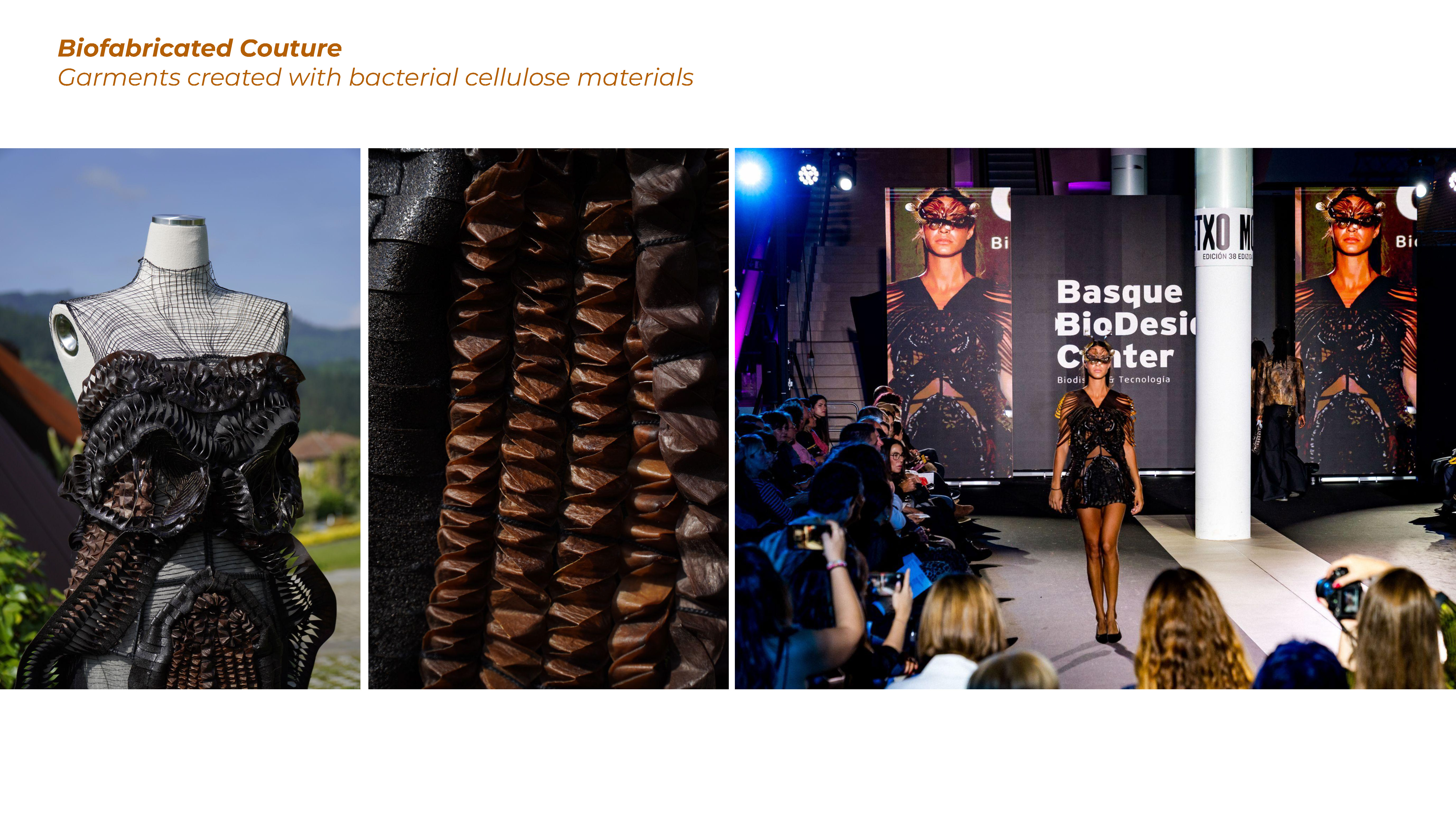
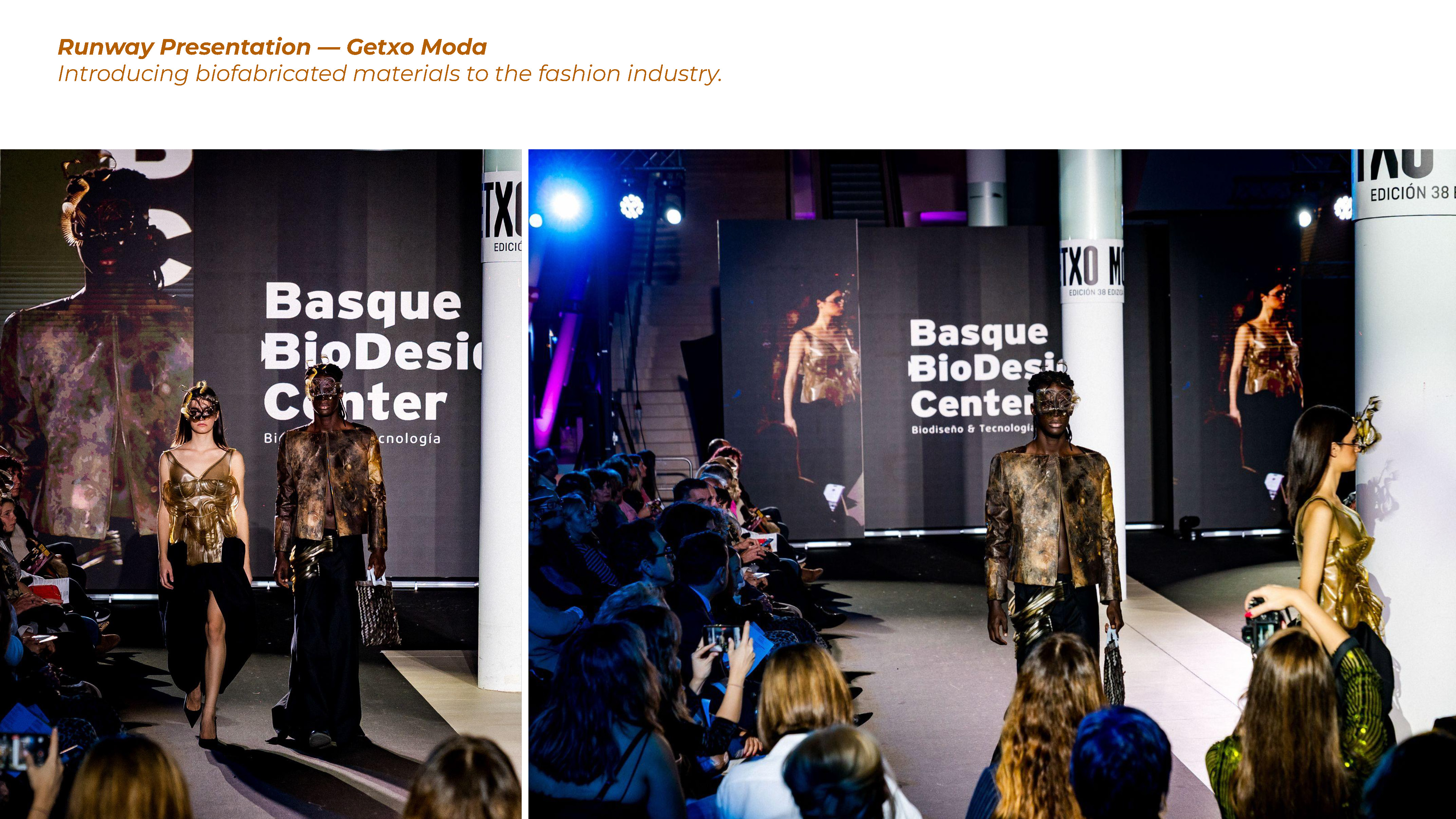
Several outcomes have already been achieved. A reproducible cultivation process for bacterial cellulose sheets has been developed, with pilot batches reaching more than 95% reproducibility. The biomaterial has been tested in applications such as bags, garments and accessories, confirming compatibility with conventional cutting and sewing techniques. Prototypes were presented at the Getxomoda fashion event in November 2025. A new collection is currently being developed exploring the use of this biomaterial in performing arts and audiovisual productions.
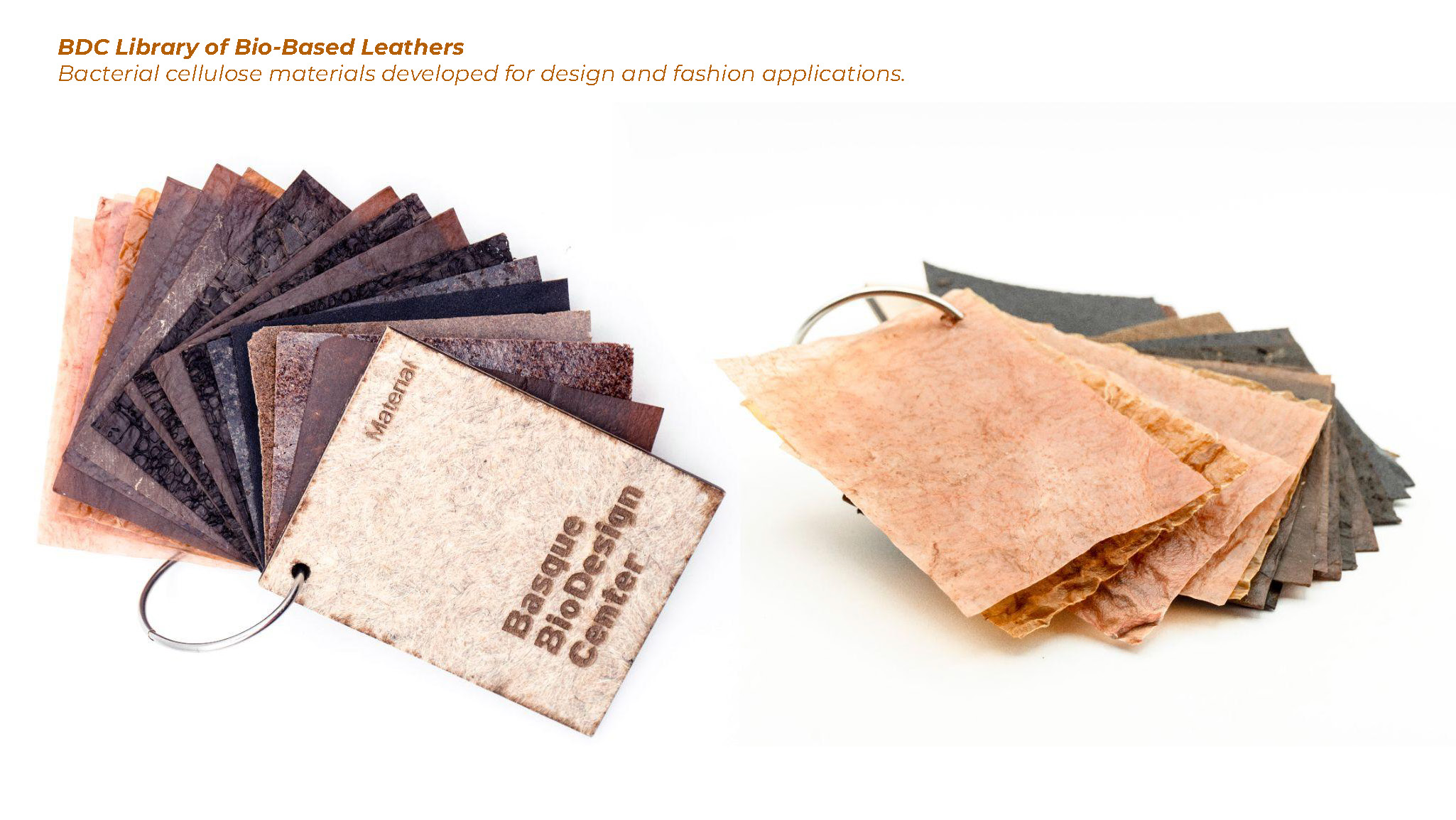
Zelubak emerged from ongoing research into sustainable materials for fashion, design and creative production developed within the Basque Biodesign Center. The project explores how biological processes can be integrated into material design to reduce dependence on environmentally intensive materials such as leather and synthetic polymers.
The initiative focuses on bacterial cellulose, a natural biopolymer produced through fermentation. By cultivating bacterial cellulose using organic residues, the project investigates how agricultural and food by-products can become valuable inputs for new biomaterials.
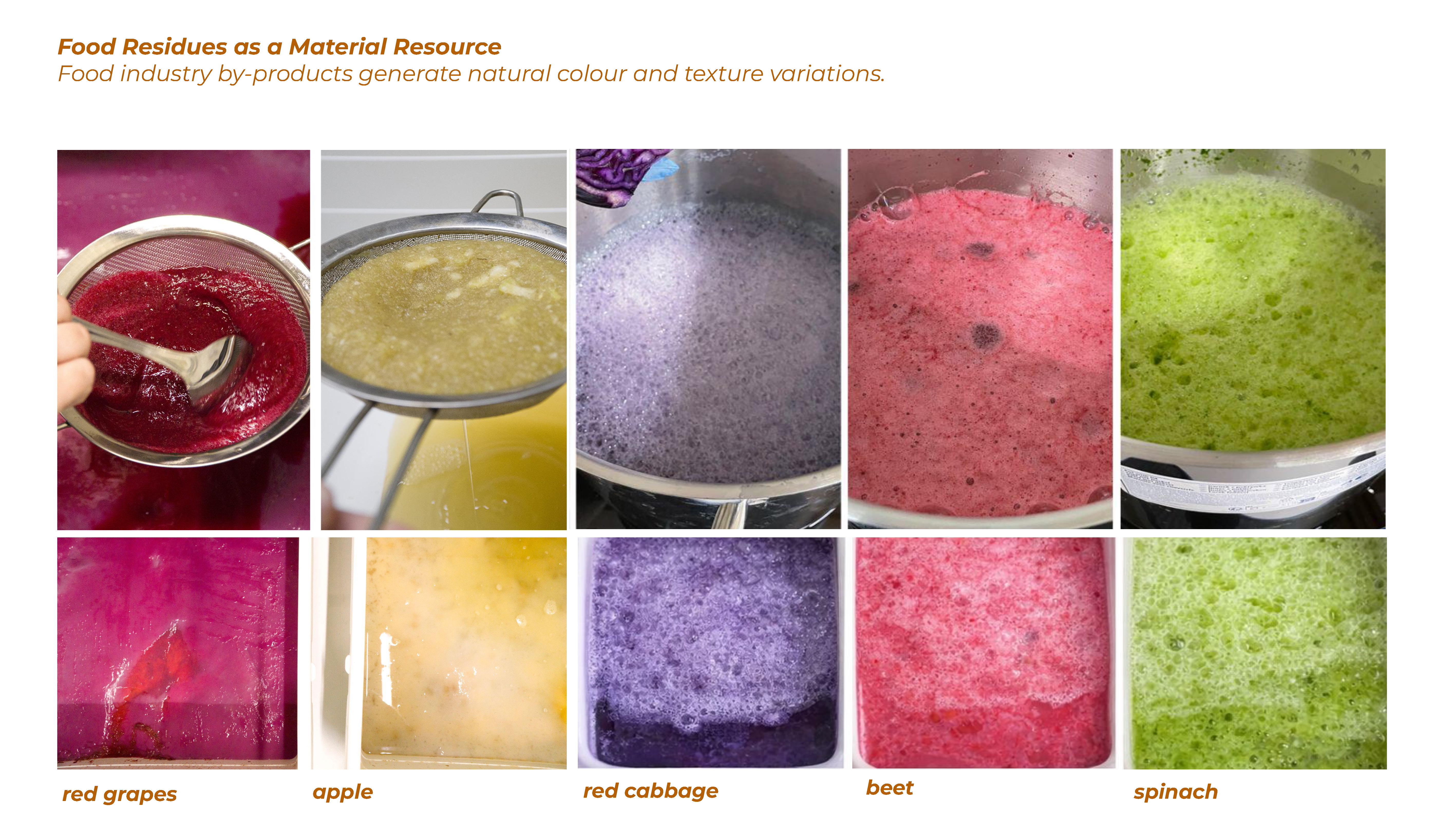
From the beginning, the project was conceived as a collaborative process bringing together designers, researchers and industry partners. Initial experimentation focused on cultivating bacterial cellulose using tea and sugar-based fermentation. As the process developed, these inputs were gradually replaced with plant-based residues from local food industries such as beetroot, cabbage, apple and grape, which provide nutrients and pigments influencing the color and texture of the material.
Development progressed through laboratory research, optimization of fermentation conditions, prototyping and real-world testing. Techniques included controlled fermentation, drying and pressing processes, natural tanning with plant-derived tannins and iterative design experimentation.
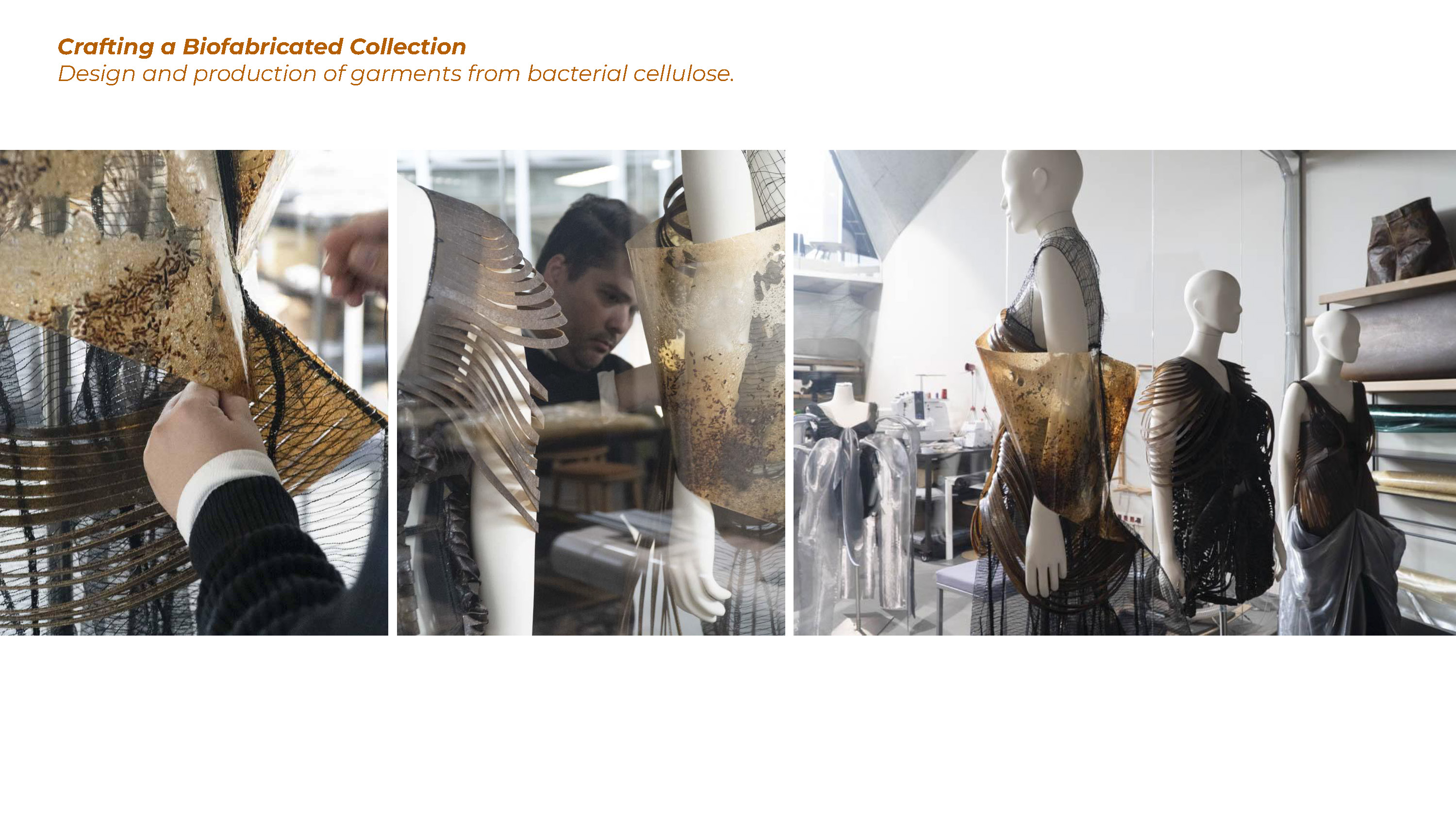
The biomaterial has been tested in garments, accessories, scenographic elements, film costumes and experimental furniture pieces, helping refine its mechanical properties and manufacturability.
The project also raises a broader question: could the materials used in theatres, films and creative productions be cultivated from natural processes and later return safely to the environment? Through this work, Zelubak shows how biofabricated materials can move from laboratory experimentation into real creative production systems.
circular materials
biofabrication
bacterial cellulose materials
sustainable fashion and costume design
biobased leather alternative
Sustainability is the central driver of the Zelubak project, which investigates how biological production systems can transform agricultural and food residues into new biomaterials. It raises a simple question: could the materials used in fashion, theatre and film be grown from organic waste rather than extracted from animals or fossil resources?
Conventional leather production involves high carbon emissions, intensive water use and toxic chemical tanning processes. Zelubak explores an alternative approach based on bacterial cellulose cultivated through fermentation processes using agricultural and food residues not suitable for human consumption. These biological processes allow flexible sheets of material to grow from organic by-products, offering a biodegradable alternative to conventional leather.
The production system follows circular economy principles. Agricultural and food industry residues provide the sugars and nutrients required for fermentation, allowing the material to be cultivated without relying on refined sugars or imported raw materials. The project also investigates low-energy drying methods, natural tanning using plant-based tannins and strategies to reduce water consumption.
Early comparisons indicate a significantly lower environmental footprint than conventional leather. The biomaterial requires far less water, produces lower carbon emissions and remains biodegradable and compostable at the end of its lifecycle.
Beyond environmental impact, Zelubak also creates cultural and economic opportunities by connecting agricultural resources, material research and creative industries. Designers working in fashion, performing arts and audiovisual production can experiment with locally grown materials while supporting regional production networks.
Zelubak explores how biomaterials can reshape the relationship between design, nature and local culture. By cultivating bacterial cellulose from agricultural and food residues, the project develops flexible materials that can be transformed into garments, accessories and scenographic elements. Rather than relying on conventional industrial materials, Zelubak investigates how biological growth can generate new aesthetic possibilities.
The material carries visible traces of its biological origin. Organic pigments from vegetable residues such as beetroot, cabbage or grape skins influence the colour and surface of the material, producing textures and tones that reflect the natural processes from which it emerges. These qualities introduce a different aesthetic language in fashion, costume design and scenography, where materials are not only functional but also expressive of ecological processes.
Developed in the Basque Country, the project connects local agricultural resources, food production and creative industries. By working with residues from regional food systems, Zelubak links material production to the landscapes and cultural practices of the territory. This approach strengthens the relationship between design and place while encouraging more responsible use of local resources.
In performing arts and audiovisual productions, materials often have a short life cycle. Zelubak proposes biodegradable alternatives that can support creative expression while reducing environmental impact. In this way, costumes, scenographic elements and objects can emerge from natural processes and eventually return safely to ecological cycles.
Through this combination of biological growth, design experimentation and local resources, Zelubak demonstrates how sustainable materials can also create new aesthetic experiences while fostering a stronger sense of connection between communities, creative practices and the environments they inhabit.
Zelubak contributes to inclusion by opening new possibilities for collaboration between designers, researchers, creative professionals and local production networks.
One of the project’s objectives is to make sustainable materials more accessible by developing production methods that can operate at different scales. The cultivation of bacterial cellulose can be carried out in laboratory environments, workshops or small production facilities, allowing the material to be explored by designers, researchers and small creative enterprises without requiring large industrial infrastructures.
Using locally available agricultural and food residues as raw materials also reduces dependence on global supply chains and costly imported inputs. This approach creates opportunities for more localised production systems while making biomaterials accessible to a wider range of practitioners.
Throughout the development process, companies in the fashion and accessories sector tested prototypes and provided feedback on flexibility, texture, durability and manufacturing compatibility. These exchanges helped refine the material while creating dialogue between research and industry.
The biomaterial was later presented in professional contexts such as the Getxomoda fashion event, where designers and creative professionals evaluated its performance. More recently, costume designers working in performing arts have begun experimenting with the material for stage productions, film projects and temporary installations.
Workshops and presentations have also been organized to share the production process with designers, researchers and local communities. These activities promote knowledge exchange and support the development of skills in biofabrication and sustainable material design.
Participation has been an important aspect of the development of Zelubak. Designers, creative practitioners, researchers and companies from the fashion and accessories sector have been involved throughout different stages of the project.
Early prototypes of the biomaterial were tested by designers and manufacturers, who provided feedback on aspects such as flexibility, thickness, durability and compatibility with industrial cutting and sewing techniques. This feedback informed adjustments to the production fermentation process, drying conditions and finishing treatments.
The material was subsequently presented at professional events where designers evaluated its aesthetic and functional qualities and explored potential applications. Costume designers working in performing arts later began experimenting with the biomaterial in stage productions, film projects and temporary installations.
Workshops and knowledge exchange sessions allowed participants to engage directly with the cultivation and processing of the material. These activities also helped identify new potential uses and design directions.
By involving designers and creative professionals in research, prototyping, and evaluation, the project ensured the material addressed real production needs and strengthened collaboration between research, design, and industry while advancing innovative biomaterials for creative applications.
Zelubak has developed through collaborations across different territorial and professional levels. The project is rooted in the Basque Country, where agricultural residues and by-products from local food industries provide the biological resources used for cultivating bacterial cellulose. This local context links material experimentation with regional production systems and the use of locally available resources.
At the regional level, the project connects with the creative ecosystem of the Basque Country through collaborations with designers, manufacturers and cultural initiatives. Prototypes of the biomaterial were presented at the Getxomoda fashion event, where professionals from the fashion sector evaluated the material and discussed its potential applications.
Zelubak works with designers and creators from local, national and international contexts, allowing the material to be explored across different creative practices. A new collection is currently being developed with designers working in performing arts and audiovisual production, exploring applications for costumes and scenographic elements.
At the national level, this collection will be presented in an exhibition in Madrid and in several local film festivals, bringing the material into dialogue with professionals from the creative and performing arts sectors.
At the European level, the project has been presented in initiatives exploring new materials for temporary architecture and creative practices. Artists participating in mobility programs such as Creative Moves Europe have also visited the project to experiment with the biomaterial in their artistic research.
Zelubak is essentially transdisciplinary, combining knowledge from biotechnology, material research, fashion design, craftsmanship and creative practice. At the core of the project is the cultivation of bacterial cellulose through fermentation processes, a method rooted in microbiology and bio-based material research. This scientific knowledge forms the basis for developing flexible biomaterials that can function as alternatives to conventional leather.
Design disciplines play a central role in translating these biological materials into usable forms. Through prototyping and experimentation, designers and makers explore how the material behaves when cut, shaped and assembled into garments, accessories and scenographic elements, connecting laboratory research with practical applications in fashion and creative production.
The project also intersects with environmental research by exploring circular production systems based on agricultural and food residues. By using organic by-products and biological growth processes, Zelubak investigates new ways of producing materials with lower environmental impact.
Artistic and cultural practices further expand the research. Fashion designers, costume makers and creators working in performing arts and audiovisual contexts experiment with the material to develop costumes, objects and scenographic components.
By bringing together biotechnology, environmental thinking, fashion design, craftsmanship and artistic experimentation, Zelubak demonstrates how new material cultures can emerge through collaboration across different fields of knowledge.
Zelubak operates through a hybrid model that combines research, material production and collaboration with creative industries. In the early stages, financial sustainability is supported through research and innovation activities, including participation in publicly funded regional innovation initiatives. These programs support the development, testing and scaling the biomaterial while strengthening collaboration with universities, technology centres and industry partners.
At the same time, the project generates revenue through collaborations with companies in fashion, accessories and design sectors. These collaborations include material testing, prototyping and the development of customized applications with partner companies.
Zelubak produces biomaterial for designers and creators working in the creative industries and performing arts. The material at this moment in small scale is used in garments, accessories, costumes and scenographic elements, allowing creative professionals to experiment with sustainable alternatives to conventional materials.
In the medium term, the project aims to establish B2B supply models in which companies integrate the biomaterial into their production processes. Additional revenue streams may include licensing of the production process, consultancy on biofabrication methods and collaborative product development with brands and designers.
Training programs, workshops and collaborations with design schools also contribute to the project’s sustainability by supporting knowledge transfer and expanding the network of professionals working with bio-based materials.
Several elements of the Zelubak project can be replicated and transferred to other regions, sectors and creative contexts. One of the most scalable aspects is the biological production process based on bacterial cellulose fermentation. The cultivation method can be adapted to different locations because it relies on widely available organic residues from agriculture and food industries rather than specialized raw materials.
This allows other regions to develop similar biomaterial systems using their own local waste streams. By replacing imported materials with locally sourced residues, the approach supports circular production models that connect agriculture, material innovation and creative industries.
Beyond the material itself, Zelubak demonstrates a transferable model for introducing sustainable biomaterials into creative production. The project explores applications in fashion, accessories and particularly in theatre, cinema and performing arts, sectors where materials such as leather, plastics and synthetic textiles are widely used but often have short life cycles.
These industries exist in nearly every cultural context and are increasingly seeking alternatives with lower environmental impact. By developing biomaterials adapted for costumes, scenographic elements and temporary design objects, the project proposes an approach that could be adopted by theaters, film productions and creative studios in many regions.
Another transferable element is the collaborative methodology combining laboratory research, design experimentation and industrial testing. By involving designers, manufacturers and cultural institutions, the project shows how biomaterial innovation can move from research environments into real creative production.
Through the integration of biological production, design experimentation and sector-specific applications, Zelubak offers a framework that can be adapted and implemented across different regions and cultural industries.