Strengthening Local Democracy and Inclusion
Residents' cooperative "Roue Libre"
An cooperative with shared sociocratic governance, socially and environmentaly engaged
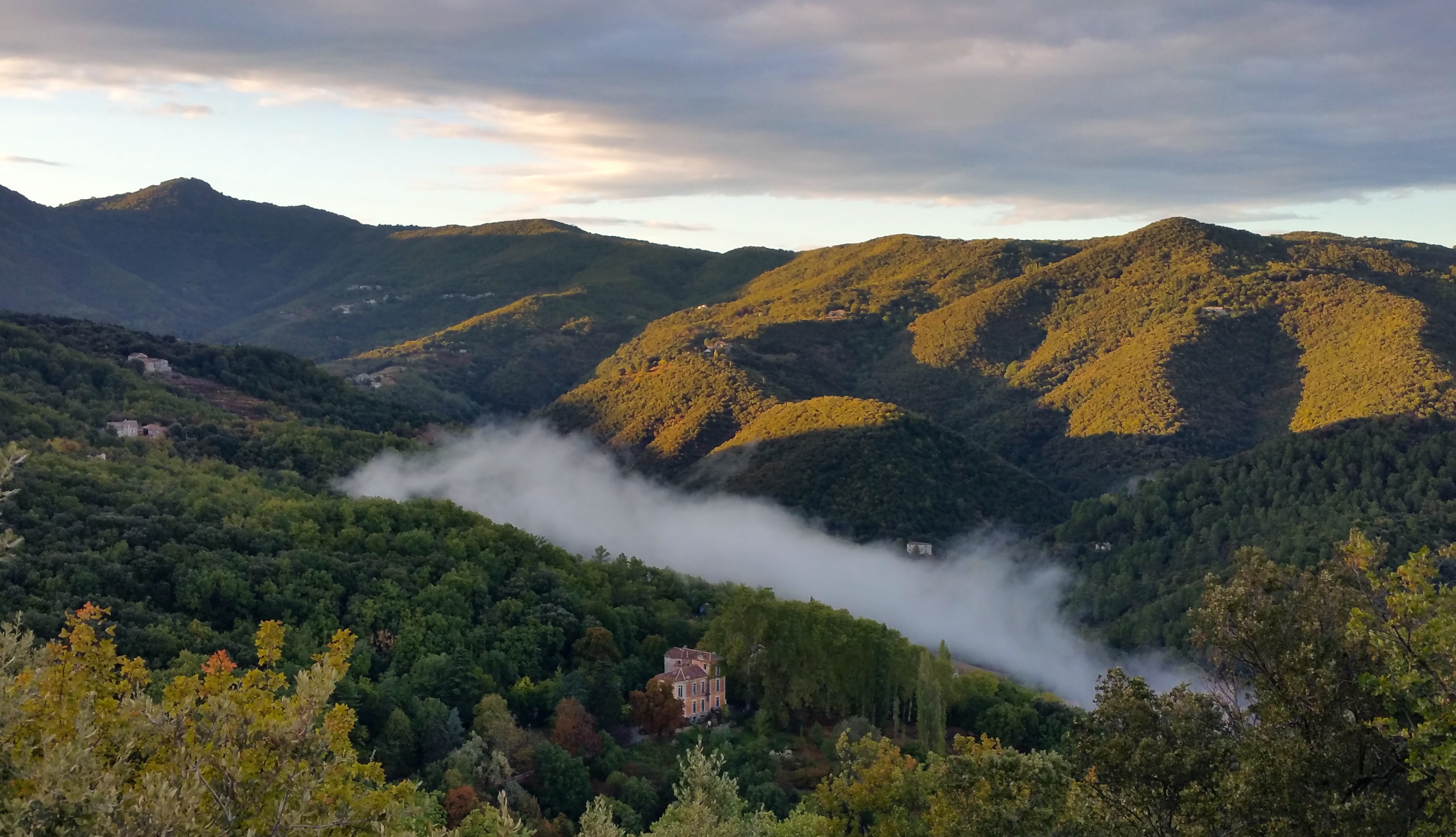
In the Cévennes mountains of southern France, Roue Libre is a residents’ cooperative where an intergenerational community experiments with sustainable and collective living. In a restored rural estate surrounded by forest and farmland, inhabitants share spaces, resources and decisions while cultivating food, caring for biodiversity and hosting cultural activities. The project shows how cooperative living can reconnect people, land and community.
France
Regional
Cevennes, Gard
It addresses urban-rural linkages
It involves a physical transformation of the built environment (hard investment)
Yes
2025-12-31
No
No
No
Organisation
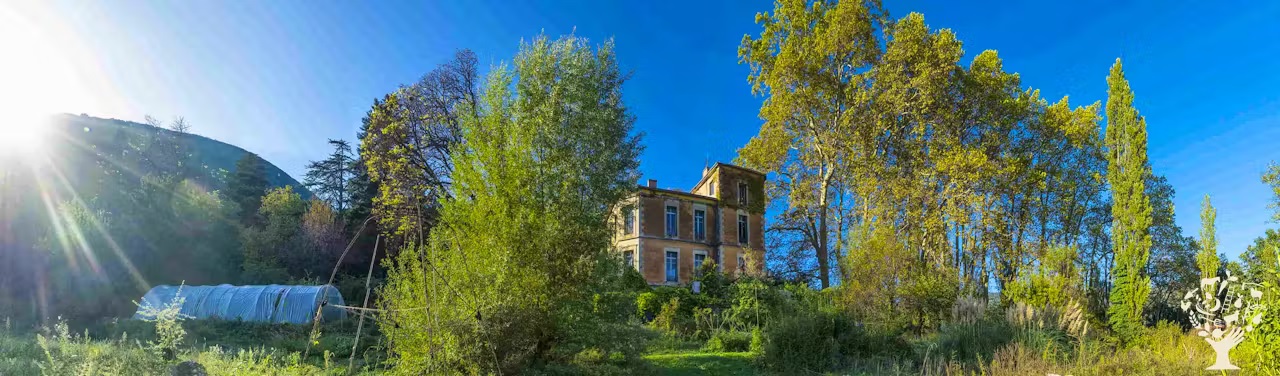
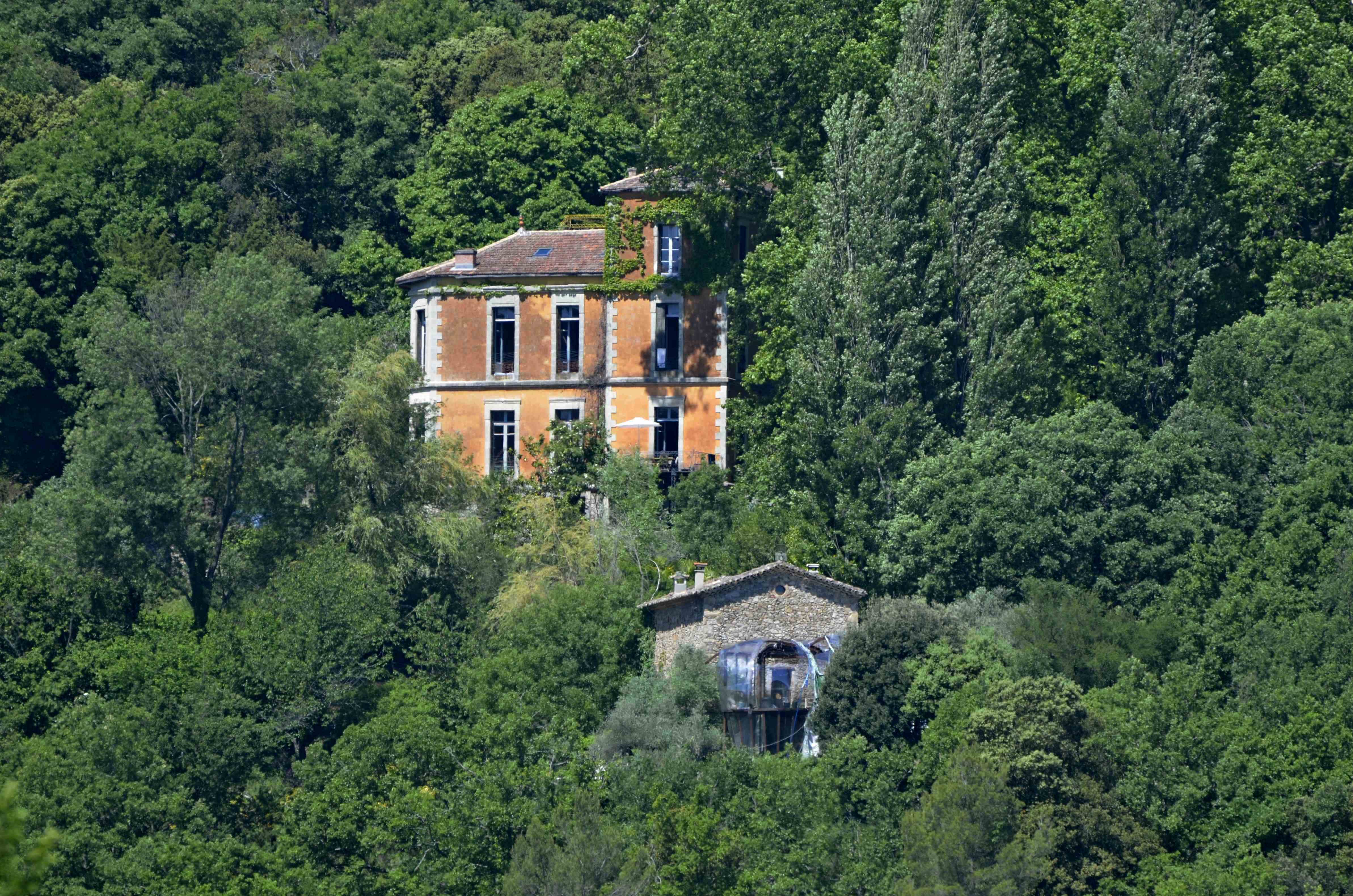
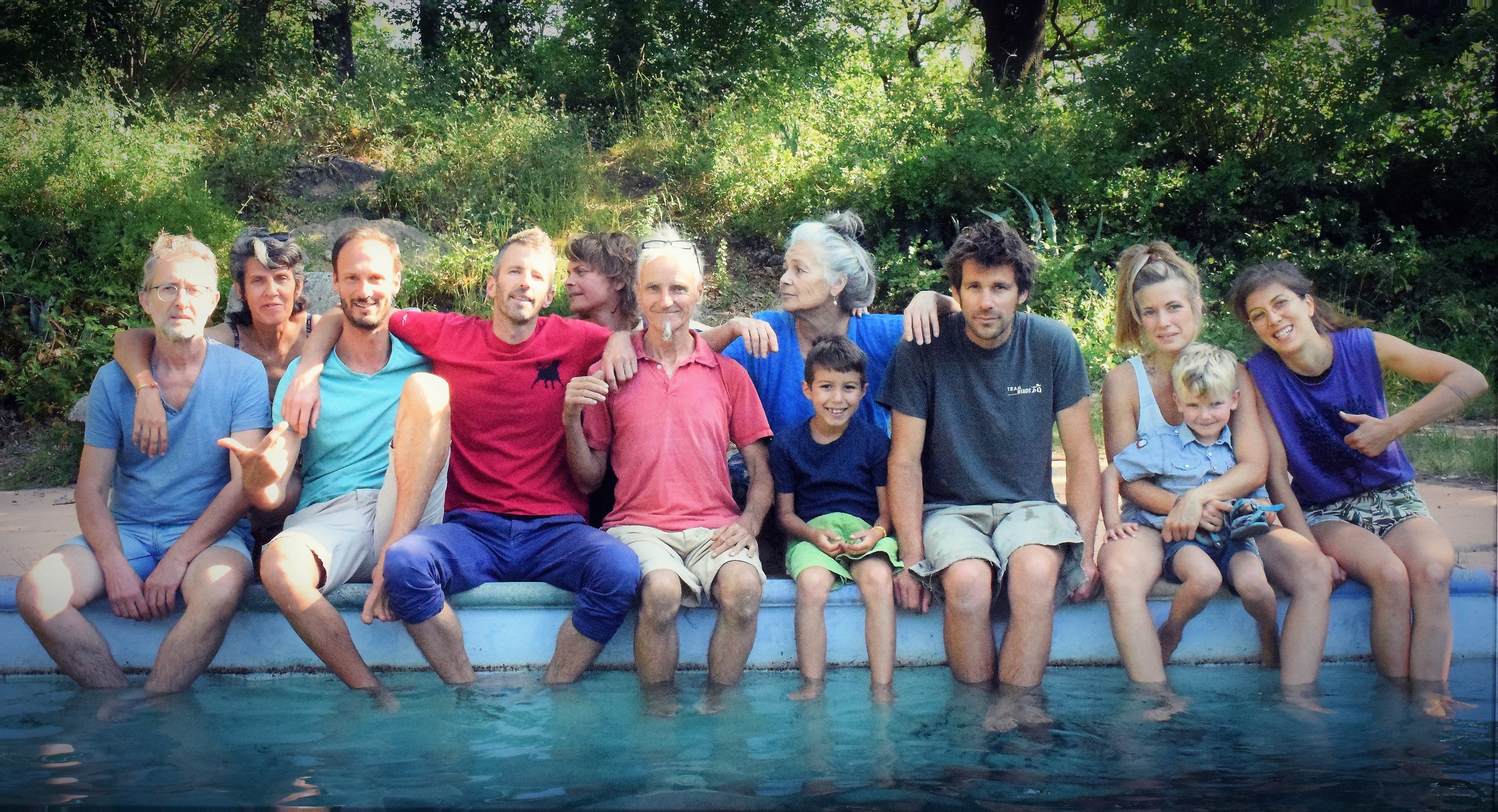
Roue Libre is a self-governed housing cooperative established in 2017 on a 22-hectare estate in the city of Cros, Occitanie (France), combining forest, agricultural land, and two historic buildings. Fourteen residents aged from 1 to 74 years live and co-manage the site according to shared values of ecological sobriety, mutual aid, and intergenerational solidarity.
Achieved results:
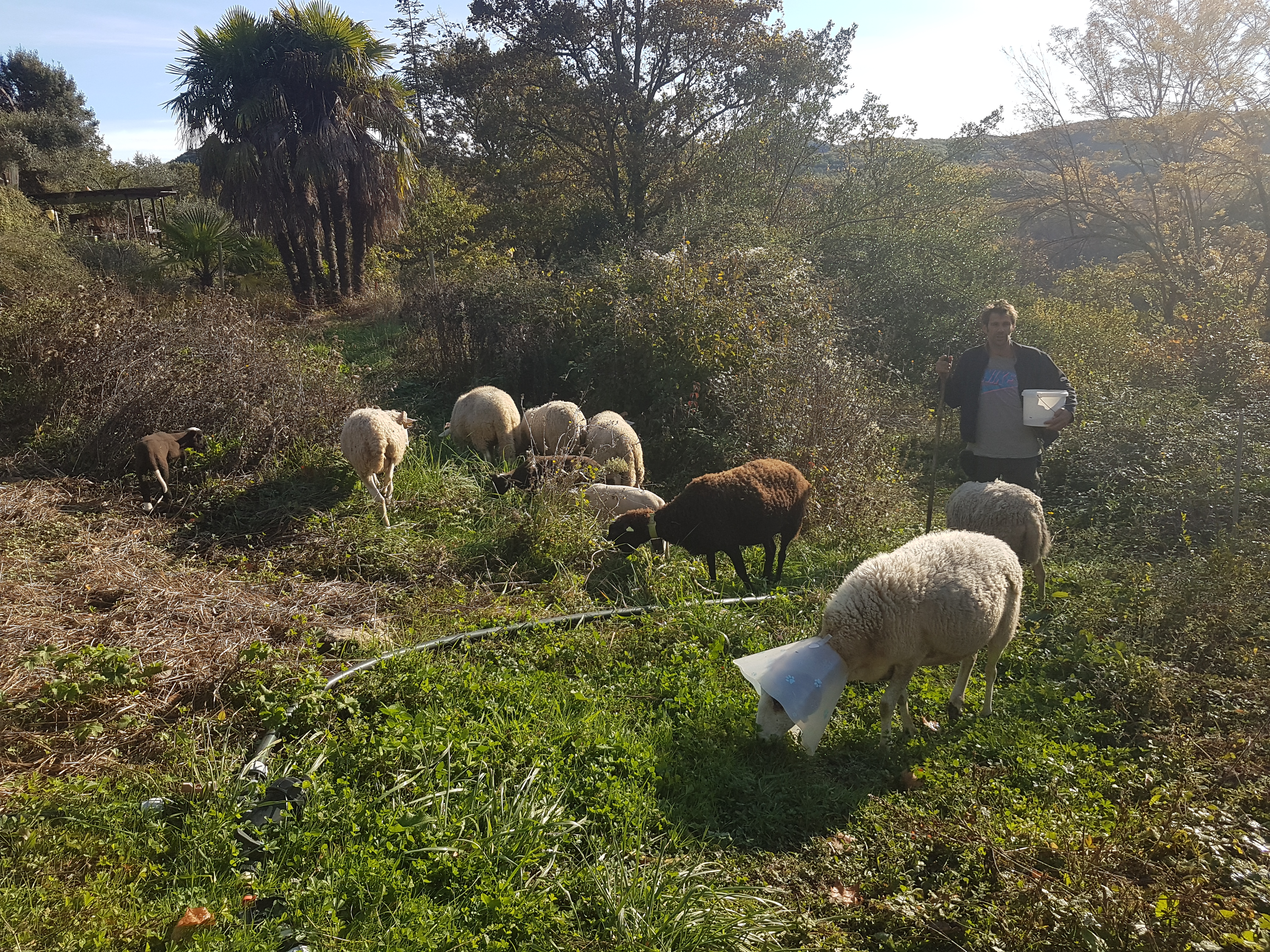
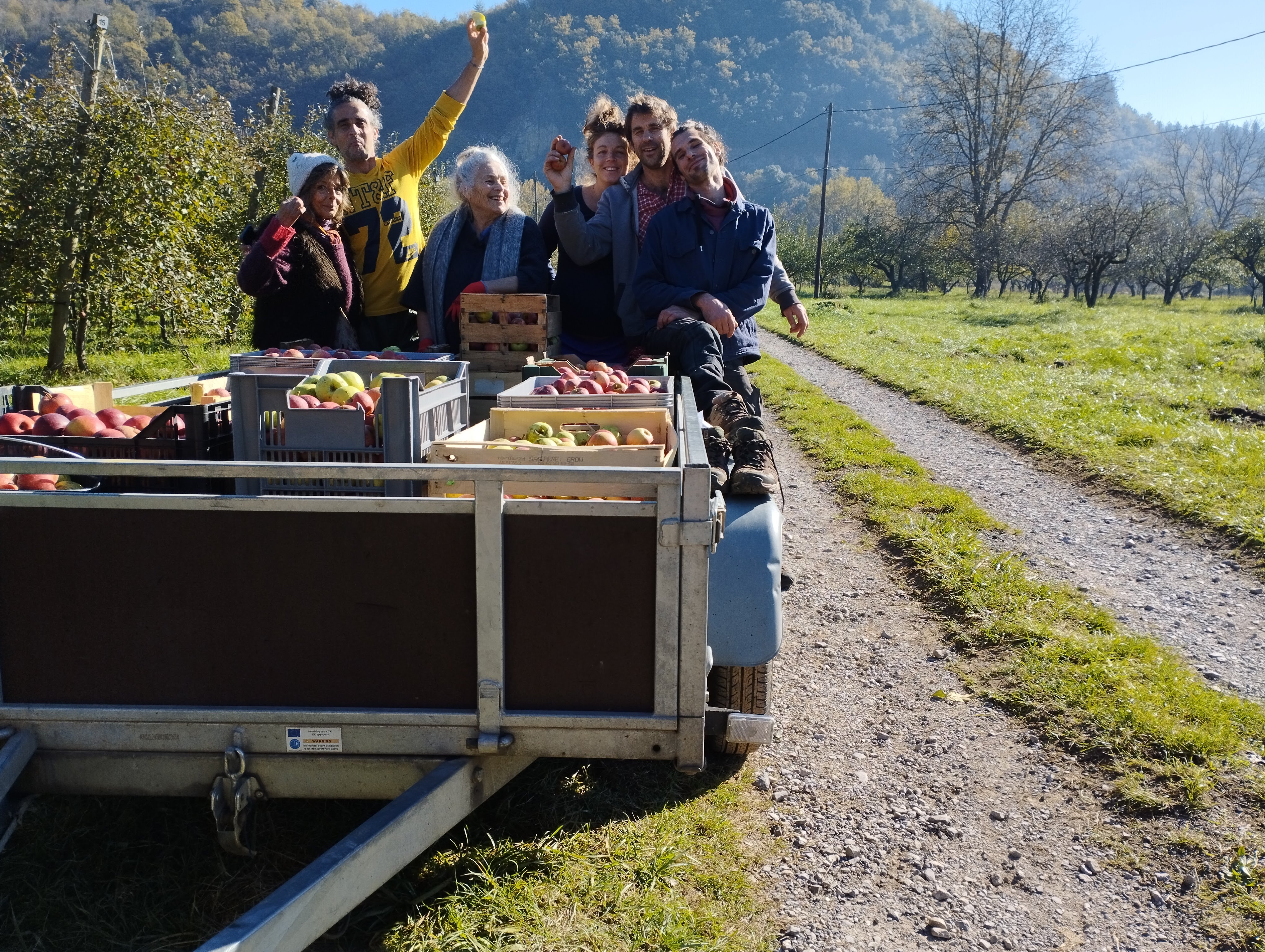
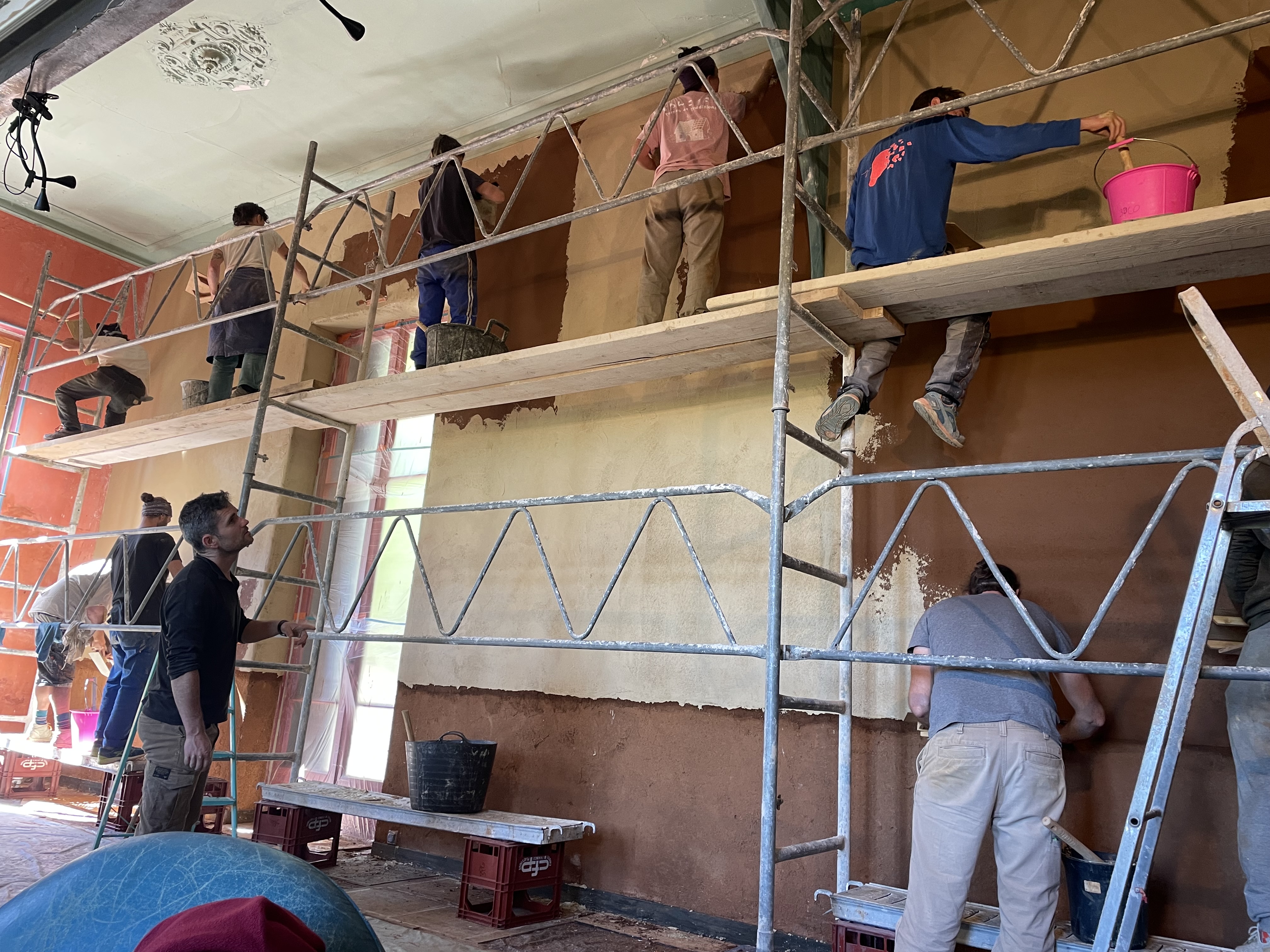
The cooperative has invested €250,000 in ecological renovation using entirely self-financing: solar photovoltaic installation, three high-efficiency wood-fired boilers (92% yield), solar water heating, lime-hemp and straw-clay insulation, double-glazed timber windows (local supplier), dry toilets, rainwater management systems, and 50m fire-clearance zones maintained in partnership with Natura 2000. Agricultural land has grown from 3 to 7 hectares, advancing food sovereignty. Four people without housing or income were welcomed and supported back to stability.
Governance: Decisions are made by sociocratic consent, through thematic commissions and monthly residents' councils. An anti-speculation clause permanently removes the property from the real estate market.
Long-term impact:
Roue Libre demonstrates that deeply ecological, inclusive, and beautiful collective living is financially achievable without bank loans, through solidarity-based investment (price-suspension mechanism). It serves as a replicable model for rural cooperative housing, offering a tested methodology for communities seeking ecological transition, social resilience, and genuine participatory governance, ready to inspire others across Europe.
In August 2015, a group of people with a shared dream met: to live differently, of collective reflection, building trust, and developing a shared vision, they acquired Le Mas de la Font, an ancient farmstead in the garrigue hills of Occitanie, in August 2017.
How the idea came about:
The founding members were motivated by a common frustration with conventional housing (speculative, isolating, and ecologically irresponsible). They envisioned a place where life could be organised around mutual care, environmental sobriety, and cultural vitality. Their guiding purpose: "To impulse and embody a creative, autonomous, cooperative and benevolent way of life, honouring the Living."
Who took part and how decisions were made:
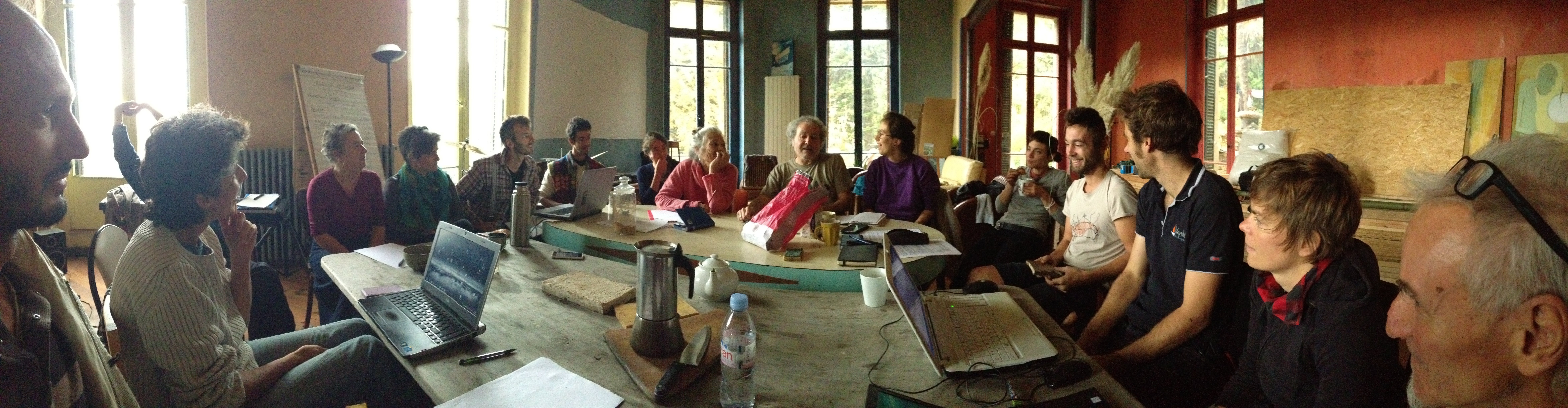
From the outset, all residents participated equally in decision-making through sociocratic governance, consent-based decisions, leaderless elections, bimonthly talking circles. Thematic commissions (construction, finances, governance, agriculture, culture) prepare proposals brought monthly to the full residents' council.
Main phases:
2015–2017: Group formation, legal structuring as a SAS cooperative, property acquisition
2017–2021: Emergency repairs, first ecological renovations, agricultural land opening in partnership with Natura 2000
2021–2025: Systematic ecological upgrades (renewable energy, insulation, water management, biodiversity restoration)
Tools and methods:
Non-Violent Communication, sociocracy, solidarity-based financing (price-suspension mechanism), self-organised construction workcamps, and local supplier partnerships.
Throughout, the project has welcomed vulnerable individuals, hosted cultural events, and remained open to the surrounding community, embodying from day one the belief that utopia is not the unrealisable, but the unrealised.
Cooperative housing
Ecological sobriety
Participatory governance
Social inclusion
Rural resilience
Roue Libre addresses sustainability across environmental, social, and economic dimensions in a deeply integrated way.
Environmental sustainability:
The cooperative has systematically decarbonised its energy systems: three high-efficiency wood-fired boilers using on-site timber, solar photovoltaic production, solar water heating, and high-performance insulation (lime-hemp, straw-clay, double-glazed timber windows). Water is managed through multiple circuits (domestic, agricultural, and ecological) with repair of irrigation basins, rainwater channelling, and five ponds. Agricultural land has been expanded from 3 to 7 hectares in the 8 past years, advancing food sovereignty through organic practices exclusively. Fire-clearance and biodiversity restoration were conducted in formal partnership with Natura 2000, within a ZPS (Bonelli's Eagle) and a ZNIEFF type 2 zone.
Social and economic sustainability:
The anti-speculation clause permanently withdraws the property from real estate markets. The solidarity-based financing mechanism (price-suspension) allows people with modest means to join (investments range from €1000 to €130,000 depending on capacity). No bank loan has ever been taken. Four people without housing or income were welcomed and supported. The cooperative has functioned for 8 years on self-financing alone.
Exemplary character:
What makes Roue Libre exceptional is the radical coherence between its values and daily practices, from construction choices (local materials, on-site stone, timber and clay) to governance, food, and financial solidarity. It demonstrates that genuine ecological transition is achievable without public subsidy, through collective will, shared skills, and mutual trust, a fully replicable model for rural cooperative living across Europe.
Roue Libre understands aesthetics not as decoration, but as the daily quality of life experienced by its residents and the surrounding community, through space, materials, nature, culture, and human connection.
Aesthetic objectives:
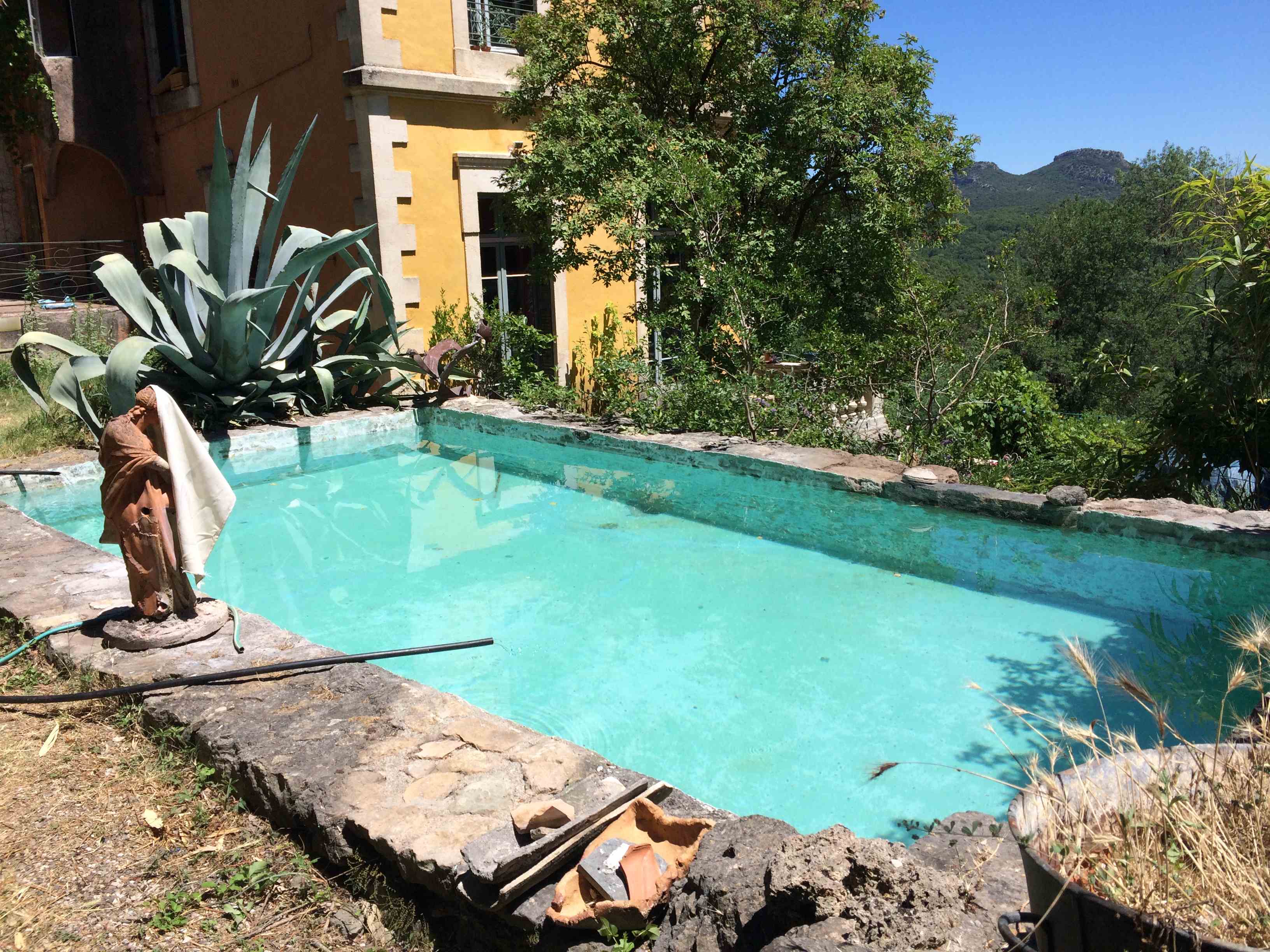
From the outset, the collective chose to restore rather than demolish, to reveal rather than cover, honouring the beauty inherent in this ancient bulding called "folie montpelliéraine" (means "Montpellier madness"): stone walls, timber beams, generous ceiling heights (up to 5m), and the sweeping south-east facing landscape of garrigue, forest, and terraced gardens.
Implementation:
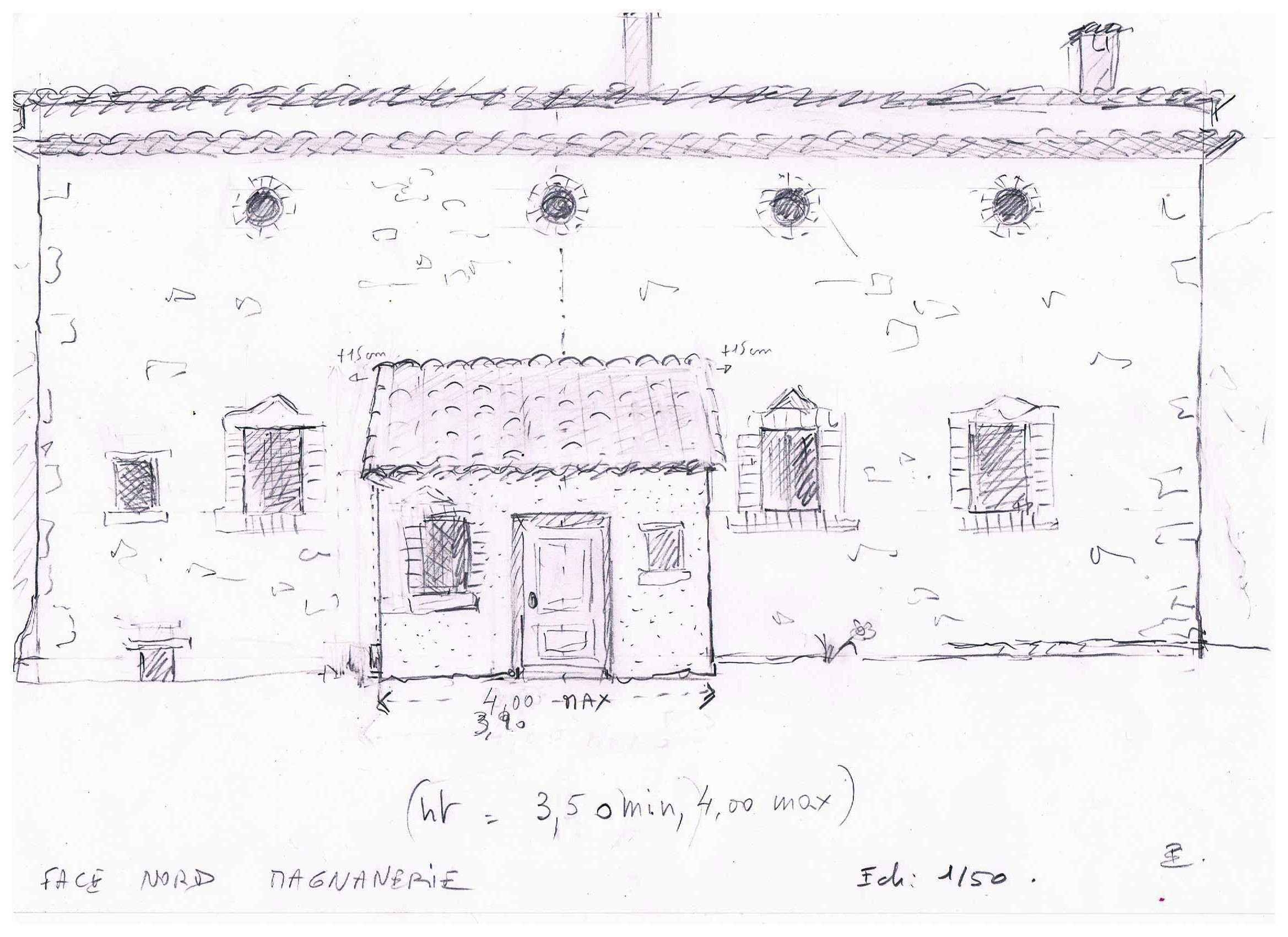
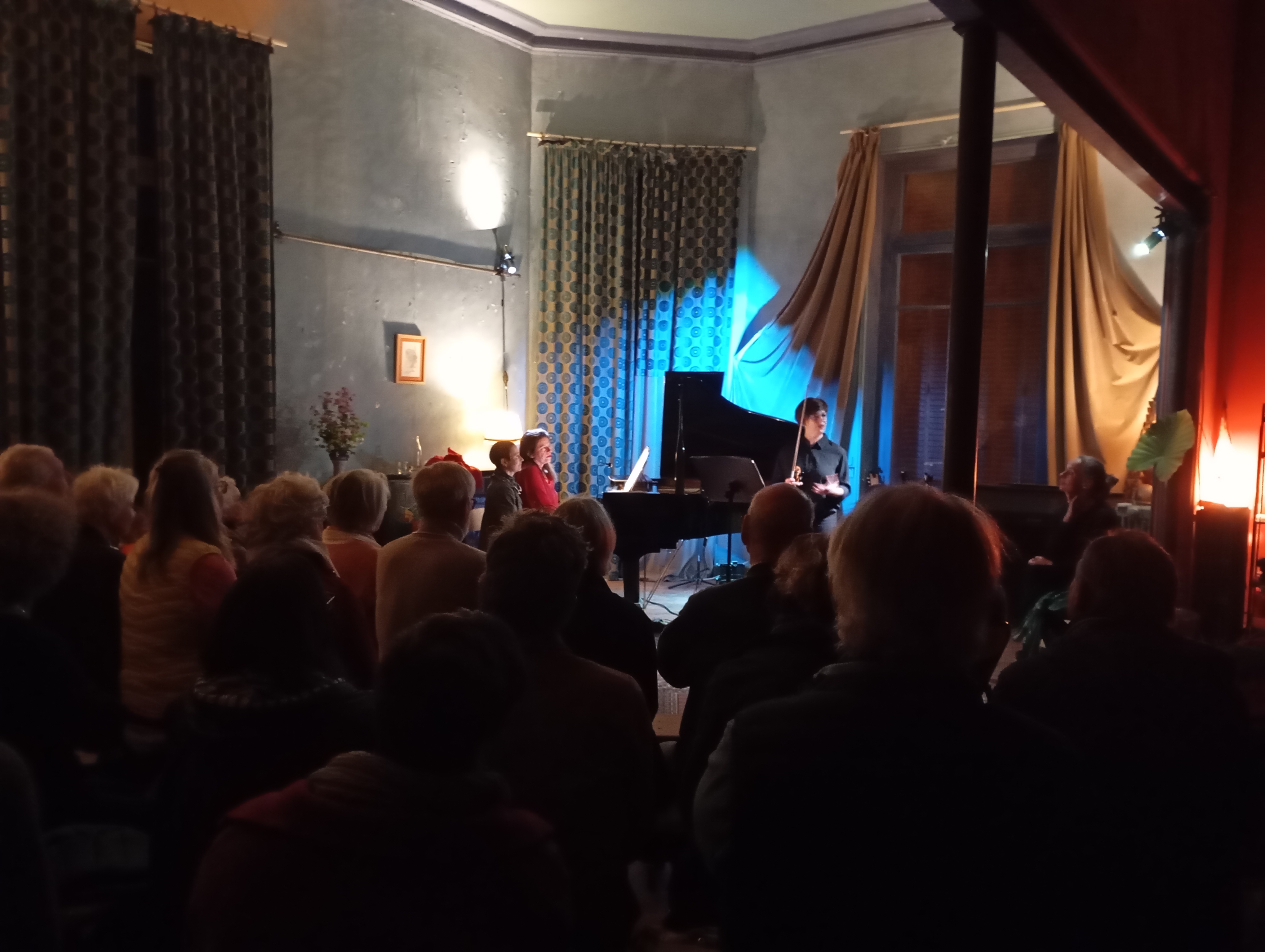
Renovation choices systematically favoured natural, local materials (lime-hemp renders, straw-clay walls, timber windows from a local joiner) creating living spaces that are tactile, warm, and deeply rooted in the vernacular architecture of the Cévennes. Shared spaces (a 100m² activity hall, a collective kitchen, a library, and an artist's studio) foster spontaneous encounter, creativity, and conviviality. Five ponds, two swimming basins, restored terraces and woodland paths make the landscape itself a living artwork. Artworks left by generations of artists welcomed by the previous owner remain present throughout the site, layering its history with creative memory.
Cultural life:
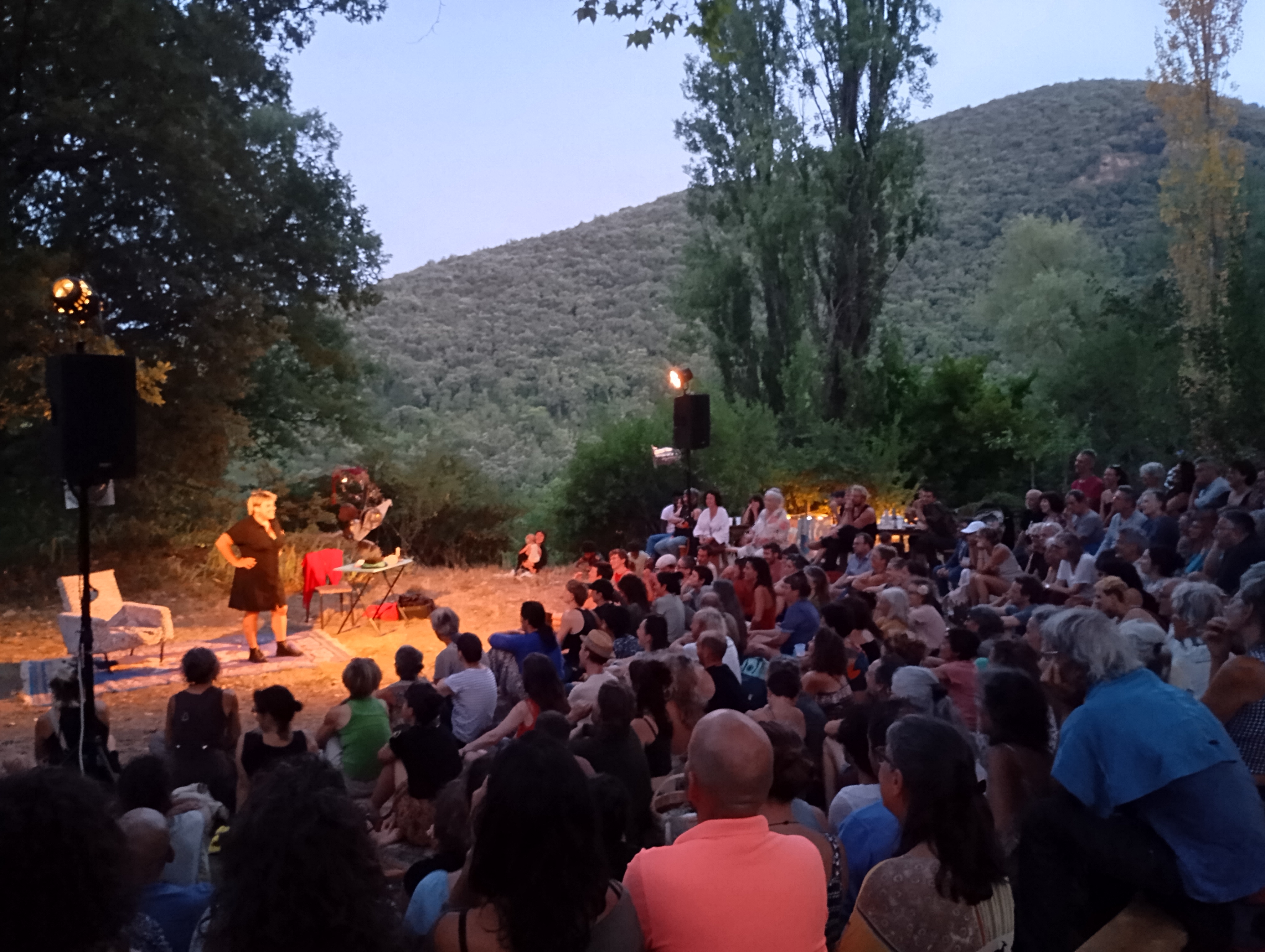
The cooperative regularly hosts theatre performances, concerts, and artistic residencies, open to the local population (confirmed by the Mayor of Cros city, who notes that Roue Libre has brought "a new breath" to the commune's cultural life).
Sense of belonging:
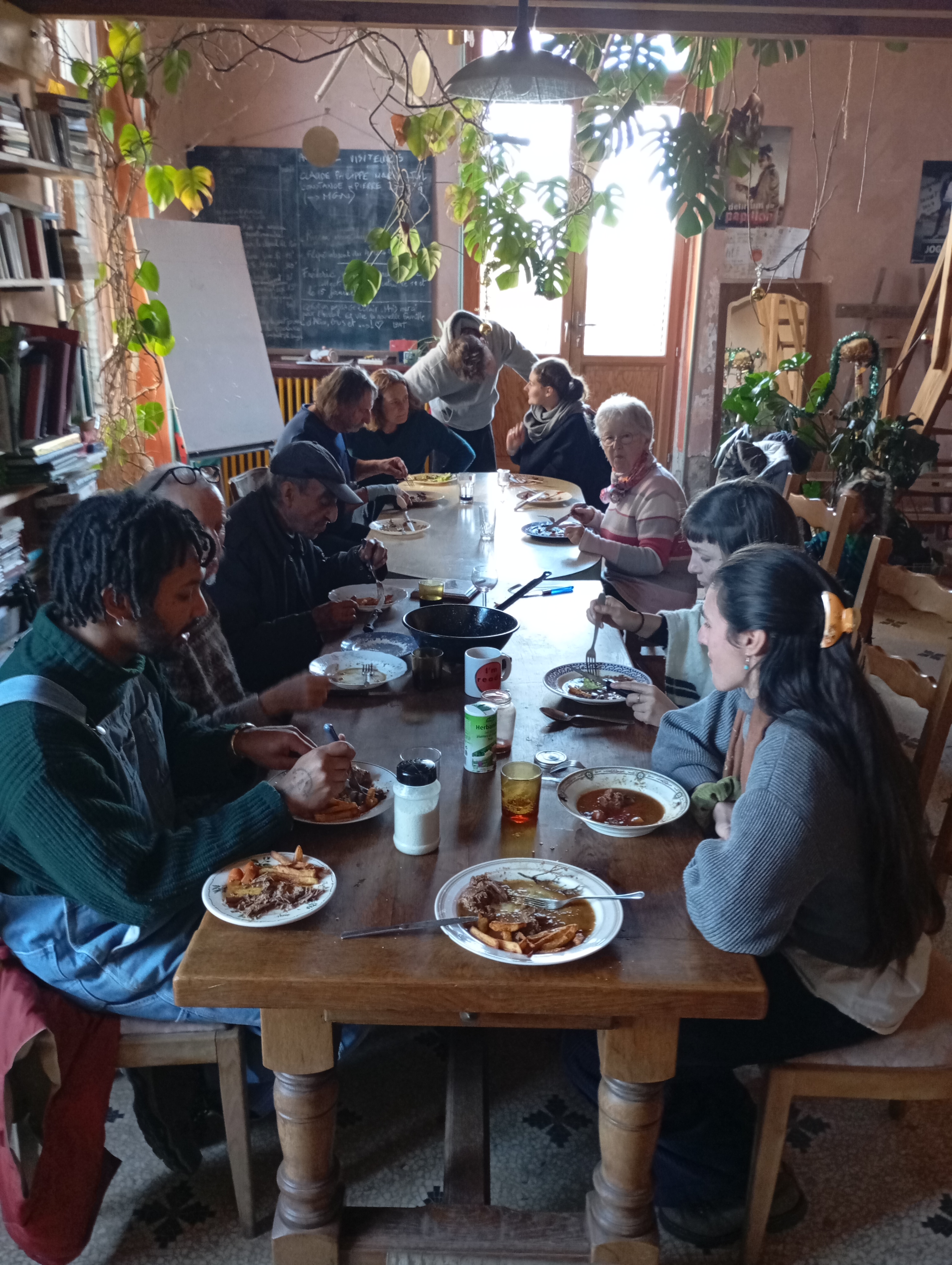
Beauty at Roue Libre is collective, intergenerational, and living, emerging from shared meals, working the land together, caring for animals, and welcoming people.
Exemplary character:
Roue Libre demonstrates that aesthetic quality does not require luxury, it requires attention, craft, memory, and community.
Roue Libre places inclusion at the heart of its legal structure, financial model, governance, and daily life.
Economic inclusion:
The solidarity-based "price-suspension" financing mechanism allows people with very different financial capacities to become full members: investments range from €50,000 to €130,000 depending on individual means, with deferred payment plans over 25 years. (possibility to arrive with 1000€ in the project) No bank loan has ever been taken. An anti-speculation clause permanently removes the property from real estate markets, ensuring long-term affordability. The cooperative actively generates collective income through cultural events and hospitality, working towards a future where the site becomes fully self-financed, welcoming anyone regardless of income.
Social inclusion:
Over eight years, Roue Libre has welcomed four people without stable housing and three individuals experiencing severe psychological difficulties, all of whom rebuilt stability within the community. The intergenerational mix (1 to 74 years) is actively cultivated, with participation modulated according to age, capacity, and life phase.
Governance inclusion:
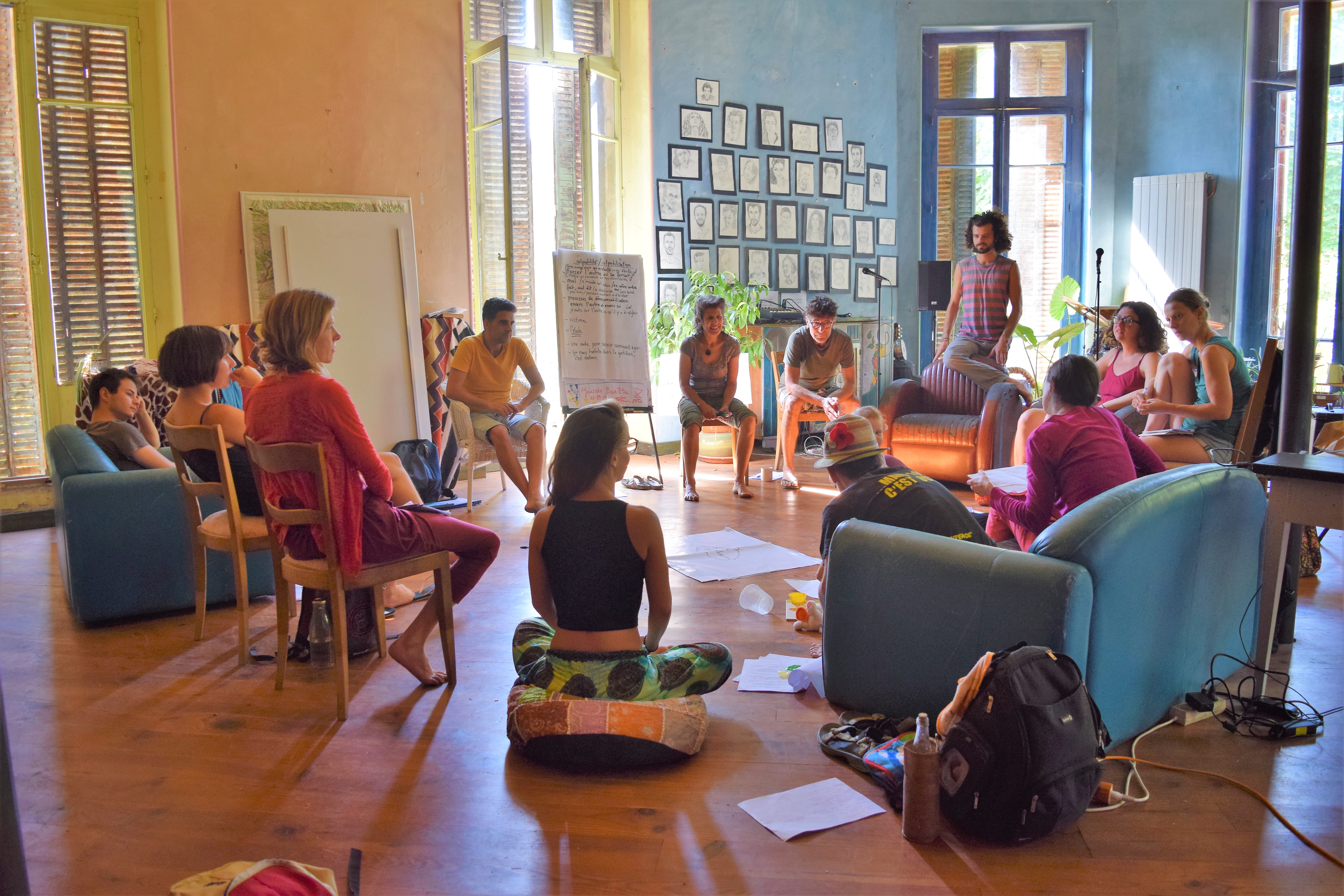
Sociocratic decision-making (consent-based, with leaderless elections and bimonthly talking circles) ensures every voice carries equal weight. Non-Violent Communication is practised systematically, creating genuine psychological safety.
Territorial inclusion:
Cultural events open to all, a founding member elected to the municipal council, and active participation in the Commune's Biodiversity Atlas confirm deep integration into local life.
Exemplary character:
Roue Libre proves that radical inclusion is not idealistic but practically achievable, a replicable model for cooperative rural housing across Europe.
Participation is not a method at Roue Libre : it's the constitutional foundation of the entire project.
Who was involved:
All residents and associates (whether living on-site permanently, seasonally, or remotely) participate equally in governance. The surrounding community of Cros and neighbouring villages engages through cultural or sportive events, open workshops, various exchanges (food, animal care, training...)... Local associations, Natura 2000, and the municipal council have been active partners.
At which stages:
Participation has been continuous and total: two years of collective reflection preceded the property purchase. Legal statutes, values charters, and relational charters were collectively authored. Every renovation decision, agricultural project, and cultural initiative passes through self-organised thematic commissions before reaching the monthly residents' council.
How they participated:
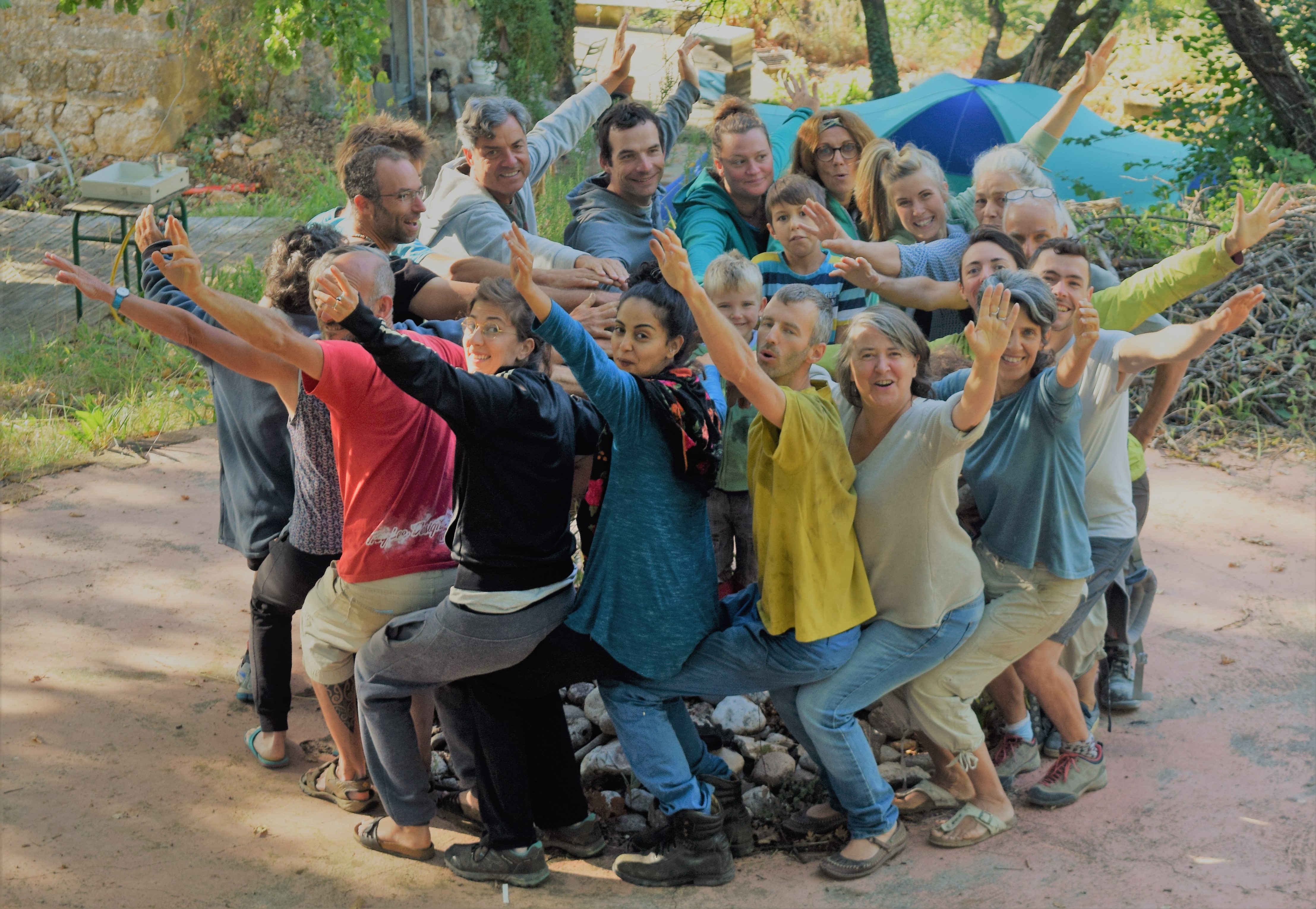
Sociocratic consent-based decisions, leaderless elections, bimonthly talking circles, Non-Violent Communication practice, self-organised construction workcamps, and co-organised cultural events with local associations, all open to residents, associates, and the wider community alike.
Level of influence:
Total. No decision is imposed by any individual or external authority. The cooperative's founding documents form part of its legal statutes.
Impact on quality:
Collective intelligence has consistently produced better, more durable decisions than top-down models would allow. A founding member joined Cros municipal council. Several members co-authored the Commune's Biodiversity Atlas. The Mayor acknowledges Roue Libre's role in revitalising local cultural and civic life, demonstrating that internal participatory culture naturally radiates into the surrounding territory.
Roue Libre has engaged stakeholders across multiple governance levels :
Local: A founding member sits on Cros municipal council; residents co-authored the Commune's Biodiversity Atlas. Local suppliers are systematically prioritised (Pastor, Salery, 3PCo...), rooting the project in its territorial economy.
Regional: Engagement with Région Occitanie's AAP VIURE programme reflects alignment with regional priorities for rural resilience and cooperative housing.
European: A Natura 2000 subsidy (€40,000) (the cooperative's only public funding) supported habitat restoration, requiring formal compliance with European conservation frameworks and bringing scientific rigour to land management.
International: Through WWOOFing, the cooperative welcomes young people and adults from across the world seeking to discover alternative living models, creating an informal network of international knowledge exchange.
Added value:
Every institutional relationship was initiated by the cooperative itself, driven by genuine project needs. Together, these engagements bring ecological expertise, regional legitimacy, civic integration, and global reach (demonstrating that a small rural cooperative can operate meaningfully across all scales of governance)
Roue Libre is inherently transdisciplinary, its residents bring together a remarkable diversity of expertise, applied collectively to every dimension of the project.
Disciplines represented:
Engineering, architecture and construction, agriculture, environmental sciences, social sciences, Non-Violent Communication, sociocracy, arts and performance, education, craft brewing, bakering and financial management.
How collaboration was organised:
Thematic commissions (construction, finances, governance, agriculture, culture) bring together residents according to skills and interests. Proposals are developed collectively before reaching the full residents' council. WWOOFing volunteers bring external knowledge and fresh perspectives from across the world.
How perspectives were combined:
No hierarchy of expertise exists. An engineer and a yoga teacher carry equal weight in decision-making, this radical equality consistently produces solutions that purely technical or purely social approaches would never generate alone.
Benefits:
Ecological renovation integrating vernacular craft with modern energy performance; land management combining agricultural knowledge with world biodiversity science (ex: syntropy, permaculture, sustainable sylviculture...); governance systems blending social psychology with legal innovation. The result is a living environment that is simultaneously more resilient, more beautiful, and more human than any single-discipline approach could achieve.
Roue Libre's financial model is deliberately non-speculative, self-reliant, and designed for long-term sustainability.
Financing:
The cooperative has been funded entirely through members' equity (shares and associate current accounts) with no bank loans ever taken. The solidarity-based "price-suspension" mechanism redistributes financial capacity across members, enabling participation regardless of personal wealth. The only public funding received was a €40,000 Natura 2000 subsidy for habitat restoration.
Current revenues:
Monthly rents and charges paid by all residents (permanent and temporary) cover running costs: taxes, utilities, maintenance, and ongoing works. Cultural events, artistic residencies, workshops, generate additional collective income reinvested into the cooperative.
Future revenue potential:
The cooperative is actively developing income streams (hospitality, cultural and sport programming, agricultural production) working towards a long-term vision where the site becomes fully self-financed, eventually welcoming anyone regardless of income.
Continuation costs:
Ongoing renovation, energy systems maintenance, land management, and governance are collectively assumed by all members proportionally.
Disruptive potential:
Roue Libre's model directly challenges two dominant assumptions in housing: that property must generate individual profit, and that ecological ambition requires public subsidy. Its combination of anti-speculation statutes, solidarity financing, and collective self-governance offers a genuinely disruptive alternative, fully replicable by other communities seeking affordable, ecological, and democratic housing across rural and peri-urban Europe.
Roue Libre offers a tested, documented, and transferable model for cooperative rural living after eight years of experimentation and consolidation.
Why it can serve as a model:
Roue Libre demonstrates that ecological transition, social inclusion, and democratic governance can be achieved simultaneously, without bank loans or public subsidy, by ordinary people with diverse means. As its founding conviction states: "We experiment so that others may benefit, scaling from small to large."
Most transferable elements:
- Solidarity-based "price-suspension" financing mechanism
- Anti-speculation legal statutes adaptable to other cooperative structures
- Sociocratic governance combined with Non-Violent Communication
- Thematic commission organisation for self-managed communities
- Ecological renovation using local, natural materials
- WWOOFing as knowledge-exchange and community-building tool
- Collective income generation through culture, hospitality, and agriculture
Replication requirements:
A core group committed to shared values is essential. Legal structuring benefits from cooperative law expertise. Ecological renovation requires basic construction skills or local craftspeople. None represent insurmountable barriers.
What may need adaptation:
Climate, local building traditions, land availability, and regional legal frameworks will naturally shape each replication. The model is explicitly not a blueprint but a compass, adaptable to urban cooperative housing, peri-urban community land trusts, or rural regeneration projects across Europe, proving that utopia is not the unrealisable, but the unrealised.