Strengthening Local Democracy and Inclusion
Youth Rights Talks
Youth Rights Talks- A Place for Young Peoples Stories On Human Rights and Democracy
Youth Rights Talks is a youth-led platform that brings young people and institutions into direct dialogue about democracy, rights and social justice. Through powerful public speeches prepared by young participants, the program creates space for voices often unheard. By combining storytelling, civic courage aнд dialogue with decision-makers, YRT transforms personal experiences into collective democratic participation and inspires communities to act for a more just and inclusive society.
Serbia
National
It addresses urban-rural linkages
It involves other types of transformations (soft investment)
Yes
2025-12-31
Yes
Delegation of the European Union to the Republic of Serbia: Annual work programme - Framework Partnership Agreement
No
No
Organisation
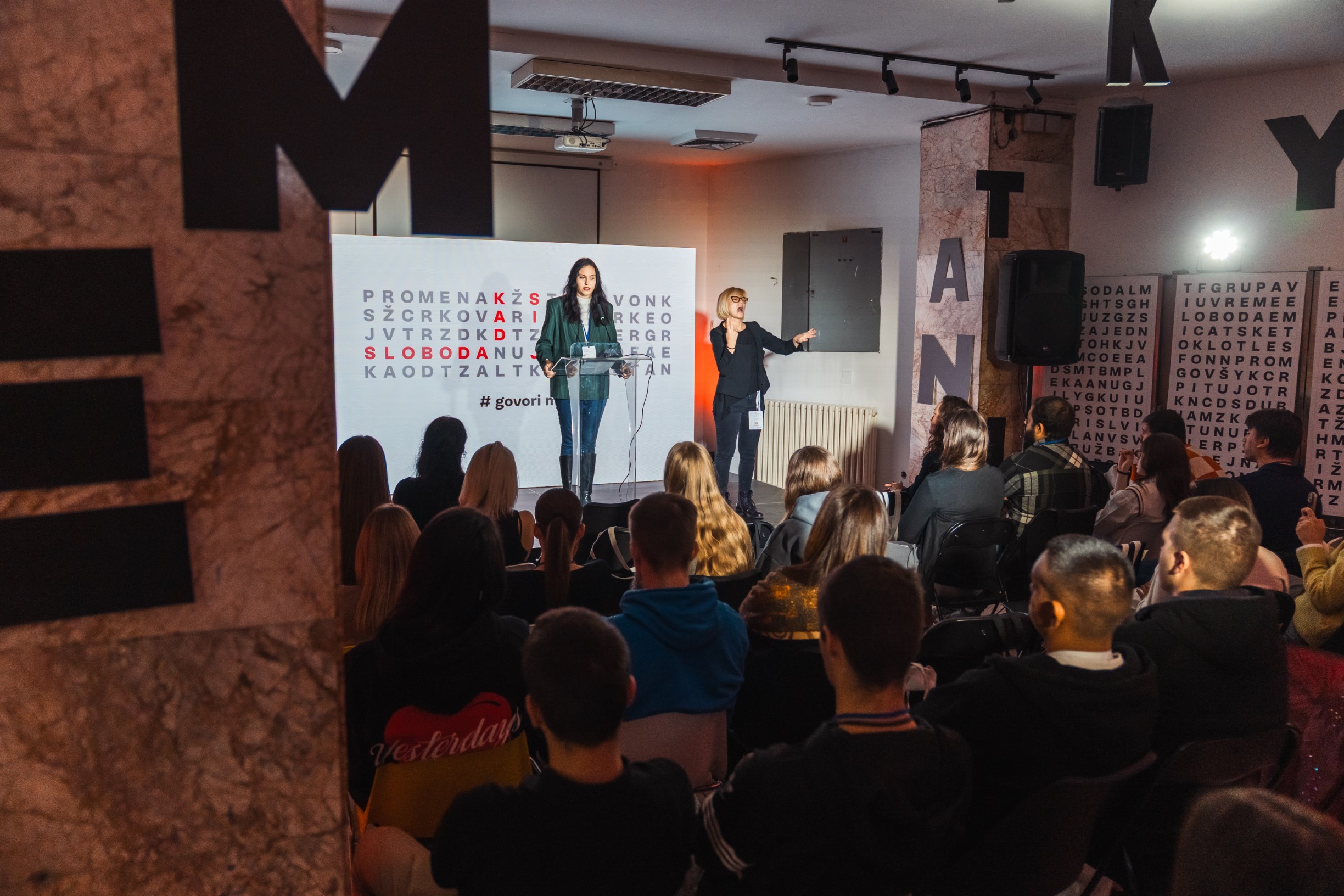
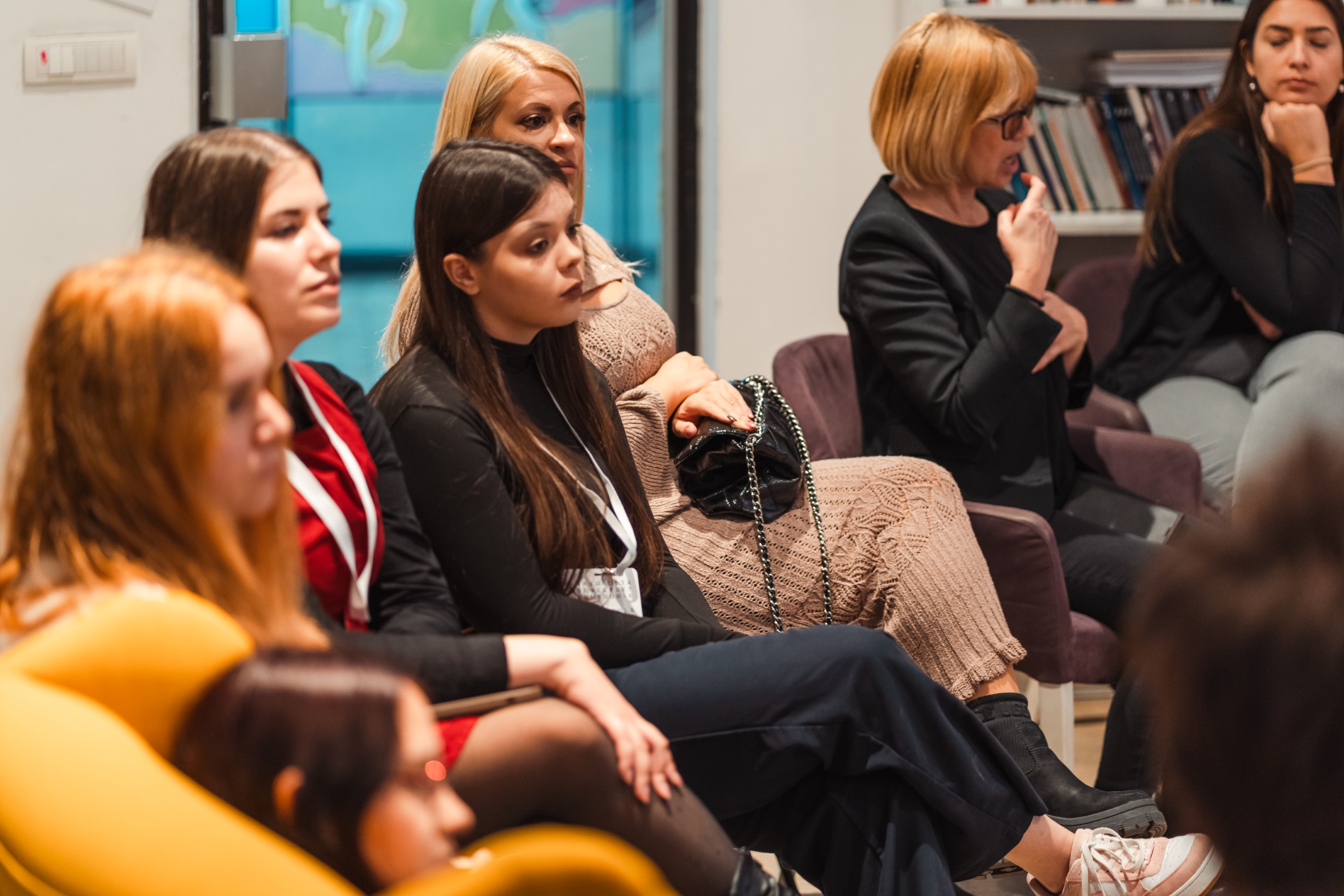
Youth Rights Talks (YRT) is an annual participatory platform organized by the Youth Programme of the Belgrade Centre for Human Rights since 2018. It creates a civic space where young people can publicly express their experiences, concerns and ideas about the social issues that shape their lives, while engaging directly with decision-makers, institutions, media and civil society.
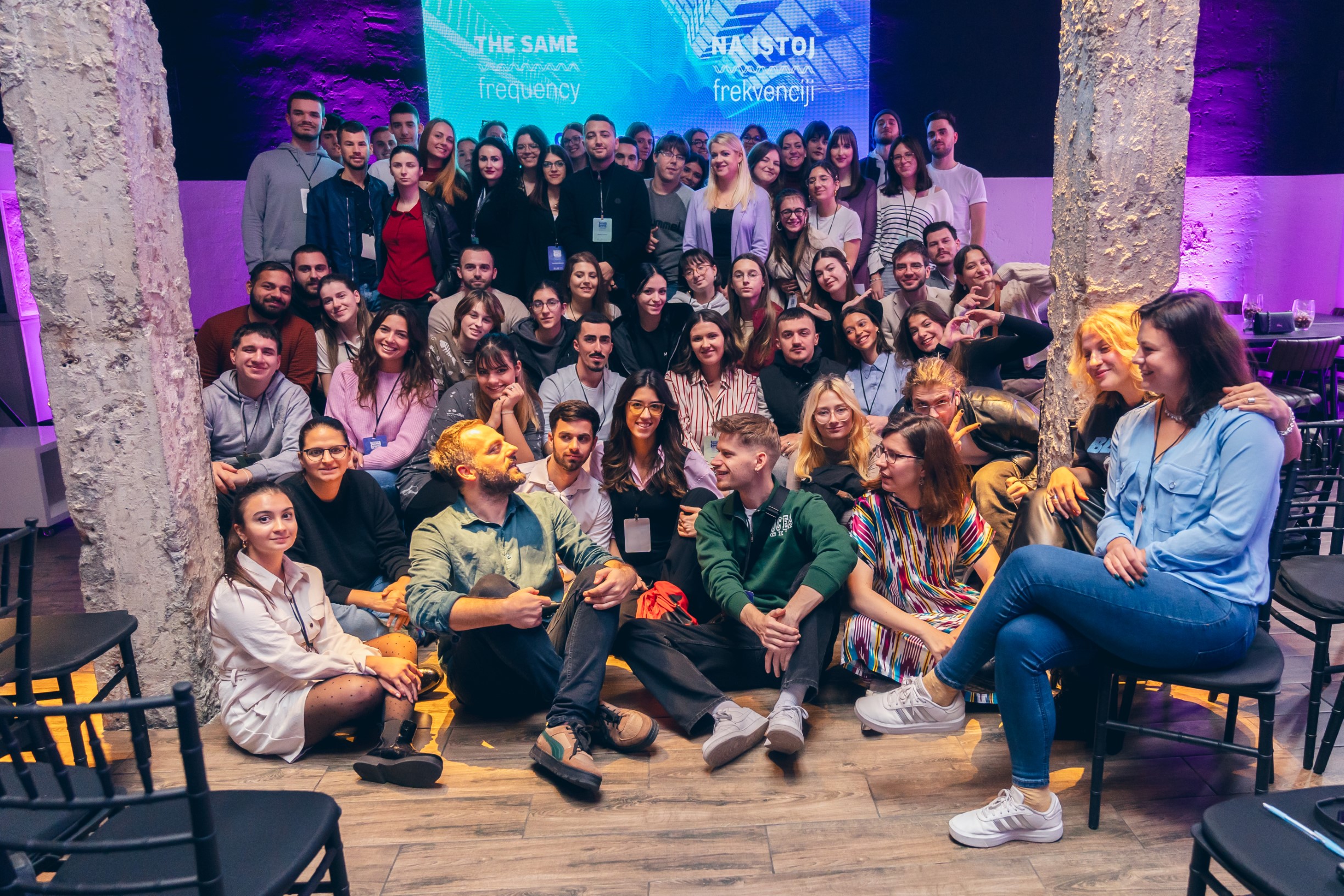
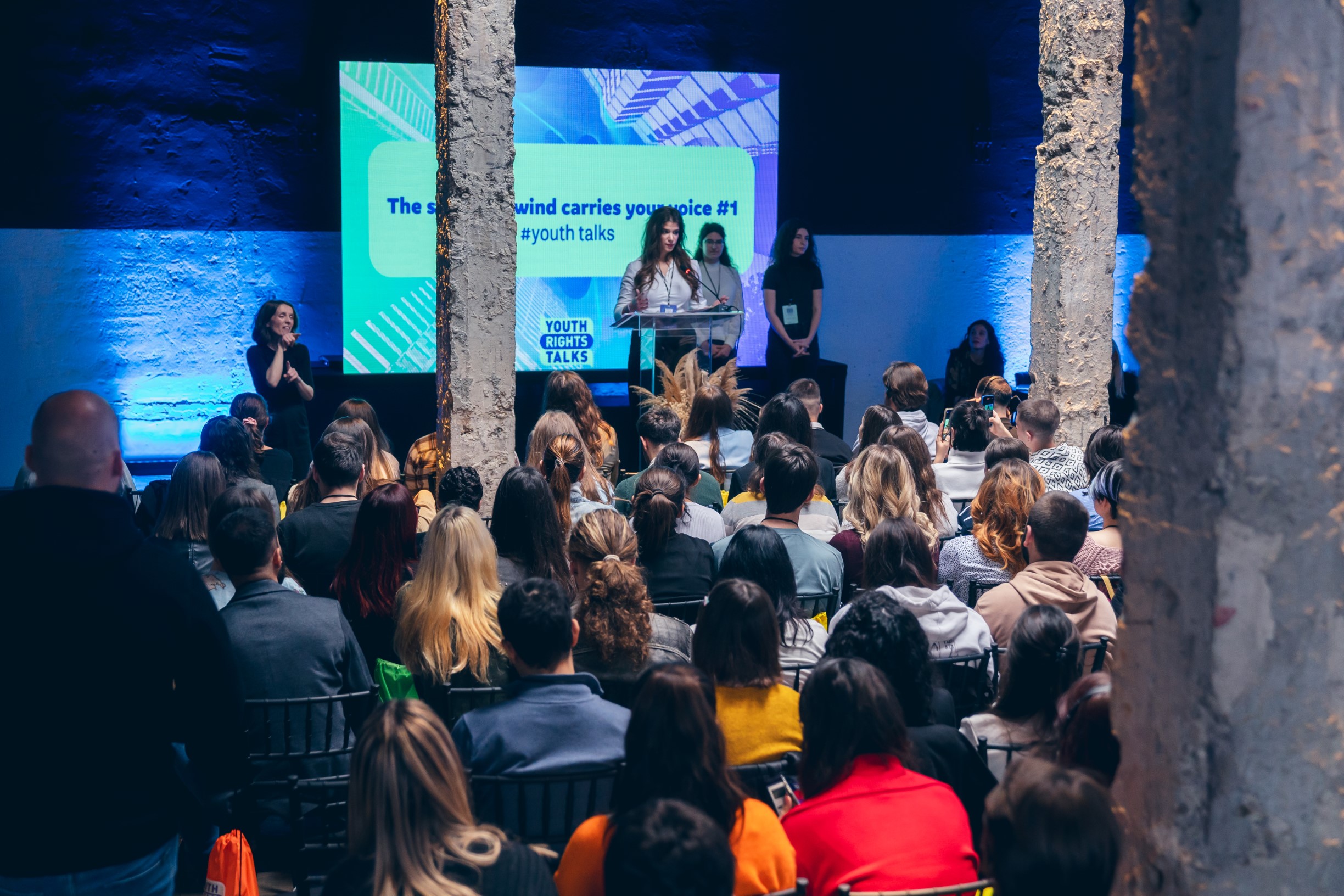
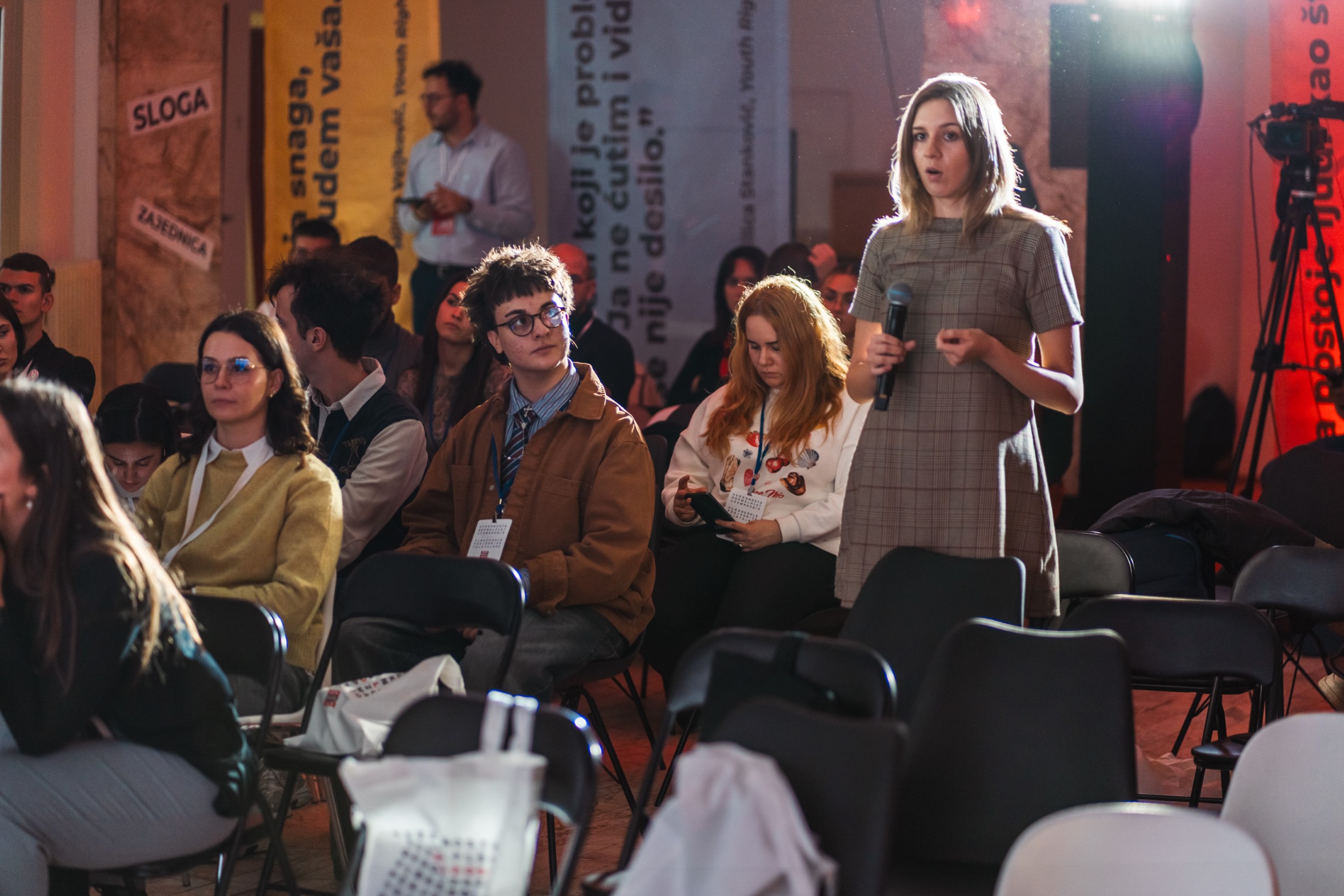
Over eight years, YRT has grown into the largest youth rights event in Serbia, bringing together more than 800 young participants, over 80 youth speakers and numerous representatives of institutions and organisations. Each edition gathers around 100–130 participants and includes youth speeches, dialogue with institutions and participatory activities that actively involve the audience.
The speeches are often deeply personal, reflecting lived experiences. As a mobile and participatory format, Youth Rights Talks moves across different spaces, where these stories resonate with diverse audiences. This shared emotional experience transforms each space into a place of connection, fostering belonging, solidarity and collective civic responsibility.
Each year, the theme responds to current social challenges, including inequalities, peace and reconciliation, education, health, environmental protection and civic freedoms. A key outcome of every edition is a policy document derived from youth speeches, shared with institutions to advocate for improvements in democratic participation, non-discrimination and youth inclusion.
Over time, YRT has evolved into an ongoing platform that strengthens democratic culture among young people. Through its participatory and evolving model, Youth Rights Talks demonstrates strong transformative potential, reshaping how young people engage with public space and democratic processes.
YRT emerged from years of working closely with young people and realizing that many of them rarely have the opportunity to speak directly to those who influence public decisions. While young people often discuss social issues within youth programmes, their voices rarely reach institutions, media, or the wider public. Youth Rights Talks was created to bridge this gap and provide a visible and meaningful platform for youth voice. From the beginning, the project was designed as more than a conference, but as a participatory and replicable civic format. Each year, the process starts with identifying a topic that reflects the social and political context in which young people live. Through an open call, young people from different parts of the country are invited to apply as speakers. Selected participants then go through a preparation process where they develop their speeches and reflect on their experiences.
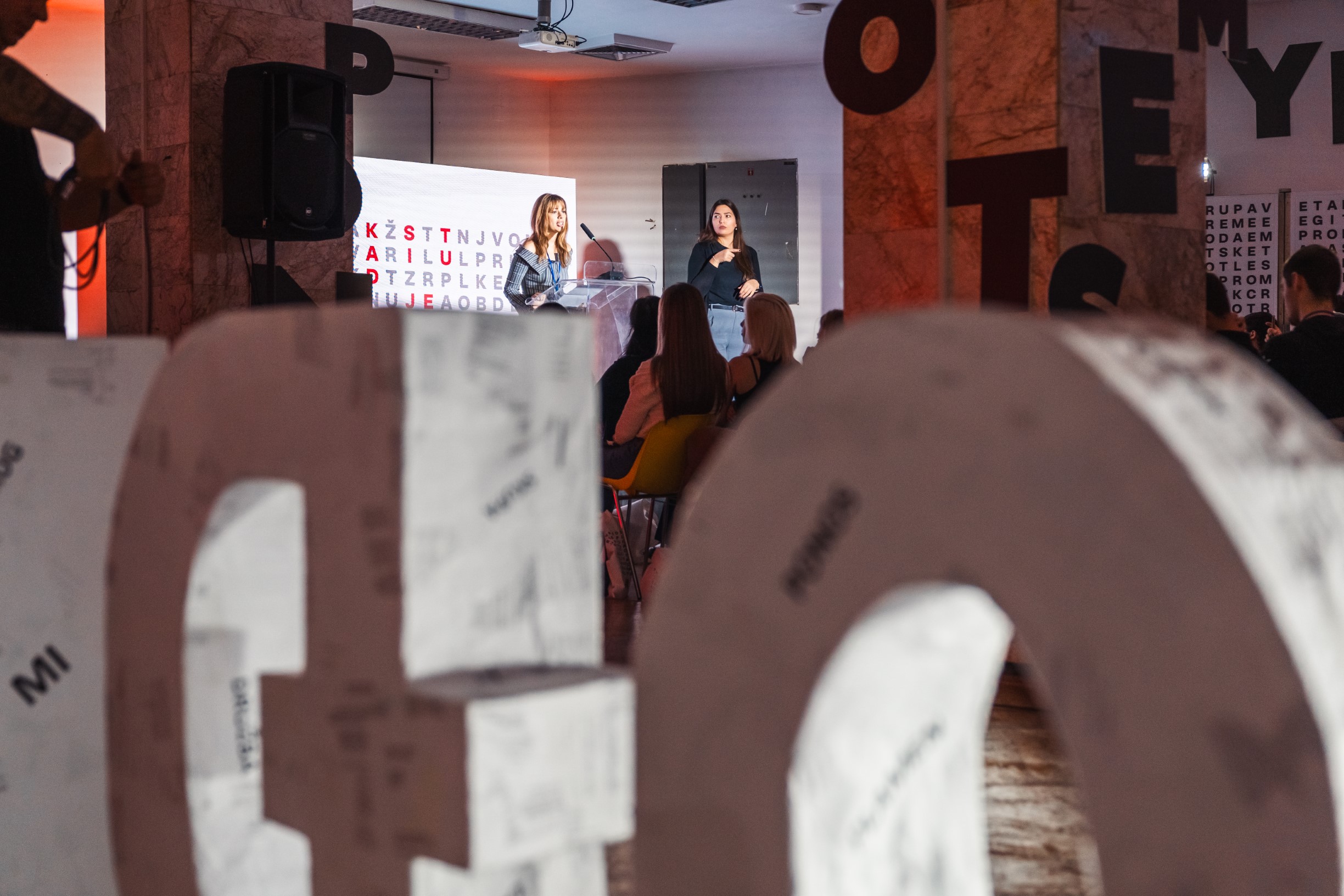
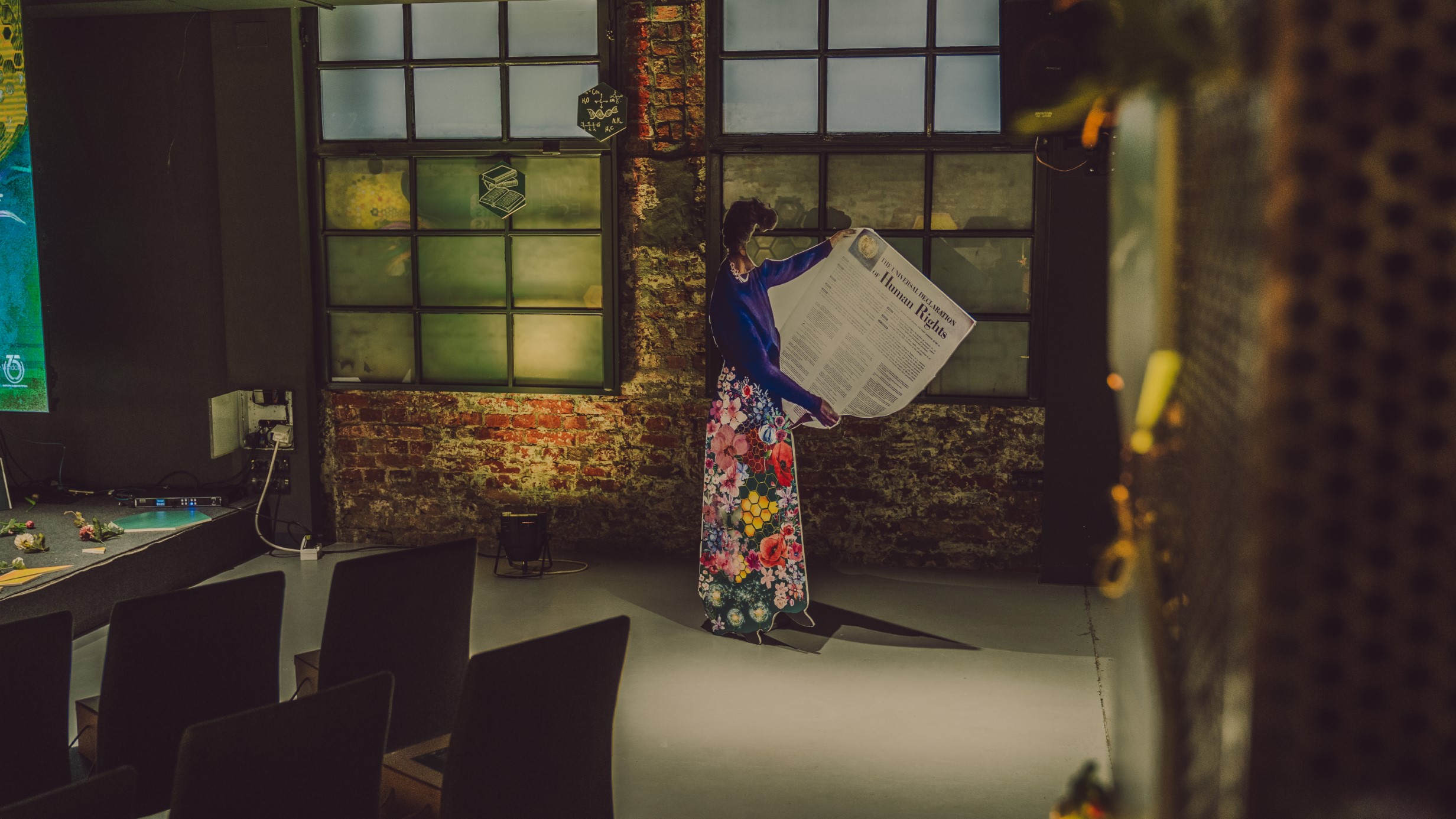
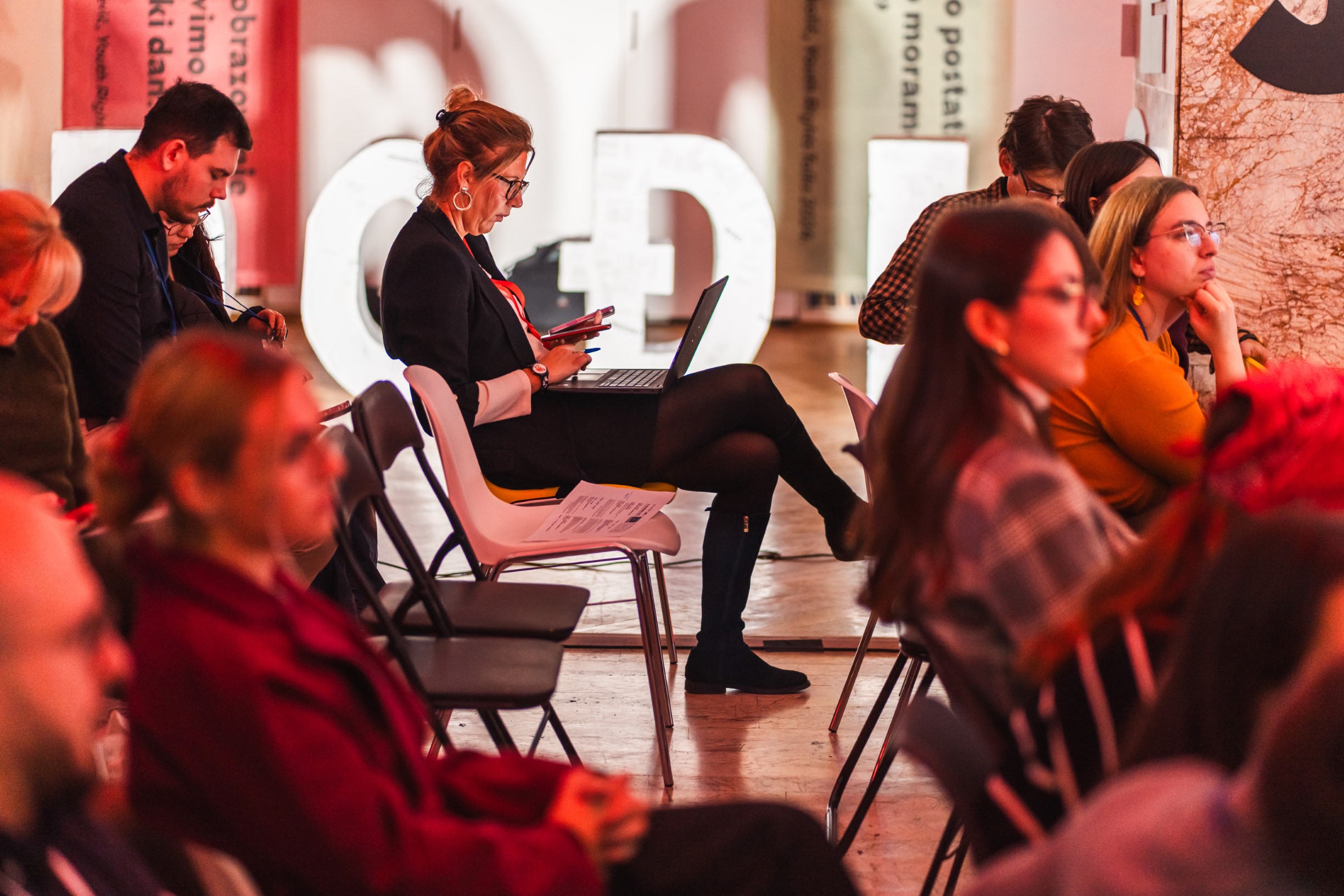
The event itself is designed as a participatory civic space. Particular attention is given to the choice of venue, ensuring accessibility while creating an atmosphere that encourages openness and dialogue. The space is visually transformed each year through thematic visual identity and scenography, turning the venue into an active part of the storytelling and experience.
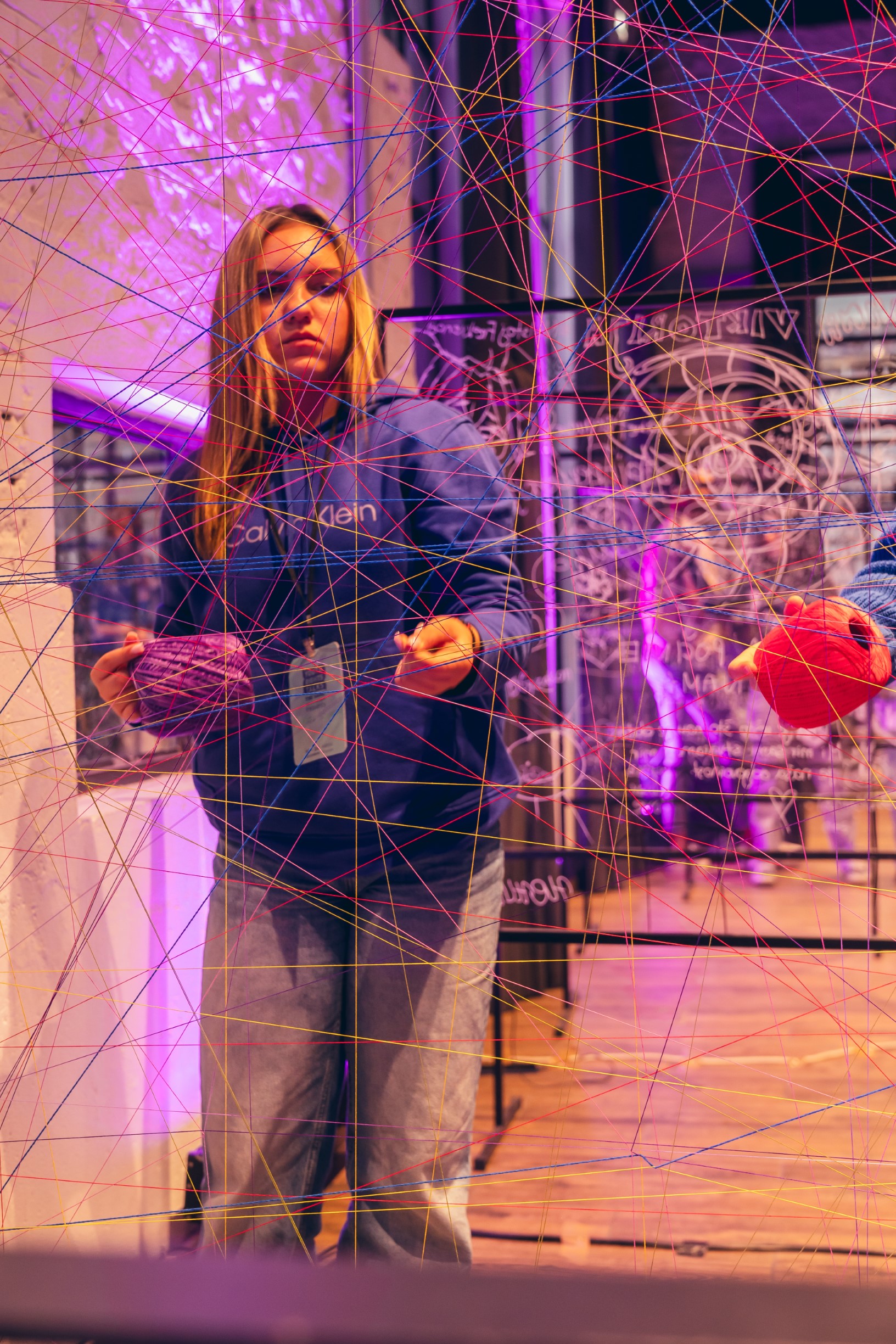
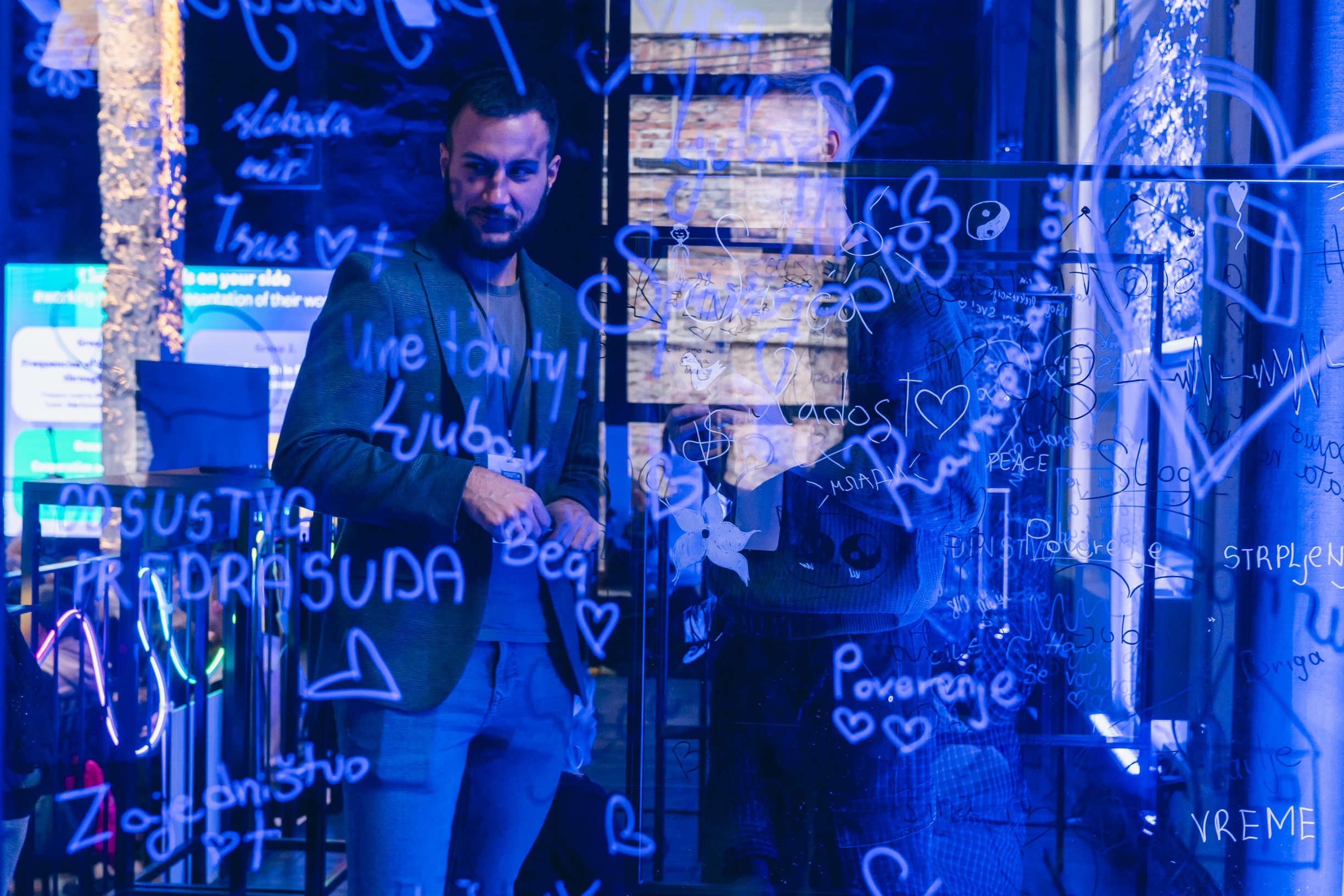
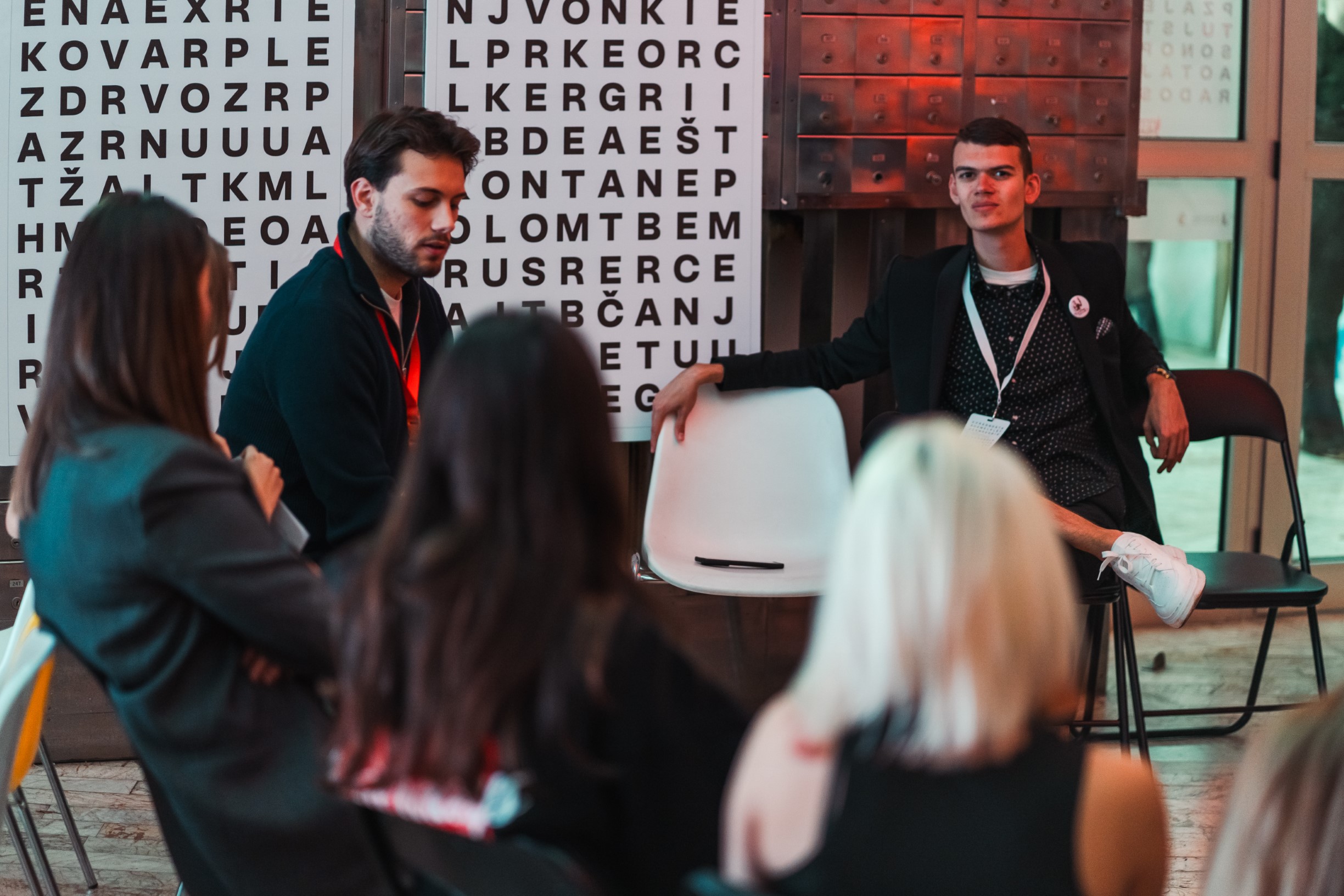
In addition to youth speeches and dialogue with institutions, each edition includes interactive activities that invite participants to actively engage with the themes discussed. These range from collaborative artistic expressions to participatory interventions that transform the space, making the audience part of the conversation rather than passive observers.
Rather than a conventional event, YRT functions as a community space where young people reflect on the full realization of human rights through lived experiences. Through storytelling, participants recognize themselves in others, creating a sense of belonging and collectively shaping a space of dialogue and collective reflection.
Human rights
Social inclusion
Democracy
Participation
Building communities
Youth Rights Talks addresses social and democratic sustainability by creating a mobile, long-term platform for youth participation, dialogue and civic engagement. It responds to the lack of spaces where young people can meaningfully express their experiences and influence public discourse, by transforming diverse venues into temporary, inclusive civic environments shaped together with the community.
The project’s sustainability lies in its adaptable, low-cost and transferable model, which does not depend on a fixed space but instead activates and transforms different contexts while engaging local participants in the process. This enables long-term continuity through diverse partnerships with civil society, institutions and local actors, connecting grassroots experiences with broader democratic processes.
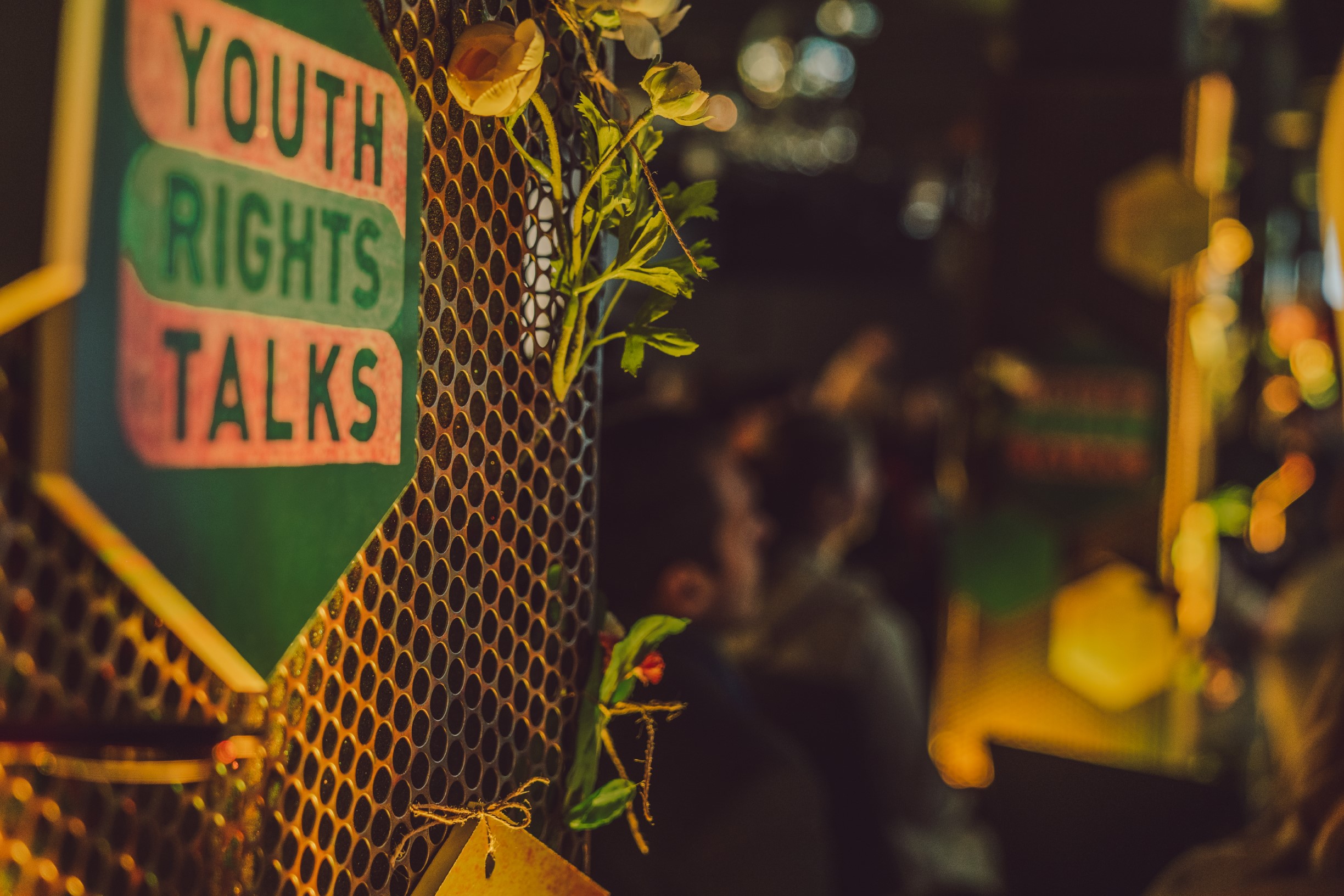
Environmental sustainability is embedded in the project’s design through a circular and low-waste approach. The scenography is modular, mobile and designed for reuse, extending the lifecycle of materials. During each event, participants co-create installations reflecting their responses to the stories shared. These installations often remain in the spaces where they were created, continuing to shape them and fostering a collective memory of inclusion and participation. After the event, materials are further repurposed through workshops into functional objects such as bags, allowing both materials and their meanings to be continuously transformed by the community.
Culturally and socially, the project builds long-term impact by strengthening youth agency, solidarity and civic responsibility, with many participants evolving from audience members into active contributors and speakers. The ideas generated are translated into policy recommendations, ensuring that youth perspectives contribute to democratic processes.
Youth Rights Talks approaches aesthetics as a participatory and living element rather than mere visual decoration. Each edition carefully selects an accessible and welcoming venue, while responding to the specific context of the space. Through scenography, visual identity and interactive installations, the environment is transformed into an immersive, site-specific experience reflecting both the theme of the event and the local atmosphere.
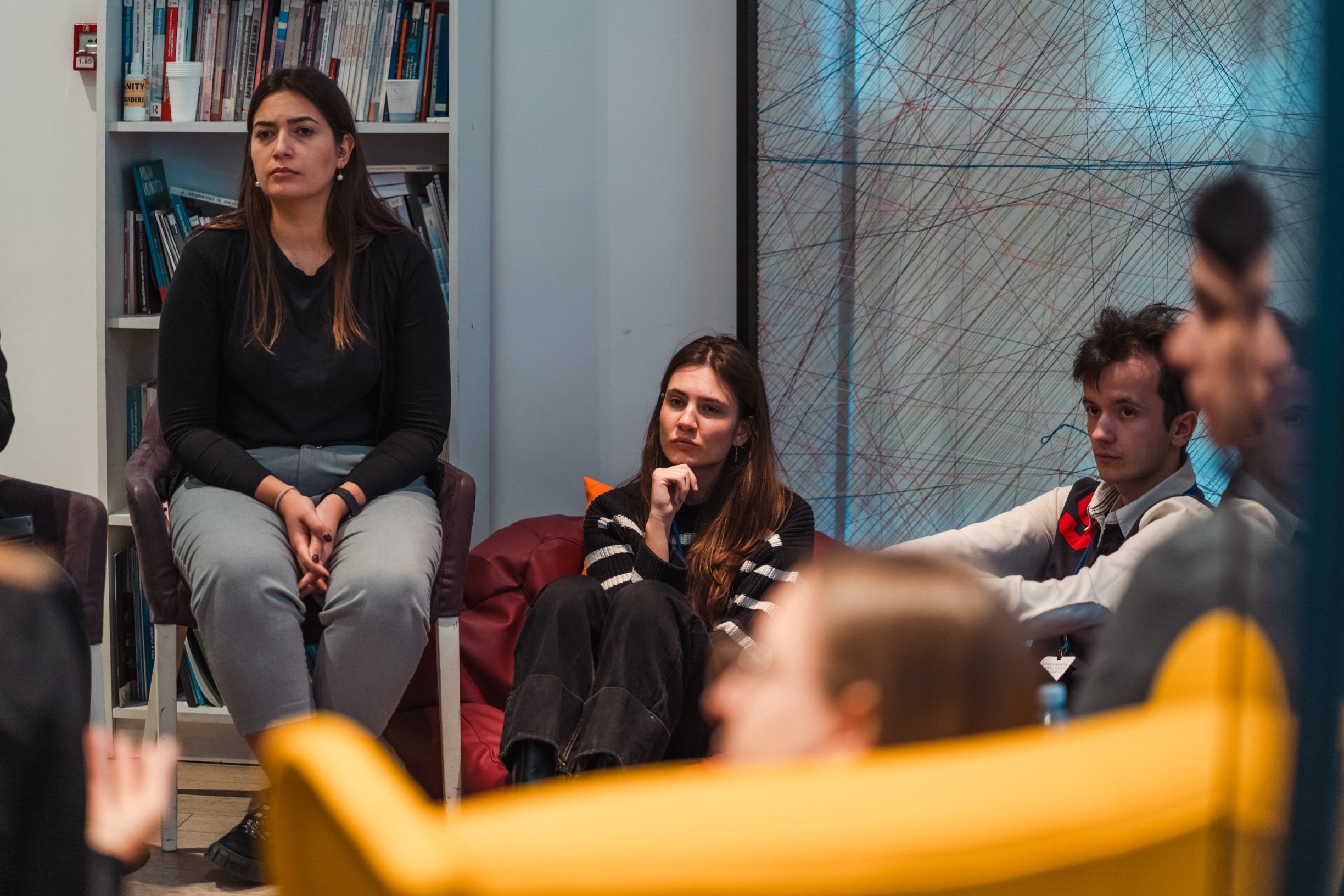
The design invites participants not only to listen but to actively shape the space. For example, transparent panels enabled the audience to write reflections inspired by youth speeches, gradually forming a collective visual expression. In another edition, a participatory installation of coloured threads allowed participants to create patterns reflecting their emotions. More recently, an overhead projector enabled participants to project drawings and words onto the walls, dynamically reshaping the visual environment.
Each edition also includes an original song co-created with young people, extending the aesthetic experience beyond the event and contributing to a shared cultural expression of youth voices.
Aesthetic expression extends to the project’s digital presence, with visual identities co-developed with young people and designed to be engaging, accessible and reflective of youth culture.
Through these interventions, each venue becomes a co-created environment where participants collectively shape meaning and leave visible traces of their experiences. This participatory and evolving approach fosters a strong sense of belonging and care for the space. The inviting and carefully designed atmosphere consistently attracts and engages diverse groups of young people, contributing to a vibrant shared experience. By combining accessibility, emotional resonance and co-creation, the project offers an exemplary model that redefines aesthetics as a shared, transformative process and experience.
Inclusion is a core principle of Youth Rights Talks, both in its design and in the voices it amplifies. The event is free and open to all young people, ensuring accessibility regardless of economic background, geographic location or social status.
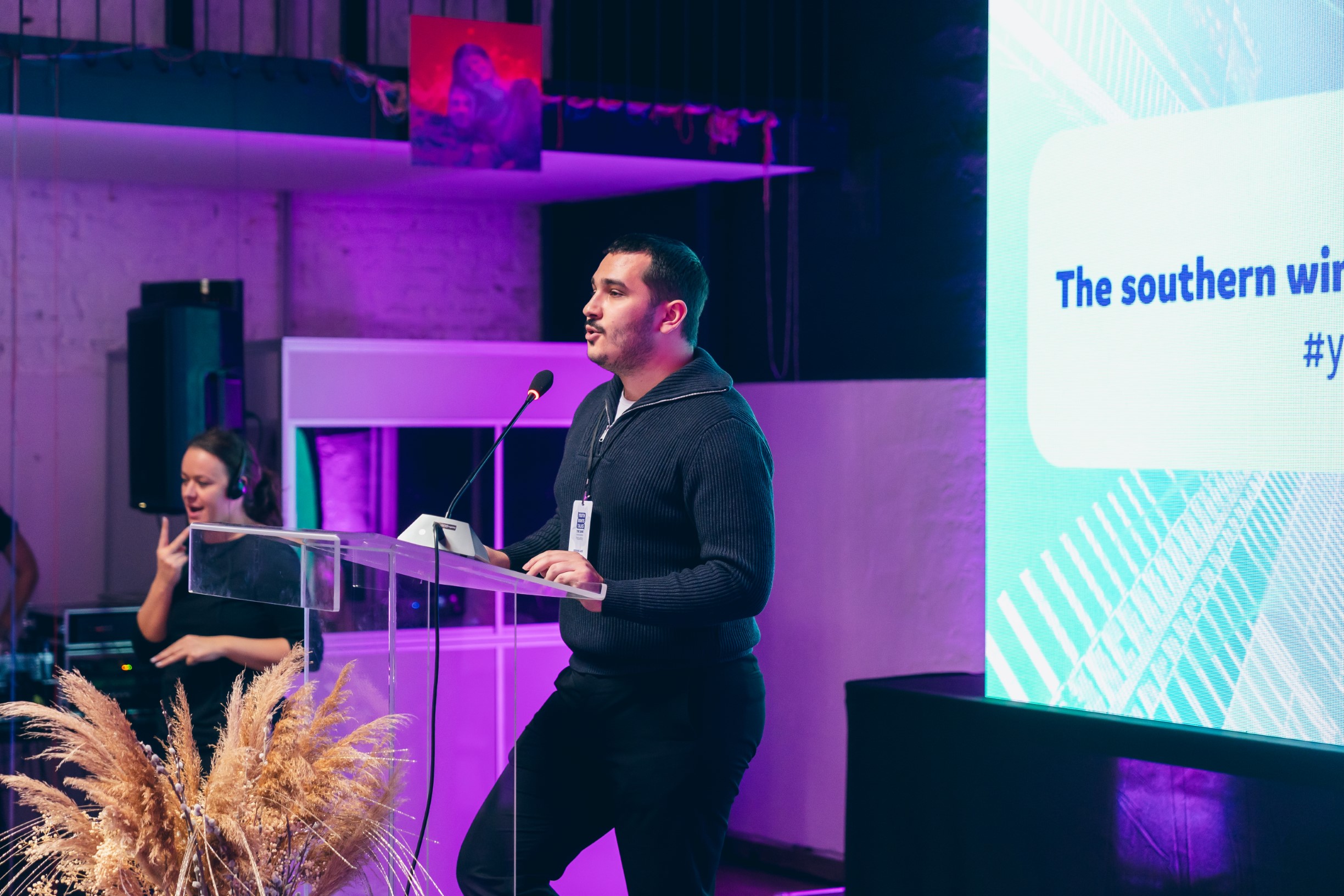
Accessibility is ensured through concrete measures, including sign language interpretation and active collaboration with the Association of the Deaf of Belgrade, whose members participate as both audience and speakers. The project follows “design for all” principles, making the environment, content and participation formats accessible and meaningful for diverse groups.
The platform amplifies voices that are often underrepresented in public debates. Young people with disabilities, including blind participants, have taken roles as speakers and moderators. Young Roma activists, LGBTIQ+ youth, young people from rural areas, as well as refugees and young people facing economic barriers have delivered speeches, moderated discussions and participated in panels, bringing their lived experiences directly into public dialogue.
The regional edition YRT 2024 brought together young people from Bosnia and Herzegovina, Kosovo, North Macedonia and Croatia, creating a space for dialogue across different cultural and social contexts.
Inclusion goes beyond representation. Young people actively shape the event — from co-creating visual elements to moderating discussions and contributing to content. Participants act as decision-makers within an inclusive governance approach, ensuring the space reflects diverse experiences.
Youth Rights Talks is built as a participatory process that unfolds across all phases of the project, from defining themes to shaping the event and its outcomes. Each year, the central topic is developed through consultations with young people, including workshops, youth groups and focus groups conducted within our research on youth rights. Their perspectives directly inform the thematic focus.
Young people are also involved in shaping the visual identity and key messages, ensuring that communication reflects their language and experiences. Participation continues through an open call for speakers, followed by a preparation process where participants develop their speeches. During the event, young people take on active roles as speakers, moderators and contributors through interactive installations and participatory formats.
The impact of participation extends beyond the event. A general rapporteur translates discussions into policy recommendations addressed to institutions, ensuring that youth contributions influence public dialogue. This multi-layered process shifts young people from audience members to active contributors in shaping both the event and its outcomes.
Youth Rights Talks also operates across multiple levels, enabling horizontal connections between young people, civil society and communities, and vertical dialogue with institutions, international organisations and decision-makers. Through panels and smaller discussion formats, young participants directly exchange perspectives with these actors. Local experiences from diverse regions are thus brought into dialogue with national and international stakeholders, while civil society and media further amplify youth voices.
The initiative integrates a transdisciplinary approach, bringing together youth work, arts, education, research and policy-making. YRT motivate young people to engage with social issues not only through dialogue, but also through shared creative and experiential processes.
YRT is designed as a multi-level platform that connects local experiences of young people with national, regional and European stakeholders, enabling both horizontal and vertical dialogue.
At the local level, young people from diverse communities across Serbia actively shape the project through consultations, open calls and preparatory processes. Their lived experiences form the basis of the themes and content of each edition, ensuring that the initiative is grounded in real community needs. Grassroots organisations and youth workers contribute to outreach and mobilisation, strengthening connections with local communities.
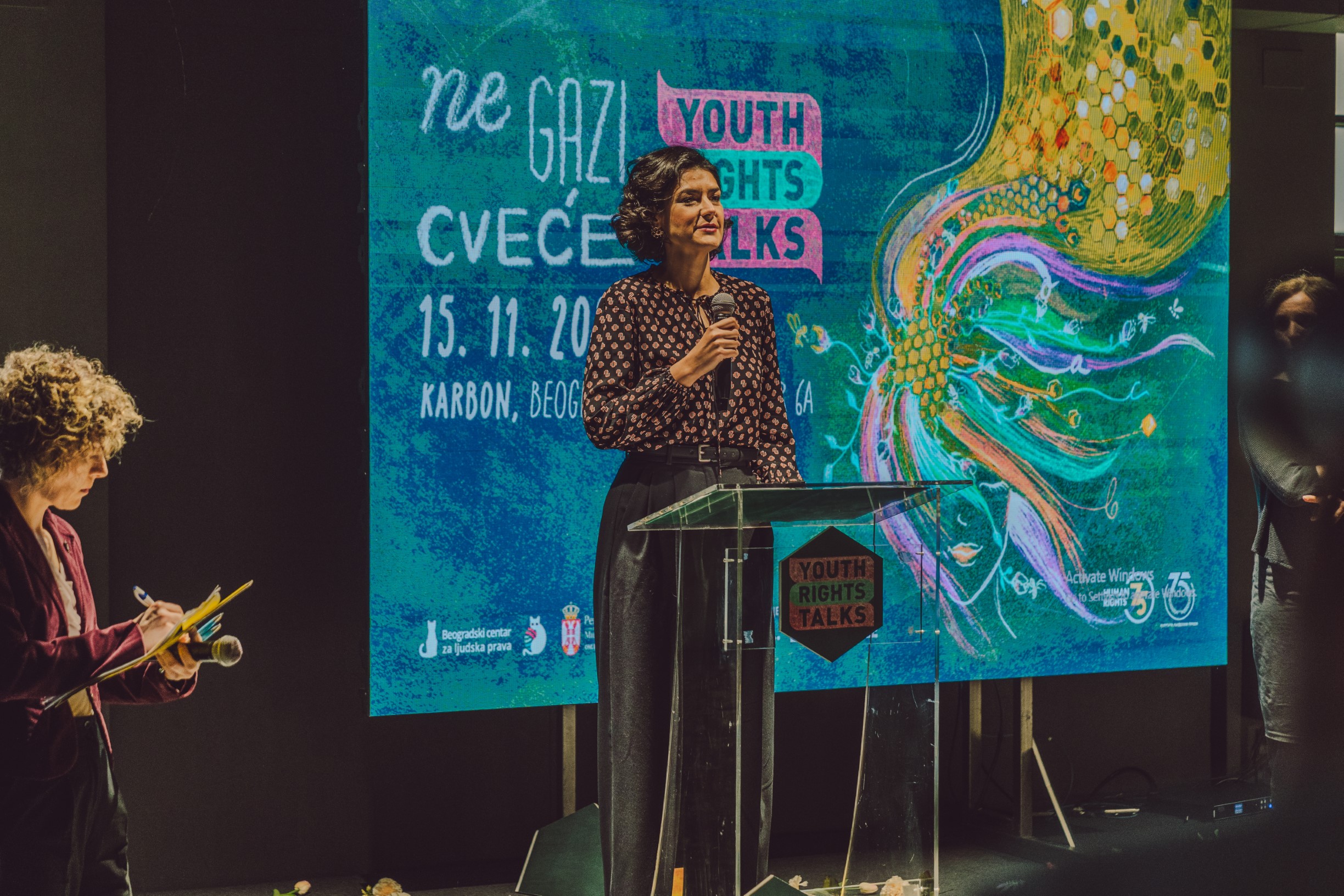
At the national level, representatives of public institutions engage directly with young people during the event. Institutions such as the Ministry of Tourism and Youth and the Ministry for Human and Minority Rights and Social Dialogue have been actively involved in dialogue with participants. Through moderated discussions and smaller formats, young people exchange perspectives and raise questions directly with decision-makers.
At the international level, actors such as the United Nations team and the Delegation of the European Commission in Serbia have contributed to discussions, connecting local youth perspectives with broader policy frameworks.
Academic and educational institutions are also an important part of the platform. Collaboration has been established with universities, secondary schools and the Student Polyclinic in Belgrade, while the Institute for Philosophy and Social Theory led a panel at the most recent edition of the event, contributing research-based perspectives to the dialogue.
The added value of this multi-level engagement lies in its ability to translate local experiences into broader dialogue and action. By linking grassroots perspectives with institutional and international actors, YRT strengthens the responsiveness of public discussions and creates meaningful opportunities for youth in decision-making processes.
Youth Rights Talks combines knowledge and practices from several fields, including youth work, human rights education, social sciences, arts, design and public communication. At its core are youth speeches that connect personal experiences with broader social issues such as discrimination, democratic participation, education, health and environmental responsibility, turning individual stories into starting points for public reflection.
Research and educational perspectives are integrated through consultations with young people and focus groups conducted within broader work on youth human rights, directly shaping the annual themes and structure of the event.
Artistic practice plays a key role in translating discussions into shared experiences. Each edition involves collaboration with an artist who develops interactive installations and participatory activities, inviting participants to express their responses through drawing, writing or projecting visuals into the space. Design and media practices are further integrated through visual identity and digital communication developed with strong attention to youth culture and engagement.
The project follows a transdisciplinary approach, integrating knowledge and practices from different fields into a coherent participatory process. Rather than treating these fields separately, Youth Rights Talks creates a shared space where diverse forms of knowledge interact and inform each other. By combining research, civic dialogue, artistic expression and participatory design, the project represents an exemplary model of how complex social issues can be addressed through collaborative and creative approaches.
Youth Rights Talks is based on a hybrid and flexible financial model that combines public funding, project-based grants and partnerships with civil society organisations and institutions. The initiative has been primarily supported through national and international programmes focused on youth participation, human rights and civic engagement.
Its financial sustainability is closely linked to a low-cost, resource-efficient and adaptable design. As a mobile format, it does not depend on fixed infrastructure, allowing implementation in different contexts with limited resources. The use of modular and reusable scenography further reduces costs and supports a circular approach to resource management.
Partnerships play a key role in sustaining the project. Collaboration with youth organisations, academic institutions, public bodies and international actors contributes not only financially but also through in-kind support, expertise and outreach, distributing responsibilities across stakeholders.
As the initiative has become increasingly recognised, it also opens possibilities for complementary funding approaches such as community-based fundraising and crowdfunding, further diversifying its financial base. At the same time, the project can be anchored in a permanent space such as the Human Rights House in Belgrade, providing continuity and stability while maintaining its mobile character.
The project’s strong potential for replication enables implementation through different funding streams at local, national and European levels. Its thematic flexibility allows alignment with various policy priorities, increasing eligibility for diverse funding opportunities.
Youth Rights Talks is designed as a highly transferable and adaptable model that can be implemented across different contexts, communities and geographic levels. Its scalability lies in a combination of methodological, spatial and organisational elements that can be easily replicated.
At the core of the model is a participatory methodology that includes co-creation of themes with young people, open calls for speakers, preparatory processes for developing personal narratives, and interactive formats that engage participants as active contributors. This process can be applied in diverse social and cultural contexts while remaining responsive to local needs.
The spatial concept is also transferable. As a mobile format, Youth Rights Talks does not depend on a fixed venue but transforms different spaces into temporary civic environments through modular, reusable scenography and participatory installations. This allows the model to be implemented in cultural centres, public spaces, schools or community settings.
The project structure, including the combination of youth speeches, dialogue with stakeholders and participatory activities, provides a flexible framework that can be adapted in scale — from local community events to regional or international editions. The integration of policy recommendations as an outcome further strengthens its applicability in different governance contexts.
Key learnings and tools from the project, including participatory formats, approaches to inclusive engagement and methods for connecting youth voices with decision-makers, can be transferred to other organisations and initiatives working in youth, culture or civic participation.
Through its mobility, adaptability and strong participatory foundation, Youth Rights Talks represents a scalable model that can be replicated across different environments while maintaining its core value: creating inclusive spaces for youth voice and democratic engagement.