Strengthening Local Democracy and Inclusion
Gaiba Community Hub
Inclusive and sustainable community hub reconnecting elderly citizens and vulnerable people.
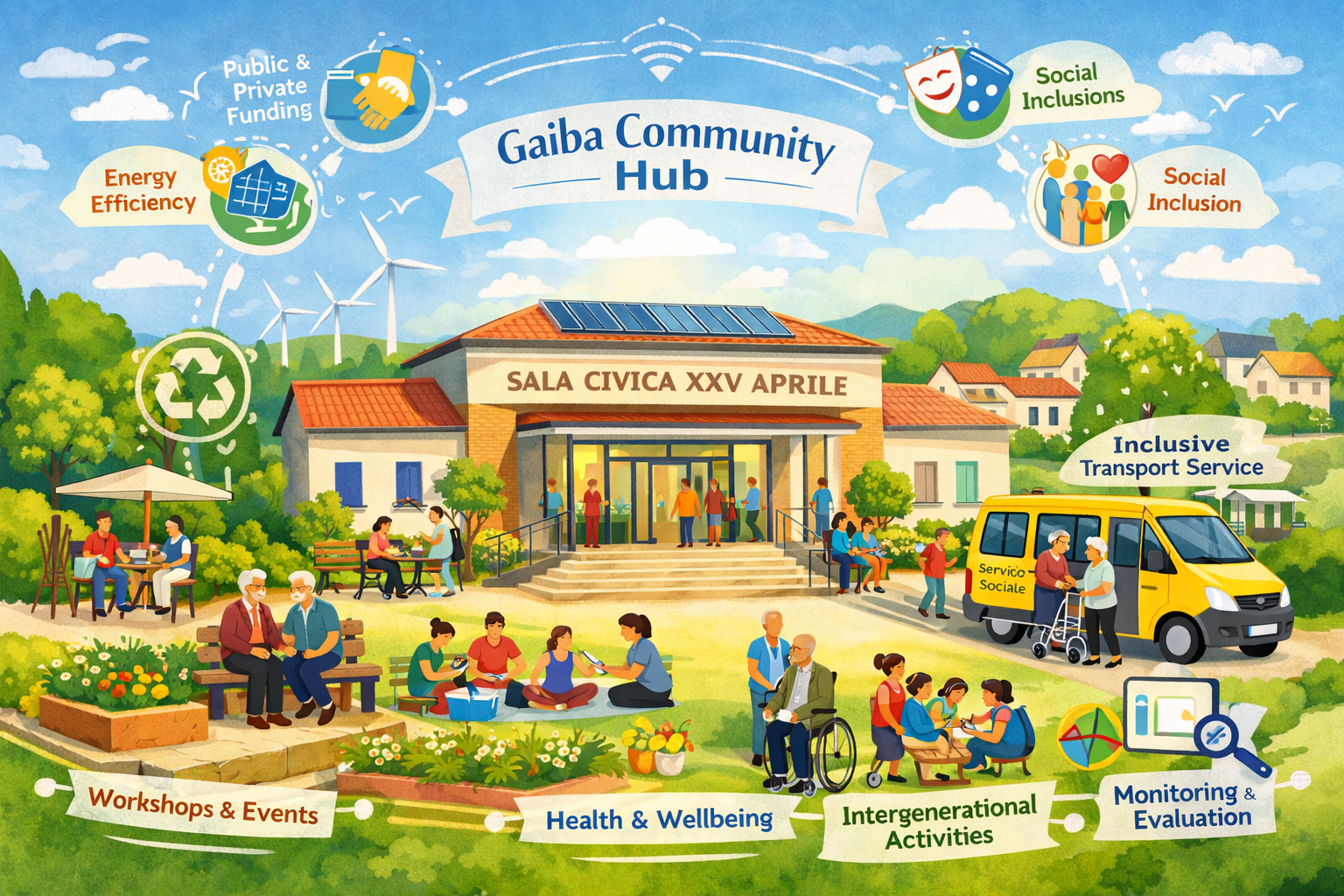
Gaiba Community Hub transforms the XXV Aprile Civic Hall into an inclusive community hub for elderly and vulnerable people, serving Gaiba and neighbouring municipalities. Through renovated spaces, social and cultural activities, and a dedicated transport service, it fosters social connection, reduces isolation, revitalises the civic heart of the community, and strengthens local networks and solidarity.
Italy
Local
Gaiba, Stienta, Occhiobello, Stienta, Salara
Mainly rural
It involves a physical transformation of the built environment (hard investment)
Early concept
Yes
EAFRD : European Agricultural Fund for Rural Development
No
No
Organisation
The Gaiba Community Hub project aims to transform the XXV Aprile Civic Hall into an inclusive community hub for elderly citizens and people in vulnerable situations, extending services to neighbouring municipalities as well. Through the regeneration of an existing public space, the centre will provide accessible and comfortable environments for social, cultural, and recreational activities, with the goal of fostering opportunities for meeting, participation, and strengthening connections among residents.
The project foresees collaboration with local associations, which will contribute to organising activities and providing a dedicated transport service, ensuring access for those with mobility challenges or without private means of transport. This will help reduce social isolation, reinforce local community networks, and promote a sense of belonging.
The space will undergo renovation works including extraordinary maintenance, energy efficiency improvements, upgrading of interior spaces, and safety enhancements, creating a sustainable model for managing public space. The project will also engage and involve the local community in the life of the hub, encouraging intergenerational interaction and active citizen participation.
Gaiba Community Hub aligns with the New European Bauhaus vision, combining urban regeneration, social inclusion, community participation, and sustainability. The expected outcome is the creation of a welcoming, vibrant, and accessible space that becomes a reference point for Gaiba and neighbouring municipalities, strengthening social cohesion and enhancing the value of the existing civic heritage.
The idea for the Gaiba Community Hub originated from the observation of increasing socialization and mobility difficulties among elderly citizens and vulnerable people in small towns like Gaiba and surrounding municipalities. In recent years, social isolation has intensified for these groups, highlighting the need for welcoming public spaces and dedicated services. The XXV Aprile Civic Hall, despite being centrally located and owned by the municipality, was underutilized and not fully accessible, representing a concrete opportunity to regenerate a public asset and promote social cohesion.
The concept was developed through a participatory process involving the municipal administration and local associations, analyzing community needs and identifying critical issues related to accessibility, usability of spaces, and the lack of dedicated transport services. Data was collected on the habits and requirements of potential users, with particular attention to the elderly and vulnerable, to define a sustainable and inclusive operational model.
The project foresees renovation works including extraordinary maintenance, energy efficiency improvements, upgrading of interior spaces, and safety enhancements. Collaboration with local associations is a key strategy to animate the hub, manage activities, and provide transport services for users. Protocols have been defined for the daily management of the centre, training activities for staff, and tools to monitor participation and social impact.
In summary, the concept combines urban regeneration, social inclusion, and community participation: it enhances an existing civic asset, addresses real community needs, and creates a replicable model of a social hub for small towns. The Gaiba Community Hub provides a concrete response to isolation, vulnerability, and social fragmentation, fostering local networks, solidarity, and active citizen engagement.
Social inclusion
Urban regeneration
Community co-design
Accessibility
Sustainability
The Gaiba Community Hub project addresses sustainability challenges in an integrated way, combining environmental, social, cultural, and economic aspects. From an environmental perspective, the intervention involves the regeneration of the XXV Aprile Civic Hall through extraordinary maintenance and energy efficiency improvements, including roof renovation, replacement of doors and windows, and insulation works. These measures aim to reduce the building’s energy consumption, providing comfortable spaces in both summer and winter, while helping to counter energy poverty in the community.
From a social perspective, the project promotes inclusion of elderly citizens and vulnerable people, reducing isolation through recreational, cultural, and community activities. The dedicated transport service allows access for residents of neighbouring municipalities or those with mobility challenges, creating local networks of proximity and solidarity. Collaboration with local associations ensures active community participation, strengthening the sense of belonging and valuing social capital.
Culturally, the project revitalizes an existing civic asset, preserving the original function of the XXV Aprile Civic Hall while promoting intergenerational participation, awareness of local heritage, and the enhancement of traditions and community activities.
Economically, sustainable management of the space and targeted use of personnel ensure continuity of the service, reducing operational costs and creating a replicable model of a social hub for small towns. The project therefore integrates environmental, social, cultural, and economic dimensions, representing a concrete example of sustainability according to the principles of the New European Bauhaus, with long-lasting benefits for the local and surrounding community.
The Gaiba Community Hub contributes to making everyday life more beautiful by transforming an underused civic building into a welcoming, vibrant, and human-centred space that enhances both the physical environment and the quality of social interactions.
The renovation of the XXV Aprile Civic Hall is designed not only to improve functionality but also to create a pleasant, harmonious, and recognisable place for the community. Through careful attention to natural light, interior layout, materials, and colours, the space is reimagined as a warm and inviting environment where people feel comfortable spending time, meeting others, and participating in activities.
Beauty in this project is closely linked to experience and relationships: it emerges from the possibility for people to reconnect, share moments, and feel part of a collective space. Everyday activities—such as workshops, cultural events, reading sessions, and informal gatherings—take place in an environment that is aesthetically curated but also simple and accessible, reflecting the identity and scale of a rural community.
The project also strengthens the sense of belonging and care for the place by reactivating a historic civic landmark that holds collective memory for the community. By bringing the building back to life and involving citizens in its use and management, the hub becomes a symbol of local identity and pride. People are not only users of the space, but active contributors to its atmosphere and meaning.
In the long term, the project contributes to a more liveable and cohesive neighbourhood by establishing a high-quality public space where social, cultural, and intergenerational interactions can continuously take place. Its aesthetic value lies in the balance between functionality, inclusiveness, and emotional connection, demonstrating how even small-scale interventions in rural areas can significantly improve daily life.
The Gaiba Community Hub addresses inclusion in a comprehensive and concrete way, ensuring that the space, services, and governance model are accessible, affordable, and open to all members of the community, with particular attention to elderly people and individuals in vulnerable conditions.
From a physical perspective, the project applies “design for all” principles, guaranteeing full accessibility to the building through barrier-free entrances, including ramps and accessible pathways, as well as interior spaces designed to accommodate people with reduced mobility.
Accessibility is further reinforced through a dedicated transport service, which enables people who are unable to travel independently—due to mobility limitations, lack of private transport, or social isolation—to reach the hub and participate in activities, extending inclusion beyond the building itself.
From an economic perspective, the hub promotes affordability and equal access by offering most activities free of charge or at very low cost, supported by public funding, partnerships, and voluntary contributions.
The project also promotes inclusive governance and community-led approaches. Citizens, local associations, and stakeholders are actively involved in the co-design and management of activities, ensuring that services are aligned with real community needs.
Moreover, the hub encourages intergenerational and social inclusion, creating opportunities for interaction between different age groups and social backgrounds.
In this way, the Gaiba Community Hub represents an exemplary model of inclusion within the New European Bauhaus, combining accessibility, affordability, participatory governance, and social integration into a replicable approach for rural communities.
The Gaiba Community Hub project was developed using a participatory approach, aiming to respond to the real needs of the community and foster social cohesion. From the earliest design stages, the Municipality of Gaiba engaged citizens, local associations, social service operators, and representatives of vulnerable groups through meetings, interviews, and listening sessions. This consultation allowed the collection of detailed information on the needs, preferences, and challenges of potential users, particularly elderly people, those living alone or with vulnerabilities, and residents of neighboring municipalities.
Stakeholder involvement directly influenced the project’s design choices: the layout of interior spaces, the planned activities, the dedicated transport service, and the modes of accessing the hub were shaped according to the insights gathered during participatory sessions. Local associations, for example, helped identify which cultural and recreational activities were most relevant to the community and how to organize transport support and user assistance.
The participatory approach had a tangible impact: it strengthened the sense of belonging and responsibility of the community toward the hub, fostered co-design of services, and ensured that the Gaiba Community Hub is perceived as an inclusive, welcoming, and useful space for daily life. Moreover, stakeholder participation helped identify operational challenges and propose innovative solutions, increasing the social and functional sustainability of the project.
In summary, the Gaiba Community Hub represents an example of participatory design, where continuous dialogue between the project promoter, citizens, and associations has contributed to creating a functional, shared, and sustainable social hub, fully aligned with the principles of the New European Bauhaus.
The Gaiba Community Hub project adopts a multilevel governance model focused on the involvement of local and provincial stakeholders, ensuring participatory, effective, and sustainable project design. At the local level, the Municipality of Gaiba coordinates all activities, engaging citizens, cultural, social, and recreational associations, as well as schools, ensuring that the hub meets the daily needs of the community and fosters social cohesion. Key local stakeholders include local associations, Croce Blu Gaiba, Pro Loco Gaiba, Dante Alighieri Primary School, Pinco Pallina Integrated Nursery and Early Childhood Center, and Legambiente Rovigo, all contributing organizational, logistical, and social animation expertise.
At the provincial level, the project involves consultation with authorities and institutions that promote social, cultural, and territorial welfare policies. These stakeholders help ensure compliance with technical and regulatory standards, share best practices, and provide technical support for the management of socio-cultural services.
This multilevel approach allows the project to anticipate challenges, optimize resources, and create synergies between institutions, associations, and citizens. The added value of local and provincial involvement lies in improving the hub’s operational effectiveness, the quality of services offered, and the project’s legitimacy in the eyes of the community.
The Gaiba Community Hub project integrates multiple disciplines and fields of knowledge to ensure effective and sustainable design and implementation. From an architectural and engineering perspective, the project includes extraordinary maintenance and adaptation of the XXV Aprile civic hall, including building renovation, energy efficiency improvements, and space adjustments to make it accessible and usable by people with diverse abilities.
The design of internal and external spaces is intended to promote social interaction and participation, with attention to aesthetics, functionality, and user comfort. Social sciences and education play a fundamental role in developing recreational, cultural, and educational activities for users, with particular attention to the elderly, vulnerable people, and communities in neighboring municipalities. Recreational activities will include environmental, youth, and socialization workshops, divided by age groups, to ensure continuous use of the civic hall.
Activities will be directly monitored by stakeholders, and the public will be able to participate as widely as possible thanks to a dedicated transport service, which will also allow citizens from neighboring municipalities to attend. This approach ensures inclusive participation and continuity of activities, strengthening social cohesion and creating new opportunities for intergenerational engagement.
The business model of the Gaiba Community Hub is based on a mixed approach, combining public funding, contributions from local partners, and volunteer support to ensure the center’s economic and operational sustainability over time. The Municipality of Gaiba will cover the ordinary management costs of the facility, including utilities, routine maintenance, and basic personnel. The project will also be supported by provincial contributions and public grants aimed at supporting socio-cultural and social inclusion initiatives.
The model also includes the active involvement of local associations, such as Croce Blu Gaiba, Pro Loco Gaiba, Legambiente Rovigo, and local schools, which will contribute with in-kind resources, organizational skills, animation activities, and user accompaniment, reducing the direct costs of the service and increasing the range of activities available to users.
To ensure long-term financial sustainability, the hub may implement complementary low-cost or free activities for users, such as workshops, courses, and cultural initiatives, funded through sponsorships, donations, and local crowdfunding campaigns. Partnerships with local businesses, associations, and foundations represent additional tools for generating further resources.
Finally, the dedicated transport service and broad accessibility for users from neighboring municipalities increase the number of beneficiaries of the project, enhancing the center’s effectiveness and visibility, and promoting potential collaborations with organizations and sponsors interested in supporting social cohesion and intergenerational inclusion initiatives.
The Gaiba Community Hub project is designed to be replicable and adaptable to other local contexts and beneficiary groups. The combination of flexible physical spaces, participatory management, and integrated socialization and inclusion services constitutes the core replicable model. The main elements that can be transferred include:
Participatory governance model: the active involvement of citizens, local associations, and schools in designing and managing activities can be adapted to other municipalities, promoting social cohesion and a sense of community.
Modular structure of the hub: the multifunctional hall, with spaces adaptable for various activities, workshops, and events, can be replicated in other public or private facilities, optimizing the use of existing spaces.
Dedicated transport service: the logistics designed to facilitate access for vulnerable individuals or those without their own means of transport can be implemented in other areas to increase accessibility and participation.
Educational methodologies and social workshops: recreational, cultural, and educational programs for different age groups can be adapted to other contexts, leveraging the experiences and best practices developed in the hub.
Monitoring and evaluation: the system for monitoring activities and collecting feedback from stakeholders and participants can be applied in other contexts to ensure quality, inclusion, and continuous improvement.
In summary, the Gaiba Community Hub represents a flexible and integrated model of a socio-cultural center, easily scalable to other municipalities and regions, with a strong impact on social cohesion, intergenerational inclusion, and community participation.
In the first year following the submission of the application, the Gaiba Community Hub project will follow a clear and structured roadmap to ensure the effective activation of the service and full accessibility of the hub for the community.
Adaptation and maintenance of the XXV Aprile civic hall: commencement of extraordinary maintenance and renovation works, including interventions on the roof, fixtures, systems, and interior and exterior spaces, to make the hub accessible, safe, and functional for the planned activities.
Acquisition of vehicles and equipment: procurement of the vehicle dedicated to user transport and equipment necessary for workshops and recreational activities.
Staff recruitment and training: hiring of personnel dedicated to service delivery and the launch of training programs for operators and volunteers, focusing on social inclusion, cultural animation, and workshop management.
Engagement of local stakeholders: meetings and co-design sessions with associations, schools, and local entities to plan activities, workshops, and transport services, ensuring active community participation from the very beginning.
Promotion and communication of the hub: launch of informational campaigns in the area to inform citizens about the new center, available services, and participation procedures, with particular attention to reaching neighboring municipalities through digital channels, social media, and printed materials.
Launch of pilot activities: organization of workshops, courses, and social, cultural, and environmental initiatives free of charge for users, with continuous monitoring of activities and collection of feedback from stakeholders and participants to optimize service delivery.
Evaluation and adaptation: collection of data on hub usage, user participation, and effectiveness of activities, with adjustments to the program as needed to ensure continuity, inclusion, and replicability of the model.