Enhancing Circularity, Sustainability, and Innovation
Stadtholz
Stadtholz — Urban Wood Recovery and Circular Material Practice
Stadtholz turns felled urban trees in Vienna into materials, objects, and public experiences. By recovering and redistributing local wood, it transforms waste into a shared resource for design, craft, and community — reconnecting people with the material and history of their city.
Austria
Local
Vienna
Mainly urban
It involves a physical transformation of the built environment (hard investment)
Yes
2026-01-03
No
No
No
Organisation
Stadtholz is a Vienna-based association that recovers felled urban trees and reintegrates them into design, craft, and public life. Founded in 2021 as a research project at the University of Applied Arts Vienna, it has developed into a registered association with eight active members and an operational model for sourcing, processing, and redistributing urban wood.
The project has demonstrated concrete results. Approximately 100 cubic metres of urban wood have been salvaged and processed, supported by a formal cooperation agreement with Vienna’s City Gardens Department (MA42). Stadtholz has realised projects across public space, design, and cultural formats, including the Umdrehen public sculpture for KÖR Kunst im öffentlichen Raum Wien, trophies for Caritas Europa, and Das Stadtholzarchiv at Vienna Design Week 2025. The initiative has received the Erste Bank Social Design Prize and media coverage including Falter and ORF.
Stadtholz creates impact across multiple dimensions. Environmentally, it extends the lifecycle of urban trees and retains sequestered carbon in long-lasting applications. Socially, it provides access to local material at minimal cost, lowering barriers for participation. Culturally, it reconnects citizens with the material and history of their city, fostering a sense of belonging and care. Economically, it contributes to a local circular material economy linking municipal resources with designers, craftsmen, and institutions.
In the long term, Stadtholz aims to establish a scalable model for urban wood reuse. By expanding processing capacity, diversifying sourcing, and developing digital tools for traceability and resource matching, the project seeks to enable similar initiatives in other cities. Its broader impact lies in shifting how urban resources are perceived — from waste streams to shared, valuable materials embedded in local cultural and economic systems.
Stadtholz began in 2021 as an artistic research project within the Social Design master's programme at the University of Applied Arts Vienna. Three designers — with backgrounds in industrial design, architecture, and visual design — came together around a shared curiosity about urban trees and their lifecycle in the city.
Through research and public interventions, we kept returning to the same overlooked moment: what happens when a tree is felled. Finding that most urban wood ends up as mulch or compost raised a simple but compelling question — could it be recovered and used differently?
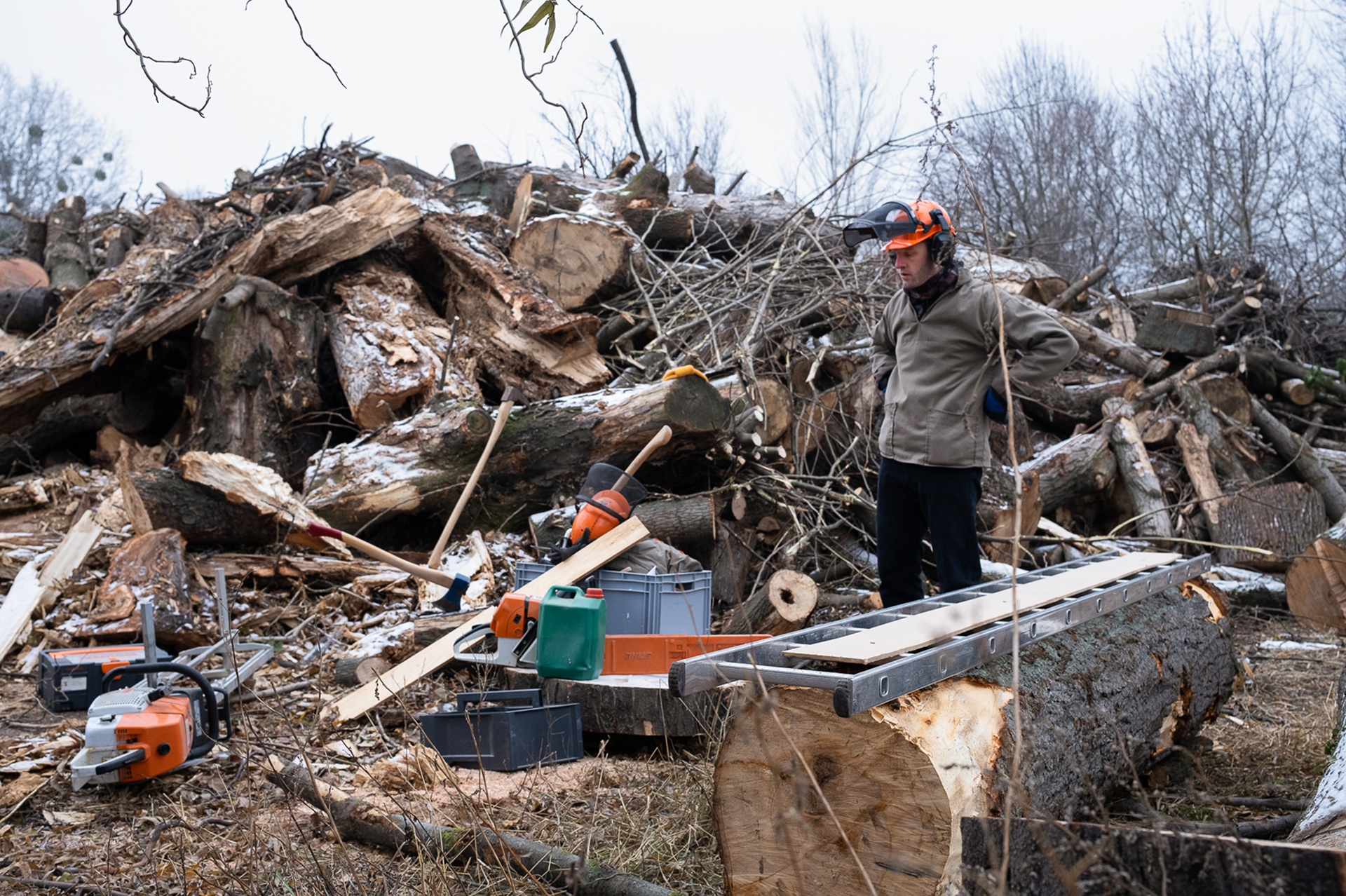
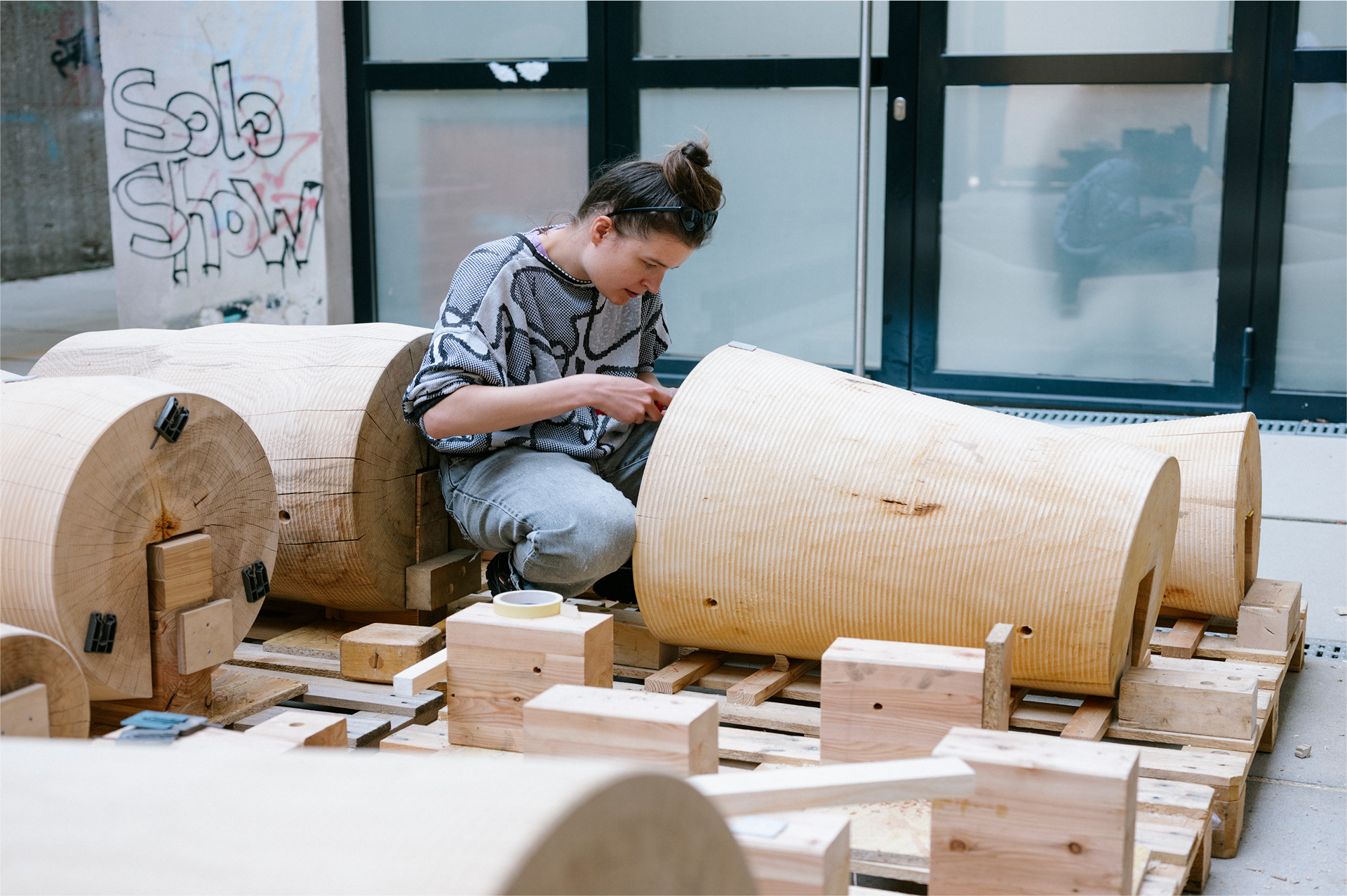
In 2022–2023, we ran a pilot phase using university infrastructure to find out. The work was hands-on and often improvised: hauling heavy logs with basic equipment, sawing them into boards, stacking them to dry. Early outputs included small objects and first commissions — among them trophies made from salvaged Viennese trees for the Caritas Europa Innovation Festival 2024.
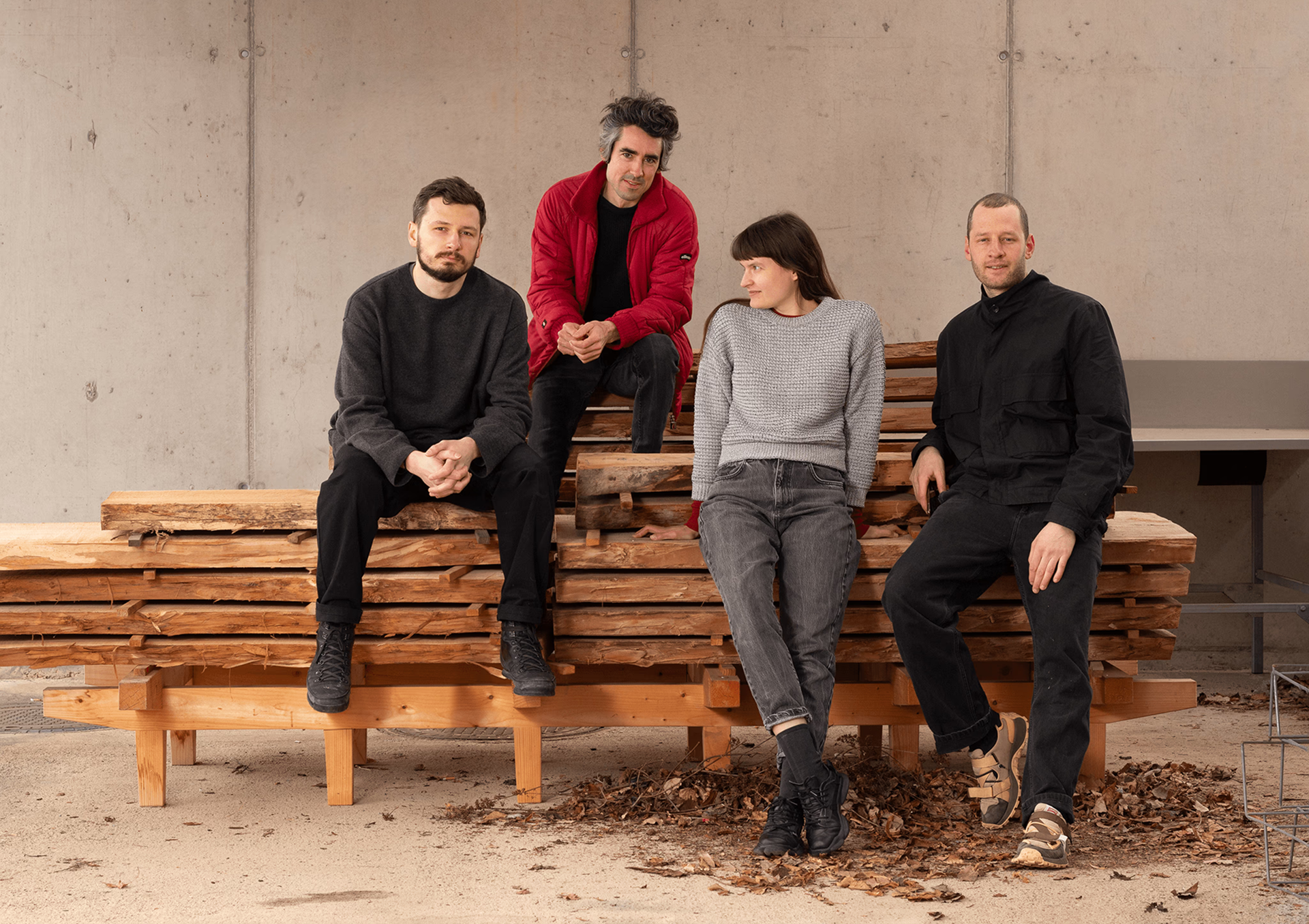
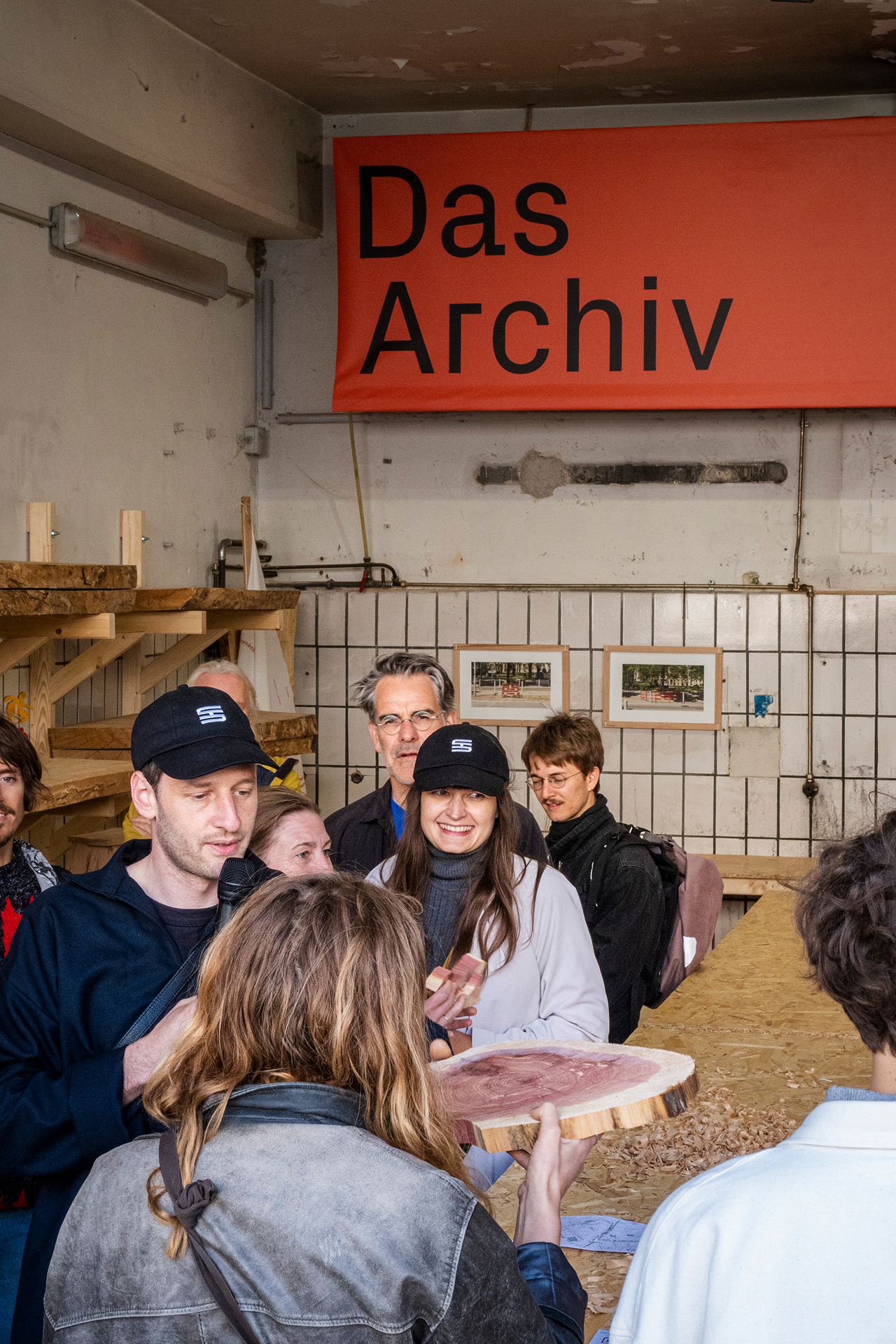
By the end of 2023, the project had outgrown its academic setting. We founded Stadtholz as a formal association to enable partnerships, larger projects, and a growing team. Since then, we have expanded from three to eight members, secured cooperation with Vienna's City Gardens Department MA42, and built a programme of workshops, exhibitions, and public formats — including Vienna Design Week 2025, where visitors made objects from urban wood themselves.
Today, Stadtholz is a locally embedded initiative recovering, processing, and redistributing urban wood — and building a community around its use.
Urban Wood Recovery
Circular Economy
Urban Commons
Collaborative Material Culture
Sustainable Design
Stadtholz addresses sustainability across four interconnected dimensions — environmental, social, cultural, and economic — through a single coherent system built around urban wood recovery.
Environmentally, salvaging felled urban trees prevents downcycling into mulch or compost, keeping sequestered carbon bound in long-lasting objects. To date, we have recovered approximately 100 cubic metres of urban wood. Using hyper-local material also eliminates long-distance transport emissions. Beyond material recovery, we advocate for treating urban trees as vital urban infrastructure rather than a municipal expense — raising awareness of their ecological value and the importance of extending their lifespan in the city.
Socially, Stadtholz makes quality local material accessible to those who would otherwise lack it — art and design students, independent makers, and craftspeople. Our traceability approach builds awareness of material origins, communicating that materials do not appear from nowhere and do not disappear — they simply change shape and condition.
Culturally, Stadtholz works to shift perception: encouraging municipalities to see trees as assets, helping designers consider where their materials come from, and reconnecting citizens with the living history embedded in urban wood. A chair made from a tree that stood outside your window for a hundred years — that witnessed the city's entire modern history — carries a meaning no imported timber can offer.
Economically, Stadtholz contributes to a local material economy, enabling makers and artists to build commercially viable projects using urban wood and keeping value circulating within Vienna rather than lost to conventional supply chains.
Stadtholz is exemplary because it shows that a small, design-led community initiative can intervene in a municipal waste stream, build institutional partnerships, and create environmental, social, cultural, and economic value simultaneously — without compromising on quality.
Aesthetics is not an afterthought for Stadtholz — it is central to the argument. Over half of our core team are design and craftsmanship professionals, and the quality of what we make and how we communicate it is inseparable from the mission: to prove that reclaimed local material can be beautiful, meaningful, and worth caring for.
A key aesthetic dimension lies in the material itself. Urban wood carries visible traces of its origin — irregular forms, growth patterns, and signs of urban conditions — preserved rather than standardised. Each piece embodies a narrative: the continuation of a tree's life in a second form, adding an emotional layer that makes objects not only visually appealing but meaningful.
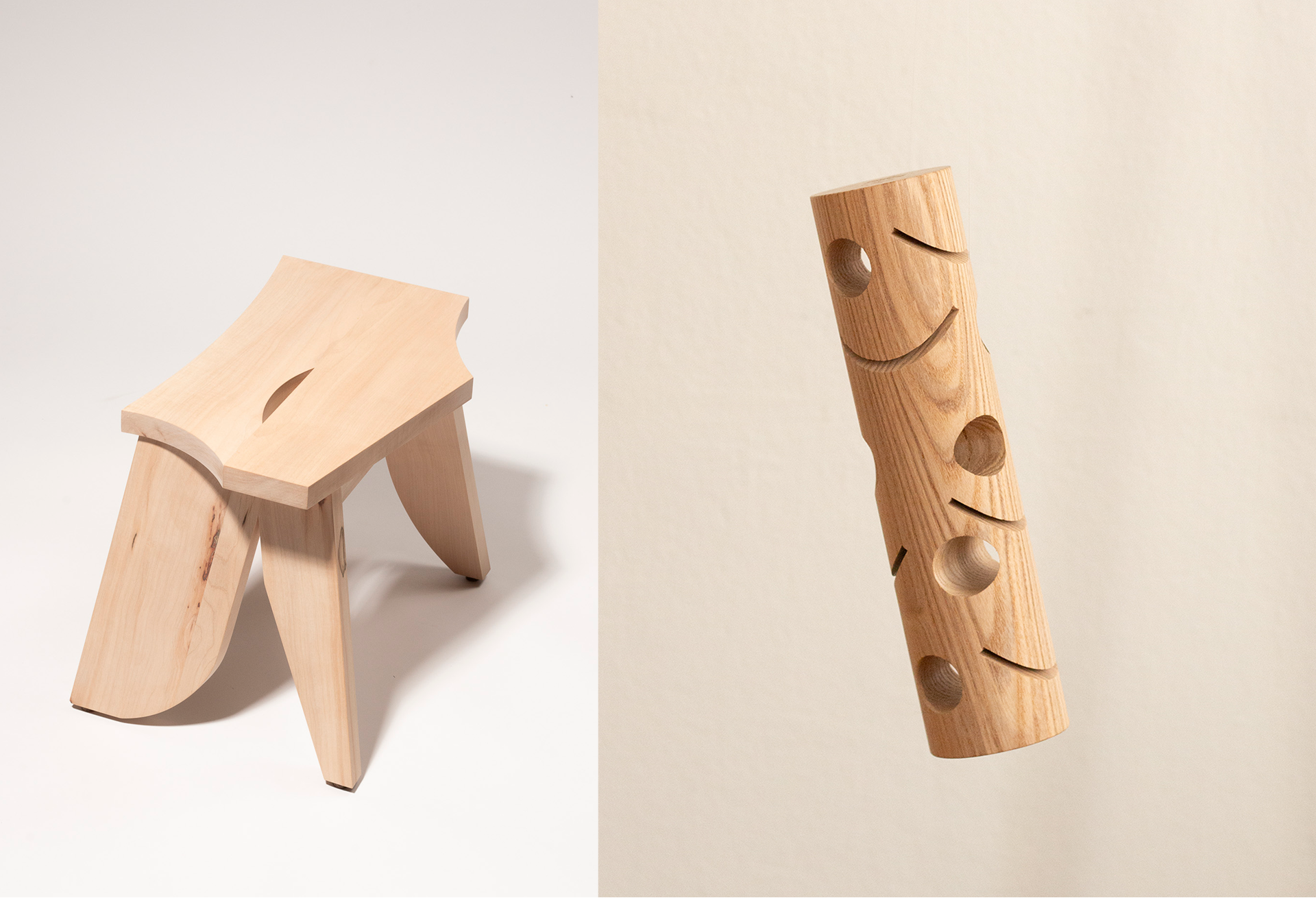
Our projects span public space, product design, and cultural formats — from Umdrehen, a public sculpture for KÖR Wien, to hand-crafted furniture, Das Stadtholzarchiv at Vienna Design Week 2025, and commissioned works such as the Caritas Europa trophies. Our visual communication follows the same principles: functional, image- and fact-based, non-decorative. The aesthetic coherence between what we make and how we communicate reinforces the project's credibility.
A sense of belonging is woven into everything we make. Our traceability system records wood's journey from tree to object, connecting the user to its origin — so that an object carries not just beautiful wood, but a specific tree, a specific street, a specific piece of Vienna's living history.
Stadtholz is exemplary because it refuses the idea that sustainable materials require aesthetic compromise — and proves the opposite with every object it makes.
Stadtholz is built on the premise that urban wood is a public resource — it belongs to the city and therefore to its inhabitants. In practice, however, operational constraints around municipal site access create a grey zone where a common good becomes effectively inaccessible. Stadtholz bridges this gap by acting as an open intermediary and modelling a societal approach to shared urban resources that can be organised and distributed by civil society.
Access to material is deliberately low-barrier and affordable — urban wood is provided free of charge or at minimal cost, removing financial barriers for individuals and groups who would otherwise lack access to quality local material. While our network includes designers and makers, we actively extend access beyond these circles. Rooming Inn, a non-profit initiative focused on inclusive urban space, received material for community projects — including a school class of children with special needs who used Stadtholz wood to build a natural playground.
Public workshops and events function as accessible entry points, allowing people without prior experience or professional background to engage with the material. Public space projects — including Umdrehen and formats at Vienna Design Week — are inherently open, reaching diverse urban audiences.
Stadtholz demonstrates how a neglected common resource can be made accessible through collective organisation — a model that can be replicated in other cities and contexts. The main limitation remains operational capacity, with broader inclusion directly linked to the ability to process and distribute material at scale.
The participatory structure of Stadtholz operates at multiple levels, combining collective governance, hands-on collaboration, and an open network of contributors.
The association has grown from three founders to eight active members with expertise across design, craft, and environmental fields. Decisions are made collectively through regular meetings, and members are directly involved in core activities such as selecting, collecting, and processing urban wood, as well as organisational work. Project-based task forces enable targeted contributions based on relevant expertise. Members may also pursue individual commercial or educational projects drawing on Stadtholz material, with terms decided collectively.
Beyond the core team, Stadtholz engages a broader community of designers, artists, craftsmen, educators, and researchers, including collaborators such as Marie Radke and Martin Pilz. Institutional partners include the University of Applied Arts Vienna, BOKU, TU Wien, and AK Bild, alongside municipal departments MA42, supported by City Councillor Jürgen Czernohorszky. The project participates in Vienna's cultural scene through Vienna Design Week and Design in Gesellschaft, and has reached broader audiences through coverage in Falter and ORF.
Participation has directly shaped the project. Feedback from workshops revealed that demand for urban wood and hands-on engagement exceeds current capacity, making workshops a core programme format. Collaboration with municipal actors exposed the limitations of relying solely on municipal access, prompting the development of alternative supply channels including privately owned urban trees. Growing from three to eight members has broadened expertise and enabled more ambitious projects.
Overall, Stadtholz fosters a local ecosystem connecting individuals, institutions, and disciplines — enabling new material flows, knowledge exchange, and collaborative practices that continue to shape the project's direction.
Stadtholz operates primarily at the local Vienna level, connecting municipal actors, practitioners, and academic institutions.
Collaboration with City Councillor Jürgen Czernohorszky and the City Gardens Department (MA42) enables access to urban tree resources and storage infrastructure, providing both material and institutional support.
Designers, craftsmen, and cultural organisations act as implementers, transforming urban wood into objects, exhibitions, and public formats. Academic partners such as the University of Applied Arts Vienna, BOKU, and TU Wien contribute through research, teaching, and knowledge exchange.
At the national level, collaboration with Caritas Austria demonstrates broader social applicability. International interest from practitioners in Switzerland, Denmark, and Hungary, as well as exchange with Cambium Carbon (US), highlights the model’s transferability.
The added value lies in integrating access, production, and knowledge: municipal actors provide resources, practitioners enable transformation, and academic partners contribute reflection. Together, these layers form a locally embedded circular system adaptable to other contexts.
Stadtholz integrates a wide range of disciplines, including industrial and social design, architecture, furniture and exhibition design, visual and digital design, filmmaking, forestry, environmental sciences, craft, and education. These fields are embodied both within the core team and through external collaborators contributing expertise in wood technology and material science.
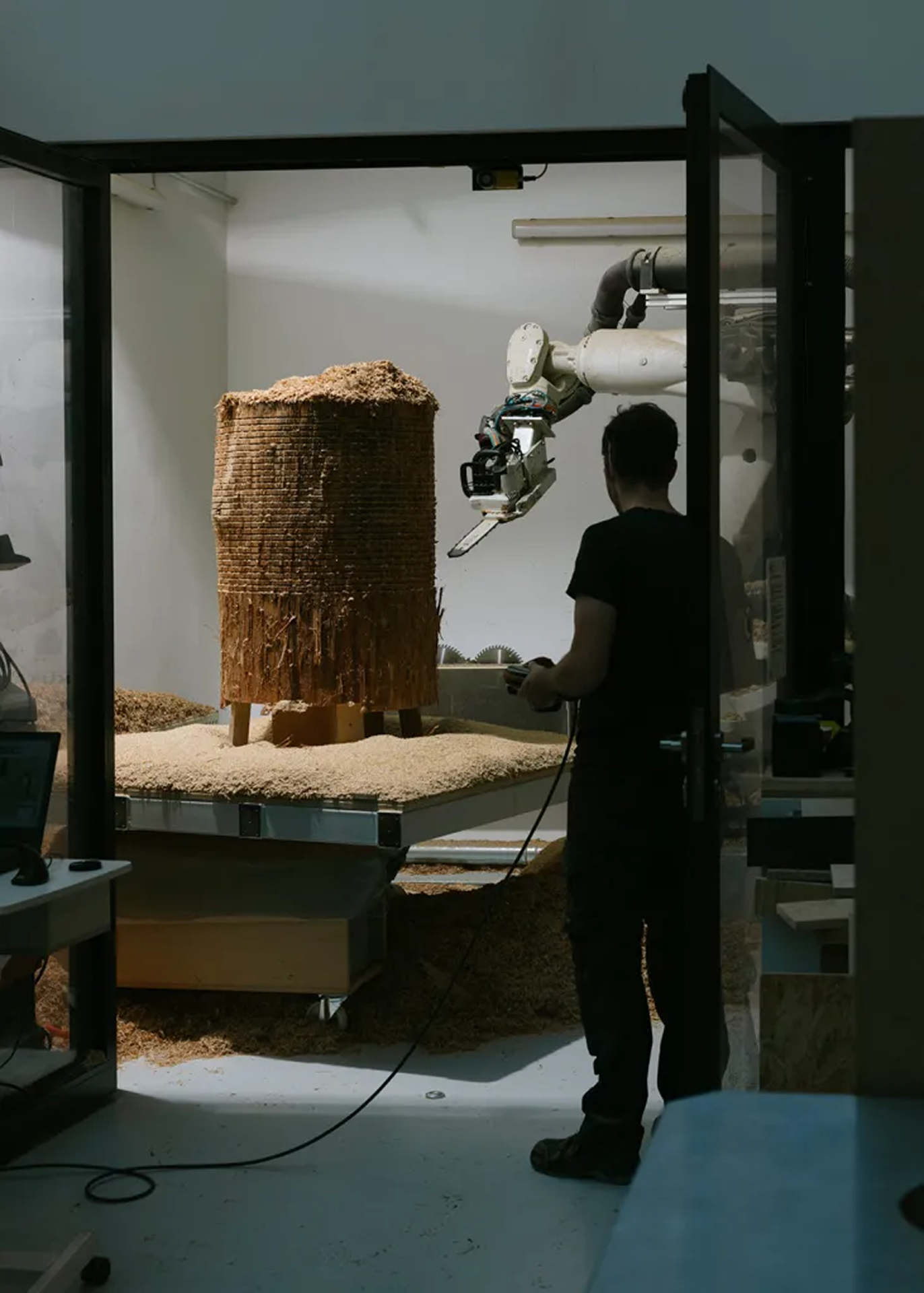
These disciplines interact directly in the implementation of the project. The handling of urban timber — including sourcing, sawing, transport, and storage — relies on craft and forestry knowledge, while design disciplines shape the transformation of material into objects, exhibitions, and communication formats. Digital tools support the development of a traceability system linking species, origin, and material properties, combining web development, design, and wood technology.
The added value of this transdisciplinary approach lies in the integration of complementary perspectives. Environmental knowledge informs sustainable material use, craft enables physical transformation, and design translates material into cultural and aesthetic value. Together, these disciplines form a coherent system that connects ecological understanding with production and communication, enabling new uses of urban wood that would not be possible within a single field.
Stadtholz operates as a non-profit association (Verein) with a hybrid, evolving funding model that combines community-driven structures with material- and project-based income.
A key foundation is urban wood as a zero-cost raw material, accessed through cooperation with the City Gardens Department (MA42). As a result, processing and logistics — such as transport, sawmilling, and drying — represent the main costs. While current production is limited, increasing capacity is expected to improve economic viability over time.
Revenue is generated through the sale of processed urban wood, paid design commissions, honoraria from public events, workshops and lectures, as well as occasional prize funding. A symbolic membership fee supports basic administration, while individual member projects contribute back through material use and shared value.
The model is supported by a low-cost structure: free access to raw material and largely voluntary labour significantly reduce expenses. Looking ahead, sustainability will be strengthened by scaling material sales, expanding educational formats, and accessing public funding.
Together, these elements form a resilient and adaptable model that supports the long-term development of the initiative.
Stadtholz addresses a gap common to most European cities: urban trees are regularly felled, yet the resulting wood is rarely recovered for high-value use. This shared condition makes the model broadly transferable, as reflected in interest from practitioners in Austria, Switzerland, Sweden and Hungary.
The project functions as a modular system combining sourcing, processing, redistribution, documentation, and community engagement. Several elements are directly replicable. The traceability system — recording origin, species, processing, and use — can be adopted with minimal adaptation. The redistribution model, connecting salvaged material to designers and craftsmen, follows a simple, scalable logic. The organisational structure offers a flexible framework for horizontal coordination and shared resource management. A strong visual identity and communication approach are integral to the model, making the system legible and transferable even when adapted to local contexts.
Other elements require local adaptation. Municipal partnerships vary across contexts, but the underlying incentive remains consistent: supporting circular initiatives provides sustainability impact and public visibility. While access to zero-cost material depends on local infrastructure, complementary sourcing from privately owned trees broadens applicability.
Overall, Stadtholz demonstrates a locally grounded but widely adaptable model that combines accessible methods, existing infrastructures, and collaborative networks to enable circular urban material use.