Enhancing Circularity, Sustainability, and Innovation
AI for Urban Building Management
AI for Sustainable Urban Building and Utilities Management
AI for Urban Building Management explores how artificial intelligence can help cities manage energy, water and heat consumption in public buildings. Using real urban data and machine learning models, the project identifies inefficiencies, predicts resource use and tests sustainable management scenarios. The goal is to support cities in reducing emissions, lowering costs and creating smarter and more sustainable urban environments.
Poland
Local
Warsaw
Mainly urban
It refers to other types of transformations (soft investment)
Prototype level
No
No
No
Individual
The concept “AI for Sustainable Urban Building and Utilities Management” explores how artificial intelligence can help cities manage public buildings in a smarter, more sustainable and human-centered way. Public buildings such as schools, offices and community facilities play an important role in everyday urban life, yet they often consume large amounts of energy and resources. Improving how these buildings are managed can reduce emissions, lower costs and improve the quality of public spaces used by citizens.
The project focuses on analysing real data from municipal buildings in Warsaw, including energy, heat and water consumption as well as selected technical characteristics of buildings. By applying machine learning models, the project investigates how artificial intelligence can identify inefficiencies, detect anomalies and predict future resource demand.
A key element of the concept is the use of AI models to test different management scenarios before they are implemented in practice. These scenarios may include changes in building operation schedules, improvements in energy efficiency or strategies for renovation and modernization. Such simulations allow decision-makers to evaluate environmental and economic impacts without the need for costly trial-and-error interventions.
The expected outcomes include a set of recommendations for integrating AI tools into municipal building management systems, a framework for evaluating environmental and financial benefits, and a methodological approach that can be replicated in other cities.
In the longer term, the concept also explores the integration of artificial intelligence with digital twin technologies and generative AI assistants supporting professionals responsible for managing public infrastructure.
By combining data science, urban sustainability and digital innovation, the project contributes to the transformation of cities into more resilient, efficient and environmentally responsible places.
The idea emerged from the observation that cities are increasingly expected to reduce emissions, improve energy efficiency and respond to climate challenges, while also managing large and complex building portfolios. Public buildings are a key part of this challenge, as they are used daily by thousands of people and require significant resources to operate.
At the same time, many cities already collect large volumes of data related to energy and utilities consumption in their buildings. However, these datasets are rarely analysed in ways that support strategic decision-making. This gap between available data and practical use inspired the development of this concept.
The project was initiated through collaboration with the City of Warsaw, particularly with the municipal IT office responsible for digital infrastructure and data systems. Early discussions with city representatives highlighted the potential of using artificial intelligence to better understand energy consumption patterns and support more informed decisions regarding building management.
The concept is developed through several stages. First, the project analyses the structure and quality of available urban data related to utilities consumption and building characteristics. This stage helps determine how such data can be used for predictive modelling.
The next step includes a review of existing artificial intelligence solutions used in smart cities and building management systems worldwide. Based on these findings, selected machine learning models are tested using real urban datasets.
An important part is collaboration with stakeholders responsible for managing public buildings. Workshops and consultations allow to understand practical needs and constraints, ensuring that the developed solutions remain applicable in real municipal contexts.
The project aims to demonstrate how artificial intelligence can transform urban data into practical tools supporting sustainable urban management.
Artificial Intelligence
Energy Efficiency
Smart Cities
Digital Twins
Urban Sustainability
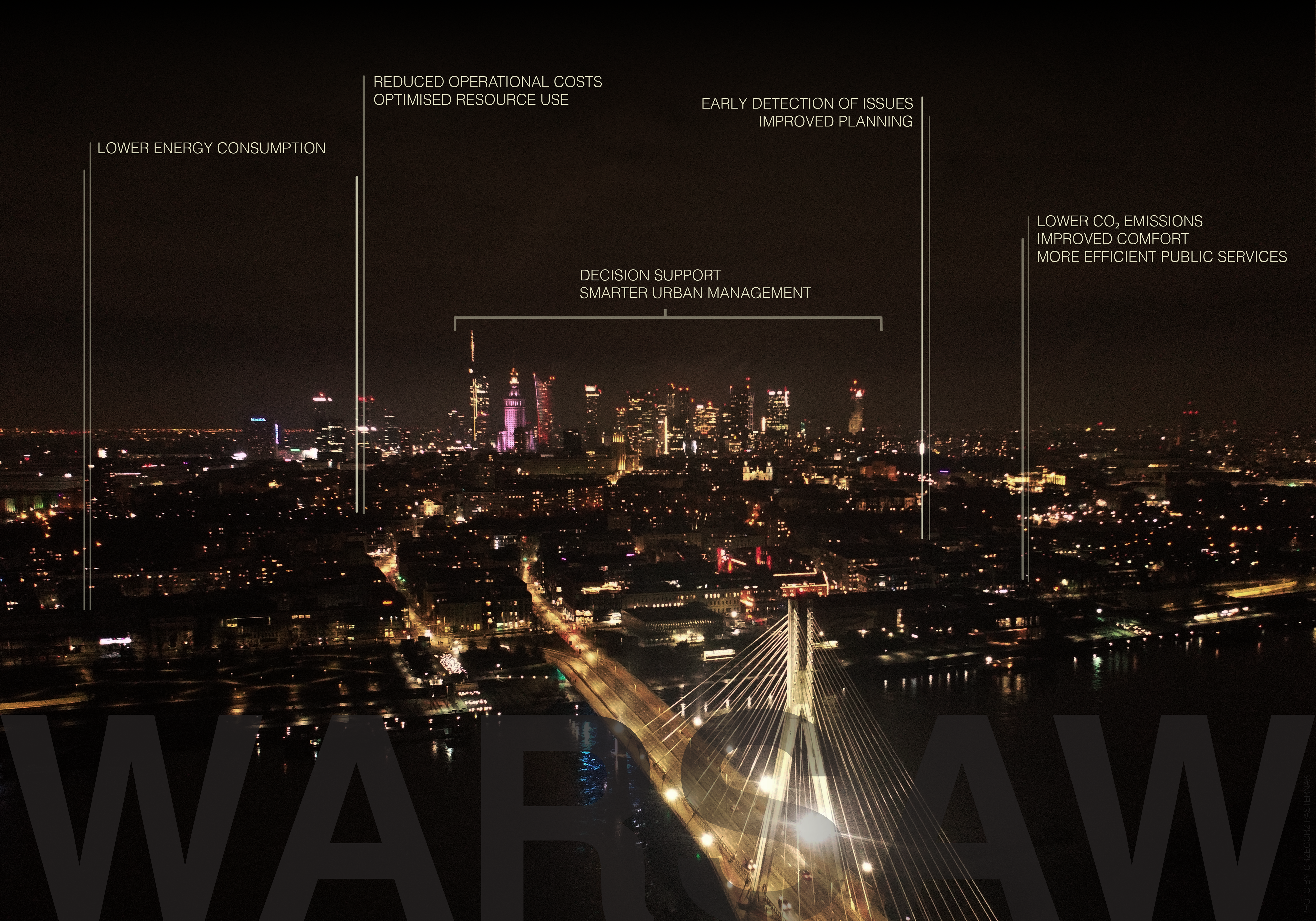
The concept addresses one of the key environmental challenges faced by cities: the high energy and resource consumption of public buildings. Schools, administrative facilities and community buildings represent a large share of municipal infrastructure and require significant amounts of energy, heat and water to operate. Improving how these resources are managed can substantially reduce greenhouse gas emissions and operational costs.
The project proposes the use of artificial intelligence and data-driven analysis to understand patterns of resource consumption in urban buildings and identify inefficiencies that are often difficult to detect using traditional management approaches. By analysing real operational data and applying machine learning models, the project aims to improve forecasting of energy demand, detect anomalies and support more efficient building operation.
Another important aspect is the use of scenario analysis. Artificial intelligence models can simulate different management strategies, such as adjusting building operation schedules, improving energy efficiency measures or planning renovation strategies. This allows cities to test the environmental impact of different decisions before implementing them in practice.
The concept also contributes to long-term sustainability by supporting evidence-based urban governance. By transforming existing urban data into actionable insights, cities can make better decisions about investments, energy use and building management.
Ultimately, the project contributes to the transition toward more sustainable cities by reducing resource consumption, supporting climate mitigation goals and enabling more efficient management of public infrastructure.
Although the concept focuses primarily on improving the management of urban buildings, its long-term impact directly relates to the quality of everyday spaces used by citizens. Public buildings such as schools, libraries or administrative facilities are essential parts of neighbourhood life and influence how people experience the city.
By improving the efficiency and operation of these buildings, the project contributes to creating more comfortable and better functioning public spaces. Optimised energy management can improve indoor environmental quality, including thermal comfort and air quality, which has a direct impact on the daily experience of people using these spaces.
The concept also supports more thoughtful planning of building renovation and modernization strategies. Through data-driven analysis and predictive models, city authorities can better identify which buildings require improvements and how investments can create the greatest positive impact.
In this sense, the project contributes to a broader vision of urban quality where technological innovation supports better living environments. Well-managed public buildings become spaces that are more comfortable, reliable and welcoming for citizens.
By connecting digital innovation with sustainable urban management, the concept supports the creation of urban environments that are not only efficient but also more pleasant and supportive of everyday community life.
The concept supports inclusion by focusing on public buildings that serve a wide range of citizens, including students, elderly people, public employees and local communities. Improving how these buildings are managed can enhance accessibility, comfort and reliability of services used by diverse groups of people.
One of the key aspects of inclusion in the project is improving the efficiency of public spending. By reducing unnecessary energy consumption and operational costs, municipalities can free financial resources that can be reinvested into improving public services, accessibility and building infrastructure.
The project also promotes transparent and data-informed decision-making in urban governance. Using data analysis and artificial intelligence helps municipalities better understand how public resources are used and how improvements can benefit communities.
Another important element is the potential for open and scalable solutions. By exploring open-source tools and transferable methodologies, the project encourages broader accessibility of digital innovations in urban management. This makes it easier for smaller municipalities or public institutions with limited resources to adopt similar approaches.
Through these mechanisms, the concept supports more inclusive urban governance and contributes to the development of public infrastructure that serves diverse communities more effectively.
The development of the concept involves collaboration with stakeholders responsible for managing urban buildings and digital infrastructure. The project is carried out in cooperation with the City of Warsaw, particularly with municipal units responsible for IT systems and building management.
Stakeholder engagement plays an important role in shaping the research process. Meetings and consultations with city representatives help identify real challenges related to building management, data availability and operational constraints. This ensures that the solutions developed within the project respond to practical needs rather than purely theoretical assumptions.
The participatory approach also includes ongoing dialogue with professionals responsible for managing municipal buildings. Their insights help interpret the analysed data and evaluate the feasibility of proposed AI-based solutions.
By involving stakeholders in the development process, the project promotes co-creation of knowledge and supports the development of solutions that are more likely to be implemented in practice. This collaborative approach strengthens the connection between research, public administration and real urban challenges.
The concept is developed within a governance framework that connects different institutional levels involved in urban management and innovation.
At the local level, the project is closely linked with the City of Warsaw and municipal institutions responsible for building management and digital infrastructure. Their involvement enables access to data, identification of operational challenges and evaluation of potential implementation pathways.
At the national level, the concept contributes to broader discussions on digital transformation of public administration and energy efficiency improvements in public infrastructure.
At the European level, the project aligns with policy priorities related to smart cities, digital twins and the use of artificial intelligence to support sustainable urban development. It also draws inspiration from European research initiatives focused on energy efficiency and sustainable urban systems.
By linking actors from municipal administration, research institutions and broader European policy frameworks, the project contributes to knowledge exchange and strengthens the potential for transferring the concept to other cities.
The concept integrates knowledge from several disciplines in order to address complex urban challenges.
Data science and artificial intelligence form the technological foundation of the project, enabling advanced analysis of energy consumption patterns and predictive modelling.
Engineering and building science provide the technical understanding necessary to interpret building performance, infrastructure systems and energy use in real environments.
Urban studies and public administration perspectives are also important, as the project focuses on how cities manage public infrastructure and make strategic decisions about investments and sustainability policies.
The concept also connects technological innovation with environmental sustainability, exploring how digital tools can support climate goals and more efficient use of urban resources.
By combining expertise from digital technologies, engineering, urban management and sustainability research, the project creates a comprehensive framework for improving the performance of public buildings and supporting the transition toward more sustainable cities.
The concept is based primarily on a public value model in which cities benefit from improved efficiency in managing public buildings and infrastructure. Municipalities operate large portfolios of buildings that require significant financial resources for energy, heating and water consumption. Even small improvements in efficiency can therefore generate substantial long-term savings.
In the initial stage, the development of the concept is supported through research activities and collaboration with public institutions such as the City of Warsaw. Public funding for innovation, digital transformation and sustainable urban development plays an important role in enabling experimentation with new tools and analytical approaches.
In the longer term, the concept may evolve into a scalable digital solution supporting municipal building management. Artificial intelligence models and analytical tools developed within the project could be integrated into existing building management systems or urban data platforms.
Financial sustainability could be achieved through several mechanisms. Cities may adopt such tools as part of their digital infrastructure, supported by public funding for smart city initiatives, energy efficiency programmes or climate transition policies. The concept also allows for collaboration with technology providers, research institutions and urban innovation ecosystems.
The main economic value of the concept lies in reducing operational costs of public buildings, improving energy efficiency and supporting more strategic investment decisions. By transforming urban data into actionable insights, the project helps cities allocate resources more effectively while contributing to long-term environmental and economic sustainability.
One of the strongest aspects of the concept is its high potential for transferability and replication across different cities and urban contexts. Many municipalities collect similar types of data related to energy consumption, utilities usage and building performance. This creates favourable conditions for applying similar analytical approaches in different locations.
The methodology developed in the project can be replicated in several ways. First, the data analysis framework and machine learning models used to analyse resource consumption can be adapted to different building portfolios. Second, the approach of combining urban data with predictive modelling can be applied to various types of public infrastructure.
Another important element of scalability is the use of widely available technologies, including open-source tools and standard machine learning frameworks. This reduces barriers to adoption and makes the concept accessible to cities with different levels of technological capacity.
The concept is also compatible with emerging smart city infrastructures and digital twin initiatives. AI-based analysis of building performance can be integrated into broader urban data platforms that support strategic decision-making in cities.
Because the methodology focuses on analysing data that many cities already collect, the concept can be transferred not only to other European cities but also to different sectors of urban infrastructure management.
In the year following the application, the project will focus on further developing the concept through real-world data analysis and collaboration with municipal stakeholders.
The first step will involve a detailed assessment of available datasets related to utilities consumption and building characteristics in municipal buildings. This stage will identify which data sources can be used for modelling and which improvements in data collection may be required.
The next stage will include testing selected machine learning models on real data from public buildings. These models will aim to identify patterns in energy consumption, detect inefficiencies and explore predictive capabilities for future resource demand.
At the same time, consultations with municipal experts and building management professionals will continue in order to validate the relevance of the models and identify practical use cases.
The results of these activities will lead to the development of a set of recommendations for implementing AI tools in municipal building management systems. These recommendations will include possible implementation scenarios, potential environmental and economic benefits and guidelines for integrating AI-based analysis into urban decision-making processes.
In the longer term, the project may lead to pilot implementations in selected public buildings and further development of digital tools supporting sustainable management of urban infrastructure.