Strengthening Local Democracy and Inclusion
Alzheimer's Rooftop Garden
Gardens4Good Rooftop Garden for Alzheimer's Patients
The Gardens4Good project brings together European citizens to co-create and co- steward rooftop gardens for positive social impact. We leverage previously unused spaces to create gardens on the roofs of buildings housing fragile populations, such as Alzheimer retirement homes & social apartments, providing the residents with intergenerational educational activities that lead to a sense of purpose, creativity & ,inclusion, as well as increased consumption of healthy, locally-produced foods.
France
Local
Paris
Mainly urban
It involves a physical transformation of the built environment (hard investment)
Yes
2025-12-31
Yes
New European Bauhaus Connect NEB programme 2024
No
Yes
Organisation
The Gardens4Good association reunites fragile European citizens together to co-create and co-steward local rooftop gardens for social impact. We transform previously unused spaces into rooftop gardens on buildings housing marginalized citizens, such as retirement homes & social apartments, preserving and restoring nature.
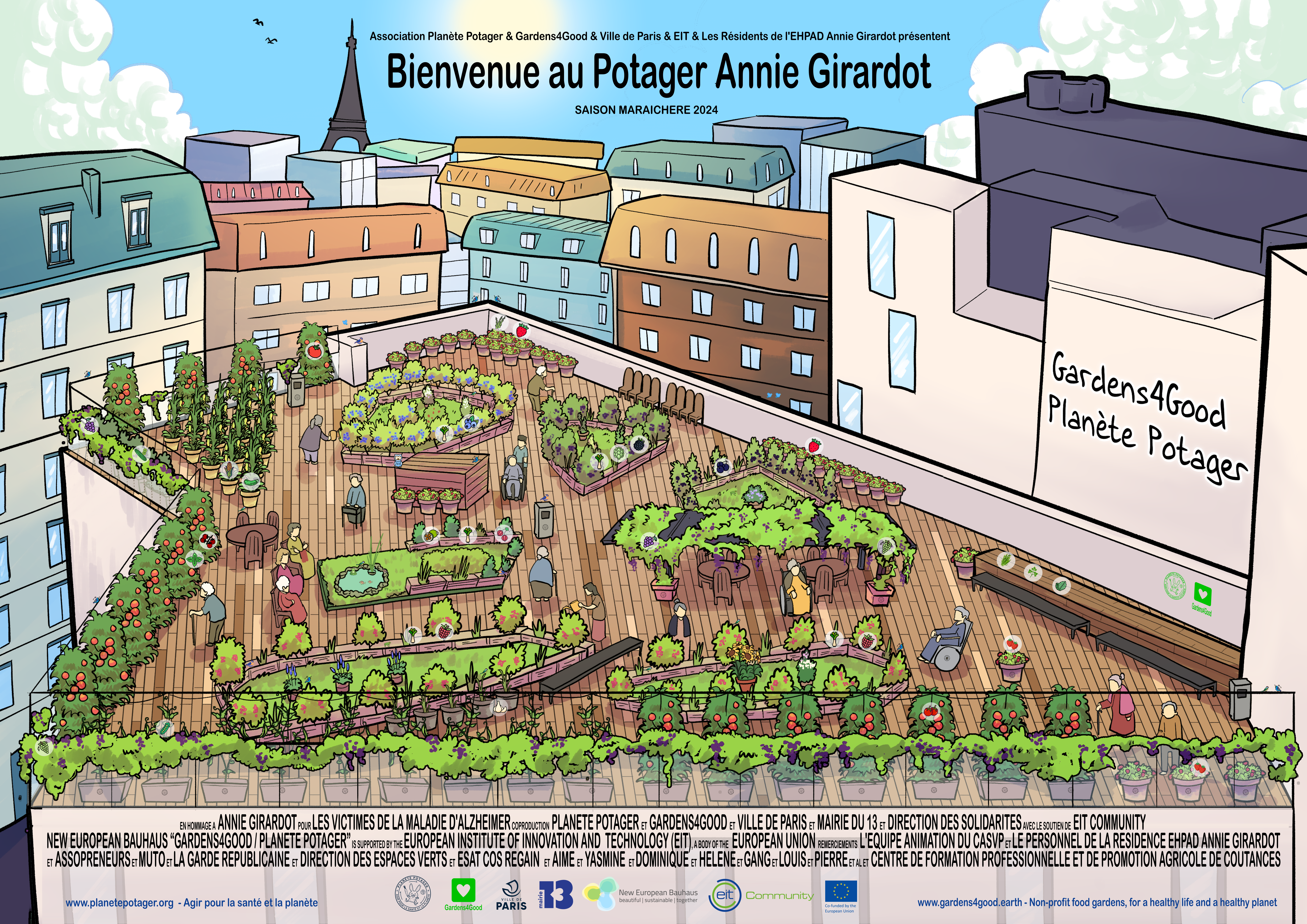
Our Connect NEB project focused on an Alzheimer’s Nursing Home in Paris, transforming their rooftop and a previously dangerous terrace into a safe space and a bountiful garden. Using design-for-all principles, we co-created the garden with the nursing home residents, leveraging the upcycling of local nature-based materials for cost efficiency and to maximize circular ecosystems.
The garden has had numerous positive impacts on the residents, including reduced social isolation, improved overall health and well-being of the Alzheimer’s patients, and increased family visits.
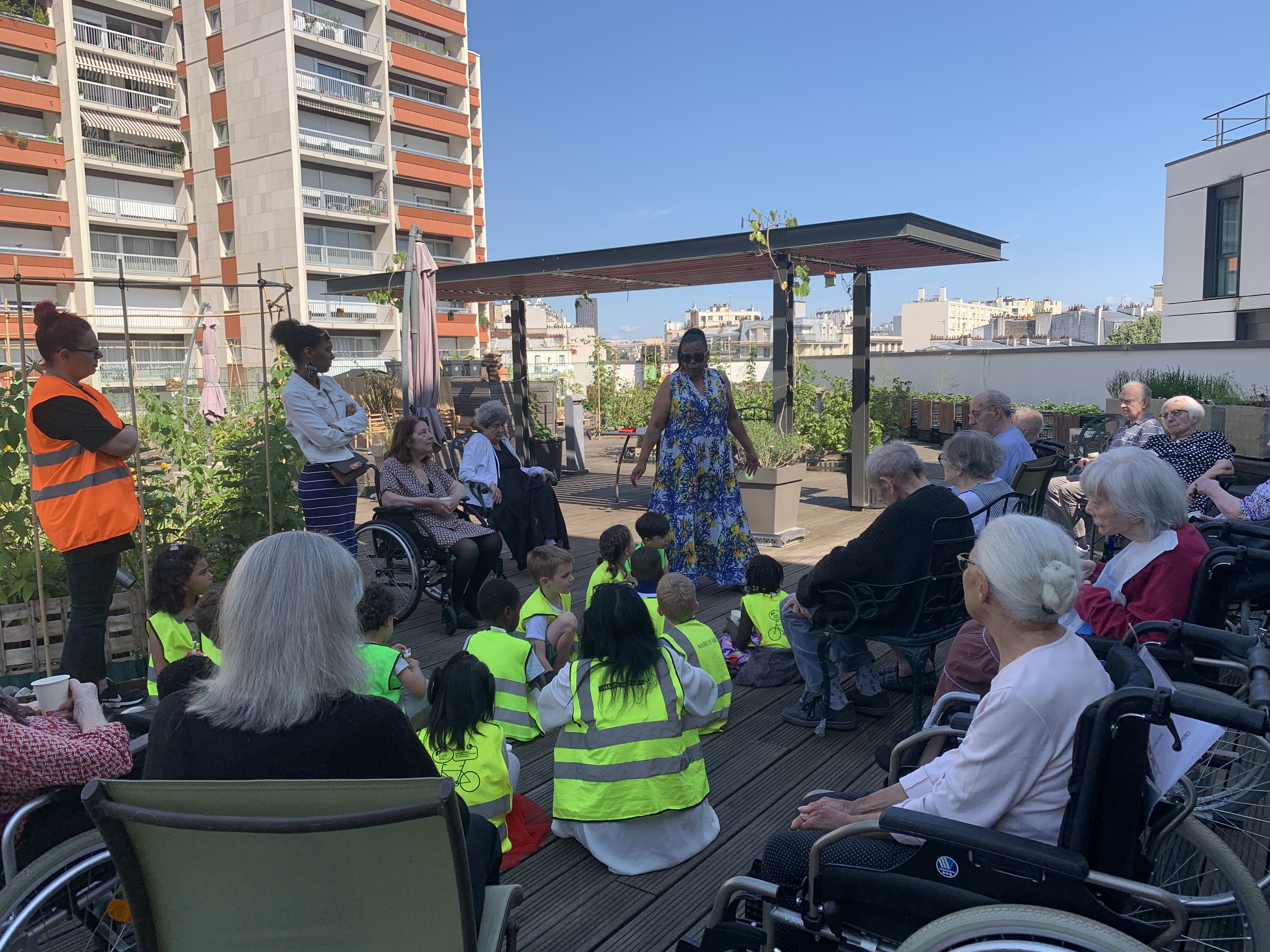
In addition, we partnered with the local schools to conduct intergenerational educational activities, leading to a sense of purpose, creativity & inclusion, while at the same time reconnecting both young and old with nature and encouraging consumption of healthy seasonal foods for all.
The project also had a positive impact on the local environment through the recycling of local organic matter into compost, preventing several hundred kilos of waste from being burned and/or sent to landfills. On top of this, the garden improved carbon capture, rain-water management and energy efficiency of the nursing home, contributed to the aesthetic greening of the city, and increased biodiversity and the production of new local food sources for the underprivileged.
This project, which has engaged local citizens of all ages and cultures, and thanks to the support of the Connect NEB program, has served as a model which is already being replicated across both Paris and other cities in Europe.
Our Connect NEB project focused on an Alzheimer’s Nursing Home in Paris, transforming their rooftop and a previously dangerous terrace into a safe space and a bountiful garden. Using design-for-all principles, we co-created the garden with the nursing home residents, leveraging the upcycling of local nature-based materials for cost efficiency and to maximize circular ecosystems.
The garden has had numerous positive impacts on the residents, including reduced social isolation, improved overall health and well-being of the Alzheimer’s patients, and increased family visits.
In addition, we partnered with the local schools to conduct intergenerational educational activities, leading to a sense of purpose, creativity & inclusion, while at the same time reconnecting both young and old with nature and encouraging consumption of healthy seasonal foods for all.
The project also had a positive impact on the local environment through the recycling of local organic matter into compost, preventing several hundred kilos of waste from being burned and/or sent to landfills. On top of this, the garden improved carbon capture, rain-water management and energy efficiency of the nursing home, contributed to the aesthetic greening of the city, and increased biodiversity and the production of new local food sources for the underprivileged.
This project, which has engaged local citizens of all ages and cultures, and thanks to the support of the Connect NEB program, has served as a model which is already being replicated across both Paris and other cities in Europe.
Our project was born during the Covid lockdowns, when we were unable to to travel to our countryside garden. We had a lot of time to look out our windows, and that is where we noticed all of the flat rooftops in Paris which were sitting unused.
At the same time, there were many supply chain problems and the cost of food was rising, make access to affordable nutrition difficult for low-income populations. This inspired us to think about how we could bring urban farming back into cities, and thus the Gardens4Good project was born.
Once we were allowed to leave our flat, we were still limited to a 1km radius, so we sought out several nursing homes in our neighborhood. Three were willing to be a pilot site for us, and one of them had an unused terrace and two easily accessible rooftops, plus it was owned by the City of Paris and had motivated residents, so it was an easy choice to start our pilot project there.
At the same time, there were many supply chain problems and the cost of food was rising, make access to affordable nutrition difficult for low-income populations. This inspired us to think about how we could bring urban farming back into cities, and thus the Gardens4Good project was born.
Once we were allowed to leave our flat, we were still limited to a 1km radius, so we sought out several nursing homes in our neighborhood. Three were willing to be a pilot site for us, and one of them had an unused terrace and two easily accessible rooftops, plus it was owned by the City of Paris and had motivated residents, so it was an easy choice to start our pilot project there.
Social Inclusion
Circular economy
Biodiversity
Community co-design
Nature-based solutions
We took great care to integrate circularity from the start, with the goal of upcycling as many local materials as possible for its construction. This included collaborating with the local supermarkets & outdoor food markets to collect by foot their discarded fruit & veg trays, which we stacked and upcycled into 100+ planters for the garden.
Thanks to a local startup which gathers materials leftover after trade shows, we were able to obtain for free both wood and natural textiles, which we repurposed to protect both the inside and outside of the planters from UV rays and humidity. This allowed us to create a prototype of the first circular and 100% sustainable rooftop garden box, which has lasted well over the past 18 months and held up to the elements to this day.
Instead of purchasing Tons of soil, we partnered with the City of Paris garden unit to gather leaves, grass clippings and woodchips from the local parks, transporting everything back and forth every day on foot to the nursing home. This organic matter was then mixed with food scraps from the nursing home kitchen and left to ferment over the winter in order to create a rich, compost soil for the spring planting. In addition, we took care to choose plants which flowered at different periods of the year, and also left specific spaces for pollinators through the garden, increasing the local biodiversity.
As water access is limited on the rooftop, we implemented several techniques to reduce water consumption, including adding woodchips to prevent soil humidity evaporation, upcycling old garbage bins into water capture/storage containers and by creating a small pond, which provides not only a water point for insects and birds, but also a refreshing and aesthetic resting point for the residents.
Because everything was done on foot and sourced locally, the project generated an overall positive impact on the local environment by reducing pollution, improving carbon capture and aesthetic greening.
Thanks to a local startup which gathers materials leftover after trade shows, we were able to obtain for free both wood and natural textiles, which we repurposed to protect both the inside and outside of the planters from UV rays and humidity. This allowed us to create a prototype of the first circular and 100% sustainable rooftop garden box, which has lasted well over the past 18 months and held up to the elements to this day.
Instead of purchasing Tons of soil, we partnered with the City of Paris garden unit to gather leaves, grass clippings and woodchips from the local parks, transporting everything back and forth every day on foot to the nursing home. This organic matter was then mixed with food scraps from the nursing home kitchen and left to ferment over the winter in order to create a rich, compost soil for the spring planting. In addition, we took care to choose plants which flowered at different periods of the year, and also left specific spaces for pollinators through the garden, increasing the local biodiversity.
As water access is limited on the rooftop, we implemented several techniques to reduce water consumption, including adding woodchips to prevent soil humidity evaporation, upcycling old garbage bins into water capture/storage containers and by creating a small pond, which provides not only a water point for insects and birds, but also a refreshing and aesthetic resting point for the residents.
Because everything was done on foot and sourced locally, the project generated an overall positive impact on the local environment by reducing pollution, improving carbon capture and aesthetic greening.
Our Connect NEB project focused on an Alzheimer’s Nursing Home in Paris,transforming their rooftop and a previously dangerous terrace into a safe space and a bountiful garden. Using design-for-all principles, we co-created the garden with the residents, leveraging the upcycling of local nature-based materials for cost efficiency
and to maximize circular ecosystems.
Regarding well-being, we observed positive social effects on several residents, who prior the garden spent most of their time alone in their rooms, and who now interact more with the staff and other residents thanks to the garden and its many participatory activities year-round.
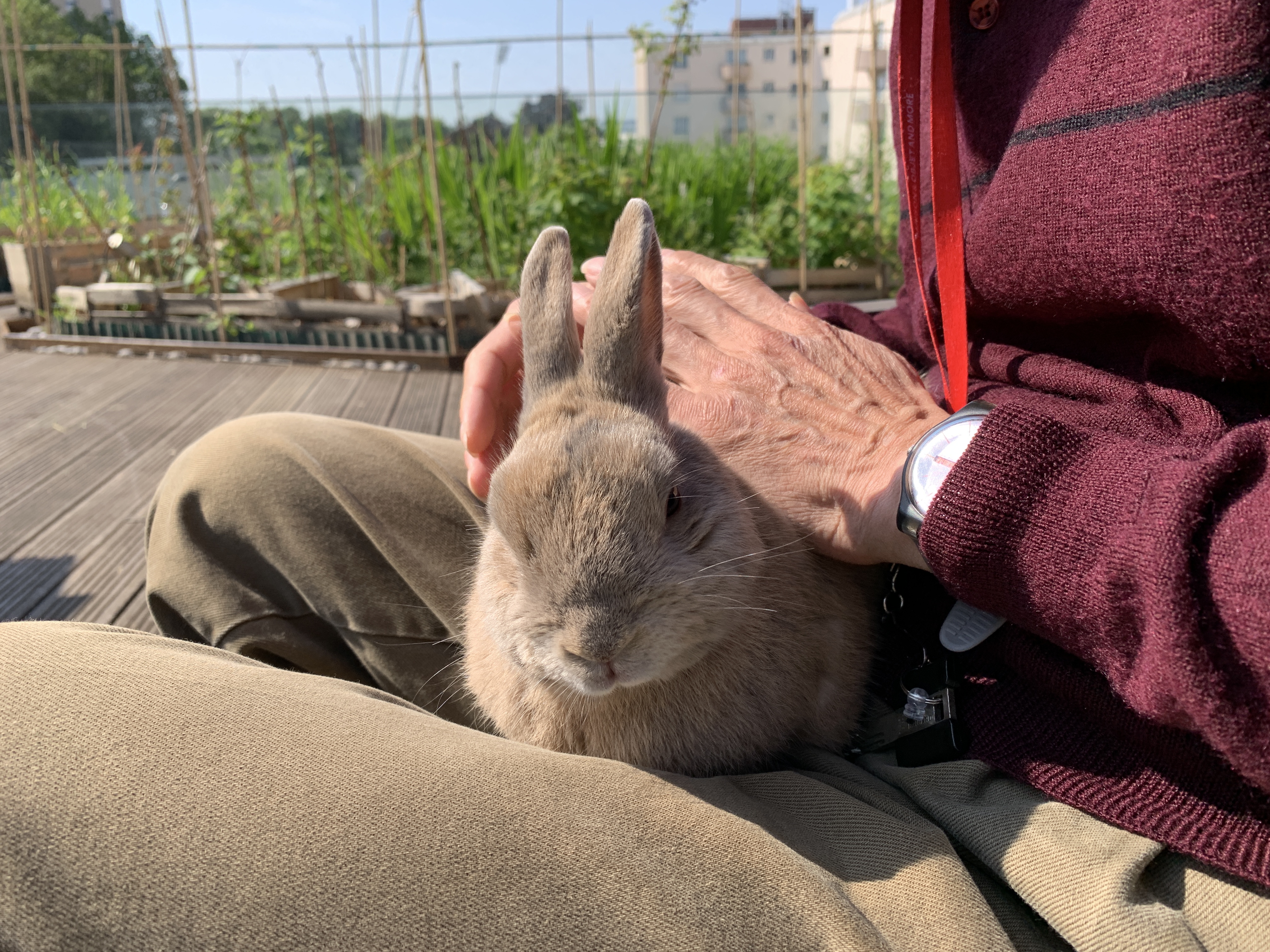
Per the staff, here has also been an increase in the number of visits from families, as well as the length of their visits, as the garden gives them a beautiful and safe place to spend time with their loved ones. The grandchildren are also excited now to come to the nursing home because it means they can be outside, hunt for berries and visit the garden’s rabbit, versus previously only having the option of crowding in the resident’s room.
It has also improved the quality of the workplace for the staff, many of whom participated in the project along with the residents, and it has also given them a place to take the residents to encourage movement and exercise.
We have also had regular positive feedback from the local community, including many neighbors from the highrise buildings surrounding the nursing home. They have been delighted to follow along with the garden’s construction from their home, and report being very happy to have such a beautiful garden as part of their view.
Lastly, it has also inspired several neighbors to start their own balcony gardens for both flowers and food production, and many of the nursing home staff have also started their own food garden at home, further amplifying the positive aesthetic and biodiversity impacts of this project.
and to maximize circular ecosystems.
Regarding well-being, we observed positive social effects on several residents, who prior the garden spent most of their time alone in their rooms, and who now interact more with the staff and other residents thanks to the garden and its many participatory activities year-round.
Per the staff, here has also been an increase in the number of visits from families, as well as the length of their visits, as the garden gives them a beautiful and safe place to spend time with their loved ones. The grandchildren are also excited now to come to the nursing home because it means they can be outside, hunt for berries and visit the garden’s rabbit, versus previously only having the option of crowding in the resident’s room.
It has also improved the quality of the workplace for the staff, many of whom participated in the project along with the residents, and it has also given them a place to take the residents to encourage movement and exercise.
We have also had regular positive feedback from the local community, including many neighbors from the highrise buildings surrounding the nursing home. They have been delighted to follow along with the garden’s construction from their home, and report being very happy to have such a beautiful garden as part of their view.
Lastly, it has also inspired several neighbors to start their own balcony gardens for both flowers and food production, and many of the nursing home staff have also started their own food garden at home, further amplifying the positive aesthetic and biodiversity impacts of this project.
Given the target population was a nursing home, with residents and staff of all ages/origins, situated in one of the less advantaged neighborhoods in Paris, it was important to integrate both diversity and inclusivity goals into the project to maximize impact.
From the beginning, we knew we would have to work to rehabilitate the space to make it accessible for residents of all physical abilities. We renovated the terrace surface for longevity and safety, and added planks & railings to ensure residents would not fall into the gardening spaces. We also designed the garden with wheel-chair accessibility in mind, leaving space to safely circulate throughout.
The residents were consulted at every step of the design process, and played an important role in deciding what we should plant and where.
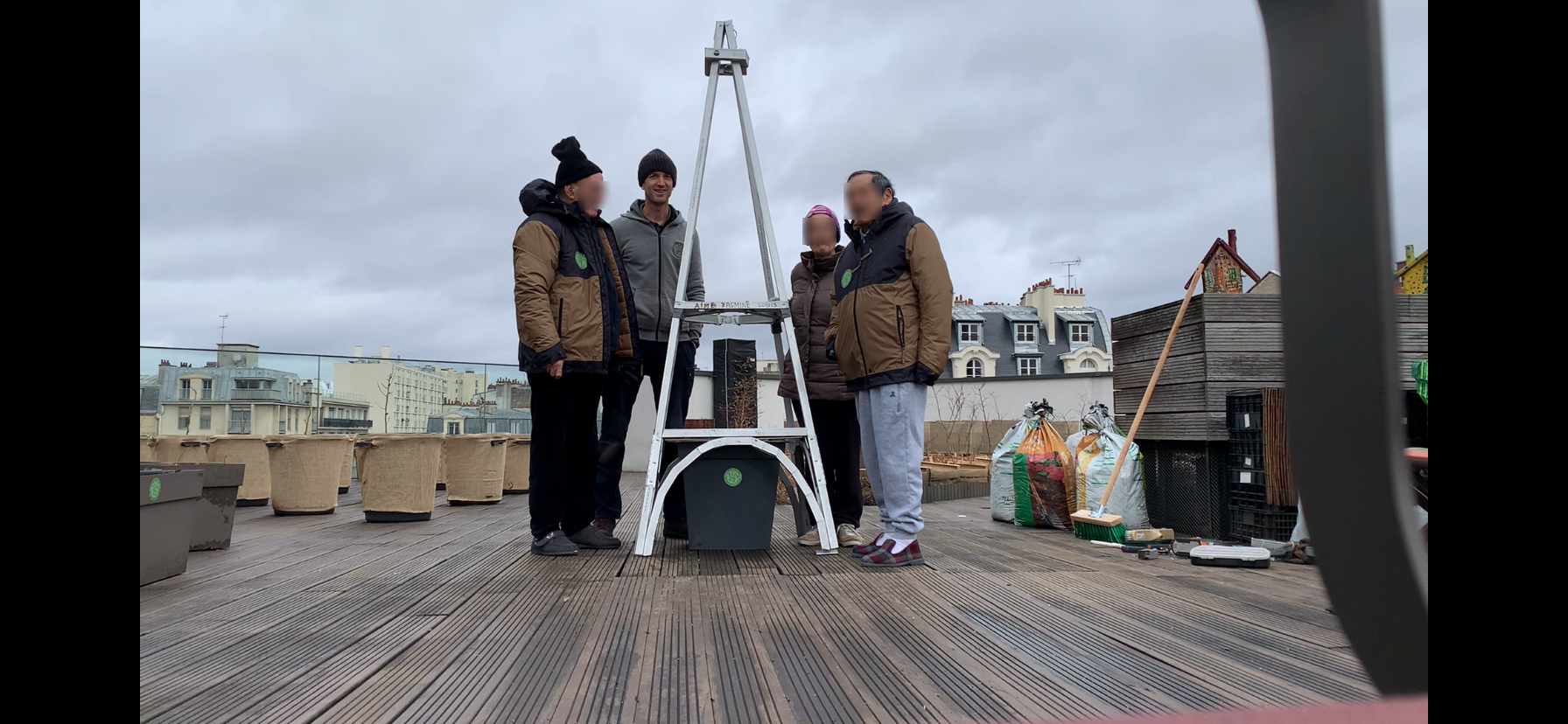
The Nursing Home is also a Pride certified, so one of our activities including repainting a chair for the garden in rainbow colors, with the assistance of the residents, to confirm all are welcome.
In addition, we partnered with the local schools to conduct intergenerational educational activities, leading to a sense of purpose, creativity & inclusion, while at the same time reconnecting both young and old with nature and encouraging consumption of healthy seasonal foods for all.
The project also had a positive impact on the local environment through the recycling of local organic matter into compost, preventing several hundred kilos of waste from being burned and/or sent to landfills. On top of this, the garden improved carbon capture, rain-water management and energy efficiency of the nursing home, contributed to the aesthetic greening of the city, and increased biodiversity and the production of new local food sources for the underprivileged.
From the beginning, we knew we would have to work to rehabilitate the space to make it accessible for residents of all physical abilities. We renovated the terrace surface for longevity and safety, and added planks & railings to ensure residents would not fall into the gardening spaces. We also designed the garden with wheel-chair accessibility in mind, leaving space to safely circulate throughout.
The residents were consulted at every step of the design process, and played an important role in deciding what we should plant and where.
The Nursing Home is also a Pride certified, so one of our activities including repainting a chair for the garden in rainbow colors, with the assistance of the residents, to confirm all are welcome.
In addition, we partnered with the local schools to conduct intergenerational educational activities, leading to a sense of purpose, creativity & inclusion, while at the same time reconnecting both young and old with nature and encouraging consumption of healthy seasonal foods for all.
The project also had a positive impact on the local environment through the recycling of local organic matter into compost, preventing several hundred kilos of waste from being burned and/or sent to landfills. On top of this, the garden improved carbon capture, rain-water management and energy efficiency of the nursing home, contributed to the aesthetic greening of the city, and increased biodiversity and the production of new local food sources for the underprivileged.
As co-creation is one of the principal goals of Connect NEB, it was vital to us that the garden be built both by and with its users.
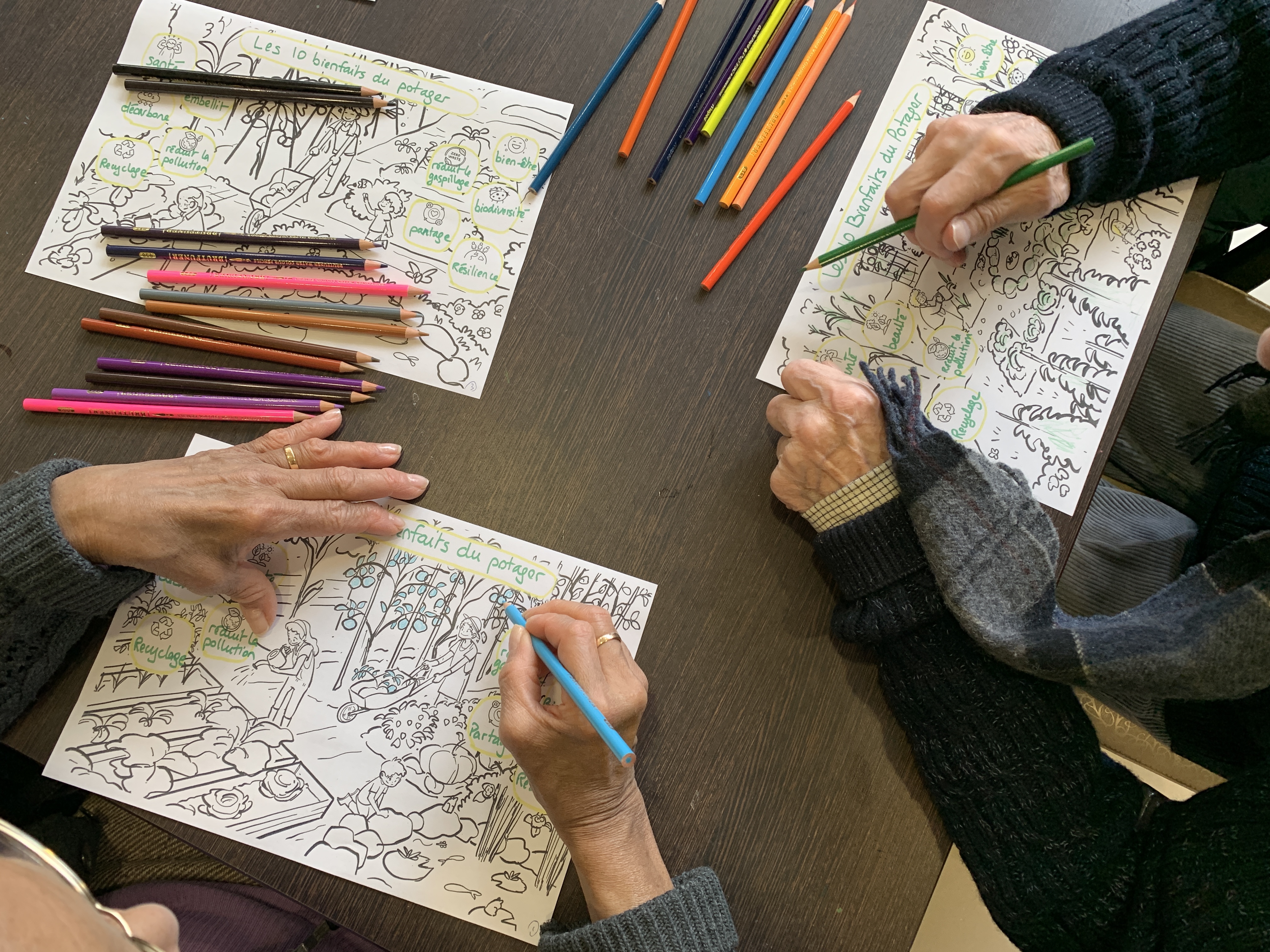
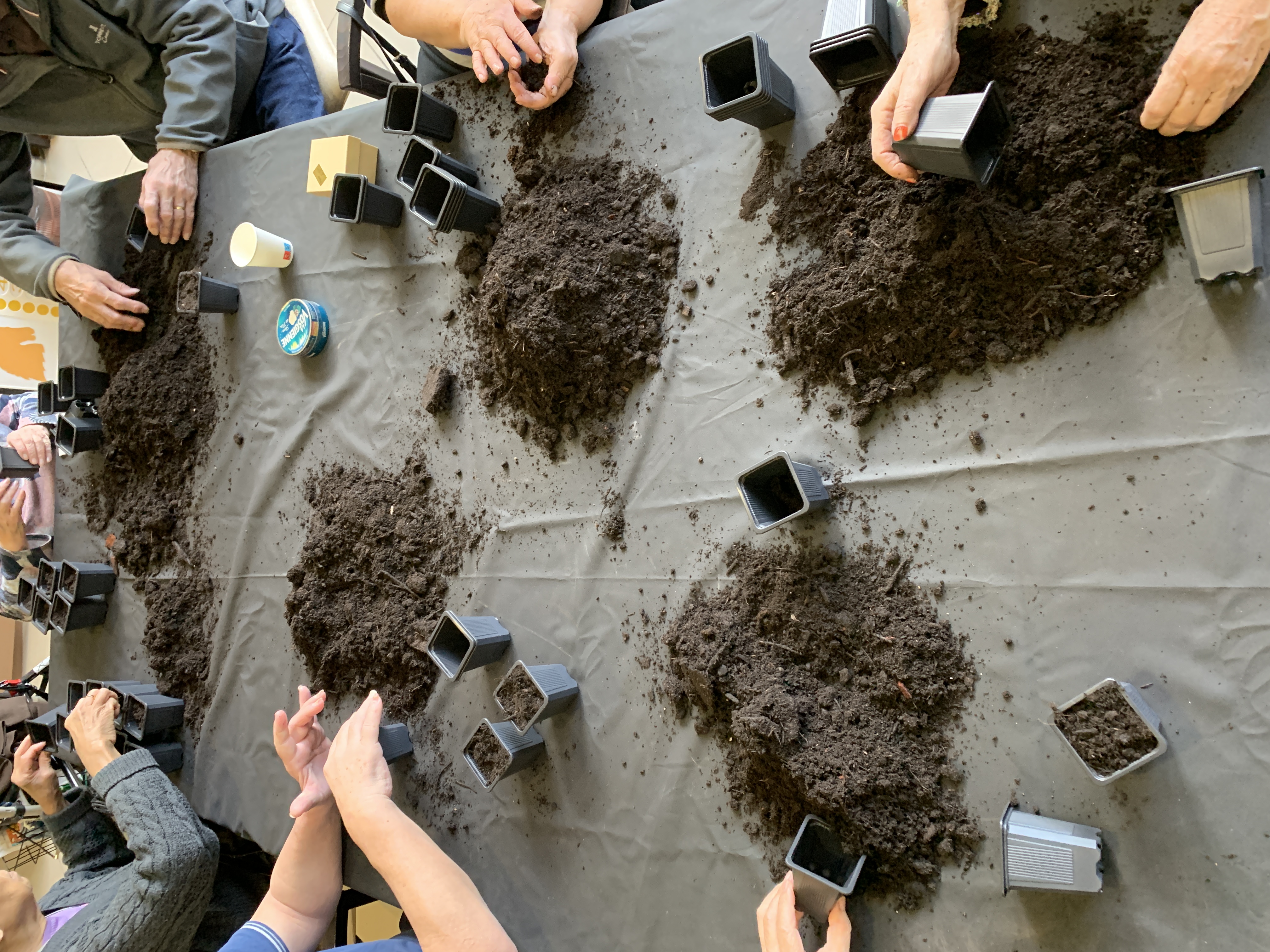
The first month of the project was spent co-designing the garden together with the nursing home staff and its residents, both through art projects and consultative sessions. In the primary phase, Residents were also co-stewards of the garden with us through the preparation of the soil, planting of seeds, watering of plants and their favorite part of course – the harvest.
The garden was also a source of inspiration for the nursing home’s activity,coordinators, who took at advantage of the availability of seasonal fruits & vegetables to create weekly cooking activities. For example, the residents helped prepare vegetables for the nightly soup, making fruit jams or tarts, or drying herbs for future tea tasting sessions.
The impact on the target group, Alzheimer's residents, has been overwhelmingly positive. We have had direct feedback from the nursing home doctors regarding the overall health of the residents, and several have been able to reduce their anti- depressant medications due to the boost in mood from the gardening activities. We have also had reports from the health care staff that it stimulated the appetite of several residents, who previously struggled with eating. Many of the staff members come from non-French backgrounds, so these cooking activities have also been a way for them to share some of their own culture with the residents.
In addition, we are very pleased to have been able to integrate a strong intergenerational aspect into the project. Over the course of the program, we received 10+ visits from local schools, ranging from ages 4 to 14, for a total of 300 children. We developed a series of age-appropriate quizzes to help the students learn about gardening and fruits and vegetables, and the garden tours were led by the nursing home residents.
The first month of the project was spent co-designing the garden together with the nursing home staff and its residents, both through art projects and consultative sessions. In the primary phase, Residents were also co-stewards of the garden with us through the preparation of the soil, planting of seeds, watering of plants and their favorite part of course – the harvest.
The garden was also a source of inspiration for the nursing home’s activity,coordinators, who took at advantage of the availability of seasonal fruits & vegetables to create weekly cooking activities. For example, the residents helped prepare vegetables for the nightly soup, making fruit jams or tarts, or drying herbs for future tea tasting sessions.
The impact on the target group, Alzheimer's residents, has been overwhelmingly positive. We have had direct feedback from the nursing home doctors regarding the overall health of the residents, and several have been able to reduce their anti- depressant medications due to the boost in mood from the gardening activities. We have also had reports from the health care staff that it stimulated the appetite of several residents, who previously struggled with eating. Many of the staff members come from non-French backgrounds, so these cooking activities have also been a way for them to share some of their own culture with the residents.
In addition, we are very pleased to have been able to integrate a strong intergenerational aspect into the project. Over the course of the program, we received 10+ visits from local schools, ranging from ages 4 to 14, for a total of 300 children. We developed a series of age-appropriate quizzes to help the students learn about gardening and fruits and vegetables, and the garden tours were led by the nursing home residents.
The Gardens4Good team was responsible for the primary project implementation and stakeholder coordination, as well as the co-design phase with the Alzheimer’s residents and the construction, plantation and maintenance of the garden.
The nursing home director & staff brought their knowledge of the elderly residents and their mental/physical capabilities to the design and implementation of the seasonal workshops.
We consulted with the Municipal Institute of Disabled Persons in Barcelona, Spain, to exchange and learn best practices from their multiple rooftop garden projects.
The City of Paris also supported the project via 3 departments: the architectural council which issues permits for rooftop gardens, the elderly council of the 13th district and the department in charge of Paris Green Spaces, which provided organic matter, seeds, plants, etc for the garden. The City of Paris also provided the use of the nursing home rooftop for this POC.
In addition, they supported with the dissemination of this project via participation in our June 5th open house (Mayor of the 13th and Paris City Council Advisor on Elderly populations), as well as publication of a social media posting and an article in the Paris citizen magazine. They also support the dissemination of this project by giving regular tours of the garden to other nursing home directors and other Paris city officials to inspire others to replicate the concept.
Lastly, it was not planned, but because the garden was so well-received and we had so much interest from the neighboring buildings who had been following the garden from their apartments, we hosted an open house for the rooftop garden on June 5th, 2024. The open house included a speech from the Local Mayor, the Paris Elderly Council Chief of Staff, the Retirement home Director, the Chief Farming Officer and a representative of EIT Community/NEB, and had over 150 attendees from city officials to local citizens to family members of the residents.
The nursing home director & staff brought their knowledge of the elderly residents and their mental/physical capabilities to the design and implementation of the seasonal workshops.
We consulted with the Municipal Institute of Disabled Persons in Barcelona, Spain, to exchange and learn best practices from their multiple rooftop garden projects.
The City of Paris also supported the project via 3 departments: the architectural council which issues permits for rooftop gardens, the elderly council of the 13th district and the department in charge of Paris Green Spaces, which provided organic matter, seeds, plants, etc for the garden. The City of Paris also provided the use of the nursing home rooftop for this POC.
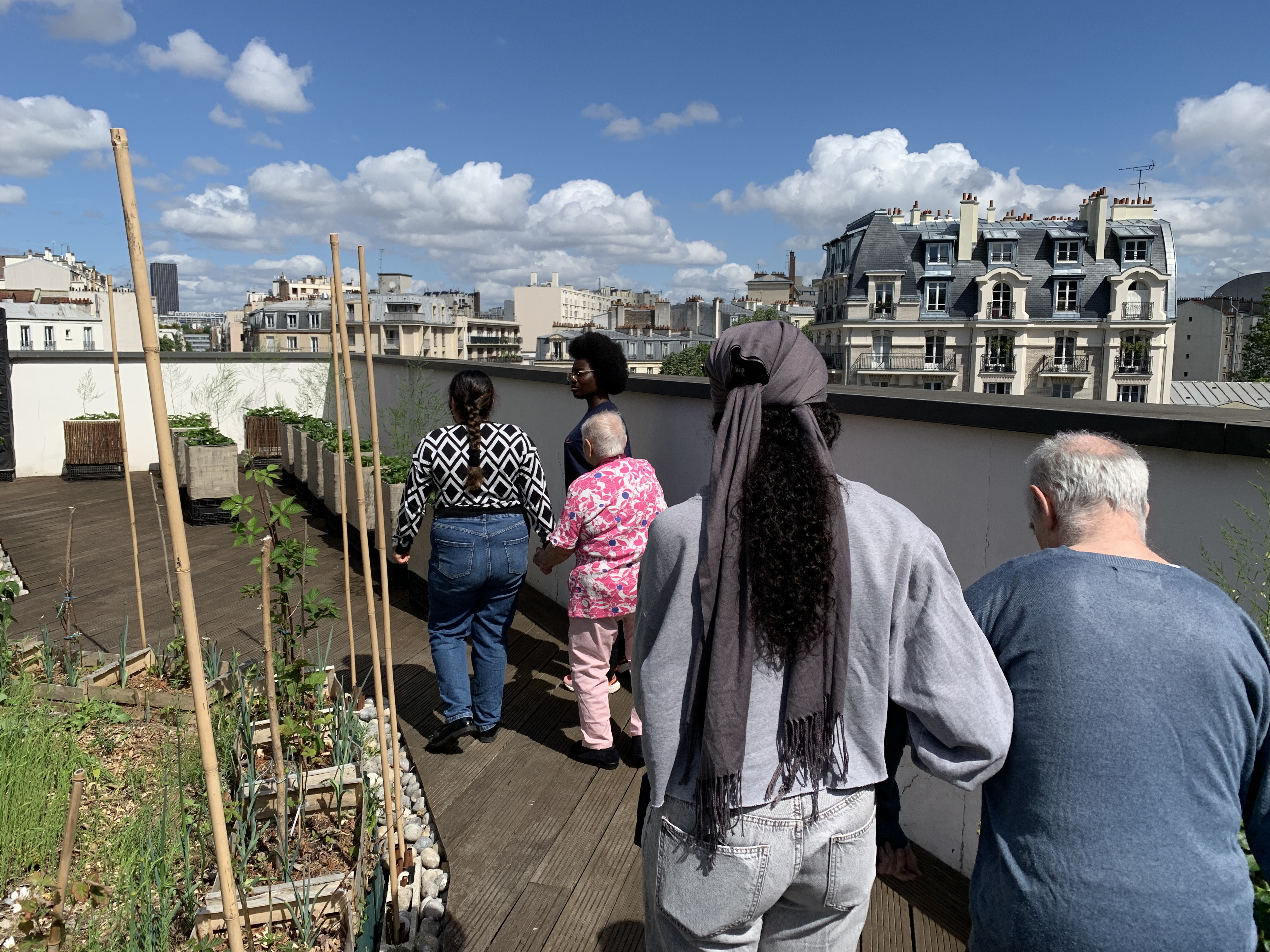
In addition, they supported with the dissemination of this project via participation in our June 5th open house (Mayor of the 13th and Paris City Council Advisor on Elderly populations), as well as publication of a social media posting and an article in the Paris citizen magazine. They also support the dissemination of this project by giving regular tours of the garden to other nursing home directors and other Paris city officials to inspire others to replicate the concept.
Lastly, it was not planned, but because the garden was so well-received and we had so much interest from the neighboring buildings who had been following the garden from their apartments, we hosted an open house for the rooftop garden on June 5th, 2024. The open house included a speech from the Local Mayor, the Paris Elderly Council Chief of Staff, the Retirement home Director, the Chief Farming Officer and a representative of EIT Community/NEB, and had over 150 attendees from city officials to local citizens to family members of the residents.
The primary skills needed are foremost professional gardening and project management skills to ensure the successful launch of the project. Secondary skills are elderly & vulnerable persons knowledge, biodiversity experts, webmaster & content manager to disseminate the project & its results.
The leader of this project has completed a training in organic vegetable farming, and brings five years of experience in permaculture gardening. The leader is passionate about working with vulnerable populations and ensuring access to healthy foods for all.
Members of the Planète Potager Association donated their time and resources to assist with the building and maintaining the garden and with the call administration and final report, as well as the social media postings.
The City of Paris Elderly council of the 13th district and the department in charge of Paris Green Spaces, were great supporters, providing organic matter, seeds, plants, etc. The City of Paris also provided the use of the nursing home rooftop for this project, and assisted with the dissemination via their website, citizen magazines, newsletters, etc.
The nursing home director & staff brought their knowledge of the elderly residents and their capabilities to the design and implementation of the seasonal workshops and weekly activities.
We were very fortunate to have the support of such a broad array of experts which helped ensure the success of the project, but of course cannot forget the Alzheimer's residents of the nursing home and their contributions, and this is something we want to highlight as it is common to underestimate fragile populations and their ability to participate in citizen engagement initiatives. There may be adaptations which need to be made, but they are on the whole still very willing to contribute to projects such as these, and their diverse backgrounds can, and do, bring very novel ideas and
suggestions.
The leader of this project has completed a training in organic vegetable farming, and brings five years of experience in permaculture gardening. The leader is passionate about working with vulnerable populations and ensuring access to healthy foods for all.
Members of the Planète Potager Association donated their time and resources to assist with the building and maintaining the garden and with the call administration and final report, as well as the social media postings.
The City of Paris Elderly council of the 13th district and the department in charge of Paris Green Spaces, were great supporters, providing organic matter, seeds, plants, etc. The City of Paris also provided the use of the nursing home rooftop for this project, and assisted with the dissemination via their website, citizen magazines, newsletters, etc.
The nursing home director & staff brought their knowledge of the elderly residents and their capabilities to the design and implementation of the seasonal workshops and weekly activities.
We were very fortunate to have the support of such a broad array of experts which helped ensure the success of the project, but of course cannot forget the Alzheimer's residents of the nursing home and their contributions, and this is something we want to highlight as it is common to underestimate fragile populations and their ability to participate in citizen engagement initiatives. There may be adaptations which need to be made, but they are on the whole still very willing to contribute to projects such as these, and their diverse backgrounds can, and do, bring very novel ideas and
suggestions.
Prior to applying for Connect NEB, we did a market study of several rooftop gardens. Most were extremely high-tech and cost a minimum of 100K€ to install. Given our end goal is a garden on every rooftop, we knew from the start we had to find a way to keep the cost low if we wanted the concept to scale, and one of our major goals with this project was to prove it was possible to build a rooftop garden with a low budget.
The highest costs from a garden typically come from labor and material installations, but these costs can be reduced to near zero if you have a group of motivated people willing to donate their time to seek out materials which can be upcycled both into planters and future substrate. Another major benefit of this approach means the garden has been able to continue after its initial NEB funding, as there were no more material investments needed and the volunteers are still there to tend to the garden, versus other projects which stop after the funding period has ended.
Removing money from the equation has also had the added benefit of allowing us to fully focus on creating positive impact for the Alzheimer’s residents, as well as forcing us to think creatively about how to repurpose a maximum of local materials. In addition, it created better connections within our community, as the need for upcycled materials ended up connecting us with different services and business owners across the neighborhood, who were all proud to contribute to a local project with a noble purpose.
With this project, we have shown this garden concept can be successful with a low material cost (no-tech), vs other existing rooftop projects, which, while impressive, include the use of technologies which render urban gardening projects extremely expensive and thus limits their ability to provide affordable foods.
The highest costs from a garden typically come from labor and material installations, but these costs can be reduced to near zero if you have a group of motivated people willing to donate their time to seek out materials which can be upcycled both into planters and future substrate. Another major benefit of this approach means the garden has been able to continue after its initial NEB funding, as there were no more material investments needed and the volunteers are still there to tend to the garden, versus other projects which stop after the funding period has ended.
Removing money from the equation has also had the added benefit of allowing us to fully focus on creating positive impact for the Alzheimer’s residents, as well as forcing us to think creatively about how to repurpose a maximum of local materials. In addition, it created better connections within our community, as the need for upcycled materials ended up connecting us with different services and business owners across the neighborhood, who were all proud to contribute to a local project with a noble purpose.
With this project, we have shown this garden concept can be successful with a low material cost (no-tech), vs other existing rooftop projects, which, while impressive, include the use of technologies which render urban gardening projects extremely expensive and thus limits their ability to provide affordable foods.
As the garden has continued on after the project’s completion, we continue to give tours to any other organizations or government officials who want to come and be inspired. We also continue to post on social media, so that our followers can continue to learn more about gardening and be inspired to start their own garden.
We are proud to already have two concrete examples of replication. Another association who visited our garden during the open house inauguration was so inspired by the project, that they contacted a local primary school (200m from the nursing home) to offer to turn part of the school’s courtyard into a garden and to teach children about environmental sustainability. This new garden was co-designed with the children as part of a 7 week curriculum, and included two visits to our garden for inspiration, sharing of seedlings & cuttings, and also a visit from the nursing home residents to the school garden to see the finished result.
The association also completed another garden at a school in the 18th district of Paris in January 2025, and is now actively proposing this same offering to other schools in Paris. We will continue to be an advisor for them in all of their future projects.
We also met with a city councilman in Sweden who is interested in replicating our concept for Alzheimer’s patients in their local nursing home, and he has asked us to be our advisor on their project.
Lastly, we welcomed a delegation from Barcelona for two days in February in order to share more about our approach, exchange best practices and give them a detailed tour of the garden.
Everything we are doing is open-sourced and will remain available as inspiration for others to adopt/adapt to meet their own local needs.
We are proud to already have two concrete examples of replication. Another association who visited our garden during the open house inauguration was so inspired by the project, that they contacted a local primary school (200m from the nursing home) to offer to turn part of the school’s courtyard into a garden and to teach children about environmental sustainability. This new garden was co-designed with the children as part of a 7 week curriculum, and included two visits to our garden for inspiration, sharing of seedlings & cuttings, and also a visit from the nursing home residents to the school garden to see the finished result.
The association also completed another garden at a school in the 18th district of Paris in January 2025, and is now actively proposing this same offering to other schools in Paris. We will continue to be an advisor for them in all of their future projects.
We also met with a city councilman in Sweden who is interested in replicating our concept for Alzheimer’s patients in their local nursing home, and he has asked us to be our advisor on their project.
Lastly, we welcomed a delegation from Barcelona for two days in February in order to share more about our approach, exchange best practices and give them a detailed tour of the garden.
Everything we are doing is open-sourced and will remain available as inspiration for others to adopt/adapt to meet their own local needs.