Enhancing Circularity, Sustainability, and Innovation
No Time to Waste
No Time to Waste, Installation for the Tallinn Architecture Biennale
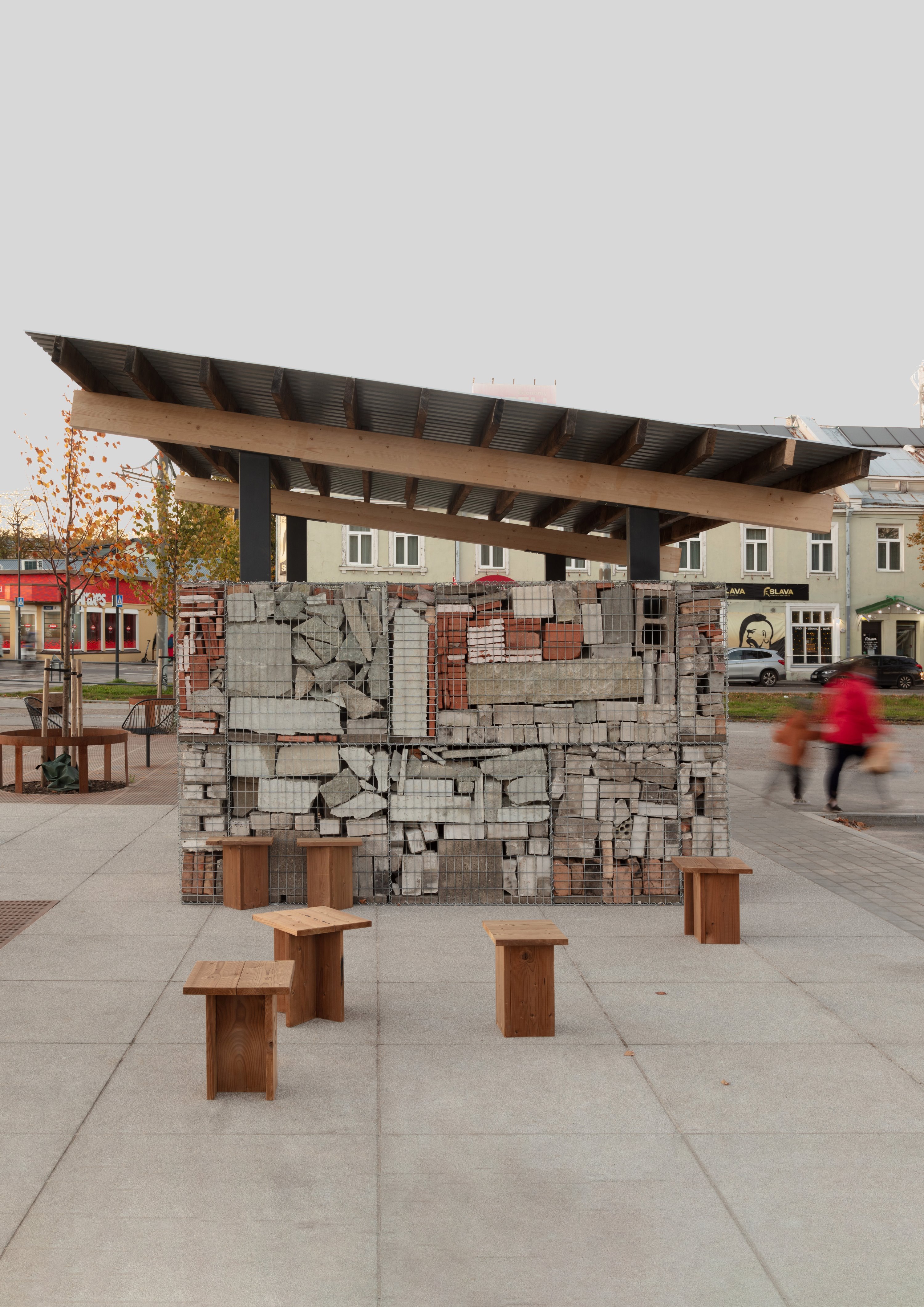
No Time to Waste is a temporary pavilion for the Tallinn Architecture Biennale, responding to the theme “Resources for the Future”. Built almost entirely from repurposed construction waste, the installation creates covered and breathable spaces that offer shelter for bus stops on Tallinn's central station square. By turning discarded materials into innovative structures, the project highlights waste as valuable and unexpected resources and sparks dialogue on sustainable design and public space.
Estonia
Local
Tallinn
Mainly urban
It involves a physical transformation of the built environment (hard investment)
Yes
2024-10-20
No
No
No
Individual
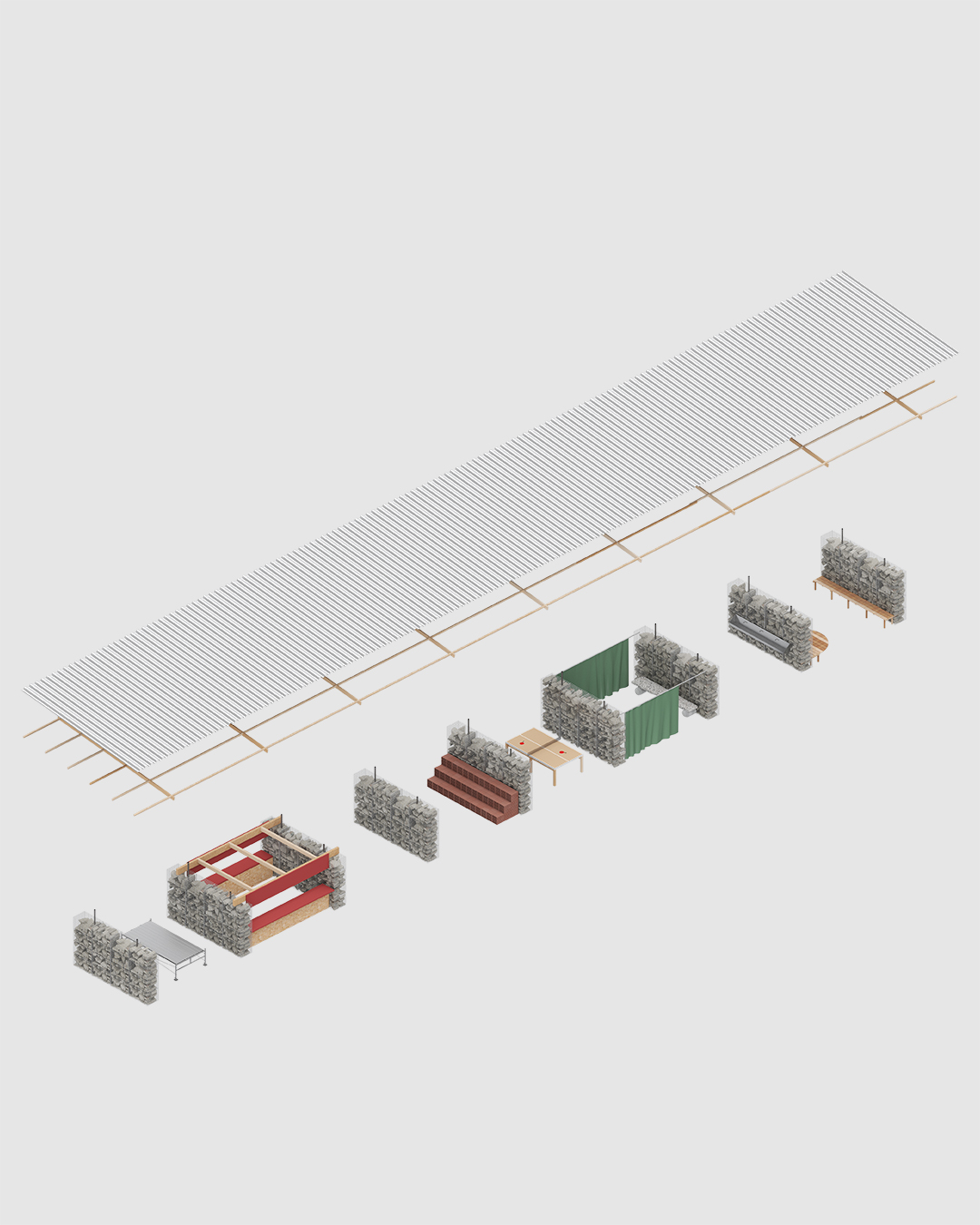
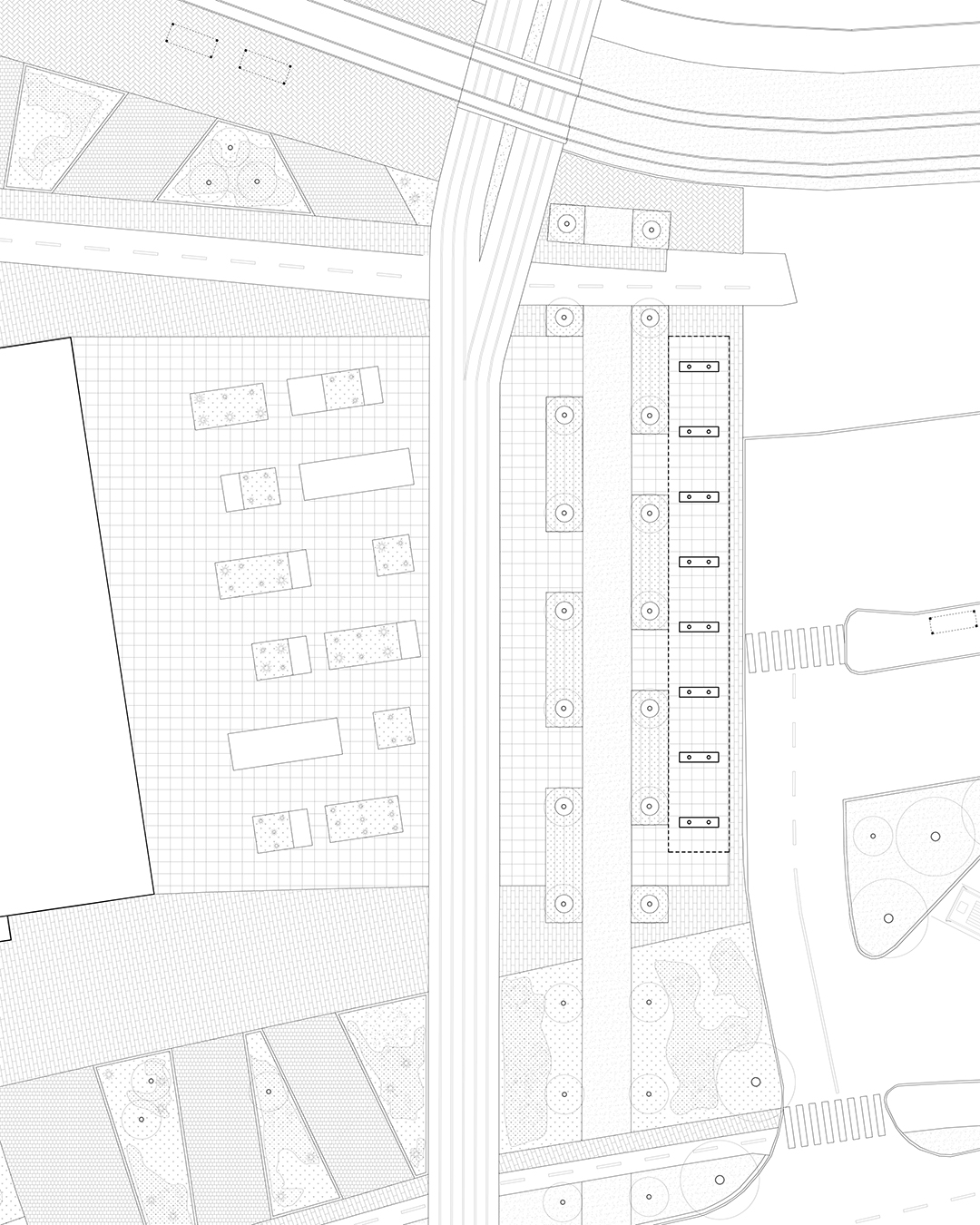
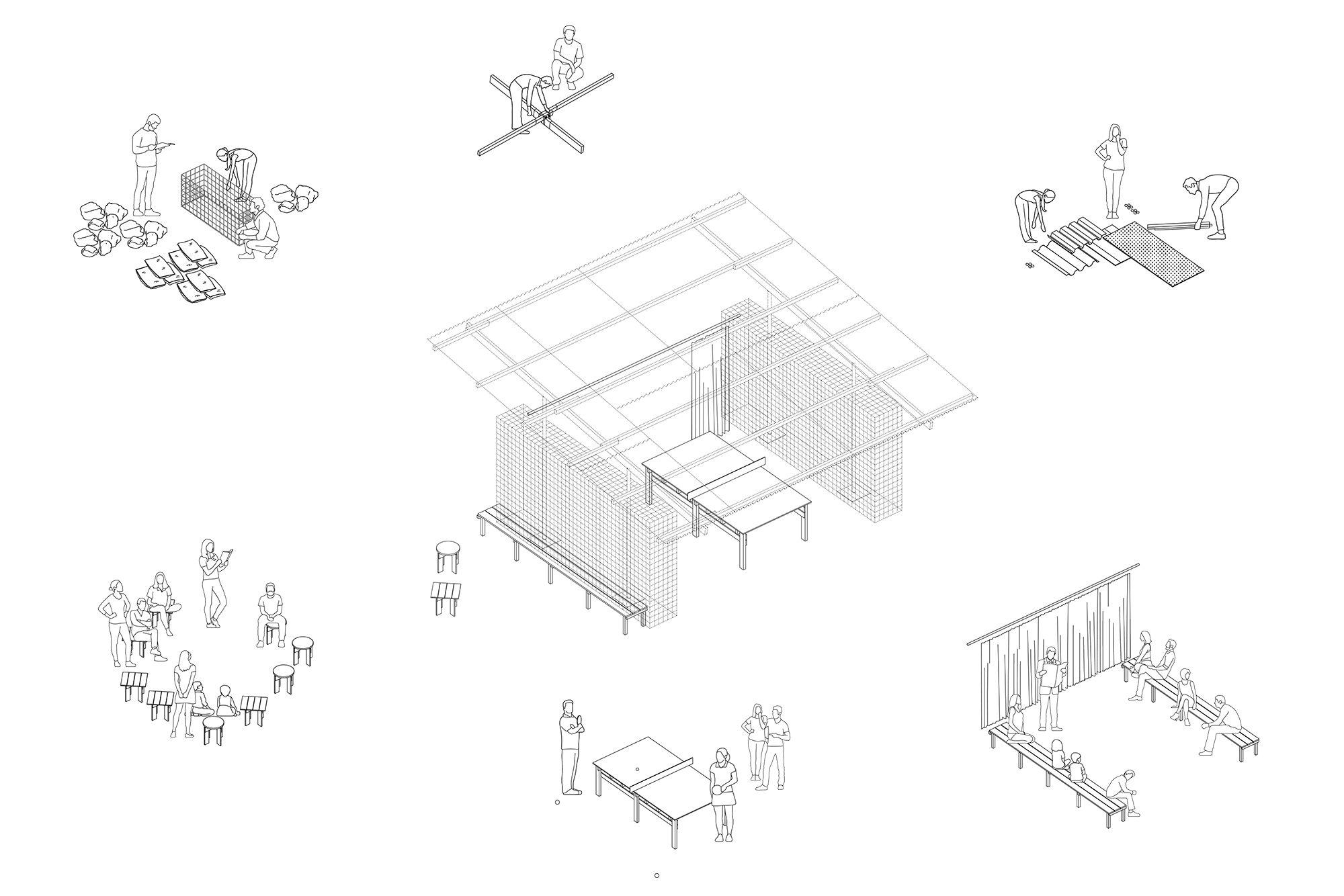
No Time To Waste is an experimental pavilion that reimagines public infrastructure through circular construction, adaptive design, and collective use. Developed for the Tallinn Architecture Biennale 2024, it serves as a 1:1 prototype of a future 45-meter canopy intended to provide sheltered waiting areas at Balti Jaam square in Tallinn.
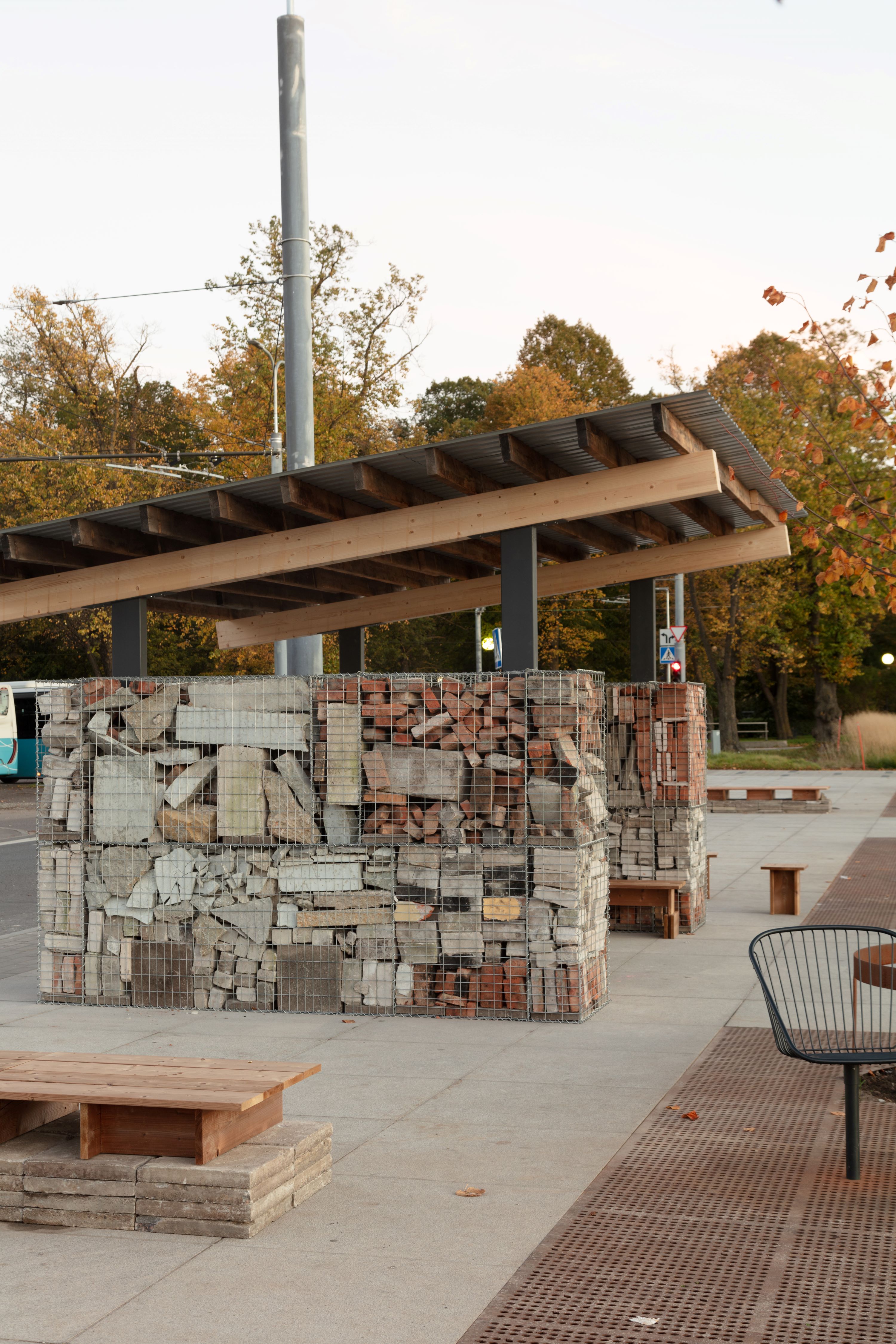
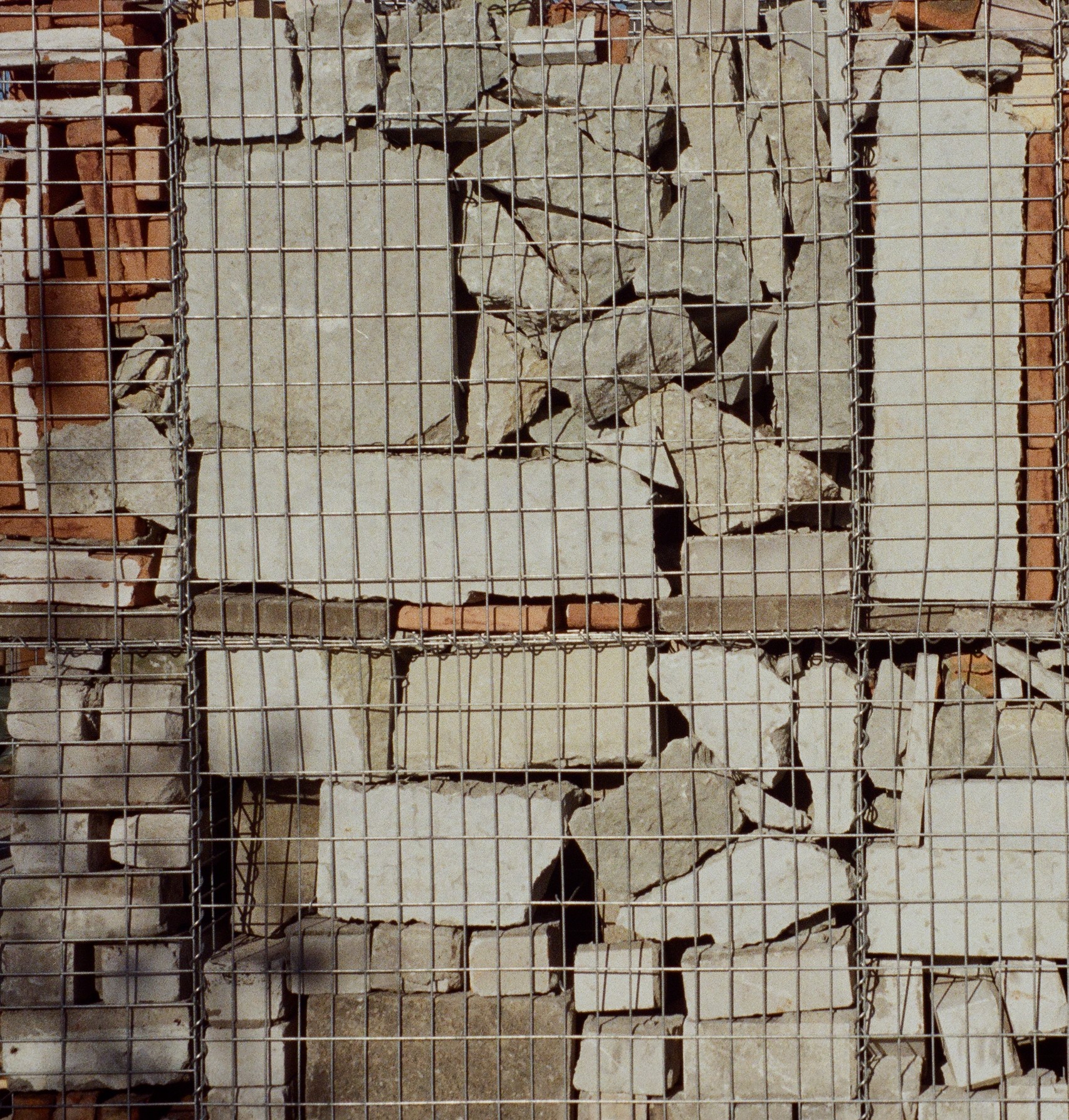
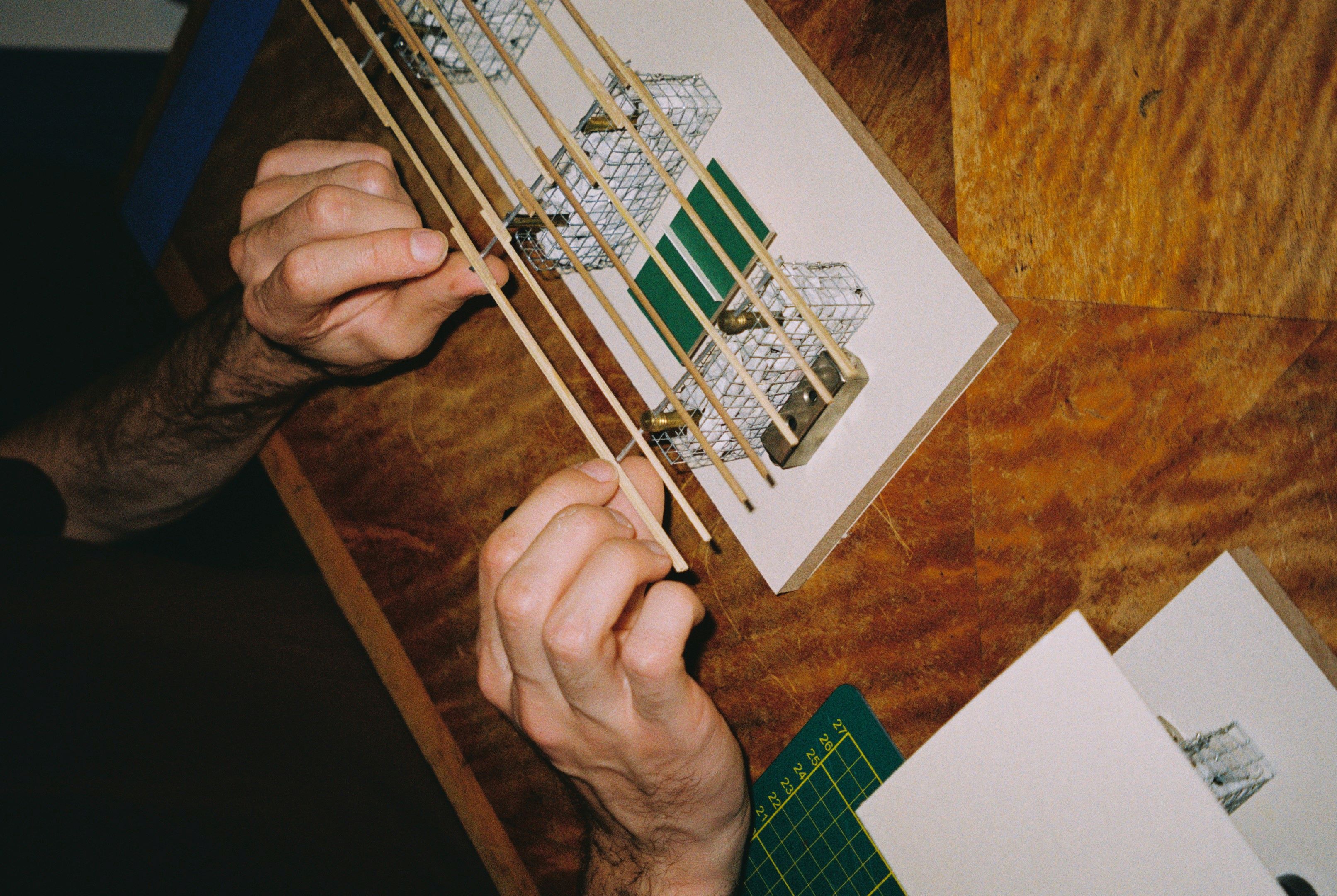
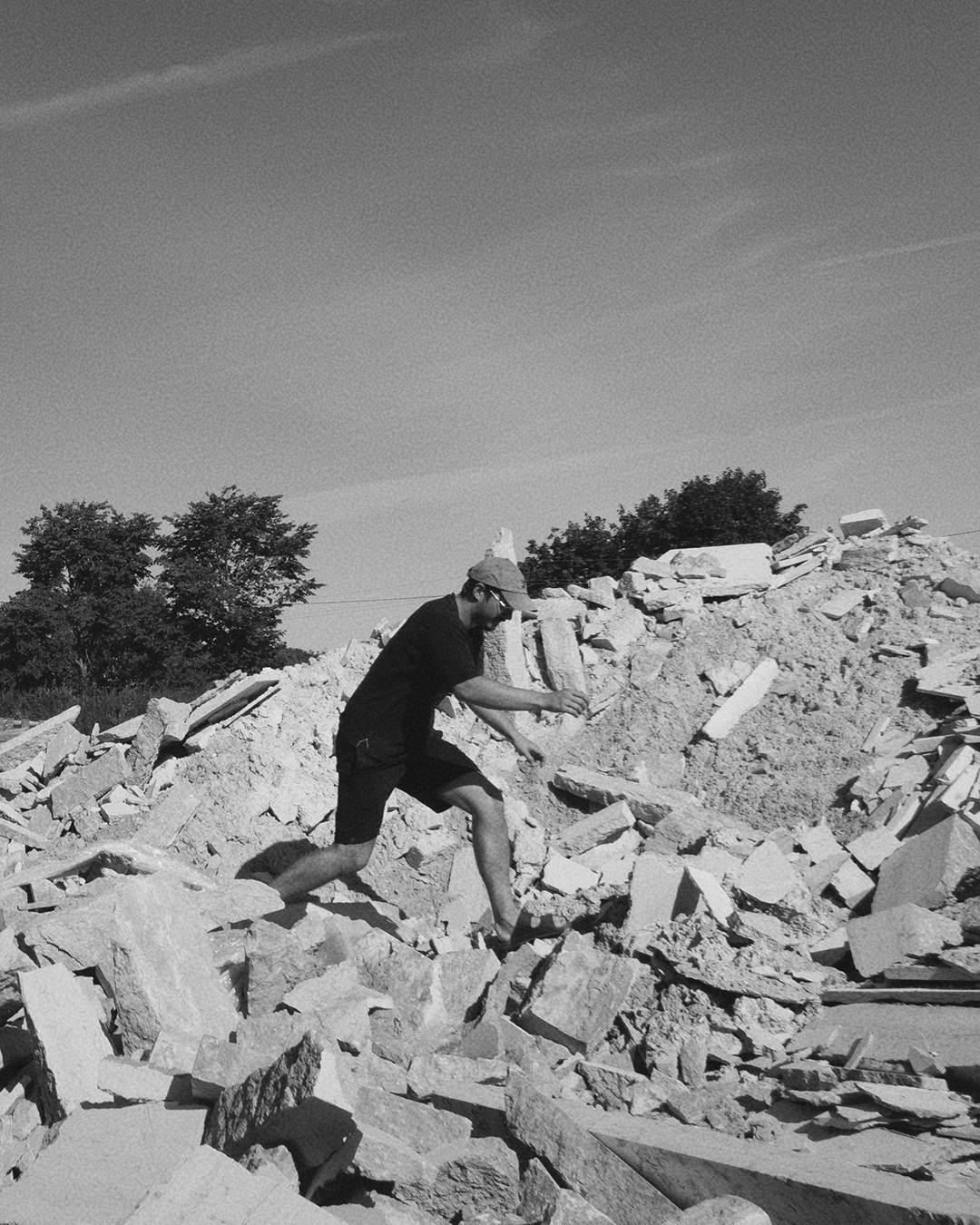
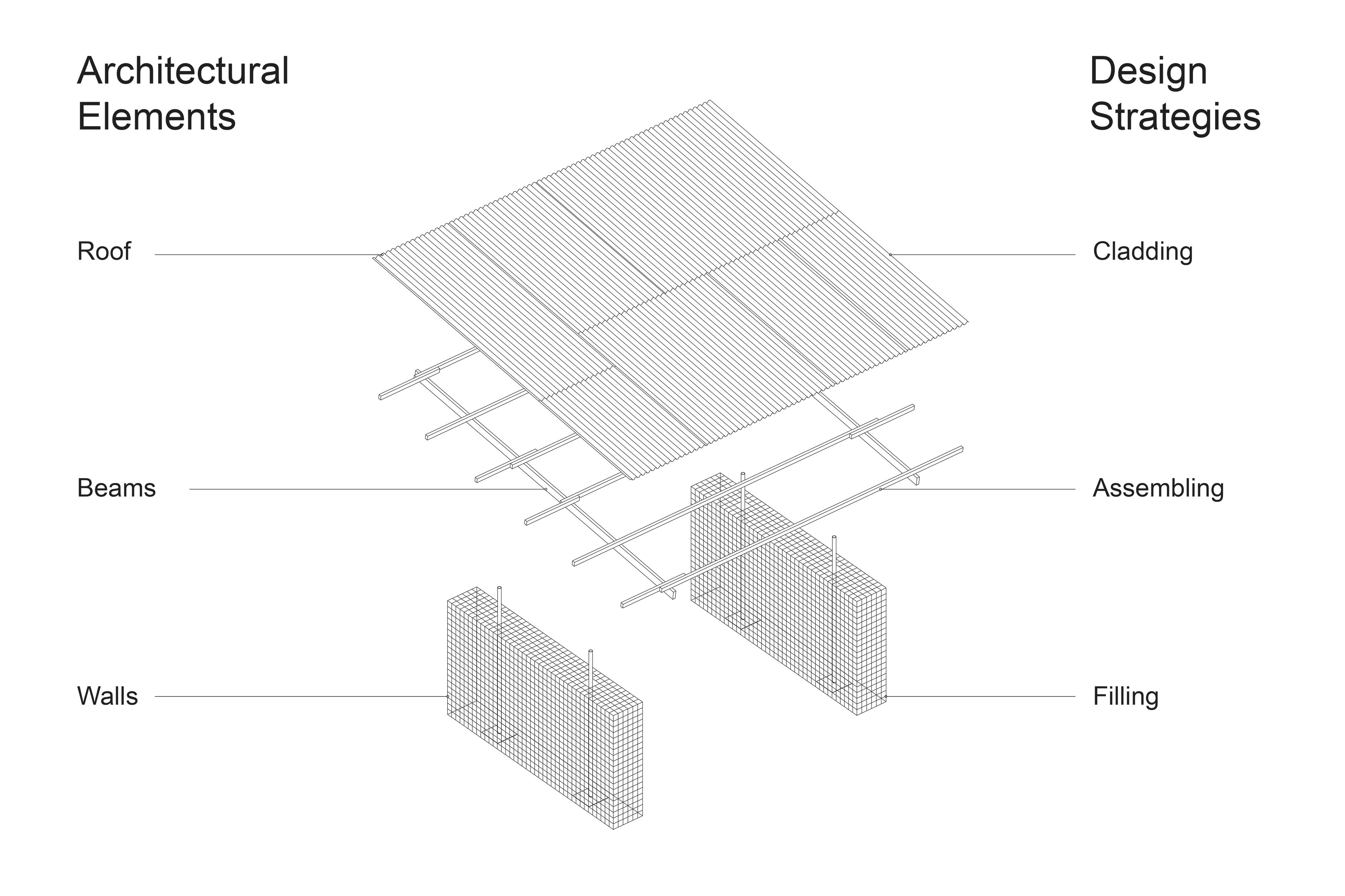
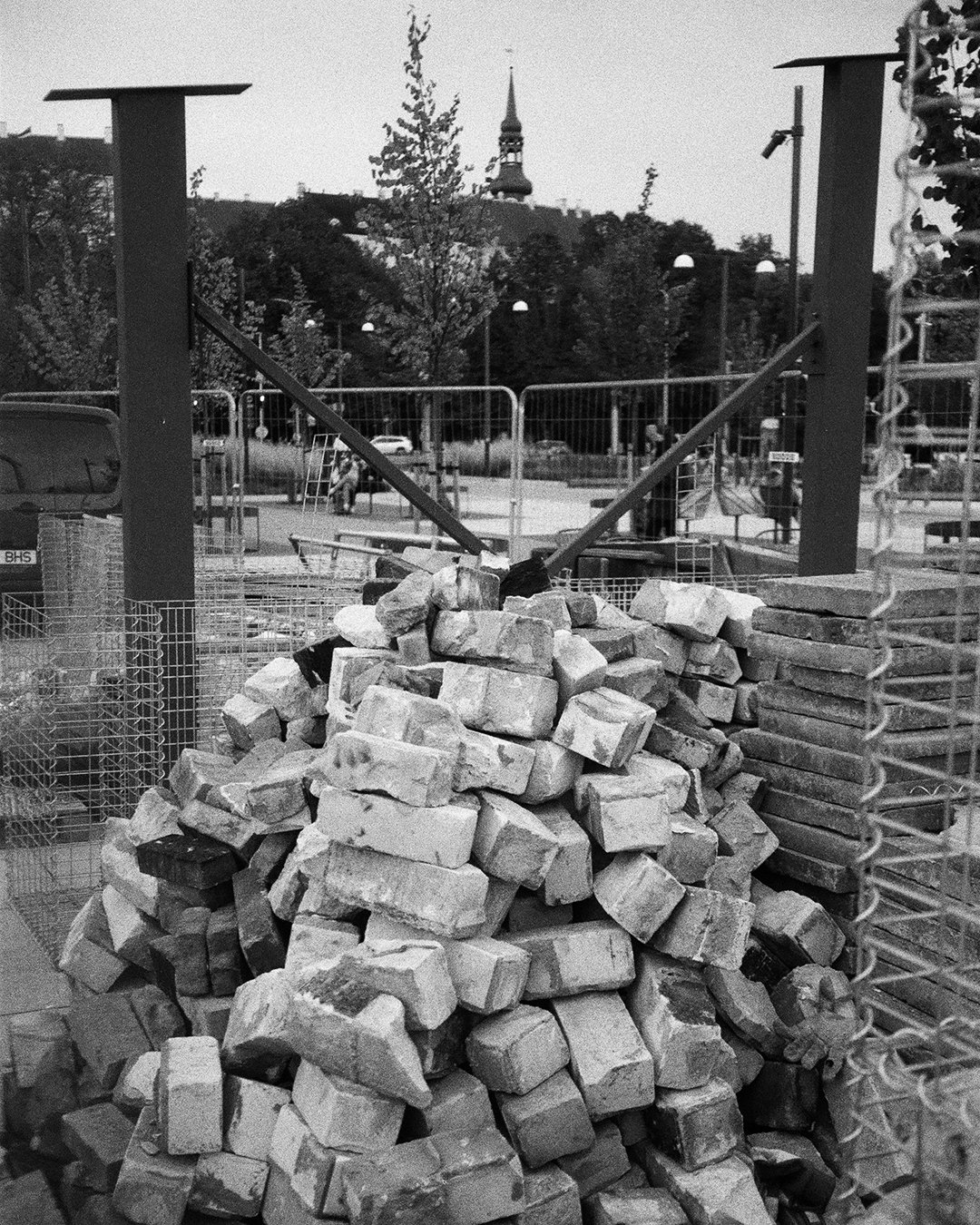
Built almost entirely from locally sourced leftover materials, the project transforms construction waste into a primary architectural resource. Gabion walls filled with demolition debris, reclaimed structural elements, and reused cladding components form a dry-assembled system designed for disassembly, reuse, and future adaptation. By prioritising principles over predefined materials, the project introduces a flexible design methodology capable of responding to uncertain and evolving material flows.
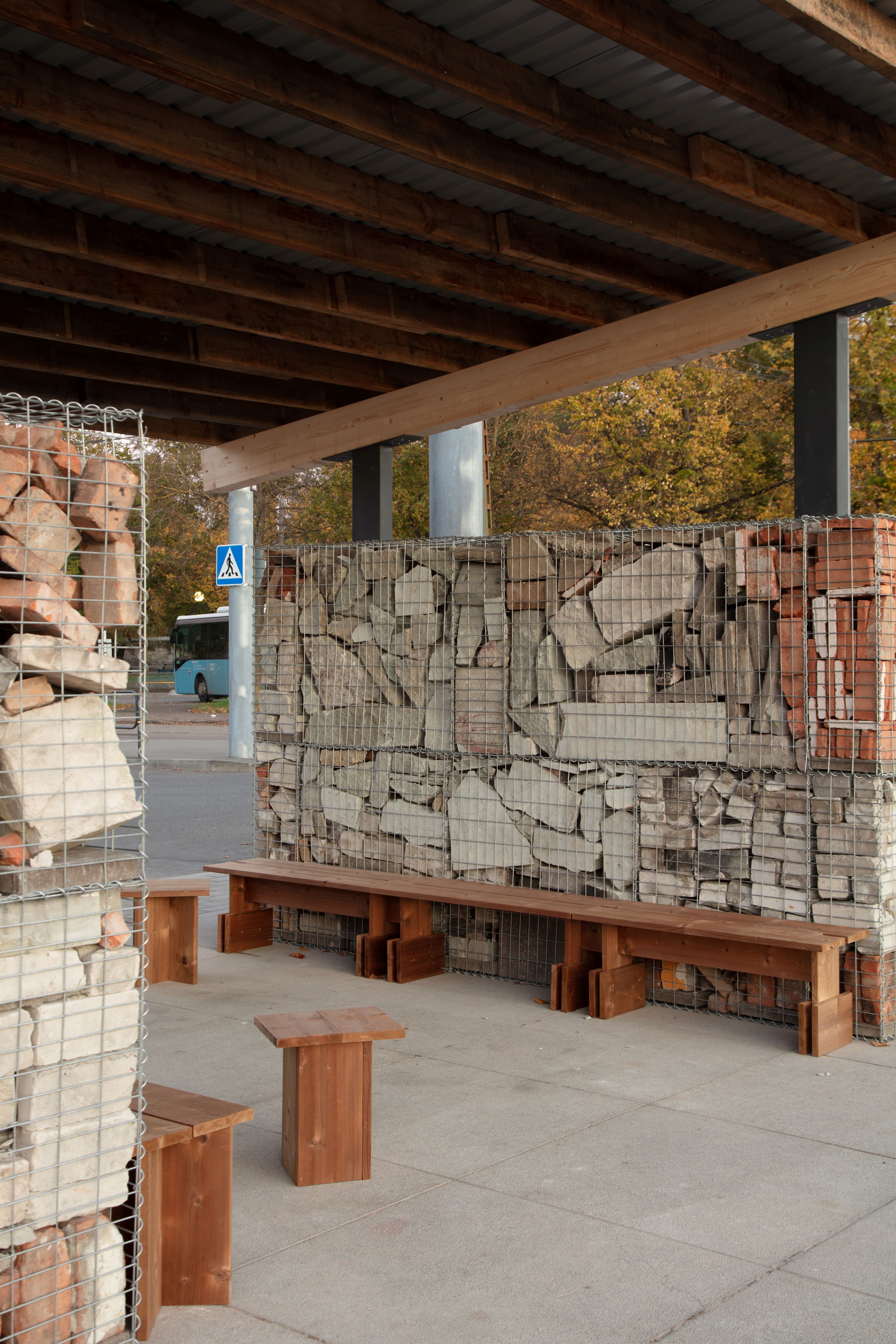
The pavilion reinterprets the standardized bus shelter by creating a sequence of covered yet permeable rooms that support multiple forms of use. Rather than accommodating passive waiting, it enables gathering, interaction, and temporary activities, contributing to a more inclusive and active public space.
As a built prototype, the project demonstrates the feasibility of circular construction at an architectural scale while testing new forms of collaboration between designers, local producers, and material suppliers. Most materials were sourced within a 20 km radius, reducing environmental impact and strengthening local value chains.
In the long term, No Time To Waste proposes a replicable model for public infrastructure that combines environmental responsibility with spatial quality and social activation. Its adaptable system can be extended into a full-scale canopy and transferred to other contexts, offering a practical framework for building with reuse while redefining the relationship between architecture, resources, and public life.
No Time To Waste emerged from a paradox: how to design a precise architectural proposal without knowing the materials it would be built from. Commissioned as part of the Tallinn Architecture Biennale 2024, the project responded to a brief requiring the use of locally salvaged resources, making uncertainty a central design condition from the outset.
Instead of proposing a fixed form based on assumed materials, we developed a set of adaptable principles. The project was conceived as a system of actions (assembling, filling, layering) rather than a predefined object. This approach allowed the design to evolve in direct response to the materials that were eventually sourced locally, transforming constraints into opportunities.
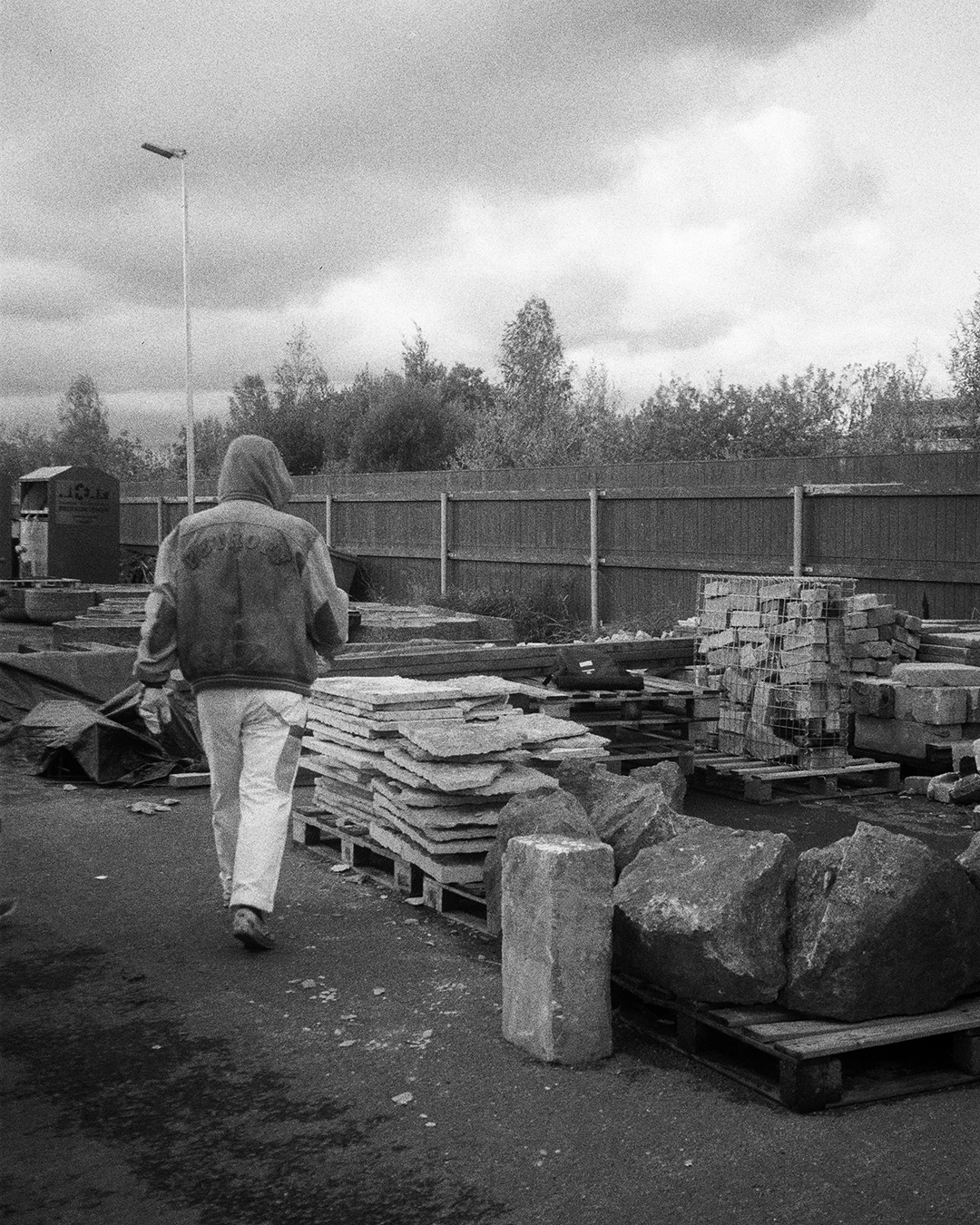
Working remotely while relying on local material streams required close collaboration with a Tallinn-based production team, who played a key role in sourcing reclaimed elements from demolition sites, manufacturers, and waste facilities. Together, this process shaped the final outcome as a genuinely context-driven construction.
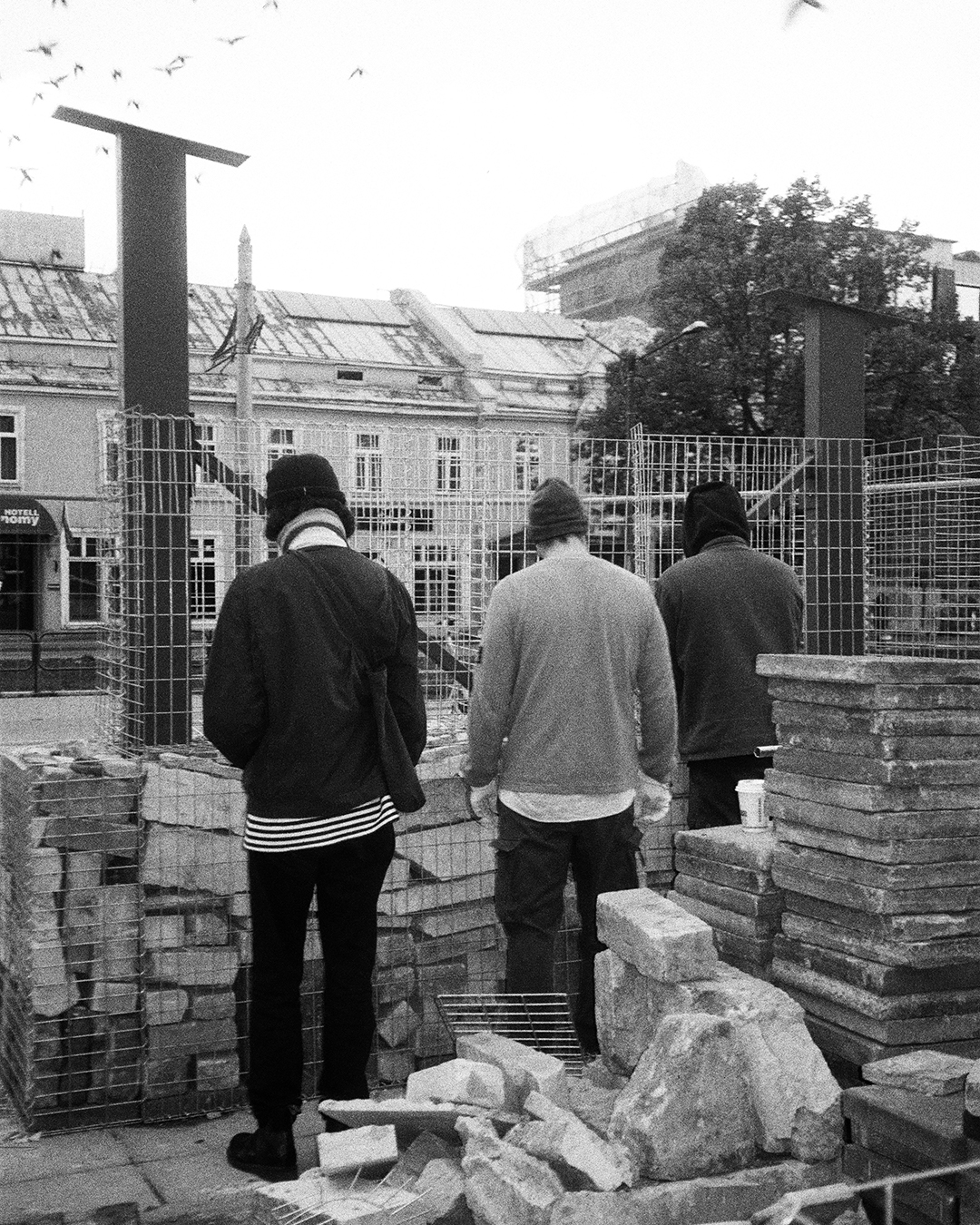
On site, the pavilion was assembled as a dry, reversible structure using simple techniques that could accommodate variation and improvisation. Gabion walls were filled with mineral waste, while structural and roofing elements were composed from available second-hand and leftover components.
Although initial plans included a strong participatory building phase, delays in the permitting process limited early community involvement. However, the pavilion was conceived as an evolving platform: during its lifespan, it hosts activities, workshops, and informal uses, allowing people to engage with the space and reinterpret its purpose over time.
Through this process, No Time To Waste became more than a pavilion, it became a testbed for building differently, where architecture is shaped not only by design intent, but by materials, collaboration, and time.
Circular Construction
Material Reuse
Adaptive Design Systems
Public Space Activation
Community Engagement
No Time To Waste addresses sustainability by turning construction waste into a primary architectural resource and by redefining how buildings are designed in conditions of limited resources. Instead of relying on new materials, the pavilion is built almost entirely from locally sourced leftovers, significantly reducing embodied carbon and avoiding the extraction of new raw materials.
The project introduces a circular construction system based on reuse, adaptability, and reversibility. Its dry-assembled structure allows for disassembly and reconfiguration, extending the lifecycle of all components and enabling future reuse beyond the pavilion itself. Materials were sourced within a short radius around Tallinn, supporting local material cycles and reducing transport impact.
Beyond material efficiency, the project proposes a shift in design methodology. By replacing fixed specifications with adaptable principles, it demonstrates how architecture can respond to available resources rather than consume them. This approach makes circular construction more resilient, scalable, and applicable to different contexts.
At the same time, the pavilion addresses social and cultural sustainability by transforming a space of passive waiting into an active public environment, encouraging shared use and collective engagement.
As a built prototype, No Time To Waste is exemplary in showing that circularity can operate at an architectural scale while producing functional, desirable, and adaptable public infrastructure.
No Time To Waste contributes to a more beautiful and meaningful everyday environment by transforming discarded materials into a visible and expressive architectural language. Rather than concealing reuse, the project makes it legible: rubble, stones, and reclaimed elements are carefully assembled within gabion walls, revealing their textures, irregularities, and histories. This creates a layered aesthetic where beauty emerges from imperfection and resourcefulness.
The pavilion redefines the experience of a bus shelter by moving beyond a standardized, purely functional object. A sequence of covered yet permeable rooms offers varying atmospheres of light, protection, and openness, inviting people to pause, gather, and appropriate the space in different ways. This spatial richness enhances everyday life by turning a moment of waiting into a more engaging and comfortable experience.
The use of simple construction techniques and human-scale assembly further reinforces a sense of care and proximity. The project expresses how it is made, allowing users to understand and relate to its materials and structure, which fosters awareness and emotional connection.
By combining circular principles with a strong spatial identity, the pavilion challenges the perception that sustainability requires aesthetic compromise. Instead, it demonstrates that reuse can generate distinctive, desirable, and culturally meaningful environments.
In this way, No Time To Waste is exemplary in showing how beauty, material responsibility, and public life can be intrinsically connected.
No Time To Waste promotes inclusion by rethinking public infrastructure as an open, adaptable, and accessible environment for diverse users. Located in a highly active urban square, the pavilion is freely accessible and designed without predefined functions, allowing people of different ages, backgrounds, and needs to use and appropriate the space in their own ways.
Instead of a single-purpose bus shelter, the project offers a sequence of covered and permeable rooms that support multiple uses, from waiting and resting to informal gatherings and activities. This flexibility encourages a broader range of social interactions and makes the space more welcoming and inclusive in everyday life.
The project also addresses economic accessibility through its construction logic. By relying primarily on locally sourced leftover materials and simple assembly techniques, it demonstrates how meaningful public architecture can be created with limited resources. This approach lowers barriers to implementation and opens possibilities for more equitable distribution of quality public spaces.
While early participatory construction was limited due to external constraints, the pavilion is conceived as an evolving platform for engagement. Through its future use, activities, and workshops, it invites local communities to actively shape and reinterpret the space over time.
As such, No Time To Waste is exemplary in proposing a model of public infrastructure that is open-ended, resource-conscious, and socially inclusive by design.
No Time To Waste was conceived as a collaborative and evolving project, involving multiple local actors in both its development and future use. During the implementation phase, a Tallinn-based production team played a central role in sourcing materials, adapting the design to local conditions, and constructing the pavilion. This close collaboration ensured that the project was grounded in local knowledge, resources, and networks.
The sourcing process itself relied on exchanges with local manufacturers, demolition sites, and waste management facilities, creating a network of contributors who directly influenced the material composition of the pavilion. In this way, the project integrates participation at the level of material flows and decision-making.
While initial plans included hands-on public workshops during construction, delays in the permitting process limited early citizen involvement. However, participation remains a core aspect of the project’s lifecycle. The pavilion is designed as an open platform that can host workshops, events, and informal activities, allowing users and communities to actively engage with and shape the space over time.
By shifting participation from a one-time design phase to an ongoing process of use and appropriation, the project expands the role of citizens from passive users to active contributors.
This approach is exemplary in demonstrating how participation can be embedded not only in how a project is built, but in how it continues to live and evolve.
No Time To Waste was developed through collaboration across multiple levels, combining international design input with strong local implementation and institutional frameworks. The project was commissioned within the context of the Tallinn Architecture Biennale 2024, providing a cultural and curatorial platform at the European level.
At the local level, the project relied on close cooperation with a Tallinn-based production team, who were responsible for material sourcing, coordination, and on-site construction. Their knowledge of local supply chains, manufacturers, and waste streams was essential in translating the design principles into a built reality.
Local industries and material suppliers contributed directly by providing reclaimed and leftover materials, embedding the project within existing economic and logistical networks. At the same time, the implementation required engagement with municipal authorities, particularly in relation to permitting processes, highlighting the regulatory dimension of experimental construction in public space.
This interaction between designers, local actors, industry partners, and public authorities created a multi-layered governance structure where each level played a complementary role, from conceptual development to material sourcing and regulatory approval.
The added value of this approach lies in its ability to connect strategic vision with local realities, demonstrating how innovative, circular projects can be implemented through cooperation across scales.
No Time To Waste brought together knowledge from multiple disciplines to address environmental, social, and spatial challenges. Architecture and design were central, guiding the pavilion’s spatial organization, aesthetic expression, and material strategies. Structural engineering informed the adaptive gabion walls and lightweight roof system, ensuring stability while accommodating irregular reused materials.
Environmental sciences and circular economy principles shaped decisions on material sourcing, reuse potential, and lifecycle impacts, demonstrating sustainable construction in practice. Social sciences and urban studies guided the pavilion’s interaction with public space, supporting the transformation of passive waiting areas into inclusive and engaging environments.
Arts and craft-based knowledge contributed to the careful assembly of reused elements, highlighting textures, irregularities, and the tactile quality of materials. Educational practices were embedded through the vision for workshops and participatory engagement, enabling knowledge transfer and public awareness around circular construction.
The convergence of these disciplines allowed the project to operate at the intersection of innovation, sustainability, and social impact, demonstrating how complex urban and material challenges can be addressed through a transdisciplinary approach.
No Time To Waste was primarily supported through funding for the Tallinn Architecture Biennale 2024 and partnerships with local production teams and material suppliers. By relying almost entirely on locally sourced leftover and reclaimed materials, the project minimized material costs while maximizing architectural and social value.
The pavilion’s design prioritizes simplicity and adaptability, using dry-assembly techniques that reduce labor and maintenance expenses. Its modular and reusable components can be disassembled, reassembled, or repurposed in future installations, extending the value of each investment beyond a single event.
Long-term sustainability is further supported by its potential to host workshops, community events, and participatory programs, which can attract public funding, sponsorship, or crowdfunding for future iterations. The approach demonstrates a low-cost, resource-efficient model for producing meaningful public infrastructure while enabling replication in other urban contexts.
No Time To Waste is designed as a replicable and adaptable model for circular public infrastructure. Its principles-based approach - prioritizing material reuse, dry assembly, and flexible spatial organization - can be applied in different contexts, from urban squares to temporary installations or community-driven public spaces.
The construction system accommodates a wide range of locally available materials, demonstrating how leftover resources, demolition debris, or industrial offcuts can be transformed into functional and aesthetically compelling architecture. This adaptability makes the methodology suitable for cities, towns, and educational programs across Europe and beyond.
Beyond the physical structure, the project’s participatory and process-oriented framework can be transferred to other communities. Local actors can adopt the approach to co-design, assemble, and adapt public infrastructure according to available resources and social needs, fostering engagement, ownership, and skill development.
In this way, No Time To Waste offers both a practical construction method and a scalable model for collaborative, circular, and socially activated urban design.
- https://wbarchitectures.be/en/actualites/brasebinterrisses-no-time-waste-project-finalist-march-materials-awards-2025
- https://www.bauwelt.de/rubriken/bauten/No-Time-to-Waste-in-Tallinn-brasebin-terrisse-Bauwelt-Preis-2025-4219169.html
- https://www.dezeen.com/2024/10/27/brasebin-terrisse-no-time-to-waste-pavilion-tallinn-architecture-biennale/