Strengthening Local Democracy and Inclusion
P2P Learning HUB
Digital Peer-to-Peer Platform for Inclusive Academic Support in Moldova
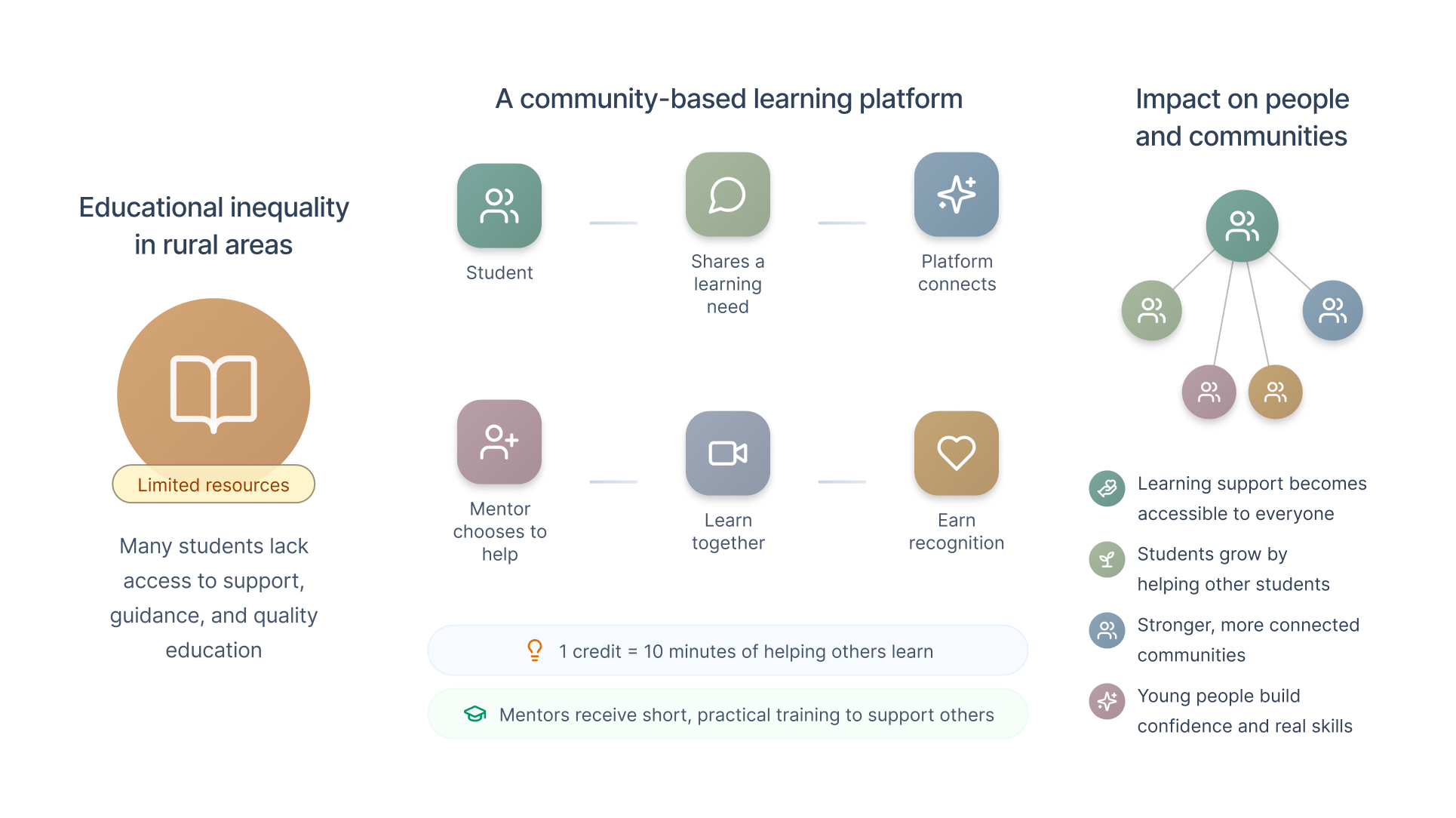
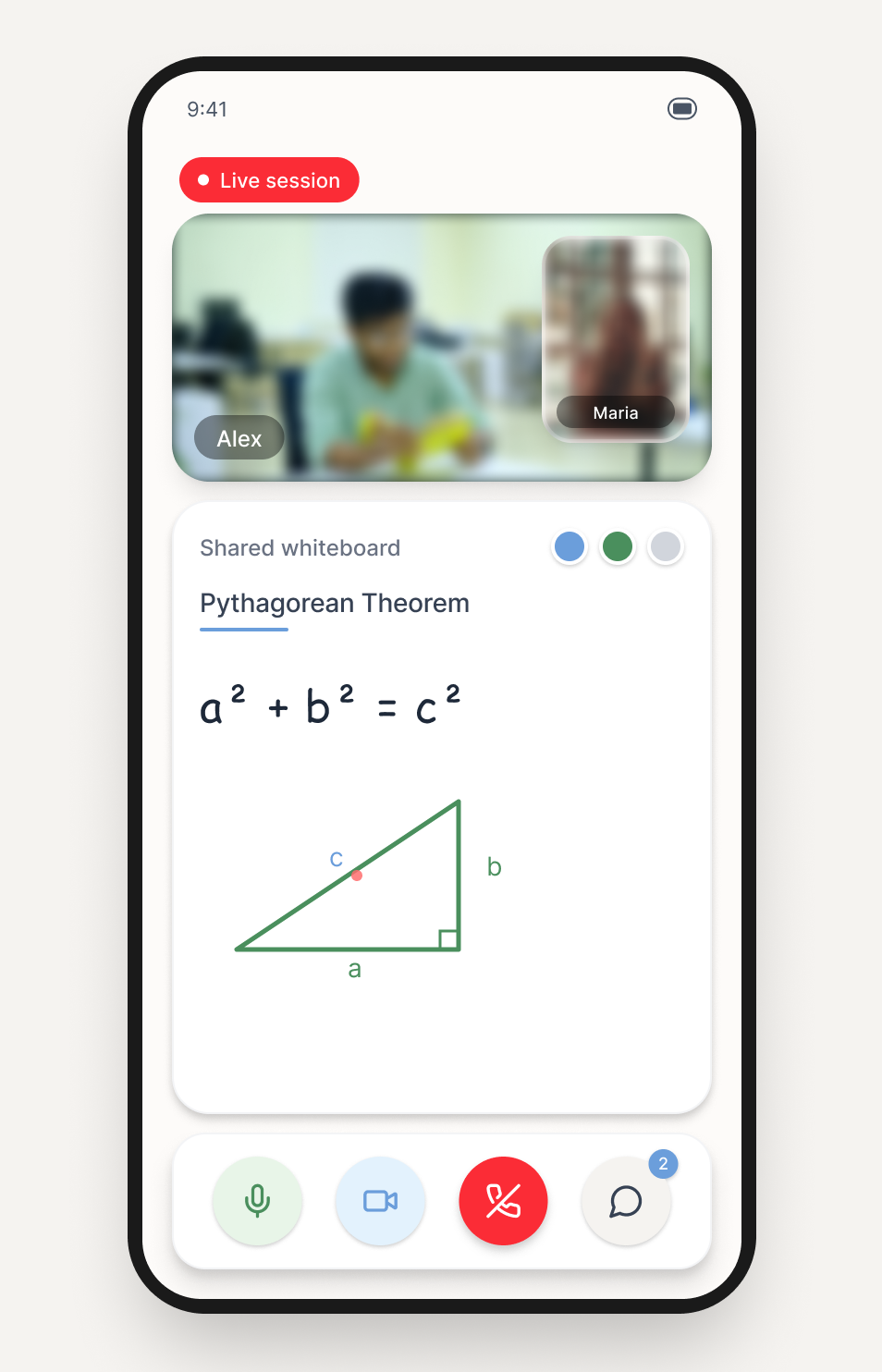
Our digital platform connects students with trained peer mentors for personalized support. Learners request help in specific subjects, and mentors guide them through interactive online sessions using video, collaborative whiteboards, and shared materials. By combining accessibility, participatory learning, and gamified rewards, the platform bridges educational gaps, empowers students, and builds an inclusive learning community across Moldova.
Moldova
National
It addresses urban-rural linkages
It refers to other types of transformations (soft investment)
Prototype level
No
No
No
Individual
The concept proposes the creation of a digital peer-to-peer learning platform that connects students who have strong academic knowledge with students who need additional educational support, especially those from rural or underserved areas. The platform functions as a digital meeting space where students can request help with specific learning goals. A student can submit a request describing their goal, for example improving their mathematics grade. Mentors can browse these requests and choose the ones they are confident to teach. This ensures that mentors clearly understand the learning objective before accepting the session. Lessons take place online through integrated video sessions, collaborative whiteboards, and shared learning materials. Each session typically lasts between 30–60 minutes. Mentors are recruited among high-performing students and young people who demonstrate strong academic abilities. Before teaching, they participate in a short in-person training program lasting 1–2 days, where they complete a condensed pedagogical module. This module introduces basic teaching techniques, communication methods, and student support strategies. Mentors also take a short subject test to ensure academic competence. To motivate mentors and encourage long-term engagement, the platform uses a gamification and credit system. Mentors receive one credit for every ten minutes of teaching. Credits accumulate and can later be exchanged for rewards such as books, cultural event tickets, or educational resources. During the early phase of the platform, additional gamification rewards will be offered to encourage participation and community building. The expected result is the creation of a collaborative educational ecosystem where knowledge circulates between students and academic support becomes more accessible regardless of geographic location. Over time, students who receive help may themselves become mentors, creating a sustainable learning community.
The concept of the digital peer-to-peer learning platform emerged from our own teaching experiences, the development of learning materials, and national educational outcomes. Carolina worked with several 9th-grade students and observed situations where basic arithmetic operations, such as multiplication, division, and addition with larger numbers, were challenging for many. Some students had slower learning paces, and teachers often could not revisit concepts until fully understood. Gheorghe’s experience teaching computer science revealed similar learning gaps and the need for individualized guidance. Working especially in rural areas, we witnessed firsthand the inequalities in educational opportunities. These observations are supported by recent PISA 2022 results, which show that only 44% of Moldovan 15-year-olds reached minimum proficiency in mathematics and just over 51% in reading and science, below the OECD average. Over successive cycles, Moldova has improved by 41 points in mathematics and 40 points in reading since 2009, but many students still struggle to apply learned concepts in real-world contexts. These combined experiences motivated us to create a platform that provides equal access to tailored academic support. By allowing students to request help where they need it most and enabling trained peers to respond, the platform ensures that all learners regardless of location or background can succeed, bridging learning gaps and fostering inclusive, effective, and empowering educational environments.
Peer-to-peer education
Educational inclusion
Rural empowerment
Digital learning communities
Youth mentorship
The concept addresses several sustainability challenges across social, environmental, cultural, and economic dimensions by creating a peer-to-peer digital learning platform that connects students who need academic support with capable student mentors. Socially, the platform helps reduce educational inequality by providing accessible learning opportunities for students from rural or underserved communities, where access to qualified tutors or educational resources is often limited. By allowing students to request specific learning support and mentors to choose the topics they teach, the platform creates a flexible and collaborative learning ecosystem where knowledge can circulate more freely between young people. Environmentally, the digital nature of the platform reduces the need for transportation to urban tutoring centers and decreases reliance on printed learning materials, as lessons, notes, and resources are shared online. This contributes to lowering the environmental footprint associated with traditional tutoring practices. Economically, the concept lowers the financial barriers that many families face when seeking additional academic support. At the same time, mentors develop valuable skills such as communication, leadership, and teaching, which can support their future academic and professional opportunities.Culturally, the platform encourages interaction between students from different regions and backgrounds, strengthening mutual understanding and community engagement. The reward system, which allows mentors to exchange credits for books or cultural event tickets, also promotes participation in cultural and educational activities. By combining digital innovation, peer mentorship, and inclusive access to knowledge, the concept represents a sustainable and scalable model for strengthening educational communities and empowering young people.
The concept contributes to making everyday life more meaningful and inspiring by transforming the learning experience into a collaborative and supportive environment where students help each other grow. Instead of experiencing education as a stressful or competitive process, students participate in a community where asking questions, sharing knowledge, and supporting peers becomes natural and encouraged.
The digital platform is designed to be simple, welcoming, and visually engaging, creating a positive learning atmosphere where students feel comfortable interacting with mentors and exploring new ideas. A clear interface, collaborative tools such as shared whiteboards, and interactive learning materials help create an experience that is both functional and enjoyable. Beyond the digital environment, the project strengthens a sense of belonging by connecting students from different communities who may otherwise never interact. Through mentoring relationships and repeated learning sessions, participants build trust, mutual respect, and a feeling of being part of a supportive learning community. The project also encourages care for cultural and intellectual life. Through the reward system, mentors can exchange credits for books, theatre tickets, concerts, or educational events, motivating young people to engage with culture and creativity beyond the classroom. In the longer term, the concept contributes to a more inspiring educational culture where knowledge sharing, collaboration, and curiosity are valued. By combining accessible digital design, peer learning, and cultural engagement, the project offers an example of how educational spaces both physical and digital can become more beautiful, human-centered, and motivating for young people.
The digital platform is designed to be simple, welcoming, and visually engaging, creating a positive learning atmosphere where students feel comfortable interacting with mentors and exploring new ideas. A clear interface, collaborative tools such as shared whiteboards, and interactive learning materials help create an experience that is both functional and enjoyable. Beyond the digital environment, the project strengthens a sense of belonging by connecting students from different communities who may otherwise never interact. Through mentoring relationships and repeated learning sessions, participants build trust, mutual respect, and a feeling of being part of a supportive learning community. The project also encourages care for cultural and intellectual life. Through the reward system, mentors can exchange credits for books, theatre tickets, concerts, or educational events, motivating young people to engage with culture and creativity beyond the classroom. In the longer term, the concept contributes to a more inspiring educational culture where knowledge sharing, collaboration, and curiosity are valued. By combining accessible digital design, peer learning, and cultural engagement, the project offers an example of how educational spaces both physical and digital can become more beautiful, human-centered, and motivating for young people.
The concept addresses challenges related to accessibility and affordability by creating a digital peer-to-peer learning platform that makes academic support available to students regardless of their geographic location or financial resources. Many students, especially those from rural or underserved communities, have limited access to private tutoring or additional educational support. By providing online mentoring sessions delivered by trained student mentors, the platform reduces the financial barriers often associated with traditional tutoring services. Students can access learning support using common devices such as smartphones or basic computers, making participation more accessible. The platform also promotes inclusive participation by allowing students to define their own learning needs. Learners can request support for specific subjects or topics, while mentors choose the requests they feel confident to address. This system ensures that students receive help tailored to their needs while empowering mentors to contribute according to their strengths. In terms of governance, the platform encourages community involvement. Participants can provide feedback, evaluate sessions, and contribute ideas for improving the learning experience. This participatory structure allows users to shape the development of the platform and ensures it evolves according to the needs of its community. The concept also proposes a new societal model of collaborative education, where students are not only recipients of knowledge but contributors to the learning ecosystem. Over time, students who receive support may become mentors themselves, creating a sustainable cycle of knowledge sharing. By combining affordable access, participatory design, and peer-driven learning, the concept represents an inclusive approach to education that empowers young people and expands opportunities for those who might otherwise be left behind.
The development of the concept was influenced by discussions with students, mentors, and members of youth communities who shared their experiences regarding access to education and academic support. Many students, particularly those from rural areas, highlighted the lack of accessible tutoring opportunities and the difficulties of finding affordable academic help. These conversations helped shape the core idea of a peer-to-peer learning platform where students can request specific learning support and mentors can choose the topics they feel confident teaching. Feedback from young people also influenced the flexible structure of the platform, ensuring that learning sessions focus on clear goals defined by the students themselves. The concept continues to integrate participatory principles in its design. Students and mentors are not only participants in the learning process but also contributors to the evolution of the platform. Feedback mechanisms allow users to evaluate sessions, suggest improvements, and share their experiences. Through these participatory mechanisms, the platform can continuously evolve according to the needs of its users, becoming a community-driven educational ecosystem rather than a rigid institutional structure.
The concept involves stakeholders at multiple levels to ensure effective development and implementation. At the local level, schools, teachers, and community organizations can help identify students who would benefit from the platform and encourage participation among young people. Their involvement helps ensure that the platform responds to real educational needs within communities. At the regional and national levels, educational institutions, youth organizations, and non-governmental organizations can support the initiative by promoting the platform, helping recruit mentors, and contributing expertise in education and youth development. At the European level, the concept aligns with broader priorities related to digital education, social inclusion, and youth empowerment. Collaboration with European networks and educational initiatives can support knowledge exchange and wider dissemination of the model. The engagement of stakeholders at different levels strengthens the credibility of the project, supports outreach to diverse communities, and increases the potential for scaling the initiative and integrating it into existing educational ecosystems.
The design and implementation of the concept integrates knowledge from several disciplines, combining educational, technological, and social perspectives. Education and pedagogy provide the foundation for structuring mentoring sessions, learning objectives, and teaching approaches that support effective knowledge transfer between students. Digital technologies enable the development of the online platform, including video sessions, collaborative whiteboards, and shared learning resources that make remote learning possible. Psychology contributes to the understanding of communication, motivation, and peer interaction, helping mentors support students in a constructive and encouraging way. Social sciences help address broader issues related to educational inequality and access to learning opportunities, particularly for students from rural or underserved communities. Design and user experience ensure that the platform remains intuitive, accessible, and engaging for young users. A clear and user-friendly interface helps reduce barriers to participation and improves the overall learning experience. Bringing together disciplines such as education, digital technologies, psychology, social sciences, and design, the concept creates a holistic approach to learning that addresses both technological and social dimensions of education.
The platform is designed to operate through a hybrid financial sustainability model that combines public funding, partnerships, and community-based support. During the early development phase, funding may come from grants, innovation programs, and educational initiatives that support digital learning, youth empowerment, and social inclusion. These resources would support the development of the platform, the initial mentor training programs, and pilot learning sessions. In the longer term, financial sustainability can be strengthened through partnerships with educational institutions, youth organizations, and companies interested in supporting education and social impact initiatives. Sponsors and cultural institutions may contribute by supporting the reward system with books, educational materials, or tickets to cultural events. Additional funding streams may include donations, sponsorships, and collaborations with schools or educational programs that wish to integrate the platform into their learning support systems. Foundations and social impact funds may also support the expansion of the initiative. The core principle of the model remains that students seeking academic support should be able to access the platform free of charge. This approach helps maintain accessibility while ensuring that the platform can continue to develop and reach more learners over time.
The concept is designed to be highly transferable and scalable, allowing it to be adapted to different regions, communities, and educational contexts. Several key elements of the concept can be replicated in other places. The technological infrastructure of the digital platform can be adapted for different countries and educational systems. The platform interface and learning tools can be translated and aligned with local curricula, allowing it to function in diverse geographic contexts. The peer-to-peer mentoring model is another transferable component. Since it relies on students supporting other students rather than on formal institutional structures, it can be implemented in a wide range of educational environments, including schools, youth organizations, and community learning centers. The core methodology of the platform can also be replicated. This includes the system of student learning requests, mentor selection based on expertise, short pedagogical training for mentors, and the credit-based motivation and reward system that encourages participation. The concept also generates transferable knowledge and practices related to digital peer learning, youth engagement, and community-based education. These approaches could be applied in other contexts, including university mentoring programs or initiatives focused on developing professional and digital skills.
The implementation of the concept will focus on developing, testing, and expanding the digital platform during the year following the application. During the first three months, the priority will be the development of a functional prototype of the platform. This stage will include designing the core digital infrastructure, testing key features such as video sessions and collaborative tools, and launching a small pilot program with a limited group of mentors and students. In the following months, the project will focus on recruiting and preparing mentors. Selected mentors will participate in short pedagogical training sessions designed to introduce basic teaching methods, communication strategies, and effective peer mentoring practices. After the training phase, mentors will begin offering pilot learning sessions through the platform. Throughout the first year, the project will aim to build an active community of mentors and learners. Continuous feedback from users will be used to improve the platform’s functionality and learning experience. At the same time, outreach and promotion activities will be organized to attract participants and partners. These activities will target schools, student communities, and youth organizations in order to recruit both mentors and learners. By the end of the first year, the goal is to demonstrate that the peer-to-peer mentoring model can function as an effective and sustainable digital learning community, creating the foundation for future expansion to other regions and educational contexts.