Enhancing Circularity, Sustainability, and Innovation
(W)HOLE
(W)HOLE – cherishing the beauty of decay through textile surgery
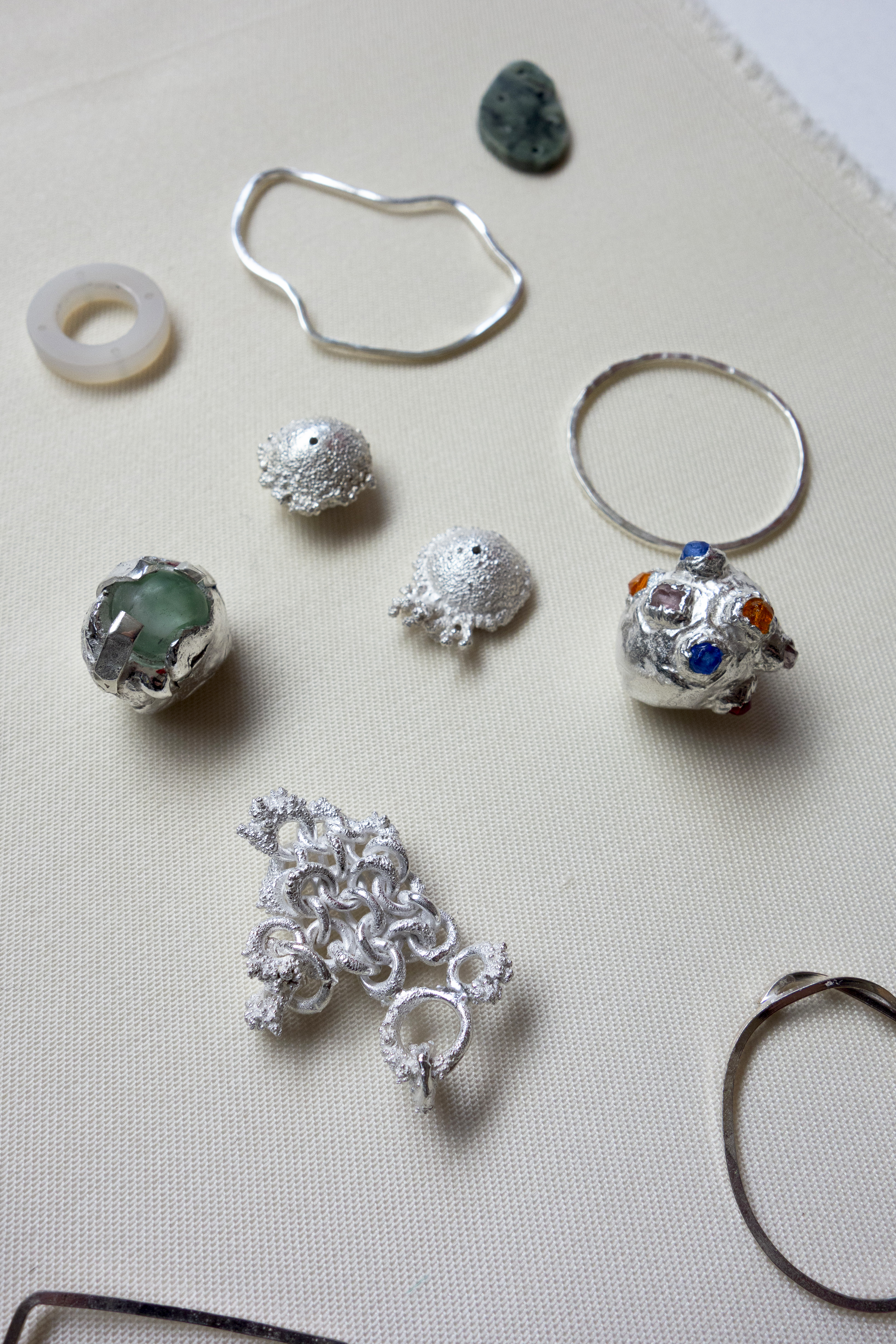
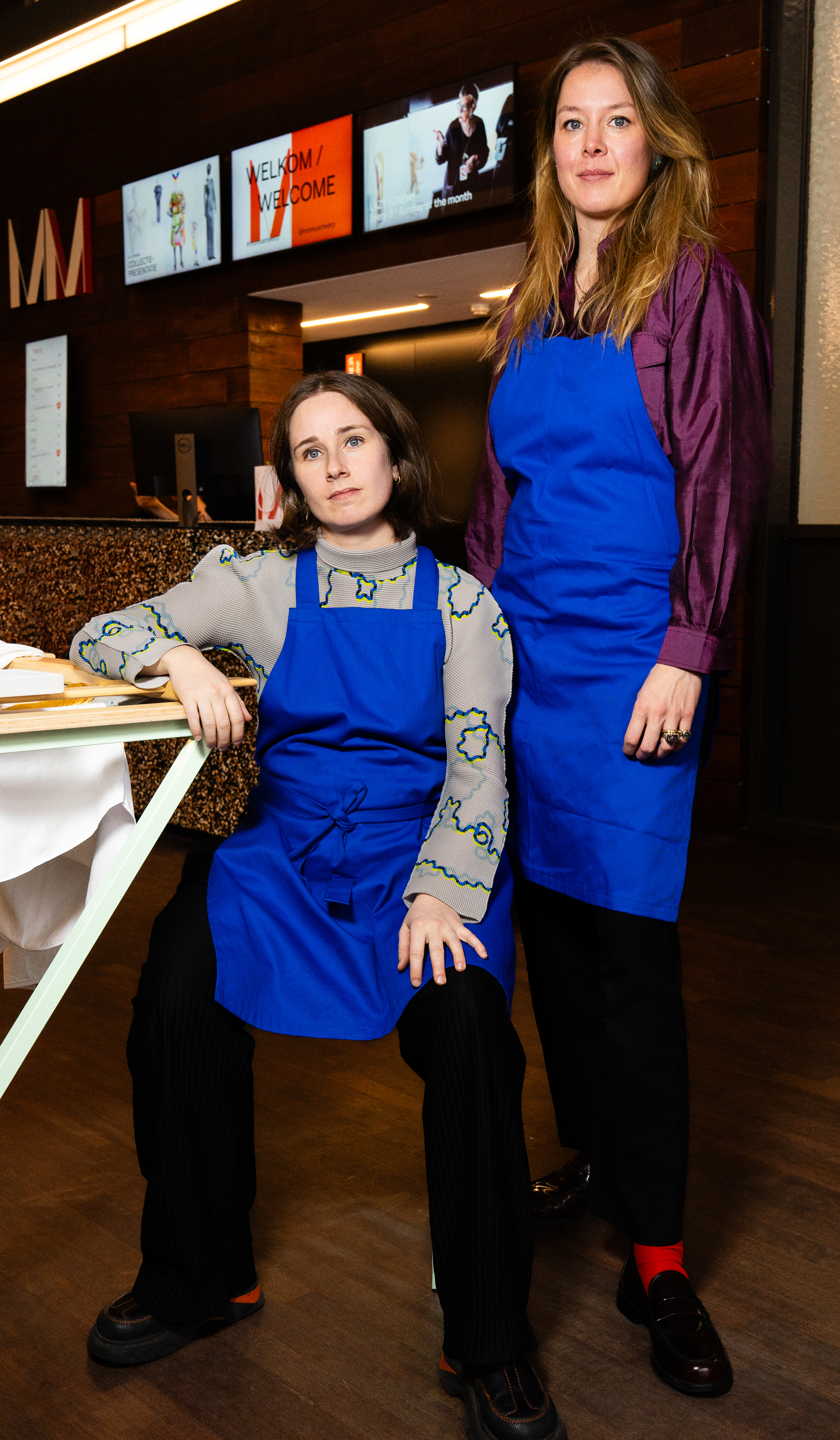
Inspired by the Japanese kintsugi technique, (W)HOLE celebrates decay by transforming wear and tear into something valuable. This approach emerged from a transdisciplinary dialogue between textile designer Anneleen Bertels and goldsmith Lindsey Fontijn, where craftsmanship meets innovation. Each "textile surgery" focuses on jewelry beads, blending fragile fabric with durable precious metals, shifting the purpose of gold embroidery as luxury to a precious tool.
Belgium
National
Mainly urban
It involves a physical transformation of the built environment (hard investment)
Yes
2026-02-22
No
No
No
Individual
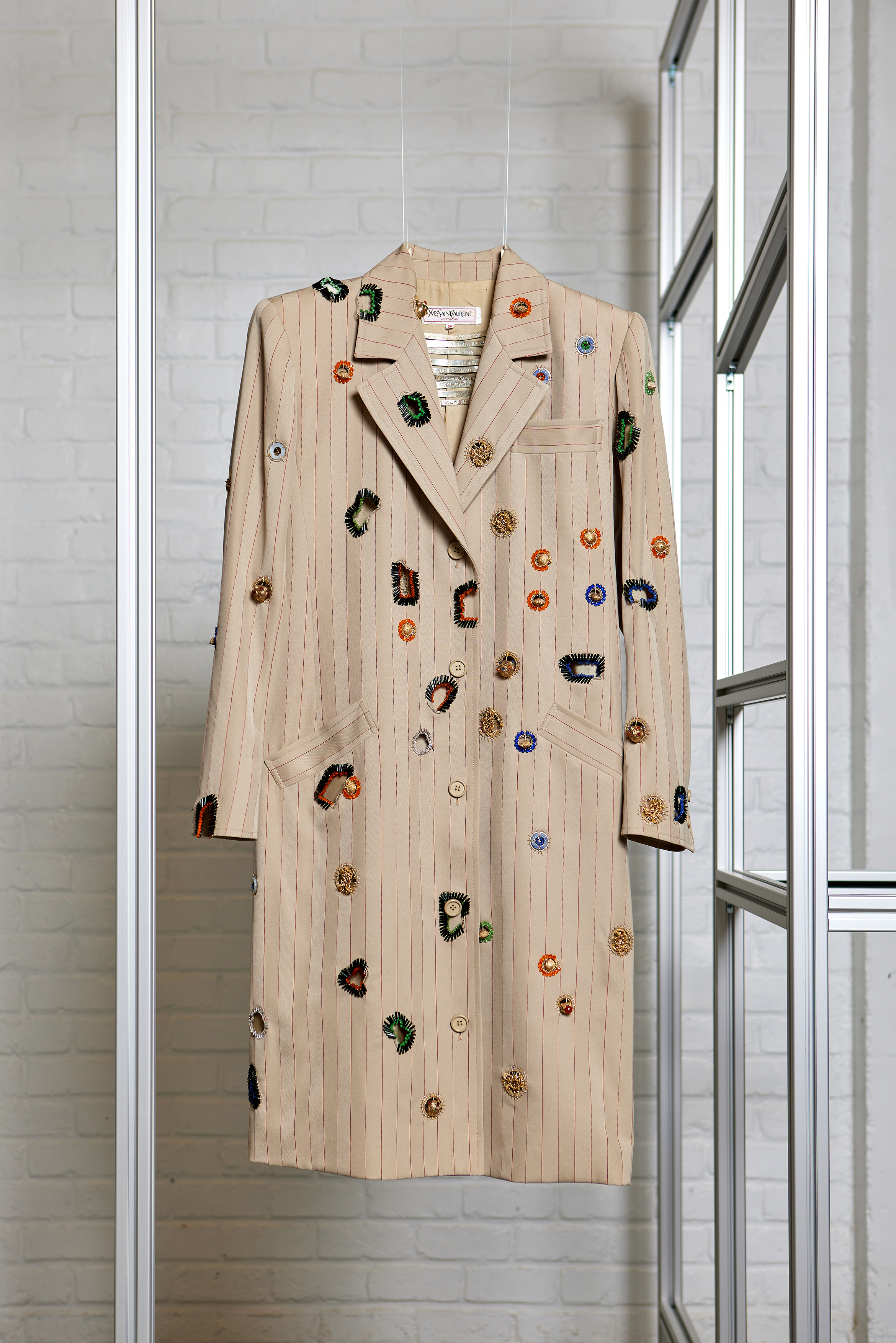
(W)HOLE addresses the pervasive "throwaway culture" by redefining how we treat damaged textiles. Instead of discarding or using inferior mending, the duo applies so called "textile surgery"—a meticulous process repairing holes with sophisticated embroidered jewelry. As a garment is repaired over time, it eventually transforms into a unique, lifelong work of art.
Objectives & Outcomes: The project’s goal is to merge the durability of precious metals with the fragility of textiles to transform broken garments into lifelong works of art. As a duo, they have successfully developed an innovative technique where each repair uses handcrafted jewelry beads and precious embroidery. Over time, a garment transforms into a unique piece of jewelry, shifting the user's relationship from one of consumption to one of deep care and connection. The primary objective is to deepen the emotional connection between users and their belongings, proving that circularity can be a poetic opportunity rather than just a technical requirement.
(W)HOLE’s ecosystem includes cultural institutions, researchers, designers and creative directors of the fashion & design industry seeking innovative circular models, and individuals—including children—who want to repair garments with deep personal meaning.
The project moves beyond functional mending into an "interactive performance." Through the “Nomadic Repair Studio”, this healing art form has been brought to public spaces like MoMu Antwerp and MAD Brussels, using a workstation that fuses goldsmithing and embroidery tools to foster sensory awareness of the slow, artisanal making process.
This project proves that circularity is not just a technical necessity but a poetic opportunity to deepen our emotional relationship with the objects that accompany us through life.
The (W)HOLE project reacts to a profound sense of disconnection present in fashion industry— loss of material knowledge and long-term perspective as observed during Bertels’ years at ateliers like Balenciaga, Maison Margiela and Ann Demeulemeester.
Founded in 2022, the project acts as "soft activism" movement against mass production, offering a way to heal throwaway culture by interlacing ancestral techniques with contemporary design to create a new material language called "Jewellerised Textiles".
The project is a constant dialogue between specialized crafts. The implementation is rooted in a transdisciplinary, collaborative dialogue where decision-making happens at the workbench. The duo also collaborates with Studio Do (Antwerp) that transforms stonecutting leftovers into gemstone beads, ensuring a circular and collaborative flow of resources.
Development Phases:
1.Research & Co-Design: Exploring the fusion of goldsmithing and embroidery to create a "new craft": waste-streams that could become jewelry pieces (for example old aluminium tennis rackets, metal elements from construction sites)
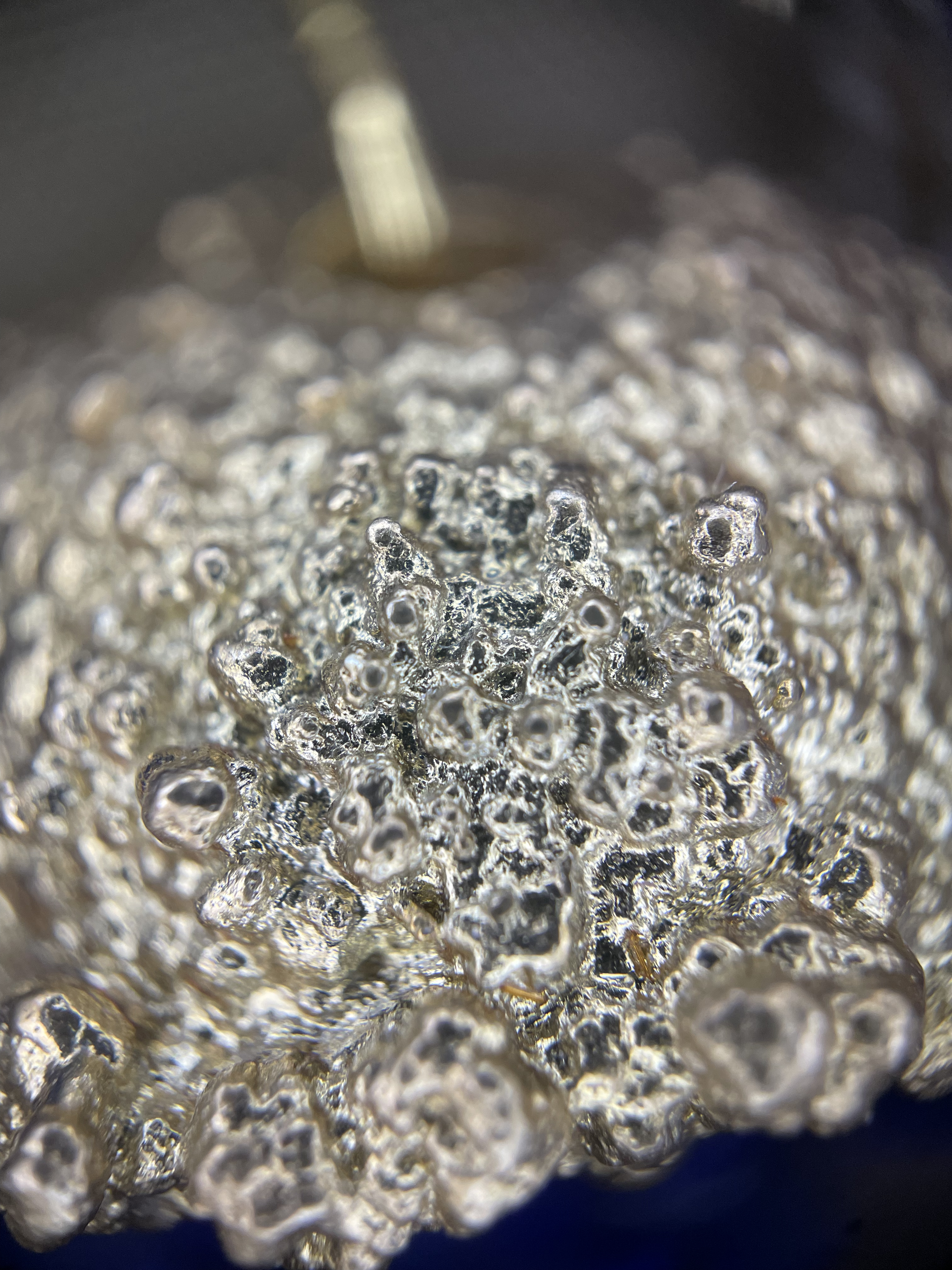
2.Testing & Alchemy: Using Lindsey’s signature electroform technique to "grow" copper uncontrollably, creating jewelry that truly blends into the textile structure.
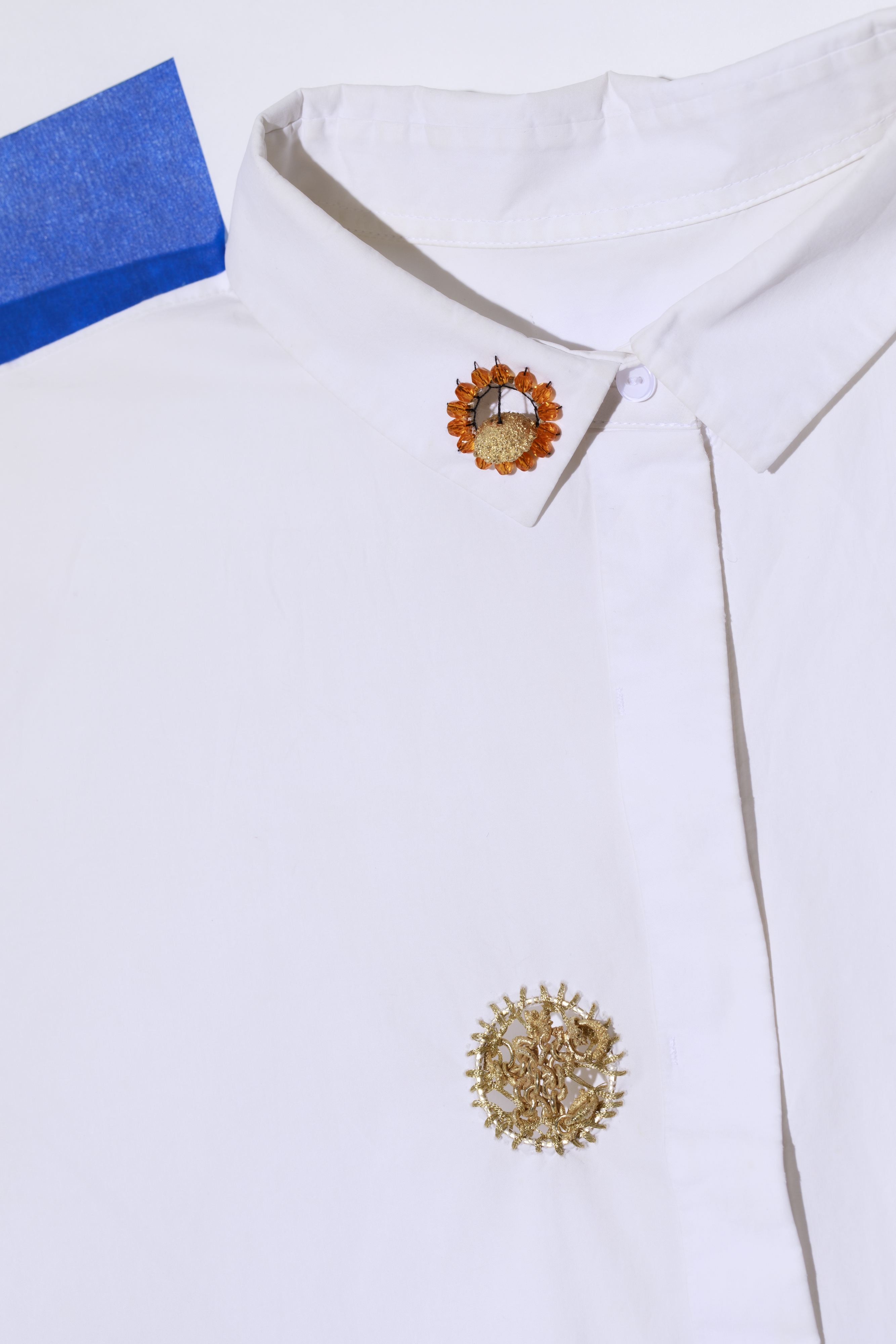
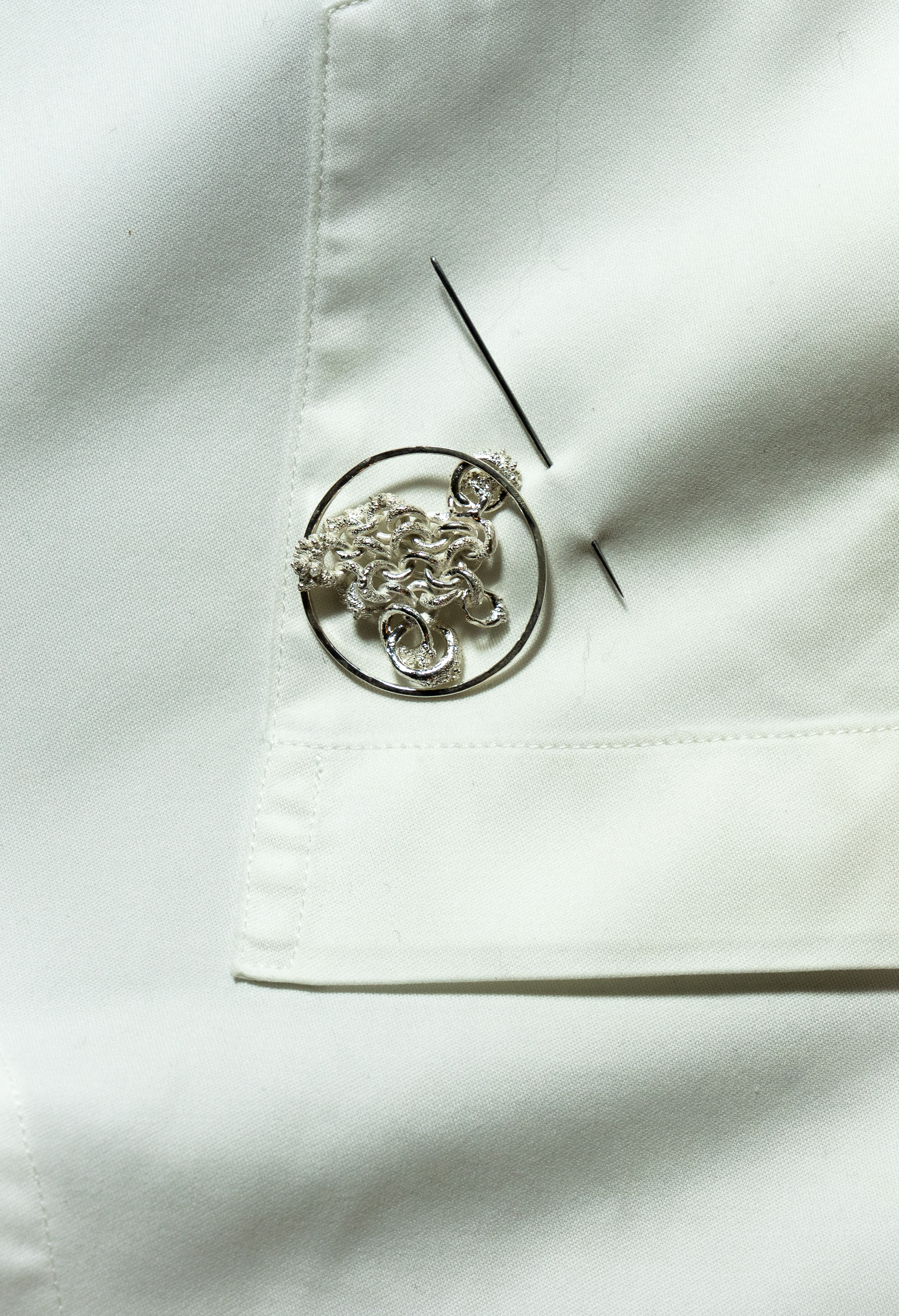
3.Implementation: Crafting "mineralised memories" by hand-embroidering upcycled beads onto damaged textiles using Japanese gold yarns, intentionally embracing silver oxidation to let repairs age with garment.
4.Evaluation: Testing the durability and emotional resonance of these repairs through the "Nomadic Repair Studio", where the act of repair becomes a shared "repair ritual" between the maker and the owner.
Craftsmanship is used as a literal and emotional tool for healing textiles and bridging the gap between material innovation and the human touch, preserving cultural heritage through evolving techniques like gold embroidery with repairs that last and carry a craft legacy to the next generation.
Craftsmanship
Beauty of decay
Inclusive futures
Heritage as a driver for change
Knowledge sharing
The primary objective of (W)HOLE is to prolong the usability of textiles by addressing the root cause of waste: human relationship with belongings. While the industry often seeks solutions through "innovative green materials," this project argues that true sustainability requires a behavioral shift. The objective is to heal the so-called "throwaway culture" by spotlighting everyday objects. By shifting a garment’s hole from a defect into a "mineralised memory," (W)HOLE encourage users to wear and use the items already in their possession with love for a lifetime, shifting the focus from consumption to long-term preservation.The success of the project is evidenced by the "emotional durability" expressed by the participant: the more a garment decays, the more it acquires a new kind of beauty and value through personal care.
These "Textile Surgeries" act as soft activism tool:
-Mindset and product Transformation: Instead of replacing a garment with a "sustainable" alternative, we elevate the existing one. This process ensures objects are never discarded, rather continuously renewed - and revalued.
-Material Alchemy as Education: The used materials embrace natural lifecycles, such as silver that intentionally oxidizes and "grows" alongside the textile. This teaches the user to value the natural process of aging and decay natural materials are prone to, moving away from a mass-production society obsessed with static perfection.
-Circular and slow supply chain: (W)HOLE supply chain is circular by design as it upcycles gemstone remnants from local stonecutters (Studio Do, Antwerp) and uses infinitely recyclable precious metals.This demonstrates how high-level innovation and craftsmanship can be achieved by being more respectful with materials that already exist in our local ecosystem.
This methodology proves that high-level artistry can be a functional tool for sustainability, significantly extending the life-years of textiles and lowering the environmental footprint.
The aesthetic core of (W)HOLE lies in shifting the focus from a static, flawless end-product to the creative narrative of so called "textile surgery." By celebrating decay and highlighting wear and tear, (W)HOLE transforms what is typically perceived as "broken" into a centerpiece of value. Design and craftsmanship blend through treating the repair as an “elevation”- a meticulous fusion where handmade beads, stone remnants, are hand-embroidered into the fabric with Japanese gold yarns while respecting European haute couture embroidery.
This process fosters a sense of well-being, as the wearer experiences directly how the garment was ‘healed’, thus acknowledging its personal history rather than discarding it. The shift - from a disposable product to a lifelong work of art - proves that the more an object decays, the more it can transform into a new kind of beauty:
- Tactility, contrast of materials and visual evolution: (W)HOLE’s work is physically stimulating for the senses: the tactile weight of the metal against the softness of the textile, and the visual evolution of the intentional oxidation of silver.
- Healing through craftsmanship and care: By preserving these garments, the stories and local identities of the people who wear them are preserved, turning a mass-produced item into one of personal heritage.
The “Nomadic Repair Studio” also activates public spaces and cultural institutions. The studio itself serves as a captivating aesthetic installation—a fusion of embroidery and goldsmithing workstations. By making the slow, artisanal process visible, the act of repair becomes a "healing ritual" and a unique community experience through sensory awareness.
(W)HOLE redefines “luxury” by transforming high-level craftsmanship - moving it from exclusive privilege to a tool for social connection, reshaping the consumer’s relationship with the product. It shifts the perception of consumers as passive recipients to active participants in the preservation of their own belongings.
The project is based on transparent, community-led model that prioritizes personal history over brand recognition. At its heart is the “Nomadic Repair Studio”, a mobile workstation that brings the art of "textile surgery" into the public eye. Opening the private atelier to the public democratizes craftsmanship, allowing the studio to function as a site for "re-remembering"—for both the maker and the owner. The slow, visible process of repair becomes a moment for social interaction and dialogue between the maker and the owner, fostering a shared sense of ownership over material culture.
Everyone can bring their own "broken" jewelry or gemstone remnants, making the process both economically accessible and deeply personal. This shared ritual transforms the garment into a vessel for stories, fostering a deep sense of belonging and collective ownership over our material heritage.
The studio collaborates with local artisans, such as goldsmiths and stonecutters, to keep skills and resources within the regional ecosystem. This strengthens local circular value chains and promotes a sense of pride in regional craftsmanship.
Ultimately, (W)HOLE proves that when we repair a hole, we also repair a social connection.
This move towards a more inclusive, nature-friendly future shows that true value lies in the care we show towards things – and towards people.
(W)HOLE is founded on the belief that repair is a collective act of care for our environment. Through the Nomadic Repair Studio, the project transforms mending from a private activity into a participatory design practice where citizens, artisans, and communities co-create solutions that extend the life of garments and objects.
Citizens, local communities, and craft enthusiasts are directly involved in the design and implementation stages. Participants bring personal objects in need of repair—such as garments or jewellery—which serve as the starting point for the creative process. These items carry individual histories that shape the design decisions and guide the repair.
The process is built on horizontal dialogue and co-creation between artisan and participant. During the repair—often described as “textile surgery”—participants take part in discussions about materials, techniques, and aesthetic choices. This ensures that decisions are made collaboratively and that the repaired object reflects the wearer’s needs, memories, and values.
The Nomadic Repair Studio also acts as an open learning environment where community members witness and engage with traditional craftsmanship techniques. This transparent exchange of knowledge strengthens appreciation for repair, durability, and circular practices, while building capacity within the community to value and care for material objects.
By involving citizens throughout the creative process, the project fosters community ownership and shared stewardship of materials. Each repaired object becomes a co-created artifact that embodies both personal memory and collective craftsmanship. In this way, (W)HOLE contributes to a participatory culture of repair that promotes environmental responsibility, social connection, and long-term cultural resilience.
The project actively interacts with networks that extend far beyond its local roots in Brussels, Amsterdam and Antwerp. Through collaborations with prestigious institutions such as MoMu Antwerp, MAD Brussels, Schloss Hollenegg in Austria, and Parcours Bijoux in Paris, (W)HOLE has moved from a private design practice into a public-facing research program. These partnerships allow the project to create a high-level dialogue between restoration, contemporary design, and the emotional value of heritage. By embedding the Nomadic Repair Studio within these cultural landmarks, the project pushes a single-scale artisanal initiative into an international conversation about how we "heal" our material history.
(W)HOLE works across distinct dimensions to ensure it’s message of circularity is felt throughout the environment:
- The Individual Scale: The project begins with the personal—performing textile surgeries on garments that carry deep private meaning for the user.
- The Neighborhood Scale: Through workshops and live performances, public spaces are transformed into opportunities for a collective ritual, making the slow act of repair visible and accessible to the community.
The (W)HOLE project, goes beyond matching crafts; it explores the ways to fuse goldsmithing, textile and embroidery into a single, cohesive material language. This interaction requires a constant translation between the rigid precision of metalwork and the organic flexibility of textiles. By working at the intersection of these fields, the project effectively developed a "new craft"—one where jewelry acts as a structural repair for fabric.
The design process is rooted in a continuous, active dialogue between the founder Bertels and the goldsmith Fontijn, a textile designer and an artisan goldsmith. Through shared decision making and a synergy of materials, one can develop more innovative solutions to textile waste than what a single discipline could achieve alone:
Technical insights into metal applications merge with embroidery designs to solve the tension between materials, ensuring that the custom jewelry beads integrate seamlessly into the garment’s weave. Added collaboration with Studio Do in Antwerp who provides expertise in stonecutting to offer "raw" material leftovers that are then transform into refined jewelry components.
The new product "Jewellerised Textile" is a result of this cross-disciplinary approach; it brings a contemporary perspective to ancient techniques like gold embroidery by giving it the physical weight of jewelry. The added value lies in the durability of the result. By combining the resilience of precious metals with the softness of fabric, the final product is built to last for generations. It proves that, when artisans from different fields share a common poetic vision, they can create a resilient alternative to the fast-fashion industry. Lastly, the Nomadic Repair Studio serves as a captivating installation where the tools of the goldsmith and the embroiderer are fused into a single workstation. By performing the "surgery" in public, it demonstrates how the synergy between different disciplines can foster a new culture of care.
The project is currently financed through a hybrid model of direct-to-consumer services and institutional support. We generate immediate revenue through:
- B2C Bespoke Commissions: Individual clients pay for custom "textile surgeries".
- Workshops, Education and seminars: The duo offers paid masterclasses and public workshops for all ages, creating a revenue stream while passing on the specialized knowledge of our craft.
- Awards and Grants: Innovation awards and public funding support our ongoing R&D into the fusion of jewelry and textile design.
Future Potential and scalability: To ensure long-term financial sustainability and scalability, the project is expanding into the B2B sector:
- B2B Repair Orders: To offer high-end repair services for boutiques and designers who want to offer their clients a prestigious alternative to replacement.
- Consultancy: to consult fashion houses on implementing repair philosophies that align with their brand identity, helping them transition toward circularity.
- After-Service Partnerships: Becoming the dedicated "repair atelier" for high-fashion brands, providing an outsourced, high-craft after-service that justifies the investment in luxury goods.
(W)HOLE is not merely a collection of reparations, but a material philosophy and vocabulary. The long-term vision is to transform "textile surgery" into a systemic tool for circularity that can be scaled across cultural, commercial, and urban environments.
The core of the project’s replicability lies in the Nomadic Repair Studio. The second version of this mobile workstation is currently in development, relying on a specialized joinery system that allows the entire structure to be easily unbuilt and reassembled. This design ensures that the studio can fit into a suitcase, allowing the project’s easier mobility and accessibility to go anywhere in the world. While the methodology is global, it remains rooted in local resources; by working with material remnants with regional waste streams wherever it travels, the project adapts its beauty to the specific identity and heritage of each region.
The ambition for growth is mapped through three strategic layers to ensure a deep-rooted impact:
- B2B Consultancy: Specialized consultancy for fashion houses and design companies. By translating the material philosophy into custom "repair designs" that mirror a brand’s unique identity, the studio helps industry integrate high-craft circularity into their permanent service models.
- Institutional support: By scaling collaborations with museums (such as MoMu and MAD), repair becomes a tool for heritage preservation.
- Architectural Scale: The ultimate challenge of the project is ‘Architectural Embroidery’, where the material alchemy—merging rigid and flexible structures— is applied in furniture and public infrastructure reparation. The aim is to collaborate with blacksmiths, architects or engineers to integrate embroidery into larger/more architectural scales and other disciplines.