Arts, Culture, and Heritage as Drivers of Change
The Great Adventure of Sand Grains
{Empty}
« The Great Adventure of Sand Grains » is a collective and collaborative game designed by Studio Idaë for The Mission Val de Loire.
France
Regional
Pays de la Loire, Centre Val de Loire
It addresses urban-rural linkages
It involves other types of transformations (soft investment)
Yes
2025-08-20
No
No
Yes
Organisation
The collective and collaborative game "The Great Adventure of Sand Grains" was designed by Isabelle Daëron and Studio Idaë for Mission Val de Loire.
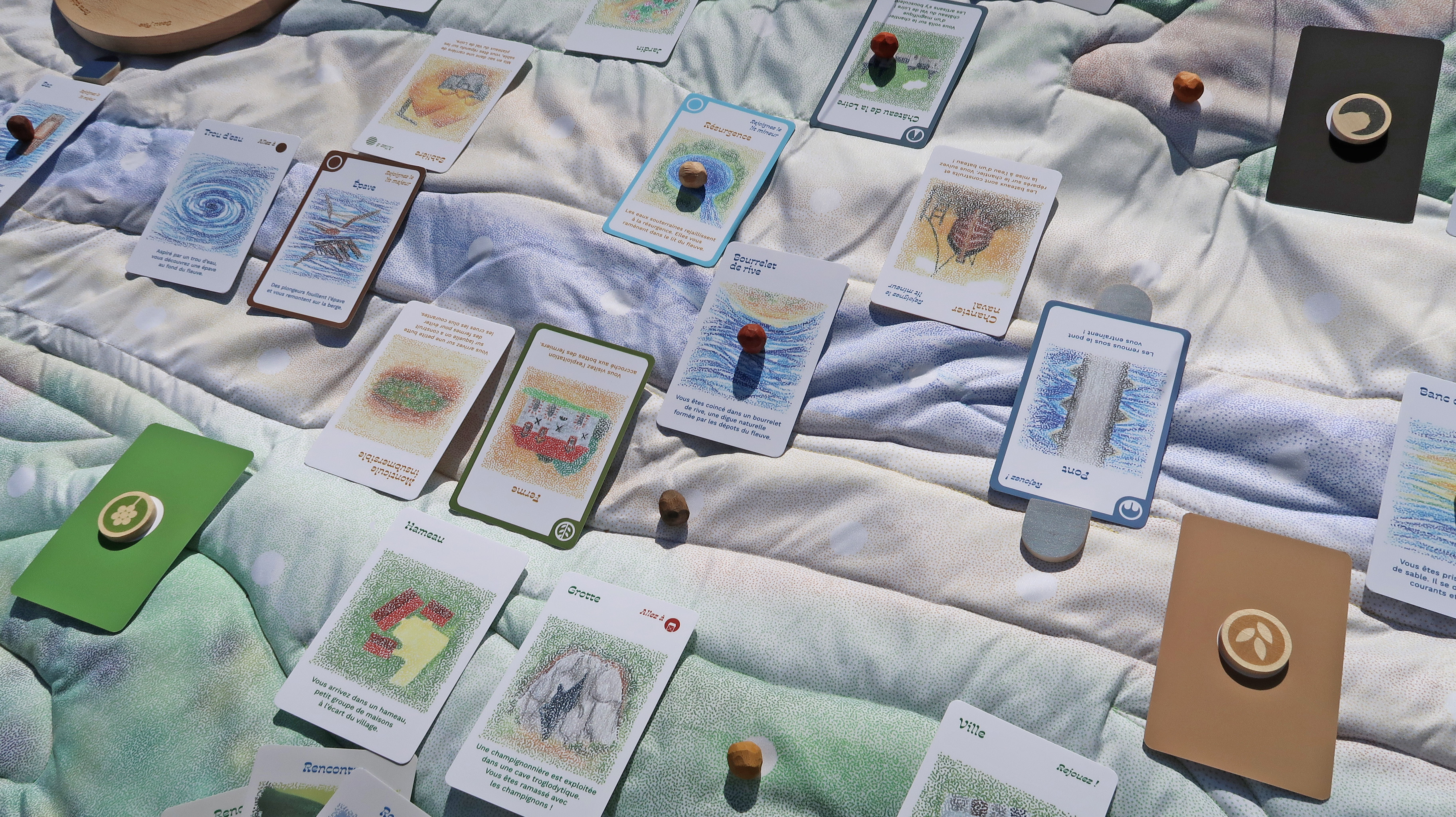
The Loire rises in the Massif Central, in the middle of the mountains. Grains of sand, detached from the rocks, are carried by the currents to the Loire Valley. Propelled by water and wind, they set off to explore the landscape. As they explore, they discover the diversity of what makes up the Loire landscape: its morphology, the diversity of its flora and fauna, but also its development and human activities. The grains of sand explore the play carpet to give it shape, discovering in turn an island or a castle. The landscape is thus shaped by the players, painting a portrait of a protean Val de Loire. The journey of each grain of sand is unique, punctuated by unexpected encounters.
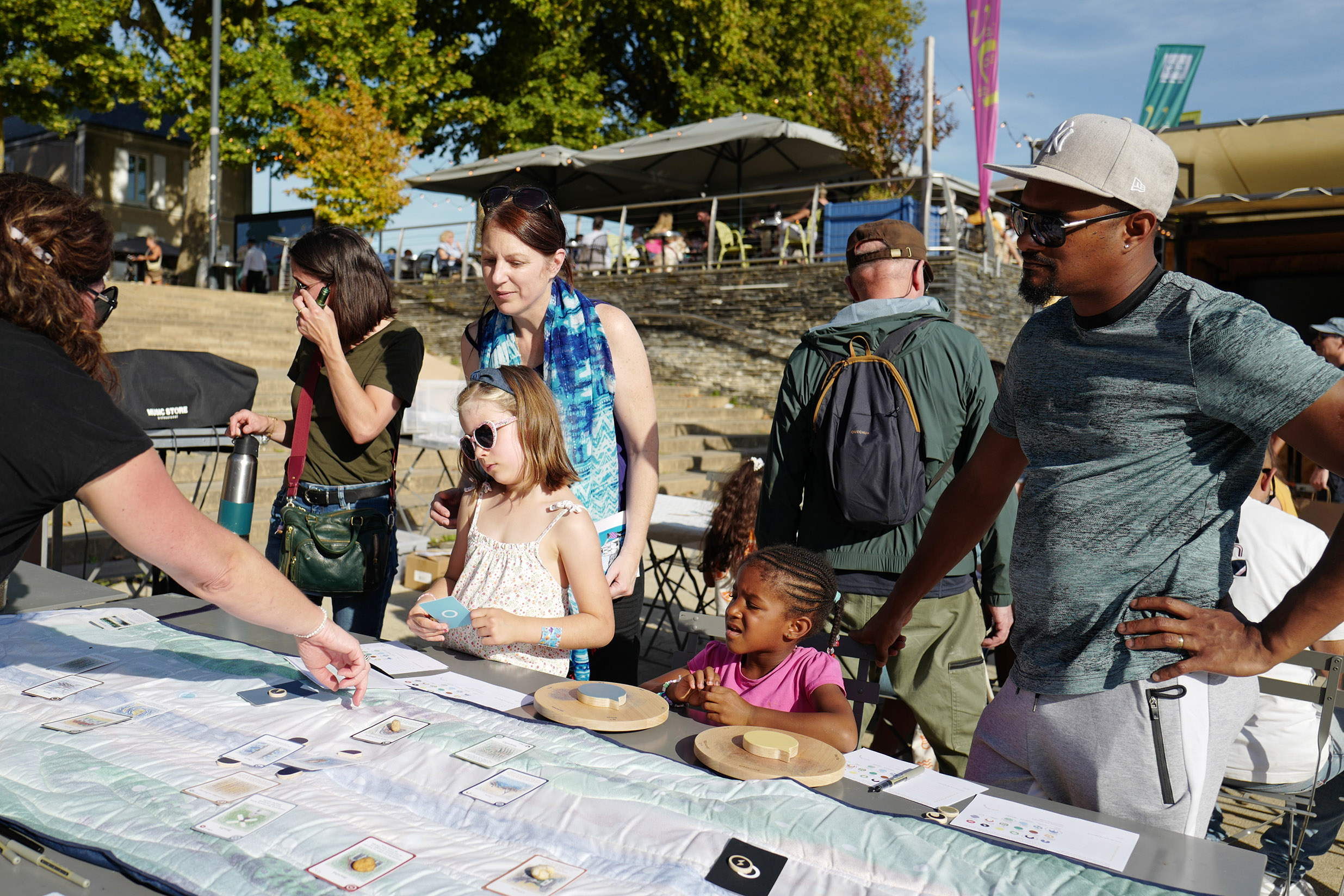
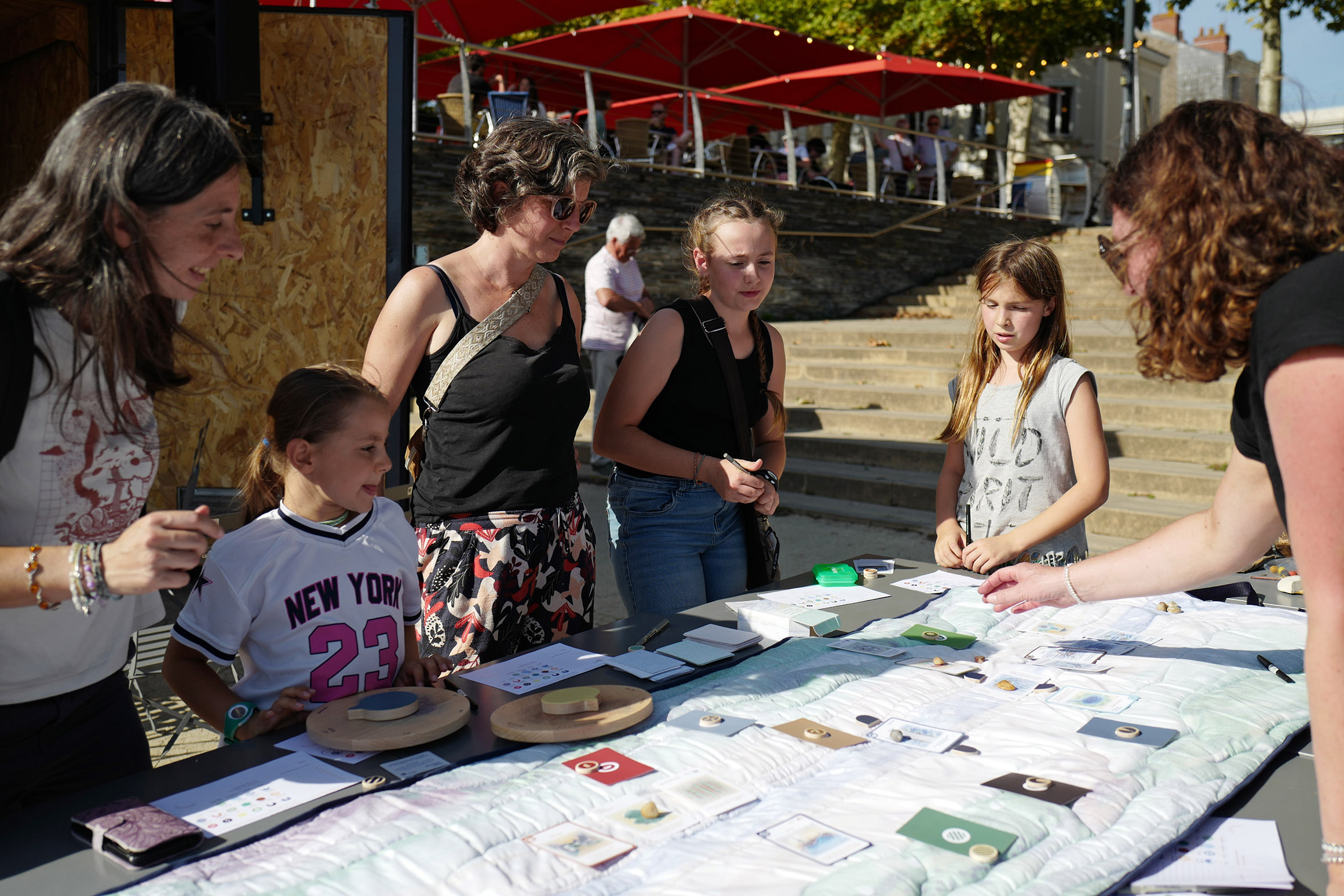
The game will be used with schoolchildren and the general public to raise awareness of landscape creation through play. By approaching the challenges of the Loire through its sediments, players will gain a better understanding of the interdependent relationships that make up the Loire environment.
Mission Val de Loire is an inter-regional body supported by the Centre-Val de Loire and Pays de la Loire regions. Its role is to manage and promote the Val de Loire UNESCO World Heritage site — listed in 2000 as a cultural landscape — and to help both residents and visitors engage with the values behind that recognition through educational, cultural mediation, and communication initiatives.
As part of this mission, Mission Val de Loire commissioned Studio Idaë to develop a new playful mediation tool aimed at strengthening public awareness of the natural landscapes, architectural heritage, and living culture that define the territory, from Sully-sur-Loire to Chalonnes-sur-Loire.
Studio Idaë was chosen for its collaborative and creative approach to design, as well as its ability to interpret complex cultural narratives in accessible, engaging formats. The studio’s experience working in situ with diverse stakeholders—scientists, heritage professionals, local communities—made it an ideal partner. Its sensitivity to both place and audience ensures that each project fosters genuine connection and curiosity, aligning perfectly with Mission Val de Loire’s commitment to education and cultural dialogue.
mediation
landscape
river
local communities
sediments
Sustainability is at the heart of our approach. It is central to the work of Mission Val de Loire. This organisation aims to help foster a sense of ownership of the principles and values underlying the Val de Loire’s inscription on the UNESCO World Heritage List through educational, cultural outreach, and communication initiatives.
It is also one of the main driving forces behind the mediation and design projects carried out by Studio Idaë. It is this shared interest that brought the two organizations together for this initiative.
The core purpose of the game “The Great Adventure of Sand Grains” is to raise awareness and highlight the fragility of the natural environment around the Loire River. It aims to help inhabitants understand the interdependence of the human and non-human actors that make up the landscape and shape the relationships. The game also seeks to think about and reverse the predatory attitude we may have toward our environment.
Through its narrative framework, this educational and collaborative game offers a versatile format that enables the Mission’s mediators to reach a wide audience—particularly school-aged students (from elementary schoolers to master’s students)—across its entire area of activity.
Its design is based on consultation and extensive testing; it allows players to explore the many issues affecting this region, introduces them to environmental science, and helps them feel personally invested in the changes taking place in the Loire Valley landscape.
“The Great Adventure of Sand Grains” aims to be a beautiful object that inspires players to marvel at and rediscover their everyday surroundings.
By choosing the path of a grain of sand as the game mechanic, it challenges not only the graphics but also the player’s perception. Considered to have outstanding universal value worthy of inclusion on UNESCO’s World Heritage List, the grain of sand—the smallest building block of this Loire landscape—allows players to reframe their understanding of the landscape and become aware of the abundance of life with which we coexist through the multitude of maps.
Studio Idaë offers a fresh perspective on the field of expertise of the Mission, proposing new keys to interpreting and reading the landscape based on a resolutely contextual approach.
The work of Mission Val de Loire is inherently inclusive, as it is based on UNESCO’s principles. The charter of values to which we adhere is founded on the recognition of educational, scientific, and cultural dimensions for everyone. The initiatives promoted by Mission Val de Loire are therefore designed to enable all members of the public to participate in a process of co-constructing knowledge, understanding, and governance, with a constant commitment to participatory democracy.
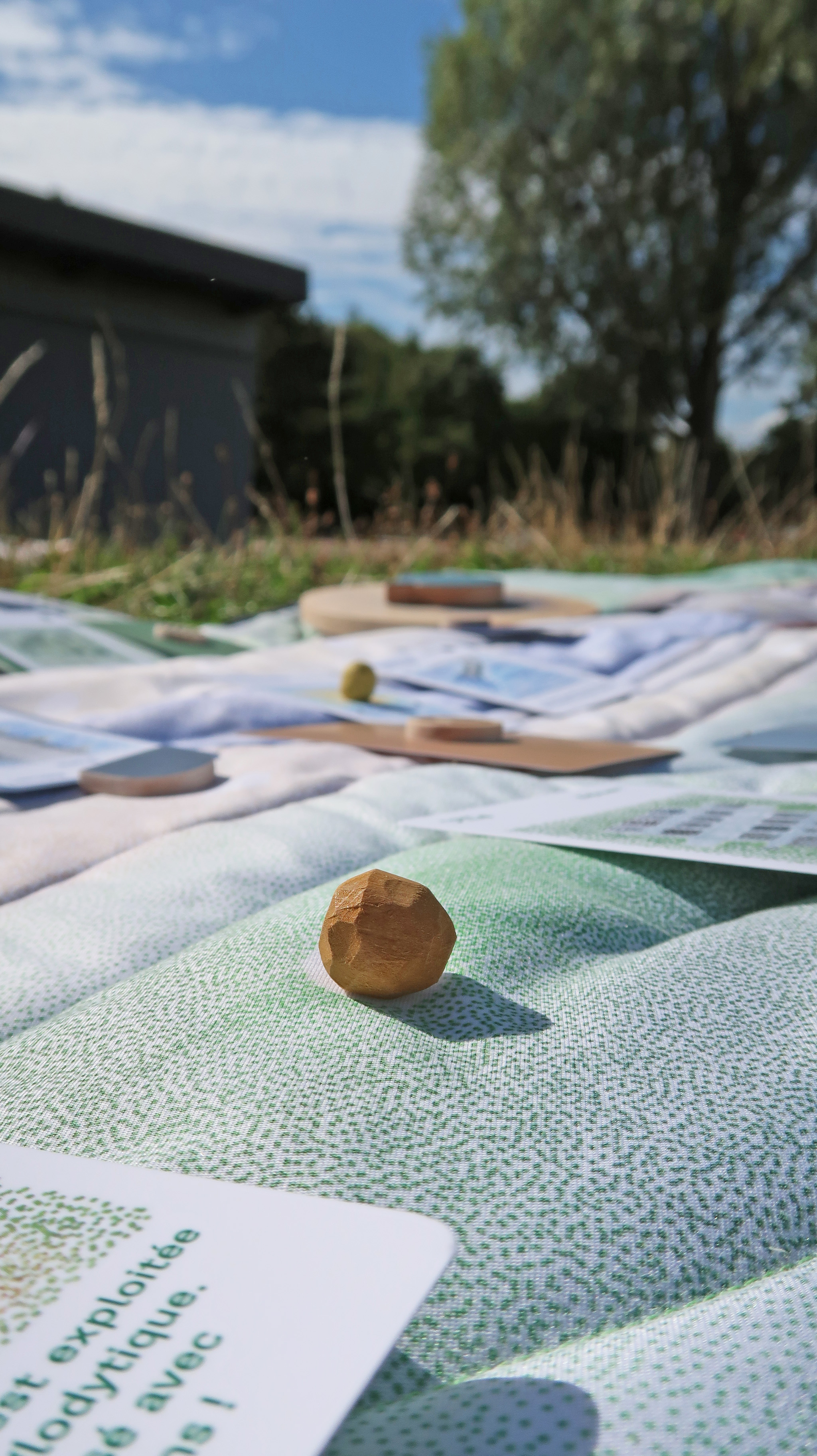
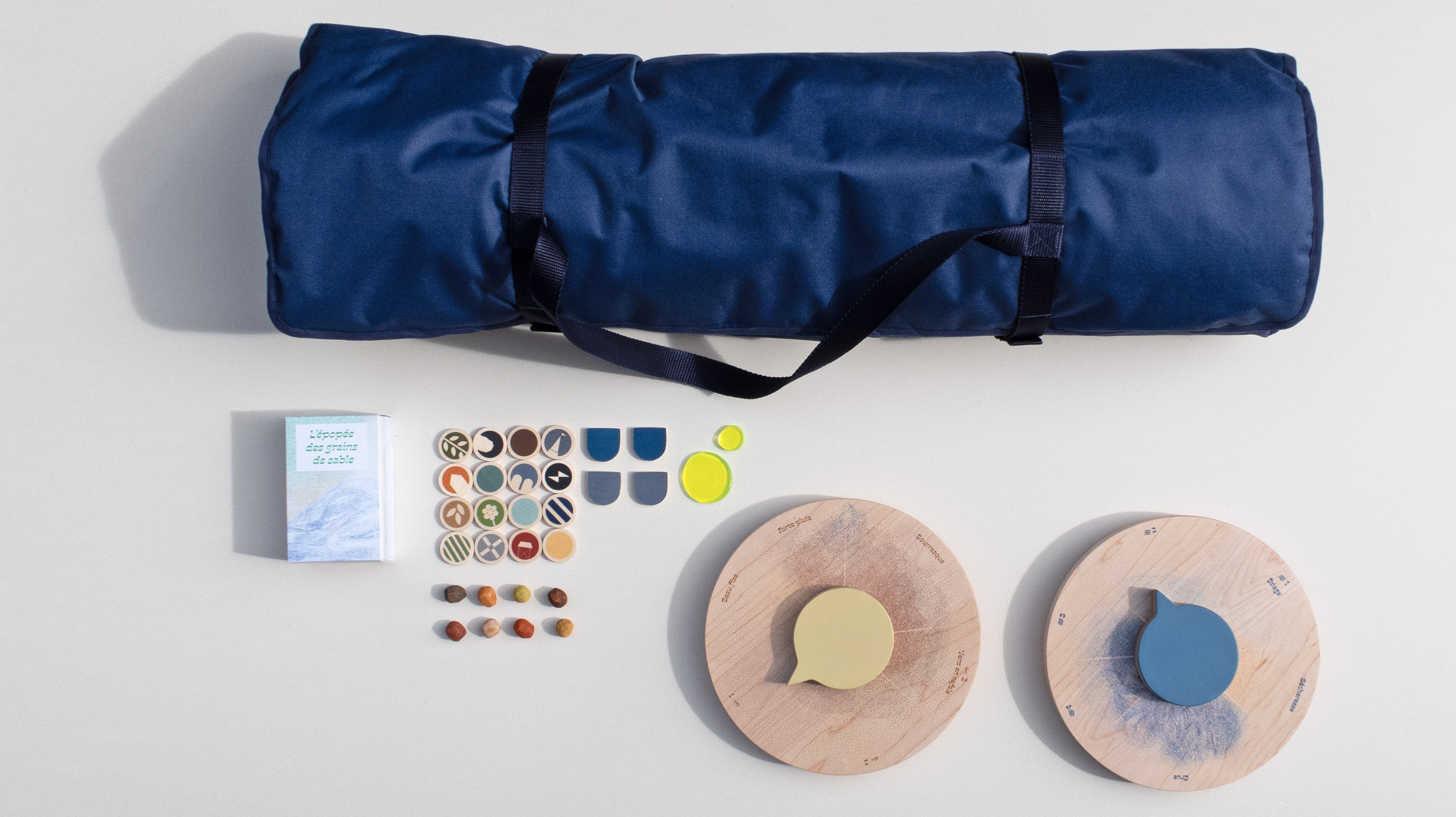
“The Great Adventure of Sand Grains” is suitable for everyone and every setting, designed to be self-contained, portable, and sustainable. It consists of a fabric game mat, thick paper game cards, and wooden game pieces.
The game serves as a discussion platform for audiences of all ages and backgrounds, offering varying levels of understanding and depth. It encourages participants to step outside the classroom and explore the outdoors.
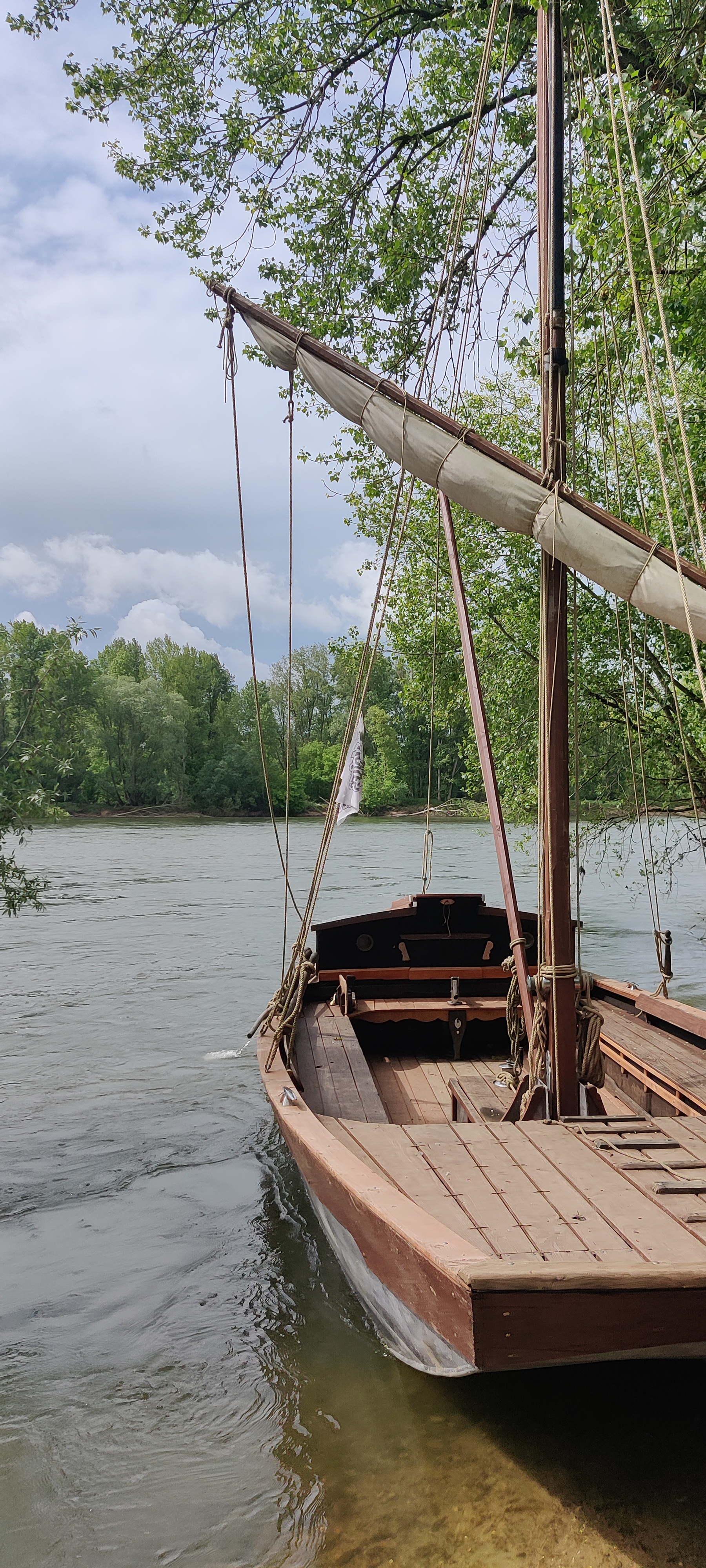
The mediation workshops offered by Mission Val de Loire usually take place outdoors, on the banks of the Loire. The activity, tailored to this environment, enables participants to familiarise themselves with the elements of the environment through the landscape itself, rather than from within a classroom.
In the case of a classroom game, the different levels of play allow the game to be adapted to different audiences. However, the ultimate aim remains the same: to promote an understanding of the landscape by identifying the relationships between its components.
There is no playful way of approaching the landscape, let alone any games. Descriptive tools belong to the realm of science. The work, therefore, involved identifying these tools and integrating them into an approach rooted in local knowledge and practices, with the ultimate aim of creating a playful tool that brings all the themes together. Local communities, therefore, played a key role in shaping the project’s scope and form.
Early on in the project, we met with numerous stakeholders involved in the policies governing the creation, transformation, and preservation of the landscape, as identified by the Mission. We conducted interviews with groups of scientists (from academic disciplines as well as the fields of mediation and participatory science), experts in traditional knowledge, and stakeholders from the fishing industry and the local economy.
Following this phase of analysis and immersion, we began designing the game, which we quickly tested with a wide range of stakeholders. First at local public events organized by La Mission Val de Loire, then with middle school students, and again with residents of the region.
The Val de Loire Mission commissioned Studio Idaë to design the game.
The Mission supported the studio as it immersed itself in the region and facilitated meetings with key stakeholders. The studio designed and produced the game, which has incorporated the Mission’s educational tools since September 2025.
At each stage, the project evolved in response to feedback from participants. These testing phases involved teachers, researchers and members of various local communities.
The game will be presented to the UNESCO World Heritage national network as a reference for understanding and engaging with the landscape (in the socio-ecosystem sense, rather than as an aesthetic representation).
The game was designed collaboratively to be as participatory as possible.
It encapsulates a vast body of knowledge, reflecting the diversity of expertise and fields represented (ecology, hydrology, sedimentology, geology, urban planning, architecture, cultural heritage, and nautical knowledge).
This knowledge allows us to consider the landscape as a system.
It thus enables us to educate young audiences in a very concrete and practical way.
These various fields of expertise also incorporate an element of local, vernacular and practical knowledge, which interacts with scientific knowledge. The game also reflects these exchanges and highlights the need to bring them together in order to understand complex systems in an accessible way.
We firmly believe that the more we share knowledge, the better we can understand how much we stand to gain by working together to preserve these environments. The game and its playful nature encourage players to take action rather than dwell on the negative aspects of the transformation of their environment.
The project exists thanks to a grant from the “Loire grandeur Nature” initiative (public funding), which sought to support the project.
The game is sustainable and requires no maintenance or additional expenses.
The stakes involved in this game are enormous, and funding remains insufficient.
For mediation to be effective, for the message to get across and for it to be translated into action, this type of game – a practical tool for environmental education – would need to be developed across the entire river basin. The game should be seen as the starting point for building a culture, a sense of attachment to the river, and the emergence of a ‘Loire community’.
Multiple levels of replicability:
At the European level: the same method but with very different content depending on the type of landscape (the path of a drop of lava from volcanic landscapes, or a blade of grass from the Causses, or landscapes of agro-pastoralism).
At the national level: Increase the number of copies to train more mediators, particularly at the “Maisons de la Loire” (environmental education centers), and distribute them along the entire length of the river.
For successful adaptation, we must revisit the matrix of knowledge drawn upon and return to the path of encounter and knowledge-making.
This project can also be expanded through the design of other complementary mediation tools, such as objects or other devices.