Enablers for New European Bauhaus Transformation
Bauwende Sachsen
Bauwende Sachsen - regional platform for sustainable transformation in construction sector
Bauwende Sachsen conceives itself as a platform for an interdisciplinary network of stakeholders who not only advocate for the sustainable transformation of the regional construction sector but also want to actively shape it. As a networking platform it offers various digital and real-life spaces for low-threshold learning about construction-related topics as well as to engage in dialogue and take action.
Germany
Regional
State of Saxony
It addresses urban-rural linkages
It involves other types of transformations (soft investment)
Yes
2025-12-31
No
No
No
Organisation
Our goal is to push foward BAUWENDE (engl. ,a turnaround in construction') on a regional level in Saxony. We are highlighting positive changes that are already taking place in urban and rural areas, spreading awareness of them, and scaling them up. By showcasing best-practice projects from across Saxony, we pool and share knowledge.
The funding provided by the State of Saxony for a four-year period enabled us to build a digital networking-platform, create a mobile exhibition that is touring through smaller municipalities in Saxony, and host multiple events.
The digital platform supports the exchange of know-how and networking between individuals, scientific institutions, innovative businesses and non-profit initiatives that all strive to move the construction sector towards a sustainable future. These stakeholders can find and connect to one another through our interactive map. We are already featuring fifty mapped stakeholders who actively involve themselves into our network. Additionally, we host a calendar with all regional events regarding the ecological transformation of the building sector, and a blog where we publish articles and essays that document and reflect the transformational impact of our own work and beyond.
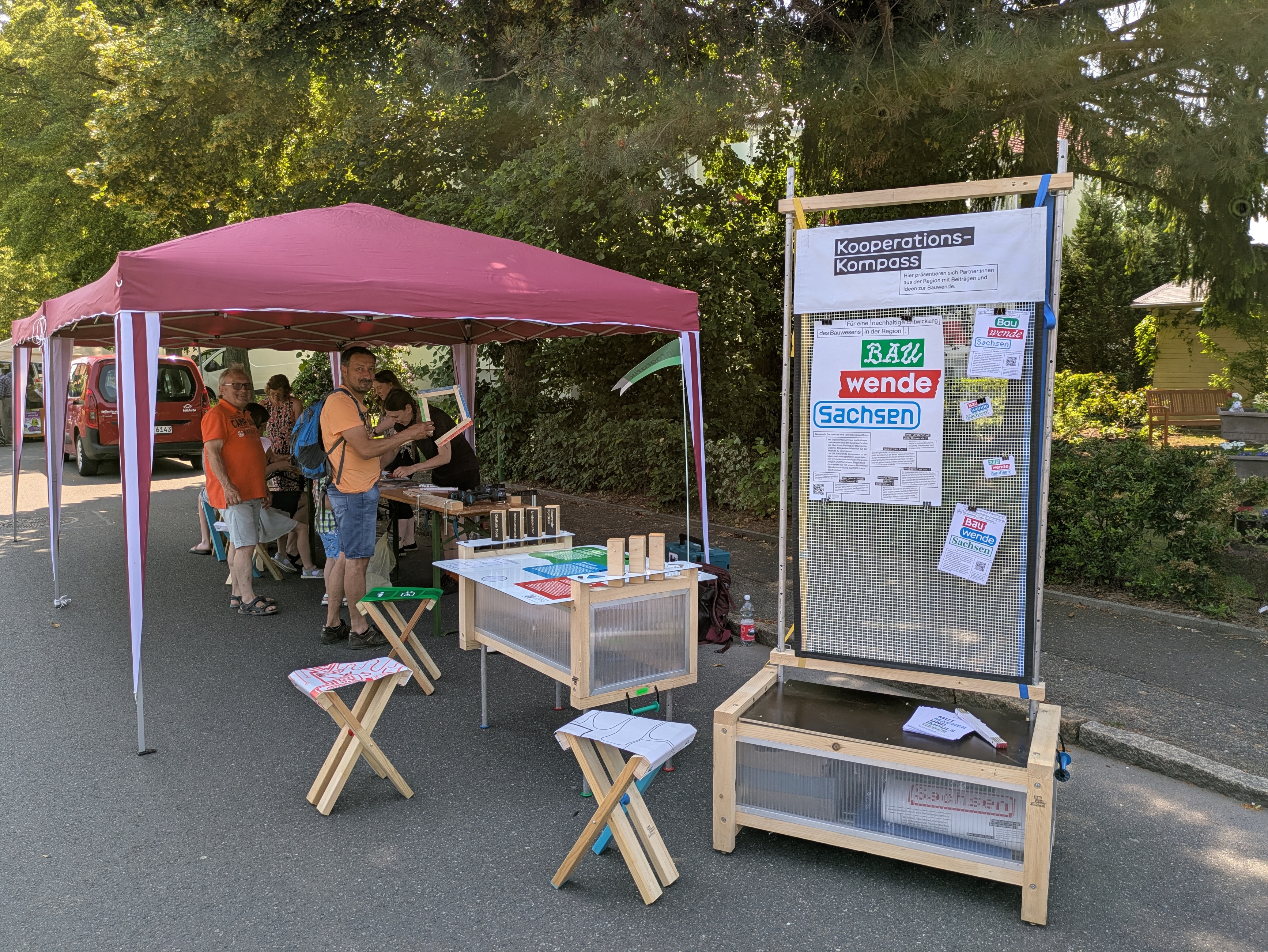
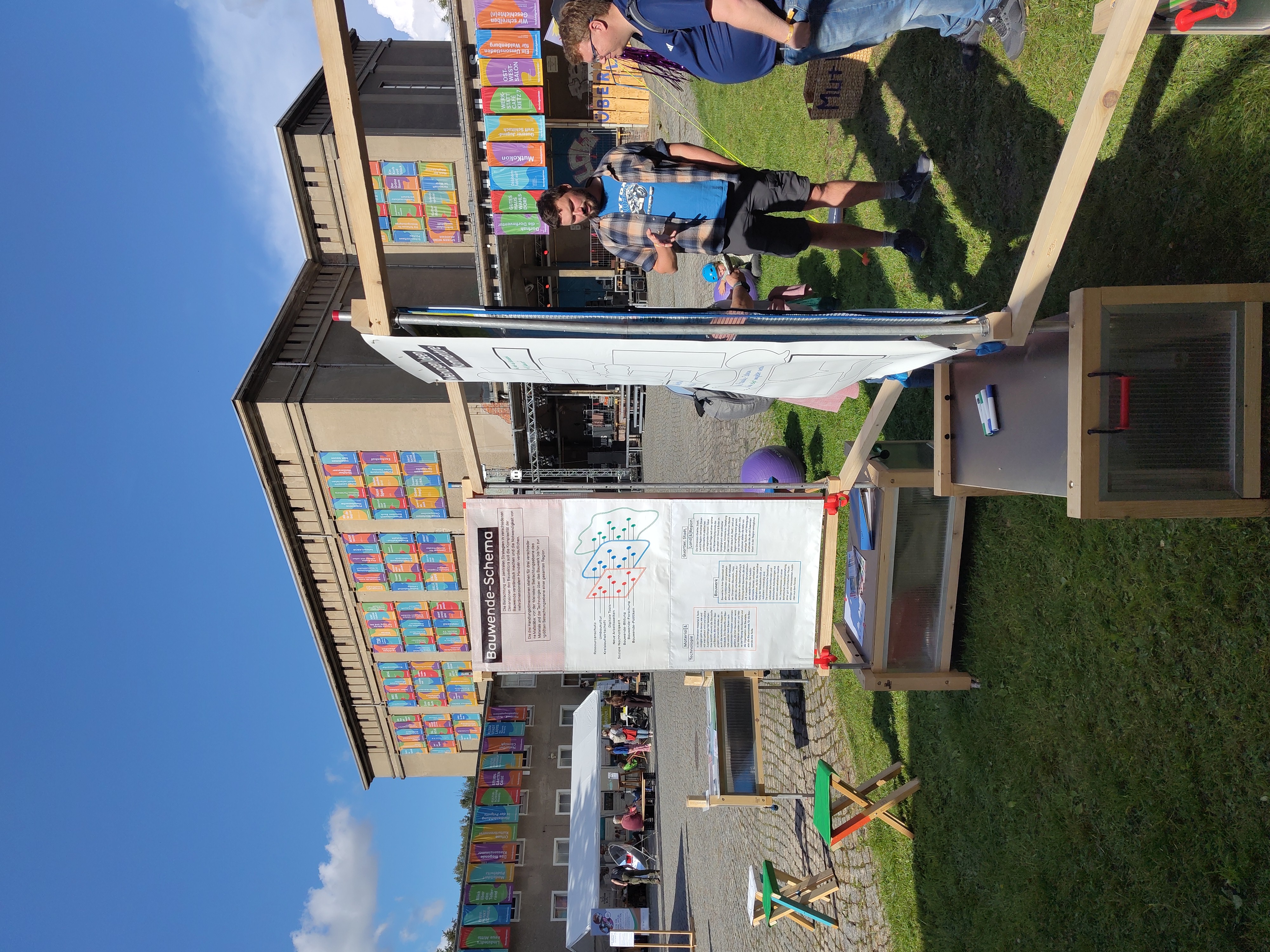
Our mobile exhibition is travelling around Saxony, especially to places and events that are specifically involved in transformational processes. The exhibition has been shown in over ten different locations, ranging from the big urban centres Dresden and Leipzig to small rural areas where communities strive to become more resilient in light of the upcoming ecological crises.
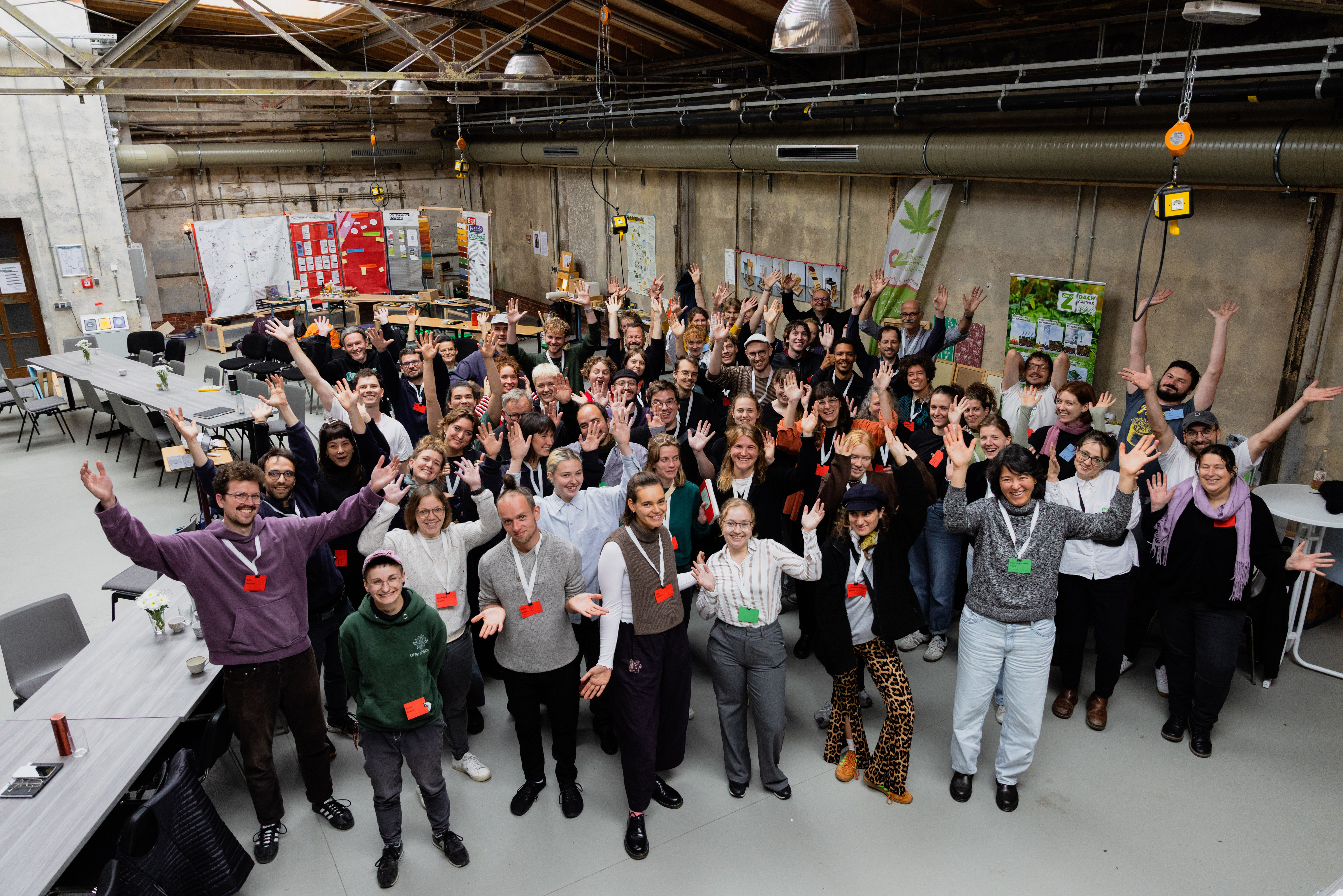
We also host our own workshops and events, the biggest being our yearly conference Bauwende Camp, with up to 70 participants. We are always committed to finding a balance between inspiring speakers, engaging discussion panels and hands-on workshops. In this spirit, we have realized two circular building workshops, two conferences and more than ten small events.
Our project is a collaboration between the associations Team Zirkuläres Bauen Dresden (bau&wesen e.V.) and Bauzirkel Leipzig (Verein für ökologisches Bauen Leipzig e.V.). We are united by the desire to shine light onto the urgency of sustainably transforming the construction sector as well as to show where this is already being put into practice.
Since 2022 we receive funding from the State of Saxony for the implementation of our networking-platform Bauwende Sachsen. Subsequently, a team consisting of association members and external stakeholders identified key areas and strategies crucial to a sustainable transformation of the construction sector. Based on these strategies, designing the networking-platform began with a focus on accessibility and low thresholds for both the general public and the professional community. The platform launched in early 2024 and has since been kept up to date with the latest facts and information about events, workshops and best practice examples from Saxony.
The mobile exhibition was created involving local stakeholders in the building process and making use of reused construction materials. After being finalized in 2024, it started touring around Saxony, bringing its content to various locations especially in rural areas.
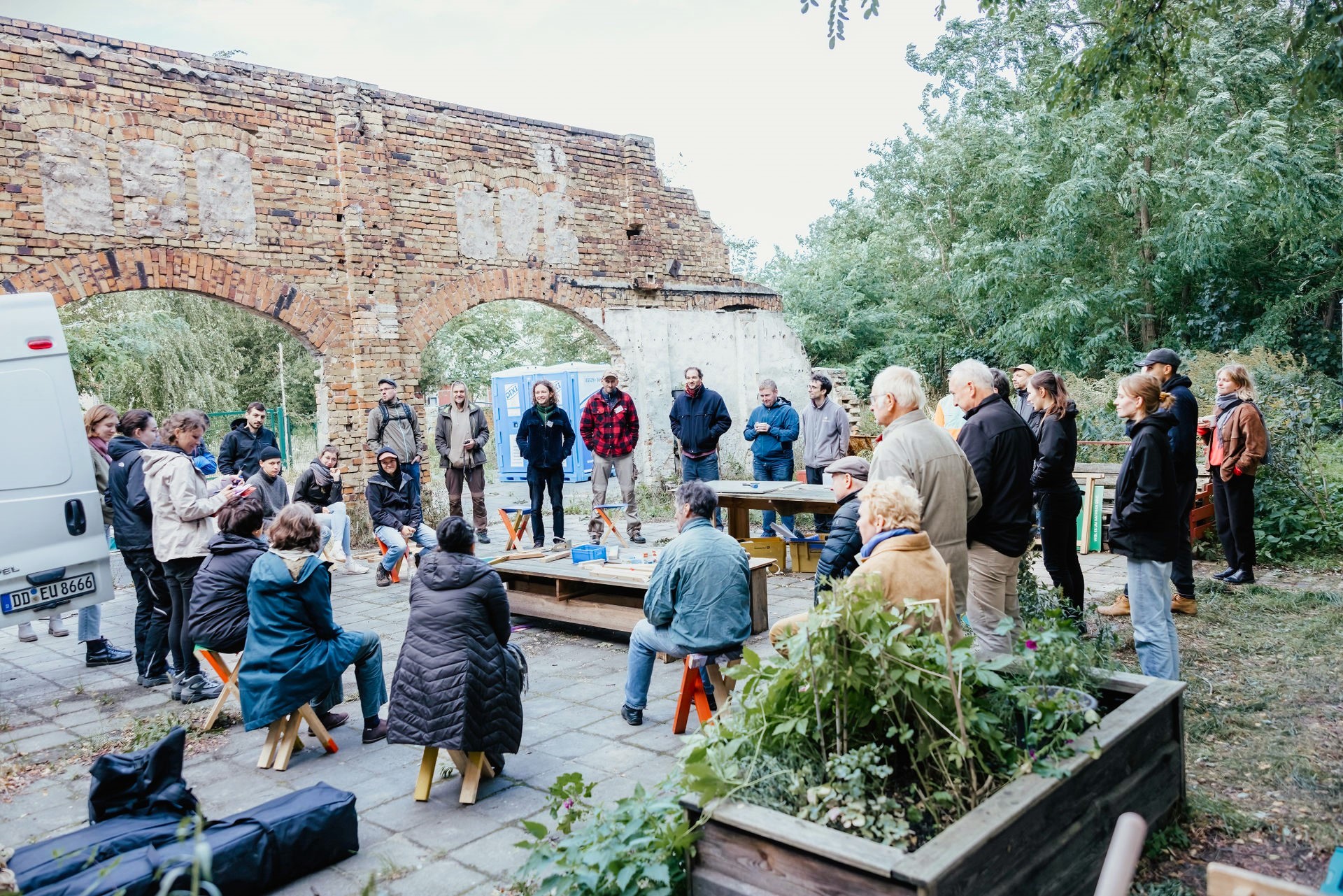
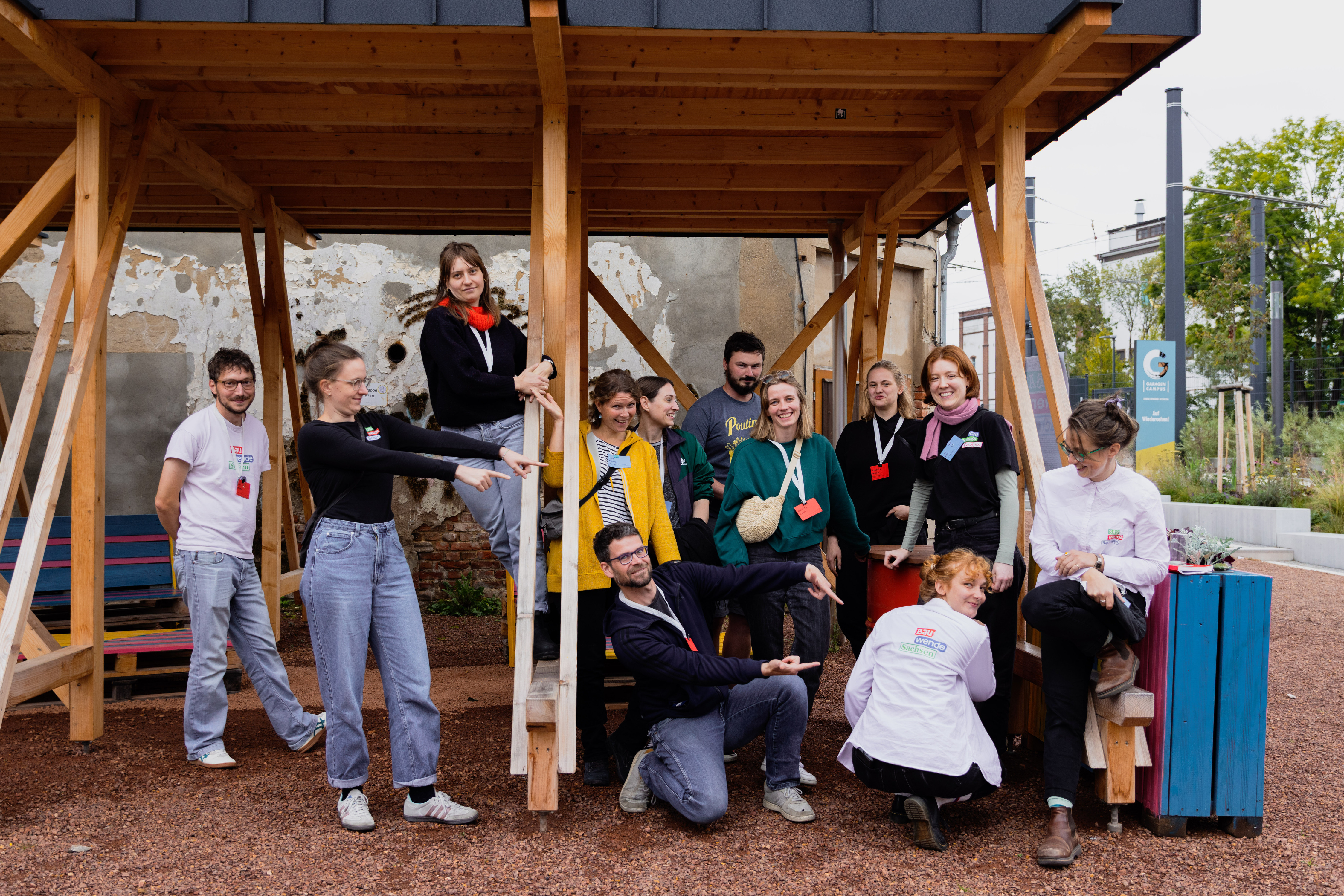
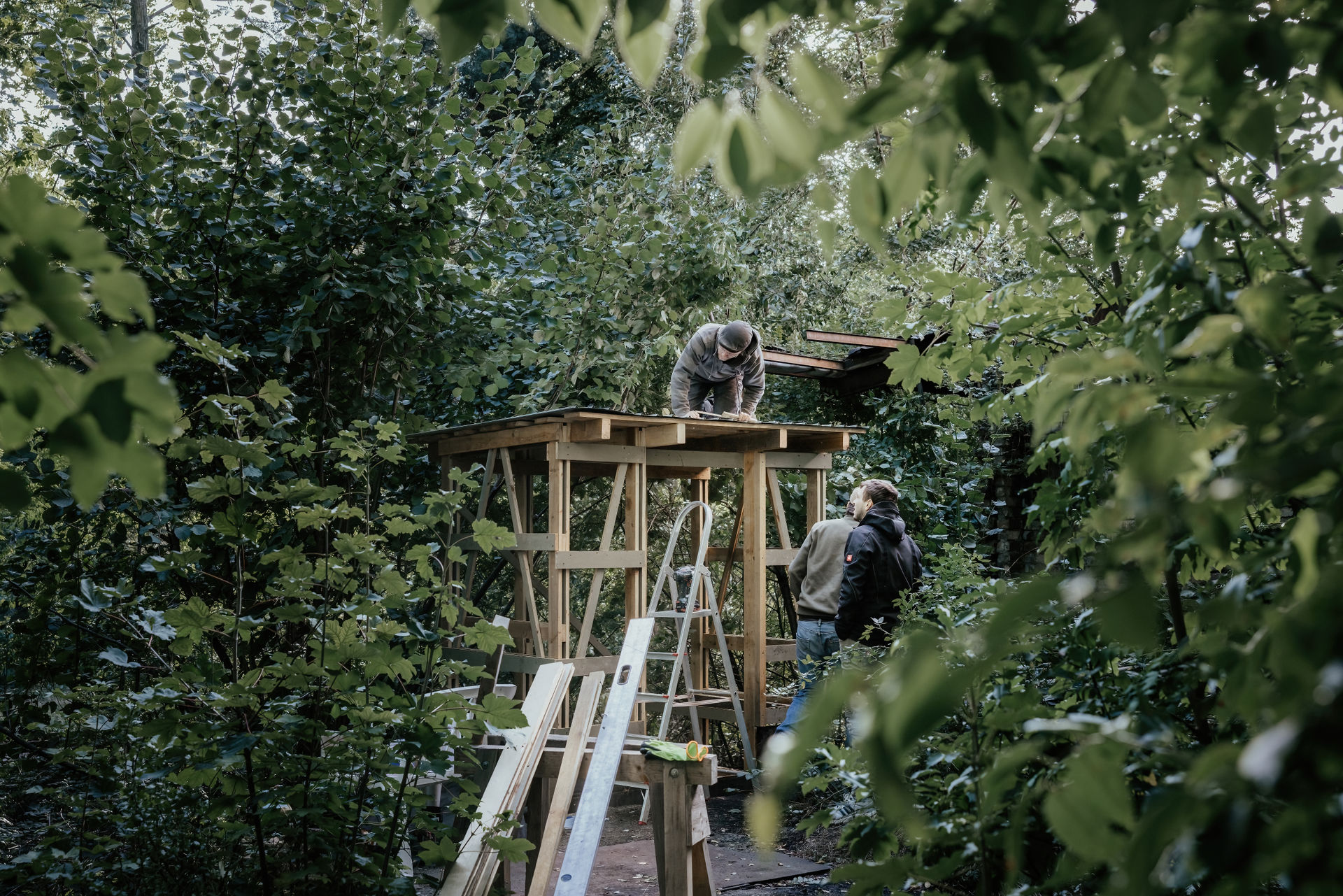
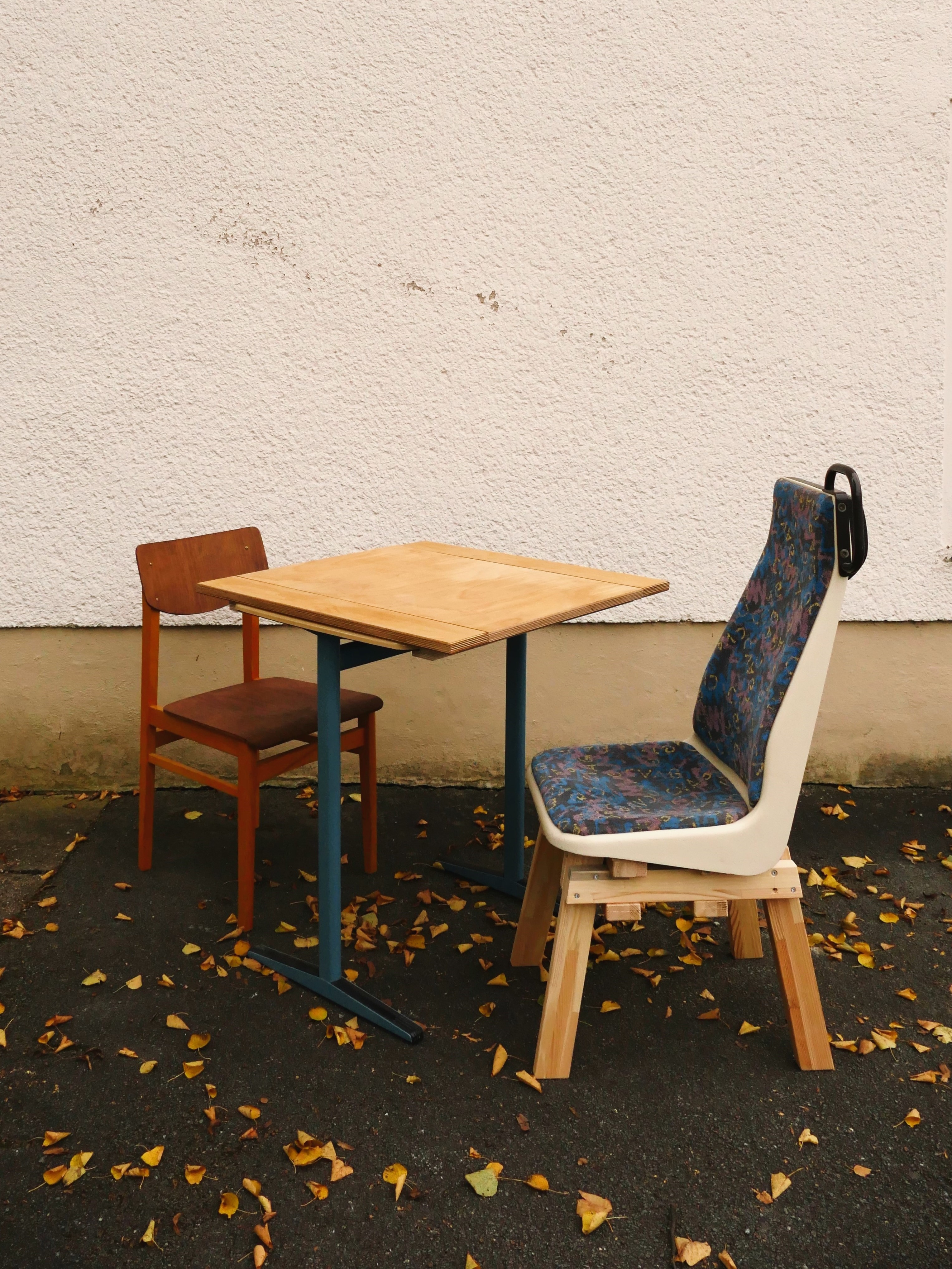
Our first Bauwende Camp, held in 2024 in Weißwasser, was followed by an even bigger one in Chemnitz, the 2025 European Capital of Culture. Both brought together many different stakeholders and were accompanied by multi-day construction workshops, open and free of charge to the public. Among other things, this resulted in a circular hut for a dry toilet in a revitalized industrial site and a collection of circular furniture for a café in a former tram depot. In addition, the Bauwende Sachsen Team organized various smaller events and workshops – both hands-on and discussion-based – on topics such as the transition process, social innovation, work culture and gender equality in the construction industry.
buttom-up social innovation in construction sector
up-scaling of traditional, sustainable construction technology by local knowledge
cross-sector networking on equal footing
DIT (Do-it-together) instead of DIY (Do-it-yourself)
an experimental think-tank and safe space to dream of a bright future in construction industry
Implementing and up-scaling of sustainable practices in the regional building sector in Saxony is the main goal of Bauwende Sachsen. At the start of the project, there was an extensive participatory process in which we elaborated what that actually meant for us individually and the project in general. The results became our Bauwende strategies, that are now shown in great detail on our website and in our travelling exhibition. Each of those nine strategies can be applied in three different dimensions: material & technology, design & construction, and urban planning. Since we follow a holistic approach, the strategies include resource rehabilitation, regional circular economy, primacy of renovation, social sustainability, progressive work culture, digital innovation, education, research and policies. We aim to interconnect those strategies and find scalable best-practice solutions. We encourage our networking partners to reflect on which strategies already apply to their projects and support them in the process of adapting even more.
With our events, we always aim to set a good example in fulfilling the Bauwende strategies. Specifically, that means we try to produce as little waste as possible by re-using workshop materials and avoiding unnecessary promotional materials. Whenever we do hands-on building activities, we use either natural materials with a small carbon footprint or so-called “saved” materials, that have already been used and would otherwise be disposed of.
With the experience of our many events we can confidently say that by repeating those practices over and over, involved individuals start adapting their own private and professional behaviours to more sustainable habits.
Bauwende Sachsen embodies an aesthetic and design approach deeply rooted in material awareness, sustainability and participatory making rather than formal style trends. In workshops and collaborative building processes, participants engage directly with the materiality of construction, manifesting an aesthetic of improvisation, experimentation and ecological responsiveness. We foreground tangible exploration of materials - especially recycled or locally available ones - as fundamental generators of design meaning. Our exhibition is conceived as modular and reconfigurable, with components built from re-use materials and reversible connections instead of adhesives. It reflects a design philosophy that values openness, adaptability and co‑creation.
During our events we strive for a consistent human‑centered design ethic: spaces for sharing, reflecting and reimagining are as important as the physical outputs, fostering an aesthetic of dialogue and collective authorship.
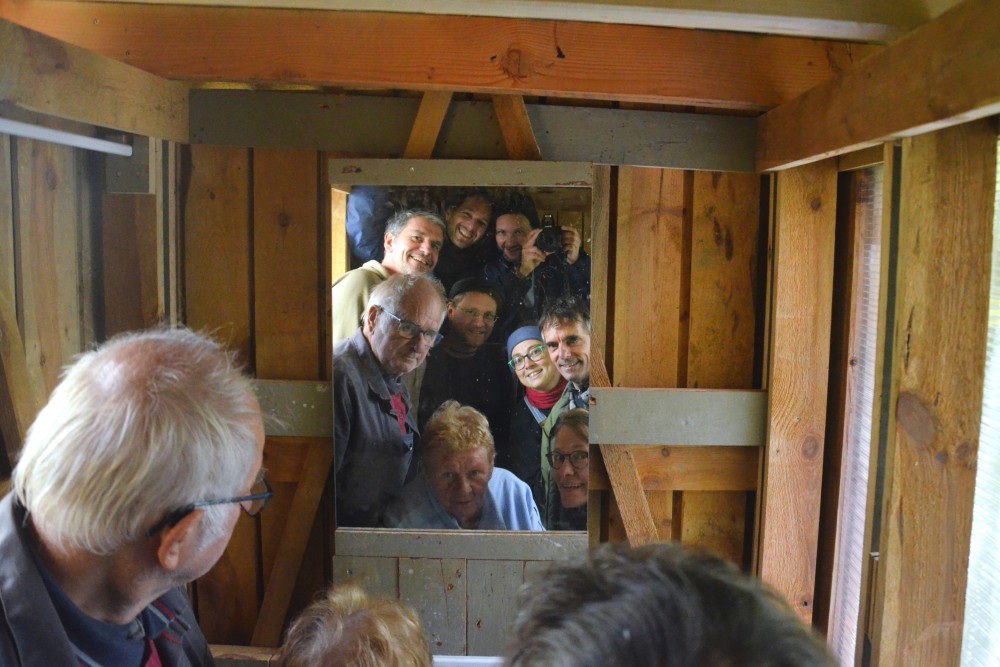
In our project we connect with a number of great stakeholders who share our principle, for example the Neufert-Bau in Weisswasser. It was a great experience for us to contribute to the revitalization of this valuable, but vacant piece of industrial heritage by hosting our conference and a workshop, in which a much-needed dry toilet was built from re-used to improve the sanitary situation on site.
Promoting a sensitive handling of built environment is also anchored in our BAUWENDE-strategies with the term primacy of renovation, which is a loose translation of the German term Umbaukultur. By this we aim to establish a new guiding principle for the construction industry: Cherishing and developing existing buildings should become the new normal. Thus, important cultural values can be preserved, too. Re-discovering abandoned buildings and gaining a new sense of their value brings people together, strengthens communities and revitalizes neighborhoods.
Our project is committed to unrestricted knowledge sharing, participatory formats that are open to all groups - including marginalized ones - and events that are mostly free of charge.
A central element is the online platform, which makes knowledge about BAUWENDE accessible to the public. The content is presented in an understandable way, freely accessible, and continuously updated. In addition, the online platform can be used by stakeholders to draw attention to their initiative by mapping themselves or to publicize their events. This is especially helpful for stakeholders who don't have an online presence or media visibility of their own.
The project’s events are also deliberately designed to be low-threshold. Workshops and small events are free of charge to avoid financial barriers. They are open to everyone and explicitly aimed at groups that have been underrepresented in the construction sector to date, such as women, migrants or other marginalized stakeholders. Accessible language and open event formats further help to break down barriers.
Another important component of the project is the connection between theory and practice. Stakeholders from the crafts and the planning sectors are equally invited to networking events and encouraged to engage in dialogue.
The mobile exhibition expands this accessibility by bringing the contents in an analog form to rural regions of Saxony. Local stakeholders are involved, and initiatives and events are introduced to the debate about sustainable transformation of construction sector through accompanying formats.
The project can be considered a model of inclusion because it combines open access to knowledge, free participation, hands-on involvement, and cross-sector networking, thereby inspiring new collaborative models for transforming the construction sector.
Bauwende Sachsen has been a participatory project from its very start. During the shaping process of the project, we asked several different stakeholders to share their views and wishes for a networking platform so we could design the project in a way that is beneficial to our target group.
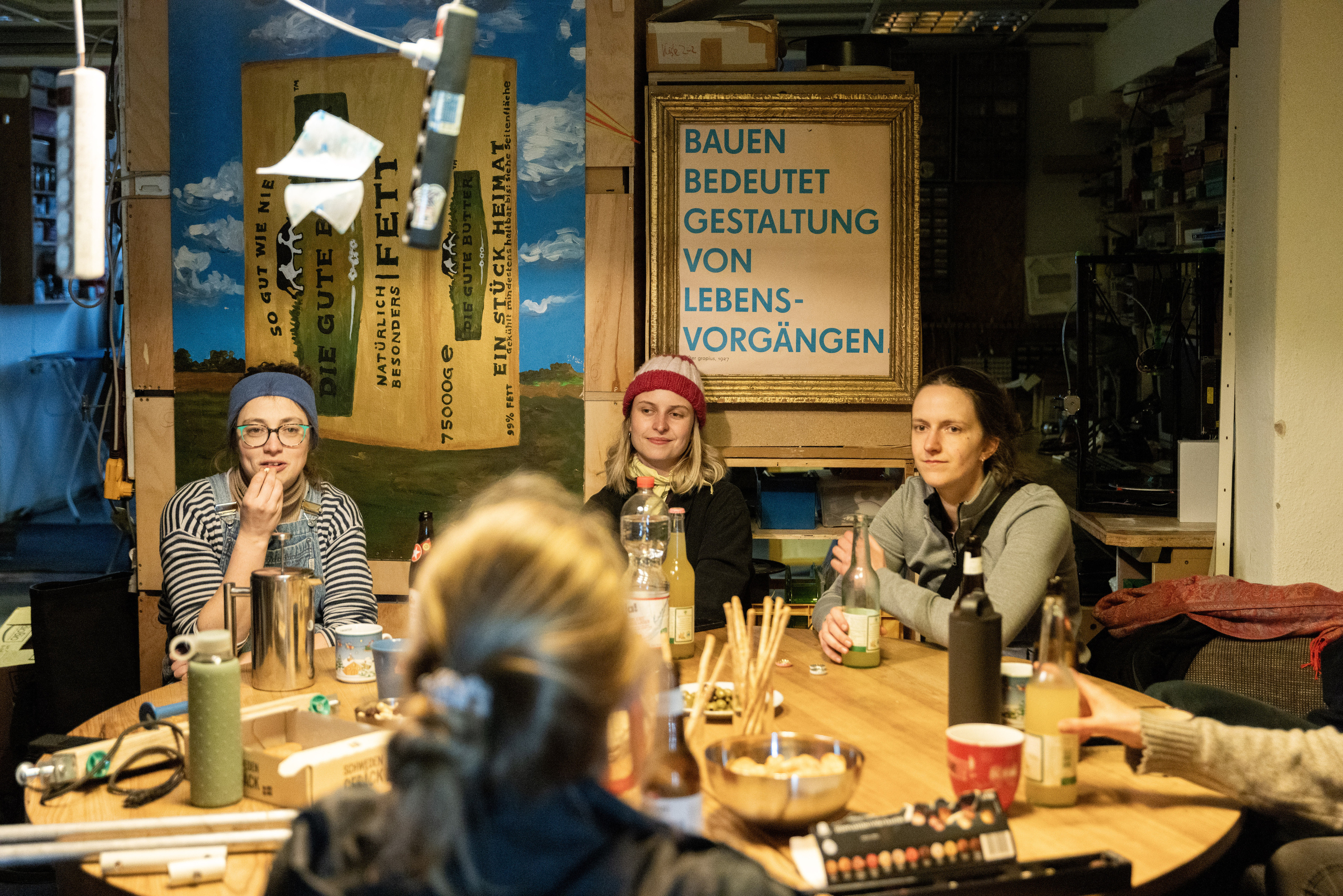
In the following stages of the project, when we hosted our own workshops and events, we always focused on building a strong relationship to all the individuals and groups involved. Bauwende Sachsen never understood itself merely as a service provider but as a collaborator to communities and organisations who are already working towards a more sustainable future for the construction industry. This practice is rooted in our deep belief that building is a collective task.
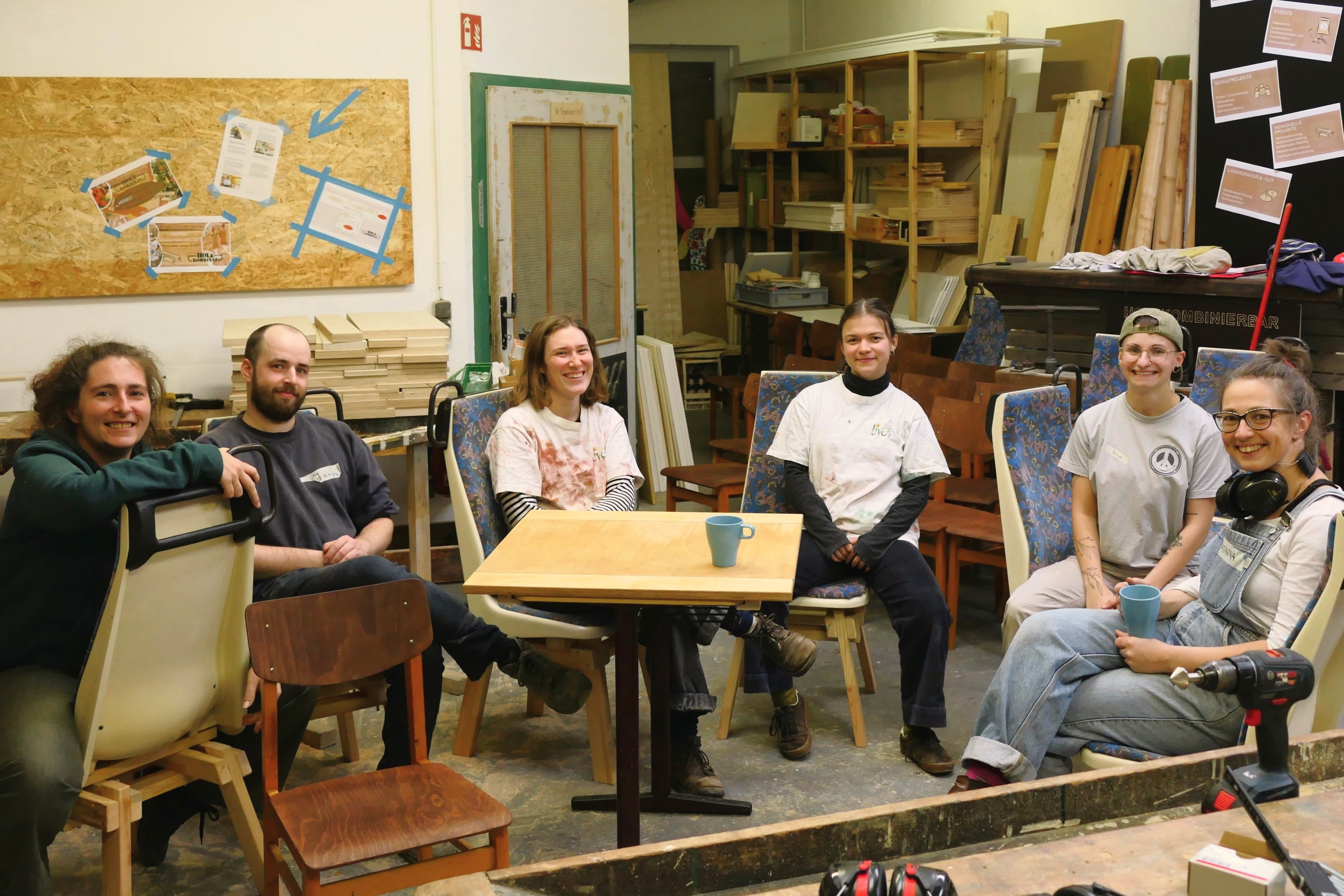
A great example is our workshop “Circular Campus Café” where we built furniture for an inclusive café at Garagencampus Chemnitz. Firstly, we approached Garagencampus with the idea of a doing a hands-on workshop on their premise, asking what could benefit their ongoing transformative process. They needed furniture for their café and connected us with "Holzkombinat", a local carpentry workshop with an integrated makerspace. Together with them, we started a collaborative process acquiring pre-used materials, i.e. discarded tram seats. With support of volunteers from our network, we were able to design and build chairs and tables, made out of locally available resoures.
Stakeholders at different levels were involved in both the design and implementation of the project. At the local and regional levels, Bauwende Sachsen consistently aims to organize its events, workshops, and other participatory formats in collaboration with initiatives, associations, cultural venues, or committed individuals from various locations across Saxony – with a particular focus on rural regions. The online platform and the mobile exhibition are designed to highlight local stakeholders and their work, explicitly showcasing their contributions, solutions and best-practice examples of sustainable constructions. This enables the project to consistently strengthen regional networks centered around stakeholders and help creating community.
At the national level, the project was integrated into the nationwide network of Architects for Future (A4F). Members of the network participated in events, contributed their professional expertise, and supported the dissemination of the networking platform and its content. Furthermore, the Bauwende Sachsen team benefited largely from the exchange of experiences, working methods, and conceptual ideas with A4F in its initial phase. On the other hand, the experiences and results of the project can now themselves be shared with the nationwide network, profiting from the field experience in direct exchange with local stakeholders.
In addition, international contacts were established during the project, particularly with stakeholders in Austria and the Czech Republic. Most of these contacts were explicitly incorporated into events – such as lectures or panel discussions – to facilitate cross-border dialogue on the sustainable construction transformation and to learn about different approaches to addressing similar challenges.
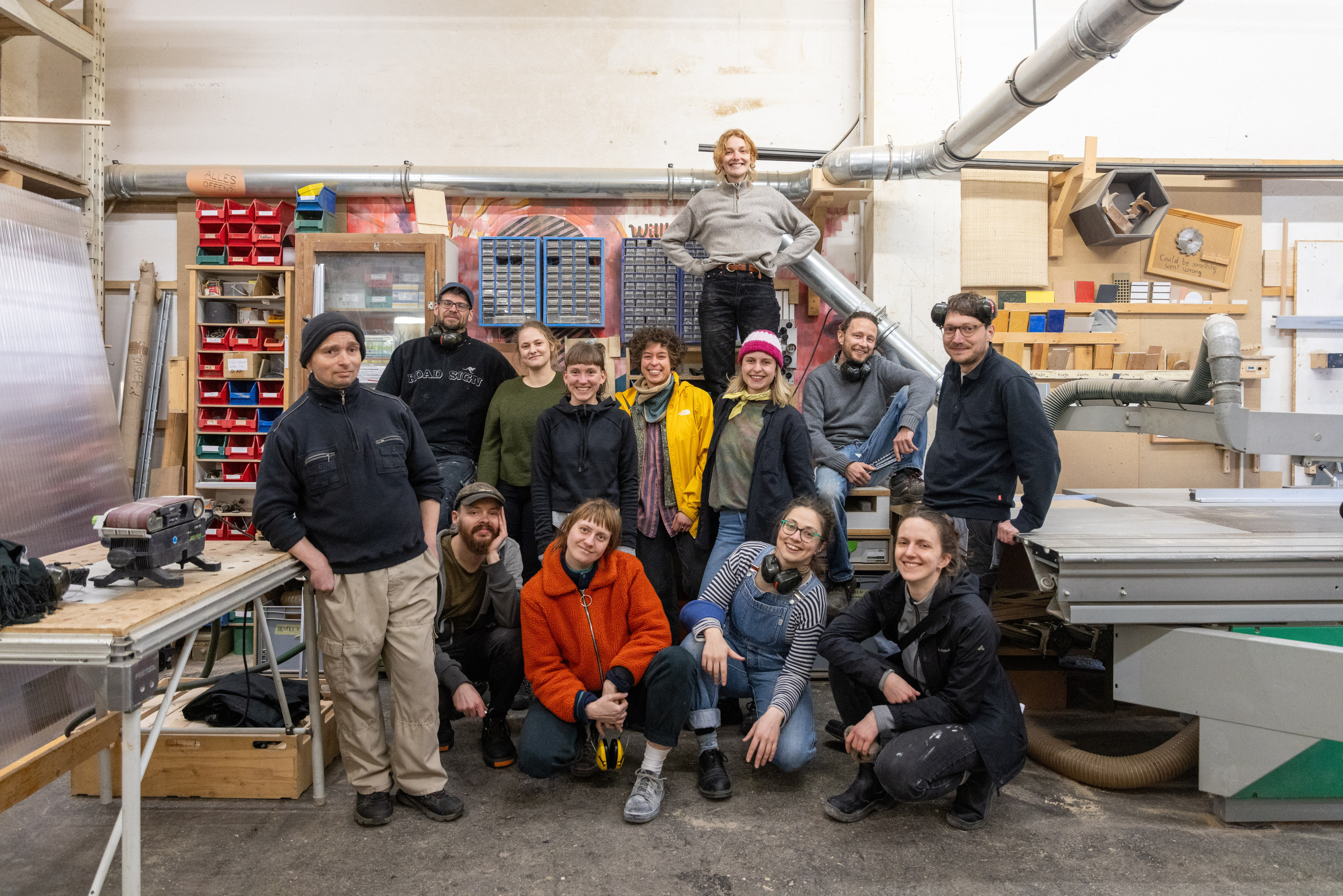
Bauwende itself is an transdisciplinary process. We bring together planners and craftspeople, theorists and practitioners, young and old experts. In our participatory projects, we emphasize multidimensional action, discussing micro- and macro-level interventions and their interdependencies, as visualized in the infographic on our website. We actively introduce and transfer perspectives and concepts from social movements (e.g., Fridays for Future, Degrowth, and the Commons Economy) into our network to pave the way for a new, regional, circular, and sustainable construction economy for the benefit of all. By integrating these fields, we create a holistic framework in which planning, hands-on making, and strategic thinking converge, demonstrating how multidimensional approaches can transform both existing buildings and the communities around them.
Bauwende Sachsen operates as a non-profit project that combines public funding from the State of Saxony, community engagement and donations. Our approach emphasizes value creation beyond immediate financial returns: we cultivate networks and connections that nurture a new generation of sustainable practitioners in the region and empower local communities in rural areas to engage with and benefit from their cultural and material heritage. Many of the region’s best academics and craftspeople leave after their training, as there is often insufficient sense of belonging and a challenging status quo for those seeking positions with purpose and good working conditions. Bauwende Sachsen encourages young practitioners to stay in Saxony and find their own path, creating new regional value chains and fostering meaningful collaborations that strengthen both professional and community ties.
All the main components of Bauwende Sachsen can be replicated or transferred to other regions or contexts.
A central component is the online platform, which connects knowledge, stakeholders, and initiatives related to the Construction Turnaround. This principle could also be adapted to other areas, always with a regional focus. It would also be conceivable to expand the coverage area, for example to neighboring states and stakeholders, without loosing the regional focus.
Another transferable element is the mobile exhibition. Its concept makes it possible to bring content flexibly to different locations and involve local stakeholders. Through wider dissemination, it can reach even more locations in the future, raise awareness of sustainable transformation issues, and spark new local networks. The “Local Module” allows for the inclusion of location-specific content and local stakeholders in the exhibition.
Furthermore, networking events in particular represent a transferable approach: bringing together local initiatives, experts, cross-sectional stakeholders as well as engaged citizens and offering them spaces for exchange. The combination of lectures, discussion formats, and collaborative building workshops makes it possible to put theoretical knowledge directly into practice.
In the long term, the concept can therefore be expanded to other regions in or outside Germany or implemented regionally in other parts of the country, thereby contributing to the transformation of the construction sector in many places.