Enhancing Circularity, Sustainability, and Innovation
Sky Blue Insulation "Jeansulate"
Experimental production of building insulation from recycled cotton to replace mineral wool
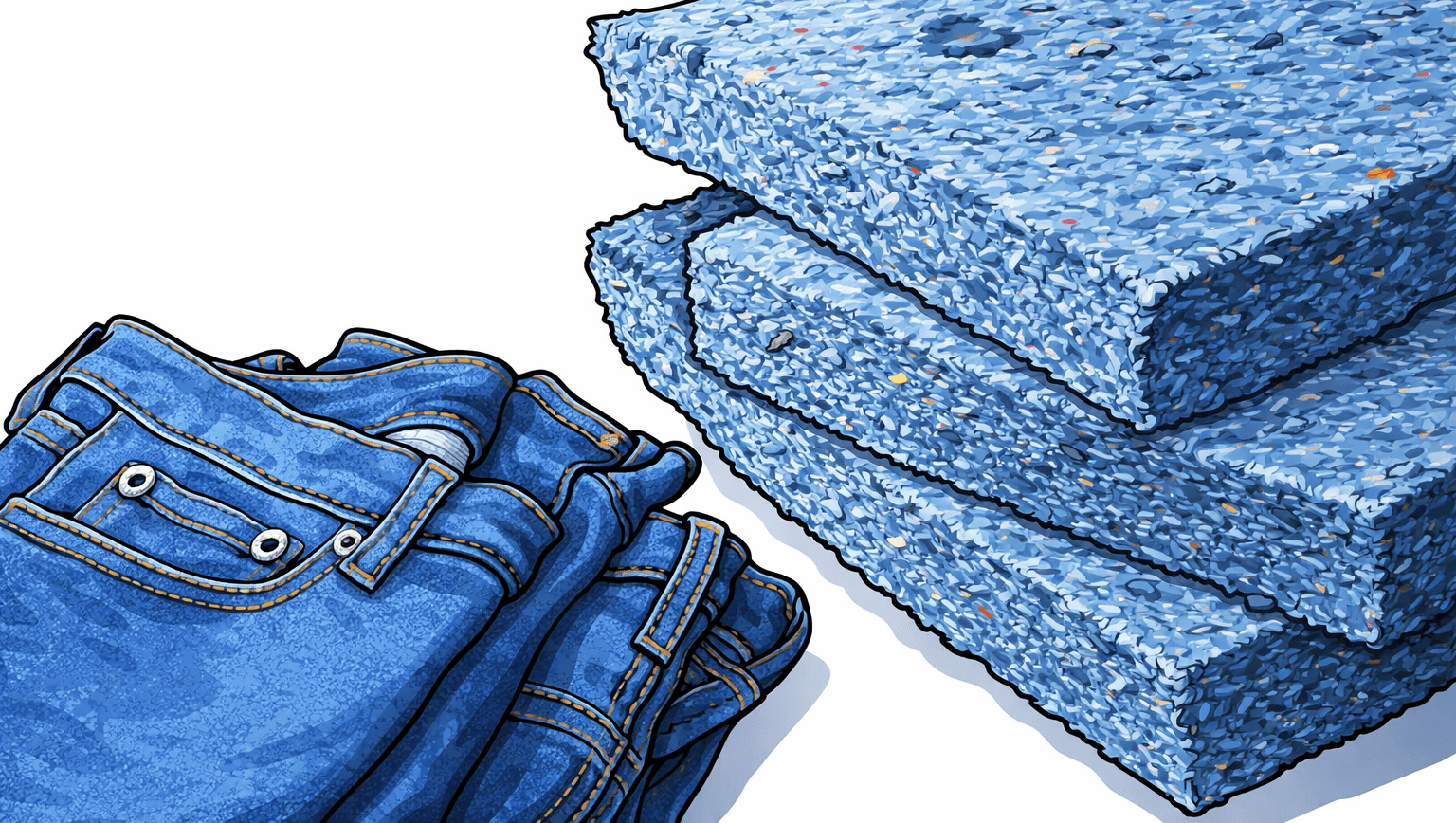
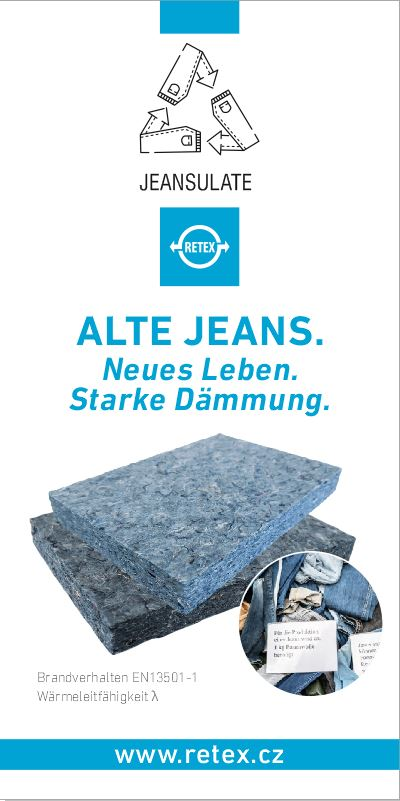
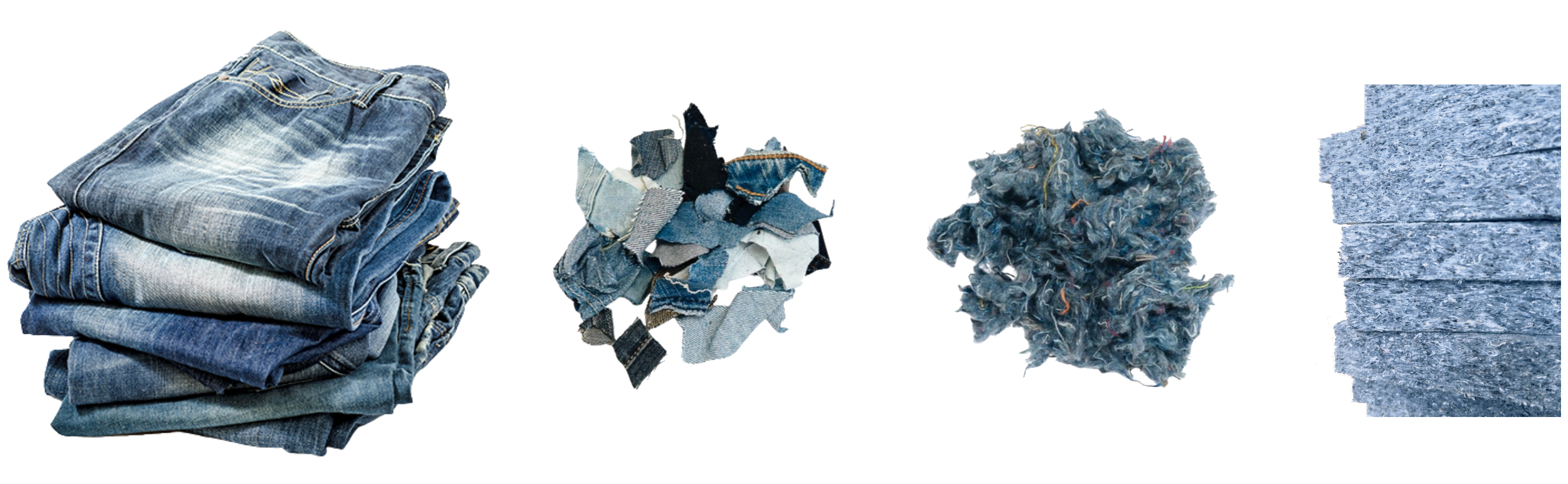
The project "Sky Blue Insulation" is the first experimental development in Austria of an insulation material made of recycled cotton, mainly jeans, with the aim to replace mineral wool, which is critical to health, energy-intensive in production and difficult to dispose of, with a product made of renewable raw materials that is harmless from a building biology point of view. The vision is to replace mineral wool as façade insulation, especially in multi-storey timber construction.
Austria
National
Mainly urban
It involves a physical transformation of the built environment (hard investment)
Yes
2026-03-06
No
No
No
Organisation
In Austria 221,800 tonnes of textile waste are generated every year, 80,000 tonnes of which are old clothes. Overall, only 17 per cent is reused and recycled, the majority is incinerated due to its unusability or sold at low prices to East Africa, or Soth America where the old clothes, however, aggravate social conditions and create environmental problems. The problem has now also been recognised in Europe and the Commission has presented the EU Sustainable and Recyclable Textiles Strategy 2022 to promote the recycling of textiles to combat this impact in the countries of the Global South.
In contrast, over 12 million tonnes of cotton are produced each year worldwide for the manufacture of clothing. More than a third of this is processed into jeans. Cotton requires large amounts of water. Approximately 8.000 litres of water are needed for each new pair of jeans and 35kg of CO2 emissions are produced during their manufacture. However, it is known that cotton has very good insulating properties and is therefore also used for winter clothing. In addition, the material has a very high ignition temperature of over 450°C, which is a very good fire protection. Also, the cotton plant absorbs the highest amount of carbon from the atmosphere during growth, second only to flax. Especially unusable old clothes made of jeans, which can no longer be processed into fibres, therefore still represent a great value: due to their high material purity of the denim fabric of mostly more than 90% cotton and the easy recognisability in the used clothing sorting process, they are excellently suited for the upcycling of building insulation materials.
In contrast, over 12 million tonnes of cotton are produced each year worldwide for the manufacture of clothing. More than a third of this is processed into jeans. Cotton requires large amounts of water. Approximately 8.000 litres of water are needed for each new pair of jeans and 35kg of CO2 emissions are produced during their manufacture. However, it is known that cotton has very good insulating properties and is therefore also used for winter clothing. In addition, the material has a very high ignition temperature of over 450°C, which is a very good fire protection. Also, the cotton plant absorbs the highest amount of carbon from the atmosphere during growth, second only to flax. Especially unusable old clothes made of jeans, which can no longer be processed into fibres, therefore still represent a great value: due to their high material purity of the denim fabric of mostly more than 90% cotton and the easy recognisability in the used clothing sorting process, they are excellently suited for the upcycling of building insulation materials.
The idea behind the project - to develop a denim insulation material for buildings from old clothes - originally stemmed from another research project previously carried out by the project lead, capital [ A ] architects, namely the “Urban Straw” project https://nachhaltigwirtschaften.at/en/sdz/projects/urban-straw.php.
During research into Urban Straw, it was found that cotton, as a plant-based fibre, has a significantly higher ignition temperature than, for example, straw and wood, and is also much more absorbent, making it better suited for treatment with ecological, building-biologically safe flame retardants and thus enabling the creation of a high-quality building insulation material.
However, it seemed a waste to use fresh cotton given the large volume of waste clothing in Europe. It was found that jeans are textiles with a very high fibre purity, containing at least 90% cotton as standard.
It therefore made sense to investigate the potential for building insulation made from second-hand/waste jeans and to launch a research and development project with LKT and Retex as expert research and production partners to develop such insulation.
As plant fibres absorb and store CO₂ from the atmosphere as they grow, and as the product simultaneously reduces the heating energy required for buildings and addresses the waste issue posed by old clothes, the result offers a threefold sustainable benefit. Furthermore, the energy required to manufacture the insulation material is very low, as the processing is largely mechanical and does not involve water or high heat.
Initial building physics tests and certifications demonstrate excellent insulation performance with a thermal conductivity of 0.038 W/mK and flame-retardant properties, having successfully passed fire tests in accordance with Schlyter (ÖNORM B 3800); further tests for product certification can only now be carried out following the completion of the research project.
circular economy
energy efficiency
nature-based solutions
reduction of textile waste
urban mining
• Reduction of atmospheric CO₂ by replacing mineral wool with cotton, a renewable plant-based raw material.
• Reduction of environmental pollution caused by waste textiles in countries of the Global South.
• Reduction of energy consumption through the use of post-consumer textiles and the production of recycled materials.
• Reduction in transport energy through regional sourcing and processing of resources.
• Social sustainability through the involvement of social economy organisations collecting used and waste clothing.
• Extension of the life cycle of used garments by decades as building insulation material.
• Avoidance of problematic substances through the use of additives and admixtures that are non-toxic to humans and ecologically safe as a holistic ‘nature-based solution’ for the production of insulation materials.
The title of a recent article in a construction magazine sums it up perfectly: “My jeans are now insulating my house”
https://www.energie-bau.at/bauen-sanieren/5491-die-jeans-daemmt-mein-haus
People identify with their clothes and fashion – everyone probably has a favourite pair of jeans in their wardrobe.
Many people are delighted that their clothes can be given a new lease of life at the end of their lifecycle, serving as building insulation for decades rather than creating environmental problems as textile waste.
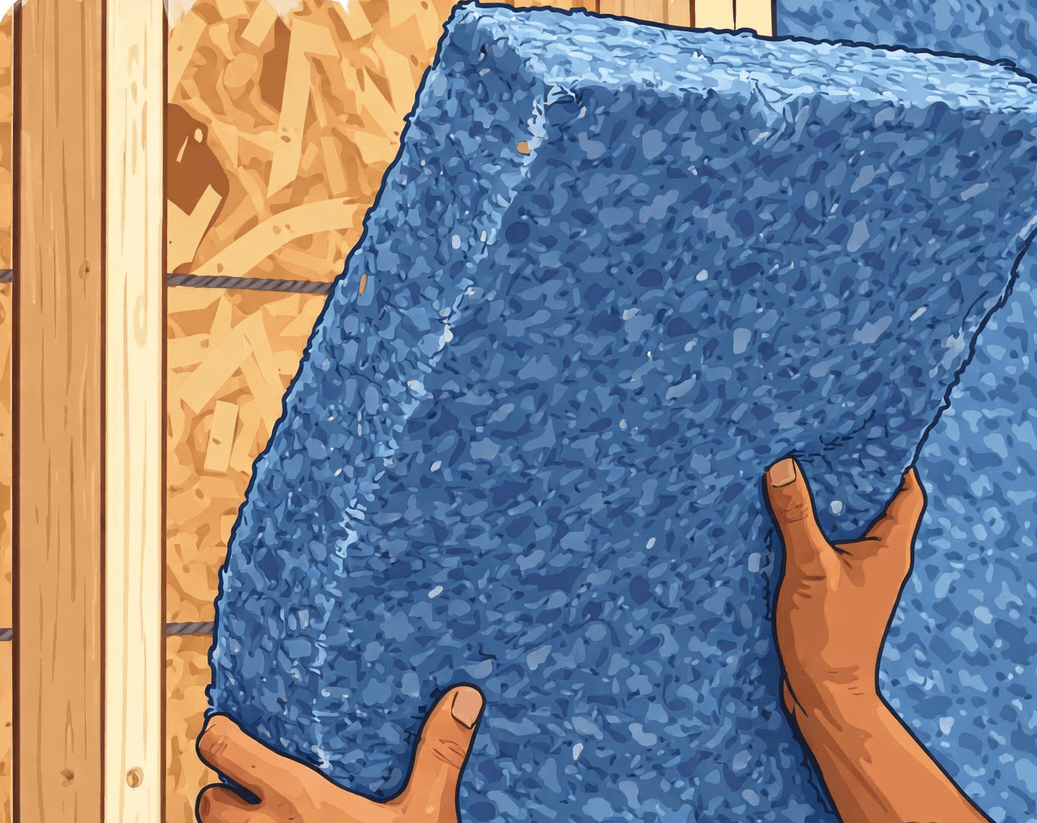
The straightforward installation of the Himmelblau insulation material, which poses no health risks and requires little specialist knowledge, makes the product an easy-to-use building material for both professional tradespeople and DIY enthusiasts.
In particular, the pleasant, familiar feel of the material makes the insulation very appealing to many people, as was evident from the feedback during the product presentation – the blue colour also strongly reminds them of their own jeans from days gone by.
Unlike other building materials, the resources for this insulation material do not come from the cultivation or extraction of raw materials, but from civil society – specifically, consumers of textiles. The resource source therefore already exists and does not need to be extracted at great expense.
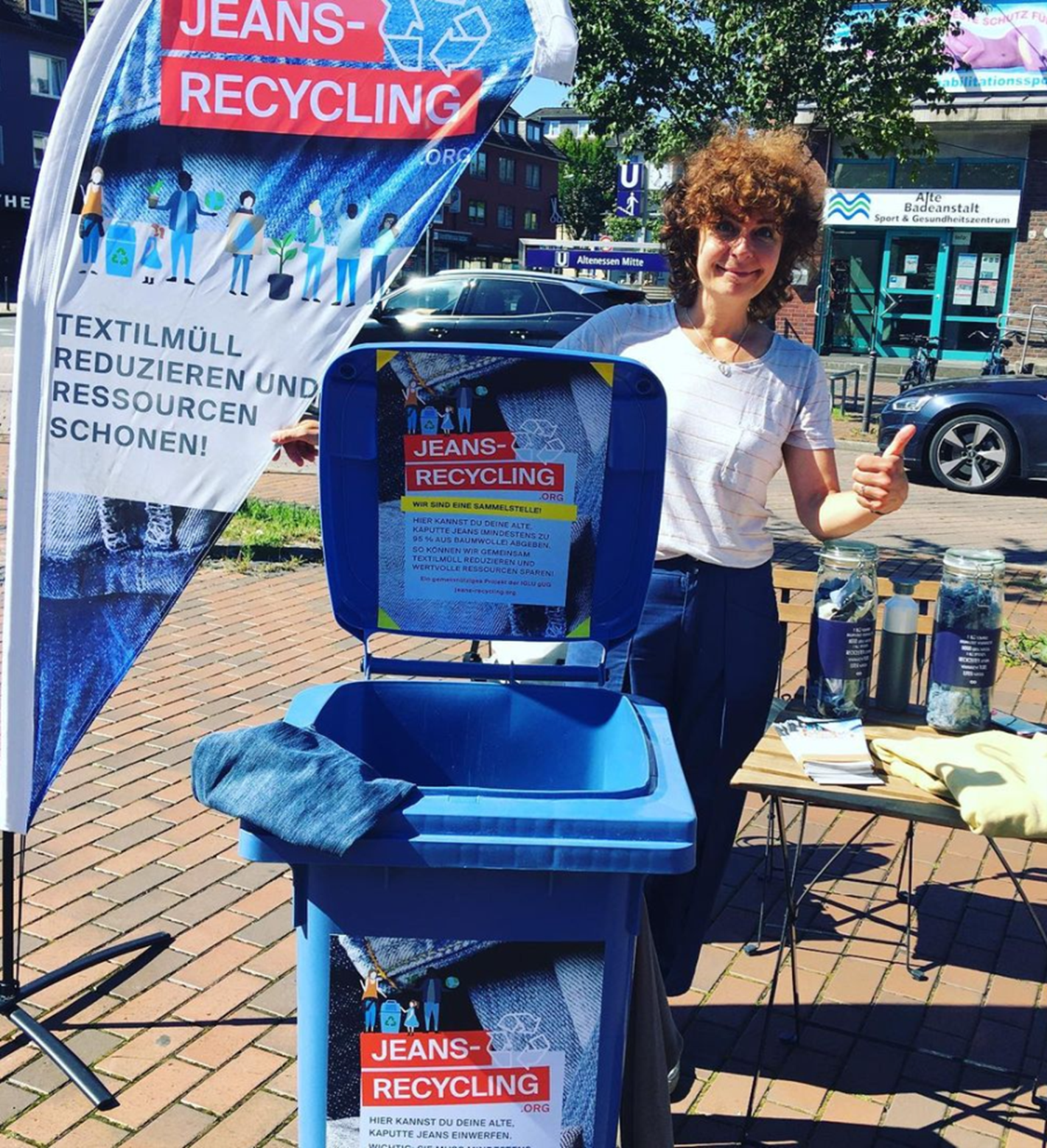
It would be desirable to further involve consumers by establishing a separate collection system for used jeans, as the non-profit organisation IGLU gUG has already successfully implemented in the past as ‘best practice’; see: https://www.jeans-recycling.eu/
Consumers should, where possible, recognise that by placing their used jeans in separate bins or collection containers – preferably blue ones – they are providing a valuable resource for further processing into an ecologically and technically high-quality building product.
Ideally, a deposit system could also be established at jeans brand shops or second-hand shops, similar to the one that already exists for beverage packaging.
This would avoid the need for labour-intensive sorting at the used clothing sorting plant, as well as the transport to and from the sorting facility site, and result in even more energy-efficient supply chains for the raw material derived from used jeans.
As already mentioned, the source of resources is civil society, specifically consumers of denim textiles. The origin of the product, or rather the raw material, therefore comes from consumer products that have already been used. Involving consumers and their behaviour in waste separation is essential here. Fortunately, the practice of sorting and disposing of waste separately is already very well established in European society.
In Europe, waste separation has long since ceased to be merely a technical process; rather, it is deeply embedded in society’s self-image and everyday life. In many places, it is regarded as a ‘civic duty’ and reflects a growing sense of environmental responsibility.
In many European countries, waste separation is seen as an active contribution to the circular economy. A moral consensus has developed that waste must be minimised, which is reflected in trends such as zero-waste movements and bans on single-use plastics.
In countries such as Germany, Austria or Sweden, waste separation is so firmly established as the social norm that non-compliance is often viewed critically.
Waste is increasingly no longer viewed as the worthless end of a product, but rather as a raw material.
Towns such as Capannori (Italy) even use ‘zero waste’ concepts to forge a sense of community identity. Capannori in Tuscany is a pioneer in waste separation and has achieved a recycling rate of over 86% through a consistent ‘door-to-door’ system.
The ‘Insulation Blue Sky’ project is a research and development initiative that essentially took place behind closed doors. It received financial support from the FFG (Austrian Research Promotion Agency) as part of a circular economy programme.
Now, following the completion of the project and as part of the market launch, partnerships are being sought with non-profit organisations such as Humana People-to-People, which operates textile collection points, and the Italian OTB Foundation of the Italian jeans manufacturer ‘Diesel’, both of which were approached and involved during the research project.
Furthermore, as part of the market launch, certification under ‘Klimaaaktiv’ and the Austrian ‘Umwelzeichen’ is being sought to recognise the material as an ecologically and sustainably high-quality building material; see:
https://www.klimaaktiv.at/
https://www.umweltzeichen.at/
The project brings together the key challenges facing two industries and, by leveraging their mutual complementarity, provides solutions for:
· the resource- and energy-intensive construction sector, and
· the waste problem in the textile industry.
The project thus makes a valuable contribution to the decarbonisation of the construction sector, which is considered one of the major emitters and waste generators, whilst simultaneously reducing waste volumes and the amount of end-of-life textiles.
Furthermore, as the insulation material produced from old clothes—which can be installed without contaminating the materials—can be recycled repeatedly with little technical effort following the demolition or deconstruction of a building, this can also make a further contribution to the circular economy.
The end product – an insulation mat made from recycled denim for various construction applications – appears to be commercially viable and is therefore self-financing from sales revenue. The cost of extracting resources from old clothes is very low; the energy consumption and associated costs are also extremely low compared to the energy-intensive production of mineral wool, as the process essentially involves only mechanical processing.
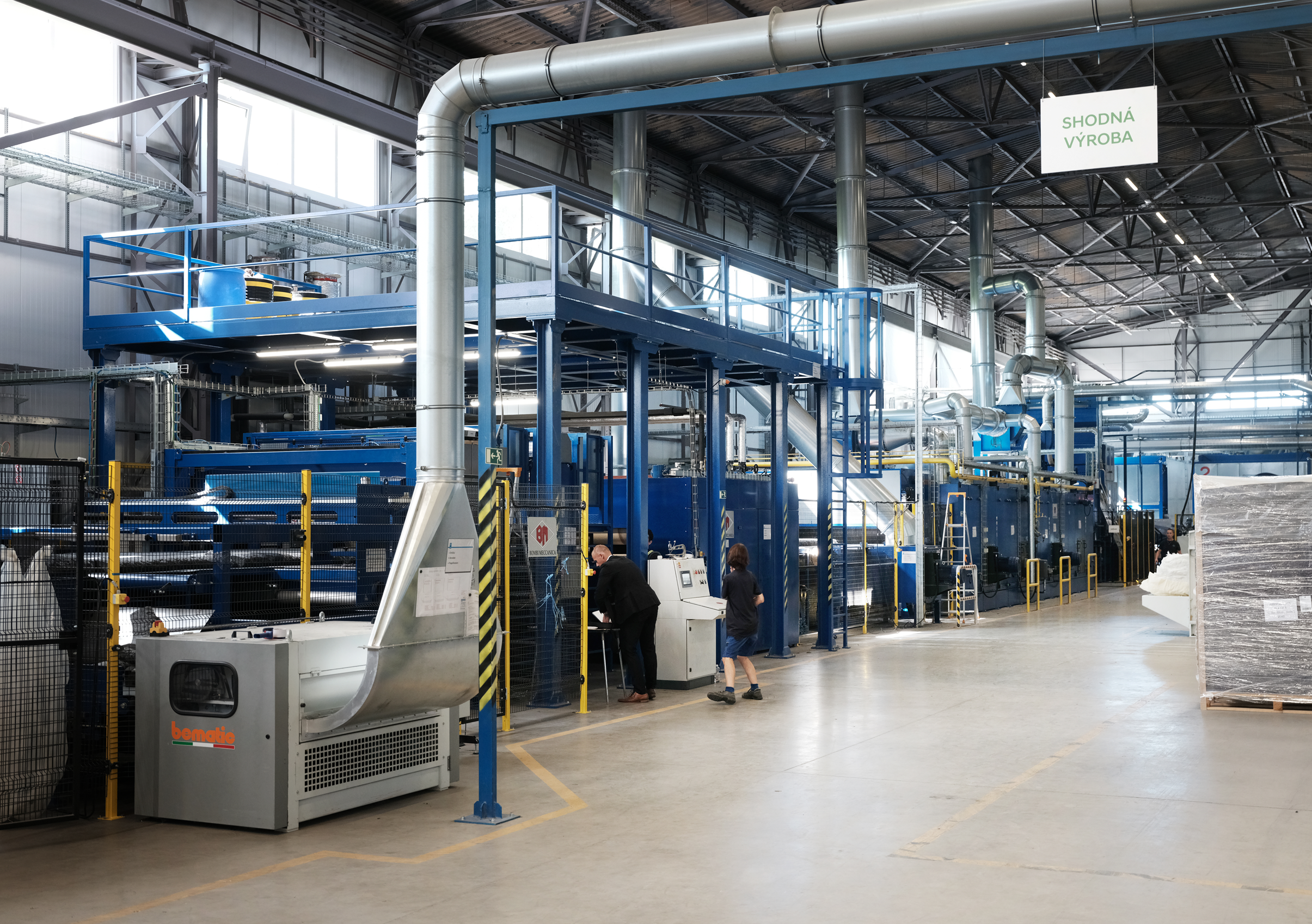
The research and development partner, RETEX a.s., has 76 years of market experience in textile recycling, dating back to 1950, and has recently commissioned a production facility with an annual capacity of 5,000 tons of the new insulation material in thicknesses between 4cm to 22cm.
However, the production volume can be scaled up further in line with market demand.
It would, however, be desirable to receive public funding to establish a separate collection system for used jeans.
The insulation materials market in the DACH region is currently undergoing a period of upheaval. Conventional materials continue to dominate, but eco-friendly alternatives are gaining ground.
Established materials: Polystyrene (EPS/XPS) and mineral wool account for over 90% of the market. Polystyrene remains the most widely used material due to its value for money.
Renewable raw materials (NawaRo): Materials such as wood fibre, hemp, cellulose or straw are growing steadily, but currently still account for a market share of around 4.6%.
The introduction of denim insulation complements this portfolio and stands out due to its low resource consumption, whilst offering higher insulation performance and fire resistance than other NawaRo building insulation materials.
The current focus of Insulation Blue Skly is on insulation mats with densities of 25 kg/m³ and 40 kg/m³ to be suitable for use in traditional timber-frame constructions in walls and roofs.
However, as part of the project, samples and prototypes of higher densities – 80 kg/m³ and even a very rigid panel of 120 kg/m³ – were also produced, which can offer a wider range of applications, for example for impact sound insulation in floors or acoustic insulation on ceilings.
The use of denim dust, which is produced during production as a by-product of dust extraction, is also being considered for use as blow-in insulation, as well as material combinations for sandwich elements, such as mats of varying densities or in combination with lightweight wood wool boards.