Enablers for New European Bauhaus Transformation
Shandon Integrated Urban Strategy (IUS)
The Shandon Integrated Urban Strategy (IUS): A Community‑Led NEB Enabling Framework
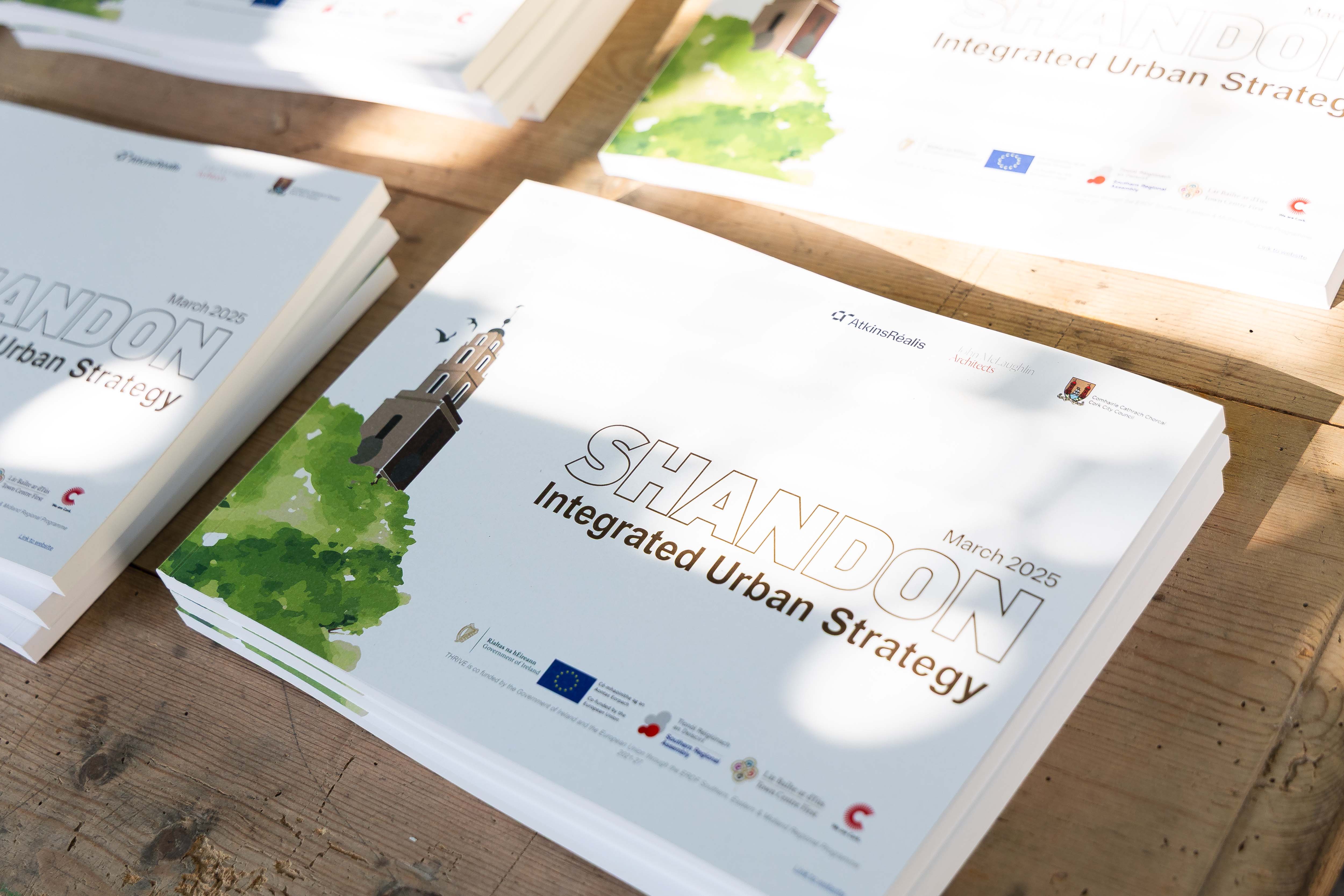
The Shandon Integrated Urban Strategy (IUS) is Cork City Council’s co created framework enabling NEB aligned transformation in a historic neighbourhood. Through new governance structures, inclusive participation, community capacity building, and integrated planning, the IUS has already produced its flagship next step: the Shandon Exchange, a €7m adaptive reuse enterprise and community hub currently in development (planning approved; delivery scheduled 2026–2028).
Ireland
Local
Shandon, Cork City
Mainly urban
It involves other types of transformations (soft investment)
Yes
2025-04-01
Yes
ERDF : European Regional Development Fund
No
No
Organisation
The Shandon Integrated Urban Strategy (IUS), adopted in April 2025, is Cork City Council’s grassroots, heritage-led framework for sustainable, inclusive and community driven regeneration in one of the city’s oldest neighbourhoods. Developed using NEB tools and guidance, including the NEB Compass and participatory co-creation methods, the IUS provides tailor made solutions to longstanding challenges such as vacancy, dereliction, limited community space and social vulnerability. The strategy based on bringing the community together in an inclusive, diversified way, engaged citizens through extensive co design which included the “Let’s Talk Shandon!” workshops, youth and disability forums, night-time audits and targeted outreach. As one participant reflected, “It was constructive to sit with neighbours and shape something real for Shandon. The process felt genuinely collaborative, you could see ideas being taken seriously.” Press coverage reinforced the significance of this approach. At the launch, the Lord Mayor of Cork City stated: “The Shandon Integrated Urban Strategy represents a significant milestone for our city… ensuring a citizen led strategy for the whole community going forward.” The IUS sets out 36 objectives across heritage, climate resilience, community and arts, and business and tourism. Its multi-disciplinary governance model and newly established Shandon Neighbourhood Team ensure continuity, shared stewardship, programming and activation. The IUS enabled the community to identify the Butter Market and Weighmaster’s House complex as their top regeneration priority, directly supporting a successful €7 million ERDF THRIVE funding award, becoming the largest investment in Shandon in a generation. By embedding NEB values, drawing on co‑creation pathways to structure workshops, feedback loops and collaborative decision‑making, and developing a Living Lab approach, the IUS offers a transferrable European model for NEB-aligned regeneration in historic areas.
The Shandon IUS emerged from the need to address long‑standing vacancy, dereliction, social vulnerability and underinvestment in one of Cork’s most historic neighbourhoods. Early research in 2022, including land‑use surveys, heritage assessments and community consultations, highlighted the absence of a coherent, community‑endorsed regeneration framework. One resident noted, “We’ve had plans before, but nothing that felt real and achievable, and truly connected heritage, people and place.”
To respond, Cork City Council established a multidisciplinary Steering Group spanning planning, architecture, conservation, economic development, climate action, biodiversity and social inclusion, working with the Shandon Neighbourhood Team, community organisations and Recreate Shandon CLG. Together they shaped a process rooted in NEB principles of co‑creation, inclusivity, evidence‑based diagnosis and shared stewardship. The project progressed through four phases: • Research & Diagnosis (2022–2023): vacancy mapping, accessibility reviews, socio‑economic analysis and 190 completed surveys. • Co‑design (2023–2024): “Let’s Talk Shandon!” workshops (140+ participants), youth forums, disability sessions, night audits and targeted outreach to under‑represented groups.
• Testing & Refinement (2024): design sessions, comparative site visits and workshops defining tailored public‑realm, mobility, heritage and community‑space solutions. • Implementation (2025): formal adoption of the IUS (April 2025), planning approval (March 2025) and community‑driven prioritisation of projects enabling Cork City Council to secure ERDF THRIVE funding and advance the Shandon Exchange. An accessible webpage and interactive storymap (290+ visitors) supported open communication, updates and digital feedback. Through a systematic, community‑centred, heritage‑led approach, the IUS established a long‑term governance model and an integrated NEB‑aligned framework capable of delivering lasting transformation.
Living Neighbourhood & Climate Resilience
Community & Arts
Heritage
Governance & Participation
Business & Tourism
The Shandon IUS embeds sustainability as a core organising principle, integrating environmental, social, cultural and economic resilience into a single neighbourhood strategy. Guided by the NEB Compass, climate‑proofing tools and DNSH assessment, it places climate action, adaptive reuse and social inclusion at the centre of regeneration.
The NEB Compass was applied early to ensure sustainability shaped decisions. Proposals were screened for resource efficiency, circularity and biodiversity impact, leading to strengthened nature‑based solutions, pollinator planting, SuDS features and a focus on adaptive reuse over demolition. Inclusion checks identified missing voices, prompting targeted outreach to marginalised groups. To broaden participation, physical surveys were delivered to every property, with drop boxes placed in accessible locations such as the post office.
Sustainability is implemented through clear, place‑specific measures:
• Climate‑positive adaptive reuse, conserving embodied carbon, reducing waste and protecting Shandon’s heritage.
• Nature‑based solutions, including pollinator planting, rain gardens and green‑roof opportunities.
• Circular‑economy principles, integrating material reuse and low‑waste construction into project briefs.
• Social sustainability, strengthened through inclusive engagement that improves accessibility, affordability and shared community benefit.
• Local economic resilience, supported by activating underused buildings and building community–enterprise partnerships.
By uniting heritage stewardship, climate action, circularity and inclusive participation within a clear governance framework, the Shandon IUS shows how sustainability can be embedded holistically in the regeneration of historic neighbourhoods.
The Shandon IUS places beauty, cultural identity and quality of experience at the heart of regeneration, treating aesthetics as a catalyst for belonging, pride and wellbeing. Rooted in Shandon’s Architectural Conservation Area, it blends heritage‑led design, contemporary needs and NEB principles to create places that feel dignified and welcoming.
Using the NEB Compass aesthetic dimension, early workshops assessed proposals for sensory quality, comfort, heritage coherence and local identity. This shaped a shared design vision focused on repairing, reusing and celebrating historic fabric. The community’s prioritisation of the Butter Market and Weighmaster’s House reflects this approach, with planned conservation works including façade and roof repair, reinstated materials and restoration of timber trusses.
Aesthetics also emerges through cultural activation. Workshops highlighted the need for flexible cultural spaces, a welcoming entrance and a reimagined courtyard garden with pollinator planting, tactile paths, rain chains and subtle references to the historic market grid. One participant noted, “Seeing our ideas reflected in the designs makes the buildings feel like they belong to all of us.”
Visible improvements are evident, with long‑neglected buildings receiving care and dereliction addressed through Council schemes such as the Vacant Property Refurbishment and Vacant Above the Shop Grants. The IUS has enabled improvements including ongoing conservation works at St Anne’s Church to restore the four‑faced clock tower housing the Shandon Bells, and repairs to the 170‑year‑old Firkin Crane roof, securing the building for future generations.
By embedding beauty into governance, co‑design and heritage stewardship long before construction begins, the Shandon IUS shows how aesthetics shape not only physical outcomes but the emotional and cultural transformation of a historic urban community.
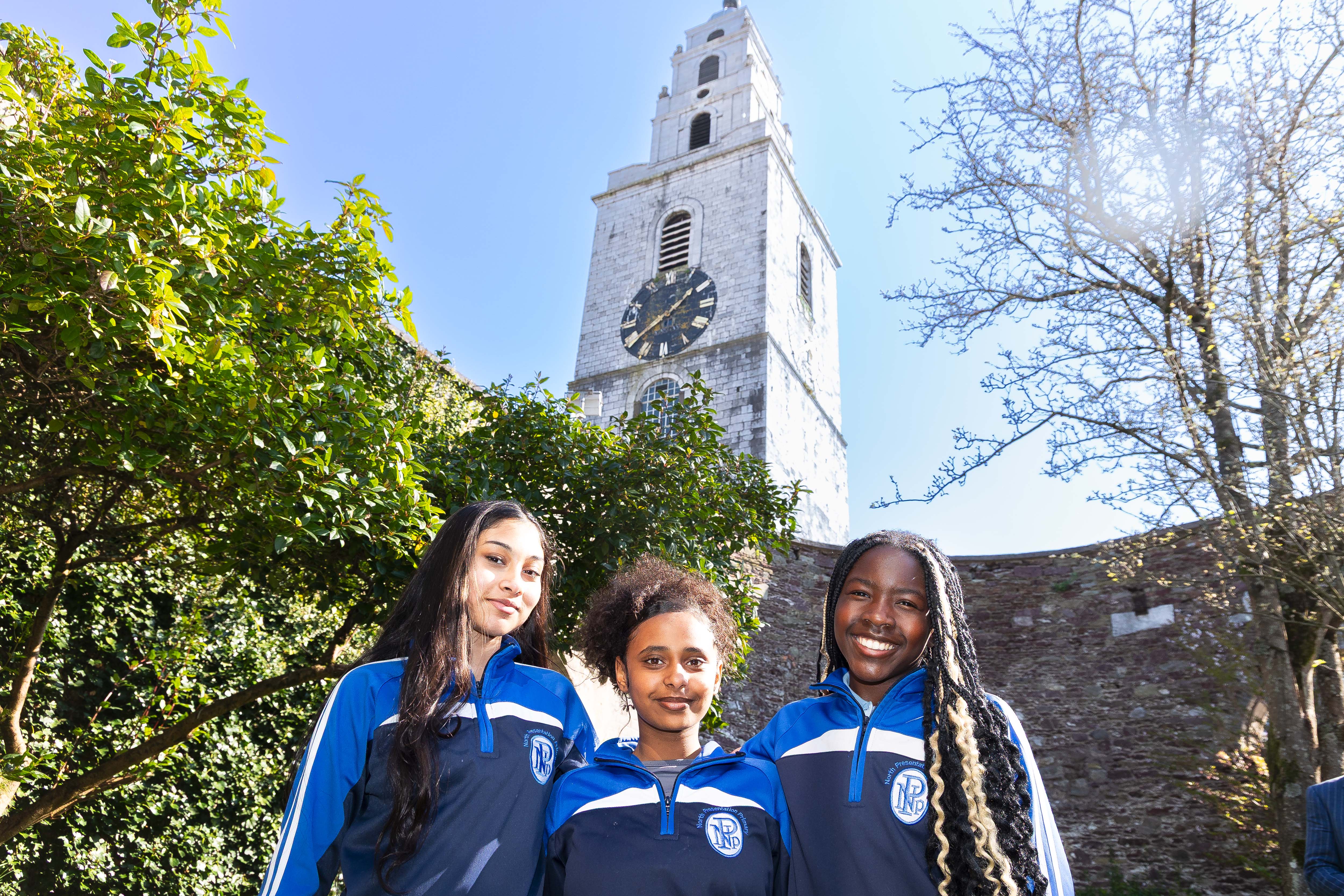
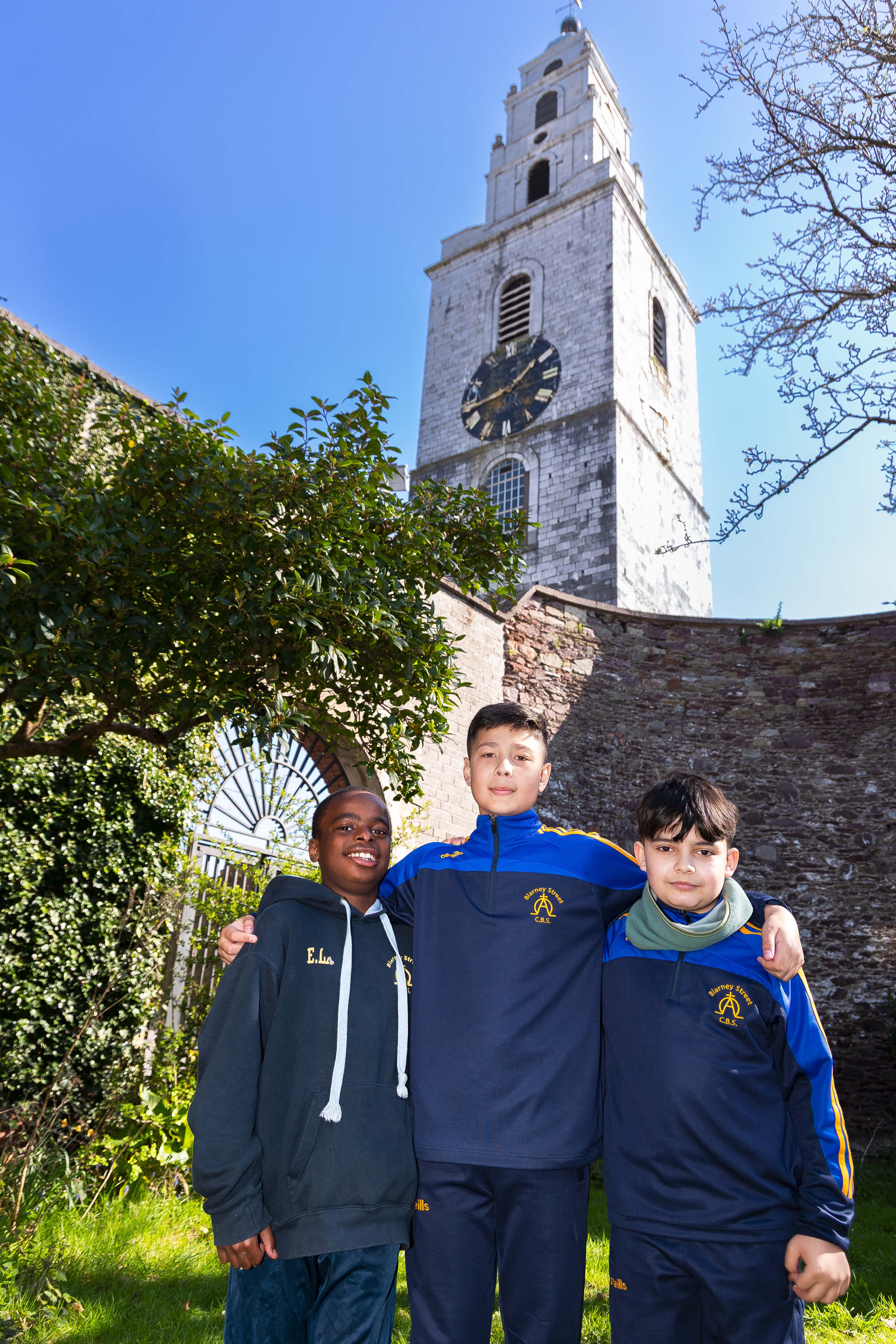
The Shandon IUS embeds inclusion structurally by ensuring that citizens, marginalised communities, schools, local businesses and community organisations share real power in shaping the neighbourhood’s future. Rather than treating inclusion as a consultation step, the IUS establishes a governance and design model addressing social, spatial, cultural, digital and democratic inclusion across regeneration.Identifying who was not traditionally represented and guided by NEB inclusion principles, the team carried out targeted outreach to marginalised groups. This led to the Shandon Neighbourhood Team and Social Inclusion Group, giving community representatives a permanent role alongside Cork City Council staff. These bodies shaped priorities, reviewed briefs and continue to define requirements for community spaces, accessibility and public‑realm improvements. Engagement methods included a heritage‑based lesson plan and colouring competition with 58 primary pupils, with the ‘Imagine Shandon in 100 Years’ drawings showcased during the draft IUS consultation, engaging students and parents.
Universal design became a baseline for all IUS projects. Accessibility reviews set expectations for level access, inclusive circulation, wayfinding and provision for future Changing Places facilities for people with complex care needs. These principles now underpin the Shandon Exchange, which will deliver the first Changing Places facility on Cork’s north side. The results are visible: the IUS strengthened trust, reinforced local democracy and integrated migrant and minority communities more fully into decision‑making. Community input shaped priority project selection, showing clear influence on investment and design outcomes. By embedding inclusion as a governance foundation and integrating community power, universal design and lived‑experience insights into long‑term implementation, the IUS offers a replicable model for inclusive regeneration across historic European neighbourhoods.
Universal design became a baseline for all IUS projects. Accessibility reviews set expectations for level access, inclusive circulation, wayfinding and provision for future Changing Places facilities for people with complex care needs. These principles now underpin the Shandon Exchange, which will deliver the first Changing Places facility on Cork’s north side. The results are visible: the IUS strengthened trust, reinforced local democracy and integrated migrant and minority communities more fully into decision‑making. Community input shaped priority project selection, showing clear influence on investment and design outcomes. By embedding inclusion as a governance foundation and integrating community power, universal design and lived‑experience insights into long‑term implementation, the IUS offers a replicable model for inclusive regeneration across historic European neighbourhoods.
Participation is the foundation of the Shandon IUS, shaping every phase from research to implementation. Designed to be grassroots, inclusive and iterative, the process ensured that people who live, work and learn in Shandon, especially those traditionally excluded, could meaningfully influence decisions. Guided by the NEB Compass participation dimension, the team used co‑creation, feedback loops and shared ownership as core methods. Participation involved residents, businesses, youth and schools, marginalised communities, cultural actors and NGOs. Engagement took place through public workshops, the “Let’s Talk Shandon!” series, youth forums, night‑time audits, business outreach and targeted sessions with under‑represented groups. A workshop with 38 teenagers from the Northside Youth Forum explored priorities with young people not usually involved in planning. They highlighted the lack of indoor and outdoor “third spaces” and suggested supervised hang‑out areas, all reflected in the IUS action plan. Participation was embedded structurally through the Shandon Neighbourhood Team and Social Inclusion Group, giving community representatives a permanent role alongside Council staff. These groups shaped evidence gathering, set priorities and influenced regeneration projects to ensure proposals reflected lived experience. Feedback loops were central, with workshop outputs shared with participants, summaries published via the storymap and briefs revised in response to input. As design work progressed on the Shandon Exchange, citizens joined co‑design sessions, accessibility reviews and discovery visits, influencing layout, public‑realm concepts and programming. This participatory approach strengthened trust, deepened civic pride and established a governance model capable of sustaining long‑term community involvement. By centring shared decision‑making, co‑creation and transparent engagement, the IUS shows how community power can drive change in a historic area.
The Shandon IUS is grounded in strong multilevel governance, coordinating actors at local, regional, national and EU levels to deliver coherent long‑term regeneration. This ensures policy, funding, community priorities and technical expertise reinforce one another. At local level, Cork City Council leads through a multidisciplinary Steering Group spanning planning, architecture, conservation, economic development, climate action, biodiversity and social inclusion, working closely with the Shandon Neighbourhood Team, Social Inclusion Group and Recreate Shandon CLG in a governance loop combining institutional insight and lived experience. Regionally, the IUS aligns with the Southern Regional Assembly’s Regional Spatial and Economic Strategy (RSES), ensuring coherence with regional goals for compact growth, climate action, mobility and heritage‑led regeneration. The Assembly also oversees ERDF‑funded schemes and supported the IUS launch, strengthening links between local actions and regional investment programmes. Nationally, the IUS aligns with the National Planning Framework, Town Centre First, national climate and heritage policies and the National Architecture Policy for Ireland, with departments providing guidance, assessment and co‑funding to ensure local regeneration contributes to national objectives. At EU level, the IUS applies NEB principles, DNSH assessments, climate‑proofing and cohesion‑policy requirements, enhancing Cork City Council’s ability to secure investment for vacant‑heritage regeneration and join EU knowledge‑exchange initiatives. Together, these interconnected layers provide coherence, legitimacy and strategic clarity, showing how aligning community‑based governance with regional, national and EU frameworks can unlock funding for projects such as repairs to St Anne’s Church and Clock Tower and the Firkin Crane roof, while driving sustainable, long‑term transformation in historic neighbourhoods.
The Shandon IUS was shaped through a deliberately transdisciplinary process combining professional expertise, community knowledge and academic insight to address the complex challenges of a historic neighbourhood. Rather than working through a single discipline, the IUS integrates planning, architecture, conservation, climate science, biodiversity, social inclusion, economic development, culture, education and community development into one framework. Cork City Council convened a multidisciplinary Steering Group of planners, architects, conservation and archaeology specialists, climate and biodiversity officers, economic development practitioners and social‑inclusion staff, working with the Shandon Neighbourhood Team, Social Inclusion Group, local schools, youth organisations, cultural groups and higher‑education partners. Technical, social, environmental, cultural and lived‑experience knowledge were valued equally. Collaboration took place through co‑design workshops, thematic sessions on heritage, climate, mobility, arts and green space, accessibility audits and discovery visits, enabling collective diagnosis and coherent solutions. The NEB Compass provided a shared tool for assessing heritage, climate resilience, accessibility, inclusion, identity and aesthetic quality, preventing siloed decisions and ensuring integrated outcomes. A three‑month embedded placement by researcher María Trinidad Ávila (Sept–Dec 2025) strengthened this approach, applying a feminist placemaking lens that deepened understanding of safety, comfort, visibility and belonging in Shandon’s public spaces. This method improved evidence quality, ensured community realities informed technical work, enhanced policy alignment and built stakeholder confidence. By embedding transdisciplinarity as a core principle, the Shandon IUS shows how regeneration in historic neighbourhoods can be driven by diverse expertise, shared learning and collective problem‑solving.
The Shandon IUS is supported by a business model focused on long‑term stewardship, transparent governance and sustainable investment. As a strategic framework, the IUS does not generate revenue; instead, it establishes the structures, decision‑making processes and investment pathways that enable regeneration projects to progress in a financially responsible, heritage‑led and community‑centred way. Implementation has been funded mainly by Cork City Council and targeted national and EU schemes. Its governance structure—linking the multidisciplinary Council Steering Group, Shandon Neighbourhood Team and Social Inclusion Group—provides the coherence needed to move projects from vision to delivery and has secured major capital investment, including funded works at St Anne’s clocktower and the Firkin Crane roof. The IUS business model is defined by community‑led prioritisation, evidence‑based project development, cross‑sector partnerships, adaptive reuse to reduce capital and environmental costs, and phased implementation as funding becomes available. For capital projects such as the Butter Market and Weighmaster’s House regeneration, the model supports a mixed‑use, community‑and‑enterprise approach operated by Recreate Shandon CLG, ensuring affordability and reinvestment in local benefit. Expected revenue streams—including event hire, workspace rental, cultural programming and café operations—support operational sustainability without compromising social objectives. The IUS strengthens financial resilience by aligning local priorities with regional, national and EU funding landscapes and enhances Cork City Council’s capacity to mobilise resources for heritage‑led regeneration, public‑realm enhancement and community infrastructure. Through strategic governance, community ownership, adaptive reuse and cross‑sector partnership, the IUS offers a financially responsible and socially grounded model replicable in other historic districts.
The Shandon IUS offers a highly transferable model because it is built on methods, tools and governance structures that can be applied in many contexts. Its core strength lies in a repeatable approach to community‑centred, heritage‑led and climate‑aligned regeneration rather than reliance on site‑specific conditions. The multidisciplinary Steering Group, Shandon Neighbourhood Team and Social Inclusion Group provide a governance model that other cities can adopt to embed community leadership, cross‑department collaboration and long‑term stewardship. The four‑phase IUS process—research and diagnosis, co‑design, testing and refinement, and implementation—is easily adapted for other neighbourhoods. The project used fully transferable NEB tools, including inclusion checks, aesthetic reflection, co‑creation pathways, participatory mapping and lived‑experience methods such as night‑walks and sensory audits, strengthened through a three‑month feminist placemaking placement. Adaptable thematic approaches such as climate‑positive adaptive reuse, circularity, nature‑based solutions, universal design, accessibility reviews and community‑validated public‑realm improvements can be applied in diverse urban and rural settings. The IUS is method‑driven, not context‑dependent, offering a structured way to align community insight, technical expertise and policy frameworks. By combining community governance, NEB‑aligned tools, evidence‑based prioritisation and transdisciplinary collaboration, the Shandon IUS demonstrates a replicable pathway for sustainable, inclusive regeneration already being applied by Cork City Council in other parts of the city.