Enhancing Circularity, Sustainability, and Innovation
Circular Station
Gamified recycling stations where users trade post-consumption waste for circular products and perks
Our project turns recycling into a rewarding experience. Through gamified recycling stations, people can bring their post-consumption waste and exchange it for circular products, discounts, and exclusive benefits. By combining sustainability, technology, and incentives, we make it easier and more exciting for communities to participate in the circular economy and reduce waste.
Brazil
Regional
Minas Gerais / Brazil
Mainly urban
It involves a physical transformation of the built environment (hard investment)
Yes
2021-08-22
No
No
No
Organisation
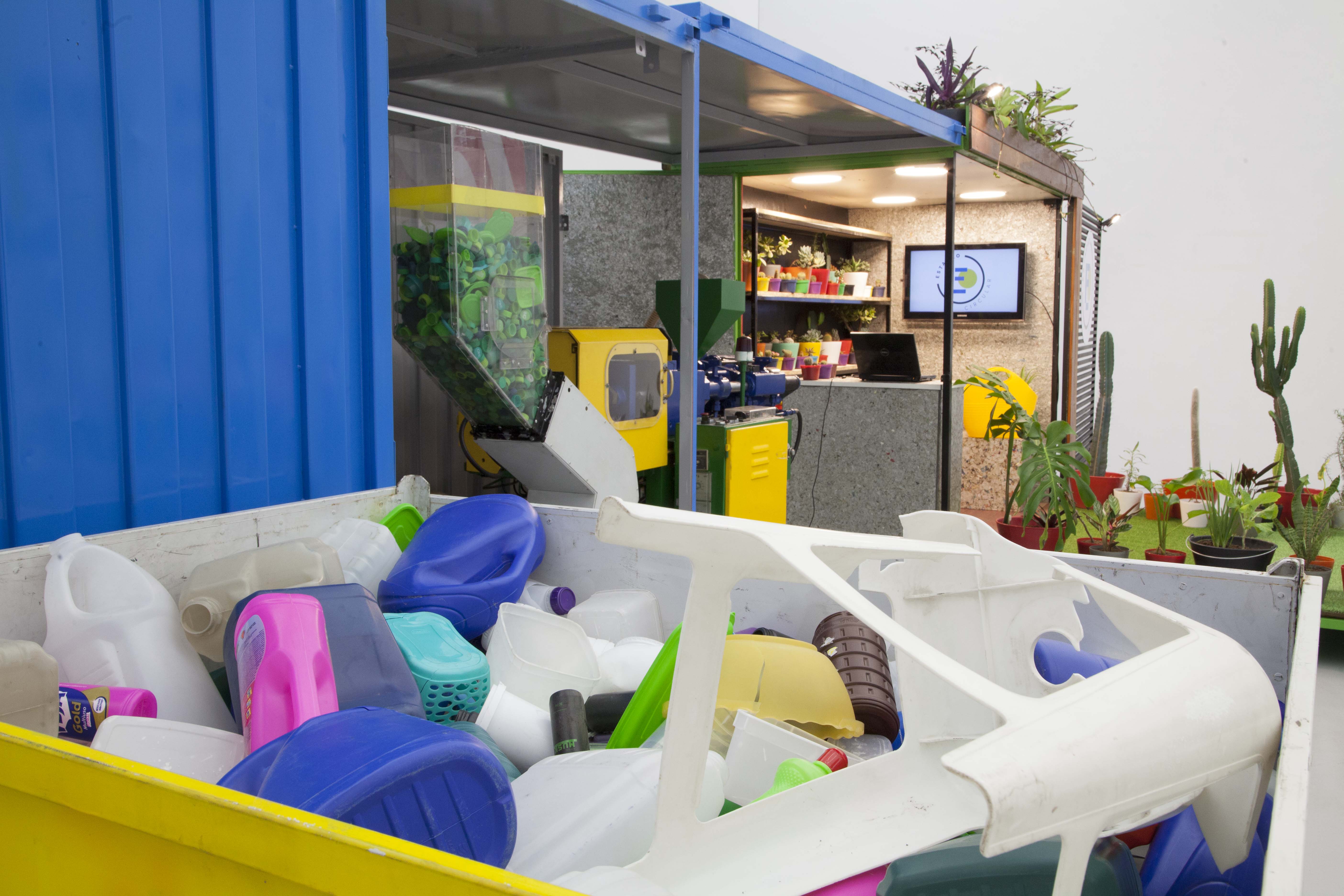
Estação Circular is an initiative designed to accelerate the transition to a circular economy by transforming how communities engage with recycling. The project operates through gamified recycling stations located in accessible places such as supermarkets and public spaces. At these stations, citizens can bring post-consumption materials and exchange them for circular products, discounts, and other benefits, creating a positive incentive for responsible waste disposal.
The initiative integrates environmental education, technology, and reward systems to encourage behavioral change and increase public participation in recycling. By making recycling interactive and accessible, Estação Circular helps connect consumers, retailers, recycling cooperatives, and local governments within a shared circular ecosystem.
Since its implementation, Estação Circular has established operational stations in several cities in Minas Gerais, Brazil, including Belo Horizonte, Betim, Sarzedo, Curvelo, and Esmeraldas. These stations have created convenient collection points for recyclable materials, helping divert waste from landfills and improving the traceability of post-consumer resources. The project has also built partnerships with supermarkets, municipalities, and recycling cooperatives, strengthening the local recycling infrastructure and generating social and economic opportunities in the waste management sector.
One of the project’s key achievements is the creation of a system that combines environmental impact with social inclusion. By supporting cooperatives and waste pickers, the initiative contributes to job generation and fairer value distribution within the recycling chain. At the same time, it promotes environmental awareness and encourages citizens to adopt more sustainable consumption habits.
In the long term, Estação Circular aims to expand its network of stations to new cities and regions, increasing the recovery of recyclable materials and strengthening local
Estação Circular was created to address the challenge of low recycling rates and limited public engagement in waste management. In many Brazilian cities, recyclable materials are still discarded as waste due to a lack of convenient collection points and incentives for proper disposal. The project was developed to bridge this gap by connecting citizens, retailers, recycling cooperatives, and local governments through a practical circular economy solution.
The initiative was developed by Plaspop in partnership with supermarkets, municipalities, and recycling cooperatives. The concept was to install accessible recycling stations in high-traffic locations such as supermarkets and public areas, allowing people to easily drop off post-consumption materials as part of their daily routines. To encourage participation, the project introduced a gamified system in which users can exchange recyclable materials for points, circular products, discounts, or other benefits.
Implementation on the ground involved building partnerships with local stakeholders and identifying strategic locations for the stations. Infrastructure was then installed to receive and organize recyclable materials, while cooperatives and waste pickers were integrated into the system to ensure proper sorting and reintegration of materials into the recycling value chain.
Community engagement was also a key component. Communication campaigns, educational actions, and local outreach helped introduce the concept to residents and encourage behavioral change. By combining convenience, incentives, and environmental awareness, the stations became accessible hubs where citizens can actively participate.
Through this collaborative model, Estação Circular demonstrates how partnerships between private companies, retailers, public institutions, and recycling cooperatives can create scalable solutions that increase recycling rates, strengthen local circular economies, and reduce waste sent to landfills
Circular economy
Recycling innovation
Community engagement
Social inclusion
Waste reduction
Estação Circular addresses environmental, social, and economic challenges by making recycling accessible, rewarding, and integrated into daily life. The project installs gamified recycling stations in high-traffic locations such as supermarkets and public spaces, allowing citizens to return post-consumption materials and receive benefits, circular products, or discounts in exchange.
Environmentally, the initiative increases the recovery of recyclable materials that would otherwise be sent to landfills, helping reduce waste and promote resource efficiency. Socially, it strengthens the role of recycling cooperatives and waste pickers by integrating them into the system and generating income through the materials collected. Economically, it creates value by connecting waste recovery with circular products and local business partnerships.
Estação Circular is exemplary in terms of sustainability because it combines environmental impact, social inclusion, and economic opportunities in a single, scalable model. Through partnerships between companies, municipalities, retailers, and cooperatives, the project demonstrates how collaborative and incentive-based solutions can accelerate the transition to a circular economy.
Estação Circular contributes to making everyday life more beautiful by transforming recycling into a visible, engaging, and community-centered experience. Instead of waste being hidden or treated as a problem, the project creates welcoming and well-designed recycling stations placed in accessible locations such as supermarkets and public spaces. These stations act as local hubs where people can participate in sustainable practices during their daily routines.
Through its gamified approach, Estação Circular turns recycling into a positive and rewarding activity. Citizens are encouraged to bring their post-consumption materials and exchange them for benefits, circular products, or discounts. This interaction helps create a sense of shared responsibility and strengthens the relationship between individuals, businesses, and their neighbourhoods. By making sustainability participatory and accessible, the project fosters a stronger sense of belonging and care for the local environment.
The initiative also supports local recycling cooperatives and waste pickers, reinforcing the social fabric of the community and highlighting the importance of these workers within the urban ecosystem. This connection between citizens and the recycling chain helps build awareness and respect for the people and processes that make circular systems possible.
From an aesthetic perspective, Estação Circular demonstrates how sustainability infrastructure can be designed to be attractive, intuitive, and integrated into everyday urban life. The stations are conceived as recognizable and inviting spaces that communicate environmental values while remaining functional and easy to use. By combining thoughtful design, community engagement, and environmental action, the project shows how circular solutions can enhance the quality, identity, and sustainability of public and commercial spaces over the long term.
Estação Circular addresses accessibility and affordability by making recycling easy to access, simple to use, and rewarding for people from different social and economic backgrounds. The project places recycling stations in high-traffic and familiar locations such as supermarkets and public spaces, allowing citizens to participate in circular practices during their everyday routines without additional cost or effort.
The system is designed to be intuitive and inclusive. Clear communication, simple material separation, and a user-friendly exchange mechanism allow people of different ages, education levels, and social groups to participate. By transforming recyclable materials into points, benefits, or circular products, the project also creates economic value for users, making sustainability more affordable and attractive.
A central element of inclusion in Estação Circular is the integration of recycling cooperatives and waste pickers into the operational model. The materials collected through the stations are directed to local cooperatives, helping generate income, strengthen local organizations, and recognize the essential role these workers play in urban recycling systems. This approach contributes to fairer value distribution within the recycling chain and supports social inclusion.
The project also promotes a collaborative governance model by bringing together private companies, supermarkets, municipalities, and community actors. Through these partnerships, the initiative creates shared responsibility for waste management and encourages collective participation in building more sustainable cities.
Estação Circular can be considered exemplary in terms of inclusion because it combines accessible infrastructure, economic incentives, and social integration. By lowering barriers to participation and valuing the role of local recycling actors, the project demonstrates how circular economy can create environmental benefits while promoting social equity.
Estação Circular actively involves citizens, communities, and civil society organizations as key participants in the project’s design, implementation, and daily operation. The initiative is built around community participation, encouraging residents to become active contributors to local recycling systems rather than passive waste generators.
Citizens participate directly by bringing post-consumption materials to the stations and engaging with the gamified system that rewards recycling with benefits, circular products, or discounts. This simple and interactive mechanism encourages continuous participation and helps build awareness about responsible consumption and waste separation. Through this process, residents become co-creators of local circular solutions.
Recycling cooperatives and waste pickers play a central role in the project. These organizations are responsible for receiving, sorting, and reintegrating the collected materials into the recycling value chain. Their involvement ensures that the project generates social and economic benefits while strengthening local recycling infrastructure. By formally integrating cooperatives into the system, Estação Circular supports income generation, improves recognition of their work, and contributes to more inclusive waste management systems.
Local businesses and supermarkets also participate as partners by hosting the stations and helping promote the initiative to their customers. Municipal governments and community actors often support the project through collaboration, outreach, and alignment with local sustainability initiatives.
The involvement of these different actors has had a strong impact on the project’s success. Community engagement increases recycling participation, strengthens environmental awareness, and builds a sense of collective responsibility for waste management. At the same time, collaboration with cooperatives and local organizations helps create a more resilient and inclusive economy
The development and implementation of Estação Circular relied on collaboration between stakeholders at multiple levels, creating a shared ecosystem that supports circular economy solutions.
At the local level, supermarkets, recycling cooperatives, municipalities, and citizens played a central role. Supermarkets hosted the stations in accessible locations and helped promote the initiative to customers. Local recycling cooperatives and waste pickers were directly involved in receiving, sorting, and reintegrating the collected materials into the recycling value chain. Municipal governments supported the initiative by facilitating partnerships, aligning the project with local waste management strategies, and helping raise awareness in the community. Citizens are active participants, bringing recyclable materials to the stations and engaging with the incentive system.
At the regional and national levels, private sector partners and organizations working with circular economy and recycling helped support the development of the model, infrastructure, and operational systems. Their involvement contributed to strengthening partnerships, improving logistics and traceability of materials, and expanding the project to multiple cities in Minas Gerais, Brazil.
At the international level, the project seeks to connect with broader circular economy discussions and innovation networks, contributing practical insights into community-based recycling and reverse logistics systems. Engagement with international platforms and initiatives allows the project to share experiences, learn from global best practices, and explore opportunities for replication in other contexts.
The engagement of stakeholders at different levels added significant value by combining local knowledge, operational capacity, and strategic partnerships. This collaborative approach made it possible to implement the stations efficiently, strengthen local recycling ecosystems, and demonstrate a scalable model.
The design and implementation of Estação Circular integrate multiple disciplines and knowledge fields to create a practical and engaging circular economy solution.
Environmental sciences play a central role in the project by guiding strategies for waste reduction, recycling, and the recovery of post-consumption materials. Knowledge of material cycles, recycling systems, and resource efficiency helps ensure that collected materials are properly reintegrated into the production chain.
Engineering and industrial design are reflected in the development of the recycling stations and the operational infrastructure. The stations are designed to be functional, durable, and easy to use, allowing efficient collection, storage, and transport of recyclable materials while integrating smoothly into public and commercial spaces.
Design and communication are also essential elements of the project. The visual identity of the stations and the gamified interaction system help make recycling more intuitive, attractive, and engaging for users. Clear communication and signage support user participation and encourage behavioral change.
Digital technologies contribute to the incentive and tracking systems that enable users to exchange recyclable materials for benefits or circular products. These tools help create transparency, improve traceability of materials, and strengthen user engagement through gamification.
Social sciences and community engagement inform the participatory approach of the project. Understanding local behaviors, social dynamics, and community needs helps ensure that the stations are accessible and inclusive, encouraging citizens to adopt sustainable habits.
Finally, education and environmental awareness are embedded throughout the initiative. By interacting with the stations and learning about the value of materials, citizens become more aware of their role in the circular economy.
The Estação Circular business model is based on a circular economy approach that combines partnerships, service provision, and value generation from recovered materials. The project creates financial sustainability by connecting waste collection, reverse logistics, and incentives for consumers with businesses interested in promoting circular products and responsible waste management.
A key component of the model is partnerships with retailers and local businesses, such as supermarkets that host the recycling stations. These partners benefit from increased customer engagement, sustainability branding, and participation in circular economy initiatives. In many cases, partners contribute financially to the implementation or operation of the stations as part of their environmental and social responsibility strategies.
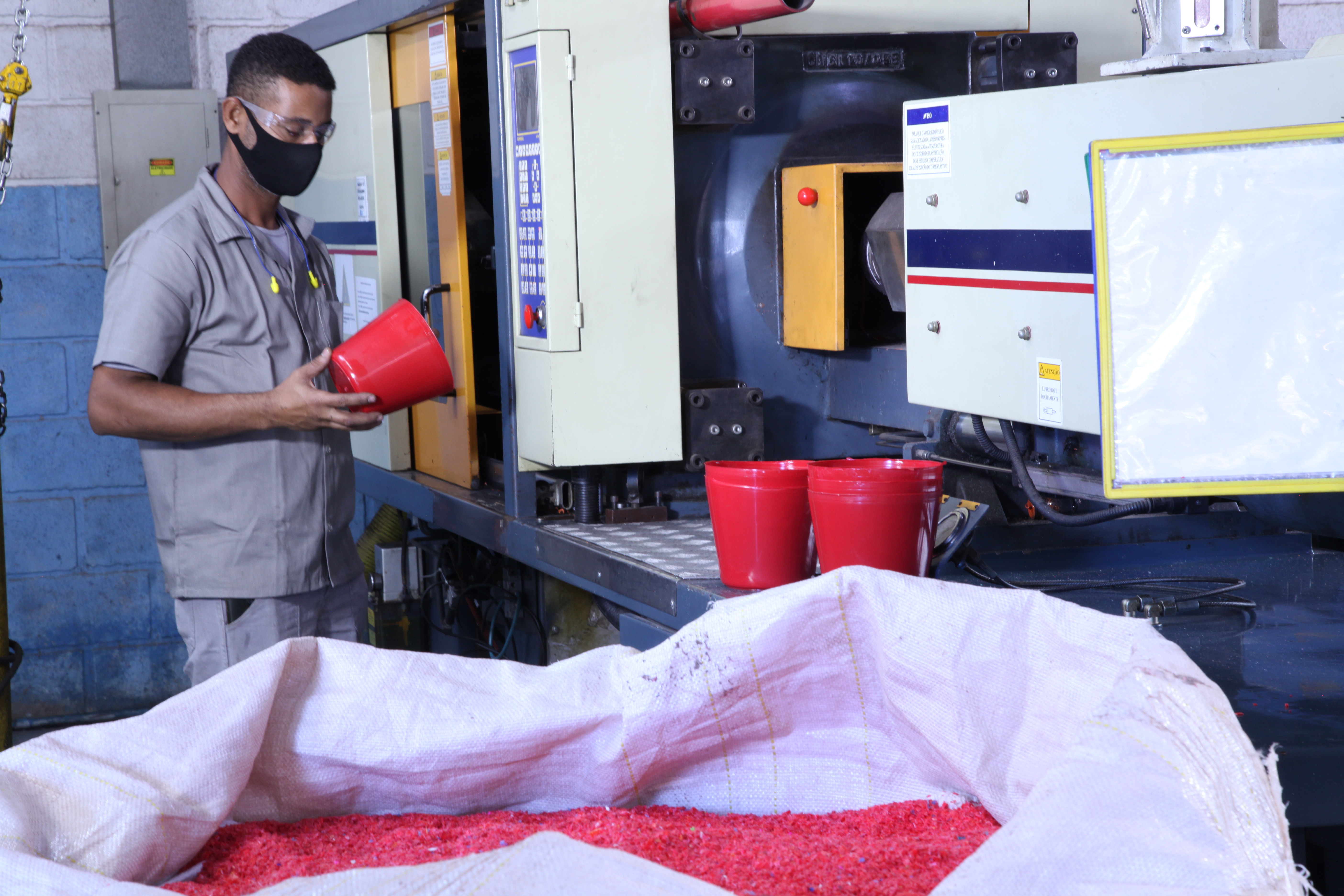
Another revenue stream comes from reverse logistics and material recovery. The recyclable materials collected through the stations are directed to recycling cooperatives and recycling industries, generating value through the sale and reintegration of these materials into production chains. This strengthens the local recycling ecosystem while helping offset operational costs.
The project also creates opportunities for corporate partnerships and sponsorships, where companies can support the stations, offer rewards or circular products within the incentive system, and engage consumers through sustainability campaigns.
In addition, the initiative can benefit from public or institutional support, including collaborations with municipalities, sustainability programs, or innovation funds that promote circular economy and waste reduction initiatives.
By combining private sector partnerships, material recovery value, incentive-based engagement, and institutional collaboration, Estação Circular establishes a diversified and resilient financial model. This approach allows the project to scale while continuing to generate environmental, social, economic
Several elements of Estação Circular can be replicated or transferred to other cities, communities, and contexts, making the project a scalable model for circular economy solutions.
One key replicable element is the network of accessible recycling stations placed in high-traffic locations such as supermarkets, shopping areas, and public spaces. This approach makes recycling convenient and integrates it into daily routines, a model that can easily be adapted to different urban environments.
The gamified incentive system is another transferable component. By allowing users to exchange recyclable materials for benefits, discounts, or circular products, the project creates motivation for continuous participation. This mechanism can be adapted to different cultural contexts, reward systems, or local partnerships.
The collaborative partnership model is also highly replicable. Estação Circular connects private companies, retailers, municipalities, and recycling cooperatives in a shared system that supports waste collection and material recovery. This multi-stakeholder approach can be implemented in other regions by aligning local actors with common sustainability goals.
The integration of recycling cooperatives and waste pickers is another important aspect that can be transferred, particularly in regions where informal recycling sectors play a significant role. This approach helps strengthen local recycling systems while promoting social inclusion.
Finally, the project’s communication and environmental education strategies—including clear signage, community engagement, and awareness campaigns—can be replicated to encourage behavioral change and strengthen community participation in recycling initiatives.
Together, these elements form a flexible and adaptable framework that allows Estação Circular to be implemented in different cities and contexts.