Arts, Culture, and Heritage as Drivers of Change
Brno Coat: Architecture as a Garment
From Functionalist Architecture to Biodegradable Wool Design
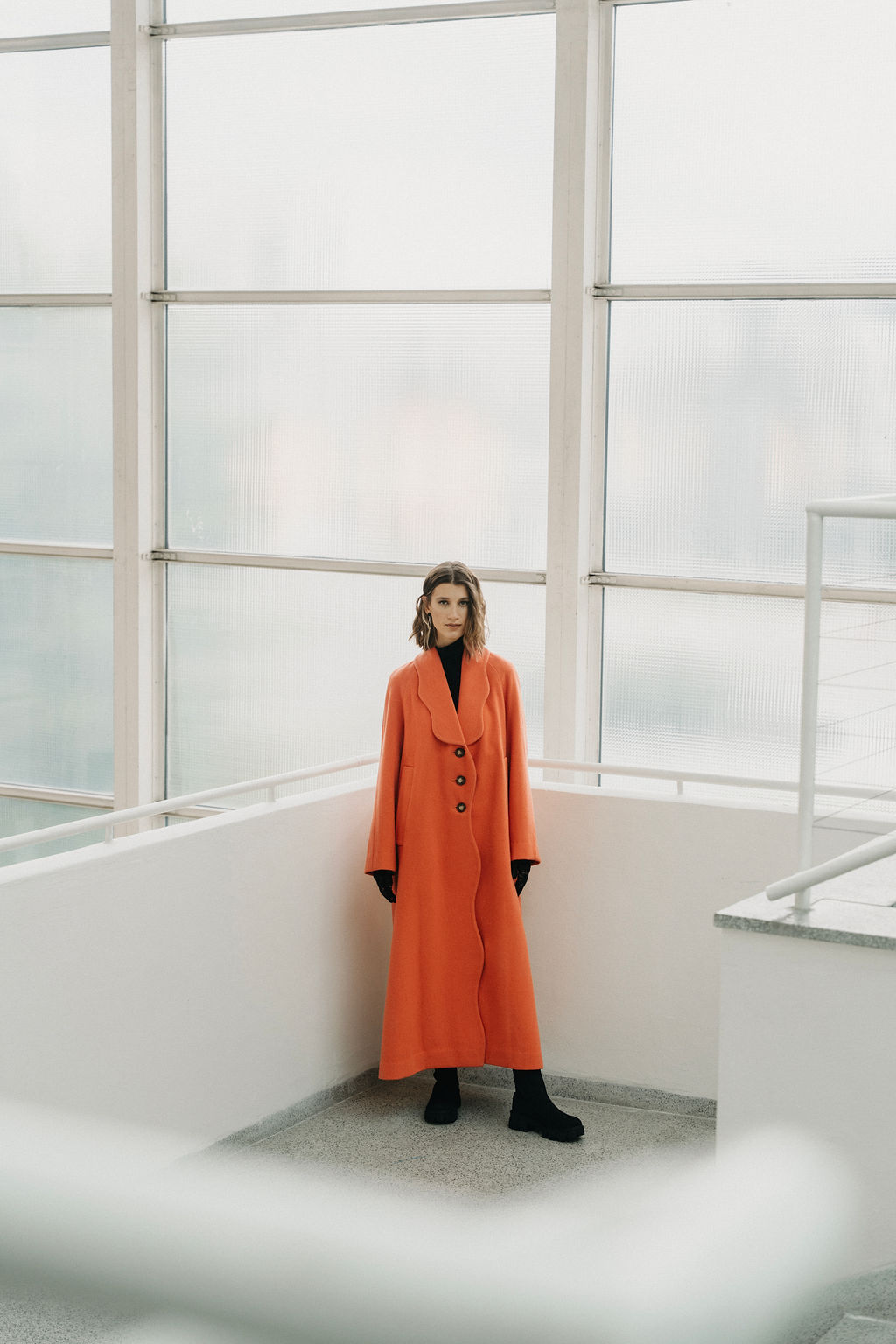
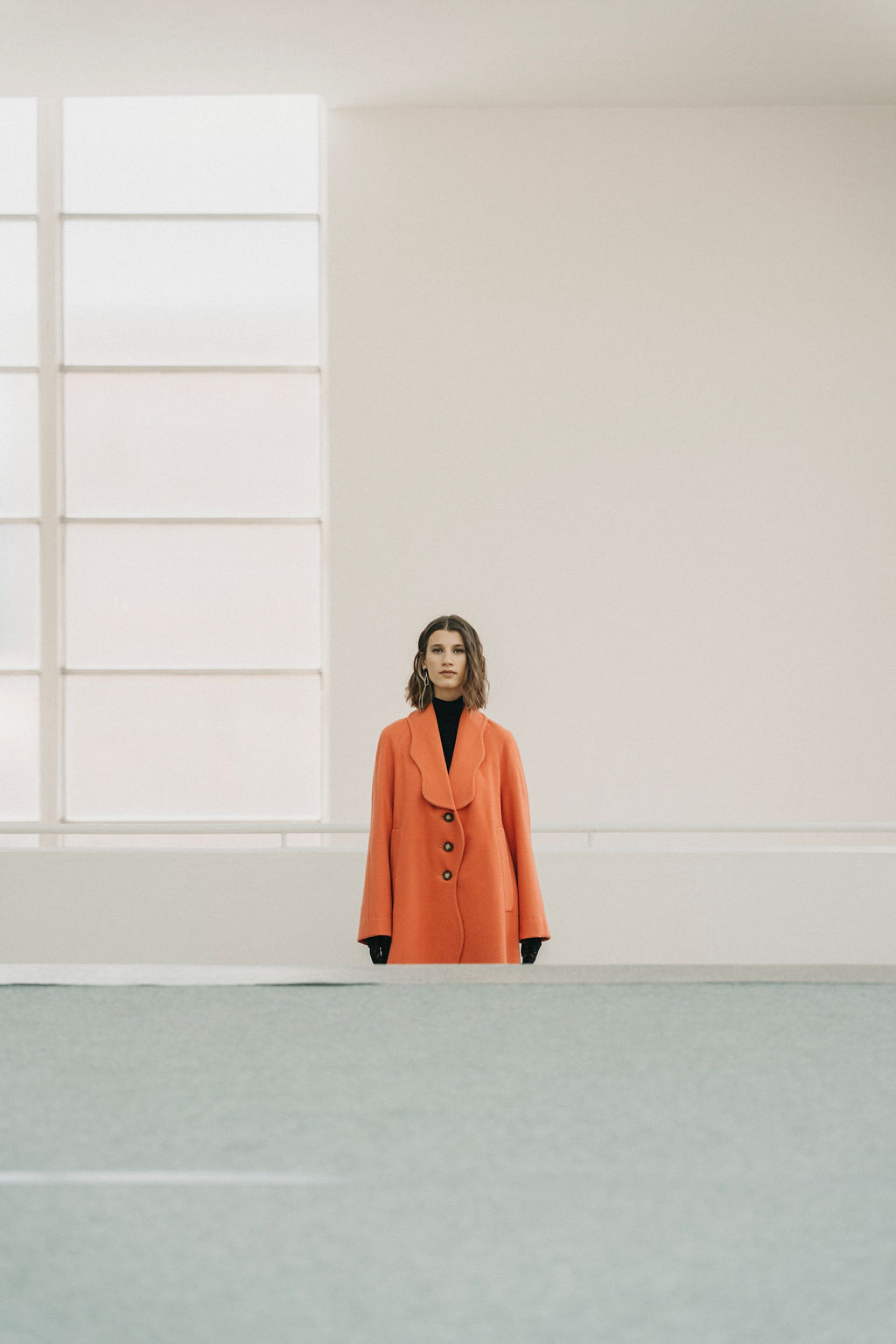
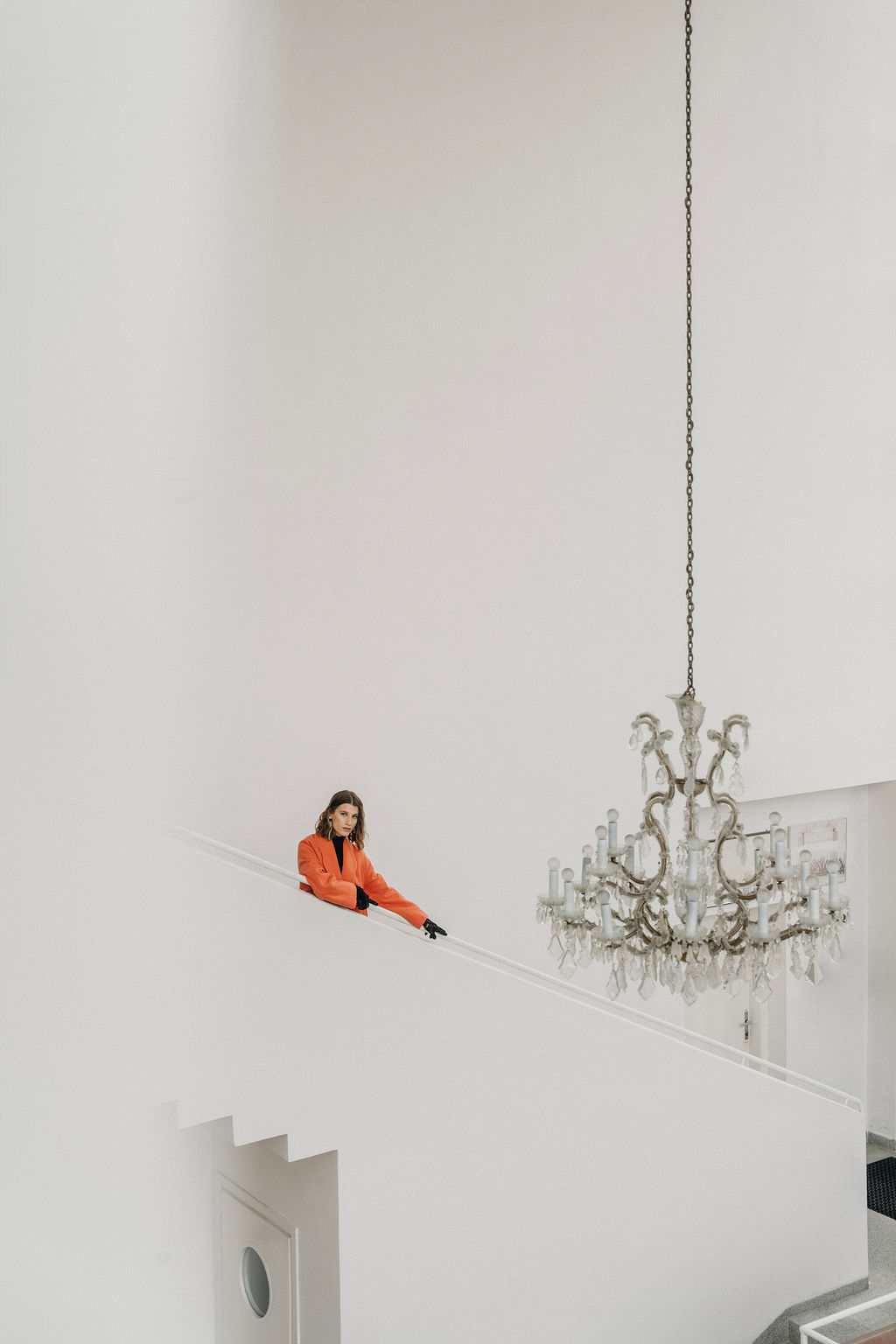
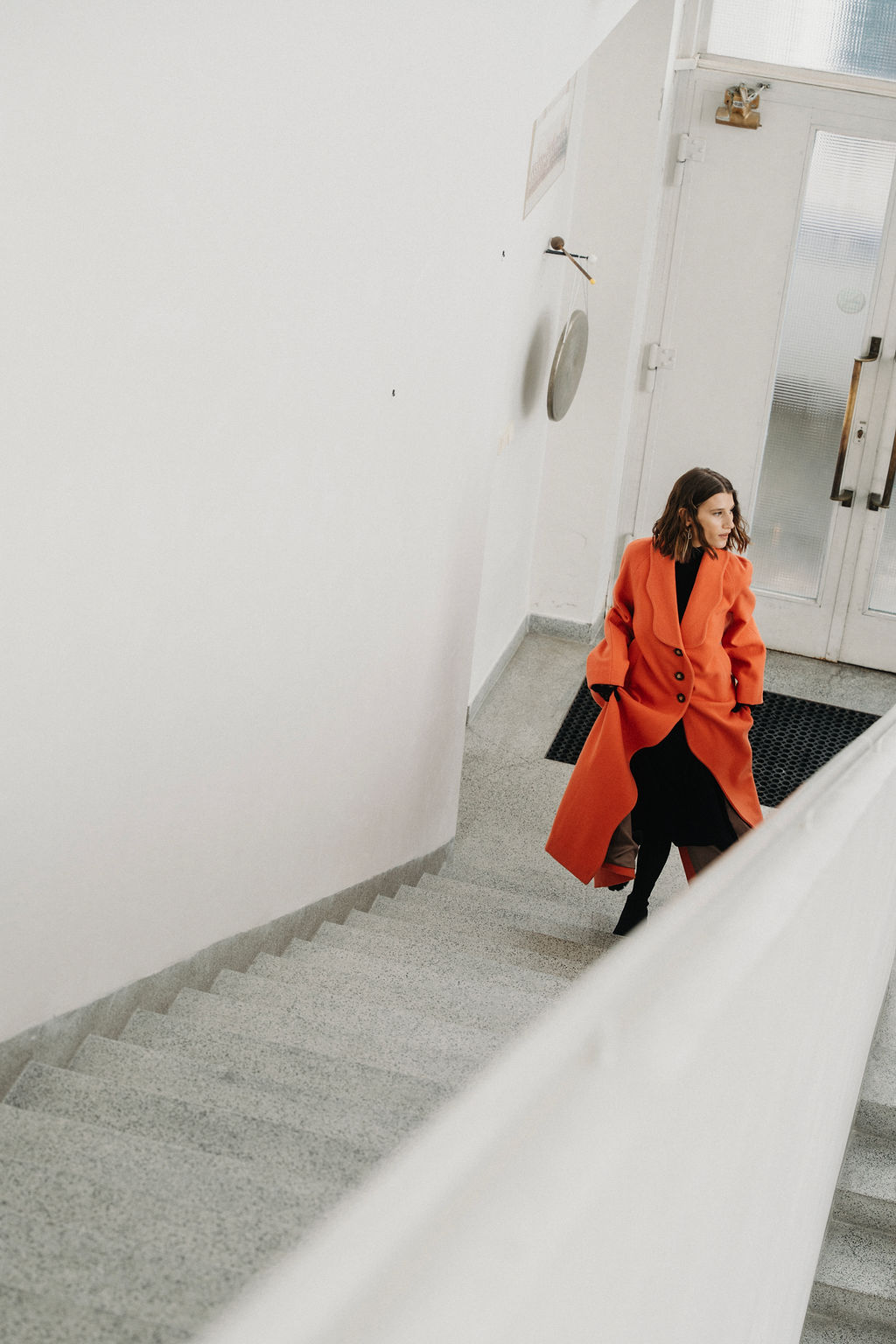
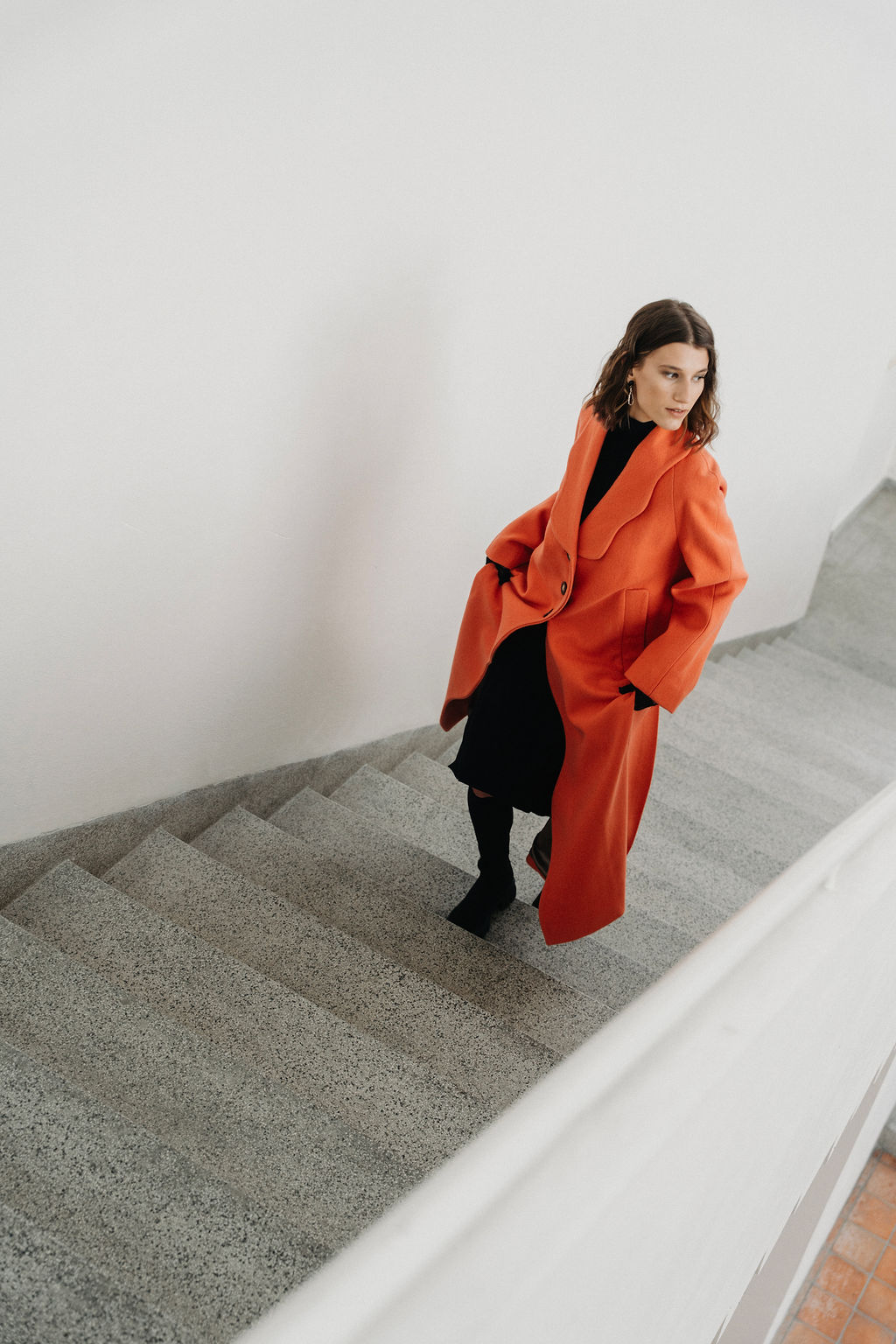
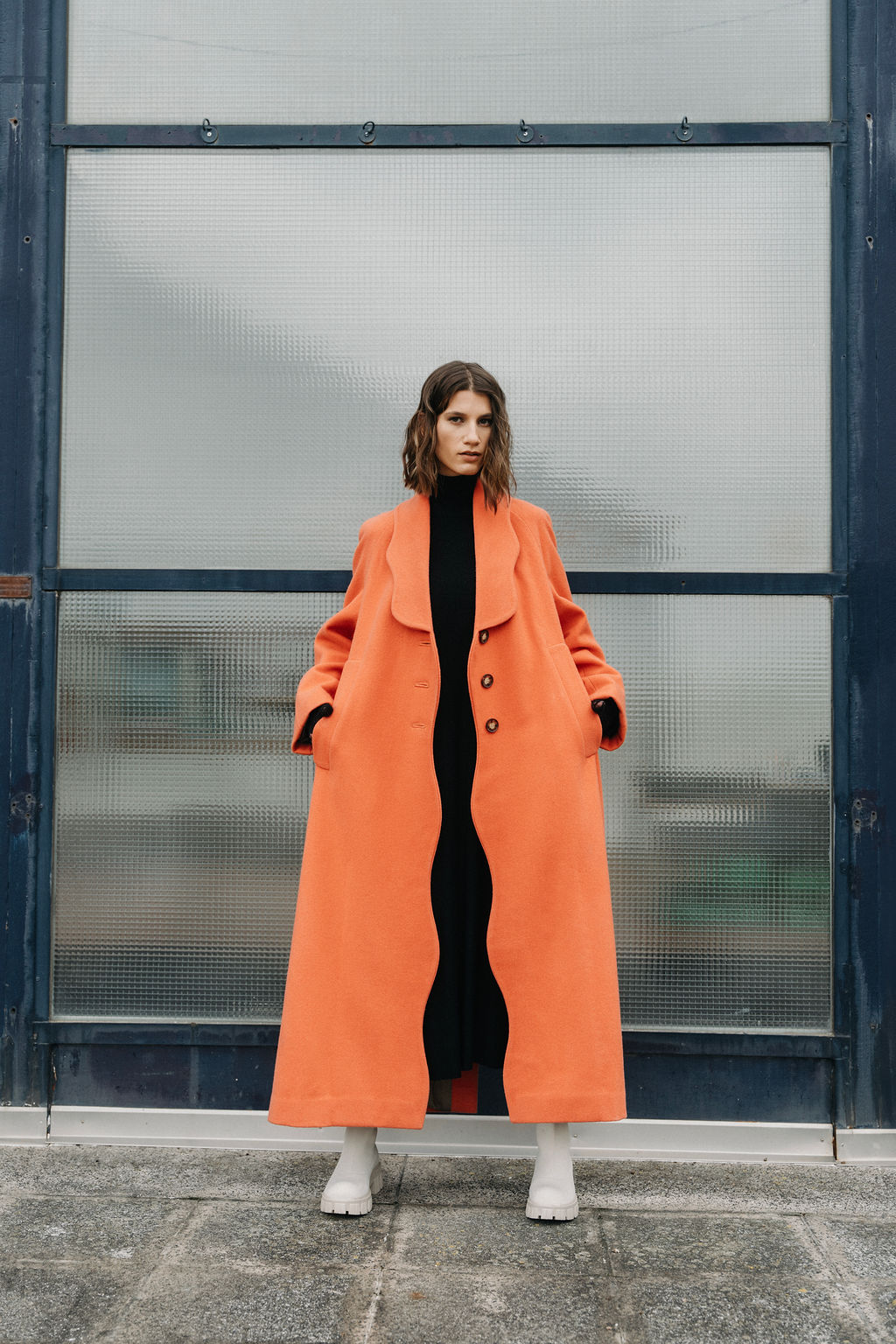
The Brno Coat is a design project exploring how fashion can reconnect beauty, sustainability, and European craft traditions. Inspired by the functionalist architecture of Bohuslav Fuchs in Brno, the coat reinterprets the principle “form follows function” for today’s ecological challenges. Made from 99% biodegradable materials, including Portuguese wool from the Serra da Estrela and crafted in Brno, it proposes clothing that respects material origins, craftsmanship, and the full life cycle.
Czechia
National
It addresses urban-rural linkages
It involves other types of transformations (soft investment)
Yes
2025-10-31
No
No
No
Individual
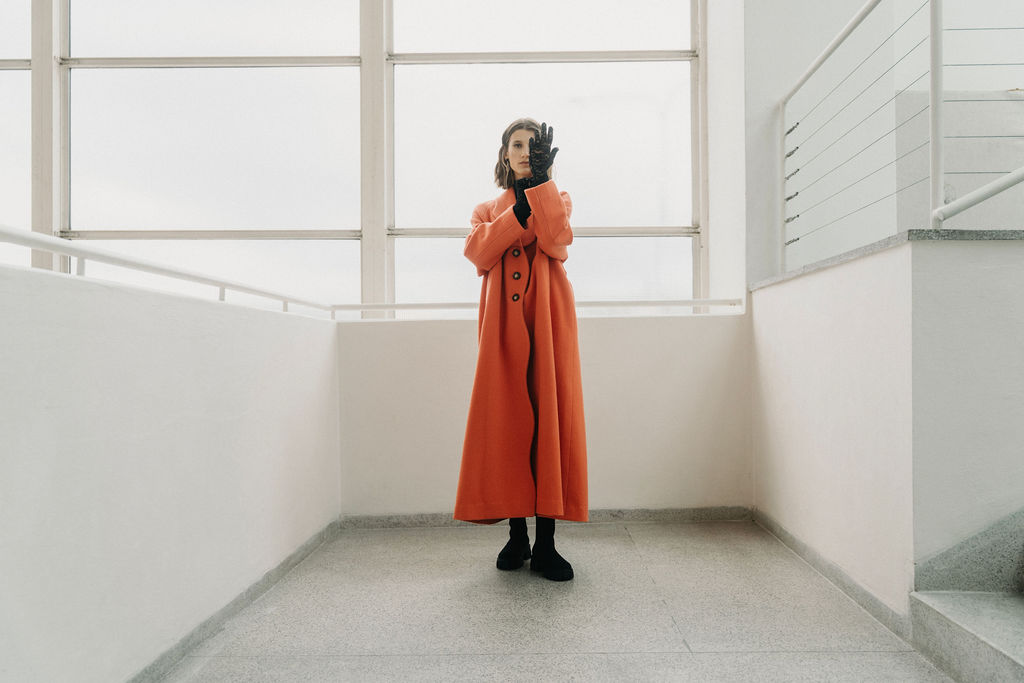
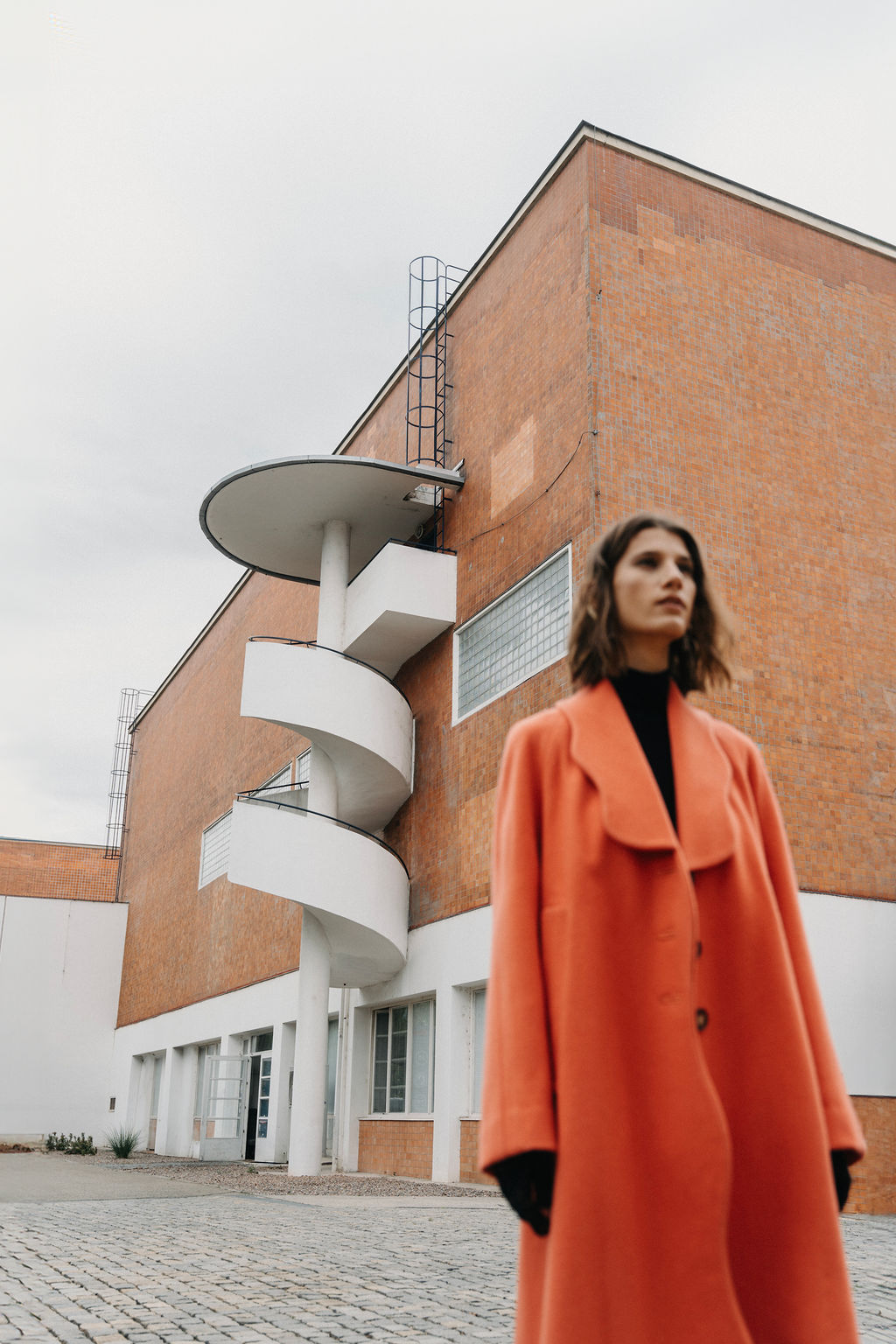
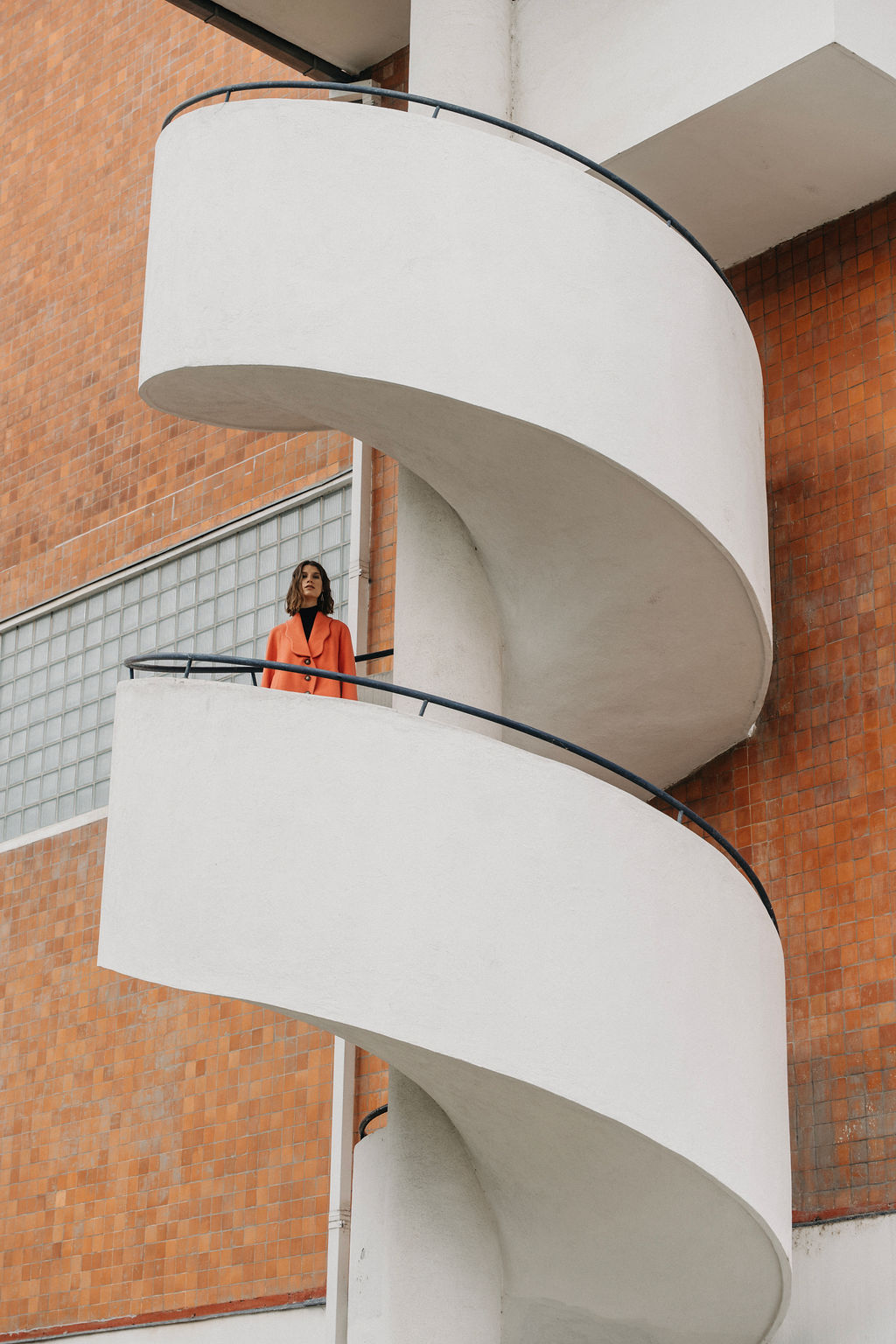
The prototype of the Brno Coat was created on the occasion of the 130th anniversary of the birth of functionalist architect Bohuslav Fuchs, whose work profoundly shaped the face of modern Brno. The Brno Coat is visually inspired by his building, the Pavilion of the City of Brno at the Brno Exhibition Centre. The purism of this structure is ingeniously disrupted by decorative elements, most notably the spiral staircase at the back, which lends a unique dynamism to the whole.
The inner design of the Brno Coat reflects an attempt to answer the question: if we take the famous functionalist maxim “form follows function,” which functions do we need to follow today? In a fashion industry overwhelmed by overproduction, fast-changing trends, and the exploitation of natural and human resources, we must now create products with regard not only to the origin of materials and the conditions of their production but also to what happens to them at the end of their life cycle.
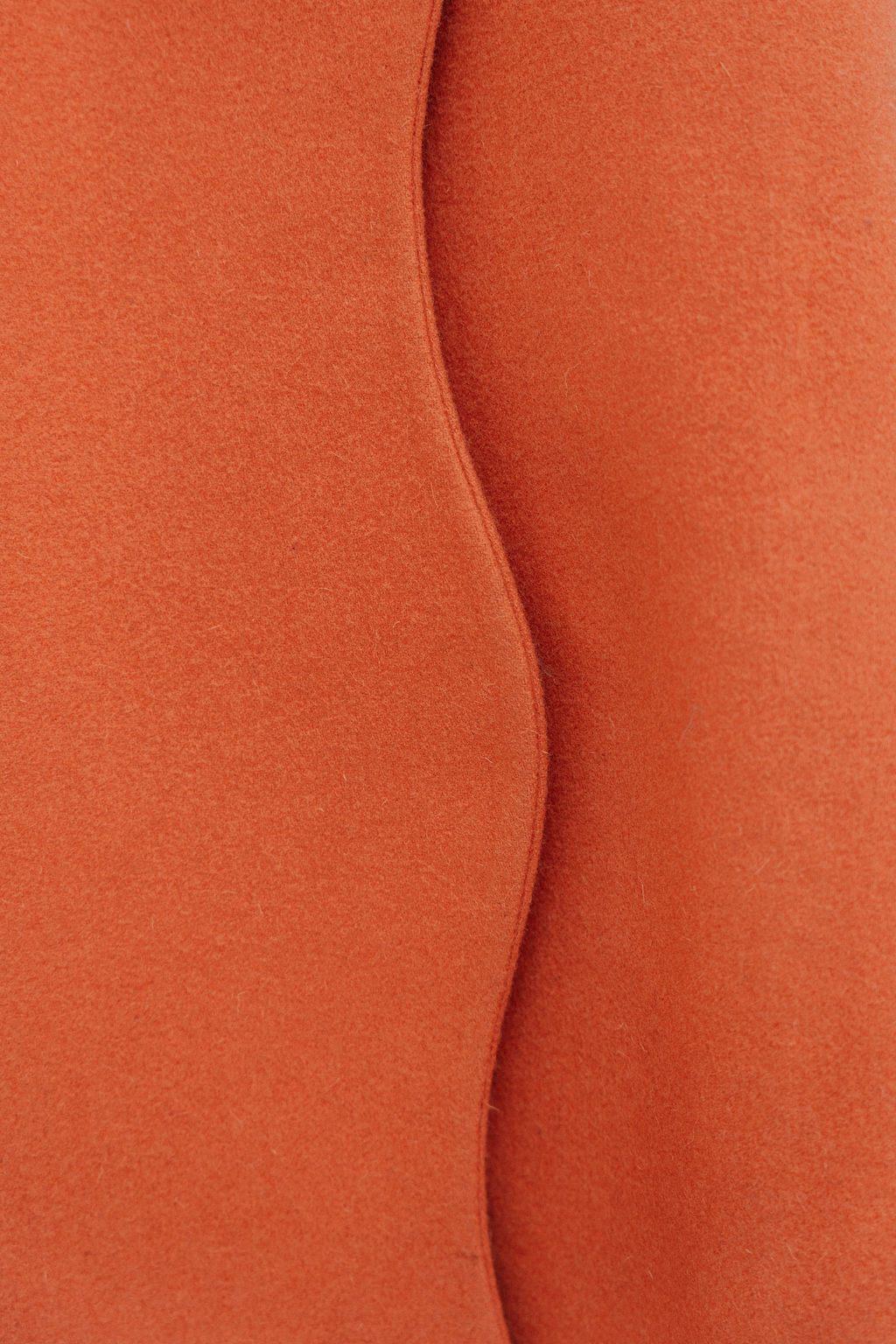
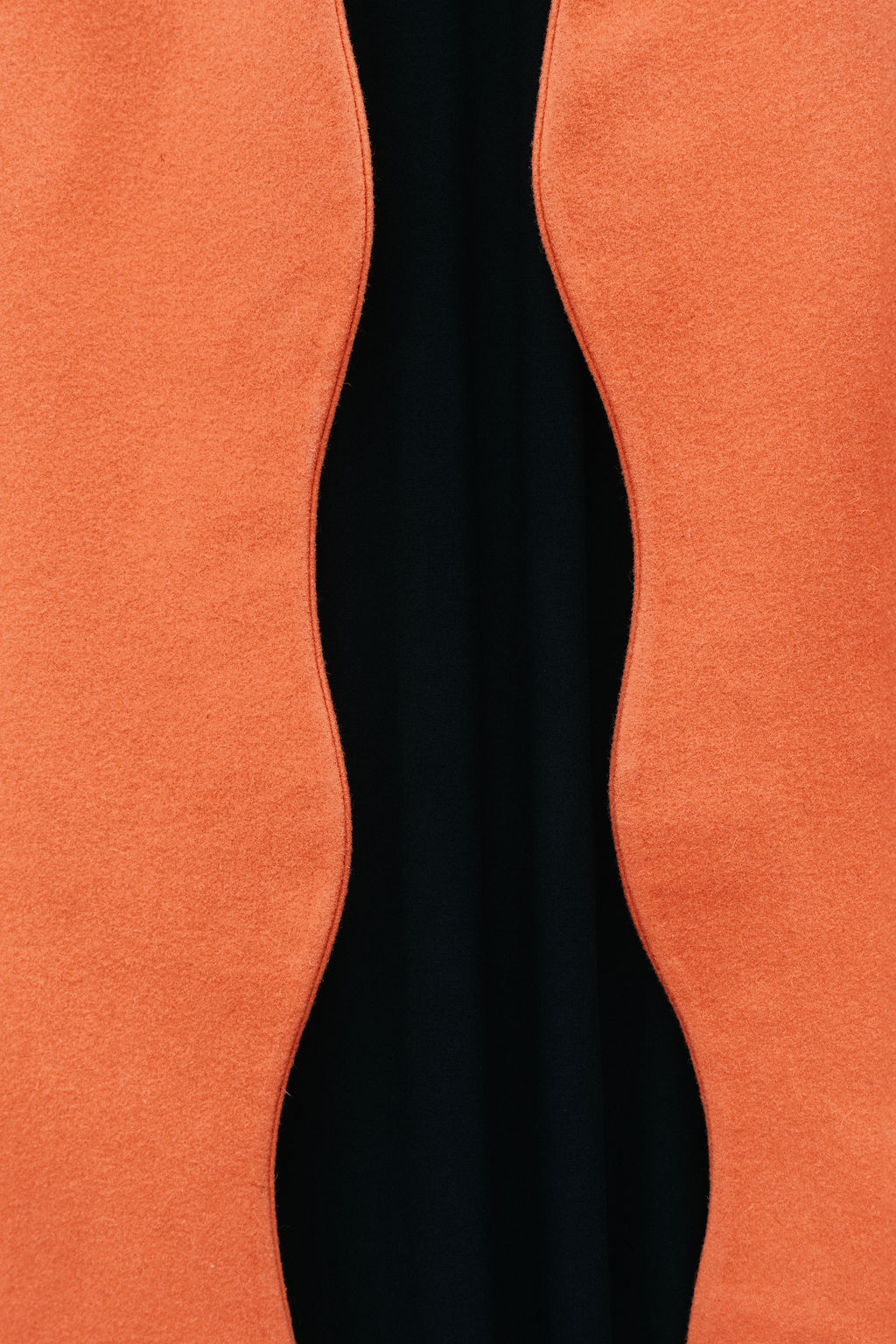
The Brno Coat is made of 99% biodegradable materials. The core fabric of the coat is 100% sheep wool from the Portuguese company Burel Factory, which continues the centuries-old wool-making traditions of the Serra da Estrela mountains using 19th-century machinery. All tailoring work takes place in the Brno atelier of Klára Židková. The Brno Coat is not just a garment, it explores the historical and material connection between Brno and Covilhã (the city in the Portuguese mountains Serra da Estrela) — two cities once nicknamed as the “Moravian Manchester” and the “Portuguese Manchester” for their strong, but local wool industries in the past.
The Brno Coat prototype was developed in response to a grant programme launched by the Statutory City of Brno to commemorate the 130th anniversary of the birth of functionalist architect Bohuslav Fuchs. His work significantly shaped the architectural identity of Brno and became the starting point for my design research.
The coat is visually inspired by Fuchs’ Pavilion of the City of Brno, where strict architectural purism is playfully disrupted by expressive details, most notably the spiral staircase. Beyond this formal reference, the project also reflects on the functionalist maxim “form follows function.” I asked how this principle might be reinterpreted under today’s fashion industry, often shaped by overproduction, fast-changing trends, and the exploitation of natural and human resources.
In response, the Brno Coat was conceived as a design prototype that reconnects beauty, sustainability, and craftsmanship. The garment is made from 99% biodegradable materials, including Portuguese wool produced by the Burel Factory in the mountains of the Serra da Estrela. Biodegradable materials decompose naturally through enzymes and microorganisms into water, carbon dioxide, and basic biomass, ensuring that no microplastics are released into the environment.
By combining architectural inspiration with responsible material sourcing and local tailoring craftsmanship, the project proposes a way of designing clothing that values longevity, transparency, and respect for the full life cycle of garments. The Brno Coat is thus both a functional garment and a tangible example of sustainable, circular, and culturally meaningful fashion.
biodegradable design
European craft heritage
circular fashion
cultural interconnection
updated functionalism
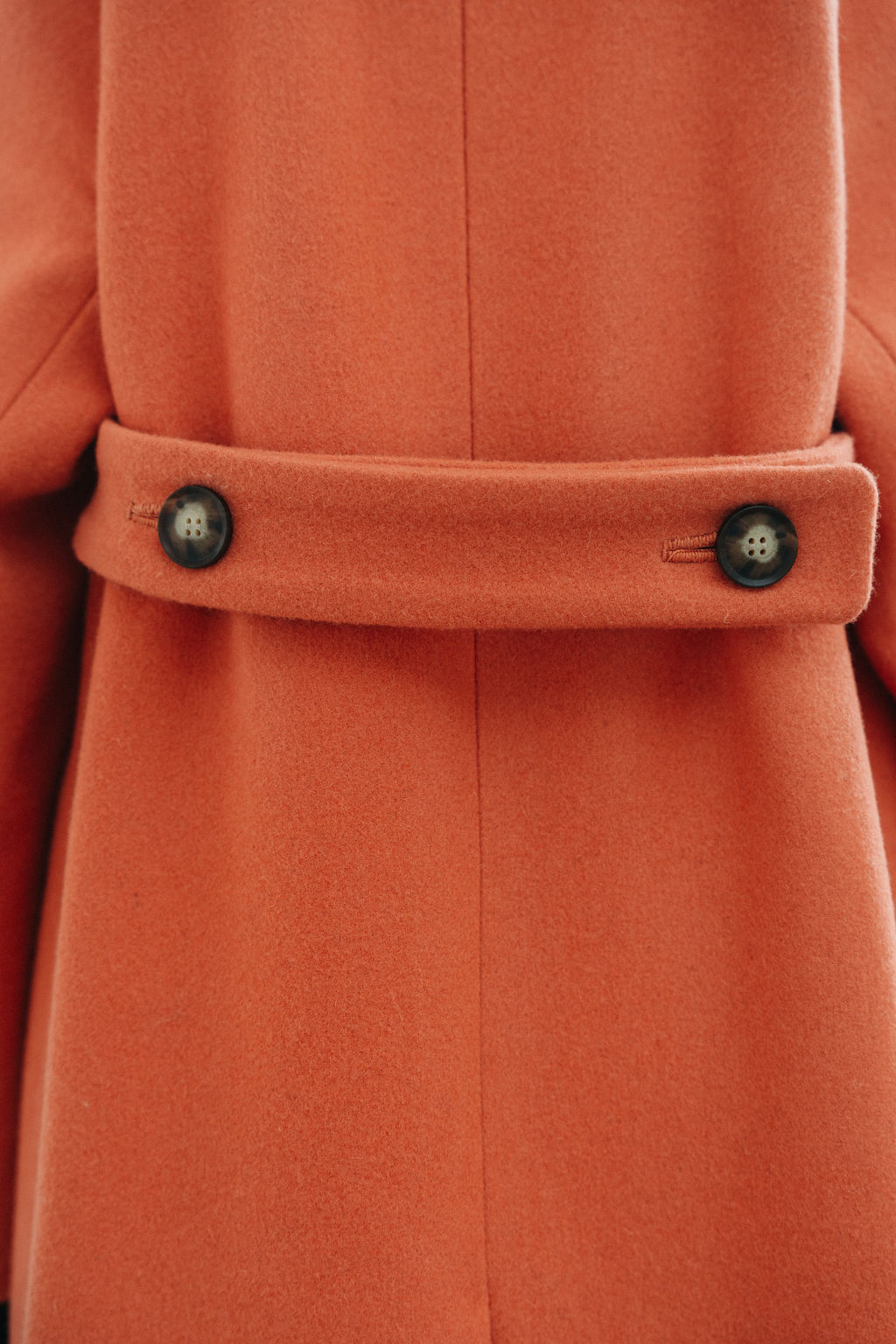
The Brno Coat is a contemporary reinterpretation of European craft traditions, designed with sustainability at its core. The coat is made almost entirely from biodegradable materials: its core fabric is 100% sheep wool from the Portuguese Burel Factory, which preserves centuries-old wool-making techniques from the Serra da Estrela mountains. Local shepherds graze their sheep on high plateaus, producing softer, high-quality wool. The lining is made of certified ENKA® Viscose or Bemberg™ fibres, with biodegradable cotton interlinings and threads throughout. The only non-biodegradable components are the buttons from Lithuanian brand FM Buttons, which follows sustainable production methods; their biodegradable collection is in development and will be incorporated in future designs with my great delight.
Each coat is made to order, tailored to the customer’s preferred color and specifications, eliminating unsold stock and reducing waste. Customers are provided with care guidance: the coat can be worn for many years with gentle handling, passed on to others when no longer needed, and fully passed to the biodegradable process at the end of its life by removing or reusing the buttons.
Every stage—from material sourcing to final tailoring in the Brno atelier of Klára Židková—prioritizes circularity, durability, and responsible craftsmanship, connecting fashion, heritage, and environmental stewardship. This approach aligns with the European New Bauhaus values of cultural innovation, sustainable materials, and a circular economy, demonstrating how design can combine aesthetic beauty with environmental and social responsibility.
The Brno Coat transforms a functional garment into a living tribute to beauty, memory, and place. Its design was inspired by the Pavilion of the City of Brno at the Brno Exhibition Centre, created by functionalist architect Bohuslav Fuchs, whose work profoundly shaped the modern identity of Brno and is closely tied to one of the city’s greatest urban developments. The coat reflects Fuchs’ architectural purism while introducing playful dynamism through decorative elements, most notably the spiral staircase motif on the back, which adds movement and visual intrigue.
Brno’s functionalist architecture was strongly connected to the ideas of the Bauhaus school, which promoted the unity of art, craft, and function. In the 1920s and 1930s, local architects such as Bohuslav Fuchs embraced these principles—clarity of form, simplicity, and purposefulness—and helped transform Brno into a modern European city often described as a “city with the spirit of Bauhaus.” The Brno Coat translates this architectural philosophy into the language of fashion, applying the principle of “form follows function” to contemporary sustainable design.
Beyond its aesthetic appeal, the Brno Coat connects communities across time and space. It celebrates the shared history of wool and woollen cloth production in Brno and the Serra da Estrela region in Portugal, linking centuries-old craft traditions, local artisans, and industrial creativity. By wearing the coat, people engage with a tangible piece of European cultural and creative heritage, transforming everyday life into a moment of connection with history, place, and craftsmanship.
As both a functional garment and a carrier of memory, the Brno Coat encourages appreciation of beauty in everyday life while fostering a sense of belonging and care for the communities and landscapes from which its materials originate. In this way, the project brings architectural beauty into everyday life, allowing people to carry a piece of cultural heritage.
The "Brno Coat" was designed with inclusion and adaptability at its core. While the prototype was initially derived from traditional pattern-making techniques for men’s overcoats, it has been reinterpreted as a unisex garment suitable for all genders, bridging design traditions with contemporary needs. The prototype was developed in a complete range of ready-to-wear sizes, ensuring accessibility for diverse body types.
Beyond standard sizing, the coat allows for customer-specific customization, which is often needed to achieve a perfect fit for individual body shapes. Its raglan sleeves provide additional comfort and freedom of movement, making it wearable across a wide spectrum of physiques. This combination of inclusive sizing, adaptable design, and customization ensures that the coat is not only visually striking and sustainable but also practical and comfortable for everyone.
By integrating traditional tailoring with flexible, human-centered design principles, the "Brno Coat" demonstrates how fashion can be both inclusive and sustainable, creating garments that respect individual needs without compromising on aesthetics or heritage. The approach embodies the European New Bauhaus values of design for all, accessibility, and social responsibility, while also promoting an inclusive model of production, where each coat is made on order and tailored to the wearer, rather than produced en masse for a narrow demographic.
Through this approach, the "Brno Coat" serves as an example of how inclusive design, adaptability, and personalization can coexist with sustainability, craftsmanship, and cultural storytelling, making high-quality fashion accessible, comfortable, and meaningful for a wide variety of people.
The "Brno Coat" project has been deeply participatory, involving a wide range of citizens, local creatives, and civil society actors. From the start, the project collaborated with local photographers, models, and makeup artists, supporting small businesses and strengthening Brno’s creative community. The development of the prototype was supported by the Statutory City of Brno through the FUCHS 130 grant programme, highlighting civic engagement and public-private collaboration. All material suppliers are European companies, ensuring a shared commitment to quality, craft, and sustainability.
Customers also play a participatory role: each Brno Coat is made to order, allowing them to select colors, request adjustments, and contribute to the final fit. This dialogue between designer and wearer ensures the coat is tailored to individual needs, bridging functional design with personal expression. Through this co-creation, wearers become active participants, not just end-users, shaping the life and meaning of the garment.
The project has also engaged the cultural community in Brno, marking the 130th anniversary of architect Bohuslav Fuchs. By drawing inspiration from the Pavilion at the Brno Exhibition Centre, the coat fosters a shared sense of local pride, memory, and cultural continuity, connecting citizens with their urban and industrial heritage.
The "Brno Coat" project demonstrates multilevel collaboration, connecting local cultural initiatives with European craft and production networks.
At the local level, the coat was designed and developed in the atelier of Klára Židková in Brno, in collaboration with local creatives for PR including photographer, model, and makeup artist. These partnerships supported small independent professionals and strengthened the local creative ecosystem. The project also engaged the cultural community of Brno by celebrating the architectural legacy of Bohuslav Fuchs and the city’s functionalist heritage.
At the municipal level, the development of the prototype was supported by the Statutory City of Brno through the FUCHS 130 grant programme, which commemorated the 130th anniversary of Bohuslav Fuchs’ birth. This support enabled the realization of the prototype and connected the project to broader cultural initiatives and heritage awareness in the city.
At the European level, the Brno Coat relies on collaboration with responsible material suppliers from several European countries: wool from the Portuguese company Burel Factory, viscose lining from the Italian manufacturer Gianni Crespi Foderami, buttons from the Lithuanian brand FM Buttons and the biodegradable interlining by Freudenberg Company. These partnerships represent cross-border cooperation within the European textile and craft sector, reflecting shared traditions of craftsmanship and sustainable production.
The engagement of stakeholders across these levels created clear added value: it connected local cultural identity with European craft networks, strengthened small creative and manufacturing actors, and demonstrated how sustainable design can emerge through cooperation between municipalities, artisans, suppliers, and cultural communities. In this way, the project reflects the European New Bauhaus principles of collaboration, cultural sustainability, and shared European heritage.
The Brno Coat project integrates multiple disciplines and knowledge fields, combining fashion design, architecture, digital technologies, craftsmanship, and environmental awareness.
The conceptual inspiration comes from architecture, specifically the functionalist work of architect Bohuslav Fuchs and the Pavilion of the City of Brno at the Brno Exhibition Centre. Architectural principles such as clarity of form, functionality, and structural purity informed the visual language and construction of the coat.
The project also draws on traditional textile craftsmanship and fashion design, particularly European tailoring techniques and historical wool production traditions connecting Brno and the Serra da Estrela region in Portugal. This dialogue between historical craft knowledge and contemporary fashion design shaped both the aesthetic and material choices of the garment.
Digital technologies played an important role in the development process. The prototype was designed and graded into multiple sizes using 3D simulation in the CLO3D program, allowing the pattern to be tested, refined, and evaluated in the digital environment. This process served as a form of design research and experimentation, significantly reducing the need for repeated physical prototypes, saving materials, and making the development process more sustainable.
Environmental thinking was another key discipline reflected in the project. Material selection focused on biodegradable fibres and responsible sourcing, integrating principles of circular design and sustainable fashion.
By combining architecture, digital design tools, traditional craftsmanship, and environmental responsibility, the Brno Coat demonstrates a transdisciplinary approach to contemporary fashion, where cultural heritage, technological innovation, and sustainability inform one another to create meaningful and responsible design.
The Brno Coat operates on a made-to-order business model, producing each garment specifically for the customer’s size, color, and preferences. This approach eliminates unsold stock, reduces waste, and ensures that production is aligned with actual demand, supporting both environmental and financial sustainability.
Revenue is generated directly through sales of the coat, which is positioned as a premium, long-lasting, and sustainably produced garment. Each coat combines high-quality European materials—biodegradable wool from Portugal, viscose lining from Italy, and buttons from Lithuania—with skilled local tailoring in Brno. By highlighting craftsmanship, heritage, and sustainability, the product appeals to customers willing to invest in responsible fashion, ensuring consistent revenue from a clearly defined market segment.
The project also received public funding support through the Statutory City of Brno’s FUCHS 130 grant programme, which enabled the development of the prototype and initial production. This demonstrates the potential for strategic public-private collaboration, reinforcing the financial viability of projects that combine culture, design, and sustainability.
Future financial sustainability is strengthened by the modular and scalable nature of production: made-to-order garments can be tailored to individual demand without creating surplus inventory, while supplier partnerships with European manufacturers ensure consistent material quality and cost management. Additional revenue could be generated through limited edition releases, exhibitions, collaborations with cultural institutions, and promotion of European craft heritage, further diversifying income streams.
Through the combination of responsible premium sales, municipal support, and sustainable sourcing, coat presents a financially viable and resilient business model, demonstrating that high-quality, culturally rooted, and environmentally aware fashion can be economically sustainable.
The Brno Coat project introduces a replicable and transferable methodology for other contexts, ateliers, and beneficiary groups. The made-to-order business model—producing garments tailored to individual customers’ sizes, colours, and preferences—can be applied to other products in my studio as well as in other design ateliers. This approach reduces waste, eliminates unsold stock, and encourages sustainable production, making it a practical model for small-scale, high-quality fashion enterprises across Europe.
The same methodology will guide the development of additional garment prototypes in my studio. Ongoing research explores how biodegradable materials, particularly mycelium-based bio-materials, could be incorporated into coat design.
The transdisciplinary methodology is another transferable element. By drawing inspiration from architecture, cultural heritage, and other creative disciplines, design solutions become more enriched, distinctive, and socially meaningful. This demonstrates that cross-disciplinary thinking can generate innovative, culturally rooted products across diverse design contexts.
The project’s emphasis on European craft networks, local ateliers, and collaboration with small creative businesses is also replicable in other regions. Partnerships between designers, artisans, and responsible material suppliers can be adapted to different cultural contexts, creating sustainable value chains and strengthening community engagement.
Finally, integrating digital tools such as 3D simulation for prototyping and grading offers a replicable method for reducing material waste, accelerating development, and testing design solutions efficiently.
Overall, the Brno Coat demonstrates that combining responsible production, cross-disciplinary inspiration, digital innovation, and local craftsmanship can transfer to other creative studios and communities, aligning with the New European Bauhaus principles of beauty, sustainability, and inclusivity.