Enhancing Circularity, Sustainability, and Innovation
WaterWise Community
Water Wise Community_Ai 300 Scalini
On the hills of Bologna, Ai300Scalini is more than an agri-cultural public space: a living experiment in shared imagination. Born from a theatre company and nurtured by an open community, it weaves art, agricultural and education into one regenerated landscape.Driven by the desire to create a welcoming home between city and nature, connected to networks of peers that spark exchange and experimentation.Here, ecological democracy is practiced daily through interspecies care. A project on the move!
Italy
Regional
Emilia-Romagna, Italy
It addresses urban-rural linkages
It involves a physical transformation of the built environment (hard investment)
Yes
2025-12-15
Yes
Community for climate 2024 - https://ec.europa.eu/regional_policy/policy/communities-and-networks/communities-for-climate_en
Connect NEB 2025 - EIT Community New European Bauhaus
No
Yes
Organisation
WaterWise Community is a community-led initiative developed at Ai 300 Scalini, a public green area in the hills of Bologna, within the Educational Hub for Integrated Ecology. The project's objective is to design and test small-scale NBS for circular water management in peri-urban landscapes, a regeneration of the site within the evolving community of volunteers, using participatory methods. This is a response to increasingly frequent extreme rainfall events, wastewater production and soil erosion affecting the areas.
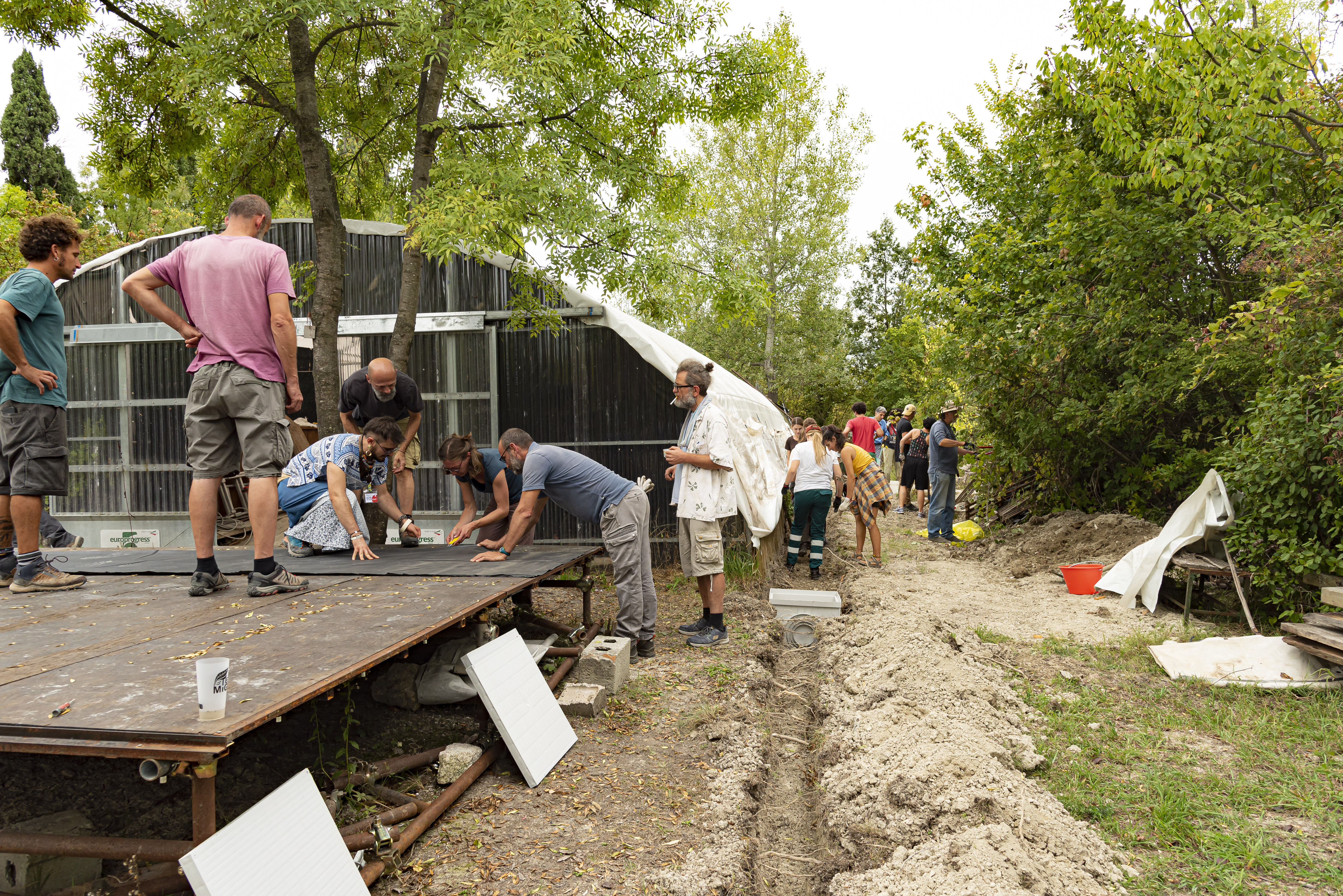
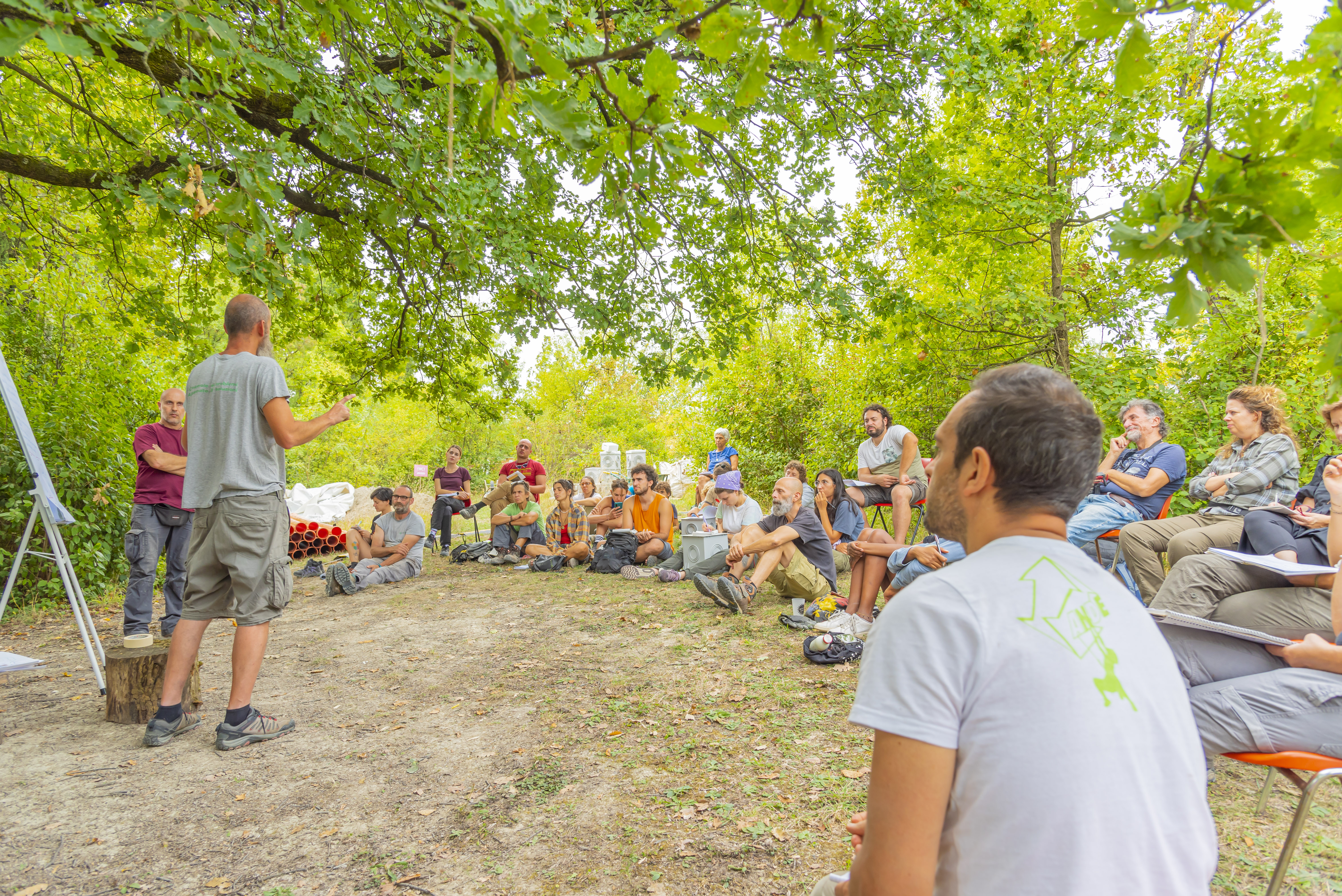
The project engaged a range of stakeholders, including citizens, school students and teachers, ecodesigners, scientific researchers and practitioners, through a Living Labs and workshop approach. These individuals participated in training sessions and hands-on activities, which were designed to facilitate a comprehensive understanding of water-related challenges and encourage the adoption of circular water practices. The installation of the rainwater harvesting system has enabled the collection and storage of an estimated volume of up to 80,000 litres of rainwater per year, leading to a substantial reduction in the use of potable water for irrigation and maintenance.
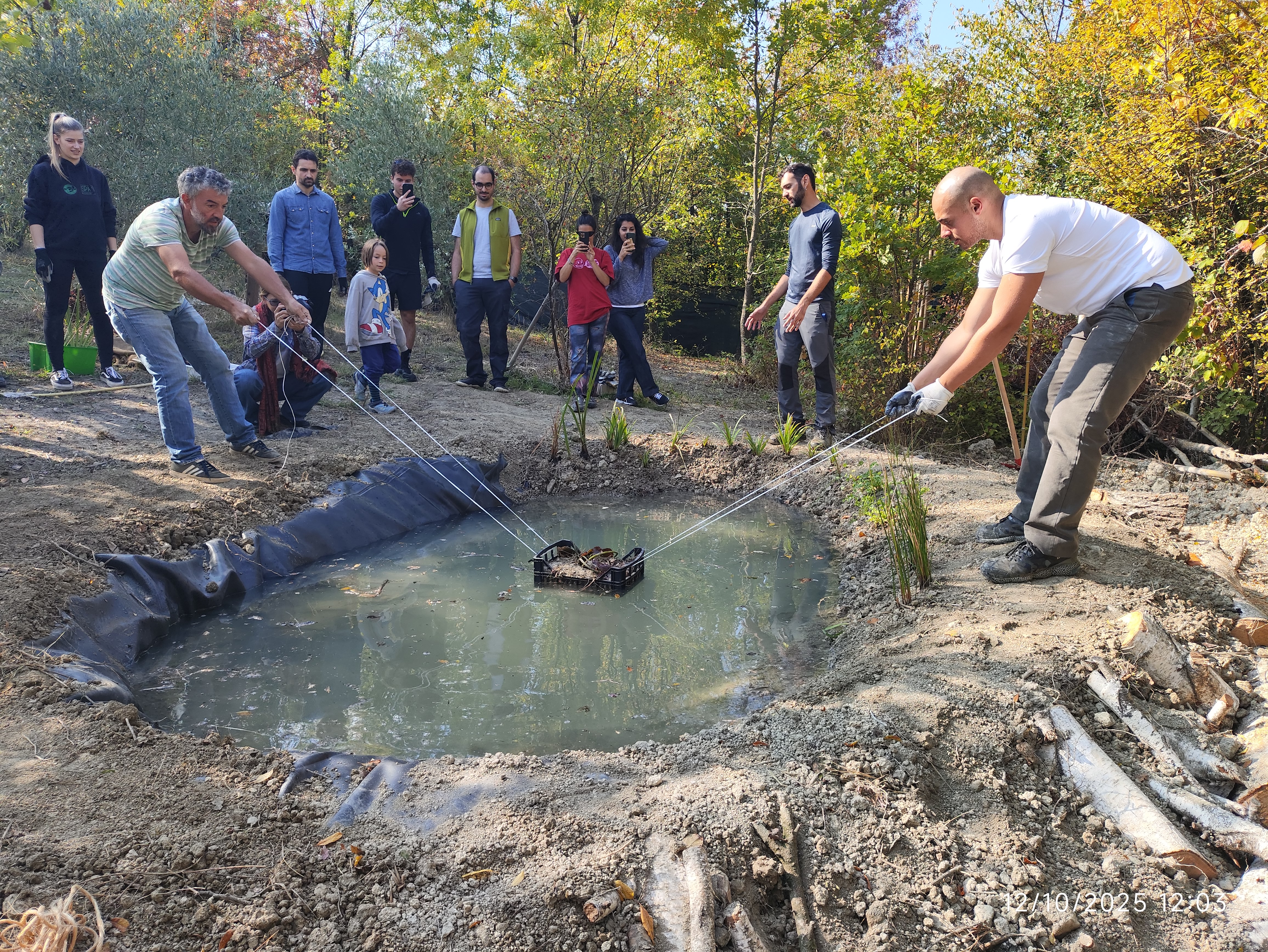
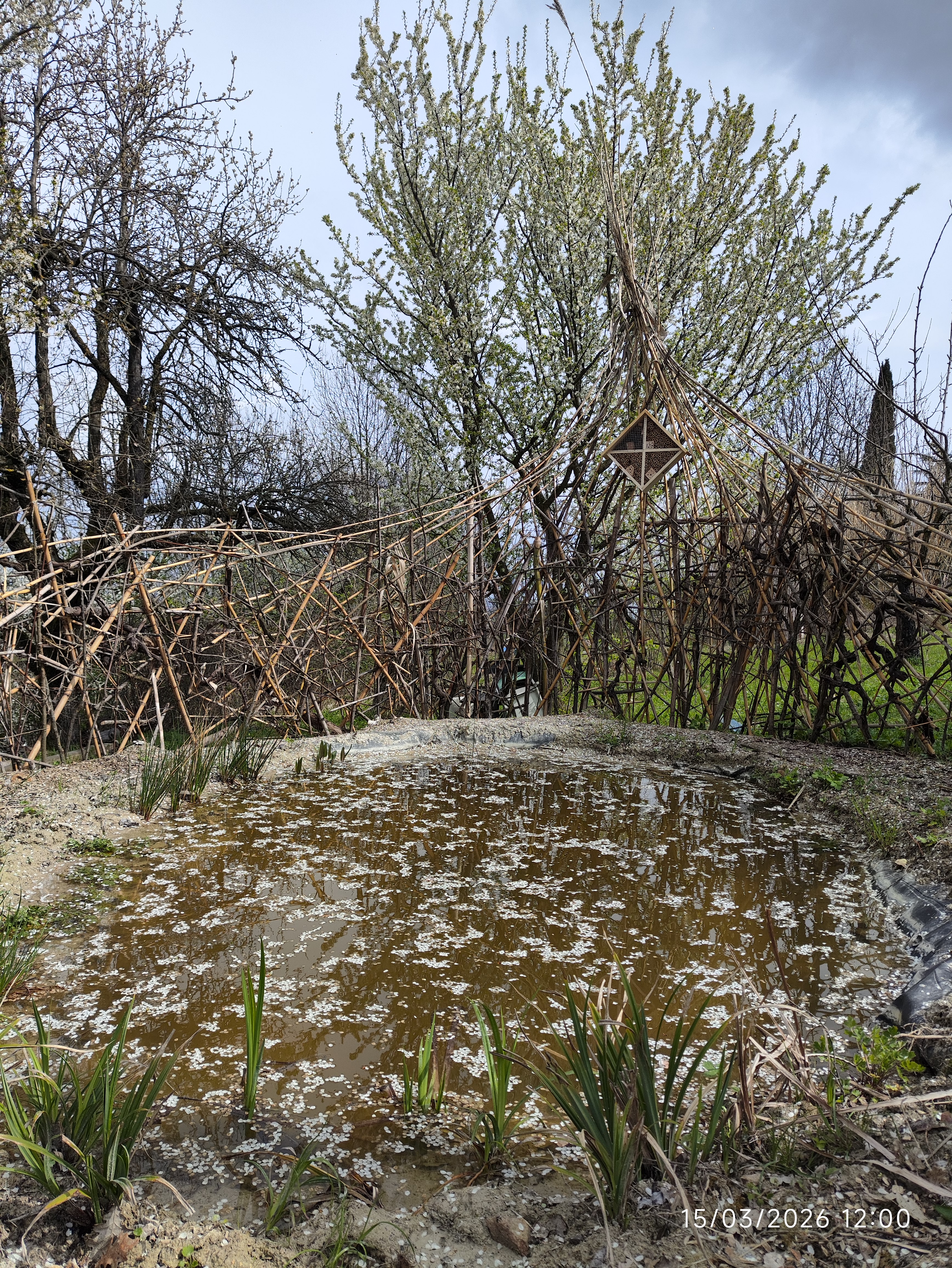
Furthermore, the implementation of hydraulic land regulation works (french-drains) has enabled the creation of a new small-scale ecological area: a water pond. This intervention contributes to soil regeneration, climate resilience and the establishment of a new micro-habitat in the actual ecosystem. Educational workshops with local schools also produced LandArt installations reflecting on water, soil and landscape transformation. WWC has strengthened trust and shared responsibility, illustrated the power of ecological and cultural experimentation, consolidating the community’s confidence in managing ecological interventions and collaborating with institutions and researchers, providing a functional and replicable example of an inclusive and adaptive water resilience project.
Our association has been involved in the regeneration of Ai300Scalini since 2014. It has meant learning how to care for a public green area, restore a greenhouse and create the basic infrastructure needed to make the site accessible and alive again. Over time, a broader community formed around the project: volunteers, artists, neighbours, families, schools and visitors. It is within this context, where culture, environmental care and education are deeply intertwined, that WWC was established. In recent years we began to see how vulnerable this landscape is from a hydrogeological perspective, and how closely water management, soil care and community awareness are connected. WWC was established in response to the need for small, site-specific pilot solutions to safeguard the area.
The project’s development went through experimentation and community involvement over a period of two years. We conducted observations, studies and research, and thanks to the Community4Climate project, we received vital consultations from permaculture experts. We also established a strategic partnership with researchers from ENEA and UNIBO as part of the European NiCE project. After securing the necessary funding, we initiated the practical design phase on January 2025. The co-design phase with interdisciplinary experts was complex due to the necessity of obtaining permits for work on public land. However, we successfully adapted the project to align with the feasibility requirements of the public property.
In September, we launched a series of open training events, including two LivingLabs, a workshop and a co-stewardship community initiative. Then we held a final inauguration and dissemination event, involving public property owners and the partners.Through this approach, WWC moved beyond awareness-raising alone.Water is addressed not as an isolated issue, but as part of a living system where ecological balance, climate resilience and collective responsibility are deeply connected.
small scale nature-based solutions
community co-stewardship
ecosystemic design approach
water resilience culture
landscape regeneration
For us, sustainability is a systemic behaviour, a specific way to interact with and observe the landscape. This led us to establish the Educational Hub for Integrated Ecology, ensuring that every process, decision, and action remains consistent in devising solutions and activities for a solid, continuous improvement. We believe in a sustainability concept, anti-speciesist, balancing between the needs of all these actors of the landscape. Nowadays, our space features a solar power system, organic community gardens, a regenerated and productive century-old vineyard, educational flower beds, bee hotels, apiaries, and a compost bin. All these initiatives express our values and define our way of site-specific design. Rather than a large-scale project, WWC is a collection of small domestic installations integrated into the natural space, part of a much broader, long-term project. We have chosen to adopt this approach to make our solutions replicable in people’s properties, offering citizens public training and discussion opportunities, to learn directly in the field.
Our organisation has a long history of environmental education aimed at public schools and citizens interested in circular practices and self-production. The permaculture design method has allowed us to have a broad view and focus our energy on assessing and addressing specific needs. Today, we can demonstrate a reduced consumption of non-renewable resources, an increase in biodiversity and an improvement in our adaptation skills during extreme climate events.
Together, these results have increased the site’s ecological resilience, recently expanded the community’s practical skills in sustainable water management, and reinforced the capacity of the group to act as a responsible steward of a fragile public landscape. The impact of the project lies not only in what has been built, but in the long-term ability of the community to observe, care for and adapt the space in response to environmental change.
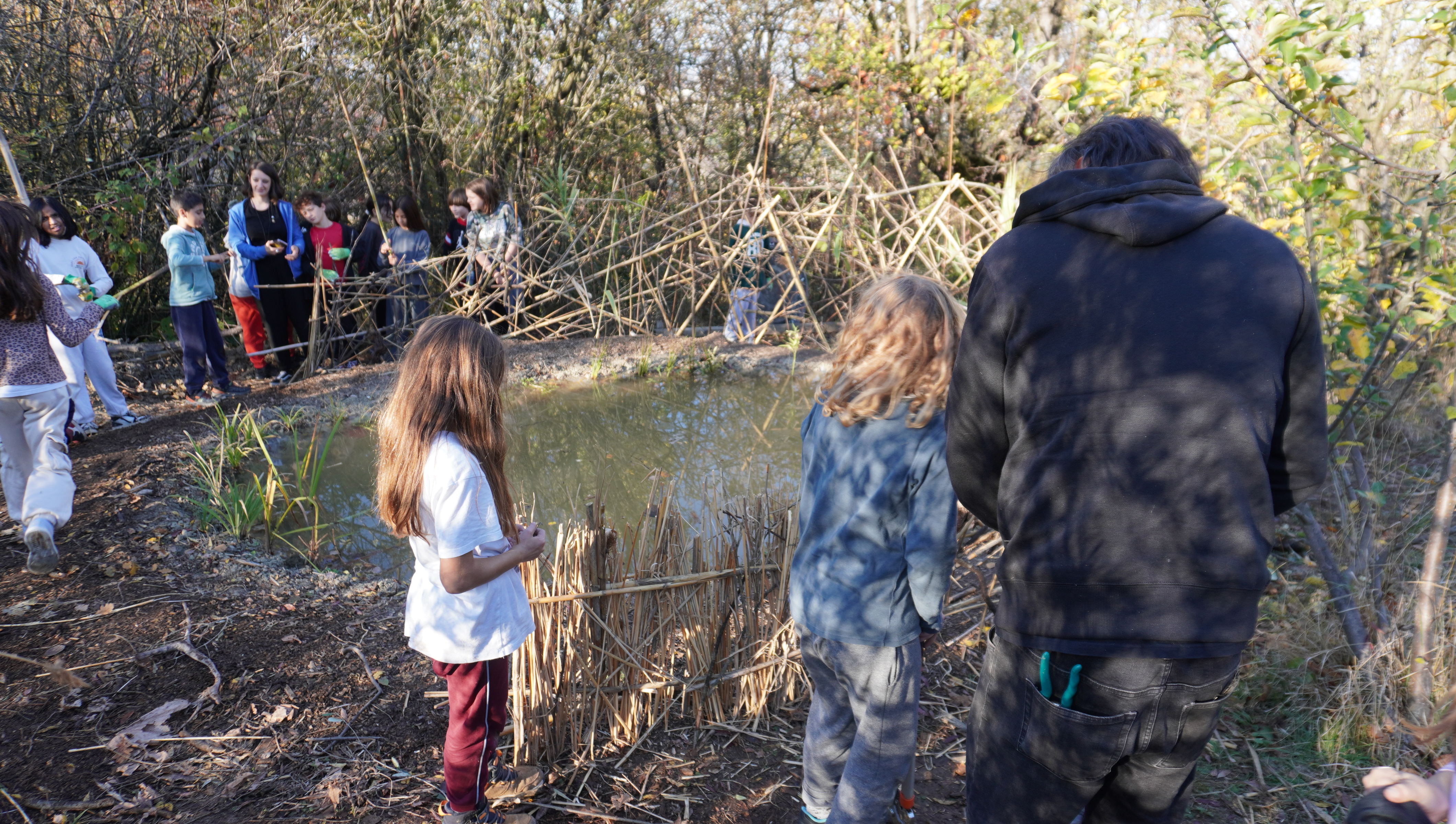
We manage a garden and cultural venue rich in biodiversity, designed in accordance with the principles of multi-species coexistence, in line with Gilles Clément’s Planetary Garden. We draw inspiration from the forms and movement of nature, favouring natural and local materials, including in our planting schemes. We have chosen to select ‘indigenous’ technologies, which are less visually intrusive than high-tech installations, as they blend into the landscape whilst remaining functional for us and effective in conveying our ecosystemic perspective. We tackle design challenges with a creative and multidisciplinary approach that leads us to put unconventional techniques and methods into practice. With the same philosophy, our space does not aim to be neat and tidy. As one enters, the movement shifts from the untamed richness of the outer edge to the inhabited interior spaces, in a constant quest for harmony between the wild and the human-made areas. It is a space that often lends itself to artistic installations and staging design, which is why we aim to fill the void as little as possible and allow spontaneity to flourish wherever and whenever possible. During the WWC, we took the opportunity to invite an international artist, Oscar Dominguez, to run a Land art workshop with the children, who got the chance to leave a light marke used the material already present, such as the arundo donax and vineyard cuttings, to create a sail-like backdrop for the bio-pond, a clear recall to waves and motion, perfectly integrated in the landscape.
We aim to create a functional and welcoming environment, allowing the charm of the venue’s history (like the century-old vineyard) and its rediscovered wildness (eco-anarchist flowerbeds) to shine through. These choices leave visitors in awe, who often describe their first encounter with the garden as magical and unexpected.
We aim to create a functional and welcoming environment, allowing the charm of the venue’s history (like the century-old vineyard) and its rediscovered wildness (eco-anarchist flowerbeds) to shine through. These choices leave visitors in awe, who often describe their first encounter with the garden as magical and unexpected.
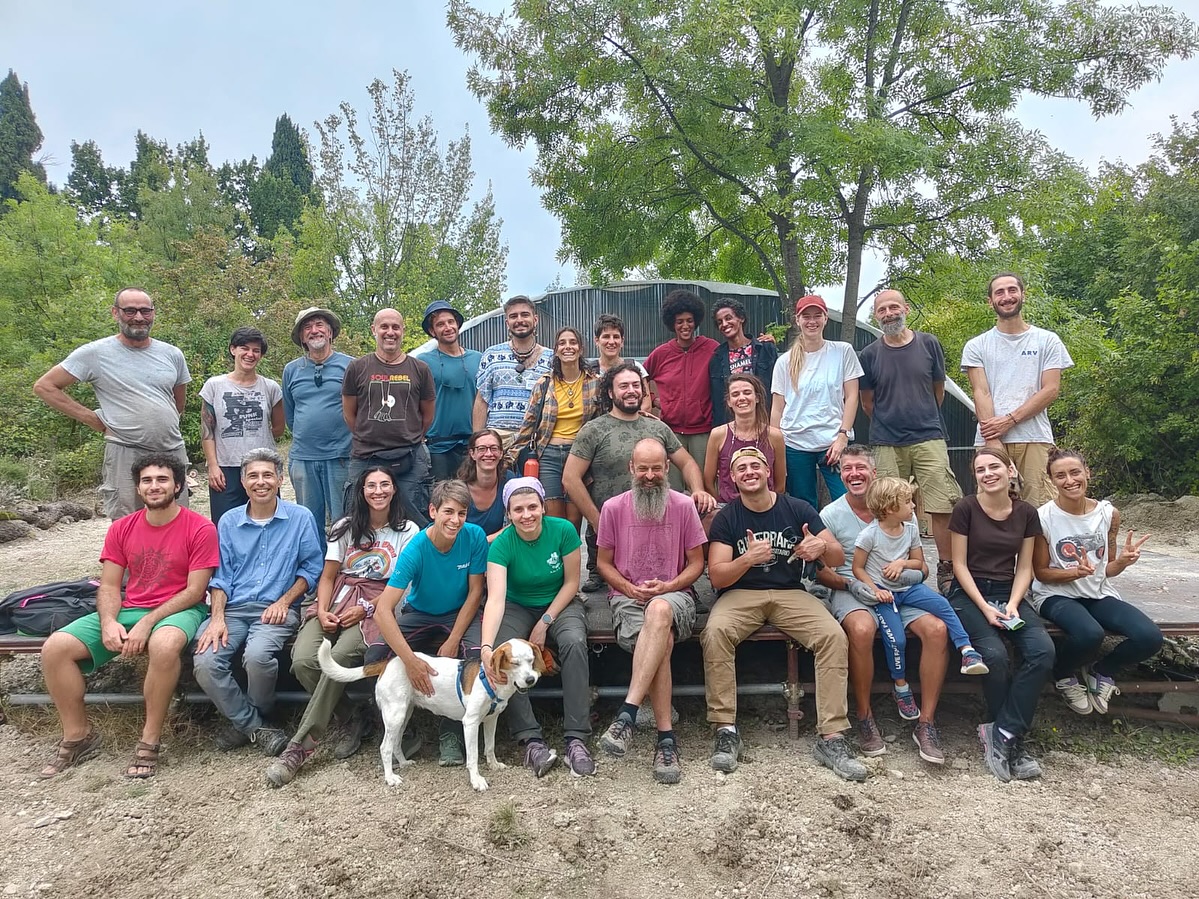
Ai300Scalini is a multi-level community regeneration project, where artistic culture and agricultural landscape management, merge and develop together. We are a diverse group of people with different backgrounds, skills and life experiences, constantly expanding and evolving. Since we are also a political project, we decide to adopt approaches like solidarity, collaboration, cooperation, togetherness. We actively promote an inclusive work environment where everyone, regardless of gender, ethnicity or social status, is encouraged to participate in decision-making processes. Our governance is based on the members' assembly, an executive board, meetings in sessions open to anyone willing to participate in the decision-making process. We, then, divide in working groups with volunteer representatives. A new working group has been created specifically to oversee the design and implementation of the WWC project's NBS.
Participation is a practice rather than a concept; thus we promote seasonal open days that combine collective work, learning and community presentations, usually celebrated with a communal meal. This focus on the internal group ensure our initiatives remain free or affordable, often targeting beneficiaries such as public schools or centres for unaccompanied minors. Thanks to the WWC project, several participants from the workshops have become new active members. The most successful aspect of the initiative is that no one is obliged to perform specific tasks; instead, individuals express themselves freely, contributing according to their potential or interests. Finally, the latest renovation of the space funded by the local council has increased accessibility for people with limited mobility , allowing more people to enjoy a part of the park and the splendid view of the city previously less accessible. This transformation strengthens our commitment to spatial and social equity within the urban landscape.
Participation is a practice rather than a concept; thus we promote seasonal open days that combine collective work, learning and community presentations, usually celebrated with a communal meal. This focus on the internal group ensure our initiatives remain free or affordable, often targeting beneficiaries such as public schools or centres for unaccompanied minors. Thanks to the WWC project, several participants from the workshops have become new active members. The most successful aspect of the initiative is that no one is obliged to perform specific tasks; instead, individuals express themselves freely, contributing according to their potential or interests. Finally, the latest renovation of the space funded by the local council has increased accessibility for people with limited mobility , allowing more people to enjoy a part of the park and the splendid view of the city previously less accessible. This transformation strengthens our commitment to spatial and social equity within the urban landscape.
Citizen participation has been central to the development of the WaterWiseCommunity. The project grew within the community that manages the public space of Ai 300 Scalini. At the beginning of the process, an interdisciplinary working group was created, bringing together ecodesigners, researchers and technical experts to analyse the hydrogeological conditions of the site and define the different phases of the intervention, including feasibility studies and the design of small-scale water management infrastructures. From the early stages, the internal community was invited to discuss the environmental challenges of the area and contribute to the initial co-design process. However, the technical nature of water management solutions made participatory design complex, as it required specialised knowledge and coordination across different fields. Participation, therefore, became particularly meaningful during the implementation phase. Through a series of open Living Labs, citizens, volunteers, students and partners took part in hands-on workshops combining theoretical learning with practical work on site. Participants were directly involved in the construction of the rainwater harvesting system and the biopond, contributing to excavation works, material preparation and landscape integration. During these activities, collective observation and feedback played an important role in shaping the outcomes. Decisions such as the depth of excavations and the placement of drainage elements, including French drains, were discussed and adjusted in real time based on the observations of those working on site. This collaborative process significantly improved the quality of the interventions and demonstrated how collective intelligence can support technically complex projects. At the same time, it strengthened practical skills, environmental awareness and a shared sense of responsibility for the care and long-term stewardship of a fragile public area.
WWC was developed through a governance process that involved actors at different institutional and organisational levels, combining local public administration, European programmes and a network of research and technical partners.At the local level, the Municipality of Bologna,in particular the Department for the Regeneration of Public Assets, played a key role as the public authority responsible for the Ai300Scalini area. The municipality was involved in the authorisation process required to implement environmental interventions in a public park, ensuring that the proposed water management solutions were compatible with local regulations and the long-term management of the space. Once the interventions were completed, representatives of the municipality were invited to take part in the final dissemination and public presentation of the project. During this event, the different partners involved presented their research, design contributions and the results achieved, creating an opportunity to share knowledge and increase awareness among public institutions about nature-based approaches to water management.At the European level, the project benefited from the Connect NEB programme, which provided financial support and connected the initiative to the wider NEB network. This framework helped strengthen the visibility of the project and supported the development of participatory activities. Academic researchers and experts involved in the project also benefited from the collaboration, as the site provided a valuable real-life case study where data and observations could be collected for ongoing research. This exchange created a mutually beneficial relationship between practice and research.The coordination of these relationships was managed by the association through regular meetings, site visits and continuous dialogue among partners.This multi-level collaboration strengthened the project’s legitimacy and helped align the different actors around a shared approach.
WWC was shaped by the interaction of different knowledge fields that rarely meet within the same project. The design and implementation process combined environmental design, permaculture, hydraulic engineering, landscape management, environmental sciences, education and artistic practices. Alongside professional expertise, the practical knowledge of volunteers who regularly maintain the space also played an important role in understanding the specific conditions of the site.Rather than working in parallel, these perspectives interacted continuously throughout the project. The ecological design approach proposed by permaculture practitioners was confronted with the technical constraints identified by engineers and hydraulic specialists, while researchers contributed analytical frameworks related to climate adaptation and soil and water dynamics.A key element of this transdisciplinary process was the integration of artistic and educational practices. Part of the project took the form of a landart installation developed with local schools and young participants, curated by the artist Oscar Dominguez together with educators and community volunteers. The installation became both a participatory outcome and an educational tool, allowing younger generations to reflect on water cycles, soil erosion and ecological transformation through creative practices rooted in the landscape. A key component of the project was indeed the creation of an interdisciplinary working group bringing together ecodesigners and permaculture practitioners, academic researchers and experts from public research centres, alongside engineers, hydraulic technicians, excavator operators, landscape gardeners and site maintenance workers. Bringing together these different competences was both one of the most complex and most essential aspects of the project. This exchange strengthened the quality and feasibility of the interventions, increased the project’s legitimacy and helped align all actors togheter.
WWC project is sustained through a mixed funding model combining European grants, public and private funding, and local self-financing activities. The first phase was supported through participation in the Communities for Climate (C4C) programme, which provided with expert consultancy and technical guidance, in order to develop the first design proposals. A second phase of implementation was made possible through co-funding from the Connect NEB programme and the EU Staff Fund for a Fairer Future, which launched a dedicated call supporting the most promising C4C initiatives.These resources enabled the expansion of participatory and educational activities. The overall project is not designed as a profit-oriented initiative, but it relies on a diversified financial ecosystem built around the Ai300Scalini community space. Revenues are generated through a combination of public grants, private foundations, long-term donors and occasional sponsorships from companies supporting the association’s environmental and cultural initiatives. Additional resources are generated locally through a small community bar used for self-financing, as well as through educational workshops, training activities and cultural programmes where participants contribute through accessible fees or voluntary donations. A key factor in the sustainability of the model is the strong contribution of volunteers, whose involvement significantly reduces operational and maintenance costs. Also, the ecological infrastructures installed contribute to lowering resource consumption and utility costs.By generating environmental and social value, the project also increases the visibility and credibility of the space, making it an attractive partner for new collaborations with institutions, research centres and organisations.This dynamic strengthens the capacity to attract future funding, develop new projects and ensure the long-term continuity and scalability of the initiative.
WWC was designed from the beginning as a small-scale experimental model that can be replicated in other urban and peri-urban green spaces facing similar environmental challenges. It addresses widely shared issues such as water management, soil erosion and the need to involve citizens in the ecological care of public spaces. Its strength lies not only in the infrastructures created, but in the methodology used to develop them. Several elements are easily transferable. First, the use of NBS for rainwater harvesting and hydrogeological risk mitigation, such as small-scale cisterns, drainage systems and bio-ponds, represents a flexible approach that can be adapted to many urban green areas. These interventions are relatively low-cost and can be implemented incrementally according to the characteristics of each site. Equally replicable is the Living Lab methodology used to involve citizens, students and local communities through workshops and hands-on activities. By combining training with practical experimentation, it enabled participants to acquire concrete knowledge about water cycles, soil protection and climate resilience, while strengthening their sense of stewardship over shared spaces. Another transferable element is the collaboration between technical experts and local communities. The interaction between engineers, permaculture designers, researchers and citizens proved essential for developing solutions that are both technically sound and socially meaningful. Replicating this approach requires building partnerships between community organisations, technical professionals and local institutions, adapting some elements to local contexts. Each landscape presents different hydrogeological conditions, regulations and community dynamics, requiring site-specific design and consultation with local authorities.However, the overall process, combining community engagement,interdisciplinary expertise and small-scale NBS can serve as a practical blueprint for other cities