Arts, Culture, and Heritage as Drivers of Change
Smart Villages in Madonie Park
Strategies for the rehabilitation and enhancement of Sicily’s inner areas
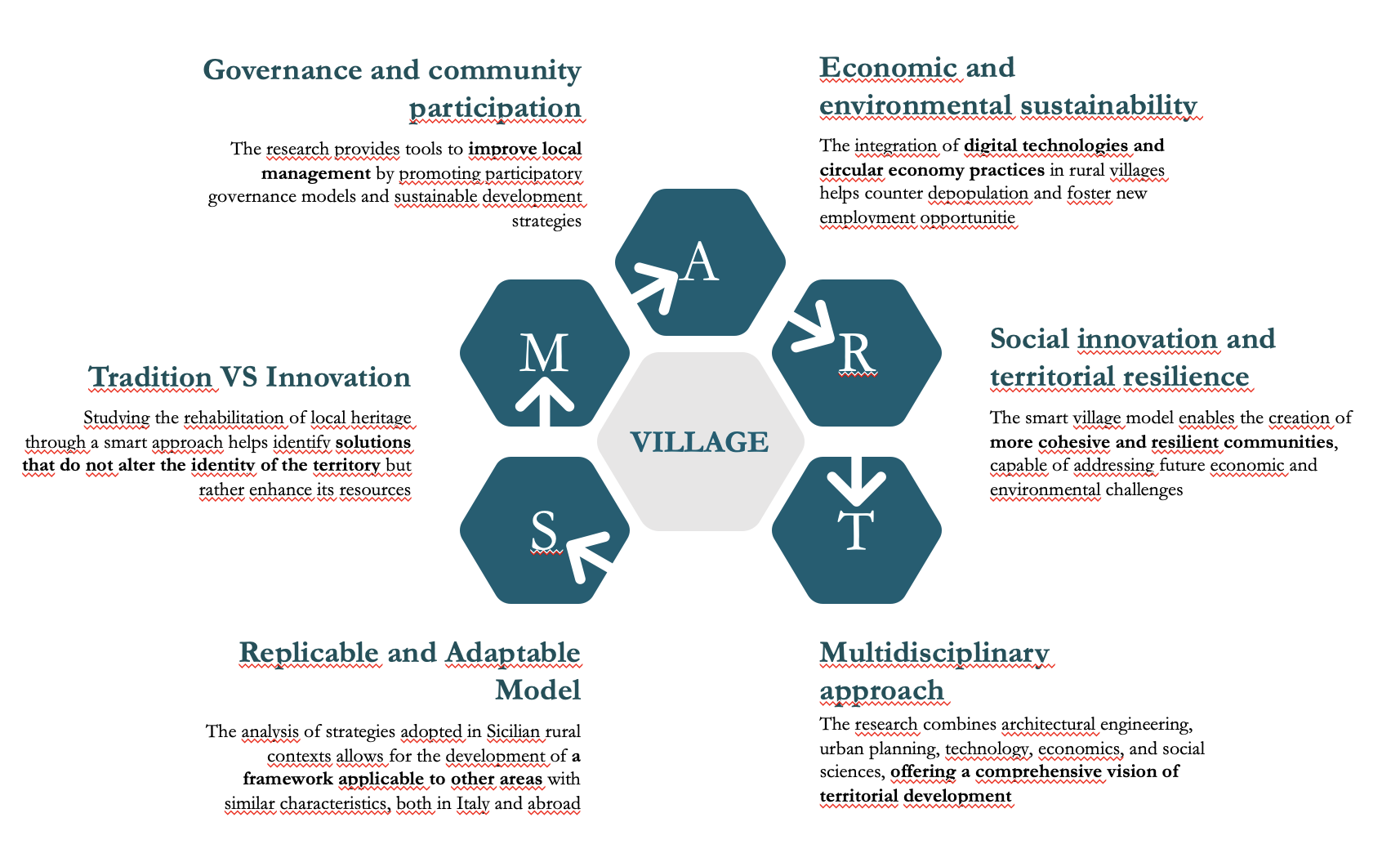
This project promotes Smart Villages in Sicily’s Madonie Park, combining heritage preservation, digital innovation, and active community engagement. It includes an Atlas of Technological Solutions and Guidelines for pilot municipalities to support sustainable rehabilitation, strengthen local economies, foster resilient, inclusive, and intelligent rural communities, and inspire the adoption and replication of best practices across inner areas and regions.
Italy
Local
Polizzi Generosa and other 20 municipalities
Mainly rural
It involves other types of transformations (soft investment)
Yes
2025-02-26
No
No
No
Individual
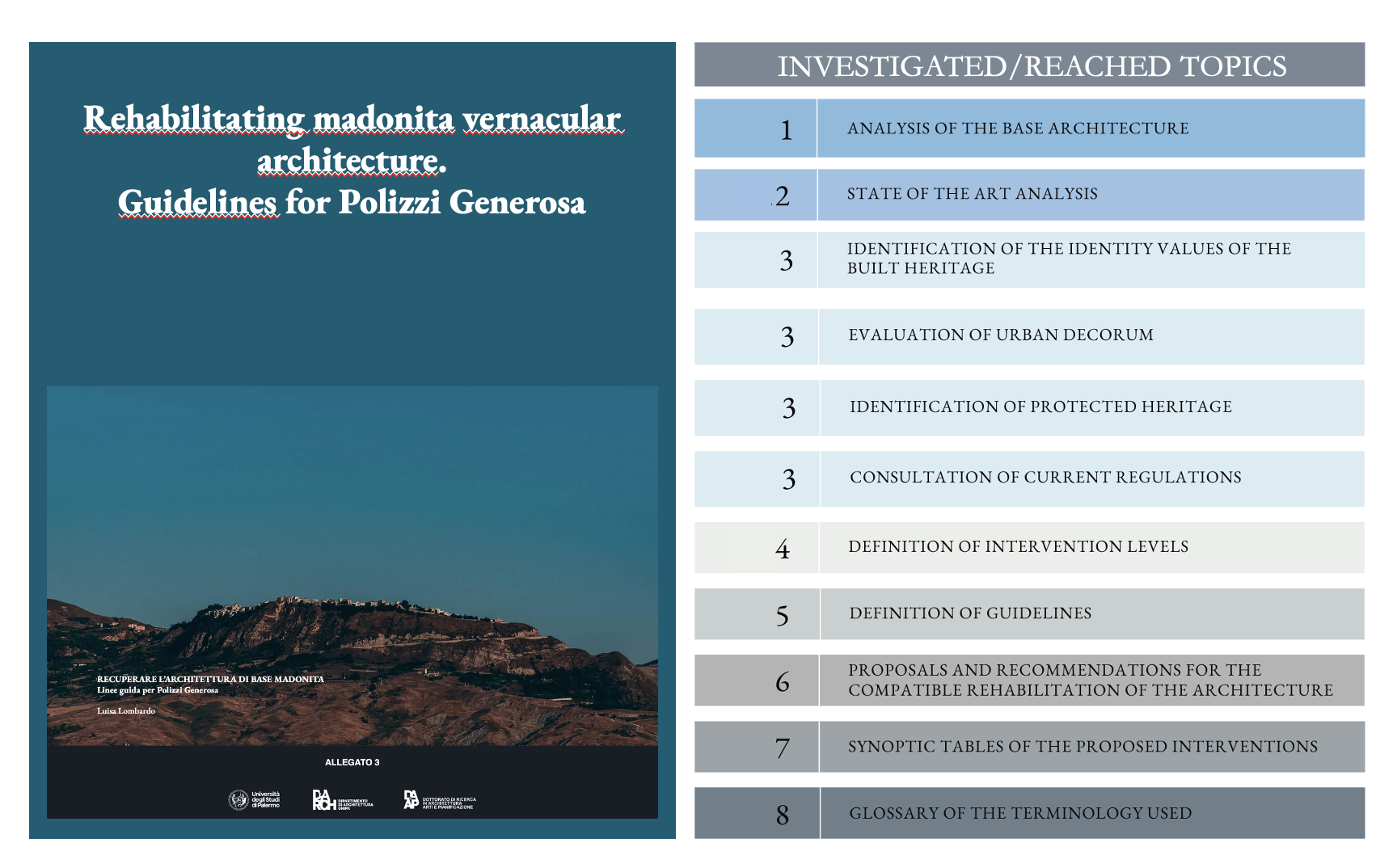
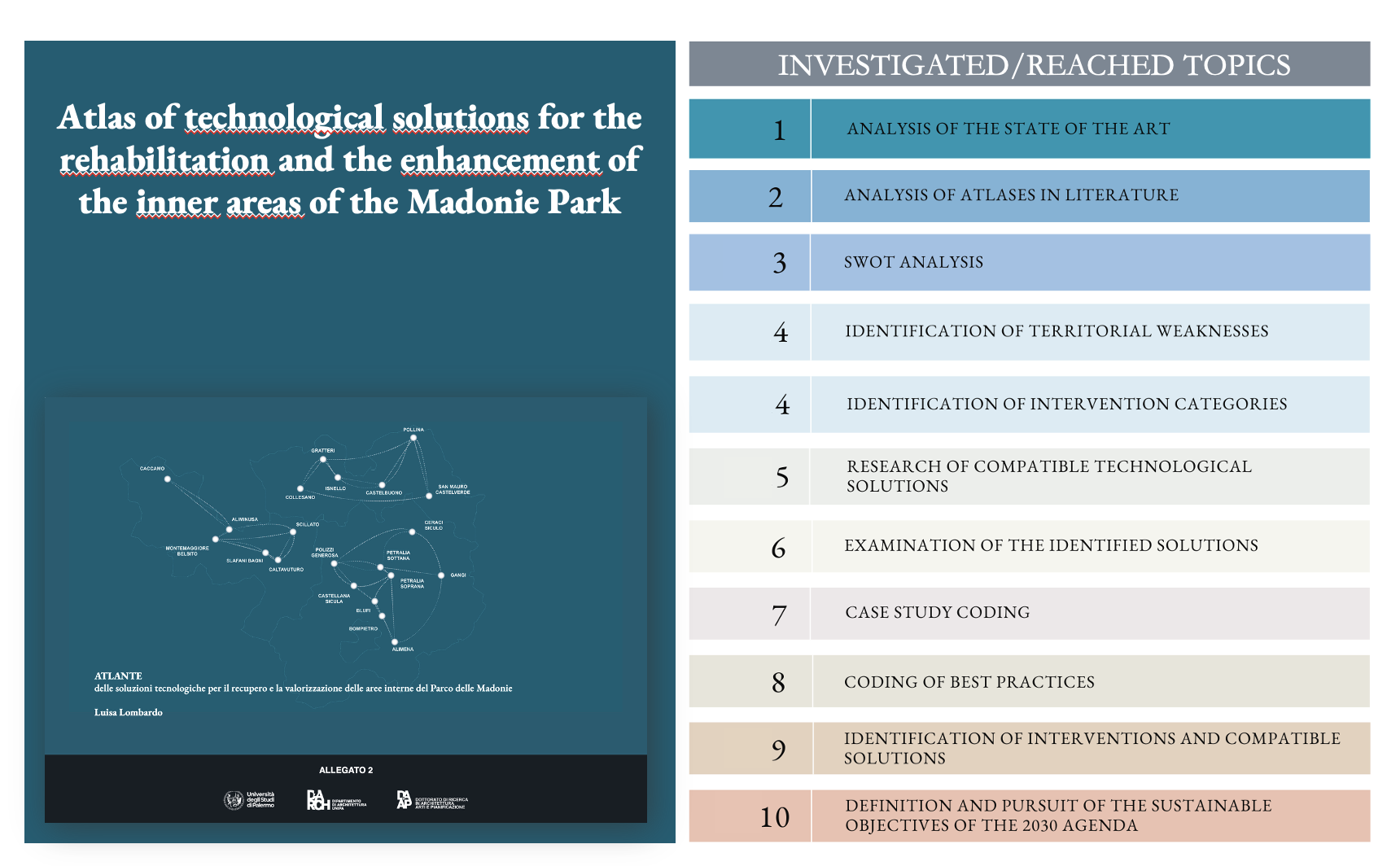
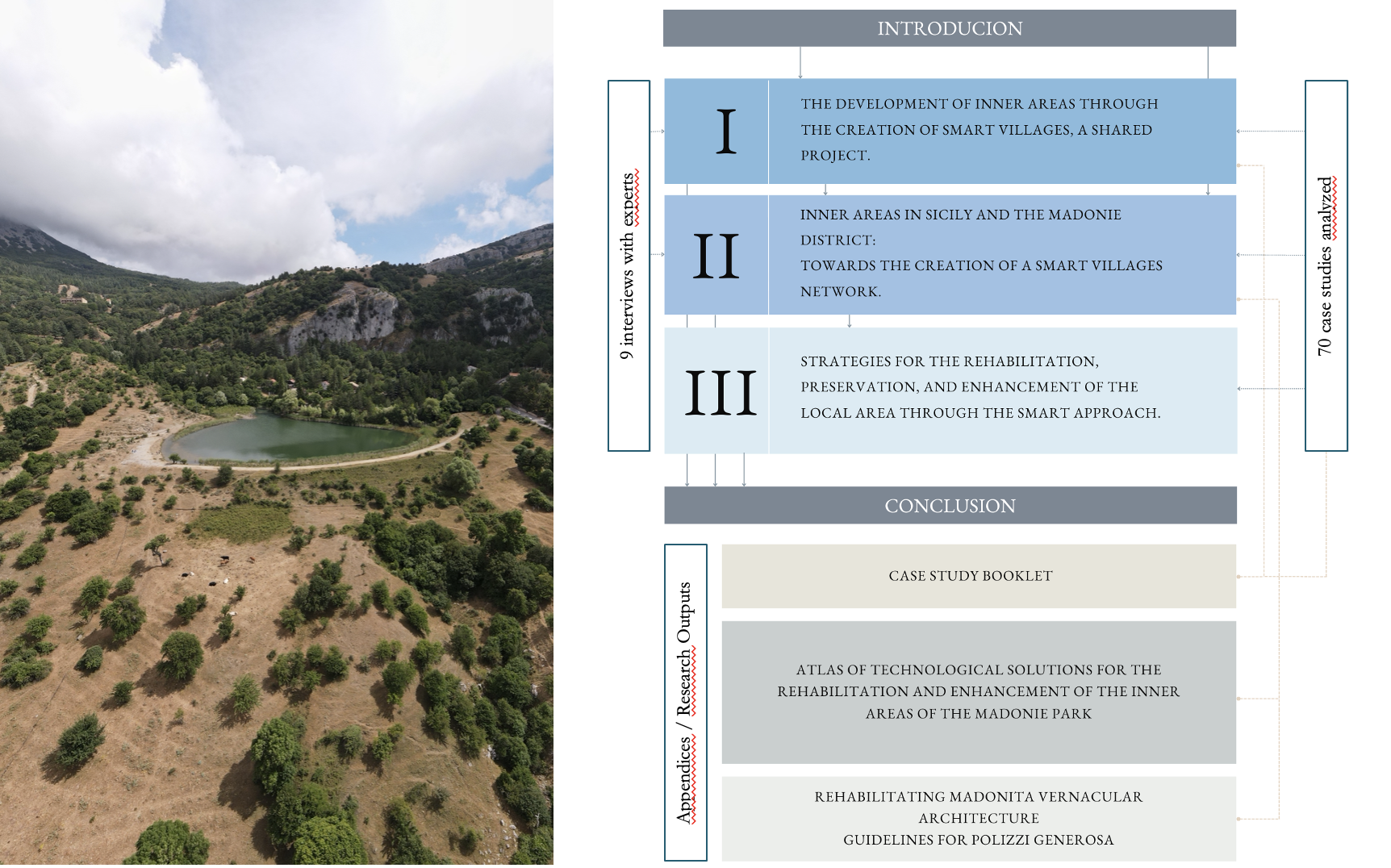
This doctoral project focuses on the rehabilitation and enhancement of inner areas in the Madonie Park, Sicily, through the development of Smart Villages. The research combines cultural heritage preservation, sustainable development, and community engagement to create innovative strategies that respect both architectural and natural contexts. The project includes the production of a Manual for Heritage Recovery, an Atlas of Technological Solutions, and Guidelines for the historic center of Polizzi Generosa, providing practical tools for municipalities and stakeholders.
Over three years, the project carried out extensive fieldwork, interviews with local authorities, citizens, and experts, and benchmarking with European and extra-European Smart Village initiatives, including a research period in Valencia. These activities enabled the identification of critical challenges such as depopulation, fragile local economies, and heritage decay, while proposing solutions that integrate digital tools, environmental sustainability, and participatory governance.
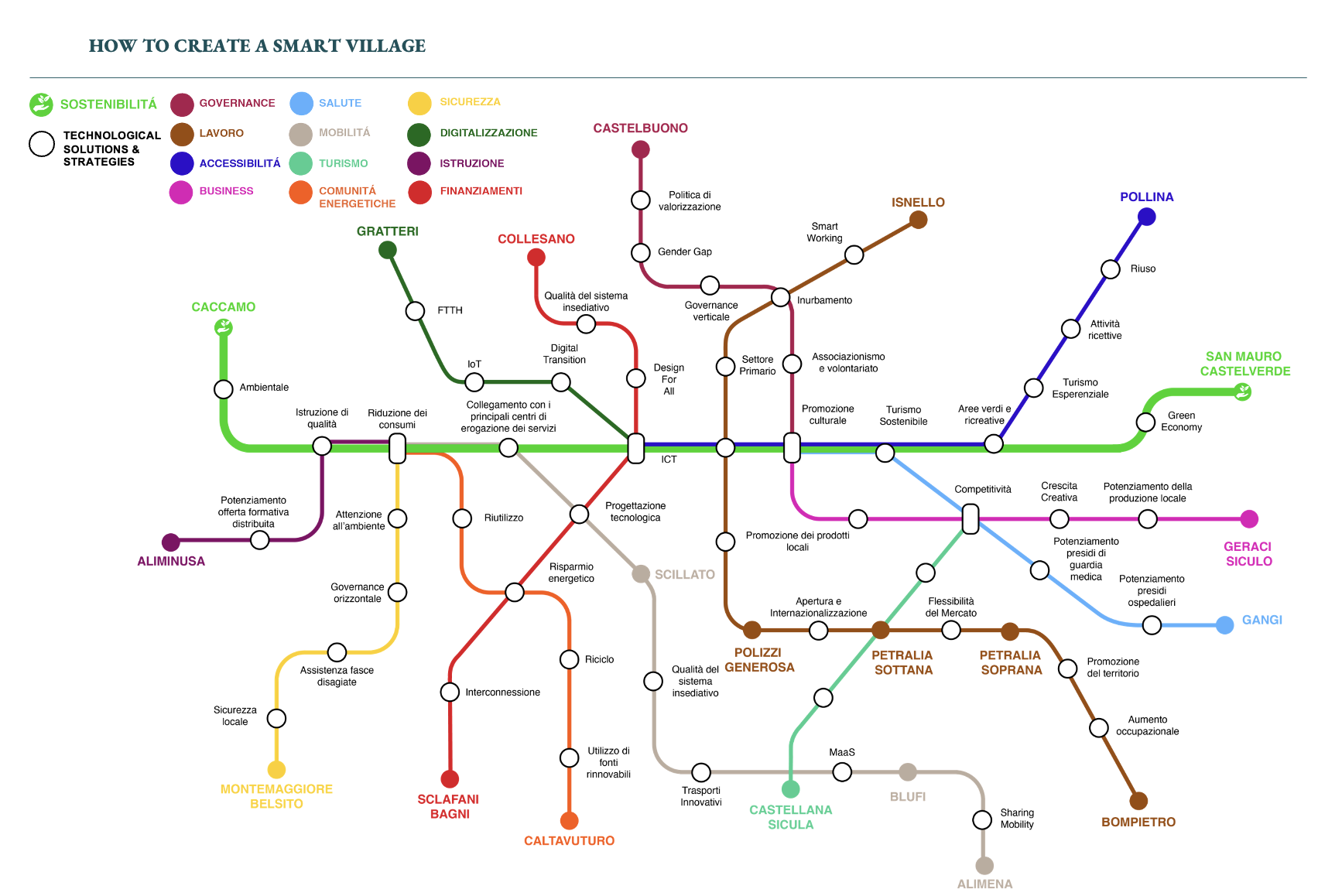
The project achieved concrete results by mapping smart potential across 21 municipalities, designing strategies for energy-efficient rehabilitation, digitalization of services, and community-led cultural initiatives, and establishing a methodological framework that can guide both public and private actors in implementing Smart Village practices.
The long-term impact aims to strengthen local identity, enhance quality of life, and promote sustainable economic development, while ensuring the preservation of the Madonie Park’s architectural, natural, and intangible heritage. By combining innovation with tradition, the project exemplifies a holistic approach to rural regeneration, offering transferable knowledge and tools that can inspire other inner areas in Italy and across Europe.
The project was born from the need to address the challenges faced by the inner areas of Sicily, particularly the Madonie Park, which suffers from depopulation, fragile local economies, and the gradual loss of cultural heritage. The idea emerged during the doctoral research at the University of Palermo, aiming to combine academic investigation with practical territorial impact, creating tools and strategies that could support local communities and administrations in fostering Smart Villages.
The implementation began with an extensive analysis of both European and extra-European best practices, including a research period in Valencia at the Real Academia de Bellas Artes de San Carlos and the Universitat Politècnica de València. This comparative study informed the design of the project’s methodology, integrating heritage preservation, digital innovation, and community participation.
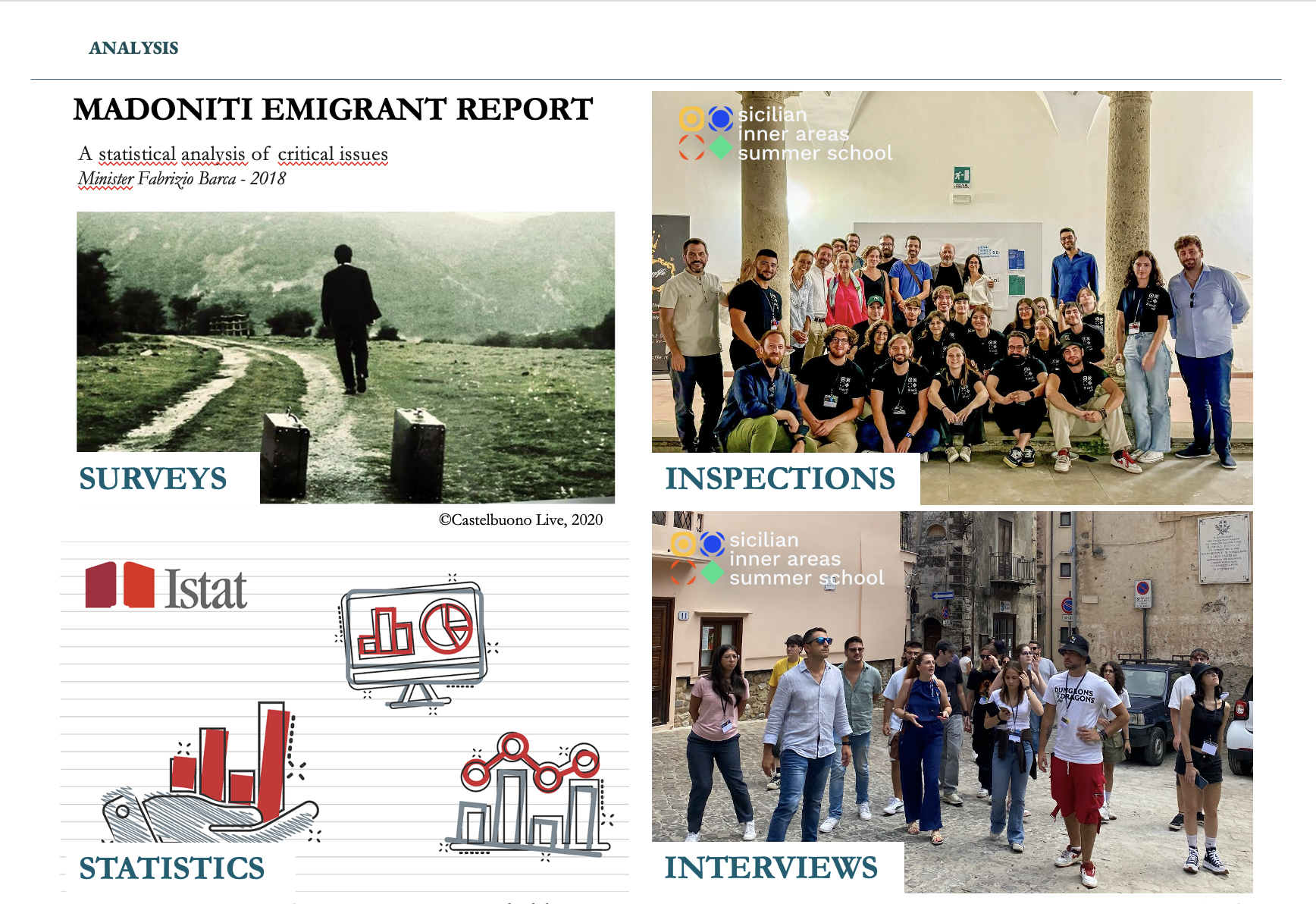
On the ground, the project involved field surveys across the 21 municipalities of the Madonie Park, interviews with local authorities, citizens, entrepreneurs, and cultural institutions, and workshops to identify needs, opportunities, and feasible interventions. This participatory process helped map the potential of each municipality regarding smart development, from digital services to sustainable rehabilitation of historical buildings.
Key outputs include the Atlas of Technological Solutions for heritage conservation, a Manual for Recovery of Historical Centers, and the Guidelines for the Historic Center of Polizzi Generosa, serving as a pilot case. These tools were co-designed with local stakeholders to ensure practicality and alignment with local traditions and regulatory frameworks.
The project demonstrates that intelligent rural regeneration is possible when tradition, innovation, and community engagement are combined. Its implementation has already fostered local awareness, strengthened networks among municipalities, and provided a replicable model for Smart Villages.
Smart Villages
Heritage Rehabilitation
Community Co-design
Digital Innovation
Sustainable Development
The project “Smart Villages in the Madonie Park” addresses sustainability through an integrated approach that combines environmental protection, cultural heritage preservation, social inclusion, and economic revitalization. The Madonie area, located in the heart of Sicily, is a fragile territory with significant historical, architectural, and natural assets, yet facing depopulation, economic stagnation, and limited access to services. The project proposes a methodology for rehabilitating historic centers, promoting smart technologies, and fostering community-driven initiatives, thereby generating long-term social and economic benefits while minimizing environmental impact. Environmental sustainability is promoted by careful conservation of the built and natural heritage, adopting low-impact construction techniques, and enhancing green public spaces and local biodiversity. Social and cultural sustainability is addressed through participatory workshops, co-design activities, and training programs for local communities, ensuring that inhabitants are actively engaged in shaping their environment and maintaining local traditions. Economic sustainability is supported by the creation of a framework for Smart Villages that includes guidelines, management protocols, and innovative business models to encourage local entrepreneurship, tourism, and services aligned with the European Green Deal and the 2030 Agenda for Sustainable Development. By integrating technology, tradition, and community empowerment, the project provides a replicable model for resilient rural areas that balances heritage conservation with contemporary needs. Its exemplary character in sustainability lies in demonstrating that preservation and innovation can coexist, transforming fragile territories into vibrant, inclusive, and environmentally responsible communities, while fostering a sense of belonging, pride, and stewardship over local resources.
The “Smart Villages in the Madonie Park” project contributes to aesthetics by fostering both tangible and intangible improvements in the environment, the community, and everyday life. At the physical level, the project focuses on the intelligent rehabilitation of historic buildings, squares, streets, and public spaces, preserving the architectural identity of each village while enhancing visual harmony and accessibility. Renovations follow local construction traditions and the natural rhythms of the landscape, ensuring that interventions integrate seamlessly with existing forms, materials, and colors. Public areas are designed to encourage social interaction, cultural events, and leisure, creating spaces that are not only functional but also emotionally and visually appealing. At the community level, aesthetic impact is achieved through participatory processes, including co-design workshops, artistic interventions, and cultural activities, which enable residents to actively contribute to shaping their environment, fostering a sense of pride, attachment, and belonging. The project also incorporates elements of visual storytelling, signage, and mapping, highlighting the heritage, natural beauty, and identity of each village, which strengthens the cultural memory and collective imagination of the community. By combining tradition and innovation, the project demonstrates how beauty can be a driver for engagement, cohesion, and sustainable development, creating environments that inspire, nurture well-being, and encourage care for the place. Its exemplary character lies in showing that aesthetic interventions are not superficial but integral to enhancing social, cultural, and environmental quality, transforming the Madonie villages into living examples of harmony, identity, and human-centered design, while leaving a lasting legacy of elegance, functionality, and communal pride.
The “Smart Villages in the Madonie Park” project places inclusion at the core of its methodology, addressing both social and physical accessibility and promoting equal opportunities for all community members. By implementing participatory co-design workshops, community meetings, and focus groups, the project actively involves citizens of different ages, backgrounds, and abilities in defining local needs and shaping interventions. Public spaces, historic buildings, and infrastructure are designed following “design for all” principles, ensuring barrier-free access, safety, and comfort for people with disabilities, the elderly, and families. Activities such as cultural events, educational programs, and training sessions are organized to be affordable or free of charge, reducing social and economic barriers to participation and fostering equitable access to heritage, knowledge, and community services. The project also promotes inclusive governance by establishing multi-level coordination between municipal authorities, local associations, schools, and cultural organizations, creating transparent decision-making processes that incorporate voices often marginalized in traditional planning. By encouraging collaboration among diverse stakeholders, the project cultivates social cohesion and strengthens local identity, while empowering residents to take an active role in the sustainable development of their communities. The project is exemplary in terms of inclusion because it demonstrates that accessibility, affordability, and active participation are not optional but essential components of a resilient, human-centered approach to rural regeneration. Through the integration of social, cultural, and spatial inclusivity, the Madonie villages become a living example of equitable and participatory development, ensuring that every individual can contribute to and benefit from the enhancement of their environment.
The “Smart Villages in the Madonie Park” project is deeply rooted in participatory approaches, ensuring that citizens, communities, and civil society organizations are active contributors rather than passive beneficiaries. From the early stages, local residents, associations, schools, and cultural organizations were engaged through co-design workshops, focus groups, and open meetings to identify priorities, challenges, and opportunities within their villages. These interactions allowed stakeholders to directly influence the selection of pilot projects, the design of rehabilitation strategies for historic buildings, and the development of technological solutions adapted to the local context. The project also facilitated collaborative initiatives, such as community mapping exercises, cultural events, and educational programs, which empowered participants to share knowledge, skills, and ideas. By involving multiple generations—from students to elderly residents—the project fostered intergenerational dialogue and strengthened social cohesion. The high level of engagement of civil society organizations contributed to building trust, transparency, and a sense of ownership over the interventions, ensuring that actions were culturally sensitive, locally relevant, and sustainable over time. The participatory approach led to measurable impacts: residents became active advocates for the preservation of their heritage, local associations enhanced their capacity for community-driven initiatives, and municipal authorities developed greater awareness of the importance of inclusive governance. This model demonstrates exemplary participatory practice in line with the New European Bauhaus, showing that when communities are central to decision-making, interventions are not only more effective but also socially empowering and resilient, generating long-term benefits for both the people and the territory of the Madonie Park.
The “Smart Villages in the Madonie Park” project was designed and implemented through a coordinated multilevel governance framework, involving stakeholders at local, regional, national, and EU levels. At the local level, municipal authorities, community associations, cultural organizations, and residents participated in planning workshops, co-design sessions, and pilot interventions, providing direct insights into the specific needs, priorities, and challenges of each village. At the regional level, institutions such as the Sicilian Region’s cultural and environmental departments and the Soprintendenza per i Beni Culturali e Ambientali of Palermo contributed expertise on heritage preservation, regulatory compliance, and resource allocation. National institutions, including INPS and the Ministry of Cultural Heritage and Activities, provided funding support, policy guidance, and access to broader networks of research and practice in inner areas. EU engagement included collaboration with EU-funded initiatives and knowledge exchange with international academic partners, particularly in Spain, allowing for comparative insights on Smart Village strategies and best practices. This multilevel approach ensured alignment of local actions with regional strategies, national policies, and European priorities, enhancing coherence, legitimacy, and long-term sustainability. The involvement of stakeholders across levels created added value by enabling knowledge transfer, facilitating access to resources and funding, and promoting integrated decision-making processes. It also strengthened institutional capacity, fostered partnerships, and ensured that the project’s interventions were both context-sensitive and replicable, demonstrating a model of governance that is inclusive, transparent, and effective. The project exemplifies the NEB principle of multilevel governance, showing how diverse actors can co-create solutions that are socially, culturally, and environmentally resilient.
The “Smart Villages in the Madonie Park” project embodies a transdisciplinary approach, integrating multiple fields of knowledge to address the complex challenges of inner area development. Architecture and urban design were central to the project, guiding the rehabilitation of historic centers and public spaces while ensuring compatibility with local heritage and construction traditions. Engineering and environmental sciences informed sustainable infrastructure solutions, energy efficiency, and the protection of natural landscapes, fostering resilience in the face of climate and environmental pressures. Social sciences contributed to understanding community needs, participatory governance, and social innovation, while arts and cultural studies enriched strategies for cultural heritage promotion and aesthetic enhancement. Education and training disciplines were applied in workshops, co-design activities, and capacity-building programs for residents and local institutions, strengthening skills and social cohesion. Digital technologies played a pivotal role in mapping, data analysis, and the creation of an Atlas of Technological Solutions, enabling informed decision-making and the transfer of best practices. The integration of these diverse disciplines facilitated a holistic vision, allowing technical, social, cultural, and environmental aspects to inform one another. This transdisciplinary framework fostered collaboration among academics, professionals, policymakers, and community members, ensuring that interventions were context-sensitive, innovative, and sustainable. By bridging scientific research, practical implementation, and community engagement, the project exemplifies the New European Bauhaus principle of transdisciplinarity, demonstrating how combining multiple knowledge fields can generate comprehensive solutions that enhance the well-being of people, communities, and territories while preserving cultural and natural heritage for the long term.
The business model of the “Smart Villages in the Madonie Park” project is designed to ensure long-term financial sustainability by combining public funding, community engagement, and revenue-generating activities. The project leverages EU and national programs, including SNAI (National Strategy for Inner Areas) funds, Erasmus+ and European Solidarity Corps grants, and regional cultural heritage initiatives, to finance research, training, and infrastructure interventions. Strategic partnerships with local municipalities, the Soprintendenza per i Beni Culturali e Ambientali di Palermo, academic institutions, and civil society organizations enhance access to resources, technical expertise, and operational support. The project also includes the creation of practical tools, such as the Atlas of Technological Solutions and Guidelines for historic center rehabilitation, which can be used as consulting services or sold to other municipalities and organizations seeking to replicate the model. Workshops, co-design programs, and capacity-building activities generate additional revenue through participation fees, sponsorships, and collaborations with local businesses. The model emphasizes cost-effectiveness by reusing existing infrastructure, applying adaptive design solutions, and fostering local human capital to reduce operational expenses. Crowdfunding and donations are integrated to support specific community-driven initiatives, particularly in cultural, artistic, and social innovation projects. By combining public funding, self-sustaining services, partnerships, and community contributions, the project creates a diversified and resilient financial framework. This ensures continuity of interventions, scalability to other inner areas, and the ability to reinvest revenues into further development, maintaining alignment with the goals of sustainable territorial enhancement, social innovation, and the creation of Smart Villages as viable and autonomous rural communities.
The “Smart Villages in the Madonie Park” project has a high potential for transferability and replicability to other geographies, rural contexts, and sectors due to its structured methodology, flexible tools, and participatory approach. Key elements that can be replicated include the Atlas of Technological Solutions for heritage rehabilitation, which compiles adaptable techniques and technologies suitable for protected and fragile contexts, and the Guidelines for historic center rehabilitation, offering a step-by-step framework for intelligent, context-sensitive interventions. The co-design and community engagement methodology, developed through workshops, participatory mapping, and stakeholder consultations, can be applied in other regions to foster inclusive governance, strengthen local identity, and enhance community participation. The project’s integration of digital tools, data mapping, and monitoring systems provides a model for managing smart interventions and assessing impacts in any rural or inner-area environment. Furthermore, the multi-level collaboration model, involving municipalities, cultural heritage authorities, universities, and civil society organizations, offers a transferable governance structure that facilitates coordination, knowledge sharing, and resource pooling across different territories. Capacity-building programs, training modules, and workshops designed for local stakeholders can be adapted to various contexts to empower communities and promote sustainable practices. Finally, the project’s combination of economic, social, and cultural strategies demonstrates a holistic model for rural regeneration, showing how Smart Village principles can be applied to enhance territorial identity, accessibility, and innovation. This holistic and modular approach ensures that the methodologies, tools, and lessons learned from the Madonie Park project are easily adaptable, scalable, and replicable in other rural or semi-urban territories across over EU