Strengthening Local Democracy and Inclusion
Memory Book Bestiale
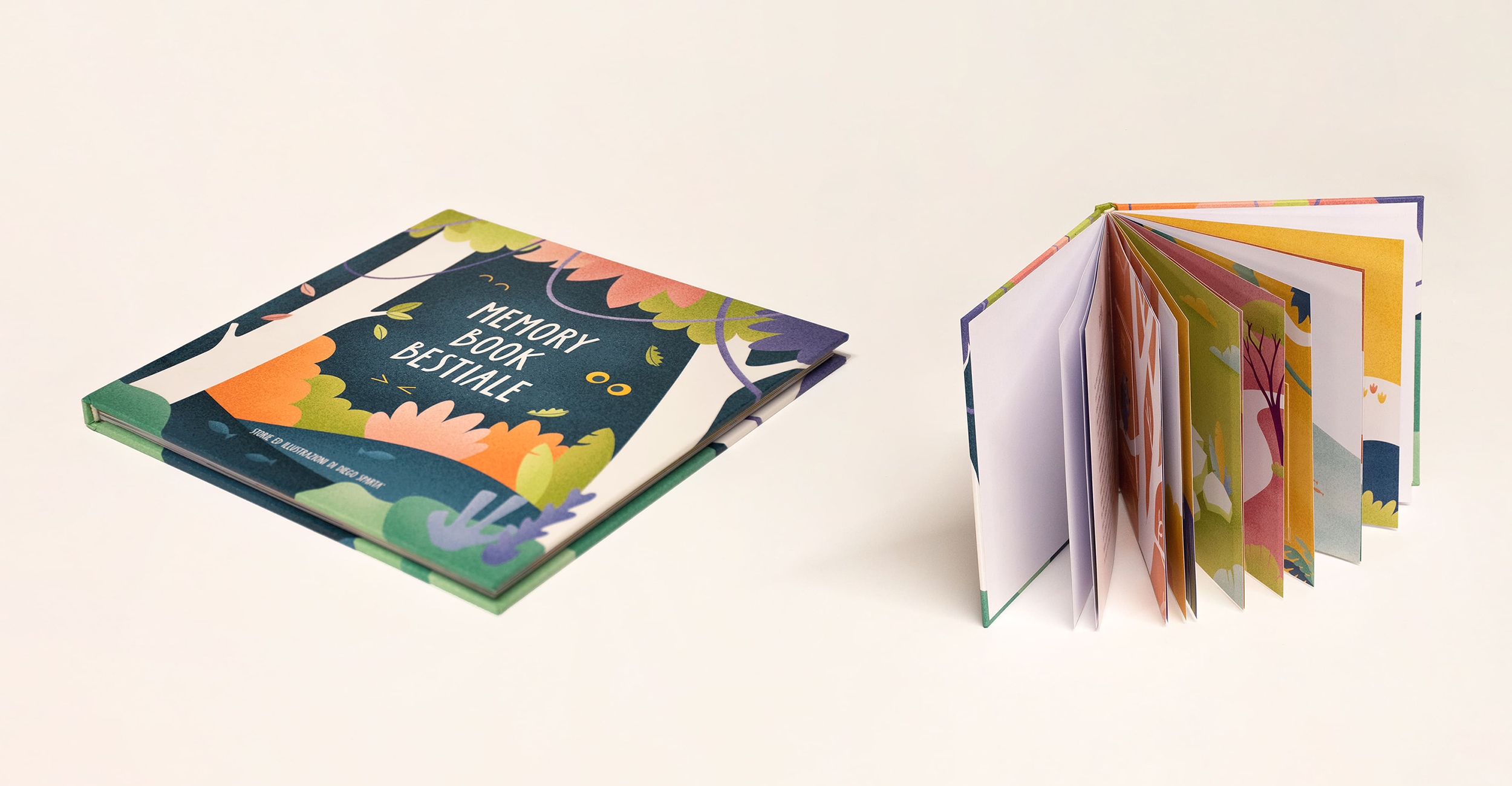
Memory Book Bestiale - A Game to Support Children Who Stutter Through Play and Emotional Learning
Memory Book Bestiale is a game that addresses the emotional and relational dimensions of childhood stuttering through practical guidance. It supports children in gradually transforming negative thoughts, attitudes and behaviors, helping them manage relational difficulties with the support of their family. By combining memory-based repetition and narrative storytelling, the project encourages playful engagement, fostering awareness, confidence, problem-solving and positive relational skills.
Italy
National
Mainly urban
It refers to other types of transformations (soft investment)
Prototype level
No
No
No
Individual
Stuttering goes far beyond speech, especially affecting children’s emotions, confidence and social interactions.
Memory Book Bestiale is a game that, through practical guidance, addresses these hidden dimensions, supporting children in gradually changing the negative thoughts, attitudes and behaviors they may develop in response to stuttering, and helping them, with the support of their families, manage the relational difficulties associated with the disorder.
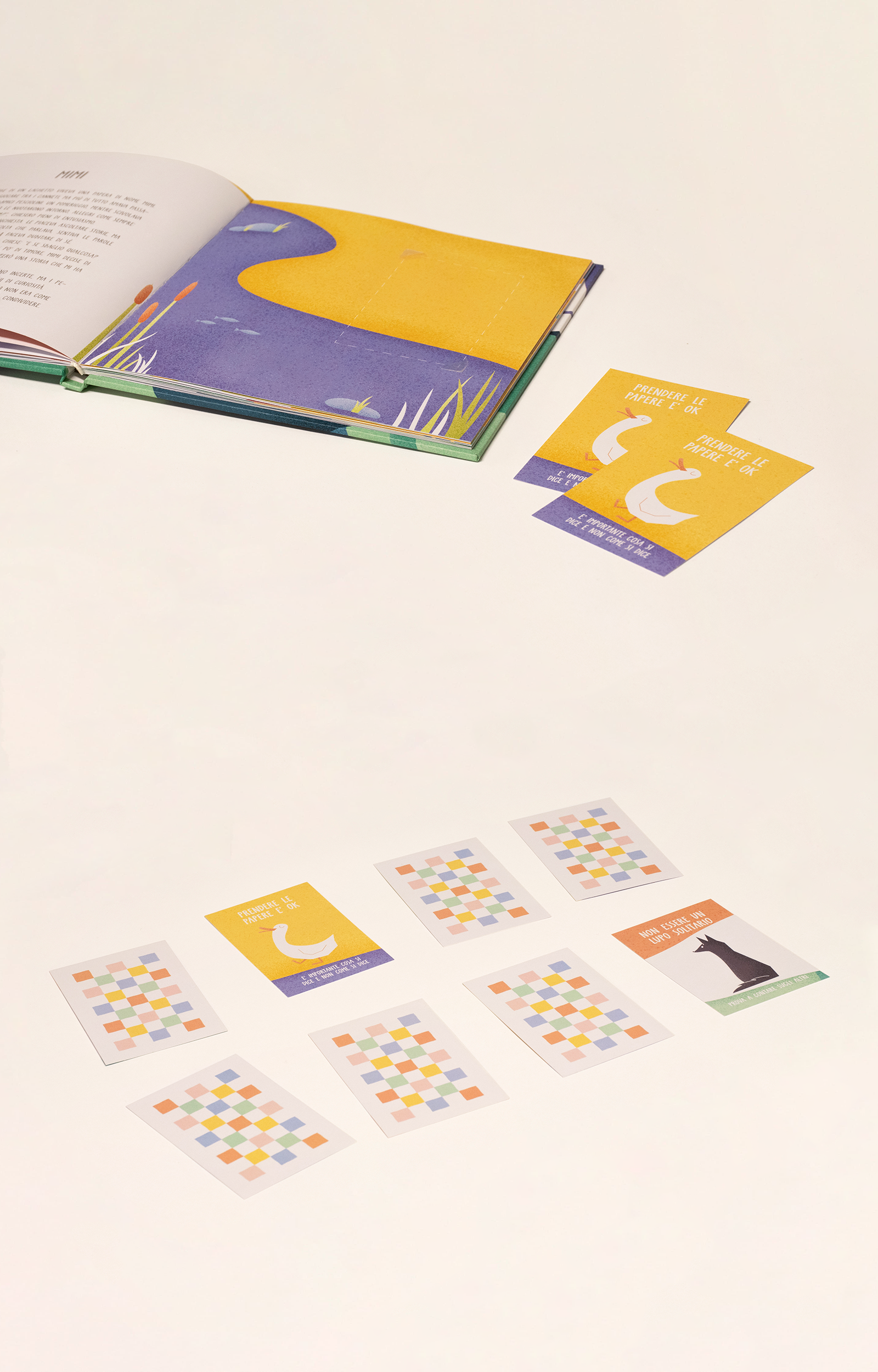
Memory Book Bestiale is innovative because it uses the mechanics of memory, based on repetition, to help children memorize key concepts useful for dealing with relational dynamics in a positive and proactive way, while it uses the mechanics of narrative to allow children and their parents to engage indirectly and playfully with the stories, deepening their understanding and management of thoughts, emotions and behaviors related to stuttering.
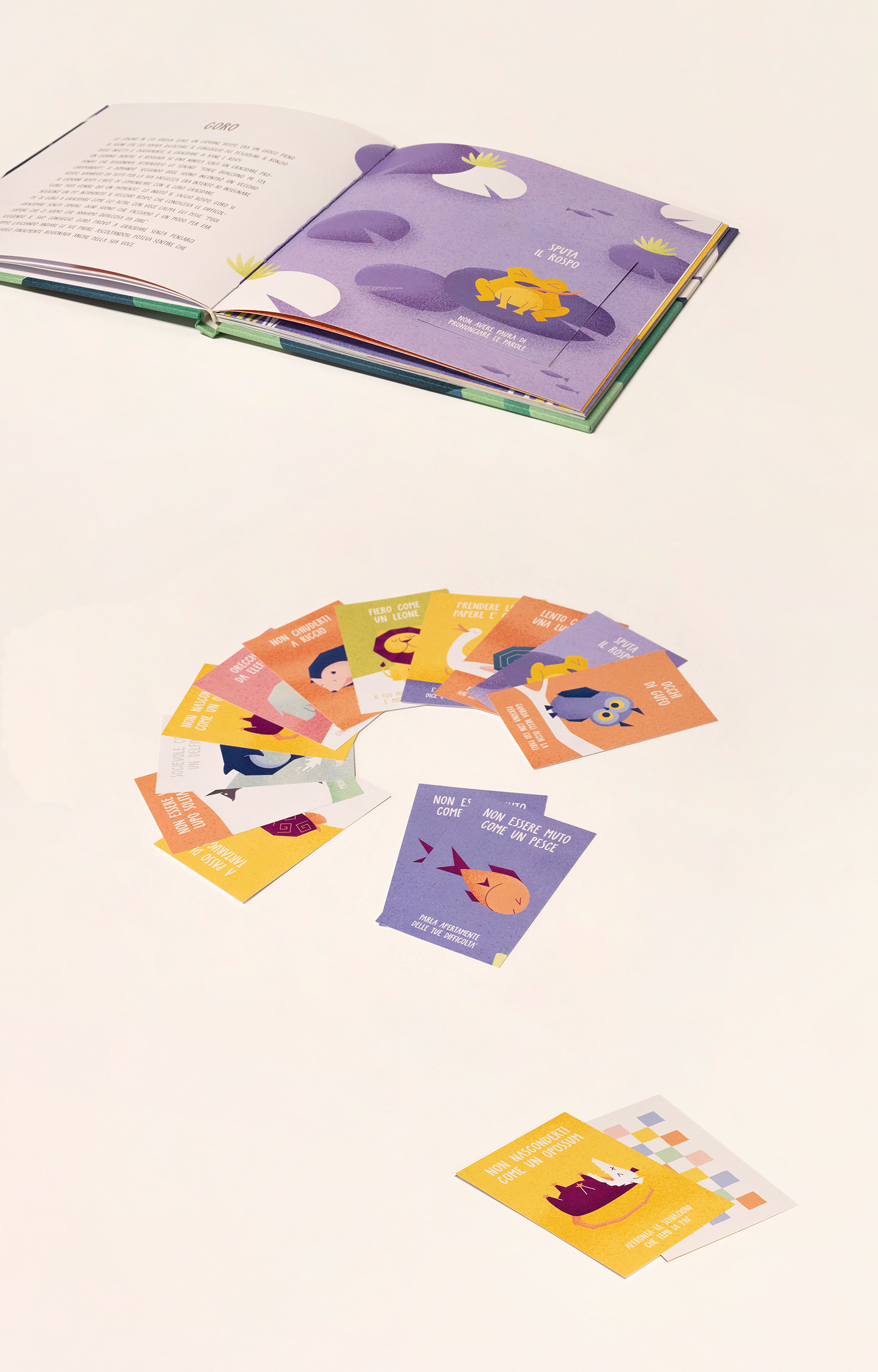
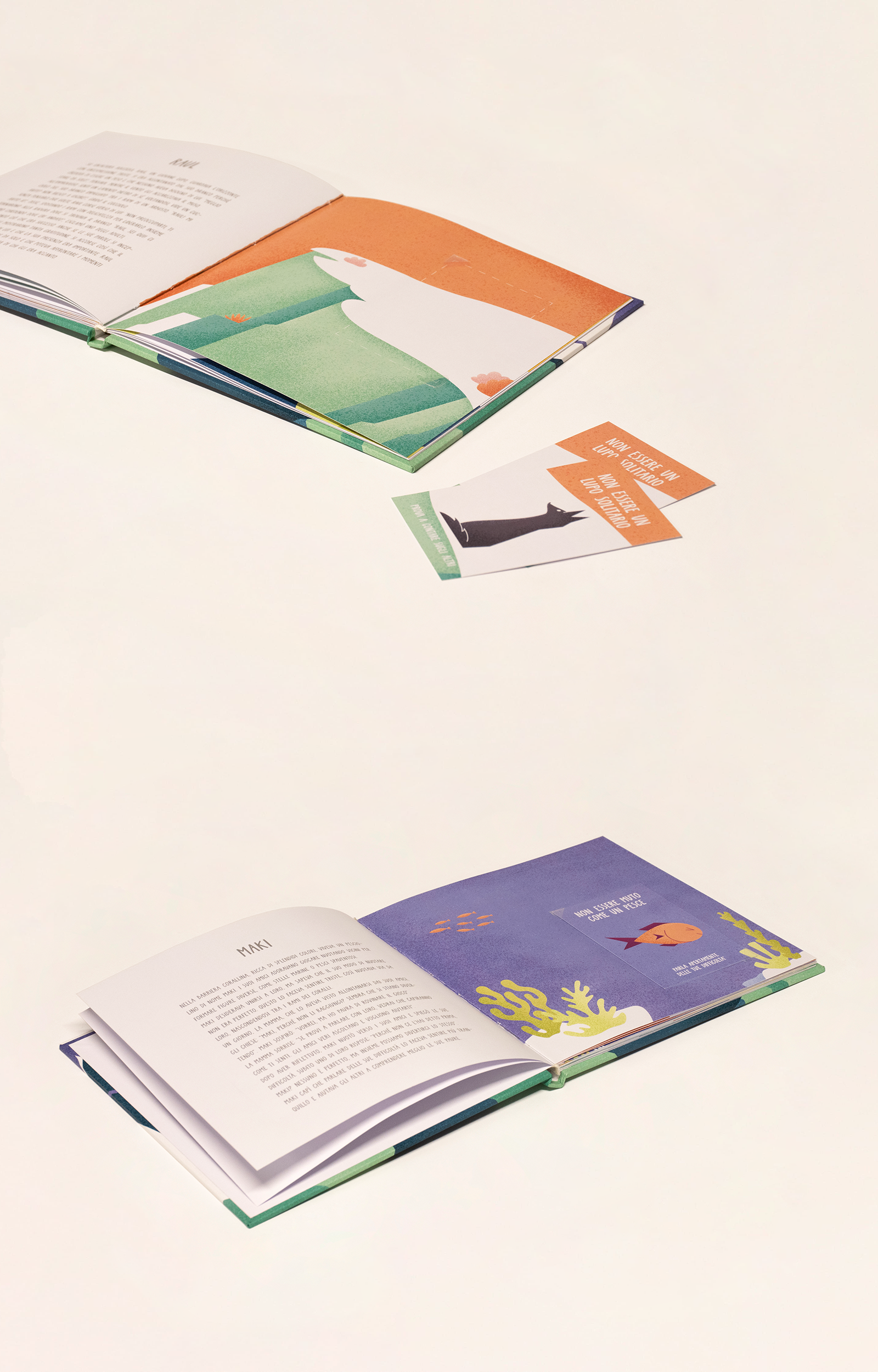
The book contains twelve pairs of cards, each placed next to its corresponding story. Each card features an animal character and a short text inspired by a well-known Italian saying, used as a prompt to reflect on positive attitudes and behaviors. The stories depict animals facing challenges that subtly mirror everyday situations experienced by children who stutter, teaching problem-solving and demonstrating alternative, proactive ways to manage difficulties.
Through play, stories and guided reflection, Memory Book Bestiale turns learning into an engaging and empowering experience, helping children develop emotional awareness, confidence and relational skills essential for their well-being.
By translating these abstract concepts into a playful and accessible format, the project provides children and families with a concrete tool that complements therapeutic paths, fostering healthier relational skills and supporting children’s overall well-being.
Memory Book Bestiale was developed as my master’s thesis project in Integrated Product Design at Politecnico di Milano. The initial intention was to explore how design can address complex and sensitive social issues, demonstrating how design, when combined with other disciplines, can generate new insights and create a positive impact on people’s lives.
Stuttering was chosen as the focus because it is often perceived only as a speech disorder, while in reality it deeply affects children’s emotions, confidence and social relationships. This complexity made it a meaningful field in which to apply a strong design-driven approach.
The first phase of the project was dedicated to research. Entering a new disciplinary field required time and patience to collect and understand information from different sources, including psychology, neurophysiology and cognitive behavioral therapy. This process allowed me to gradually build a solid understanding of the phenomenon and to identify some of the most critical and often overlooked aspects of childhood stuttering, particularly its emotional and relational consequences.
The project was developed under the supervision of specialists in language disorders and stuttering, particularly speech therapists Dr. Donatella Tomaiuoli and Dr. Francesca Todaro, ensuring that the design responses were aligned with real needs and best practices in the field.
To complement academic research, the development process also included interviews and questionnaires with parents of children who stutter and with teachers, people who closely accompany the child’s development in everyday environments such as home and school.
Through this combination of research, expert supervision and stakeholder engagement, the concept was progressively refined, translating theoretical knowledge into a practical, playful and inclusive tool.
Inclusive Design
Stuttering Awareness
Child Wellbeing
Play-Based Emotional Support Tools
Design for Social Impact
Memory Book Bestiale addresses sustainability primarily through its social impact.
Stuttering is often perceived only as a speech disorder, yet it profoundly affects children’s emotional well-being, confidence and social participation. Many children who stutter experience anxiety, fear of judgment and frustration during communication, which can lead to withdrawal and reduced opportunities for interaction.
By providing a playful and accessible tool that helps children explore emotions, thoughts and behaviors related to stuttering, the project supports the development of emotional awareness, self-confidence and relational skills. In this way, Memory Book Bestiale contributes to social sustainability by promoting inclusion and improving the quality of life of children who stutter and their families, helping them navigate everyday situations at home, at school and in social environments.
The project promotes inclusion by creating a shared space for dialogue between children, parents and educators. Through play, storytelling and guided reflection, the tool encourages supportive interactions and helps adults better understand the emotional experiences of children who stutter. This collaborative dimension strengthens relationships within the child’s everyday environment and contributes to building more inclusive social contexts.
Environmental considerations were also integrated into the design process. The format of the cards (70×110 mm) and the book (200×200 mm) was carefully selected to remain within standard printing dimensions, minimizing paper waste and reducing production costs. This approach supports efficient manufacturing while maintaining the accessibility and scalability of the product.
By combining social inclusion, cultural awareness, accessible design and responsible production choices, Memory Book Bestiale demonstrates how inclusive design can contribute to a broader and multidimensional understanding of sustainability.
Memory Book Bestiale contributes to creating a sense of belonging by offering a shared narrative space where children, parents and educators can interact and reflect together, allowing children who stutter to recognize their experiences and feel understood. Through imaginative stories, expressive illustrations and interactive cards, the project encourages dialogue about emotions and everyday communication challenges. By presenting these situations through symbolic scenarios, Memory Book Bestiale allows children to reflect on their experiences while maintaining a safe psychological distance, transforming moments of difficulty into opportunities for understanding, empathy and connection.
The characters were developed using principles of shape economy, simplifying forms to make them immediately recognizable and visually engaging for young readers. Particular attention was given to body language, facial expressions and poses so that emotions and reactions can be clearly communicated even before the story unfolds.
A distinctive element of the visual identity is the use of a symbolic line system combining flowing lines and broken lines. These graphic styles metaphorically represent moments of fluent and disfluent speech in children who stutter. Although visually different, they coexist harmoniously in the characters’ design, reflecting the natural coexistence of fluency and disfluency and reinforcing the idea that irregularity does not diminish the meaning and value of the message.
The illustrations use a limited palette of six bold colors to create a strong visual identity while maintaining chromatic coherence. Vibrant and unconventional combinations capture attention and stimulate curiosity. In each illustration, a white element is intentionally left uncolored, creating a visual void that does not compromise the clarity of the image, symbolizing how speech can remain meaningful even when it is not perfectly fluent.
Memory Book Bestiale addresses inclusion by focusing on a frequently overlooked form of inequality: communication barriers experienced by children who stutter. Although stuttering is primarily perceived as a speech difficulty, it creates a hidden barrier that affects children’s confidence, emotional wellbeing and participation in family and social environments. The core problem is not only speech disfluency itself, but the risk that communication struggles become difficulties in expressing thoughts, needs and intentions. For this reason, it is essential to address the emotional and psychological dimensions of stuttering, so that speech disfluency does not become an obstacle to participation and everyday wellbeing.
The project responds to this complexity by providing an accessible and engaging educational tool for children who stutter. Through play, storytelling and visual metaphors, Memory Book Bestiale allows children to explore thoughts, emotions and behaviors related to communication in a safe way, helping them develop emotional awareness, self-confidence and relational skills that support their social participation.
Inclusion is further strengthened by the relational nature of the project. Memory Book Bestiale is designed to be experienced together, encouraging interaction between children, parents, educators and therapists. By fostering dialogue within family and educational environments, the project promotes a more inclusive communication culture where children who stutter feel understood and supported.
Memory Book Bestiale also reflects principles of design for all by translating therapeutic concepts into an accessible and playful format usable both in therapy contexts and in everyday family life. The tool can be used even without prior knowledge about stuttering, increasing its accessibility and potential impact in creating more inclusive environments where differences in communication do not limit participation, confidence or belonging.
Memory Book Bestiale was developed through a participatory research process involving both specialists and families of children who stutter. The project began with an extensive review of academic research on stuttering and its psychological and relational dimensions. Building on this foundation, interviews and conversations were conducted with speech therapists and professionals in the field of speech and communication disorders. These exchanges created a space for dialogue where research insights, professional experience and early design ideas could be openly discussed, helping shape the conceptual direction of the project and ensuring that the design responded to real therapeutic and relational needs.
In parallel, parents of children who stutter were involved through interviews and questionnaires aimed at understanding everyday communication challenges within family and educational environments. Their feedback further highlighted the importance of addressing the psychological dimensions of the disorder, since communication difficulties can easily evolve into emotional and relational barriers.
The participation of these stakeholders had a direct impact on the development of the concept. Different design proposals were presented and discussed with specialists, leading to the selection and refinement of the most effective concept: an accessible educational tool combining play, storytelling and visual metaphors to support children in exploring communication related emotions and relational situations.
The participatory dimension continues in the current implementation phase. Memory Book Bestiale is being shared with specialists who are testing it in their professional practice with children who stutter. This ongoing exchange allows further feedback to be collected and helps refine the tool, ensuring that it remains responsive to the real needs of children, families and educators.
Memory Book Bestiale engages stakeholders at different and multiple levels, during both the development of the project and its future implementation.
At the local level, the project involves families of children who stutter and speech therapists. Parents shared their experiences through interviews and questionnaires, describing the communication challenges children encounter in everyday family and school situations. Speech therapists participated in discussions around the concept and are currently testing the tool within their professional practice. This engagement ensures that the project responds to real therapeutic and psychological needs of children who stutter.
At the regional level, the project connects with speech therapists and professionals working in the field of communication disorders. Some specialists are already involved in testing and providing feedback, while others are expected to be involved as the project develops. Their engagement helps refine the tool and explore how it can be used in different therapeutic and educational contexts.
At the national level, the project has started connecting with the broader professional community and has been invited to be presented at the International Conference on Stuttering (ICOS 2027), an international scientific conference that brings together leading researchers and clinicians working on stuttering and communication disorders. This opportunity allows the project to enter a wider professional dialogue and share its design-based approach to the emotional and relational aspects of stuttering.
Looking ahead, Memory Book Bestiale also has potential to connect with wider European networks of therapists, educators and researchers interested in communication disorders and child wellbeing.
This multilevel engagement helps connect family experiences, professional knowledge and research communities, ensuring the project remains grounded in real needs while contributing to more inclusive environments.
Memory Book Bestiale is based on a transdisciplinary approach that brings together knowledge from design, psychology, speech and language therapy, education and visual storytelling. This combination of disciplines reflects the complexity of developing a tool that addresses stuttering not only from a linguistic perspective but also from an emotional and relational one.
The project builds on insights from child psychology and research on speech and communication disorders, focusing on the emotional and relational dimensions of stuttering. At its core, Memory Book Bestiale integrates principles from Cognitive Behavioral Therapy (CBT), particularly the gradual transformation of negative and maladaptive thoughts, emotions and behaviors that children may develop in response to stuttering and communication difficulties into more constructive and adaptive ones. The project also draws on principles of play therapy, using play as a supportive medium that helps children explore emotions and experiences in a safe and engaging way.
Design plays a central role in translating these therapeutic principles into an accessible format for children. Through product design, game mechanics and visual communication, complex psychological concepts become intuitive experiences explored through play. Illustrations with animal characters and narrative structures draw from artistic storytelling practices, helping children reflect on emotional and relational situations in a playful way.
Educational perspectives are also central. The tool encourages interaction, dialogue and shared reflection between children, parents and therapists, supporting learning processes related to communication, emotional awareness and relational skills.
By connecting design practice, therapeutic knowledge, education perspectives and lived experiences, Memory Book Bestiale demonstrates how a transdisciplinary approach can generate innovative tools to help and support children who stutter and their families.
Memory Book Bestiale is conceived as an educational and therapeutic tool that can be integrated both in professional therapeutic practice and in everyday family contexts. The envisioned business model is based on the distribution of the book to speech therapists and professionals working with children with speech and communication disorders, who can use the tool during therapy sessions and recommend it to families.
A first revenue stream would therefore come from the sale of the book to professionals working in speech therapy. These specialists can integrate the tool into their practice as a resource that supports emotional reflection, communication and social interaction.
A second level of distribution involves families directly. Since the book is designed to be used not only in therapy but also at home, therapists may recommend it to parents who wish to continue the activities and reflections introduced during therapy sessions. This creates a complementary ecosystem in which professionals and families use the same tool to support the child’s communication and emotional development.
Another important aspect of the project is its versatility. Although Memory Book Bestiale was originally conceived for children who stutter, the book never explicitly mentions stuttering. For this reason, the tool can also support children with other language or communication difficulties, as well as children who experience anxiety when speaking or who tend to withdraw socially. This broader applicability expands the potential audience and increases the long-term sustainability of the project.
In the future, additional distribution channels may include educational environments, partnerships with therapists’ networks and professional associations, as well as online sales platforms.
Through this mixed model, Memory Book Bestiale has the potential to remain financially sustainable while maintaining its social and therapeutic impact.
Memory Book Bestiale has strong potential for transferability and scalability because the concept is embodied in a simple and accessible product: a book. As a printed tool, it can be easily reproduced, distributed and adopted in different contexts at a relatively low cost, making it accessible to therapists, families and educational environments.
The project is currently available in two language versions, Italian and English, but the format allows it to be easily translated and adapted to other languages. This makes it possible to replicate the concept in different geographical areas while maintaining the same structure and objectives.
Another important element of scalability lies in the project’s narrative approach. Although Memory Book Bestiale was originally developed for children who stutter, the stories never explicitly mention stuttering. Instead, they focus on emotional and relational situations that many children experience, such as fear of speaking, communication anxiety or a tendency to withdraw socially. This allows the concept to support not only children who stutter but also children with other communication difficulties or emotional challenges.
Memory Book Bestiale has already begun its transition from a design research project to practical implementation. After completing the master’s thesis, a prototype of the concept was shared with the speech and language therapists who supervised the project. They were very enthusiastic about the project and immediately expressed strong interest in testing the tool within their professional practice.
The first step is the practical validation of the project. Specialists are testing the book during therapy sessions with children and families in order to evaluate its effectiveness in supporting emotional and relational aspects related to communication difficulties. Their feedback will be essential to further refine and strengthen the concept.
At the same time, the project has already started to attract interest within the professional community. One specialist invited me to present the project during an online event involving speech therapists from the Lombardy region (IT). In addition, recently, Prof. Donatella Tomaiuoli, psychopedagogist, speech therapist and internationally recognised expert in the treatment of stuttering, invited me to present the project at ICOS2027, an international conference that brings together leading researchers and clinicians working on stuttering and speech and language disorders. These opportunities represent important steps for sharing the project with a wider network of professionals, not only in Italy but also across Europe and internationally.
Finally, a key objective for the next phase is to collaborate with a publishing house in order to make the book officially available to a wider audience. Demonstrating the project’s effectiveness through testing, professional feedback, presentations at specialist events and recognition from relevant awards or competitions will help build the credibility and visibility needed to support this step and move from a concept to a widely accessible tool for children, families and professionals.