Enhancing Circularity, Sustainability, and Innovation
3Dprinting Sustainable Architecture
Robotic Earth-construction 3D Printing for Low-Embodied Carbon Architectural Structures
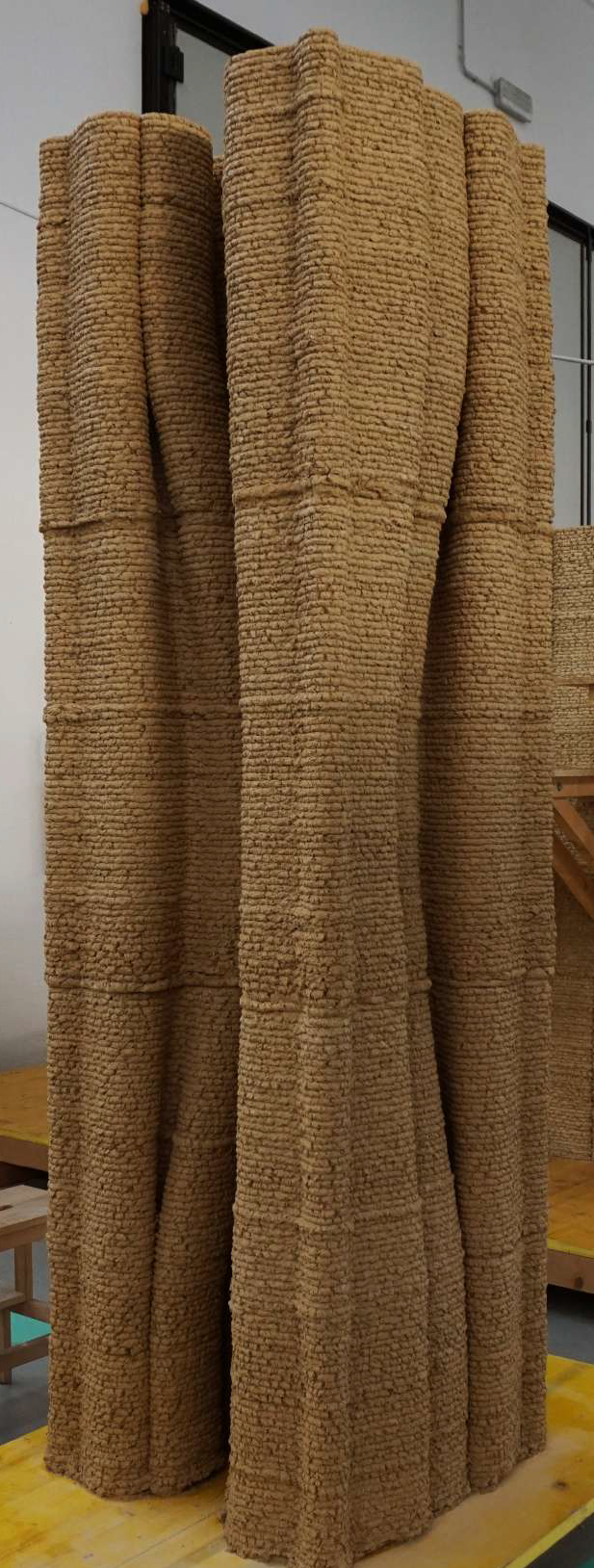
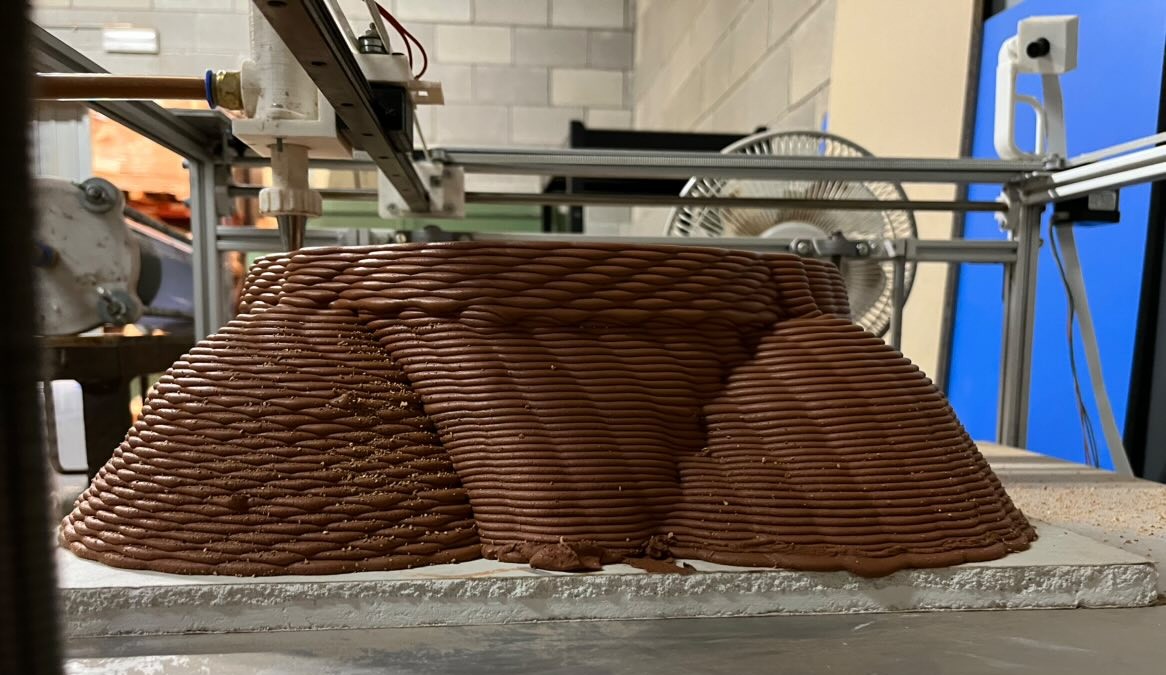
This project part of my Ph.D. research abstract merge computational design and robotic 3Dprinting to build affordable refugee shelter, sustainable, high-performance shell-envelope systems from earth-based composites. It explores support-free domes and shell envelopes through modular components, demonstrated with a non-vertical modular wall segment to proof a sustainable workflow. Material mix designs and extrusion systems are iteratively optimized to improve green strength, and buildability.
Portugal
Local
Guimaraes
Mainly rural
It involves a physical transformation of the built environment (hard investment)
Yes
2025-11-11
Yes
Foundation of science and technology (FCT)
No
No
Individual
This research integrates computational design with robotic additive manufacturing(AM) to develop affordable, sustainable, high-performance shell-envelope systems using earth-based composites. It investigates support-free printing of complex morphologies (domes, vaults, shells) through structural modularity. The practical demonstration is a non-vertical modular wall segment that represents a portion of a shell envelope and proves material / design efficiency.
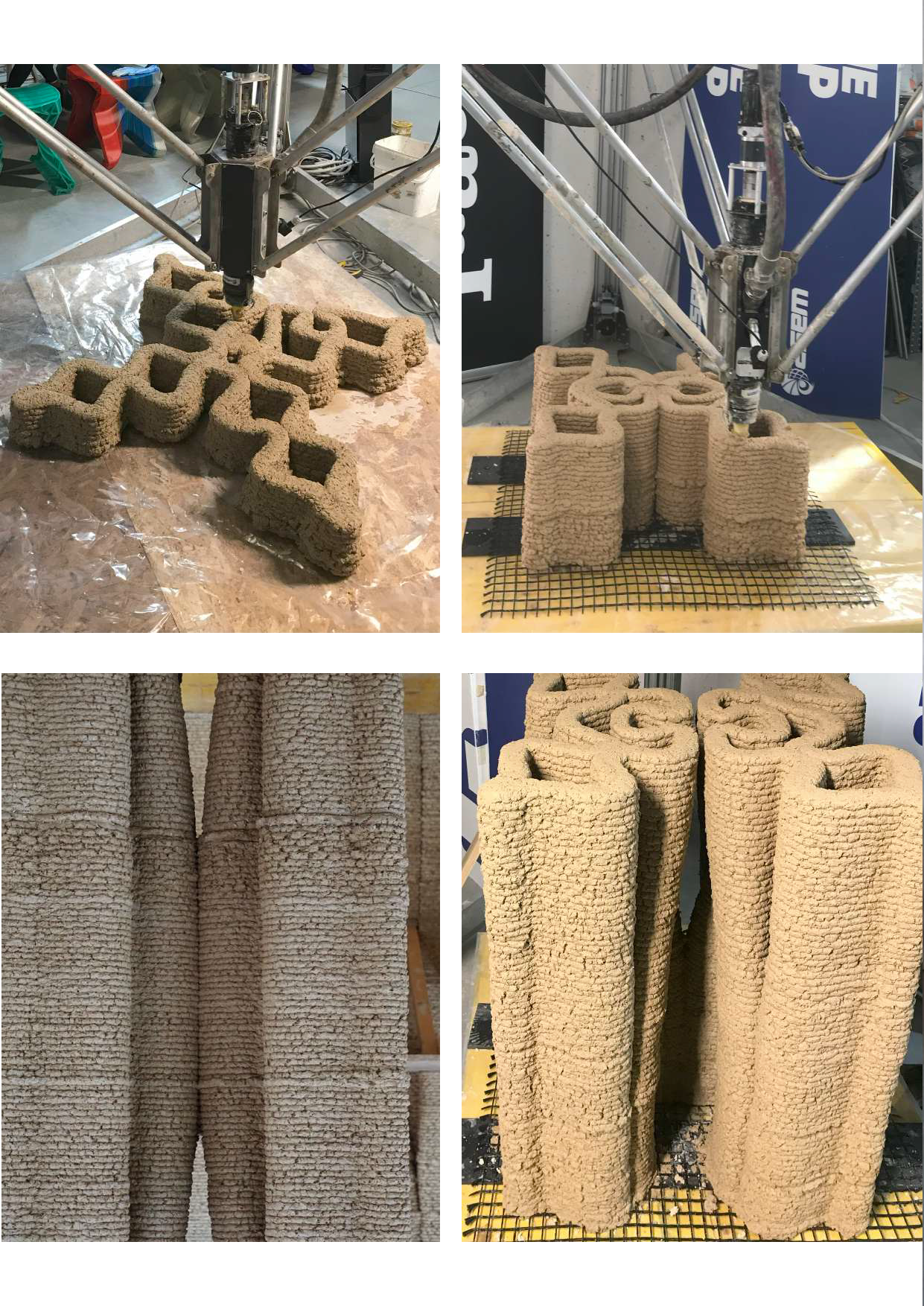
Key results include: a systematic methodology for earth-based material formulation and robotic extrusion; iterative experiments to optimize rheology for extrusion and buildability; and validated improvements in extrusion rate, consistency, continuity, and overall buildability. Structural and functional performance were assessed through digital simulations and physical testing to ensure safety and interior comfort. Advanced computational workflows (including topology optimization methods such as BESO and SIMP) enabled strategic reinforcement (ribs along principal stress lines), increasing stiffness, reducing material use, and mitigating common AM failures such as overhang deformation and stress concentrations. Thermal resistance and acoustic insulation were also optimized and validated. A real-scale 3D-printed wall segment was fabricated to confirm real-world feasibility.
Long-term impact: scalable low-carbon construction using locally available earthen materials, reduced waste and support requirements, improved indoor environmental quality, and deployable modular components for sustainable emergency shelters.
The project emerged from the need for lower-carbon, lower-cost construction methods that can still deliver high structural and spatial quality. Shell structures are highly material-efficient, but they are difficult to fabricate with additive manufacturing because tensile stresses, bending moments, and unsupported overhangs can cause deformation or failure. To tackle this, the research developed a computational methods into fabrication workflow that links geometry, structural logic, and material behavior.
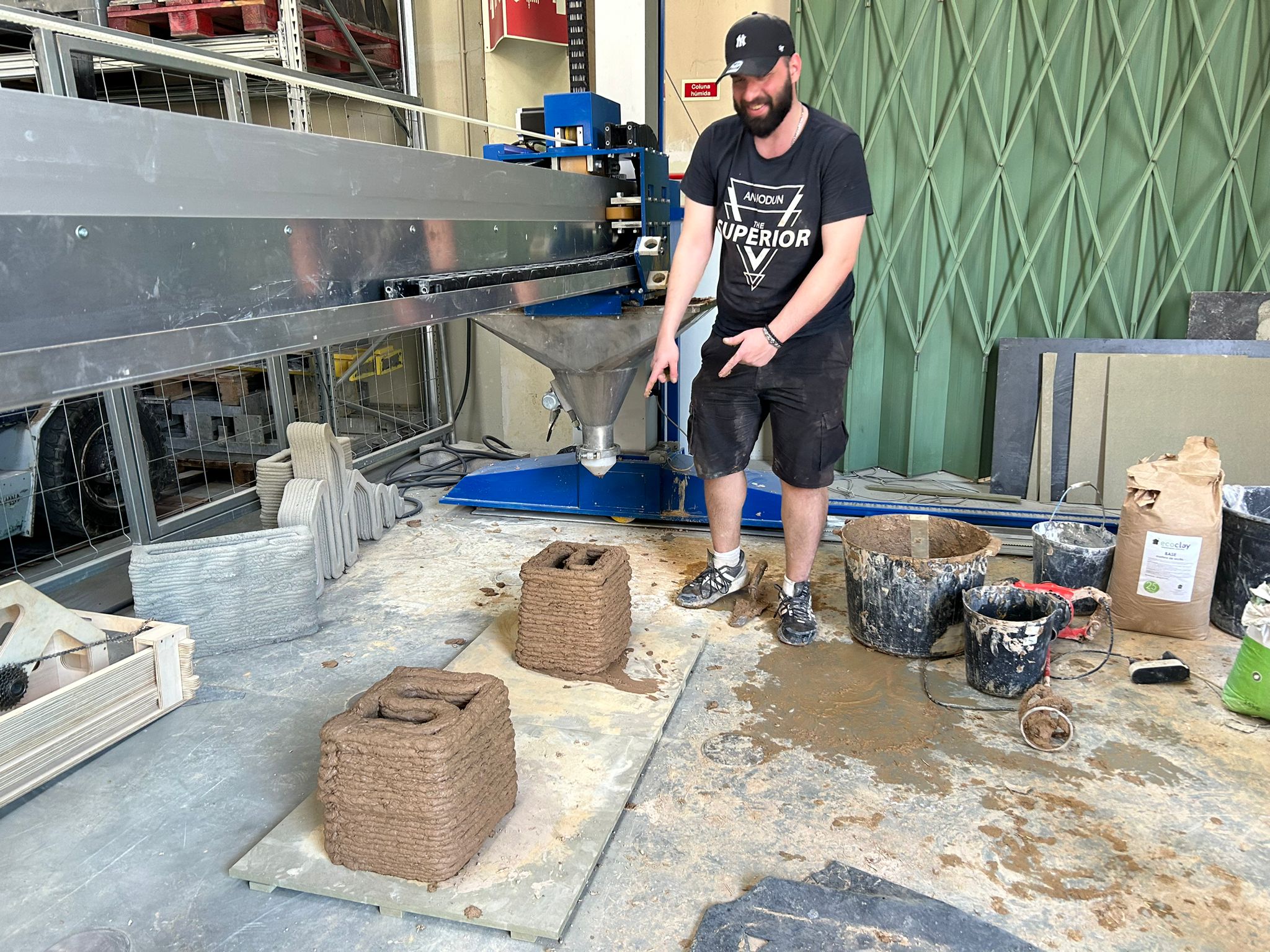
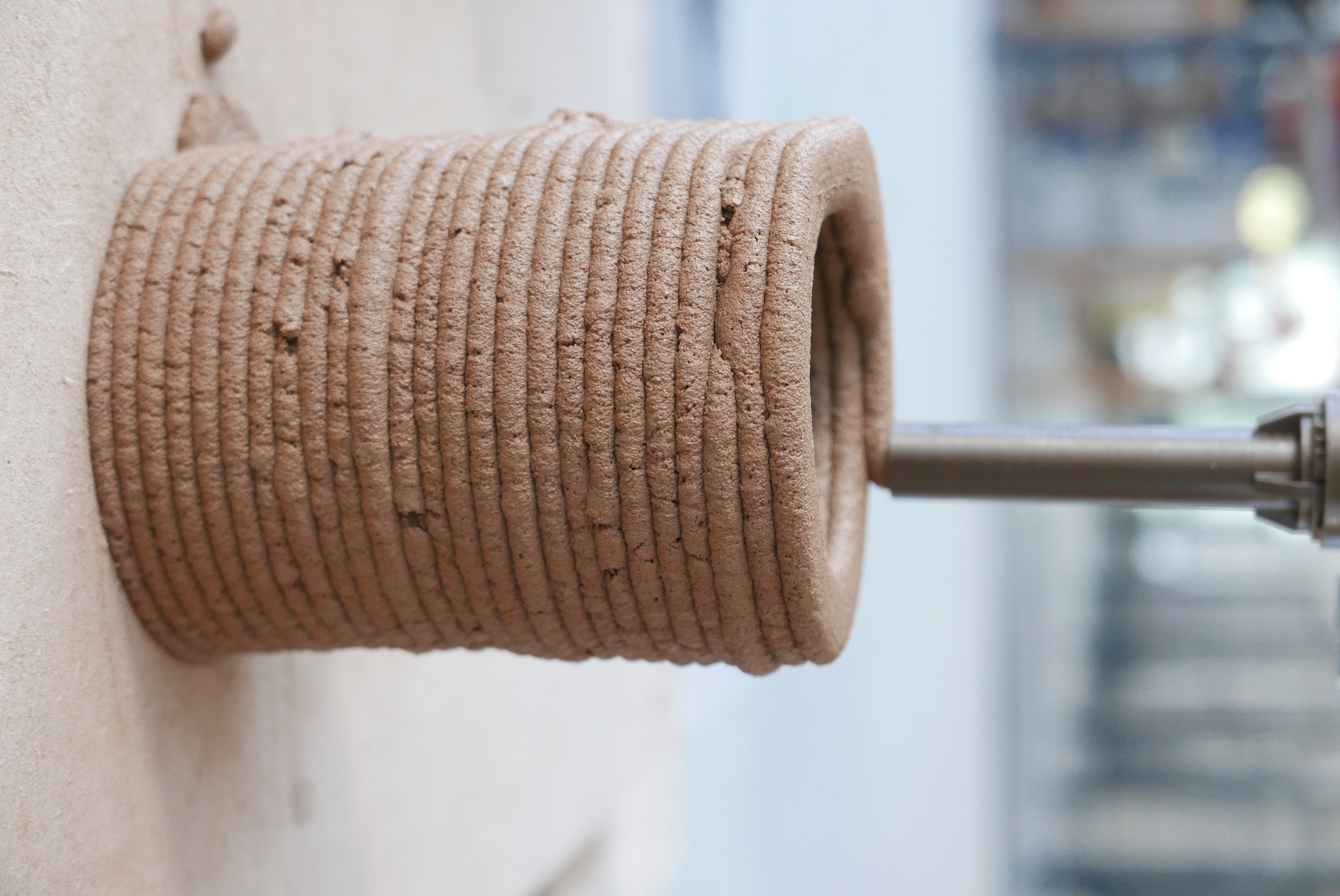
Implementation followed an iterative loop between digital design and automated prototyping. First, computational models generated and evaluated complex, self-supported geometries. In parallel, material recipes were refined through systematic formulation to achieve the rheology required for extrusion and buildability. Robotic extrusion parameters and hardware choices were tested and adjusted to improve continuity and stability during printing. The design phase incorporated topology optimization (BESO/SIMP) to position ribs and reinforcement along stress trajectories, improving stiffness while reducing material consumption and avoiding critical overhang angles.
The approach was validated through digital simulations and scaled physical experiments, then consolidated in a real-scale 3D-printed modular wall segment. These prototypes allowed direct assessment of structural behavior and functional performance (including thermal resistance and acoustic transmission aspects), demonstrating a practical pathway toward modular, support-minimal earthen AM systems for broader shell-envelope applications and future deployable shelter solutions.
Earth-based composites
Robotic 3D printing
Shell envelope systems
Structure Optimisation
Embodied Carbon
This project advances sustainability by replacing carbon-intensive construction inputs with earth-based composites and by minimizing waste through robotic additive manufacturing. The workflow prints support-free, material-efficient shell geometries (vaults/domes/shells) and a non-vertical modular wall segment that reduces formwork, offcuts, and transport impacts. Material formulations are systematically optimized to meet extrusion and buildability needs, improving print continuity and reducing failed prints. Structural performance is validated through simulation and physical testing, while thermal and acoustic optimization supports comfortable interiors with lower operational energy demand. Overall, the project enables low-carbon, locally sourced, resource-efficient building components that can be deployed in mainstream construction and in humanitarian contexts such as emergency shelters.
Shell envelopes are not only efficient they create generous, uplifting spaces through light, curvature, and spatial continuity. This research uses computational design to evolve elegant, structurally informed geometries that are printable without heavy supports, allowing beauty to emerge from performance. The modular wall segment demonstrates how crafted surface textures and precise ribbing can be integrated into the printed language, turning construction constraints into expressive architectural qualities. By linking structural logic, material behavior, and fabrication paths, the project proposes a new “digital craft” of earthen building one that supports a sense of care, identity, and belonging while remaining affordable and climate-responsible.
The project is designed for accessibility and affordability: earth-based materials are widely available, and modular components reduce complexity in assembly and logistics. By reducing material use, formwork, and waste, the method targets lower total cost while maintaining safety and comfort. The workflow supports local production (using locally available soils and simple additive ingredients), which can strengthen local value chains and skills. The humanitarian direction deployable, AM-produced wall components for emergency shelters addresses urgent housing needs with a low-carbon footprint. The intent is to provide a transferable methodology that can be adopted by universities, SMEs, and local builders, lowering barriers to sustainable construction innovation.
As a research into prototype project, participation is indicated through open demonstrations, academic dissemination, and collaborative prototyping within the university laboratory ecosystem. The developed modular system and material protocols are structured to be understandable and adoptable by non-specialist (builders, local producers, NGOs, housing actors). The next step is to expand co-development with local labors to adapt component sizes, assembly logic, and performance targets to real needs (e.g., retrofit, low-cost housing, emergency response), ensuring the solution responds to users and contexts rather than technology alone.
The project aligns with European priorities on decarbonization, circularity, and innovation in the built environment, and can connect to groups at multiple levels: local actors (builders, municipalities, housing providers), regional ecosystems (materials and manufacturing networks), and national/EU frameworks (standards, research, and climate goals). Its value is providing validated prototypes and methods that can inform guidelines for earth-based additive manufacturing, support innovative sustainable projects, and accelerate responsible uptake through evidence (tests, simulations, full-scale demonstrators).
The work integrates architecture, computational design, structural engineering, material science, digital fabrication / robotics, and building physics. It combines parametric modelling, topology optimization (BESO/SIMP), toolpath logic, rheology and mix-design development, mechanical testing, and thermal/acoustic evaluation. This transdisciplinary approach ensures the printed geometry is not only feasible to fabricate but also safe, comfortable, resource-efficient, and scalable.
The project creates a foundation for EU competitiveness by enabling new low-carbon construction products and services: modular printed components, validated material recipes, and a digital into fabrication workflow that can be transferred to SMEs (small and medium-sized enterprises) and construction innovators. Potential revenue pathways include (1) licensing or service provision for computational design + robotic printing workflows, (2) partnerships with manufacturers and contractors for sustainable projects, (3) training and certification for operators, and (4) Innovative development around extrusion systems and earth-based mix designs. The approach lowers material use and waste, improving productivity and cost competitiveness while meeting sustainability demands.
Key elements are transferable across geographies because they rely on local soils and adaptable recipes rather than rare materials. Replicable components include: the material formulation protocol (rheology - extrusion - buildability), the parametric design and optimization workflow, reinforcement ribs or stiffeners strategies along stress paths, and modular assembly principles. The robotic extrusion logic can be adapted to different robots/printers and scaled from lab to on-site or prefab settings. With open documentation and context-specific calibration (soil testing, mix tuning), the method can be replicated for housing, public infrastructure, retrofits, and emergency shelters.