Strengthening Local Democracy and Inclusion
Demokrati Garage (Democracy Garage)
Demokrati Garage: a community space and hub for democratic innovation and local transition
Placed in the buildings of a former blacksmith and auto repair shop, Demokrati Garage is now a meeting place and innovation hub for democracy in Denmark. With actors of democracy and open to everyone who wants to strengthen and renew it. Here we celebrate the many heroes of democracy, promote political and democratic innovation and create space for difficult public conversations. With more than 35,000 annual visitors and 15 different resident organizations, it is a vibrant everyday meeting place
Denmark
Regional
The region of Copenhagen, Denmark
It addresses urban-rural linkages
It involves a physical transformation of the built environment (hard investment)
Yes
2020-05-20
Yes
ERDF : European Regional Development Fund
No
No
Individual
An old auto repair shop has over the past five years been transformed into a place dedicated to democracy – instead of cars, it is now democracy that is being serviced and given a loving hand.
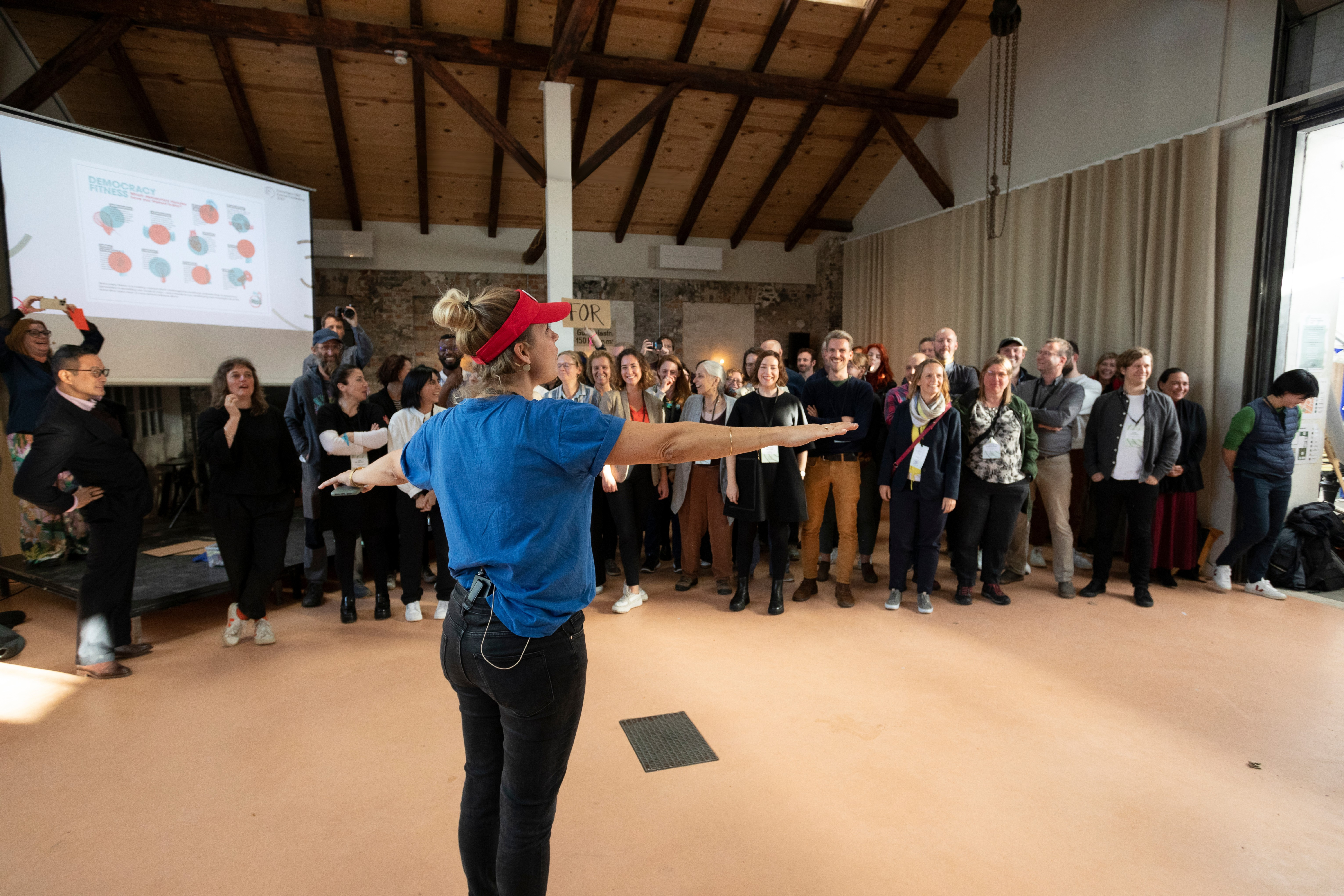
At Demokrati Garage, we develop methods and tools that strengthen people’s ability to participate in democracy. Through initiatives such as “Democracy Fitness”, “Democracy Festival” “Renten: Transition Town Nordvest”, “Democracy Drinks” and “The Citizen Bakery”, we create spaces where citizens, local residents and civil society actors can engage with democratic processes and with each other.
The complex challenges of our time require attention and participation. Deliberative democracy is a model in which political decisions are shaped through open dialogue among citizens. By bringing diverse perspectives and knowledge into decision-making, it improves and deepens democracy. That is why we have created a meeting place dedicated to working hands-on with democracy and testing new formats for participation and public dialogue.
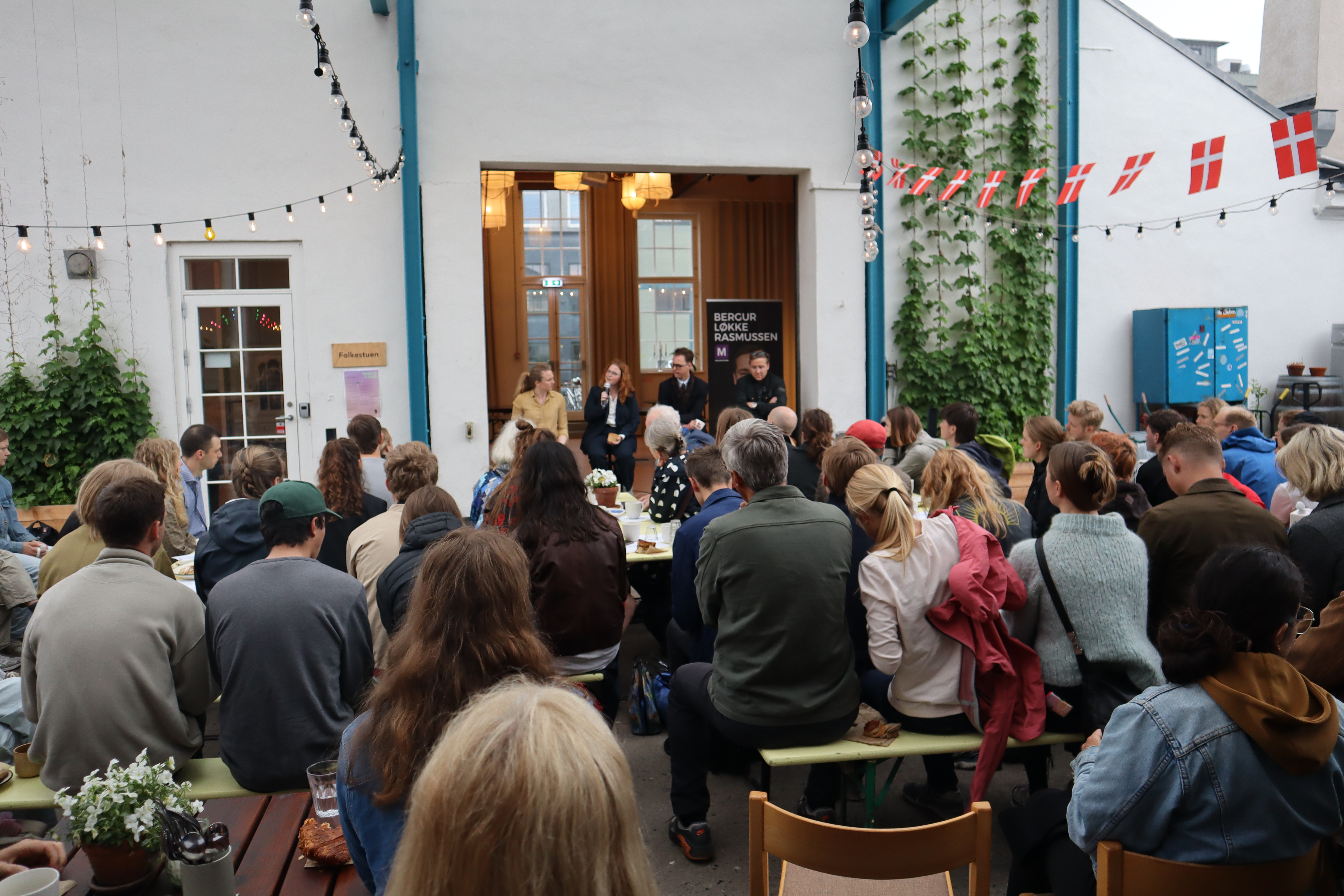
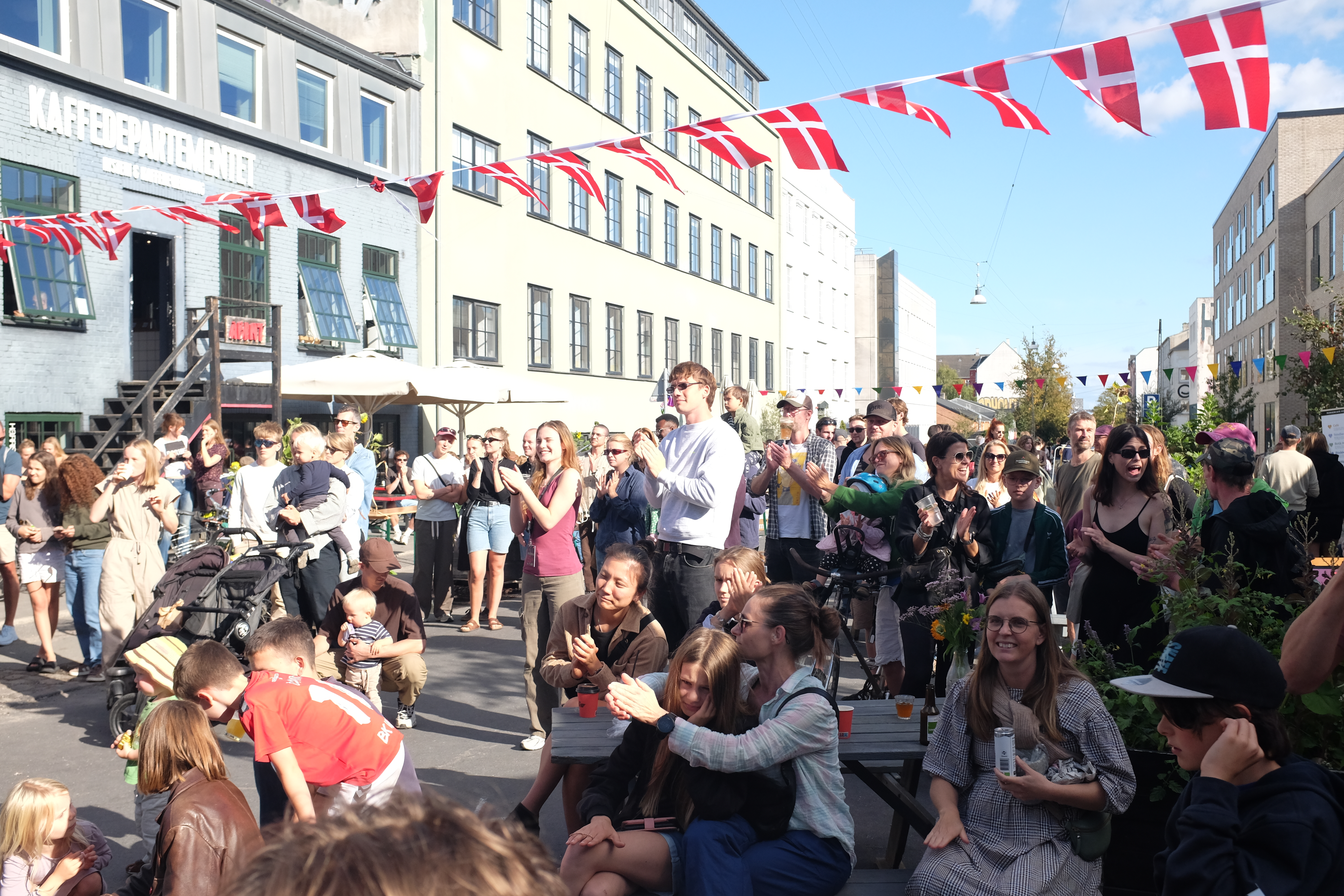
Last year, around 35,000 people took part in activities at Demokrati Garage - from International Women’s Day and Constitution Day to the Democracy Conference. We also celebrate parliamentary, EU and municipal elections as if they were Christmas Eve.
Today, Demokrati Garage is an independent, action-oriented meeting place rooted in Copenhagen’s north west district. It brings together citizens, organisations and ideas to strengthen and renew democratic life. At the same time, it is also a welcoming local free space, open to everyone - a place to meet your neighbour over a cup of coffee or a beer at the prizewinning bakery “Flere Fugle” (More birds)
By combining a physical meeting place with practical tools for deliberative and everyday democracy, Demokrati Garage creates a model where participation becomes part of everyday community life.
The idea of Demokrati Garage grew from the ambition to create a place where people and organisations who care about democracy can meet, collaborate and develop new ways of participating in society. As societies become more complex and diverse, there is a need for democratic spaces that can accommodate different perspectives and ways of living.
The founders, Zakia Elvang and Johan Galster, who is also behind the social enterprise We Do Democracy, envisioned a place where democracy could be practiced in everyday life. Through their work, they develop participatory formats and collaborate with municipalities, organisations and foundations to strengthen democratic engagement.
An important step for the project began in 2019 with the temporary project Garage Park NV, which transformed a parking lot on Rentemestervej into an urban park and testing ground for community and participation. Strong local support and municipal funding made it possible for We Do Democracy, together with Analyse & Tal, to purchase and renovate the former industrial workshops in 2020.
In 2021, Demokrati Garage opened in the 1,400 square meters of former auto repair workshops. The north west area of Copenhagen is a multicultural, diverse and rapidly developing neighbourhood. The buildings have been transformed into a civic meeting place where organisations, residents and initiatives come together around democracy, culture and food.
Demokrati Garage operates through a hybrid structure combining an association, an operating company and We Do Democracy as leading advisors in democratic innovation and deliberation.
A central method is learning through practice. Through open calls and collaborations people are invited to test and shape democratic formats. Monthly meetings with neighbours and volunteers further anchor the project locally. Today, Demokrati Garage is a vibrant meeting place, still evolving and expanding participation in everyday democratic life.
Deliberative Democracy
Social inclusion
Community co-design
Transition
Nature-based solutions
At Demokrati Garage we work towards a more sustainable future for animals, people and nature. Sustainability is a central value shared by all organisations in the house. We understand sustainability broadly: environmental sustainability must go hand in hand with social cohesion, democratic participation and cultural exchange. Our objective is to create a place where green transition, participation and community building reinforce each other.
This is realised through initiatives and everyday practices:
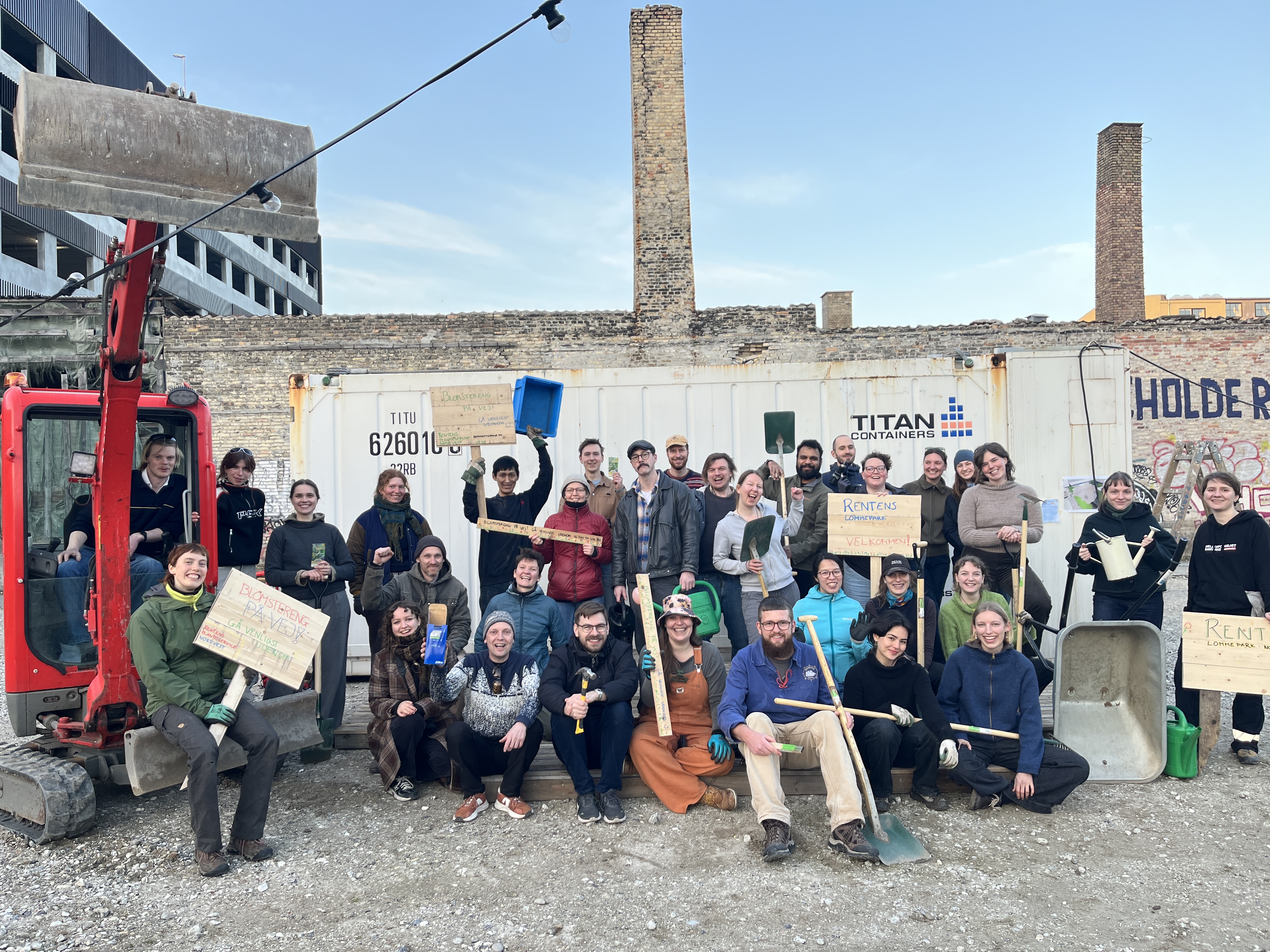
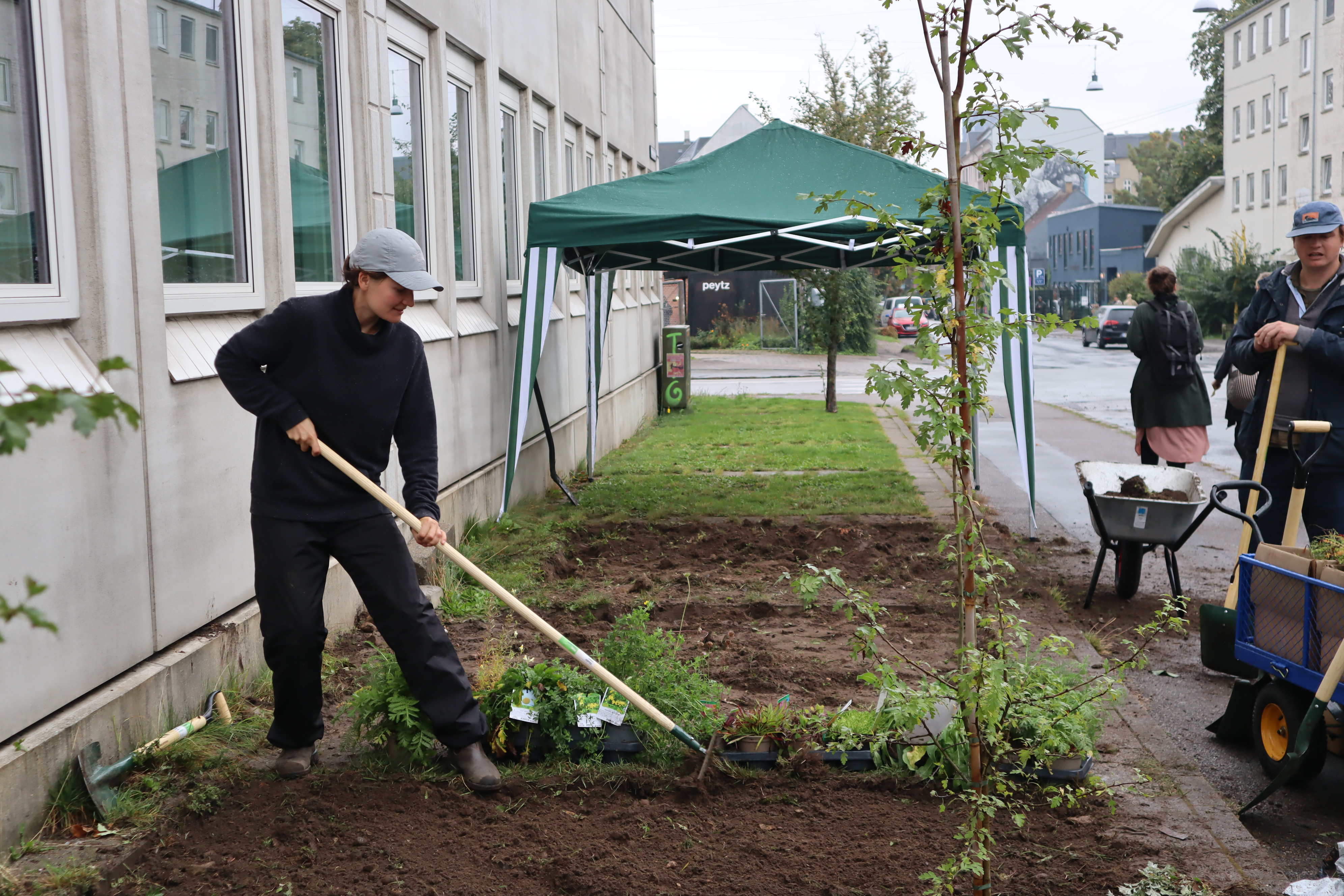
“Renten: Transition Town Nordvest” is a community-driven green hub focused on hands-on practices, resident empowerment and local partnerships where around 65 people volunteer. Through their “Plant Service”, neighbours create green areas along Rentemestervej, increasing biodiversity.
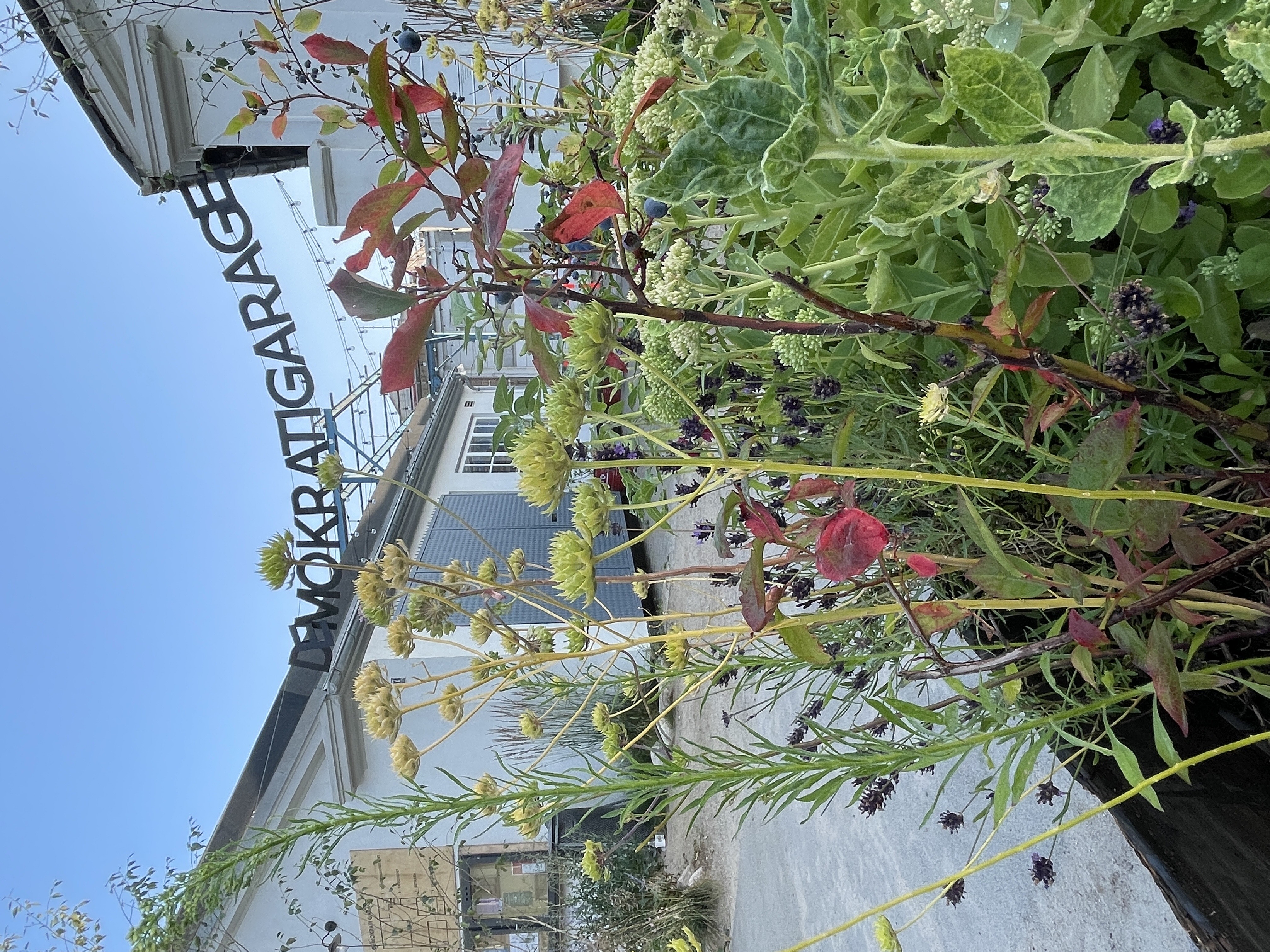
“Jordens Skole” (Earth School) promotes nature connection and ecological knowledge across all ages. Through gardening and learning activities, they have created a small oasis in the courtyard with edible plants for both bees and people.
The popular bakery “Flere Fugle” is placed in the middle of the garage. The bakery supports sustainable consumption by using organic, locally sourced ingredients and hosting community dining. Here the initiative “Borgerbageriet” (Citizen Bakery) also takes place and connects people across cultures through shared baking traditions.
In addition, collaborations with resident actors such as “Andelsgaarde” (Cooperative farms) link local action to regenerative agriculture and cooperative ownership models.
The initiatives have created new green areas, increased awareness of biodiversity, and strengthened local networks. By combining physical space, local engagement, and diverse partnerships, Demokrati Garage demonstrates how sustainability can be practiced collectively and embedded in everyday life.
Aesthetics has been central to Demokrati Garage from the beginning. Our aim is to create a welcoming, inspiring place that enhances everyday life and invites people to gather, reflect, and participate. By transforming former industrial buildings into open spaces, we improve the quality of the urban environment while strengthening local identity and belonging.
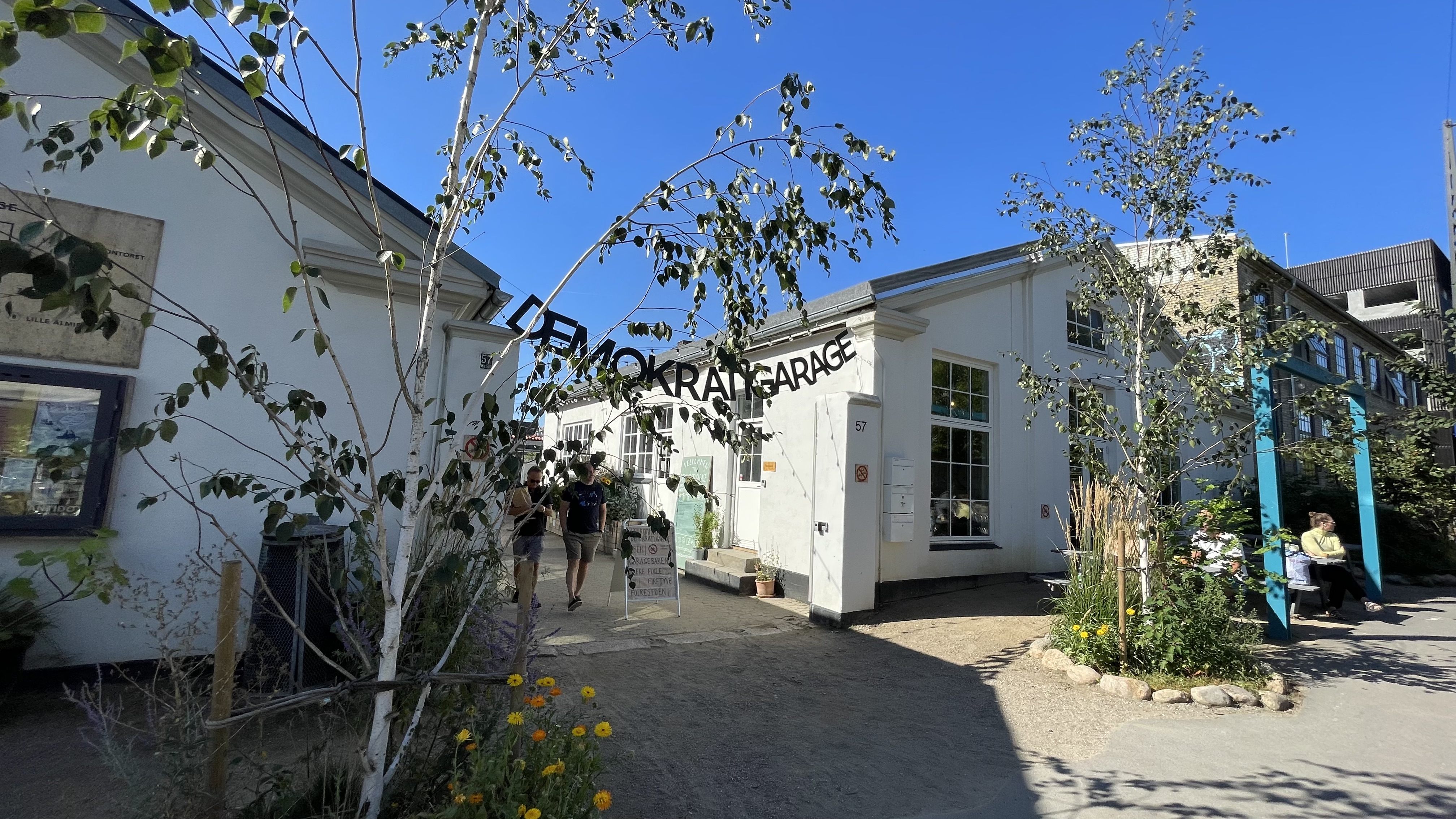
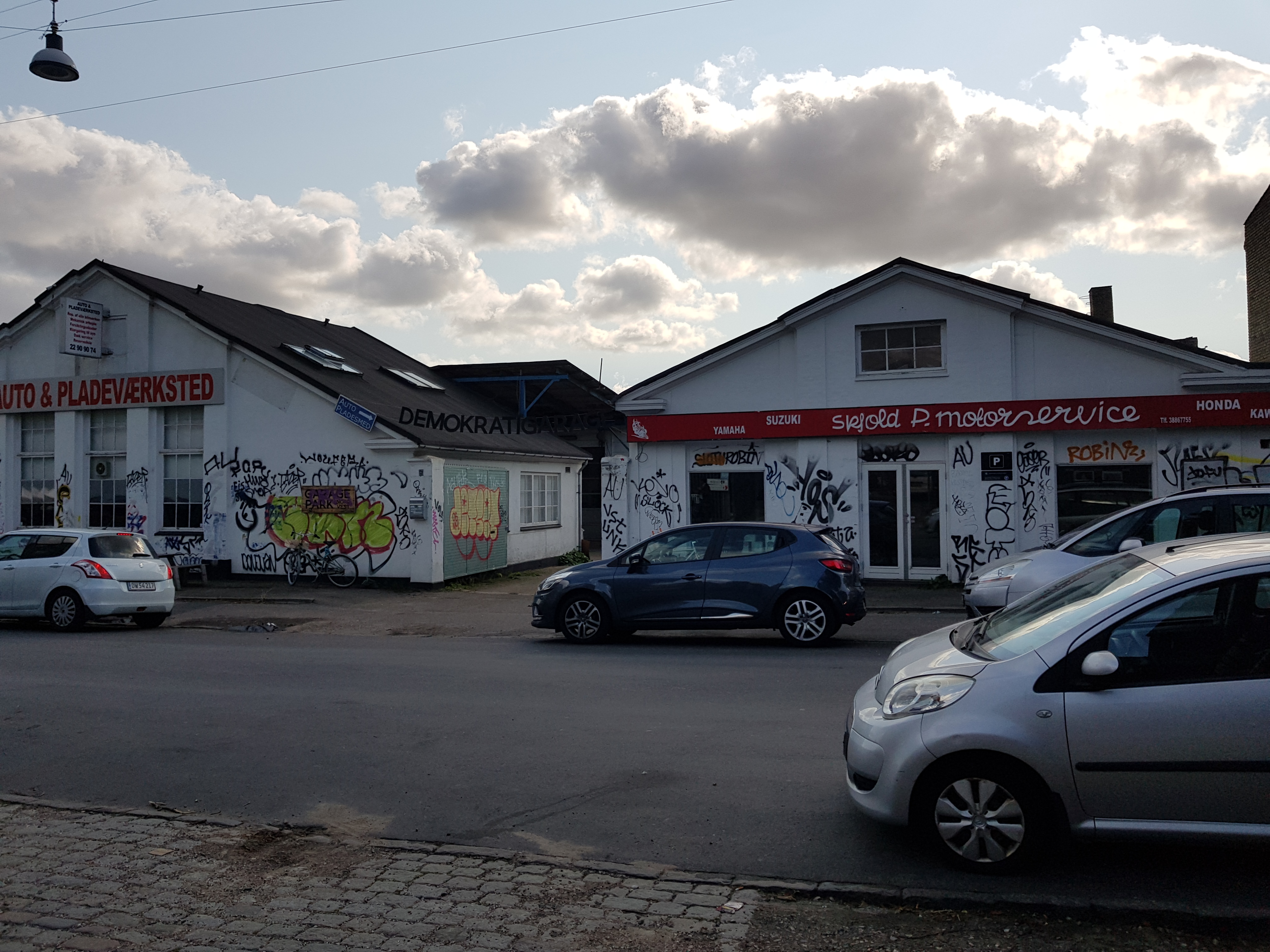
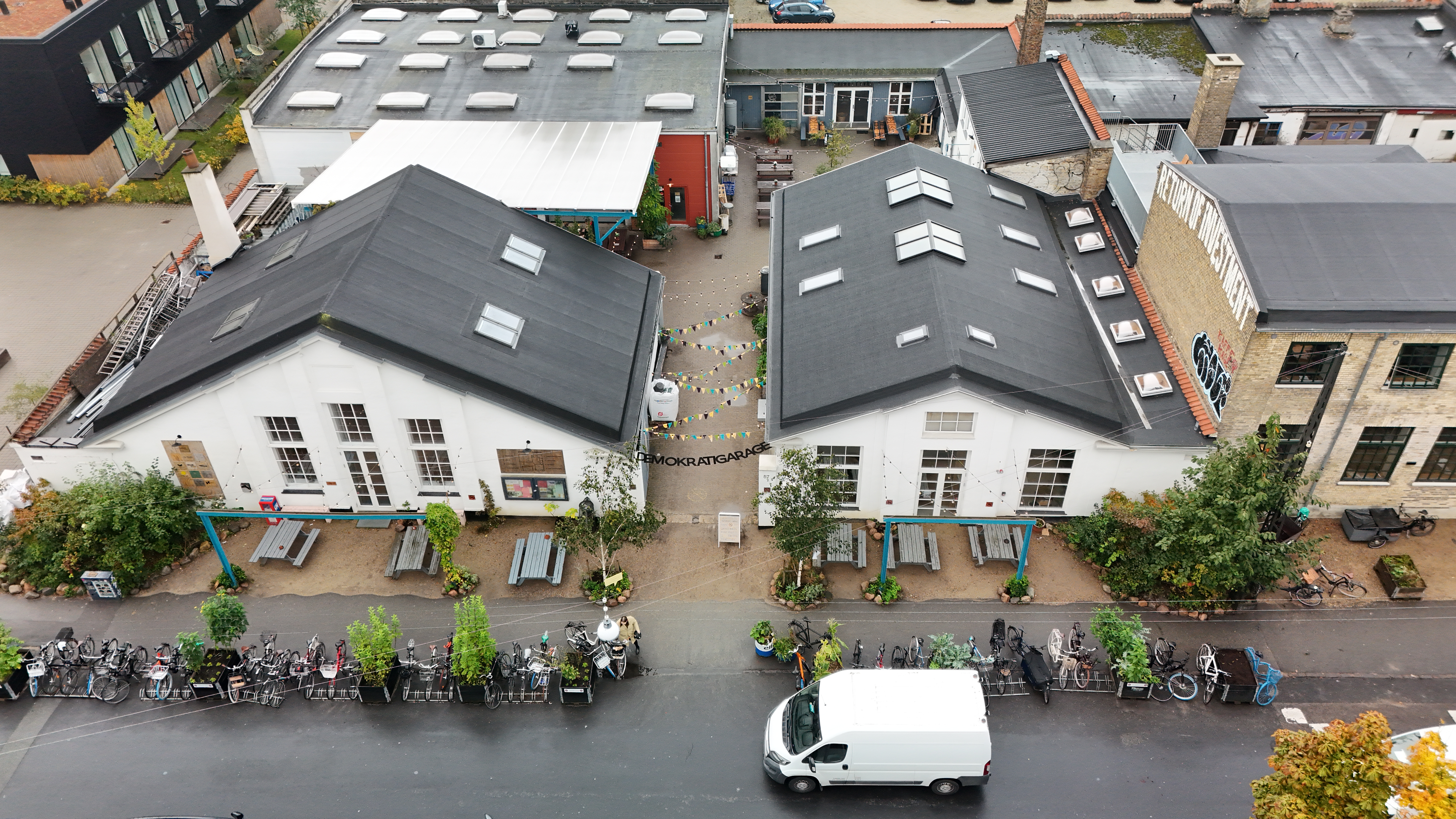
Demokrati Garage is located in restored neoclassical industrial buildings from the 1920s. When we took over the buildings five years ago, they were worn down and covered in graffiti. Since then, we have renovated them with a focus on reuse, sustainability and preserving the architecture and local identity of the old industrial district. Old classic windows have been restored and brought back to original, the soil has been cleaned up from toxic gasoline and oil, the old car garage signs have been cleaned and recycled and asphalt areas replaced with greenery, creating small urban gardens and softer, more inviting surroundings.
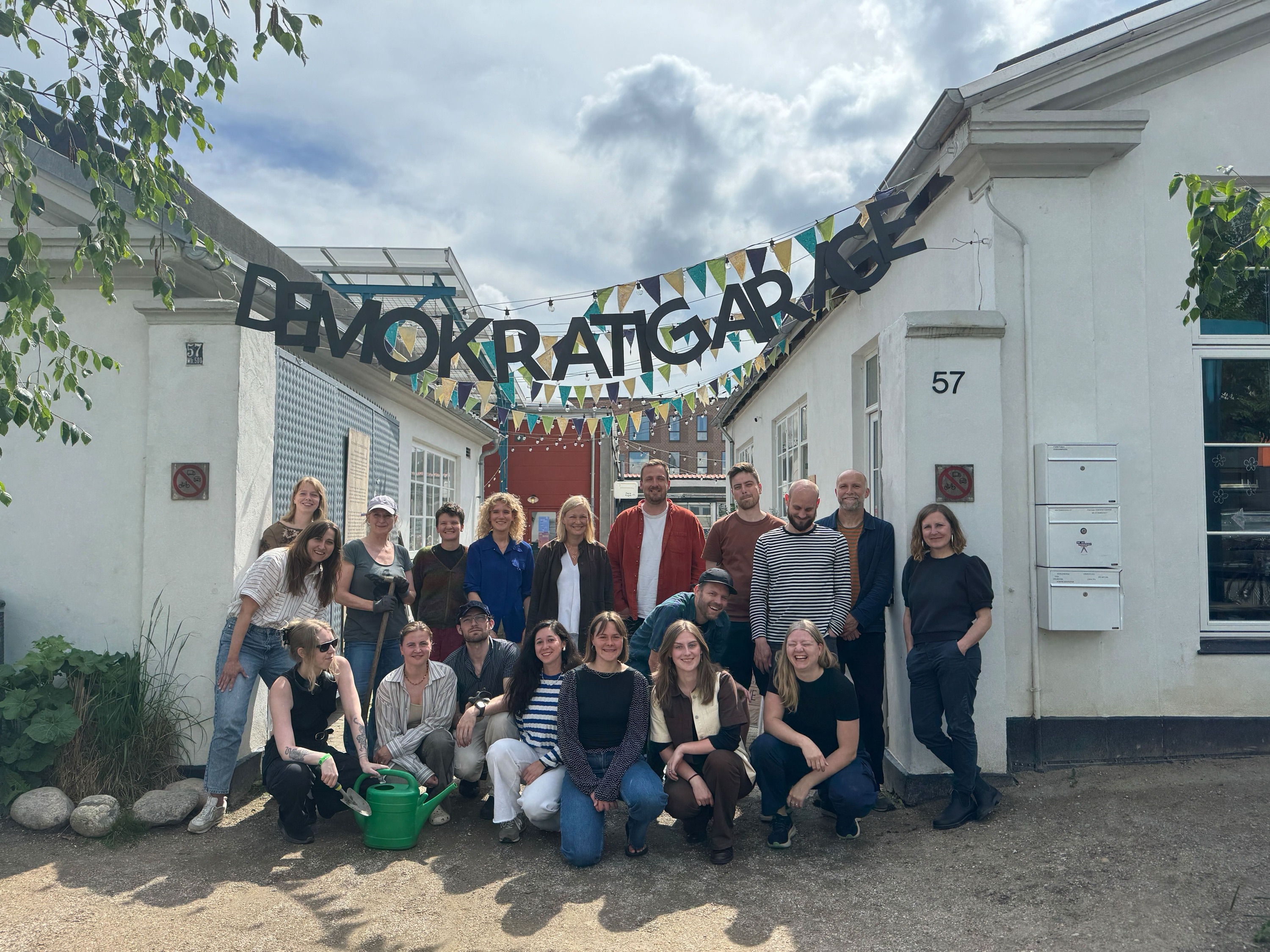
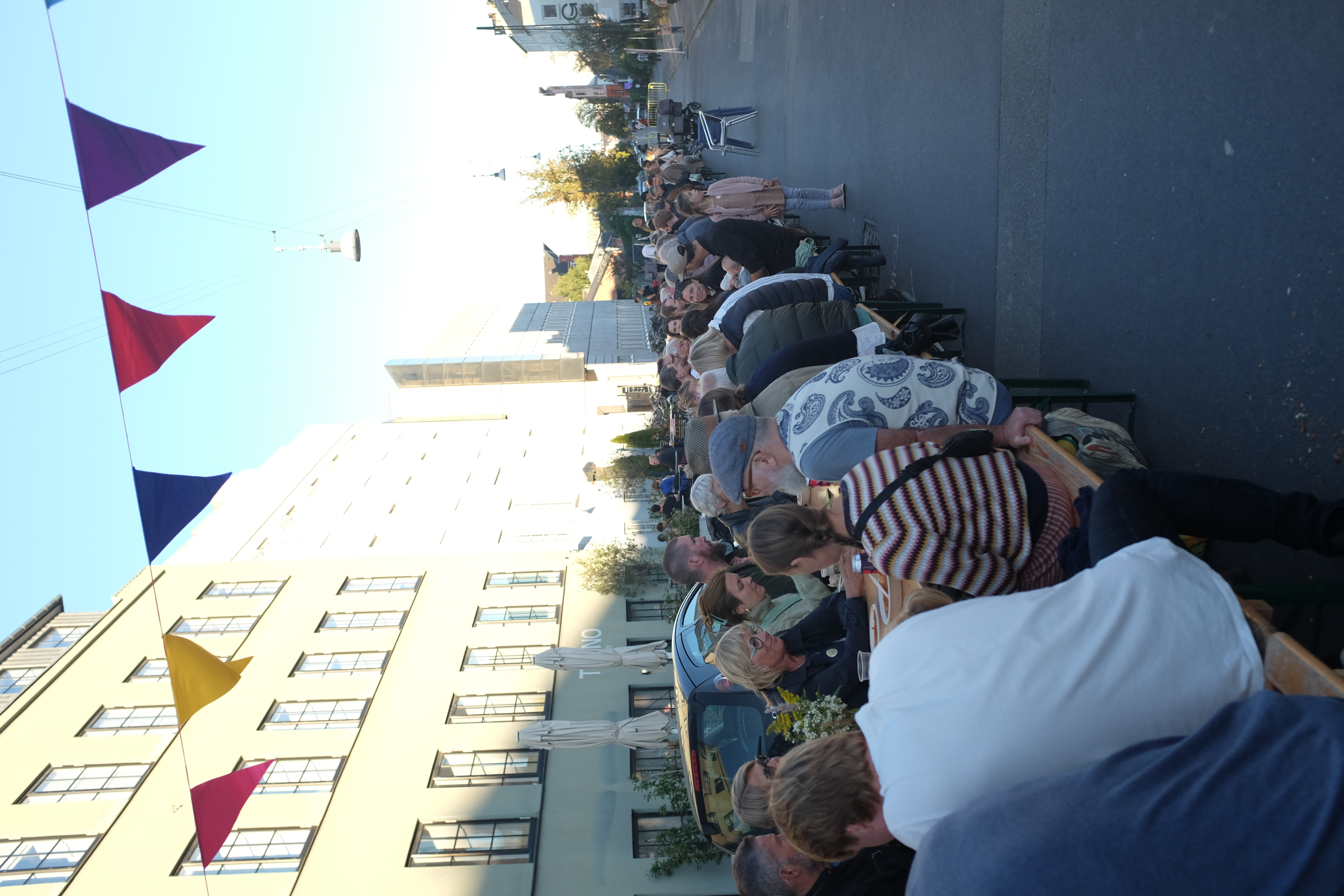
The space “Folkestuen” (Peoples House) is our main venue while “Værkstedet” serves as both an office and a flexible event space. “Hal 3” has been transformed into a small office community within the former industrial hall. The outdoor yard is open to all, with long shared tables, plants and string lights creating a warm and welcoming atmosphere for everyday use and larger events such as markets, election nights and debates.
Demokrati Garage stands out in linking aesthetics with democracy and community life. The garage now creates a calm yet vibrant atmosphere where people can meet, work, and participate in activities. It shows how existing buildings can be transformed into inclusive, flexible spaces without losing their identity. Its aesthetic quality lies not only in design but in how the space is lived and shared daily.
One of the purposes of Demokrati Garage is to strengthen social, cultural, and democratic inclusion by creating an open space where people from different backgrounds, ages, and life situations can meet and engage in activities. Our work is based on the belief that democracy becomes stronger when more people feel invited and able to participate.
Through open call we make accessible formats and target initiatives to prioritise events that reflect cultural diversity such as International Women’s Day, Ramadan gatherings, and Constitution Day, creating space for dialogue across perspectives. These events combine debates, community and cultural activities and are often free or low-cost to reduce economic barriers. Ex. the homeless people from the “Morgencafeen” hosted a community sing-a-long choir at our Christmas & Light festival.
Another strong focus on inclusion was expressed through the election festival “An election for all” connected to the municipal election in 2025. The ambition was to mobilize underrepresented voters including youth, ethnic minorities, and socially vulnerable groups. One initiative was “voting communities”, organised with local partners, encouraging people to go to polling stations together from Demokrati Garage.
While Demokrati Garage is a space that attracts a broad audience, we acknowledge that many visitors come from similar backgrounds. One of our ambitions is therefore to strengthen the representation of the neighbourhood itself, which is one of the most multicultural areas in Copenhagen. As part of this effort a planned photo exhibition will feature residents from Northwest sharing their stories, inviting them and their families into Demokrati Garage.
Demokrati Garage stands out by combining cultural, social and democratic inclusion in one place, linking everyday activities with participation and lowering barriers so inclusion becomes part of daily life while evolving through community involvement.
Participation is the core principle of Demokrati Garage. This is evident through all our events and the design of the place. We bring together citizens, community groups, NGOs, associations and partners such as “We Do Democracy” and “Analyse & Tal” all in one place. We believe that community provides space for participation - even for those who otherwise do not feel heard.
Local citizens and organisations have been involved from the early stages, starting with the temporary project “Garage Park NV” in 2019, which tested the concept through public activities. Since then, participation has continued across all phases: design of the space, development of activities, ongoing decision-making and evaluation.
Participation takes place through multiple formats: open calls for activities, public events, co-creation processes, and monthly meetings with neighbours and volunteers. Citizens, activists, artists, and organisations are invited to propose and host initiatives. Governance is shared through the Garage Council, where resident organisations collaborate on strategy, coordination, and development. The association’s board also includes diverse voices and supports community-led initiatives.
Overall, participants have influence on both content and direction. Activities and the open structure allows new ideas and actors to continuously redefine or further develop the project. Decision-making is decentralised and based on dialogue and collaboration rather than top-down control. This participatory approach has strengthened the project’s relevance, diversity, and local anchoring. Demokrati Garage demonstrates how citizen involvement can improve both the quality and sustainability of urban development.
Demokrati Garage was developed through collaboration across local, municipal, and national levels with institutional support and financial backing. Today it is operated combining civic engagement and a professional secretariat. This multi-level structure has been essential for both establishing and sustaining the project.
At the local level, citizens, community groups and organisations are central actors, contributing to activities, co-creation processes and governance through the Garage Council and the association Demokrati Garage. This ensures that the project remains rooted in local needs and continuously shaped by its users.
At the organisational level, the project is structured through a hybrid model: Demokrati Garage ApS operates the facilities, the association runs public activities, and We Do Democracy provides expertise in participation and democratic innovation. This structure allows for both professional management and civic ownership.
At the municipal level, the City of Copenhagen supported the early development with operational funding in 2020–2022, enabling the transition from a temporary initiative to a permanent civic space. Foundations such as Realdania and Lokale- og Anlægsfonden have supported renovation and development of the physical environment while other foundations support specific projects and activities.
This multilevel approach combines local knowledge, professional expertise and financial resources strengthening long-term sustainability and connecting the project to broader agendas.
Recent activities underline this impact. During the 2024 European Parliament election a three week-festival engaged around 1,500 participants, while an international conference on deliberative democracy gathered 150 participants from 65 countries. Demokrati Garage also shares its model through tours and exchanges across Europe, contributing to a growing European practice of civic spaces for democratic participation.
Demokrati Garage is built on a transdisciplinary approach that combines urban design, social sciences, democratic innovation, environmental practices and cultural production within one shared space.
The physical transformation of the space involves architectural restoration and sustainable renovation. This is combined with expertise in participation and democratic processes through We Do Democracy and analytical approaches to digital and social behaviour through Analyse & Tal. The bakery Flere Fugle and Borgerbageriet (The Citizen Bakery) contribute with gastronomy as a social and cultural practice while initiatives like Jordens Skole (Earth School) bring in environmental and educational knowledge on sustainability. Dreamtown, which is a NGO based in the garage, supports the dreams and wellbeing of young people living in cities across Africa.
These disciplines interact in concrete, everyday situations. For example, urban gardening becomes a platform for community building and environmental education, while shared free meals function as entry points for dialogue across cultural differences. Workspaces are regularly transformed into public event spaces, enabling continuous interaction between professional and civic activities. This structure allows for ongoing exchange rather than fixed project phases and open calls invite new actors from different fields to test ideas and contribute to the programme.
This approach allows different perspectives to be combined in real-life settings. It leads to more innovative and adaptable solutions, where physical design, social interaction, and democratic practices reinforce each other. The result is a dynamic and evolving place that responds to complex urban challenges with integrated, community-driven solutions.
Demokrati Garage operates through a hybrid, not-for-profit business model that combines public funding, foundation support, and self-generated revenue to ensure long-term sustainability.
The establishment of the project was financed through a loan from Andelskassen Fælleskassen for the purchase of the buildings, combined with operational funding of approximately 2 million DKK from the City of Copenhagen (2020–2022).
Today, revenue is generated by renting out the spaces for workshops, conferences, and private events. This income supports daily operations such as maintenance, utilities and staff. All profits are reinvested into the organisation to support democratic activities, programme development and further improvement of the facilities. In this way commercial use directly supports democratic participation, making the space both financially viable and publicly accessible.
Demokrati Garage differs from traditional cultural venues by functioning as civic infrastructure where citizens not only attend activities but actively shape them. Through a combination of physical space, participatory methods and shared governance, democracy becomes something people practice together in everyday life rather than consume as a programme.
The model continues to evolve. Future revenue potential lies in partnerships, funded projects and collaborations with municipalities and foundations. By balancing income-generating activities with open and accessible programming, Demokrati Garage demonstrates how a civic space can combine financial sustainability with social impact and democratic participation.
Demokrati Garage demonstrates a transferable model for how underused urban buildings can be transformed into civic infrastructure supporting participation, community building and democratic innovation.
Key elements are designed to be replicable. These include the adaptive reuse of existing buildings which preserves local identity and the hybrid organisational model combining an association, an operating company and professional partners. Together, these create a structure that balances civic ownership with professional capacity.
Transferability is also demonstrated through initiatives such as Democracy Fitness, Renten, Borgerbageriet and collective voting activities. These initiatives function as adaptable formats that can be applied in other contexts.
The practices have already been an inspiration to others. The owners Zakia Elvang and Johan Galster, also founders of We Do Democracy, have shared their knowledge and methods internationally through talks, workshops and collaborations with actors such as the Istanbul Municipality, at Democracy RnD conference in Brussels and for the Norwegian government working with deliberative democracy and citizen assemblies. A large number of organisations have also visited the garage for inspiration on how we are organised - here we give tips, tours and tricks on how to create a healthy economy even when the funds are not possible to achieve.
At the same time, the approach distinguishes between what can be transferred and what must be locally adapted. While the methods and structural elements are transferable, the content and activities must be shaped by local needs, cultures and communities. Building trust with the local communities and ensuring meaningful participation requires time, local partnerships and strong facilitation skills.
This makes Demokrati Garage a scalable yet placed-based model as it demonstrates how democratic spaces can be built by combining shared structural methods with strong local anchoring.